Your customer finds a product they want inside their favorite app. They tap. Then the app hands them off to a slow mobile browser, a sign-in wall, and a checkout form built for desktop. Most of them never finish.
That break between discovery and purchase is the single most expensive gap in modern retail. People already spend hours a day inside social apps, scrolling, watching, and reacting. The closer the buy button sits to the moment of intent, the more of that attention converts. The further away it sits, the more you pay in lost carts and rising acquisition costs.
The numbers back this up. The global social commerce market will reach $2.11 trillion in 2026, up from $1.63 trillion in 2025, and is projected to hit $7.55 trillion by 2031 at a 29.12% CAGR, according to Mordor Intelligence (2026). Social commerce already accounted for 19.4% of global ecommerce sales in 2024 and is climbing, per Oberlo (2024).
If you run growth, demand gen, or ecommerce, this is now a channel decision you cannot defer. The same way marketers compare ab testing tools or affiliate marketing software before committing budget, you need a clear read on which social commerce surfaces actually move revenue, and which enabling vendors make that revenue measurable.
What's inside
This guide compares the nine best social commerce platforms for 2026, built for marketers who need to sell where customers already are. We included two types of players: the social networks that host shoppable experiences (Instagram, Facebook, TikTok, Pinterest, Snapchat, YouTube) and the enabling vendors that make social commerce work across channels (Bazaarvoice, CommentSold, Impact.com).
We selected based on four criteria: reach and audience intent, native shopping features (shoppable posts, storefronts, live shopping, product tagging), measurement and attribution support, and fit for specific marketing motions. Each entry includes pricing where it is public, a G2 rating where available, and a clear "best for" so you can pattern-match to your own situation fast.
TL;DR
- Best for visual and creator-led brands: Instagram, with shoppable posts, Reels, and tag-driven discovery.
- Best for broad reach and mature retail: Facebook, with Shops, Marketplace, and Messenger commerce.
- Best for impulse and entertainment-driven buying: TikTok, where short-form video and live selling shorten the path from watch to buy.
- Best for intent-rich, inspiration-led discovery: Pinterest, strong for home, fashion, and DIY.
- Best for younger, AR-first audiences: Snapchat, with try-on lenses and camera-first engagement.
- Best for consideration-stage commerce: YouTube, where creator trust and long-form video drive higher-ticket decisions.
- Best for UGC and social proof at scale: Bazaarvoice. Best for live selling: CommentSold. Best for creator and affiliate attribution: Impact.com.
What are social commerce platforms?
Social commerce platforms let people discover, evaluate, and buy products directly inside social networks, instead of clicking out to a separate online store. They turn passive feeds into shopping surfaces.
This differs from traditional ecommerce in one key way: the purchase happens in the same place as the discovery. A traditional ecommerce funnel moves a shopper from an ad to a landing page to a cart to a checkout, with friction at every handoff. Social commerce collapses those steps into the app the shopper is already in.
The core building blocks of social media commerce are consistent across platforms:
- Shoppable posts: Images and videos with tappable product tags that open product detail or checkout.
- Storefronts: Branded in-app shops where a catalog lives natively on the platform.
- Live shopping: Real-time video where hosts demo products and viewers buy in the moment.
- Creator and influencer content: Trusted voices showcasing products, often with affiliate links or codes.
- User-generated content: Reviews, photos, and videos from real customers that reduce purchase hesitation.
- Product tagging: Linking specific items inside organic and paid content for one-tap discovery.
- In-app checkout: Completing payment without leaving the platform, where supported.
Newer social shopping platforms layer on AR try-ons, visual search, messaging commerce, and AI-assisted discovery. Together these features explain why social commerce examples keep moving up the funnel: the format meets buyers at the exact moment intent forms.
When to use social commerce platforms
Not every product or motion fits every surface. Use these patterns to decide where to invest first.
Turn discovery into purchase without a hard clickout
If your analytics show high engagement on social but weak conversion after the click, the clickout is your bottleneck. Native shoppable posts and in-app checkout remove the slow mobile-browser handoff. This works best for visually driven categories: apparel, beauty, home, food, and accessories, where a single image or short clip carries enough information to trigger a buy.
Use creators and UGC to reduce hesitation
When shoppers do not trust your brand voice yet, third-party proof closes the gap. Creator content and user-generated content (reviews, unboxings, try-ons) lower perceived risk before checkout. This is the right move for newer brands, higher-consideration products, and categories where authenticity drives the decision more than price.
Add live shopping or messaging commerce to shorten the path
For products that benefit from demonstration (cosmetics, gadgets, fashion fit), live shopping compresses the sales cycle into a single session. Hosts answer objections in real time and viewers buy without leaving the stream. Messaging commerce works similarly for higher-touch or repeat purchases, letting buyers ask questions and reorder inside a chat thread.
Comparison table
Here is a fast read on all nine social commerce platforms for 2026. Use it to compare audience intent, the standout use case, public pricing, and G2 rating before you dig into the individual sections below.
| # | Platform | Intent | Key use case | Pricing | G2 rating |
|---|---|---|---|---|---|
| 1 | Visual discovery, creator-led | Shoppable posts, Reels, product tags | Free to use; ad spend self-budgeted | 4.4/5 | |
| 2 | Broad reach, mature retail | Shops, Marketplace, Messenger commerce | Free to use; no-ads subscription in EU region | 4.3/5 | |
| 3 | TikTok | Impulse, entertainment-driven | Short-form video, live shopping | Ad budget self-set | 4.2/5 |
| 4 | Inspiration, high purchase intent | Visual search, shoppable pins | Free business account; ad spend self-budgeted | 4.6/5 | |
| 5 | Snapchat | Younger, mobile-first | AR try-ons, camera-first discovery | Free to use; Snapchat+ subscription | 4.2/5 |
| 6 | YouTube | Consideration, research-led | Shoppable video, creator trust | Free to use; optional paid tiers | Not listed |
| 7 | Bazaarvoice | UGC and social proof | Ratings, reviews, syndication | Contact sales | 4.2/5 |
| 8 | CommentSold | Community live selling | Live selling, shoppable video, branded app | From $149/mo + 5% of sales | 4.7/5 |
| 9 | Impact.com | Partner and affiliate commerce | Creator and affiliate attribution | From $30/mo | Not listed |
1. Instagram
Instagram is the default social commerce surface for visual brands, and for good reason. Shoppable posts, product tags, Reels, and Stories all let shoppers move from a scroll to a product page in a tap or two. The platform's discovery engine surfaces products through the Explore tab and creator content, which means your catalog can reach people who never searched for you.
For marketers, the value is the tight loop between content and commerce. A single Reel can carry tagged products, drive saves, and feed retargeting audiences. Creator partnerships extend that reach without you producing every asset yourself, which keeps content velocity high on a lean team.
Best for: Visual and creator-led brands in apparel, beauty, home, and lifestyle that want discovery and shopping in the same feed.
Key strengths
- Product tagging: Tap-to-shop tags in posts, Reels, and Stories shorten the path from interest to product.
- Creator discovery: Influencer content and the Explore tab put your products in front of new, relevant audiences.
- Short-form video: Reels drive reach and engagement, then route viewers to tagged products.
Why choose Instagram: If your products photograph well and your audience skews toward visual discovery, Instagram gives you the broadest creator ecosystem and the most mature shoppable-post tooling among image-first networks. It pairs naturally with paid social, so you can scale what converts.
Instagram pricing: Instagram is free to use for both personal and business accounts. There is no software subscription fee for setting up a shop or tagging products. Costs come from advertising, which you self-budget through the ad platform, and from any creator partnerships you negotiate directly.
2. Facebook
Facebook remains the broadest social commerce platform by sheer audience size. Shops let brands build native storefronts, Marketplace connects local and resale buyers, and Messenger commerce supports conversational selling and post-purchase support. Product catalogs sync across Facebook and Instagram, so you manage inventory once and sell in both places.
The strength here is reach across age groups. While younger audiences cluster on TikTok and Snapchat, Facebook still holds a wide, purchase-ready demographic that mature retail brands cannot ignore. Its ad and catalog infrastructure also gives marketers granular targeting and retargeting that few other surfaces match.
Best for: Mature retail and direct-to-consumer brands that want maximum reach and a catalog shared across Facebook and Instagram.
Key strengths
- Shops and catalogs: Native storefronts with catalogs that sync to Instagram reduce duplicate work.
- Messenger commerce: Conversational selling and support inside chat threads shorten higher-touch purchases.
- Audience breadth: One of the widest, most purchase-ready audiences in social media commerce.
Why choose Facebook: If you sell to a broad or older demographic, or you want one catalog powering both Facebook and Instagram, Facebook delivers the reach and ad targeting depth to make that work. It is the safe foundation layer for most multi-channel programs.
Facebook pricing: Facebook is free to use. Setting up a Shop, catalog, or Page costs nothing. In the European region only, Facebook offers a no-ads subscription priced from €5.99 per month for one account, plus €4 per month for each additional account in the same Accounts Center. Outside that region, monetization runs through ads you self-budget.
3. TikTok

TikTok is the leading destination for short-form mobile video, and that format is uniquely suited to impulse buying. TikTok Shopping lets creators and brands tag products in videos, run a storefront, and host live shopping events where viewers buy mid-stream. The algorithm surfaces products to people who never followed you, which makes discovery feel effortless and unplanned.
For marketers, TikTok rewards entertainment over polish. A creator demoing a product casually often outperforms a high-budget ad. That dynamic favors brands willing to test fast, partner with creators, and lean into trends rather than fight them.
Best for: Brands targeting impulse and entertainment-driven purchases, especially in beauty, gadgets, fashion, and novelty categories.
Key strengths
- Short-form video: The core format drives discovery and impulse buying at scale.
- Live shopping: Real-time selling compresses watch-to-buy into a single session.
- Creator-led discovery: The algorithm pushes products to new audiences without follower dependence.
Why choose TikTok: If your category benefits from demonstration and trend momentum, TikTok offers the fastest path from discovery to purchase among the major networks. It rewards creative volume, so it fits teams that can test and iterate quickly.
TikTok pricing: TikTok is free to use, and setting up a business profile or shop carries no subscription fee. Advertising costs are self-budgeted through TikTok's Ads Manager, where you set campaign spend and bidding. Creator partnerships and live selling commissions are negotiated or structured separately.
4. Pinterest
Pinterest is the visual discovery platform people use to plan purchases, which makes its traffic unusually high-intent. Users come to save ideas for projects, rooms, outfits, and events, often weeks before they buy. Shoppable pins, visual search, and product catalogs let brands meet that intent with buyable content. Pinterest has more than 460 million monthly active users worldwide and a strong G2 rating of 4.6/5.
For marketers, the appeal is the buying mindset. Unlike feeds built for entertainment, Pinterest sessions are often goal-driven, which raises the odds that engagement turns into a sale. Visual search also lets shoppers find products from images, surfacing your catalog through inspiration rather than keywords.
Best for: Home, fashion, beauty, DIY, and wedding brands that benefit from inspiration-led, high-intent discovery.
Key strengths
- Visual search: Shoppers find products from images, opening discovery beyond text queries.
- Shoppable pins: Tappable product pins turn saved inspiration into purchases.
- High purchase intent: Planning-driven sessions convert better for considered categories.
Why choose Pinterest: If your products fit inspiration-led categories and you want traffic that arrives ready to plan a purchase, Pinterest delivers some of the most intent-rich engagement in social shopping. It complements bottom-funnel paid social by feeding the consideration stage.
Pinterest pricing: Business accounts on Pinterest are free to create. There is no software subscription to set up shopping features or product pins. If you run ads, spend is self-budgeted through Pinterest's ad tools, so your cost scales with the campaigns you choose to run.
5. Snapchat
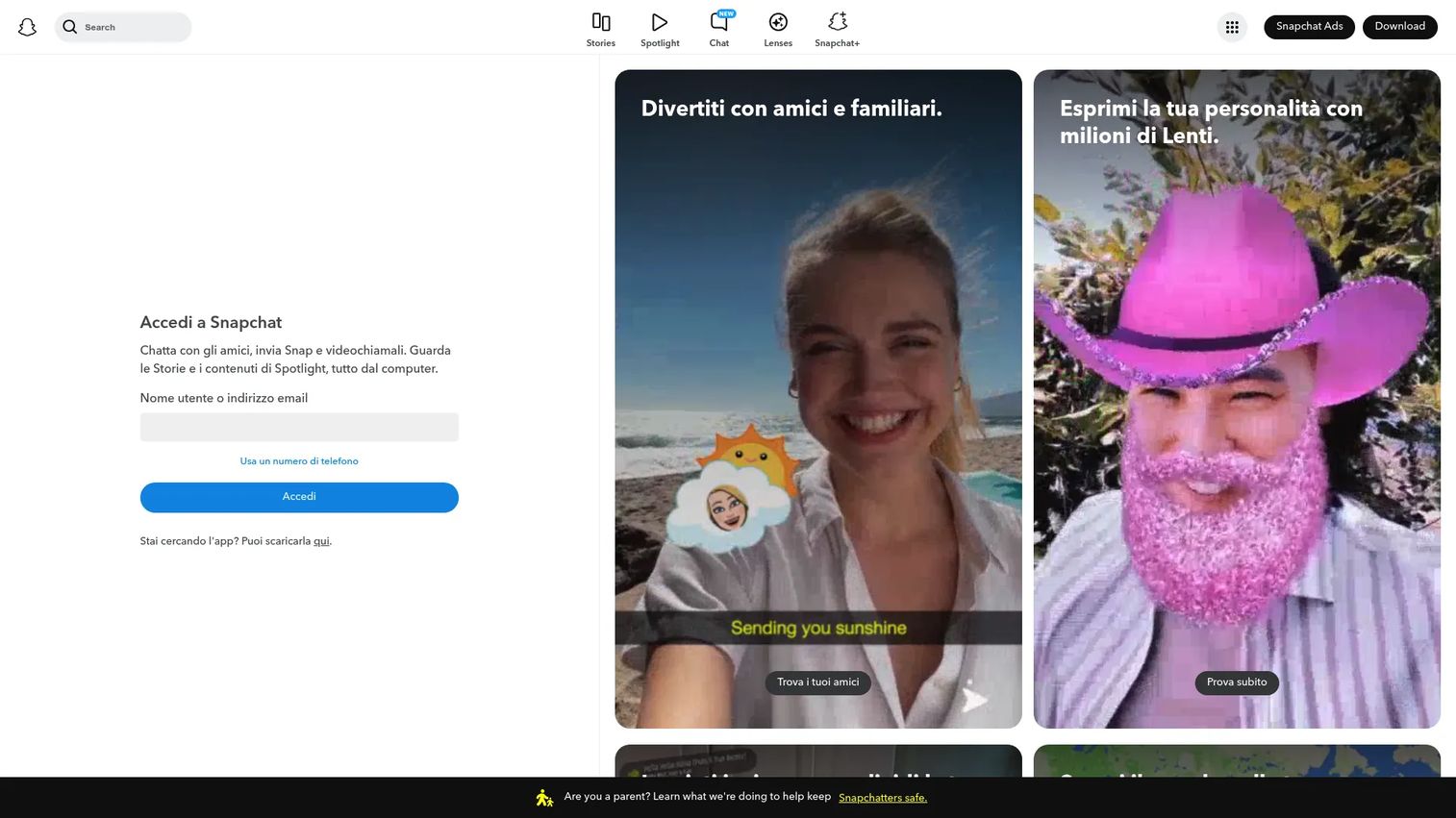
Snapchat is a camera-first platform, and its AR try-on lenses make it a standout for immersive product discovery. Shoppers can see how sunglasses, makeup, or accessories look on themselves before buying, which removes a major source of hesitation for visual products. The minimum age for an account is 13, and the user base skews young and mobile-first.
For marketers reaching Gen Z and younger millennials, Snapchat offers a way to make products interactive rather than static. AR experiences drive engagement and shares, and the immersive format gives brands a differentiated surface that feels native to how younger audiences already use the app.
Best for: Brands targeting younger, mobile-first audiences with products that benefit from AR try-on, like eyewear, beauty, and accessories.
Key strengths
- AR try-ons: Lenses let shoppers preview products on themselves before purchase.
- Camera-first engagement: Immersive formats feel native to younger users.
- Mobile-first reach: Strong access to Gen Z and younger millennial audiences.
Why choose Snapchat: If your audience is young and your products benefit from a virtual try-on, Snapchat's AR tools create a discovery experience few other platforms match. It works best as a brand-engagement and try-on layer alongside conversion-focused channels.
Snapchat pricing: Snapchat is free to use. The platform offers paid subscriptions, including Snapchat+, a Family Plan, a Platinum Plan, and a Lens+ plan, with monthly and yearly options. Subscription pricing may vary by country and device. For brands, advertising spend is self-budgeted through Snapchat's ad platform.
6. YouTube
YouTube is where shoppers go to research before they buy, which makes it a powerful consideration-stage commerce surface. Shoppable video, product shelves, and live streams let creators link products directly under videos, and the platform's long-form format gives room for the kind of detailed demos and reviews that drive higher-ticket decisions. Shorts adds a short-form layer for quicker discovery.
For marketers, YouTube's advantage is creator trust built over time. A subscriber base that returns for a creator's reviews carries durable influence, so product recommendations land with more weight than a one-off ad. That trust makes YouTube especially effective for considered purchases.
Best for: Brands selling higher-consideration or higher-ticket products that benefit from in-depth demos, reviews, and creator trust.
Key strengths
- Shoppable video: Product links under long-form and live video connect research to purchase.
- Creator trust: Loyal subscriber relationships give recommendations lasting weight.
- Format range: Long-form, Shorts, and live cover discovery through deep consideration.
Why choose YouTube: If your buyers research before committing, YouTube lets you meet them with the depth and credibility that short clips cannot deliver. It pairs well with creator monetization tools and works across the full consideration funnel.
YouTube pricing: YouTube is free to use for viewers and creators, and uploading or monetizing content carries no base fee. The platform offers optional paid subscriptions for ad-free viewing and additional features, with pricing set per region. Brands fund reach through advertising or creator partnerships rather than a platform subscription.
7. Bazaarvoice
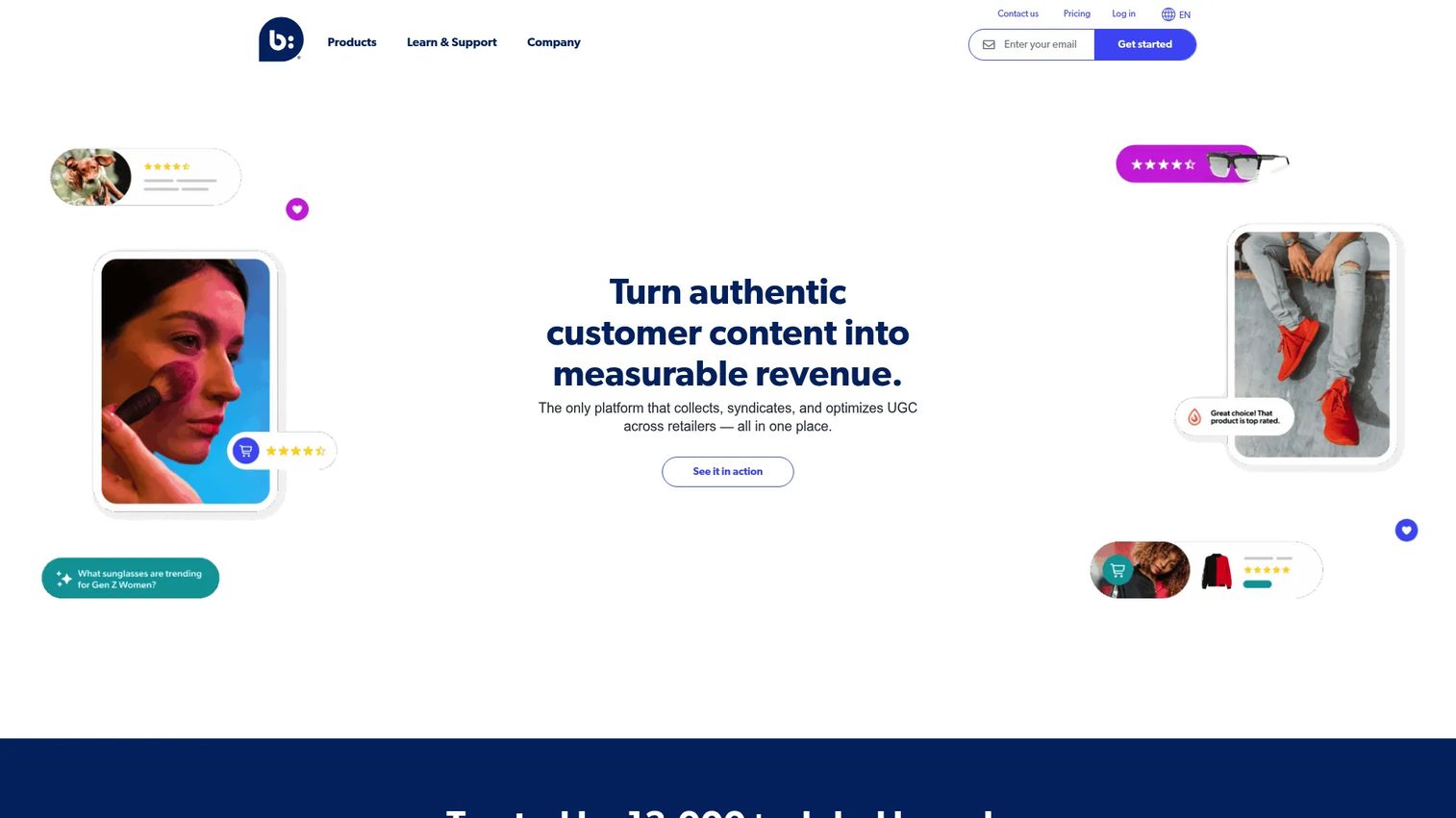
Bazaarvoice is a UGC platform built to power social proof across every channel a brand sells through. It handles ratings and reviews, questions and answers, creator marketing, UGC sampling, and review syndication to retail partners. The result is authentic shopper content that travels from social to product pages to retail sites, reinforcing trust wherever a buyer lands.
For marketers, Bazaarvoice solves the hesitation problem at scale. Instead of producing every proof point yourself, you collect and distribute real customer voices, then syndicate that content across your own site and retail partners. It holds a G2 rating of 4.2/5 and supports commerce across a wide network of brands and retailers.
Best for: Brands and retailers that need enterprise-grade UGC, reviews, and syndication to build social proof across channels.
Key strengths
- Ratings and reviews: Collect and display authentic customer feedback that lifts conversion.
- UGC sampling: Seed products to generate reviews and content before launch.
- Review syndication: Distribute social proof across your site and retail partners.
Why choose Bazaarvoice: If your conversion gap is trust rather than reach, Bazaarvoice gives you the infrastructure to collect, manage, and syndicate user-generated content at scale. It is the social-proof layer that strengthens every other channel in your stack.
Bazaarvoice pricing: Bazaarvoice offers multiple packages and does not publish a standard price; prospects contact sales for a quote based on scope and volume. Pricing reflects the enterprise positioning of the platform, so it suits brands and retailers investing in UGC as a core program rather than a quick add-on.
8. CommentSold
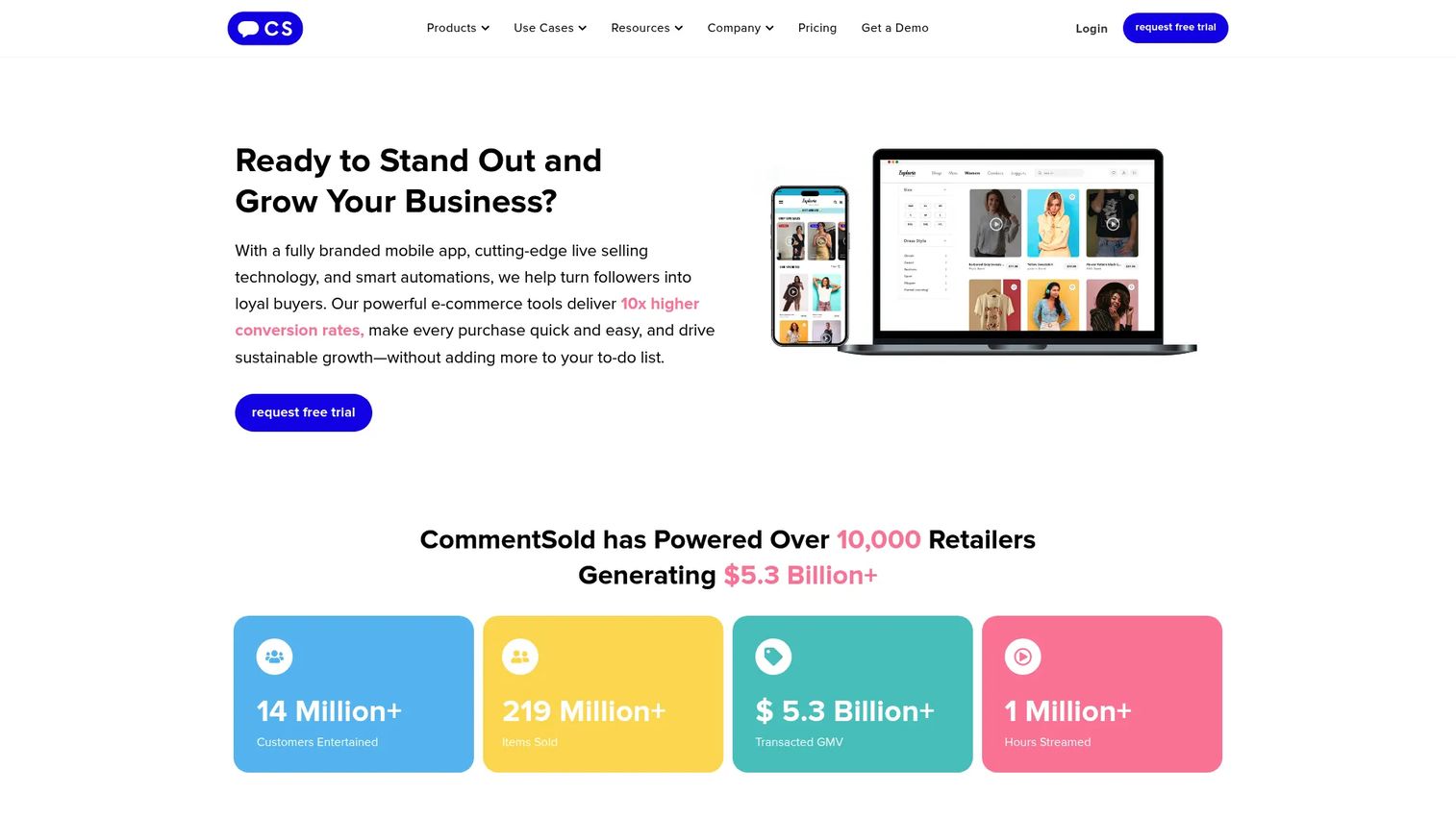
CommentSold is a video commerce and live-selling platform built for small to mid-sized retailers. It handles live selling, shoppable video clips, inventory, and a branded mobile app and webstore, so community-driven sellers can run their entire operation from one place. Comment-to-buy mechanics let shoppers claim products directly from a live stream or post, turning engaged audiences into orders fast.
For marketers and owner-operators, CommentSold's strength is workflow. It connects live selling, inventory, and fulfillment into a single system, which removes the duct-tape stack many social sellers cobble together. It carries a strong G2 rating of 4.7/5 and supports thousands of retailers.
Best for: Community-driven and boutique retailers that run live selling and want commerce, inventory, and a branded app in one tool.
Key strengths
- Live selling: Comment-to-buy mechanics convert live audiences into orders in real time.
- Shoppable video clips: Repurpose live content into on-demand shoppable moments.
- Branded app and webstore: Own the customer relationship beyond the social feed.
Why choose CommentSold: If live selling is central to your business and you want inventory, checkout, and a branded app handled in one place, CommentSold removes the operational friction of stitching tools together. It is purpose-built for high-volume, community-led sellers.
CommentSold pricing: CommentSold publishes three plans plus a 15-day free trial. The Starter or Individual plan starts at $149 per month plus 5% of sales. The Small Business plan runs $499 per month plus 4% of sales, and the Large Business plan is $999 per month plus 3% of sales. The sales commission decreases as you move up tiers, which suits sellers scaling volume.
9. Impact.com
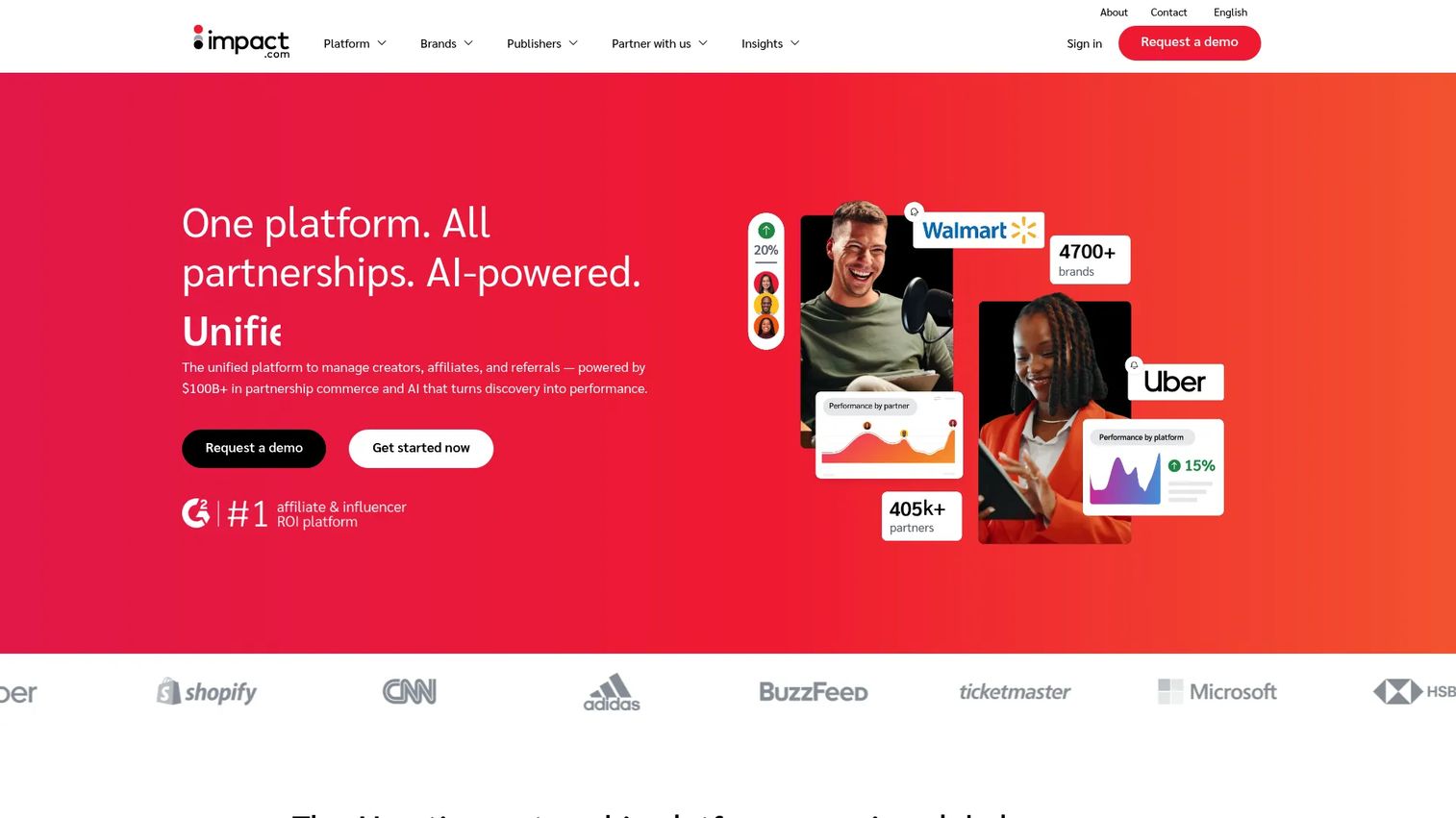
Impact.com is a partnership management platform that brings creator, affiliate, and referral commerce under one measurable roof. It handles partner discovery through a marketplace, contracting, tracking, and reporting, so brands can run influencer and affiliate programs with attribution that holds up to scrutiny. For social commerce, that means you can finally tie partner-driven sales back to specific creators and content.
For marketers fighting attribution ambiguity, this is the missing piece. Social platforms drive discovery, but Impact.com tells you which partners and posts actually generated revenue. That clarity lets you reallocate budget toward what works and defend partner spend to finance.
Best for: Brands running creator, affiliate, and referral programs that need clean attribution and partnership management at scale.
Key strengths
- Partner marketplace: Discover and recruit creators and affiliates in one place.
- Tracking and reporting: Attribute social-driven sales to specific partners and content.
- Contracting tools: Manage agreements and payouts across many partners from one dashboard.
Why choose Impact.com: If your social commerce program leans on creators and affiliates, Impact.com gives you the attribution and management layer to prove and scale it. It turns scattered partner activity into a measurable, defensible revenue channel.
Impact.com pricing: Impact.com publishes a Starter plan from $30 per month and an Essentials plan from $500 per month, with higher tiers available through sales. The entry pricing makes it accessible for smaller programs, while the upper tiers serve enterprise partnership operations. There is no free plan, but the low Starter price lets teams test the platform before scaling.
Considerations before you choose
Picking a social commerce platform is less about the biggest audience and more about fit with your product, motion, and measurement needs. Run through these before you commit budget.
Audience and intent match
A platform's audience has to overlap with your buyers, and their mindset has to match your sales motion. Younger, impulse-driven audiences favor TikTok and Snapchat, while planning-driven buyers cluster on Pinterest. Map where your customers actually spend time before chasing reach.
Native shopping features
Check whether the platform supports the features your category needs: shoppable posts, in-app checkout, live shopping, AR try-ons, or product tagging. A visual product benefits from try-ons and tags, while a demo-driven product benefits from live shopping. The feature set should serve your conversion path, not just your content.
Measurement and attribution
If you cannot tie social activity to revenue, you cannot defend the spend. Look for native analytics, clean UTM handling, and integration with your CRM and attribution stack. Enabling vendors like Impact.com exist specifically to close attribution gaps that native platforms leave open.
Stack and workflow fit
The platform should plug into your existing tools without creating new silos. Verify catalog syncing, ad-platform connections, and whether one team can manage it without engineering help. Just as you would vet ai content creation tools or ai design tools for workflow fit, weigh how much overhead each commerce surface adds.
Conclusion
The right social commerce platform depends entirely on your product and the motion you run. For visual brands chasing discovery and conversion in one feed, Instagram is the default, with Facebook adding broad reach and a shared catalog. For impulse and entertainment-driven categories, TikTok delivers the fastest watch-to-buy path, while Snapchat brings AR try-ons for younger audiences. Pinterest captures high-intent, inspiration-led shoppers, and YouTube wins the consideration stage with creator trust and depth.
On the enabling side, Bazaarvoice builds social proof at scale, CommentSold powers community live selling end to end, and Impact.com makes creator and affiliate revenue measurable.
The smart move is rarely one platform. Most marketers pair a network-native surface for discovery with an enabling vendor for proof or attribution. Start by matching your audience and product to one primary surface, instrument it for clean measurement, then expand once you can prove the ROI. The same discipline you apply to ai writing tools for marketers or agentic ai tools for sales applies here: pick for fit, measure honestly, and scale what works.
FAQs
For most small businesses, Instagram and Facebook are the best starting points because they are free to set up, share one product catalog, and reach broad audiences. If live selling drives your business, CommentSold packages commerce, inventory, and a branded app into one affordable workflow built for smaller retailers.
TikTok leads for live shopping reach among the major social networks, since its algorithm surfaces live streams to non-followers and rewards entertaining, demo-driven content. For dedicated live-selling infrastructure with comment-to-buy mechanics and inventory handling, CommentSold is purpose-built for retailers who run live selling as a core motion.
It depends on your product and audience. Instagram performs best for visual, considered purchases and creator-led discovery in beauty, fashion, and home. TikTok performs best for impulse and entertainment-driven buying, where short-form video and trends push products to new audiences fast. Many brands run both and shift budget toward whichever converts better for a given category.
Traditional ecommerce moves shoppers from an ad to a separate website, cart, and checkout, with friction at each handoff. Social commerce keeps discovery and purchase inside the same app, so shoppers buy in the moment intent forms. The closer the buy action sits to the discovery moment, the less you lose to abandoned carts and slow clickouts.
Instagram and Pinterest are strongest for visual products because both are built around imagery and let shoppers tap from a photo to a product. Snapchat adds AR try-ons for categories like eyewear and beauty, letting shoppers preview products on themselves. For higher-ticket visual products that need demonstration, YouTube's longer format carries more detail.
Start with platform-native analytics for impressions, engagement, and in-app conversions, then connect activity to revenue with clean UTMs and CRM integration. For creator and affiliate programs, a partnership platform like Impact.com attributes sales to specific partners and content. The goal is attribution your finance team will believe, not just activity metrics.
Prioritize four things: audience and intent fit with your buyers, the native shopping features your category needs (shoppable posts, live shopping, AR try-ons, product tagging), measurement and attribution support, and clean integration with your existing stack. The best platform is the one that matches your motion and lets you prove revenue impact, not the one with the largest raw audience.