

Leadership asks what PR contributed this quarter. You open a spreadsheet of clippings, point to an "estimated reach" number you don't trust, and hope nobody asks follow-up questions.
That's the gap PR analytics software closes. It replaces gut feelings and manual clip files with actual coverage volume, sentiment shifts, referral traffic, share of voice. The kind of evidence that survives a board meeting.
This guide covers 15 PR software tools, evaluated with honest trade-offs, real pricing (where available), G2 ratings, and situational guidance so you can shortlist 2–3 options in one sitting. We cross-referenced G2, Gartner, and industry sources, filtered for active development and current user bases, and prioritized tools serving different use cases and budgets. The PR analytics software market hit $2.97 billion in 2025 and is projected to reach $6.3 billion by 2033 (Data Insights Market, 2026), so the category is growing fast and the options are expanding with it.
You'll find everything from $10,000+/year enterprise platforms to free options below.
What's inside
This guide covers 15 PR analytics tools evaluated on monitoring capabilities, analytics depth, reporting quality, integrations, pricing transparency, and user ratings. Tools were selected by cross-referencing G2, Gartner, and industry sources, then filtered for active development, current user bases, and coverage across different use cases and budgets.
TL;DR
- PR analytics software ranges from full-suite media intelligence platforms (Meltwater, Cision) to focused tools for specific needs like social listening (Brand24) or coverage reporting (CoverageBook).
- Pricing spans from free (Google Analytics for referral tracking) to $10,000+/year for enterprise platforms. Most enterprise PR analytics tools require annual contracts.
- The right tool depends on whether you need media monitoring, sentiment analysis, campaign reporting, or all three. Don't buy a full suite if you only need reporting.
- AI-powered insights (automated sentiment, spike detection, trend prediction) are becoming standard in 2026. Look for tools that go beyond keyword alerts.
- If budget is tight, start with Google Analytics + CoverageBook. You can measure referral traffic and build client-ready reports for under $100/month.
What is PR analytics software?
PR analytics software helps communications and marketing teams measure the impact of public relations activities by tracking media coverage, analyzing sentiment, monitoring brand mentions, measuring share of voice, and generating reports. It turns PR activity into quantifiable data that teams can report on and act on. Think of it as the measurement layer that sits on top of your PR work, distinct from social media management tools or general marketing analytics platforms. PR measurement tools focus specifically on earned media and public relations tracking.
Core capabilities typically include:
- Media monitoring and tracking: News, broadcast, online, and social mentions across PR media monitoring channels
- Sentiment analysis: Positive, negative, and neutral classification of coverage
- Share of voice and competitive benchmarking: How your brand stacks up against competitors in media coverage
- Coverage reporting and visualization: Turning raw data into stakeholder-ready reports
- Journalist and influencer databases: Finding and managing media contacts
- Social media listening: Tracking brand conversations across social platforms
- ROI and attribution measurement: Connecting PR activity to business outcomes
- Real-time alerts and crisis detection: Immediate notification when coverage spikes or sentiment shifts
Knowing what these tools do is step one. Knowing when you actually need one is step two.
When to use PR analytics software
Measuring campaign impact
You've run a product launch, event, or media push. Now you need to prove it moved the needle. PR tools help you track everything in one place instead of stitching together Google Analytics, social dashboards, and manual clip files.
- Coverage volume and publication quality
- Sentiment change before, during, and after the campaign
- Referral traffic spikes from earned media
- Message pull-through in coverage
Media monitoring and brand tracking
You're not running a specific campaign. You just need ongoing visibility into what's being said about your brand and your competitors every day. PR monitoring tools and media monitoring tools handle this with always-on tracking.
- Brand mention tracking across news, social, and broadcast
- Competitor coverage alerts
- Industry trend monitoring
Stakeholder and executive reporting
You spend 3–4 hours every month building a coverage report in Google Slides, and it still doesn't answer the "so what?" question. PR analytics tools automate this with coverage reports, sentiment dashboards, and share of voice comparisons that translate PR activity into business metrics. If you need to walk stakeholders through complex dashboards or analytics findings, interactive demos can make that data far more accessible than static slides.
Crisis communications
A negative story breaks. You need to know within minutes, not hours, how it's spreading and whether sentiment is shifting. Real-time media monitoring with spike detection and sentiment tracking gives you that visibility before a situation spirals.
PR analytics software comparison table
Pricing below is verified as of early 2026. "Custom" means the vendor requires a sales conversation. G2 ratings are rounded to one decimal and sourced from G2.com. Use this table to narrow your shortlist, then read the detailed reviews for the 2–3 media intelligence tools that match your situation.
| # | Product | Best For | Key Use Case | Pricing | G2 Rating |
|---|---|---|---|---|---|
| 1 | Meltwater | Enterprise media intelligence | Global media monitoring + analytics | Custom (est. $6,000+/yr) | 4.0/5 |
| 2 | Cision (CisionOne) | End-to-end PR platform | Media database + monitoring + reporting | Custom (est. $7,000+/yr) | 3.4/5 |
| 3 | Muck Rack | PR workflow + analytics | Journalist outreach + coverage tracking | Custom (est. $5,000+/yr) | 4.5/5 |
| 4 | Prowly | Affordable PR management | Media relations + monitoring + reporting | From $369/mo | 4.4/5 |
| 5 | Brand24 | Social + media listening | Real-time mention tracking + sentiment | From $199/mo | 4.6/5 |
| 6 | Brandwatch | Social intelligence | Deep social listening + consumer research | Custom | 4.4/5 |
| 7 | CoverageBook | PR reporting | Visual coverage reports for stakeholders | From $99/mo | 4.6/5 |
| 8 | Critical Mention | Broadcast monitoring | Broadcast, online, and social monitoring | Custom | 4.3/5 |
| 9 | Agility PR Solutions | Mid-market PR platform | Journalist targeting + media tracking | Custom | 4.1/5 |
| 10 | BuzzSumo | Content + PR research | Content performance + journalist discovery | From $199/mo | 4.5/5 |
| 11 | Notified | Corporate comms + IR | Press release distribution + analytics | Custom | 4.0/5 |
| 12 | Prezly | PR CRM + newsroom | Contact management + online newsroom | From $80/mo | 4.5/5 |
| 13 | CARMA | Managed media intelligence | Human-curated insights + custom reports | Custom | 4.2/5 |
| 14 | Determ | AI media monitoring | Real-time monitoring + AI sentiment | From $159/mo | 4.6/5 |
| 15 | Google Analytics | Referral traffic tracking | Measuring PR-driven website traffic | Free | 4.5/5 |
15 best PR analytics software tools reviewed
1. Meltwater
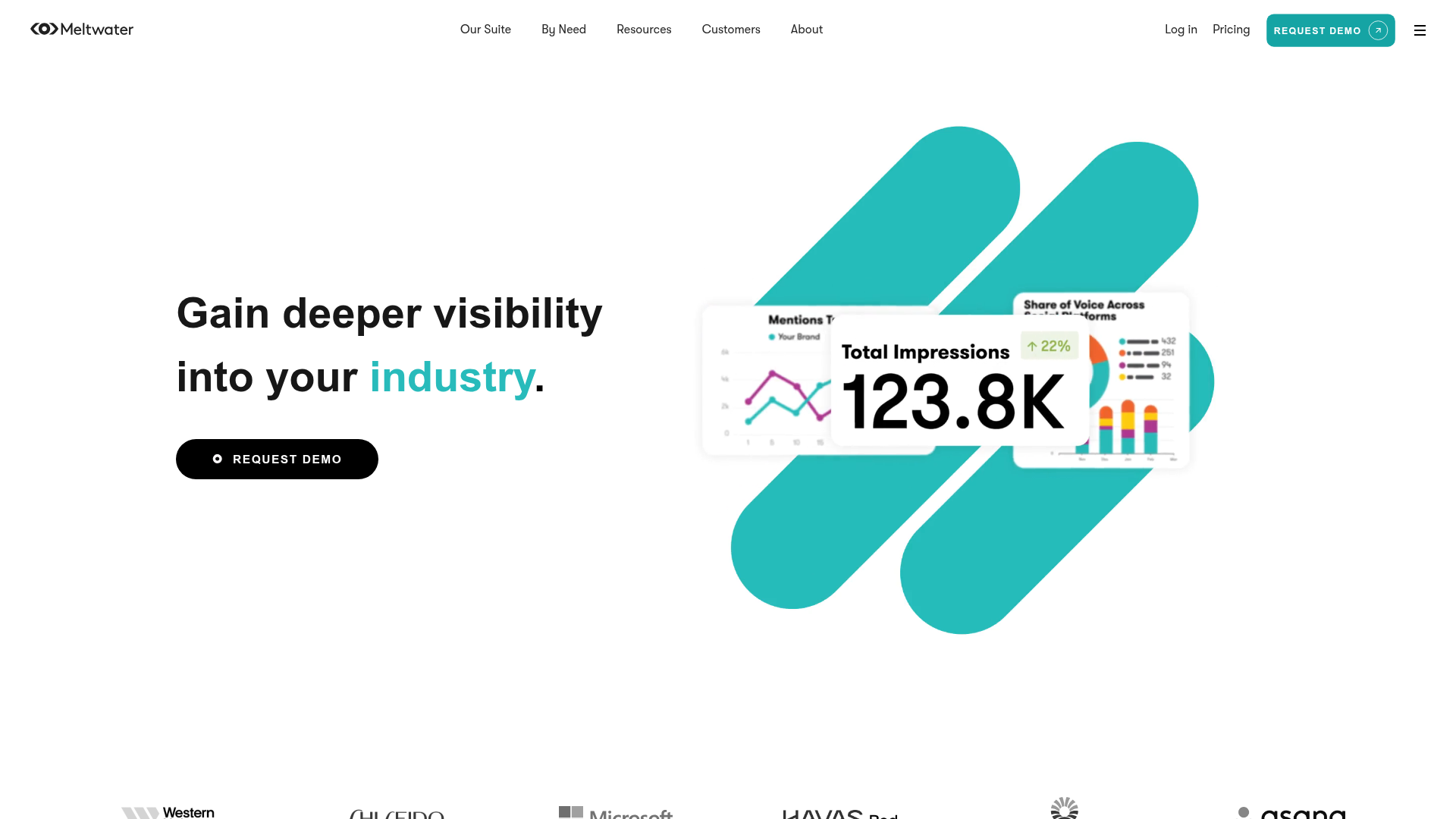
Meltwater is one of the largest media intelligence tools in the PR analytics category, covering 190+ countries with a database of 270,000+ news sources, social platforms, broadcast, and print. The platform combines media monitoring, social listening, influencer management, and analytics into a single media monitoring platform. It's the enterprise default for organizations that need global coverage and don't want to stitch together multiple tools.
Best for: Enterprise communications teams that need global media monitoring, social listening, and influencer management in one platform.
The breadth of Meltwater's media database is its strongest selling point. AI-powered trend detection surfaces emerging stories and sentiment shifts before they become obvious. The social listening module tracks conversations across major platforms, and the influencer management feature helps identify and track relationships with key voices. Reporting dashboards are customizable, and the platform integrates with Salesforce and other CRMs for connecting PR data to business outcomes.
The honest trade-off: Meltwater is expensive. Annual contracts typically start around $6,000/year and climb quickly with add-ons. Onboarding takes weeks, not days. The platform can feel bloated for teams that only need basic monitoring, and the UX has a learning curve that frustrates new users. If you're a 3-person PR team doing domestic media relations, Meltwater is overkill.
Key strengths
- Coverage across 270,000+ news sources and social platforms globally
- AI-driven trend detection and sentiment analysis
- Integrated social media management and listening
- Custom dashboards and automated reporting
- Influencer discovery and relationship management
Pricing: Custom pricing (estimated $6,000+/year with annual contracts) G2 Rating: 4.0/5
2. Cision (CisionOne)
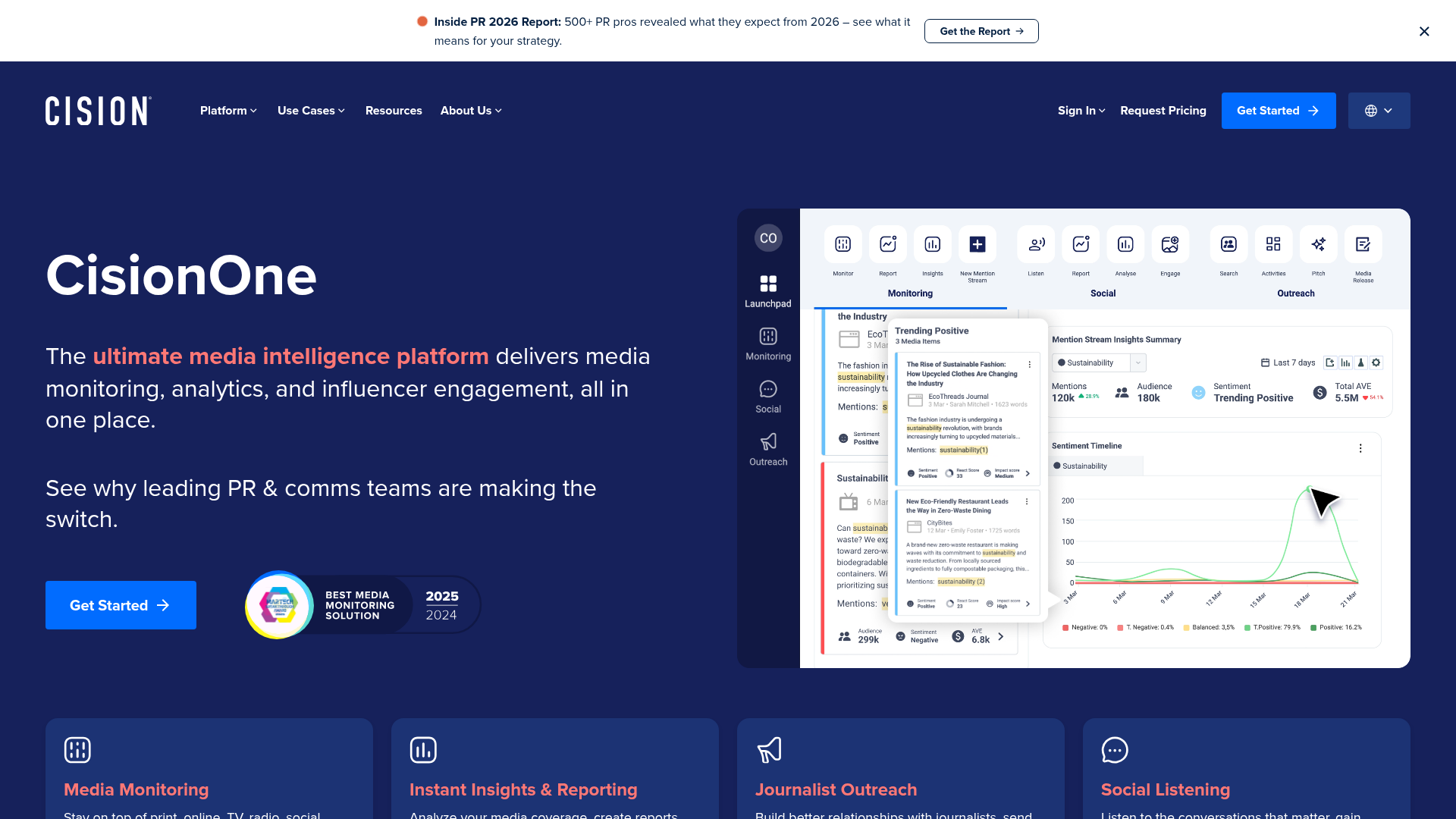
Cision is the legacy leader in PR software, and CisionOne is its latest platform iteration designed to unify media contacts, monitoring, distribution, and analytics. The core differentiator is the combination of what Cision claims is the largest journalist database (1.7M+ contacts) with integrated press release distribution through PR Newswire. If you need to find journalists, distribute releases, monitor coverage, and report on results in one place, Cision covers the full workflow.
Best for: Large PR teams and agencies that need an end-to-end platform combining media database, distribution, and analytics.
CisionOne's media database depth is hard to match. The PR Newswire integration means you can distribute and track press releases without leaving the platform. Monitoring spans online, print, broadcast, and social channels, and audience insights add demographic data to coverage analysis. Enterprise-grade compliance and security features make it a fit for regulated industries.
The honest trade-off: Cision's G2 rating sits at 3.4/5, notably lower than most competitors on this list. Users consistently report UX complexity, a dated interface, and mixed customer support experiences. Pricing is high and opaque, and annual contracts are standard. If you're evaluating Cision, request a thorough demo and talk to current users before committing. The platform has the features, but the user experience doesn't always match the price tag.
Key strengths
- One of the largest global media contact databases (1.7M+ contacts)
- Integrated press release distribution via PR Newswire
- Monitoring across online, print, broadcast, and social
- Audience segmentation and demographic insights
- Enterprise-grade compliance and security
Pricing: Custom pricing (estimated $7,000+/year with annual contracts) G2 Rating: 3.4/5
3. Muck Rack
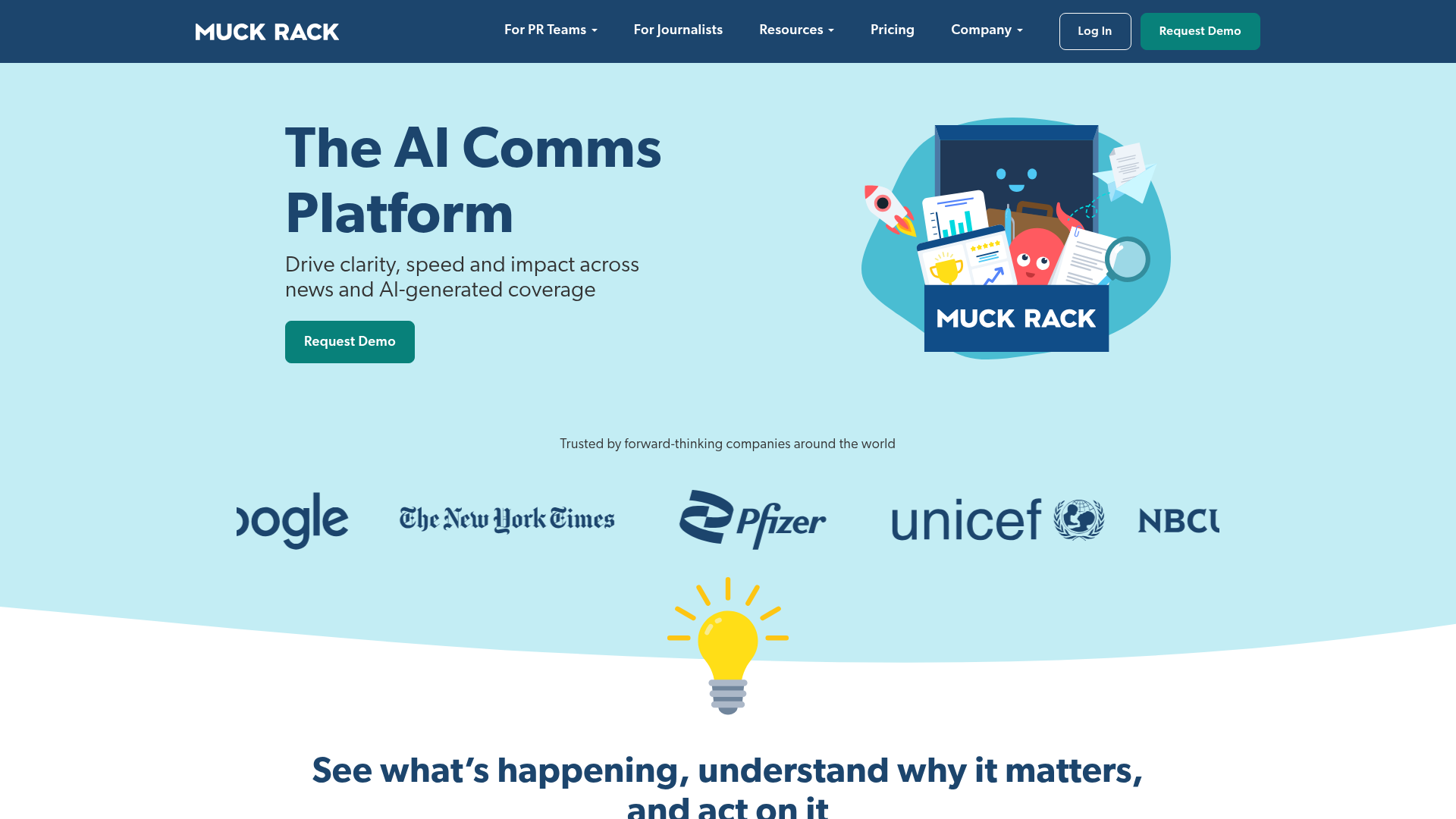
Muck Rack grew from a journalist database into a full PR management software platform, and its journalist-first approach remains its strongest differentiator. The platform tracks what journalists publish and share in real time, making it easier to find relevant contacts and track coverage automatically. For earned media tracking and journalist outreach, it's one of the most intuitive tools in the category.
Best for: PR teams focused on earned media who want strong journalist discovery, automated coverage tracking, and a clean UX.
Muck Rack's real-time journalist indexing is the feature that sets it apart. The platform automatically collects coverage clips, tracks share of voice and sentiment, and integrates with Slack for team alerts. Media list building is intuitive, with contact verification that reduces bounce rates on pitches. The reporting module generates share of voice and sentiment reports that are clean enough for executive presentations.
The honest trade-off: pricing is opaque and has been rising, which frustrates users who remember when it was more accessible. Analytics depth doesn't match Meltwater or Brandwatch for social listening. Muck Rack is built for earned media tracking, not social analytics. If social listening is your primary need, this isn't the right tool.
Key strengths
- Real-time indexing of journalist articles and social posts
- Automated coverage tracking and clip collection
- Intuitive media list building with contact verification
- Share of voice and sentiment reporting
- Strong UX relative to enterprise PR tools (frequently noted in reviews)
Pricing: Custom pricing (estimated $5,000+/year) G2 Rating: 4.5/5
4. Prowly
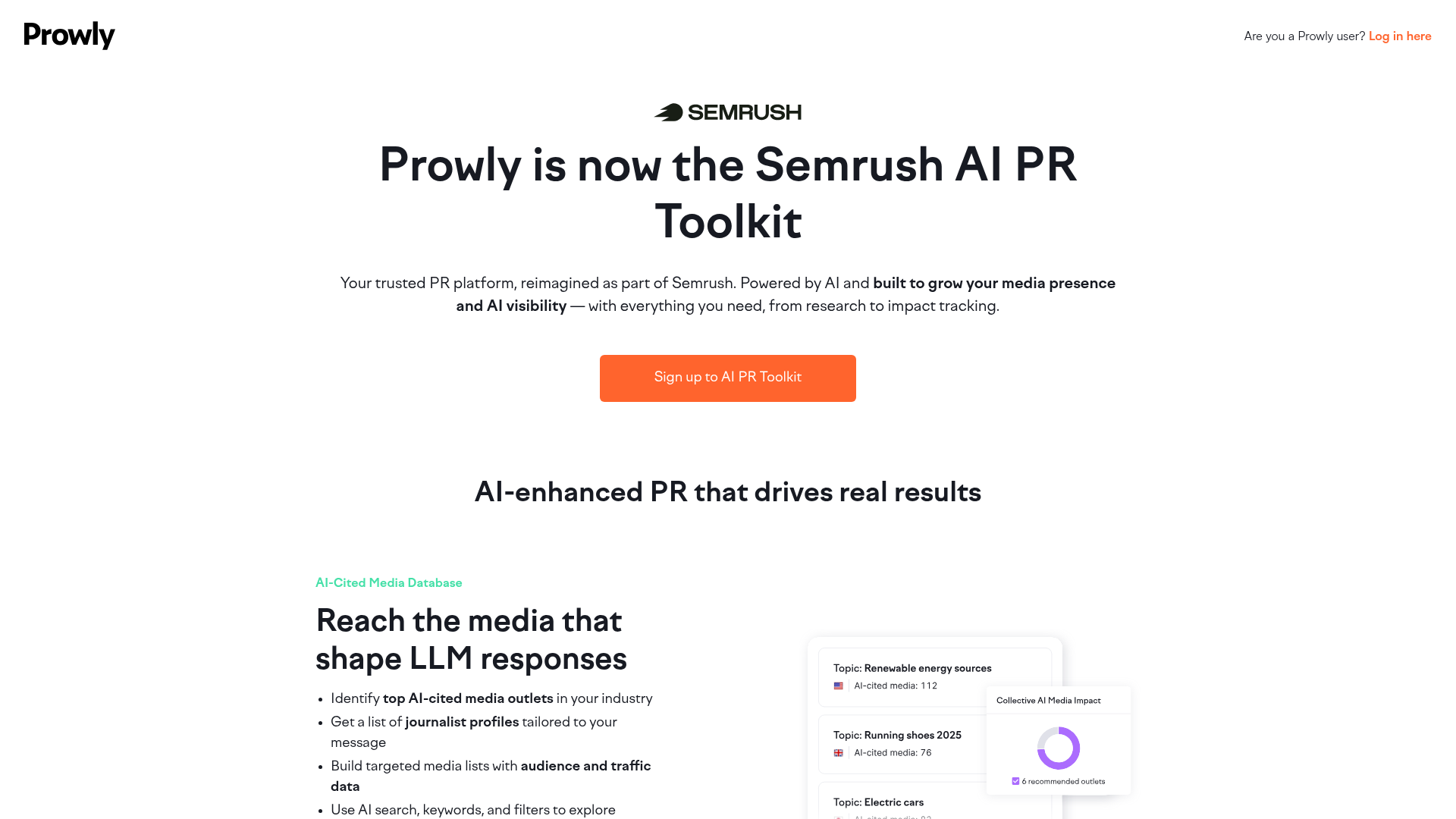
Prowly is the most accessible full-featured PR management software platform for small to mid-sized teams. Acquired by Semrush, Prowly now offers a unique advantage no other PR tool on this list can match: SEO data integration that shows how PR coverage impacts search visibility. Transparent monthly pricing (from $369/mo) is another standout in a category dominated by opaque annual contracts.
Best for: Small to mid-sized PR teams that want media monitoring, journalist outreach, and SEO-informed PR strategy without enterprise pricing.
Prowly's media monitoring includes sentiment analysis across online sources, and the journalist database covers 1M+ contacts. The online newsroom builder lets you create a branded media hub, and the press release creator handles distribution. The Semrush integration is the real differentiator: you can see how earned media placements affect keyword rankings and organic traffic, connecting PR activity to SEO outcomes in a way no other tool does. If you're looking for dedicated SEO tools to complement your PR strategy, that's worth exploring separately.
The honest trade-off: Prowly's monitoring database is smaller than Meltwater or Cision. Broadcast monitoring is limited. Analytics depth is solid for mid-market needs but won't satisfy enterprise teams that need deep social listening or global broadcast tracking. If you need monitoring across 190+ countries or broadcast TV coverage, look elsewhere.
Key strengths
- Transparent monthly pricing (from $369/mo), rare in this category
- Semrush integration for SEO-informed PR strategy
- Integrated media monitoring and journalist database (1M+ contacts)
- Online newsroom builder for brand-owned media hubs
- Visual coverage reports with automated metrics
Pricing: From $369/month G2 Rating: 4.4/5
5. Brand24
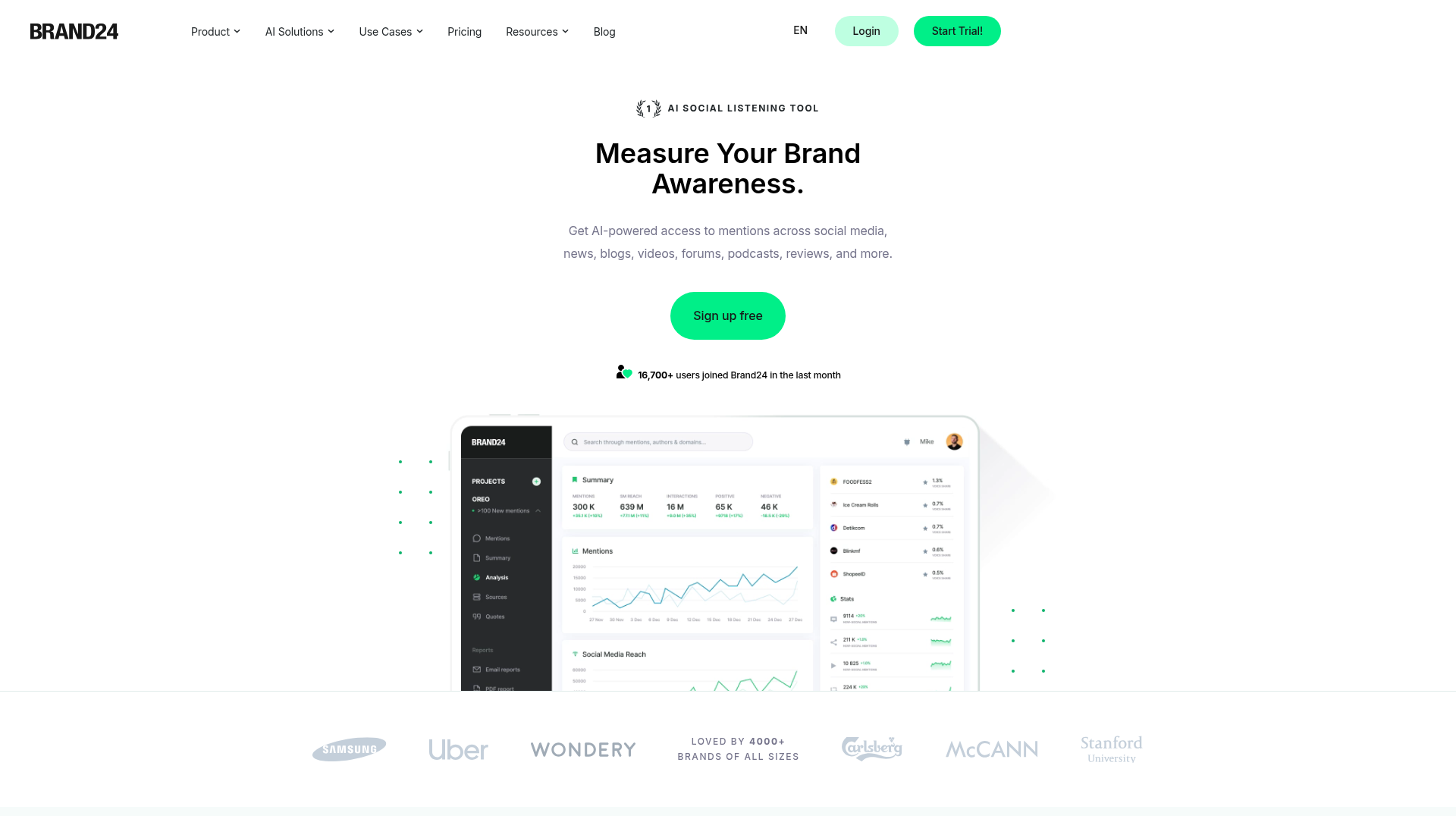
Brand24 is the best affordable option for real-time brand monitoring and sentiment analysis, especially across social channels. It's not a full PR suite. There's no journalist database, no press release distribution. But as a social media monitoring tool and PR monitoring tool, its capabilities are strong for the price. Brand24 tracks 25M+ online sources including social platforms, news, blogs, forums, podcasts, and video.
Best for: Teams that need affordable, real-time mention tracking and sentiment analysis without paying for a full enterprise platform.
Brand24's AI-powered sentiment analysis classifies mentions automatically, and the anomaly detection feature flags unusual spikes in mention activity. Influencer scoring helps identify who's driving conversations about your brand. Share of voice metrics let you benchmark against competitors, and discussion volume charts show trends over time. Automated PDF reports and Slack integration make it easy to share findings with your team.
The honest trade-off: Brand24 is a monitoring and analytics tool, not a full PR workflow platform. No journalist database, no press release distribution, no media list management. It works best as a monitoring complement alongside a tool like CoverageBook for reporting or Muck Rack for outreach, not as a standalone PR platform.
Key strengths
- Real-time monitoring across social, news, blogs, forums, podcasts, and video (25M+ sources)
- AI-driven sentiment analysis and anomaly detection
- Influencer identification and scoring
- Affordable entry point relative to enterprise tools (from $199/mo)
- Hashtag tracking and trending topic alerts
Pricing: From $199/month G2 Rating: 4.6/5
6. Brandwatch
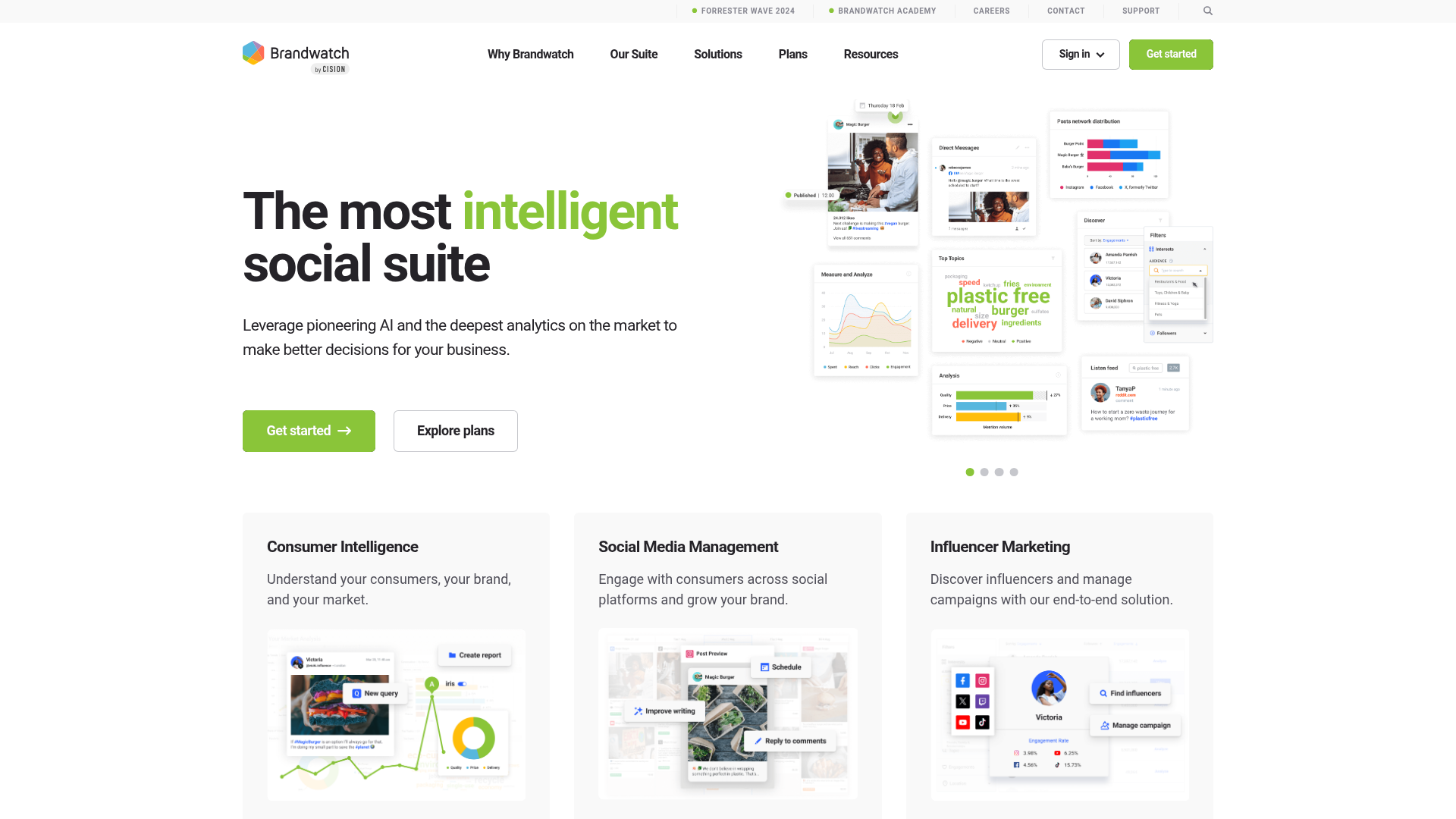
Brandwatch is the deep social intelligence platform for teams that need to go beyond standard PR monitoring into consumer research, audience analysis, and competitive intelligence. Now part of Cision's portfolio, it processes billions of online conversations across 100M+ sources with access to 1.7 trillion historical posts. The AI-powered image recognition can detect your logo in visual content, a capability most media intelligence tools lack entirely.
Best for: Enterprise teams and agencies that need deep social media monitoring software, consumer research, and audience analysis at scale.
Brandwatch's data coverage is massive. The AI-powered topic and trend analysis surfaces emerging conversations before they peak. Custom dashboards offer real-time data visualization, and audience segmentation lets you break down who's talking about your brand by demographics, interests, and behaviors. The API is strong for teams that want to pull data into custom reporting or BI tools.
The honest trade-off: Brandwatch is expensive, with enterprise-tier pricing that requires a sales conversation. The learning curve is steep. It's overkill for teams that just need basic media monitoring, and it's better for social and digital intelligence than traditional earned media tracking. If you're a 3-person PR team doing media relations, this is not your tool.
Key strengths
- Massive data coverage (100M+ sources, 1.7 trillion historical posts)
- AI-powered image recognition for visual brand monitoring
- Advanced audience segmentation and consumer research
- Custom dashboards with real-time data visualization
- Strong API for custom integrations and data export
Pricing: Custom pricing G2 Rating: 4.4/5
7. CoverageBook
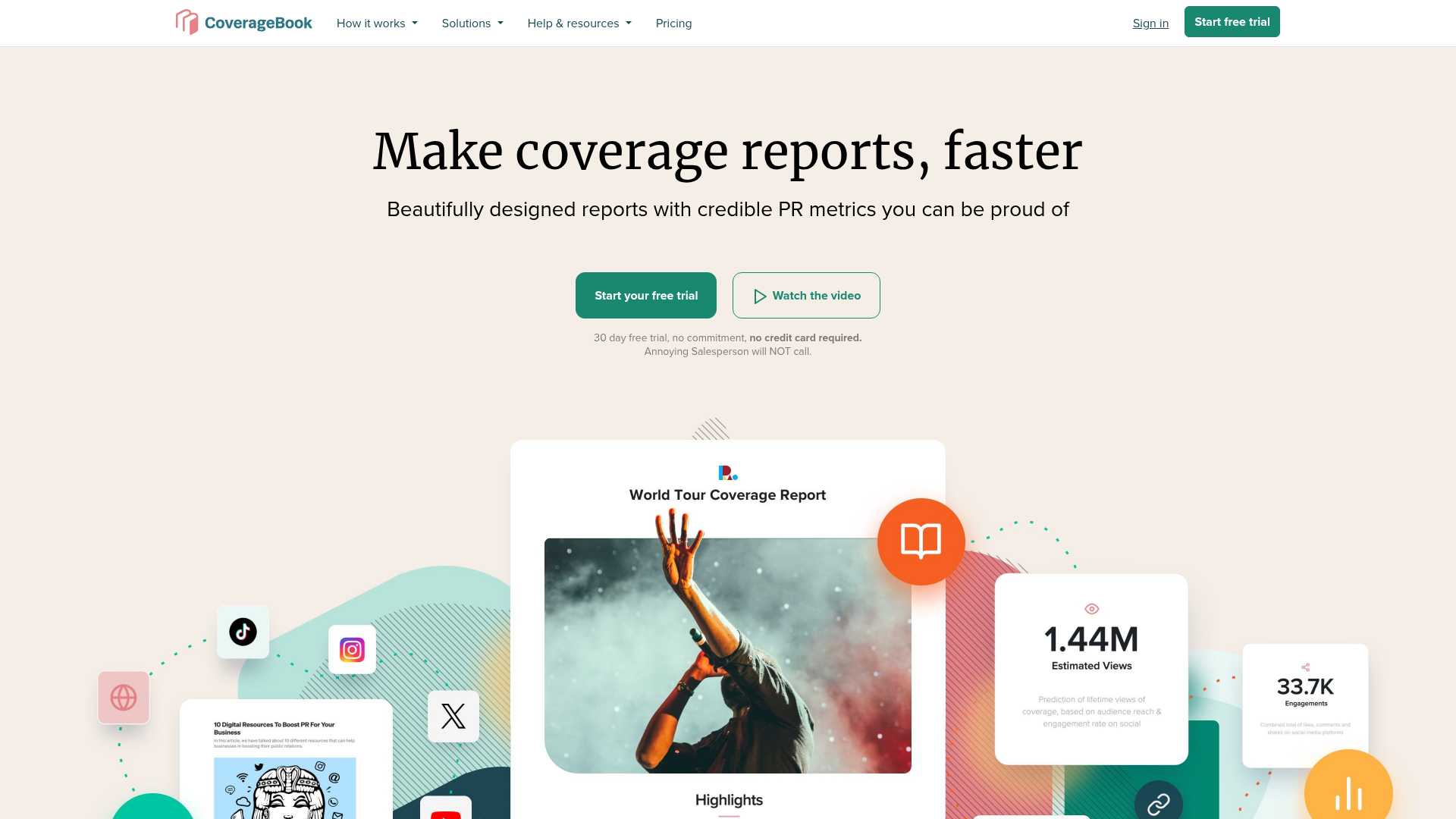
CoverageBook does one thing exceptionally well: it turns media coverage into visual, shareable reports. You paste in URLs of coverage, and it automatically pulls metrics (domain authority, estimated reach, social shares) and generates a polished report. What takes 3–4 hours in Google Slides takes 15 minutes in CoverageBook.
Best for: PR agencies and in-house teams that need fast, visual coverage reports for clients and stakeholders.
The automated metric collection is the core value. Paste a coverage URL, and CoverageBook pulls estimated reach, domain authority, and social share counts. The visual report templates are clean and professional, ready to send to clients or executives without additional design work. Team collaboration features let multiple people contribute to reports, and the pricing is transparent with no hidden costs.
The honest trade-off: CoverageBook is NOT a monitoring tool. You need to find the coverage first, using another tool or manual searching. No journalist database, no sentiment analysis, no mention tracking. It's a reporting layer, not a monitoring platform. Best paired with a monitoring tool like Brand24 or Muck Rack.
Key strengths
- Automated metric collection from coverage URLs (reach, DA, social shares)
- Clean, visual report templates ready for stakeholders and clients
- Fast report creation (minutes instead of hours)
- Team collaboration and shared workspaces
- Simple, transparent pricing with no hidden costs (from $99/mo)
Pricing: From $99/month G2 Rating: 4.6/5
8. Critical Mention
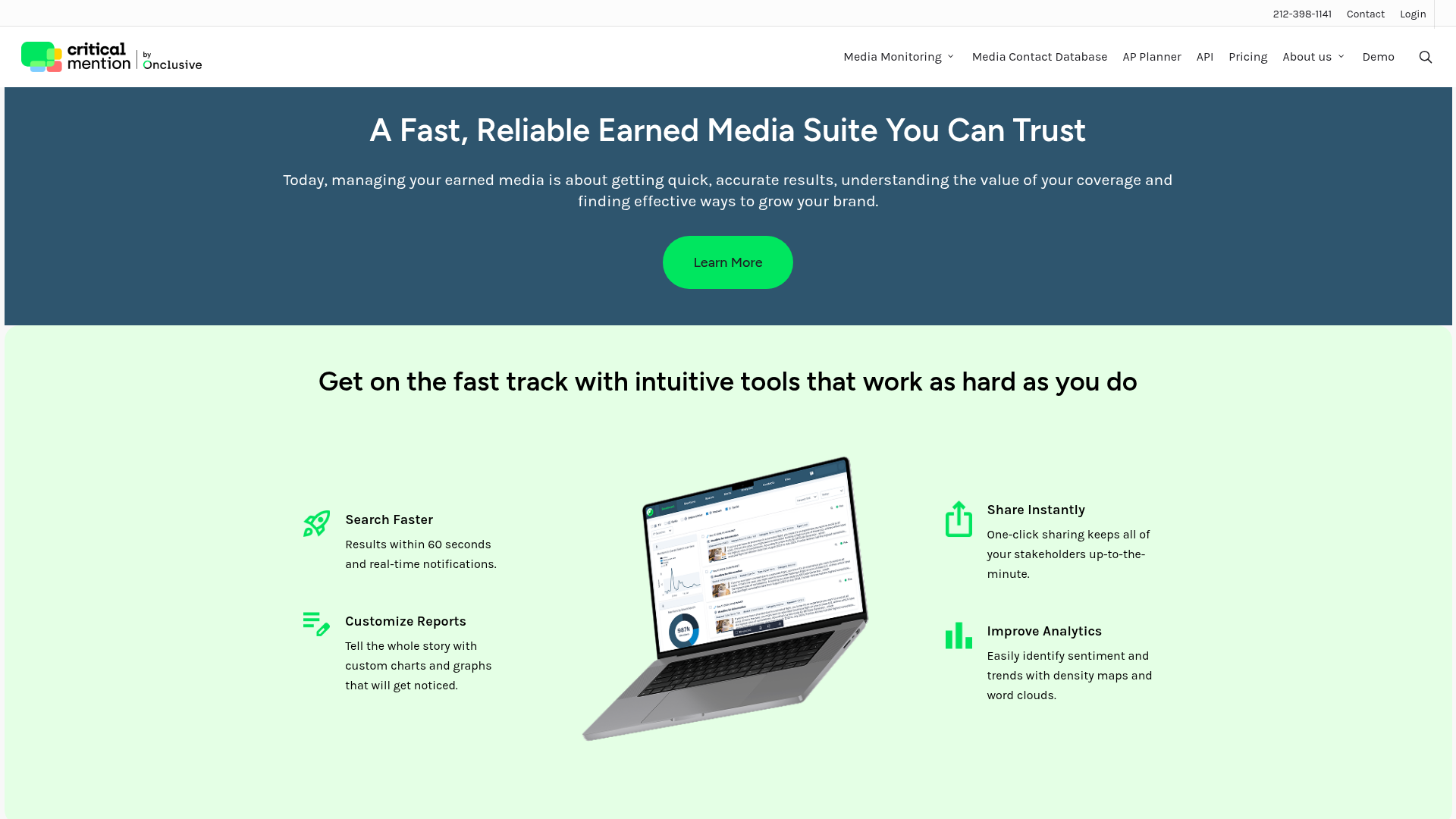
Critical Mention is the standout for broadcast media monitoring, a capability that most other PR analytics tools either lack or handle poorly. Its core differentiator is real-time TV and radio monitoring with searchable archives and shareable clips. If your industry cares about broadcast coverage (consumer brands, politics, healthcare, financial services), Critical Mention fills a gap in media tracking software that Meltwater and Cision only partially cover.
Best for: PR teams in broadcast-heavy industries that need real-time TV and radio monitoring with clip sharing.
Critical Mention offers real-time media monitoring across broadcast, online, social, and print in a unified dashboard. The searchable broadcast archive lets you find and share specific TV or radio segments. Sentiment analysis and custom alerts keep you informed of coverage changes, and earned media reports include share of voice metrics. The clip export feature is particularly useful for executive briefings and client presentations.
The honest trade-off: the UX is functional but not modern. Social listening depth doesn't match Brandwatch or Brand24. Pricing is opaque. If broadcast doesn't matter to your industry, other tools offer better value for online and social monitoring.
Key strengths
- Real-time broadcast TV and radio monitoring with shareable clip exports
- Unified dashboard across broadcast, online, social, and print
- Searchable broadcast archive
- Custom alerts and automated reporting
- Earned media analysis with share of voice
Pricing: Custom pricing G2 Rating: 4.3/5
9. Agility PR Solutions
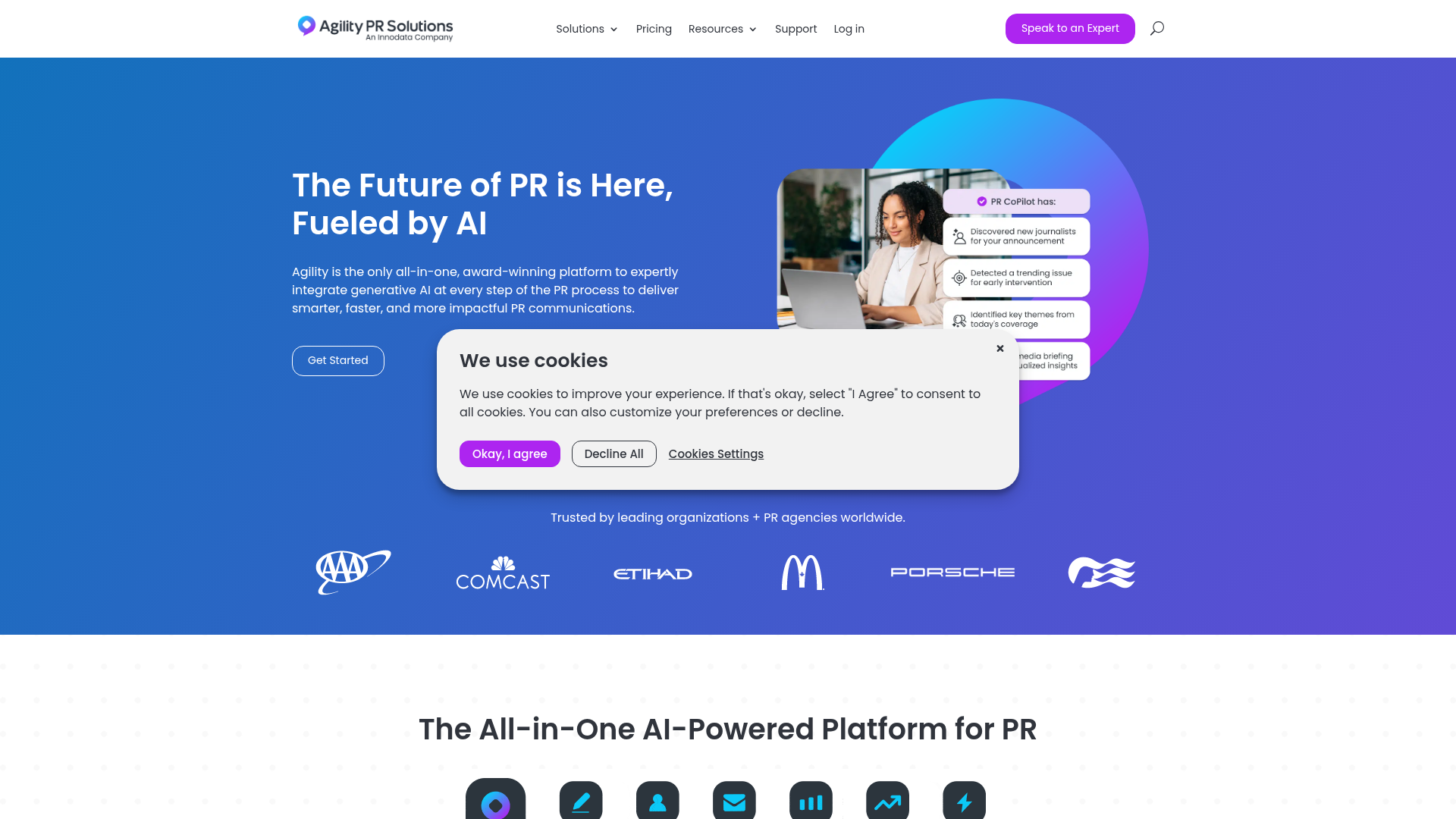
Agility PR Solutions is the mid-market alternative to Cision and Meltwater. It combines a media database, monitoring, and analytics into one platform at a more accessible price point. The differentiator is the balance of capability and usability: it's not as deep as the enterprise platforms, but it's easier to use and the customer support is consistently praised in G2 reviews.
Best for: Mid-market PR teams that want a combined media database, monitoring, and analytics platform without enterprise complexity or pricing.
Agility covers media monitoring across online, social, print, and broadcast sources. The media database includes journalist profiles with contact information and beat coverage. Press release distribution is built in, and analytics dashboards provide coverage volume, sentiment, and share of voice metrics. Media list management and journalist targeting features round out the workflow.
The honest trade-off: the media database is smaller than Cision or Meltwater. AI capabilities are less advanced than newer tools like Determ. Monitoring depth is adequate for domestic and regional coverage but may not have the breadth you need for global campaigns across 190+ countries.
Key strengths
- Combined media database, monitoring, and analytics in one platform
- More accessible pricing than enterprise competitors
- Press release distribution capabilities
- Responsive customer support (frequently cited as a differentiator in G2 reviews)
- Custom media lists and journalist targeting
Pricing: Custom pricing G2 Rating: 4.1/5
10. BuzzSumo
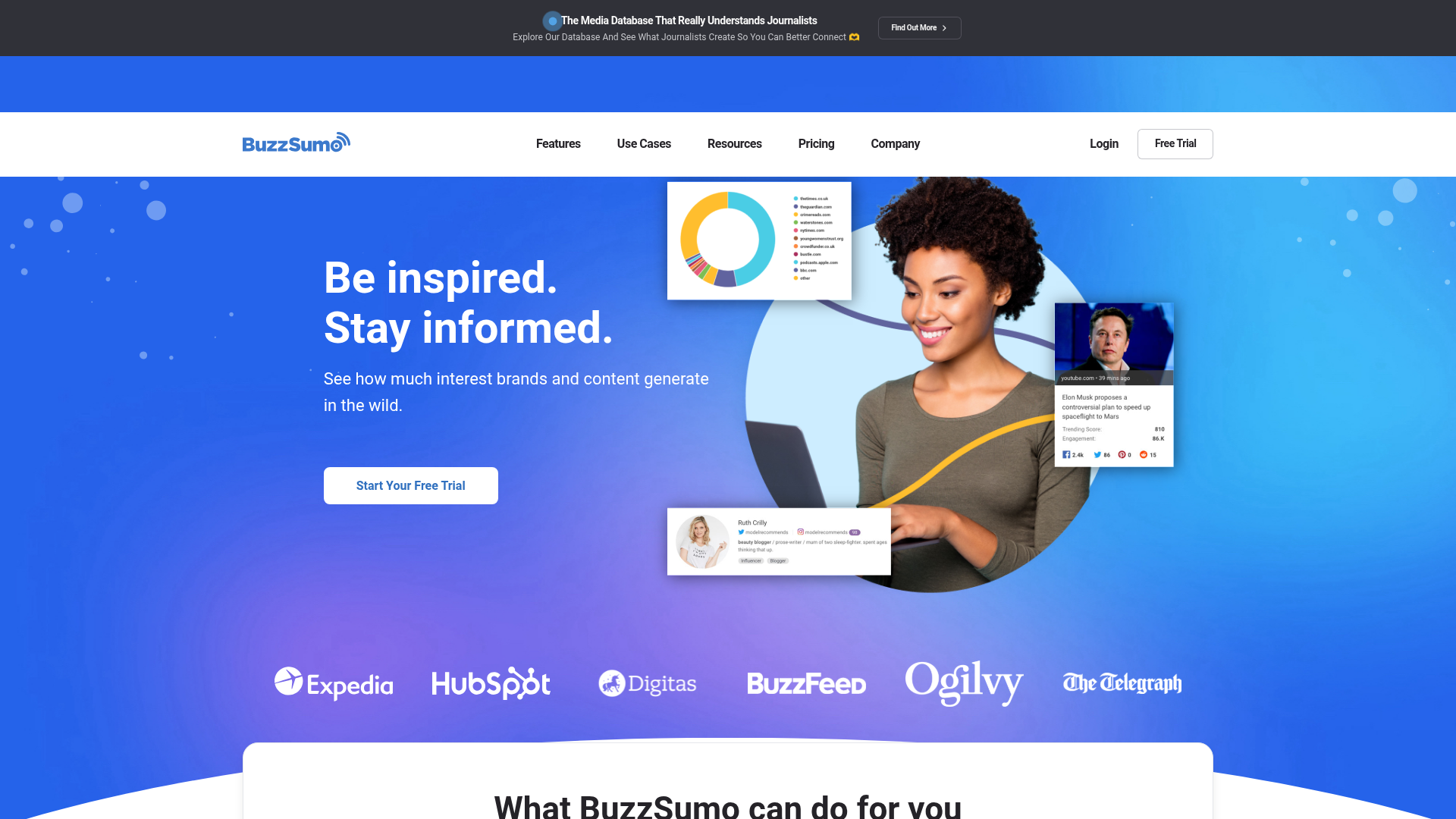
BuzzSumo is a content research and media analytics tool that complements traditional PR analytics. It's not a PR monitoring platform in the traditional sense. It's a tool for understanding what content performs, which journalists cover which topics, and what's trending in your industry. The differentiator is the content intelligence angle: it helps PR teams find the right story angles and the right journalists before pitching, then track how content performs after publication. Teams investing heavily in earned media content may also benefit from dedicated content marketing tools alongside BuzzSumo.
Best for: PR and content teams that need content performance data, journalist discovery by topic, and trending topic identification for story angles.
BuzzSumo's content discovery engine shows what's performing across the web by shares, links, and engagement. The journalist and influencer finder identifies who covers specific topics and beats. Trending topic identification helps with newsjacking opportunities. Brand mention alerts provide content context, and competitor content analysis shows what's working for others in your space.
The honest trade-off: BuzzSumo is not a media monitoring platform. No broadcast coverage, no sentiment analysis in the traditional PR sense, no real-time mention tracking across all media types. It's best used alongside a dedicated monitoring tool, not as a replacement. If you need always-on mention tracking, BuzzSumo isn't it.
Key strengths
- Content performance analysis across the web (shares, links, engagement)
- Journalist and influencer discovery by topic and beat
- Trending topic identification for newsjacking opportunities
- Brand mention alerts with content context
- Competitor content benchmarking
Pricing: From $199/month G2 Rating: 4.5/5
11. Notified
Notified is the tool for corporate communications teams, especially at publicly traded companies, that need PR analytics alongside investor relations capabilities. The differentiator is the dual PR/IR capability: GlobeNewswire distribution, media monitoring, analytics, plus earnings calls and webcasting. No other tool on this list bridges PR and IR in one platform. If your team also manages virtual investor events, you may want to explore dedicated virtual event platforms for more advanced capabilities.
Best for: Corporate communications teams at publicly traded companies that need PR analytics and investor relations tools in one platform.
Notified integrates GlobeNewswire press release distribution with media monitoring and audience engagement analytics. Custom reporting includes competitive benchmarking, and the IR module handles earnings calls, webcasting, and virtual events. This combination makes it uniquely suited for corporate comms teams that report to both marketing leadership and the CFO.
The honest trade-off: the UX feels dated compared to newer tools like Muck Rack or Prowly. It's better for corporate comms than agency use. Analytics depth is solid but not as advanced as Brandwatch or Meltwater for social listening. If you're not a publicly traded company, the IR features are wasted spend.
Key strengths
- Integrated PR and investor relations platform (unique in this list)
- GlobeNewswire press release distribution built in
- Audience engagement and reach analytics
- Custom reporting with competitive benchmarking
- Webcasting and virtual event capabilities for IR
Pricing: Custom pricing G2 Rating: 4.0/5
12. Prezly
Prezly is a modern PR CRM and online newsroom platform. Its analytics focus is different from most tools on this list. Instead of broad media monitoring, Prezly tracks contact engagement: who opened your pitch, who clicked, who forwarded it. The differentiator is the combination of a clean, modern UX with PR-specific CRM functionality and branded newsroom hosting. Teams that want to compare Prezly's CRM approach with broader options should also review the best CRM software landscape.
Best for: PR teams that prioritize contact relationship management, pitch engagement tracking, and branded online newsrooms.
Prezly's PR CRM tracks engagement at the contact level, showing opens, clicks, and forwards for every pitch you send. The branded online newsroom builder lets you create a media hub with multimedia stories and press releases. The visual story creator supports images, video, and file attachments. Onboarding is fast, and the UX is noticeably cleaner than most tools in this category.
The honest trade-off: Prezly is NOT a media monitoring tool. No social listening, no sentiment analysis across media, no broad mention tracking. Analytics are focused on outreach engagement rather than broad media intelligence. Best paired with a monitoring tool like Brand24 or Determ for full coverage.
Key strengths
- PR-specific CRM with contact engagement tracking (opens, clicks, forwards)
- Branded online newsroom builder
- Visual story and press release creator with multimedia support
- Clean, modern UX with fast onboarding
- Affordable entry point (from $80/mo)
Pricing: From $80/month G2 Rating: 4.5/5
13. CARMA
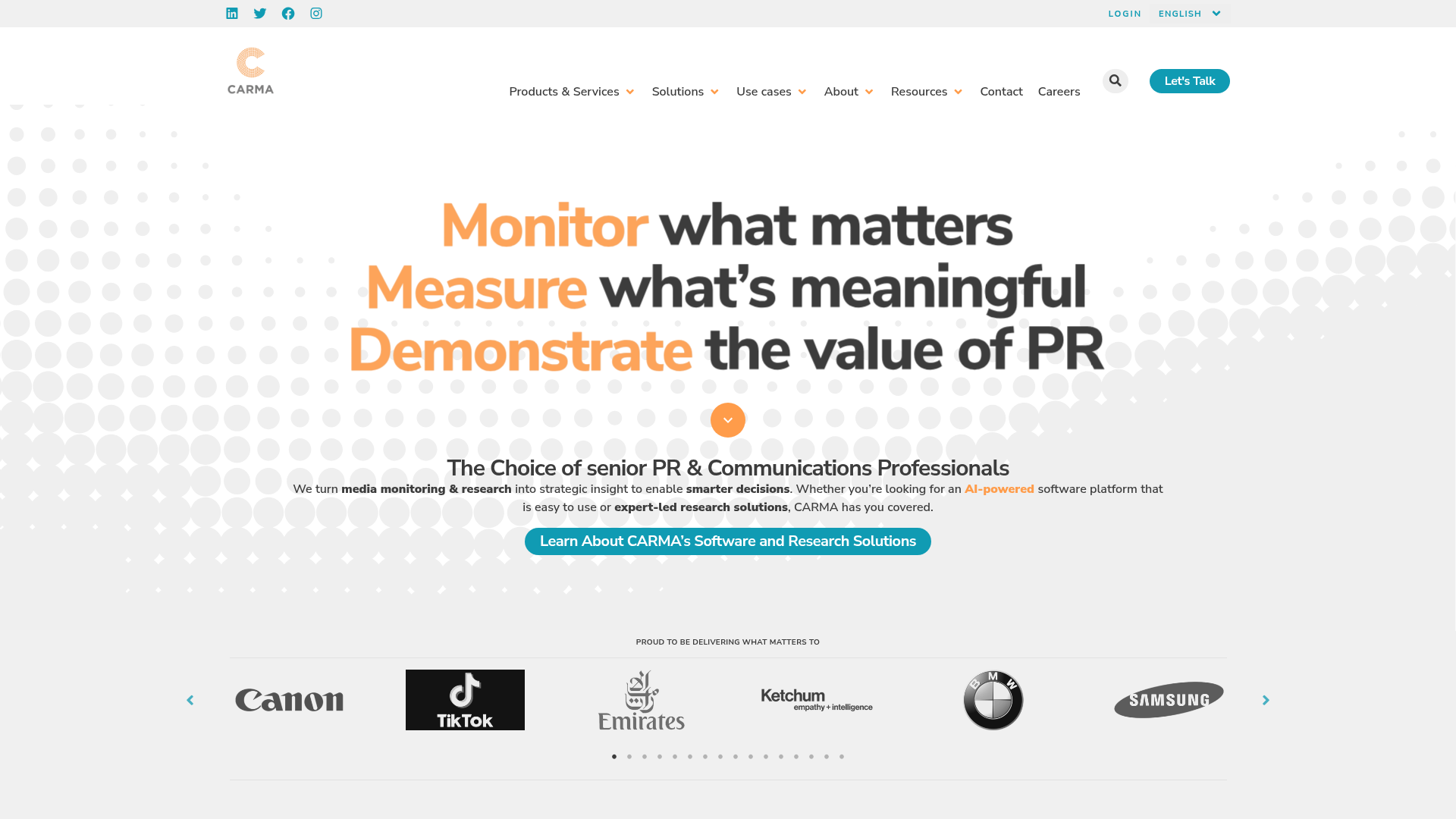
CARMA is the managed media intelligence option. Unlike every other tool on this list, CARMA combines software with human analysts who build custom reports, dashboards, and strategic insights. The differentiator is the human layer: CARMA's analysts interpret data and deliver media coverage analysis aligned to business KPIs, following frameworks like the Barcelona Principles and AMEC measurement standards.
Best for: Enterprise teams and agencies that want expert-curated media analysis and strategic insights, not just a software dashboard.
CARMA's managed services model means you get custom dashboards built to your specific KPIs, human-curated insights that go beyond automated sentiment scores, and global media monitoring with regional analyst expertise. Reputation and brand perception measurement follows established industry frameworks, giving your reports credibility with senior leadership. This is the best data analytics approach for PR agencies that need to deliver strategic counsel alongside coverage data.
The honest trade-off: CARMA is more expensive than self-serve tools. You have less hands-on control over your data. Turnaround is slower than real-time platforms because you're waiting for human analysis. If you want to explore data yourself in real time, CARMA isn't the right model.
Key strengths
- Human-curated media analysis alongside software (unique in this list)
- Custom dashboards aligned to business KPIs
- Reputation and brand perception measurement
- Global coverage with regional analyst expertise
- Alignment with Barcelona Principles and AMEC measurement frameworks
Pricing: Custom pricing G2 Rating: 4.2/5
14. Determ
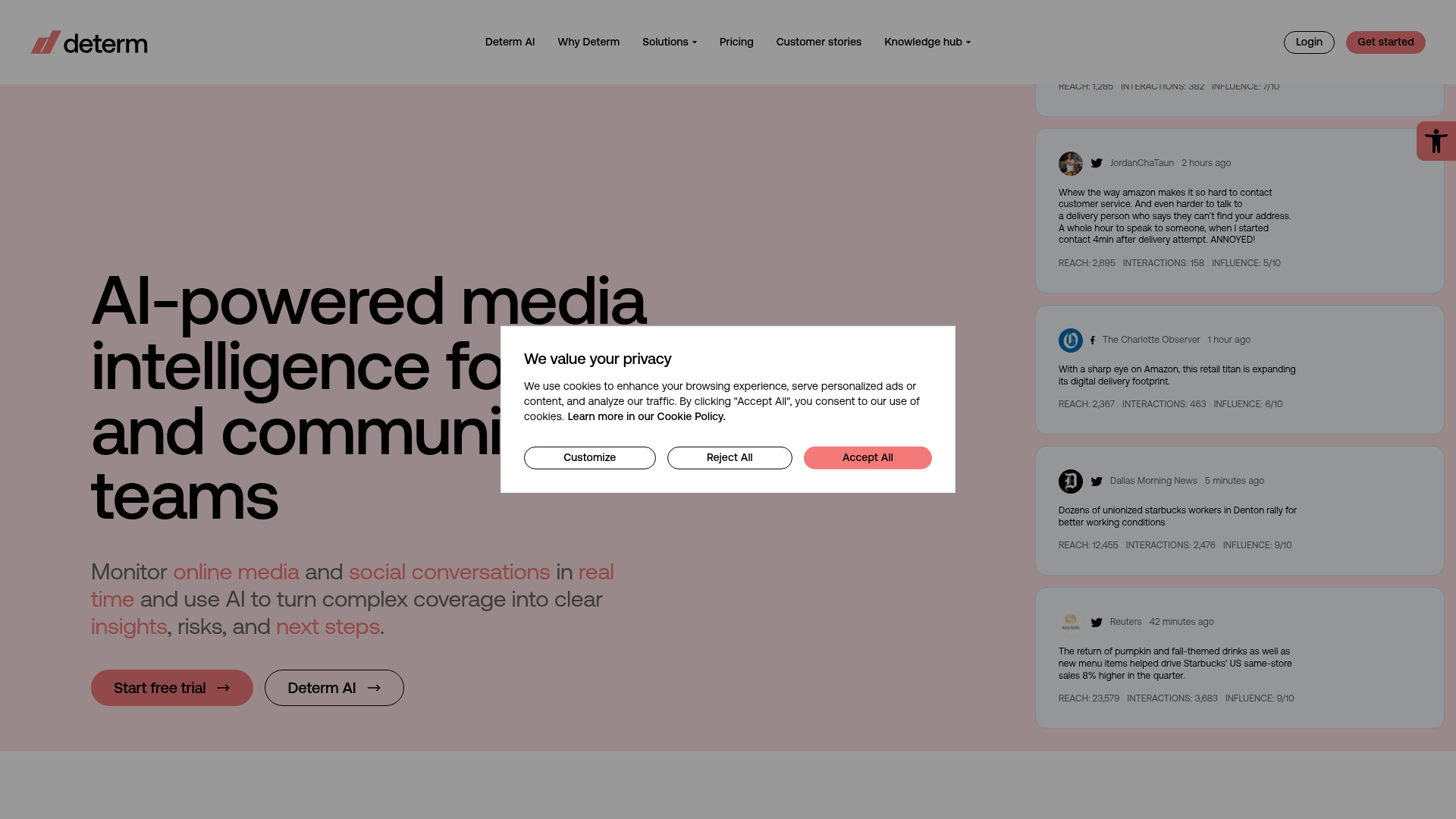
Determ (formerly Mediatoolkit) is the AI-forward media tracking software platform with the strongest crisis detection capabilities on this list. The standout feature is Synthia AI, an AI engine that automatically detects unusual spikes in mention activity and alerts you before a situation becomes a crisis. The combination of AI-powered real-time media monitoring with mid-range pricing (from $159/mo) makes it accessible to teams that can't afford Meltwater but need more than Brand24.
Best for: PR teams that need AI-powered crisis detection and real-time monitoring at a mid-range price point.
Determ monitors 100M+ online sources in real time with multilingual sentiment analysis. The AI spike detection identifies anomalies in mention volume and alerts you automatically, giving you a head start on crisis response. Competitive benchmarking and share of voice metrics help you track your position relative to competitors. Custom reports can be scheduled or generated on demand.
The honest trade-off: Determ has smaller brand recognition than Meltwater or Cision, which can matter for enterprise procurement processes. No journalist database or outreach features. It's focused on monitoring and analytics rather than full PR workflow. If you need journalist outreach and monitoring in one tool, look at Muck Rack or Prowly instead.
Key strengths
- AI-powered spike detection (Synthia AI) for early crisis identification
- Real-time monitoring across 100M+ online sources
- Multilingual monitoring and sentiment analysis
- Competitive benchmarking and share of voice
- Mid-range pricing (from $159/mo), more affordable than enterprise platforms
Pricing: From $159/month G2 Rating: 4.6/5
15. Google Analytics
Google Analytics isn't a PR tool. But it's the most accessible way to measure one of the most important PR outcomes: did coverage actually drive traffic to your website? It's free, it's already installed on most websites, and it answers the question leadership actually cares about.
Best for: Every PR team, regardless of budget, that needs to connect media coverage to website traffic and business outcomes.
Google Analytics tracks referral traffic from media placements, showing you exactly which publications are driving visitors. UTM parameters let you tag press releases and pitches for campaign-level attribution. Integration with Google Search Console reveals branded search volume trends, which often spike after major coverage. Audience behavior analysis shows what PR-driven visitors do after they land: bounce rate, pages per session, and conversions.
The honest trade-off: not a media monitoring tool. No sentiment analysis, no mention tracking, no share of voice. It requires manual setup and UTM discipline to work well for PR measurement. It only measures web traffic, not reach, impressions, or sentiment. It's a measurement layer, not a monitoring layer. But it's the one tool every PR team should already be using.
Key strengths
- Free to use with robust referral traffic tracking
- UTM parameter support for campaign-level PR attribution
- Integration with Google Search Console for branded search analysis
- Audience behavior insights for PR-driven visitors (bounce rate, pages/session, conversions)
- Custom dashboards and automated reporting via Looker Studio
Pricing: Free G2 Rating: 4.5/5
How to choose the right PR analytics software
Define your primary use case
Are you focused on media monitoring, campaign reporting, social listening, or all three? Full-suite PR software platforms (Meltwater, Cision) cover everything but cost more. Focused tools (CoverageBook for reporting, Brand24 for monitoring) do one thing well at lower cost. Start with the problem, not the feature list.
Evaluate monitoring breadth
Check what sources the tool covers: online news, print, broadcast TV/radio, social media, podcasts, forums. If broadcast matters to your industry, Critical Mention is essential. If social is your priority, Brand24 or Brandwatch are stronger choices. Not every tool covers every channel. For teams that also need to track social media analytics beyond PR-specific use cases, dedicated social analytics platforms may be worth evaluating alongside your PR stack.
Assess reporting and visualization
How much time do you spend building coverage reports? If reporting is a major time sink, prioritize tools with automated, visual reporting (CoverageBook, Prowly, Muck Rack). If you're spending 3+ hours per month on reports, this is where you'll see the fastest ROI.
Check integrations with your existing stack
Does the tool connect to your CRM, marketing automation, Slack, or analytics platforms? Meltwater and Cision have broad integration options. Smaller PR tools may rely on Zapier or API connections. If your team lives in Slack, check for native Slack alerts.
Consider pricing model and contract terms
Many enterprise PR tools require annual contracts with opaque pricing. If budget flexibility matters, look for tools with transparent monthly pricing: Prowly ($369/mo), Brand24 ($199/mo), CoverageBook ($99/mo), Determ ($159/mo). Always ask about contract length and cancellation terms before signing.
Test before committing
Most tools offer demos or free trials. Use them. PR analytics software varies significantly in UX, and the tool that looks best on paper may not fit your team's workflow. Run your actual use case through the trial, not just a quick click around the dashboard.
Conclusion
Enterprise teams with global monitoring needs tend to land on Meltwater or Cision. Mid-market teams that want strong analytics without enterprise complexity often find a better fit with Muck Rack, Prowly, or Determ. Agencies focused on client reporting should look at CoverageBook. Budget-conscious teams can start with Google Analytics + Brand24 or CoverageBook for under $300/month.
PR measurement tools are shifting the conversation from "how many clippings did we get" to "what business impact did PR drive." The tools that help you answer the second question are the ones worth investing in. Whatever PR tools you choose, the goal is the same: turn PR activity into data your team and leadership can act on.
Need to present your PR analytics findings to stakeholders or walk prospects through your results? Guideflow lets you create interactive, self-serve walkthroughs of any tool or dashboard in minutes, so your data tells the story without scheduling another meeting.
FAQs about PR analytics software
PR analytics software helps communications and marketing teams measure the impact of public relations activities. Core capabilities include tracking media coverage, analyzing sentiment, monitoring brand mentions, measuring share of voice, and generating reports. It's the category of PR measurement tools that turns PR activity into quantifiable data teams can report on and act on.
Yes, but with caveats. Most PR analytics tools measure outputs like coverage volume, reach, sentiment, and share of voice rather than direct business outcomes like revenue. To measure true ROI, you need to connect PR analytics data with web analytics (referral traffic, conversions) and CRM data (pipeline influenced by PR). Meltwater and Cision offer some attribution features, but the most reliable approach combines PR analytics with Google Analytics and your CRM. PR ROI measurement is still imperfect across the industry.
Pricing varies widely by tier. Free: Google Analytics for referral traffic tracking. Budget ($80–$199/mo): Prezly, CoverageBook, Brand24, Determ. Mid-range ($369/mo+): Prowly. Enterprise ($5,000–$10,000+/year, custom pricing): Meltwater, Cision, Muck Rack, Brandwatch. Most enterprise PR software requires annual contracts and doesn't publish pricing publicly.
Media monitoring is the process of tracking brand mentions across news, social, broadcast, and online sources. It's the data collection layer. PR analytics is broader: it includes monitoring but adds analysis layers like sentiment tracking, share of voice measurement, trend detection, and campaign performance reporting. Most modern PR analytics platforms include media monitoring tools as a core feature, but some tools (like CoverageBook) focus only on the analytics and reporting side and require separate PR monitoring tools for data collection.
Small teams or startups can start with Google Analytics (referral traffic), Google Alerts (basic mention tracking), and CoverageBook ($99/mo for reporting). This stack costs under $100/month and covers the basics. As your PR program grows and you need real-time monitoring, sentiment analysis, and competitive benchmarking, a dedicated PR tools platform becomes worth the investment. A specific trigger: if you're tracking more than 50 mentions per month or reporting to multiple stakeholders, a dedicated tool will save you time.
Core metrics include media mentions (volume and trend over time), sentiment (positive/negative/neutral), share of voice vs. competitors, estimated reach and impressions, referral traffic from coverage (via Google Analytics), domain authority of covering publications, and message pull-through (whether key messages appear in coverage). The specific metrics that matter depend on your PR goals. Brand awareness campaigns prioritize reach and sentiment. Product launch campaigns prioritize coverage volume and referral traffic. For teams that want deeper product analytics beyond PR-specific metrics, dedicated product analytics platforms can complement your PR measurement stack.
AI capabilities that are now standard or emerging include automated sentiment analysis across languages, anomaly and spike detection for crisis early warning (Determ's Synthia AI is a strong example), trend prediction, automated report generation, journalist recommendation based on topic relevance, and natural language summaries of coverage. AI reduces the manual analysis burden but still requires human judgment for strategic interpretation. The tools that use AI best are the ones that surface insights, not just data.
Yes, for most mid-range and enterprise platforms. Common integrations include CRMs (Salesforce, HubSpot), marketing automation (Marketo, HubSpot), communication tools (Slack, Microsoft Teams), and analytics platforms (Google Analytics). Integration depth varies significantly: Meltwater and Cision have the broadest native options, while smaller tools like Brand24 and Determ may rely on Zapier or API connections. Verify specific integration capabilities during evaluation. Ask for the integrations page, not just a "yes we integrate" answer.