Your customers are leaving, and most of them won't tell you why. By the time you see the cancellation request, the decision was made weeks ago.
This guide covers 15 proven strategies to reduce customer churn, from analyzing your data to building save flows that actually recover revenue. You'll learn how to spot at-risk customers before they cancel and which interventions work at each stage of the customer lifecycle.
TL;DR
- Reducing customer churn starts with proactive value delivery, faster onboarding, and identifying at-risk customers before they cancel.
- Most churn traces back to slow time-to-value, low product adoption, or unresolved support issues, not price.
- Behavioral data catches warning signs weeks before cancellation requests arrive.
- Self-serve customer education scales retention efforts without adding headcount.
- The most effective churn reduction programs combine behavioral analytics with personalized engagement based on what customers actually do.
What is customer churn and why it matters
Customer churn is the rate at which customers stop doing business with you over a given period. When a subscriber cancels, a user downgrades, or an account goes inactive, that counts as churn.
So why does this matter? Acquiring a new customer costs five to seven times more than retaining an existing one. Even small improvements in retention compound over time, which means a 5% increase in customer retention can increase profits by 25% to 95%.
Churn also signals deeper problems. High churn often indicates product-market fit issues, onboarding gaps, or support failures affecting your entire customer base. Understanding these root causes is the first step to reduce customer churn effectively.
How to calculate customer churn rate
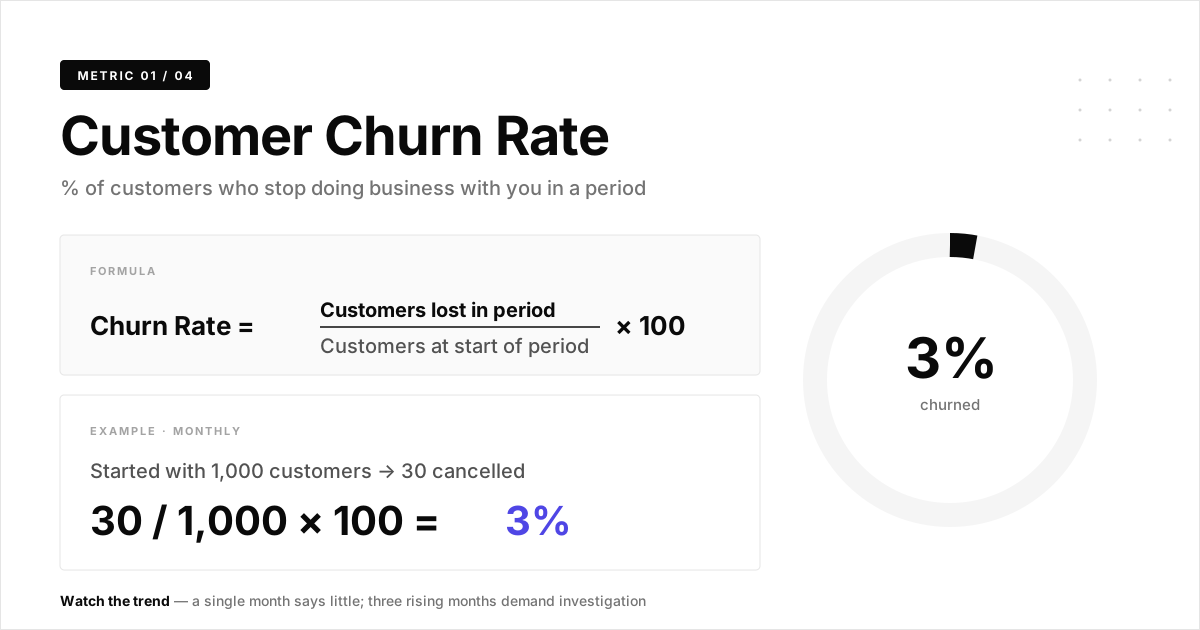
The formula is straightforward:
Churn rate = (Customers lost during period ÷ Customers at start of period) × 100
If you started the month with 1,000 customers and lost 30, your monthly churn rate is 3%. Track this metric consistently over time to spot trends. A single month's number tells you little, but three months of rising churn signals a problem worth investigating.
Monthly and annual calculations serve different purposes. Monthly churn helps you react quickly, while annual churn gives you a clearer picture of long-term retention health.
Voluntary vs involuntary churn
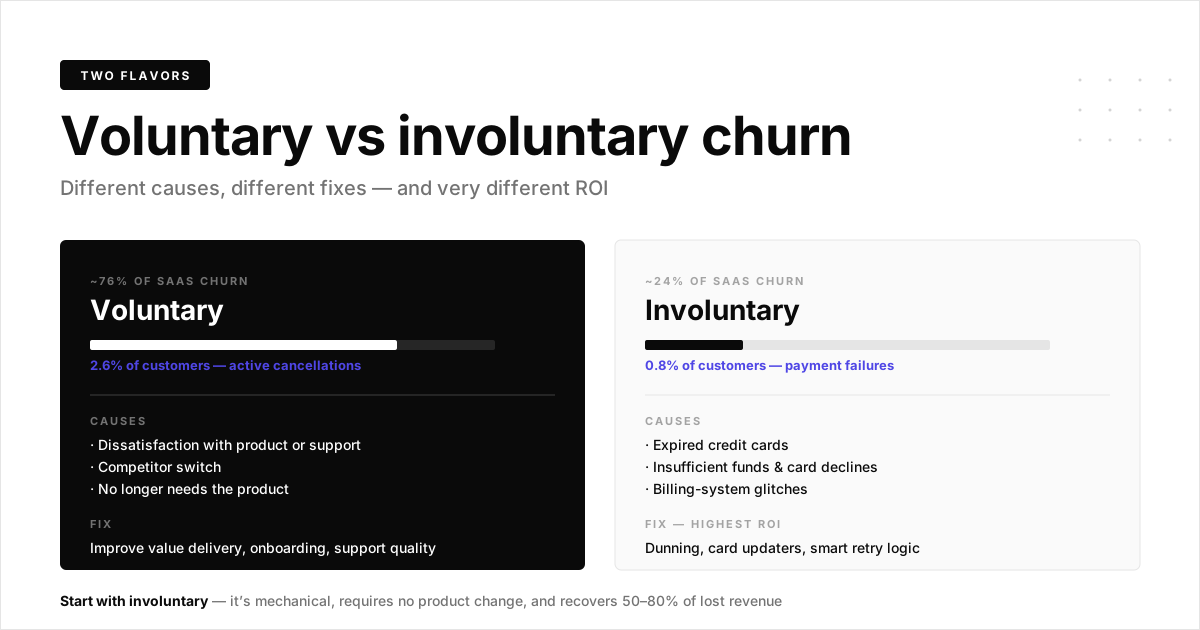
Not all churn happens for the same reasons. 2.6% voluntary vs 0.8% involuntary shows why the distinction matters for your prevention approach.
| Type | Cause | Prevention approach |
|---|---|---|
| Voluntary | Customer actively decides to cancel (dissatisfaction, competitor switch, no longer needs product) | Improve value delivery, onboarding, support quality |
| Involuntary | Payment failures, expired cards, billing issues | Dunning management, card updaters, payment retry logic |
Voluntary churn requires understanding why customers leave and fixing root causes. Involuntary churn is often the highest-ROI fix because it's mechanical: better payment infrastructure recovers revenue without changing your product.
Why customers churn
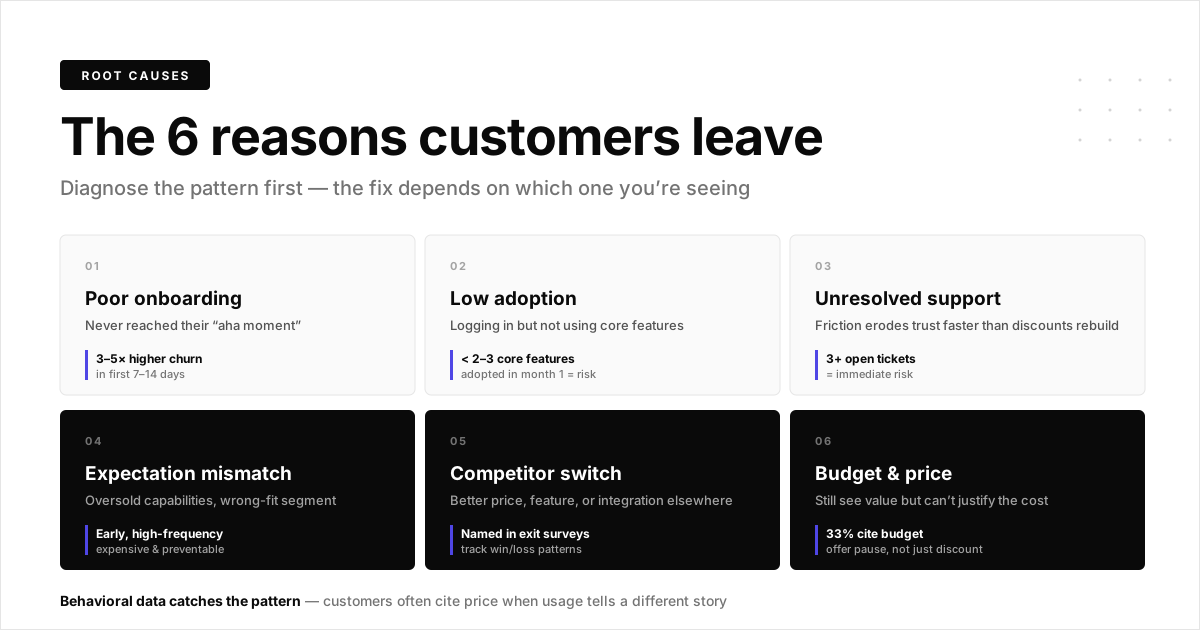
Before jumping to solutions, understand the patterns. Most churn stems from a few common failure modes that show up consistently across customer segments.
Poor onboarding and slow time to value
Customers who never reach their "aha moment" leave quickly. If your product takes weeks to deliver value, doubt sets in. First impressions set the retention trajectory, and a confusing onboarding experience creates friction that compounds over time.
The critical window is typically the first 7-14 days. Customers who don't complete key setup steps or activate core features during this period have 3-5x higher churn rates. Common onboarding failures include unclear next steps after signup, requiring too much manual configuration before seeing results, and failing to connect the product to the customer's specific use case.
Low product adoption and engagement
Customers who don't use core features don't see value. Usage patterns predict churn better than satisfaction surveys. A customer who logs in daily but never uses your key workflow is at risk, even if they rate you highly on NPS.
Track feature adoption depth, not just login frequency. Customers who use only surface-level features rarely renew. The specific features that correlate with retention vary by product, but typically include workflows that integrate your product into daily operations rather than one-off tasks. Customers who haven't adopted at least 2-3 core features within their first month show significantly higher churn risk.
Unresolved support issues
One bad support experience can trigger cancellation. Repeated friction erodes trust faster than any discount can rebuild it.
The damage compounds when customers escalate issues multiple times without resolution. Long response times, being passed between support agents, or receiving generic answers that don't address the actual problem all accelerate churn. Customers with three or more unresolved tickets are at immediate risk, especially if those tickets relate to core functionality rather than edge cases.
Misaligned customer expectations
When the product doesn't match what was promised during sales, churn follows. Targeting wrong-fit customers creates early, high-frequency churn that's expensive and preventable.
This misalignment often happens when sales teams oversell capabilities, marketing materials showcase advanced features that require extensive setup, or the product genuinely isn't built for the customer's company size or use case. Red flags include customers asking for features during onboarding that don't exist, expressing surprise at implementation requirements, or discovering their specific workflow isn't supported.
Competitive alternatives
Customers leave when competitors offer better value, features, or pricing. Staying aware of market positioning matters, especially in crowded categories where switching costs are low.
Competitive churn accelerates when rivals launch features you lack, offer more aggressive pricing, or provide better integration ecosystems. Customers mention competitors by name in cancellation surveys, compare feature matrices during renewal conversations, or ask whether you plan to match specific competitor capabilities. Monitor win/loss data and exit interviews for patterns around which competitors are winning customers away and why.
Price sensitivity and budget changes
Economic factors and budget cuts cause churn regardless of satisfaction. Not all churn is preventable, but flexible pricing options help retain customers who still see value but face temporary constraints.
Budget-driven churn spikes during economic downturns, end-of-quarter cost reviews, and company restructuring. Customers often signal this churn type by requesting discounts, asking about downgrade options, or mentioning budget freezes before canceling. The key distinction: these customers still see value but can't justify the cost. Offering temporary pauses, usage-based pricing, or feature-limited plans can retain them until their budget situation improves.
15 strategies to reduce customer churn
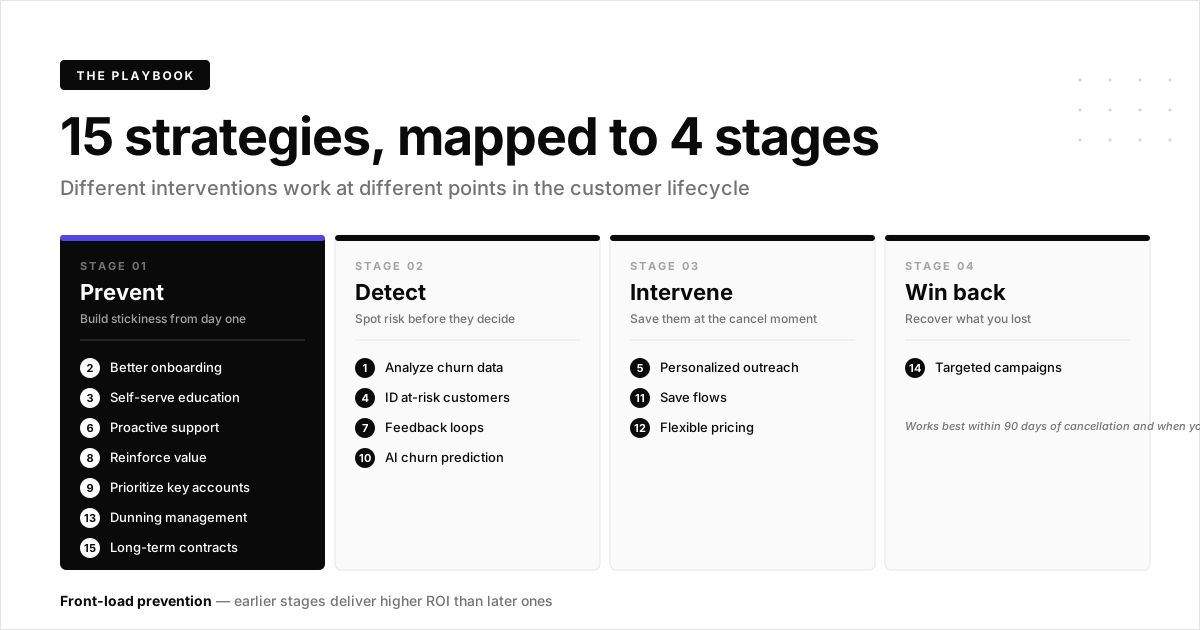
Each of the following addresses the root causes above. The most effective programs to reduce customer churn combine several of these strategies.
1. Analyze your churn data to find patterns
Start with data before taking action. Segment churned customers by tenure, usage, plan type, and acquisition source. Look for common characteristics that reveal why specific customer groups leave.
Key data points to analyze:
- Tenure at cancellation: When do most customers leave - week one or month three? Early churn suggests onboarding problems, while later churn often points to value delivery gaps.
- Feature usage: Which features did churned customers never adopt? Compare feature engagement between retained and churned cohorts to identify which capabilities drive retention.
- Support history: Did they have unresolved tickets or escalations? Track ticket volume, resolution time, and satisfaction scores in the weeks before cancellation.
- Acquisition channel: Are certain sources producing lower-quality customers? Paid ads, referrals, and organic search often attract different customer profiles with varying retention rates.
- Customer segment: Break down churn by company size, industry, or use case to spot patterns in who succeeds versus who struggles.
Exit surveys capture qualitative reasons, but behavioral data often reveals patterns customers won't articulate. A customer might say they're leaving due to price, but usage data shows they never adopted core features that would have justified the cost.
2. Improve onboarding to accelerate time to value
Focus on getting customers to their "aha moment" quickly. Use personalized walkthroughs based on role or use case, not generic tours that cover every feature. Reduce steps to first success by removing unnecessary configuration and focusing on the one workflow that delivers immediate value.
Map your onboarding to specific milestones: account setup, first successful action, core feature adoption, and integration with existing tools. Track completion rates at each stage to identify where customers get stuck.
Interactive demos help customers self-educate faster than static documentation. Customers can explore your product at their own pace, revisit key workflows, and reach value without waiting for a live training session.
Consider re-onboarding when new stakeholders join an account. The person who bought your product often isn't the one using it daily. Interactive demos for training and enablement help scale this re-onboarding process without requiring live sessions for every new user.
3. Educate customers with self-serve product content
Ongoing customer education keeps engagement high. Teach customers about new features and best practices through resources they can access on their own time. A well-structured demo center can centralize these educational resources for easier discovery and higher adoption.
Create content for different learning styles: step-by-step guides for methodical learners, video walkthroughs for visual learners, and interactive demos for hands-on exploration. Organize resources by role, use case, and experience level so customers find relevant content quickly.
Self-serve resources scale better than 1:1 training. Help centers, interactive guides, and video tutorials let customer success teams focus on high-value accounts while still supporting the long tail.
4. Identify at-risk customers before they cancel
Use behavior analytics to spot warning signs before customers reach for the cancel button. Build a systematic approach to monitoring customer health rather than relying on gut feel or waiting for obvious red flags.
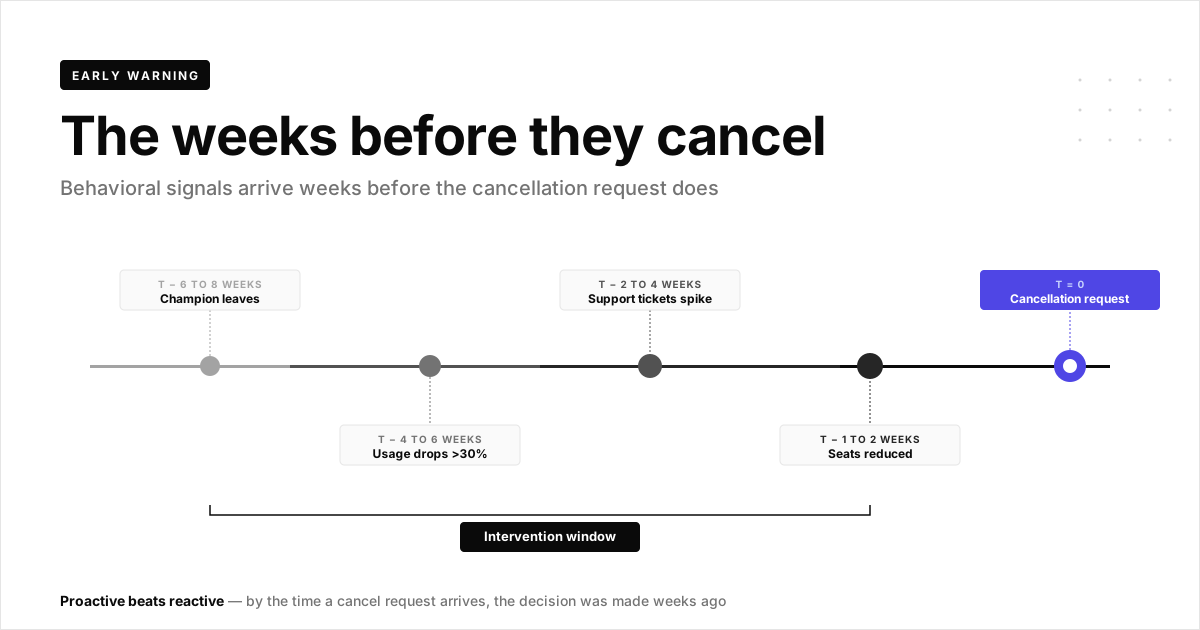
Warning signals that precede most voluntary churn:
- Declining product usage: Logins or feature usage dropping week over week, especially sudden drops of 30% or more
- Increased support tickets: Especially unresolved or escalated issues, or tickets that remain open for more than a week
- Non-renewal of seats: Reducing user count before contract end signals shrinking internal adoption
- No engagement with new features: Missing product updates entirely suggests the customer has mentally checked out
- Champion departure: When your main point of contact leaves the company or changes roles, the relationship often weakens
Build health scores that combine multiple signals weighted by their predictive power. Proactive outreach works better than reacting to cancellation requests. Set up automated alerts when health scores drop below critical thresholds so your team can intervene early.
5. Personalize engagement based on customer behavior
Generic outreach gets ignored. Tailor communication based on what customers actually do in your product, not just where they are in the contract lifecycle.
Segment by use case, role, or lifecycle stage. A customer who just completed onboarding needs different messaging than one approaching renewal. Send feature tips to customers who haven't adopted specific capabilities, success stories to those considering expansion, and ROI reports to decision-makers evaluating renewal.
Marketing automation tools help scale this personalized engagement based on behavioral triggers and lifecycle stages. Set up workflows that automatically send relevant content when customers hit specific usage milestones or show risk signals.
Personalize demos for every prospect with dynamic variables that pull from your CRM, so each touchpoint feels relevant.
6. Reduce support friction with proactive resources
Shift from reactive support to proactive enablement. Create resources that answer common questions before customers ask, reducing both ticket volume and time to resolution.
Analyze your support tickets to identify the most frequent issues, then build self-serve resources that address them. Place these resources contextually within your product where customers are most likely to need them.
Self-serve interactive guides embedded in help centers reduce ticket volume while helping customers succeed faster. The goal is to make finding answers easier than filing a ticket. Track deflection rates to measure how many customers solve problems without contacting support.
7. Collect customer feedback and act on it fast
Use NPS, CSAT, and in-app surveys to gather feedback. More importantly, close the loop by responding to feedback and showing customers what changed as a result.
Effective feedback mechanisms:
- NPS surveys: Measure overall loyalty and likelihood to recommend, sent quarterly to track trends
- CSAT surveys: Capture satisfaction after specific interactions like support tickets or onboarding milestones
- In-app feedback: Collect context-rich input at point of friction, when customers are experiencing the problem firsthand
- Exit surveys: Understand why churned customers left, but recognize that stated reasons often differ from actual causes
Tell customers what you changed based on their input. Visible feedback implementation reduces churn because customers feel heard. Send follow-up messages to detractors explaining how you've addressed their concerns, and notify promoters when you launch features they requested.
8. Reinforce product value throughout the customer lifecycle
Value communication doesn't stop after onboarding. Regular touchpoints remind customers what they're getting, especially important for products where value accrues over time.
Share usage reports showing activity trends, ROI summaries quantifying time or money saved, and feature adoption progress highlighting capabilities they're not yet using. Show customers the value they've already received, not just the value they could receive.
Schedule these touchpoints strategically: monthly for high-touch accounts, quarterly for mid-market, and at renewal time for everyone. Automate delivery where possible, but personalize the insights to each customer's actual usage patterns.
9. Prioritize your most valuable customer accounts
Not all customers deserve equal attention. Segment by revenue, growth potential, or strategic value to allocate retention resources effectively.
Focus retention resources where they have the highest impact. A customer paying $50,000 annually warrants more proactive engagement than one paying $500, even if both show similar risk signals. Build tiering systems that determine response times, touchpoint frequency, and access to premium support based on account value.
Track metrics separately by tier to understand retention performance across segments. High-value customer churn has outsized revenue impact and often signals product gaps worth addressing.
10. Use AI to predict and prevent churn
Machine learning models identify churn risk earlier than manual analysisand drive 10% to 15% churn reduction. AI-powered tools analyze patterns across many signals simultaneously, catching combinations that humans miss.
Train models on historical churn data to identify which behaviors and characteristics predict cancellation. The model learns that a customer with declining usage plus unresolved support tickets plus no executive sponsor engagement has an 80% churn probability, even if each signal alone seems manageable.
Predictive churn prevention beats reactive saves. By the time a customer requests cancellation, you've often already lost them. AI gives you weeks of advance warning to intervene while the relationship is still salvageable.
11. Build effective cancellation save flows
When customers try to cancel, the experience matters. Offer alternatives: pause, downgrade, or address specific concerns based on their stated reason for leaving.
Well-designed save flows recover a meaningful portion of cancellations. Ask why they're leaving first, then present relevant options matched to their situation. Consider embedding interactive product demos in your save flow to showcase features the customer might not have discovered.
A customer canceling due to budget constraints might accept a temporary discount or downgrade to a lower tier. One canceling due to missing features might stay if you show them the feature exists or share your roadmap timeline. Someone leaving because they're not using the product needs education resources, not a price reduction.
Track save rates by cancellation reason to understand which interventions work. Test different offers and messaging to optimize recovery over time.
12. Offer flexible pricing and retention incentives
Discounts, loyalty rewards, and plan flexibility retain price-sensitive customersbecause 33% cite budget limitations. Use incentives strategically, not as a default response to every cancellation.
Structure incentives to encourage desired behaviors: annual prepayment discounts reduce churn mechanically while improving cash flow, usage-based pricing lets customers scale down during slow periods without canceling entirely, and loyalty rewards that increase with tenure give long-term customers reasons to stay.
VIP benefits and premium rewards build long-term relationships beyond price. Early access to new features, dedicated support channels, or exclusive training sessions create switching costs that transcend economics. Annual billing discounts reduce churn mechanically while increasing commitment.
13. Fix involuntary churn with dunning management
Failed payments cause preventable churn. Implement smart retry logic that attempts charges at optimal times, card updater services that automatically refresh expired payment methods, and clear payment failure notificationsthat prompt customers to update billing information before service interruption. These tactics drive 50% to 80% recovery.
Design retry schedules that balance persistence with customer experience. Try again after a few days when temporary insufficient funds might resolve, but don't hammer the card hourly. Send escalating email notifications that start helpful and become more urgent as the grace period ends.
Dunning management is often the highest-ROI tactic to reduce customer churn because it requires no product changes. You're simply recovering revenue from customers who want to stay but have outdated payment information.
14. Win back churned customers with targeted campaigns
Not all churned customers are lost forever. Targeted re-engagement campaigns based on past behavior and churn reason can recover some, especially customers who left due to temporary circumstances rather than fundamental dissatisfaction.
Win-back works best when you've fixed the reason they left. If a customer churned due to a missing integration and you've since built it, that's a compelling reason to reach out. Similarly, customers who left during a product quality rough patch might return once you've addressed the issues.
Segment win-back campaigns by churn reason and time since cancellation. Recent churns (within 90 days) respond better than those who left years ago. Offer incentives like extended trials or discounted re-onboarding to lower the barrier to return.
15. Use long-term contracts for high-commitment customers
Annual contracts reduce churn mechanically while increasing commitment. Offer incentives for longer terms: two months free for annual prepayment, additional features for multi-year agreements, or locked-in pricing that protects against future increases.
This approach works best for customers with proven value and high satisfaction. Pushing annual contracts on uncertain customers just delays churn and creates refund requests. Wait until customers have completed onboarding, adopted core features, and demonstrated consistent usage before proposing longer commitments.
Track conversion rates from monthly to annual plans as a leading indicator of customer confidence. Customers willing to commit long-term are signaling satisfaction and reduced churn risk.
How to track churn reduction results
Track the following metrics to understand whether your efforts to reduce customer churn are working.
| Metric | What it measures | How to use it |
|---|---|---|
| Monthly churn rate | Percentage of customers who cancel each month | Monitor month-over-month trends to catch sudden spikes. Three consecutive months of increases signal a systemic problem requiring investigation. |
| Cohort retention | Percentage of customers from a specific signup period who remain active over time | Compare retention curves between cohorts to measure whether onboarding improvements, feature launches, or pricing changes impact long-term retention. |
| Net revenue retention (NRR) | Revenue from existing customers including upgrades, downgrades, and churn | Track whether expansion revenue offsets churn losses. NRR above 100% means your existing customer base is growing in value even with some churn. |
| Customer health score | Composite score combining usage, engagement, support history, and other risk signals | Segment customers into healthy, at-risk, and critical categories. Automate alerts when accounts drop below thresholds to trigger proactive outreach. |
| Time to churn | Average tenure before customers cancel, segmented by plan type or customer segment | Identify when churn risk peaks. Early churn (first 90 days) points to onboarding issues, while later churn suggests value delivery gaps. |
| Feature adoption rate | Percentage of customers using core features that correlate with retention | Compare adoption rates between retained and churned customers to identify which features drive stickiness. Focus education efforts on high-impact features. |
Analyze engagement data to understand which customers are at risk before they cancel. Leading indicators like usage decline and support ticket spikes give you time to intervene.
Set up dashboards that surface these metrics together rather than in isolation. A customer with declining usage might not be at risk if they're still engaging with high-value features, while someone with stable logins but no feature adoption is likely churning soon.
Churn rate benchmarks by industry
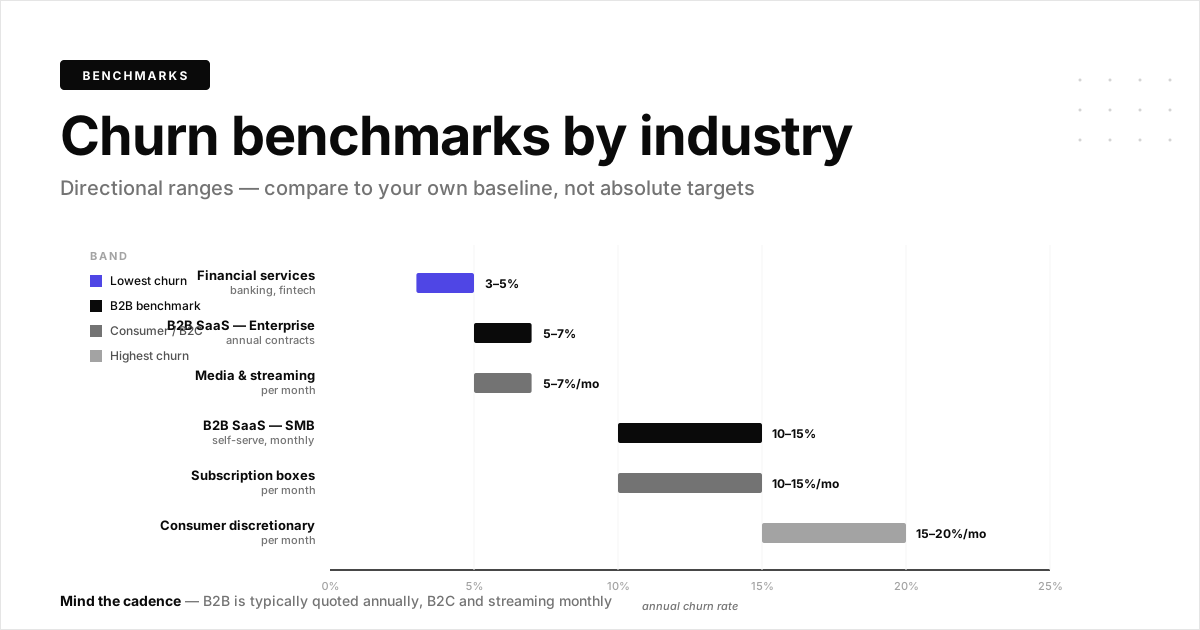
What counts as "good" varies significantly by business model, price point, and customer type. Use these benchmarks as directional guides, not absolute targets.
SaaS and subscription software
B2B SaaS typically sees 5-7% annual churn for enterprise accounts and 10-15% for SMB customers. Annual contracts have lower churn than monthly billing because commitment creates stickiness. Enterprise accounts churn less than SMB because switching costs are higher, implementations are more complex, and contracts often include multi-year terms. Product-led growth companies with self-serve models often see higher initial churn but better retention after the first 90 days.
E-commerce and retail subscriptions
Higher baseline churn due to discretionary spending and low switching costs. Subscription boxes often see 10-15% monthly churn, especially after the novelty wears off. Replenishment subscriptions for consumables (razors, vitamins, pet food) retain better because the need is ongoing and predictable. Seasonal products face churn spikes during off-seasons. Offering pause options instead of cancellation can reduce churn by 20-30% for discretionary subscriptions.
Media and streaming services
Content-dependent churn patterns driven by release schedules and catalog depth. Monthly churn rates of 5-7% are common, with spikes when popular shows end or during content droughts. High competition increases switching behavior as customers rotate between services. Bundling with other services (mobile plans, broadband) significantly improves retention. Annual subscriptions with upfront payment reduce churn but require strong content confidence from customers.
Financial services and fintech
Generally lower churn (3-5% annually) due to high switching costs, regulatory requirements, and the friction of moving financial data. Banking products have the lowest churn, while investment apps and budgeting tools see higher rates. Trust plays an outsized role in retention - security incidents or data breaches trigger immediate churn spikes. Direct deposit setup and bill payment automation create strong retention anchors.
Stop churn before it starts with proactive customer education
Most churn is preventable. The best way to reduce customer churn is to deliver value proactively rather than reacting to cancellation requests.
Self-serve interactive experiences help customers succeed without waiting for support or training sessions. When customers can explore your product on their own terms, they reach value faster and stay longer.
FAQs about reducing customer churn
Most companies see initial impact within one to two billing cycles, but meaningful trend changes take several months of consistent effort. Focus on leading indicators like engagement and health scores for earlier signal.
Customer churn counts lost accounts regardless of size, while revenue churn measures lost dollars. A business can have low customer churn but high revenue churn if large accounts leave.
Yes. Invest in self-serve resources, proactive automation, and scalable customer education tools like interactive guides that help customers succeed without 1:1 support.
Declining login frequency, reduced feature usage, and increased support tickets are reliable early warning signs. Lack of engagement with new releases also precedes most voluntary churn.
Win-back campaigns work best when you've addressed the original reason for leaving and can offer a compelling reason to return. Success rates vary significantly by churn reason.
Customers who understand how to use your product fully are more likely to see value and stay. Ongoing education is one of the most effective and scalable churn prevention investments.