Running events without the right software is like trying to fill a stadium with a megaphone. You might get some people through the door, but you'll burn out your team and lose track of who actually showed up.
This guide breaks down 16 event marketing platforms by use case, from enterprise conference management to virtual trade shows, with honest evaluations of what each tool does well and where it falls short.
What's inside
Event marketing software streamlines planning, promotion, and attendee engagement for virtual, hybrid, and in-person events - a market projected to reach $17.33 billion by 2030. Platforms like Cvent, Bizzabo, and vFairs offer tools for registration, branded landing pages, email marketing, and CRM integration to increase attendance and measure ROI.
This guide covers 16 event marketing platforms ranked by use case. You'll find a comparison table, detailed breakdowns of each tool's strengths and pricing, and a decision framework for matching software to your event format. We selected tools based on integration depth, scalability, ease of use, and how well they help teams prove pipeline impact.
TL;DR
- Best for enterprise events: Cvent
- Best for B2B conferences: Bizzabo
- Best for virtual and hybrid: vFairs
- Best for ticketed events: Eventbrite
- Best for design-focused event pages: Splash
What is event marketing software
Event marketing software is a category of platforms that help you plan, promote, and run events while tracking attendee engagement and ROI. The tools manage the full attendee lifecycle, from initial registration through post-event follow-up.
While "event marketing software" and "event management software" often get used interchangeably, there's a subtle difference. Event marketing software focuses on promotion, registration pages, and attendee conversion. Event management software handles logistics like venue sourcing, scheduling, and on-site check-in. Most modern platforms combine both.
Core capabilities typically include:
- Registration management: Custom forms, ticket tiers, discount codes, and secure payment processing
- Event website builder: Branded, responsive landing pages that convert visitors into registrants
- Email marketing: Automated invitations, reminders, and post-event follow-up sequences
- Analytics and reporting: Track RSVPs, attendance rates, engagement levels, and revenue attribution
- CRM integration: Connect attendee data with Salesforce, HubSpot, or other systems for lead routing and sales follow-up
When to use event marketing and management platforms
The right platform depends on your event format. Here's how to match software to your specific situation.
Virtual events and webinars
Choose virtual-first platforms like vFairs, Zoom Events, or ON24 when your primary goal is reaching a remote audience. Virtual event platforms excel at live streaming, virtual networking, and on-demand replay. They're built for lead generation at scale without the overhead of physical venues.
Hybrid conferences and summits
When you're running events for both in-person and remote attendees, look for platforms like Bizzabo and Hopin. Hybrid-capable platforms specialize in synchronized content streams and networking features that connect physical and virtual audiences. The challenge here is creating a unified experience, and not all platforms handle this well.
In-person trade shows and field events
For [physical events] requiring venue management, badge printing, and sponsor booth coordination, platforms like Cvent and Whova are the standard. On-site event platforms offer strengths in check-in, exhibitor management portals, and mobile event apps.
Enterprise event programs at scale
If your organization runs multiple events annually and requires consistent branding, centralized reporting, and governance, you'll want enterprise-grade software. Cvent, Bizzabo, and RainFocus provide portfolio-level analytics and compliance features for managing large-scale event programs.
Event marketing software comparison table
| # | Product | Intent key | Use case | Pricing | G2 rating |
|---|---|---|---|---|---|
| 1 | Bizzabo | Enterprise conference management | B2B conferences and experiential events | Custom pricing | 4.3/5 |
| 2 | Cvent | Enterprise event management | Large-scale corporate events | Custom pricing | 4.3/5 |
| 3 | Whova | Attendee networking | Association and professional conferences | Varies by event size | 4.8/5 |
| 4 | vFairs | Virtual event hosting | Virtual trade shows and job fairs | Custom pricing | 4.7/5 |
| 5 | Eventbrite | Public event ticketing | Ticketed workshops and community events | Percentage-based fees | 4.4/5 |
| 6 | Splash | Branded event marketing | Design-focused event pages | Custom pricing | 4.4/5 |
| 7 | Swoogo | Flexible event management | Customizable registration workflows | Custom pricing | 4.9/5 |
| 8 | EventMobi | All-in-one event platform | Corporate conferences and meetings | Custom pricing | 4.6/5 |
| 9 | RingCentral Events (formerly Hopin) | Integrated virtual events | Enterprise webinars and virtual conferences | Custom pricing | 4.5/5 |
| 10 | Accelevents | Fundraising and engagement | Virtual galas and auctions | Varies by event type | 4.7/5 |
| 11 | Zoom Events and Webinars | Scalable virtual events | Webinars and multi-session events | Add-on to Zoom plans | 4.5/5 |
| 12 | Airmeet | Community engagement | Virtual meetups and workshops | Free tier available | 4.6/5 |
| 13 | Hubilo | Branded virtual conferences | B2B marketing events | Custom pricing | 4.6/5 |
| 14 | Goldcast | B2B pipeline generation | Demand gen virtual events | Custom pricing | 4.7/5 |
| 15 | Webex Events & Webinars | Secure enterprise events | Compliant virtual conferences | Custom pricing | 4.6/5 |
| 16 | ON24 | Webinar demand generation | Scalable webinar programs | Custom pricing | 4.3/5 |
1. Bizzabo
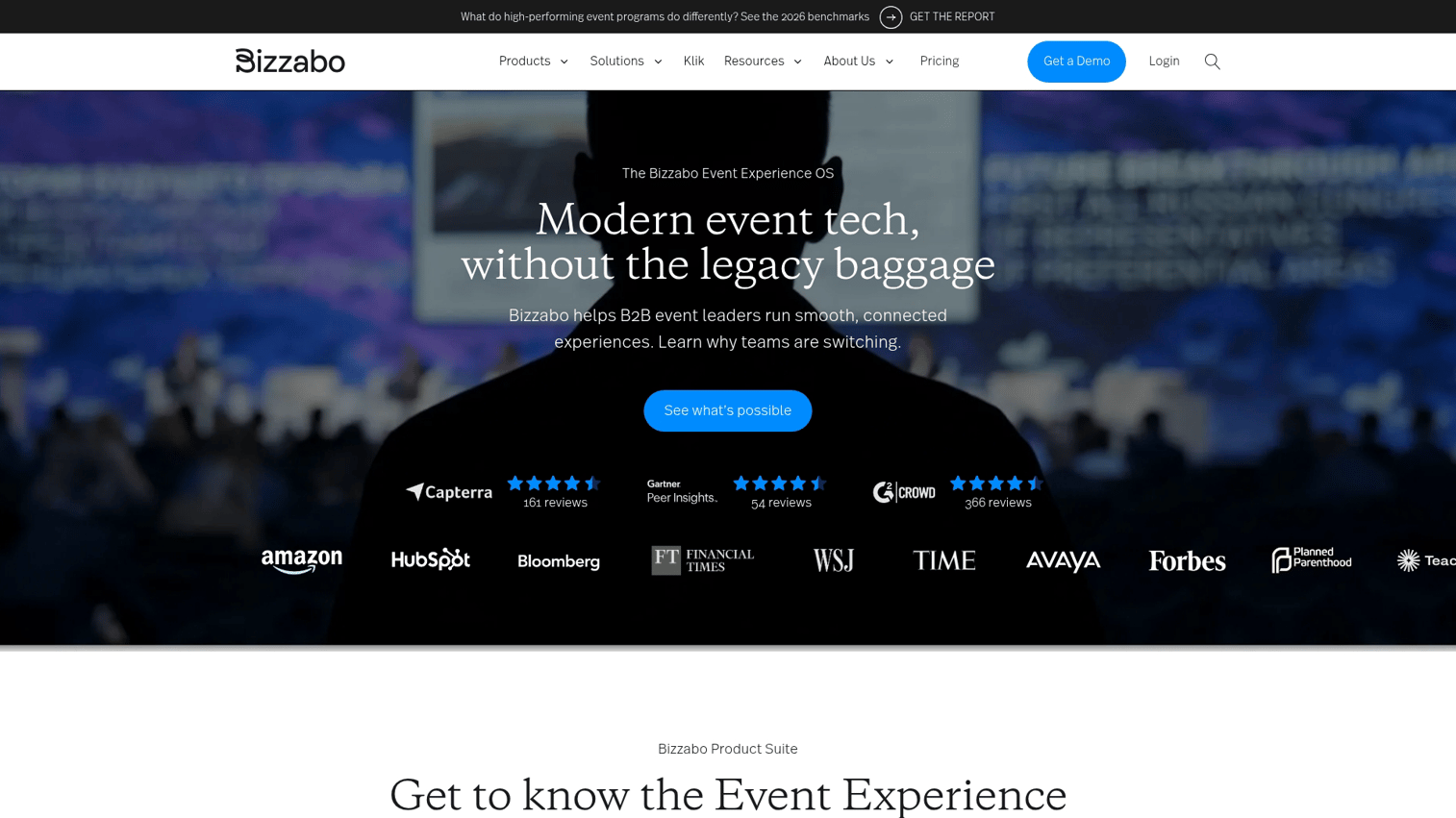
Bizzabo is an Event Experience Operating System built for B2B conferences and experiential events. The platform combines registration, marketing, networking, and analytics into a single system with strong sponsor and exhibitor management.
Best for: Mid-market and enterprise B2B companies running branded conferences.
Key strengths
- Branded event websites with customizable templates
- Klik SmartBadges for seamless networking and contact exchange
- Automated email marketing campaigns
- Sponsor and exhibitor management portal
- Full-featured mobile event app
- Robust analytics dashboard
Pricing
Custom pricing based on event size and features. Contact sales for a quote.
2. Cvent
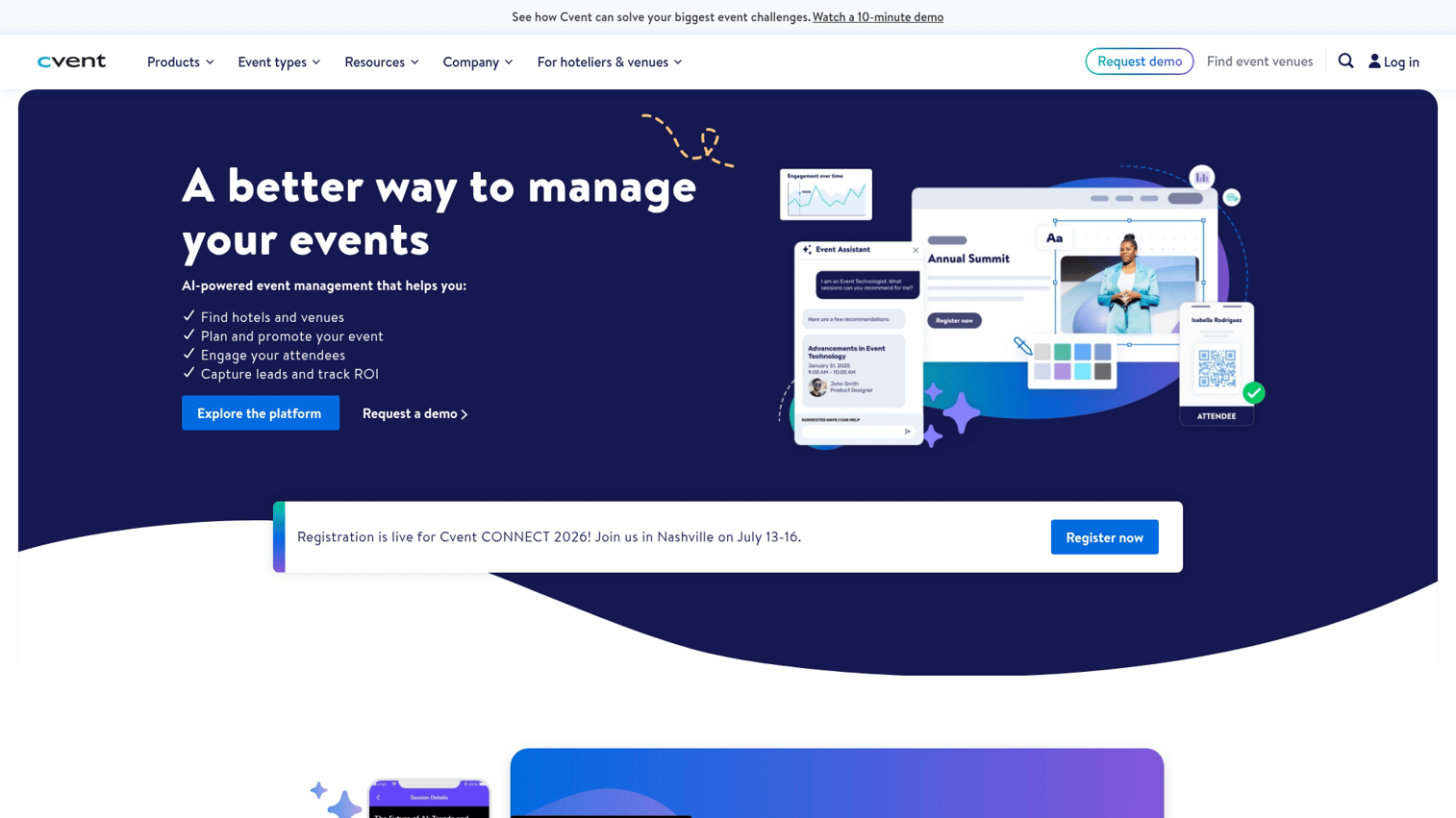
Cvent is the industry leader for enterprise event management. The platform offers AI-powered venue sourcing, comprehensive registration and marketing tools, and robust on-site solutions for complex, large-scale corporate events.
Best for: Enterprise organizations running high-volume, complex event programs.
Key strengths
- AI-powered venue sourcing
- End-to-end registration and attendee management
- Advanced exhibitor and sponsor management
- Integrated housing and travel booking
- Webinar and virtual event support
- Deep CRM and marketing automation integrations
Pricing
Custom enterprise pricing. Implementation and professional services available.
3. Whova
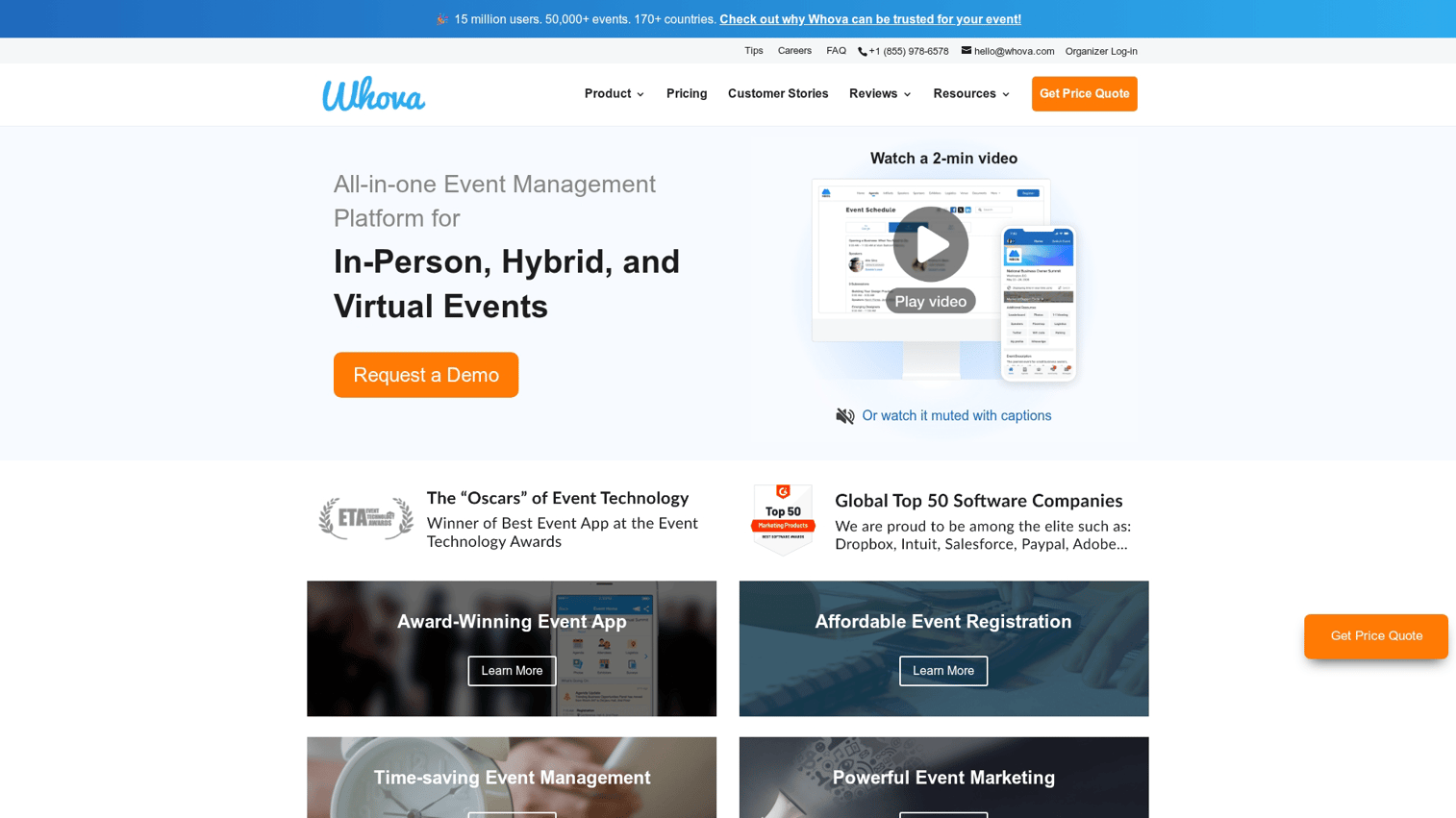
Whova is known for networking and community-building features. The platform's mobile event app includes advanced attendee networking tools, agenda management, and interactive engagement features.
Best for: Associations, nonprofits, and organizations prioritizing attendee networking.
Key strengths
- Award-winning mobile event app
- Advanced attendee networking and matchmaking
- Live polling and Q&A
- Exhibitor lead capture tools
- Session management and personal agenda building
- Community engagement features
Pricing
Varies by event size. Free basic features with paid upgrades.
4. vFairs
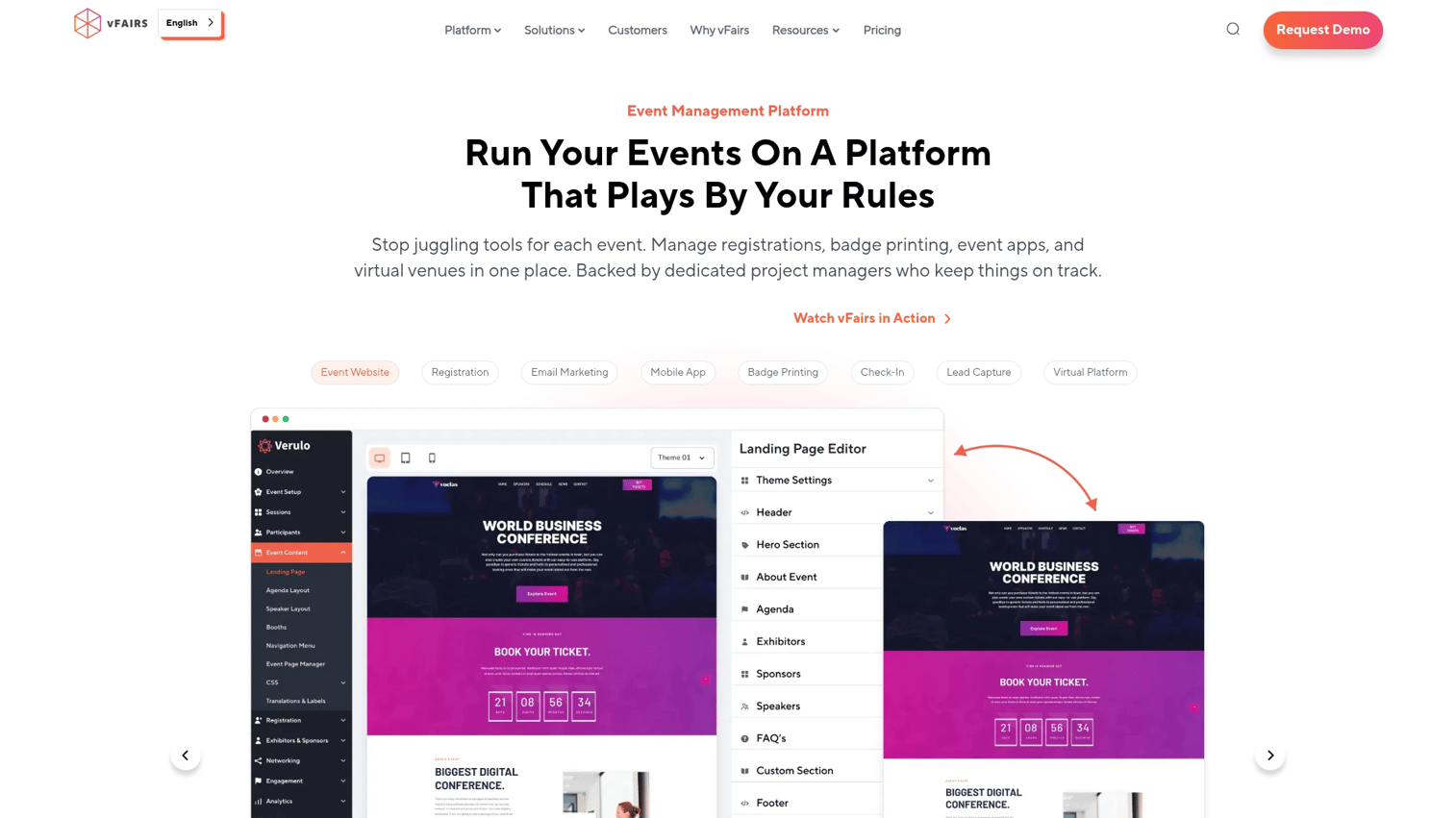
vFairs is a top-tier platform for virtual and hybrid events, known for immersive 3D environments, virtual booths, and extensive networking features. The platform is particularly effective for virtual trade shows and job fairs.
Best for: Organizations hosting virtual trade shows, job fairs, or large virtual conferences.
Key strengths
- Immersive 3D virtual environments
- Customizable virtual booths
- High-quality webinar and live streaming
- Gamification and engagement tools
- Detailed lead capture and analytics
- Robust hybrid event support
Pricing
Custom pricing based on event type, size, and features.
5. Eventbrite
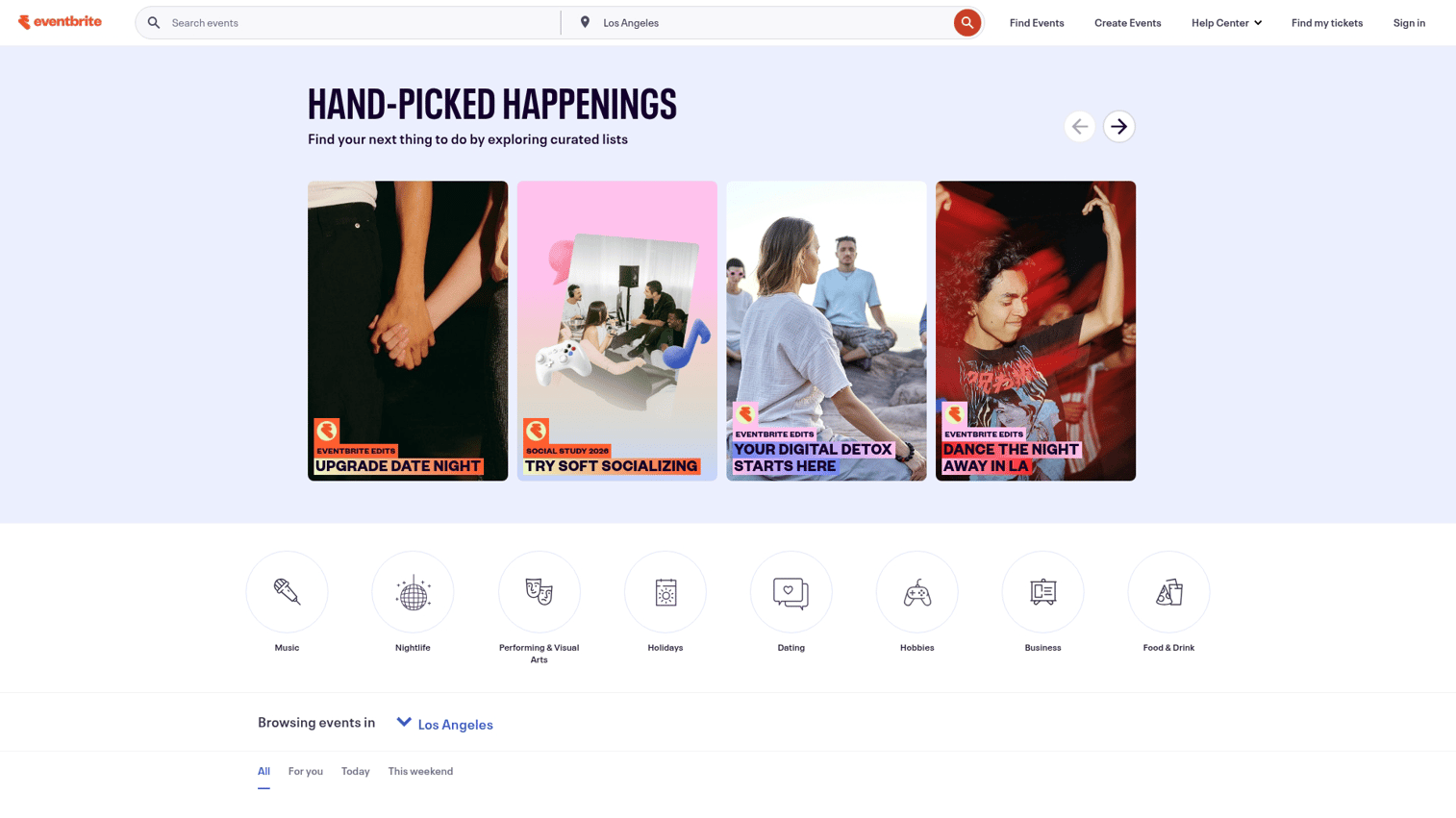
Eventbrite is the go-to ticketing platform with a built-in audience. The marketplace model helps with event discovery for public events, making Eventbrite ideal for ticketed workshops and community gatherings.
Best for: Event organizers running ticketed public events who want marketplace visibility.
Key strengths
- Simple event creation and ticketing
- Built-in event discovery marketplace
- Secure payment processing
- Promotional tools
- Mobile check-in app
- Basic analytics
Pricing
Free for free events. Percentage-based fees for paid events.
6. RingCentral Events
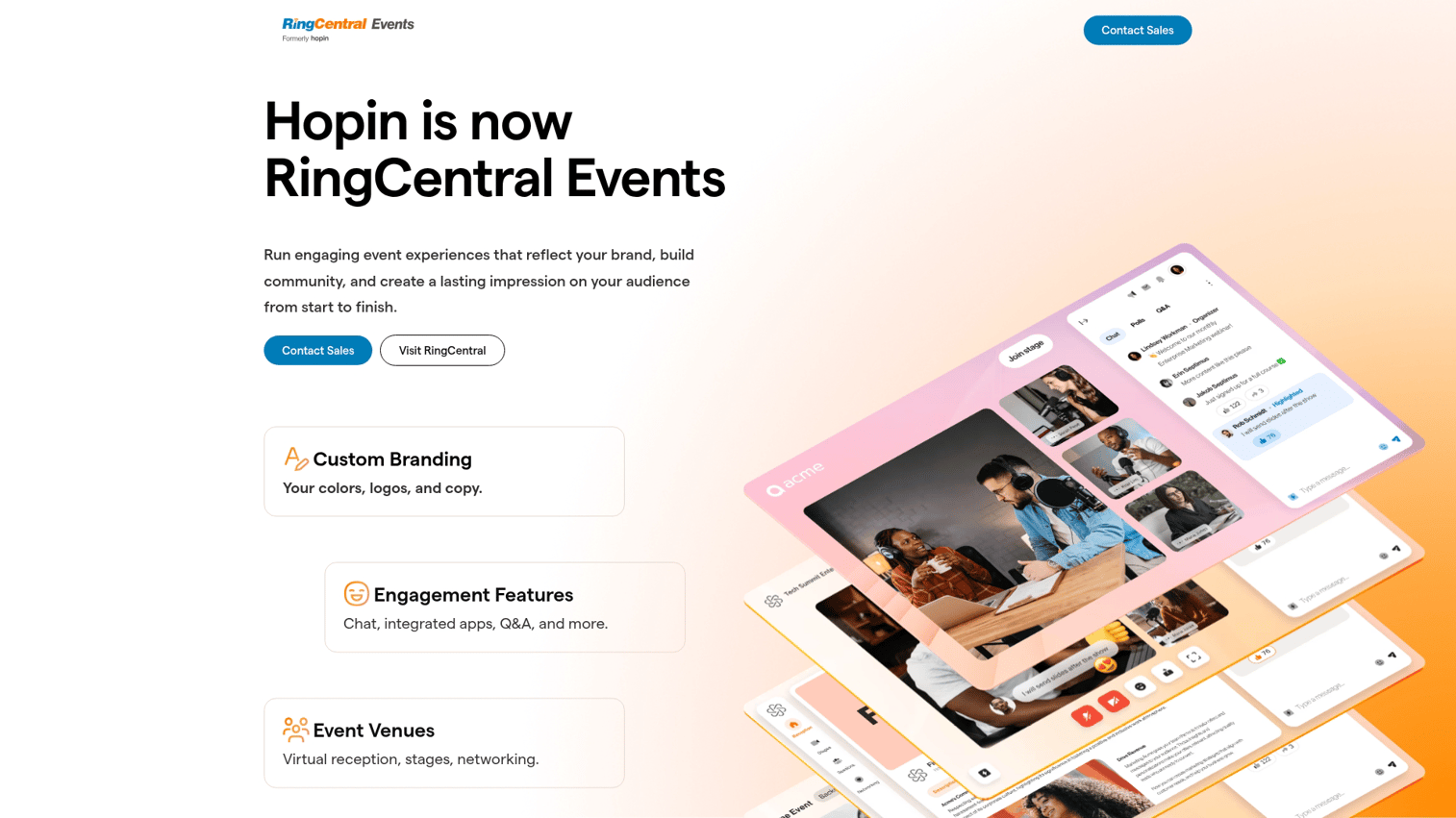
RingCentral Events (formerly Hopin) combines a virtual venue, networking sessions, and expo capabilities for virtual and hybrid events. The platform is a strong choice for summits and conferences where attendee interaction is key.
Best for: Companies running virtual summits or hybrid conferences with a networking focus.
Key strengths
- Virtual venue with stage, sessions, networking, and expo areas
- One-on-one video networking
- Breakout sessions
- Virtual sponsor booths
- Integrated registration and ticketing
- Event analytics
Pricing
Free tier for small events. Paid plans based on attendee count and features.
7. Splash
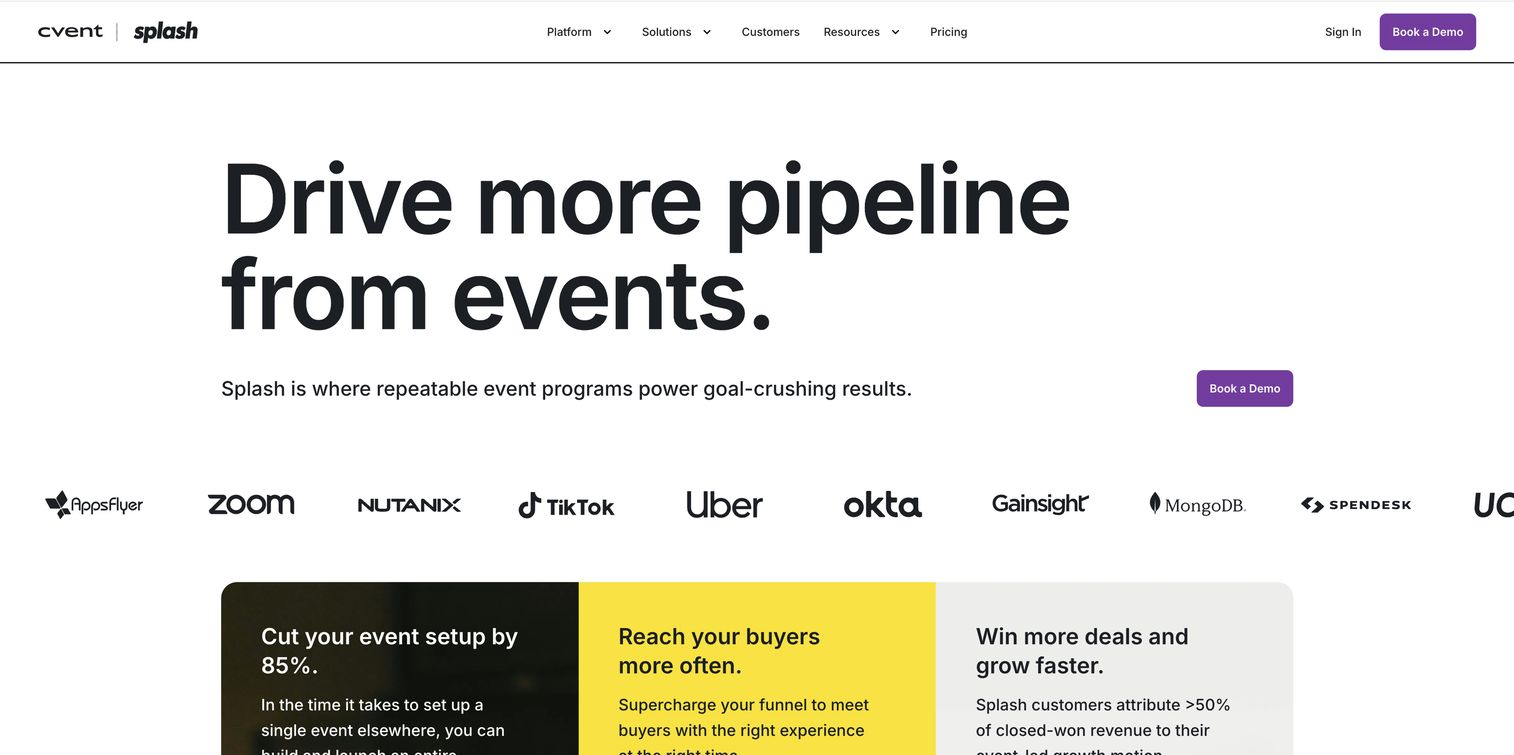
Splash is the platform for design-focused event marketing. The powerful event page builder allows for deep brand customization, making Splash popular with marketing teams who prioritize visual consistency.
Best for: Marketing teams prioritizing branded event pages and design quality.
Key strengths
- Beautiful, professionally designed templates
- Brand consistency tools
- Email marketing integration
- Guest list management
- Mobile check-in app
- Marketing attribution and analytics
Pricing
Custom pricing. Free trial available.
8. Swoogo
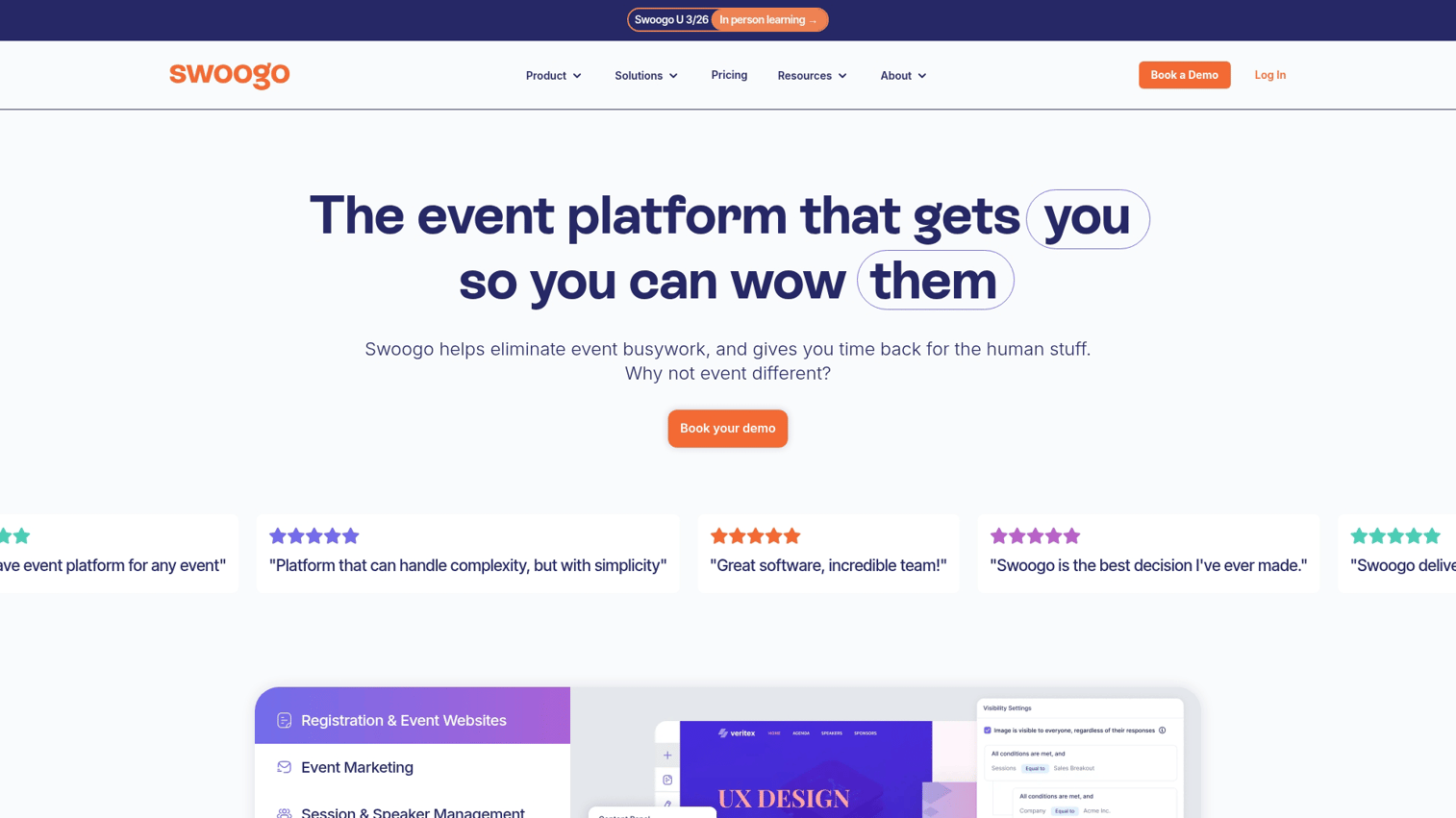
Swoogo is a flexible event management platform built for customization. The platform is a strong choice for teams that want granular control over registration workflows and data management.
Best for: Event teams wanting flexible, customizable registration and management.
Key strengths
- Highly customizable registration forms with conditional logic
- Flexible event website builder
- Session and speaker management
- Mobile app for attendees
- CRM and marketing tool integrations
- Detailed reporting and analytics
Pricing
Custom pricing based on event volume.
9. EventMobi
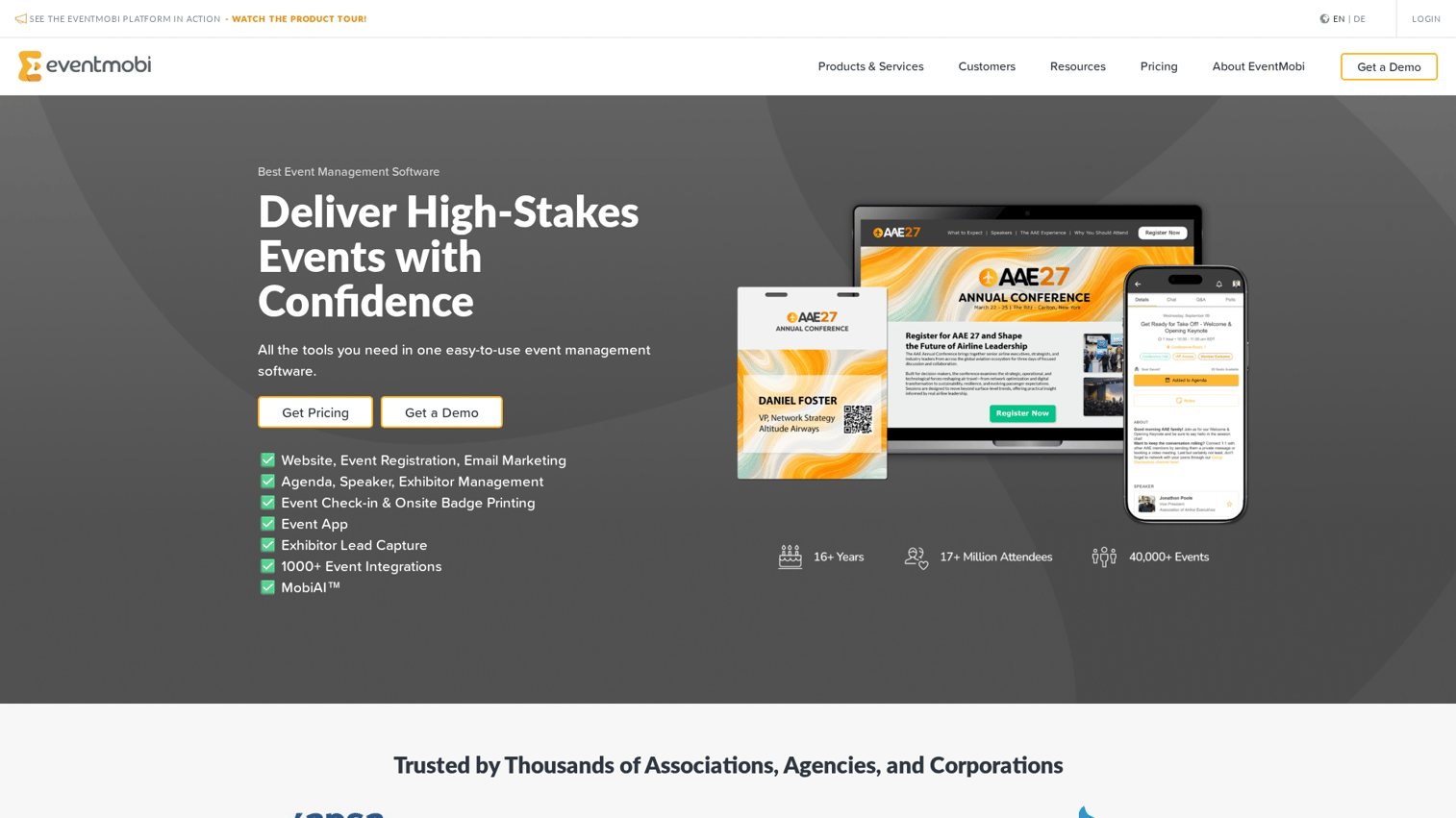
EventMobi is an all-in-one platform combining registration, mobile app, and engagement tools. The platform is a solid choice for corporate events with strong mobile app capabilities.
Best for: Corporate event planners who want registration, mobile app, and engagement in one platform.
Key strengths
- Integrated registration and ticketing
- Fully branded mobile event app
- Live polling, Q&A, and engagement tools
- Networking features
- Exhibitor management and lead retrieval
- Post-event reporting
Pricing
Custom pricing based on event size and modules.
10. Accelevents
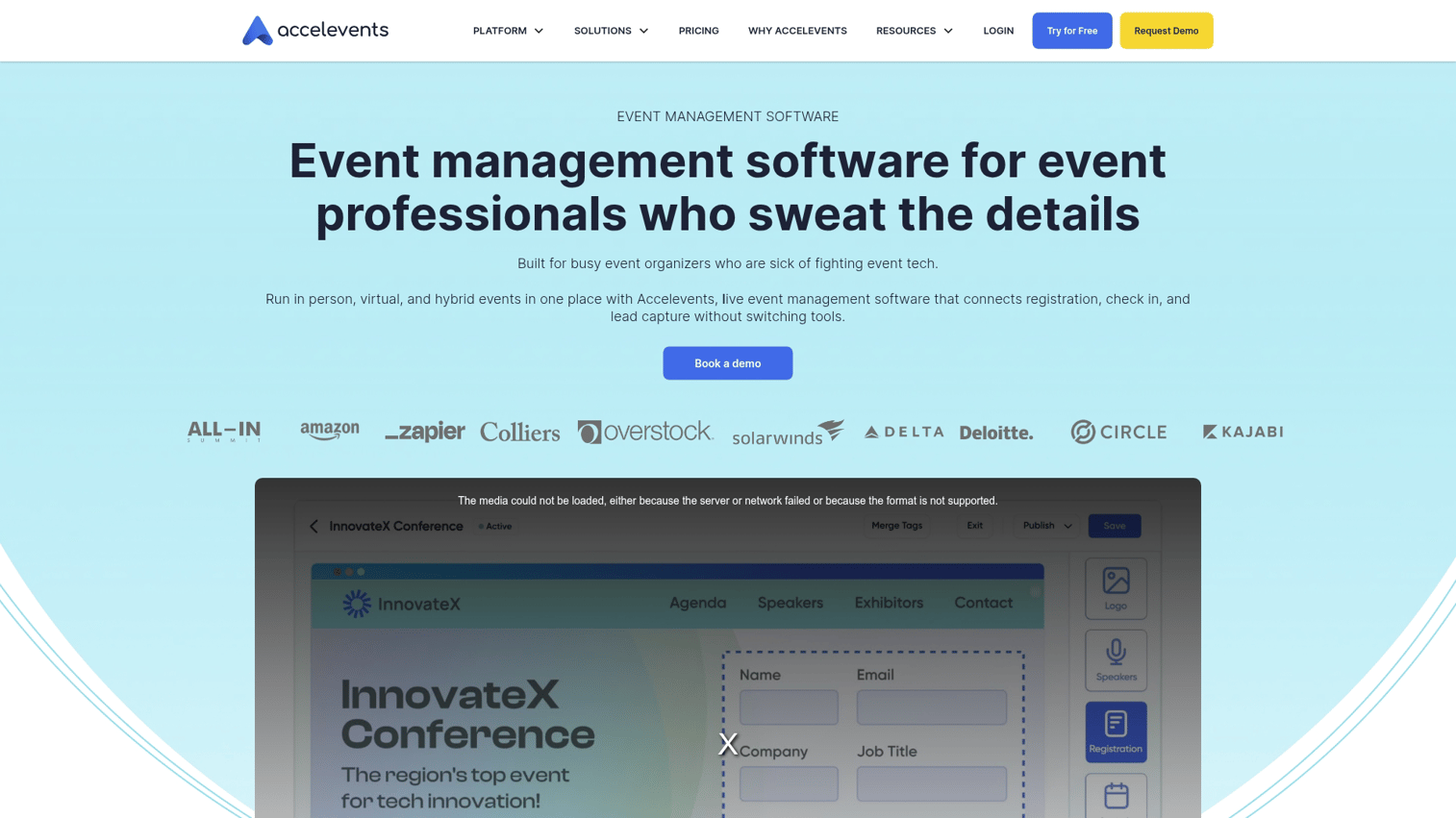
Accelevents is a virtual and hybrid platform with strong engagement features, including built-in auction and donation tools for fundraising events.
Best for: Organizations running fundraising events, galas, or conferences with auction components.
Key strengths
- Virtual and hybrid event hosting
- High-quality live streaming
- Built-in silent auction and donation tools
- Integrated registration and ticketing
- Networking features
- Lead capture for exhibitors
Pricing
Varies by event type. Free trial available.
11. Zoom Events
Zoom Events is built on Zoom's video infrastructure, offering a familiar interface for webinars and multi-session events.
Best for: Organizations already invested in Zoom wanting to scale to larger events.
Key strengths
- Familiar Zoom interface
- Multi-session and multi-day event support
- Expo floor and networking features
- Centralized registration hub
- Seamless Zoom Webinars integration
- Recording and on-demand viewing
Pricing
Add-on to existing Zoom plans with per-license pricing.
12. Airmeet
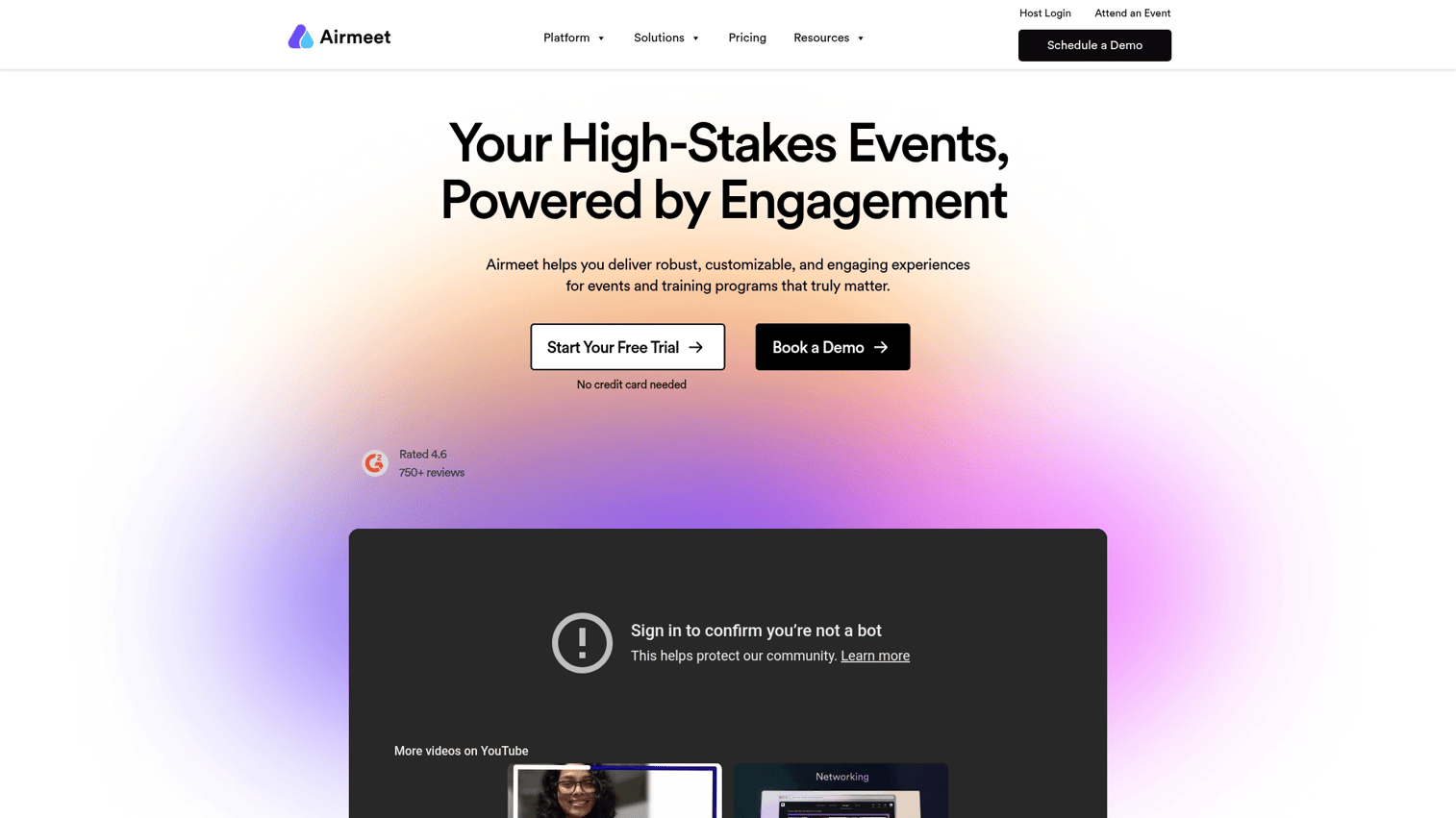
Airmeet focuses on engagement and networking for community events and meetups, featuring a unique social lounge and table-based networking.
Best for: Community builders and organizations prioritizing attendee interaction.
Key strengths
- Social lounge for organic networking
- Table-based video conversations
- Main stage and parallel sessions
- Virtual booths
- Integrated registration and ticketing
- Engagement analytics
Pricing
Free tier for small events. Paid plans scale with attendees.
13. Hubilo
Hubilo offers strong branding and engagement tools for B2B marketing events, with production-quality streaming and customizable virtual venues.
Best for: B2B marketing teams running branded virtual conferences.
Key strengths
- Broadcast-quality streaming
- Fully branded virtual venue
- AI-powered networking and matchmaking
- Gamification features
- Exhibitor management
- Advanced analytics and lead scoring
Pricing
Custom pricing based on event scope.
14. Goldcast
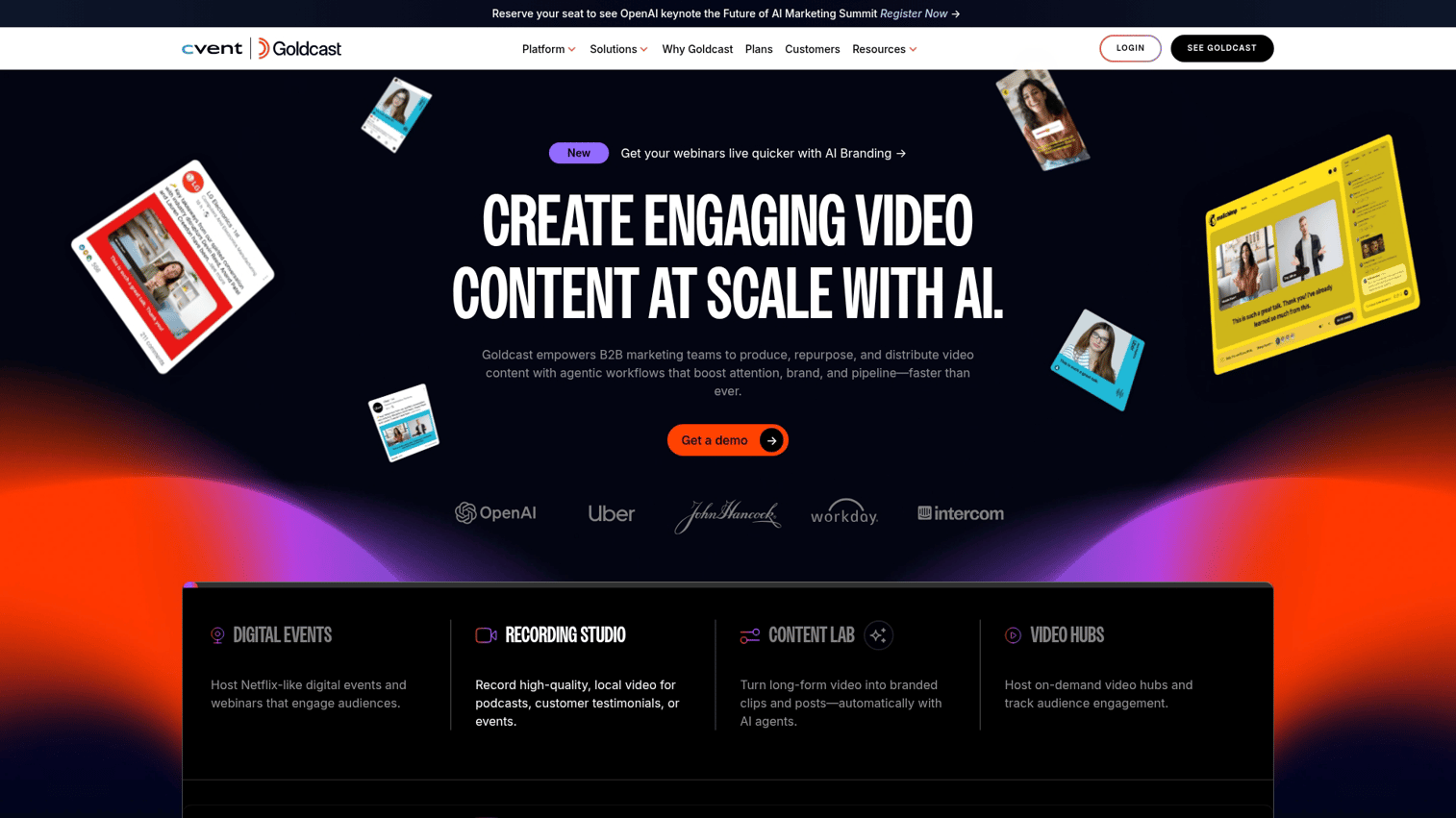
Goldcast is built specifically for B2B marketers, with deep CRM and marketing automation integration and a focus on pipeline attribution.
Best for: B2B demand generation teams focused on pipeline attribution from events.
Key strengths
- Event formats designed for B2B marketing
- Native CRM and marketing automation integrations
- Engagement scoring
- Content repurposing tools
- Branded event experience
- Pipeline attribution reporting
Pricing
Custom pricing. Request a demo.
15. Webex Events
Webex Events is Cisco's enterprise virtual event platform, prioritizing security and compliance for large organizations.
Key strengths
- Enterprise-grade security and compliance
- Large-scale webinar support
- Integrated registration and landing pages
- Breakout sessions
- Interactive Q&A and polling
- Detailed analytics and reporting
Pricing
Part of Webex suite. Enterprise pricing.
16. ON24
ON24 is a webinar and virtual event platform focused on audience engagement and data capture for demand generation and content marketing teams.
Key strengths
- Robust webinar and virtual event hosting
- Engagement console with multiple CTAs
- Deep audience intelligence and analytics
- Marketing automation integration
- Content hubs for on-demand video
- AI-powered personalization
Pricing
Custom enterprise pricing.
Key features to evaluate in event marketing software
When comparing platforms, focus on the capabilities that directly impact event ROI.
Registration and ticketing capabilities
Look for flexible registration forms with custom fields, multiple ticket tiers, and discount codes. Advanced features include group registration, automated waitlists, and secure payment processing. The easier it is for attendees to sign up, the better your attendance will be.
Email marketing and promotion tools
Evaluate whether a platform has built-in email marketing or integrates with your existing tools. Key features include automated invitation sequences, reminder emails, and post-event follow-up campaigns. The best platforms connect email performance directly to registration data.
Sponsor and exhibitor booth management
For trade shows and conferences, sponsor management is critical. Look for virtual and physical booth setup, lead capture tools for sponsors, customizable sponsor tiers, and a dedicated exhibitor portal.
Networking and audience engagement
Evaluate features that drive attendee interaction: 1:1 video networking, AI-powered matchmaking, live Q&A, real-time polling, and gamification. High engagement correlates with attendee satisfaction and event ROI.
Analytics and pipeline attribution
The best platforms provide detailed analytics on registration, attendance, and engagement. Critically, event platforms allow you to connect event data to your pipeline by integrating with your CRM for lead scoring and attribution.
CRM and marketing automation integrations
For B2B events, seamless integration with your CRM and marketing automation system is vital. CRM integration enables automated data sync for lead routing, sales follow-up, and ROI tracking.
How to choose the right event marketing software
Use this framework to evaluate your options and select software that fits your situation.
Match software to your event format
Start by identifying your primary event format. If you mostly run webinars, choose a virtual-first platform. For mixed audiences, prioritize hybrid capabilities. For trade shows, select one with strong in-person features. Most platforms excel in one area, so choose based on your main use case first.
Assess your integration requirements
Evaluate platforms based on how well they fit your existing stack. CRM integration is a must-have for most B2B companies. Beyond CRM, consider marketing automation, sales enablement, and data warehouse connections. Be cautious of platforms that create data silos.
Evaluate pricing and scalability
Understand pricing models: per-event, per-attendee, or annual license. Ask about hidden costs like implementation fees, add-on charges, or overage fees. Project your costs at double your current event volume to ensure the platform scales with you.
Test with an interactive demo before you buy
Never commit without a hands-on evaluation. Many platforms offer free trials or interactive demos that let you experience the software firsthand, reducing the need for scheduling live calls. Test with realistic event scenarios, not just a generic feature tour.
Build your complete event marketing stack
The best event marketing software matches your event format, integrates with your CRM, and provides clear visibility into ROI. However, a successful event strategy goes beyond the platform itself. Pre-event engagement and post-event follow-up are just as critical for converting interest into revenue.
Product marketing teams can extend event ROI by using interactive demos to engage attendees before, during, and after the event, creating a continuous product experience that doesn't depend on scheduling live calls.
Start your journey with Guideflow today!
FAQs about event marketing software
Event management software traditionally focuses on logistics: scheduling, venue sourcing, and on-site attendee tracking. Event marketing software focuses on promotion and engagement: registration pages, email campaigns, and attendee conversion. Most modern platforms combine both functions into a single solution.
Enterprise platforms like Cvent and Bizzabo use custom pricing based on event volume, feature requirements, and support level. Annual contracts typically range from mid-four figures to six figures, depending on scale and complexity.
Many platforms claim to support multiple formats, but most are optimized for one type. Zoom Events and ON24 are webinar-focused, while Cvent and Bizzabo are built for large conferences. Evaluate based on your primary event type.
For B2B events, CRM integration (Salesforce, HubSpot) is essential for lead routing and pipeline tracking - 79% of organizers already have their event platform integrated with CRM or marketing automation tools. Marketing automation integration is critical for pre- and post-event nurture campaigns. Analytics integrations help consolidate data for ROI measurement.
Teams measure ROI by tracking registration-to-attendance conversion, engagement scores, qualified leads captured, and pipeline influenced - though Splash's events outlook report found 41% of marketers frequently struggle to properly measure it. The best platforms integrate with CRM to show which attendees became customers.
The 5 C's are a planning framework:
• Concept: The core purpose and goals
• Coordination: Logistical planning of all details
• Control: Budget and timeline management
• Culmination: Live event execution
• Closeout: Post-event analysis and follow-up
Teams often supplement their main platform with dedicated email marketing tools, CRM systems, design tools for promotional assets, and interactive product demos for pre-event engagement and post-event follow-up.
Interactive demos let potential attendees experience your product before the event, helping qualify their interest and drive higher-quality registrations. After the event, interactive demos convert attendees who want to explore further without scheduling a live call.