You picked a platform that promised to handle everything. Six months in, you are stitching marketplace orders to a spreadsheet, manually assigning drivers, and paying 30% commission on diners you will never own. The software did not match how you actually operate.
That is the real problem with choosing food delivery software. The feature lists all look similar. Ordering, tracking, dispatch, integrations. What separates them is operating model fit: whether you want to own the diner relationship through direct ordering, automate dispatch and routing for an own fleet, outsource last-mile to couriers, lean on marketplace discovery, or run a hybrid setup that does all of it at once.
The stakes are not small. The United States online food delivery market was valued at USD 34.88 billion in 2025 and is projected to reach USD 75.36 billion by 2034, growing at an 8.94% CAGR, according to IMARC Group (2025). Margin pressure inside that growth is brutal. A platform that locks you into high-commission marketplaces or forces fragile manual work quietly erodes the unit economics you are trying to protect.
The decision is not which tool has the most features. It is which delivery platform supports repeatable operations, cleaner data, and better margin control as you scale. Whether you are an independent restaurant, a multi-location operator, or a founder building a delivery business, the right restaurant delivery software depends on your model first and your feature checklist second. If you spend any part of your week reading product engagement signals, the same principle that makes a customer data platform valuable applies here: consolidate the signal, reduce the manual stitching, and decide from one clean view.
What's inside
This guide covers online food delivery software across the full operating spectrum: direct ordering systems, dispatch and routing tools, hybrid fulfillment platforms, courier integrations, and marketplace reach. We focused on software that handles ordering flows, dispatch, live tracking, POS integrations, payments, delivery partners, analytics, and branded customer experiences.
We selected the seven tools below on four criteria that matter most to operators: breadth of operating-model support, integration depth, launch speed, and operational fit. Each tool is mapped to the situation it serves best, so you can match software to your model instead of forcing your model onto the software.
TL;DR
- Best all-in-one for branded launch and control: Hyperzod, an AI-first white-label platform covering ordering, delivery, and marketplace operations from one stack.
- Best for turnkey last-mile logistics: DeliverLogic, built for restaurants and delivery providers who want a branded last-mile platform with automated dispatch.
- Best for fast, low-cost setup: GloriaFood, a free online ordering system with optional paid upgrades for smaller operators.
- Best for commission-free direct ordering: ChowNow, focused on owning the diner relationship with built-in marketing for independent restaurants.
- Best for dispatch and routing depth: Onfleet, last-mile delivery management for live tracking, route optimization, and operational control.
- Best for marketplace discovery and courier reach: DoorDash for outsourced last-mile and marketplace exposure, Uber Direct for white-label courier execution.
What is food delivery software?
Food delivery software is the system restaurants and delivery operators use to take online orders, route them to fulfillment, dispatch drivers, track deliveries in real time, and connect those flows to payments, POS, and analytics.
It is not one category. It splits into five operating models, and matching the right one to your business is the entire decision:
- Direct ordering systems: Branded ordering on your own website and app. You own the diner data and avoid marketplace commissions. Best when margin and customer ownership matter most.
- Marketplace platforms: Networks like DoorDash that bring discovery and outsourced delivery. Best when reach and new-customer acquisition outweigh commission cost.
- Logistics-only dispatch: Tools that handle the delivery layer (routing, driver tracking, ETAs) while ordering lives elsewhere. Best when you already have orders and need the fulfillment engine.
- Courier and last-mile execution: On-demand delivery without in-house drivers. Best when you want branded delivery but no fleet to manage.
- Hybrid fulfillment: A single platform that blends own fleet, third-party couriers, and marketplace coverage. Best when no single channel covers all your demand.
Across these models, buyers should expect a consistent feature set: online ordering flows, dispatch and routing, live tracking, POS integrations, payment support, delivery-partner connections, analytics, and white-label branding. The depth of each varies sharply by model. A direct-ordering tool will be strong on branding and weak on dispatch; a logistics tool flips that. This is why a restaurant delivery system software shortlist should start with your model, not a feature spreadsheet.
When to use food delivery software
The trigger to buy is rarely "we need software." It is a specific operational breakpoint. Here are the four most common.
Launch a direct ordering channel
When too much of your volume routes through marketplaces, every order carries a commission and the diner belongs to the platform, not you. A direct ordering channel on your own site and app flips that. You keep the margin, capture the customer data, and build a repeatable retention motion instead of renting access to your own customers. This matters most when you have enough demand to convert repeat diners away from third-party apps.
Automate dispatch and routing
Manual driver assignment works until it does not. Once you cross a few dozen daily deliveries, a dispatcher juggling a whiteboard becomes the bottleneck: late orders, idle drivers, no live visibility. Dispatch and routing automation assigns drivers, optimizes routes, and surfaces live tracking so the operation runs without someone babysitting it.
Support hybrid fulfillment
When your own drivers cover the lunch rush but you need couriers for overflow and marketplace listings for discovery, no single channel does the job. A hybrid delivery model lets you blend own-fleet, third-party couriers, and marketplace coverage under one system, routing each order to the cheapest reliable option.
Improve delivery-zone control
When you are delivering outside profitable radii or promising ETAs you cannot hit, you need delivery-zone control. Heatmaps, geofencing, and service-radius management let you cap delivery areas, set zone-based pricing, and protect both margin and on-time rates.
Comparison table
The table below sorts the seven tools by relevance to operators evaluating food ordering software. Pricing and ratings reflect each vendor's current public sources. Use it as a shortlist, then read the section that matches your model.
| # | Product | Intent | Key use case | Pricing | G2 rating |
|---|---|---|---|---|---|
| 1 | Hyperzod | All-in-one white-label | Launch branded ordering, delivery, and marketplace ops | From $29/mo + 0.99% per order | 5.0/5 |
| 2 | DeliverLogic | Turnkey last-mile logistics | Branded delivery platform with auto dispatch | From $99/mo | 3.7/5 |
| 3 | GloriaFood | Fast, low-cost direct ordering | Free ordering widget with paid add-ons | Free, add-ons from $19/mo | 4.7/5 |
| 4 | ChowNow | Commission-free direct ordering | Own the diner relationship + marketing | From $229/mo (annual) | 4.6/5 |
| 5 | Onfleet | Logistics-only dispatch | Route optimization, live tracking, dispatch | From $619/mo | 4.6/5 |
| 6 | DoorDash | Marketplace + outsourced delivery | Discovery and last-mile reach | Merchant 15-30% commission | Not listed |
| 7 | Uber Direct | Courier last-mile execution | White-label delivery, no fleet | From $6.99 per delivery | Not listed |
1. Hyperzod
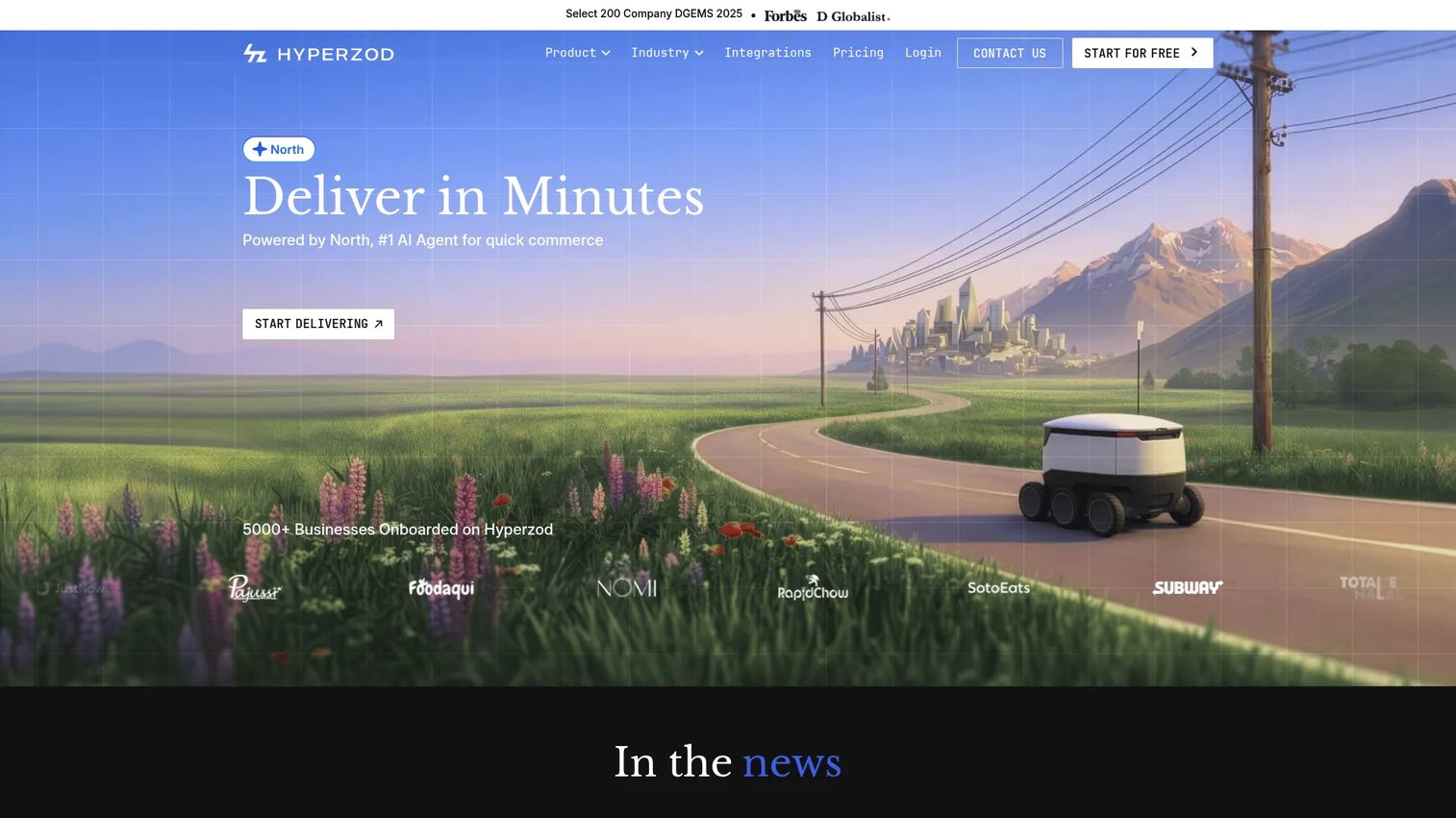
Hyperzod is an AI-first white-label platform that covers ordering, delivery, and marketplace operations from a single stack. It is the broadest option on this list, built for businesses launching a branded quick-commerce or delivery marketplace rather than bolting one piece onto an existing setup. You get an ordering website and app, merchant and driver apps, and an admin panel that ties order management and analytics together.
The appeal for operators is consolidation. Instead of running separate ordering, dispatch, and analytics tools, Hyperzod packages the full delivery platform under your own brand. That matters when you want to own the customer experience end to end and avoid the data fragmentation that comes from stitching three vendors together.
Best for: Operators and founders launching a branded ordering or delivery marketplace who want the full stack under one roof.
Key strengths
- End-to-end white-label stack: Ordering website, customer app, merchant app, and driver app all branded as yours, so diners never see a third-party platform.
- Built-in dispatch and admin control: Order management, dispatch, and analytics live in one admin panel, reducing the manual handoffs that slow multi-tool setups.
- Modular, per-module pricing: You add the modules you need, which keeps the entry cost low and lets the stack grow with the operation.
Why choose Hyperzod: If your goal is a repeatable, branded delivery operation that does not depend on marketplaces, Hyperzod gives you the widest coverage in one place. It fits founders who want to control margin, data, and customer experience without integrating five separate systems. The tradeoff is breadth over depth in any single layer, so logistics-heavy operators may still pair it with a dedicated dispatch tool.
Hyperzod pricing: Hyperzod uses per-module pricing with monthly or yearly billing, and yearly plans show a 20% discount. Public pricing includes an Ordering Website at $29 per month plus a flat 0.99% success fee per order, with an optional one-time $300 setup fee per module. A free tier is available to get started. On G2, Hyperzod holds a 5.0/5 rating, though from a small number of reviews.
2. DeliverLogic
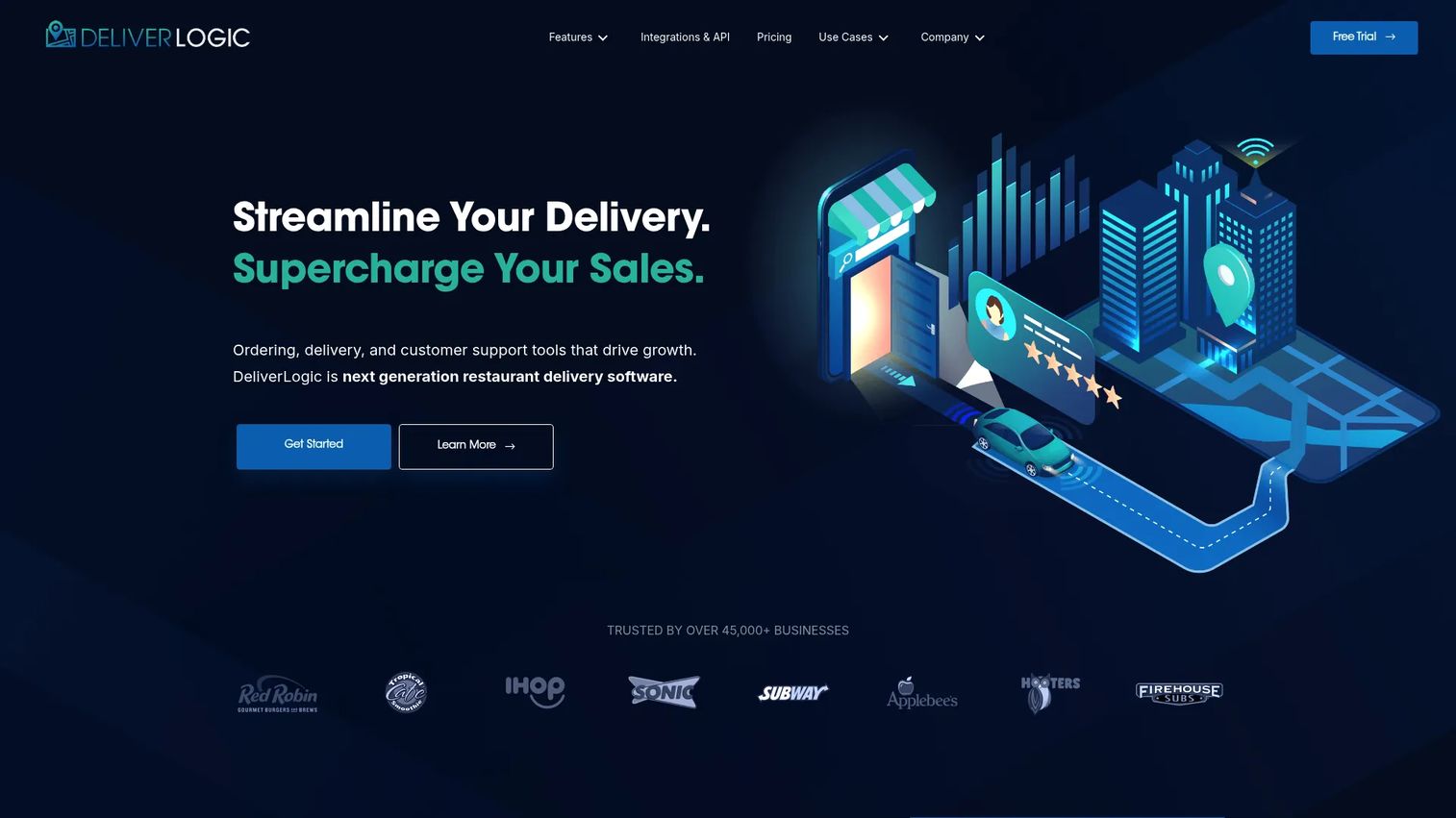
DeliverLogic is turnkey last-mile delivery software for restaurants and delivery providers who want a branded platform without building it from scratch. It leans into automation: AI voice ordering, automated driver routing and dispatch, and real-time order tracking come standard, which makes it a strong fit when the delivery layer is your operational core.
Where DeliverLogic earns its place is operations. The dispatch and routing engine assigns and optimizes driver runs automatically, and the live tracking keeps both you and the diner informed. For an operator running an own fleet or a delivery service serving multiple restaurants, that automation removes the manual coordination that breaks at scale.
Best for: Restaurants and delivery operators who need a branded last-mile delivery platform with automated dispatch built in.
Key strengths
- Automated driver routing and dispatch: Orders are assigned and routed automatically, cutting the manual coordination that slows growing delivery operations.
- AI voice ordering: Captures phone orders without tying up staff, useful for operators with meaningful call-in volume.
- Real-time order tracking: Live status for diners and dispatchers, which reduces "where is my order" calls and improves on-time performance.
Why choose DeliverLogic: Choose DeliverLogic when last-mile logistics is the job to be done and you want it branded as your own. It suits delivery providers and restaurants ready to run an own-fleet or hybrid model where automated dispatch is the difference between a clean operation and a chaotic one.
DeliverLogic pricing: Public plans start with Startup at $99 per month, then Basic at $179, Business at $499, and Corporate at $999 as monthly minimums. The pricing page also lists optional design packages and a $1.50 optional software tip on all orders. There is no free tier. On G2, DeliverLogic holds a 3.7/5 rating from a small review base.
3. GloriaFood
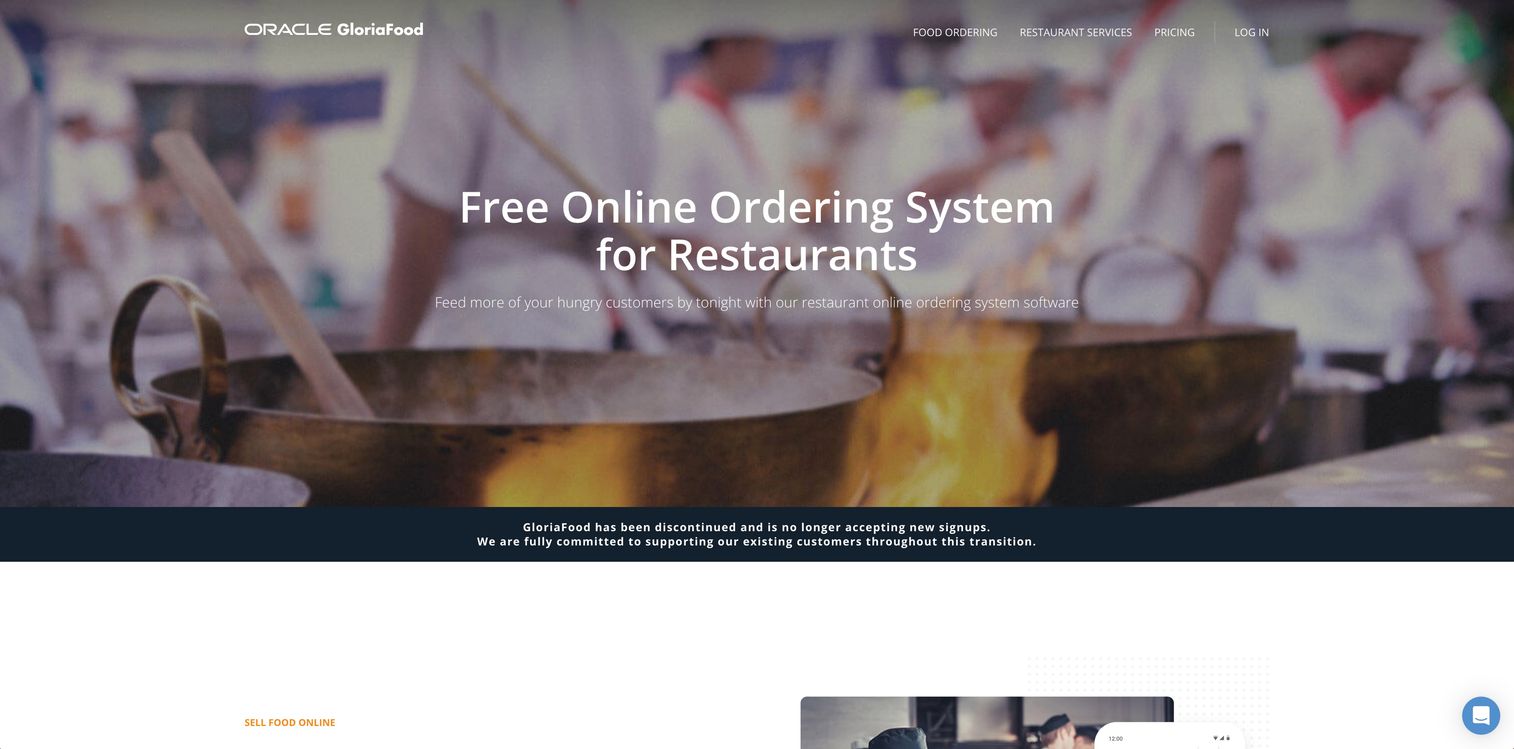
GloriaFood is a restaurant online ordering and reservations platform with a free core offering and optional paid add-ons. It is the fastest way for a smaller operator to stand up online food delivery software without a budget conversation: the website ordering widget and table reservation widget are free, and you upgrade only when you need more.
The practical appeal is launch speed. You can add the ordering widget to an existing site, accept scheduled and order-ahead reservations, and start taking direct orders the same day. For independent restaurants testing direct ordering before committing to a heavier stack, that low barrier is the whole point.
Best for: Independent restaurants that want a free online ordering system with the option to upgrade as volume grows.
Key strengths
- Free website ordering widget: Take direct online orders at no cost, which protects margin from day one without a commission cut.
- Table reservations widget: Handle bookings and order-ahead reservations alongside delivery and pickup from one tool.
- Scheduled orders: Let diners order ahead, smoothing kitchen load and supporting both delivery and pickup demand.
Why choose GloriaFood: Choose GloriaFood when speed and cost are the constraints and you want to prove direct ordering works before investing in a full platform. It is implementation-light and lets a single operator launch fast, then layer on paid services like a POS system or payment processing as the operation matures.
GloriaFood pricing: The core online ordering and reservation widgets are free. Paid add-ons include a Restaurant POS System at US$49 per month per location on a two-year commitment, online and credit card payment service at US$29 per month, table reservation deposits at US$0.50 per guest on accepted bookings, and advanced promo marketing at US$19 per month. On G2, GloriaFood holds a 4.7/5 rating.
4. ChowNow
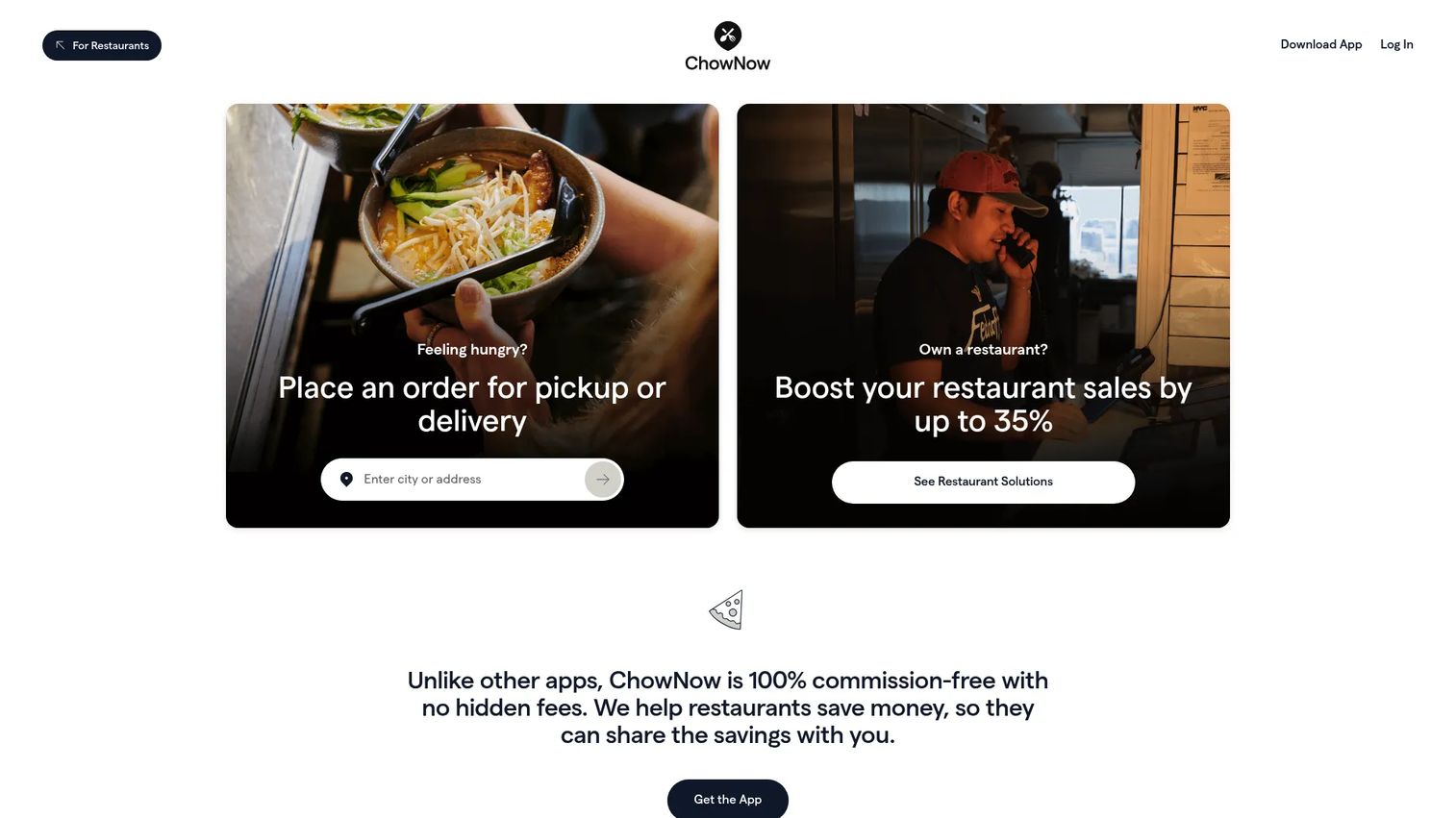
ChowNow is an online ordering and restaurant marketing platform built specifically for independent restaurants that want commission-free direct ordering. This is the section to read if you are weighing direct ordering against marketplace economics, because that tradeoff is exactly what ChowNow is designed around.
The marketplace math is simple and painful. On a marketplace, every delivery order can carry a commission in the 15% to 30% range, and the platform owns the diner. Direct ordering platforms like ChowNow flip the model: you pay a flat subscription, keep the full order value, and own the customer data and relationship. Over enough volume, the flat fee becomes far cheaper than per-order commissions, and you build a repeatable retention channel instead of paying for access to your own customers each time.
Best for: Independent restaurants that want commission-free ordering plus built-in marketing tools to drive repeat orders.
Key strengths
- Commission-free direct ordering: Diners order on your branded channel and you keep the full order value instead of paying per-order commission.
- Branded mobile app: Your restaurant gets its own app, which deepens the direct relationship and repeat-order behavior.
- Order aggregation and POS integrations: Pulls orders together and connects to your POS, reducing the manual reconciliation that fragmented ordering creates.
Why choose ChowNow: Choose ChowNow when margin and customer ownership outweigh raw discovery. It fits founders and operators balancing the reach of marketplaces against the economics of owning diners. Many operators run ChowNow for direct orders alongside a marketplace for discovery, then work to migrate repeat customers to the commission-free channel.
ChowNow pricing: ChowNow offers three annual plans: Launch at $229 per month, Grow at $319 per month, and Elevate at $409 per month, with monthly-view prices shown on the pricing page. There is no free tier. On G2, ChowNow holds a 4.6/5 rating.
5. Onfleet
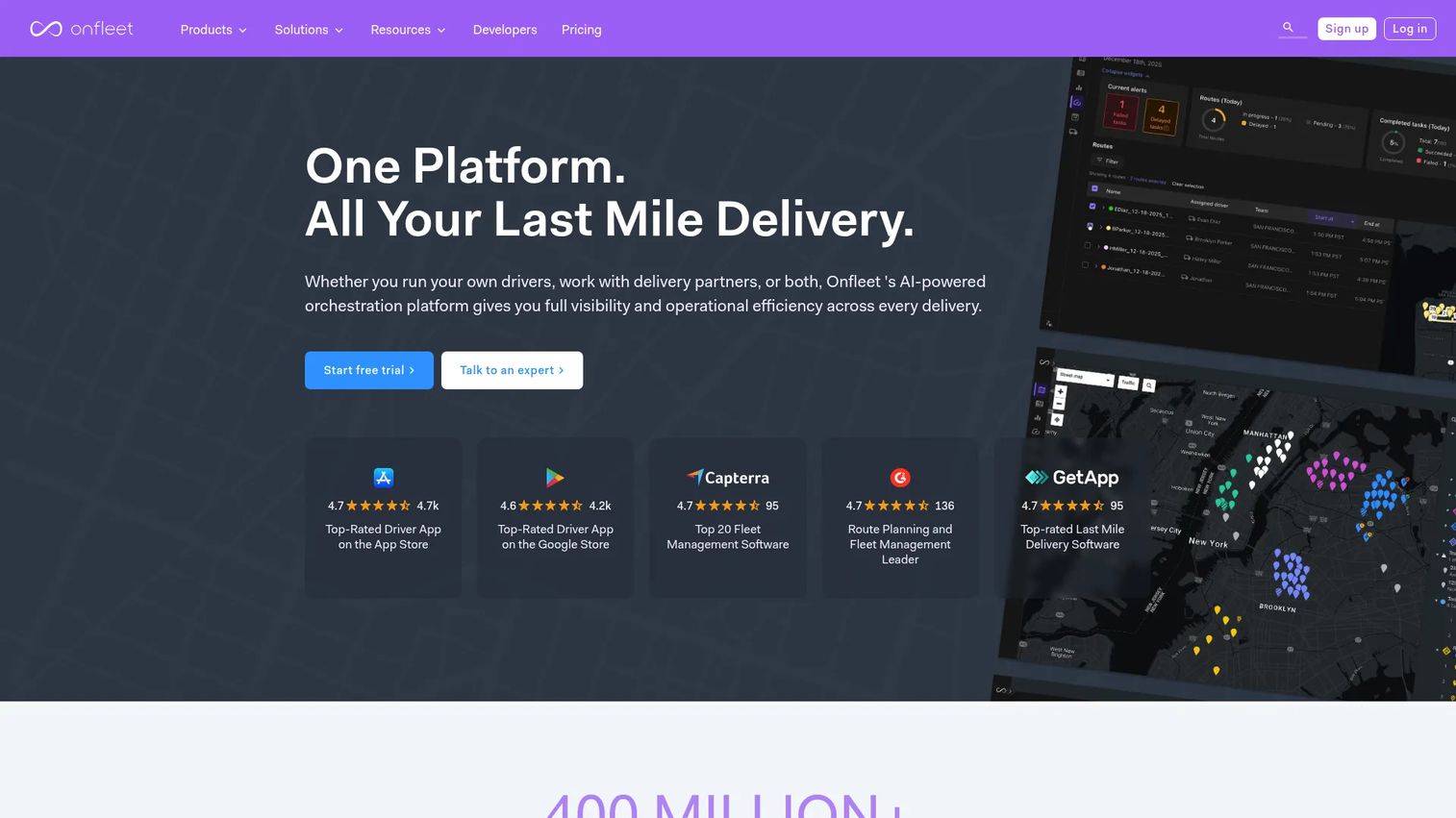
Onfleet is last-mile delivery management software focused on dispatch, tracking, and customer notifications. It is logistics-first by design, which makes it the right pick when ordering already lives somewhere else and you need a dedicated delivery layer that just works.
This is the operational engine, not the storefront. Onfleet handles route optimization, auto-dispatch, real-time delivery tracking, and proof of delivery with barcode scanning and ID verification. For operators running their own fleet at volume, the value is control: you see every driver, every ETA, and every exception in one place, and the routing logic keeps drivers efficient instead of idle.
Best for: Businesses that already have ordering in place and need last-mile orchestration with live tracking and strong dispatch tools.
Key strengths
- Route optimization and auto-dispatch: Automatically assigns and sequences deliveries, keeping drivers efficient as daily volume climbs.
- Real-time delivery tracking: Live visibility for dispatchers and diners, which cuts inbound status calls and improves on-time rates.
- Proof of delivery: Barcode scanning, ID verification, and signature capture, useful for operations that need delivery confirmation.
Why choose Onfleet: Choose Onfleet when the delivery layer is the bottleneck and ordering is handled elsewhere. It is built for operators who want operational control over an own fleet and need the dispatch and routing depth that lighter all-in-one tools do not match. Pair it with a direct-ordering front end and you have a clean, repeatable own-fleet operation.
Onfleet pricing: Plans start with Launch at $619 per month for 2,500 tasks, Scale at $1,349 per month for 5,000 tasks, and Enterprise at $3,099 per month for 10,000 or more tasks. A Courier Suite add-on runs $299 per month, and a 14-day free trial is available. There is no free tier. On G2, Onfleet holds a 4.6/5 rating.
6. DoorDash
DoorDash is an on-demand local commerce platform spanning food, grocery, convenience, and retail delivery. For restaurant operators, its role in the stack is specific: marketplace discovery and outsourced last-mile delivery. This is reach, not a direct-ordering replacement.
The honest framing matters here. DoorDash brings you new customers who are browsing the marketplace and handles delivery through its driver network, which is valuable when discovery and last-mile coverage are your main needs. The tradeoff is commission and ownership: the platform takes a per-order cut and owns the diner relationship. The strongest operators treat DoorDash as the discovery channel and pair it with a direct-ordering tool to migrate repeat customers to a higher-margin channel over time.
Best for: Restaurants that need marketplace exposure and outsourced delivery without running their own fleet.
Key strengths
- Marketplace discovery: Puts your restaurant in front of diners actively browsing for delivery, driving new-customer acquisition.
- Outsourced last-mile delivery: Uses DoorDash's driver network, so you get delivery reach without hiring or managing drivers.
- Multi-category reach: Beyond restaurants, the platform covers grocery and convenience, useful for operators expanding their offering.
Why choose DoorDash: Choose DoorDash when discovery and delivery reach are the priority and you accept commission cost as the price of acquisition. It fits operators who want exposure to a large diner base, and works best as one layer in a broader stack rather than the sole delivery solution.
DoorDash pricing: For merchants, DoorDash uses tiered commission plans: Basic at 15% delivery and 6% pickup, Plus at 25% delivery and 6% pickup, and Premier at 30% delivery and 6% pickup, each with introductory 0% periods. For consumers, DashPass runs $9.99 per month or $96 per year, with student rates at $4.99 per month or $48 per year. A current G2 rating was not listed at the time of writing.
7. Uber Direct
Uber Direct is Uber's white-label local delivery service for businesses that take orders through their own channels. It is the courier and last-mile execution layer: you keep ordering on your site, app, or phone, and Uber Direct handles the delivery using its driver network, branded as your experience.
This is the answer when you want branded delivery without managing a fleet. Orders placed on your own channels get fulfilled by Uber drivers, with real-time tracking, ETA and SMS notifications, and proof-of-delivery options like photo, signature, ID scan, barcode, and PIN. Because it is integration-led and priced per delivery, it slots cleanly into a direct-ordering or hybrid setup as the fulfillment muscle without marketplace listing fees.
Best for: Businesses that want branded same-day or on-demand delivery without listing on a marketplace or running in-house drivers.
Key strengths
- White-label delivery: Fulfills orders from your app, website, or phone under your brand, so diners stay in your experience.
- Real-time tracking and notifications: ETA and SMS updates keep diners informed without you fielding status calls.
- Flexible proof of delivery: Photo, signature, ID scan, barcode, and PIN options to match the confirmation each order needs.
Why choose Uber Direct: Choose Uber Direct when you own the order but not the fleet. It pairs naturally with a direct-ordering platform: you keep the diner relationship and margin on the front end, and use Uber Direct's courier network for last-mile execution. The per-delivery model with no startup costs or monthly minimums keeps it flexible for operators who want delivery capacity on demand.
Uber Direct pricing: Uber Direct uses per-delivery pricing starting at $6.99 per delivery, with no startup costs, commissions, or monthly minimums. Actual pricing varies by products used, channel partner, mileage, speed, and region. A current G2 rating was not listed at the time of writing.
Considerations before you buy
The shortlist narrows fast once you score tools against how you actually operate. Run every candidate through these criteria.
Operating-model fit
Decide your model first: direct ordering, marketplace, logistics-only, courier last-mile, or hybrid. A direct-ordering tool will not solve a dispatch bottleneck, and a logistics tool will not own your diner relationship. Match the tool to the job before you compare features, or you will end up paying for capabilities you never use.
Customer relationship ownership
Ask who owns the diner after the order. Marketplaces own the customer and the data; direct-ordering platforms hand both to you. If repeat business and retention are part of your growth plan, prioritize tools that give you the customer data and let you market back to it.
POS integrations and data flow
Check whether the platform connects cleanly to your POS, payments, and analytics. POS integrations are what stop orders from landing in a spreadsheet and keep your data in one place. Fragmented data is slow data, and slow data means worse decisions. Verify the specific integrations you need before committing.
Launch speed and operational overhead
Confirm how fast you can go live and what it costs to maintain. Some tools take a day to stand up; others need a longer build. Weigh launch speed against the depth you need, and be honest about how much manual work the platform leaves on your team.
Margin and unit economics
Run the math on commission versus subscription. A per-order commission feels small until you multiply it across thousands of orders. A flat fee plus your own delivery cost often wins at volume. Model your real order counts before you sign.
Conclusion
The best food delivery software is the one that matches your operating model, not the one with the longest feature list. Pick by how you run, not by what looks impressive on a comparison grid.
If you want the broadest branded stack in one place, Hyperzod covers ordering, delivery, and marketplace operations. For turnkey last-mile logistics with automated dispatch, DeliverLogic is built for it. GloriaFood gets a smaller operator into direct ordering fast and free. ChowNow is the pick when commission-free direct ordering and customer ownership drive your margin strategy. Onfleet is the logistics engine when ordering lives elsewhere and dispatch depth is the priority. DoorDash brings marketplace discovery and outsourced delivery reach, and Uber Direct delivers white-label courier execution without a fleet.
For most operators focused on margin, data ownership, and repeatable growth, the strongest long-term play is a branded direct-ordering channel paired with a courier or hybrid fulfillment layer. That setup keeps the diner relationship yours while giving you the delivery flexibility to scale. Start with your model, then pick the tool that earns its place in your stack within the first quarter.
If your evaluation also touches how you create and share product experiences for the buyers and partners around your business, Guideflow helps teams build interactive, self-serve demos in minutes. Start your journey with Guideflow today!
FAQs
Food delivery software runs your own ordering, dispatch, and delivery operation under your brand, so you own the diner relationship and the data. A marketplace app like DoorDash lists you alongside competitors, brings discovery, and handles delivery, but takes a per-order commission and owns the customer. Many operators use both: a marketplace for reach and direct ordering for margin.
No. Some platforms support an own fleet with dispatch and routing tools, but you can also run delivery entirely through couriers. Services like Uber Direct provide white-label last-mile delivery using their driver network, so you keep branded ordering without hiring or managing drivers. Hybrid setups blend both.
The features that matter most depend on your model, but the consistent priorities are online ordering flows, dispatch and routing, live tracking, POS integrations, payment support, and analytics. For operators focused on margin, customer-data ownership and white-label branding matter as much as any single operational feature.
Direct ordering platforms charge a flat subscription instead of a per-order commission, so you keep the full order value. Over enough volume, a fixed monthly fee is far cheaper than a 15% to 30% marketplace cut. They also give you the customer data, which lets you drive repeat orders without paying for access each time.
Yes. A hybrid delivery model platform routes orders across your own drivers, third-party couriers, and marketplace coverage from one system. This lets you use in-house drivers when they are efficient and fall back to courier networks for overflow or out-of-zone deliveries, optimizing cost per order across channels.
Multi-location operators should prioritize centralized order management, per-location delivery-zone control, consistent branding across sites, and clean POS integrations that report into one analytics view. Delivery-zone control and dispatch and routing that scale across locations prevent the manual coordination that breaks at multi-site volume.
POS integrations are critical. Without them, online orders land in a separate system and someone re-enters them manually, which creates errors and slows the kitchen. Clean POS integrations keep ordering, payments, and reporting in one place, which is the foundation for cleaner data and faster operational decisions.