
A customer places an order at 9 a.m. and expects a live tracking link by lunch. Your dispatcher is on a phone call rerouting three drivers around a road closure. Two more orders just came in with tight windows. Somewhere in a spreadsheet, a delivery is marked complete with no photo, no signature, and no timestamp. When the customer disputes it next week, you have nothing.
That is the daily reality of last mile operations without a system connecting the three people who matter most: the dispatcher planning the day, the driver executing it, and the customer waiting at the other end. When those three fall out of sync, you get missed ETAs, angry "where is my order" tickets, and delivery proof that does not exist when you need it.
The stakes keep rising. Future Market Insights (2024) projects the global last-mile delivery software market to grow from USD 16.8B in 2026 to USD 45.9B by 2036, a 10.6% compound annual growth rate. That growth is not vanity. It reflects how many operations leaders now treat delivery software as infrastructure, not a nice-to-have. The same research found 52% of large-format North American retailers had integrated route optimization into dispatch operations by 2024.
The core question is no longer whether to adopt delivery management software. It is which platform keeps your dispatcher, driver, and customer in one connected loop, in real time, without adding operational overhead your team cannot maintain.
What's inside
This guide compares seven last mile delivery software platforms built for dispatch, routing, real-time tracking, customer notifications, driver apps, and proof of delivery. It is written for operations leaders, fleet managers, dispatchers, and logistics managers evaluating tools before a trial or sales call.
We selected platforms based on four criteria that matter for delivery operations:
- Workflow coverage across dispatcher, driver, and customer touchpoints
- Delivery visibility through real-time tracking and ETA alerts
- Automation depth for dispatch and route optimization
- Operational fit across integrations, pricing, and scale
Every tool here is a real, verified platform in active use for last mile delivery management software today.
TL;DR
- Best overall for modern dispatch visibility: Onfleet, with route optimization, a polished driver app, live tracking, and proof of delivery in one system.
- Best for enterprise orchestration: FarEye, built for retail, ecommerce, and 3PL teams managing complex last mile at scale.
- Best for route optimization depth: Locus, with AI-driven dispatch and dynamic routing for large fleets.
- Best for practical route execution: Elite EXTRA and Route4Me, for teams that want strong routing plus field execution without heavy overhead.
- Best for customer experience plus routing: DispatchTrack, balancing delivery orchestration with proactive communication.
- Best for flexible delivery operations: Tookan, for teams wanting a configurable task and dispatch layer.
If you are researching adjacent operational tooling, our roundups of the best community management software and best loyalty management software cover systems that sit alongside delivery in the customer experience stack.
What is last mile delivery software?
Last mile delivery software is a platform that plans, dispatches, tracks, and verifies the final leg of a delivery, from the depot or store to the customer's door, while keeping dispatchers, drivers, and customers synchronized in real time.
Most last mile routing software combines several core modules into one system. Strong platforms cover:
- Dispatch: Assign and reassign orders to drivers, handle last-minute changes, and balance daily load. This is where delivery dispatch software replaces phone calls and manual spreadsheets.
- Route optimization: Sequence multi-stop routes to cut mileage, time, and fuel while respecting delivery windows.
- Real-time tracking: Give dispatchers a live map of driver locations and delivery status, and customers a tracking link.
- Driver app: Turn the driver's phone into the execution layer for navigation, task lists, and status updates.
- Customer notifications: Send branded ETA alerts and status updates that cut inbound "where is my order" tickets.
- Proof of delivery: Capture signatures, photos, barcodes, timestamps, and notes for disputes and compliance.
- Delivery analytics: Report on on-time rates, driver performance, exceptions, and cost per delivery.
- Integrations: Connect to ecommerce, ERP, and order management systems so orders flow in automatically.
Cloud-based deployment now dominates the category. Future Market Insights (2024) expects cloud platforms to capture roughly 67% of last mile delivery software deployments, which lowers the barrier for mid-market teams that cannot run on-premise infrastructure. Ecommerce is the largest single application, projected to drive around 25% of demand in 2026.
Good delivery software does more than route trucks. It closes the loop between the three parties in every delivery so nobody is guessing where an order is or whether it arrived.
When to use last mile delivery software
Not every delivery operation needs a full platform on day one. Here are the situations where the switch pays off.
Reduce manual dispatch work
When order volume climbs, recurring routes multiply, or same-day changes pile up, spreadsheets and phone calls stop scaling. A dispatcher juggling 40 stops across six drivers cannot re-optimize by hand when a customer reschedules or a driver calls in sick. Delivery dispatch software with route optimization handles the reshuffling in seconds and pushes the update straight to the driver app. If dispatch has become a daily bottleneck that eats your best operator's morning, automation is the fix.
Improve customer visibility and ETA confidence
If your support queue fills with "where is my order" messages, the problem is visibility, not staffing. Customers who get a live tracking link and accurate ETA alerts stop calling. Last mile tracking software with branded customer notifications turns each delivery into a self-serve status page, which cuts inbound tickets and raises satisfaction at the same time. This use case matters most for ecommerce, food, pharmacy, and any operation where the customer is waiting at a known window.
Capture proof of delivery and exception data
For high-value goods, regulated deliveries, or any service where disputes are costly, proof of delivery is non-negotiable. Signatures, geotagged photos, barcode scans, timestamps, and driver comments give you a defensible record when a customer claims a package never arrived. Exception data also feeds your analytics so you can see which routes, drivers, or ZIP codes generate the most failed deliveries. If you are eating chargebacks or re-delivery costs, this data pays for the software.
Comparison table
Read this table top to bottom by relevance to core last mile delivery management software needs. Onfleet leads for all-around dispatch visibility; the rest are sorted by fit for specific operations. Pricing reflects each vendor's published plans; where pricing is sales-led, we note it as custom.
| # | Product | Intent | Key use case | Pricing | G2 rating |
|---|---|---|---|---|---|
| 1 | Onfleet | All-around dispatch and delivery visibility | Route optimization, live tracking, driver app, proof of delivery | From $619/mo (Launch) | 4.6/5 |
| 2 | FarEye | Enterprise last mile orchestration | Dynamic routing, control tower visibility, multi-carrier | Custom | 4.8/5 |
| 3 | Locus | Route optimization depth for large fleets | AI dispatch, dynamic routing, real-time tracking | Custom | 4.4/5 |
| 4 | Elite EXTRA | Practical routing plus returns | Route planning, driver tracking, ETA notifications | Custom quote | 4.5/5 |
| 5 | Route4Me | Configurable multi-stop routing at scale | Route planning, dispatch, tracking, proof of service | Custom | 4.7/5 |
| 6 | DispatchTrack | Customer experience plus orchestration | Routing, real-time tracking, proactive communication | Custom | 4.5/5 |
| 7 | Tookan | Flexible delivery task management | Delivery management, fleet tracking, dispatch | Custom | Not listed |
1. Onfleet
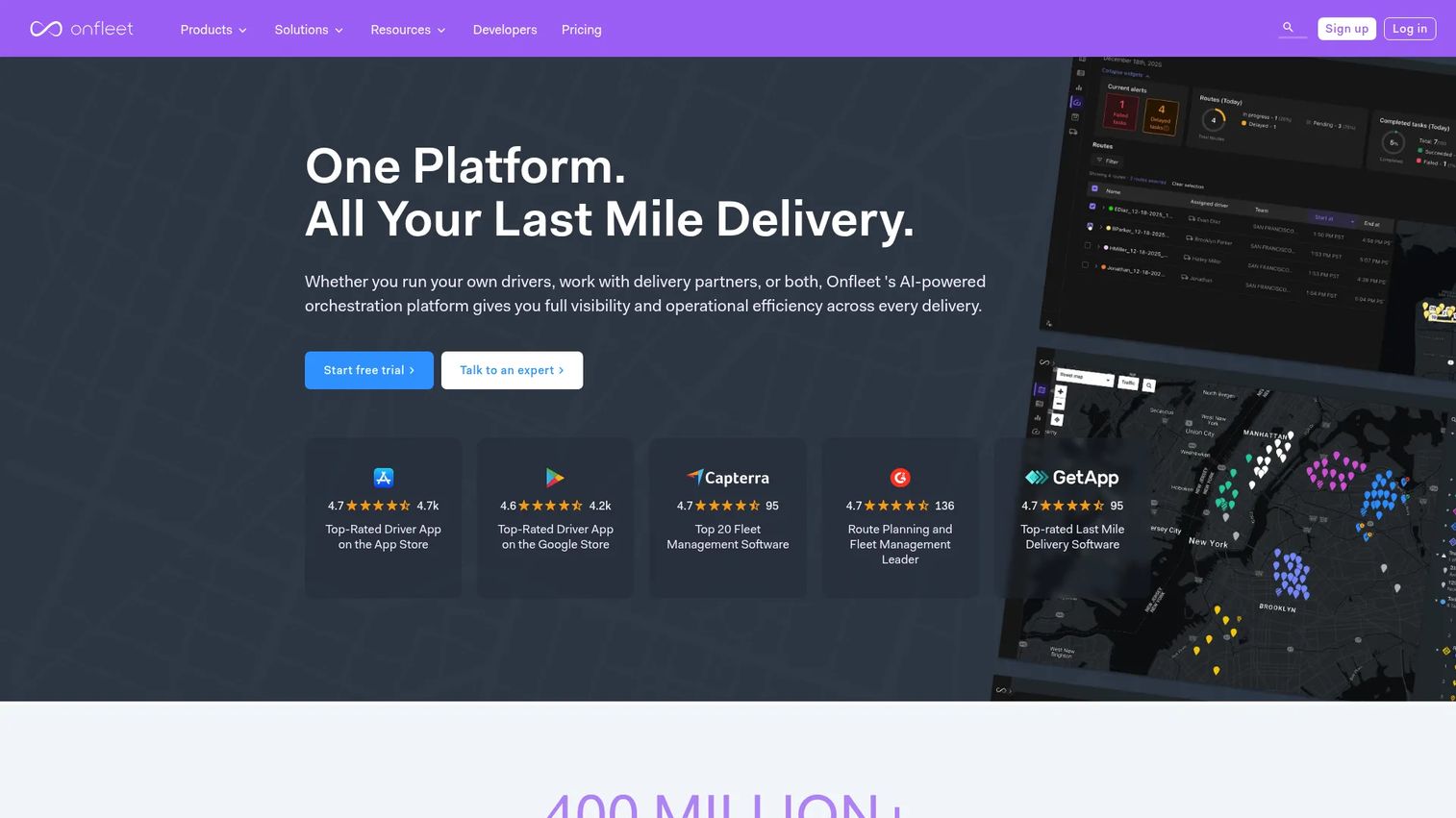
Onfleet is last mile delivery software built for teams that need dispatch, routing, tracking, and delivery execution in one place. It brings route optimization, real-time driver tracking, customer notifications, and proof of delivery together so the dispatcher, driver, and customer stay in sync throughout every delivery. Operations leaders reach for it when phone-and-spreadsheet dispatch stops scaling and they want a polished, modern system that both drivers and customers actually enjoy using.
Best for: Teams that need last-mile delivery orchestration with routing, tracking, and tight dispatcher-driver coordination in a single platform.
Key strengths
- Route optimization: Sequences multi-stop routes automatically and reoptimizes on the fly when orders or drivers change.
- Real-time driver and delivery tracking: Gives dispatchers a live map and customers an accurate tracking link with ETA alerts.
- Proof of delivery with notifications and dispatch tools: Captures signatures, photos, and timestamps while automated customer notifications cut inbound status tickets.
Why choose Onfleet: Onfleet fits teams that want a delivery management software system with a clean, modern feel for drivers and a strong customer-facing experience. The driver app and branded tracking pages are among the most refined in the category, which matters when your delivery is the last impression a customer has of your brand. It is a strong pick for mid-market ecommerce, food, pharmacy, and courier operations that value polish and speed over deep enterprise configuration.
Onfleet pricing: Onfleet publishes transparent tiers. The Launch plan starts at $619 per month and includes 2,500 delivery or pickup tasks. Scale starts at $1,349 per month with 5,000 tasks, and Enterprise starts at $3,099 per month with 10,000 or more tasks. A Courier Suite add-on starts at $299 per month. There is no free tier, though a 14-day free trial is available. Billing is monthly across all plans.
2. FarEye
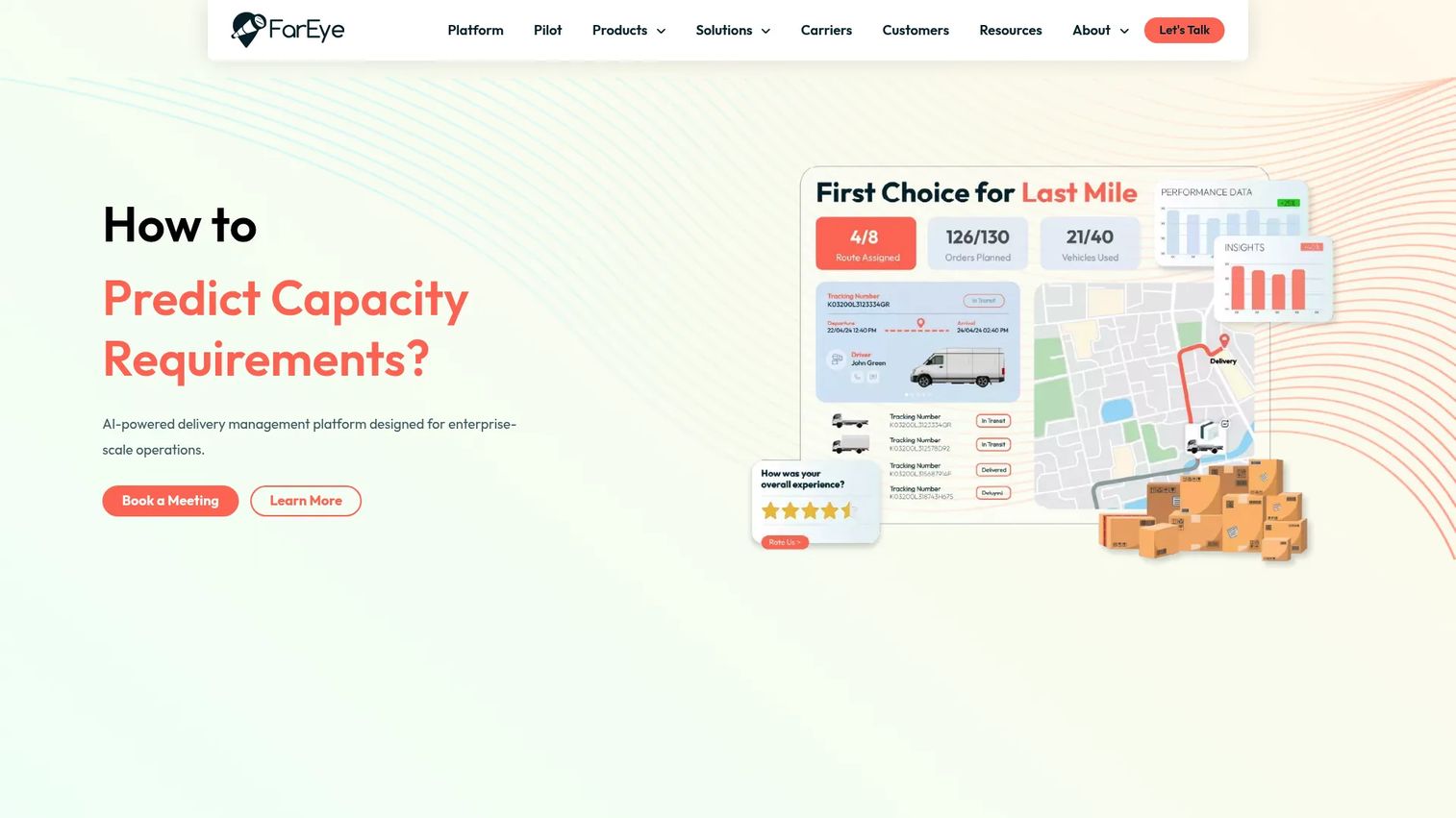
FarEye is an AI-powered last mile delivery management and orchestration platform built for enterprise logistics. It layers route planning and optimization, control tower visibility, and multi-carrier shipping into a single system, which makes it a fit for organizations coordinating deliveries across regions, carriers, and fulfillment models. Where simpler tools handle a single fleet, FarEye is designed to orchestrate complex networks.
Best for: Enterprises managing complex last mile delivery operations across retail, ecommerce, and 3PL models.
Key strengths
- Route planning and optimization: Builds and adjusts routes dynamically across large, multi-region delivery networks.
- Delivery tracking and control tower visibility: Provides a unified real-time view of every shipment and exception across carriers.
- Multi-carrier shipping and carrier selection: Chooses the right carrier per shipment and manages the handoff automatically.
Why choose FarEye: FarEye earns its place when a single-fleet tool is not enough. Retail, ecommerce, and 3PL teams that manage owned fleets alongside third-party carriers get orchestration and carrier selection in one control tower. Its branded customer experience and dynamic routing suit operations where delivery volume, complexity, and stakeholder count are all high. The 4.8/5 G2 rating reflects strong satisfaction among its enterprise base.
FarEye pricing: FarEye uses a sales-led pricing model, and no public starting price is listed on its site. Pricing is customized to delivery volume, carrier count, and required modules. Teams evaluating it should expect an enterprise contract and a scoping conversation to size the deployment. Request a quote directly for figures tailored to your operation.
3. Locus
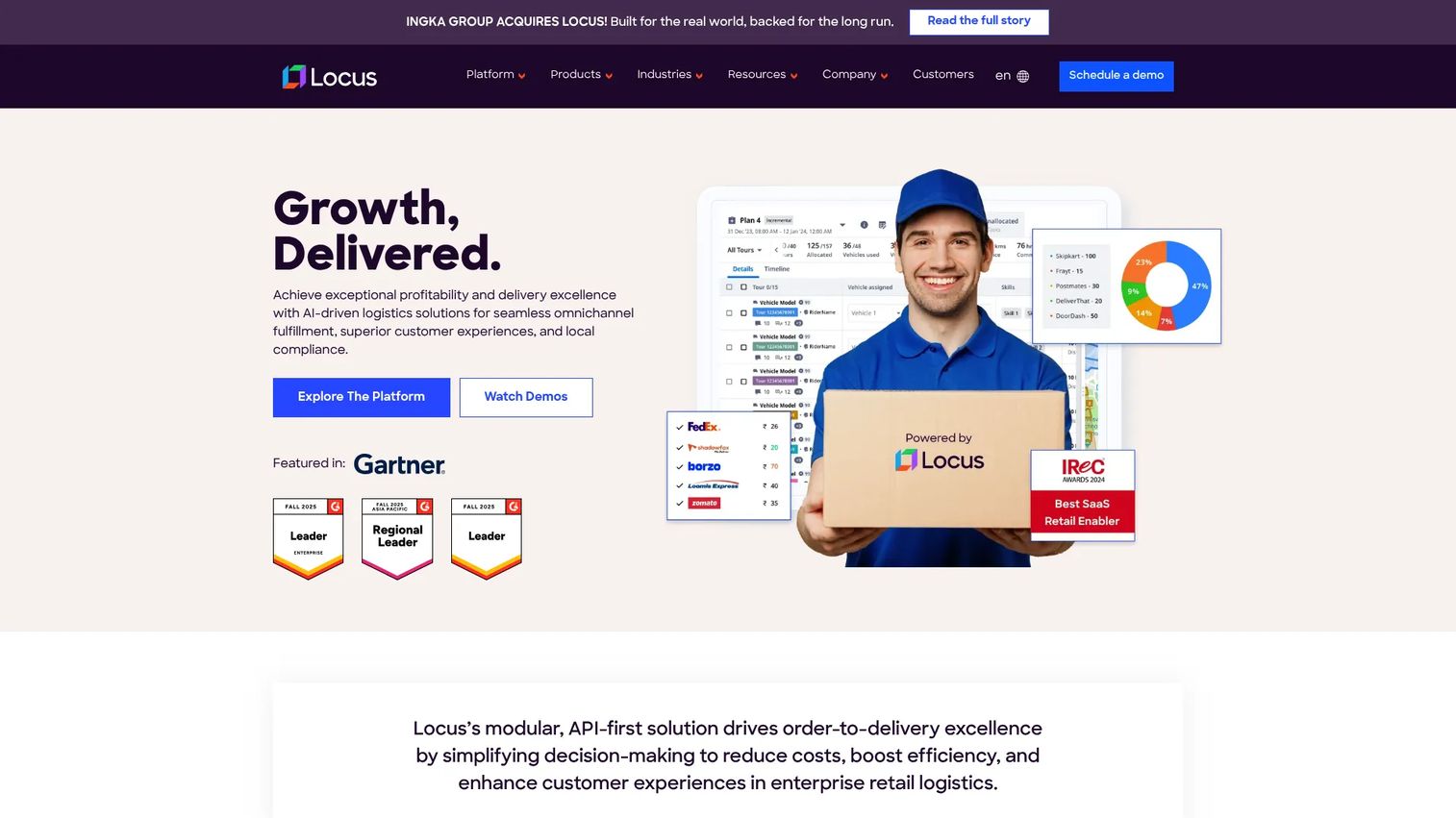
Locus is enterprise logistics software focused on dispatch, route optimization, visibility, and transportation management. Its strength is optimization depth: AI-powered dispatch orchestration and dynamic route optimization built for large fleets running high daily stop counts. Teams that treat routing efficiency as a core cost lever, not a checkbox, tend to shortlist Locus for the granularity of its optimization engine.
Best for: Large logistics and delivery operations that need enterprise dispatch and deep route optimization.
Key strengths
- AI-powered dispatch orchestration: Assigns and sequences work across large fleets while balancing constraints automatically.
- Dynamic route optimization: Continuously reoptimizes routes as conditions, orders, and traffic change through the day.
- Real-time tracking and control tower visibility: Surfaces live status and exceptions across the entire delivery network.
Why choose Locus: Locus fits operations where route optimization drives real money. If you run hundreds or thousands of stops a day and small routing gains translate to meaningful savings, its optimization depth is the draw. It is built for scale and control rather than quick self-serve setup, so it suits logistics teams with the volume to justify an enterprise platform. The 4.4/5 G2 rating reflects a solid enterprise track record.
Locus pricing: Locus does not publish pricing on its site. Pricing is quote-based and scoped to fleet size, stop volume, and the modules you need. Expect an enterprise engagement with a demo and scoping call. Contact the vendor for a tailored quote based on your delivery volume.
4. Elite EXTRA
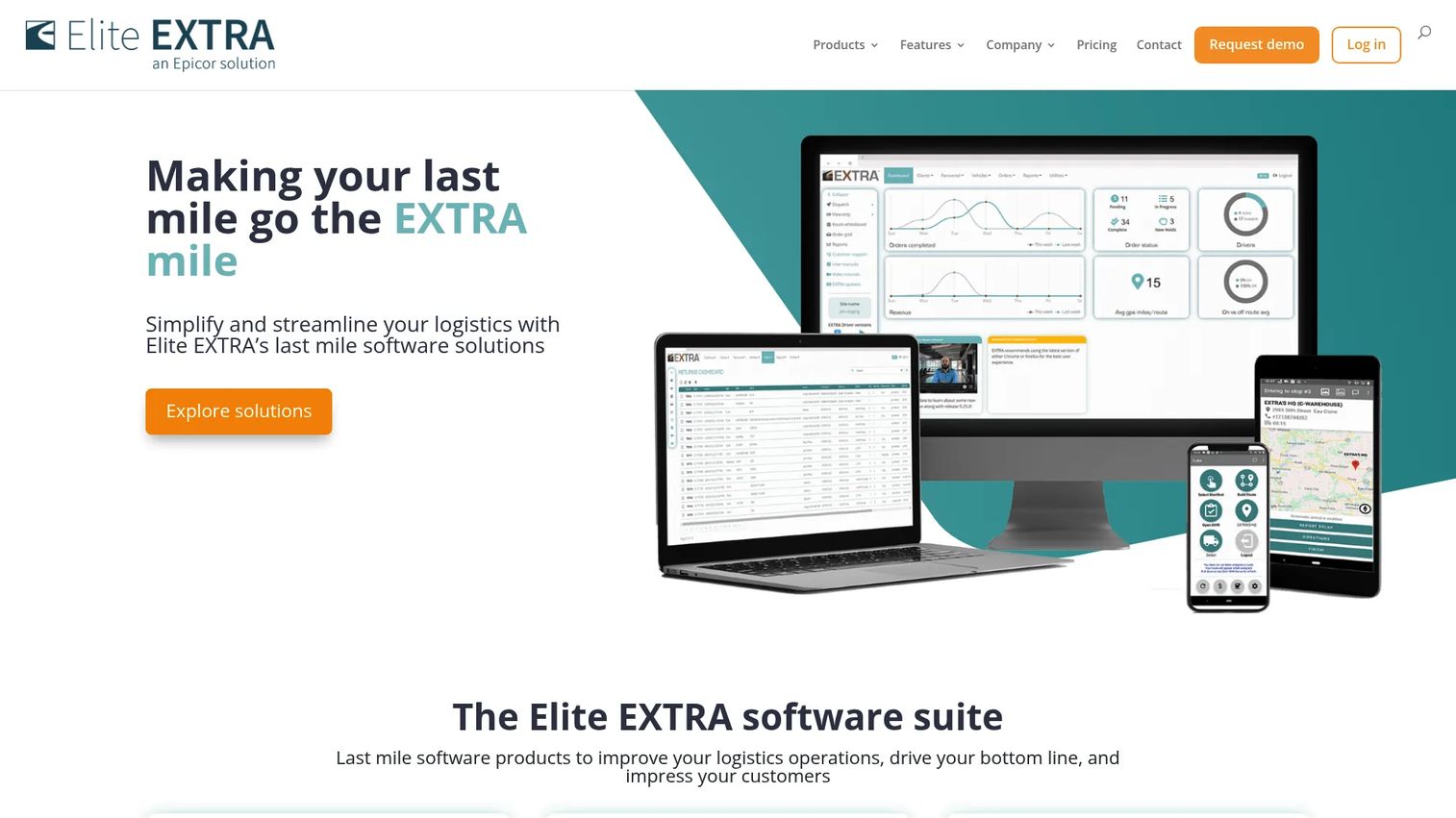
Elite EXTRA is a last mile logistics software suite covering routing, delivery network management, and returns automation. It blends optimized route planning with real-time driver tracking and customer ETA notifications, plus a returns workflow many competitors leave out. That combination makes it a practical choice for teams that want strong routing and field execution without stitching together separate tools.
Best for: Businesses that need customizable last mile routing and dispatch with built-in returns support.
Key strengths
- Optimized route planning: Builds efficient multi-stop routes that respect delivery windows and driver constraints.
- Real-time driver tracking: Gives dispatchers live visibility into where every driver is and how the day is running.
- Customer ETA notifications: Keeps customers informed with proactive delivery updates that reduce inbound calls.
Why choose Elite EXTRA: Elite EXTRA suits operations that want a configurable, practical platform rather than a rigid one. Its returns automation is a genuine differentiator for retail and distribution teams where reverse logistics is a real cost. The suite approach means routing, dispatch, tracking, and returns live in one place, which reduces the tool sprawl that slows operations teams down. The 4.5/5 G2 rating reflects steady satisfaction across its user base.
Elite EXTRA pricing: Elite EXTRA uses custom, quote-based pricing and does not publicly list a starting price. Plans are scoped to your operation and offered on a month-to-month or custom basis. There is no free tier. Request a quote through its site to get pricing matched to your delivery volume and module needs.
5. Route4Me
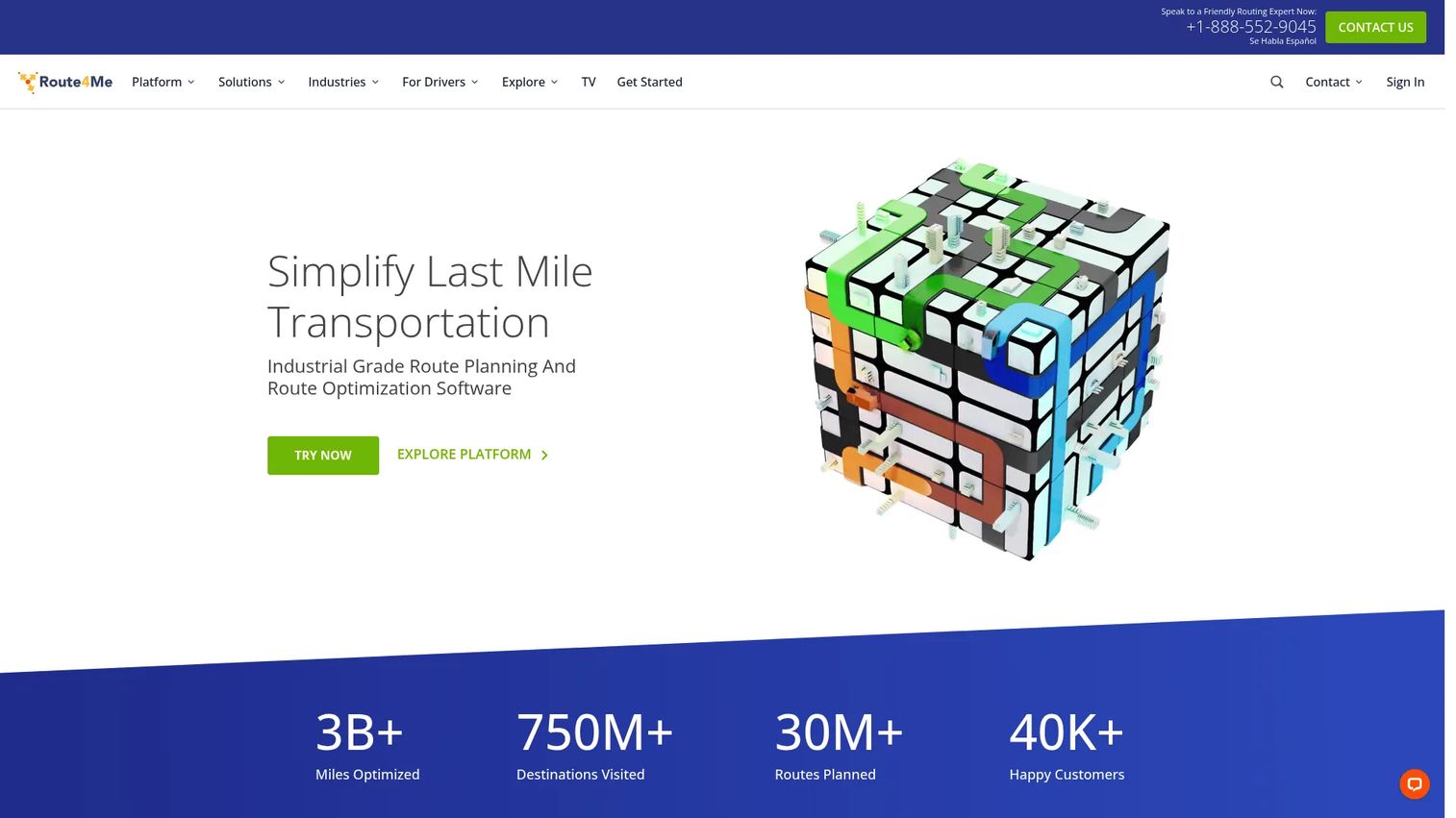
Route4Me is a last mile route optimization and transportation platform for delivery, logistics, and field service teams. It centers on route planning and optimization, dispatch, real-time tracking, and proof of delivery or service, with a configurable structure that adapts to many operation types. Teams that prioritize routing efficiency and want a platform they can shape to their workflow gravitate toward it.
Best for: Businesses that need configurable last mile routing and dispatch at scale across delivery and field service.
Key strengths
- Route planning and optimization: Sequences multi-stop routes efficiently and supports complex routing rules.
- Dispatch and real-time tracking: Assigns work to drivers and gives dispatchers live status across the day.
- Customer notifications and proof of delivery: Sends delivery updates and captures proof of delivery or service on completion.
Why choose Route4Me: Route4Me is a strong fit when route optimization is the priority and you need a platform flexible enough to cover both delivery and field service work. Its marketplace and configurable structure let teams add capabilities as they scale, rather than paying for a fixed enterprise bundle upfront. The 4.7/5 G2 rating, one of the highest in this list, points to strong satisfaction among routing-focused teams.
Route4Me pricing: Route4Me does not display public numeric pricing. The company states pricing is customized, with plans including Route Optimization, Business Optimization, and Enterprise Optimization available on a contact-sales basis. Pricing scales with the capabilities and volume you need, so reach out directly for a quote sized to your operation.
6. DispatchTrack
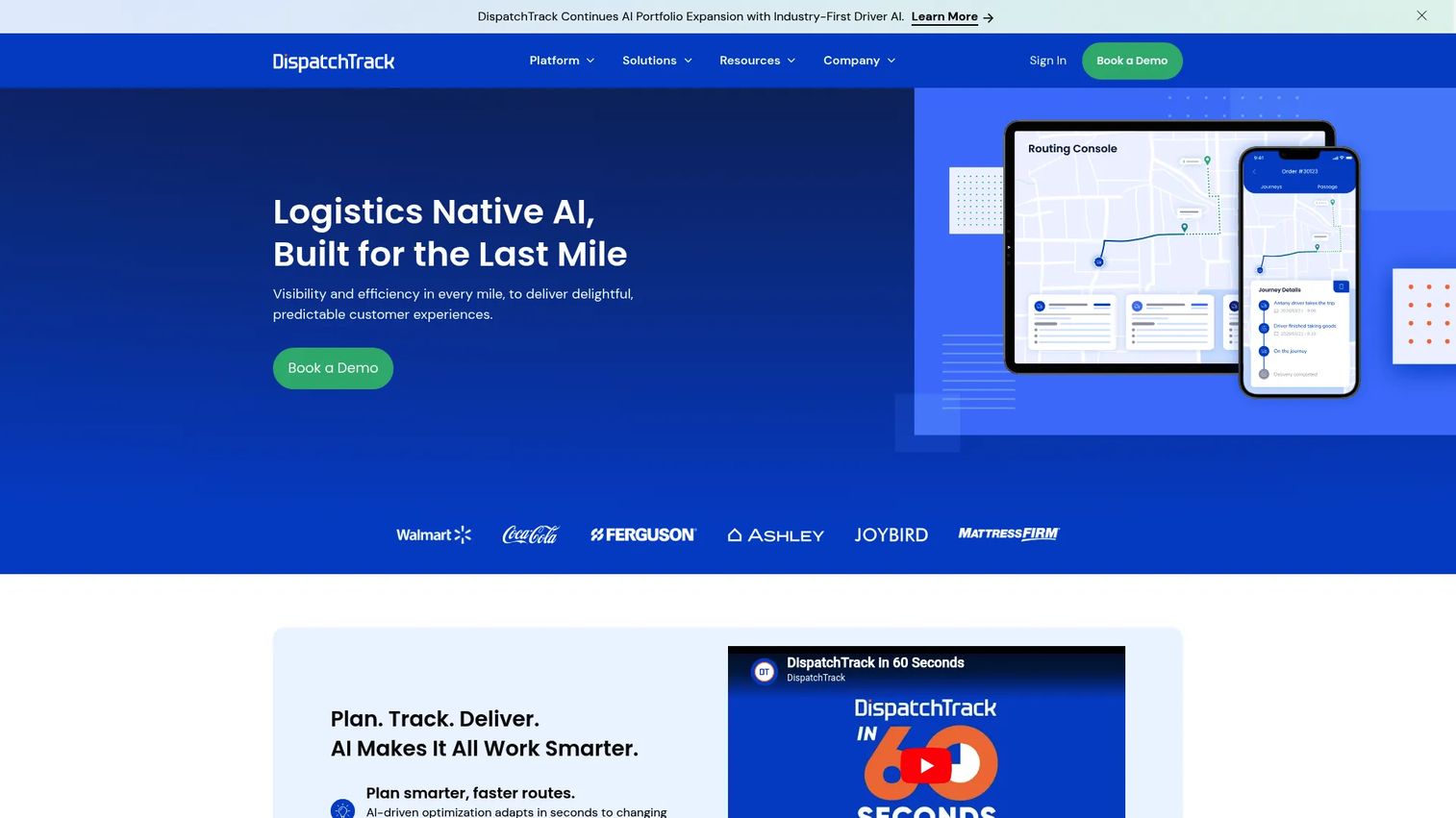
DispatchTrack is last mile delivery management software that balances route orchestration with customer communication. It combines route optimization and planning, real-time delivery tracking and visibility, and a strong delivery experience layer with proactive customer communication. That balance makes it a fit for businesses that care as much about the customer's delivery day as they do about routing efficiency.
Best for: Businesses that need last mile delivery management at scale with a strong customer experience layer.
Key strengths
- Route optimization and planning: Builds efficient delivery routes and adjusts them as the day changes.
- Real-time delivery tracking and visibility: Gives dispatchers and customers a live view of every delivery's status.
- Customer delivery experience and proactive communication: Sends accurate ETAs and updates that keep customers informed and reduce inbound tickets.
Why choose DispatchTrack: DispatchTrack fits operations where delivery is a brand touchpoint, not just a logistics step. Its focus on accurate ETAs and proactive communication suits big-and-bulky, retail, and appliance delivery where a missed window is a serious problem. Route orchestration and customer experience sit in one system, so dispatchers optimize routes while customers stay informed. The 4.5/5 G2 rating reflects reliable performance across a demanding user base.
DispatchTrack pricing: DispatchTrack lists Starter, Professional, and Enterprise tiers on its pricing page, along with a minimum annual order, but does not publicly disclose the numeric prices. Billing is annual. There is no free tier. Contact the vendor for exact pricing scoped to your delivery volume and tier requirements.
7. Tookan
Tookan is delivery and field workforce management software built for teams that want a flexible operations layer. It covers delivery management, fleet tracking, and dispatch, with support for food delivery and other field-heavy use cases. Its appeal is configurability: teams that want to shape a delivery operations layer around their own workflow, rather than adopt a fixed platform, often start here.
Best for: Small delivery and field-operations teams that need configurable dispatch and tracking.
Key strengths
- Delivery management: Coordinates delivery tasks, assignments, and status across drivers.
- Fleet tracking: Provides real-time visibility into driver and vehicle location.
- Dispatch and route assignment: Assigns tasks to drivers and supports proof of delivery on completion.
Why choose Tookan: Tookan suits smaller delivery and field-service teams that value flexibility over a heavy enterprise footprint. It is a practical starting point for operations building out a delivery layer for the first time, or for teams whose workflows do not fit a rigid platform. The task-based model adapts to food delivery, courier work, and general field operations, which makes it versatile for teams still defining their process.
Tookan pricing: Tookan's pricing is not publicly verified on its primary site, and its plans are typically scoped to task volume and required features. Because public figures could not be confirmed from the vendor's own domain, evaluate pricing directly with Tookan and confirm current tiers, task limits, and any add-ons before committing.
Considerations before you buy
Choosing last mile delivery software is less about feature counts and more about fit with how your operation actually runs. Use this checklist to evaluate any platform on the list.
Workflow coverage across all three parties
Confirm the tool connects dispatcher, driver, and customer in one loop. A strong driver app, a real dispatcher console, and branded customer notifications should all work together. Gaps in any one create manual work that erases the software's value.
Route optimization that matches your complexity
Test the routing engine against your real constraints: delivery windows, vehicle capacity, driver skills, and multi-stop density. A tool that optimizes well for 20 stops may struggle at 200. Run a pilot with real data before you commit.
Real-time tracking and exception handling
Look for live driver tracking, accurate ETA alerts, and clear exception flags when a delivery fails or runs late. Real-time tracking is only useful if it surfaces problems while you can still act on them.
Proof of delivery and analytics depth
Check that proof of delivery captures what your business needs: signatures, photos, barcodes, timestamps, and notes. Then confirm the delivery analytics turn that data into on-time rates, cost per delivery, and driver performance you can report on.
Integrations with your existing stack
Verify the platform connects to your ecommerce, ERP, or order management system so orders flow in without manual entry. API integrations determine how much the software fits into your operation versus adding another silo. If you also compare tools in adjacent categories like best contract management software or a customer data platform, apply the same integration-first lens.
Conclusion
The right last mile delivery software depends on your scale and where your friction lives. For all-around dispatch visibility with a polished driver and customer experience, Onfleet is the strongest starting point and the only tool here with fully transparent pricing. For enterprise orchestration across carriers and regions, FarEye and Locus lead on complexity and optimization depth. Elite EXTRA and Route4Me suit teams that want practical, configurable routing with room to grow, and Route4Me carries one of the highest satisfaction ratings in the group. DispatchTrack fits operations where the delivery experience is a brand moment, and Tookan works for smaller teams building a flexible delivery layer.
The next step is a pilot, not a purchase. Shortlist two platforms that match your volume and workflow, then run them against real delivery data for a week. Measure on-time rate, dispatch time saved, and inbound ticket reduction. The tool that keeps your dispatcher, driver, and customer in sync with the least overhead is the one worth buying. If you are also mapping adjacent operational tooling, our guide to the best event management software covers systems that intersect with delivery-heavy operations.
FAQs
Last mile delivery software is a platform that plans, dispatches, tracks, and verifies the final leg of a delivery from depot or store to the customer's door. It combines route optimization, real-time tracking, a driver app, customer notifications, and proof of delivery so dispatchers, drivers, and customers stay synchronized. It replaces manual dispatch and spreadsheet tracking for courier operations, ecommerce, food, and field-service teams.
Locus and Route4Me lead on route optimization depth. Locus is built for large fleets with AI-driven dispatch orchestration and dynamic routing, while Route4Me offers highly configurable route planning for delivery and field service teams. Onfleet also handles route optimization well for mid-market operations that want optimization plus a polished driver and customer experience in one platform.
Yes. Every platform on this list includes a driver app and proof of delivery in some form. The driver app turns the driver's phone into the execution layer for navigation, task lists, and status updates, while proof of delivery captures signatures, photos, barcodes, timestamps, and notes. These features protect you in disputes and feed delivery analytics on failed or late deliveries.
Prioritize workflow coverage across dispatcher, driver, and customer, plus route optimization that matches your stop density and constraints. Confirm real-time tracking with clear exception handling, proof of delivery that captures what your business needs, and API integrations with your ecommerce or ERP stack. Run a pilot on real delivery data before committing, since a tool that works at 20 stops may struggle at 200.
They send branded, automated customer notifications and ETA alerts that turn each delivery into a self-serve status page. Customers get a live tracking link instead of calling support, which cuts inbound "where is my order" tickets. Tools like Onfleet and DispatchTrack put particular emphasis on this customer experience layer, since delivery is often the last impression a customer has of your brand.
Yes, if manual dispatch, missed ETAs, or delivery disputes are costing you time and money. Smaller teams often start with flexible, configurable platforms like Tookan or transparent per-plan tools like Onfleet to avoid over-buying. The payback comes from dispatch time saved, fewer support tickets, and defensible proof of delivery, so weigh those savings against the monthly cost before deciding.
Integrations are often the difference between software that fits your operation and software that adds another silo. API integrations let orders flow automatically from your ecommerce, ERP, or order management system into the delivery platform, eliminating manual entry and errors. Before buying, confirm the platform connects to your existing stack and test that order data syncs cleanly in both directions.