A utilization review that should take twenty minutes takes two hours. A nurse toggles between an EMR, a payer portal, a criteria database, and a spreadsheet, re-keying the same clinical facts four times. By the time the medical necessity call gets made, the concurrent stay has already moved on. Multiply that across a full census and you get the pattern most utilization management teams live with: slow throughput, inconsistent decisions, and denials that trace straight back to a missed detail or a late submission.
The money is real. The global utilization management software market is projected to grow from $1.5 billion in 2024 to $3.2 billion by 2033, a 9.2% CAGR, according to Verified Market Reports (2024). In the U.S. specifically, ResearchAndMarkets (2024) estimates the utilization management solutions market at $613 million in 2024, on track to reach $1.08 billion by 2030. That growth is not vanity spend. Over 68% of healthcare organizations globally have implemented software-supported utilization review workflows, per MarketGrowthReports (2026), and roughly 52% of inpatient admissions are subject to pre-authorization screening. When more than half your admissions run through a review gate, the software behind that gate decides whether cases clear cleanly or pile up.
This is a buyer's shortlist, not a vendor pitch. The point is to help utilization review teams, payer operations leaders, and health system buyers compare seven platforms on what actually moves throughput: decision speed, clinical appropriateness, interoperability, and measurable denials reduction.
What's inside
This guide covers seven utilization management software vendors chosen for four reasons: how well they automate review workflows, how consistently they support medical necessity decisions, how deeply they connect to the rest of the payer and provider stack, and how they fit specific buyer contexts. It is written for teams already comparing platforms, not those looking for a single product to rubber-stamp. Each entry lists what the tool does, who it fits, its key strengths, verified pricing where public, and a G2 rating where one exists. Where a figure is not publicly confirmed, it is left out rather than guessed.
TL;DR
- Best for AI-led review speed: Xsolis, for its real-time predictive scoring on medical necessity and level-of-care.
- Best for tying UM to revenue: Waystar, for connecting utilization decisions to claims, denials, and payment workflows.
- Best for health plan operations at scale: HealthEdge, for enterprise payer administration with UM built in.
- Best for configurable care workflows: HELIOS, for care and case management teams that need flexible utilization workflows.
- Best for UM inside a broader care platform: GuidingCare and Jiva, for teams needing utilization management alongside care coordination.
- Best for payer case management fit: Altruista Health, for teams standardizing case tracking with UM-adjacent workflows.
What is utilization management software?
Utilization management software is a healthcare application that standardizes and automates how clinical reviews, medical necessity determinations, and authorization decisions get made across payer and provider workflows. It replaces manual triage, spreadsheet tracking, and portal toggling with a single system that applies evidence-based criteria, routes cases to the right reviewer, and records every decision for compliance.
Most healthcare utilization management software shares a core set of capabilities:
- Clinical criteria application: Built-in or integrated guidelines (such as InterQual or MCG) that reviewers apply consistently to determine clinical appropriateness.
- Authorization lifecycle management: Prior authorization, concurrent review, and retrospective review handled in one workflow, with status visible to every stakeholder.
- Workflow automation: Automatic case prioritization, task routing, and escalation so reviewers spend time on judgment, not administration.
- Interoperability: Bidirectional data exchange with EMRs, claims systems, and payer platforms so clinical facts flow without re-keying.
- Denials reduction support: Documentation prompts, criteria matching, and audit trails that make each determination defensible and reduce downstream denials.
- Analytics and reporting: Dashboards on review turnaround, decision consistency, denial rates, and reviewer productivity that prove ROI.
The category matters more every year because volume keeps climbing. The global utilization management AI market alone is expected to grow from $3.8 billion in 2025 to $21.4 billion by 2034, a 22.4% CAGR, with software components accounting for 57.9% of 2025 revenue, per MarketIntelo (2025). AI is no longer a bolt-on; it is becoming the engine that reads clinical notes, scores necessity, and flags the cases that need a human.
When to use utilization management software
Streamlining utilization review across multiple stakeholders
When a single case touches a review nurse, a physician advisor, a payer, and a case manager, coordination breaks down fast. Utilization review software gives every stakeholder the same case view, the same criteria, and the same status. That shared surface cuts the back-and-forth that stalls concurrent reviews and keeps determinations moving before the clinical picture changes.
Improving decision speed and medical necessity consistency
Manual review invites variance. Two nurses can read the same chart and reach different level-of-care calls. Utilization management solutions apply the same evidence-based criteria to every case and, increasingly, use AI to surface a recommended determination with supporting documentation attached. That consistency is what makes medical necessity decisions defensible under audit and drives denials reduction.
Connecting UM data to broader care and revenue workflows
Utilization decisions do not live in isolation. A level-of-care call affects the claim, the care plan, and the member's next touchpoint. Teams that need UM tied into care management, population health, or revenue capture should shortlist platforms that treat utilization management as one workflow inside a larger care platform, not a standalone silo.
Comparison table
Here is how the seven utilization management software vendors compare at a glance. Pricing is listed only where a public figure was verifiable; most vendors in this category use contact-sales pricing.
| # | Product | Intent | Key use case | Pricing | G2 rating |
|---|---|---|---|---|---|
| 1 | Xsolis | AI-led review speed | Real-time medical necessity and level-of-care scoring | Contact sales | Not listed |
| 2 | Waystar | UM tied to revenue | Utilization decisions connected to claims and denials | Contact sales | 4.4/5 |
| 3 | HealthEdge | Payer operations at scale | Enterprise health plan administration with UM | Contact sales | 4.3/5 |
| 4 | Altruista Health | Care management + UM | Prior auth and appeals inside care coordination | Contact sales | 3.8/5 |
| 5 | HELIOS | Configurable care workflows | Integrated care, disease, and utilization management | Contact sales | 4.9/5 |
| 6 | Jiva | UM within care platform | Preauthorization and medical appropriateness | Contact sales | 4.0/5 |
| 7 | GuidingCare | UM in broader care suite | Authorization lifecycle with analytics and rules | Contact sales | 3.8/5 |
1. Xsolis
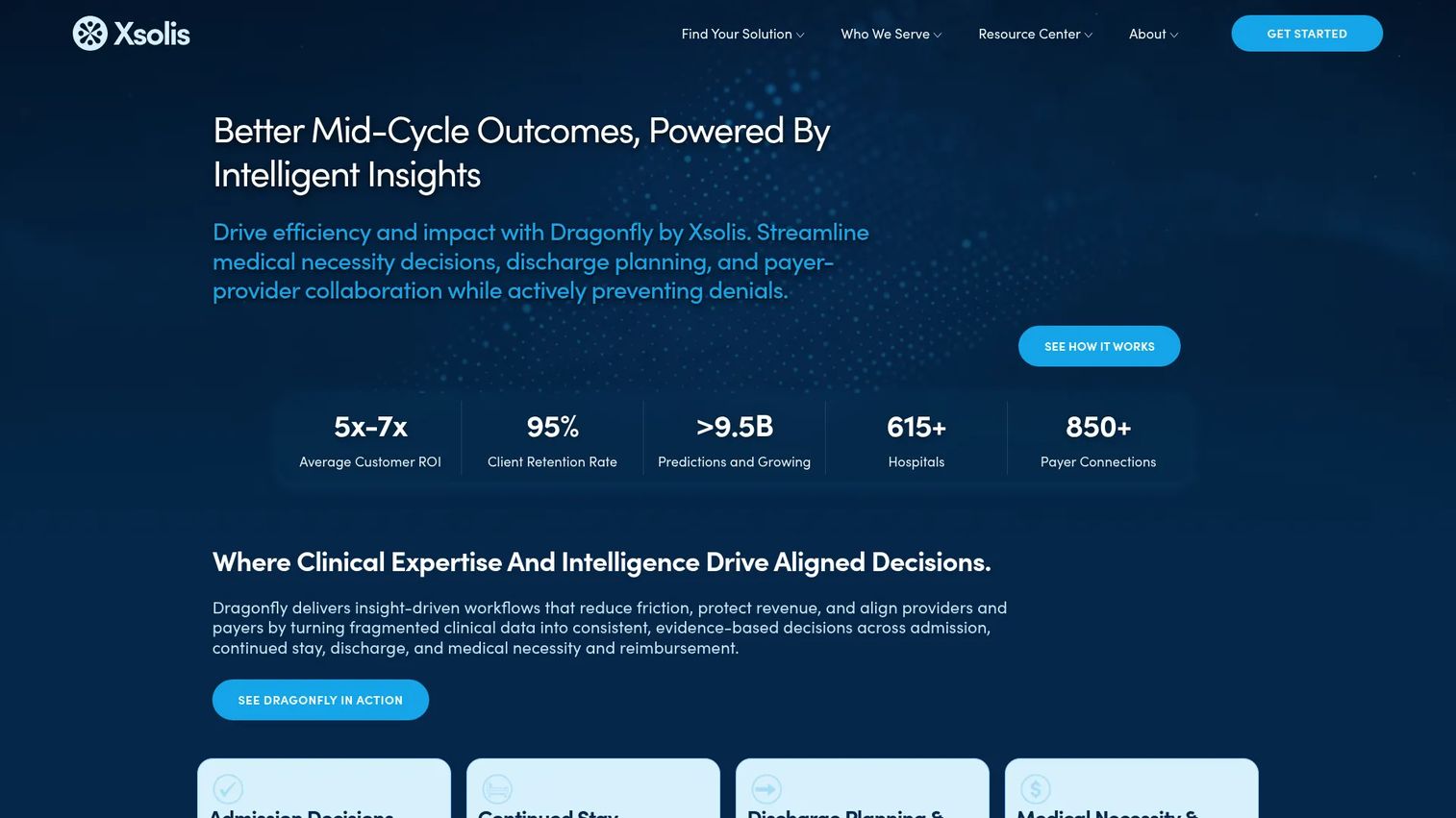
Xsolis is an AI-driven platform for healthcare utilization management and payer-provider collaboration. Its core is real-time predictive analytics that score medical necessity and level-of-care, so review nurses and physician advisors start from a data-backed recommendation instead of a blank chart. Xsolis positions itself around one shared source of clinical truth that both hospitals and health plans can see, which reduces the adversarial back-and-forth that stalls concurrent authorizations.
Best for: Hospitals, health systems, and health plans that want predictive scoring to speed utilization review and align both sides of a case.
Key strengths
- Real-time predictive analytics: Scores medical necessity and level-of-care as the case develops, prioritizing the reviews that need attention now.
- Concurrent authorization workflows: Handles utilization management and concurrent review in one place, keeping determinations current with the clinical picture.
- Payer-provider collaboration: Shared clinical data and analytics give both sides the same view, cutting disputes and rework.
Why choose Xsolis: If your primary bottleneck is throughput and inconsistent level-of-care decisions, Xsolis leads with predictive accuracy. The shared-data model is the differentiator: instead of a provider and payer arguing over the same chart from different systems, both work from the same score and evidence. That alignment is what compresses review cycles and reduces denials tied to level-of-care disagreements.
Xsolis pricing: Xsolis does not publish pricing on its site and uses a contact-sales model. No public price or current G2 rating was verifiable at the time of writing, so evaluate cost directly with their team during a scoping conversation.
2. Waystar
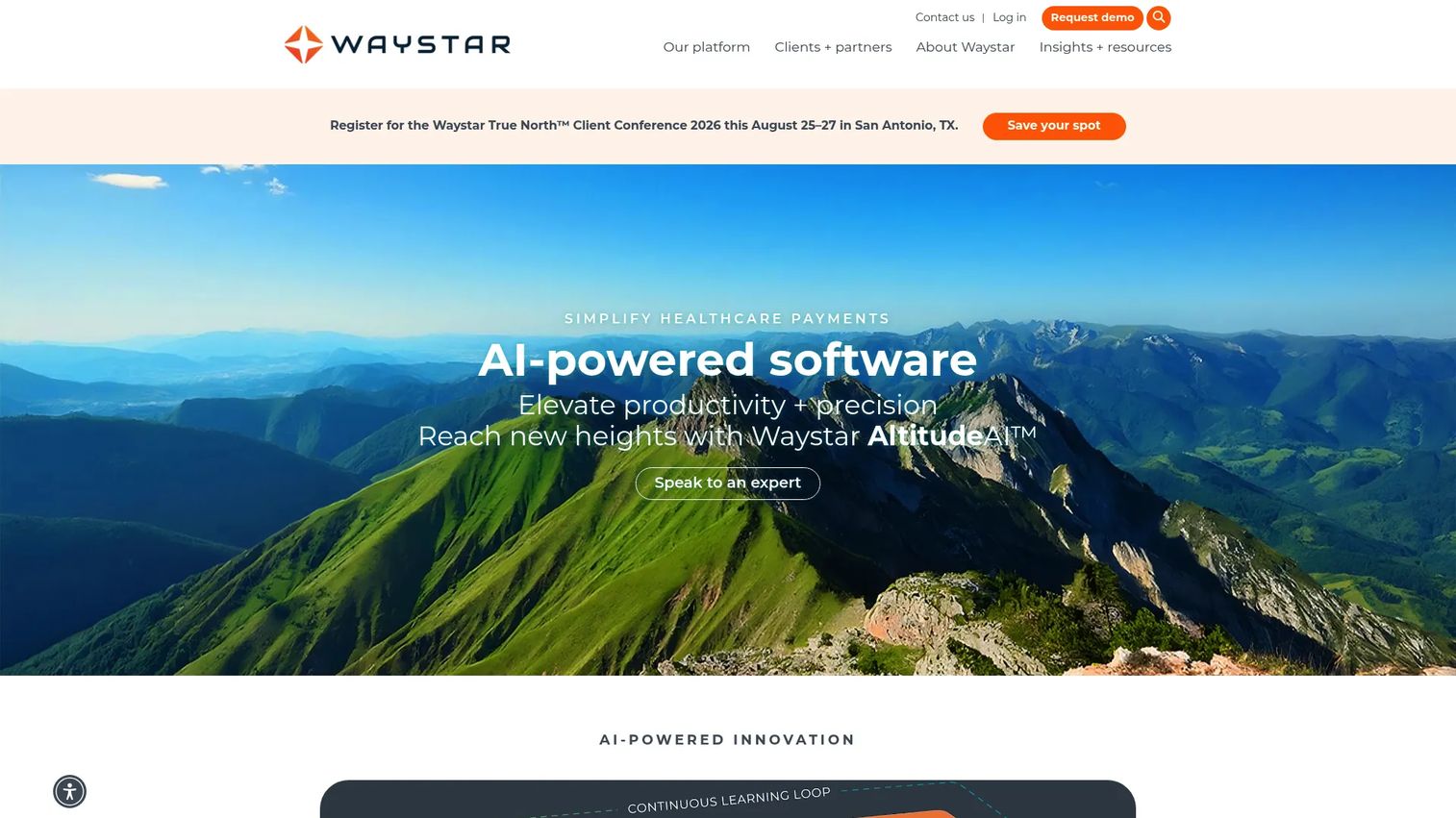
Waystar is a healthcare revenue cycle platform that ties utilization decisions to the money. Where most utilization management software stops at the determination, Waystar carries the workflow through claims, eligibility, denial recovery, and payment. For provider teams, that care-to-payment span is the pitch: a level-of-care call is not a clinical footnote, it is a claims event, and Waystar treats it as one.
Best for: Healthcare providers and revenue cycle teams that want utilization management measured against denial rates and net revenue, not just review turnaround.
Key strengths
- Claim management and scrubbing: Cleans claims before submission so utilization decisions do not surface as avoidable denials downstream.
- Eligibility and benefits verification: Confirms coverage upfront, cutting the authorization surprises that trigger retrospective denials.
- Denial recovery and appeals automation: Automates the appeals workflow so denied cases get worked systematically instead of falling through.
Why choose Waystar: Choose Waystar when the organization measures success in revenue capture and denials reduction, not review counts. The platform's strength is the full arc from clinical decision to payment, which makes it easy to attribute a denial back to a documentation or authorization gap. That closed loop is harder to build when UM and revenue cycle live in separate systems.
Waystar pricing: Waystar lists four claim management packages (Starter, Core, Performance, and Premium) on its site but does not display public prices, directing buyers to request a quote. Waystar holds a 4.4/5 rating on G2. Confirm package scope and pricing directly, since tiers map to claim volume and module selection.
3. HealthEdge
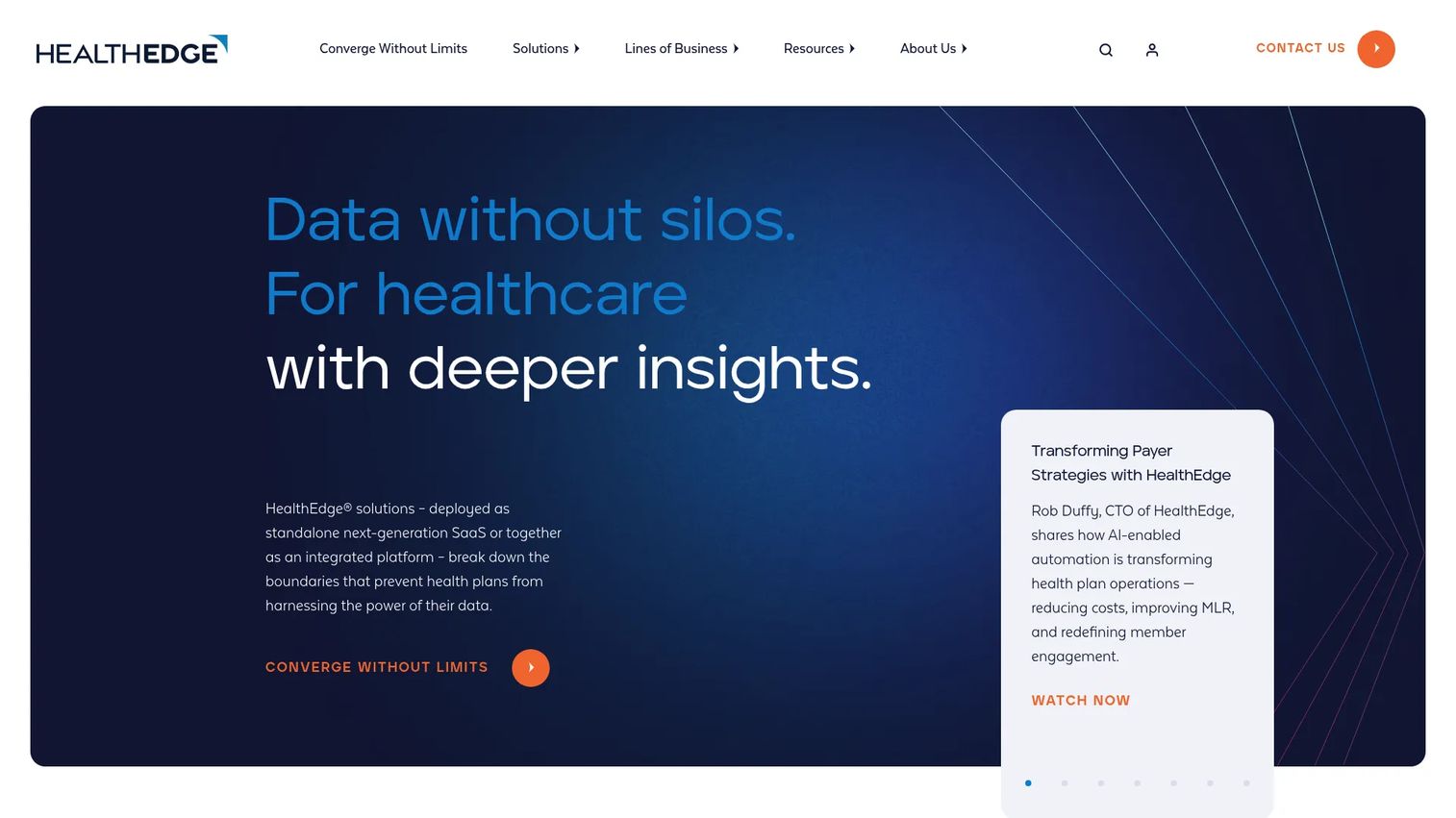
HealthEdge is an enterprise software platform built for health plans, spanning claims administration, payment integrity, care management, and member engagement. Utilization management sits inside this broader payer operations stack rather than as a standalone product, which is exactly the point for plans that want authorization workflows connected to core administration and payment accuracy in one system.
Best for: Health plans that need an enterprise payer operations platform where utilization management shares data with claims and payment integrity.
Key strengths
- Integrated clinical and administrative data: One platform connecting clinical and payer data so authorization decisions reflect the full member picture.
- Core administration processing (HealthRules Payer): Handles claims and benefits administration alongside UM, keeping decisions and payment aligned.
- Payment accuracy (HealthEdge Source): Applies payment integrity checks so utilization decisions carry through to correct payment.
Why choose HealthEdge: HealthEdge fits payer teams that are done stitching together point solutions. When UM, claims, and payment integrity run on one platform, an authorization decision does not get lost in translation on its way to the claim. The trade-off buyers weigh is scope: this is enterprise payer infrastructure, so it rewards plans committing to the platform, not those seeking a narrow UM tool.
HealthEdge pricing: HealthEdge uses contact-sales pricing with no public figures on its site. It holds a 4.3/5 rating on G2. Because deployments are enterprise-scale, expect scoping around member volume, module selection, and integration depth.
4. Altruista Health
Altruista Health, now presented under HealthEdge, is a care management software brand focused on care coordination, utilization management, population health, and appeals and grievances for health plans. Its utilization management and prior authorization support live inside a broader care-coordination workflow, which suits plans that want UM as one component of population-level care rather than a bolt-on.
Best for: Health plans that need an enterprise care management platform where utilization management, prior auth, and appeals share one workflow.
Key strengths
- Care management workflow tools: Coordinates care across the member journey, with utilization decisions in context.
- Utilization management and prior authorization support: Handles authorization workflows alongside care coordination and population health.
- Appeals and grievances workflow: Manages the appeals process so denied determinations get worked through a defined, auditable path.
Why choose Altruista Health: Shortlist Altruista Health when the buying context is broader than utilization review alone, specifically when population health and care coordination are core needs. Bringing UM, appeals, and business intelligence under one care management platform reduces the reporting fragmentation that makes ROI hard to prove. The consideration is fit: this is a care platform first, so weigh how much dedicated UM depth your team needs.
Altruista Health pricing: No public pricing was verifiable on first-party pages; pricing is contact-sales. G2 shows a 3.8/5 rating for the associated Guiding Care product based on a small number of reviews. Confirm scope and reporting depth directly during evaluation.
5. HELIOS Care Management & Case Management
HELIOS, from VirtualHealth, is a cloud-based care management platform built for value-based care, care coordination, and utilization management. Its selling point is configurability: care management, disease management, and utilization management run as integrated modules, with 360-degree membership views, built-in telehealth, and mobile apps for care teams and members.
Best for: Health plans and healthcare organizations that need configurable care and case management workflows with utilization management built in.
Key strengths
- Integrated care, disease, and utilization management: One platform covering the full care spectrum, with UM decisions in context.
- 360 membership views: A complete member picture so utilization and care decisions reflect the whole record.
- Mobile apps and built-in telehealth: Care teams and members work from purpose-built mobile tools and native telehealth.
Why choose HELIOS: HELIOS fits teams that want to shape workflows to their own operating model rather than adopt a rigid process. The integrated care-plus-UM design keeps utilization decisions connected to the broader care plan, and the 360 member view helps reviewers make consistent, well-documented determinations. VirtualHealth offers HELIOS in Essentials, Premium, and Enterprise levels, so match the tier to your workflow complexity.
HELIOS pricing: VirtualHealth states HELIOS is available in Essentials, Premium, and Enterprise levels using various pricing models, but no public numeric price is displayed. The HELIOS listing on G2 shows a 4.9/5 rating, though verify that the reviews map to your intended deployment. Confirm level and configuration pricing directly.
6. Jiva
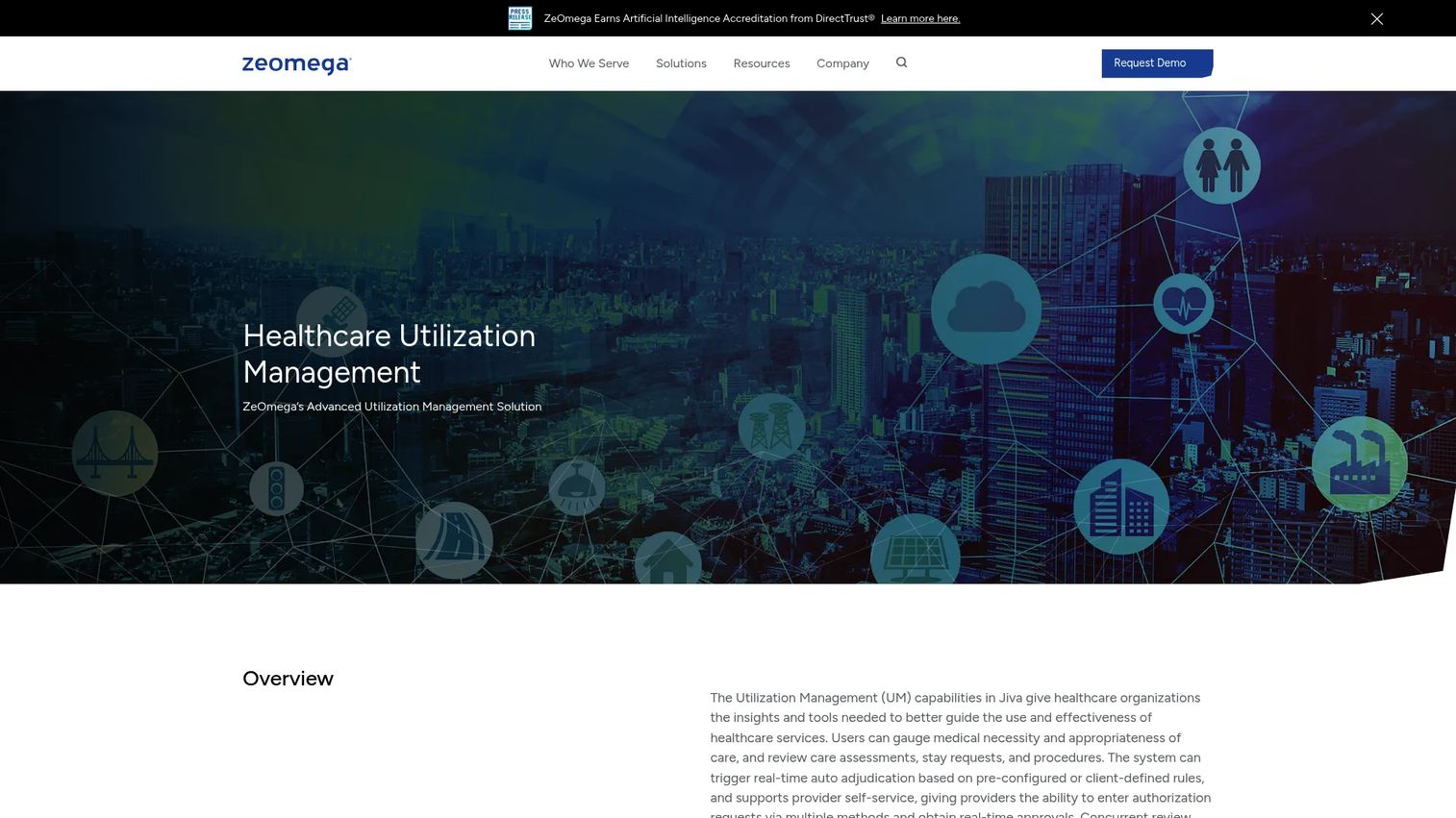
Jiva, from ZeOmega, is an integrated care management platform with strong utilization management capabilities. It handles preauthorization and medical appropriateness assessment, applies evidence-based criteria and guidelines, and layers automation onto utilization workflows. For payers, the appeal is UM depth inside a platform that also covers care coordination.
Best for: Health plans and payers that need utilization management as part of a broader care management platform.
Key strengths
- Preauthorization and medical appropriateness assessment: Runs authorization and clinical appropriateness checks in one workflow.
- Evidence-based criteria and guidelines: Applies established clinical guidelines so determinations stay consistent and defensible.
- Utilization management automation: Automates routine steps so reviewers focus on the cases that need clinical judgment.
Why choose Jiva: Jiva suits teams that want serious utilization management without buying a standalone tool that sits apart from care coordination. Applying evidence-based criteria consistently is what keeps medical necessity decisions audit-ready, and the automation layer reduces the manual steps that slow review throughput. Evaluate integration fit against your EMR and claims systems so clinical data flows cleanly into the workflow.
Jiva pricing: ZeOmega does not display public pricing for Jiva; it uses a contact-sales model. G2 shows a 4.0/5 rating based on a limited number of reviews. Scope pricing directly against your authorization volume and integration needs.
7. GuidingCare Care Management
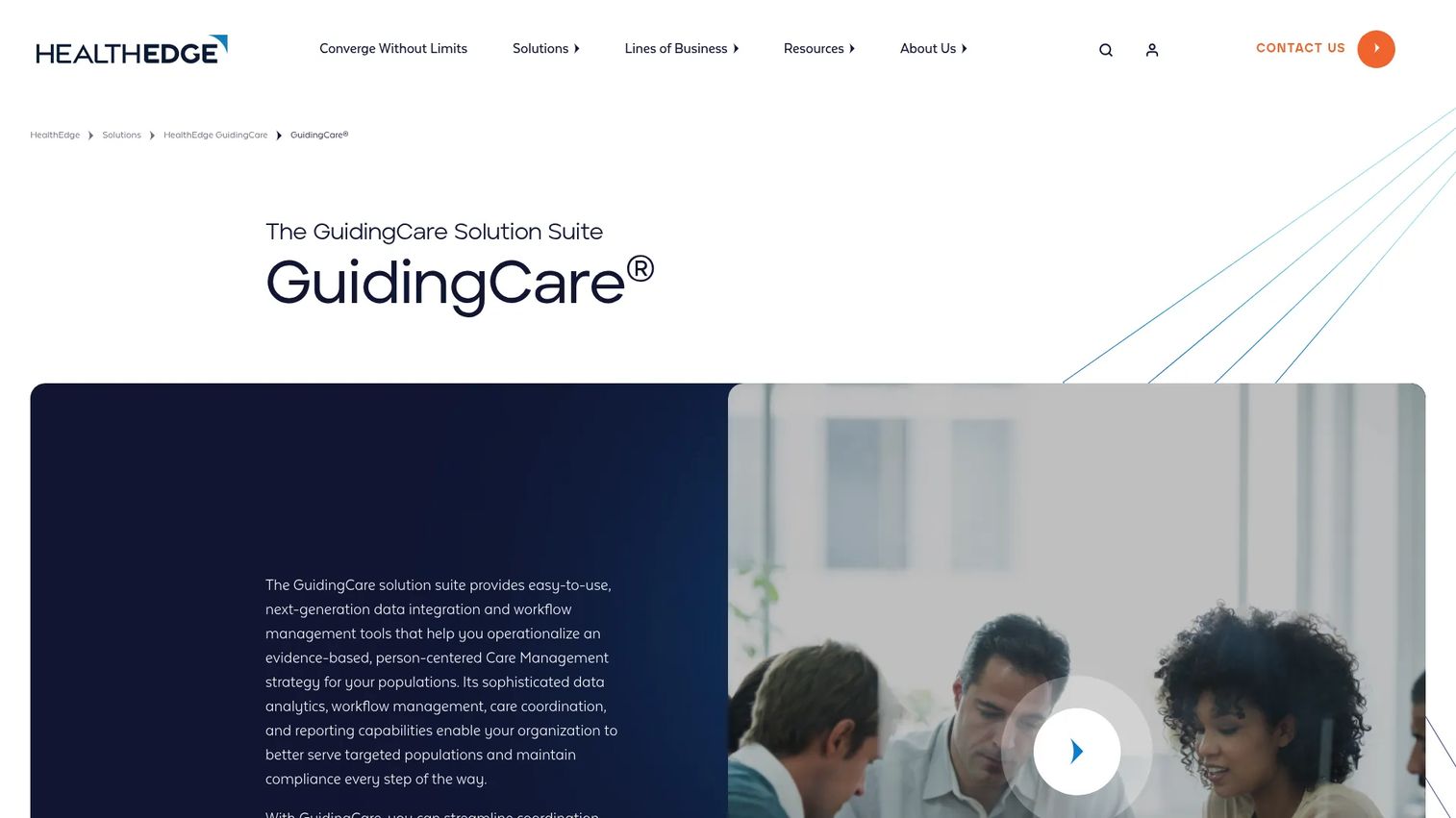
GuidingCare, part of HealthEdge, is a care management workflow suite for health plans covering care coordination, utilization management, appeals and grievances, population health, and reporting. It belongs on a shortlist when a team needs authorization lifecycle support and rules design inside a larger care platform, with analytics tying it all together.
Best for: Health plans that need a configurable care management platform for complex populations, with utilization management as one workflow.
Key strengths
- Care management workflow: Coordinates the full care journey with utilization decisions embedded in context.
- Utilization management and authorization support: Handles the authorization lifecycle alongside care coordination and appeals.
- Appeals and grievances: Works denied determinations through a defined, auditable process.
Why choose GuidingCare: GuidingCare fits plans managing complex populations that need utilization management woven into care coordination, not bolted on. Because it shares the HealthEdge foundation, it connects to the broader payer stack, and its rules design lets teams shape how criteria and workflows apply. The consideration, as with any broad care platform, is matching dedicated UM depth to your review volume.
GuidingCare pricing: HealthEdge does not publish pricing for GuidingCare; it uses contact-sales. G2 shows a 3.8/5 rating for the Guiding Care product based on a small review set. Scope deployment pricing directly around population size and module selection.
Considerations before you buy
The seven platforms above solve different slices of the same problem. Use this checklist to pressure-test fit before you commit.
Interoperability depth
The single biggest determinant of throughput is whether clinical data flows without re-keying. Verify bidirectional EMR integration, claims system connectivity, and support for your criteria source (InterQual, MCG, or custom). A UM tool that cannot ingest clinical facts automatically shifts the work back to your reviewers.
Clinical criteria and medical necessity support
Confirm how the platform applies evidence-based criteria and whether determinations are defensible under audit. Ask how AI-assisted recommendations are generated and how a human validates them. Consistent clinical appropriateness decisions are the foundation of denials reduction.
Analytics and ROI measurement
You cannot prove value you cannot measure. Look for dashboards on review turnaround, decision consistency, denial rates, and reviewer productivity. If reporting is thin or hard to export, attributing ROI to the platform will be a fight every budget cycle.
Compliance and auditability
Every determination needs a defensible record. Confirm audit trails, regulatory reporting, and compliance credentials relevant to your payer or provider context. This is non-negotiable in a category built on medical necessity decisions.
Workflow fit and adoption
The best UM software fails if reviewers route around it. Evaluate how the workflow maps to your actual review process, whether case prioritization matches how your team works, and how much configuration versus rigid process the platform imposes.
Conclusion
There is no single best utilization management software, only the best fit for your bottleneck. If throughput and inconsistent level-of-care calls are the pain, Xsolis leads with real-time predictive scoring. If success is measured in revenue capture and denials, Waystar's care-to-payment span connects the clinical decision to the claim. For health plans running enterprise payer operations, HealthEdge puts UM inside core administration and payment integrity. And for teams that need utilization management woven into broader care coordination, HELIOS, GuidingCare, Jiva, and Altruista Health each bring configurable care and case workflows with UM built in.
The practical next step is to shortlist two or three against the considerations above, then run a scoped evaluation on your own case volume. Interoperability, criteria support, analytics depth, and workflow fit are the four factors that decide whether a platform speeds your reviews or just relocates the friction. Test those before you sign, not after.
FAQs
Utilization management software is a healthcare application that standardizes and automates clinical reviews, medical necessity determinations, and authorization decisions across payer and provider workflows. It applies evidence-based criteria, routes cases to the right reviewer, and records every decision for compliance and audit. The goal is faster, more consistent reviews and fewer denials.
Utilization review is the act of evaluating a specific case against clinical criteria to determine medical necessity or appropriate level of care. Utilization management is the broader program: the policies, workflows, criteria, and technology that govern how reviews happen across an organization. Put simply, utilization review is a task within the larger discipline of utilization management.
It reduces denials by applying consistent clinical criteria to every determination, prompting reviewers for the documentation payers require, and creating a defensible audit trail for each decision. When the medical necessity case is documented correctly the first time, fewer claims get denied on appeal-worthy grounds. Platforms that connect UM to claims workflows can trace a denial straight back to the gap that caused it.
Focus on five things: interoperability with your EMR and claims systems, how the platform applies clinical criteria and supports medical necessity decisions, analytics depth for measuring turnaround and denial rates, compliance and audit capabilities, and how well the workflow maps to how your reviewers actually work. Verify each against your real case volume during a scoped evaluation.
AI reads clinical documentation, scores medical necessity and level-of-care, and surfaces a recommended determination with supporting evidence attached, so reviewers start from data rather than a blank chart. It also prioritizes the cases that need attention now. The global utilization management AI market is projected to grow from $3.8 billion in 2025 to $21.4 billion by 2034, per MarketIntelo (2025), signaling how central AI is becoming to review workflows.
Bidirectional EMR integration is the most important, since it lets clinical facts flow into the workflow without re-keying. Close behind are claims system connectivity, which ties utilization decisions to payment, and support for your clinical criteria source such as InterQual or MCG. Strong interoperability is what turns a UM tool from a data-entry burden into a throughput multiplier.
Track review turnaround time, decision consistency, denial rates, appeal overturn rates, and reviewer productivity before and after implementation. The clearest ROI signal is denials reduction paired with faster review cycles, because both translate directly into recovered revenue and lower administrative cost. Choose a platform with exportable analytics so you can defend those numbers every budget cycle.