
Your forecast said 40,000 units. Sales moved 62,000. Procurement was working off a spreadsheet that was three weeks stale. Finance had a fourth number nobody could reconcile. By the time everyone agreed on what actually happened, the stockout was two weeks old and a key account was calling to complain.
That gap between plan and reality is the problem supply chain planning software exists to close. And the stakes keep rising. The global supply chain management software market is expected to grow from $62.73 billion in 2025 to $103.32 billion by 2030, a 10.5% CAGR, according to The Business Research Company (2025). Planning applications sit at the center of that growth, valued at $9.26 billion in 2024 per Technavio.
The reason is simple. Planning quality now drives service levels, working capital, and how fast a team can respond when a supplier slips or demand spikes. Fragmented spreadsheets and disconnected point tools can carry a team for a while. They stop working the moment volatility hits and every function is planning off a different version of the truth.
This guide compares eight supply chain planning platforms through a consistent lens: AI and demand forecasting, supply planning, integrated business planning (IBP), scenario modeling, data integration, and how much suite breadth each option brings. Some are broad enterprise suites. Some are focused planning tools. The right pick depends on your planning complexity, not on which vendor has the biggest logo.
What's inside
This guide is for supply chain leaders, operations managers, planning teams, and product-minded operators comparing supply chain planning tools before a purchase or POC. We selected the eight platforms based on four criteria: planning breadth across demand, supply, inventory, and finance; depth of AI and optimization; IBP and S&OP support; and data integration into your existing systems.
The list mixes enterprise-grade suites with more focused planning platforms, so you can match the tool to your maturity rather than over-buying. Each entry covers what the platform does well, who it fits, verified G2 ratings where available, and how pricing typically works. A comparison table and a buyer's checklist round it out.
TL;DR
- Best for large, complex networks: Blue Yonder and o9 Solutions handle end-to-end planning across sprawling multi-tier supply chains with heavy AI and scenario modeling.
- Best for rapid scenario response: Kinaxis excels at concurrent planning and fast what-if analysis when disruption hits.
- Best for SAP-invested enterprises: SAP Integrated Business Planning is the natural IBP layer when your core runs on SAP.
- Best for focused planning mechanics: StockIQ delivers demand forecasting, replenishment, and inventory optimization tuned to distributors and manufacturers.
- Best for planning breadth without full-suite weight: Logility and Infor cover demand, supply, and inventory with strong operational depth.
- Best for research and shortlisting: Gartner is where most buyers start vendor discovery, not where they run planning.
What is supply chain planning software?
Supply chain planning software is a system that turns demand, supply, inventory, and financial data into a coordinated plan across teams and time horizons. It replaces disconnected spreadsheets with a shared model, so demand planners, supply planners, and finance all work from a single source of truth.
Modern supply chain planning systems unify what used to be separate tools. Instead of a forecasting app that never talks to the inventory model, these platforms connect demand forecasting, supply planning, inventory optimization, IBP, and scenario modeling in one environment. That connection is the point. It is what lets a demand change ripple through to a supply plan and a financial projection without manual reconciliation.
Core capabilities to expect from supply chain planning and optimization software:
- Demand forecasting and demand sensing: statistical and AI-driven forecasts that adjust to near-real-time signals.
- Supply planning and optimization: matching supply, capacity, and constraints to demand.
- IBP and S&OP: aligning operational plans with financial and commercial goals.
- Scenario planning and what-if analysis: modeling tradeoffs before committing to them.
- Real-time visibility and collaboration: shared data and shared decisions across functions.
- Multi-layer planning: strategic, tactical, and execution horizons in one model.
The strongest supply chain optimization software treats these as one connected workflow, not a bundle of separate modules. That is the line between a true planning platform and a collection of point tools.
When to use supply chain planning software
Not every team needs a full planning platform on day one. Here is how to know when the shift makes sense.
Improve forecast accuracy
Spreadsheets work until product count, channels, and demand volatility outgrow them. When a forecast takes days to rebuild and is stale before it ships, the problem is not effort. It is the tooling. AI and demand sensing matter most when demand swings fast, because they fold in point-of-sale signals, promotions, and external data that a static statistical model misses. If your forecast error is quietly eating margin through stockouts and overstock, that is the trigger.
Align demand, supply, and finance
Most planning failures are alignment failures. Demand builds one plan, supply builds another, finance signs off on a third, and nobody notices the gap until it shows up as a missed quarter. Supply chain planning and optimization software gives every function one plan to argue over and agree on. This is the core of S&OP and IBP: a single reconciled plan that ties operational decisions to financial and commercial targets, run on a predictable cadence.
Model tradeoffs before they become mistakes
Every planning decision is a tradeoff. Hold more safety stock and protect service, or free up working capital and risk a stockout. Scenario modeling and prescriptive planning let you test those tradeoffs on a model instead of on your P&L. Teams run what-if analysis on inventory targets, capacity constraints, and supplier disruptions, then compare outcomes side by side before committing. When a supplier goes down or a port backs up, that muscle is the difference between a scramble and a decision.
Comparison table
This table lets you shortlist faster by matching intent to differentiation at a glance. Pricing across enterprise supply chain planning solutions is almost always quote-based, so treat the pricing column as a guide to model, not a quote. G2 ratings are pulled from current listings where available.
| # | Product | Intent | Key differentiation | Pricing | G2 rating |
|---|---|---|---|---|---|
| 1 | Gartner | Research and vendor shortlisting | Independent analyst research, Magic Quadrant, peer reviews | Not publicly listed | Not listed |
| 2 | Infor | Industry-specific cloud planning suite | Industry cloud suites with ERP-integrated planning | Quote-based | 3.9/5 |
| 3 | Blue Yonder | End-to-end enterprise planning | Unified planning, execution, and commerce with AI/ML | Quote-based | 4.1/5 |
| 4 | StockIQ | Focused planning for distributors and manufacturers | Demand forecasting, replenishment, and SIOP tied to ERP | Quote-based | 4.6/5 |
| 5 | Kinaxis | Rapid scenario and concurrent planning | Concurrent planning with fast what-if analysis | Quote-based | 4.0/5 |
| 6 | o9 Solutions | Connected enterprise planning | AI-driven planning across supply, commercial, and finance | Quote-based | 4.2/5 |
| 7 | SAP | Enterprise IBP for SAP ecosystems | Integrated Business Planning inside the SAP stack | Quote-based | Not listed |
| 8 | Logility | AI-first planning breadth | End-to-end AI planning across demand, supply, inventory | Quote-based | 4.1/5 |
1. Gartner
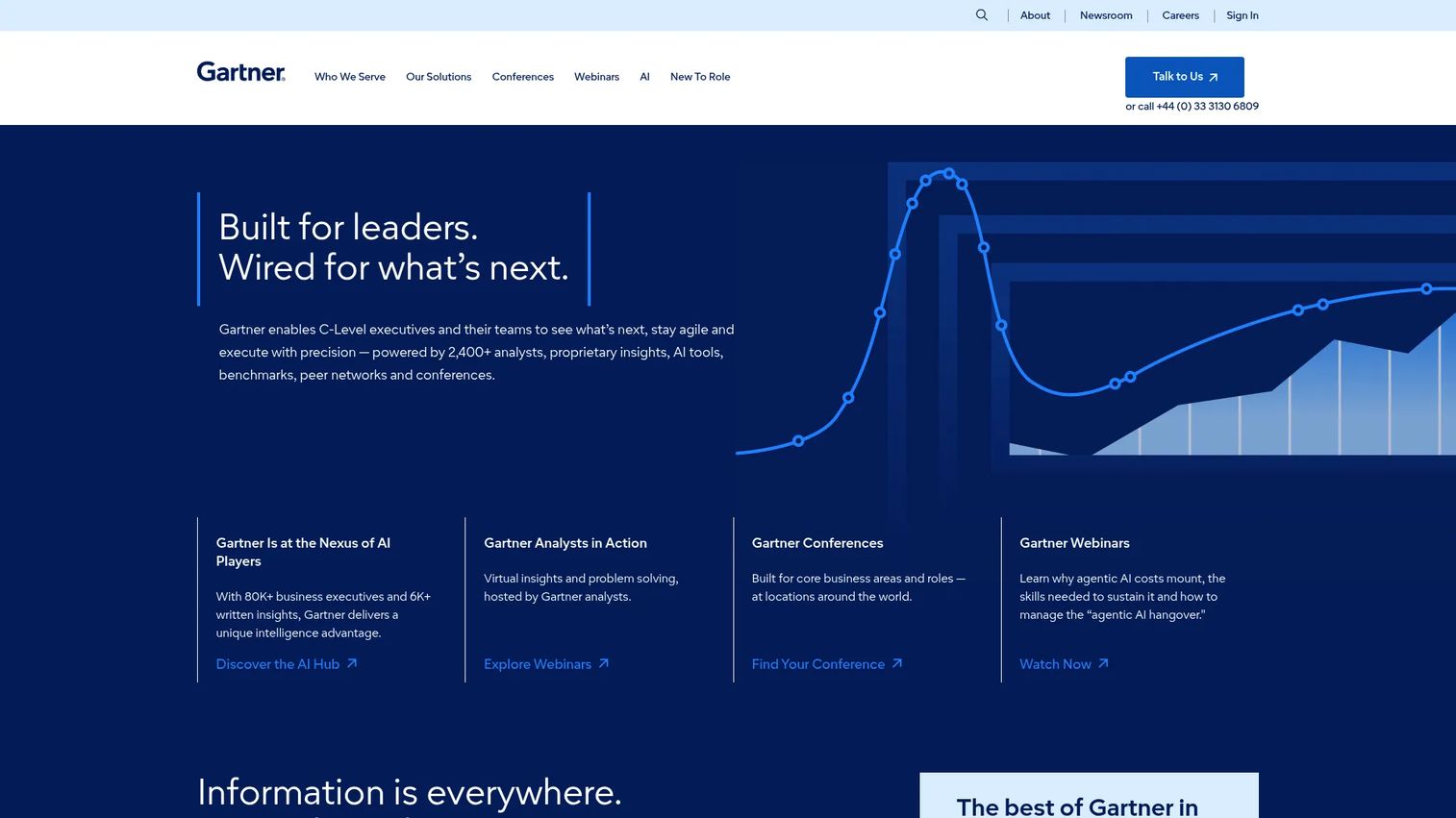
Gartner is not a planning platform. It is where most buyers start before they ever demo one. As a business and technology insights company, Gartner provides research, evaluation tools, peer reviews, and conferences that help teams narrow a crowded field of supply chain planning solutions to a defensible shortlist.
For a planning purchase, the value is in the filtering. Magic Quadrant and Hype Cycle reports frame the vendor landscape, peer communities surface unvarnished reviewer feedback, and tools like BuySmart help structure the evaluation itself. AskGartner adds AI-powered access to that proprietary research.
Best for: Enterprise leaders who want analyst research, benchmarks, and peer validation before committing to a planning vendor.
Key strengths
- Independent research: Objective analyst coverage of supply chain planning vendors, not vendor-authored marketing.
- Evaluation tooling: Magic Quadrant, Hype Cycle, and BuySmart structure the shortlist and decision.
- Peer insight: Peer Community reviews surface real deployment feedback from other buyers.
Why choose Gartner: Use Gartner to build and pressure-test your shortlist, not to run planning. It is the diligence layer before a purchase, especially for enterprise teams that need analyst backing to justify a large software decision internally.
Gartner pricing: Gartner does not publish pricing on its site, and access is typically sold through enterprise research subscriptions and advisory contracts scoped to your team. Expect a sales conversation rather than a public price tier.
2. Infor
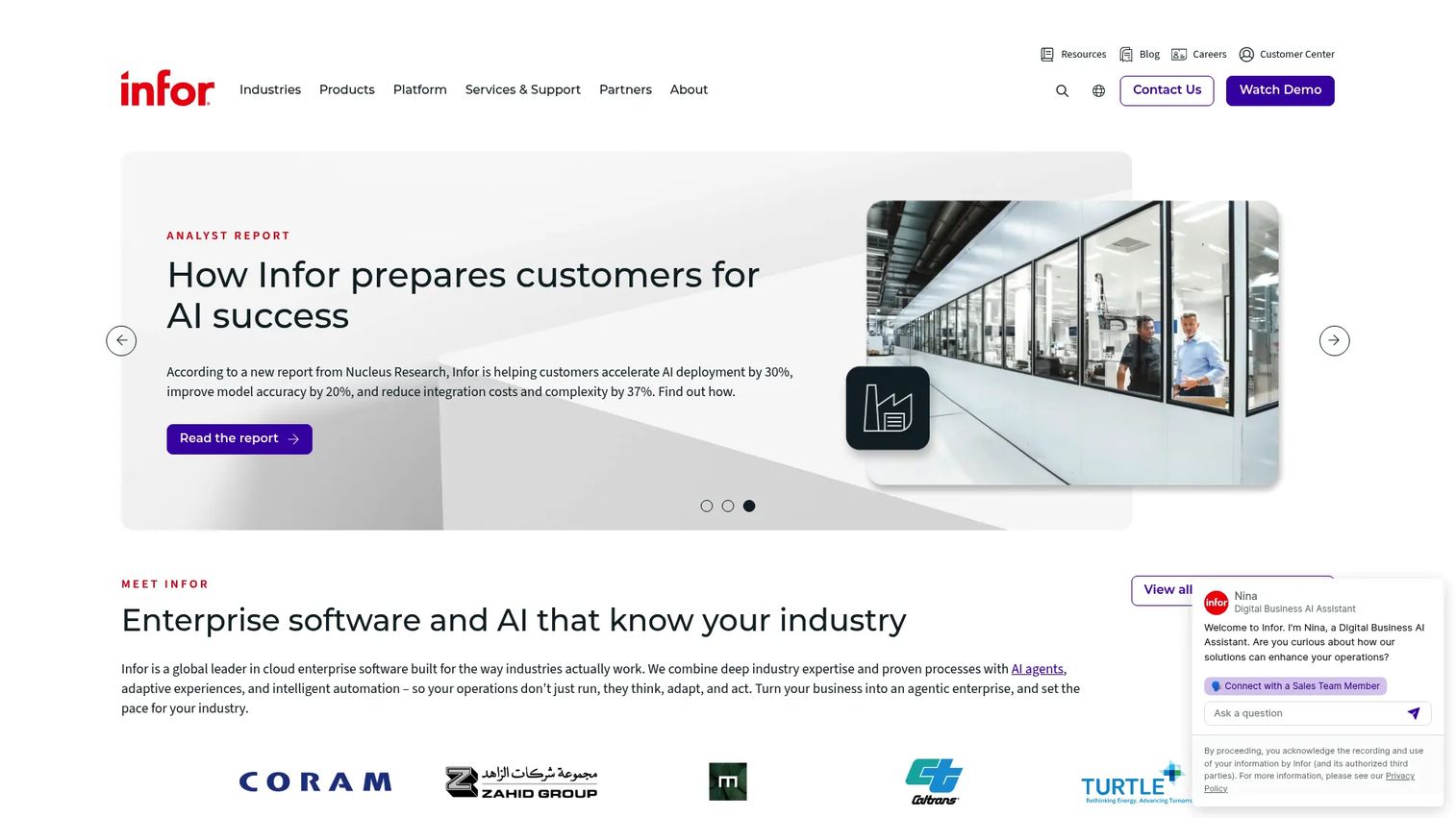
Infor is an enterprise cloud software vendor built around industry-specific suites, with supply chain planning sitting alongside its ERP and analytics portfolio. That industry framing is the pitch: planning capabilities tuned to the way a specific vertical actually operates, rather than a generic engine you bend to fit.
For planning teams, Infor covers demand forecasting, supply planning, and production planning within a modular cloud portfolio. The strength is operational depth combined with tight integration into Infor's broader ERP and analytics layer, which appeals to teams that want planning and execution in one connected environment.
Best for: Large organizations that want an industry-specific ERP and cloud planning portfolio in one stack.
Key strengths
- Industry cloud suites: Planning capabilities configured for specific verticals rather than a one-size engine.
- ERP-integrated planning: Demand, supply, and production planning connected to Infor's ERP layer.
- Analytics and integration: A unified platform that ties planning data to broader business analytics.
Why choose Infor: Infor fits teams that value operational depth and want their planning to live close to their ERP and analytics. It carries a G2 rating of 3.9/5. If you are already evaluating Infor for ERP, folding planning into the same portfolio reduces integration overhead.
Infor pricing: Infor does not publish public pricing for its planning suite. Like most enterprise supply chain software, it is sold through quotes scoped to modules, users, and deployment. Plan for a sales-led evaluation.
3. Blue Yonder
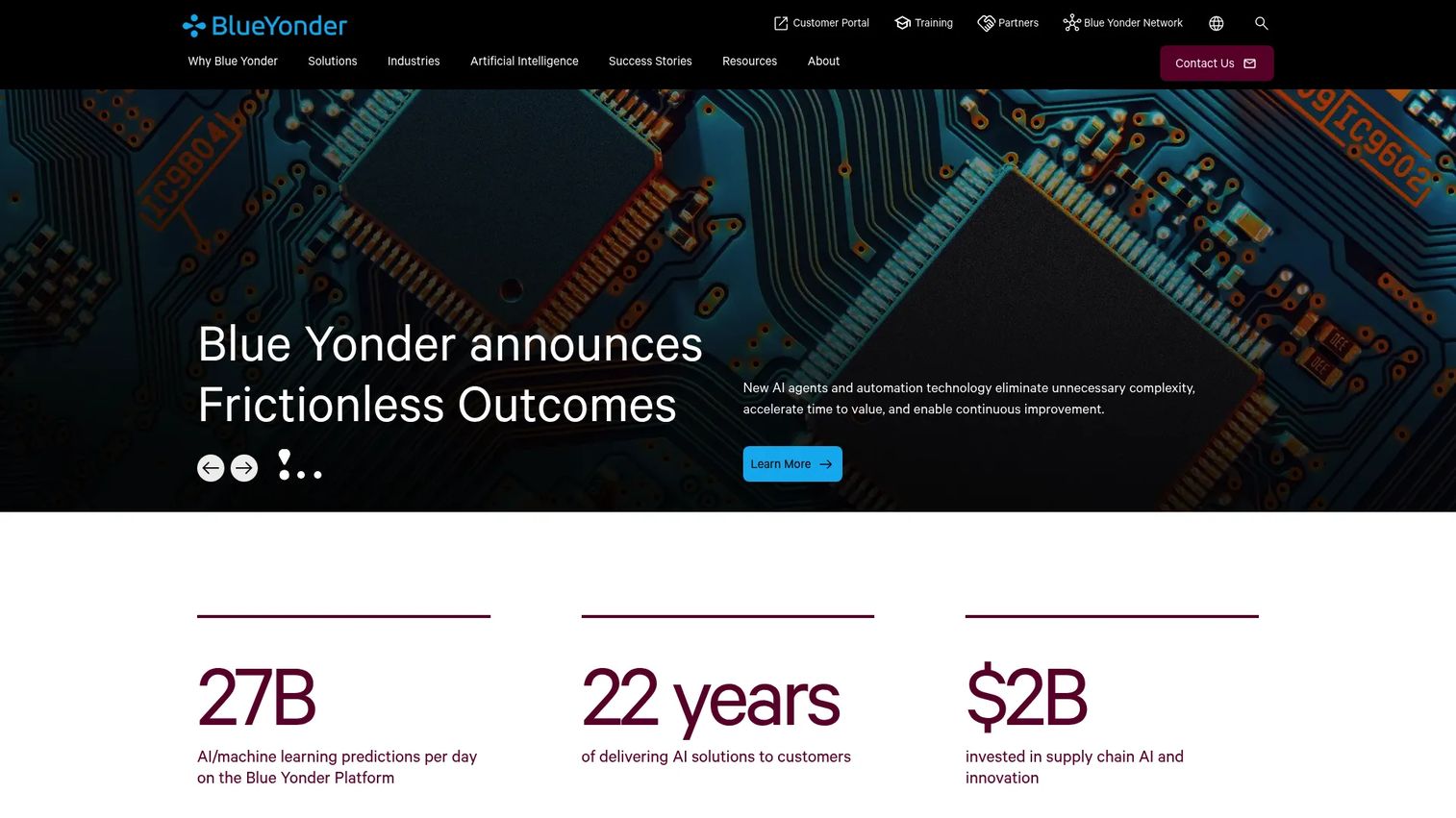
Blue Yonder is a cloud-based supply chain platform spanning planning, execution, and commerce. For large, complex networks, its appeal is breadth: demand and supply planning, inventory optimization, production planning, network design, and order promising in one unified suite, layered with AI and machine learning.
The differentiation for enterprise buyers is that planning and execution share the same platform. Scenario-based modeling and cross-enterprise collaboration let distributed teams work off a common model, and Blue Yonder pushes hard on inventory optimization and sustainability planning as distinct capabilities within the suite.
Best for: Enterprise retailers, manufacturers, and logistics providers that need end-to-end planning and execution across a complex network.
Key strengths
- Unified planning and execution: Supply chain planning, warehouse management, and transportation management on one platform.
- AI/ML at the core: Machine learning applied across demand, supply, and inventory decisions.
- Scenario and network modeling: Cross-enterprise collaboration with network design and order promising.
Why choose Blue Yonder: Choose Blue Yonder when your network is genuinely complex and you want planning, inventory, and execution under one roof. It carries a G2 rating of 4.1/5. The breadth is the point, and it rewards teams with the operational maturity to use it.
Blue Yonder pricing: Blue Yonder does not publish numeric pricing. Deployments are scoped and quoted based on modules, network complexity, and volume. Expect an enterprise sales and solutioning process.
4. StockIQ
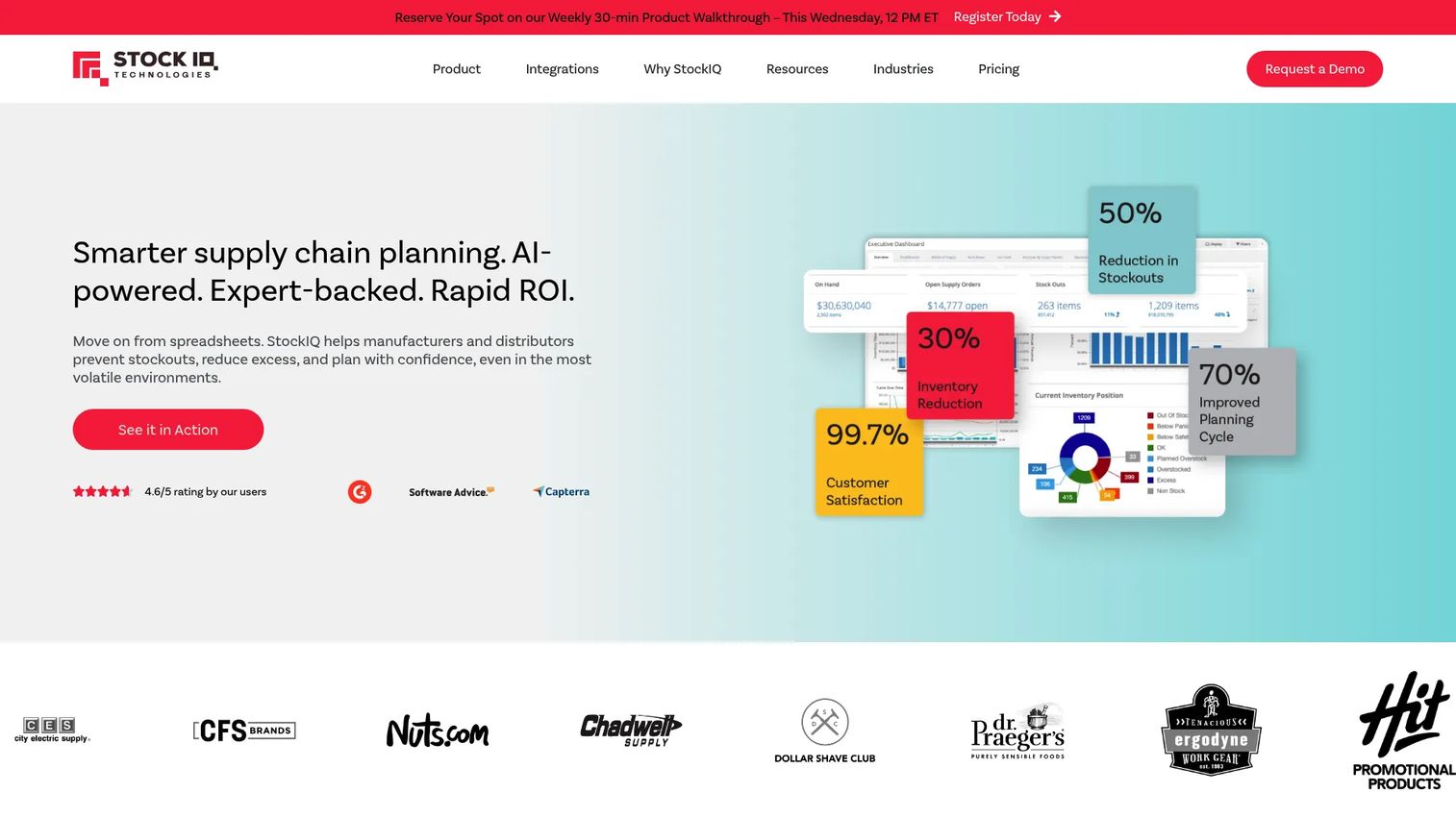
StockIQ is supply chain planning software built specifically for manufacturers and distributors, and it is one of the more practical entry points on this list. Rather than lead with suite branding, it leads with planning mechanics: demand forecasting, replenishment planning, inventory analysis, supplier performance tracking, SIOP, and promotion planning.
That focus shows in the details planners actually care about. StockIQ handles ABC/XYZ segmentation, safety stock calculation, lead-time variability, and S&OP coordination, then ties it all back to your existing ERP. For teams that want strong forecasting and inventory optimization without the weight of a full enterprise suite, it hits a useful middle ground.
Best for: Manufacturers and distributors that want configurable planning mechanics tied directly to their ERP.
Key strengths
- Demand forecasting and replenishment: Forecasting plus replenishment planning tuned for distribution.
- Inventory optimization: ABC/XYZ segmentation, safety stock, and lead-time handling built in.
- SIOP and supplier tracking: S&OP coordination and supplier performance monitoring in one tool.
Why choose StockIQ: StockIQ earns the highest G2 rating on this list at 4.6/5, which reflects how well its focused approach resonates with distribution and manufacturing planners. Choose it when you want planning depth and ERP integration over broad suite coverage you may not use.
StockIQ pricing: StockIQ offers Core and Enterprise packages, but pricing is quote-based and depends on your ERP, SKU count, locations, and planning complexity. No public numeric pricing is listed, so expect a scoped quote.
5. Kinaxis
Kinaxis is cloud supply chain planning and orchestration software built for complex enterprises, and its signature is speed. The platform is known for concurrent planning and rapid scenario analysis, which lets teams evaluate the ripple effects of a change across demand, supply, and capacity in one pass rather than in sequential handoffs.
That concurrency is what makes Kinaxis a common name in enterprise IBP software conversations. When a supplier slips or demand spikes, planners run what-if analysis and see the downstream impact fast, then decide with unified real-time visibility across the data. For teams whose core problem is responding to disruption quickly, that is the draw.
Best for: Large enterprises that need fast scenario evaluation and concurrent planning across a complex supply chain.
Key strengths
- Concurrent planning: Changes ripple across demand, supply, and capacity simultaneously.
- Rapid scenario analysis: Fast what-if modeling for disruption response and tradeoff decisions.
- Real-time visibility: A unified view of supply chain data across functions.
Why choose Kinaxis: Choose Kinaxis when disruption response and scenario speed are your top priority. It carries a G2 rating of 4.0/5. The concurrent planning model is a genuinely different approach to how plans get recalculated, and it pays off most in fast-moving, high-complexity environments.
Kinaxis pricing: Kinaxis does not publish public pricing and directs buyers to contact sales or request a demo. Expect an enterprise quote scoped to your planning footprint and user count.
6. o9 Solutions
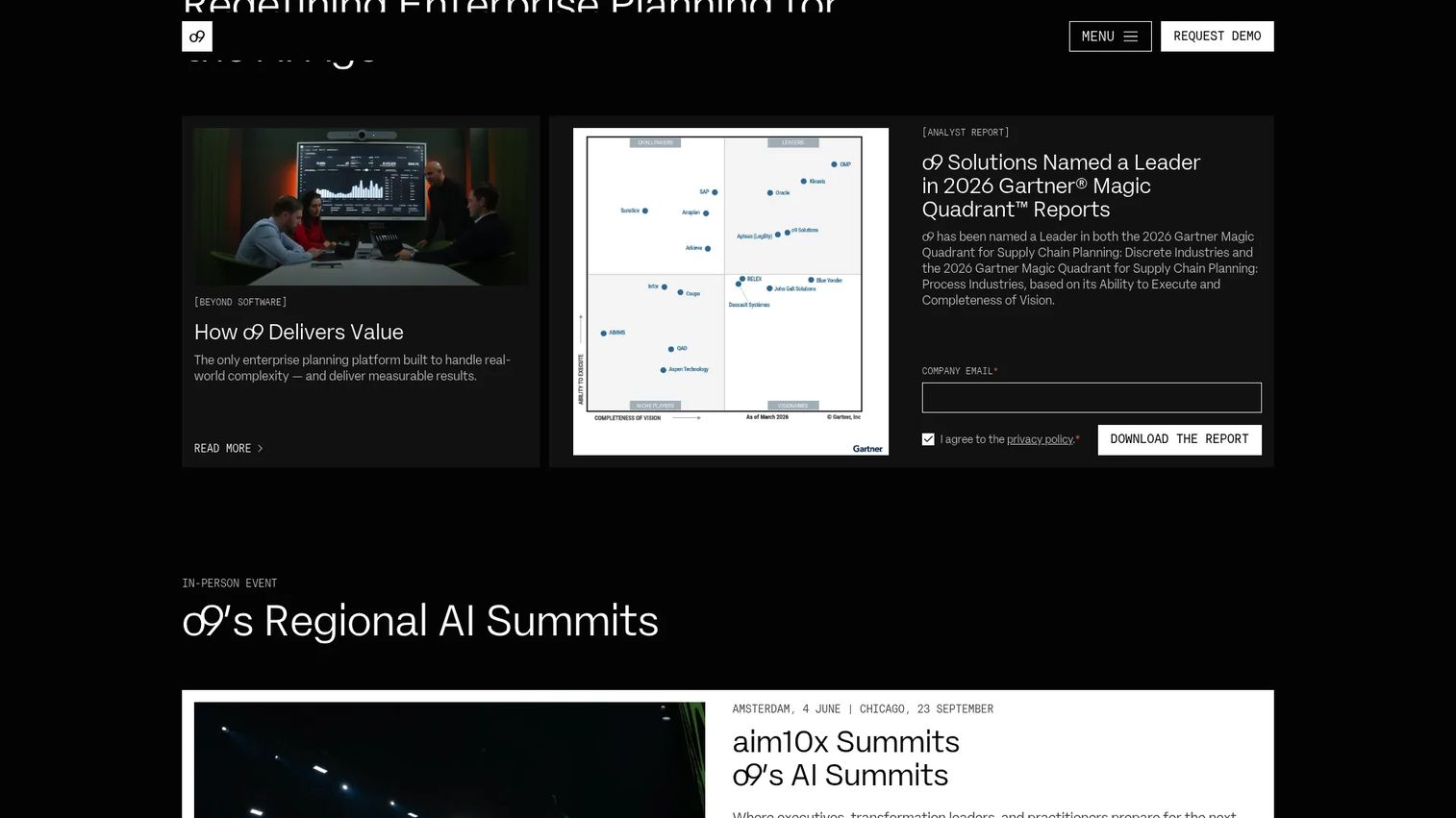
o9 Solutions positions itself as a connected planning platform, often described as a digital brain, that links demand, supply, inventory, and finance in one model. The idea is a shared representation of the business that every function plans against, so a commercial assumption and an operational constraint show up in the same place.
For enterprise buyers, the value is in model-based planning and analytics-driven decision support at scale. o9 spans integrated business planning across finance, marketing, sales, and supply chain, which makes it a strong fit for organizations that want cross-functional alignment baked into the planning model rather than bolted on afterward.
Best for: Large enterprises that want AI-driven, connected planning across supply chain, commercial, and financial decisions.
Key strengths
- Connected planning model: A shared digital model linking demand, supply, inventory, and finance.
- Cross-functional IBP: Integrated planning across finance, marketing, sales, and supply chain.
- Analytics-driven decisions: Model-based decision support with AI at the core.
Why choose o9 Solutions: Choose o9 when cross-functional alignment at scale is the goal and you want planning to span more than just the supply chain. It carries a G2 rating of 4.2/5. The connected-model approach suits organizations ready to plan holistically across commercial and operational functions.
o9 Solutions pricing: o9 does not publish public pricing and uses request-demo and platform-tour CTAs instead. Pricing is quote-based, scoped to your planning scope and deployment.
7. SAP

SAP brings Integrated Business Planning for Supply Chain (SAP IBP) as its enterprise planning offering, and its strongest argument is ecosystem fit. For organizations already running SAP for finance, procurement, and ERP, SAP IBP is the natural planning layer that speaks the same data language as the rest of the stack.
SAP IBP covers demand planning, supply planning, and S&OP, tying operational plans to the broader SAP business processes and its SAP Business AI portfolio. For teams standardized on SAP, that native integration reduces the friction of getting planning data in and plans back out to execution.
Best for: Large enterprises already invested in the SAP ecosystem that want IBP as a native planning layer.
Key strengths
- Native SAP integration: IBP designed to connect directly with SAP ERP and business processes.
- IBP and S&OP coverage: Demand planning, supply planning, and S&OP in one module.
- AI-enabled portfolio: SAP Business AI applied across the cloud application suite.
Why choose SAP: Choose SAP IBP when your core systems already run on SAP and you want planning that integrates without a heavy middleware layer. The ecosystem fit is the deciding factor, and it matters more the more of your stack SAP already runs.
SAP pricing: SAP publishes subscription pricing for some products, such as SAP Integration Suite, starting at USD 1,771.00/month for the starter edition. SAP IBP itself is typically scoped and quoted through SAP or a partner rather than listed publicly.
8. Logility
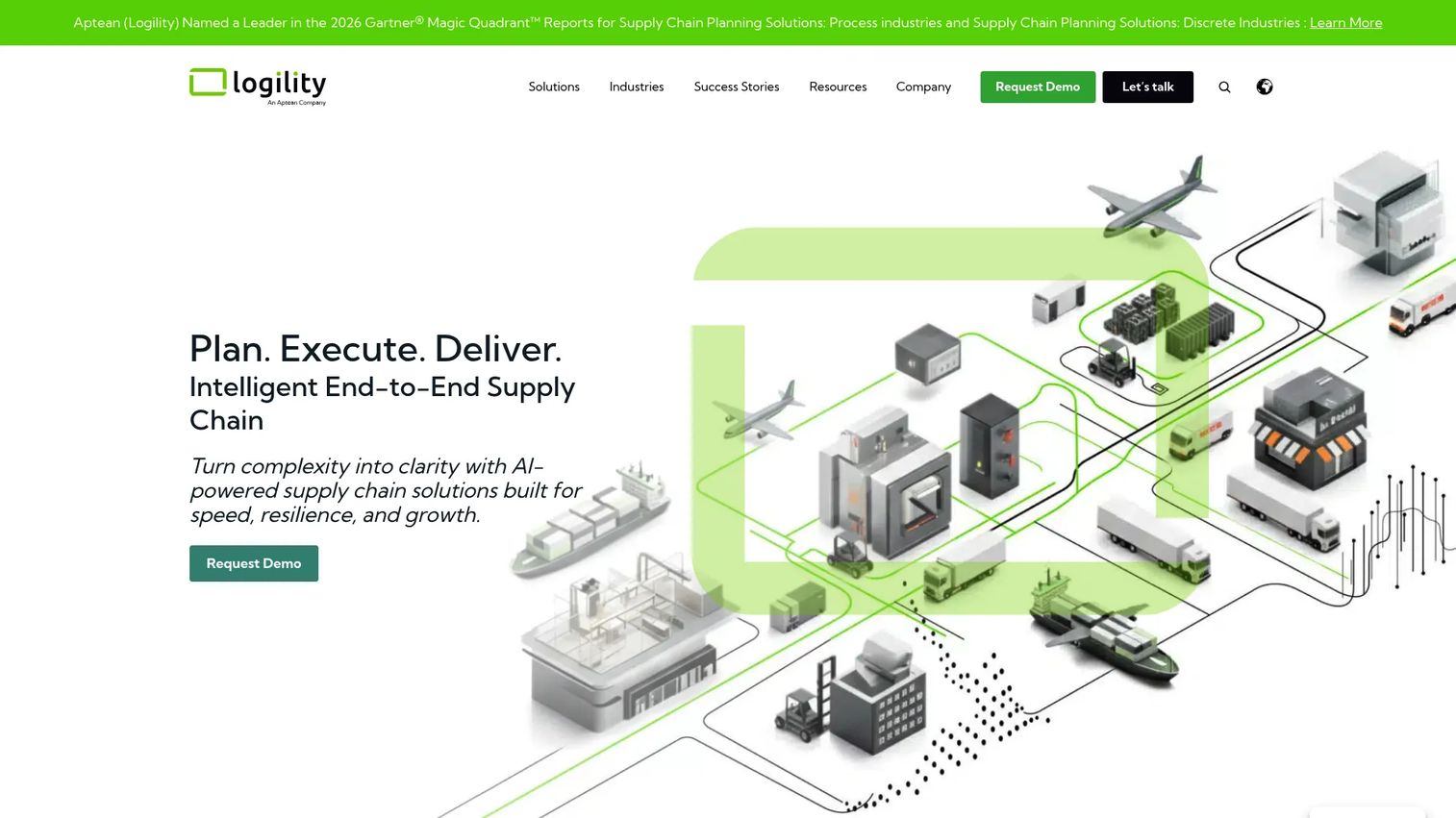
Logility is AI-first supply chain planning software covering demand planning, inventory optimization, and supply planning, with decision intelligence layered across. It aims to deliver planning breadth without asking teams to take on the full weight and complexity of the largest enterprise suites.
That middle-ground positioning is Logility's strength. It handles demand forecasting, inventory optimization, and supply optimization with scenario analysis and cross-functional planning, giving mid-to-large enterprises a capable end-to-end platform. For teams that want serious planning breadth but not a multi-year mega-suite implementation, it is worth a close look.
Best for: Enterprises that want AI-driven, end-to-end planning across demand, supply, and inventory without maximum suite complexity.
Key strengths
- Demand planning and forecasting: AI-driven forecasting across the planning horizon.
- Inventory optimization: Optimization tuned to service levels and working capital.
- Supply optimization: Supply planning and optimization with scenario analysis.
Why choose Logility: Choose Logility when you want end-to-end planning breadth and AI-driven forecasting at a scale between focused tools and the largest suites. It carries a G2 rating of 4.1/5. Its cross-functional planning and decision intelligence make it a strong fit for growing enterprises.
Logility pricing: Logility does not publish public pricing and uses a demo and contact-sales model. Pricing is quote-based, scoped to your planning scope, users, and deployment.
Considerations
Shortlisting is easier when you evaluate against the criteria that actually drive planning outcomes, not the longest feature list. Here is what to weigh and what to ask each vendor.
AI and forecasting accuracy
Good looks like forecasts that fold in demand signals, promotions, and external data, then measurably reduce error. Ask vendors how their AI-driven planning handles new products with no history, how demand sensing pulls in near-real-time signals, and how they measure forecast accuracy improvement in real deployments, not demos.
Planning breadth
The best supply chain planning systems connect demand, supply, inventory, and finance in one model. Decide how much breadth you actually need. Ask whether a demand change automatically flows through to supply and financial plans, or whether that reconciliation is still manual across modules.
Scenario modeling depth
Good scenario planning lets you compare multiple what-if outcomes side by side, fast enough to matter during a disruption. Ask how long a scenario takes to run, how many variables you can flex at once, and whether the tool offers prescriptive recommendations or just shows outcomes.
Data integration and single source of truth
A planning platform is only as good as the data feeding it. Ask which ERP, warehouse, and data systems it integrates with natively, how often data syncs, and whether every function truly plans off one reconciled source of truth or separate copies.
Collaboration, governance, and rollout
Planning is cross-functional, so evaluate how the tool handles shared plans, approvals, and version control. Then be honest about implementation complexity and who owns the platform internally after go-live. Ask about typical time to value and the internal team required to run it.
Conclusion
The best supply chain planning software depends on your planning complexity, your existing systems, and whether your priority is forecasting depth, IBP, or optimization. For large, complex networks, Blue Yonder and o9 Solutions bring end-to-end breadth and heavy AI. Kinaxis stands out when rapid scenario response is the core need, and SAP IBP is the natural choice inside an SAP-heavy stack. StockIQ delivers focused planning mechanics for distributors and manufacturers, while Logility and Infor offer strong planning breadth without the weight of the largest suites. Gartner remains the smart place to start your research and pressure-test a shortlist.
The practical move is not to pick a winner from a table. Shortlist two or three tools that match your maturity, then run a structured demo or POC against your own data and a real scenario. That is where the differences between supply chain planning tools stop being marketing and start being measurable.
FAQs
It turns fragmented demand, supply, inventory, and financial data into a single coordinated plan across teams and time horizons. In plain terms, it connects forecasting, supply planning, inventory optimization, and scenario planning so that a change in one area flows through to the others without manual reconciliation. The goal is one reliable plan instead of four competing spreadsheets.
The high-value features are AI-driven demand forecasting, IBP and S&OP support, supply and inventory optimization, scenario planning with what-if analysis, and deep data integration. Forecasting accuracy and integration usually matter most, because a strong plan built on bad or disconnected data still fails. Prioritize the capabilities that map to your actual planning gaps.
No. ERP is the system of record that runs transactions like orders, procurement, and finance. Supply chain planning software sits on top of that data to model demand, supply, and scenarios and produce forward-looking plans. They are complementary: ERP records what happened, planning software decides what should happen next. Most planning platforms integrate directly with ERP.
Supply chain, operations, demand planning, and supply planning teams are the core users. Finance relies on it for IBP and financial reconciliation, procurement uses it for supplier and lead-time planning, and commercial teams feed demand assumptions into it. The value grows the more functions plan off the same shared model.
Demand planning forecasts what customers will buy across products, channels, and time. Supply planning figures out how to meet that demand given capacity, inventory, lead times, and supplier constraints. Demand planning answers "how much will we sell," while supply planning answers "how do we produce and deliver it." Strong platforms connect the two so a demand shift automatically updates the supply plan.
Start with your use case and maturity, then evaluate scale, integration, and planning depth. Match breadth to what you actually need, confirm native integration with your ERP and data systems, and test scenario modeling speed against a real disruption. Shortlist two or three tools and run a POC on your own data rather than relying on vendor demos.
Scenario planning lets you model what-if situations, such as a supplier outage, a demand spike, or a capacity change, and compare the outcomes before committing. It turns disruption response into a decision made on a model instead of a scramble made on your P&L. Teams use it to weigh tradeoffs across service levels, inventory, and cost.
You need S&OP capabilities once demand, supply, and finance stop agreeing on a single plan and misalignment starts costing you. IBP extends S&OP further by tying operational plans to financial and commercial strategy across a longer horizon. If your planning is still siloed by function, IBP and S&OP software is usually the next maturity step, and platforms like SAP IBP, o9, and Kinaxis are built for it.