You raised the round. You told the board the next phase of growth would be powered by machine learning. Now you have to actually pick the machine learning software stack, hire against it, and ship something that moves a metric before the next QBR.
That decision is harder than it looks. The global machine-learning-as-a-service market is forecast to grow from $45.76 billion in 2025 to roughly $209.63 billion by 2030, a 35.58% CAGR according to Itransition's 2026 machine learning statistics roundup. The vendor landscape has scaled with it. There are dozens of credible options, and the wrong choice burns six months of engineering time, blocks the roadmap, and turns into the kind of write-off your CFO remembers at the next planning cycle.
Most founders don't need an ML PhD to make this call. They need a shortlist that reflects how Series B SaaS companies actually deploy ML: a mix of open-source libraries doing the heavy lifting, plus one managed platform absorbing the MLOps overhead. They need pricing they can defend, integrations that fit the existing stack, and a clear sense of which tool gets them to a first model in production fastest.
This guide is the shortlist.
What's inside
We evaluated machine learning tools across four dimensions that matter for a Series B SaaS company: time to first model in production, breadth of supported workflows, pricing transparency at startup scale, and integration with the existing SaaS stack. We included both open-source machine learning libraries and commercial machine learning platforms because most growth-stage teams blend the two. Each entry includes pricing verified against the vendor's live pricing page, current G2 ratings, and the use case where the platform earns its place.
TL;DR
- Best end-to-end commercial platform for AWS-native teams: Amazon SageMaker
- Best for teams on Google Cloud blending traditional ML and generative AI: Google Vertex AI
- Best for enterprise-bound SaaS in Microsoft environments: Microsoft Azure Machine Learning
- Best unified data and ML platform: Databricks
- Best for shipping predictive features without a data science bench: DataRobot
- Best open-source deep learning framework for research velocity: PyTorch
- Best for fast prototyping of traditional ML: scikit-learn
- Best for building LLM-powered features into SaaS products: Hugging Face
What is machine learning software?
Machine learning software is the set of platforms, libraries, and frameworks used to train, deploy, monitor, and govern models that learn patterns from data. It spans open-source libraries that engineers code against, managed cloud platforms that handle infrastructure, and AutoML tools that compress model building into a no-code workflow.
The core capabilities every machine learning platform covers:
- Data ingestion and preparation: Connecting to warehouses, cleaning data, building feature stores
- Model training and experimentation: Running machine learning algorithms across labeled or unlabeled data, tracking experiments
- Deployment and serving infrastructure: Pushing trained models behind APIs or batch jobs
- Monitoring, drift detection, and retraining (MLOps): Catching when model accuracy degrades in production
- Governance and access controls: Audit logs, role-based access, compliance reporting
Machine learning software is a subset of the broader AI tooling category. AI software includes rules-based systems, large language models, and generative tools. ML software focuses specifically on systems that learn from data. The three classical types of machine learning algorithms covered by most platforms are supervised learning (predicting an outcome from labeled examples), unsupervised learning (finding structure in unlabeled data), and reinforcement learning (learning through trial and error in an environment).
How does machine learning work in practice for a SaaS team? You take historical data, define the outcome you want to predict (churn, conversion, expansion), train a model on that data, validate it on a held-out sample, deploy it behind an API, and monitor its predictions against actual outcomes. The software stack covers every step of that loop.
That definition is important because the SERP for "what is machine learning software" is full of encyclopedic answers that don't help a founder decide what to buy. The decision rests on which workflows your team will actually run, not which textbook category the tool belongs to.
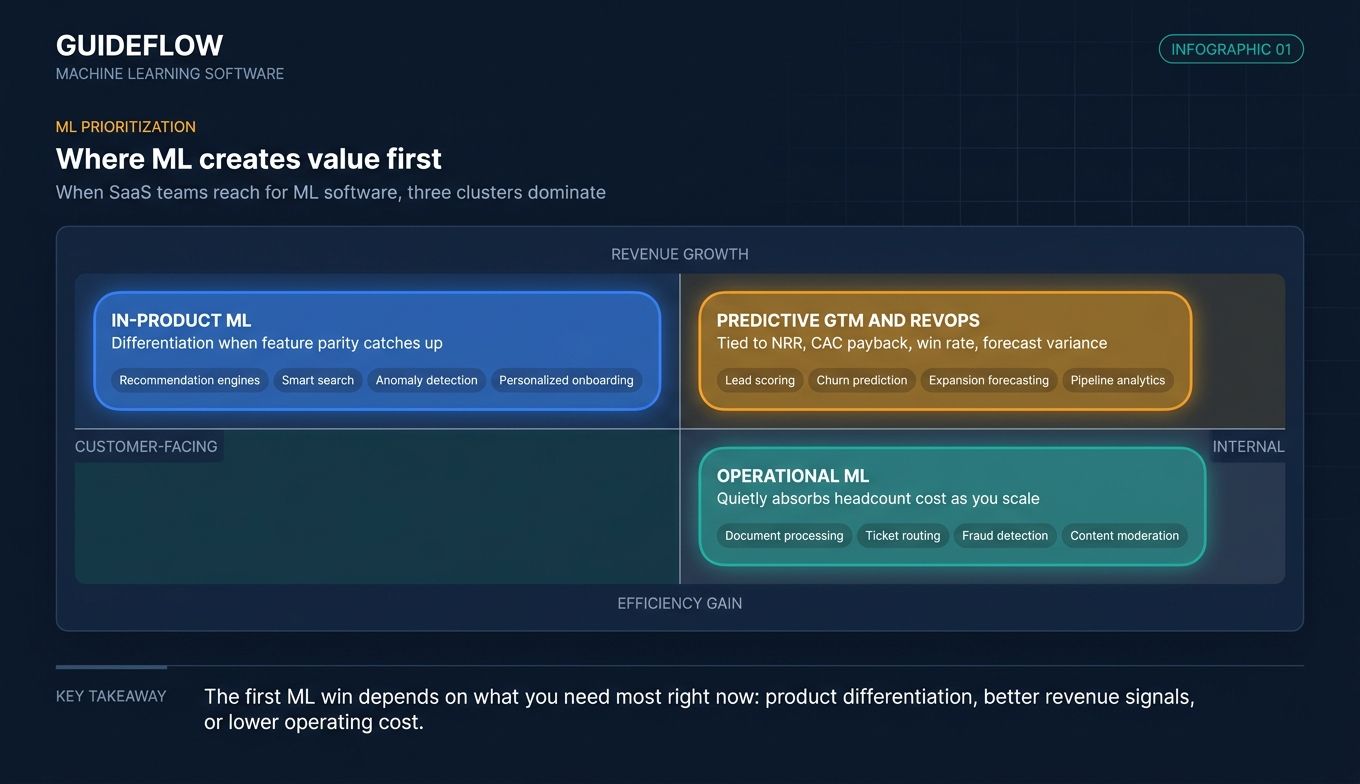
When SaaS teams reach for ML software
Embedding intelligence inside the product
The most visible use case is in-product ML. Recommendation engines, smart search, anomaly detection, and personalized onboarding flows. A B2B project management tool ranks the next task. A fintech product flags unusual transactions. A content platform routes the right asset to the right user. These features are how SaaS companies differentiate when feature parity has caught up across a category.
Once your ML-powered feature is shipping, the next challenge is showing prospects what it actually does without forcing them into a 30-minute call. That's a separate problem solved by interactive demos on landing pages and in sales follow-ups.
Powering predictive GTM and RevOps
The second cluster of use cases sits inside the revenue engine. Lead scoring models rank inbound demo requests. Churn prediction models flag accounts at risk so CSMs can intervene. Expansion forecasting tells the AE team where the next upsell conversation should happen. Pipeline analytics models clean up forecast accuracy when reps mark every deal as "commit." These models move the metrics on the founder's dashboard: NRR, CAC payback, win rate, and forecast variance. Teams pairing these predictive signals with revenue intelligence platforms get a sharper read on forecast variance and where to coach.
Automating internal operations
The third cluster is operational. Document processing pulls structured data out of contracts. Support ticket routing sends the right ticket to the right agent. Fraud detection flags suspicious account behavior. Content moderation keeps your platform safe at scale. These use cases rarely make the marketing site but quietly absorb a meaningful chunk of headcount cost as you scale.
Comparison table
The table below covers the 10 picks in this guide. Pricing reflects what's published on each vendor's pricing page as of June 2026. G2 ratings are pulled from current product profiles. Use this as a triage layer, then read the section that fits your stack.
| # | Product | Intent | Key differentiation | Pricing | G2 rating |
|---|---|---|---|---|---|
| 1 | Amazon SageMaker | End-to-end managed ML on AWS | Unified studio for data, analytics, and AI workloads | Pay-as-you-go (free tier for Unified Studio) | 4.2/5 |
| 2 | Google Vertex AI | Unified ML on Google Cloud | Model Garden with 200+ models, native BigQuery integration | Usage-based across SKUs | 4.3/5 |
| 3 | Microsoft Azure Machine Learning | Enterprise ML on Azure | Prompt flow, model catalog, no service surcharge | No service charge; pay for compute | 4.3/5 |
| 4 | Databricks | Unified data and AI lakehouse | Unity Catalog governance across data and ML | Pay-as-you-go (Free Edition available) | 4.6/5 |
| 5 | DataRobot | AutoML and AI governance | Predictive, generative, and agentic AI on one platform | Custom (Pricing 5.0 plan) | 4.4/5 |
| 6 | H2O.ai | AutoML with hybrid open-source plus enterprise | On-prem and air-gapped deployment options | Custom; 90-day trial available | 4.1/5 |
| 7 | TensorFlow | Open-source deep learning framework | Mature production tooling with TFX and TF Lite | Free, open source | 4.6/5 |
| 8 | PyTorch | Open-source deep learning framework | Default framework for modern LLM and research work | Free, open source | 4.5/5 |
| 9 | scikit-learn | Open-source classical ML library | Consistent API across dozens of machine learning algorithms | Free, open source | 4.8/5 |
| 10 | Hugging Face | Open-source hub for transformer models | Largest model and dataset hub plus Inference Endpoints | Free tier; PRO $9/mo, Team $20/user/mo, Enterprise $50/user/mo | 4.9/5 |
The 10 best machine learning software tools for SaaS teams in 2026
1. Amazon SageMaker
Amazon SageMaker is AWS's managed platform for the full machine learning lifecycle. The next generation of SageMaker positions itself as the center for all your data, analytics, and AI work, consolidating notebooks, training, deployment, and governance under one studio. For SaaS teams already on AWS, it removes most of the infrastructure burden of standing up an ML practice from scratch.
Best for: SaaS companies running on AWS that need a managed environment to ship ML workloads alongside their existing data and analytics services.
Key strengths
- Fully managed infrastructure: Build, train, and deploy models without provisioning servers, with managed notebooks for exploration
- End-to-end MLOps: Pipelines, Model Registry, and Clarify give you experiment tracking, governance, and bias detection out of the box
- Native AWS integration: Works directly with S3, Redshift, Lambda, and the rest of the AWS data stack without custom connectors
Why choose Amazon SageMaker: If your data, your application, and your CI/CD all live in AWS, SageMaker is the path of least resistance. You don't pay a separate ML platform license, you pay for the AWS resources you consume. That consumption model scales with usage, which means a Series B team can start small and grow into it without renegotiating a contract every six months.
Pricing: Amazon SageMaker uses pay-as-you-go pricing with no upfront commitments or minimum fees. You pay for the underlying AWS services consumed (compute, storage, data processing). SageMaker Unified Studio has a free tier, and Data Agent Credits are priced at $0.04 per credit. Full pricing is documented at aws.amazon.com/sagemaker/pricing/. G2 rating: 4.2/5.
2. Google Vertex AI
Google Vertex AI is Google Cloud's platform for building, tuning, deploying, and managing machine learning models and AI agents. It blends traditional ML with generative AI in a way that most competing platforms still treat as separate product lines. For teams whose data already sits in BigQuery, the integration story is hard to beat.
Best for: Teams already on Google Cloud that need a unified platform for enterprise ML, MLOps, and generative AI or agent development.
Key strengths
- Model Garden: Access 200+ Google, third-party, and open models in one catalog, including foundation models for generative AI work
- Integrated notebooks: Colab Enterprise and Workbench with native BigQuery integration, so feature engineering happens where the data lives
- MLOps tooling: Pipelines, Model Registry, Feature Store, and model monitoring as managed services
Why choose Google Vertex AI: Vertex AI is the right call when your team is blending classical ML (lead scoring, churn) with generative AI features (summarization, smart drafting) inside the same product. The model catalog and tooling let one team work across both without context-switching across vendors. The tight BigQuery coupling also shortens the data-to-model loop for teams already running their warehouse on Google Cloud.
Pricing: Vertex AI uses usage-based pricing on Google Cloud. The platform offers Standard, Priority, and Flex/Batch pricing modes for generative AI workloads, with model- and feature-specific rates rather than packaged monthly plans. Full SKU pricing lives at cloud.google.com/vertex-ai/pricing. G2 rating: 4.3/5.
3. Microsoft Azure Machine Learning
Microsoft Azure Machine Learning is the enterprise-grade ML service for the full lifecycle on Azure. It's the platform of choice for SaaS companies whose customers expect Microsoft-native deployment, or whose security review processes already lean on Azure compliance documentation.
Best for: Teams that need an Azure-native platform for end-to-end ML, foundation model workflows, and MLOps at enterprise scale.
Key strengths
- Automated machine learning: AutoML for classification, regression, vision, and NLP that compresses time to first model
- Model catalog: Discover, fine-tune, and deploy foundation models alongside traditional ML
- Prompt flow: Design, evaluate, and deploy language model workflows as first-class artifacts
Why choose Microsoft Azure Machine Learning: If you sell into enterprise or regulated industries, the Azure security and compliance posture often gets the deal across the line faster than a competing cloud. Azure ML inherits SOC, HIPAA-eligible, and FedRAMP-authorized infrastructure. You still own configuring your workloads correctly, but the underlying platform stops being the blocker in security reviews.
Pricing: Microsoft states there is no additional charge to use Azure Machine Learning as a service. You pay for the underlying compute and Azure services your workloads consume. Microsoft notes that prices are estimates and vary by agreement, region, and resources selected. Full pricing details are at azure.microsoft.com/en-us/pricing/details/machine-learning/. G2 rating: 4.3/5.
4. Databricks
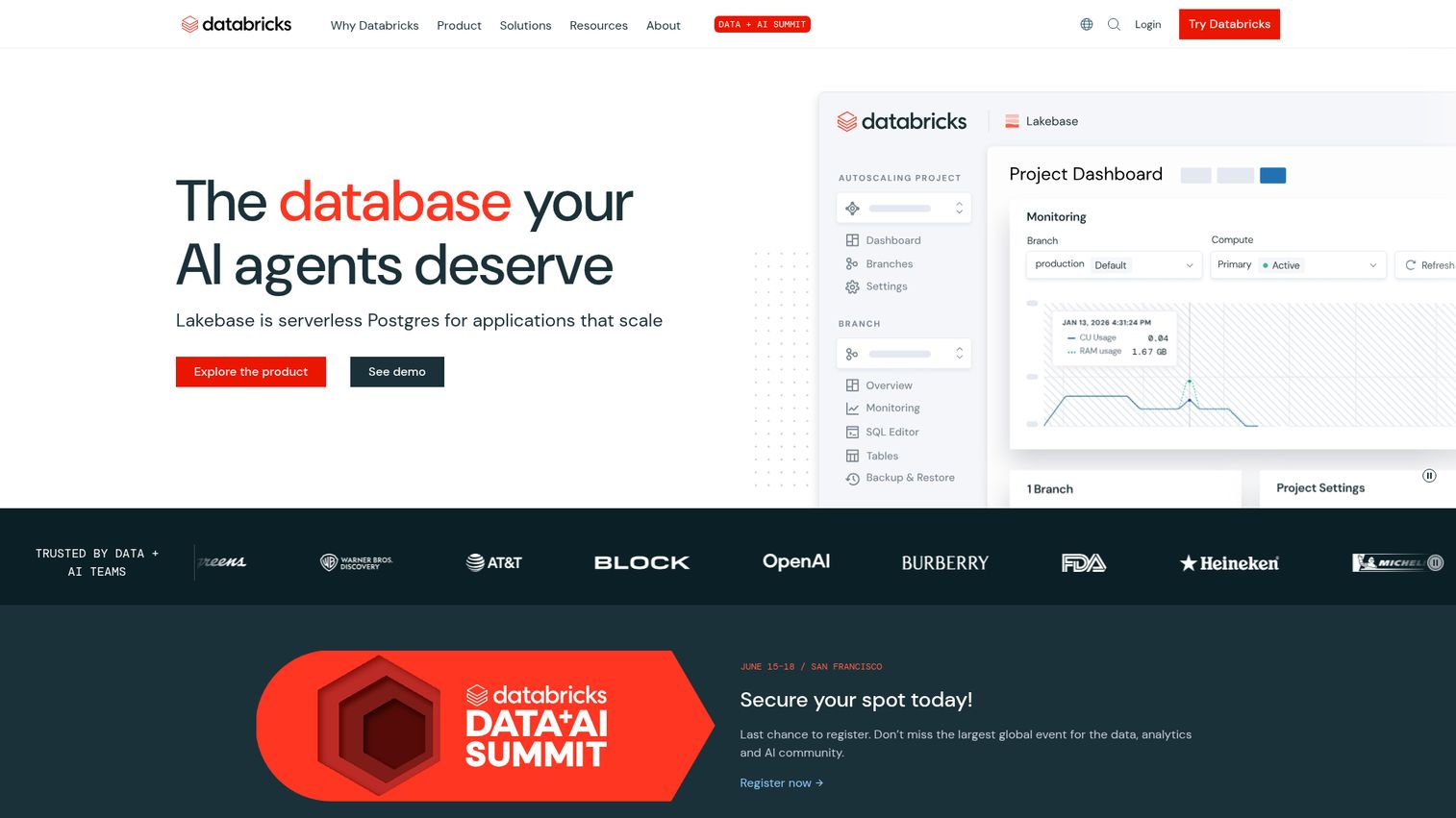
Databricks is a unified, open analytics platform for building, deploying, sharing, and maintaining enterprise-grade data, analytics, and AI solutions at scale. The lakehouse architecture consolidates the data warehouse and ML platform into a single governed surface, which is a meaningful win for teams trying to avoid stack sprawl.
Best for: Companies that want one governed platform for data engineering, analytics, BI, machine learning, and AI applications across cloud environments.
Key strengths
- Unified lakehouse: ETL, ML/AI, and data warehousing on one platform without copying data between systems
- Unity Catalog: Centralized data and AI governance with access control, auditing, discovery, and lineage
- Real-time and batch data engineering: Lakeflow and Spark Structured Streaming handle both modes natively
Why choose Databricks: Databricks is the right call when your data engineering and ML work need to share infrastructure, and when governance across both layers matters. MLflow comes built in for experiment tracking. Collaborative notebooks let data engineers and ML engineers work in the same workspace. For Series B teams scaling past their first data engineer, the consolidation story often pays for itself in vendor reduction alone.
Pricing: Databricks uses pay-as-you-go pricing with no upfront costs and offers committed use contracts for teams with predictable workloads. A no-cost Free Edition is available, along with a free trial. Pricing details are published at databricks.com/product/pricing. G2 rating: 4.6/5.
5. DataRobot
DataRobot provides an enterprise AI platform for developing, deploying, monitoring, and governing predictive, generative, and agentic AI solutions. It made its name as the AutoML platform that lets teams without a deep data science bench ship predictive features fast, and has since extended into generative and agentic AI workflows. For sales teams evaluating how predictive scoring complements broader AI sales tools, DataRobot is a frequent anchor in the stack.
Best for: Companies that need to build, deploy, monitor, and govern predictive, generative, and agentic AI across complex environments without hiring a large ML team first.
Key strengths
- Multi-agent workflows: Develop using LLMs, vector databases, predictive models, and multimodal data on a unified platform
- Flexible deployment: Deploy AI workflows across cloud, on-prem, hybrid, and edge environments with monitoring and governance
- Generative AI tooling: Pre-built applications, LLM and model comparison, and RAG pipeline tooling for benchmarking workflows
Why choose DataRobot: DataRobot is the right call when your timeline to first ML feature is shorter than your timeline to hire a data science team. AutoML compresses the model-building phase. The deployment and monitoring layer covers what would otherwise be a custom MLOps build. The tradeoff is custom enterprise pricing, which means you're committing to a sales conversation rather than spinning up on a credit card.
Pricing: DataRobot uses custom pricing. The first-party pricing documentation references "Pricing 5.0, the Classic MLOps plan" and instructs prospects to contact a DataRobot representative for details. A free trial is available. Pricing details are at docs.datarobot.com. G2 rating: 4.4/5.
6. H2O.ai
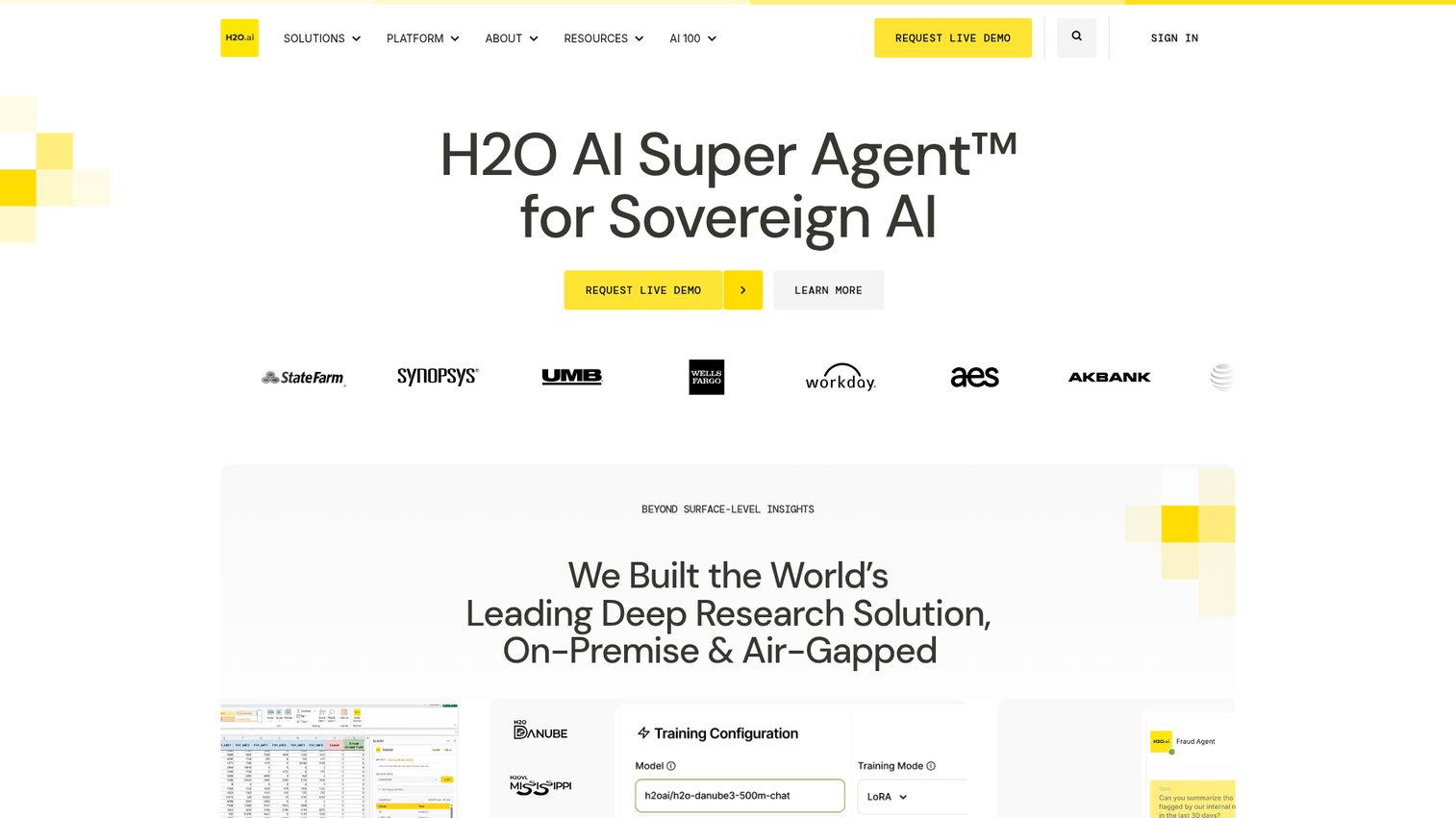
H2O.ai helps organizations transition from pilots to production using their own models and private data, deployed securely on their own infrastructure. It's the platform of choice for teams that need AutoML capabilities but want to avoid full vendor lock-in, particularly in regulated or security-sensitive environments where data residency matters.
Best for: Companies in regulated or security-sensitive environments that need predictive and generative AI deployed on-premises, air-gapped, or in private cloud infrastructure.
Key strengths
- Automated machine learning: AutoML across feature transformation, model selection, monitoring, and deployment
- Automatic feature engineering: Hyperparameter autotuning and feature generation reduce manual ML work
- H2O MLOps: Model deployment and monitoring built for production environments, including air-gapped setups
Why choose H2O.ai: H2O.ai pairs an open-source core (H2O-3) with a commercial AutoML platform (Driverless AI and H2O AI Cloud). That hybrid model fits budget-conscious Series B teams who want to start with open-source and graduate to commercial features as they scale. The on-prem and air-gapped deployment options are unusual in this category and often the deciding factor for fintech, healthcare, and government-adjacent SaaS.
Pricing: H2O.ai uses custom pricing arranged through sales. A 90-day free trial is referenced on first-party use-case pages. The open-source H2O-3 library is free to use. G2 rating: 4.1/5 (Capterra).
7. TensorFlow
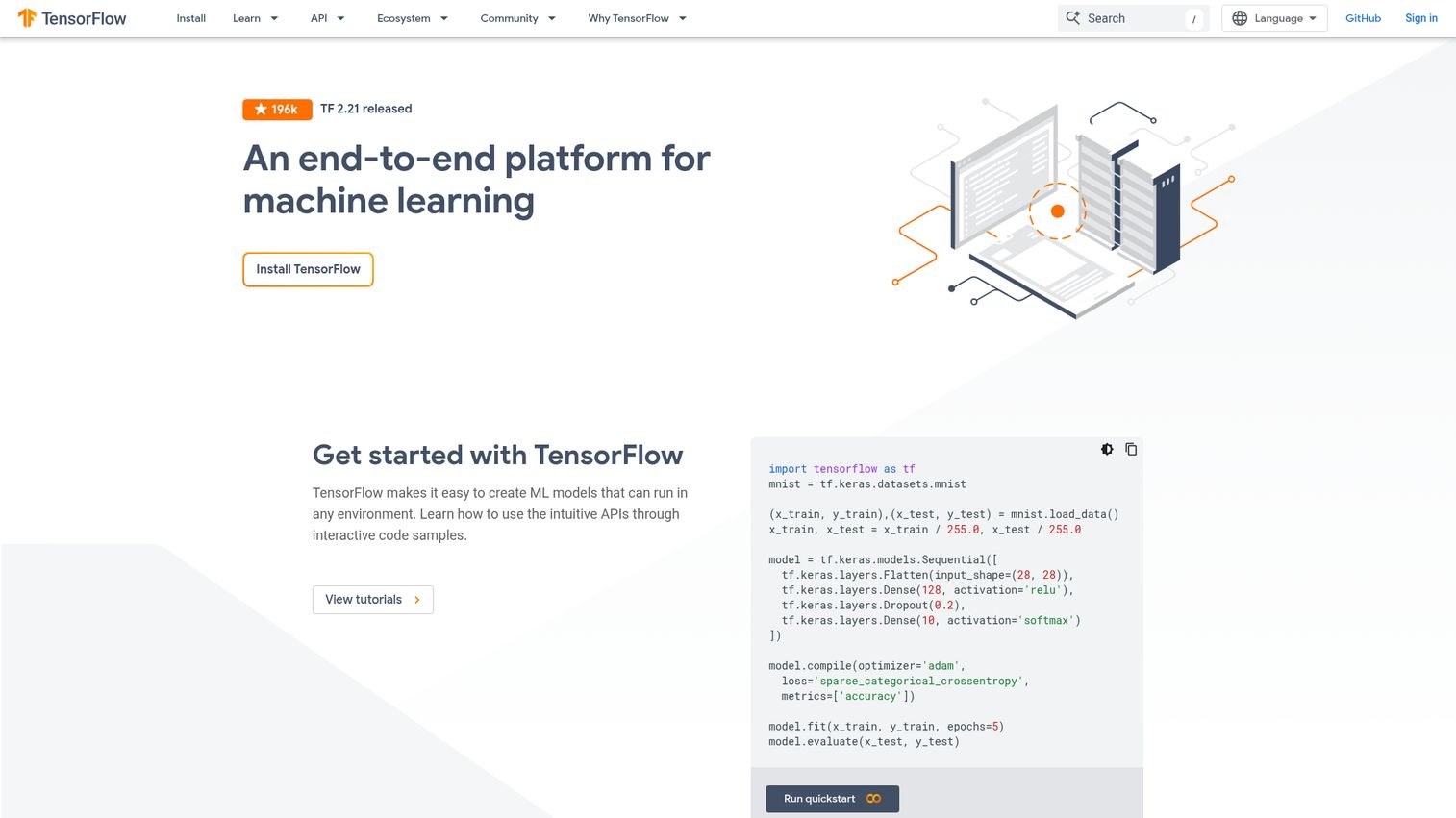
TensorFlow is an end-to-end platform for building and deploying machine learning models. Open-sourced by Google in 2015, it has matured into one of the most production-ready open source machine learning frameworks available, with strong tooling for deployment across servers, edge devices, and the web.
Best for: Developers and teams building and deploying ML models across research, production, edge, and web environments.
Key strengths
- High-level Keras API: Build and train models with a clean, well-documented API that's friendly to engineers new to deep learning
- Flexible execution: Eager execution for debugging plus Distribution Strategy API for distributed training
- Multi-target deployment: Ship models to servers (TFX), edge devices (TensorFlow Lite), and web (TensorFlow.js) from one framework
Why choose TensorFlow: TensorFlow is the right call when production maturity and ecosystem breadth matter more than research velocity. The deployment tooling is well-trodden. The hiring pool is large because TensorFlow has been the default deep learning framework at scale for nearly a decade. For a SaaS team standing up its first deep learning workload in production, that operational maturity often beats theoretical elegance.
Pricing: Free, open source. TensorFlow is released under the Apache 2.0 license. G2 rating: 4.6/5 (Capterra).
8. PyTorch
PyTorch is an open source machine learning framework that accelerates the path from research prototyping to production deployment. Originally developed by Meta AI, it has become the dominant framework for modern deep learning research and for most open-source LLM implementations shipped in the past two years.
Best for: Researchers and developers who need a flexible open-source framework to build, train, and deploy deep learning models, especially for modern transformer and LLM workloads.
Key strengths
- Dynamic computation graphs: "Define-by-run" execution makes debugging straightforward and supports flexible model architectures
- Distributed training: Native torch.distributed backend handles multi-GPU and multi-node training without external orchestration
- Production deployment: TorchScript and TorchServe move models from notebook to managed endpoint with minimal rewrites
Why choose PyTorch: PyTorch is the right call for teams building anything involving modern transformer architectures, including most LLM-powered features. The Hugging Face ecosystem is PyTorch-first. The research community publishes new architectures in PyTorch. If your roadmap includes generative AI features, starting in PyTorch reduces the friction of pulling in pretrained models from the open ecosystem.
Pricing: Free, open source. G2 rating: 4.5/5.
9. scikit-learn
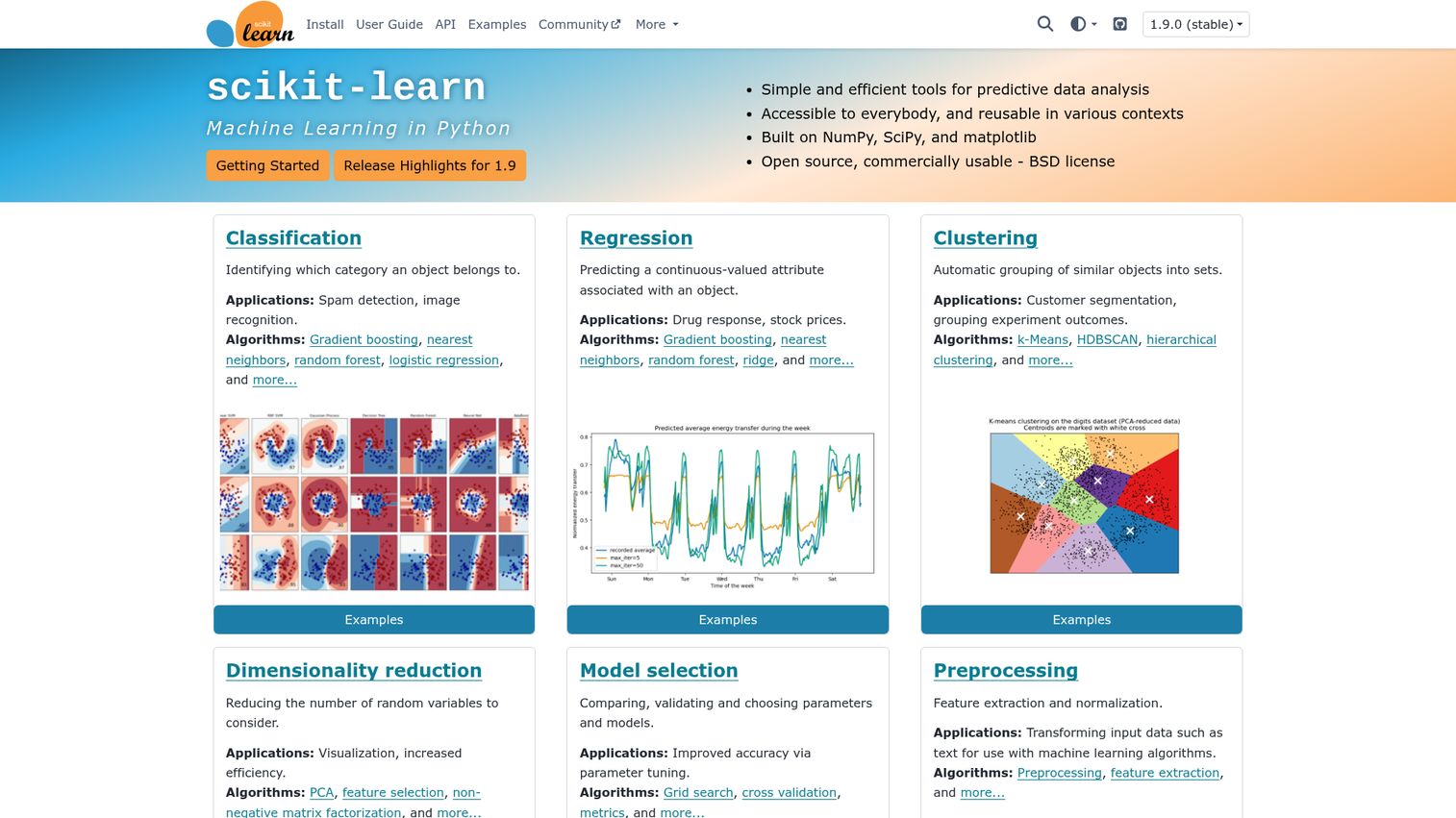
scikit-learn is a machine learning library in Python for predictive data analysis. It is one of the most established machine learning libraries in the Python ecosystem and the default starting point for traditional ML problems on structured tabular data.
Best for: Python users who need open-source machine learning tools for classification, regression, clustering, model selection, and preprocessing on structured data.
Key strengths
- Classification and regression: Mature implementations of dozens of machine learning algorithms with a consistent estimator API
- Clustering and dimensionality reduction: Full coverage of unsupervised methods including K-means, DBSCAN, and PCA
- Model selection and preprocessing: Cross-validation, pipelines, and feature scaling utilities built in
Why choose scikit-learn: For most B2B SaaS use cases (churn prediction, lead scoring, conversion modeling, basic forecasting), scikit-learn gets you to a working model faster than any other option in this guide. The API is consistent across algorithms, the documentation is comprehensive, and the integration with pandas and NumPy is clean. When your problem doesn't require deep learning, starting with scikit-learn saves you weeks of tooling overhead.
Pricing: Free, open source under a BSD license. G2 rating: 4.8/5.
10. Hugging Face
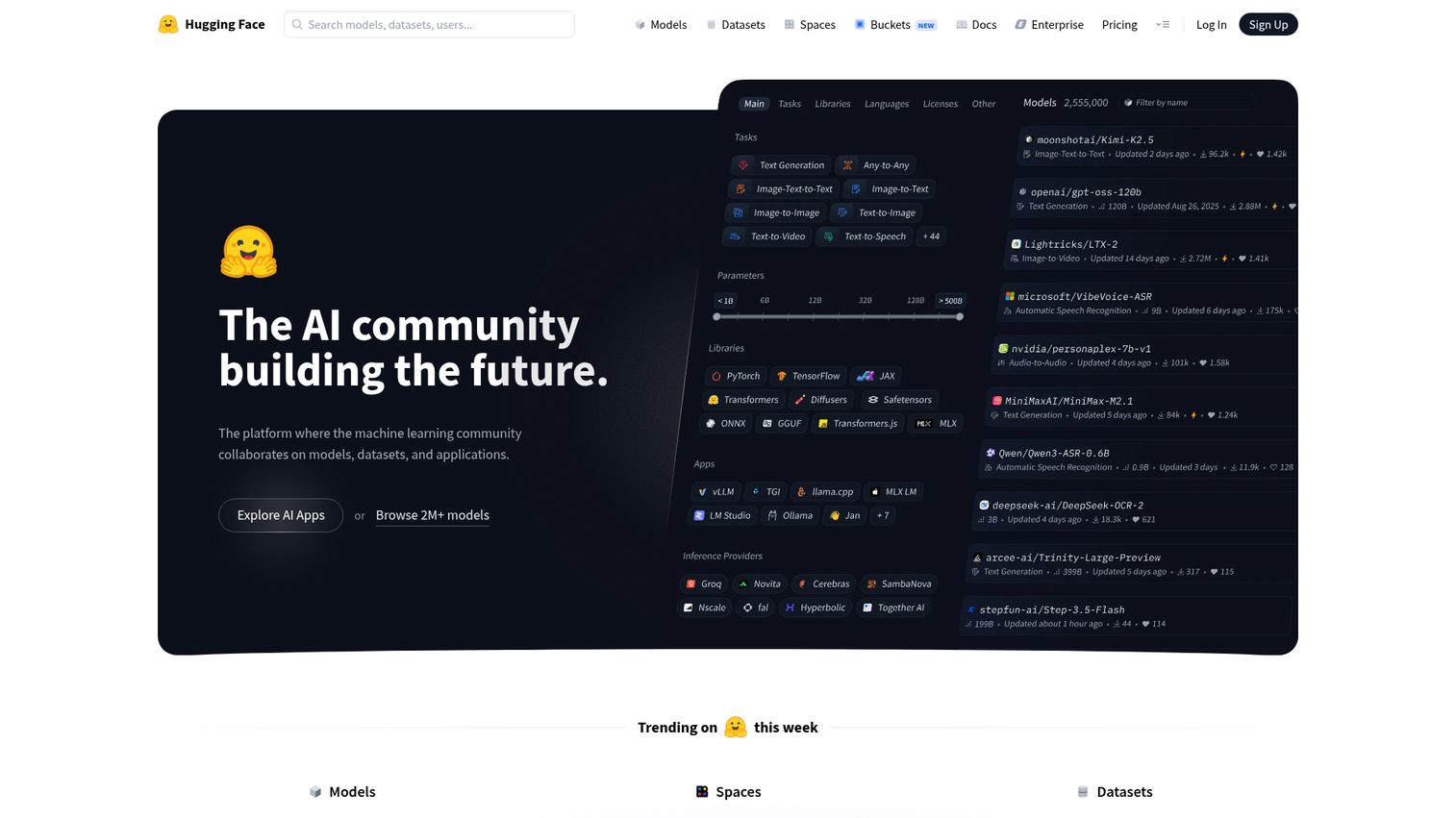
Hugging Face is an AI platform for exploring, collaborating on, and building with models, datasets, and ML applications. It has become the de facto hub for transformer models, open-source LLMs, and the supporting datasets and evaluation tooling around them.
Best for: Teams and developers that need a collaborative AI hub plus deployment and enterprise controls around models, datasets, and apps, especially those building LLM-powered SaaS features.
Key strengths
- Model and dataset hub: Browse, fork, and version models and datasets with a Git-based collaboration model
- Inference Endpoints: Dedicated, autoscaling deployment for hosted model endpoints with usage-based pricing
- Model eval and Dataset Viewer: Inspect, compare, and benchmark models without setting up local infrastructure
Why choose Hugging Face: When your roadmap includes "we need an LLM in our product," Hugging Face is the fastest path from that statement to a running endpoint. Pick a model from the hub, deploy it through Inference Endpoints, integrate the API. The Enterprise tier adds the access controls and audit trails larger customers expect during security review. Teams shipping LLM features alongside agent workflows often pair it with one of the leading AI orchestration platforms to manage prompts, tools, and evaluation.
Pricing: Free tier available. PRO Account at $9/month. Team at $20/month per user. Enterprise at $50/month per user. Spaces Hardware starts at $0, and Inference Endpoints start at $0.033/hour. Full pricing at huggingface.co/pricing. G2 rating: 4.9/5.
How to choose the right machine learning software
Picking the right machine learning platform is less about which tool has the most features and more about which one fits your stage, your stack, and your team. Five criteria matter more than the rest.
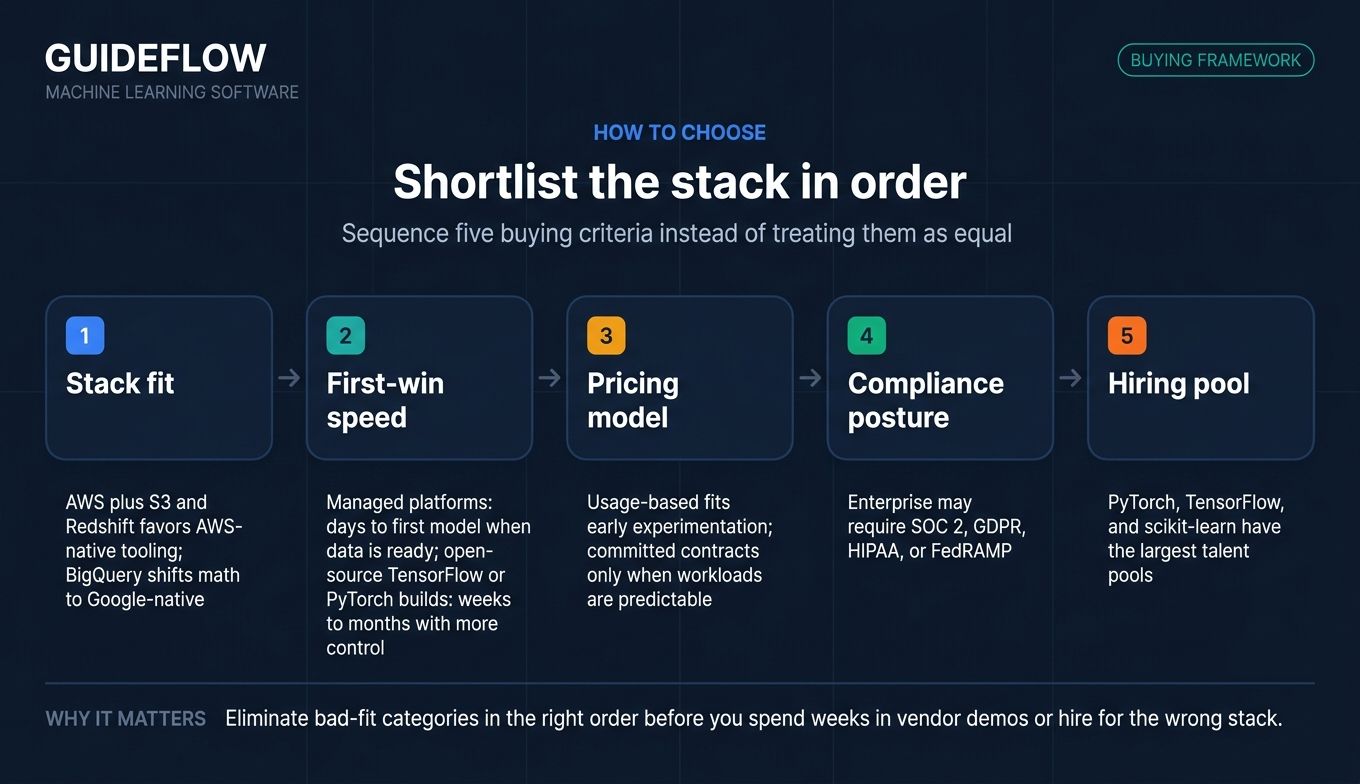
Stack fit and integrations
What cloud are you already on? Where does your data live? If you run on AWS with data in S3 and Redshift, SageMaker is a shorter integration path than Vertex AI. If your warehouse is BigQuery, the math flips. Pick the machine learning solution that minimizes the number of new connectors your engineering team has to build and maintain.
Time to first model in production
How fast can a new ML hire ship something useful? Managed platforms (SageMaker, Vertex AI, Azure ML) compress this to days for simple use cases when data is ready. Open-source builds on TensorFlow or PyTorch typically take longer but give you more control. For a Series B team trying to prove ROI on the ML investment before the next board meeting, first-win-speed often matters more than peak flexibility.
Pricing model and runway impact
Pay-as-you-go works at startup scale. Per-seat commercial platforms can spiral fast as the team grows. Custom enterprise contracts require a sales cycle before you know your true cost. Match the pricing model to your stage: usage-based for early experimentation, committed contracts only when workloads are predictable.
Governance, security, and compliance
If you sell into enterprise, your customers will ask about SOC 2, GDPR, and sometimes HIPAA or FedRAMP. Platforms built on AWS, Azure, and Google Cloud inherit much of the underlying compliance posture. Open-source libraries are neutral; the compliance burden lives in how you deploy them.
Hiring pool and ecosystem
How easy is it to hire engineers who already know this tool? PyTorch, TensorFlow, and scikit-learn have the largest hiring pools. Commercial platforms have smaller but growing pools. Niche tools require either upskilling or paying a premium to attract specialists. For a 30-person team, hiring velocity often matters more than the marginal capability difference between vendors.
Conclusion
The right machine learning software for a Series B SaaS team is rarely a single tool. It's a stack: one or two open-source libraries doing the model work, plus one managed platform absorbing the MLOps and governance overhead.
If you're on AWS and want the shortest path to production, start with Amazon SageMaker. If your data lives in BigQuery and you're blending classical ML with generative AI, Vertex AI is the natural fit. If you sell into enterprise and need the security posture for procurement reviews, Azure Machine Learning earns its place. If data engineering and ML need to share infrastructure, Databricks consolidates the spend. If you don't have a data science bench and need predictive features fast, DataRobot or H2O.ai compress the timeline.
For the model layer itself: scikit-learn for traditional ML on tabular data, PyTorch for anything involving modern transformer architectures, TensorFlow when production maturity is the priority, and Hugging Face when LLM features are on the roadmap.
The most expensive decision is no decision. Pick the platform that fits your stack, ship a first model against a metric that matters, and iterate from there. When your ML-powered feature is ready to go to market, interactive product tours and a demo center are how you show buyers what the model actually does without booking a call. Browse Guideflow's demo showcase to see how AI and data platforms like Dataiku and Scale AI present their products interactively.
FAQs
In SaaS, machine learning software powers three categories of work. In-product features like recommendations, smart search, anomaly detection, and personalization. Revenue and operations use cases like lead scoring, churn prediction, and pipeline forecasting. Internal automation like document processing, support ticket routing, and fraud detection.
Machine learning is a subset of artificial intelligence focused on systems that learn patterns from data. AI software is the broader category and includes rules-based systems, generative models, and other approaches that don't necessarily learn from data. Most modern AI products use machine learning, but not all software labeled "AI" qualifies as ML.
Yes. TensorFlow, PyTorch, and scikit-learn power production systems at many major SaaS and technology companies. The tradeoff is operational overhead: open-source machine learning libraries give you the modeling layer but leave the MLOps work (deployment, monitoring, governance) to your team. Commercial platforms absorb that overhead, which is why most growth-stage teams blend both.
Costs vary widely. Core open-source libraries are free. Managed cloud platforms (SageMaker, Vertex AI, Azure ML) charge for the underlying compute and storage you consume, which can range from hundreds to tens of thousands per month depending on workload. Enterprise platforms with custom pricing (DataRobot, H2O.ai enterprise tier) typically run into six figures annually. Most Series B teams blend free libraries with one paid platform.
For teams with prepared data, managed platforms like SageMaker and Vertex AI can deploy a first model in days. Custom builds on open-source frameworks typically take several weeks to a few months, depending on data readiness, team experience, and the complexity of the use case. AutoML platforms like DataRobot compress this further for standard predictive use cases.
For traditional ML on tabular data, scikit-learn has the lowest barrier to entry: consistent API, comprehensive documentation, and clean integration with pandas. For LLM use cases, Hugging Face Transformers gets you to a working model fastest. For teams without coding bandwidth, AutoML platforms like DataRobot or H2O Driverless AI offer no-code model building.
Not always. AutoML platforms like DataRobot, Vertex AutoML, and H2O Driverless AI are designed so engineers and analysts without formal data science training can build and deploy models. Complex production systems and custom architectures still benefit from specialist hires, but a first ML feature can ship without one.
Most major machine learning platforms can connect to Salesforce and HubSpot through data pipelines or middleware. Cloud platforms (SageMaker, Vertex AI, Azure ML, Databricks) typically integrate through ETL tools, customer data platforms, or APIs rather than native connectors. For lead scoring and churn use cases, the common pattern is to pipe CRM data into your warehouse, train the model there, and push scores back into the CRM via reverse ETL.