Returns are where margin quietly leaks out of the business. A product ships out clean, comes back in an unknown condition, and lands in a backlog nobody owns. Customer service can't see where it is. Operations can't decide what to do with it. Finance eats the refund and the restocking cost. Multiply that by thousands of orders and the return lane stops being an afterthought. It becomes a P&L problem.
The reverse logistics software market was valued at USD 9.5 billion in 2024 and is projected to reach USD 18.2 billion by 2033 at an 8.0% CAGR, according to Verified Market Reports (2024). That growth tracks a shift in how teams treat returns: not as a cost to minimize after the fact, but as a workflow to route, automate, and recover value from.
Reverse logistics software is the layer that connects returns intake, RMA, inspection, disposition, and recovery into one system with return lifecycle visibility. It replaces the spreadsheets, email threads, and manual approvals that fall apart the moment volume spikes. A returns automation platform routes each item to its next best action: restock, refund, exchange, repair, refurbish, or recycle. That decision, made at scale, is the difference between a return that recovers value and one that bects pure loss.
The problem with manual returns handling is not effort. It's that email chains and shared sheets have no disposition logic, no carrier integration, and no way to see the whole return lifecycle at once. This guide compares eight platforms built to fix exactly that, whether you need ecommerce returns automation, omnichannel visibility, or repair and refurbishment control.
What's inside
This guide compares eight reverse logistics management software options for teams that need better returns visibility, disposition control, and recovery workflows. It covers ecommerce-first returns portals, enterprise return orchestration, manufacturer and 3PL repair systems, omnichannel platforms, and inventory-led tools.
We selected and ranked each platform against four criteria that matter most for operations and product teams evaluating another system to own:
- Automation depth: how much of the return lifecycle runs without manual touch
- Integration coverage: OMS integration, ERP integration, and carrier integrations
- Disposition support: restock, exchange, refund, repair, refurbish, recycle
- Pricing transparency and use-case fit: what you actually pay and who it suits
TL;DR
- Best overall for broad reverse logistics workflows: Outvio, for ecommerce brands wanting returns automation plus shipping and post-purchase operations in one stack.
- Best for enterprise return orchestration and visibility: ReverseLogix, for complex B2B, B2C, and hybrid returns at scale.
- Best for manufacturer and 3PL repair or refurbishment workflows: BacTracs, for serial-level RMA and returns WMS.
- Best for commerce-heavy return portals and exchange flows: ReturnGo, for merchants optimizing the return decision to keep revenue in play.
- Best for omnichannel returns across store and online: OneStock, for retailers with cross-channel order and inventory complexity.
- Best for after-sales and repair-heavy operations: ServiceCentral, for OEMs and depots turning returns into service cases.
- Best for inventory-led returns on a budget: Zoho Inventory, for smaller teams already in the Zoho ecosystem.
What is reverse logistics software?
Reverse logistics software is a platform that manages the movement of goods backward through the supply chain, from customer return initiation through authorization, shipping, receipt, inspection, disposition, and recovery, with reporting across every stage.
Unlike a simple returns portal that only collects requests, a full reverse logistics platform owns the decision that follows each return: what happens to the item, where it goes, and how value gets recovered. That decision layer, disposition logic, is what separates recovering margin from writing it off.
The core workflow moves through predictable stages:
- Return initiation and authorization: the customer or partner requests a return; the system issues a return authorization (RMA)
- Shipping and receipt: carrier integrations generate labels; the item ships back and is scanned on arrival
- Inspection and grading: the returned unit is assessed for condition, often at serial level
- Disposition: the system routes the item to restock, refund, exchange, repair, refurbish, or recycle
- Recovery and reporting: value is recaptured through recommerce or resale, and returns analytics surface patterns
Key capabilities that define the category:
- RMA software and return authorization: structured intake instead of ad hoc email approvals
- Returns portal and self-serve flows: branded, customer-facing return initiation
- Exchange, refund, and store credit routing: exchange management that keeps revenue in play
- Inspection, grading, repair, refurbish, recycle: disposition beyond simple restocking
- Carrier and OMS/ERP integrations: connected labels, orders, and inventory
- Analytics and return lifecycle visibility: one view across every returned item
The best reverse logistics platform for a given team depends on where the volume and complexity actually sit. A DTC brand drowning in ecommerce returns has a different problem than a manufacturer managing repair authorizations across multiple facilities.
When to use reverse logistics software
Reduce refund leakage
Every refund is recoverable revenue walking out the door. Teams that want refund reduction need exchange-first flows and smarter resolution logic that offer a replacement, a variant swap, or store credit before defaulting to cash back. Routing returns toward exchange management and store credit keeps margin inside the business. When the system nudges the customer toward an exchange at the moment of the return request, the recovery rate climbs without any manual intervention.
Centralize return status across channels
Brands selling through ecommerce plus physical stores or partners lose track of returns the moment they cross a channel boundary. Omnichannel returns break when each channel has its own process and no shared view. A reverse logistics platform gives customer service and operations teams one status feed across every return, regardless of where it started. That visibility cuts the "where is my return" tickets and lets teams act on stalled items before they age into write-offs.
Handle repair, refurbishment, or recycling
Not every returned item goes back on the shelf. When units need disposition rules beyond restocking, the workflow gets complex fast. Repair and refurbishment demand serial tracking, parts handling, and service workflows that a basic returns portal can't support. This is where a repair authorizations engine and refurbish workflow matter: the system decides whether an item is repaired, graded for resale, or sent to recycling flows, and tracks it through each step.
Comparison table
The table below maps each reverse logistics management software option by intent, primary use case, pricing, and G2 rating. Pricing reflects what each vendor publishes; several enterprise platforms use quote-based pricing tied to modules and volume, so those show as request-based.
| # | Product | Intent | Key use case | Pricing | G2 rating |
|---|---|---|---|---|---|
| 1 | Outvio | Ecommerce post-purchase ops | Returns automation plus shipping and tracking | Request quote | 4.9/5 |
| 2 | ReverseLogix | Enterprise returns orchestration | Complex B2B, B2C, hybrid returns | Request quote | 4.2/5 |
| 3 | BacTracs | Manufacturer and 3PL returns | Serial-level RMA and returns WMS | Not publicly listed | - |
| 4 | Revers.io | After-sales and repair management | Centralized returns, repairs, service | Not publicly listed | 5.0/5 |
| 5 | ReturnGo | Ecommerce returns and exchanges | Exchange-first returns portal | From $147/month | 4.8/5 |
| 6 | OneStock | Omnichannel order and return orchestration | Cross-channel inventory and returns | Custom (order form) | - |
| 7 | ServiceCentral | Service, repair, warranty workflows | Returns that turn into repair cases | From $20/month (RepairQ) | 4.2/5 |
| 8 | Zoho Inventory | Inventory-led returns | Stock and order management with returns | Free; paid from $29/month | 4.4/5 |
The split is clear. Ecommerce-first tools like Outvio and ReturnGo optimize the customer-facing return decision. Enterprise platforms like ReverseLogix and OneStock orchestrate complex, high-volume, multi-channel flows. Repair-oriented systems like BacTracs, Revers.io, and ServiceCentral handle the disposition-heavy end where returns become service cases. Zoho Inventory anchors the budget-conscious, inventory-led end.
1. Outvio
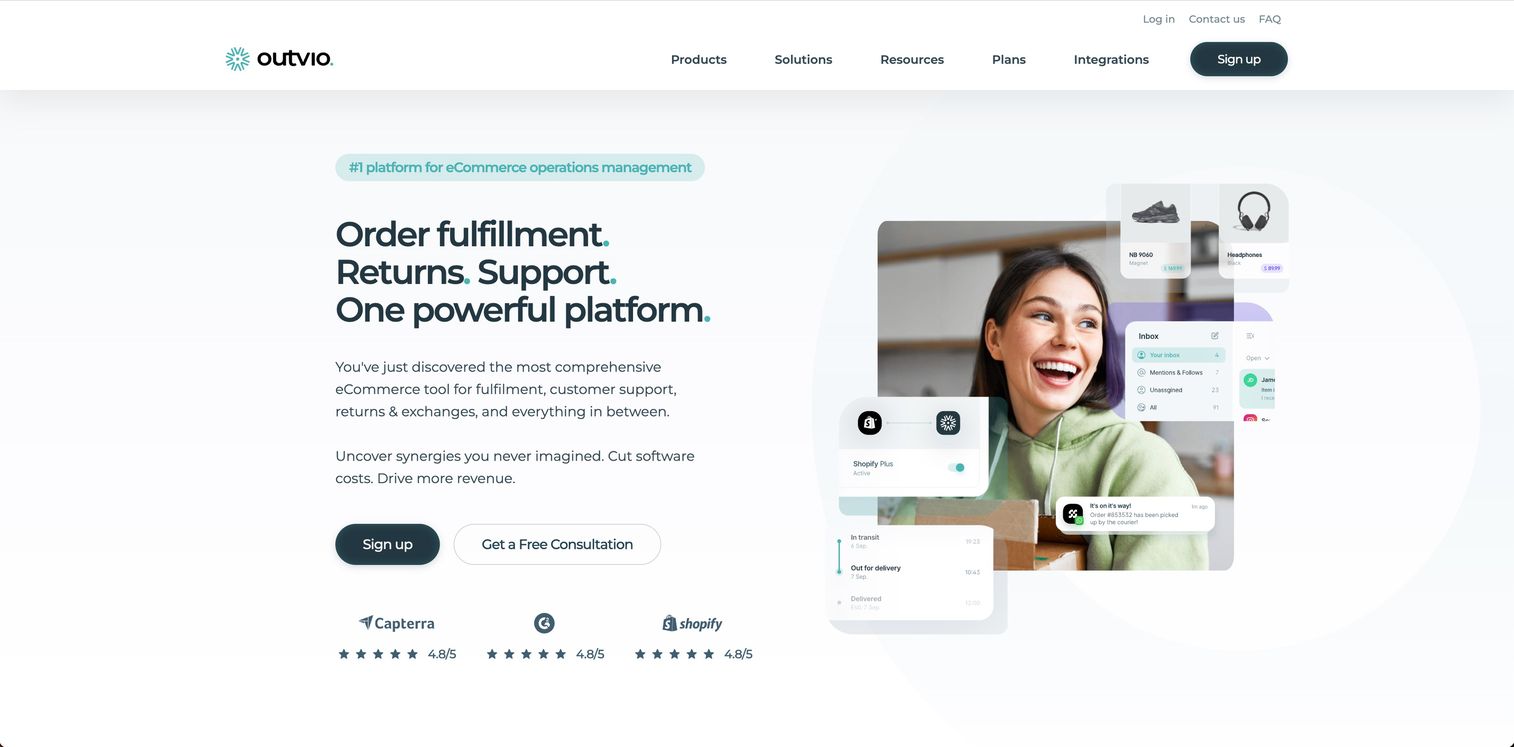
Outvio is post-checkout operations software for ecommerce and B2B brands, covering fulfillment, shipping, tracking, returns, and customer support in one stack. Rather than bolting a returns portal onto a separate shipping tool, it treats the entire post-purchase experience as a single workflow, which is why it lands as the best overall pick for broad reverse logistics needs.
Best for: Ecommerce brands that want branded post-purchase operations and returns automation without stitching together multiple point tools.
Key strengths
- Multi-carrier shipping: Ship orders with 90+ couriers, so return labels and outbound shipping live in the same system.
- Smart automation rules: Smart shipping rules and smart order merging cut manual routing across the order and return lifecycle.
- Branded customer touchpoints: Branded tracking pages, a returns portal, and delivery notifications keep the whole experience on-brand.
Why choose Outvio: The pitch is consolidation. If your returns problem is really a post-purchase problem, spanning shipping, tracking, returns, and support, Outvio handles the full arc instead of one slice. That breadth matters for lean teams that don't want to own five integrations to run one return.
Outvio pricing: Outvio uses quote-based pricing. Its pricing page shows request-quote plans for Post-Checkout and Desk, with Enterprise and 3PL plans quoted annually. There's no public numeric starting price, so budget confirmation happens in a sales conversation. On G2, Outvio holds a 4.9/5 rating.
2. ReverseLogix
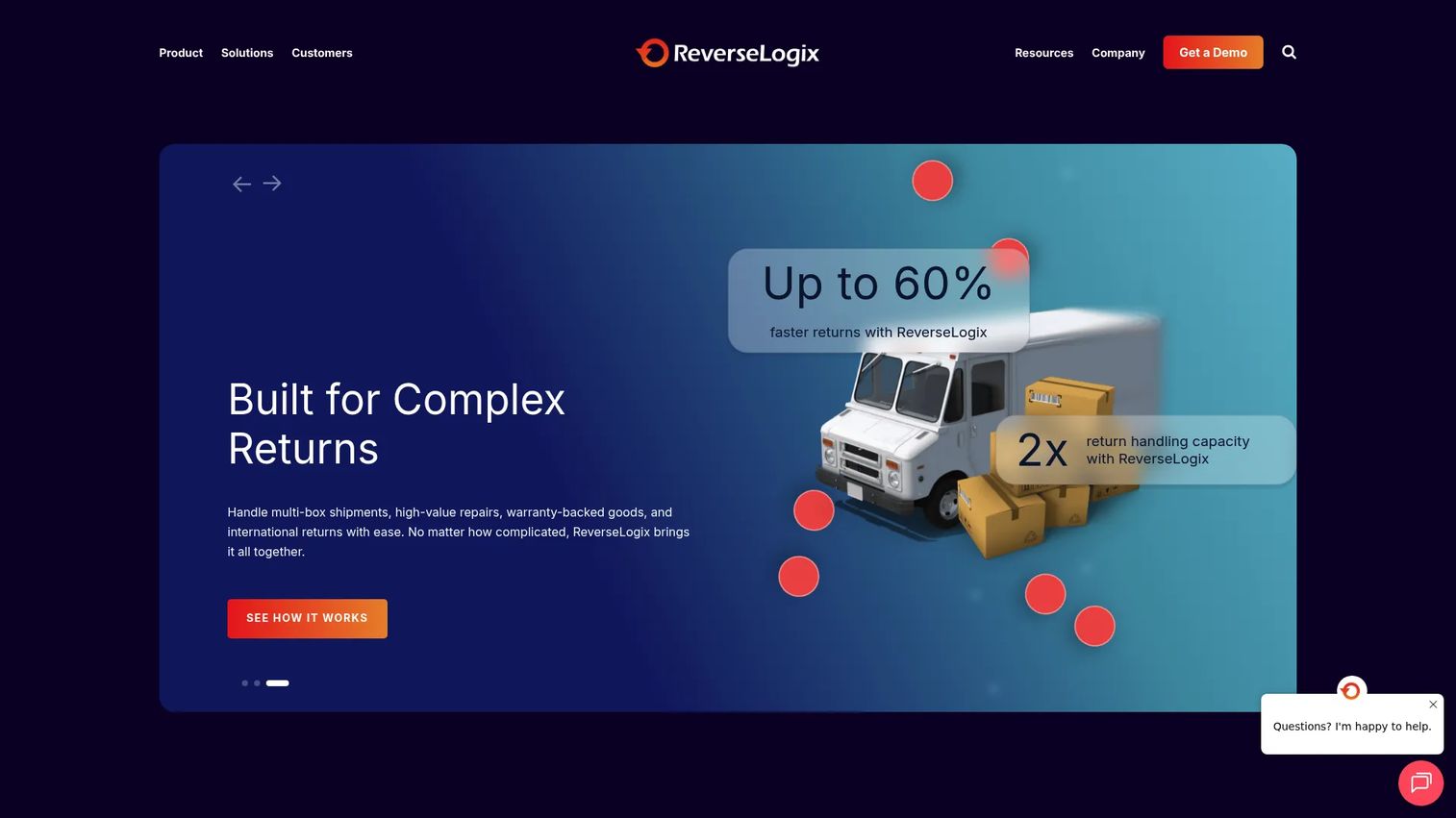
ReverseLogix is an enterprise returns management system built for complex B2B, B2C, and hybrid reverse logistics workflows. It's a dedicated reverse logistics platform rather than a returns feature attached to something else, which is what makes it the pick for larger operations that need real process control across the full return lifecycle.
Best for: Mid-market and enterprise teams managing complex returns, repairs, and reverse logistics across multiple channels.
Key strengths
- Configurable returns processing: Inspection, grading, tracking, and approvals run through workflows you can shape to your process.
- Self-service branded portals: Returns initiation happens through branded portals for both consumer and business customers.
- Repairs and recommerce: Repairs management, recommerce, and analytics extend disposition beyond simple restocking.
Why choose ReverseLogix: When returns span both consumer and business channels and involve repairs, grading, and resale, a purpose-built enterprise system earns its keep. ReverseLogix is modular, so teams configure the workflow to match how returns actually move, rather than bending operations to fit a rigid tool.
ReverseLogix pricing: The suite is modular and customizable, and the pricing page routes through a demo and get-pricing flow rather than showing public numbers. Pricing depends on the modules you deploy and your volume. On G2, ReverseLogix holds a 4.2/5 rating.
3. BacTracs
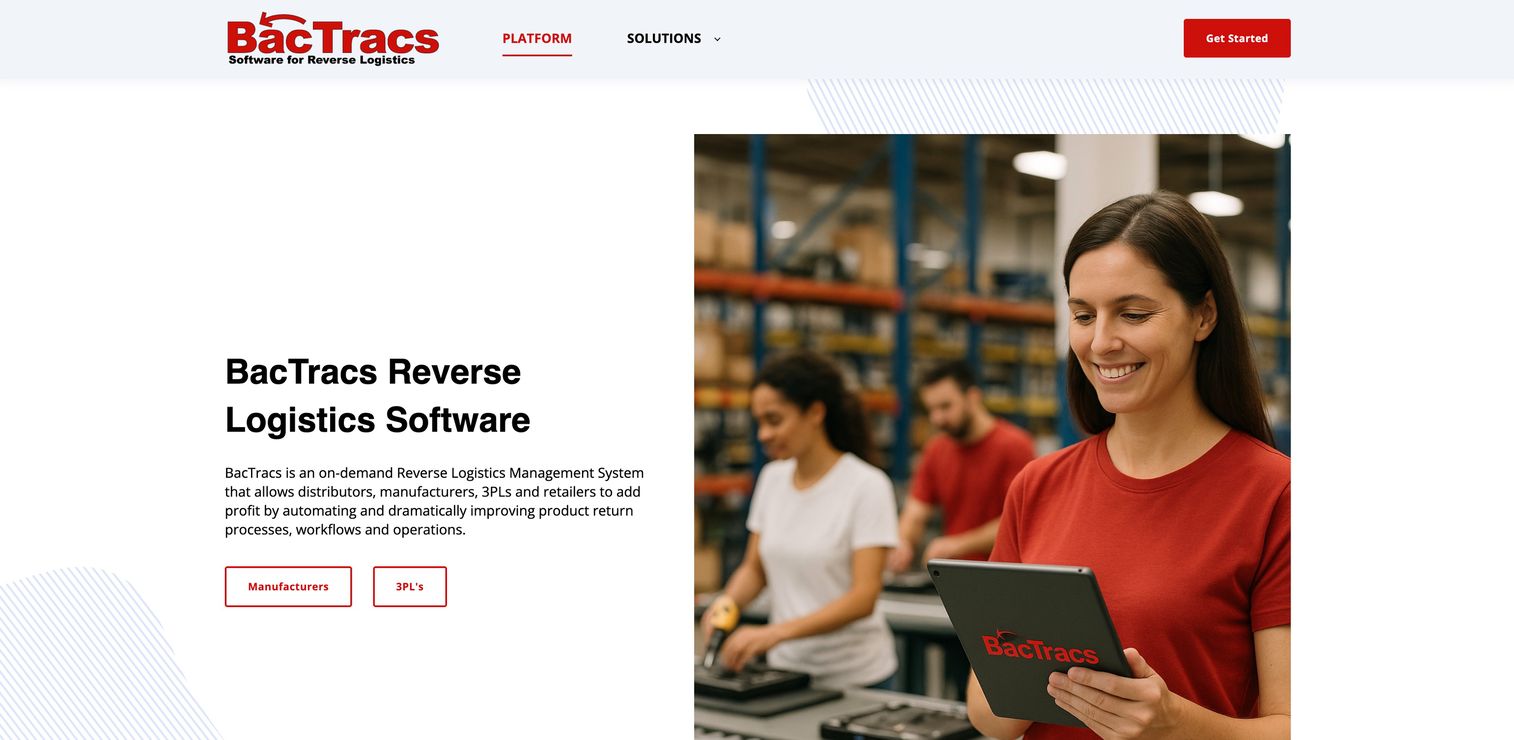
BacTracs is reverse logistics management software for handling product returns, RMAs, testing, repair, and refurbishment. Built for operations where returned goods need real processing rather than a quick restock, it leans into the warehouse and disposition side of the return lifecycle.
Best for: Manufacturers, distributors, and 3PLs managing reverse logistics and returns processing across facilities.
Key strengths
- RMA management: Structured return authorization replaces manual approval chains for high-volume returns.
- Returns WMS with serial tracking: Serial-level tracking follows each unit through inspection, disposition, and recovery.
- Repair and refurbishment workflows: A dedicated refurbish workflow routes items through repair, grading, and resale.
Why choose BacTracs: For manufacturers and 3PLs, the return is only the start. What matters is serial-level tracking, inspection, and repair or refurbishment control across multiple facilities. BacTracs is built around that processing depth rather than the customer-facing return request, which suits operations where disposition logic drives the value.
BacTracs pricing: BacTracs does not publish public pricing. Feature and use-case details are documented on the Andlor product pages, but there's no listed price or public G2 rating, so cost and fit are confirmed directly with the vendor. Teams evaluating it should scope pricing against facility count and return volume in a sales conversation.
4. Revers.io
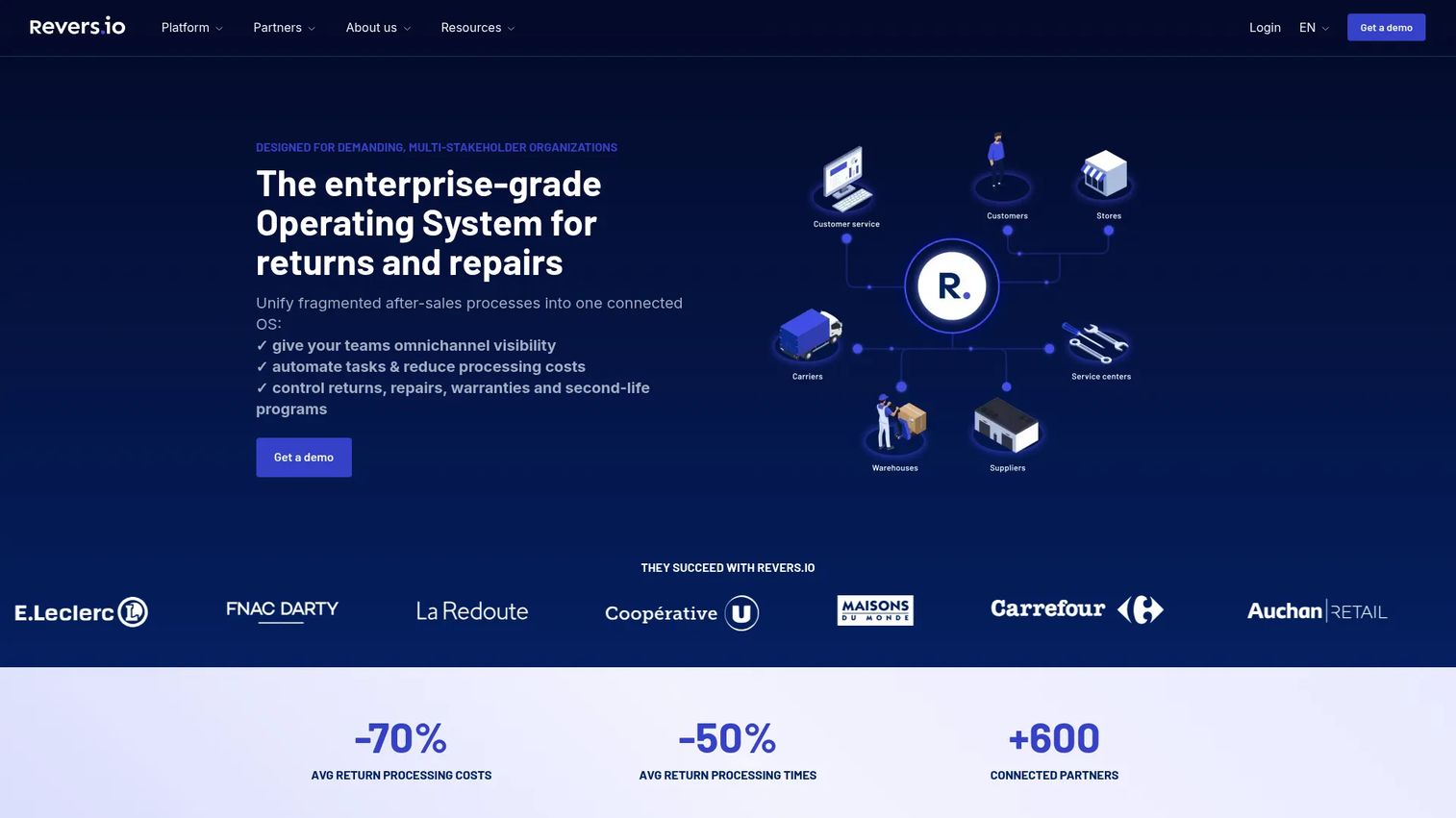
Revers.io is an after-sales and reverse logistics platform for managing returns, repairs, customer service, and partner workflows. It centers the customer-facing side of returns while connecting to the back-end systems that carry the process through, which makes it a fit for brands that want a controlled after-sales experience.
Best for: Retailers and brands needing centralized after-sales, returns, and repair management in one place.
Key strengths
- Self-service customer portal: A branded portal handles return initiation and status without agent involvement.
- CRM and ERP integrations: A customer service interface connects to CRM/ERP integrations for connected records.
- Workflow automation: Rules management and automation route returns and repairs through defined paths.
Why choose Revers.io: If the priority is a clean, centralized after-sales experience, spanning returns, repairs, and customer service, Revers.io ties those together with a self-service portal and CRM and ERP integration. It suits brands that see returns as part of the customer relationship, not just a logistics task.
Revers.io pricing: Revers.io does not publish public pricing on its site, so cost is scoped through the vendor. On G2, it shows a 5.0/5 rating, though from a small review base, so weigh that alongside a direct evaluation. The feature depth around the customer portal and workflow automation is well documented on the product pages.
5. ReturnGo
ReturnGo is returns and exchanges management software for ecommerce merchants, built around keeping revenue in play at the moment of return. Its whole design nudges the customer toward an exchange or store credit before a refund, which is exactly the exchange-first logic that drives refund reduction.
Best for: Shopify and ecommerce brands that want automated returns and exchanges through a branded self-serve portal.
Key strengths
- Self-service returns portal: A branded returns portal software experience lets customers start returns without a support ticket.
- Product and variant exchanges: Exchange management covers full product and variant swaps to retain the sale.
- Store credit and refunds: Store credit and refund routing gives resolution options that protect margin.
Why choose ReturnGo: The exchange-first framing is the reason to pick it. Instead of treating every return as a refund, ReturnGo automates the decision toward an exchange or store credit, keeping revenue inside the business. For DTC and Shopify merchants, that shift in the return decision directly moves the recovery rate.
ReturnGo pricing: Public pricing starts at $147/month for the Premium plan, with a Pro plan at $297/month and custom Enterprise pricing. There's no free tier, though a 14-day free trial is offered on Shopify self-service plans. On G2, ReturnGo holds a 4.8/5 rating.
6. OneStock
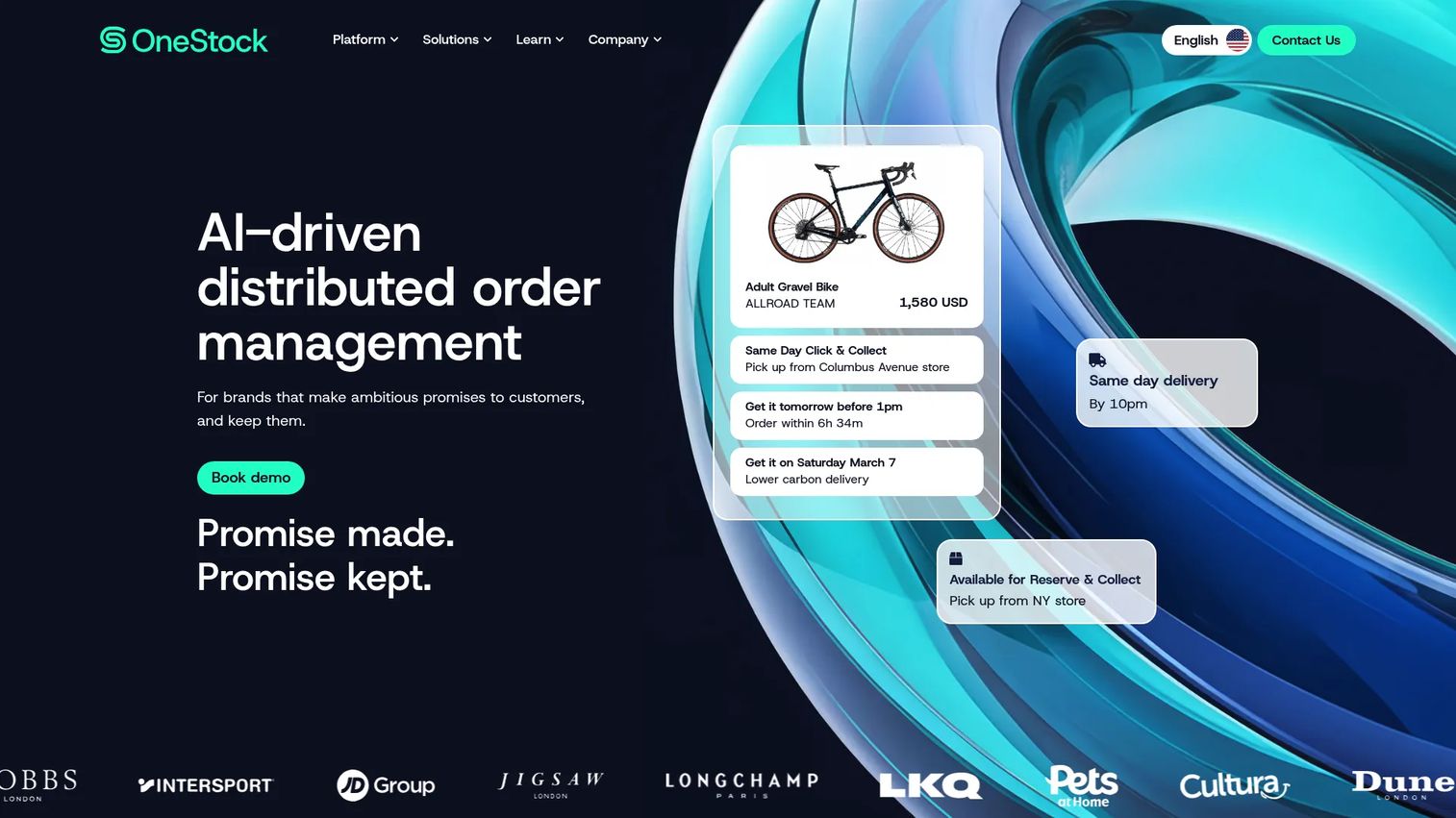
OneStock is AI-driven distributed order management software for retail brands, with omnichannel returns and inventory orchestration at its core. It treats returns as one movement inside a larger cross-channel inventory picture, which is why it fits retailers juggling store and online complexity.
Best for: Enterprise retail brands needing omnichannel inventory and order orchestration across stores, warehouses, and channels.
Key strengths
- Unified real-time inventory: Real-time inventory spans stores, warehouses, suppliers, and in-transit stock for one accurate view.
- Order orchestration: Fulfillment routing works across channels, so returns feed back into available stock immediately.
- Store experience tools: Ship-from-store, click & collect, reserve & collect, and order-in-store connect physical and digital returns.
Why choose OneStock: For retailers where returns cross store and ecommerce boundaries, the hard part is inventory truth. OneStock unifies stock across every location and routes orders and returns against that single view. When a store return needs to re-enter sellable inventory instantly, that orchestration is the differentiator.
OneStock pricing: OneStock does not publish public pricing; its terms indicate pricing is set in customer-specific order forms and currencies. That means cost is scoped to your channel count, volume, and modules in a direct conversation. A public G2 rating was not available at the time of writing, so evaluate it through a demo against your omnichannel requirements.
7. ServiceCentral
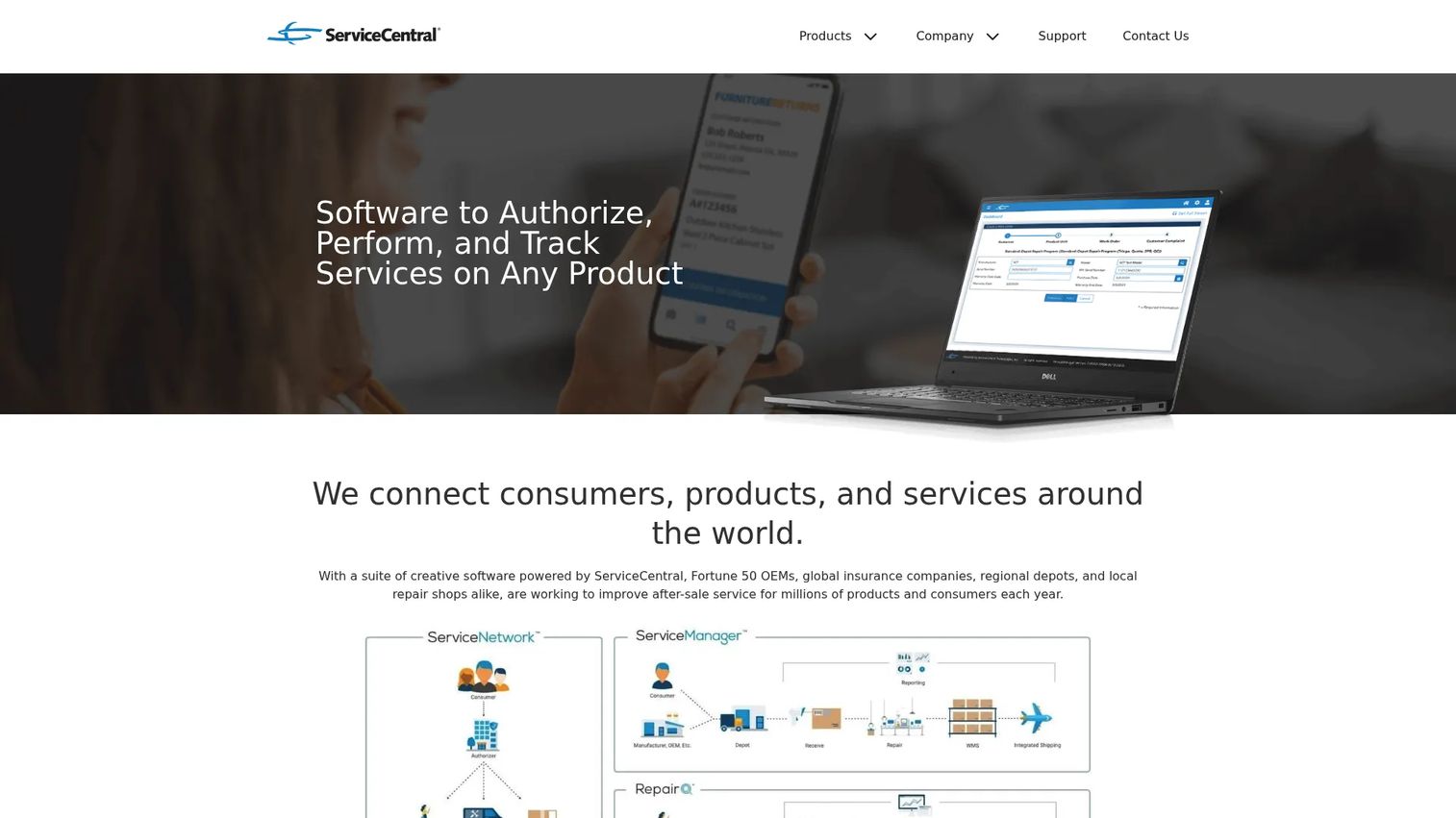
ServiceCentral is software for service, repair, reverse logistics, and warranty workflows, spanning several products under one roof. It's built for operations where a return frequently becomes a repair, warranty claim, or refurbishment case rather than a simple restock.
Best for: OEMs, depots, repair shops, and service organizations managing repairs and reverse logistics alongside warranty.
Key strengths
- ServiceManager: Handles RMA, returns, repairs, product disposition, refurbishment, and warranty management in one flow.
- ServiceNetwork: Connects independent service providers with authorizers for distributed repair networks.
- RepairQ: Repair-shop POS with tickets, customer history, and online check-ins for storefront operations.
Why choose ServiceCentral: When returns routinely turn into service work, a general returns tool falls short of the process. ServiceCentral covers RMA, disposition, refurbishment, and warranty in a connected flow, with a service network layer for distributed repair. That makes it a strong fit for OEMs and depots where repair authorizations drive the workload.
ServiceCentral pricing: Public pricing is visible for RepairQ, which starts at $20/month for the Starter plan, with Essential at $90/month, Advanced at $150/month, and Professional at $180/month per location, plus a 14-day free trial. ServiceManager and ServiceNetwork pricing is quoted directly. On G2, ServiceCentral holds a 4.2/5 rating.
8. Zoho Inventory
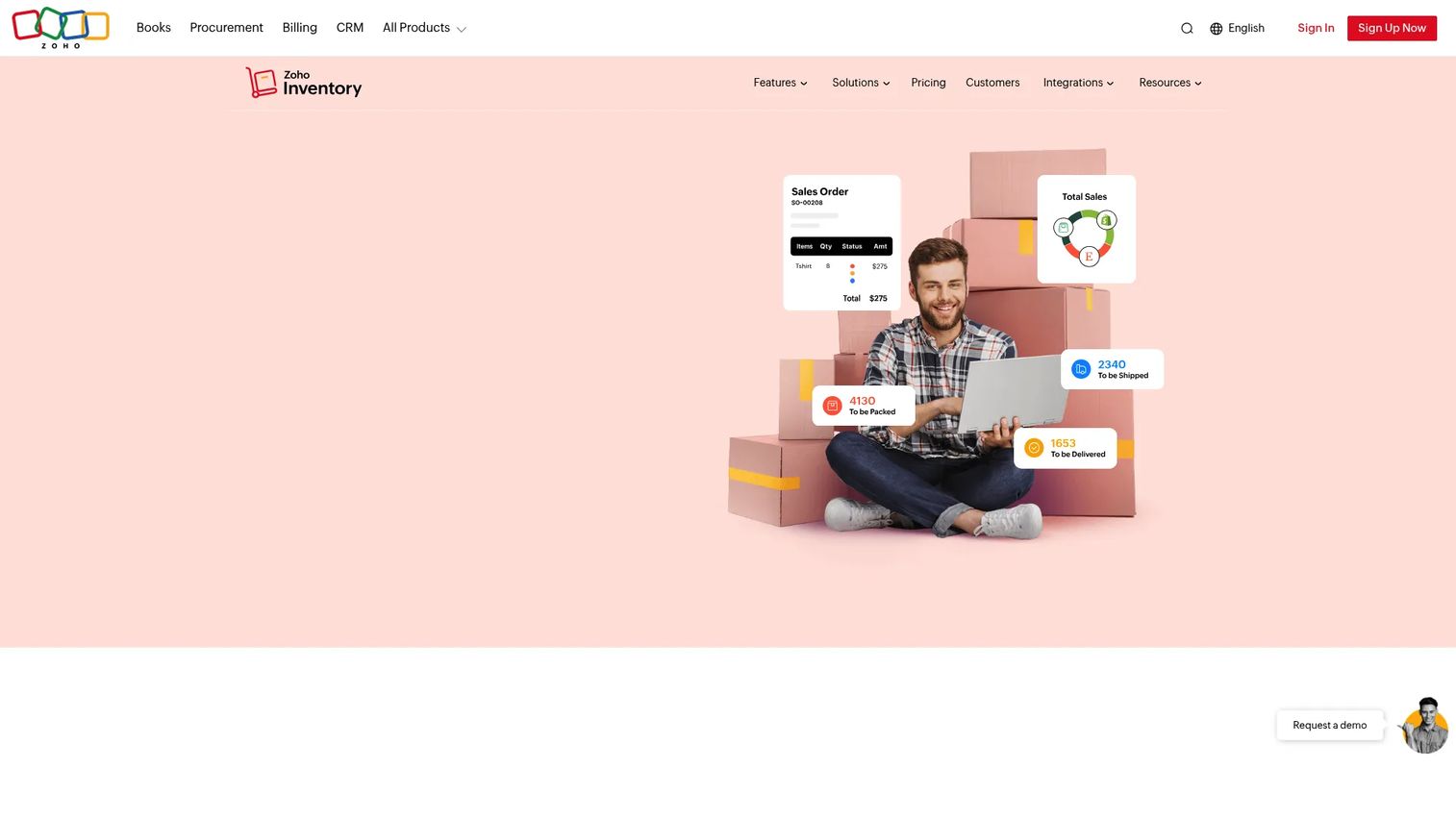
Zoho Inventory is cloud inventory management software for managing stock, orders, warehousing, shipping, and multichannel sales, with returns handled as part of the inventory picture. It's the inventory-led, budget-friendly option for teams whose reverse logistics needs are simpler and stock-centric.
Best for: Small to mid-sized businesses that need multichannel inventory and order management with straightforward returns handling.
Key strengths
- Purchase orders and vendor payments: Manages procurement alongside inventory for a connected stock view.
- Multi-warehouse management: Transfer orders and bin locations track stock across warehouses as returns re-enter inventory.
- Serial and batch tracking: Serial/batch tracking, barcode scanning, and reporting cover the restock workflow accurately.
Why choose Zoho Inventory: For teams already in the Zoho ecosystem or working to a tight budget, this is the practical entry point. It handles returns as part of inventory and order management rather than as a dedicated reverse logistics engine, which suits businesses whose returns are lower-complexity and stock-driven. The trade-off is disposition depth: it manages inventory-led returns well, but repair, refurbishment, and recommerce workflows sit outside its scope.
Zoho Inventory pricing: Zoho Inventory offers a free edition at $0, then Standard at $29/month, Professional at $79/month, Premium at $129/month, and Enterprise at $249/month, all per organization billed annually, with add-ons available. On G2, Zoho Inventory holds a 4.4/5 rating.
Considerations before you buy
The right reverse logistics platform depends on where your volume, complexity, and margin leakage actually sit. Use this checklist to pressure-test each option against your operation.
Disposition depth
Ask what happens after an item is received. A returns portal that only collects requests is not the same as a platform with real disposition logic. If returns need repair, refurbishment, grading, or recycling flows, confirm the tool routes items through those paths, not just restock and refund.
Integration coverage
Returns don't live in isolation. Verify OMS integration, ERP integration, and carrier integrations before committing. A platform that can't sync orders, inventory, and shipping labels forces manual reconciliation, which is exactly the friction you're trying to remove. Check which specific systems are supported, not just that integrations exist.
Return lifecycle visibility and analytics
You can't improve what you can't see. Look for returns analytics that surface return reasons, disposition outcomes, and recovery rates across the full lifecycle. This is the data that tells you whether exchange-first flows are working and where margin is still leaking.
Pricing model and scalability
Several platforms here use quote-based pricing tied to volume and modules. Model your cost against realistic return volume, not today's baseline. A tool that fits at current scale can get expensive fast, so confirm how pricing behaves as returns grow and channels expand.
Use-case fit over feature count
Match the tool to your highest-friction workflow. Ecommerce-first brands need exchange management and a strong returns portal. Manufacturers need RMA software and serial tracking. Retailers need omnichannel returns and inventory truth. The best platform is the one that solves your specific bottleneck, not the one with the longest feature list.
Conclusion
The best reverse logistics software depends entirely on which return workflow is costing you the most. There's no single winner, only the right fit for where your friction sits.
If you're an ecommerce brand wanting returns automation across the full post-purchase arc, Outvio is the broad pick, and ReturnGo is the specialist for exchange-first flows that reduce refund leakage. For enterprise return orchestration across complex B2B and B2C channels, ReverseLogix gives you configurable process control. Retailers battling omnichannel returns should look at OneStock for its unified inventory and order orchestration. When returns turn into repair and refurbishment work, BacTracs, Revers.io, and ServiceCentral each handle the disposition-heavy end, from serial-level RMA to warranty and service networks. And for smaller, inventory-led teams, Zoho Inventory is the affordable entry point.
Start with the tool that matches your highest-friction workflow. Map where returns stall, where refunds leak, and where items pile up without a disposition decision. Then pick the e-commerce returns platform or reverse logistics management software built for that exact problem, run it against real return volume, and measure recovery before you scale.
FAQs
Reverse logistics software manages the backward movement of goods through the supply chain: return initiation, authorization, shipping, receipt, inspection, disposition, and recovery, with reporting across every stage. Its defining capability is disposition logic, deciding whether each returned item is restocked, refunded, exchanged, repaired, refurbished, or recycled, so the business recovers value instead of writing it off.
Returns management software usually focuses on the customer-facing return request and refund. Reverse logistics software is broader: it owns the full lifecycle after receipt, including inspection, grading, disposition routing, repair, refurbishment, and recommerce. Many ecommerce tools blur the line, but the practical test is whether the platform manages what happens to an item after it comes back, not just how the customer requests the return.
For ecommerce brands, Outvio suits teams wanting a broad post-purchase stack that combines returns automation with shipping and tracking, while ReturnGo excels at exchange-first returns and store credit routing to reduce refund leakage. The right pick depends on whether you need full post-purchase operations or a focused, revenue-retaining returns portal.
Yes, and it's one of the highest-value features. Exchange management and store credit routing let the system offer a replacement, variant swap, or credit before defaulting to a cash refund. ReturnGo is built around this exchange-first logic, and platforms like Outvio and ReverseLogix support these resolution paths as part of broader returns automation.
Yes. Repair and refurbishment need serial tracking, parts handling, and service workflows that go beyond restocking. BacTracs handles serial-level RMA and refurbish workflows for manufacturers and 3PLs, ServiceCentral covers repair, warranty, and disposition for OEMs and depots, and Revers.io centralizes returns with repair management. If returns routinely become service cases, prioritize a platform built for that disposition depth.
The three that matter most are OMS integration for order data, ERP integration for inventory and finance, and carrier integrations for return labels and tracking. Without these, teams reconcile records manually, which defeats the point of returns automation. Before buying, confirm the platform connects to your specific order, inventory, and shipping systems, not just that it offers integrations generically.
Very. Omnichannel returns break when store and ecommerce channels each run their own process with no shared view. A platform like OneStock unifies real-time inventory across stores, warehouses, and in-transit stock, so a store return can re-enter sellable inventory immediately. That inventory truth and cross-channel return lifecycle visibility is what makes omnichannel returns manageable at scale.
Choose a returns portal when your main need is a clean, branded customer return and exchange experience, and most items simply restock or refund. Choose a full reverse logistics platform when returns require disposition logic, inspection, grading, repair, refurbishment, or recommerce, or when volume spans multiple channels and facilities. Match the tool to your highest-friction workflow, not to the longest feature list.