Your CPCs are up. Your competitor just launched a new offer you found out about three weeks late. And your monthly reporting cadence is too slow to catch any of it before it dents your CAC.
That gap is the real problem. Global PPC advertising spend is forecast to hit $306B in 2026, with paid search growing 11% year over year, according to DigitalApplied (2026). More money in the auction means more competitors, more bid pressure, and faster-moving ad copy. By the time your monthly dashboard shows a dip in impression share, the damage is already in the numbers.
Smart bidding now controls 78% of Google Ads spend, with advertisers reporting 14% higher conversion rates versus manual bidding, per DigitalApplied (2026). Automation handles the mechanics. What it does not do is tell you what your competitors are bidding on, what landing pages they are testing, or which keywords they just abandoned. That is where paid search intelligence software earns its place in the stack.
This is a buyer's guide for growth marketers who need competitive visibility, not just another keyword idea generator. If your team also leans on competitive intelligence tools, marketing analytics, or broader growth marketing tools, this fits alongside them as the layer that watches the auction.
What's inside
This guide covers nine paid search intelligence software tools chosen for competitor monitoring, live alerts, historical tracking, keyword opportunity discovery, ad and landing page analysis, and reporting depth. We weighted four things: how clearly each tool surfaces competitor moves, how well it ties paid search signals to decisions, how it handles change tracking over time, and whether it reduces manual reporting work. The selection favors tools with defensible ROI for growth marketers who are actively consolidating their stack, not adding spreadsheet chores. Pricing and ratings reflect verified, current public sources.
TL;DR
- Best baseline (free): Google Ads gives you first-party Auction Insights and Keyword Planner data with no subscription cost beyond ad spend.
- Best all-around search intelligence suite: Semrush combines paid and organic competitive research in one workflow.
- Best budget-conscious competitor snapshots: SpyFu surfaces competitor keywords, ad history, and budget estimates fast.
- Best multi-channel context: Similarweb shows paid search inside the full traffic mix for market-level benchmarking.
- Best enterprise competitive monitoring: Adthena and GrowByData Market Intelligence cover complex, multi-market search landscapes with continuous tracking.
- Best PPC optimization and execution: Optmyzr and Adalysis turn paid search analysis into automated action.
What is paid search intelligence software?
Paid search intelligence software is a category of competitor tracking software that monitors competitors' paid search activity, surfaces keyword and bidding trends, and helps teams optimize PPC spend with competitive context. It tells you what rivals are advertising on, how their ad copy and landing pages change over time, and where gaps in the auction create opportunity.
It differs from general SEO tools, which focus on organic rankings and content, and from broad competitive intelligence platforms, which track funding, hiring, and product moves across an entire company. Paid search intelligence is narrower and sharper: it lives inside the auction.
Core capabilities to expect from a paid search intelligence platform:
- Competitor ad monitoring: capture and track rival ad copy, offers, and creative over time.
- Keyword trend tracking: identify which terms competitors bid on, enter, or abandon.
- Landing page and destination URL analysis: see where competitor ads send traffic and how those pages change.
- Alerts and historical views: get notified on impression-share shifts and review change history instead of one-off screenshots.
- Bid and budget insights: estimate competitor spend and bidding aggression by keyword.
- Multi-engine coverage: track Google, Bing, Amazon, shopping, and local formats where relevant.
These capabilities turn search marketing intelligence from a quarterly audit into a continuous signal your whole team can act on.
When to use paid search intelligence software
Monitor competitor moves before your CAC climbs
Auctions get more expensive when new bidders enter or existing ones push harder. The first sign is rarely in your dashboard. It shows up as a competitor changing ad copy, launching a new offer, or grabbing impression share you used to own. Paid search intelligence tools catch these shifts early, so you adjust bids and messaging before the higher CPC works its way into your CAC.
Find keyword and offer gaps faster
Competitor bidding patterns are a map. Terms a rival just entered signal a new priority. Terms they abandoned signal an opening. Inconsistent messaging across their ads signals a positioning weakness you can exploit. Reading these patterns helps you reallocate budget toward higher-ROAS terms and write ad copy that out-positions the competition, instead of guessing.
Reduce reporting and analysis friction
Manual competitor checks do not scale. Someone screenshots a few SERPs, exports a keyword list, and the data is stale by the next sprint. Dashboards and automated alerts replace that ad-hoc work with continuous tracking. Growth, paid media, and leadership see the same competitive picture in real time, which means faster decisions and fewer "why didn't we catch this" conversations. For teams stitching this into a wider stack, it pairs naturally with marketing automation and audience intelligence workflows.
Comparison table
Here is how the nine tools stack up. Read the table by matching the Intent column to your situation first, then check Key differentiation for the capability that matters most to your team. Pricing reflects current public sources; several enterprise tools use custom pricing.
| # | Product | Intent | Key differentiation | Pricing | G2 rating |
|---|---|---|---|---|---|
| 1 | Google Ads | First-party paid search data | Native Auction Insights and Keyword Planner | Free platform, ad spend required | 4.3/5 |
| 2 | Semrush | All-around search suite | Paid and organic research in one place | From $117.33/mo (annual) | 4.5/5 |
| 3 | SpyFu | Fast competitor snapshots | Competitor ad history and budget estimates | From $29/mo (annual) | 4.6/5 |
| 4 | Similarweb | Multi-channel traffic context | Paid search within full traffic mix | From $99/mo | Not listed |
| 5 | Adthena | Enterprise search intelligence | AI-driven market and competitor monitoring | From $350/mo | 4.4/5 |
| 6 | GrowByData Market Intelligence | Holistic enterprise visibility | Paid, organic, and AI search coverage | Custom | 4.9/5 |
| 7 | Optmyzr | PPC optimization and automation | Cross-platform optimizations and alerts | Essentials, Premium, Enterprise tiers | 4.7/5 |
| 8 | BrandVerity | Brand protection and compliance | Paid search monitoring with takedowns | Freemium plus paid tiers | 4.4/5 |
| 9 | Adalysis | PPC auditing and optimization | 100+ audit checks and ad testing | Spend-based, monthly to annual | 4.8/5 |
1. Google Ads
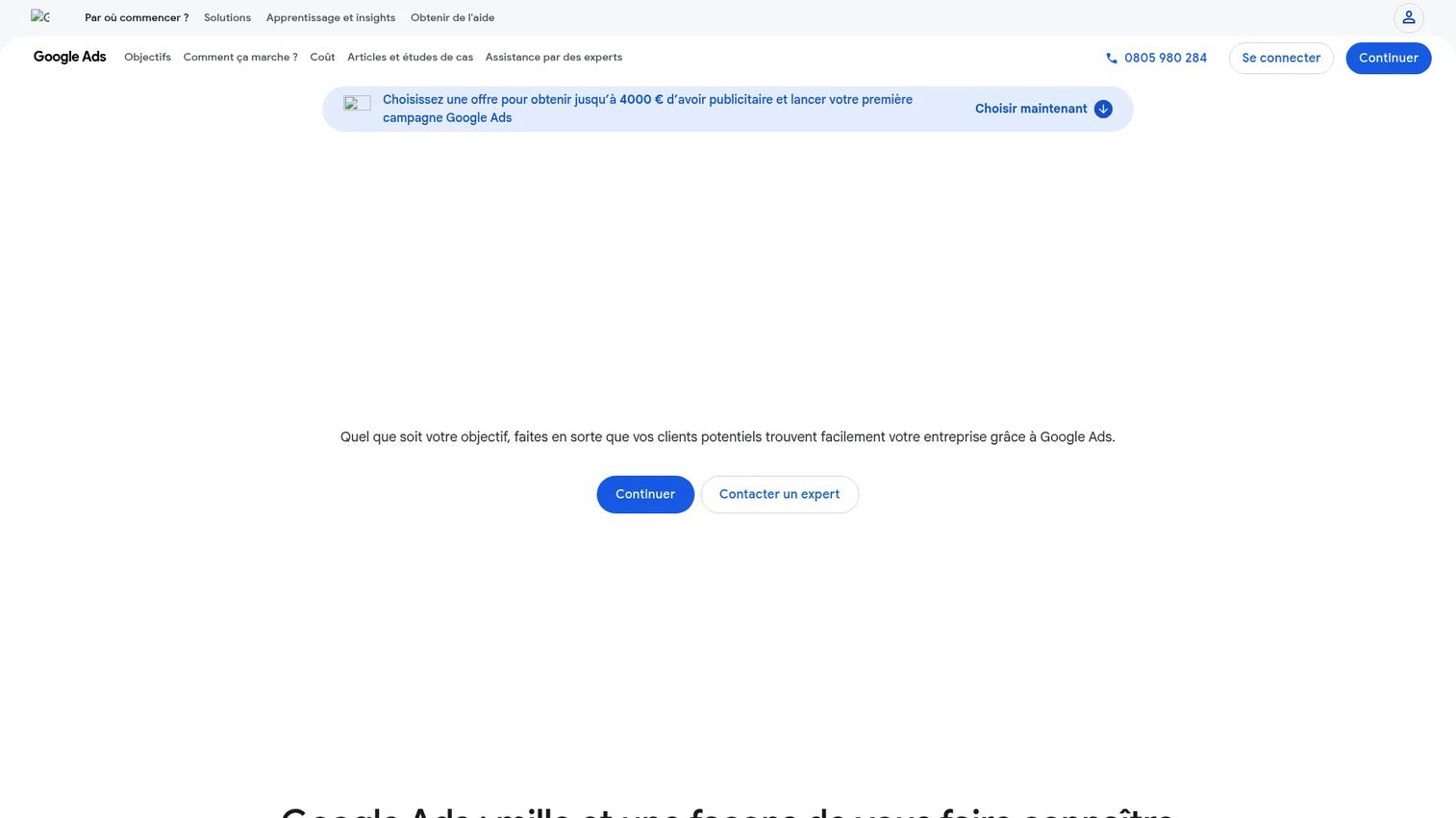
Google Ads is the baseline source for paid search intelligence because it is where most of the auction actually happens. Before you pay for a third-party tool, you should be reading the first-party signals Google already gives you. Auction Insights shows you impression share, overlap rate, and outranking share against the competitors bidding on your keywords. Keyword Planner surfaces volume and forecast data straight from the source.
Best for: Teams that want to ground their competitive reads in first-party auction data before layering on outside tools.
Key strengths
- Auction Insights: See which domains compete with you on each keyword and how your impression share moves.
- Keyword Planner: Pull volume, competition, and forecast data directly from Google's own index.
- Native campaign data: Track conversions, CPCs, and Performance Max signals without an integration step.
Why choose Google Ads: No tool reads your own account environment more accurately than the platform running it. Auction Insights gives you a real, named list of who you compete against on each term. The honest limit is scope: it shows the competitors in your auctions, not the full competitive landscape, and it does not track rival ad copy or landing pages over time. That is exactly the gap the next eight tools fill.
Google Ads pricing: The platform itself is free to use. Google Ads does not publish a subscription price because it runs on ad spend, billed by clicks or conversions against the budget you set. You pay for the media, not the software. G2 rates it 4.3/5.
2. Semrush
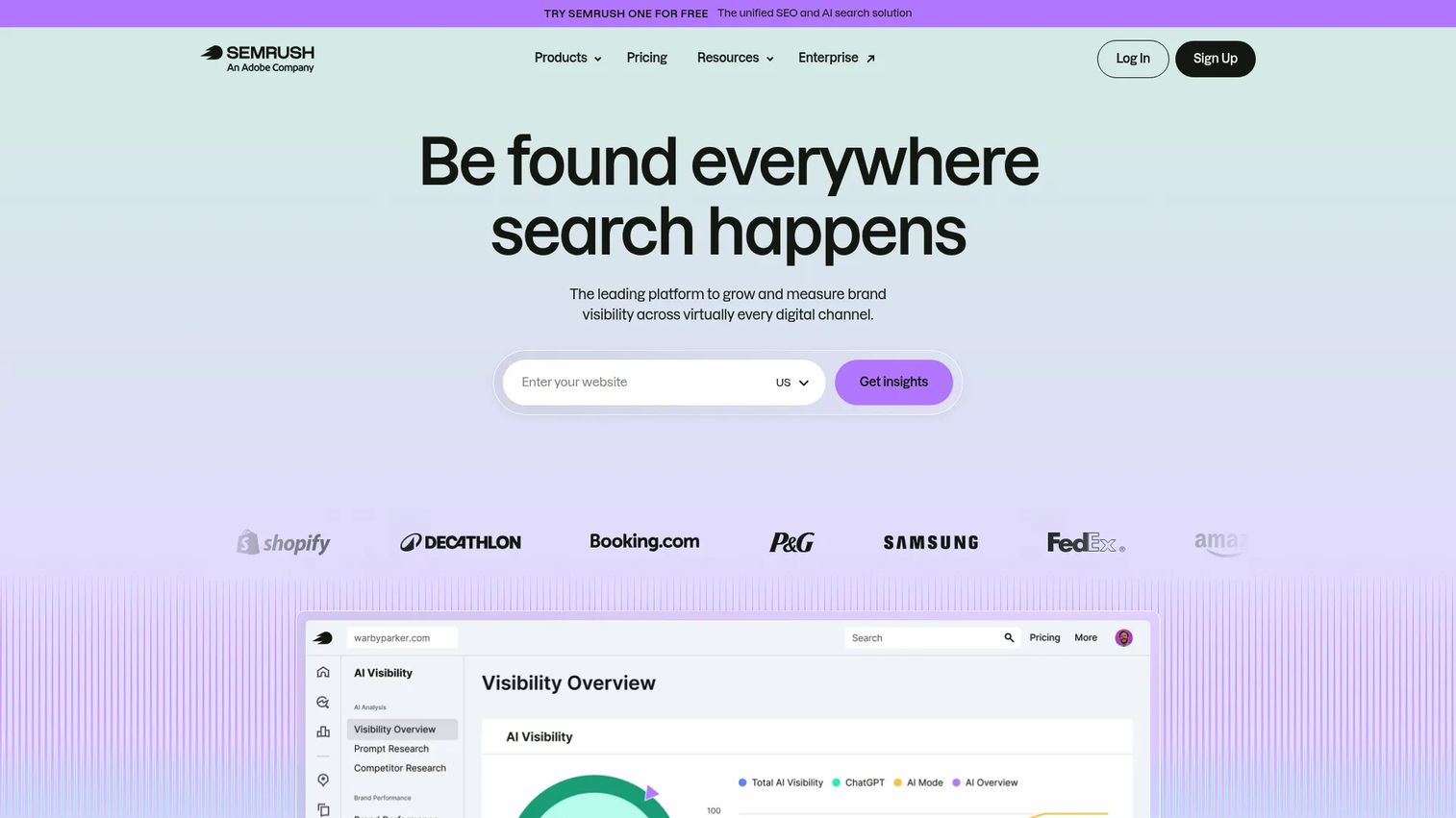
Semrush is the all-around pick for teams that want paid and organic search research in one workflow. Its Advertising Research shows competitor paid keywords, ad copy, and ad history, while the keyword gap tool surfaces terms rivals rank or bid on that you do not. For growth marketers comparing paid against organic opportunity on the same term, having both in one place removes a lot of tab-switching.
Best for: Growth teams and agencies that want a single suite for competitive paid search analysis alongside SEO.
Key strengths
- Advertising Research: View competitor paid keywords, estimated traffic, and ad copy in one report.
- Keyword gap: Compare your domain against competitors to find terms worth bidding on.
- Ad history: Track how a competitor's ad copy on a given keyword has changed over time.
Why choose Semrush: If your team is consolidating tools, Semrush covers a wide spread of search marketing intelligence without forcing a separate SEO subscription. It fits the mid-market growth marketer who owns both channels and needs defensible data for the same report. The breadth is the value here, you get competitor ad analysis and organic research under one login.
Semrush pricing: Plans start at $117.33/mo for Pro, $208.33/mo for Guru, and $416.66/mo for Business, all billed annually. A seven-day free trial is available. Semrush holds a 4.5/5 rating on G2.
3. SpyFu
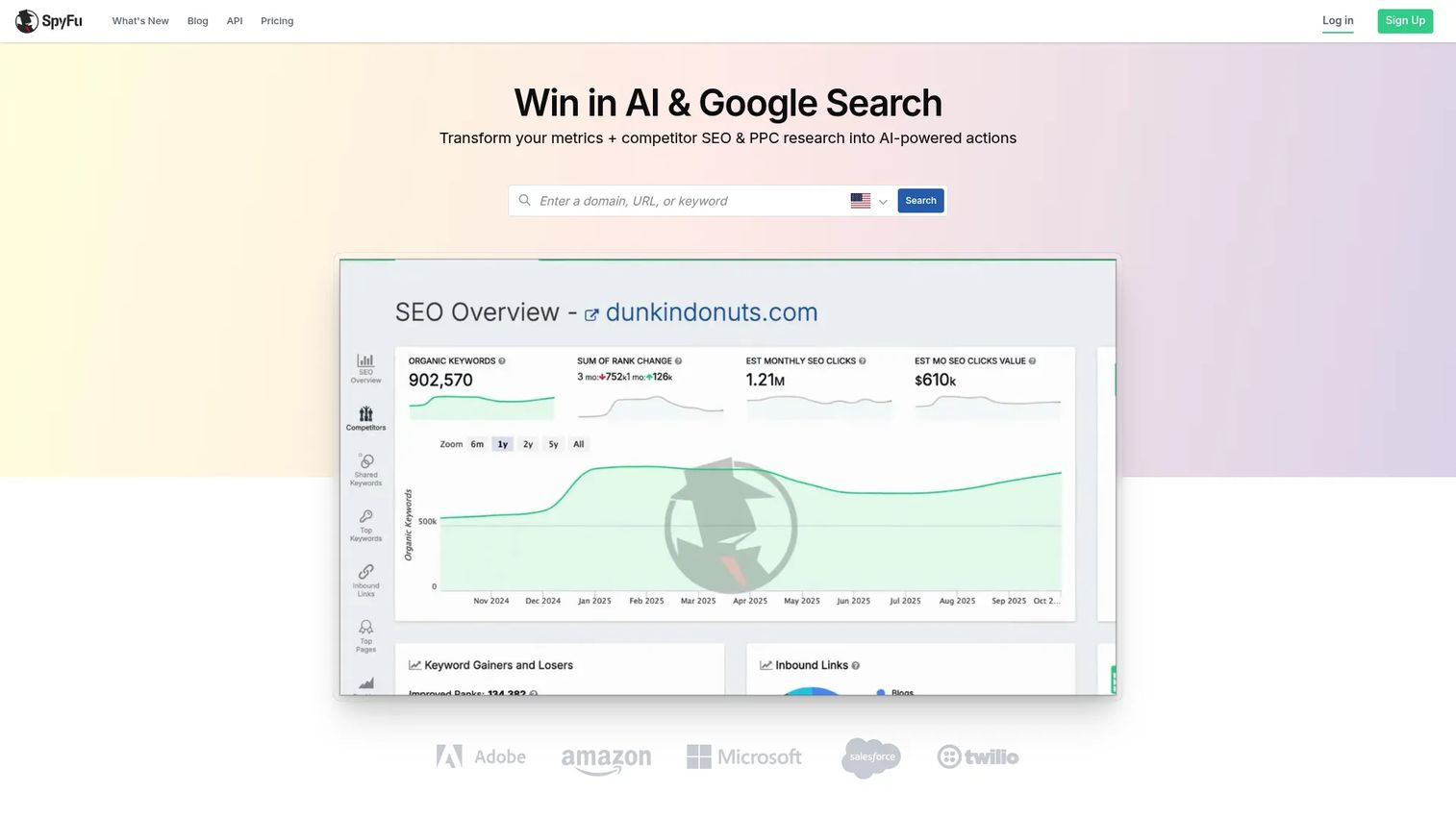
SpyFu is built for fast competitive snapshots. Type in a competitor's domain and you get their PPC keyword history, the ad variations they have run, and estimated ad budgets. For a marketer who needs a tactical read before a planning meeting, that speed matters. It is one of the more accessible paid search analysis tools for teams that do not need an enterprise contract.
Best for: SMB and mid-market teams that want quick, tactical competitor reads without heavy onboarding.
Key strengths
- Competitor keyword intelligence: See the paid and organic terms a rival domain targets.
- PPC and ad history: Review years of competitor ad copy and keyword changes.
- Budget estimation: Get directional estimates of competitor ad spend by keyword.
Why choose SpyFu: When you need a competitive picture in minutes, not a dashboard rollout, SpyFu delivers. Paid plans include unlimited search results, data exports, API access, and automated reports, which suits lean teams running competitor ad analysis on a budget. It is a practical PPC intelligence option that scales down to one or two marketers.
SpyFu pricing: Basic starts at $39/month, or $29/month billed annually. Pro + AI runs $89/month annually, and Team / Agency is $187/month annually. A free account is also offered. SpyFu carries a 4.6/5 rating on G2.
4. Similarweb
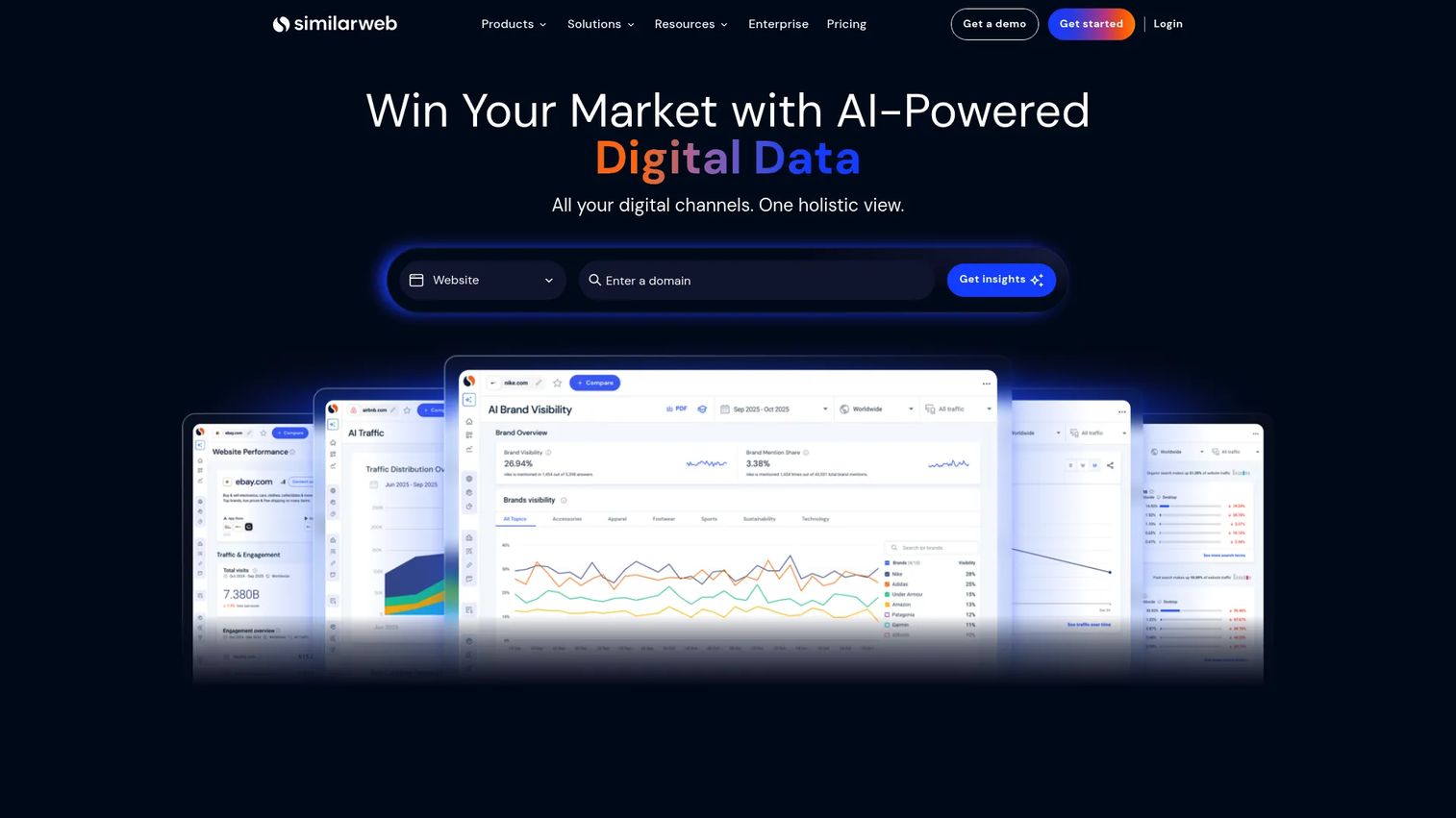
Similarweb is the right call when paid search has to be understood in the context of a competitor's entire traffic mix. It is a broader digital intelligence platform: traffic estimates, channel breakdowns, keyword analytics, and competitor discovery sit together. When you want to know not just what a rival bids on, but how much of their traffic paid search actually drives, Similarweb gives you that market-level view.
Best for: Teams doing market-level benchmarking who need paid search visibility inside a full traffic picture.
Key strengths
- Competitive insights: Compare traffic, channels, keywords, and conversions across competitor sites.
- Keyword analytics: Access search volume, clicks, SERP features, and country-level coverage.
- AI search visibility: Track brand visibility and chatbot traffic alongside traditional search.
Why choose Similarweb: It answers strategic questions a pure PPC tool cannot, like how dependent a competitor is on paid versus organic versus direct traffic. That context helps growth and leadership decide where to compete. It is broader than paid search alone, so it suits teams that want competitor tracking software covering the whole digital footprint.
Similarweb pricing: The Sales Intelligence Individual plan starts at $99 per month billed annually, or $129 month to month, with a free trial. Business and Enterprise plans use custom pricing. Similarweb spans multiple product lines, so confirm which fits your search use case.
5. Adthena
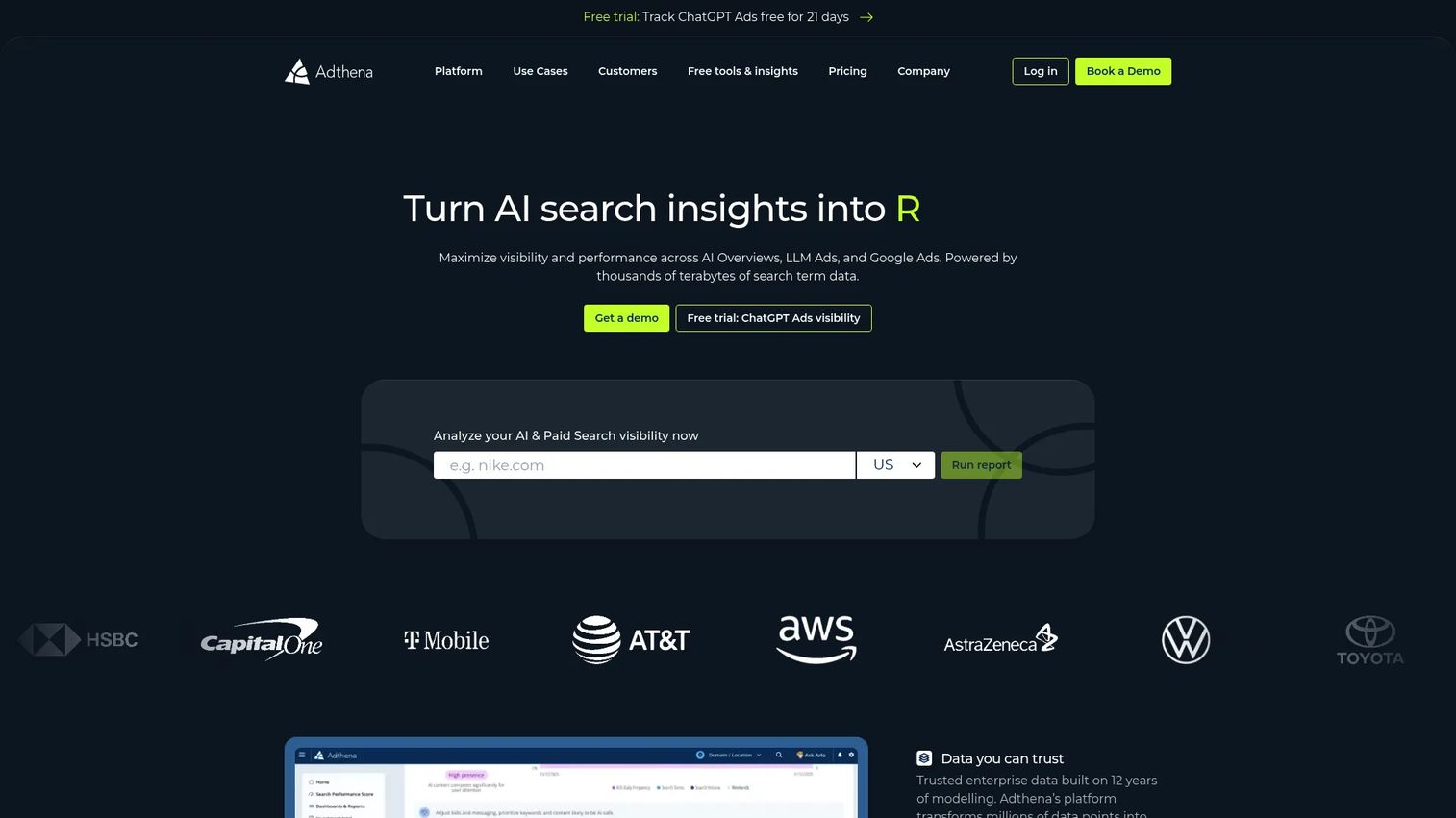
Adthena is an AI-driven search intelligence platform built for enterprise brands and agencies managing complex search landscapes. Its strength is continuous competitive monitoring across paid search, with market share visibility, brand protection, and alerting layered on top. For a large brand bidding across thousands of terms in multiple markets, Adthena turns a sprawling auction into a monitored, reportable system.
Best for: Enterprise brands and agencies that need continuous, AI-driven competitive monitoring at scale.
Key strengths
- Competitor monitoring: Track rival paid search activity across your full keyword universe.
- Brand protection: Monitor trademark bidding and unauthorized use of your brand terms.
- AI and LLM visibility: Track AI Overview and search visibility as those surfaces grow.
Why choose Adthena: The depth of reporting and market monitoring fits enterprise demand gen teams that need to defend competitive position in board-level conversations. Continuous tracking and alerting mean you catch impression-share shifts as they happen, not in a quarterly review. This is paid search intelligence built for scale and accountability.
Adthena pricing: Public self-serve products start at $350/mo for AI Overview Insights and $399/mo for ChatGPT Ads Intelligence. Brand Market View, Whole Market View, and Category Market View use custom annual pricing. Adthena does not offer a traditional free trial and holds a 4.4/5 rating on G2.
6. GrowByData Market Intelligence
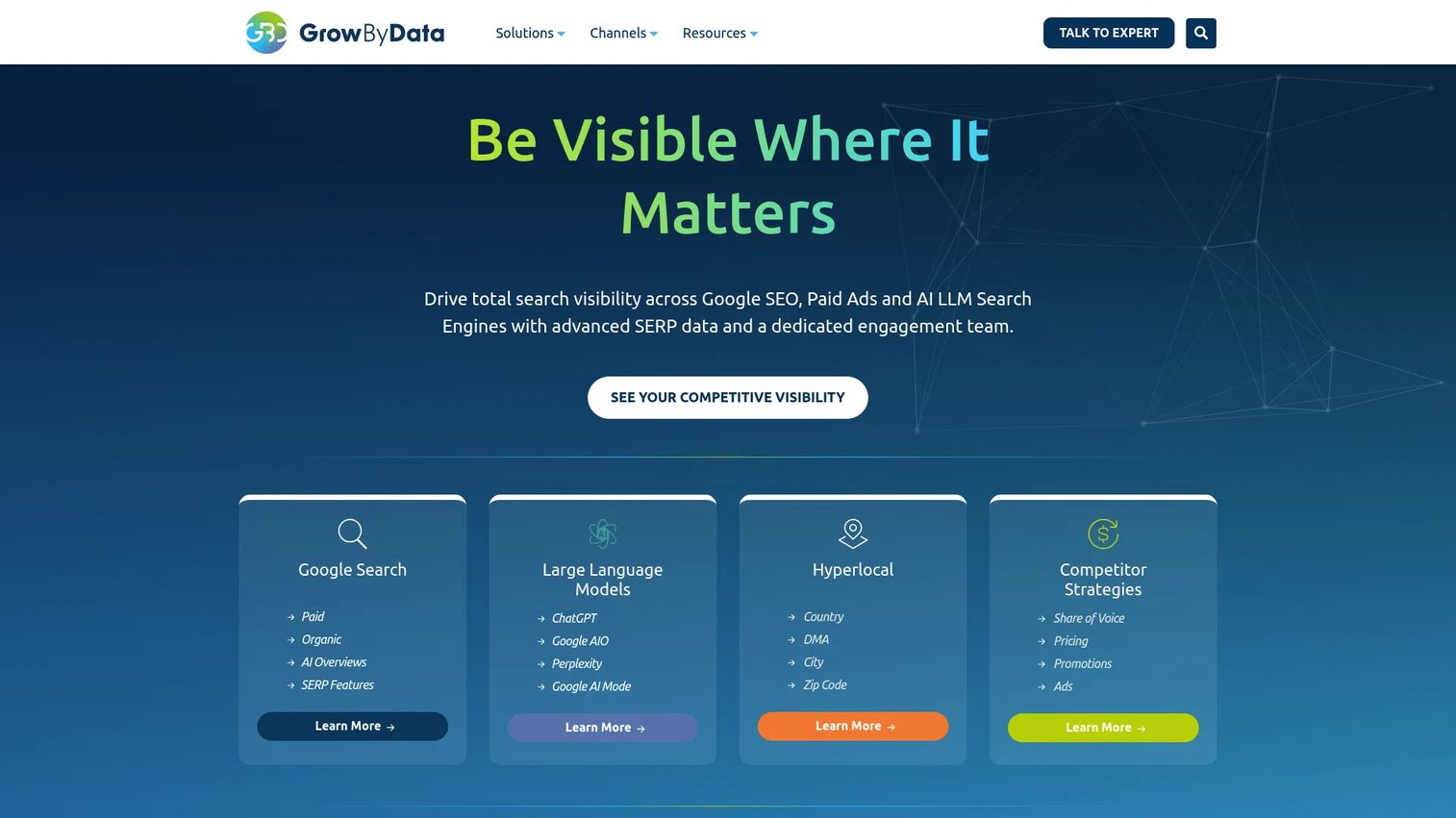
GrowByData Market Intelligence gives enterprise teams holistic visibility across paid, organic, and AI search, plus product and pricing intelligence. It is built for large ecommerce brands and agencies that need more than standard PPC reporting: SKU-level competitor price monitoring, SERP and AI visibility tracking, and marketplace and brand intelligence in one view. When your search picture spans shopping ads, marketplaces, and multiple markets, that breadth is the point.
Best for: Large ecommerce brands and agencies needing competitive pricing and search intelligence across markets.
Key strengths
- SKU-level price monitoring: Track competitor pricing down to individual products.
- SERP and AI visibility: Monitor how you and competitors appear across search and AI surfaces.
- Marketplace and brand intelligence: Cover product, brand, and marketplace data in one platform.
Why choose GrowByData Market Intelligence: For multi-market teams managing large product catalogs, it consolidates competitive pricing, search visibility, and brand monitoring that would otherwise live in separate tools. It suits enterprise organizations where paid search is one piece of a much larger competitive picture. The holistic coverage is what separates it from narrower PPC platforms.
GrowByData Market Intelligence pricing: GrowByData does not publish public pricing and directs prospects to contact sales or request a demo. It holds a 4.9/5 rating on G2.
7. Optmyzr
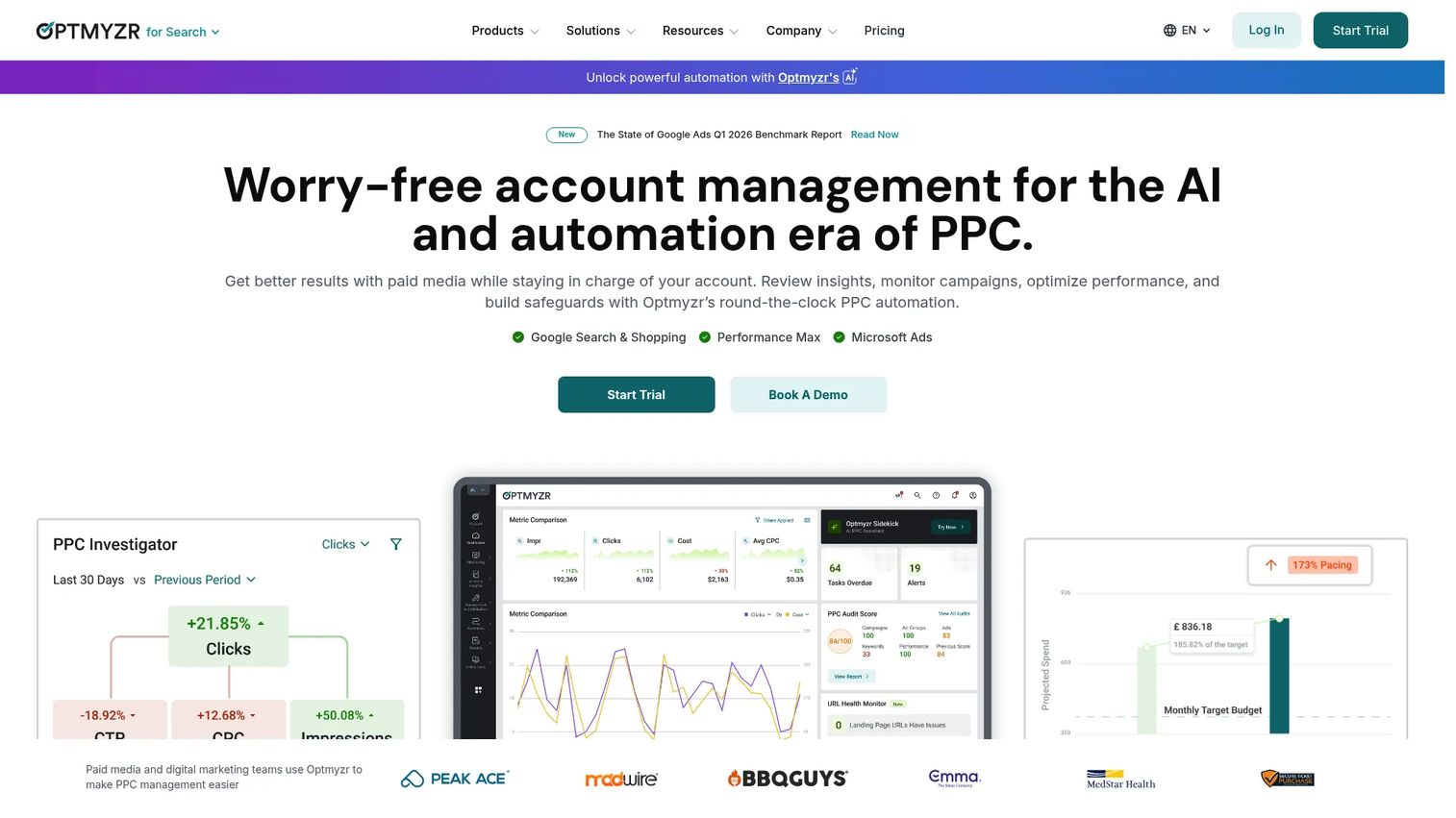
Optmyzr is execution-focused PPC management software that turns intelligence into action. It handles keyword, search query, and ad optimizations, plus budget monitoring, KPI alerts, and account audits across Google, Microsoft, Amazon, and social ads. Where pure intelligence platforms tell you what is happening, Optmyzr helps you do something about it faster. It pairs well with a competitive research tool that supplies the signal.
Best for: Agencies and in-house teams that want to act on paid search insights quickly across multiple ad platforms.
Key strengths
- Optimizations: Run keyword, search query, and ad optimizations across accounts.
- Budget and alerts: Monitor budgets, set KPI alerts, and run account audits.
- Cross-platform reporting: Manage and report across Google, Microsoft, Amazon, and social in one place.
Why choose Optmyzr: If your bottleneck is execution rather than visibility, Optmyzr closes the gap between insight and action. Its AI assistant and cross-platform reporting suit teams managing many accounts who need to scale optimization work. Pair it with a tool like Semrush or SpyFu for competitive reads, and use Optmyzr to act on them.
Optmyzr pricing: Optmyzr offers Essentials, Premium, and Enterprise plans, with Enterprise on custom pricing. Annual billing is described as 30% off monthly. Optmyzr holds a 4.7/5 rating on G2. Confirm current tier prices on its pricing page, as published numbers vary by package.
8. BrandVerity
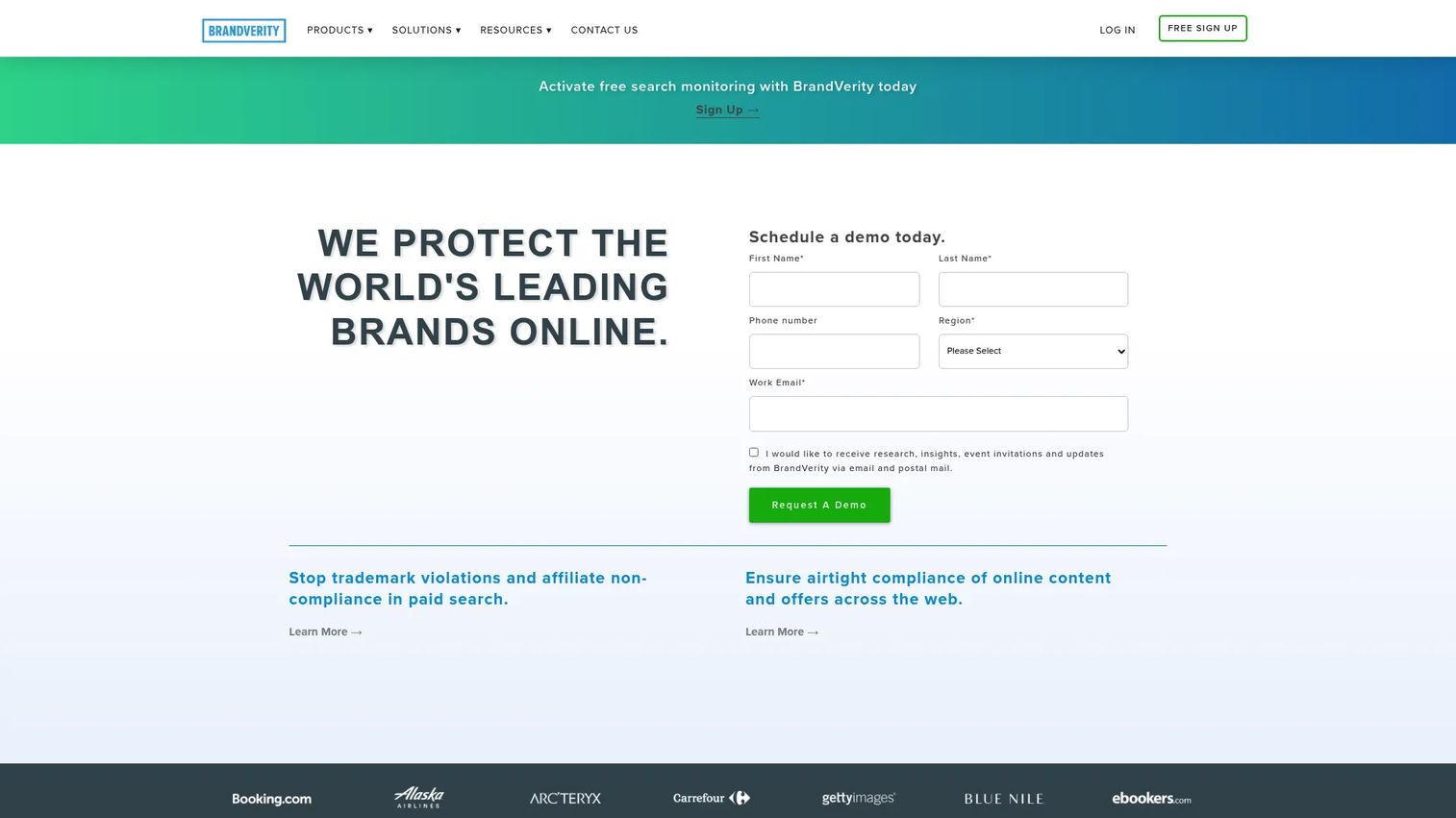
BrandVerity specializes in brand protection and paid search compliance. It monitors paid search across major engines for trademark bidding, affiliate violations, and unauthorized use of your branded terms, then helps you act with bulk takedown requests and pre-populated remediation emails. For teams managing affiliate and partner programs, this is the tool that stops cannibalization of your own branded traffic.
Best for: Brands and agencies that need paid search brand protection and affiliate compliance monitoring.
Key strengths
- Paid search monitoring: Detect trademark and brand-term bidding across major search engines.
- Web compliance monitoring: Crawl and analyze pages for affiliate and partner violations.
- Takedown workflows: Send bulk takedown requests with pre-populated remediation emails.
Why choose BrandVerity: It is narrower than broad intelligence suites by design. If your problem is partners and affiliates bidding on your brand terms or driving up your branded CPCs, BrandVerity is purpose-built for it. The compliance and takedown workflows save teams the manual policing that branded-term protection otherwise demands.
BrandVerity pricing: BrandVerity lists Professional, Premium, and Enterprise plans without public numeric prices, and includes a freemium option for paid search monitoring. It holds a 4.4/5 rating on G2, so request a quote to match a plan to your program size.
9. Adalysis
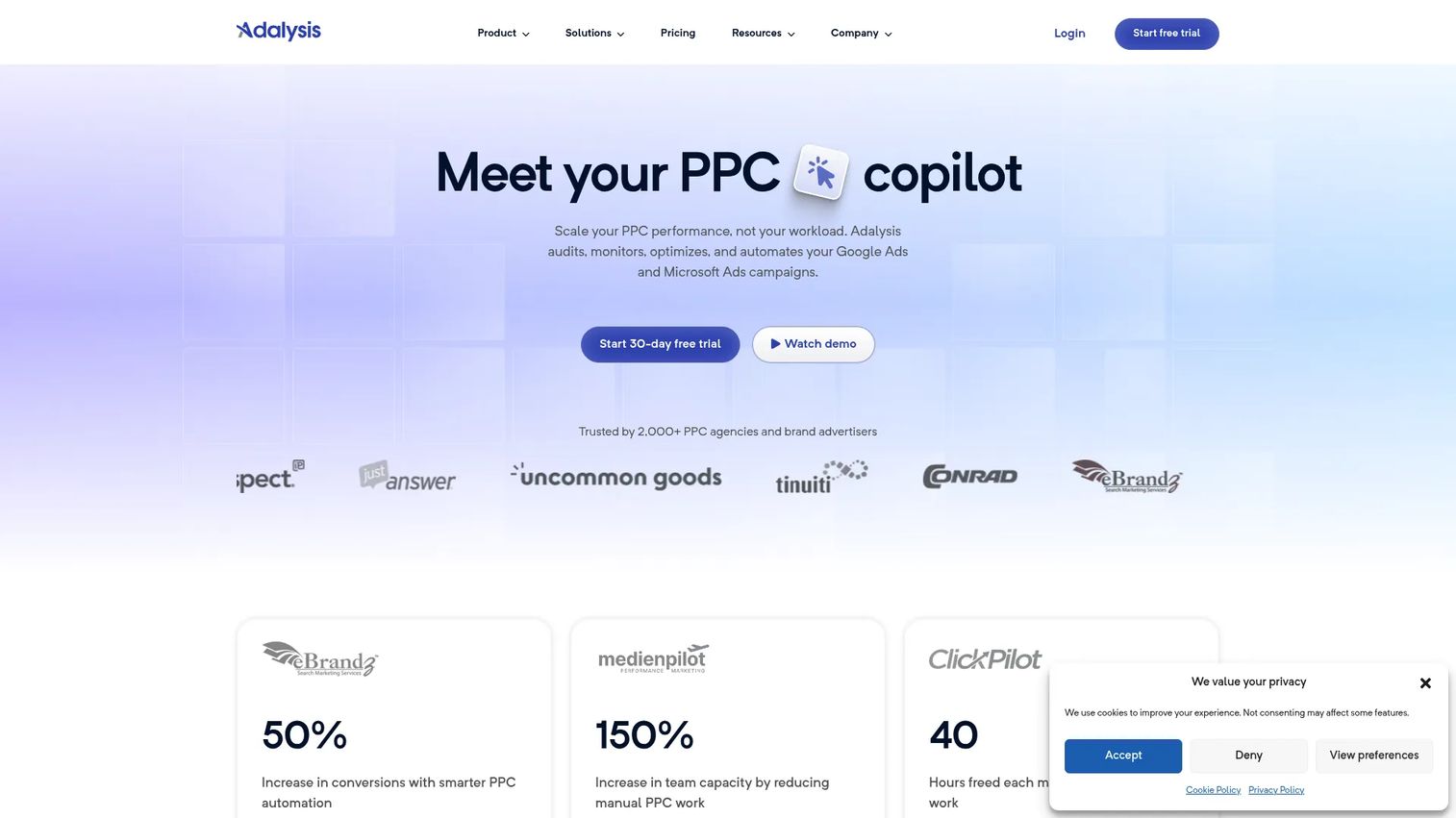
Adalysis is optimization-first PPC management for Google Ads and Microsoft Ads. It runs over 100 audit checks, custom alerts, ad testing, quality score analysis, and budget projections, giving account managers a continuous read on account health. Where competitive tools watch rivals, Adalysis watches your own account and tells you exactly what to fix.
Best for: In-house teams and account managers who want ongoing audits, ad testing, and budget management.
Key strengths
- Audits and alerts: Run 100+ audit checks with custom alerts on account health.
- Budget management: Track spend, build projections, and automate daily budgets.
- Ad testing: Manage ad testing, quality score analysis, and RSA assets.
Why choose Adalysis: It is built for teams that want disciplined, ongoing paid search analysis rather than one-off competitor snapshots. The audit and testing workflows keep accounts clean and improving over time. Position it as the optimization layer that complements a competitive intelligence tool feeding you market context.
Adalysis pricing: Adalysis uses a single plan priced by maximum monthly ad spend, with monthly, six-month (10% off), and annual (15% off) billing options in USD and EUR. There is no free tier. G2 reviewers rate it 4.8/5. Check the pricing page to match a tier to your spend level.
Considerations before you buy
Match the tool to your search maturity
Be honest about where your team sits. Early-stage teams may only need first-party Google Ads data plus a budget-friendly competitive snapshot. Mid-market teams usually want a suite that ties paid and organic together. Enterprise teams managing multi-market campaigns need continuous monitoring and custom reporting. Buying enterprise intelligence when you need account-level optimization, or vice versa, wastes budget.
Check coverage across engines and formats
Confirm the platform covers the search mix that actually matters to you: Google, Bing, Amazon, shopping, video, and local formats where relevant. A tool strong on Google but blind to Amazon advertising leaves a gap if marketplace search drives your revenue. Match the coverage to your channel reality, not to a feature list.
Confirm alerting and historical depth
One-off screenshots and isolated reports go stale fast. The value of a paid search intelligence platform is in change tracking: alerts when impression share shifts, history showing how a competitor's ad copy evolved, trend lines you can act on. Verify the alerting is configurable and the historical data goes back far enough to be useful.
Evaluate reporting and export quality
The goal is data leadership trusts, not more dashboards no one reads. Check how cleanly the tool exports, whether reports map to the metrics your CFO cares about, and whether the numbers reconcile with your other platforms. Reporting that does not match your CRM or analytics stack creates arguments, not decisions.
Look at integration and workflow fit
Confirm the tool plugs into the CRM, analytics, and reporting stack your growth team already uses. A standalone tool that nobody checks adds tool sprawl. The best fit reduces manual reporting work and feeds signal into systems you already live in.
Conclusion
The right paid search intelligence software depends on where your team sits and what you need to prove. Start with Google Ads for first-party auction data, then layer on the tool that matches your maturity. Semrush is the strongest all-around suite for teams blending paid and organic research. SpyFu wins on fast, budget-friendly competitor snapshots. Similarweb gives you the multi-channel traffic context. For enterprise scale, Adthena and GrowByData Market Intelligence handle complex, multi-market monitoring. And when execution is the bottleneck, Optmyzr and Adalysis turn analysis into action, while BrandVerity protects your branded terms.
The decision rule is simple: choose the tool that matches your search maturity and reporting needs, not the one with the longest feature list. Audit what your stack already covers, identify the gap, and start with the platform that closes it. If you are early, begin with baseline search visibility. If you are scaling across markets, lead with enterprise monitoring.
While you are tightening the rest of your go-to-market stack, Start your journey with Guideflow today!
FAQs
Paid search intelligence software monitors competitors' paid search activity, tracks keyword and bidding trends, and helps teams optimize PPC spend with competitive context. It shows what rivals advertise on, how their ad copy and landing pages change, and where auction gaps create opportunity. Think of it as the layer that watches the auction so you act before your CAC climbs.
SEO tools focus on organic rankings, content, and backlinks. Paid search intelligence focuses on the ad auction: competitor bids, ad copy, paid keyword history, and impression share. Many suites like Semrush cover both, but the paid search side answers a different question, what competitors are spending to win clicks, not how they rank for free.
Most track competitor ad copy and creative, paid keyword targeting, ad history over time, estimated budgets, landing page and destination URLs, impression share, and SERP features. Enterprise platforms add market share, brand-term monitoring, and AI search visibility. The depth of historical tracking and alerting is usually what separates tiers.
Growth and demand gen teams under CAC pressure, paid media specialists managing large accounts, and agencies running campaigns for multiple clients get the most value. Enterprise brands bidding across many markets need continuous monitoring. Teams protecting branded terms from affiliates benefit from compliance-focused tools like BrandVerity.
Yes. By showing which keywords competitors bid on aggressively, which they abandon, and how impression share moves, these tools help you reallocate budget toward higher-ROAS terms. Optimization platforms like Optmyzr and Adalysis go further, automating bid and budget adjustments based on performance and KPI alerts.
Coverage varies. Google is universal. Bing (Microsoft Ads) is common in optimization tools like Optmyzr and Adalysis. Amazon advertising intelligence shows up in cross-platform managers and ecommerce-focused platforms like GrowByData Market Intelligence. Always confirm the specific engine coverage matches your channel mix before buying.
For active accounts, set automated alerts for real-time impression-share shifts and review trends weekly. Monthly is too slow to catch fast-moving ad copy or new offers before they affect your CPCs. The point of these tools is to replace periodic manual checks with continuous monitoring, so let the alerts drive the cadence.
Match the tool to your search maturity, confirm engine and format coverage, verify alerting and historical depth, check export and reporting quality against your existing stack, and confirm integrations with your CRM and analytics. The best choice reduces manual reporting work and feeds defensible data into systems your team already uses.