

You can measure paid performance down to the penny. Brand perception? That's still a spreadsheet and a prayer.
You're spending on content, PR, sponsorships, and social. Leadership asks "is our brand growing?" and you're stitching together social mentions, survey data, and gut instinct into a slide deck that convinces no one. The problem isn't effort. It's that brand perception lives outside your analytics stack, and most marketing teams don't have the instrumentation to track it.
Brand intelligence software closes that gap. It turns how people feel about your brand into measurable, trackable data, the same way Google Analytics measures traffic or your CRM measures pipeline. The brand tracking software market sits at roughly $5 billion in 2025, growing at about 15% CAGR through 2033 (Data Insights Market, 2025). That growth reflects a shift: marketers are done treating brand as the one channel they can't quantify.
This guide evaluates 12 brand intelligence software tools on data sources, setup speed, stack integration, pricing transparency, and G2 ratings. One important distinction before we start: this list focuses on tools for marketers measuring brand perception, not enterprise brand protection or cybersecurity platforms. If you're searching for anti-counterfeiting or phishing detection, you're in the wrong place. If you're trying to prove that your brand campaigns actually moved the needle, keep reading. For a broader view of tools that help you understand your market landscape, see our guide to the best competitive intelligence tools.
What's inside
This guide covers 12 brand intelligence platforms suited for digital and growth marketers in 2026. Each tool is evaluated on core capabilities, pricing, ideal use case, and honest limitations.
You'll find a side-by-side comparison table, situational guidance on when brand intelligence software is (and isn't) the right investment, and a buyer's checklist to help you shortlist faster. Tools were selected based on feature set, user reviews (G2 ratings), pricing accessibility, and relevance to marketing teams, not security or legal use cases.
TL;DR
- Brand intelligence software measures awareness, sentiment, consideration, and competitive positioning, turning perception into data you can act on.
- Two main approaches exist: survey-based tools (Attest, Latana, Qualtrics, Tracksuit) give direct consumer data; social listening tools (Brandwatch, Meltwater, YouScan, Brand24) track real-time online conversation. Hybrid platforms combine both.
- Pricing ranges from $49/month (Brand24) to custom enterprise contracts ($50K+/year for Qualtrics, Brandwatch).
- For growth marketers at SaaS companies: start with a tool that integrates with your existing analytics stack and delivers data you can act on within your first campaign cycle. If you're looking for more tools to power your growth stack, check out the best growth marketing tools.
- Most teams end up combining a brand tracker with a social listening tool. Budget accordingly.
What is brand intelligence software?
Brand intelligence software is a category of marketing technology that collects, analyzes, and reports data about how a brand is perceived by its target audience and the broader market. It tracks metrics like brand awareness, sentiment, share of voice, consideration, and competitive positioning over time. You might also hear it called brand analytics software. The tools differ in methodology, but the goal is the same: make brand perception measurable.
Core capabilities typically include:
- Brand tracking: Ongoing measurement of awareness, favorability, and consideration among target demographics
- Sentiment analysis: AI-powered analysis of how people feel about a brand across social, review, and media channels. For a deeper explanation, see this guide on sentiment analysis.
- Social listening: Real-time monitoring of brand mentions, conversations, and trends across social platforms, forums, and news
- Competitive benchmarking: Side-by-side comparison of brand metrics against named competitors
- Audience insights: Demographic and psychographic profiling of who engages with and perceives the brand
- Reporting and dashboards: Visual dashboards that translate raw data into actionable brand health metrics
One distinction worth flagging: brand intelligence is not brand protection. Brand protection software (Cyble, Red Points, ZeroFOX) focuses on counterfeit detection, phishing, and trademark infringement. Brand intelligence focuses on perception, awareness, and market positioning. If you're a marketer measuring brand health, you need brand intelligence. If you're a security team monitoring for fraud, you need brand protection. The SERP conflates these categories. Don't let it confuse your buying decision. For a related category focused on broader market intelligence software, we have a separate guide.
When to use brand intelligence software
Measuring brand campaign impact
You're investing in awareness campaigns (content, PR, sponsorships, social) and need to prove ROI beyond impressions and clicks. Brand intelligence software gives you pre/post campaign perception data so you can show leadership what actually changed in the minds of your target audience.
Entering a new market or launching a new product
You need baseline brand awareness and consideration data before you spend. Brand tracking tools let you measure how perception shifts as you ramp investment, so you're not flying blind with a six-figure budget.
Competitive repositioning
A competitor is gaining share of voice or shifting perception in your category. You need real-time data on how your brand stacks up, not quarterly reports that arrive after the damage is done.
Justifying brand spend to leadership
Your CFO wants numbers, not vibes. Brand intelligence tools translate perception into dashboards that map to pipeline and revenue conversations. This is how you defend your brand budget in a board meeting. Pairing brand data with marketing analytics software makes that case even stronger.
When NOT to use brand intelligence software
If your brand is pre-product-market-fit with fewer than 1,000 customers, most brand tracking tools won't have enough signal to be useful. Start with qualitative research: customer interviews, win/loss analysis, and basic surveys via Typeform or Google Forms. Revisit brand intelligence once you have meaningful market presence. Spending $600/month on a brand tracker when you have 200 customers is a poor use of budget.
Brand intelligence software comparison table
The table below organizes each brand intelligence platform by its primary approach to data collection. Pricing reflects 2026 published rates or estimates where public pricing isn't available. G2 ratings were verified as of early 2026.
12 best brand intelligence software tools reviewed
1. Brandwatch
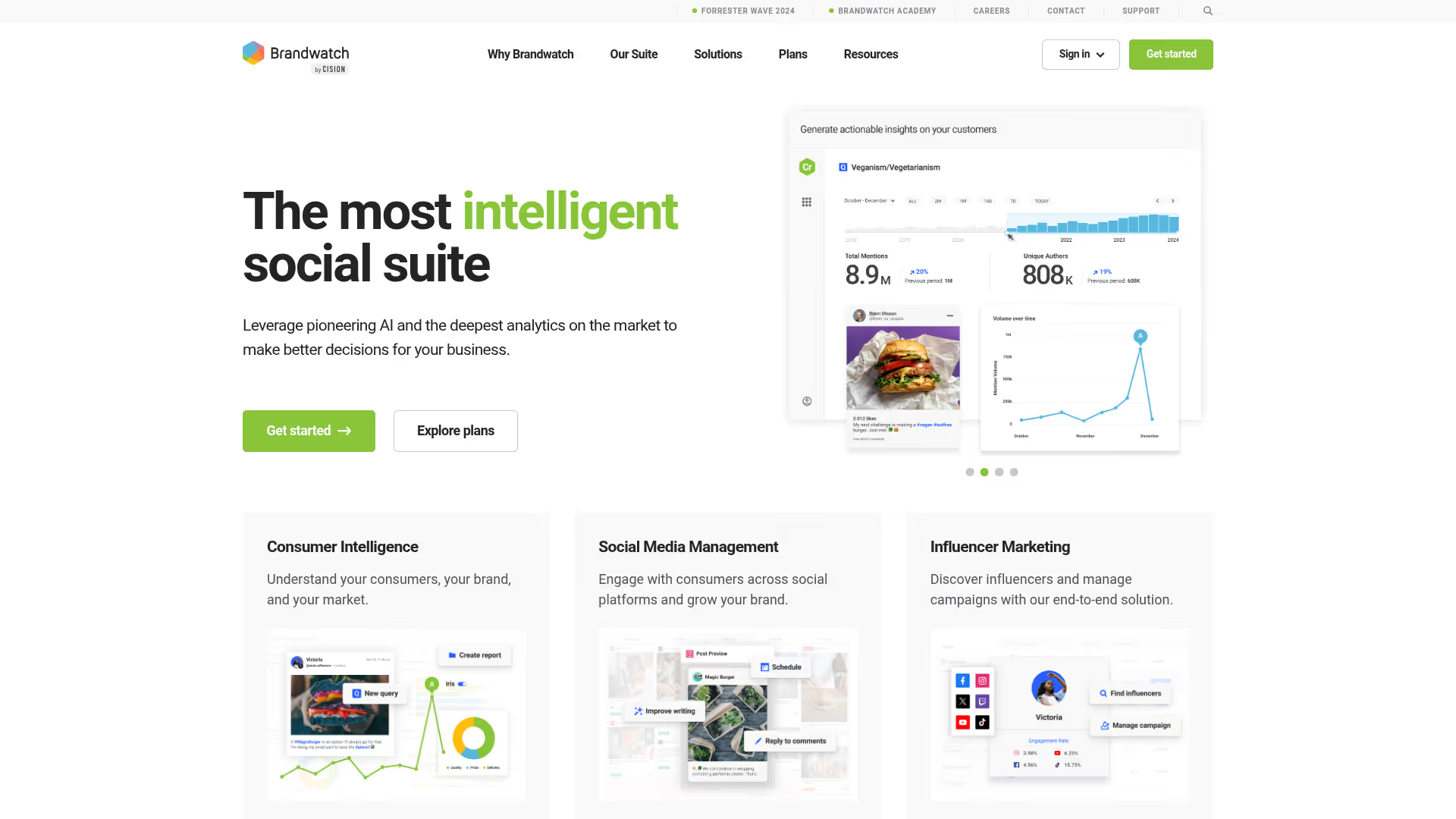
Brandwatch is the deepest social listening and consumer intelligence platform in this category, built for mid-market and enterprise marketing teams that need to track brand perception across massive data sets.
The core differentiator is scale. Brandwatch indexes 1.7 trillion+ historical social conversations and pulls from 100M+ online sources. That depth matters when you're tracking sentiment shifts, competitive benchmarking, or emerging trends in your category. The AI-powered analysis covers sentiment, emotion, and topic clustering, giving you more than just mention counts.
Best for: Marketing teams at companies with 500+ employees that need social listening combined with consumer research at scale.
Key strengths
- 1.7 trillion+ historical conversations indexed across social, news, and forums
- AI-powered sentiment, emotion, and trend analysis
- Competitive benchmarking across social, news, and review sites
- Custom dashboards with real-time alerting
- Consumer research panels for survey-based insights alongside social data
Honest limitation: Pricing is enterprise-level and opaque. Expect a multi-week sales process. The learning curve is steep for smaller teams, and if you only need basic social monitoring, Brandwatch is overkill. Early adopters of AI-powered brand monitoring report 35% faster response to reputation incidents (Intel Market Research, 2025), but you need the team capacity to act on those insights.
Pricing: Custom (estimated $800+/month).
2. Attest
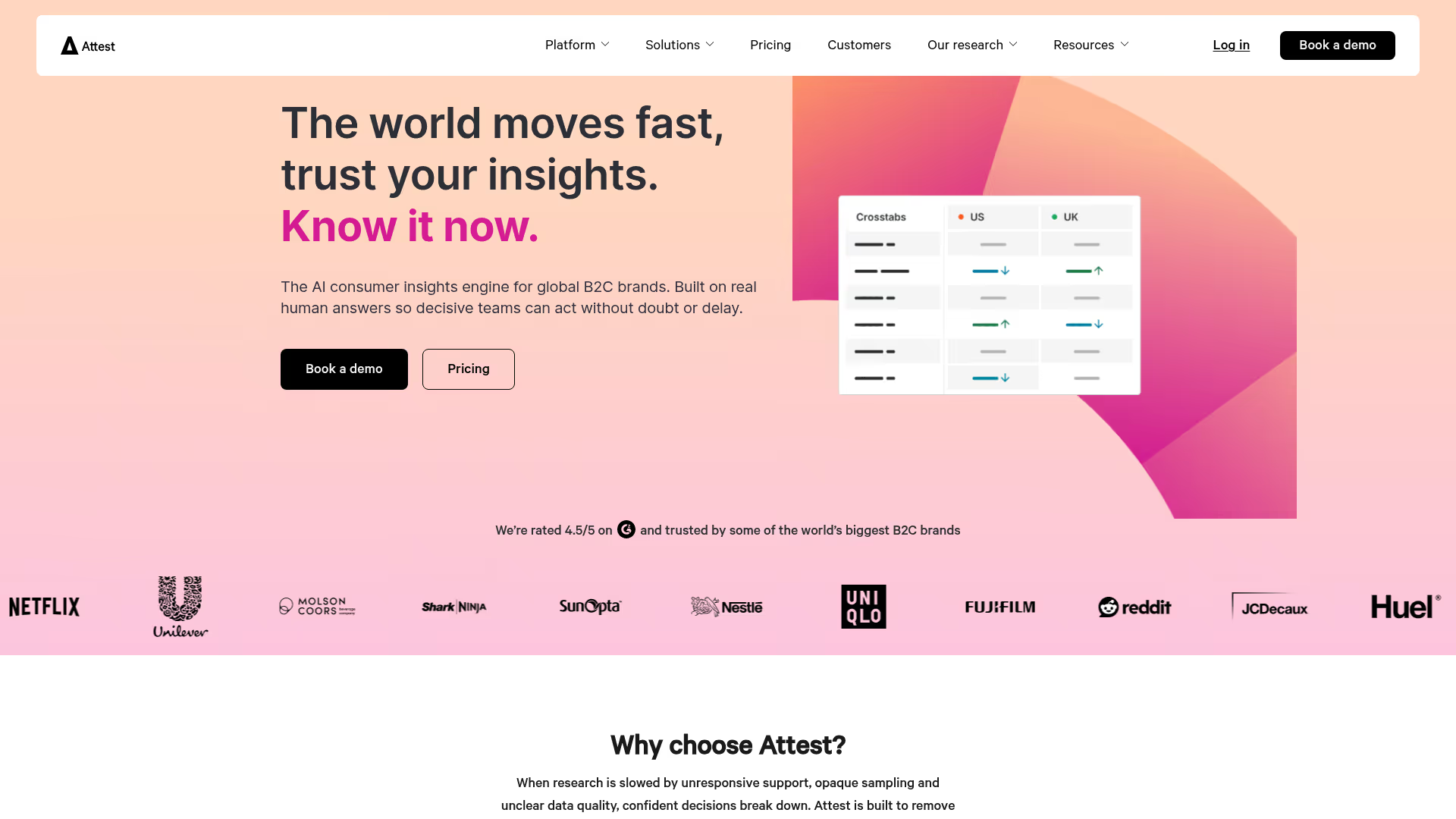
Attest is a survey-based consumer research platform purpose-built for brand tracking. Instead of inferring sentiment from social data, you're getting direct answers from real consumers.
The platform gives you access to 125M+ consumer respondents across 59 markets with results in hours, not weeks. That speed matters when you're running pre/post campaign measurement and can't wait for a traditional research agency timeline.
Best for: Growth marketers who want direct consumer feedback on brand awareness, consideration, and preference rather than social-only signals.
Key strengths
- Access to 125M+ consumer respondents across 59 markets
- Results delivered in hours, not weeks
- Pre-built brand tracking survey templates
- Demographic and audience filtering for targeted insights
- Intuitive dashboard for non-researchers
Honest limitation: Survey-based data requires careful question design to avoid bias. Attest doesn't capture organic social conversation, so you're missing the "what people say when they're not being asked" layer. Per-response pricing can scale quickly for large sample sizes or frequent tracking waves.
Pricing: From $0.50/response.
3. Meltwater
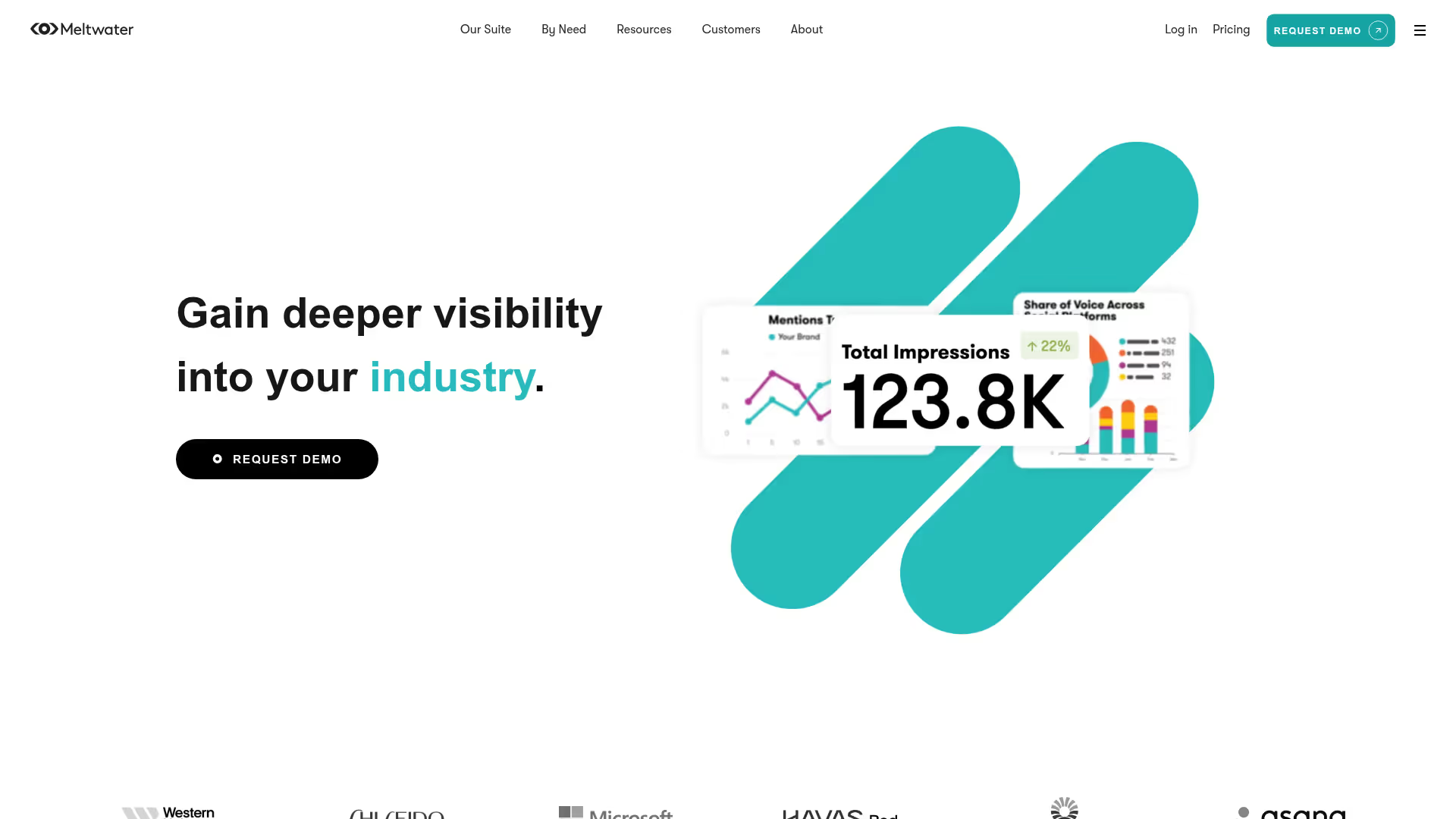
Meltwater is the media intelligence and social listening platform with deep PR monitoring roots. It's the natural fit for marketing teams where brand intelligence needs overlap with earned media measurement. If PR is a core part of your brand strategy, also explore the best PR software for complementary tools.
Meltwater combines media monitoring (news, print, broadcast) with social listening across 190+ countries. The API access for custom integrations is a plus for teams that want brand data flowing into existing dashboards and reporting workflows.
Best for: Marketing and comms teams that need brand perception data alongside PR and earned media measurement in a single platform.
Key strengths
- Combined media monitoring across news, print, broadcast, and social
- Global coverage across 190+ countries and regions
- API access for custom integrations with existing tools
- Influencer identification and relationship management
- Competitive intelligence and share of voice tracking
Honest limitation: The interface can feel dated compared to newer tools like YouScan or Tracksuit. Pricing is opaque and contract-heavy, typically requiring annual commitments. Social listening depth is less specialized than Brandwatch or YouScan for pure social analysis.
Pricing: Custom pricing (annual contracts typical).
4. Latana
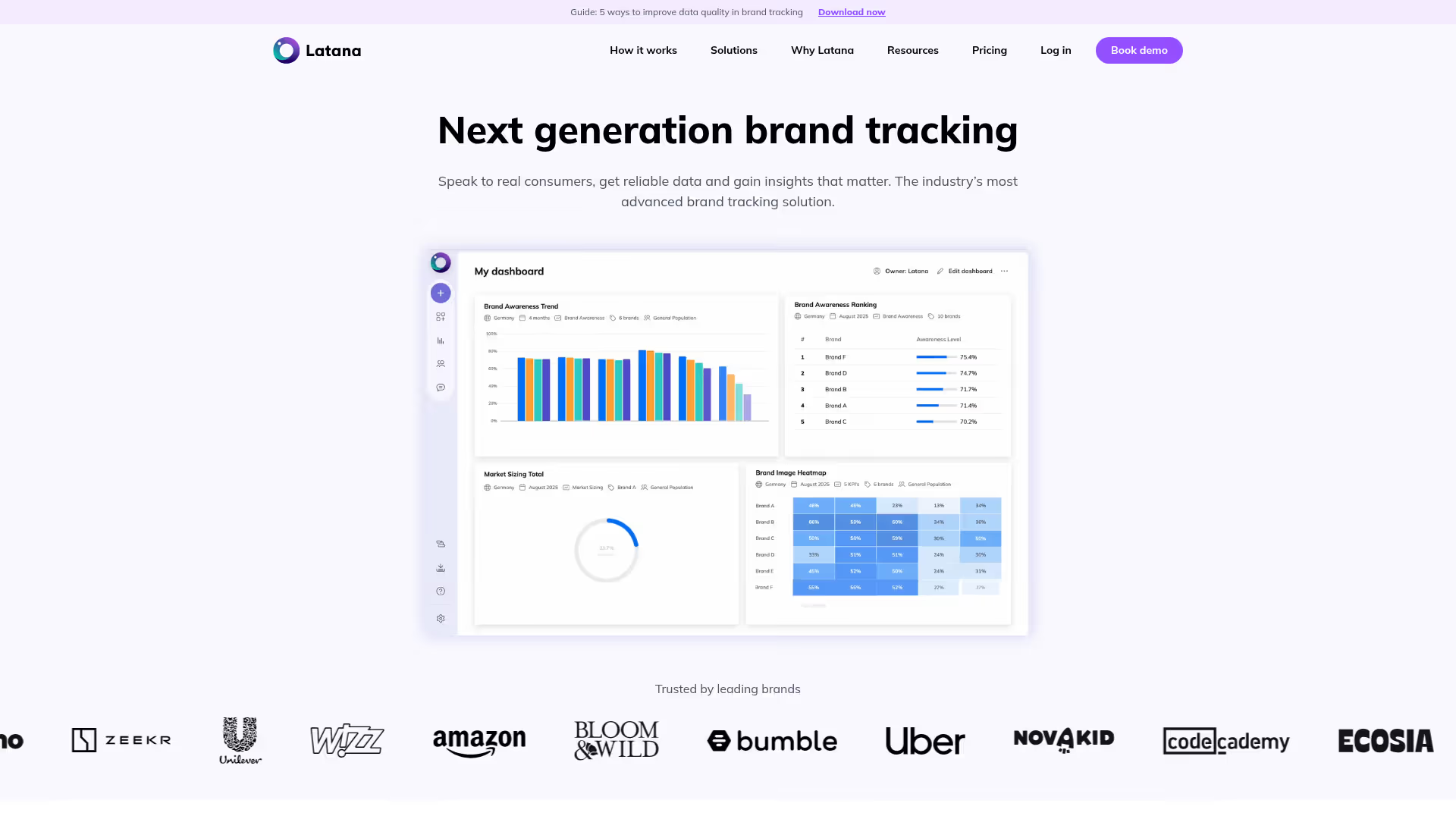
Latana is an AI-powered brand tracking platform designed specifically for marketers, not researchers. It delivers always-on brand awareness and consideration data segmented by audience.
The concrete differentiator is methodology. Latana uses MRP (multilevel regression with post-stratification) to produce statistically reliable results from smaller sample sizes. That means you get audience-segmented brand data (by demographics, interests, behaviors) without the massive sample costs of traditional research.
Best for: Brand and growth marketers who want ongoing, audience-segmented brand tracking data they can act on without a research team.
Key strengths
- MRP methodology for reliable data from smaller samples
- Audience segmentation by demographics, interests, and behaviors
- Marketer-friendly dashboards (not built for researchers)
- Competitive brand tracking included by default
- Always-on data collection, not point-in-time surveys
Honest limitation: Survey-based only, with no social listening component. You'll need a separate tool for real-time social monitoring. Custom pricing means you can't self-serve a quick test, and the platform delivers the most value at scale with multiple markets tracked.
Pricing: Custom pricing.
5. Qualtrics XM
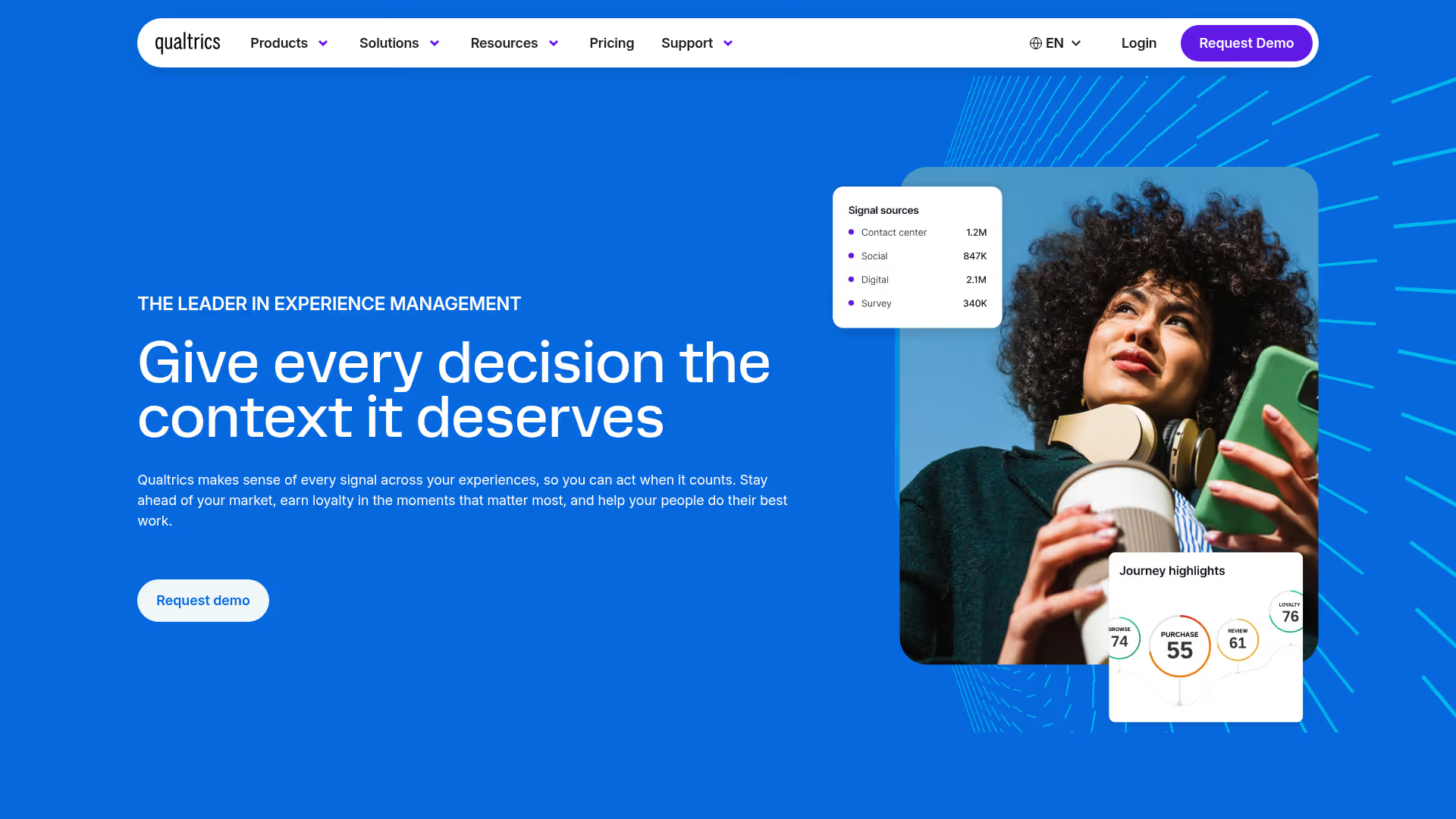
Qualtrics is the enterprise experience management platform with a robust brand tracking module. It's the tool you choose when research-grade methodology and advanced statistical analysis are non-negotiable.
The platform integrates with CRM and marketing automation platforms (Salesforce, HubSpot, Marketo), which means brand perception data can flow into the same reporting stack your team already uses. Advanced analytics include conjoint analysis, MaxDiff, and custom statistical modeling. If you're evaluating CRM options to pair with your brand intelligence stack, see our roundup of the best CRM software.
Best for: Enterprise marketing and insights teams (1,000+ employees) that need research-grade brand measurement and have the expertise to configure it.
Key strengths
- Research-grade survey methodology and statistical analysis
- Integration with Salesforce, HubSpot, and marketing automation platforms
- Advanced analytics including conjoint and MaxDiff
- Global panel access for multi-market brand tracking
- Customizable dashboards with role-based access
Honest limitation: Expensive and complex. Qualtrics requires research expertise to configure properly, and implementation cycles often stretch to months. If your team just wants a brand health dashboard without a dedicated insights analyst, this is overkill. The pricing reflects enterprise positioning: expect $1,500+/month at minimum.
Pricing: Custom (estimated $1,500+/month).
6. Brand24
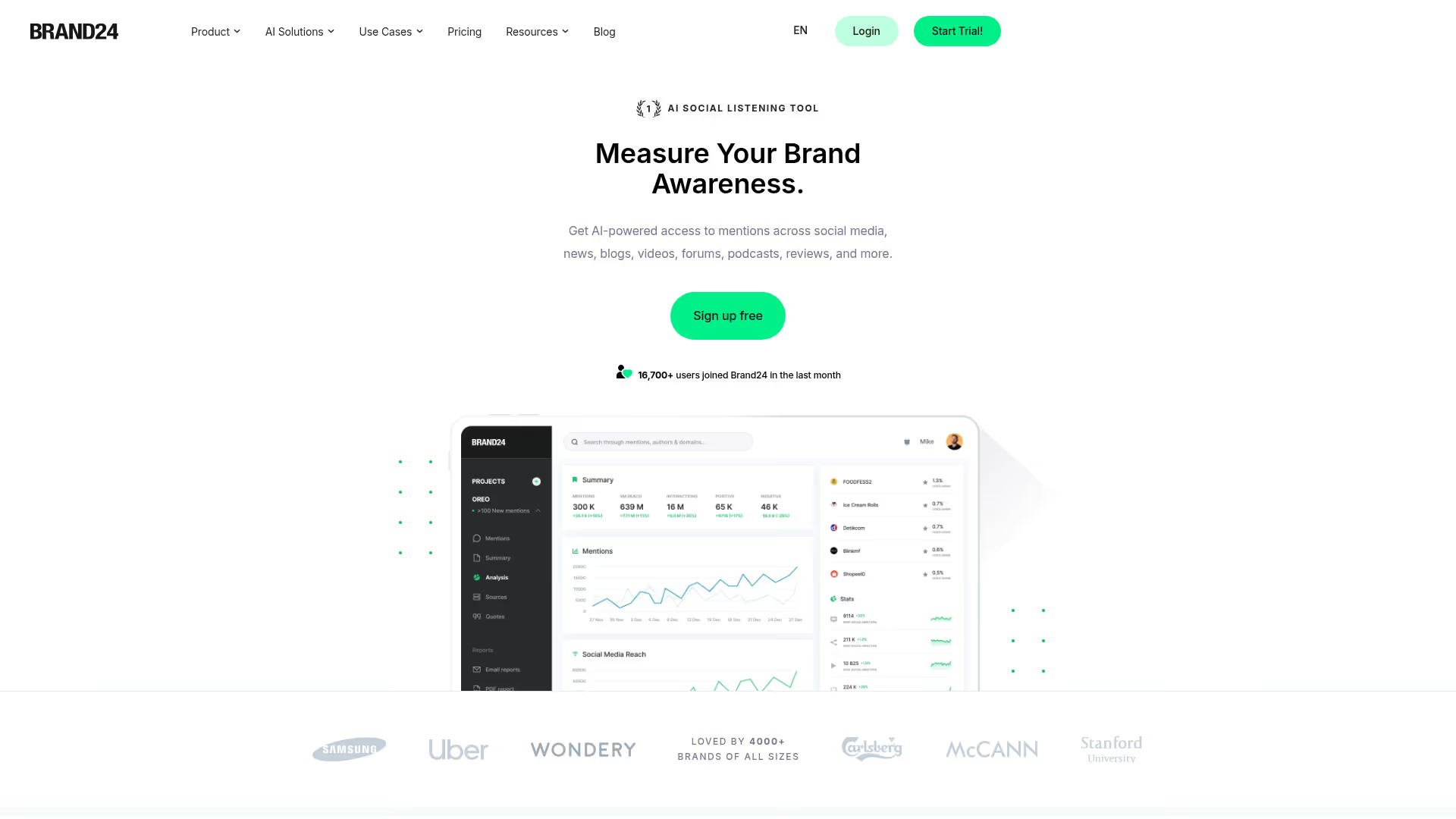
Brand24 is the most accessible entry point for social brand monitoring. It's the most affordable brand software on this list, and it delivers real-time social listening and sentiment analysis without enterprise pricing.
The platform monitors social media, news, blogs, forums, podcasts, and reviews. You get sentiment scoring, share of voice tracking, and influencer identification starting at $49/month with transparent pricing on the website.
Best for: Small marketing teams and startups that need social listening and sentiment analysis without committing to enterprise contracts.
Key strengths
- Real-time monitoring across social, news, blogs, forums, and podcasts
- Transparent pricing starting at $49/month
- Sentiment scoring with AI-powered analysis
- Share of voice tracking against competitors
- Influencer identification and reach scoring
Honest limitation: Brand24 is not a brand tracking tool in the survey sense. It won't give you awareness, consideration, or preference data from consumers. It's social data only, and the analytics depth is limited compared to Brandwatch or Talkwalker. For teams that need both social monitoring and brand tracking, Brand24 covers one half.
Pricing: From $49/month.
7. Talkwalker
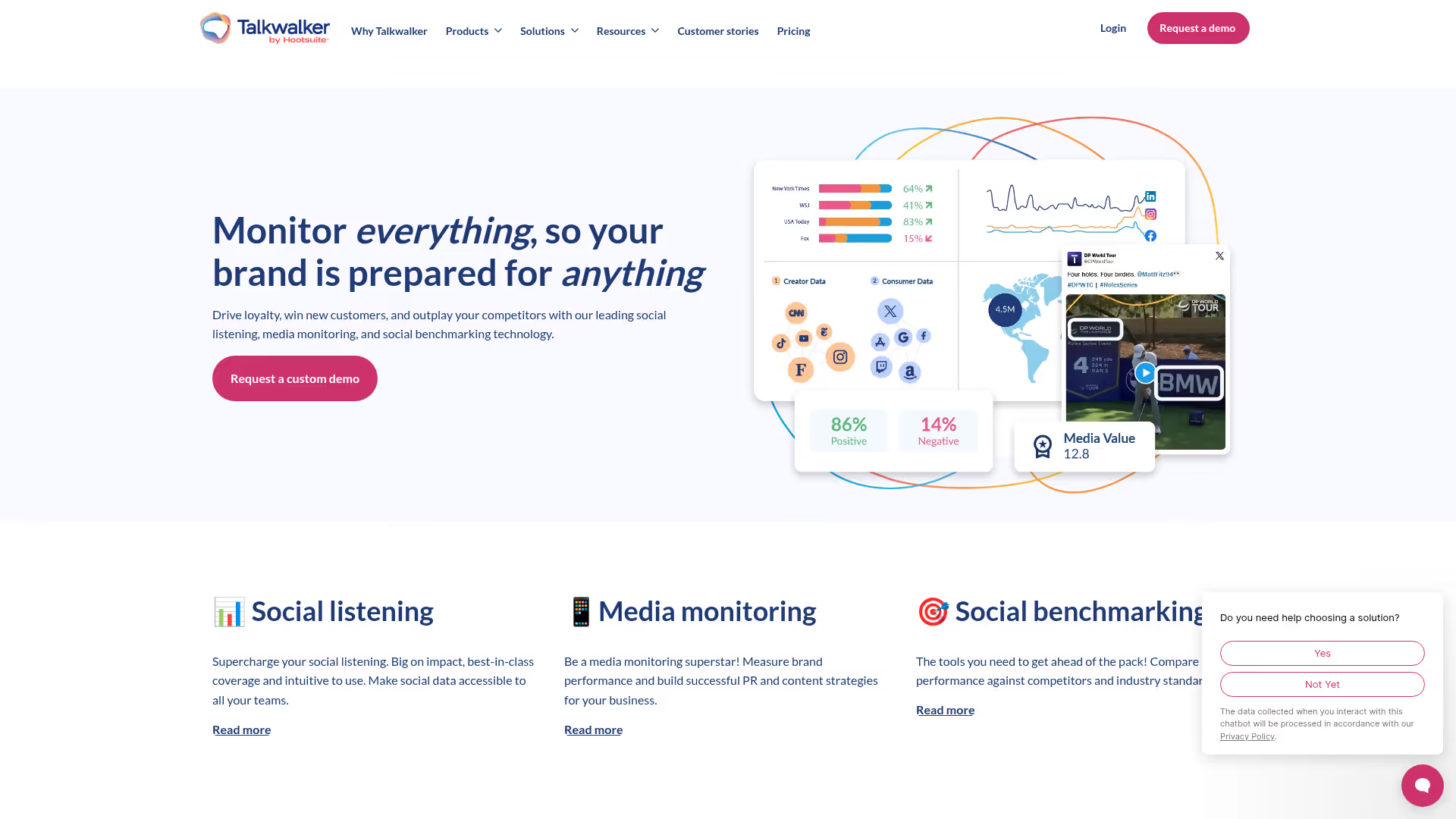
Talkwalker (now part of Hootsuite) is the social listening platform with strong visual recognition and predictive trend capabilities. It's the pick for marketing teams where visual brand monitoring matters: logos in images, product placements, user-generated content.
The AI-powered image and video recognition (Blue Silk AI) detects brand logos and products in visual content across 150M+ data sources. Predictive trend analysis helps you spot emerging conversations before they peak.
Best for: Marketing teams that need to track visual brand mentions (logos, products, UGC) alongside traditional text-based social listening.
Key strengths
- AI-powered image and video recognition for brand logos
- Predictive trend analysis via Blue Silk AI
- 150M+ data sources monitored in real time
- Competitive benchmarking with visual share of voice
- Crisis detection and real-time alerting
Honest limitation: Now bundled with Hootsuite, which may add complexity if you don't need the full social management suite. Pricing has shifted since the acquisition, and getting a standalone Talkwalker quote requires navigating the Hootsuite sales process. The learning curve for advanced features is steep.
Pricing: Custom pricing.
8. YouScan
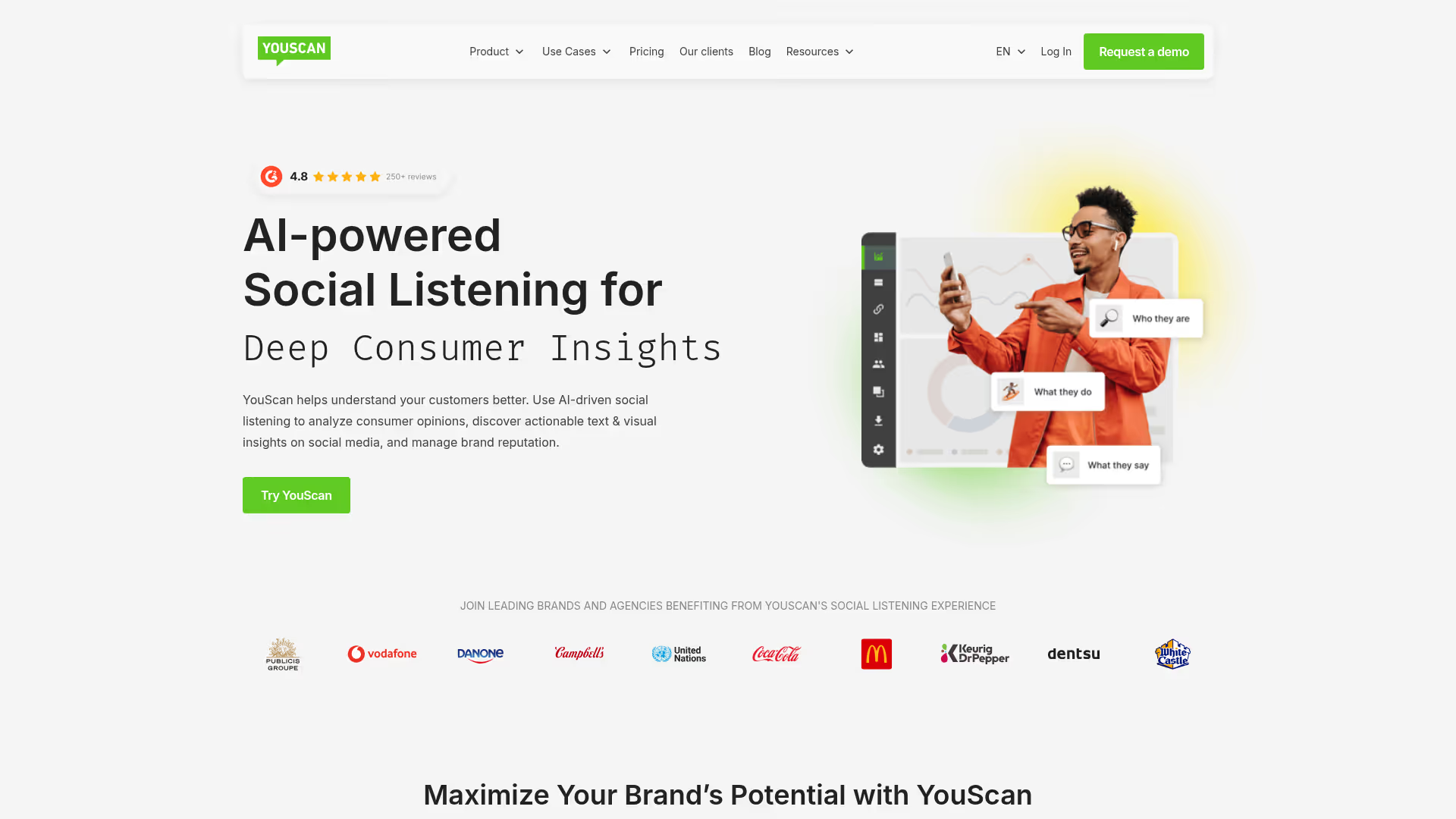
YouScan is the visual-first social listening platform with the highest G2 rating in this category (4.8/5). It's built for brands that need to track how their products and logos appear in images across social media.
The AI visual insights detect logos, objects, scenes, and demographics in images, going beyond text-based mention tracking. Aspect-level sentiment analysis breaks down how people feel about specific attributes of your brand, not just overall sentiment.
Best for: Consumer brands and DTC marketers with high visual social presence who need to track how their products appear in user-generated content.
Key strengths
- AI image recognition detecting logos, objects, scenes, and demographics
- Aspect-level sentiment analysis for granular brand perception
- Real-time social monitoring across major platforms
- Visual trend detection for emerging content patterns
- Audience insights with demographic profiling
Honest limitation: Primarily a social listening tool with no survey-based brand tracking. Pricing starts higher than Brand24 ($299/month), and the visual intelligence features deliver the most value for B2C and DTC brands with strong visual social presence. B2B SaaS companies with limited visual UGC will get less from the image recognition capabilities.
Pricing: From $299/month.
9. Sprinklr Insights
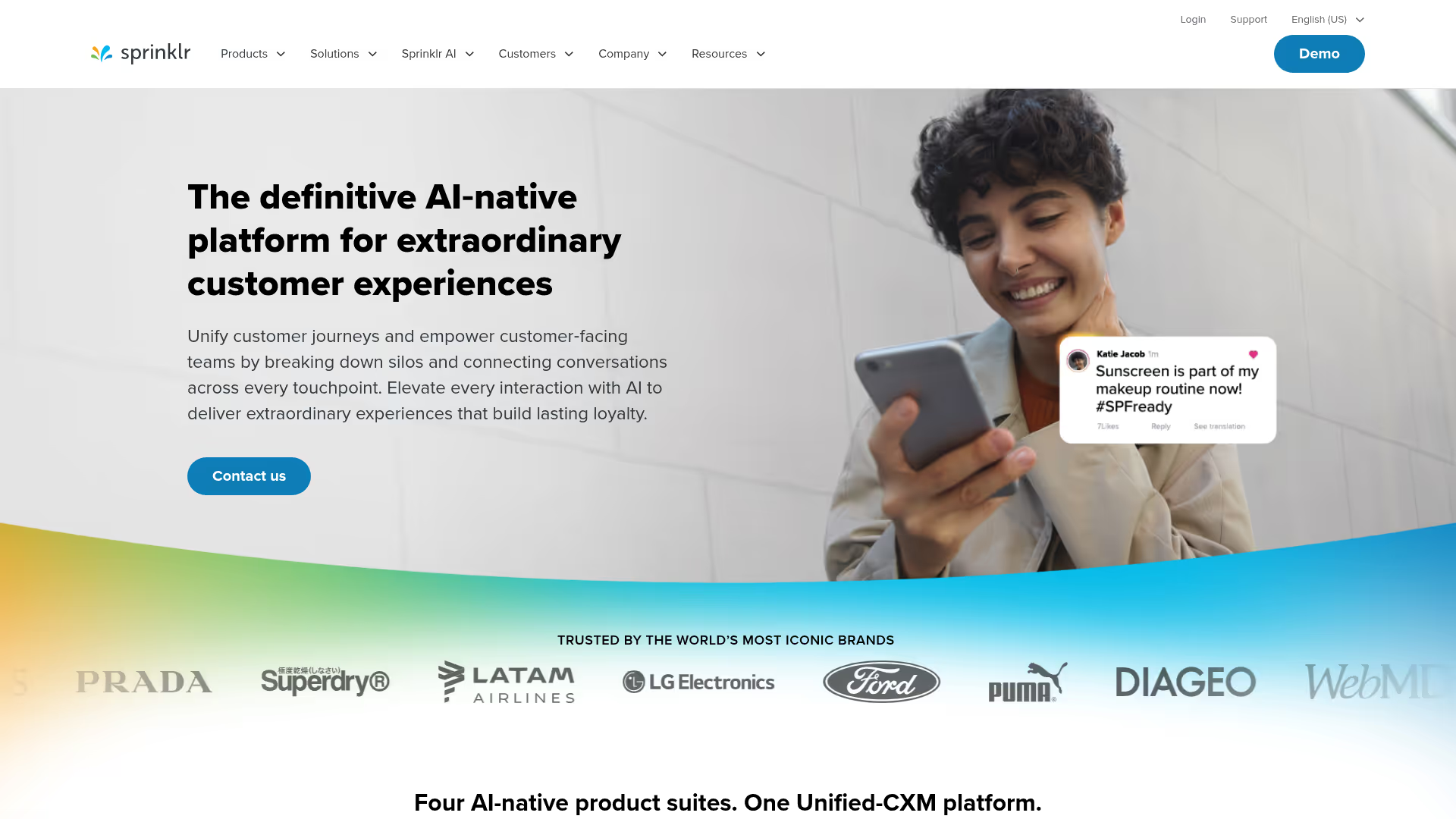
Sprinklr Insights is the brand intelligence module within Sprinklr's unified customer experience management platform. It's the choice for enterprise marketing teams already in the Sprinklr stack or needing social listening, engagement, and brand analytics in one place.
The unified platform value is real if you use multiple Sprinklr modules: listening, engagement, advertising, and analytics share a single data layer. Enterprise-grade governance and compliance features support large, distributed teams.
Best for: Enterprise marketing teams (2,000+ employees) already using Sprinklr or needing a single platform for social listening, engagement, and brand analytics.
Key strengths
- Unified platform for listening, engagement, advertising, and analytics
- Enterprise-grade governance and compliance controls
- AI-powered sentiment and trend analysis across 30+ channels
- Custom reporting with role-based dashboard access
- Global coverage with multi-language support
Honest limitation: Enterprise pricing and complexity make this impractical for small or mid-market teams. Implementation can take months. The "unified platform" value only materializes if you use multiple Sprinklr modules. If you only need brand intelligence, you're paying for a platform you'll underuse.
Pricing: Custom (estimated $299+/month for Insights module alone).
10. Tracksuit
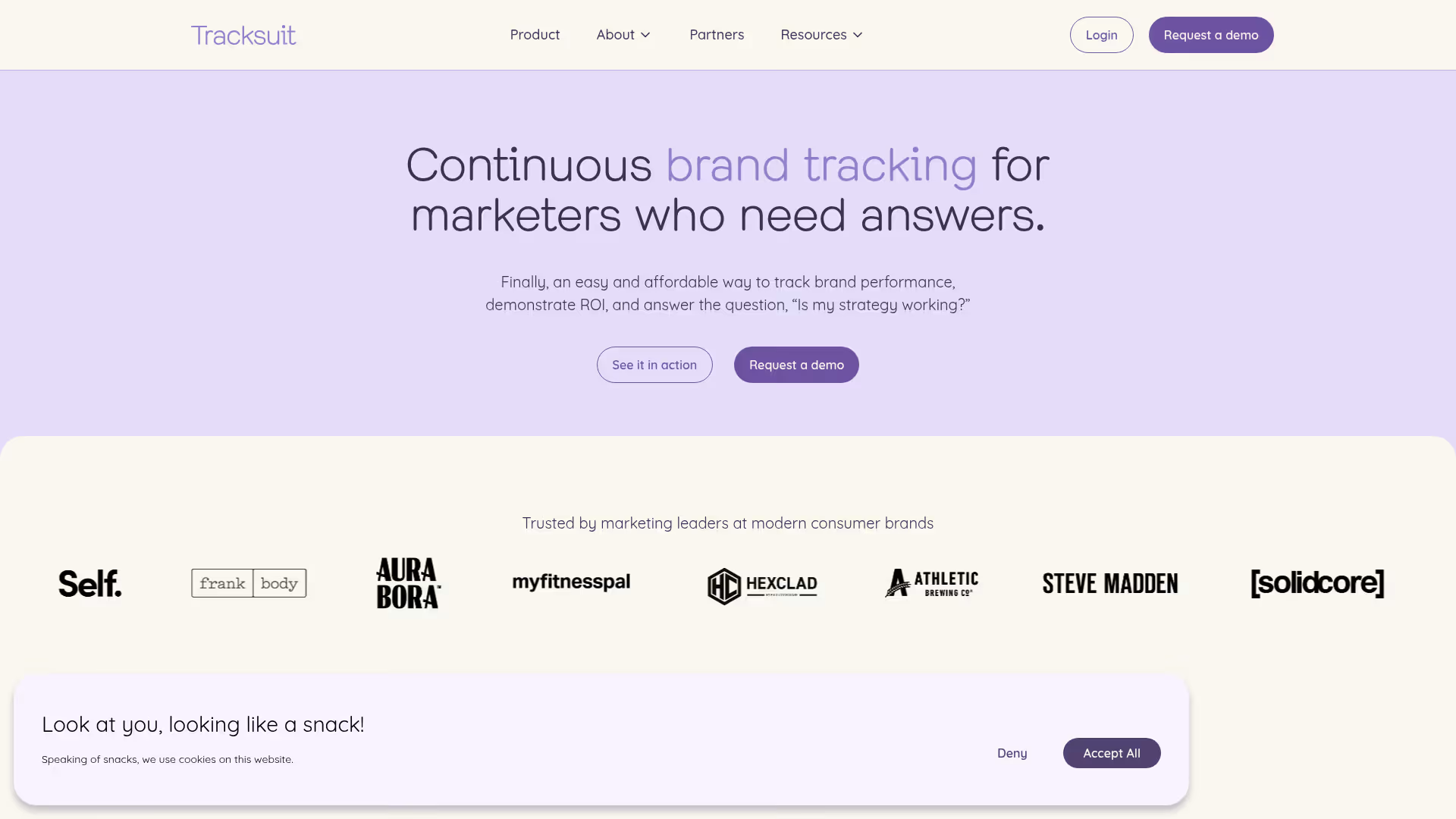
Tracksuit is the always-on brand tracking dashboard designed for simplicity and accessibility. It's the tool for brand and growth marketers who have outgrown Google Trends but aren't ready for Qualtrics.
Continuous data collection (not point-in-time surveys) means you see brand health trends as they develop. The dashboard is designed for non-researchers: clean visuals, competitive brand tracking included by default, and no PhD required to interpret the data.
Best for: Mid-market marketers (50-500 employees) who want ongoing brand tracking data in a dashboard they can actually use without a research team.
Key strengths
- Continuous data collection, not point-in-time surveys
- Simple visual dashboard designed for non-researchers
- Competitive brand tracking included by default
- Funnel metrics: awareness, consideration, preference, usage
- Quick setup with data available within weeks
Honest limitation: Newer platform with a smaller track record than Latana or Qualtrics. Pricing is per-market ($600/month per market), which adds up quickly for multi-region brands. Limited customization compared to full research platforms, and advanced statistical analysis isn't available.
Pricing: From $600/month per market.
11. BuzzSumo
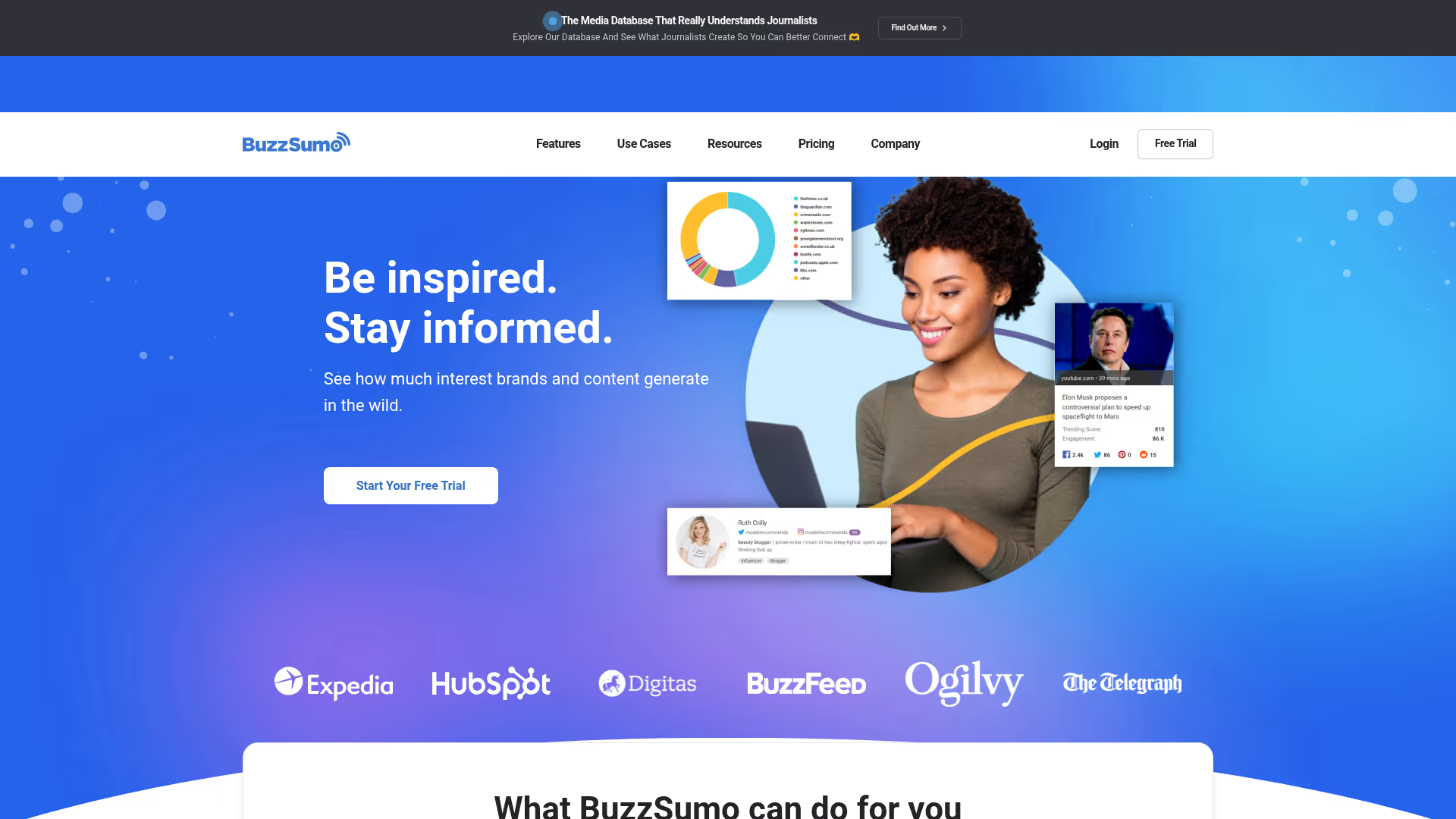
BuzzSumo is the content intelligence and brand monitoring platform. It's the pick for content marketers and growth teams who want to track brand mentions alongside content performance and influencer identification. If content is a major part of your brand strategy, you may also want to explore the best content marketing tools and best content creation software.
The core strength is content performance analysis: most shared content by topic, most linked articles, and competitive content benchmarking. You can see what content drives brand conversation and which influencers amplify your message.
Best for: Content marketers who want brand monitoring combined with content performance data and influencer identification in one tool.
Key strengths
- Content performance analysis by topic, format, and competitor
- Influencer identification with engagement scoring
- Brand mention monitoring across web and social
- Competitive content benchmarking and gap analysis
- Trending topic alerts for real-time content opportunities
Honest limitation: BuzzSumo is not a traditional brand tracking or sentiment analysis tool. It won't give you awareness, consideration, or perception metrics. It's best as a complement to a dedicated brand tracker rather than a replacement. If you need brand health data, pair it with Tracksuit or Latana.
Pricing: From $199/month.
12. Audiense
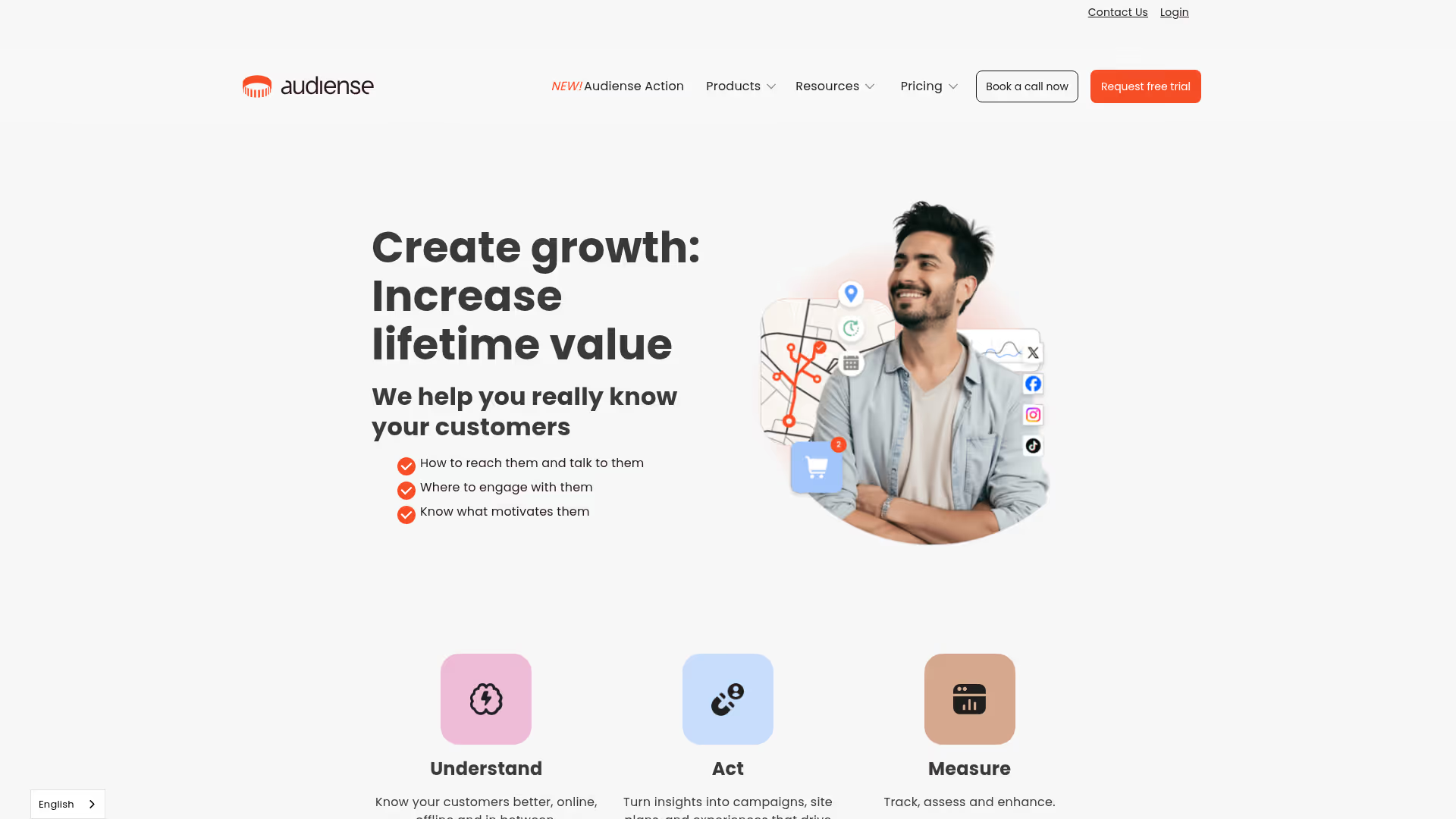
Audiense is the audience intelligence platform that helps marketers understand who their brand's audience actually is. It goes deeper on audience profiling than any other tool on this list.
IBM Watson-powered personality insights, audience overlap and affinity analysis, and integration with social advertising platforms for activation make Audiense the tool for understanding the "who" behind your brand perception.
Best for: Growth marketers who need deep audience segmentation and personality insights to inform brand positioning and campaign targeting.
Key strengths
- IBM Watson-powered personality and psychographic insights
- Audience overlap and affinity analysis across brands
- Deep demographic and interest-based segmentation
- Integration with social ad platforms for audience activation
- Competitive audience comparison and benchmarking
Honest limitation: Audiense is not a brand tracking tool. It won't give you awareness or sentiment trending over time. It's focused on audience profiling rather than brand health metrics, and the pricing ($696/month) is premium for the niche it serves. Best used alongside a brand tracker, not instead of one.
Pricing: From $696/month.
How to choose brand intelligence software: a buyer's checklist
Define your primary data need: survey vs. social vs. hybrid
Survey-based tools (Attest, Latana, Qualtrics, Tracksuit) give you direct consumer perception data. Social listening tools (Brandwatch, Brand24, YouScan, Talkwalker) track organic conversation. Decide which matters more for your use case first. If you need both, plan to combine two tools or look at Brandwatch's hybrid capabilities.
Assess integration with your existing stack
Check CRM, analytics, and ad platform integrations before you buy. Brand intelligence data is most valuable when it flows into your existing dashboards and reporting workflows (Salesforce, HubSpot, Google Analytics, Looker), not when it lives in a separate tab you check once a month. For a deeper look at how product analytics software complements brand data, see our dedicated guide.
Match pricing to your stage and scale
Startups and small teams: Brand24 or BuzzSumo ($49-$199/month). Mid-market: Tracksuit, Latana, or Attest ($600-$1,500/month). Enterprise: Brandwatch, Qualtrics, or Sprinklr ($5K+/month). Don't overspend on capabilities you won't use in the first six months.
Evaluate time-to-value
How fast can you get your first actionable insight? Some tools (Brand24, BuzzSumo) deliver data within hours. Others (Qualtrics, Sprinklr) require weeks of implementation. Match the tool's ramp time to your urgency.
Test before you commit
Most platforms offer interactive demo experiences or trials. Use them with real brand data, not test accounts. A tool that looks good in a sales presentation but fails on your actual use case is a waste of budget. You can also explore how leading SaaS companies present their products through a demo center.
Conclusion
Three decisions matter most. First, survey-based brand tracking vs. social listening vs. hybrid. Second, match the tool to your company stage and budget. Third, accept that most teams end up combining two tools: one for ongoing brand tracking and one for social monitoring.
The best way to evaluate any of these brand intelligence tools is to test them with your actual brand data. Most offer trials or demos. Use them.
If you're looking to turn your brand intelligence findings into interactive experiences your team and prospects can engage with, start creating with Guideflow.
.avif)