Quote-to-cash software automates the entire revenue lifecycle, from the moment a prospect requests pricing through final payment collection. It connects sales, finance, and operations into one system, replacing the disconnected spreadsheets and manual handoffs that slow deals and create errors.
Most teams don't realize how much revenue leaks through the gaps between quoting, contracts, billing, and collections - up to 31.8% of annual revenue according to Zilliant's B2B benchmark research - until they try to trace a single deal from opportunity to cash. This guide covers how Q2C works, where it differs from CPQ, and 8 platforms worth evaluating for 2026.
What's inside
This guide covers what quote-to-cash software actually does, how the process flows from initial pricing request to collected payment, and the difference between CPQ and full Q2C platforms. We selected 8 platforms based on automation depth, CRM and ERP integration capabilities, pricing model flexibility, and G2 user ratings.
TL;DR
- Quote-to-cash (Q2C) software automates the entire revenue lifecycle from quote generation through payment collection, connecting sales, finance, and operations in one system
- CPQ is a subset of Q2C, handling only configuration, pricing, and quoting, while full Q2C extends through contracts, billing, and revenue recognition
- Top platforms vary by use case: Salesforce CPQ for CRM-native workflows, Zuora for subscription billing, PandaDoc for fast-moving SMBs
- Selection criteria that matter most: workflow automation, integration depth with your existing stack, multi-currency support, and analytics visibility
- Teams using Guideflow often pair Q2C platforms with interactive demos to help buyers evaluate complex products during the proposal stage
What is quote-to-cash software
Quote-to-cash software automates the entire revenue lifecycle, starting when a prospect requests pricing and ending when payment hits your account. Q2C platforms connect sales, finance, and operations into a single system, replacing disconnected spreadsheets and manual handoffs that slow deals and create errors.
The core components include:
- CPQ (configure, price, quote): Automates accurate quote creation with product rules, discount logic, and approval workflows
- Contract management: Handles agreement routing, e-signatures, version control, and renewal tracking
- Order management: Processes approved deals into fulfillment and provisioning systems
- Billing and invoicing: Generates invoices, tracks payment status, and manages dunning workflows
- Revenue recognition: Ensures compliance with accounting standards like ASC 606 and IFRS 15
Without Q2C automation, teams typically spend hours building quotes manually, chase approvals through email chains, and reconcile data across systems that don't communicate with each other.
The quote-to-cash process flow
Understanding the full Q2C process helps you identify where automation delivers the most value.
Configure products and pricing rules
Before any quote goes out, teams set up product catalogs, bundles, discount thresholds, and approval rules. This foundation ensures every rep quotes consistently, even with complex product configurations.
Generate accurate quotes
Sales reps use CPQ tools to build quotes with correct pricing, terms, and configurations. Guided selling features recommend products based on customer context, reducing errors and speeding up the process.
Deliver proposals and negotiate terms
Proposals go out as branded documents, often with interactive elements that help buyers understand complex offerings. Interactive demos can accelerate evaluation here, letting prospects experience the product while reviewing pricing.
Capture contracts and approvals
Contracts route through approval chains, collect e-signatures, and get stored with full version history. Built-in contract management eliminates the back-and-forth of tracking documents across email threads.
Process orders and fulfill
Once signed, contracts trigger order processing, inventory allocation or provisioning, and fulfillment tracking.
Invoice customers and collect payment
Automated invoice generation, payment term enforcement, and dunning workflows keep cash flowing.
Recognize revenue and analyze performance
Revenue recognition rules ensure compliance with accounting standards. Analytics surface cycle times, win rates, and cash flow forecasts.
CPQ vs quote-to-cash
CPQ and Q2C often get used interchangeably, but they cover different scopes. CPQ handles the front end of the sales process, while Q2C covers the entire revenue lifecycle.
| Aspect | CPQ | Quote-to-cash |
|---|---|---|
| Scope | Quote creation only | Full revenue lifecycle |
| Ends at | Approved quote | Cash collected |
| Teams served | Sales | Sales, finance, operations |
| Key functions | Configuration, pricing, quoting | CPQ + contracts, billing, revenue recognition |
Standalone CPQ works well when your billing and fulfillment processes are already solid. Full Q2C automation makes sense when you're dealing with disconnected systems, complex pricing models, or visibility gaps between pipeline and cash.
Quote-to-cash vs order-to-cash
Q2C starts when a prospect requests pricing, while order-to-cash (O2C) starts after an order is confirmed.
- Quote-to-cash: Begins at the pricing request; includes CPQ, negotiation, and contract execution
- Order-to-cash: Begins at confirmed order; focuses on fulfillment, invoicing, and collections
If your bottlenecks are in the pre-order selling activities, Q2C is the right frame.
When to invest in quote-to-cash automation
Not every team benefits from full Q2C automation. Here are the signals that suggest it's time:
- Manual quote creation takes hours and produces pricing errors
- Sales and finance use disconnected systems with duplicate data entry
- Approval workflows stall deals for days while waiting on email responses
- Revenue leaks from missed renewals, incorrect billing, or unapplied payments
- Leadership lacks visibility into pipeline-to-cash metrics and forecasting
B2B SaaS companies with complex pricing models, usage-based billing, or multi-stakeholder deals typically see the fastest ROI from Q2C investment, driving cloud CPQ spend toward $5.8 billion in 2026 according to MGI Research.
Common quote-to-cash challenges Q2C software solves
Manual quote errors and pricing inconsistencies
Without guided pricing rules, reps create quotes with incorrect discounts, outdated pricing, or invalid configurations. This leads to margin erosion and deal delays.
Disconnected systems and revenue data silos
When CRM, billing, and ERP don't share data, teams spend hours reconciling records and chasing down discrepancies.
Slow approval workflows stalling deals
Manual approval routing through email chains and Slack messages creates bottlenecks. Pre-sales teams often use interactive product experiences to keep buyers engaged during approval delays.
Revenue leakage from missed renewals
Without automated renewal tracking, contracts expire without follow-up.
Poor visibility into pipeline and cash flow
Disconnected tools prevent accurate forecasting. Sales says the deal is closed, but finance can't confirm when cash will arrive.
Comparison table
| # | Product | Best for | Key differentiation | Pricing | G2 rating |
|---|---|---|---|---|---|
| 1 | Salesforce CPQ | Salesforce ecosystem users | Native CRM integration | Custom | 4.2/5 |
| 2 | Oracle CPQ Cloud | Large enterprises | Complex product configurations | Custom | 4.1/5 |
| 3 | Zuora | Subscription businesses | Usage-based billing | Custom | 4.2/5 |
| 4 | Conga CPQ | Document-heavy sales | Contract lifecycle management | Custom | 4.3/5 |
| 5 | DealHub | Mid-market SaaS | Unified CPQ + CLM + billing | Custom | 4.7/5 |
| 6 | PandaDoc | SMBs and growing teams | Fast implementation | From $19/mo | 4.7/5 |
| 7 | Maxio | SaaS finance teams | Financial operations, compliance | Custom | 4.5/5 |
| 8 | Vendavo | Manufacturing and distribution | Margin management | Custom | 4.3/5 |
10 best quote-to-cash software platforms for B2B teams
1. Salesforce CPQ
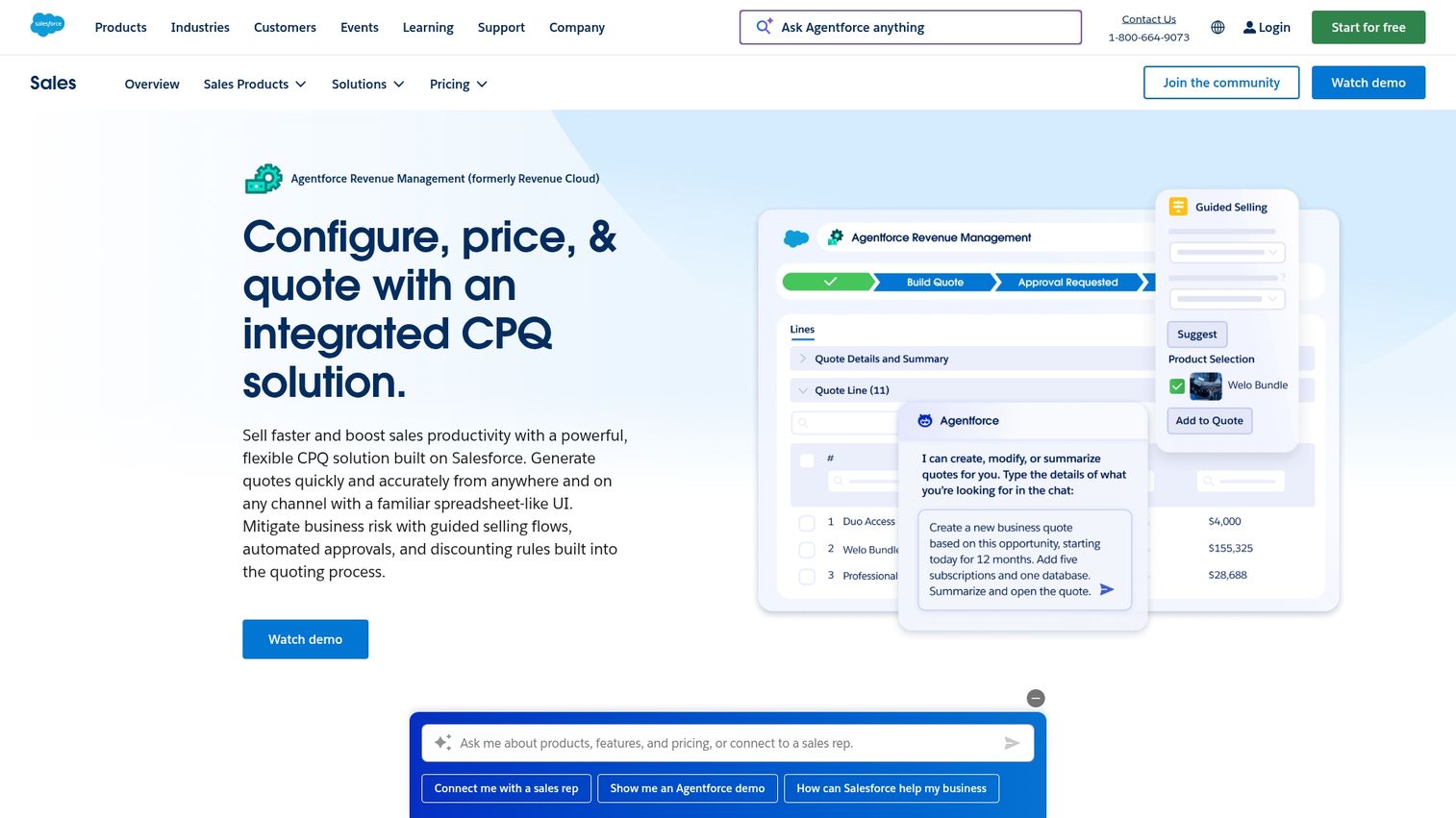
Salesforce CPQ lives natively inside the Salesforce ecosystem, so your sales team works in one interface from lead to quote to closed deal. Quote data flows directly into opportunities, contracts sync with accounts, and reporting pulls from a single source of truth.
Best for: Organizations with existing Salesforce investments who want native CPQ without integration complexity.
Key strengths
- Guided selling: Recommends products and configurations based on customer needs
- Advanced approvals: Multi-tier approval workflows with conditional logic
- Contract amendments: Handles renewals, upsells, and mid-term changes
- Revenue recognition: Built-in compliance with ASC 606 through Salesforce Revenue Cloud
Pricing: Custom pricing based on user count and feature requirements.
2. Oracle CPQ Cloud
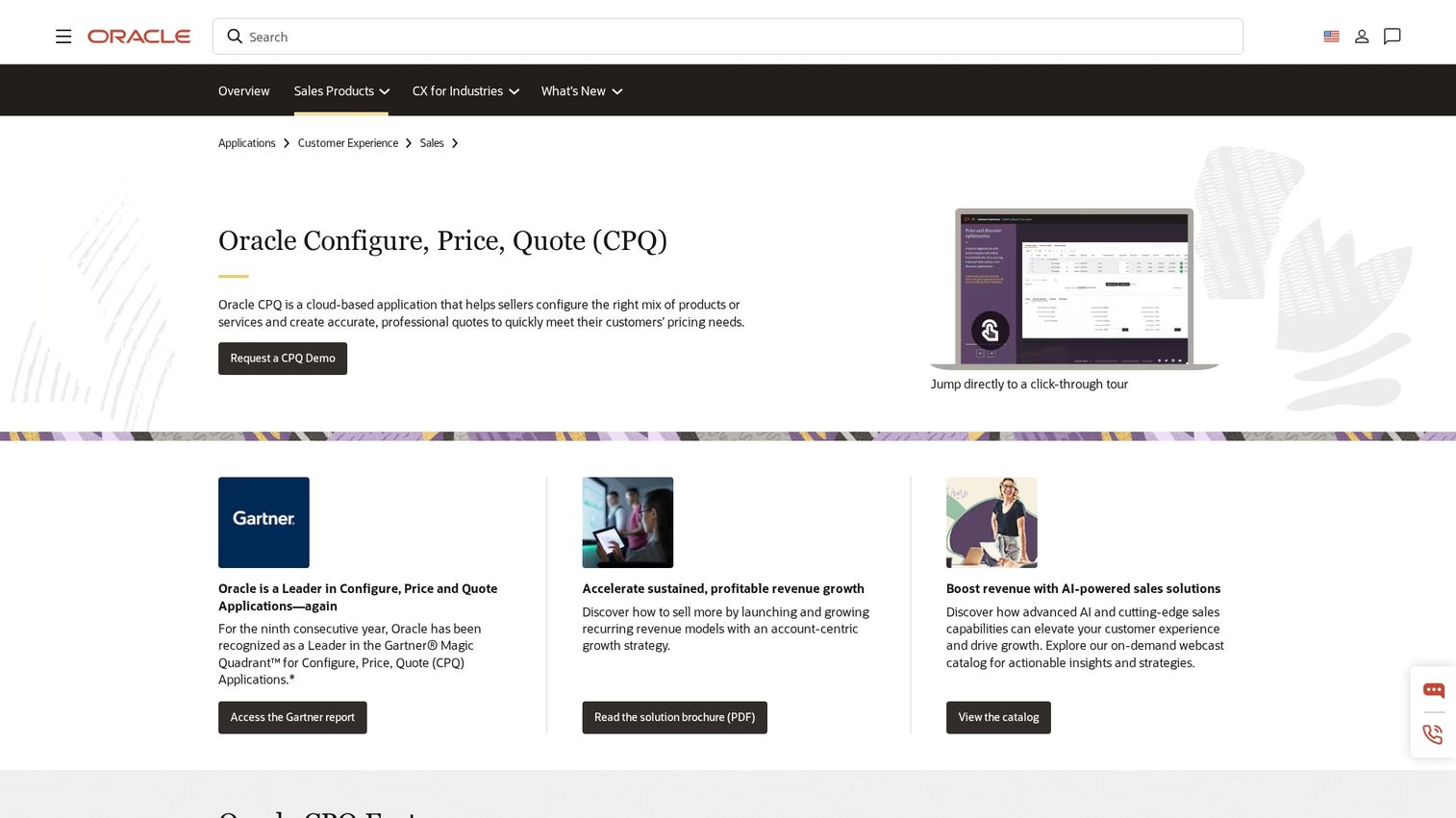
Oracle CPQ Cloud handles the kind of product complexity that breaks simpler tools. If you're configuring products with thousands of options, dependencies, and rules, Oracle's configuration engine can manage it.
Best for: Large enterprises with complex product configurations and existing Oracle infrastructure.
Key strengths
- Advanced configuration: Handles thousands of SKUs with complex dependency rules
- Visual configuration: 3D product visualization for configurable goods
- Global pricing: Multi-currency, multi-language support
- ERP integration: Native connectivity with Oracle ERP
Pricing: Custom enterprise pricing.
3. Zuora
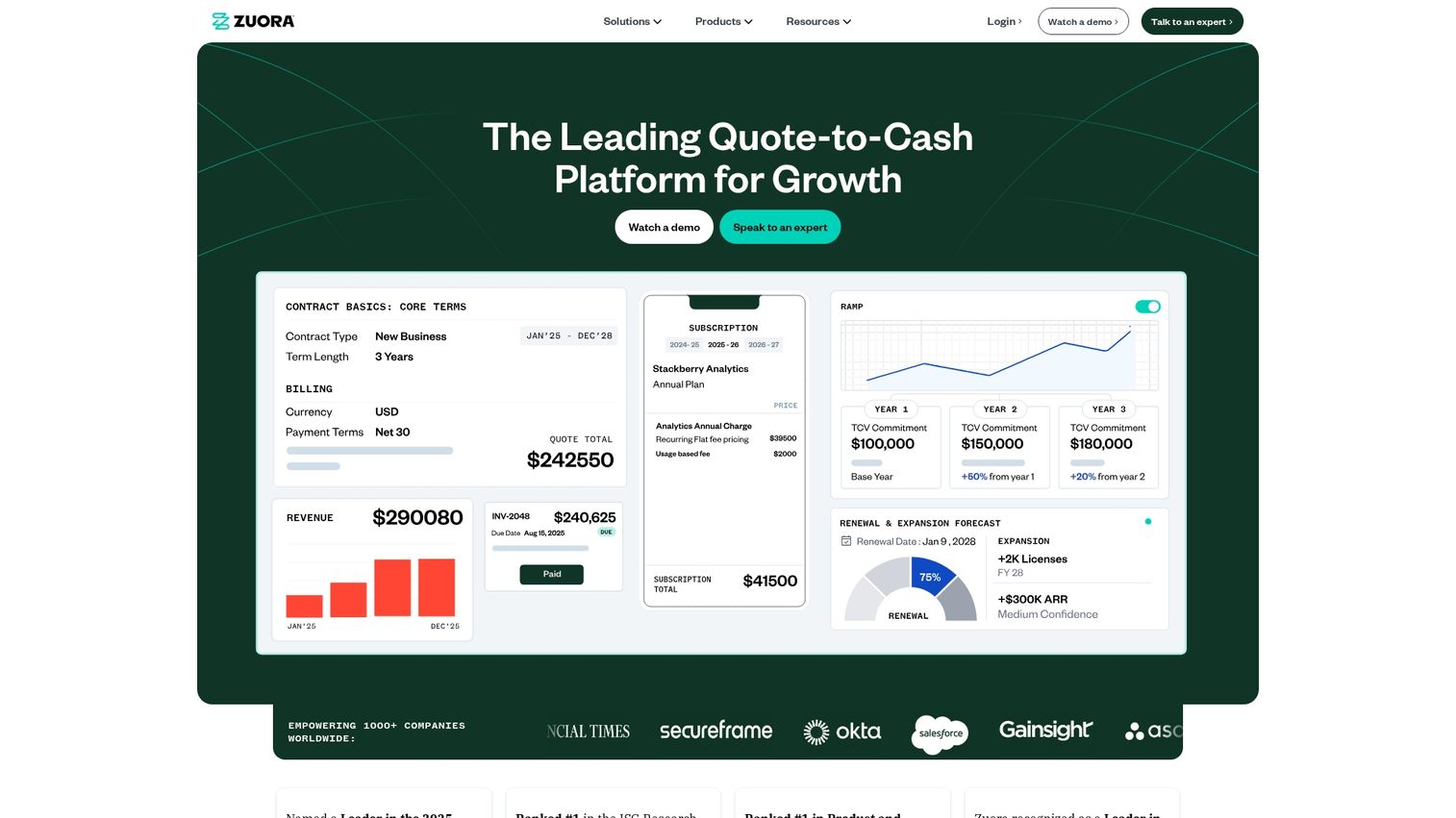
Zuora built its platform specifically for subscription and usage-based business models. If your pricing involves recurring charges, consumption metering, or hybrid models, Zuora handles the complexity that general-purpose Q2C tools struggle with.
Best for: SaaS and subscription businesses with complex recurring revenue models.
Key strengths
- Subscription billing: Handles recurring, usage-based, and hybrid pricing models
- Revenue recognition: Automated ASC 606 and IFRS 15 compliance
- Usage metering: Real-time consumption tracking
- Subscription analytics: Metrics like MRR, churn, and expansion revenue
Pricing: Custom pricing based on transaction volume.
4. Conga CPQ
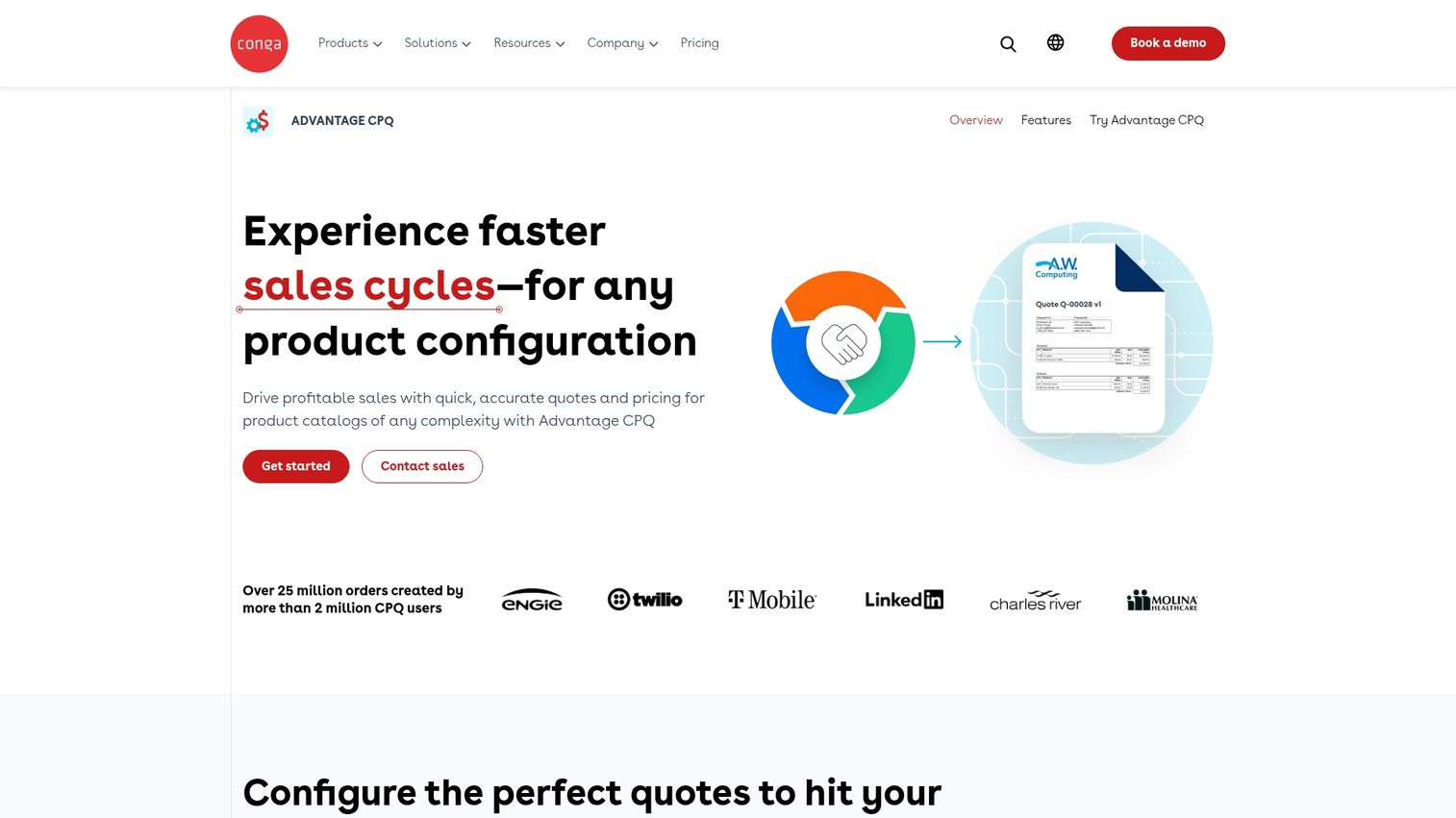
Conga CPQ combines configuration, pricing, and quoting with strong document generation and contract lifecycle management.
Best for: Organizations with document-heavy sales processes requiring integrated contract management.
Key strengths
- Document generation: Automated proposal, quote, and contract creation
- Contract lifecycle: Full CLM capabilities including negotiation and e-signatures
- Salesforce integration: Native connectivity for Salesforce teams
- Revenue lifecycle: Extends beyond quoting into renewals
Pricing: Custom pricing based on user count and module selection.
5. DealHub
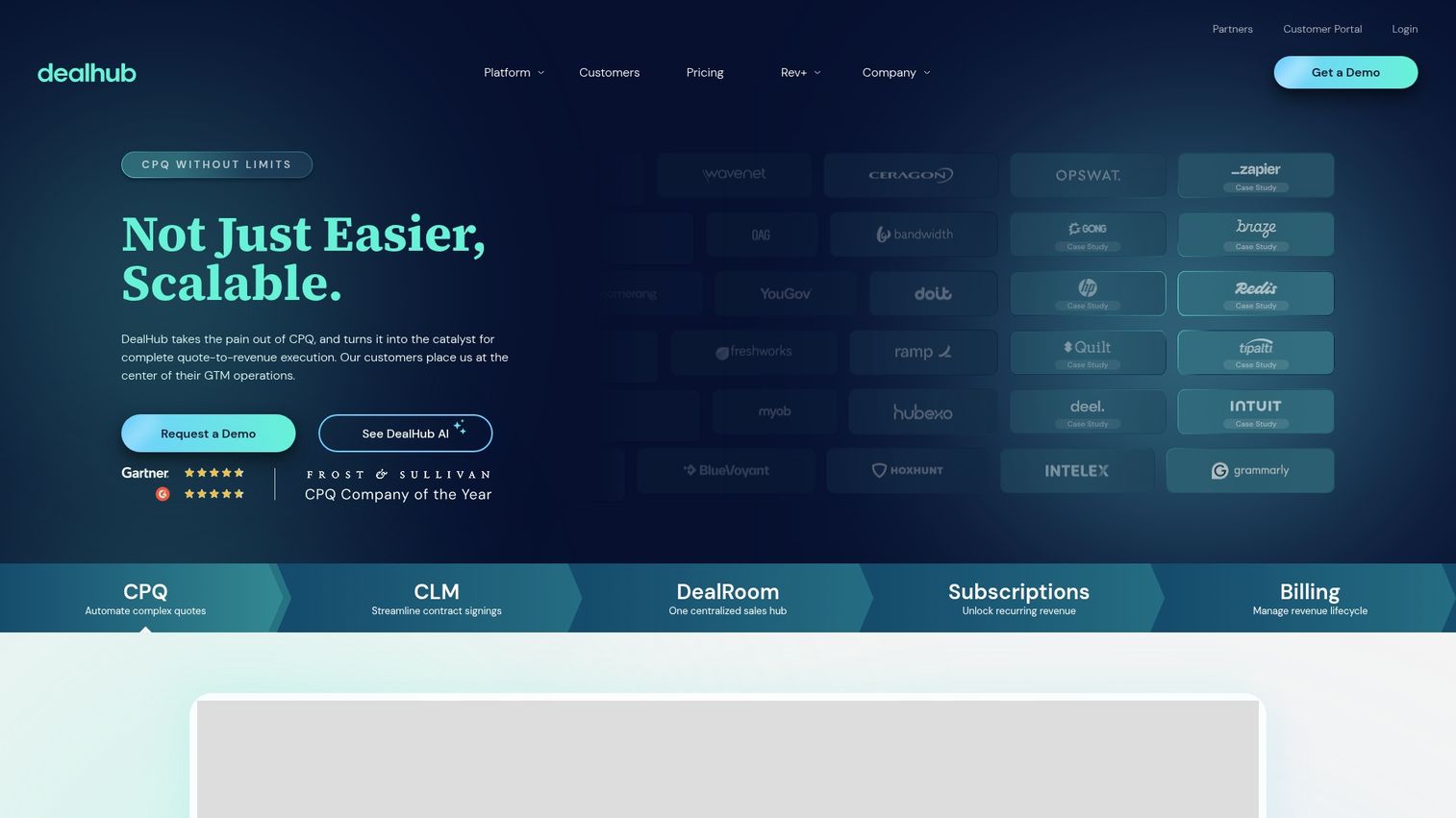
DealHub combines CPQ, contract management, and subscription billing in a unified platform designed for buyer engagement. The platform includes digital sales rooms where buyers can access proposals, contracts, and supporting materials in one place.
Best for: Mid-market to enterprise SaaS companies wanting unified CPQ, CLM, and billing.
Key strengths
- Unified platform: CPQ, CLM, and billing without integrating separate tools
- Digital sales rooms: Centralized buyer experience with proposals and content
- Workflow automation: Approval routing and deal progression automation
- Subscription management: Native support for recurring billing
Pricing: Custom pricing based on user count.
6. PandaDoc
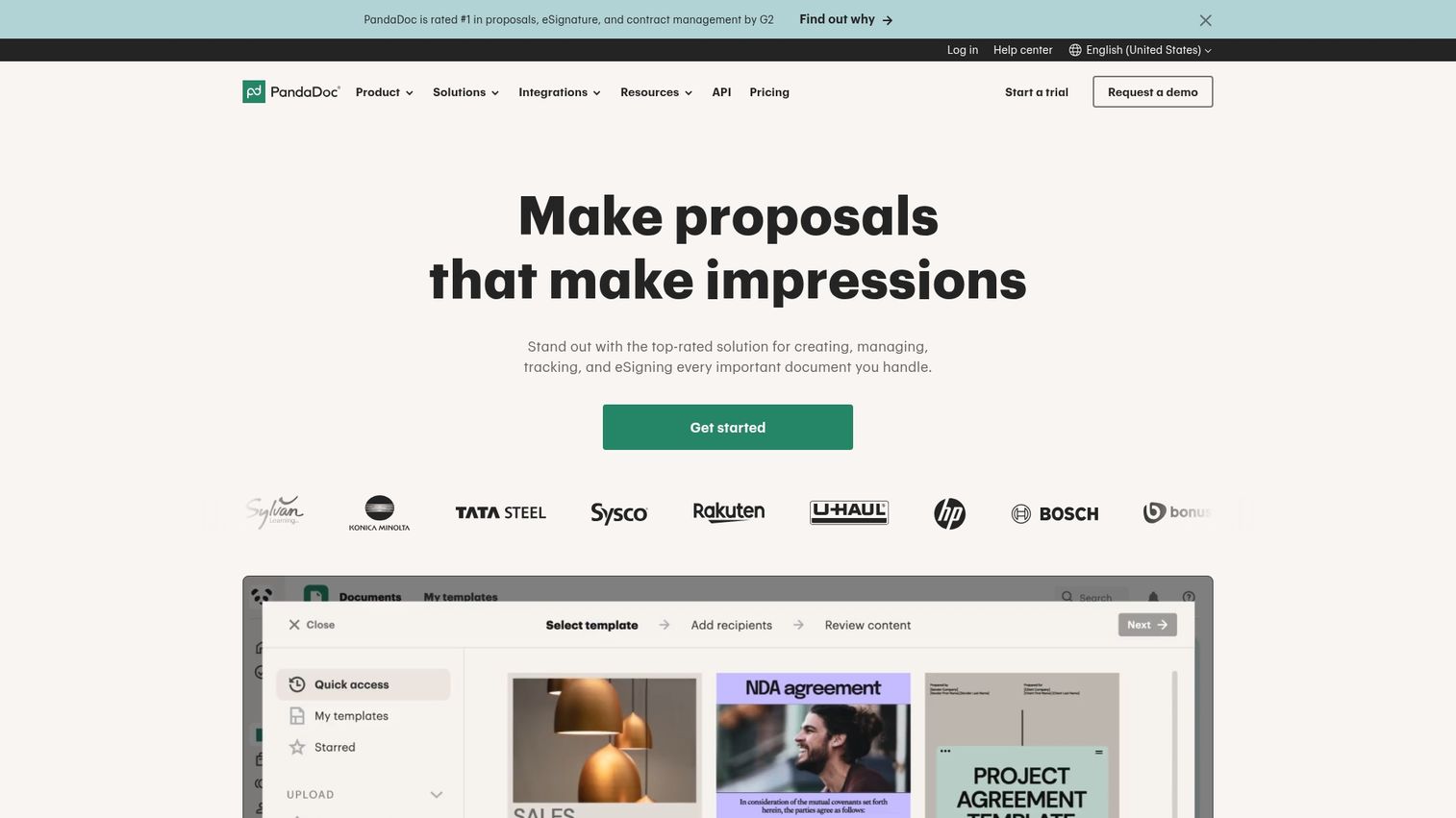
PandaDoc focuses on speed and simplicity for teams that want to send proposals, collect signatures, and get paid without enterprise complexity. Implementation is fast compared to enterprise CPQ tools, often measured in days rather than months.
Best for: SMBs and growing sales teams wanting fast implementation.
Key strengths
- Proposal builder: Drag-and-drop editor with templates and branding controls
- E-signatures: Built-in signing with audit trails
- Payments: Integrated payment collection from signed documents
- CRM integrations: Connects with Salesforce, HubSpot, Pipedrive
Pricing: Starts at $19/month per user for Essentials.
7. Maxio
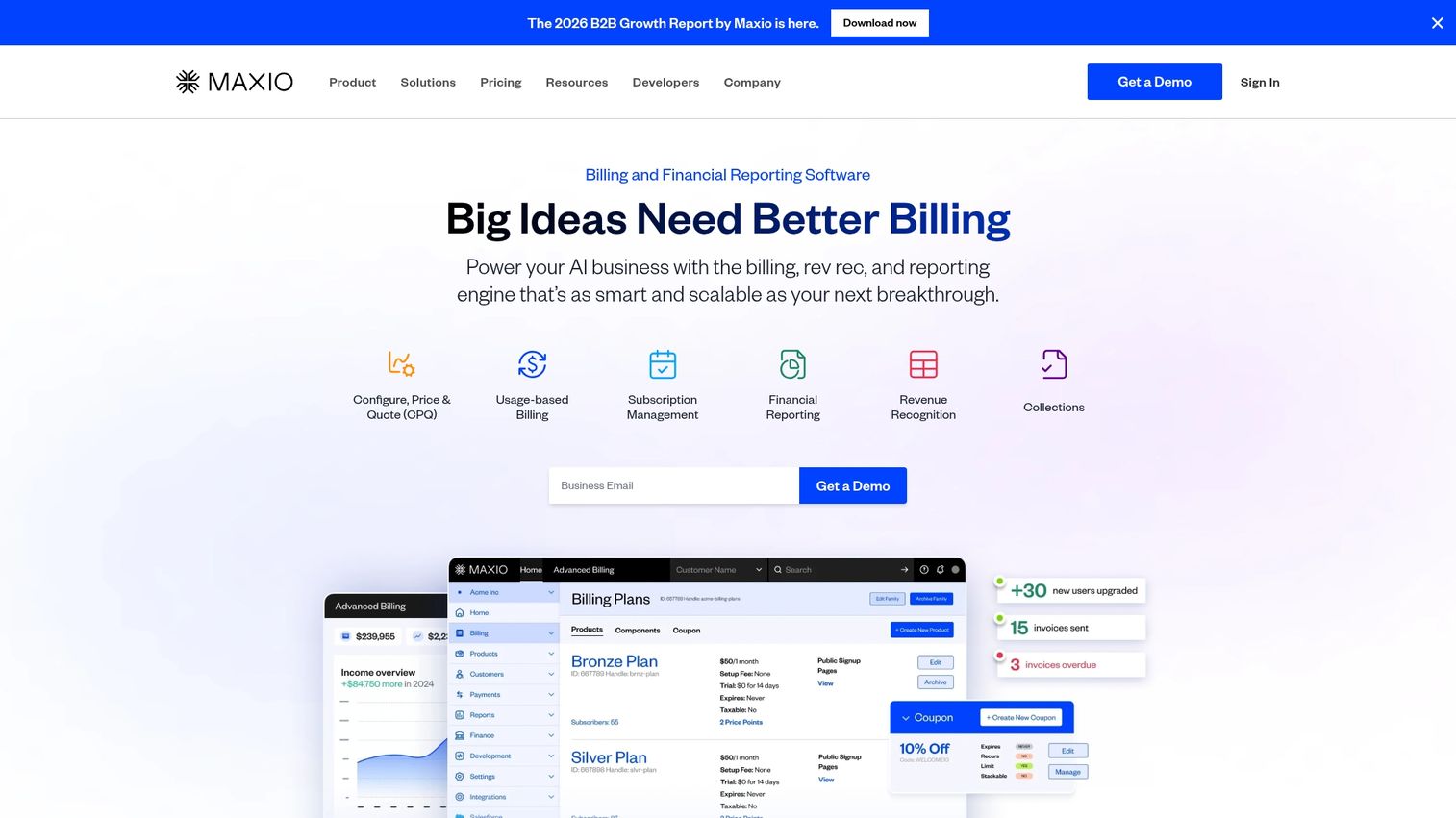
Maxio focuses on financial operations for B2B SaaS, combining billing, revenue recognition, and financial reporting in one platform.
Best for: SaaS finance teams needing robust billing and revenue recognition.
Key strengths
- Subscription billing: Flexible billing for recurring and hybrid models
- Revenue recognition: Automated ASC 606 compliance
- SaaS metrics: Built-in ARR, MRR, churn, and cohort analysis
- Financial reporting: Investor-ready reports and forecasting
Pricing: Custom pricing based on revenue volume.
8. Vendavo
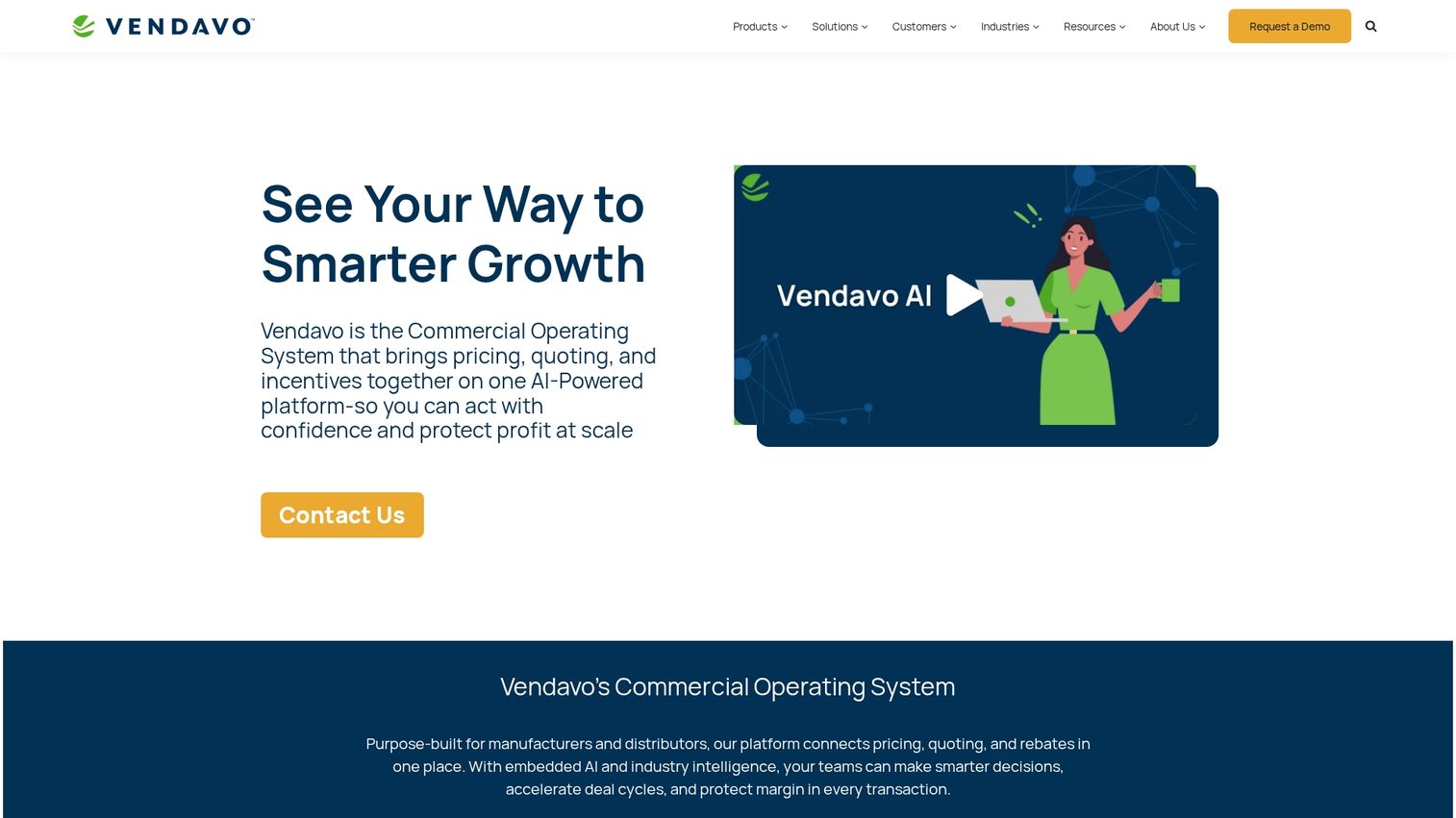
Vendavo specializes in price optimization and margin management for manufacturing, distribution, and B2B commerce.
Best for: Manufacturing and distribution companies focused on margin optimization.
Key strengths
- Price optimization: Analytics-driven pricing recommendations
- Margin management: Visibility into margin performance by customer and product
- Deal guidance: Real-time pricing guidance during negotiations
- B2B commerce: Digital commerce capabilities for self-service ordering
Pricing: Custom enterprise pricing.
How to select the right quote-to-cash software
Workflow automation and approval routing
Evaluate how platforms handle multi-tier approvals, conditional logic, and exception handling. Look for customizable workflow builders that match your actual approval processes.
CRM and ERP integration depth
Assess native versus API integrations with your existing stack. Bi-directional sync matters for data accuracy. Teams often integrate demo analytics into their CRM alongside Q2C data to get a complete picture of buyer engagement.
Security, compliance, and audit trails
Check for SOC 2 compliance, data encryption, role-based access controls, and comprehensive audit logging.
Multi-currency and multi-language support
Essential for global teams. Evaluate localized pricing rules, automatic tax calculations, and document translation capabilities.
Scalability for complex pricing models
Test whether the platform handles your pricing complexity: usage-based, tiered, hybrid, custom enterprise terms.
Analytics and revenue visibility
Look for real-time dashboards, forecasting tools, and cycle time analytics.
Accelerate your quote-to-cash transformation
Q2C software eliminates the manual handoffs and disconnected systems that slow deals and leak revenue. Before selecting a tool, map your current process end-to-end. Identify where deals stall, where errors occur, and where visibility breaks down.
Teams that pair Q2C automation with interactive demos give prospects a way to experience the product while paperwork moves through the system.
FAQs about quote-to-cash software
Implementation timelines vary by platform complexity and integration requirements. Lightweight tools like PandaDoc can be operational in days, while enterprise platforms like Oracle CPQ or SAP CPQ typically require 6-12 months of configuration according to Mordor Intelligence.
Most modern Q2C platforms support recurring billing and usage metering, though depth varies. Subscription-focused options like Zuora or Maxio handle complex recurring revenue models natively.
Critical integrations include your CRM (Salesforce, HubSpot), ERP (NetSuite, SAP), payment processors, and accounting systems. Bi-directional sync ensures data flows without manual reconciliation.
Leading platforms include multi-currency pricing rules, automatic exchange rate updates, localized tax calculations, and region-specific approval workflows.
Companies typically see faster deal cycles, reduced pricing errors, improved cash flow predictability, and lower operational overhead. Specific outcomes depend on current process maturity and implementation quality.
Interactive demos help buyers self-evaluate complex products during the proposal stage, reducing back-and-forth questions and accelerating time to signed contract.