You closed the quarter three weeks late. Again. Restricted grants got tangled with unrestricted operating cash. The board wanted a clean statement of activities by fund, and someone spent two days reconciling spreadsheets that should have reconciled themselves. If any of that sounds familiar, the problem usually is not the finance team. It is the tooling underneath them.
Fund accounting is a different discipline from commercial bookkeeping. Money arrives with strings attached, from grantors, donors, endowments, or limited partners, and it has to stay traceable every step of the way. General accounting software tracks profit. Fund accounting software tracks accountability. That distinction matters more every year, because the global fund accounting software market was valued at USD 6.57 billion in 2024 and is projected to reach USD 12.0 billion by 2035, growing at a 5.6% CAGR, according to WiseGuyReports (2025). Buyers are consolidating around systems that produce audit-ready reporting and board-ready financials without heroics.
This guide is a shortlist for finance leaders comparing the best fund accounting software in 2026. Whether you run a nonprofit chasing grant tracking accuracy, a government finance office managing compliance across dozens of funds, or a private equity firm handling multi-fund tracking and investor waterfalls, the right pick depends less on a feature checklist and more on how your money is structured. If your evaluation touches adjacent finance controls, it is also worth reviewing audit management software alongside your core system, since the two often work in tandem during close and audit season.
What's inside
This guide compares 10 fund accounting tools spanning nonprofit, church, education, government, and private equity fund administration. We selected each based on fund tracking depth, reporting and audit quality, workflows automation, integrations, and sector fit, the factors that actually determine whether a system reduces your close cycle or just relocates the spreadsheet chaos.
You will find a fast comparison table, a per-tool breakdown with verified pricing and G2 ratings where available, and a plain buyer's framework organized by fund structure and reporting need rather than by marketing category. The goal is to help you shortlist in an afternoon, not a month.
TL;DR
- Best overall for nonprofits and churches: Aplos, built natively around restricted fund accounting, donor reporting, and Form 990 support.
- Best for government, education, and larger nonprofit teams: MIP Fund Accounting, with configurable modules and unlimited funds.
- Best for donor and grant-heavy nonprofit orgs: Blackbaud Financial Edge NXT, with subfund accounting and Raiser's Edge NXT integration.
- Best for private equity fund administration: Allvue Fund Accounting software, with waterfall modeling, partnership accounting, and investor reporting.
- Best when you need general accounting first and fund tracking second: QuickBooks Online, Sage Intacct, Xero, or Oracle NetSuite, depending on complexity and scale.
What is fund accounting software?
Fund accounting software is a financial management system that tracks money by source and purpose, keeping restricted, designated, and unrestricted balances separate so every dollar can be reported against the terms under which it was received. Unlike commercial accounting, which rolls everything into a single profit-and-loss view, fund accounting systems maintain distinct ledgers per fund, grant, program, or partnership entity.
The distinction is not cosmetic. A nonprofit that spends a restricted grant on the wrong program can lose funding or fail an audit. A private equity fund that miscalculates a distribution waterfall can misallocate carry between the GP and LPs. Fund accounting exists to make those mistakes structurally hard.
Core capabilities to expect across fund accounting systems:
- Restricted fund tracking: segregate restricted, temporarily restricted, and unrestricted balances at the general ledger level.
- Grant and program reporting: track spend against each grant or program with grant tracking down to the line item.
- Multi-fund and multi-entity visibility: roll up multi-fund tracking across locations, entities, or partnerships without manual consolidation.
- Audit-ready controls: role-based access, audit trails, and internal controls that hold up to external review.
- Board, donor, funder, or investor reporting: produce board-ready financials, donor statements, and investor reports on demand.
- Automation and integrations: connect to payroll, banking, CRM, and fundraising tools, and apply workflows automation to approvals and allocations.
Some tools are purpose-built for nonprofits and churches, others for government and education, and others for private equity fund accounting and fund administration. The sector a tool was designed for usually predicts fit better than any single feature.
When to use fund accounting software
Use it when restricted money must stay traceable
If your organization receives grants, donations, endowments, or capital under a limited partnership agreement, those funds carry restrictions. A grantor wants to see their money spent on the program they funded. An LP wants to see their capital account and carry calculated correctly. Fund accounting keeps each pool segregated so you can prove, at any moment, where restricted dollars went. Spreadsheets can approximate this. They rarely survive an audit.
Use it when board or investor reporting is slowing the close
When your finance team spends the first two weeks of every month rebuilding the same statements by hand, reporting has become the bottleneck. Fund accounting software with reporting automation turns a multi-day exercise into a filter-and-export. That speed is not just convenience. It gives your board, funders, or investors faster answers, which improves decision-making and accountability across the organization.
Use it when your finance stack has outgrown spreadsheets
The operational trigger is usually complexity: multiple funds, entities, locations, or revenue sources that no longer fit cleanly in a single workbook. Once you are managing more than a handful of restricted funds or reconciling across entities, the manual approach stops scaling. That is the moment a purpose-built system earns its cost, by removing the reconciliation tax and the risk that comes with it.
Comparison table
Here is the fast shortlist for teams comparing the most relevant fund accounting systems in 2026. Pricing shifts often, so verify the latest figures on each vendor's live pricing page before you commit. G2 ratings reflect current listings at the time of writing.
| # | Product | Intent | Key use case | Pricing | G2 rating |
|---|---|---|---|---|---|
| 1 | Aplos | Nonprofit and church fund accounting | Restricted funds, donor reporting, Form 990 | From $79/month | 4.7/5 |
| 2 | MIP Fund Accounting | Nonprofit, education, government | Unlimited funds, grant reporting, compliance | Quote-based | 3.8/5 |
| 3 | Blackbaud Financial Edge NXT | Nonprofit ERP and fundraising | Subfund accounting, internal controls | Quote-based | 4.0/5 |
| 4 | Allvue Fund Accounting software | Private equity fund administration | Waterfalls, partnership accounting, investor reporting | Quote-based | 5.0/5 |
| 5 | QuickBooks Online | Small business bookkeeping | General ledger, invoicing, reporting | From $19/mo | 4.2/5 |
| 6 | Sage Intacct | Mid-market financial management | Multi-entity accounting, dimensions, reporting | Quote-based | 4.3/5 |
| 7 | Xero | Small business accounting | Bank reconciliation, invoicing, reporting | From $25/mo | 4.4/5 |
| 8 | Oracle NetSuite | Enterprise ERP and finance | Multi-entity accounting, governance, analytics | Quote-based | 4.1/5 |
| 9 | Coupa | Spend and procurement control | Approval workflows, spend visibility | Quote-based | 4.2/5 |
| 10 | Workday Financial Management | Enterprise finance transformation | Consolidation, reporting, GL | Quote-based | 4.1/5 |
1. Aplos
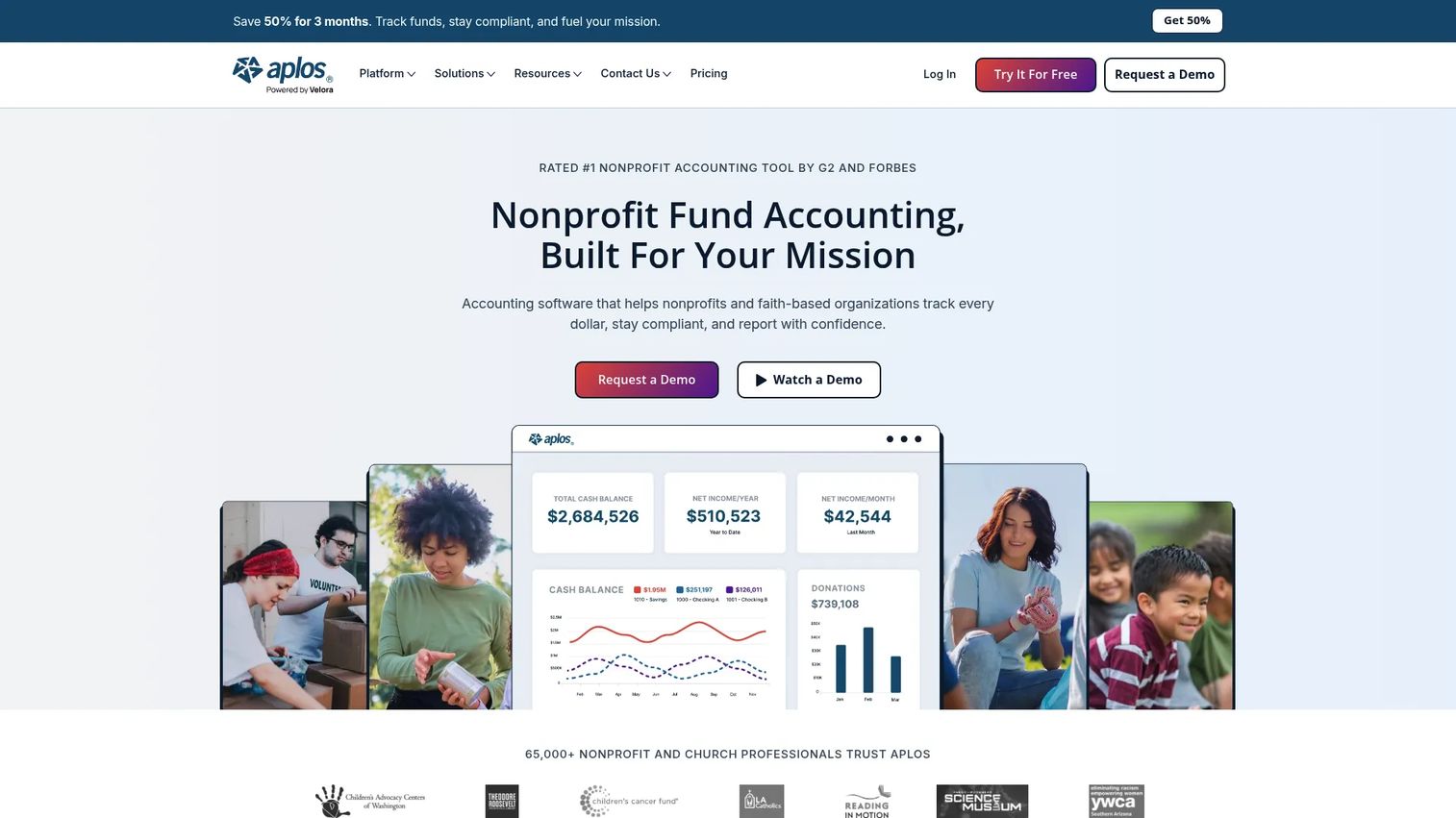
Aplos is nonprofit accounting software built from the ground up for organizations that live and die by restricted fund accounting. Instead of bolting fund logic onto a commercial ledger, Aplos treats funds as first-class objects, so restricted and unrestricted balances stay separate automatically. It pairs that with donor management, budgeting by fund or grant, and reporting designed for boards and the IRS.
Best for: Nonprofits and churches that need fund-based accounting, donor reporting, and board-ready financials without an enterprise implementation.
Key strengths
- Native fund accounting: Restricted and unrestricted balances stay segregated at the ledger level, no manual tagging required.
- Nonprofit reporting: Board-ready financials and Form 990 support come standard, not as an add-on.
- Donor and budget tools: Donation tracking and budgeting by fund, grant, or project sit in the same system.
Why choose Aplos: If you run a nonprofit or church and your reporting revolves around funds, grants, and donors, Aplos fits the workflow without forcing you to translate commercial accounting concepts into nonprofit ones. It is the natural entry point for small to mid-sized organizations that want church accounting software or nonprofit accounting software that speaks their language on day one.
Aplos pricing: Aplos publishes clear tiers. Lite starts at $79/month, Core at $129/month, and Advanced at $229/month, with Custom pricing available for larger organizations. A 15-day free trial is offered. On G2, Aplos holds a 4.7/5 rating.
2. MIP Fund Accounting
MIP Fund Accounting casts a wider net than most nonprofit-native tools, serving nonprofits, education, healthcare, and government accounting software needs from one configurable platform. Its appeal is depth: unlimited funds, modular add-ons, and the ability to shape the general ledger and reporting to match how your organization actually operates rather than how the vendor assumed you would.
Best for: Organizations that need configurable, compliance-focused fund accounting across multiple sectors or complex funding structures.
Key strengths
- Unlimited funds and configurability: Track as many funds, grants, and programs as you need, with modules you can turn on as complexity grows.
- Grant and compliance reporting: Grant reporting, dashboards, and customizable reports built for funder and regulatory scrutiny.
- Full accounting backbone: General ledger, accounts payable, accounts receivable, and budgeting in one system, deployable in the cloud or on-premise.
Why choose MIP Fund Accounting: Teams choose MIP when a basic nonprofit tool runs out of room. If you manage grant tracking across dozens of funders, need on-premise deployment, or want workflows automation you can configure rather than accept as-is, MIP gives you the levers. It suits larger nonprofit, education, and government finance teams with real complexity.
MIP Fund Accounting pricing: MIP does not publish public pricing; the vendor uses a demo and quote process tailored to organization size and module selection. On G2, MIP Fund Accounting holds a 3.8/5 rating. Request a quote to see how the modular pricing maps to your fund count and user needs.
3. Blackbaud Financial Edge NXT
Blackbaud Financial Edge NXT is cloud-based nonprofit accounting software built with an ERP mindset. It handles restricted funds, subfund tracking, and grant and program accounting, then layers on the internal controls and stewardship reporting that donor-heavy and grant-heavy organizations need to demonstrate accountability. Its standout is the tight integration with Raiser's Edge NXT, connecting fundraising data to the general ledger.
Best for: Nonprofits that need deep fund accounting with strong internal controls, reporting, and fundraising integration.
Key strengths
- Subfund and restricted fund tracking: Model complex fund hierarchies with subfund accounting and restricted fund controls.
- Internal controls: Role-based access, audit trails, and internal controls that support audit-ready reporting.
- Reporting and automation: Customizable dashboards, reports, donor reporting, and AI-assisted automation across close tasks.
Why choose Blackbaud Financial Edge NXT: When fundraising and finance need to speak to each other, the Raiser's Edge NXT connection is a real advantage. Organizations with layered grant and program accounting, stewardship obligations, and deeper reporting needs get an integrated system rather than a stack of point tools. It is a strong fit for established nonprofits with dedicated finance staff.
Blackbaud Financial Edge NXT pricing: Blackbaud does not display public pricing; its product page directs buyers to request a quote, and G2 confirms the vendor has not published pricing. On G2, Financial Edge NXT holds a 4.0/5 rating. Expect an enterprise-style sales conversation scoped to your organization.
4. Allvue Fund Accounting software
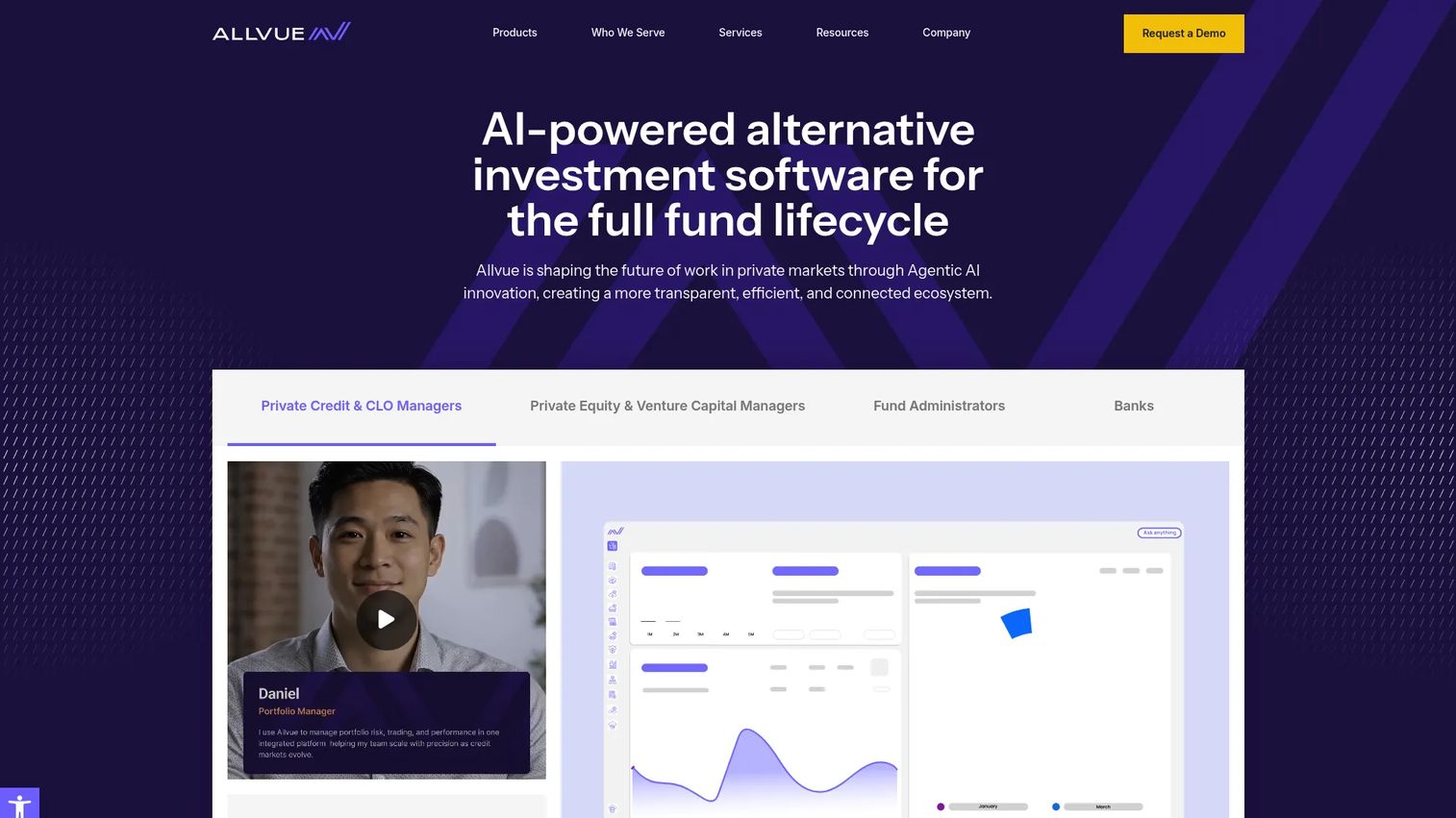
Allvue Fund Accounting software is a different animal entirely, built for private equity fund accounting and fund administration rather than nonprofits. It combines a true general ledger with partnership accounting, automated waterfall modeling, LPA modeling, and investor reporting, all on Microsoft Business Central and Azure architecture. For firms managing carry structures and capital accounts, this is purpose-built infrastructure.
Best for: Private equity firms and fund administrators needing integrated fund accounting, partnership accounting, and investor reporting.
Key strengths
- True general ledger and reporting: A genuine GL with financial reports and a custom report writer, not a bolt-on.
- Automated waterfalls: Waterfall modeling and distribution calculations that reduce manual carry math and error risk.
- Multi-currency and investor reporting: Multi-currency general ledger and investor reporting for global fund structures.
Why choose Allvue Fund Accounting software: For complex private capital operations, generic accounting tools cannot model partnership allocations or waterfalls without heavy customization. Allvue handles LPA modeling, capital calls, and distributions natively, with SOC 1 and SOC 2 positioning and the AI assistant Andi to speed back-office work. It is the right call when your funds have limited partners, not donors.
Allvue Fund Accounting software pricing: Allvue does not publish public pricing for its fund accounting module; pricing is scoped through sales. On G2, Allvue holds a 5.0/5 rating, though that reflects the broader alternative investment platform rather than the fund accounting module alone. Contact the vendor for a quote matched to your fund complexity.
5. QuickBooks Online
QuickBooks Online is the general accounting baseline that most small organizations already know. It handles bookkeeping, invoicing, bill pay, and reporting well, and many small nonprofits start here using classes and locations to approximate fund tracking. It is worth including as a comparison point precisely because so many teams begin with it before deciding whether they have outgrown it.
Best for: Small businesses and small nonprofits needing straightforward online bookkeeping, invoicing, and bill management.
Key strengths
- Automated bookkeeping: Bank feeds, categorization, and reconciliation reduce manual data entry.
- Invoicing and bill pay: Get paid and pay bills within one familiar interface.
- Broad reporting: Standard financial reports and a large ecosystem of integrations.
Why choose QuickBooks Online: For very simple bookkeeping, QuickBooks Online is hard to beat on cost and familiarity. It stops being enough when true restricted fund accounting matters: classes and tags approximate funds but do not enforce them, and audit-ready reporting by restriction gets manual fast. If you are tracking a handful of unrestricted programs, it works. Layered grant restrictions are where teams migrate.
QuickBooks Online pricing: QuickBooks Online lists four plans: Simple Start at $19/mo, Essentials at $37.50/mo, Plus at $57.50/mo, and Advanced at $137.50/mo, with promotional discounts often applied to the first months. On G2, QuickBooks Online holds a 4.2/5 rating. There is no free tier, though trials are typically available.
6. Sage Intacct
Sage Intacct is a cloud financial management platform that supports fund-like workflows through dimensions, multi-entity accounting, and strong reporting. Rather than hard-coding funds, it lets you tag transactions across dimensions like fund, grant, program, and location, then report on any combination. Many mid-sized nonprofits and finance teams choose it when they need accounting infrastructure beyond SMB tools.
Best for: Mid-sized organizations needing multi-entity financial management, dimensional reporting, and advanced automation.
Key strengths
- Dimensional accounting: Tag transactions by fund, grant, program, or entity and report across any slice.
- Multi-entity consolidation: Manage multi-fund tracking and multiple entities with shared dashboards.
- AP and reporting automation: AP automation and configurable reporting speed the close.
Why choose Sage Intacct: Sage Intacct performs best for organizations that have outgrown small-business tools and want a scalable financial core with real reporting depth. It is not a nonprofit-native fund accounting tool in the way Aplos or Blackbaud are, so heavily grant-driven orgs should weigh the dimensional approach against purpose-built fund logic. For multi-entity finance teams, the flexibility is the draw.
Sage Intacct pricing: Sage Intacct uses quote-based pricing tailored to organization size and needs, so you will contact sales for a customized figure rather than pick a published tier. Sage Intacct holds a 4.3/5 rating on Capterra. Ask for a scoped quote based on entities, users, and modules.
7. Xero
Xero is clean, lightweight cloud accounting software popular with small businesses and small nonprofits. Invoicing, bank reconciliation, and cash flow reporting are its strengths, and the interface is genuinely approachable for non-accountants. It is a sensible option for early-stage operations or small organizations whose fund structure is minimal.
Best for: Small businesses and small nonprofits needing clean books, invoicing, and bank reconciliation without heavy complexity.
Key strengths
- Invoicing and quotes: Fast invoicing and quoting with automated reminders.
- Bank reconciliation: Smart bank feeds make reconciliation quick and accurate.
- Cash flow reporting: Cash flow forecasting and standard reports out of the box.
Why choose Xero: For a small organization with one or two funds and simple reporting, Xero keeps the books clean without overhead. It is less suited to complex restricted fund accounting or multi-entity consolidation, so growing nonprofits with layered grant requirements often graduate to a purpose-built tool. As a starting point for lean operations, it is a strong, affordable choice.
Xero pricing: Xero's US pricing shows three plans: Early at $25/month, Growing at $55/month, and Established at $90/month, with promotional pricing for the first three months. On G2, Xero holds a 4.4/5 rating. There is no free tier, but trials are available.
8. Oracle NetSuite
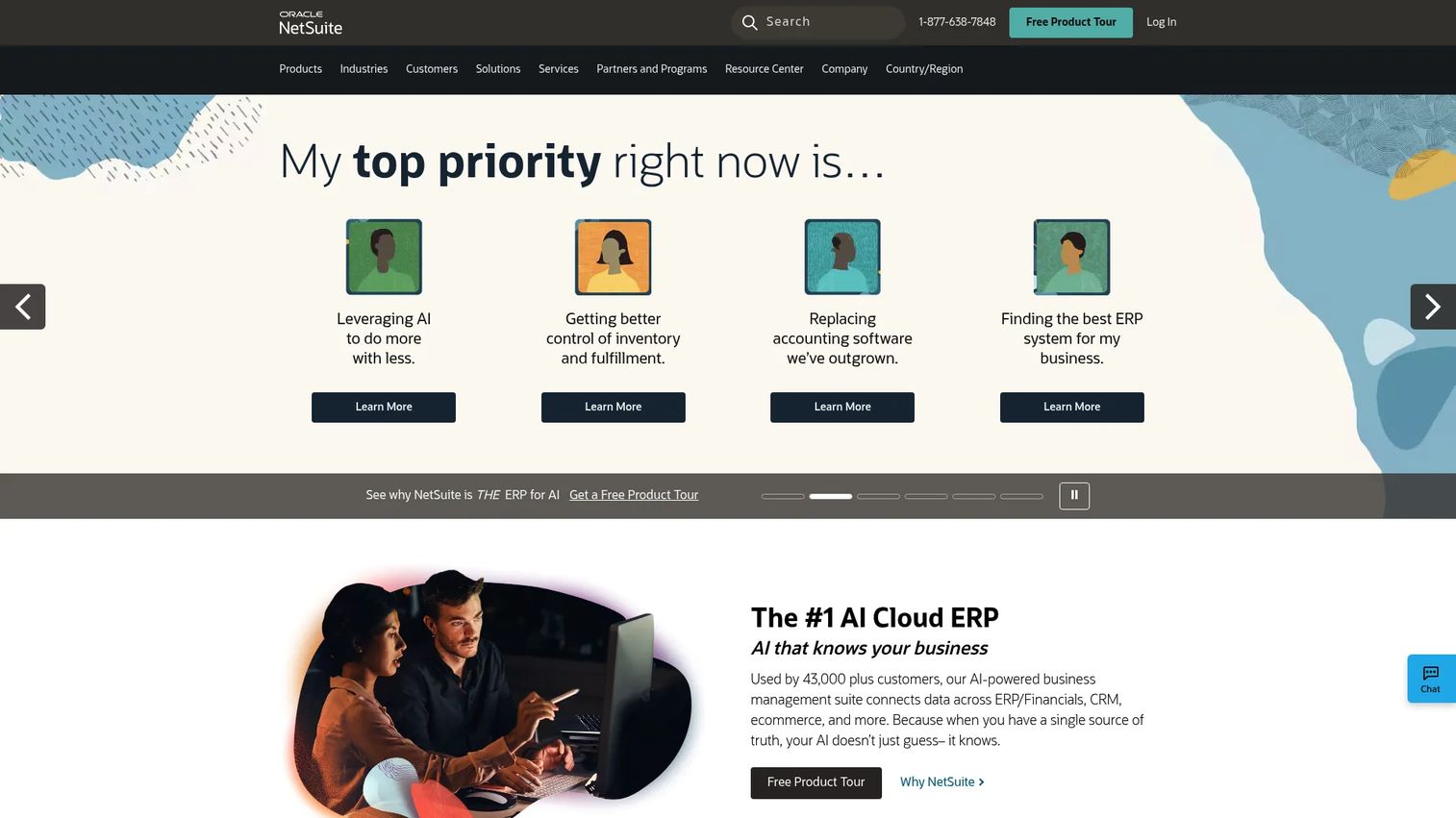
Oracle NetSuite is a cloud ERP platform that brings financial management, multi-entity accounting, reporting, and governance under one roof. For organizations that need broad ERP capabilities alongside their accounting, NetSuite consolidates finance, operations, and CRM into a single system. Fund accounting is achievable through segments and reporting, though it is less direct than nonprofit-native tools.
Best for: Mid-market and enterprise organizations needing a unified ERP with strong financial management and governance.
Key strengths
- Cloud ERP: Finance, operations, and CRM in one platform with a single data model.
- Financial management and analytics: Multi-entity accounting, reporting, and analytics at scale.
- Governance: Role-based controls and audit trails that support audit-ready reporting.
Why choose Oracle NetSuite: NetSuite fits organizations whose needs extend well beyond accounting into operations and multi-subsidiary management. It excels when you want one system of record across the business. For pure restricted fund accounting, a nonprofit-native tool may be more direct, but for complex multi-entity finance, NetSuite carries the load.
Oracle NetSuite pricing: NetSuite does not publish public pricing; it scopes cost through sales based on modules, users, and subsidiaries. On G2, NetSuite holds a 4.1/5 rating. Plan for an enterprise implementation and budget accordingly when requesting a quote.
9. Coupa
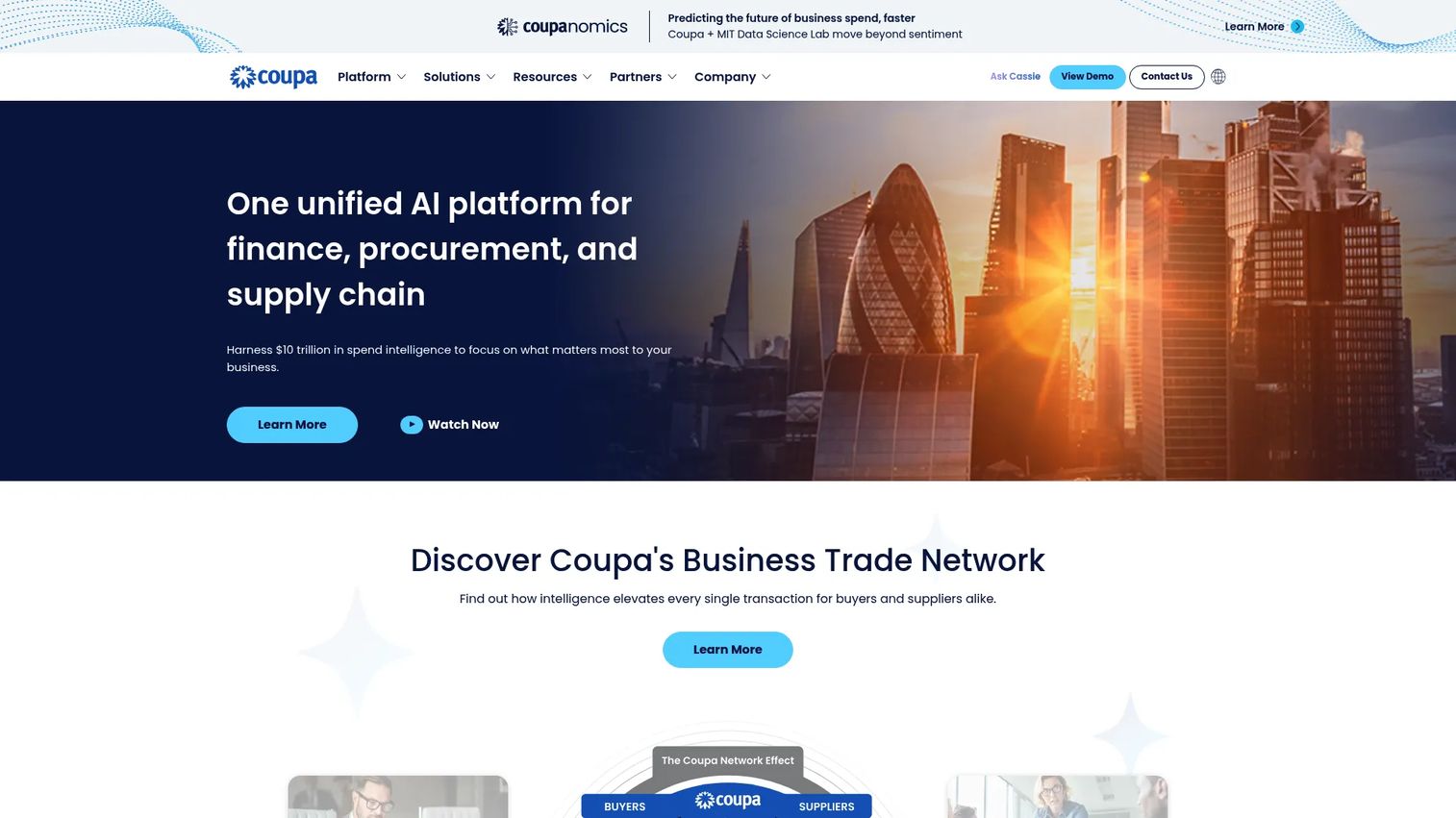
Coupa is an AI-native spend management and procurement platform rather than a pure fund accounting system. It brings procurement, invoicing, and expense workflows together with strong approval controls and spend visibility. For organizations where controlling and approving spend against fund budgets is the priority, it adds a controls layer that complements a core accounting system.
Best for: Enterprise teams needing unified spend management, procurement, and approval workflows alongside their accounting.
Key strengths
- Spend management platform: Unified visibility across procurement, invoicing, and expenses.
- Source-to-pay workflows: Procurement and approval workflows with clear controls.
- Expense management: Employee expense capture and policy enforcement in one place.
Why choose Coupa: Coupa is worth evaluating when approval workflows and spend control matter as much as ledger accuracy. It is not a primary fund accounting recommendation, since it does not maintain fund ledgers the way purpose-built tools do. Think of it as a controls-oriented complement that enforces how restricted budgets get spent, paired with a system that does the fund accounting itself.
Coupa pricing: Coupa uses quote-based pricing and does not publish public plan figures; cost is scoped through sales. On G2, Coupa holds a 4.2/5 rating. Request pricing based on spend volume, users, and modules you plan to deploy.
10. Workday Financial Management
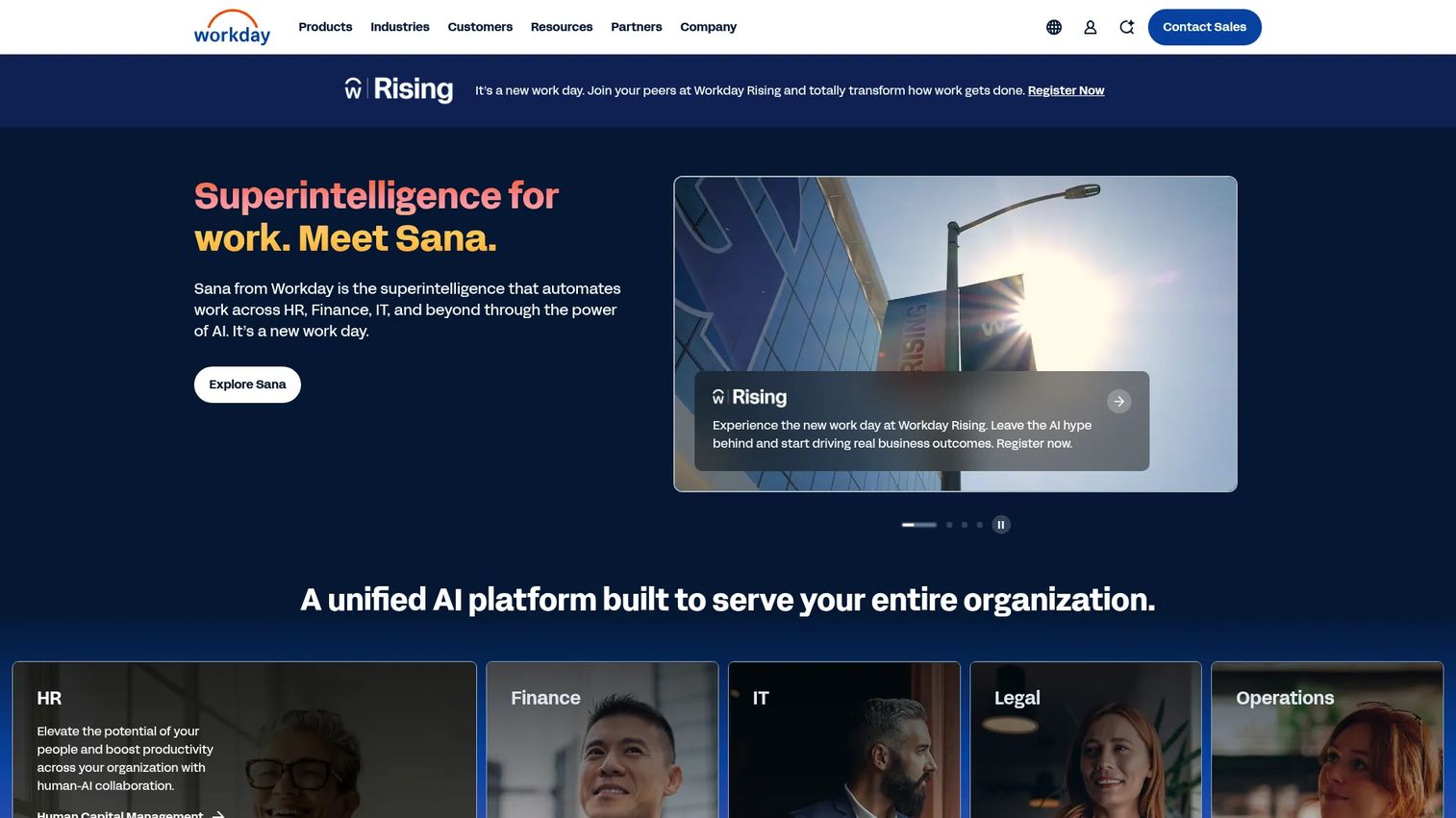
Workday Financial Management is enterprise cloud finance software covering the general ledger, accounts payable and receivable, global consolidation, and AI-assisted reporting. It shines in broad finance transformation contexts at large organizations, where consolidation, reporting, and operational control across the enterprise matter more than niche fund logic.
Best for: Large enterprises wanting a unified cloud finance platform with automation, consolidation, and reporting.
Key strengths
- General ledger: A modern GL built for large, complex organizations.
- AP and AR: Accounts payable and receivable managed within one platform.
- Global consolidation: Multi-entity consolidation and reporting at enterprise scale.
Why choose Workday Financial Management: Workday fits large organizations undertaking finance transformation, where the priority is a unified system across HR, finance, and planning. It is stronger for complex enterprise finance operations than for specialized restricted fund accounting, so nonprofits with heavy grant requirements should weigh a purpose-built tool. For enterprise finance at scale, Workday is a serious contender.
Workday Financial Management pricing: Workday does not publish public pricing; its product pages direct buyers to contact sales, and cost varies by scope. On G2, Workday Financial Management holds a 4.1/5 rating. Expect an enterprise procurement process scoped to your organization's size.
Considerations before you buy
Choosing a fund accounting system is less about ticking feature boxes and more about matching the tool to how your money is structured. Use this checklist to pressure-test any shortlist.
Fund structure fit
Map your actual fund complexity first. If you manage layered restricted grants, endowments, or partnership allocations, a purpose-built tool enforces the structure. If you have one or two simple funds, a general ledger with dimensions or classes may be enough.
Reporting and audit requirements
Look at who consumes your financials. Boards, funders, grantors, and auditors each want different views. Prioritize systems that produce audit-ready reporting and board-ready financials on demand, with audit trails and role-based controls baked in.
Automation and integrations
Check what connects to your existing stack: payroll, banking, CRM, fundraising, or investor portals. Strong workflows automation on approvals and allocations, plus clean integrations, is what actually shortens the close. Related controls like audit management and outbound call tracking for finance outreach may sit alongside your core system.
Fund accounting software pricing and total cost
Public pricing is common for smaller tools like Aplos, QuickBooks Online, and Xero. Enterprise systems like Blackbaud, NetSuite, Sage Intacct, Coupa, and Workday are quote-based, so factor implementation, training, and ongoing support into total cost, not just the license.
Conclusion
The right fund accounting software depends on your fund structure, your reporting audience, and the implementation resources you can commit. For nonprofits and churches, Aplos is the natural starting point, built around restricted funds, donor reporting, and Form 990. Larger nonprofit, education, and government teams gain configurability and unlimited funds with MIP Fund Accounting. Donor-heavy and grant-heavy organizations benefit from Blackbaud Financial Edge NXT and its Raiser's Edge NXT integration.
For private equity fund administration, Allvue Fund Accounting software handles waterfalls, partnership accounting, and investor reporting that generic tools cannot. And when you need general accounting first with fund tracking layered on top, QuickBooks Online, Sage Intacct, Xero, Oracle NetSuite, Coupa, and Workday Financial Management each fit a different point on the complexity curve.
Match the tool to your fund structure and reporting needs before you weigh price. The cheapest system that fails your audit costs more than the one that passes it. Shortlist two or three, request scoped demos, and test them against your real close process. If your evaluation also touches document control, a look at the best component content management systems can help round out the picture.
FAQs
Fund accounting software tracks money by its source and purpose, keeping restricted, designated, and unrestricted balances separate. It lets organizations prove that grants, donations, endowments, or partnership capital were used exactly as intended, and it produces audit-ready reporting to back that up.
Nonprofits, churches, schools, foundations, healthcare organizations, and government agencies use it to manage restricted funds and grants. Private equity firms and fund administrators use it for partnership accounting and investor reporting. Any organization accountable to funders, donors, or limited partners is a candidate.
Prioritize restricted fund tracking, grant and program reporting, multi-fund tracking, and audit trails with role-based controls. Strong reporting for boards, donors, and investors matters, as do integrations and workflows automation that shorten the close. Compliance features that hold up to external audit are non-negotiable.
QuickBooks Online works for small organizations with simple, mostly unrestricted funds, using classes and locations to approximate fund tracking. It stops being enough once you manage layered restricted grants, endowments, or multi-entity structures, since it does not enforce fund restrictions or produce restriction-based reporting natively. Most teams migrate at that point.
Fund accounting is the method of tracking money by fund and restriction; nonprofit accounting is the broader practice of managing a nonprofit's finances, which relies heavily on fund accounting. Most nonprofit accounting software includes fund accounting, but not all fund accounting software is built for nonprofits. Private equity fund accounting uses the same core principle for partnerships rather than donors.
Allvue Fund Accounting software is purpose-built for private equity fund accounting and fund administration. It handles partnership accounting, waterfall modeling, LPA modeling, and investor reporting on a true general ledger, with SOC 1 and SOC 2 positioning. Generic accounting tools cannot model carry and distributions without heavy customization.
It depends on size and complexity. Aplos is the best fit for small to mid-sized nonprofits and churches wanting native fund accounting, donor reporting, and Form 990 support. MIP Fund Accounting suits larger and government-adjacent teams needing configurability, while Blackbaud Financial Edge NXT fits donor-heavy and grant-heavy organizations with deeper reporting needs.
Smaller tools like Aplos, QuickBooks Online, and Xero publish clear tiers you can compare directly. Enterprise systems like Blackbaud, Sage Intacct, NetSuite, Coupa, and Workday are quote-based, so request scoped quotes and factor in implementation, training, and support. Compare total cost of ownership over a few years, not just the monthly license.