The most important person in your deal isn't on the org chart.
You're on a call with a prospect. The AE just finished the value pitch. Then the prospect's IT director asks about SSO integration with a specific identity provider, data residency requirements for their EU operations, and whether the API supports webhooks for their custom event pipeline.
The room goes quiet. The AE looks at the chat window.
That's when the solutions engineer steps in.
The solution engineer role is one of the most critical in B2B sales, and also one of the most misunderstood. Even inside sales organizations, people struggle to explain what SEs actually do all day. According to Gartner, the average B2B buying committee now includes 6 to 10 decision-makers, each with different technical requirements, risk tolerances, and evaluation criteria. Someone has to speak to all of them credibly. That someone is the SE.
This guide covers what solutions engineering actually looks like in practice: the definition, the daily responsibilities, the skills that matter, the salary ranges by seniority, and how the role is changing in 2026.
What you'll learn
- What a solutions engineer actually does (beyond the job description)
- How the SE role differs from software engineering and sales engineering
- The skills that separate good SEs from great ones
- How SE salaries break down by seniority and company stage
- What a realistic day in the life looks like, hour by hour
- How the role is evolving in 2026 (AI, interactive demos, buyer-led evaluation)
- Career paths after solutions engineering and how SEs are measured
TL;DR
- A solutions engineer is the technical half of the sales team, responsible for translating product capabilities into business outcomes during the sales cycle
- The role requires deep product knowledge, strong communication skills, and the ability to manage 8 to 15 active deals simultaneously without dropping anything critical
- In 2026, the best SEs are using interactive demo platforms like Guideflow and AI tools to scale their impact across more deals without burning out
- SE compensation in the US ranges from $90,000 total comp for junior roles to $300,000+ for principal-level positions at high-growth SaaS companies
- The most common paths into the role come from software engineering, customer success, or technical support backgrounds
What is a solutions engineer?
A solutions engineer (SE) is a technical sales professional who works alongside account executives to help prospective customers understand how a product or service addresses their specific business and technical requirements. The role sits at the intersection of product expertise and customer empathy.
That's the clean definition. Here's what it means in practice.
Solutions engineers live between product and sales. They typically report to a Director of Sales Engineering or VP of Presales, though at early-stage companies the first SE hire often reports directly to the VP of Sales. Their core job is translating technical product capabilities into business value for buyers who have specific, often complex, requirements.
Why does this role exist? B2B products are complex. Buying committees are large (that 6 to 10 stakeholder number from Gartner is an average, not an outlier). AEs are strong at building relationships, managing commercial terms, and driving urgency. But when a prospect's security team wants to understand your encryption model or their engineering lead asks about API rate limits, the AE needs a technical counterpart.
One common misconception deserves addressing upfront: SEs are not "demo jockeys." The demo is one output of a much broader set of responsibilities that includes discovery, technical validation, RFP responses, proof of concept management, and security reviews. At most companies, the live demo accounts for maybe 15% to 20% of an SE's actual time.
You'll see this role under several titles. Here's how they map:
| Title | Typical context |
|---|---|
| Solutions Engineer | Most common in SaaS, consultative focus |
| Sales Engineer | Common in infrastructure and legacy tech, sometimes closer to quota |
| Solutions Consultant | Consulting-oriented companies, advisory emphasis |
| Pre-Sales Engineer | European companies, explicit pre-sale scope |
| Technical Account Executive | Early-stage startups where one person covers both roles |
These titles often describe the same solution engineer role. The differences, where they exist, tend to reflect company culture more than actual job scope.
Solutions engineer vs software engineer
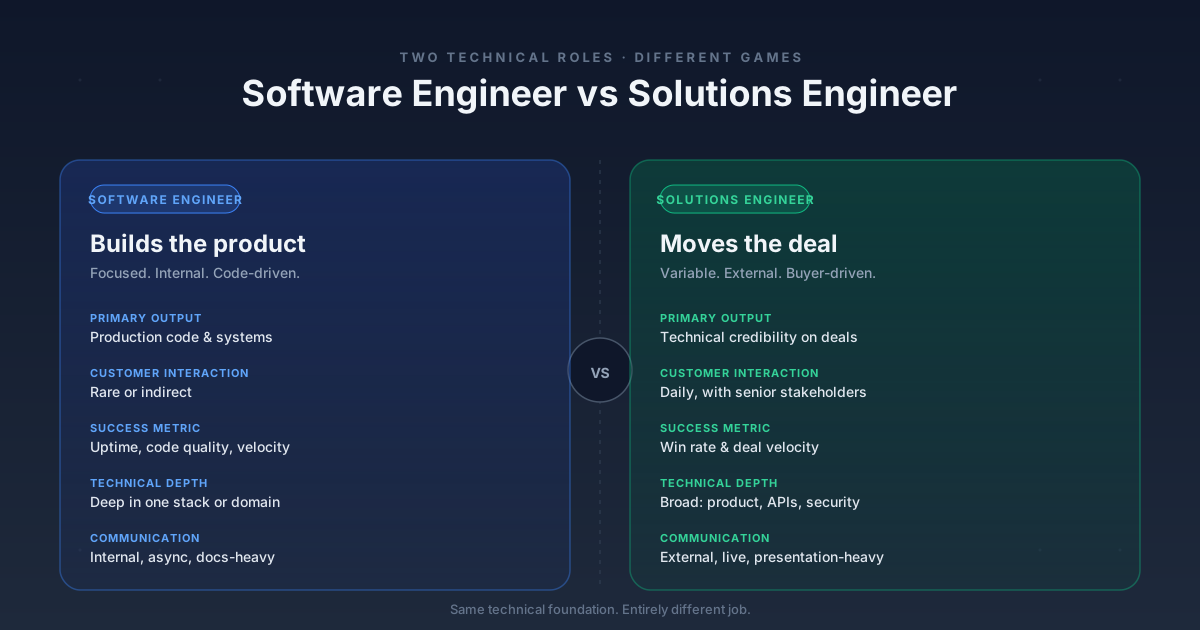
This is the comparison most people ask about first.
| Dimension | Software engineer | Solutions engineer |
|---|---|---|
| Primary output | Production code and systems | Technical credibility that moves deals forward |
| Customer interaction | Rare or indirect | Daily, often with senior stakeholders |
| Success metric | System uptime, code quality, sprint velocity | Win rate on supported deals, deal velocity |
| Technical depth | Deep in a specific domain or stack | Broad across product, integrations, and security |
| Day-to-day variety | Focused sprints on defined problems | Highly variable, driven by deal timelines |
| Communication emphasis | Internal, async, documentation-heavy | External, live, presentation-heavy |
The overlap is real. Both roles require strong technical skills and the ability to reason about complex systems. The divergence is in how those skills are applied. Software engineers build the product. Solutions engineers show how it solves specific problems for specific buyers.
Many SEs start as software engineers and move into presales because they enjoy the customer-facing work and the variety. The transition is common and well-worn. If you're a developer who finds yourself energized by the customer calls you occasionally join, that's a signal worth paying attention to.
Solutions engineer vs sales engineer
In most companies, these titles are interchangeable. The honest answer to "what's the difference?" is: check the job description, not the title.
Where a distinction exists, it tends to look like this: "sales engineer" sometimes implies closer alignment to quota and commercial outcomes (more involved in pricing discussions, more directly measured on revenue). "Solutions engineer" implies a more consultative, technical advisory focus (more involved in architecture discussions, more measured on technical win rate).
But this varies wildly by company. A "Sales Engineer" at one company does the exact same work as a "Solutions Consultant" at another. Don't overthink the title. Read the solution engineer job description.
What does a solutions engineer do?
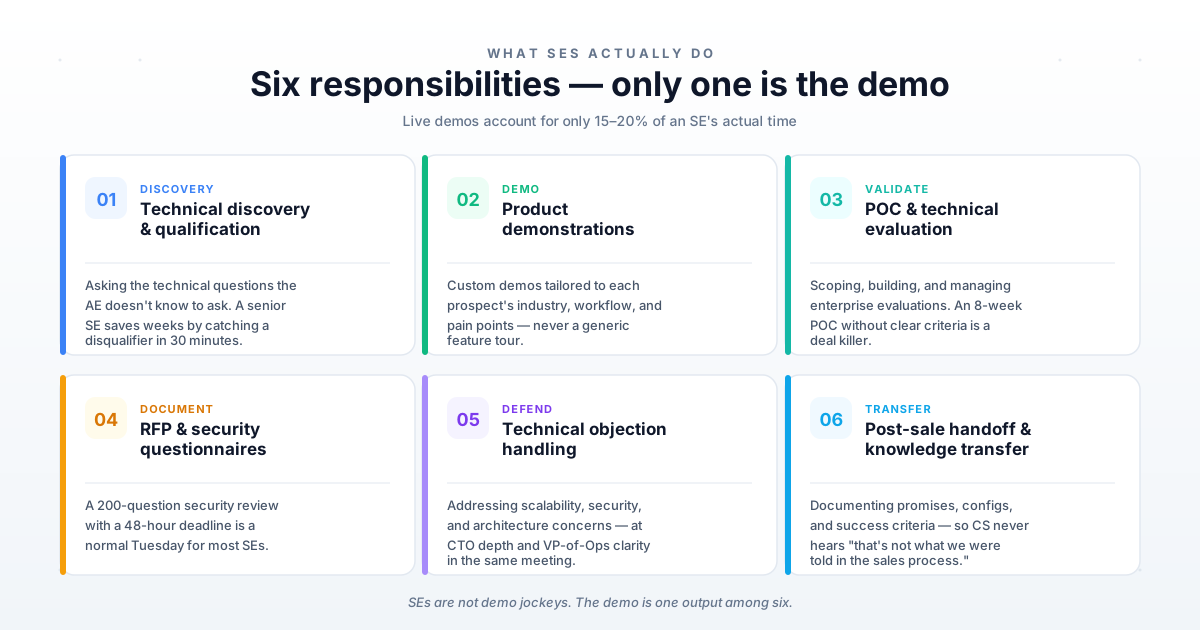
This is the core of the solutions engineer job description. Here's what the work actually looks like across six responsibility areas.
Technical discovery and qualification
The SE joins discovery calls to understand the prospect's technical environment, integration requirements, and success criteria. This isn't passive listening. It's asking the questions the AE doesn't know to ask.
"What's your current authentication setup?" "How are you handling data migration from your legacy system?" "Who on your team will own the integration, and what's their bandwidth?"
Good discovery determines whether the deal is technically viable before the team invests 40+ hours in demos, POCs, and security reviews. A senior SE can save the team weeks by identifying a technical disqualifier in the first 30 minutes.
Product demonstrations
The most visible part of the job. SEs build and deliver custom demos tailored to each prospect's use case. This means understanding the prospect's industry, workflow, and pain points well enough to show the product solving their specific problem, not running a generic feature tour.
A demo for a healthcare company looks different from a demo for a fintech company, even if the product is the same. The data, the workflows, the compliance considerations, and the stakeholder concerns are all different.
Proof of concept and technical evaluation
For enterprise deals, prospects often want to test the product in their environment before committing. The SE scopes, builds, and manages these evaluations. This includes defining success criteria upfront, configuring the environment, and tracking progress against milestones.
A POC that drags on for 8 weeks without clear criteria is a deal killer. Good SEs prevent this by getting agreement on what "success" looks like before the evaluation starts, following proof of concept best practices for enterprise sales.
RFP and security questionnaire responses
SEs are frequently responsible for answering technical questions in RFPs and security reviews. A 200-question security questionnaire with a 48-hour deadline is a normal Tuesday. This requires deep knowledge of the product's architecture, compliance posture, and data handling practices.
Technical objection handling
When a prospect raises a concern about scalability, security, integration, or architecture, the SE answers. This requires deep product knowledge and the ability to explain complex concepts to both the prospect's CTO and their non-technical VP of Operations in the same meeting.
Post-sale handoff and knowledge transfer
Good SEs document what was promised, what was configured during the POC, and what the customer's success criteria are. Then they hand this to the implementation or customer success team. A clean handoff prevents the "that's not what we were told during the sales process" problem that erodes trust and creates churn risk.
A day in the life of a solutions engineer
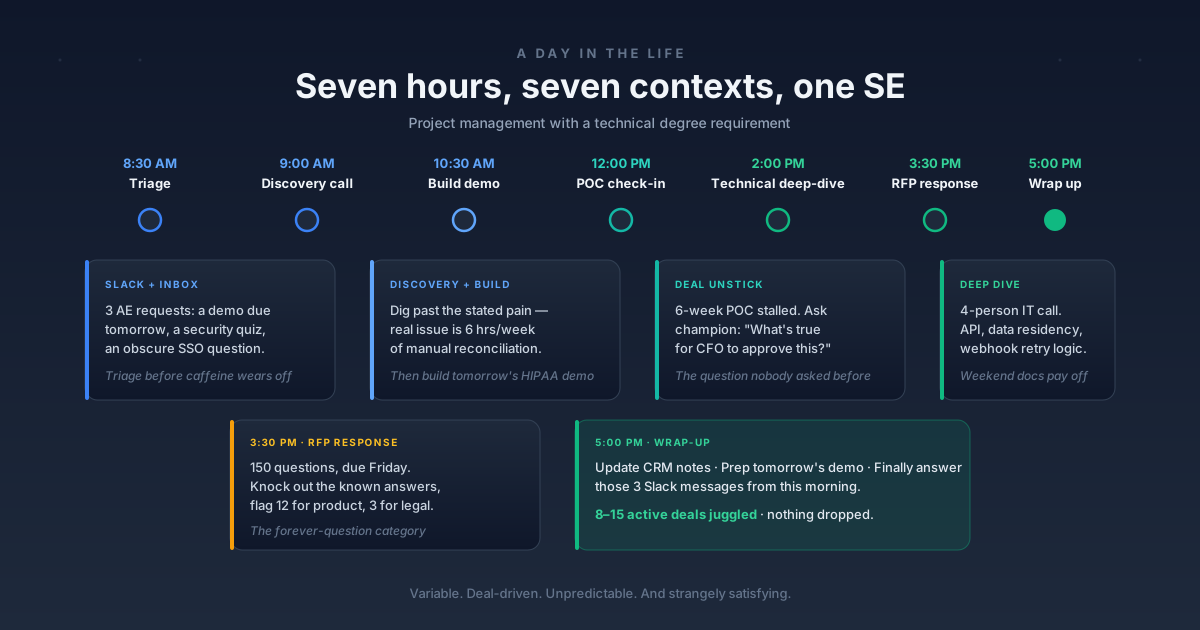
Here's what a realistic day looks like for an SE at a mid-market SaaS company. No polish. Just the actual work.
8:30 AM: Check Slack. Three messages from AEs. One needs a custom demo by tomorrow for a fintech prospect. One wants help with a security questionnaire that landed overnight. One is asking if the product supports SSO with a specific identity provider the SE has never heard of. Quick Google search. It's a niche IdP used mainly in government. The answer is "not natively, but via SAML-based single sign-on protocol." Draft a response with the workaround.
9:00 AM: Discovery call with a mid-market prospect. The AE already ran a first call, but the technical requirements are unclear. Spend 30 minutes asking the right questions. The prospect's current system is a patchwork of three tools held together by Zapier automations and a shared Google Sheet. The real pain isn't what they said on the first call. It's that their data is siloed and their team spends 6 hours a week on manual reconciliation.
10:30 AM: Build a demo environment for tomorrow's presentation. The prospect is in healthcare, so you need to show HIPAA-relevant workflows. Swap out the sample data, configure the right permission model, and add a slide on data residency. This takes 90 minutes because the demo environment broke last week and nobody fixed it.
12:00 PM: POC check-in. The enterprise prospect has been "evaluating" for six weeks. Their champion is engaged but can't get budget approval. The SE asks the right question: "What would need to be true for your CFO to approve this before end of quarter?" The champion pauses. They hadn't thought about it that way. Progress.
2:00 PM: Technical deep-dive with a prospect's IT team. Four people on the call. They want to understand the API, data residency options, and SSO integration in detail. One of them asks about webhook retry logic. The SE knows the answer because they spent a weekend reading the API docs when they first started. That investment pays off in moments like this.
3:30 PM: RFP response. 150 questions. Due Friday. Half the answers exist in the knowledge base. Half don't. The SE starts with what's available and flags 12 questions that need input from the product team and 3 that need legal review.
5:00 PM: Update CRM notes, prep for tomorrow's demo, and respond to the three Slack messages from this morning that still need answers.
If this sounds like project management with a technical degree requirement, you're not far off.
Key skills for solutions engineers
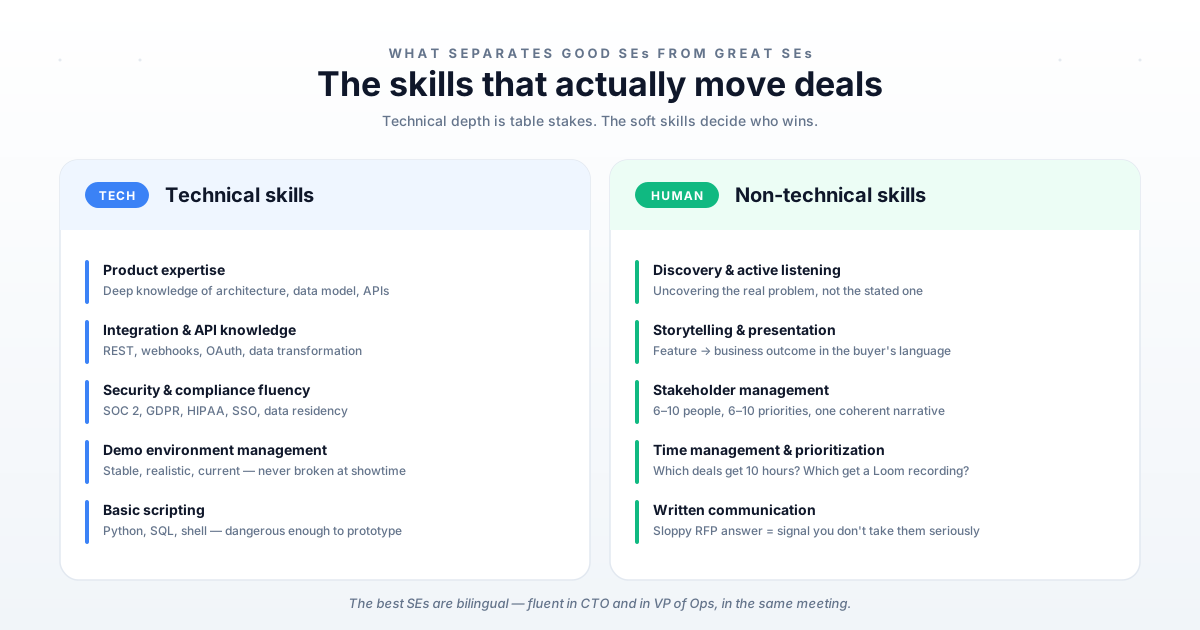
Technical skills
Product expertise: Not surface-level familiarity. Deep understanding of the product's architecture, data model, API capabilities, and limitations. The kind of knowledge that lets you answer unexpected questions in a live call without flinching. In practice, this means spending evenings reading release notes and weekends in the sandbox.
Integration and API knowledge: Understanding how the product connects to the prospect's existing stack. REST APIs and webhook architecture, OAuth flows, data transformation. You don't need to build production integrations, but you need to speak credibly about how they work.
Security and compliance fluency: SOC 2 compliance framework, GDPR data residency requirements, HIPAA, SSO, data residency, encryption at rest and in transit. Every enterprise deal involves a security review. SEs who can navigate these conversations confidently save weeks on deal timelines.
Demo environment management: Building, maintaining, and customizing demo instances. This includes keeping sample data realistic, environments stable, and configurations current as the product evolves. A broken demo environment 30 minutes before a call is a preventable disaster.
Basic scripting or coding: Enough to build POC configurations, write simple API calls, and troubleshoot integration issues. Python, SQL, and basic shell scripting cover most scenarios. You're not shipping production code, but you need to be dangerous enough to prototype.
Non-technical skills
Discovery and active listening: The ability to ask questions that uncover the real problem, not the stated one. In practice, this means hearing "we need better reporting" and digging until you find out the actual issue is that their VP can't get data to the board fast enough.
Storytelling and presentation: Translating technical features into business outcomes. "Our API supports webhooks" means nothing to a VP. "Your team will get real-time alerts when a critical event happens, instead of discovering it 24 hours later in a batch report" means everything.
Stakeholder management: Navigating 6 to 10 people in a buying committee with different priorities. The CTO cares about architecture. The CISO cares about security. The end users care about daily workflow. The CFO cares about ROI. The SE speaks to all of them.
Time management and prioritization: Juggling 8 to 15 active deals without dropping anything critical. This means knowing which deals deserve 10 hours of POC work and which ones get a recorded walkthrough and a follow-up email.
Written communication: RFP responses, follow-up emails, and internal documentation all require clear, precise writing. A sloppy RFP response doesn't just lose a question. It signals that the company doesn't take the prospect seriously.
Solutions engineer salary and compensation in 2026
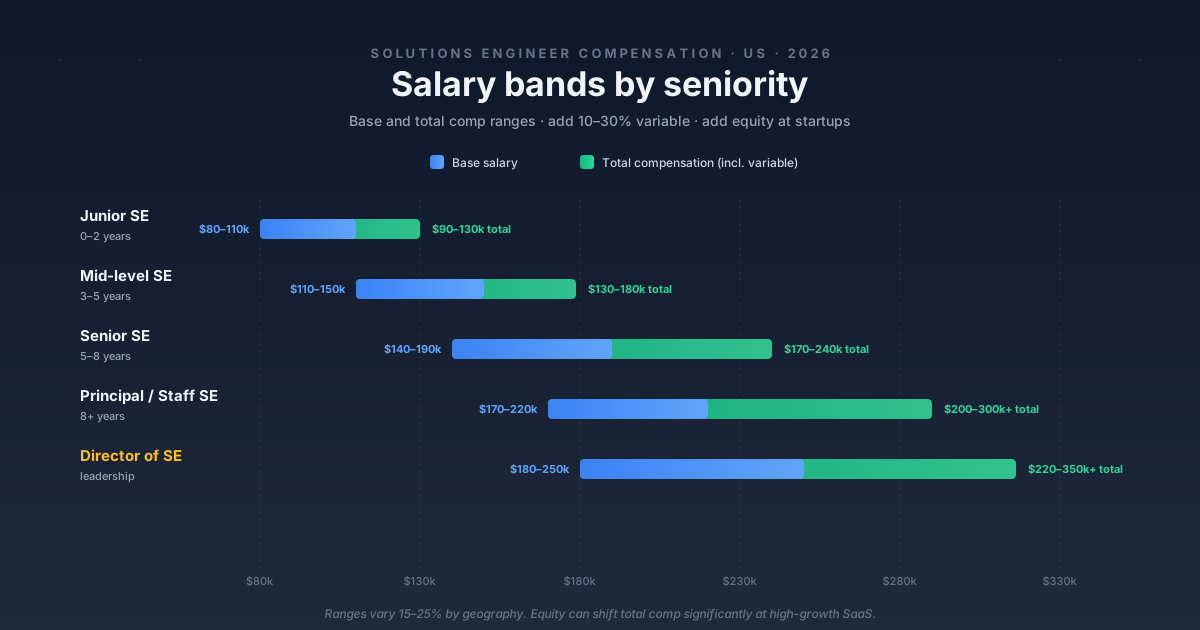
SE compensation varies significantly by geography, company size, seniority, and whether the role includes variable comp. Most SE roles have a bonus or commission component (typically 10% to 30% of base salary) tied to team or individual deal outcomes.
Here's how the ranges break down in the US market, based on salary data from Glassdoor and Levels.fyi, and Comparably:
| Seniority | Base salary range (US) | Total comp range (US) |
|---|---|---|
| Junior SE (0 to 2 years) | $80,000 to $110,000 | $90,000 to $130,000 |
| Mid-level SE (3 to 5 years) | $110,000 to $150,000 | $130,000 to $180,000 |
| Senior SE (5 to 8 years) | $140,000 to $190,000 | $170,000 to $240,000 |
| Principal / Staff SE (8+ years) | $170,000 to $220,000 | $200,000 to $300,000+ |
| Director of Sales Engineering | $180,000 to $250,000 | $220,000 to $350,000+ |
A few things worth noting. First, equity can be significant at startups. A senior SE at a Series B company might have a lower base than one at a public company but a total compensation package that's competitive once you factor in stock options.
Second, the variable component structure matters. Some companies tie SE bonuses to team quota attainment (the SE shares in the team's success). Others tie it to individual deal outcomes or a mix of both. Ask about this in interviews. The structure shapes your day-to-day incentives.
Third, geography still matters, though less than it did pre-2020. A senior SE in San Francisco tends to earn 15% to 25% more in base salary than one in Austin or Denver, but the gap is narrowing as remote work compensation trends in tech normalize.
How to become a solutions engineer
Most SEs don't follow a linear path. Here are the most common routes.
From software engineering or technical roles
The most common path. You already have the technical depth. The transition is about developing customer-facing skills: discovery, presentation, stakeholder management.
Many SEs start by shadowing existing SEs on calls, then gradually take on their own deals. At a Series B SaaS company with 50 employees, the first SE hire is often a senior engineer who already knows the product inside out and enjoys the customer conversations that other engineers avoid.
From customer success or support
You already understand the product and the customer. The gap is usually deeper technical knowledge and the ability to operate in a sales context with deal pressure and timelines.
This path works well because support and CS professionals have already developed the empathy and communication skills that take engineers longer to build. The technical ramp is often faster than the soft-skill ramp.
From sales (AE or SDR)
Less common but possible. The gap is technical depth. This path works best if you have a technical background (CS degree, prior technical role) and want to move to the technical side of the sales motion.
AEs who become SEs often bring strong commercial instincts and deal management skills that pure technicians lack. The trade-off is that the technical ramp can be steep if you haven't coded or managed infrastructure before.
Education and certifications
A bachelor's degree in computer science, engineering, or a related field is common but not required. Many successful solutions engineers have non-traditional backgrounds.
Certifications (AWS certification paths for presales professionals, Salesforce, specific product certifications) can help, especially when you're trying to break into the role. But they're not gatekeepers. What matters more: can you learn a complex product quickly and explain it clearly to someone who has different priorities than you?
The solutions engineer tech stack in 2026
Here are the tool categories SEs use daily, with specific examples in each.
CRM: Salesforce, HubSpot. SEs log deal notes, track opportunity stages, and document technical requirements. Most SEs have a love-hate relationship with their CRM. The data entry is tedious, but the context it provides on the next call is invaluable. If you're evaluating CRM options for your presales team, see our roundup of the best CRM software.
Demo automation and interactive demos: Guideflow and similar platforms let SEs create self-serve product experiences that prospects can explore without a live call. This reduces repetitive first-call demos and lets SEs focus their live time on high-value technical deep-dives. You capture your product flow in a few clicks, then share or embed the interactive demo wherever it's needed.
Communication: Slack (internal coordination), Zoom (customer calls), Gong (call recording and review). Gong for conversation intelligence is particularly useful for SEs who want to review how they handled a technical objection or study how a senior SE runs discovery.
Knowledge management: Notion, Confluence, Guru. These house RFP answer libraries, security questionnaire templates, product documentation, and competitive intelligence. The SE who maintains a well-organized knowledge base saves hours every week.
Presentation and content: Google Slides, Pitch, Loom. Loom is increasingly popular for async video walkthroughs that let prospects review technical content on their own schedule.
Project management: Jira, Linear, Asana. Used for POC tracking, internal coordination on complex deals, and managing the queue of RFPs and security reviews.
Security and compliance: Tools for managing questionnaire responses vary by company, but the category is growing as security reviews become standard in mid-market and enterprise deals.
How the solutions engineer role is evolving in 2026
Buyer-led evaluation and self-serve demos
Buyers increasingly want to evaluate products on their own terms before committing to a live call. Interactive demos let prospects explore the product independently, which changes the SE's role from "gatekeeper of the demo" to "curator of the evaluation experience."
SEs who adopt this model report spending less time on repetitive first-call demos and more time on high-value technical deep-dives. The shift is measurable: teams using interactive demos for initial product exposure often see a 20% to 30% reduction in first-call demo requests, freeing SE time for the complex, multi-stakeholder conversations that actually move deals. Many teams centralize these experiences in a demo center that prospects can browse on their own.
AI in presales workflows
AI is changing how SEs handle RFPs (automated first-draft responses), call preparation (AI-generated account briefs from CRM and public data), and follow-up (automated summary and action item generation after calls).
The SE role isn't being replaced by AI. It's being augmented. The SEs who adopt these tools early are handling more deals without proportionally more hours. A 200-question security questionnaire that used to take 6 hours now takes 2 because the first draft is AI-generated and the SE focuses on reviewing and refining the answers that require judgment. For a deeper look at the category, explore our list of the best AI sales tools.
The SE-to-AE ratio is tightening
As companies focus on efficiency, the ratio of SEs to AEs is shifting. Many solutions engineering teams operate at 1 SE per 4 to 5 AEs, which means SEs need to be more selective about which deals get their time, reflecting tightening SE-to-AE ratio benchmarks in SaaS.
Qualification skills and the ability to scale through async content (recorded demos, interactive walkthroughs, documentation) are becoming as important as live presentation skills. The SE who can create a compelling async demo that handles 60% of first-call questions is more valuable than one who insists on being live for every interaction.
Cross-functional scope is expanding
Solutions engineers are increasingly involved in product feedback loops, customer success handoffs, and even marketing content (technical blog posts, webinar presentations, product launch support).
The best SEs in 2026 are not just deal supporters. They're product experts who contribute across the GTM motion. This expanded scope creates career opportunities, but it also creates a real risk of overextension. SEs who don't set boundaries on cross-functional requests end up stretched thin and less effective on their primary job: helping close deals.
How SEs are measured: KPIs and performance metrics
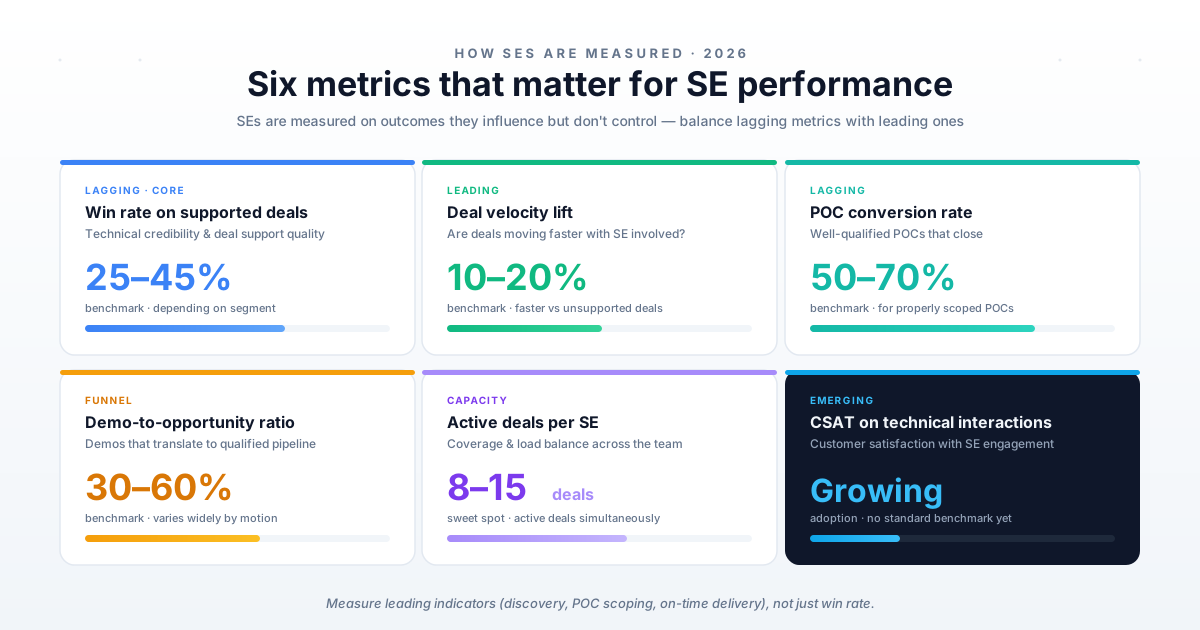
This is a gap no competitor addresses well. Here are the metrics that matter for solutions engineering teams.
| Metric | What it measures | Typical benchmark |
|---|---|---|
| Win rate on supported deals | Technical credibility and deal support quality | 25% to 45% depending on segment |
| Deal velocity | Are deals moving faster with SE involvement? | 10% to 20% faster vs unsupported deals |
| POC conversion rate | What percentage of POCs convert to closed-won? | 50% to 70% for well-qualified POCs |
| Demo-to-opportunity ratio | How many demos translate into qualified pipeline? | Varies widely, 30% to 60% |
| Coverage and utilization | Active deals per SE and load balance | 8 to 15 active deals per SE |
| CSAT on technical interactions | Customer satisfaction with SE engagement | Growing in adoption, no standard benchmark yet |
Here's the honest tension: SEs are measured on outcomes they influence but don't control. The AE owns the deal. The SE owns the technical credibility. When deals stall for non-technical reasons (budget freeze, champion leaves, competitor undercuts on price), the SE still feels the impact on their metrics.
Good presales managers account for this by measuring SE contribution rather than just deal outcomes. Did the SE run a clean discovery? Was the POC well-scoped? Did the technical evaluation complete on time? These leading indicators matter more than lagging win rates for evaluating individual SE performance. Teams looking to formalize this process should explore dedicated presales software built for tracking SE activity and impact.
Career paths after solutions engineering
Director / VP of Sales Engineering: Managing a solutions engineering team. The most common progression. The transition requires developing people management, hiring, and capacity planning skills. Most SE leaders were strong individual contributors who also showed an ability to coach and mentor.
Product management: SEs have deep customer insight and product knowledge. Many transition into PM roles because they've spent years hearing what customers need and understanding what the product can and can't do. The gap is usually in prioritization frameworks and cross-functional product leadership. Explore the best product management tools that PMs and former SEs rely on.
Customer success / solutions architecture: Post-sale roles that use the same technical and relationship skills. Solutions architects tend to work on larger, more complex implementations. This path appeals to SEs who enjoy the technical depth but want to move away from deal pressure.
Sales leadership (CRO, VP Sales): Less common but possible, especially for SEs who develop strong commercial instincts. The transition requires a fundamental shift in how you think about your job: from supporting deals to owning pipeline and revenue targets.
Founding a company: SEs who've spent years understanding buyer problems and product gaps sometimes build their own products. The SE background is uniquely suited to founding because you understand both what customers need and how to demonstrate value.
Conclusion
The solutions engineer role sits at the intersection of technical expertise and customer empathy. It's becoming more strategic, not less, as B2B sales grows more complex and buying committees demand more technical depth earlier in the evaluation process.
If you're considering the SE path, start by shadowing a presales team on discovery calls. If you're already in the role, look at where you're spending time on repetitive work and ask whether tools like interactive demos or AI-assisted RFP responses could free you up for the work that actually moves deals.
Start your journey with Guideflow today
FAQs about solutions engineers
In most companies, these titles describe the same role. Where a distinction exists, “sales engineer” sometimes implies closer alignment to quota and commercial outcomes, while “solutions engineer” implies a more consultative, technical advisory focus. Check the job description rather than the title.
Most SEs don’t write production code, but basic scripting skills (Python, SQL, API calls) are useful for building POC environments and answering technical questions. The depth of coding required depends on the product. A technical solutions engineer at a developer tools company needs more technical depth than an SE at a marketing SaaS platform.
In the US, base salaries range from $80,000 for junior SEs to $220,000+ for principal-level roles. Total compensation (including variable pay and equity) can reach $300,000+ at senior levels in high-growth SaaS companies. Geography, company stage, and industry all affect the range significantly.
For people who enjoy both technical problem-solving and working with customers, it’s one of the strongest roles in tech. The compensation is strong, the work is varied, and the career paths are broad. The honest trade-off: the role can be demanding, with unpredictable hours driven by deal timelines and last-minute requests from AEs who need help “by end of day.”
Most SEs have 2 to 5 years of prior experience in a technical role (software engineering, support, implementation) before transitioning. The ramp time in a new SE role is typically 2 to 4 months to become productive and 6 to 12 months to become fully autonomous on complex enterprise deals.
SaaS is the largest employer of SEs, but the role exists across enterprise software, cybersecurity, cloud infrastructure, data and analytics, developer tools, and increasingly in fintech and healthtech. Any company selling a complex technical product to businesses likely has (or needs) solutions engineers.
Yes. While a CS or engineering degree is common, many successful SEs have degrees in other fields or no degree at all. What matters is demonstrable technical aptitude, strong communication skills, and the ability to learn complex products quickly. Certifications and hands-on experience carry significant weight in hiring decisions.
The typical SE stack includes a CRM (Salesforce or HubSpot), communication tools (Slack, Zoom), demo automation platforms for building interactive product experiences, knowledge management tools (Notion, Confluence), and presentation software. The specific tools vary by company, but the categories are consistent across the solutions engineering field.