
Consumer insights platforms pull customer data from your CRM, website, support tickets, and social channels into one place so you can actually see what's happening across the buyer journey. Without one, teams lose up to 30% of weekly work hours piecing together data from disconnected systems, hoping the patterns they spot aren't just noise.
This guide breaks down what these platforms do, when they make sense for your team, and 12 tools worth evaluating based on your specific use case.
What's inside
This guide covers what consumer insights platforms actually do, when they make sense for your team, and 11 tools evaluated across different use cases. We selected platforms based on data sources, AI capabilities, integration depth, and ease of use for teams without dedicated research ops.
TL;DR
- Consumer insights platforms defined: Software that aggregates customer data from multiple channels into a unified view for analysis and action
- Best for survey-based research: GWI and YouGov offer global panel access and brand tracking
- Best for behavioral analytics: Contentsquare, Mixpanel, and Hotjar track what users actually do in your product or on your site
- Best for social listening: Brandwatch and Meltwater monitor online conversations and sentiment at scale
What is a consumer insights platform
A consumer insights platform is software that aggregates, analyzes, and manages data from various channels to provide a unified view of customer behavior, preferences, and feedback. Think of it as a central hub that pulls information from your CRM, website, support tickets, sales interactions, and social media into one place.
The goal here is straightforward: move from raw, siloed data to actionable intelligence. Most platforms use AI to surface patterns humans might miss, including sentiment detection, predictive analytics, and automated reporting. The best tools connect insights directly to activation, whether that means triggering a marketing campaign, alerting sales to a high-intent account, or informing product decisions.
Core capabilities of consumer intelligence software
- Unified customer data: Combines behavioral, transactional, and demographic data into a single view
- AI and machine learning: Predicts churn, forecasts lifetime value, identifies sentiment patterns
- Real-time triggers: Enables automated marketing journeys based on customer actions
- Survey and feedback collection: Captures structured and unstructured feedback across touchpoints
- Visualization and reporting: Translates raw data into shareable dashboards and reports
Consumer analytics platforms vs traditional market research
When to use a consumer research platform
Not every team needs a dedicated consumer insights tool. The decision depends on what questions you're trying to answer and how often you need answers.
Brand tracking and market research
Use a consumer research platform when you need ongoing measurement of brand perception, awareness, and consideration across target audiences. Marketing teams running longitudinal studies or tracking competitive positioning over time typically fall into this category.
Product development and innovation testing
Use consumer insights tools when validating new concepts, features, or packaging before launch. Product teams reduce risk by testing with real consumer feedback early in the development cycle.
Campaign performance and audience targeting
Use a platform when segmenting audiences for personalized messaging or measuring campaign effectiveness. Behavioral data connected to creative optimization helps you understand which messages resonate with which segments - important when over 75% of consumers disengage from content that doesn't feel relevant.
Competitive intelligence and trend analysis
Use consumer intelligence tools when monitoring market shifts, competitor positioning, or emerging consumer behaviors. The best platforms help teams anticipate changes rather than react to them.
Consumer insights platform comparison table
Top consumer insights platforms and tools
1. GWI
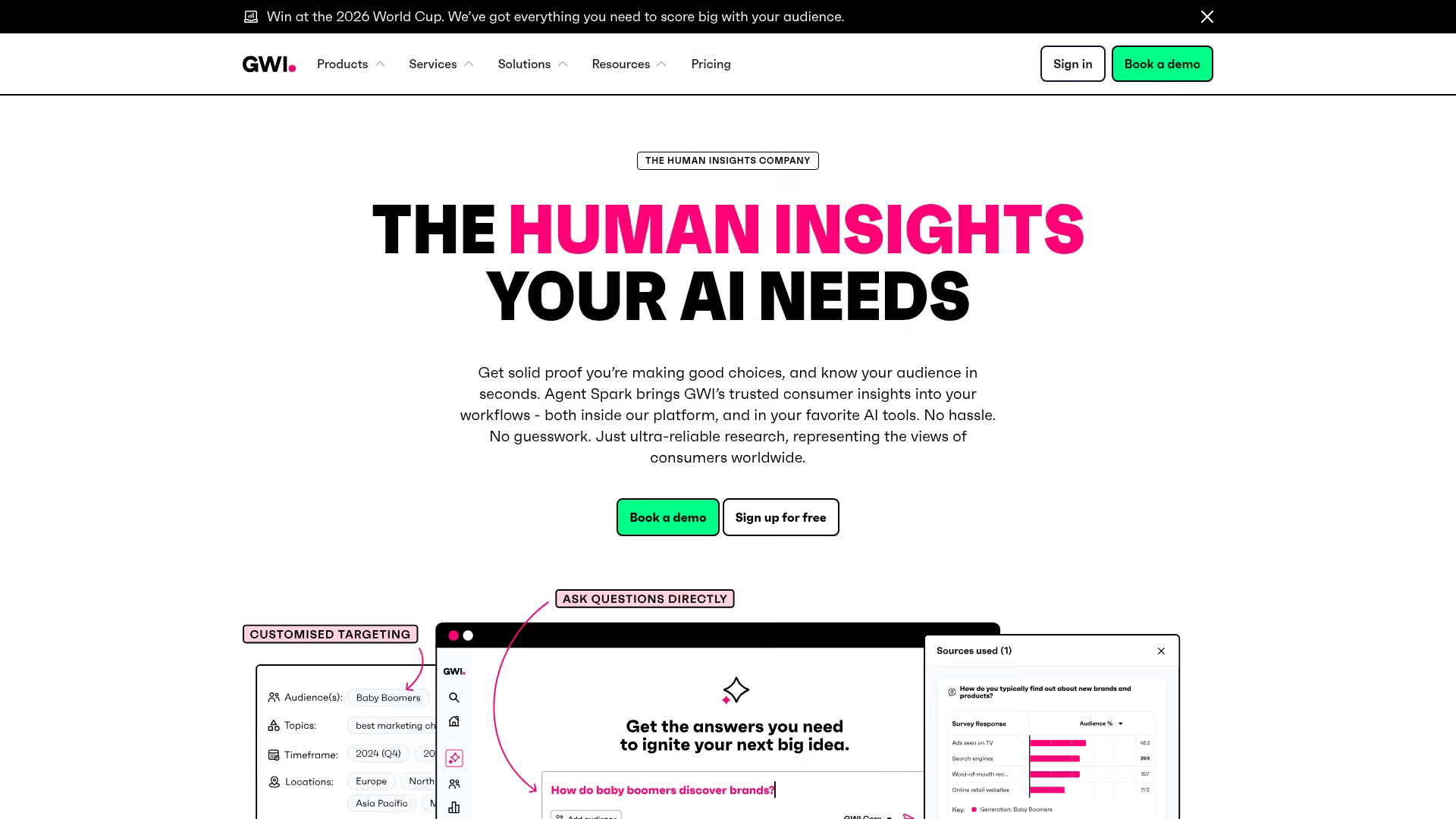
GWI provides survey-based consumer insights across 50+ markets, specializing in attitudes, behaviors, and interests. The platform offers pre-built audience segments and an AI-powered query interface that lets teams explore data without analyst support.
Best for: Teams needing representative samples and demographic breakdowns for global audience research.
Key strengths
- Global panel reach across 50+ markets
- Pre-built audience segments by demographics and interests
- AI-powered natural language query interface
- Media planning data for campaign targeting
Pricing: Enterprise pricing; contact sales for details.
2. Quantilope
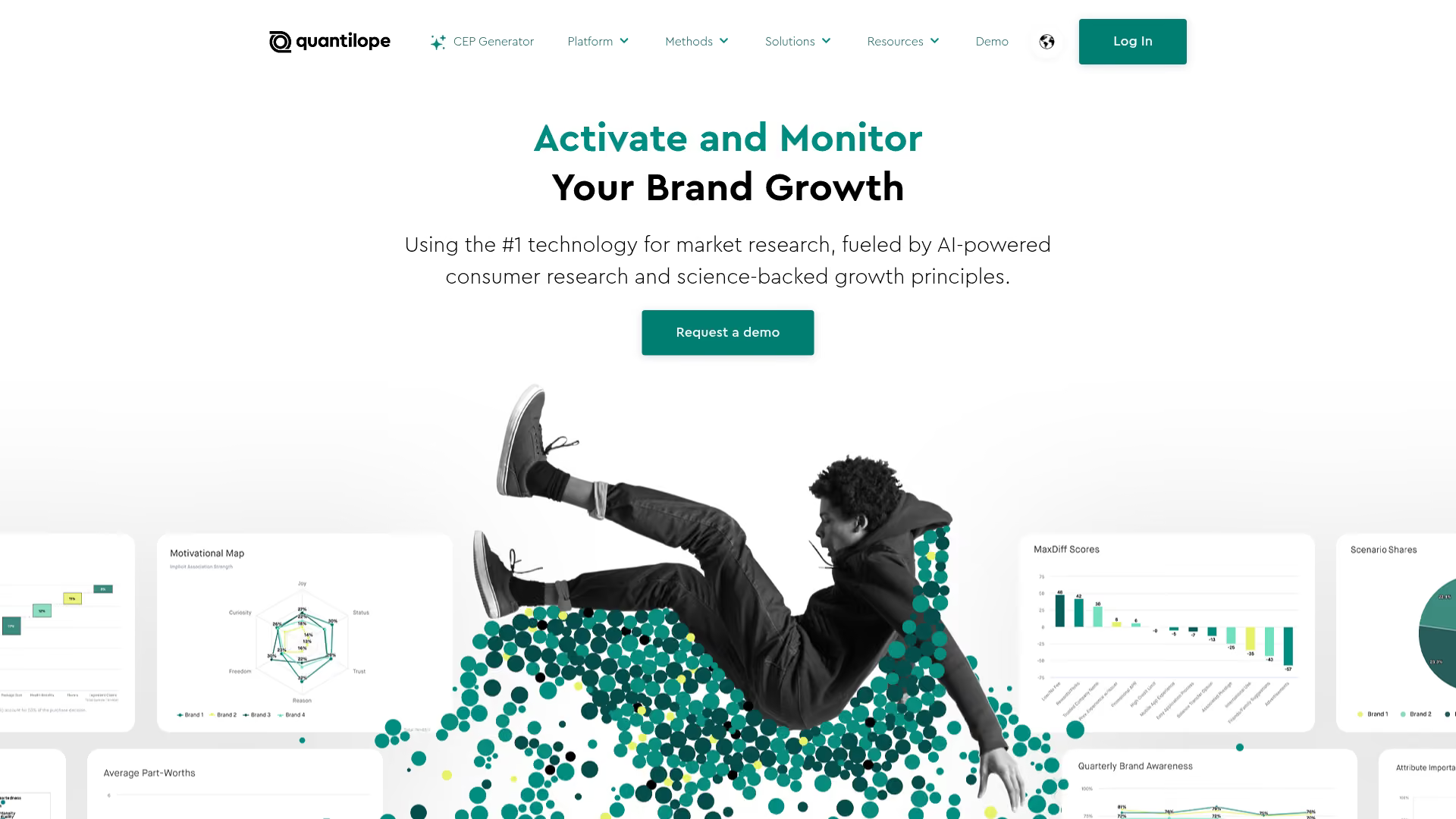
Quantilope handles survey design, fielding, and analysis in one automated system. The platform supports advanced research methods like conjoint analysis and MaxDiff without requiring specialized expertise.
Best for: Research teams wanting speed without sacrificing methodological rigor.
Key strengths
- Automated advanced methods including conjoint and MaxDiff
- Real-time dashboards with automatic updates
- AI analysis assistant for faster interpretation
- Global sample access through integrated panels
Pricing: Enterprise pricing; contact sales for details.
3. Contentsquare
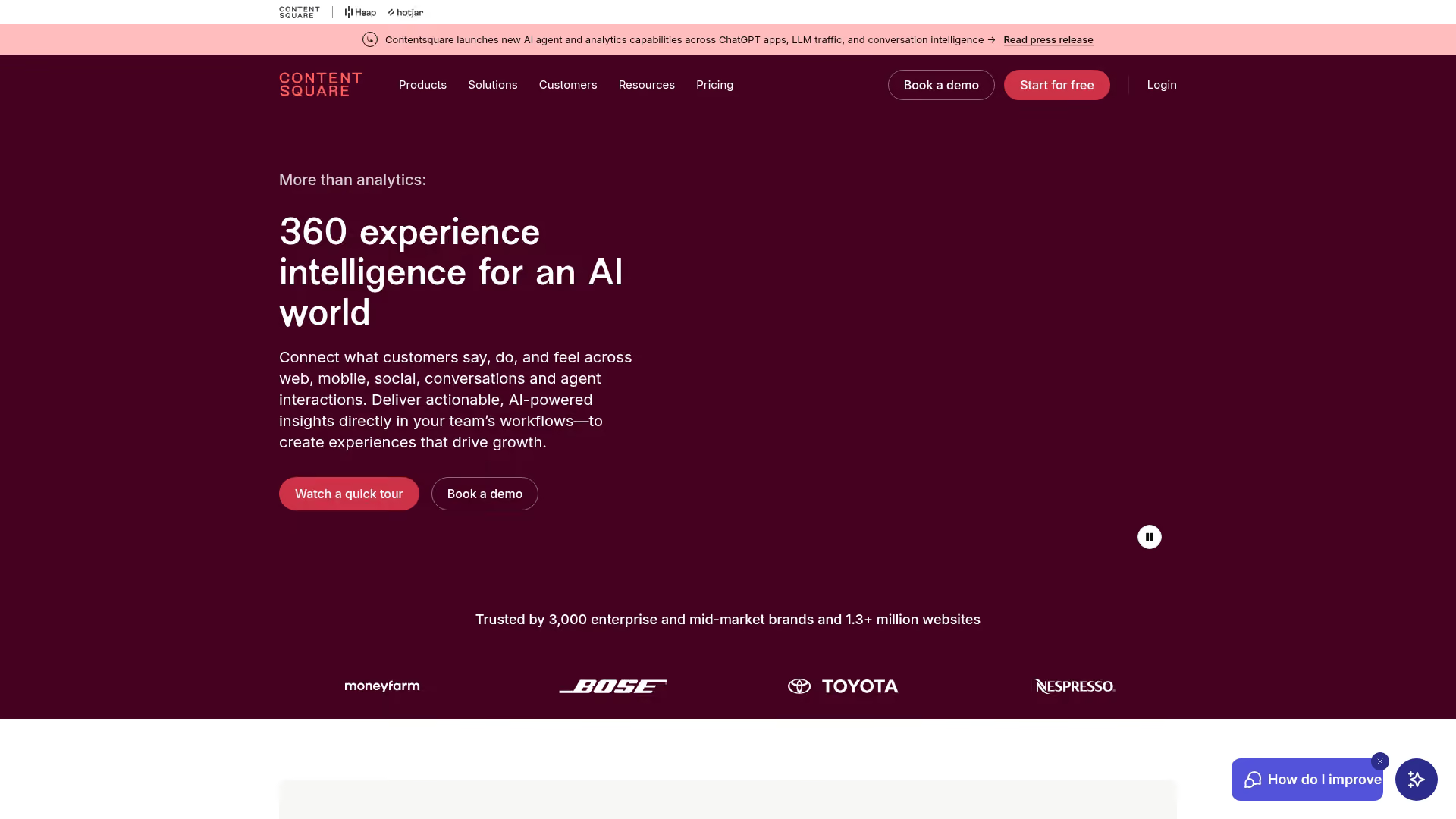
Contentsquare captures behavioral data from websites and apps to reveal friction points and optimization opportunities. The platform goes beyond basic analytics to show why users behave the way they do.
Best for: UX and CRO teams focused on improving digital experiences.
Key strengths
- Session replay showing actual user journeys
- Heatmaps for click, scroll, and attention patterns
- Journey analysis across multiple pages
- Frustration scoring to identify problem areas
Pricing: Custom pricing based on traffic volume.
4. Meltwater
Meltwater monitors news, social media, and online conversations to track brand mentions and sentiment. The platform covers traditional media alongside digital channels for comprehensive coverage.
Best for: PR and communications teams managing brand reputation.
Key strengths
- Global media monitoring across news and social
- Influencer identification and tracking
- Competitive benchmarking against industry peers
- Crisis alerts for rapid response
Pricing: Custom pricing; contact sales for details.
5. Brandwatch
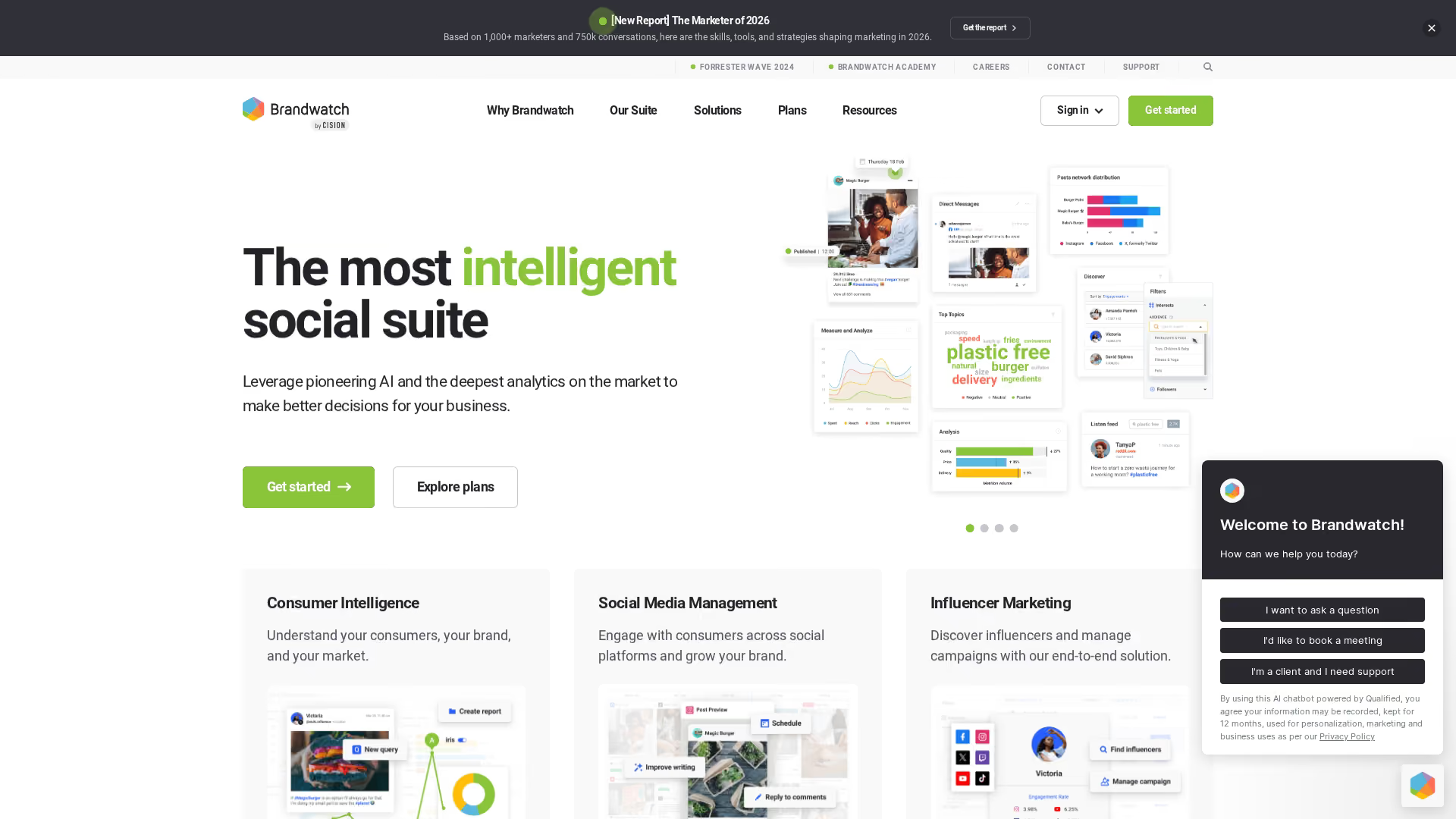
Brandwatch analyzes billions of online conversations to surface trends, sentiment, and audience insights. The platform uses AI to categorize and interpret unstructured social data at scale.
Best for: Social media and brand teams tracking consumer conversations.
Key strengths
- Deep social listening across major platforms
- Image recognition for visual brand mentions
- Trend detection and emerging topic alerts
- Audience segmentation by interests and behaviors
Pricing: Custom pricing; contact sales for details.
6. YouGov
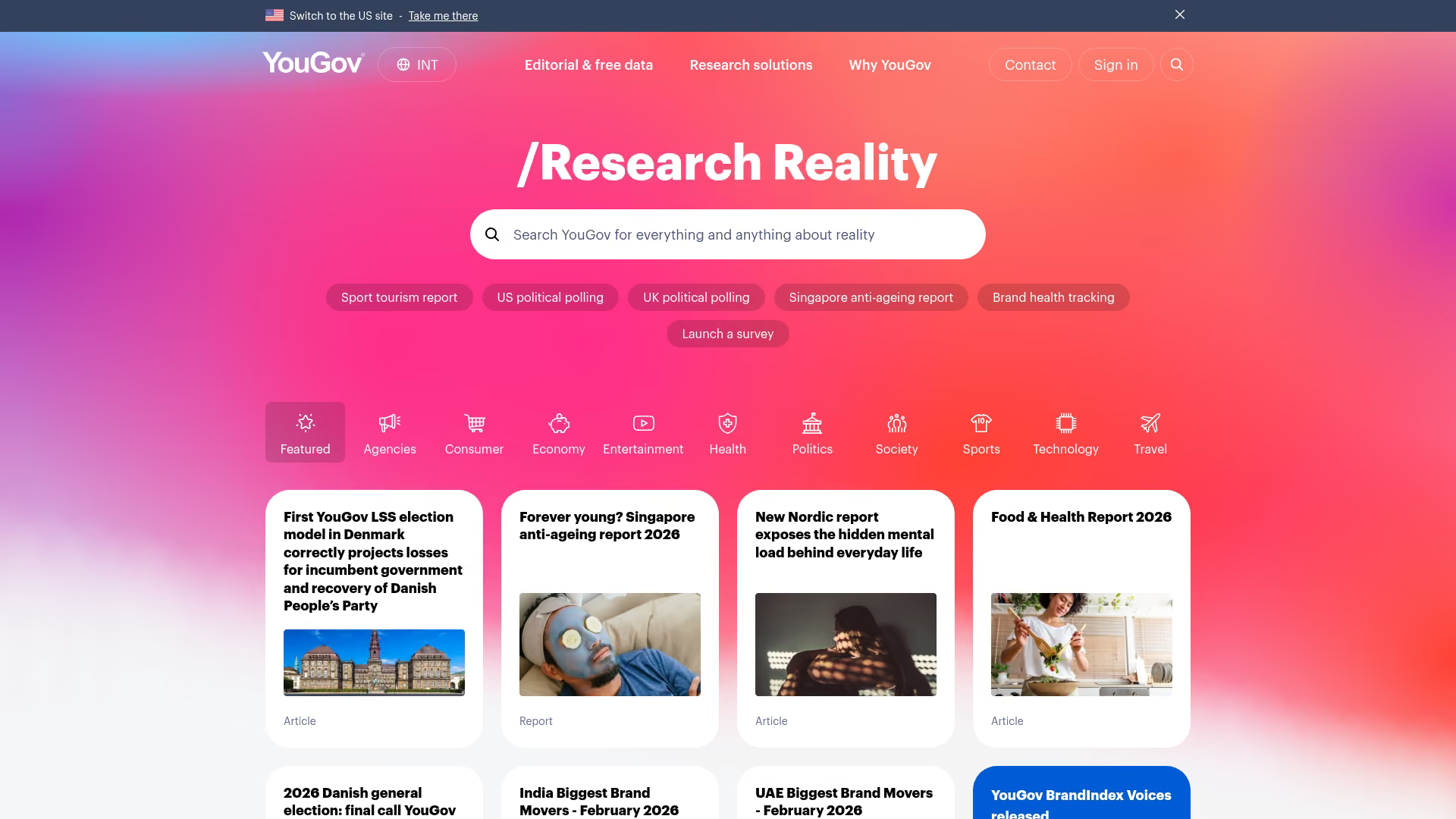
YouGov offers survey-based research with access to a large proprietary panel. The platform combines custom polling with syndicated data on consumer attitudes and brand perception.
Best for: Brand and market research teams needing reliable panel data.
Key strengths
- Large proprietary panel for representative samples
- Brand tracking tools with benchmarking
- Custom polling for specific research questions
- Syndicated datasets on consumer attitudes
Pricing: Custom pricing based on research needs.
7. Sprinklr
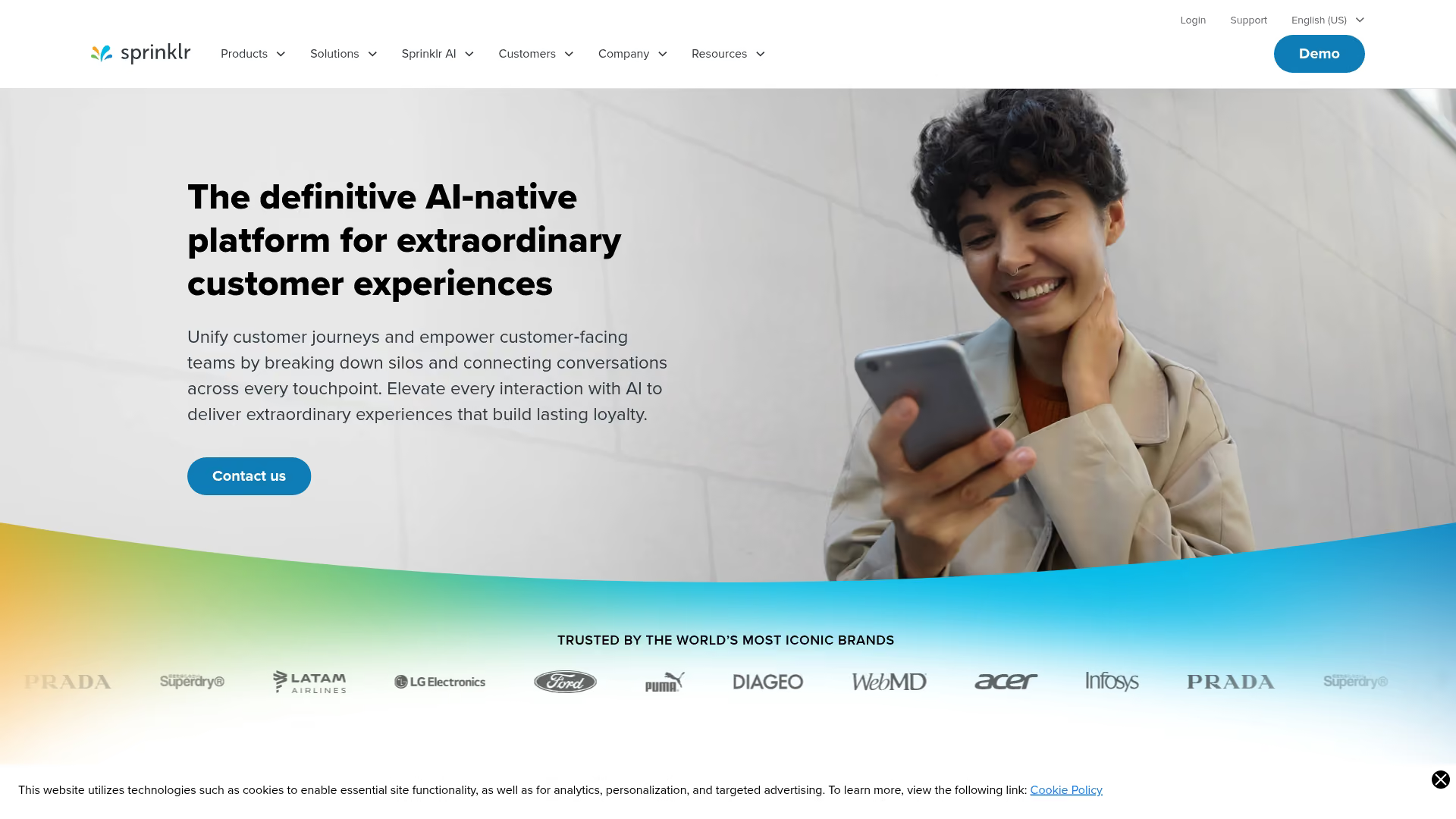
Sprinklr combines social listening, engagement, and analytics across channels in a unified platform. The tool is built for enterprise teams managing complex omnichannel presence.
Best for: Enterprise teams coordinating customer experience across many channels.
Key strengths
- Unified inbox for all social interactions
- AI-powered routing and response suggestions
- Sentiment analysis across conversations
- Workflow automation for team coordination
Pricing: Enterprise pricing; contact sales for details.
8. Hotjar
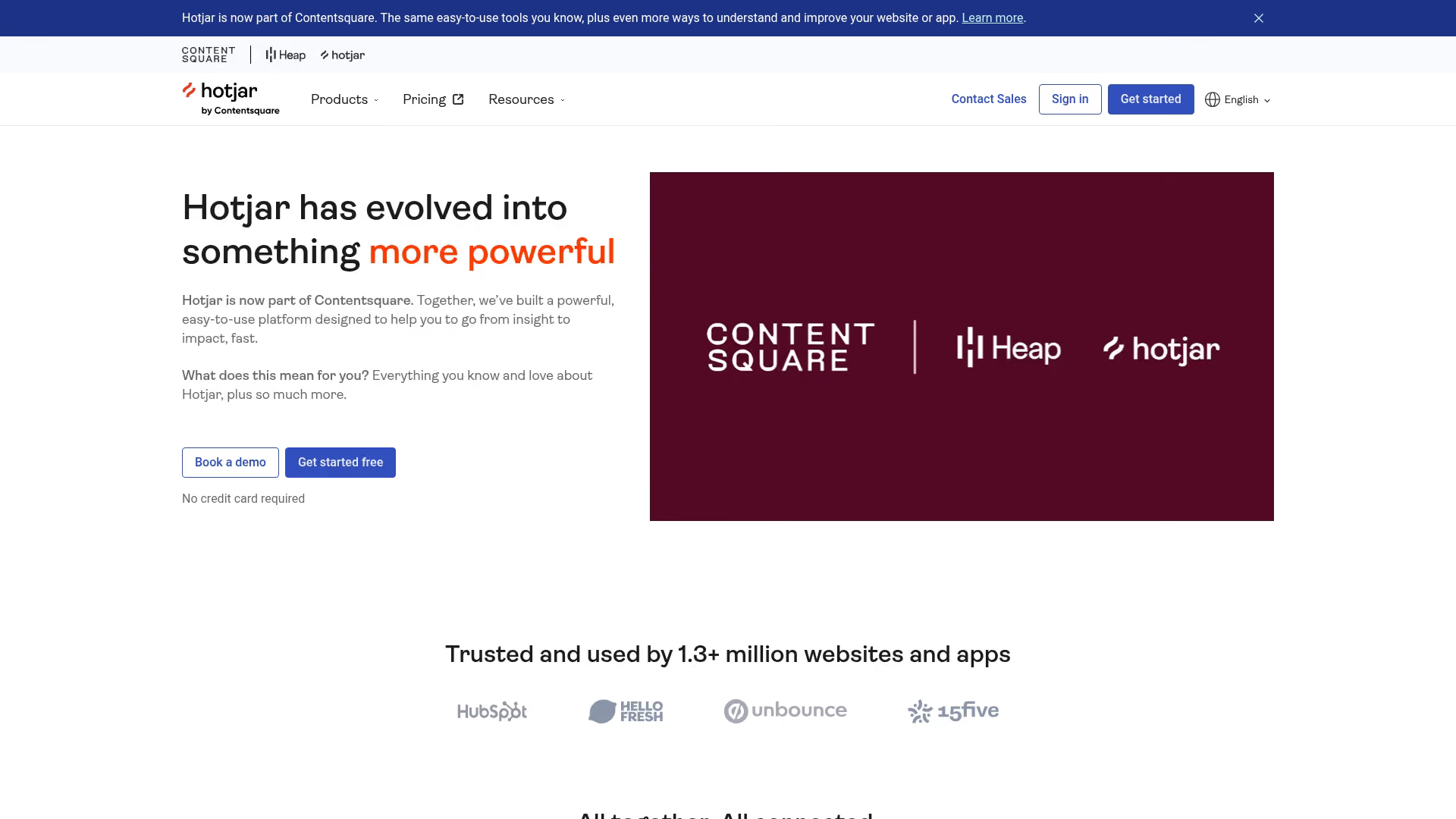
Hotjar combines heatmaps, session recordings, and feedback tools to understand user behavior on websites. The platform makes qualitative insights accessible to teams without research backgrounds.
Best for: Product and UX teams optimizing website conversion.
Key strengths
- Heatmaps showing click and scroll patterns
- Session recordings of actual user journeys
- On-site surveys for contextual feedback
- Funnels showing where users drop off
Pricing: Free tier available. Paid plans start at $32/month.
9. Mixpanel
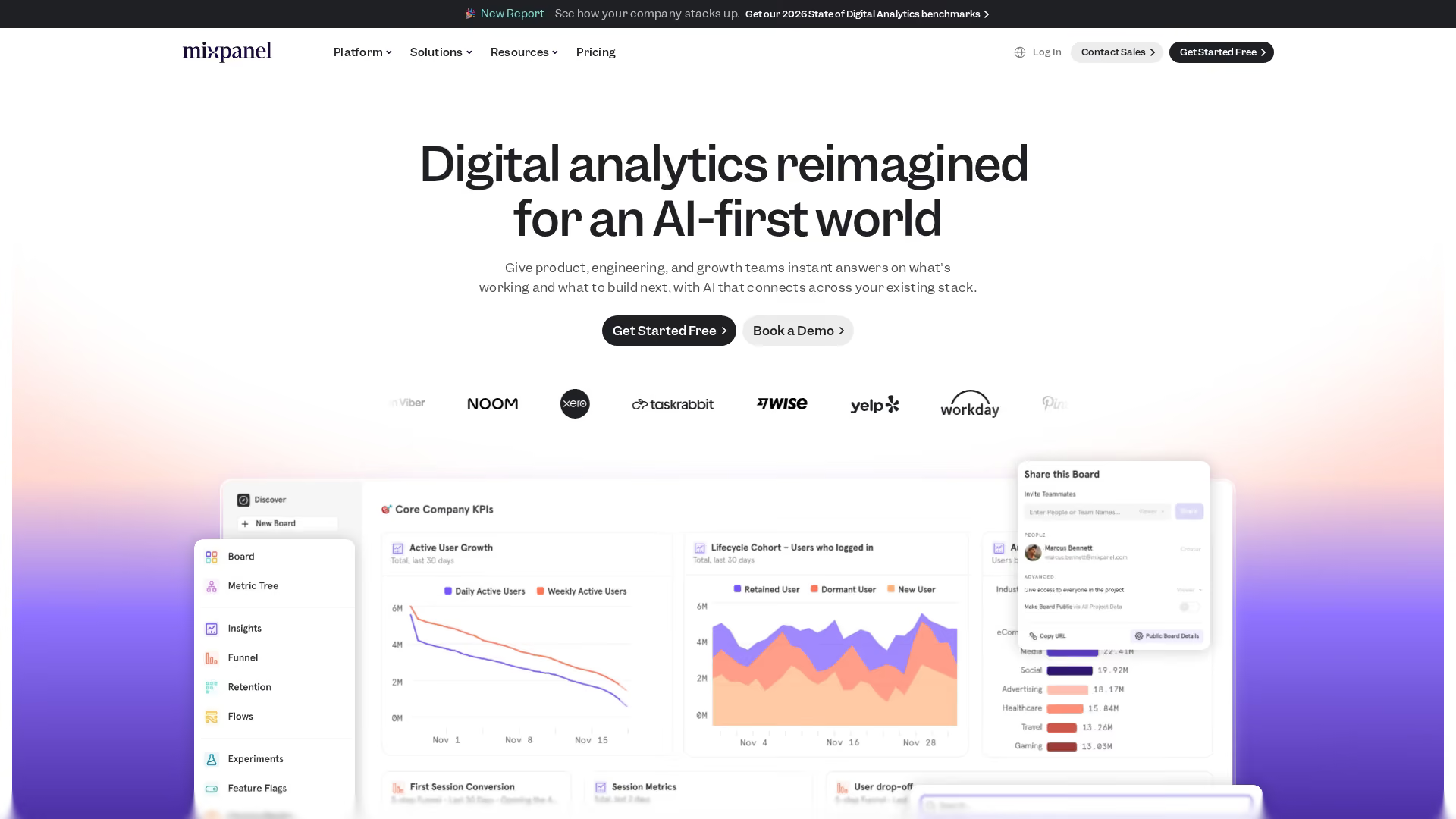
Mixpanel tracks user events and behaviors within apps and websites to measure engagement and retention. The platform is built for product-led teams focused on understanding how users interact with features.
Best for: Product-led growth teams measuring feature adoption and retention.
Key strengths
- Event-based tracking for granular behavior data
- Funnel analysis showing conversion paths
- Cohort reports for retention measurement
- Real-time dashboards for monitoring
Pricing: Free tier available. Paid plans start at $28/month.
10. Similarweb
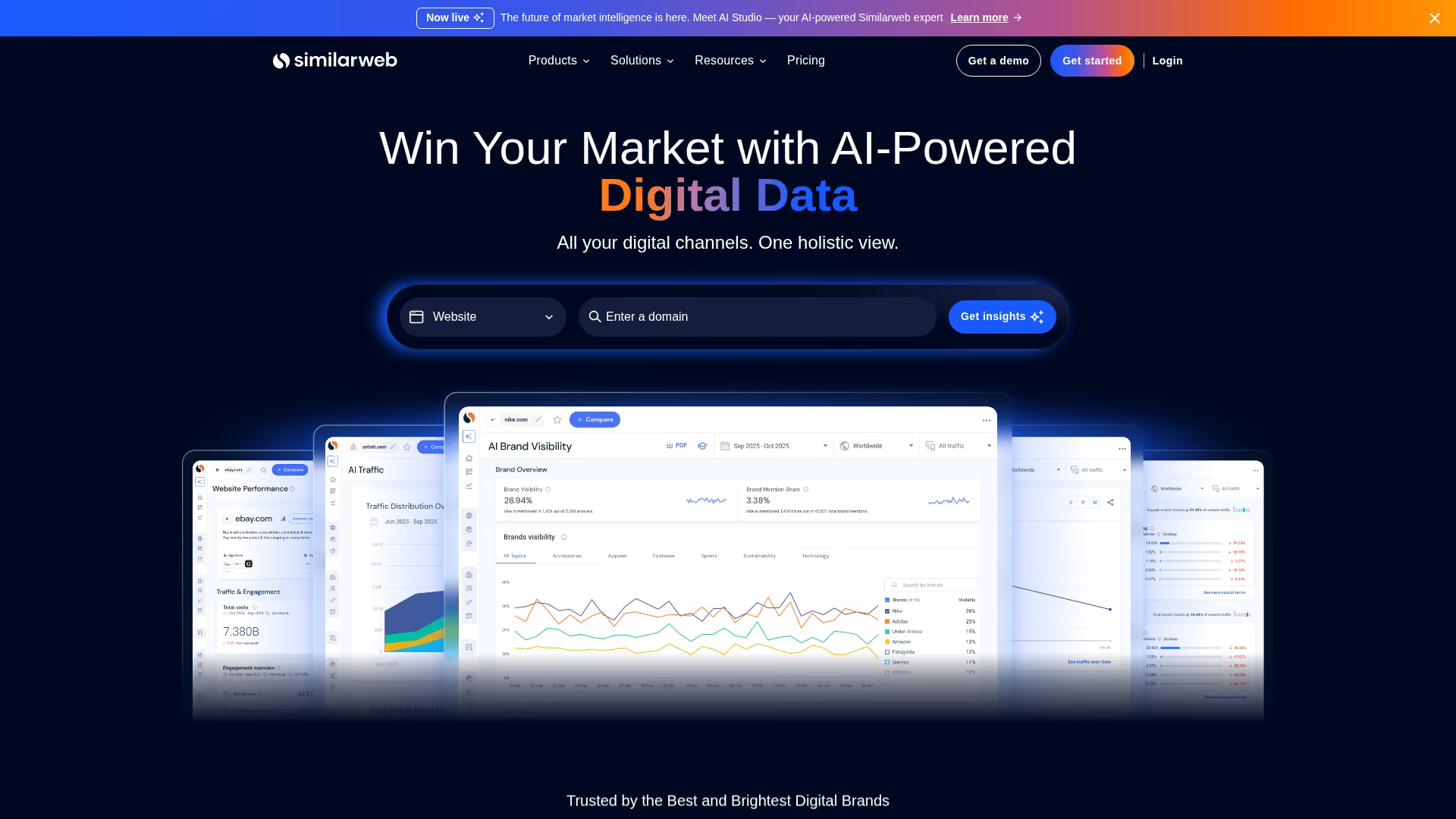
Similarweb provides website traffic data, competitive analysis, and industry benchmarks. The platform estimates traffic and engagement metrics for any website, not just your own.
Best for: Strategy and competitive intelligence teams benchmarking performance.
Key strengths
- Traffic estimation for any website
- Referral source analysis showing acquisition channels
- Keyword insights for SEO and content strategy
- Industry benchmarks for context
Pricing: Free tier available. Paid plans vary by feature set.
11. Statista
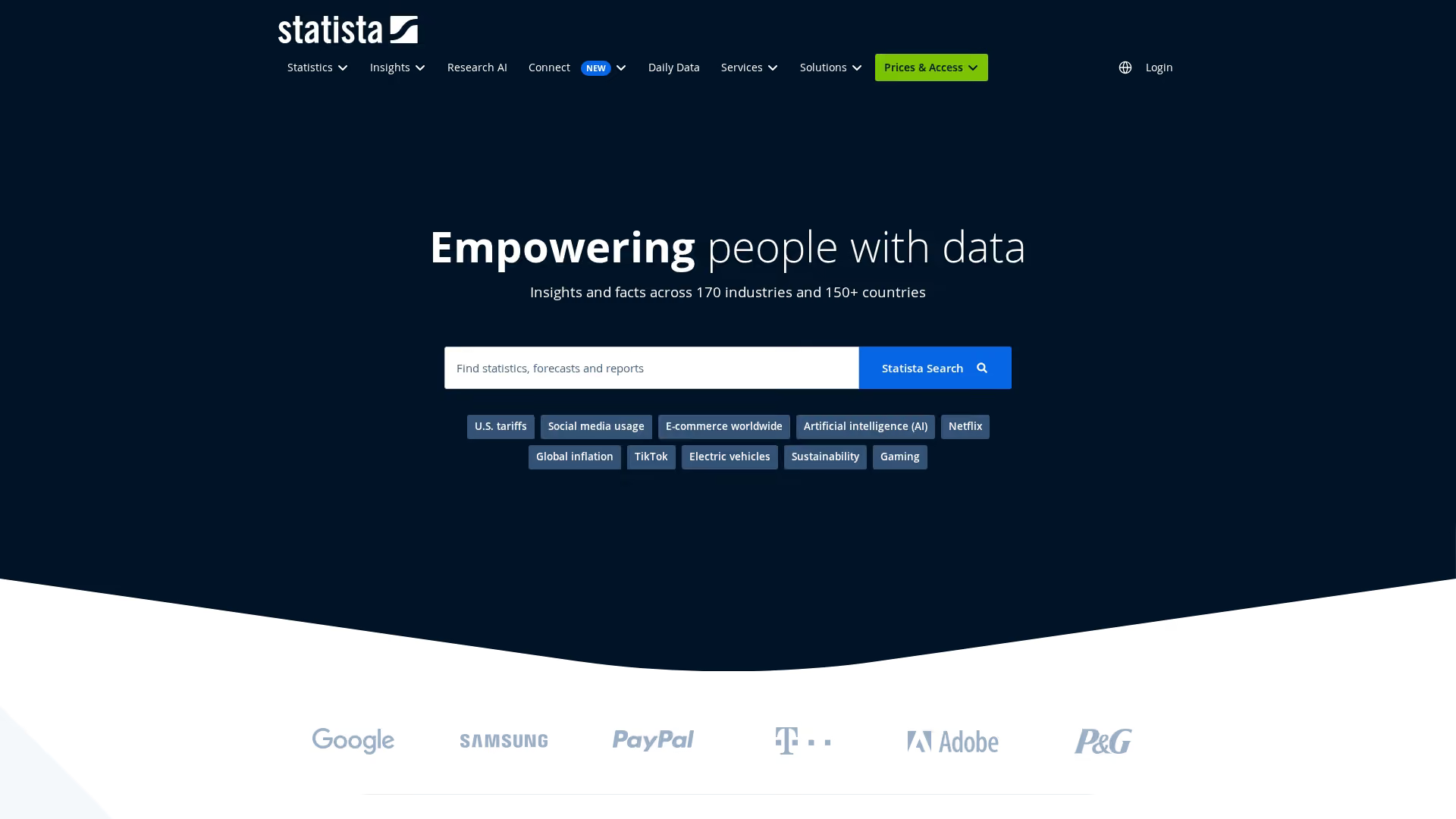
Statista aggregates data from thousands of sources into searchable reports and visualizations. The platform provides quick access to secondary data across industries and topics.
Best for: Research teams needing fast access to market statistics and reports.
Key strengths
- Broad topic coverage across industries
- Downloadable charts and infographics
- Industry reports with analysis
- Global data from multiple sources
Pricing: Plans start at $99/month for individual access.
How to choose the best consumer insight platform
The right platform depends on your specific use case and team capabilities. Here's how to narrow down the options.
Define your primary research objectives
Start by identifying whether you need survey research, behavioral analytics, social listening, or competitive intelligence. Your primary use case determines which category of consumer insight solutions fits best. A brand tracking team has different needs than a product team optimizing onboarding flows.
Evaluate data sources and global coverage
Check whether the platform provides first-party behavioral data, panel-based survey data, or aggregated third-party data. Verify coverage in your target markets, since some platforms excel in North America but have limited reach in APAC or EMEA.
Assess integration with CRM and marketing tools
Consumer insights software works best when it connects to your existing stack. Look for native integrations with Salesforce, HubSpot, and marketing automation tools you already use. Data that stays siloed in a research platform rarely drives action.
Prioritize speed and self-serve access
Modern digital insights platforms let teams run queries and build reports without analyst support. Evaluate how quickly you can go from question to answer. If every insight request requires a two-week turnaround, adoption will suffer.
Review security and compliance requirements
Consumer data carries privacy obligations. With 20+ U.S. states now enforcing comprehensive privacy laws alongside GDPR and CCPA, verify the platform meets all applicable compliance requirements before signing a contract.
What the best consumer insights tools have in common
Across the top platforms, a few patterns emerge:
- Unified data view: Aggregate signals from multiple sources into one interface
- AI-assisted analysis: Surface patterns humans might miss
- Self-serve access: Enable teams to explore data without technical dependencies
- Actionable outputs: Translate findings into recommendations, not just reports
- Integration depth: Connect insights to activation platforms like CRM, marketing, and product tools
The most effective platforms focus on closing the gap between insight and action. Some do this through automated triggers. Others provide embedded recommendations. And tools for interactive product demos let prospects experience the value directly, turning research findings into tangible product experiences.
From insights to action with the right platform
Consumer intelligence software only creates value when insights lead to action. The best platform for your team depends on whether you're tracking brand health, optimizing digital experiences, monitoring social conversations, or validating product decisions.
For teams wanting to turn research findings into tangible product experiences, Guideflow helps product marketing teams validate insights by letting prospects interact with the product before buying. Instead of presenting data about what customers want, you can show them exactly how your product delivers.
Start your journey with Guideflow today!