You just ran the same onboarding walkthrough for the fourth time this week. A new stakeholder joined your biggest account and needs "a quick overview of how everything works." Your help center articles have a 12% read rate. You're spending 60% of your week on education that should only happen once.
Most CS teams try to solve this with more documentation, more Loom videos, more check-in calls. The problem is not a content gap. It is a systems gap.
Customer success enablement gives CS teams the infrastructure, processes, and tools to deliver consistent customer outcomes without scaling linearly with headcount. It is the difference between a team that reinvents the wheel on every account and one that runs a repeatable, measurable operation.
Here is what the data shows: according to Vitally's 2025 State of Customer Success report, 88% of CS teams using a dedicated CS platform report spending more time on meaningful customer engagements rather than repetitive tasks. And generating revenue from existing customers costs $0.61 per ACV dollar, compared to $1.78 for new customers. CS enablement is how you capture that efficiency.
Here is how to build one that works.
What you'll learn
- What customer success enablement is and how it differs from sales enablement and customer enablement
- The core responsibilities a CS enablement function owns
- Five principles that separate effective enablement from wasted effort
- A 6-step framework to build your enablement program from scratch, with specific outputs for each step
- Which metrics to track and what good looks like
- The tool categories that matter most for CS enablement in 2026
TL;DR
- Customer success enablement is the practice of equipping CS teams with the training, tools, content, and processes they need to help customers achieve measurable outcomes at scale.
- The biggest mistake is building content without a system. A library of 50 articles nobody uses is not enablement.
- The implementation sequence matters more than the tools you pick. Start with an audit, not a purchase order.
- Measurement should focus on leading indicators (time-to-value, ticket deflection, adoption rate), not lagging ones (NRR alone).
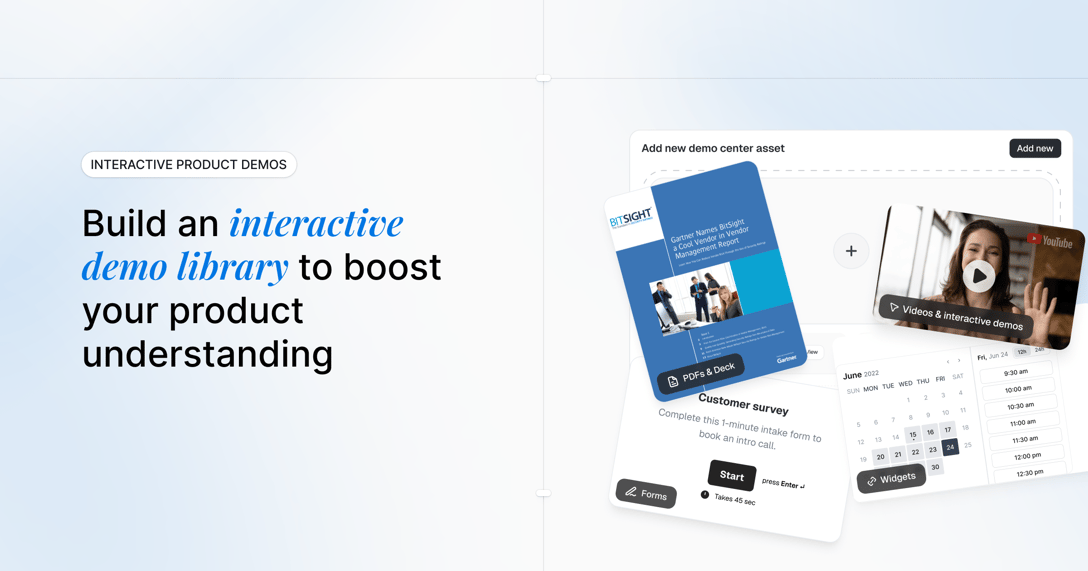
- Interactive, self-serve content outperforms static documentation for customer education. Customers engage with clickable product experiences at higher rates than PDFs or help articles. Interactive demos are one of the most effective formats for this.
What is customer success enablement
Customer success enablement is the practice of equipping CS teams with the training, tools, content, and processes they need to help customers achieve measurable outcomes at scale. It is the operational infrastructure that makes customer success repeatable, not dependent on individual CSM heroics.
That definition sounds simple. The confusion starts when you try to separate it from adjacent concepts that share keywords but serve different goals.
CS enablement vs. sales enablement. Sales enablement focuses on helping reps close deals. CS enablement focuses on helping CSMs drive adoption, retention, and expansion after the deal closes. The skill sets overlap (product knowledge, objection handling, content delivery) but the goals and timing are different. Sales enablement measures win rate and cycle length. CSM enablement measures time-to-value, adoption, and NRR.
CS enablement vs. customer enablement. This is the one people confuse most often because the keywords overlap. Customer enablement is outward-facing: equipping customers with the knowledge and tools to succeed with your product independently. Customer success enablement is inward-facing: equipping your CS team with the processes, content, and infrastructure to deliver customer outcomes at scale. They complement each other, but they are distinct functions. What is customer enablement? It is the customer-facing half of the equation. CS enablement is the internal half. Buyer enablement is a related concept that focuses on empowering prospects during the purchase journey.
CS enablement vs. customer support enablement. Customer support enablement focuses on reactive issue resolution: faster ticket response, better knowledge base articles, improved first-contact resolution. Customer service enablement shares this reactive orientation. CS enablement is proactive and strategic, covering onboarding, adoption, expansion, and renewal preparation.
| Dimension | CS enablement | Sales enablement | Customer enablement |
|---|---|---|---|
| Focus | Internal CS team effectiveness | Internal sales team effectiveness | External customer self-sufficiency |
| Primary audience | CSMs and CS leaders | AEs, SDRs, SEs | Customers and end users |
| Key activities | Playbooks, training, process standardization, tool management | Battlecards, pitch decks, objection handling, competitive intel | Help centers, product education, training academies |
| Success metrics | TTV, adoption rate, NRR, ticket deflection | Win rate, cycle length, quota attainment | Self-serve resolution rate, product adoption, CSAT |
| Typical owner | CS Ops or CS enablement manager | Sales enablement or RevOps | Customer education or product marketing |
Why customer success enablement matters now
The pressure on CS teams in 2026 is specific and measurable.
SaaS companies need to improve NRR without adding headcount. Vitally's 2025 data shows that 83.6% of CS leaders expect more expansion revenue this year, while 88% anticipate reducing churn through enablement efforts. The mandate is clear: do more with the same team.
Buyer expectations for self-serve education have increased. Customers want to learn on their own schedule, not wait for a CSM to schedule a training call. Static documentation does not meet this bar. Interactive, guided content does. Building self-service experiences is now a core competency for modern CS teams.
CS teams are being asked to own expansion revenue, not just retention. That requires a different set of skills, content, and processes than reactive account management.
The average CSM manages a large book of accounts, often 30 or more, making manual, 1:1 enablement impossible. CS teams that formalize enablement through structured processes and tooling consistently report measurable reductions in time-to-value and support ticket volume. The pattern is clear across the industry: structure beats improvisation.
Core responsibilities of customer success enablement
A CS enablement function owns six pillars. Here is what each looks like in practice.
Onboarding and training infrastructure
Building repeatable onboarding playbooks, training content, and self-serve resources. Ensuring every new CSM can deliver a consistent onboarding experience within their first 30 days. Creating customer-facing education assets (walkthroughs, guides, video content, interactive demos) that reduce the need for live training sessions.
At a 200-person SaaS company, this might mean building a library of 15 to 20 interactive product walkthroughs covering the most common onboarding workflows, so CSMs send a link instead of scheduling a call.
Process standardization and playbook development
Documenting CS workflows: onboarding, health checks, QBR prep, renewal plays, escalation paths. Building playbooks that scale across the team without requiring every CSM to reinvent the process. Updating playbooks as the product evolves. This is the "onboarding rot" problem: content that silently becomes outdated as the UI changes.
In practice, this means a single onboarding playbook with modular sections. A startup account gets steps 1 through 5. An enterprise account gets steps 1 through 5 plus a security review module and an executive alignment module.
Tool and technology management
Selecting, implementing, and maintaining the CS tech stack. Ensuring tools integrate with CRM, support, and analytics platforms. Training the team on tool usage and adoption. At companies with 500+ employees, 82% already use a dedicated Customer Success Platform, according to Vitally's 2025 data.
Content creation and knowledge management
Building and maintaining internal knowledge bases (for CSMs) and external education content (for customers). Creating templates for QBRs, business reviews, renewal decks, and expansion proposals. Keeping content current as the product changes. A customer success enablement manager typically owns this function, ensuring nothing goes stale. The right knowledge base software is essential infrastructure for this pillar.
Performance measurement and reporting
Defining CS KPIs and building dashboards. Tracking customer success enablement metrics (onboarding completion, content engagement, playbook adoption). Reporting CS impact to leadership in revenue terms, not activity terms.
Cross-functional alignment
Coordinating with Product on feature launches and adoption campaigns. Aligning with Sales on handoff processes and expansion plays. Working with Marketing on customer education content and campaigns. CS enablement does not exist in isolation. It connects the dots between teams that all touch the customer experience.
Key principles of effective customer success enablement
1. Build for the CSM first, the customer second
Enablement fails when it creates content nobody on the team uses. Start by understanding what your CSMs need to do their job better, then build outward to customer-facing assets.
Application: Survey your CS team. Ask "What question do you answer more than 5 times per week?" Build enablement content for those answers first. The answers will surprise you. They are rarely about complex product features. They are about basic setup, configuration, and "where do I find X."
2. Standardize the process, personalize the delivery
Playbooks should be consistent. The way a CSM delivers them should adapt to the account's size, industry, and maturity. One-size-fits-all onboarding fails for multi-segment products.
Application: Build one onboarding playbook with modular sections. A self-serve SMB account gets an automated email sequence with interactive walkthroughs. An enterprise account gets a dedicated kickoff call plus the same walkthroughs as supplementary material. The content is consistent. The delivery is personalized. Personalization features in your demo tooling can help tailor the experience at scale without creating separate assets for each segment.
3. Measure leading indicators, not just outcomes
NRR and churn rate are lagging indicators. By the time they move, the enablement intervention is months old. Track leading indicators: onboarding completion rate, time-to-first-value, feature adoption within 30 days, support ticket volume per account.
Application: Build a dashboard with 3 to 4 leading indicators. Review weekly. If onboarding completion drops below 65%, investigate before it shows up in churn 90 days later.
4. Treat enablement as a continuous loop, not a one-time project
Enablement content decays as the product changes. Processes break as the team scales. Build review cycles into the calendar. Review, refine, repeat.
Application: Schedule quarterly enablement audits. Check: Are playbooks current? Are training materials reflecting the current UI? Are new features covered? Assign content owners to each major playbook. If nobody owns it, nobody updates it.
5. Make it self-serve wherever possible
The best enablement scales without adding meetings. Interactive content, searchable knowledge bases, and on-demand training let both CSMs and customers access what they need without waiting for a person.
Application: Replace your most-repeated live training session with an interactive product walkthrough. Track completion rates. If completion exceeds 60%, you have freed hours of CSM time per week. That is time redirected to strategic work: health checks, expansion conversations, and QBR prep. Guideflow's analytics let you see exactly who completed which walkthrough and where they dropped off.
How to build a customer success enablement program: step by step
This is the section that no competitor covers well. Six sequential steps, each producing a specific artifact before you move to the next.
Step 1. Audit your current state
What to do: Map every CS process, tool, content asset, and training resource that currently exists. Identify what is documented versus what lives in individual CSMs' heads.
Why it matters: You cannot build on a foundation you do not understand. Most CS teams discover that the majority of their "enablement" is tribal knowledge. One CSM runs onboarding one way. Another runs it differently. A third has a personal Notion doc with templates they never shared.
Output: A spreadsheet with columns for Process Name, Owner, Documented (Y/N), Last Updated, and Effectiveness Rating (1 to 5).
Specific guidance: Interview 3 to 5 CSMs. Ask: "Walk me through how you onboard a new account." Compare answers. The variance tells you where standardization is needed most. If three CSMs describe three different onboarding flows, that is your first priority.
Step 2. Define your enablement priorities
What to do: Rank the gaps from Step 1 by impact and urgency. Use a simple 2x2 matrix: high impact and low effort first.
Why it matters: Trying to fix everything at once is the most common reason enablement programs stall. Start with 2 to 3 priorities that will show measurable results within 60 days.
Output: A prioritized list of 3 enablement initiatives with expected impact and timeline.
Specific guidance: Common high-impact starting points: standardizing onboarding (if time-to-value varies widely across CSMs), building a self-serve knowledge base (if ticket volume is high), or creating QBR templates (if QBR quality is inconsistent). Pick the one where the gap between your best CSM and your average CSM is widest.
Step 3. Build your enablement content
What to do: Create the training materials, playbooks, templates, and customer-facing education assets for your top priorities.
Why it matters: Content is the delivery mechanism for enablement. Without it, you have a strategy document but no operational reality.
Output: A minimum viable content library covering your top 3 priorities. For onboarding, this might include: a step-by-step onboarding checklist, 3 to 5 interactive product walkthroughs covering core workflows, email templates for each onboarding stage, and a "customer went dark" re-engagement sequence.
Specific guidance: Prioritize interactive, self-serve content over static documents. Customers engage with clickable product experiences at higher rates than PDFs or help articles. Interactive demo platforms like Guideflow let CS teams capture product flows and turn them into guided walkthroughs customers can complete independently, with analytics showing who completed what. Build once, share across every account.
Step 4. Roll out to the CS team
What to do: Train your CS team on the new processes, content, and tools. Do not just share a link. Run a live session, walk through the playbook, and answer questions.
Why it matters: Enablement content that CSMs do not use is wasted effort. Adoption by the internal team is the prerequisite for adoption by customers.
Output: A recorded training session, a quick-reference guide, and a Slack channel for questions.
Specific guidance: Start with a pilot group of 3 to 5 CSMs. Collect feedback for 2 weeks. Iterate before rolling out to the full team. This prevents the "we launched it and nobody used it" pattern. Ask the pilot group: "What is missing? What is confusing? What would you change?" Their answers will improve the content before the full team sees it.
Step 5. Launch to customers
What to do: Deploy customer-facing enablement content through your existing channels: in-app, email, help center, and CSM-led conversations.
Why it matters: The customer experience should improve measurably within the first 30 days of launch. If it does not, the content or delivery channel needs adjustment.
Output: Customer-facing content live in at least 2 channels. Baseline metrics recorded for comparison.
Specific guidance: Do not launch everything at once. Start with onboarding content for new customers. Measure time-to-value and onboarding completion for the first cohort. Compare against the previous cohort. Expand to existing customers and additional use cases once you have data showing the first initiative works. Best onboarding flow software can help you identify the right tools for deploying this content effectively.
Step 6. Measure, iterate, and expand
What to do: Track the leading indicators from Principle 3. Compare pre-enablement and post-enablement cohorts. Identify what is working and what needs adjustment.
Why it matters: Enablement is not a project with an end date. It is an ongoing system. The first version will be imperfect. The third version will be good.
Output: A monthly enablement review meeting with data on 3 to 4 key metrics, action items for the next cycle, and a backlog of enablement improvements.
Specific guidance: Share results with leadership in revenue terms. "Onboarding completion increased from 55% to 78% for the enablement cohort, and accounts that complete onboarding retain at significantly higher rates than those that do not." This is how you prove CS enablement ROI and secure continued investment.
Customer success enablement best practices
Start with your highest-volume repetitive task
Do not build a comprehensive enablement program on day one. Find the one thing your team does most often that could be automated or standardized. Build enablement for that first. Prove the model, then expand. If your CSMs are running the same product walkthrough 15 times per week, that is your starting point.
Co-create content with your best CSMs
The CSMs who consistently deliver the best outcomes already have implicit playbooks. Extract their knowledge. Record their best onboarding calls. Document their QBR frameworks. Enablement is not about inventing new processes. It is about codifying what already works and making it available to the entire team.
Make customer education interactive, not passive
Static help articles have low engagement. Customers skim, miss key steps, and submit tickets anyway. Interactive content (guided walkthroughs, clickable product tours, video with checkpoints) drives higher completion and better retention. Track engagement to know what works and what needs revision. Learn more about how to boost product adoption with interactive demos.
Build enablement into the workflow, not beside it
If CSMs have to leave their CRM or CS platform to access enablement content, adoption drops. Embed playbooks, templates, and content links directly into the tools your team already uses. The best enablement is invisible because it shows up exactly where the CSM needs it, at the moment they need it. Integrations between your enablement tools and existing tech stack are critical here.
Update content on a release cadence, not ad hoc
Product changes break enablement content. If your product ships monthly, your enablement review should happen monthly. Assign content owners. Set calendar reminders. "Onboarding rot" (content that silently becomes outdated) is the most common enablement failure mode. A quarterly audit catches the big problems. A monthly check catches the small ones before they compound.
Report in language leadership understands
CS leadership and executives do not care about "number of playbooks created." They care about time-to-value, ticket deflection, retention rate, and NRR. Map every enablement initiative to a revenue-adjacent metric. If you cannot draw the line from the initiative to a number leadership tracks, reconsider the initiative.
Common mistakes in customer success enablement
Building content nobody asked for
The enablement team creates a library of 50 articles. CSMs use 3 of them. The rest were built based on assumptions, not actual pain points.
What works instead: Start every enablement initiative with a CSM survey or interview. Build for stated needs, not guessed ones. Ask "What question do you answer most often?" and "What takes you the longest in your workflow?" The answers are your roadmap.
Treating enablement as a one-time project
The program launches with energy. Six months later, half the content is outdated and the playbooks reference features that no longer exist. The team stops trusting the content because they have been burned by inaccuracy.
What works instead: Build quarterly review cycles into the enablement calendar from day one. Assign owners. Set expiration dates on content. If a playbook has not been reviewed in 90 days, flag it.
Ignoring the internal adoption problem
Customer-facing content is polished. But CSMs were never trained on how to use it, when to share it, or why it matters. The content sits in a folder nobody opens.
What works instead: Treat internal rollout as seriously as external launch. Run training sessions. Track which CSMs are using enablement content and which are not. Follow up with the non-adopters. Often the issue is not resistance but confusion about when and how to use the content.
Measuring activity instead of outcomes
"We created 20 playbooks and 15 training videos" is not a success metric. It is an activity report.
What works instead: Measure the downstream impact. Did onboarding completion improve? Did ticket volume decrease? Did time-to-value shorten? Activity without outcomes is busywork that looks productive in a slide deck but does not move the numbers.
Copying sales enablement without adapting it
Sales enablement frameworks (battlecards, competitive decks, objection handling) do not translate directly to CS. The CS team needs onboarding playbooks, adoption campaigns, health score interpretation guides, and renewal preparation templates.
What works instead: Build CS-specific enablement from CS-specific pain points. Interview your CSMs. Shadow their calls. Understand their workflow before applying any framework borrowed from another function.
Customer success enablement metrics: what to track and what good looks like
Enablement-specific metrics
These measure whether the enablement program itself is working.
- Onboarding completion rate: Percentage of customers who complete the defined onboarding process. Benchmark: 65 to 80% is healthy. Below 50% signals a content or process problem.
- Content engagement rate: Percentage of customers who interact with enablement content (help articles, interactive demos, training materials). Benchmark: 30 to 50% engagement on sent content is strong.
- Playbook adoption (internal): Percentage of CSMs consistently using standardized playbooks. Benchmark: 70%+ within 60 days of rollout.
- Time-to-competency (for new CSMs): How quickly a new CSM can independently manage accounts. Benchmark: a structured enablement program should reduce ramp time by 30 to 40% compared to shadowing alone.
Business impact metrics
These measure whether enablement is moving the numbers leadership cares about.
- Time-to-value (TTV): Days from contract signature to first meaningful customer outcome. Benchmark varies by product complexity, but a 20 to 30% reduction is a strong enablement signal.
- Support ticket volume per account: Fewer tickets after enablement content is deployed indicates customers are self-serving successfully. Benchmark: 15 to 25% reduction within 90 days.
- Product adoption and feature usage: Percentage of customers using key features within 30, 60, and 90 days. Benchmark: 10 to 20% improvement in feature adoption for accounts that engage with enablement content. Product analytics tools can help you track these adoption metrics accurately.
- Net revenue retention (NRR): The ultimate lagging indicator. Enablement should contribute to NRR improvement over 2 to 4 quarters. Benchmark: 105 to 115% for healthy SaaS.
| Metric | What it measures | Healthy benchmark | Review frequency |
|---|---|---|---|
| Onboarding completion rate | Customer progress through onboarding | 65-80% | Weekly |
| Content engagement rate | Customer interaction with enablement content | 30-50% on sent content | Bi-weekly |
| Playbook adoption (internal) | CSM usage of standardized processes | 70%+ within 60 days | Monthly |
| Time-to-competency | New CSM ramp speed | 30-40% reduction vs. no enablement | Quarterly |
| Time-to-value | Days to first customer outcome | 20-30% reduction | Monthly |
| Ticket volume per account | Self-serve effectiveness | 15-25% reduction within 90 days | Monthly |
| Feature adoption (30/60/90 day) | Product usage depth | 10-20% improvement | Monthly |
| NRR | Revenue retention and expansion | 105-115% | Quarterly |
Customer success enablement tools and technology
Customer success platforms
Gainsight, ChurnZero, Totango, Vitally. These platforms handle health scoring, playbook automation, lifecycle management, and renewal tracking. CSP-using teams are 41% more likely to experience headcount growth, with 63% crediting their platform for securing more budget. When to invest: when you have 3+ CSMs and need to move beyond spreadsheets. The right CRM software is also foundational to your CS tech stack.
Knowledge base and self-serve education
Help centers (Zendesk Guide, Intercom Articles, Document360), internal wikis (Notion, Confluence). These centralize documentation for both customers and CSMs. The limitation: static content has low engagement. Customers skim and miss key steps. A knowledge base is necessary infrastructure, but it is not sufficient on its own.
Interactive product education
Guideflow for interactive demos and guided product walkthroughs. Guideflow lets CS teams capture product flows and turn them into clickable, self-serve experiences customers complete independently. Analytics show completion rates, drop-off points, and engagement at the session level. You can also build an interactive demo library to boost both employee and customer product understanding. When to use: when your CS team is running the same product walkthrough repeatedly, when you need to scale onboarding without adding headcount, or when you want to track whether customers actually understood the training.
Learning management systems (LMS)
Skilljar, WorkRamp, Lessonly (now Seismic Learning). These support structured training programs, certification paths, and progress tracking. When to invest: when you have a formal customer education or academy program with multiple courses and certification requirements.
Conversation intelligence
Gong, Chorus. These record and analyze CS calls to identify coaching opportunities, common objections, and best practices. When to invest: when you want to improve call quality and extract patterns from your best CSMs to train the rest of the team.
Project and workflow management
Asana, Monday, ClickUp. These track onboarding progress, manage enablement content production, and coordinate cross-functional initiatives.
The tool matters less than the system. A well-structured enablement program running on Notion and Loom will outperform a poorly structured one running on Gainsight and Skilljar. Start with the process. Add tools as the process demands them.
Conclusion
Customer success enablement is not a content library. It is a system that connects training, tools, processes, and measurement to help CS teams deliver consistent outcomes at scale.
The data supports the investment: CS teams that formalize enablement through structured processes and dedicated tooling report measurable improvements in time-to-value, ticket deflection, and retention within the first 90 days. And with expansion revenue costing $0.61 per ACV dollar compared to $1.78 for new customers, the business case writes itself.
Start with the audit from Step 1. Map what exists, identify the gaps, and pick one high-impact initiative to build first. The first version does not need to be perfect. It needs to be measurable.
Start your journey with Guideflow today
FAQs
Sales enablement equips reps to close deals. CS enablement equips CSMs to drive adoption, retention, and expansion after the deal closes. The skill sets overlap (product knowledge, content delivery, process standardization) but the goals, timing, and metrics are different. Sales enablement measures win rate and cycle length. CS enablement measures time-to-value, adoption, and NRR.
At smaller companies (under 100 employees), the VP of CS or a senior CSM typically owns enablement as part of their role. At scale-ups and mid-market companies, a dedicated customer success enablement manager or CS Ops function takes ownership. The key is that someone is explicitly accountable. When enablement is "everyone's job," it becomes nobody's job.
A customer success enablement manager builds and maintains the training, content, tools, and processes that help the CS team deliver consistent outcomes. Day to day, this includes creating onboarding playbooks, managing the CS knowledge base, running internal training sessions, tracking enablement metrics, and coordinating with Product and Marketing on customer-facing education content.
Track leading indicators: onboarding completion rate, time-to-value, support ticket volume per account, and internal playbook adoption. Then connect these to business outcomes: retention rate, NRR, and expansion revenue. The strongest ROI argument compares cohorts: accounts that received enablement content versus those that did not.
At minimum: a knowledge base for documentation, a CS platform for health scoring and playbook automation, and an interactive content tool for customer education. As the program matures, add an LMS for structured training and conversation intelligence for coaching. Start with the process, then add tools as the process demands them.
A minimum viable program (audit, 2 to 3 priority initiatives, initial content, team training) takes 4 to 8 weeks. A mature program with full playbook coverage, measurement dashboards, and quarterly review cycles takes 6 to 12 months. Start small, prove impact, and expand.
Customer enablement is outward-facing: equipping customers with the knowledge and tools to succeed with your product independently. Customer success enablement is inward-facing: equipping your CS team with the processes, content, and infrastructure to deliver customer outcomes at scale. They complement each other but are distinct functions with different owners and different metrics.
The most common challenges are: internal adoption (CSMs not using the content you build), content decay (playbooks becoming outdated as the product changes), measurement difficulty (proving enablement's impact on revenue), and cross-functional coordination (aligning with Product, Sales, and Marketing on priorities and content). The first two are the most frequent. Build review cycles and adoption tracking from day one.