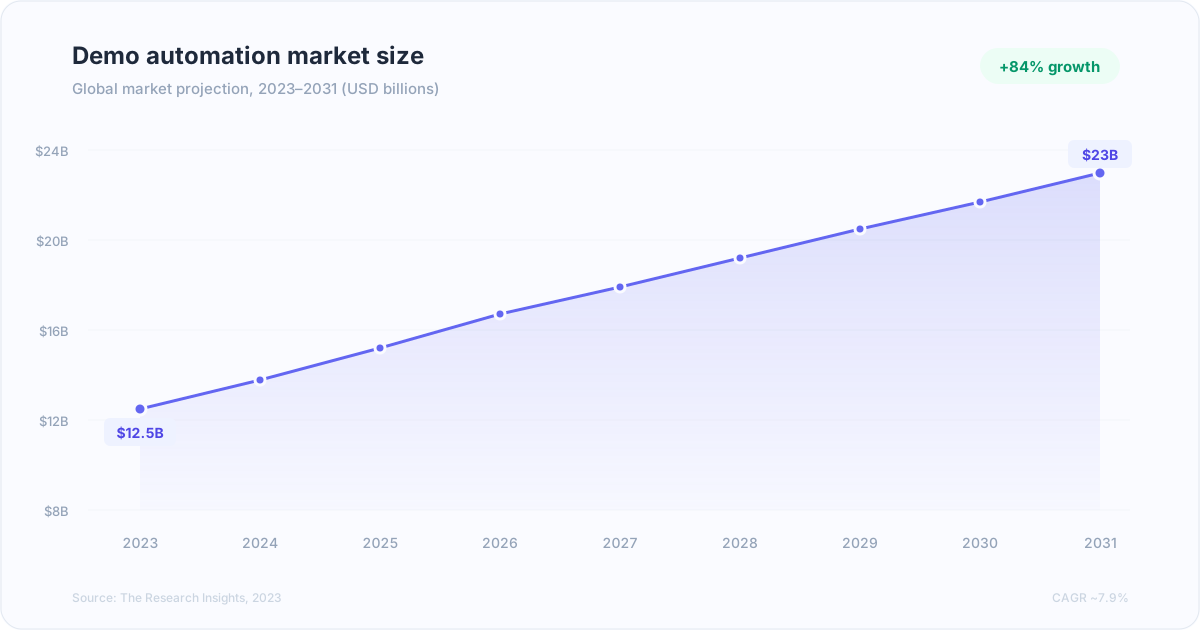
Demo automation is changing how SaaS companies show off their products. Instead of relying on live, time-bound demos, demo automation lets teams create interactive, self-serve product experiences that run 24/7. This way prospects can explore software on their own terms and revenue teams get rich engagement data to guide smarter follow-ups and forecasts. As the global demo automation market grows from $12.5 billion in 2023 to $23 billion by 2031, it's clear automated demos are redefining how SaaS teams drive awareness, qualification and conversion - all while saving time and resources.
TL;DR
- Demo automation delivers self-serve product experiences that scale 24/7 and capture engagement data.
- Accelerates sales cycles (up to 78%), reduces unqualified demos (by 30%) and surfaces Demo Qualified Leads (DQLs) using behavioral signals.
- Teams gain efficiency: scale without headcount, cut demo prep time by ~60%, personalize journeys and improve conversion efficiency.
- Best used alongside live demos: automation for early discovery and sharing; live sessions for complex configurations and deep Q&A.
- Prioritize platforms with no-code editing, interactive HTML capture, AI personalization, analytics, branching and CRM/MAP integrations.
- Guideflow provides an end-to-end, AI-powered, no-code demo workflow with unified analytics and deep CRM sync.
- Start small: choose a high-impact use case, integrate with your stack, pilot, analyze engagement and DQLs, then scale.
What is demo automation for SaaS
Demo automation is the process of using specialized platforms to create, personalize and deliver interactive product demos at scale. Interactive demo tools let SaaS go-to-market teams show off product value without manual setup or live facilitation.
In simple terms: Demo automation software lets SaaS teams build self-guided product demos that prospects can explore independently while capturing engagement analytics and supporting personalization at scale.
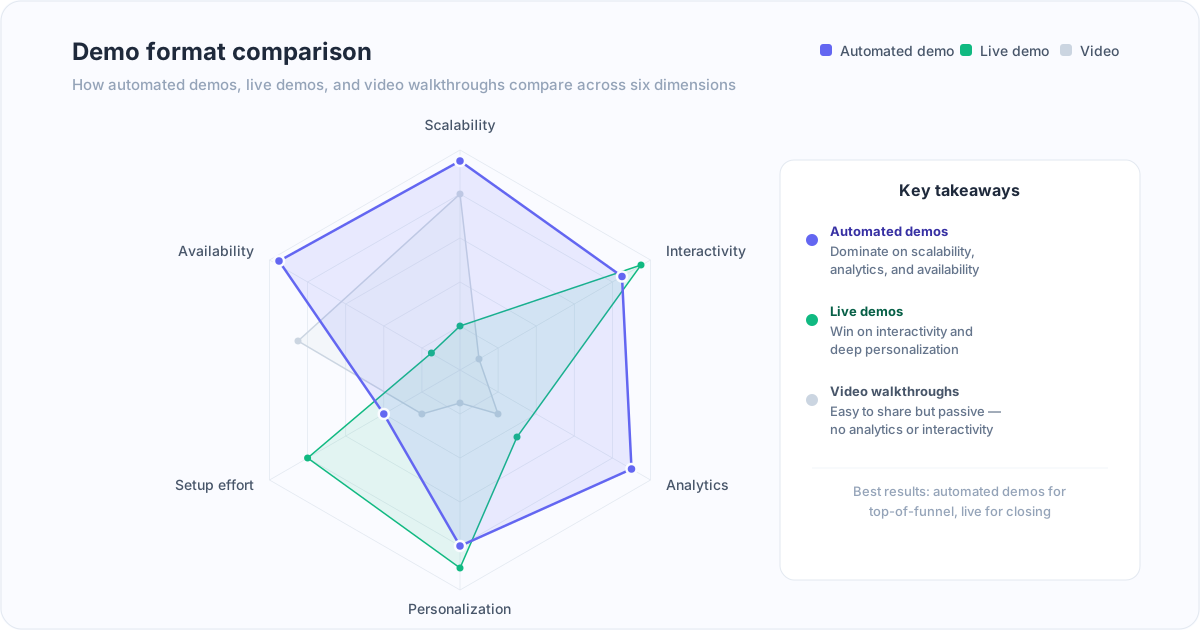
Unlike live demos or static video walkthroughs, automated demos offer hands-on interactivity, dynamic data and individual tracking.
Here's a quick comparison:
| Type | Key Traits | Limitations |
|---|---|---|
| Live Demo | Real-time discovery, personal interaction | Not scalable, time-intensive |
| Video Walkthrough | Easy to share, consistent message | Passive viewing, no analytics |
| Automated Demo | Interactive, trackable, self-serve | Requires initial setup |
How demo automation works for SaaS
Automated demos plug directly into the SaaS sales funnel, delivering always-available product experiences that accelerate decision-making. By standardizing demos, teams can deliver consistent, on-brand experiences to every prospect, anywhere.
Key outcomes include
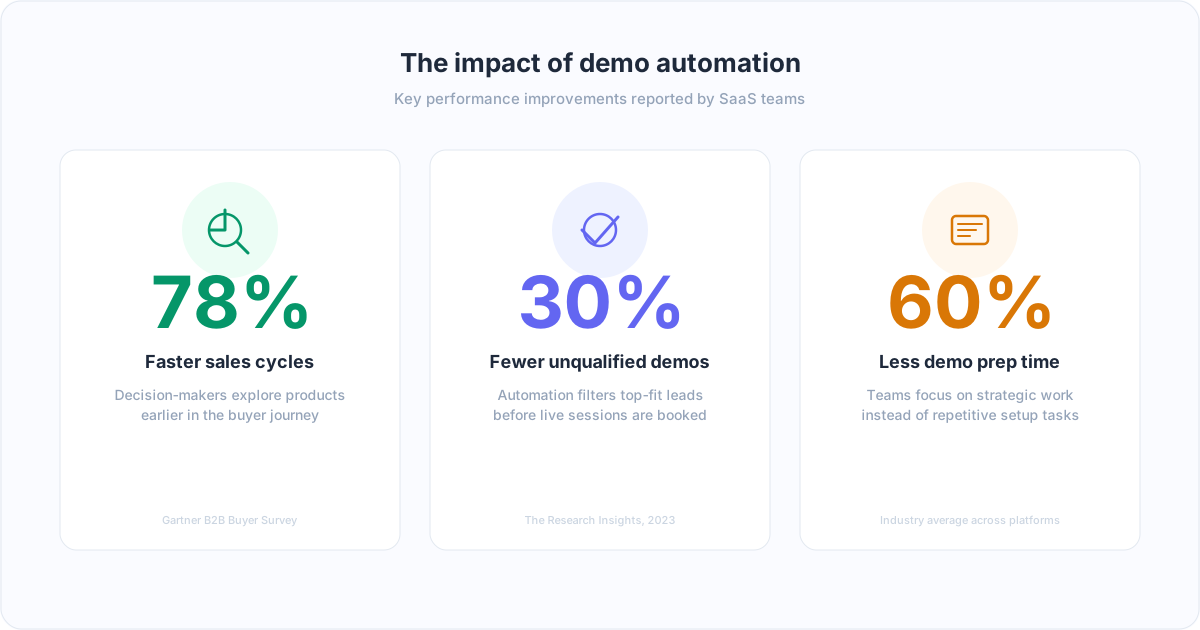
- Up to 78% faster sales cycles, as decision-makers can explore earlier in the journey.
- A 30% reduction in unqualified demos, since automation filters top-fit leads.
- Rich behavioral data identifying Demo Qualified Leads (DQLs) based on engagement and dwell time.
| Impact Area | How Demo Automation Helps |
|---|---|
| Speed | Provides on-demand access to demos without scheduling delays |
| Consistency | Maintains messaging quality across global teams |
| Data Capture | Tracks user clicks, completions, and time on page |
| Lead Qualification | Scores interest to prioritize high-intent accounts |
Benefits of demo automation for SaaS teams
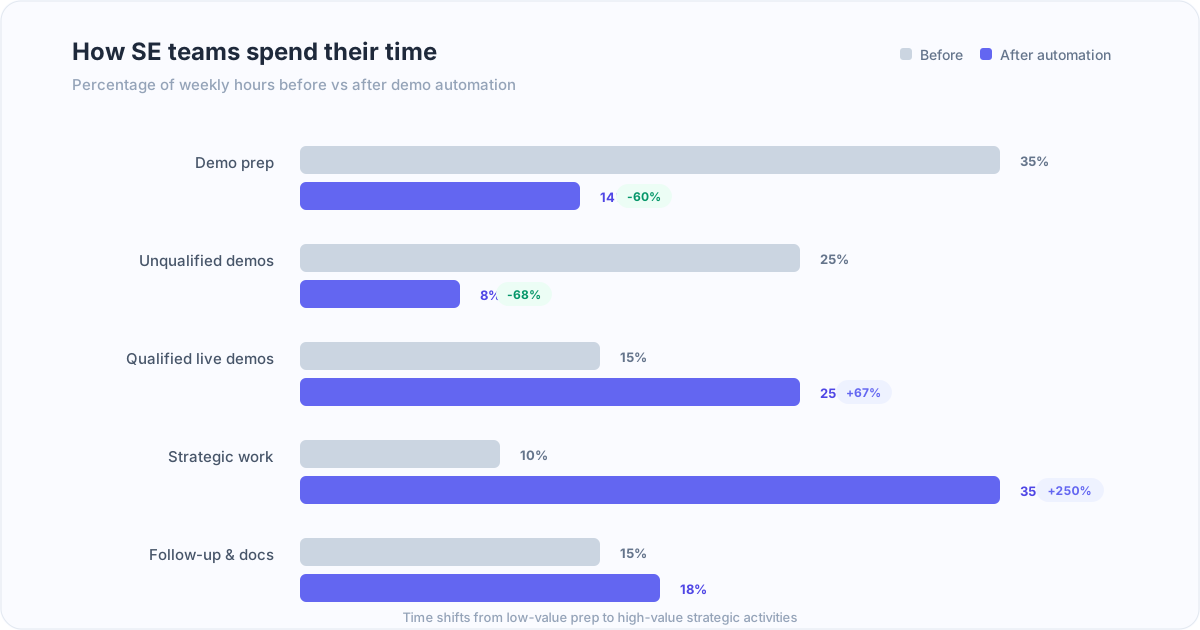
SaaS companies using demo automation see efficiency gains across marketing and sales operations. The technology scales demo output without scaling headcount, freeing presales and engineering teams from repetitive prep.
Key benefits include
- Scale without adding staff, using no-code tools.
- Better quality leads through data-backed engagement analytics.
- 60% reduction in demo prep time, so teams can focus on strategic work.
- Shorter sales cycles and improved conversion efficiency.
- Personalized buyer journeys with branded content.
Platforms like Guideflow amplify these gains by letting teams create, personalize and distribute ready-to-share demos in seconds - no code, no re-recording.
Demo automation use cases for SaaS
Automated demos serve multiple purposes throughout the customer lifecycle, from awareness to onboarding and beyond. Leading SaaS teams use them in:
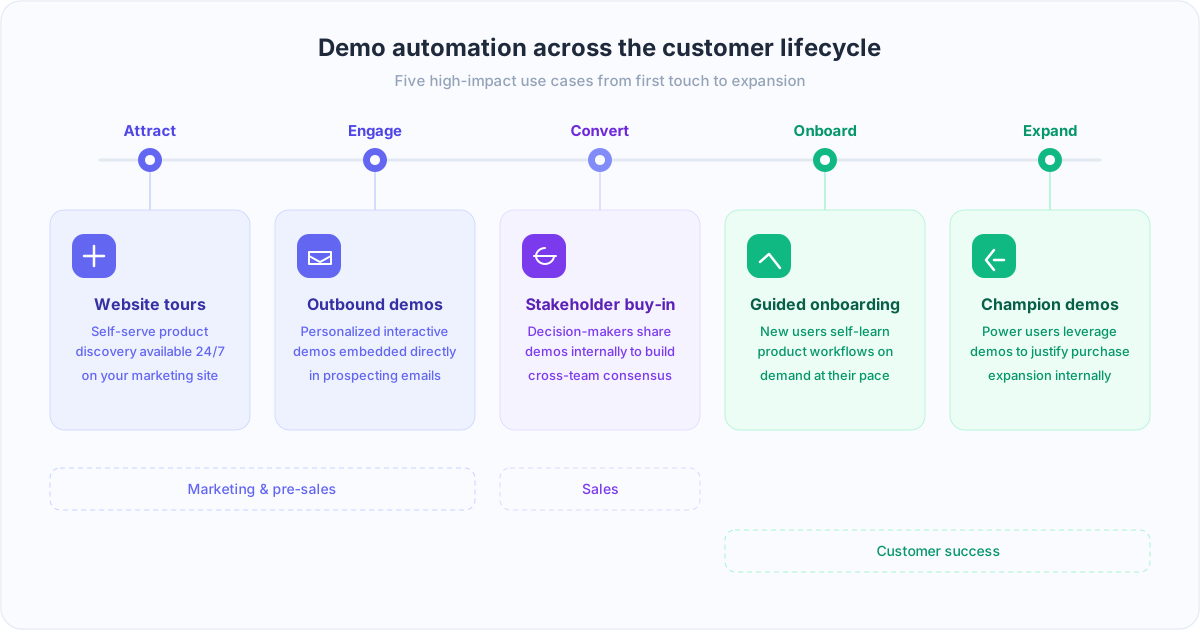
| Use Case | Description |
|---|---|
| Website qualification | Visitors engage with a quick, interactive tour before booking a call. |
| Outbound campaigns | Reps embed personalized demos directly into prospecting emails. |
| Multi-stakeholder buying | Decision-makers share demos internally to build consensus. |
| Customer onboarding | New users self-learn workflows through guided demos. |
| Champion enablement | Power users use demos to internally justify purchase expansion. |
This way demos are always available - prospects can explore anytime, anywhere. Solutions like Guideflow let teams customize each of these use cases with AI-driven personalization and analytics.
Demo automation vs live demos
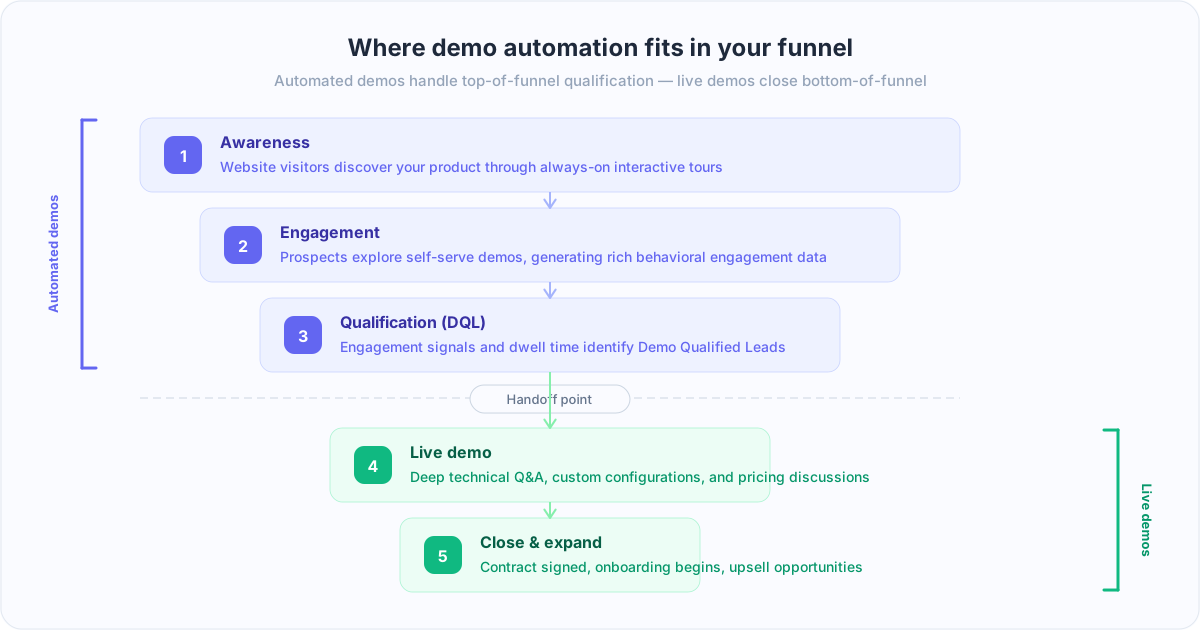
Demo automation doesn't replace live selling - it amplifies it. Automated demos handle early-stage engagement and qualification, while live demos focus on deeper discovery and technical details.
When to use each:
- Automated Demo – early-funnel awareness, website engagement and internal sharing.
- Live Demo – complex configurations, pricing discussions and advanced Q&A.
Used together they streamline the pipeline: prospects arrive at live demos already informed, reducing redundancy and increasing close rates.
What to look for in demo automation software
When evaluating demo automation software look for platforms that are non-technical and integrate with your GTM stack.
Here’s a checklist of must-haves
- Interactive HTML-based capture for realistic product simulations
- No-code editing so marketers and reps can build without developers
- AI-powered personalization for automated tweaks, localizations and voiceovers
- CRM and MAP integrations (Salesforce, HubSpot, Marketo)
- Engagement analytics to track every user action
- Dynamic branching for adaptive, personalized demo paths
- Multi-device delivery for web and mobile access
Guideflow has all of these - plus AI-assisted editing and unified analytics - in one demo workflow. No-code creation is especially powerful, any GTM team member can clone, edit and launch demos in seconds without writing a line of code.
Why Guideflow is the best demo automation platform for SaaS marketing tech
Guideflow is the leading demo automation platform for SaaS sales, marketing and growth teams that need speed, personalization and integration. Its no-code editor, built-in CTAs and unified analytics make demo creation and measurement easy and fast. Guideflow’s AI co-pilot refines demos, generates localized content and voiceovers and tailors flows for each viewer’s role or region. Deep CRM integration ensures every interaction syncs with your pipeline and analytics systems - turns engagement into qualified opportunities.
For fast-growing SaaS teams Guideflow delivers
- Instant demo deployment
- AI-scale personalization
- Actionable demo analytics
- End-to-end alignment across sales and marketing workflows
With Guideflow interactive, personalized demos become a repeatable growth engine instead of a manual task.
Getting started with demo automation in your SaaS team
Implementing demo automation doesn’t require a big overhaul. SaaS teams can start small and scale fast.
Follow this simple roadmap
- Identify high-impact use cases – website demos, outbound campaigns, onboarding or expansions.
- Map platform integrations – ensure alignment with CRM and marketing tools.
- Pilot with one team – run a small test using a platform like Guideflow.
- Analyze engagement data – track DQLs, conversion lift and ROI.
- Scale across teams – replicate success with standardized demo templates.
With a phased approach even lean teams can launch a demo automation strategy in weeks not months.
Frequently asked questions about demo automation
Demo automation software creates interactive, self-guided demos that prospects can explore on their own, unlike live demos that require real-time sessions with sales reps.
It streamlines sales by giving prospects instant, personalized demos - reducing manual prep and enabling faster qualification.
Use automation for early awareness and qualification, while reserving live demos for deeper technical conversations.
Platforms like Guideflow use AI, branching paths, and dynamic variables to automatically tailor demos by user role or intent.
Automated demos warm up prospects before a free trial and guide them through in-trial onboarding for higher conversion.