You moved budget into streaming because that's where the audience went. Then the quarterly review hit, and someone asked the question you couldn't answer cleanly: did it actually drive pipeline, or did it just look good on a deck?
That gap is the real problem with connected TV. The reach is no longer in question. Omdia projects global CTV ad revenue climbing from $44B in 2025 to $81B by 2030. Statista reports U.S. CTV ad spending already reached $28.79B in 2024. The screens are there. The dollars are flowing. What separates a smart buy from a wasted one is whether the platform underneath your campaign can tie a household impression to a measurable outcome.
For a growth marketer, that distinction is everything. You own a number you only partially control, and "people saw your ad on a big screen" doesn't survive a CFO conversation. You need household targeting that maps to your ICP, attribution your finance team trusts, and reporting that connects spend to conversions instead of just impressions served. The strongest connected TV advertising platforms treat TV like a performance channel, not a branding afterthought.
This is the same evidence-first lens you'd apply to your best attribution software tools or your best marketing analytics software shortlist. If your stack already leans on marketing automation and a tight customer data platform, the CTV layer has to plug into the same measurement logic. Below are 13 connected TV advertising companies worth evaluating in 2026, sorted by how they fit different team sizes, data stacks, and measurement needs.
What's inside
This guide is for digital and growth marketers evaluating CTV buying options that can be measured, scaled, and defended. We selected platforms based on four criteria that matter most to performance teams: audience and household targeting depth, attribution and closed-loop measurement, inventory breadth across streaming apps and devices, and operational fit for the team's media-buying maturity. Each entry covers what the platform does, who it suits, its standout strengths, and verified pricing where a public figure exists. We skipped awareness-only positioning and focused on platforms that connect TV spend to outcomes.
TL;DR
- Best for self-serve performance buying: Vibe and MNTN Performance TV both put CTV in reach of lean teams that want fast creative and measurable response.
- Best for programmatic depth and identity: Viant and The Trade Desk give data-rich teams household targeting, attribution, and cross-channel control.
- Best for the Amazon ecosystem: Amazon DSP turns first-party shopping data into CTV reach with broad measurement.
- Best for omnichannel stacks: StackAdapt folds CTV into one programmatic buy alongside display, native, and audio.
- Best for smaller budgets: Brandzooka offers a free account and a $1,000 campaign minimum with no contracts.
What are connected tv advertising platforms?
A connected TV advertising platform is software that lets advertisers buy, target, deliver, and measure video ads served to internet-connected televisions, including smart TVs, streaming sticks, gaming consoles, and over-the-top (OTT) apps. These platforms sit between advertiser budgets and streaming inventory, handling audience targeting, bidding, creative delivery, and measurement.
CTV matters because the audience is now near-universal. StackAdapt reports that 89.5% of U.S. households own at least one internet-connected TV device, and MNTN found that 90% of U.S. households used connected TV devices at least once per month in 2025. MNTN also notes that 64% of U.S. connected TV users preferred ad-supported content if it lowered cost, which is what keeps premium ad inventory flowing.
Most CTV advertising platforms share a core set of capabilities:
- Audience and household targeting: Reach specific households by demographics, geography, interests, intent, and first-party data segments.
- Programmatic CTV advertising: Buy inventory in real time through auctions, private marketplaces, or programmatic guaranteed deals.
- Inventory breadth: Access streaming apps, ad-supported networks, and OTT publishers across devices.
- Attribution and measurement: Connect ad exposure to site visits, app installs, purchases, and ROAS through closed-loop reporting.
- Creative tools: Build, host, compress, and A/B test TV-ready video assets.
- Reporting and optimization: Track performance in real time and adjust bids, audiences, and budgets.
The distinction worth understanding: some connected TV providers are demand-side platforms (DSPs) built for buyers, some are supply-side platforms (SSPs) built for publishers, and some are self-serve buying tools built for brands that want to skip the agency layer. Matching that structure to your team is half the decision.
When to use a connected tv advertising platform
Launch measurable TV campaigns without an agency
If your team wants to run streaming ads but doesn't have an agency relationship or a programmatic trading desk, a self-serve connected TV platform handles creative, targeting, and reporting in one place. This fits startup and mid-market growth marketers who need speed and a clear line from spend to response.
Add CTV to an existing programmatic stack
If you already buy display, native, or audio programmatically, an omnichannel DSP lets you fold CTV into the same campaign, audience, and reporting framework. This avoids tool sprawl and keeps attribution consistent across channels, which matters when your CFO wants one source of truth.
Prove TV's impact on pipeline and revenue
If leadership keeps asking whether TV actually works, prioritize platforms built around closed-loop measurement, household identity, and conversion attribution. These connected TV advertising companies let you tie an impression to a downstream outcome, which is the difference between a renewed budget and a cut one.
Comparison table of the best ctv advertising platforms
Here is a side-by-side look at the 13 connected TV advertising platforms in this guide, ordered by relevance to performance marketers. Pricing and ratings reflect verified, current values where a public figure exists; where pricing is sales-led, we note that rather than guess.
| # | Product | Intent | Key use case | Pricing | G2 rating |
|---|---|---|---|---|---|
| 1 | Vibe | Self-serve CTV | Fast creative plus performance targeting | From $50/day | 4.8/5 |
| 2 | MNTN Performance TV | Performance CTV | ROAS-focused streaming buying | Dynamic CPM | 4.8/5 |
| 3 | Viant | Programmatic omnichannel | Household identity and attribution | Quote-based | 4.2/5 |
| 4 | Tatari | Convergent TV | Linear plus streaming measurement | Quote-based | Not rated |
| 5 | The Trade Desk | Enterprise DSP | Cross-channel programmatic control | Quote-based | 4.4/5 |
| 6 | Amazon DSP | Ecosystem DSP | First-party shopping data targeting | Cost plus fees | 4.2/5 |
| 7 | StackAdapt | Omnichannel programmatic | CTV inside a broader media buy | Quote-based | 4.7/5 |
| 8 | PubMatic | Supply-side platform | Inventory access and curation | Quote-based | 3.2/5 |
| 9 | OpenX | Supply-side platform | Quality programmatic supply | Quote-based | 3.2/5 |
| 10 | Verve | Emerging-channel adtech | Privacy-first cross-device reach | Quote-based | Not rated |
| 11 | Kaltura | Enterprise video cloud | Video infrastructure and workflows | Quote-based | 4.3/5 |
| 12 | Brandzooka | Self-serve programmatic | Simple CTV activation for SMBs | From $1,000/campaign | Not rated |
| 13 | IBM Watson Media | Enterprise video streaming | Branded live and on-demand video | From $0/month | 3.6/5 |
1. Vibe
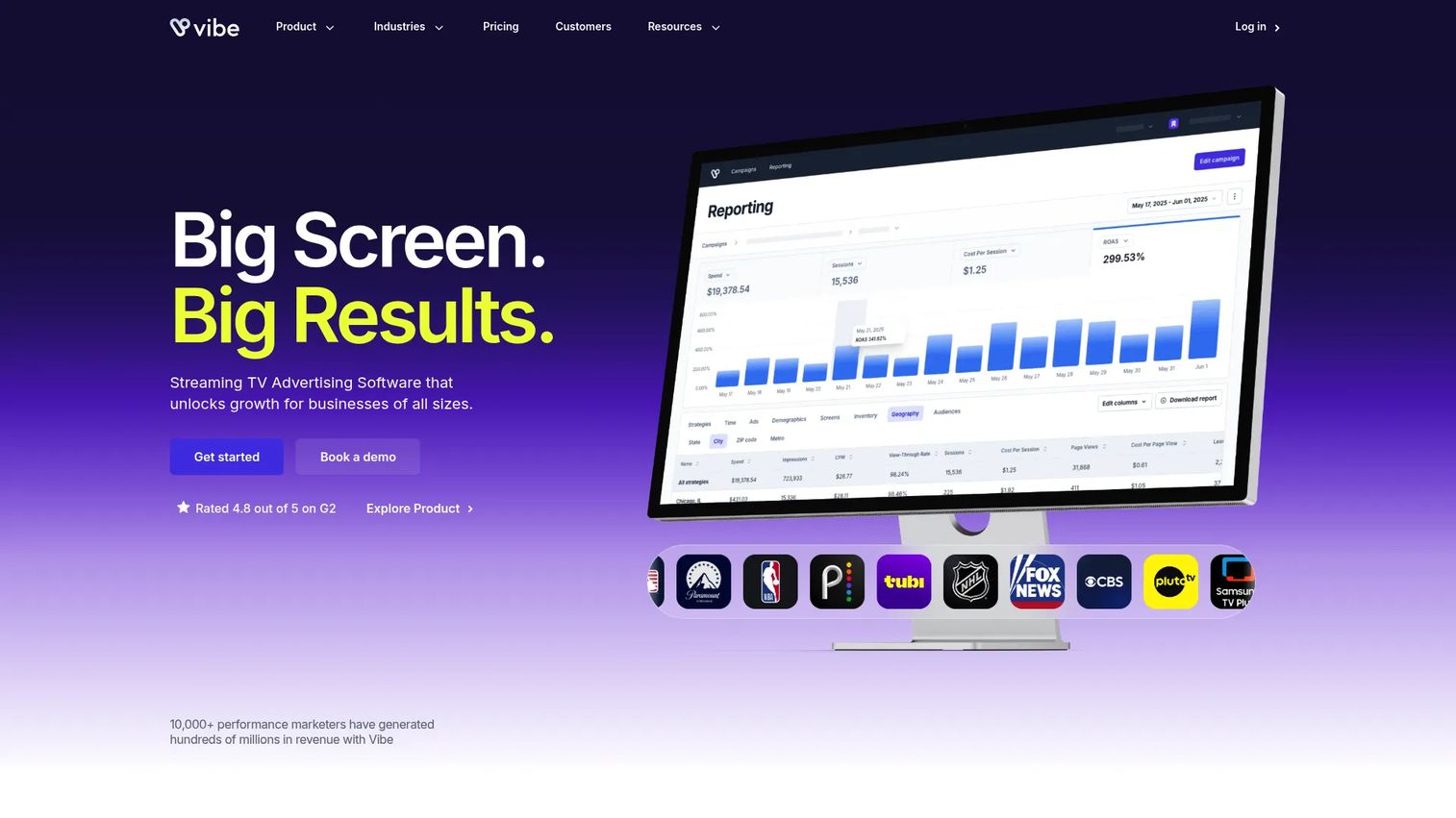
Vibe is a streaming and connected TV advertising platform built for brands and businesses that want to run measurable campaigns without an agency in the middle. It pairs a fast creative workflow with audience targeting and reporting, so a lean team can go from idea to live campaign quickly. The positioning is squarely performance-first: build the ad, target the household, watch the numbers.
Best for: Advertisers wanting self-serve connected TV campaigns with performance targeting and reporting.
Key strengths
- Audience targeting depth: Reach households by geography, demographics, interests, and intent so spend lands on the right viewers.
- Vibe Studio creative tools: Build, host, compress, resample, and A/B test TV-ready creative without a separate production cycle.
- Reporting and bidding controls: Track performance with forecasting, tracking, and bidding levers you can adjust mid-campaign.
Why choose Vibe: Vibe fits growth marketers who want TV reach without a heavyweight trading desk. The combination of in-platform creative tools and performance reporting means you can launch, measure, and iterate on your own terms. For teams that treat CTV as a response channel rather than a branding line item, that speed matters.
Vibe pricing: Vibe's public pricing page shows campaign-based pricing rather than a fixed subscription. Campaigns start at $50 per day with no commitment, and the platform's simulator displays a CPM range of $15 to $35 per thousand impressions. There is no free tier shown on the pricing page. Vibe holds a 4.8/5 rating on G2.
2. MNTN Performance TV
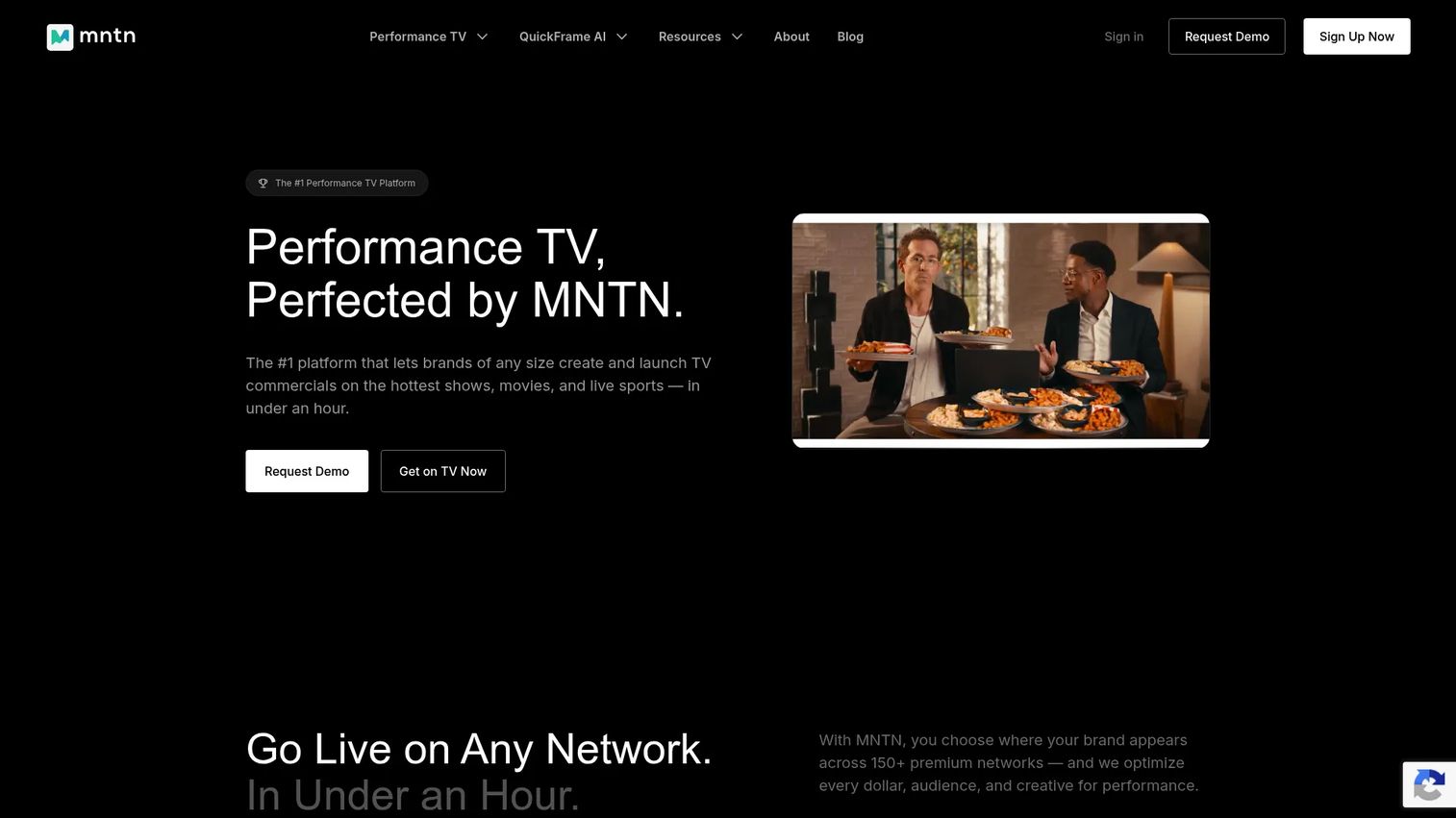
MNTN Performance TV is a connected TV performance marketing platform for launching, optimizing, and measuring TV ads. It positions CTV as a direct-response channel, with automated optimization and real-time analytics that tie streaming impressions to outcomes. That framing speaks directly to growth marketers who have been burned by awareness-only TV buys.
Best for: Brands that want self-serve Connected TV advertising with performance measurement.
Key strengths
- Premium inventory breadth: Access 150+ premium streaming networks so campaigns run alongside quality content.
- Dynamic CPM pricing model: Pay a transparent dynamic CPM where you control the campaign budget.
- Automated optimization and analytics: Let the platform adjust delivery in real time while you watch performance live.
Why choose MNTN Performance TV: MNTN is built for teams that want TV inventory measured the way they measure paid search or social. The automated optimization reduces hands-on management, and the real-time analytics give you the conversion visibility leadership keeps asking for. If your goal is ROAS rather than reach, the performance framing fits.
MNTN Performance TV pricing: MNTN does not disclose a public price figure. The company describes a dynamic CPM model and states that customers control campaign budget, with no separate fees for services or technology and no undisclosed margin call-outs on the buyer side. MNTN holds a 4.8/5 rating on G2.
3. Viant
Viant is an AI-powered omnichannel programmatic advertising platform for brands and agencies, with strong CTV capabilities. It leans heavily into household identity, attribution, and cookieless measurement, which makes it a fit for data-rich teams that need to prove cross-channel impact. Viant offers both self-serve and managed DSP options.
Best for: Advertisers and agencies buying omnichannel programmatic media, especially CTV.
Key strengths
- Flexible DSP access: Choose self-serve or managed buying depending on your team's trading capacity.
- Data Platform: Use audience insights, ID unification, activation, and reporting from one connected layer.
- Advanced Reporting: Measure conversion lift, foot traffic, multi-touch attribution, and cross-channel performance.
Why choose Viant: Viant suits mid-market and enterprise growth teams that care about identity resolution and closed-loop attribution. The Data Platform and Advanced Reporting tools are built for marketers who need to connect a household impression to a downstream conversion across channels. If attribution leadership trusts is your bar, Viant is engineered for it.
Viant pricing: Viant does not publish a public pricing figure; access is quote-based through their sales team. Viant holds a 4.2/5 rating on G2. For teams already standardizing on an account based marketing motion, Viant's identity layer can extend household targeting into your existing audience strategy.
4. Tatari
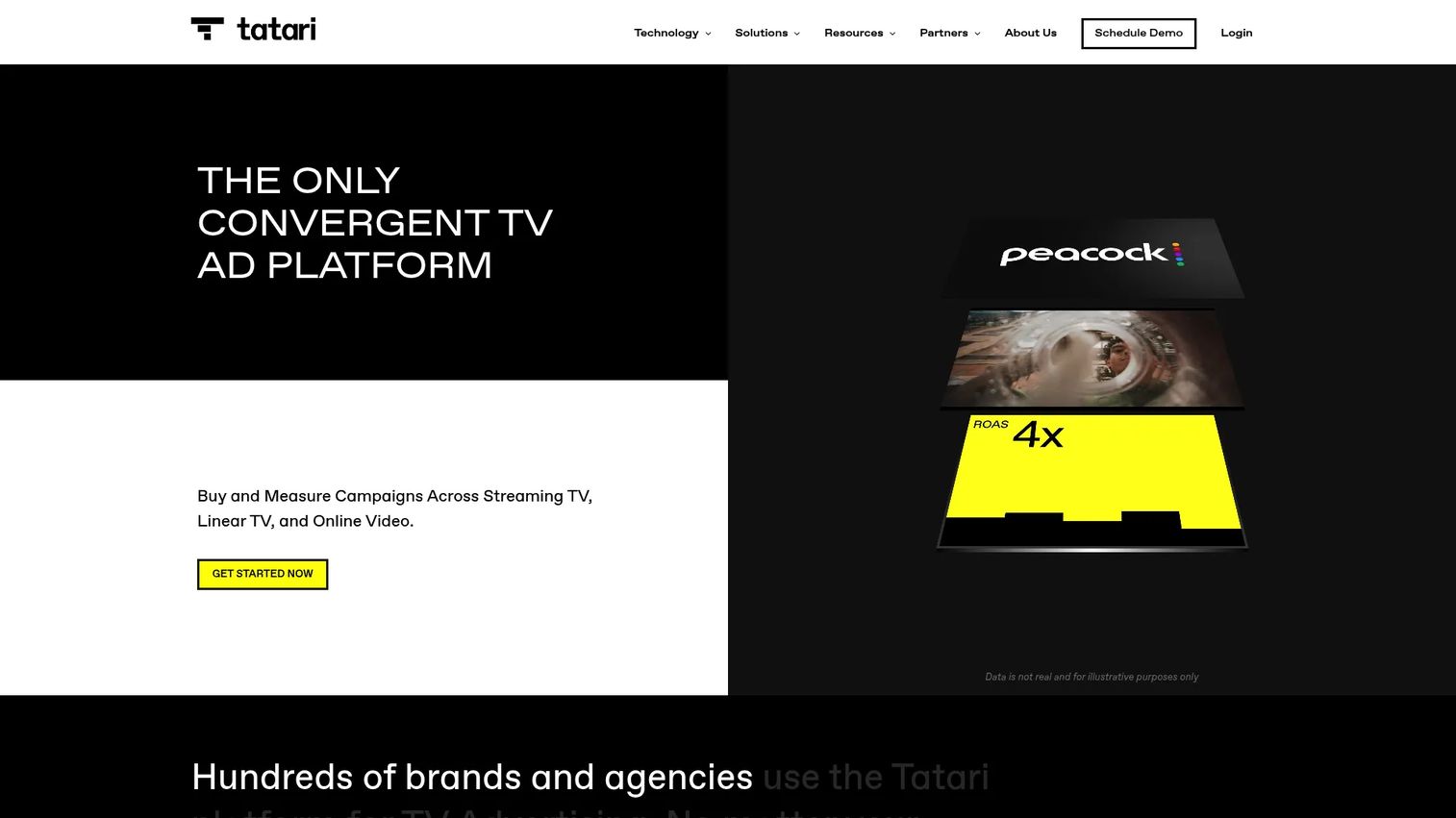
Tatari is a convergent TV advertising platform for buying and measuring linear, streaming, and online video campaigns in one place. The pitch is unified buying with closed-loop measurement, so teams running both traditional and streaming TV don't have to stitch results together manually. It's built for advertisers that treat TV as a performance channel across formats.
Best for: Brands and agencies that want measurable TV advertising across linear and streaming channels.
Key strengths
- Unified buying: Plan and buy across streaming TV, linear TV, and online video from one platform.
- Closed-loop measurement: Track visits, installs, purchases, and ROAS back to campaigns.
- AI-powered planning: Use direct and programmatic execution with AI-assisted media planning tools.
Why choose Tatari: Tatari fits teams scaling TV spend who need consistent measurement across linear and streaming. The closed-loop attribution model means you can compare a streaming buy against a linear buy on the same outcome metrics, which is rare. For performance marketers expanding beyond digital, that single-pane measurement is the draw.
Tatari pricing: Tatari does not expose a public pricing figure; the site routes to demo and contact requests instead. There is no meaningful third-party G2 rating to report at this time, as the profile shows no reviews.
5. The Trade Desk
The Trade Desk is an independent demand-side platform for data-driven digital advertising, with deep CTV inventory access and audience targeting. It's the enterprise programmatic standard for teams that already buy across channels and want granular control over data, identity, and optimization. CTV sits inside a broader omnichannel buy.
Best for: Advertisers and agencies buying programmatic media across multiple channels.
Key strengths
- Omnichannel reach: Buy across CTV, display, audio, mobile, native, video, and DOOH from one platform.
- Audience targeting: Activate first- and third-party data alongside identity solutions for precise reach.
- AI-driven optimization: Use outcome-based measurement and machine optimization to improve performance.
Why choose The Trade Desk: The Trade Desk fits enterprise teams that want independence from walled gardens and full control over their programmatic buying. The breadth of inventory and the depth of identity and measurement tools make it a strong fit for sophisticated trading teams. If you already run programmatic and want CTV in the same console, this is the enterprise option. It pairs naturally with a robust customer data platform feeding first-party audiences.
The Trade Desk pricing: The Trade Desk does not publicly list plan pricing; the platform emphasizes contacting sales to get started. Pricing is typically structured as a percentage of media spend. The Trade Desk holds a 4.4/5 rating on G2.
6. Amazon DSP
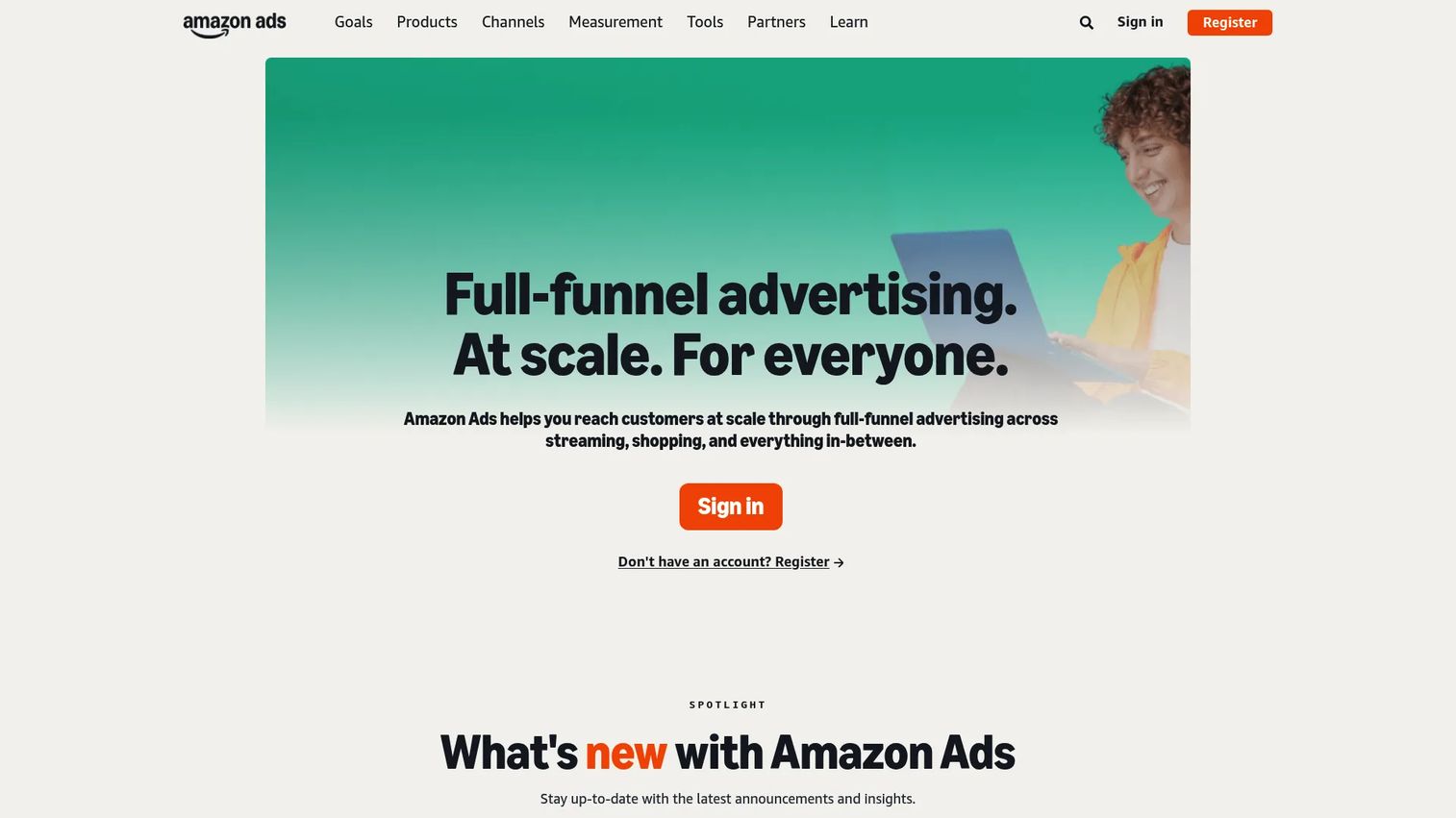
Amazon DSP is Amazon's demand-side platform for programmatic ad buying across Amazon properties and third-party inventory, including streaming. Its differentiator is access to Amazon's first-party shopping and behavioral data, which gives audience targeting a level of intent signal few platforms can match. CTV reach connects to the broader Amazon advertising ecosystem.
Best for: Advertisers and agencies buying programmatic media across Amazon and beyond.
Key strengths
- First-party audience targeting: Reach viewers using Amazon's shopping and behavioral audiences plus advertiser and third-party data.
- Programmatic buying options: Use RTB, private marketplaces, private auction, and programmatic guaranteed deals.
- Reporting and measurement: Combine Amazon-proprietary metrics with industry-standard measurement.
Why choose Amazon DSP: Amazon DSP fits marketers already operating in the Amazon ecosystem who want to extend that data into streaming reach. The first-party shopping signal is the standout, giving you targeting precision that's hard to replicate elsewhere. For brands where purchase intent is the strongest signal, this is a leverage play.
Amazon DSP pricing: Amazon describes DSP pricing as cost plus fees, with opt-in fees for certain features and services and some fixed-CPM campaigns. No public starting price is shown on the brand site. Amazon DSP holds a 4.2/5 rating on G2.
7. StackAdapt
StackAdapt is an AI-powered marketing and programmatic advertising platform for cross-channel campaign activation and optimization. CTV is one channel inside a broader multi-channel buy that includes display, native, audio, DOOH, video, and email. That makes it a strong fit for teams that want streaming inside a unified programmatic workflow rather than as a separate tool.
Best for: Agencies and brands running multi-channel programmatic advertising with managed or self-serve support.
Key strengths
- Multi-channel programmatic: Run CTV alongside display, native, audio, DOOH, video, and email in one platform.
- AI optimization: Use machine learning to make real-time campaign adjustments across channels.
- First-party data activation: Connect CRM data and first-party segments through the Data Hub.
Why choose StackAdapt: StackAdapt fits mid-market demand gen teams that want CTV folded into a broader programmatic strategy without managing multiple platforms. The Data Hub and CRM integrations let you activate first-party audiences across every channel, which keeps attribution consistent. For teams already drowning in tools, the consolidation is the value. It plays well with a tight growth marketing stack.
StackAdapt pricing: StackAdapt publishes plan names, Basic, Grow, Scale, Accelerate, and Enterprise, but does not display public prices, instead emphasizing support models and demo paths. The Basic tier is self-serve; higher tiers route through a demo request. StackAdapt holds a 4.7/5 rating on G2.
8. PubMatic

PubMatic is an AI-powered adtech platform for publishers, buyers, commerce media, and agents, with significant CTV supply. As a supply-side platform with buyer-facing tools, it sits closer to the inventory than a typical DSP, giving sophisticated media teams direct access to streaming supply with curation and transparency controls.
Best for: Publishers and media buyers seeking enterprise programmatic adtech infrastructure.
Key strengths
- Buyer media activation: Access curation, activation, and supply transparency for programmatic buying.
- Publisher yield tools: Optimize monetization and yield across connected inventory.
- Commerce media: Monetize retail and commerce data and acquire audiences at scale.
Why choose PubMatic: PubMatic fits sophisticated media teams that want efficient, transparent access to CTV supply with control over the supply path. The curation and transparency tools matter when brand safety and supply quality are non-negotiable. For teams optimizing the buy at the inventory level, the supply-side perspective is the differentiator.
PubMatic pricing: PubMatic does not display public pricing; pages direct visitors to contact sales or request a demo. PubMatic holds a 3.2/5 rating on G2.
9. OpenX
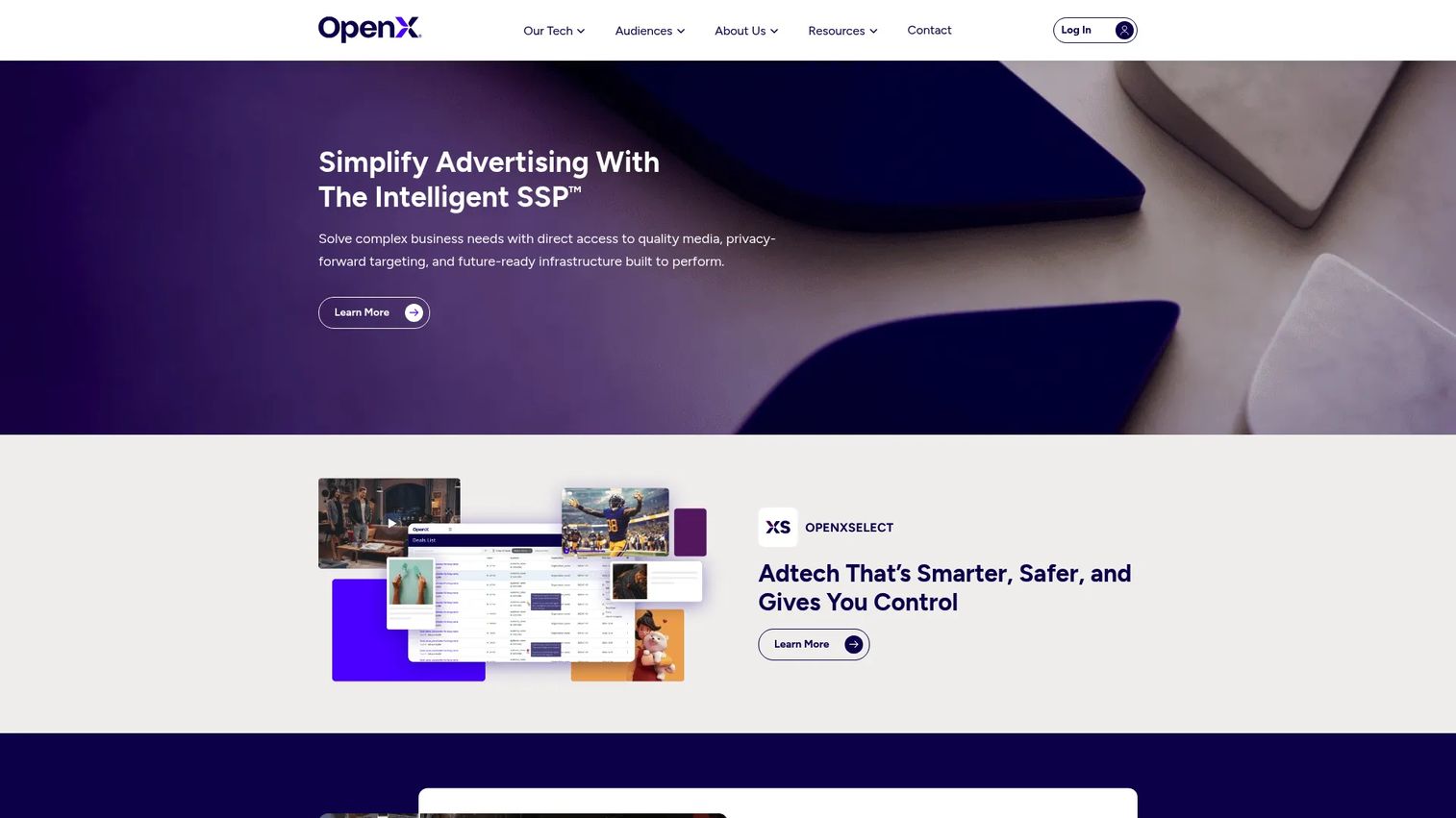
OpenX is a programmatic advertising platform and supply-side platform for buyers and publishers, with a real-time marketplace that includes CTV inventory. Its focus on supply quality, transparency, and fraud control appeals to buyers who care as much about where ads run as about who sees them.
Best for: Large advertisers and publishers buying or selling programmatic inventory with SSP tooling.
Key strengths
- OpenX Select curation: Use supply-side targeting, curation, and deal creation for cleaner buys.
- OpenX Control: Manage yield and monetization for publishers across inventory.
- OpenX Exchange: Buy from a real-time marketplace with quality, transparency, and fraud controls.
Why choose OpenX: OpenX fits buyers and publishers focused on supply quality and scale. The marketplace controls around fraud, transparency, and quality make it a fit for teams where brand safety is a board-level concern. For programmatic buyers who want curated, high-quality supply at scale, OpenX is built for that priority.
OpenX pricing: OpenX does not show public pricing on its site; the platform directs visitors to contact sales. OpenX holds a 3.2/5 rating on G2.
10. Verve
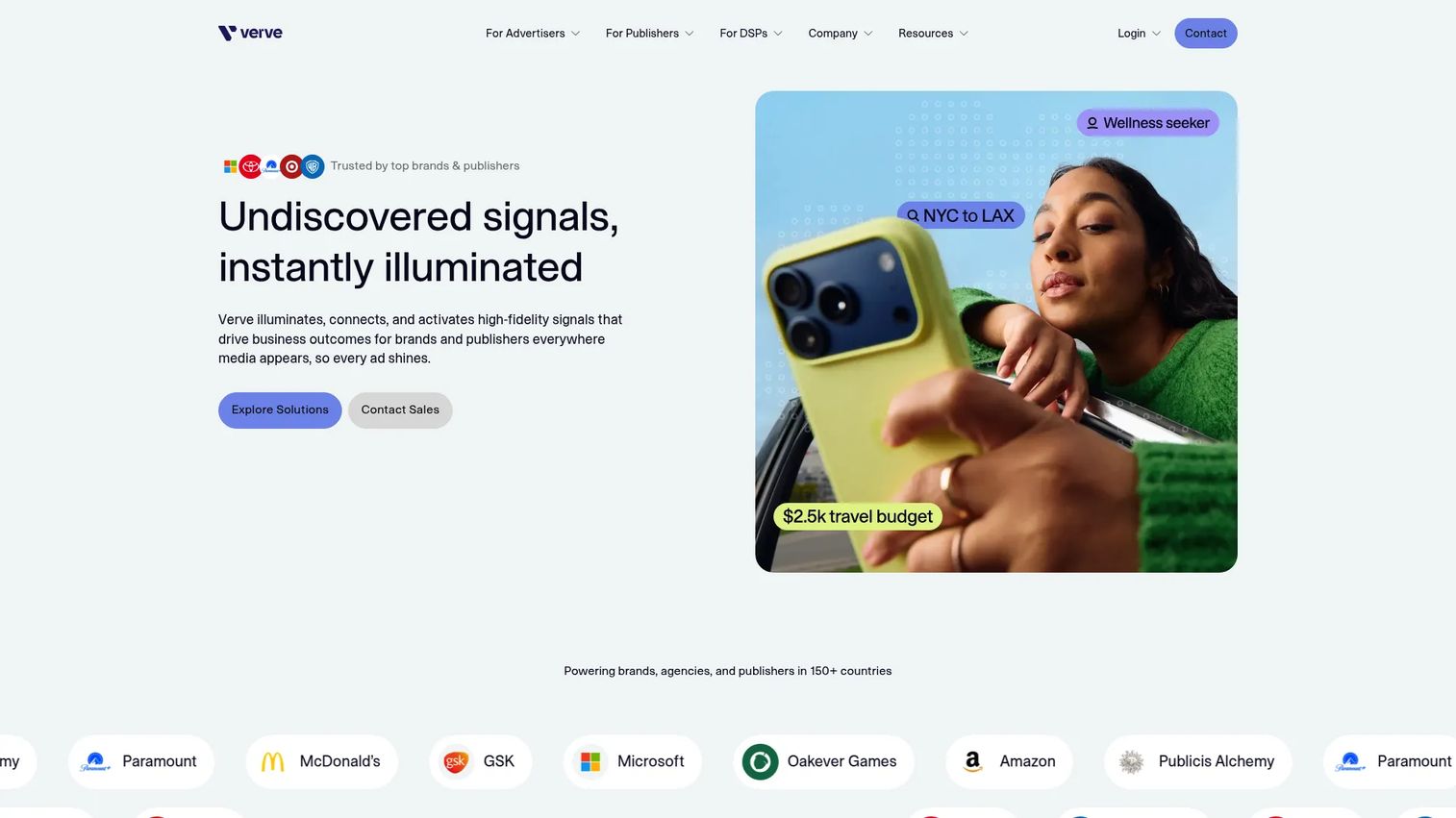
Verve is an advertising technology platform connecting advertisers and publishers across emerging channels, including CTV, in-app, and audio. Its privacy-first, ID-less approach to targeting and measurement makes it relevant as the industry moves away from third-party identifiers. CTV is part of a broader cross-device reach play.
Best for: Brands, agencies, and publishers buying or monetizing emerging-channel ad inventory.
Key strengths
- Verve Dataseat DSP: Use a performance DSP built for app growth and emerging-channel buying.
- Mobile app growth marketplace: Reach audiences with contextual, engagement, and device signals.
- Privacy-first targeting: Activate ID-less targeting and measurement across CTV, in-app, and audio.
Why choose Verve: Verve fits performance marketers who want cross-device reach without depending on third-party identifiers. The privacy-first targeting approach is a forward-looking choice as signal loss reshapes audience targeting. For teams that span mobile and connected TV, the cross-channel coverage and contextual signals are the draw.
Verve pricing: Verve does not publish public pricing; access is sales-led and contact-based. A current aggregate G2 rating was not reliably available at the time of writing.
11. Kaltura
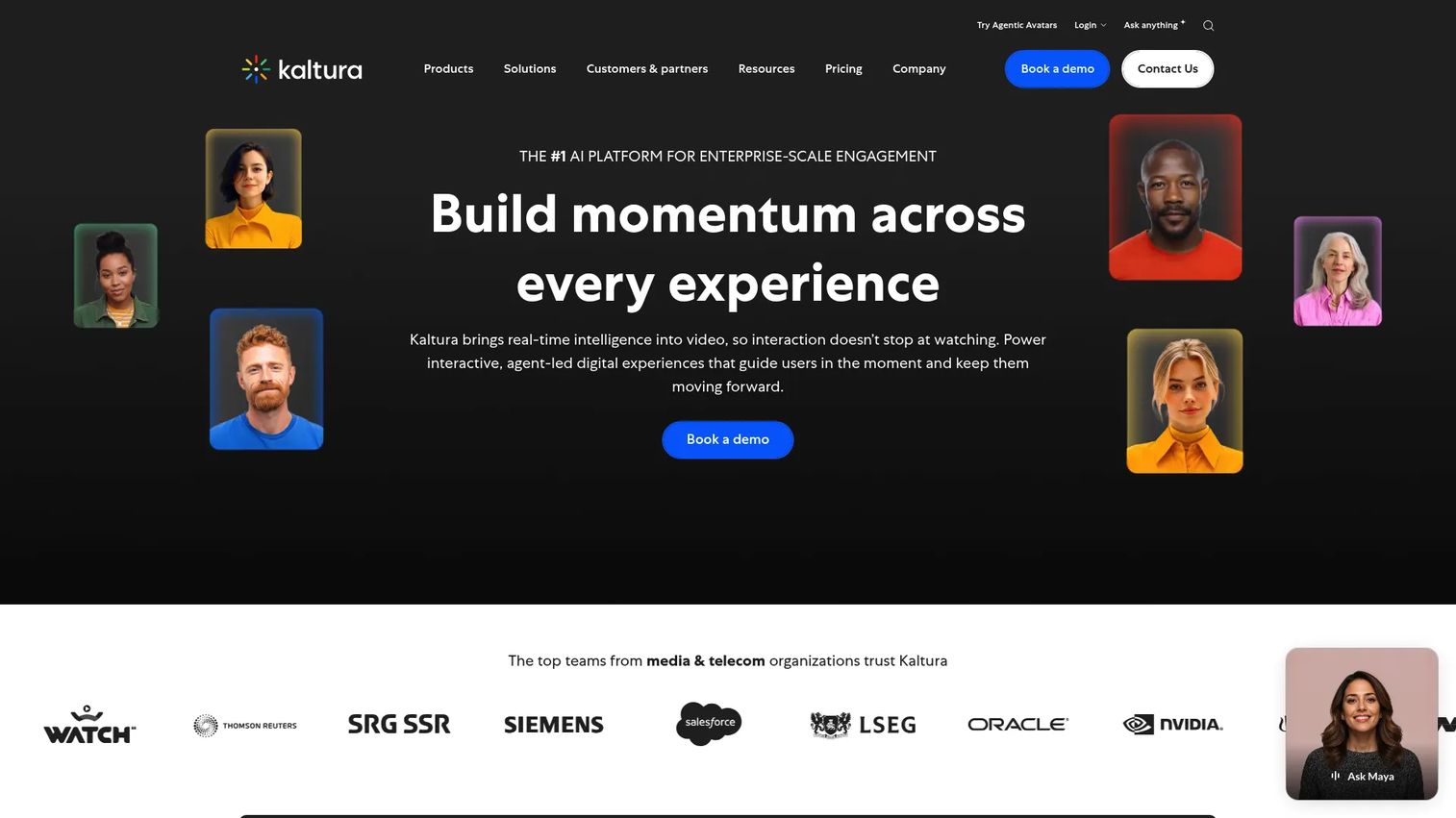
Kaltura is a video experience cloud for live, on-demand, and enterprise video workflows. It differs from the media-buying-first platforms on this list: its roots are in video infrastructure and enterprise workflows rather than ad inventory buying. It earns a place here for teams whose connected TV needs intersect with video hosting, streaming, and distribution.
Best for: Enterprises needing a customizable video platform for internal communications, webinars, and video portals.
Key strengths
- Live and on-demand video: Support streaming across live events and on-demand libraries.
- Corporate communications: Run all-hands meetings, town halls, and enterprise video workflows.
- AI-assisted video tools: Use moderation, clips, summaries, and searchable recordings.
Why choose Kaltura: Kaltura fits enterprise video teams whose CTV requirements are about infrastructure and distribution rather than programmatic ad buying. If your need is hosting, managing, and distributing video at scale, including to connected screens, Kaltura's video cloud is purpose-built for it. Match it to the job: this is video infrastructure, not a DSP.
Kaltura pricing: Kaltura does not publish a public pricing page; plans are quote-based through their sales team. Kaltura holds a 4.3/5 rating on G2.
12. Brandzooka
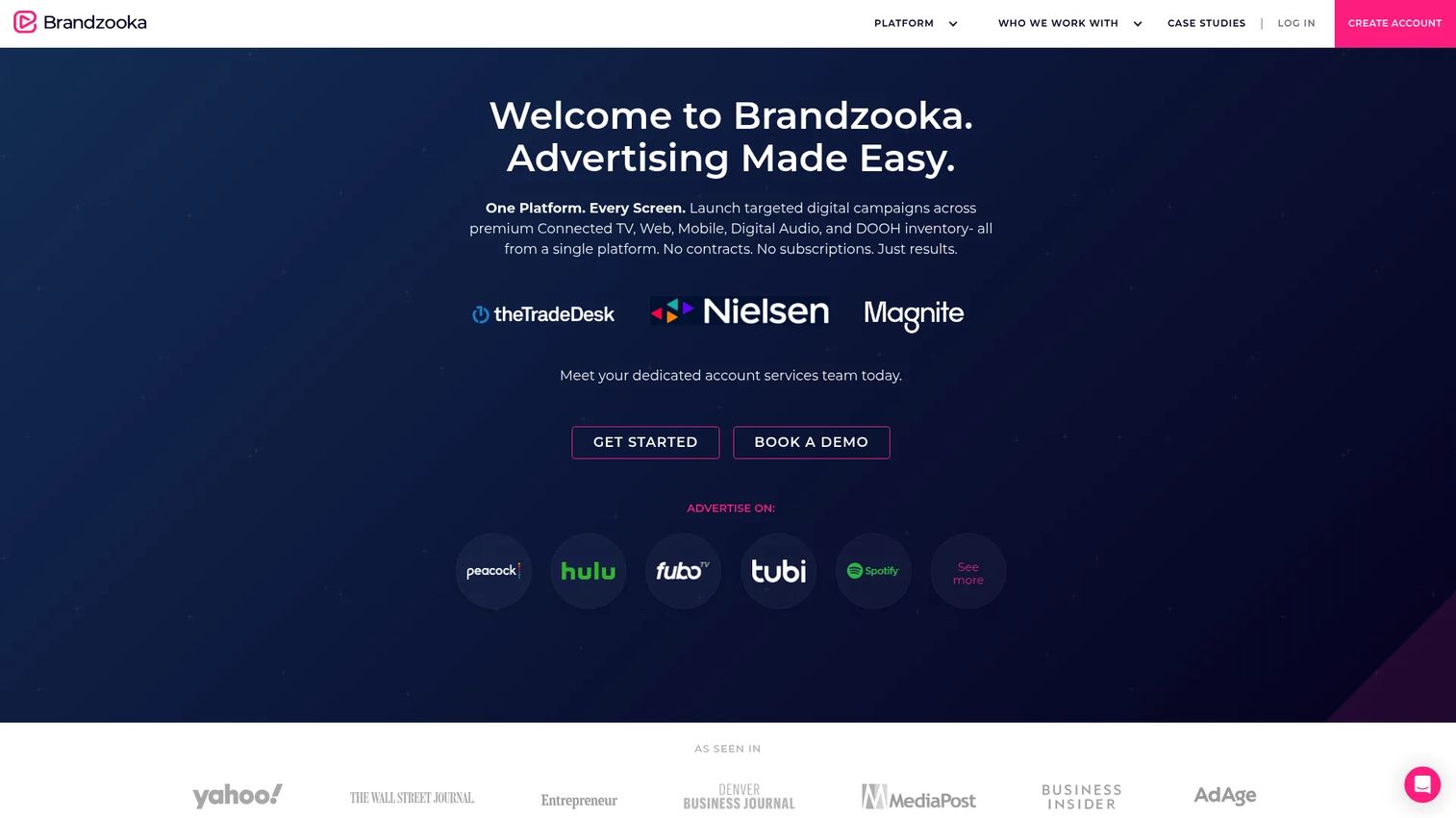
Brandzooka is a self-service programmatic advertising platform for launching digital and connected TV campaigns. Its appeal is simplicity: free account creation, no contracts, and a low entry point that lets smaller teams activate CTV without a heavyweight media-buying stack. It's the on-ramp option for marketers new to programmatic.
Best for: Brands and agencies launching self-serve programmatic digital and CTV campaigns.
Key strengths
- Free account creation: Start without a contract or subscription commitment.
- Cross-channel inventory: Run campaigns across Connected TV, web, mobile, digital audio, and DOOH.
- Audience targeting: Use retargeting, first-party data, geo-targeting, and managed audiences.
Why choose Brandzooka: Brandzooka fits smaller teams that want straightforward CTV activation without committing to enterprise tooling or contracts. The free account and low campaign minimum make it easy to test streaming as a channel before scaling. For a startup generalist running every channel solo, the simplicity is the selling point.
Brandzooka pricing: Brandzooka offers free account creation with no contracts or subscriptions. Campaigns start at a $1,000 minimum budget, and the platform charges targeting costs plus placement costs on top. No tiered subscription pricing is publicly listed, and no third-party G2 rating was available at the time of writing.
13. IBM Watson Media
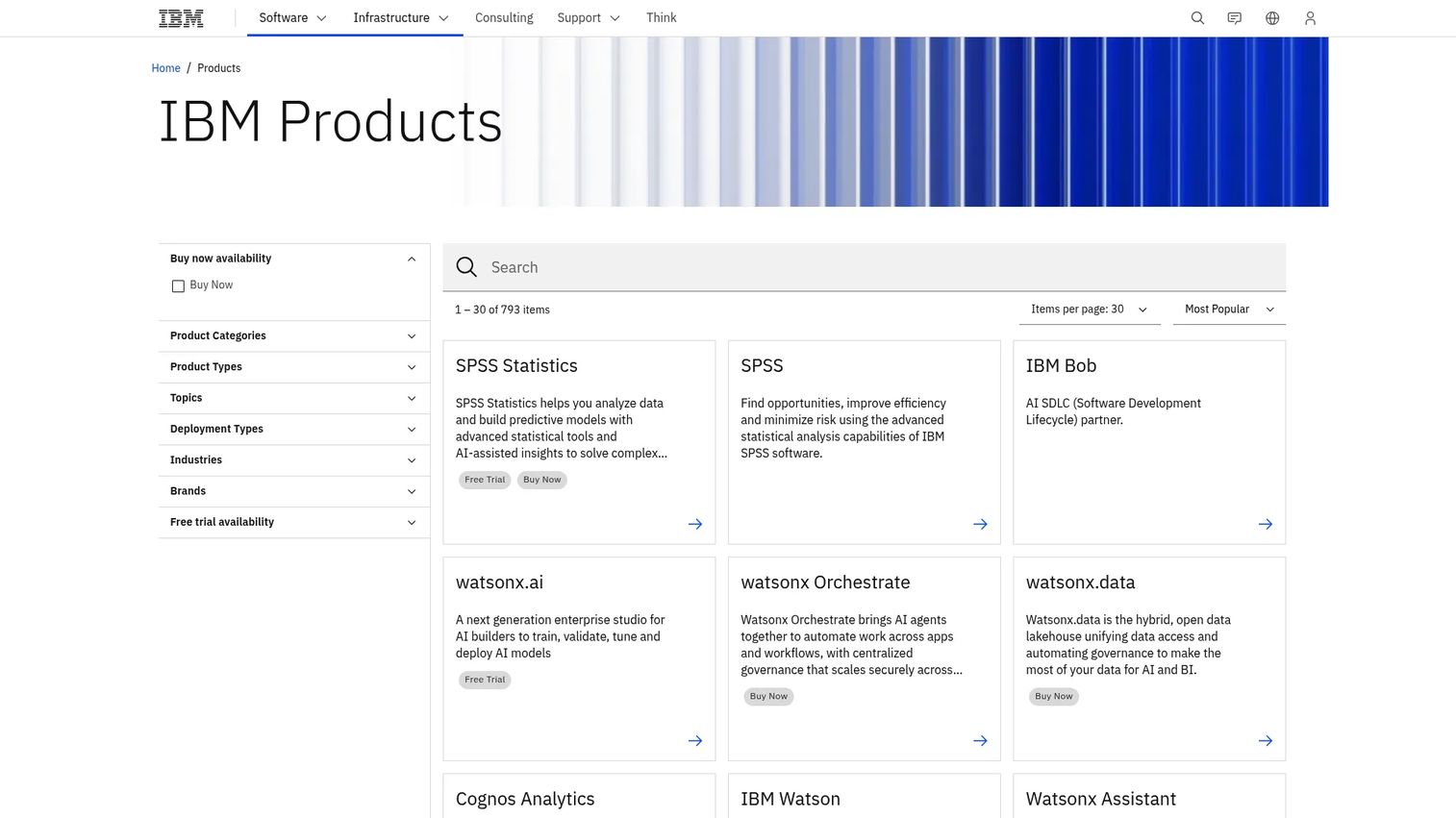
IBM Watson Media is IBM's SaaS video streaming platform for live and on-demand video, now presented as IBM Video Streaming with enterprise and public-event options. Like Kaltura, it sits on the infrastructure side rather than the media-buying side. It belongs on this list for enterprise teams whose connected TV distribution overlaps with branded video streaming and broadcast workflows.
Best for: Enterprises that need branded live and on-demand video streaming with AI-assisted discovery and captions.
Key strengths
- AI-powered video tools: Use video search and automatic captions for discoverability and accessibility.
- Live streaming: Support live event and simulcast streaming at scale.
- Branded video portals: Customize portals and channel pages under your brand.
Why choose IBM Watson Media: IBM Watson Media fits enterprise video teams that need reliable, branded streaming infrastructure with AI-assisted discovery. If your connected TV strategy is really about distribution and management of your own video content rather than buying ad inventory, this is the right category. Be honest about the fit: it's a streaming platform, not an ad-buying DSP.
IBM Watson Media pricing: IBM lists a Free Toolbox playground at $0/month, an Essentials pay-as-you-go plan starting at $0/month, and a Standard pay-as-you-go plan starting at $1,110/month, with model and feature-specific pricing noted on the page. IBM Watson Media holds a 3.6/5 rating on G2.
Considerations when choosing a connected tv platform
Before you commit budget, run each platform against the criteria that actually move your number.
Targeting and household precision
Evaluate how granular the audience targeting gets. Can you reach specific households by demographics, geography, interest, intent, and first-party data? The tighter the household targeting, the less budget you waste on viewers outside your ICP.
Attribution and measurement
This is the criterion that survives a CFO conversation. Ask how the platform connects ad exposure to outcomes: site visits, app installs, purchases, ROAS. Closed-loop measurement and identity resolution separate a defensible buy from a guess. If a platform can't tie impressions to conversions, treat the spend as awareness, not performance.
Inventory breadth and brand safety
Check which streaming apps, networks, and devices the platform reaches, and what controls it offers for brand safety and supply transparency. Inventory breadth determines scale; brand safety controls determine where your ad actually runs. Both matter when reputation is on the line.
Operational fit and integrations
Match the platform to your team's media-buying maturity. A self-serve tool fits a lean team; an enterprise DSP fits a trading desk. Confirm it integrates with your CRM, customer data platform, and reporting stack so CTV data flows into the same measurement logic as the rest of your channels.
Pricing transparency
Many connected TV providers gate pricing behind sales conversations. Push for clarity on whether you're paying a percentage of media spend, a flat CPM, or platform fees on top of placement costs. Transparent pricing makes ROAS math honest.
Conclusion
The connected TV advertising platforms that matter in 2026 are the ones that treat TV like the performance channel it has become. For lean teams that want speed and measurable response, Vibe and MNTN Performance TV put CTV within reach without an agency. For data-rich teams that need household identity and closed-loop attribution, Viant, The Trade Desk, and Amazon DSP deliver the depth. For omnichannel stacks, StackAdapt folds streaming into one programmatic buy, while PubMatic and OpenX give supply-side control for teams that optimize at the inventory level. Brandzooka offers the simplest on-ramp, and Kaltura and IBM Watson Media serve enterprise video infrastructure needs that intersect with connected TV.
The right pick comes down to three things: your team's media-buying maturity, how your data stack is built, and what your measurement bar actually is. Start with the outcome you need to prove, then choose the platform engineered to prove it. If you can't tie a household impression to a conversion, you haven't bought performance, you've bought reach. The best ctv ad platforms close that gap, and that's the standard worth holding any 2026 buy to.
FAQs
A connected TV advertising platform is software that lets advertisers buy, target, deliver, and measure video ads served to internet-connected televisions, including smart TVs, streaming devices, and OTT apps. These ctv advertising platforms handle audience targeting, programmatic bidding, creative delivery, and attribution. Some are demand-side platforms for buyers, some are supply-side platforms for publishers, and some are self-serve tools built for brands.
Programmatic CTV advertising uses automated, real-time bidding to buy streaming ad inventory rather than manual insertion orders. When a viewer loads an ad-supported stream, an auction runs in milliseconds, and the platform places your ad if your bid and targeting match that household. Buyers can transact through open auctions, private marketplaces, or programmatic guaranteed deals, depending on the level of control and inventory certainty they need.
Prioritize household targeting precision, attribution and closed-loop measurement, inventory breadth across streaming apps and devices, and brand safety controls. For performance teams, measurement is the decisive factor: the platform must connect ad exposure to outcomes like visits, installs, purchases, and ROAS. Also confirm it integrates with your existing CRM, attribution, and reporting stack so CTV data fits your measurement logic.
CTV platforms measure attribution by connecting ad exposure at the household or device level to downstream actions such as site visits, app installs, and purchases, then calculating ROAS against media spend. Stronger platforms use identity resolution and closed-loop measurement to tie an impression to a conversion across devices. The depth and trustworthiness of this attribution is what separates performance-grade connected TV providers from awareness-only buys.
No. While CTV started as a reach-and-awareness channel, modern connected TV advertising companies are built around direct response and performance measurement. Platforms now tie streaming impressions to conversions, app installs, and revenue, letting growth marketers run CTV like paid search or social. The key is choosing a platform with closed-loop attribution rather than impression-only reporting.
A DSP (demand-side platform) is a buying tool that lets advertisers purchase programmatic inventory across many channels, including CTV. A connected TV platform is a broader term that can mean a DSP, a supply-side platform, or a self-serve CTV buying tool. In short, every DSP that buys streaming inventory is a ctv advertising platform, but not every CTV platform is a DSP; some are publisher-side or self-serve buying tools.
For performance marketers, MNTN Performance TV, Vibe, Viant, The Trade Desk, and Amazon DSP rank highest because they emphasize measurable response, household targeting, and closed-loop attribution. The best fit depends on team size and data stack: self-serve tools suit lean teams, while enterprise DSPs suit teams with trading desks and rich first-party data. Match the platform to your measurement bar and operational maturity.
Pricing varies widely and is often sales-led. Vibe starts at $50 per day with a CPM range of $15 to $35, and Brandzooka uses a $1,000 campaign minimum with a free account. Many enterprise ctv ad platforms like The Trade Desk, Viant, and Amazon DSP price as a percentage of media spend or cost plus fees and require a sales conversation. Always clarify whether you're paying CPM, platform fees, or a spend percentage before committing budget.