Hiring breaks quietly. One open role is manageable in a spreadsheet. Five open roles, three hiring managers, two recruiters, and a calendar full of interviews is where it falls apart. Candidate notes live in someone's inbox. Feedback never gets logged. A strong applicant goes cold because nobody followed up. You only notice when a great hire slips away or when a board member asks why time-to-fill keeps creeping up.
For a founder, this is not an HR annoyance. It is a scaling problem. When hiring runs through you and a patchwork of tools, every new role adds hidden management overhead at the exact moment the company needs hiring to be repeatable. That is the gap applicant tracking system software is built to close. A good ATS centralizes job postings, resumes, candidate communication, interview scheduling, and hiring decisions so the process runs without constant founder involvement.
The category is large and growing. The global applicant tracking system market is projected at USD 3.20 billion in 2026, climbing to USD 5.56 billion by 2033 at an 8.2% CAGR, according to Persistence Market Research (2024). Roughly 94% of Fortune 500 companies use an ATS to manage applications and candidate databases, per Industry Research (2025). The tools have matured. The question is which one fits the way your team actually hires.
This guide compares seven applicant tracking systems and shows where each one earns its place. If you are also weighing adjacent recruiting tooling, our roundup of ai recruiting software pairs well with this one, and for the reporting side of hiring our breakdown of marketing analytics and how analytics platforms drive roi covers the metrics discipline founders need.
What's inside
This guide is for founders, HR leaders, recruiters, and hiring managers comparing applicant tracking software for a growing team. We focused on tools that do more than store resumes. Every system here was evaluated on the criteria that matter when hiring becomes a system, not a side task:
- Hiring workflow depth: structured stages, scorecards, approvals, and automation
- Usability: whether hiring managers actually adopt it
- Reporting: funnel visibility, time-to-hire, and conversion data for leadership
- Integration ecosystem: calendars, email, job boards, HRIS, background checks, and SSO
- Pricing transparency: public pricing versus quote-based, and fit for your stage
We pulled pricing and ratings from each vendor's own pages and live G2 listings.
TL;DR
- Best for structured, process-heavy hiring: Greenhouse, with interview kits, scorecards, and deep reporting built for mid-market and enterprise teams.
- Best for an all-in-one ATS plus HR tools: Workable, with public pricing and a sourcing suite for SMB and mid-market teams.
- Best for employer branding and candidate experience: Teamtailor, a candidate-first system with strong career site tools.
- Best for configurable, multi-stream hiring: Pinpoint, for complex multi-location or multi-brand teams.
- Best for affordability and Zoho-stack teams: Zoho Recruit, with a free tier and CRM-style recruiting workflows.
- Best for collaborative hiring: Recruitee, for growing teams that want configurable workflows and a branded careers site.
- Best for lean, small-business hiring: JazzHR, with public pricing and practical posting-and-tracking basics.
What is applicant tracking system software?
Applicant tracking system software is a recruiting tool that centralizes the entire hiring process, from posting a job to tracking candidates, scheduling interviews, collecting feedback, and making a hire, in one system of record. Often called ATS software or candidate tracking software, it replaces the scattered mix of spreadsheets, inboxes, and shared docs that most teams start with.
At its core, an ATS is a structured candidate database paired with workflow automation. Recruiting automation software handles the repetitive parts of hiring so recruiters spend time on people, not admin. The best talent acquisition software also gives leadership clean recruiting analytics on how the funnel is performing.
Core capabilities you should expect:
- Job posting management: publish to multiple job boards and your careers site from one place.
- Resume parsing and screening: automatically extract candidate data and surface strong applicants.
- Candidate database: a searchable record of every applicant, past and present.
- Interview scheduling and feedback: coordinate calendars and collect structured scorecards.
- Candidate communication and collaboration: keep messaging consistent and hiring managers in the loop.
- Automation and analytics: trigger emails, move stages, and report on funnel conversion and time-to-hire.
- Compliance and bias reduction: audit trails, structured questions, and permission controls.
Cloud deployment now dominates the category, capturing 88.1% of global market share in 2025 according to Mordor Intelligence (2024). For a SaaS team, that means fast setup, no infrastructure, and integrations that plug into the stack you already run. For more on the analytics layer that sits alongside hiring data, see our guides to email tracking and marketing automation.
When to use applicant tracking system software
You're hiring for multiple roles at once
A single open role is easy to run informally. The moment you have several pipelines moving in parallel, a shared hiring pipeline stops being optional. Recruiters and hiring managers need one place to see every candidate, every stage, and every next step. Without it, context lives in individual heads and momentum dies in the handoffs. Over 78% of large enterprises and 62% of SMEs already use ATS solutions to streamline this exact problem, per Industry Research (2025).
Your current process lives in spreadsheets and inboxes
Spreadsheet-and-inbox hiring breaks in predictable ways. Two people email the same candidate. Feedback never gets recorded. A promising applicant waits a week for a reply and takes another offer. An ATS removes the duplicated effort and inconsistent follow-up by giving the whole team one system of record with automated candidate communication and clear ownership of every stage.
You need cleaner reporting for leadership
When the board asks about hiring velocity, "we're working on it" is not an answer. ATS reporting ties directly to the metrics founders are accountable for: time-to-fill, funnel conversion by stage, and forecasting against headcount plans. Clean recruiting analytics also let you spot where the funnel leaks, so you fix the process instead of guessing.
Comparison table
Here is how the seven applicant tracking systems compare on intent, key use case, pricing, and G2 rating. Pricing reflects each vendor's published pricing pages as of mid-2026; verify against live sources before you buy.
| # | Product | Intent | Key use case | Pricing | G2 rating |
|---|---|---|---|---|---|
| 1 | Greenhouse | Structured hiring at scale | Interview kits, scorecards, deep reporting | Custom (Core, Plus, Pro) | 4.4/5 |
| 2 | Workable | All-in-one ATS plus HR | Sourcing suite and built-in HRIS | From $299/month | 4.4/5 |
| 3 | Teamtailor | Candidate-first hiring | Employer branding and career sites | Quote-based | Not listed |
| 4 | Pinpoint | Configurable multi-stream hiring | Multi-location, multi-brand workflows | Quote-based | 4.7/5 |
| 5 | Zoho Recruit | Affordable, CRM-style recruiting | Free tier and Zoho-stack fit | Free, then $30/recruiter/mo | 4.4/5 |
| 6 | Recruitee | Collaborative hiring | Configurable workflows and careers site | Start, Advance, Optimize plans | 4.5/5 |
| 7 | JazzHR | Lean small-business hiring | Posting, tracking, and workflows | From $1,000/yr | 4.4/5 |
1. Greenhouse
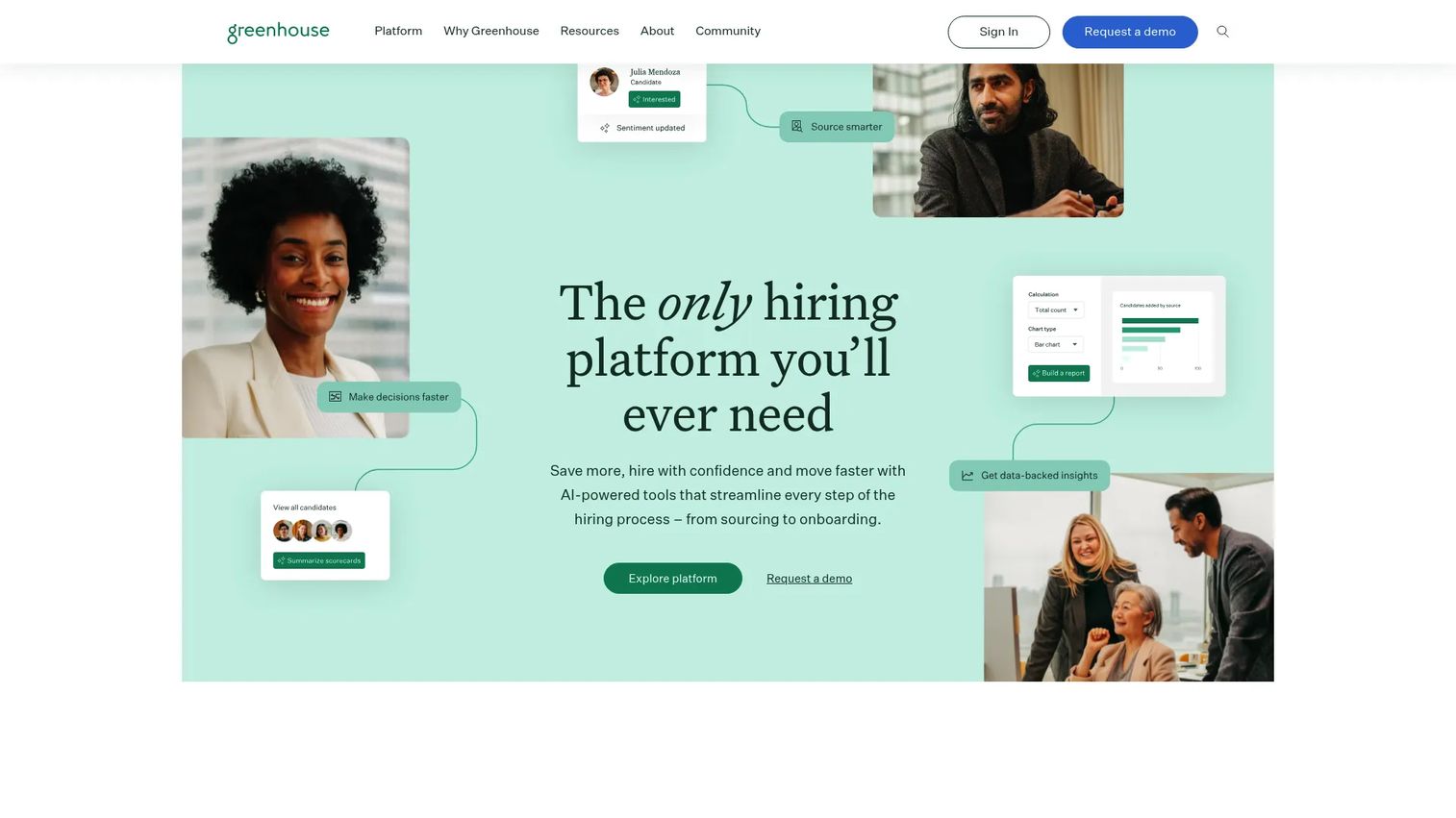
Greenhouse is an AI-powered hiring platform built for recruiting, interviewing, and onboarding at scale. It is the system most often chosen by teams that want hiring to be structured and repeatable rather than improvised. If your bottleneck is consistency, this is where the category gets serious about process.
Best for: Mid-market and enterprise teams that need a structured ATS with governance and reporting.
Key strengths
- Structured interview kits and scorecards: every interviewer asks consistent questions and logs feedback the same way, which cuts noise and supports bias mitigation.
- Scheduling, reporting, and analytics: interview scheduling and funnel reporting are built in, giving leadership clean recruiting analytics on time-to-hire and stage conversion.
- AI recruiting and integrations: AI features speed up sourcing and screening, and a broad set of ATS integrations connects to the rest of your stack.
Why choose Greenhouse: It enforces a hiring process rather than just storing one. For a founder trying to make hiring repeatable without sitting in every loop, that structure is the point. The scorecard-and-kit model turns subjective interviews into comparable data, which is exactly what you want when multiple hiring managers run their own pipelines and leadership needs one clean view.
Greenhouse pricing: Greenhouse uses custom, quote-based pricing across three plans, Core, Plus, and Pro. The vendor's pricing page does not publish numeric figures, so you contact sales for a quote tied to your headcount and feature needs. There is no public free tier. Greenhouse holds a 4.4/5 rating on G2.
2. Workable
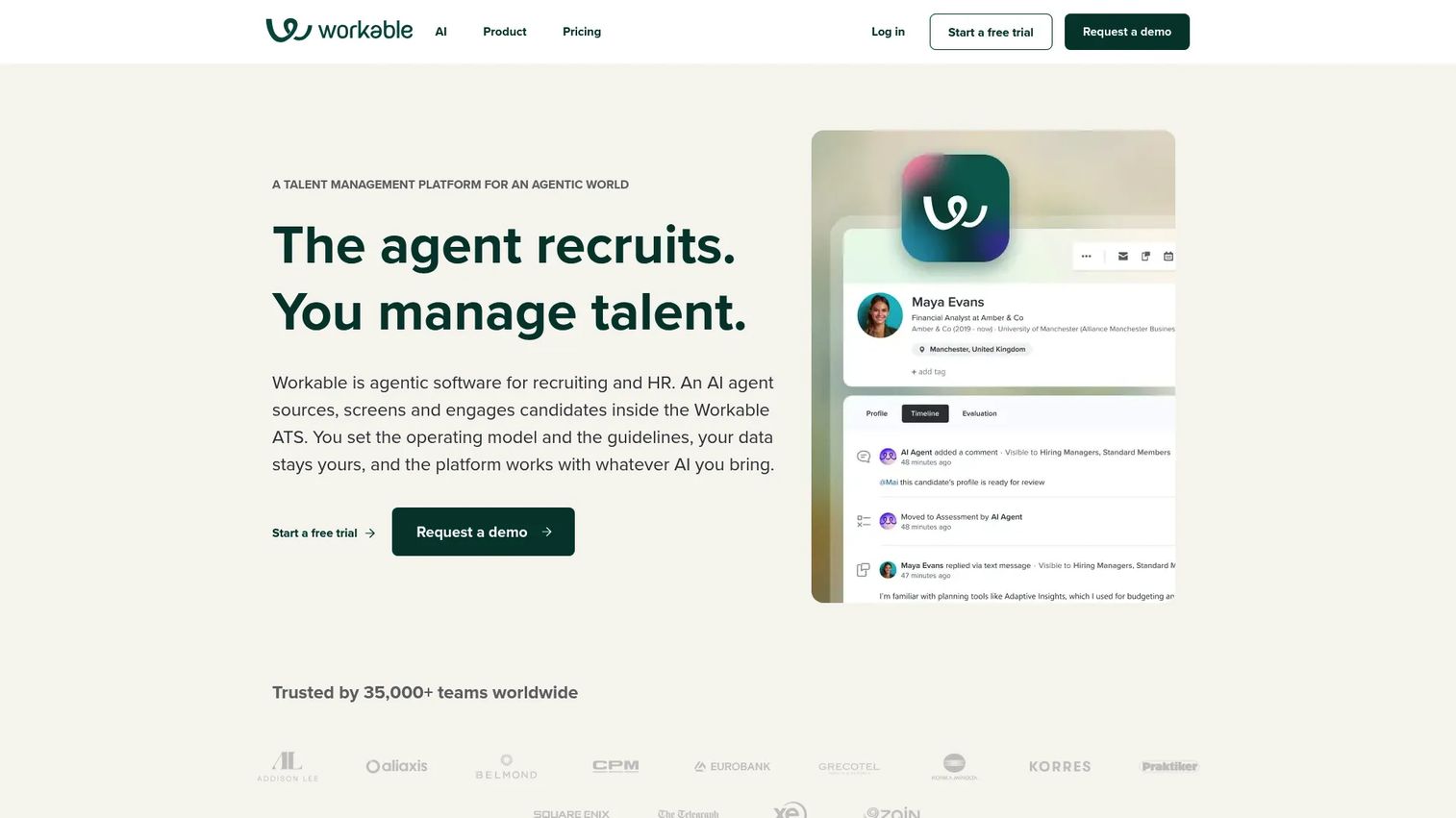
Workable is an all-in-one recruiting and HR software platform that pairs a capable ATS with sourcing tools and a built-in HRIS. It is a strong fit when you want recruiting and lightweight HR operations in one system instead of stitching two together.
Best for: SMB and mid-market teams that want an ATS plus HR tools on a simpler operating model.
Key strengths
- Applicant tracking system: a complete pipeline for posting, resume parsing, candidate tracking, and hiring decisions.
- Candidate sourcing suite: proactive sourcing tools help you find passive candidates, not just inbound applicants.
- HR information system: built-in HRIS extends the platform past the hire into basic employee records and onboarding.
Why choose Workable: Public pricing and a fast setup make it easy to adopt without a long sales cycle, which matters when a new hiring leader needs something working on day one. The sourcing suite and HRIS mean you can consolidate two or three tools into one, a real win for a lean team trying to reduce stack complexity while keeping hiring visibility.
Workable pricing: Workable publishes its pricing openly. The Standard plan starts at $299/month, Premier at $599/month, and Enterprise at $719/month, with annual pricing also shown and add-ons available for texting, video interviews, and assessments. There is no free tier. Workable holds a 4.4/5 rating on G2.
3. Teamtailor
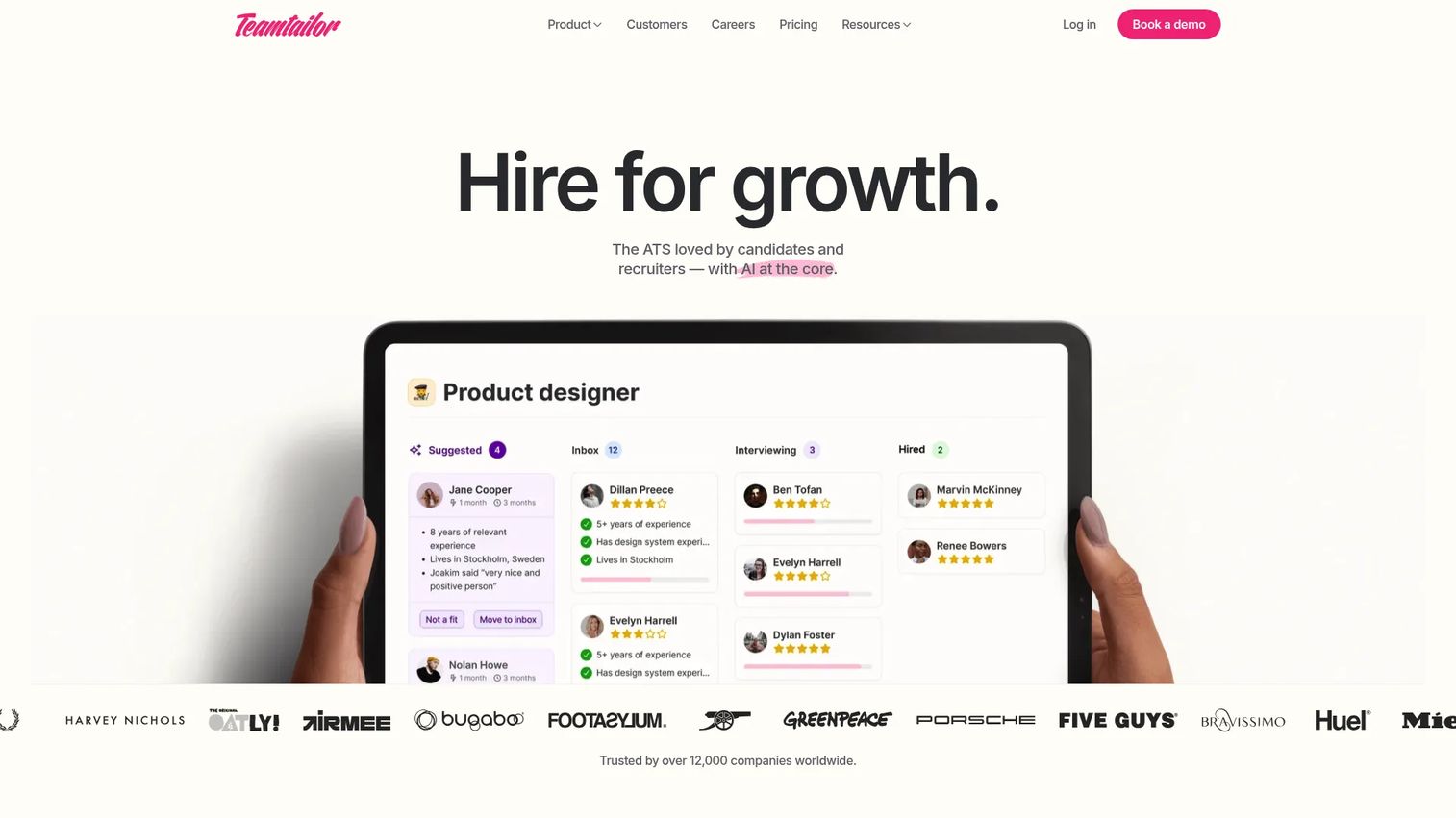
Teamtailor is an all-in-one recruitment platform that combines an ATS with strong employer branding tools. Where most systems treat the careers page as an afterthought, Teamtailor makes candidate experience and brand a first-class part of hiring.
Best for: Companies competing for talent that want a candidate-first ATS with built-in branding.
Key strengths
- Unlimited job postings and users: no per-seat ceiling on who participates, so hiring managers and interviewers join without friction.
- Customer support for all users: support is available across the team, not gated to admins.
- 250+ features and HR tech integrations: a large integration ecosystem connects your careers site, communication, and HR stack.
Why choose Teamtailor: When you are competing for scarce talent, the candidate's experience of your brand shapes whether they say yes. Teamtailor builds employer branding and a polished career site directly into the hiring workflow, so the front door looks as good as the product. The unlimited-user model also keeps hiring collaborative without nickel-and-diming you on seats.
Teamtailor pricing: Teamtailor uses quote-based pricing. The pricing page does not display public numbers and instead invites you to request a custom quote tied to company size and needs. There is no public free tier listed.
4. Pinpoint
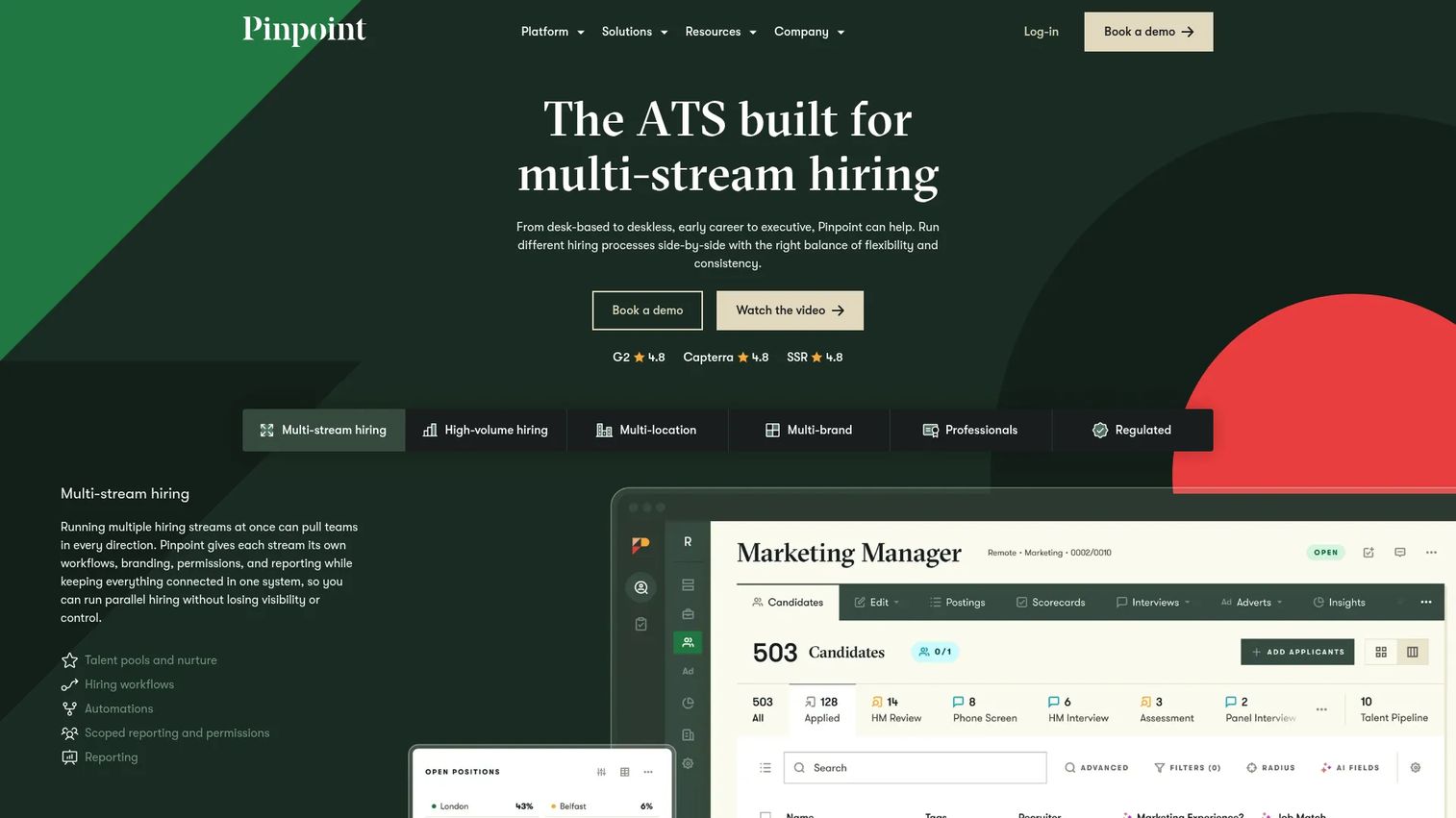
Pinpoint is an applicant tracking system built for multi-stream hiring, covering everything from planning and sourcing through onboarding. It targets teams that want real process and configurability without a clunky interface getting in the way.
Best for: Teams that need a configurable ATS for complex, multi-location or multi-brand hiring.
Key strengths
- Reporting and approval workflows: structured reporting plus approval routing keeps multi-stakeholder hiring accountable and auditable.
- Automations and configurable workflows: hiring workflow automation adapts to the process you actually run across different teams and regions.
- Candidate communication, CRM, and multilingual experience: built-in candidate communication and a recruiting CRM support a polished, multilingual candidate experience.
Why choose Pinpoint: Complex hiring usually forces a choice between flexibility and usability. Pinpoint aims to give you configurable workflows and approvals without the heavy, dated UI that often comes with enterprise systems. For founders running hiring across multiple brands, locations, or languages, that combination of structure and clean experience is the draw.
Pinpoint pricing: Pinpoint uses quote-based pricing. Public figures are not listed, and the site directs you to request a custom quote based on your hiring volume and configuration. Pinpoint holds a 4.7/5 rating on G2, the highest in this comparison.
5. Zoho Recruit
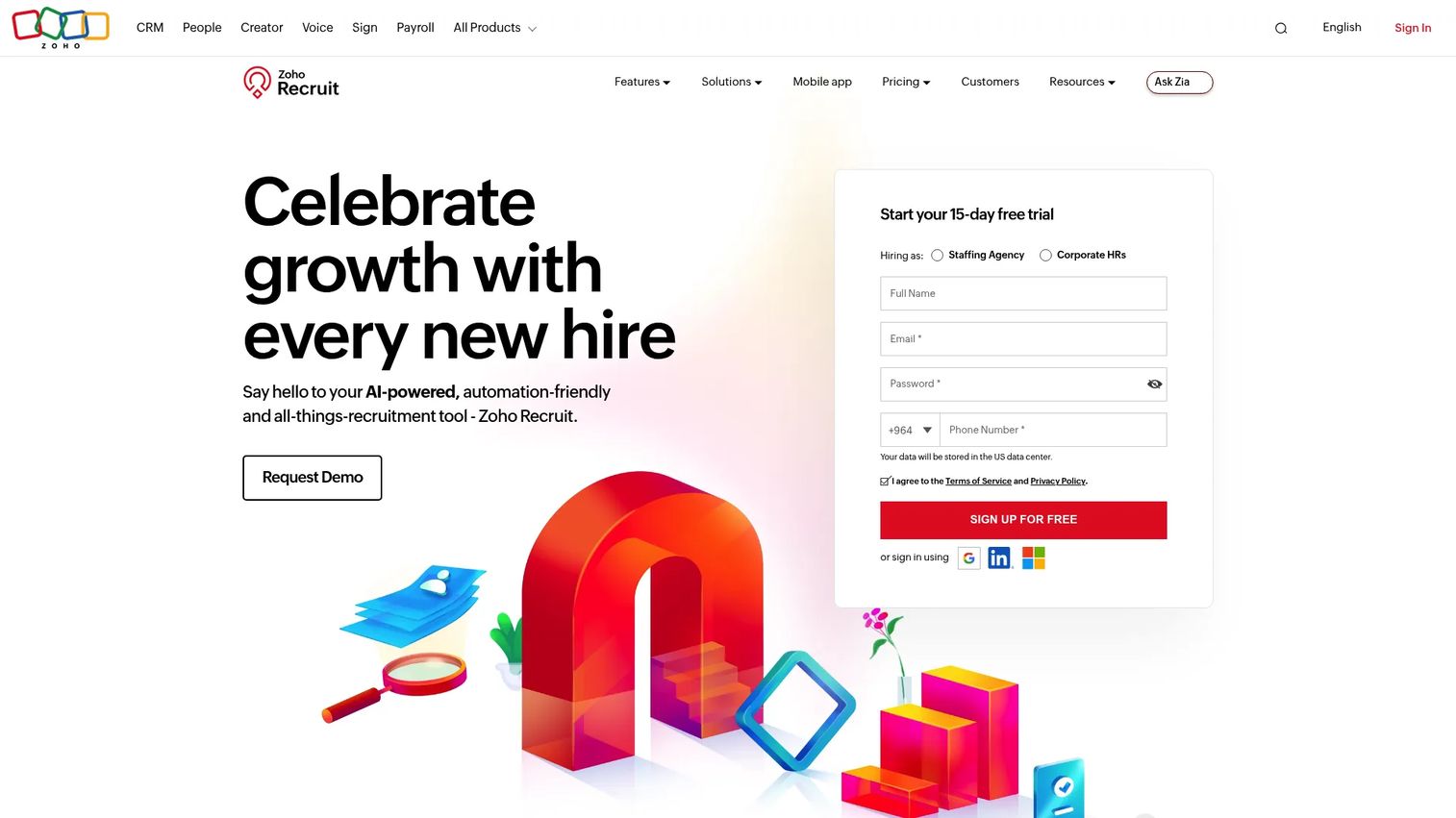
Zoho Recruit is a cloud-based applicant tracking and recruitment CRM platform for HR teams and staffing agencies. It blends ATS basics with CRM-style workflows, and its free tier plus low entry price make it one of the most accessible options here.
Best for: Teams and staffing agencies that want an ATS with CRM-style recruiting workflows on a tight budget.
Key strengths
- Candidate sourcing and job board posting: post to multiple job boards and source candidates from one place.
- Resume management and parsing: resume parsing organizes applicant data automatically for faster screening.
- Automation for workflows, emails, and interviews: automate candidate communication, stage moves, and interview scheduling.
Why choose Zoho Recruit: If you already run on Zoho's suite, Recruit slots in natively and shares data with the tools you use. Even if you do not, the pricing makes it an easy starting point. A founder testing whether an ATS earns its place can begin on the free plan and scale up only when the workflow proves its value.
Zoho Recruit pricing: Zoho Recruit offers a Forever Free plan at $0, a Standard plan at $30 per recruiter per month, and an Enterprise plan at $60 per recruiter per month. The pricing page also lists a 15-day free trial and a 45-day money-back guarantee. Zoho Recruit holds a 4.4/5 rating on G2.
6. Recruitee
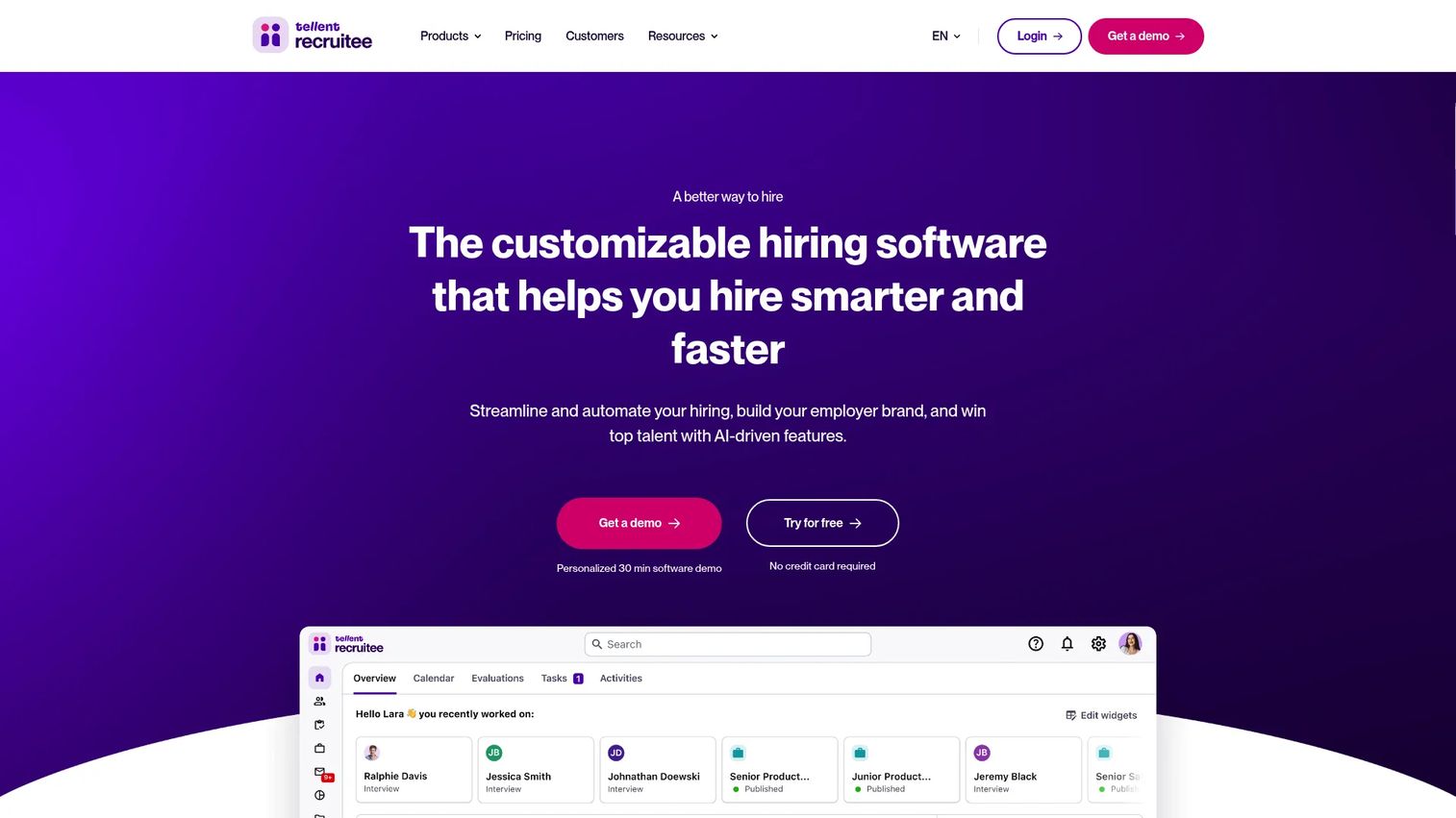
Recruitee is collaborative applicant tracking and hiring software built for teams. It leans into shared hiring, letting recruiters and hiring managers build configurable workflows together rather than working around a rigid system.
Best for: Growing hiring teams that want collaboration, automation, and a branded careers site.
Key strengths
- Career site builder and job posting tools: publish a branded careers site and distribute jobs without separate tooling.
- Workflow automation and candidate management: configurable hiring workflow automation keeps pipelines moving and candidates organized.
- Reporting, analytics, and AI-powered tools: recruiting analytics plus AI features support faster, data-backed hiring decisions.
Why choose Recruitee: Collaborative hiring only works when the tool makes participation easy. Recruitee is designed around shared pipelines and configurable workflows, so hiring managers contribute feedback and move candidates without recruiter babysitting. For a scaling team that wants process you can shape to your own hiring motion, that flexibility is the appeal.
Recruitee pricing: Recruitee offers three plans, Start, Advance, and Optimize. Annual billing comes with a 20% discount, and monthly payment is available with a one-year minimum commitment. Recruitee holds a 4.5/5 rating on G2.
7. JazzHR
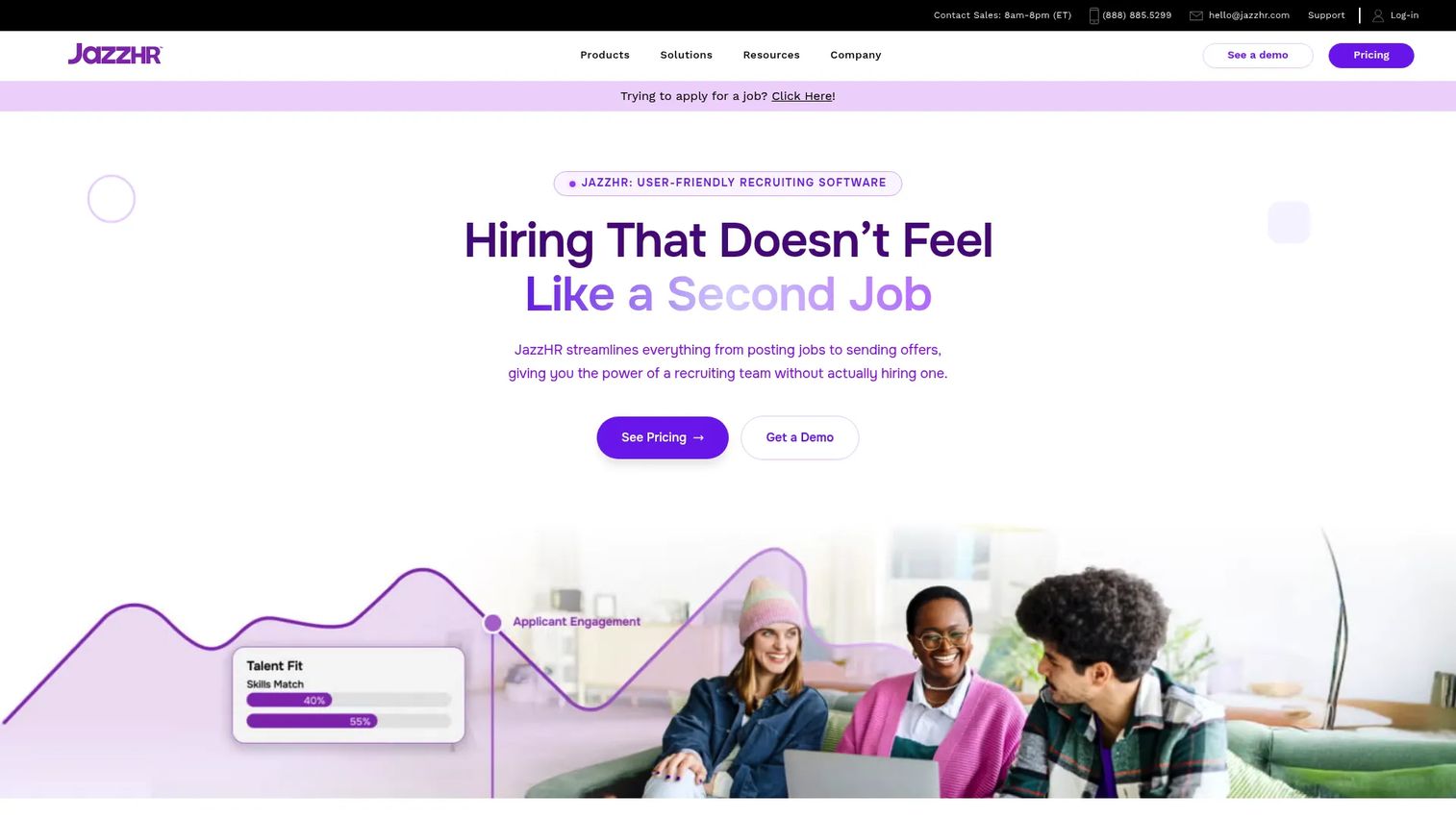
JazzHR is applicant tracking and recruiting software built for small and growing businesses. It strips hiring down to the essentials, posting, tracking, and practical workflows, without the weight of an enterprise system.
Best for: Small and mid-sized teams that need an ATS with job posting, candidate management, and hiring workflows.
Key strengths
- Applicant tracking system: a focused pipeline for posting jobs and tracking candidates through to hire.
- Job posting and syndication: distribute openings across job boards from one dashboard.
- AI-powered candidate matching: surface strong applicants automatically to speed up screening.
Why choose JazzHR: For a lean team, the risk with an ATS is buying more system than you can use. JazzHR keeps the surface area small and the price predictable, so a small business gets posting, tracking, and workflow basics without a steep learning curve. It is the practical choice when you need structure without complexity, and its annual pricing is published openly.
JazzHR pricing: JazzHR publishes annual pricing across three plans, Hero at $1,000/year, Plus at $3,480/year, and Pro at $5,508/year. The pricing page references monthly and yearly view options plus consumption-based add-ons. There is no public free tier. JazzHR holds a 4.4/5 rating on G2.
Considerations
Before you commit, run your shortlist against the criteria that actually predict adoption and value.
Workflow complexity
Match the ATS to the hiring process you actually run, not the one you wish you had. A system with deep structure is wasted if your team will not use it, and a lightweight tool will frustrate a team that needs approvals and scorecards. Map your real stages first, then look for a tool that fits without heavy customization.
Reporting and forecasting
Look for funnel visibility, stage conversion, time-to-hire, and the ability to export clean recruiting analytics. The reporting layer is what lets you answer leadership questions with data instead of anecdotes, and it is what connects hiring to headcount forecasting.
Collaboration and approvals
Check how hiring managers give feedback, whether scorecards are structured, and how approval routing works. Hiring workflow automation only helps if the people outside the recruiting team will actually engage with it. Test the hiring-manager experience, not just the recruiter view.
Integrations and ecosystem fit
Verify calendar, email, job board, HRIS, background check, and SSO support against the tools you already run. ATS integrations determine how much manual coordination you remove. A tool that connects to your stack pays back in time saved on every hire.
Compliance and bias reduction
Confirm audit trails, structured-hiring support, permission controls, and data handling. Structured scorecards and consistent questions support DEI hiring goals and bias mitigation, while audit trails and permissions keep you defensible on compliance.
Conclusion
The right applicant tracking system is the one that reduces hiring drag instead of adding another system to manage. Greenhouse and Pinpoint suit teams that want structured, configurable hiring with deep reporting. Workable and JazzHR offer transparent pricing and fast setup for SMB and mid-market teams. Teamtailor and Recruitee lead on candidate experience and collaboration. Zoho Recruit is the budget-friendly entry point, especially inside the Zoho ecosystem.
For a founder, the test is simple. Does this tool let your team hire repeatably without routing every decision through you, and does it give leadership clean data to forecast against? Shortlist two or three options, run a real role through each workflow, and pay attention to whether hiring managers adopt it in the first week. The best ATS earns its place in your stack fast, or it gets cut.
FAQs
An applicant tracking system manages recruiting: job postings, candidate flow, interviews, and hiring decisions up to the point of offer. An HRIS manages employees after they are hired, handling records, payroll data, time off, and broader HR operations. Some platforms, like Workable, bundle both, but the core jobs are distinct.
The features that drive value are hiring workflow automation, structured candidate communication, interview scheduling, reporting and recruiting analytics, and integrations with your calendar, email, and HR tools. Resume parsing and a searchable candidate database keep applicant data organized. Prioritize the workflow and reporting depth your team will actually use over long feature checklists.
ATS pricing varies widely by seats, features, and team size. Some vendors publish pricing openly, such as Workable from $299/month and JazzHR from $1,000/year, while others like Greenhouse, Teamtailor, and Pinpoint use quote-based pricing tied to your headcount. Zoho Recruit offers a free tier with paid plans from $30 per recruiter per month. Expect public pricing for smaller tools and custom quotes as you move upmarket.
Yes, once you are hiring for more than one role at a time. The value is time saved on coordination, clear hiring visibility for leadership, and consistent candidate communication that stops good applicants from going cold. For small business hiring, a lean tool like JazzHR or Zoho Recruit delivers that structure without enterprise overhead.
A good ATS supports compliance and bias mitigation through structured scorecards, consistent interview questions, audit trails, and permission controls. Structured hiring means every candidate is evaluated against the same criteria, which reduces subjective drift and supports DEI hiring goals. Audit trails and access controls keep your process documented and defensible.
Look at where the current system creates friction: workflow bottlenecks, low hiring-manager adoption, reporting gaps, or cost that no longer matches the value. If hiring managers avoid the tool or leadership cannot get clean funnel data, those are the signals. Replace when the system slows hiring more than it speeds it, not just because a newer option exists.
Yes. Most modern applicant tracking systems integrate with calendar and email for interview scheduling, job boards for posting management, HRIS for onboarding handoff, and background check providers for screening. Many also support SSO for security. Verify the specific ATS integrations you need against your existing stack before you commit.