
You have a rate sheet in a spreadsheet, a second version in someone's inbox, and a carrier email that landed this morning with new numbers. A customer asks for an ocean quote. You pull one file, cross-check another, copy a formula, and send the price forty minutes later. By then, the rate you quoted may already be stale.
That gap between a request and a confident answer is where freight teams lose deals and margin. Quote turnaround time is a revenue lever, not an admin chore. When rates change weekly and sometimes daily, a manual quoting process built on copied cells and disconnected sources cannot keep pace.
The freight rate management software market reflects how urgent this problem has become. Worldwide Market Reports valued the category at USD 1.2 billion in 2026, projecting it to reach USD 2.8 billion by 2033 at a 12.7% CAGR. The broader freight management software market sits at USD 15.2 billion in 2026, per Stalwart Research Insights, growing to USD 30.4 billion by 2036. North America accounts for roughly 40% of that global spend, and Asia-Pacific is the fastest-growing region as logistics teams digitize pricing workflows.
The point behind the numbers is simple. Teams that centralize rates, automate quote generation, and connect carrier data respond faster and price more accurately than teams still working out of email threads and static files. The rest of this guide compares the platforms built to close that gap.
What's inside
This guide is for freight forwarders, logistics operations leaders, transportation managers, and product or operations buyers evaluating a freight rate management system in 2026. If you own quote turnaround, rate accuracy, or pricing visibility, this list is built for your buying decision.
We selected each platform based on four criteria that matter in real freight workflows: how well it centralizes rates across carriers and modes, how much of the quote process it automates, the depth of its carrier, TMS, ERP, and API connectivity, and the analytics it surfaces on pricing performance. Every tool here is a real, active product with a verifiable freight pricing focus.
TL;DR
- Best for procurement and tendering: Freightender excels when your priority is RFQ handling, mini-tenders, and structured carrier sourcing across multiple transport modes.
- Best for broad freight tech and market intelligence: Freightos suits teams that want quoting, booking, and benchmarking data in one connected ecosystem across air, ocean, and ground.
- Best for AI-assisted quoting speed: Wisor fits fast-moving forwarding teams that want automated quote generation, centralized rate management, and email and TMS integrations.
- Best for transport allocation and quote comparison: Oyaso works well for shippers who need to request, compare, and award transport quotes with selected logistics providers.
What freight rate management software does
Freight rate management software is a platform that centralizes carrier rates, automates quote creation, and tracks rate validity so logistics teams can respond to pricing requests faster and with fewer errors.
Instead of scattering pricing across spreadsheets, PDFs, and inboxes, the software holds spot rates, contract rates, and daily rates in one repository. When a quote request comes in, the system looks up the current rate, applies pricing rules and surcharges, and generates a quote in minutes rather than the better part of an hour. That shift is the core of freight quote automation, and it is the reason freight cost management is moving off spreadsheets across the industry.
Core capabilities you should expect from a modern rate management software platform:
- Centralized rate repository: A single source of truth for multi-carrier pricing, storing contract, spot, and daily rates with clear ownership.
- Freight quote automation: Automated quote generation that pulls the right rate, applies rules, and formats a customer-ready price.
- Rate validity and expiry tracking: Controls that flag when a rate expires so you never quote off a dead number.
- Carrier, TMS, and ERP integrations: API connectivity that keeps pricing data flowing between systems instead of living in isolation.
- Analytics and reporting: Visibility into quote turnaround time, quote-to-booking conversion, and rate accuracy so you can measure and improve.
The distinction that matters: a basic quoting tool spits out a number. Freight rate management software governs the entire pricing workflow, from rate ingestion to validity control to conversion tracking. That governance is what protects margin at scale.
When to use freight rate management software
Not every team needs a full platform on day one. Here is how to recognize the moments when freight rate management software earns its place in your stack.
Speed up quote turnaround
If your team is quoting from spreadsheets and email chains, response time is your bottleneck. A shipper who waits forty minutes for a price often has three other quotes already in hand. Software standardizes rate lookup and automates quote generation, so a request that once took most of an hour turns into a few minutes.
The benefits compound quickly:
- Faster first response, which correlates directly with quote-to-booking conversion.
- Consistent quote formatting across every rep and every customer.
- Fewer manual handoffs between the person who holds the rate and the person who sends the quote.
Keep rates current across carriers
Freight markets move. Spot rates shift, contract rates renew, and carrier updates land without warning. When pricing decisions pull from multiple sources, a centralized system is the only reliable way to stay current.
Run through this checklist if rate freshness is your concern:
- Are spot and contract rates stored in one place, or scattered across files?
- Does the system flag rate expiry before someone quotes a stale number?
- Can you trace which carrier update changed a rate and when?
- Do real-time updates from carriers or APIs feed the repository automatically?
If you answered no to more than one, a centralized pricing repository will pay for itself in avoided errors.
Reduce pricing errors and margin leakage
Stale sheets, copied formulas, and manual handoffs are where margin quietly disappears. A single wrong surcharge or an expired rate can turn a profitable lane into a loss. Workflow controls, pricing rules, and validity tracking give your team confidence that every quote reflects the real cost.
Concrete ways the software protects margin:
- Pricing rules apply surcharges and markups automatically, removing formula errors.
- Rate expiry controls stop dead rates from reaching customers.
- Audit trails show who changed a rate, so pricing decisions stay accountable.
- Reporting surfaces lanes where quoted margin drifts from target.
Comparison table
Here is how the four platforms line up across intent, use case, pricing, and public rating. Pricing for several tools is quote-based, which is common in enterprise logistics software.
| # | Product | Intent | Key use case | Pricing | G2 rating |
|---|---|---|---|---|---|
| 1 | Freightender | Procurement and tendering | RFQ, mini-tenders, and carrier sourcing across modes | Pay per tender, fixed events, or annual fee | Not listed |
| 2 | Freightos | Broad freight tech and intelligence | Quoting, booking, and market benchmarking across air, ocean, ground | Terminal from $119/mo; Book Air free for forwarders | 3.9/5 |
| 3 | Wisor | AI-assisted quoting | Automated quote generation and centralized rate management | Quote-based (book a demo) | Not listed |
| 4 | Oyaso | Transport allocation | Request, compare, and award transport quotes | Free trial; Professional and Enterprise on request | Not listed |
The short read: choose Freightender for structured procurement, Freightos for a connected ecosystem with market data, Wisor for quoting speed, and Oyaso for shipper-side allocation workflows.
1. Freightender
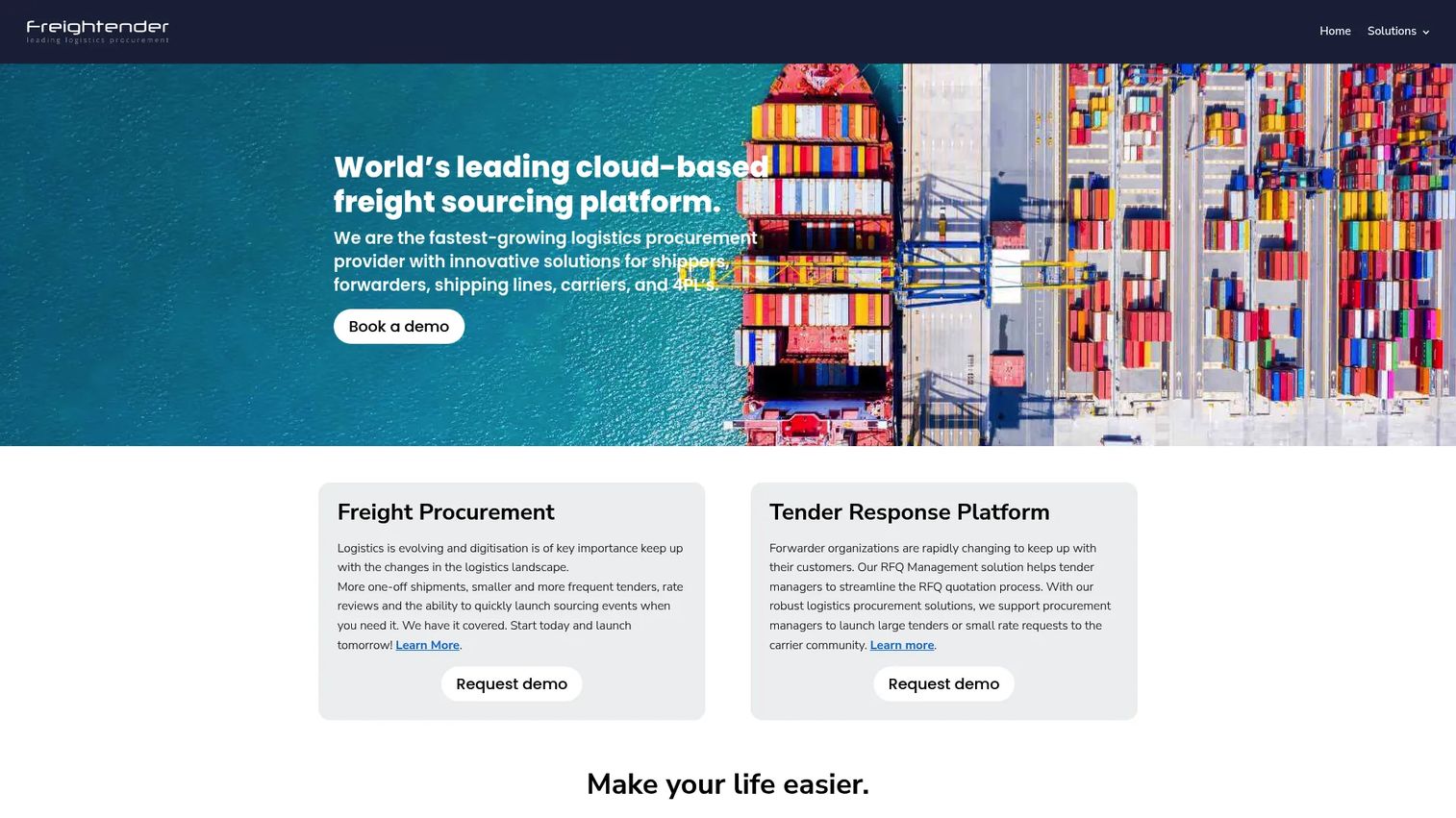
Freightender is a cloud-based logistics procurement platform built for sourcing and tender management across multiple transport modes. Where many tools focus on outbound quoting, Freightender leans into the inbound side of freight cost management: running RFIs, RFQs, and mini-tenders to source and compare carrier rates. It is the platform to reach for when your pricing challenge starts with how you buy capacity, not just how you sell it.
For freight teams, the value is in structure. Instead of running tenders through email and spreadsheets, you get rate card creation, a managed carrier database, scenario building, and benchmarking in one workflow. That structure is what makes ocean freight rate management and multi-modal sourcing repeatable rather than ad hoc.
Best for: Shippers and logistics teams that need procurement, tendering, and rate management workflows in a single platform.
Key strengths
- RFI/RFQ and mini-tender management: Run structured sourcing events instead of chasing carrier rates through inboxes.
- Rate card creation and carrier database: Build and maintain a centralized pricing repository tied to a managed carrier list.
- Scenario building, benchmarking, and spot bidding: Model award scenarios and benchmark rates before you commit.
Why choose Freightender: If your freight cost problem starts at procurement, Freightender fits the way you actually source. Teams running frequent tenders across ocean, air, and road get a repeatable process with benchmarking and reporting baked in, rather than a quoting tool bolted onto a sourcing gap.
Freightender pricing: Freightender describes three pricing models on its site: pay per tender, a fixed amount of events, and an annual fee. The vendor does not publish numeric prices, so exact figures depend on your tender volume and contract structure. Reach out through the pricing page to scope a plan against your sourcing cadence.
2. Freightos
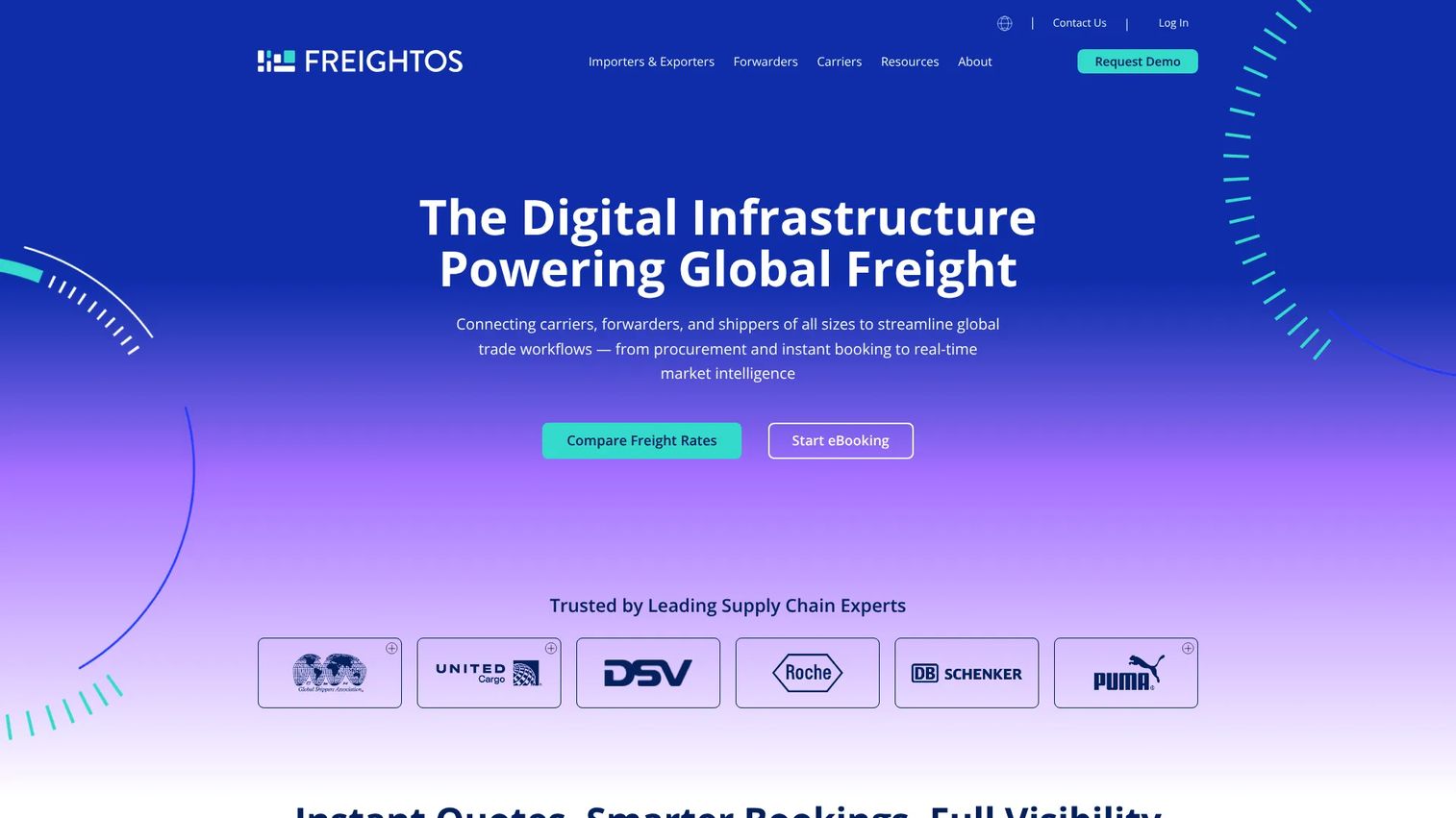
Freightos is a global freight pricing, booking, and market intelligence platform. It sits at the broader end of the category, combining rate management, quoting, and booking with freight market data that helps teams benchmark and forecast. For teams that want their freight quoting software connected to real market intelligence, Freightos covers more of the workflow than a standalone rate tool.
The platform spans air, ocean, and trucking, with tools for forwarders to manage rates, generate branded quotes, and handle booking and payment. Its market intelligence layer adds benchmarking, forecasting, and event tracking, which is useful when you need to defend a price or anticipate rate moves. Freightos carries a 3.9/5 rating on G2.
Best for: Importers, exporters, and freight forwarders that need digital quoting, booking, and market intelligence in one ecosystem.
Key strengths
- End-to-end cargo platform: Rate management, pricing, quoting, booking, and sales in one connected workflow.
- Freight market intelligence: Benchmarking, forecasting, and key event tracking to support pricing decisions.
- Forwarder tools across modes: Air, ocean, and trucking coverage with booking and payment workflows.
Why choose Freightos: Freightos fits teams that want more than a rate repository. If you value market data alongside quoting and booking, and you operate across multiple modes, the connected ecosystem reduces the number of tools you stitch together. The tradeoff is scope: it is a broad platform, so match the modules to what you actually need.
Freightos pricing: Freightos Terminal starts at $119 per month for the Individual Starter Ocean plan and $239 per month for Individual Starter Air, both billed annually. A Custom Enterprise Package is available by quote. On the forwarders side, Freightos states its Book Air booking product is free for forwarders, with additional paid modules for advanced rate management, self-service portals, and API integrations available by request.
3. Wisor
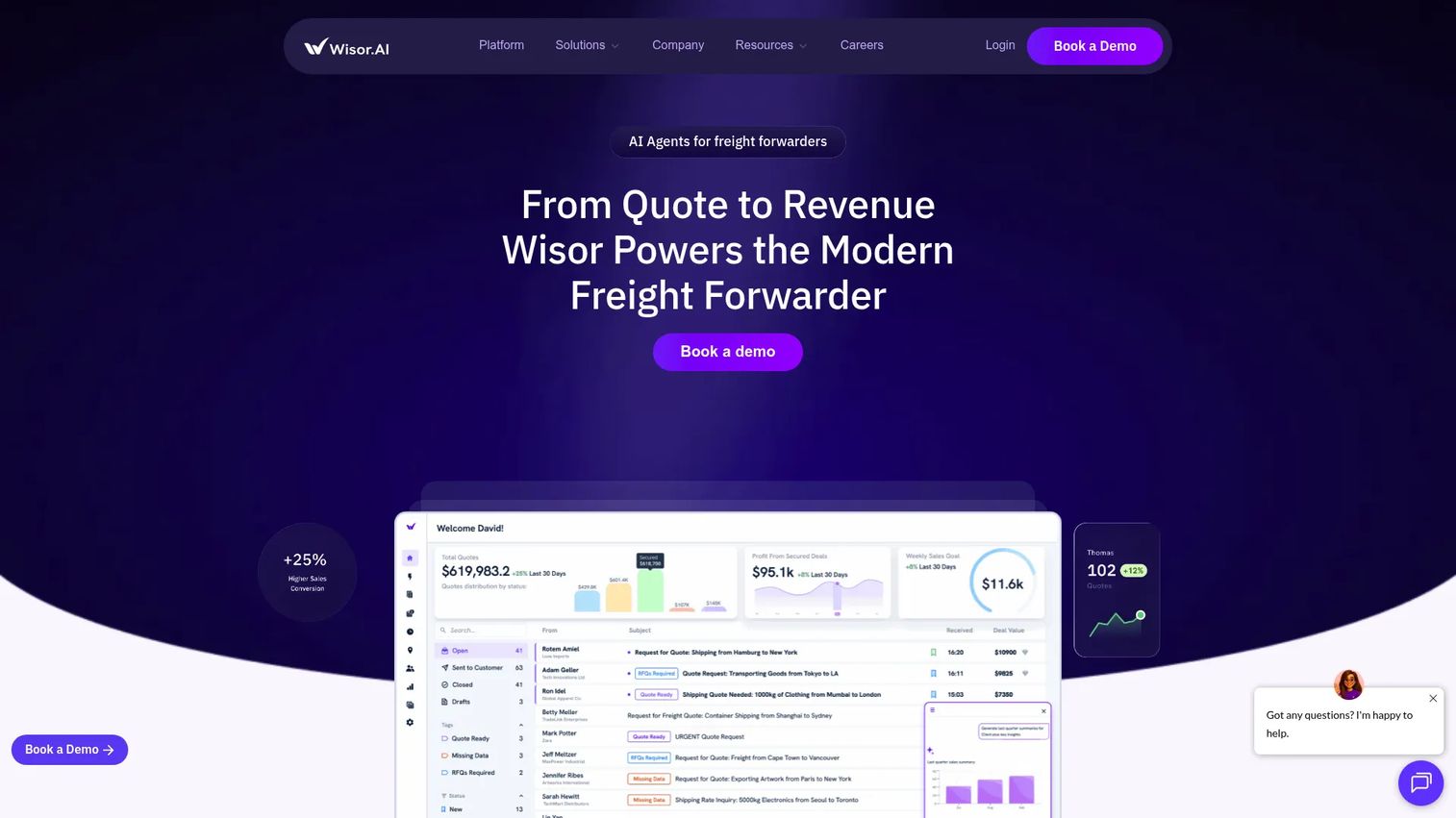
Wisor is AI-powered freight forwarding software focused on quoting, rate management, and revenue automation. Its pitch is speed: use AI to automate quote generation so forwarders answer requests faster and free up pricing teams from repetitive lookups. If freight quote automation and quote turnaround time are your primary pain points, Wisor is built around exactly that job.
The platform centralizes rates and connects to the systems where pricing data already lives, including TMS, ERP, and email. That connectivity matters because AI-assisted quoting only works when it draws from current, centralized data. For fast-moving forwarding teams, the combination of automated quoting and a central rate repository is the core draw.
Best for: Freight forwarders that need AI-assisted quoting and centralized rate management to accelerate response times.
Key strengths
- AI-powered quoting automation: Generate customer-ready quotes automatically instead of building each one by hand.
- Centralized rate management: Hold spot, contract, and daily rates in one repository that feeds the quoting engine.
- TMS, ERP, and email integrations: Connect pricing data across the systems your team already uses.
Why choose Wisor: Wisor fits forwarders whose bottleneck is quote volume and turnaround. If your pricing team spends its day rebuilding similar quotes, AI-assisted automation on top of a centralized repository is the direct fix. It suits teams comfortable adopting AI into a core revenue workflow.
Wisor pricing: Wisor does not publish public pricing on its site. The platform routes prospective buyers to book a demo, and pricing appears to be quote-based. To get numbers, request a demo through the site and scope pricing against your quote volume and integration needs.
4. Oyaso
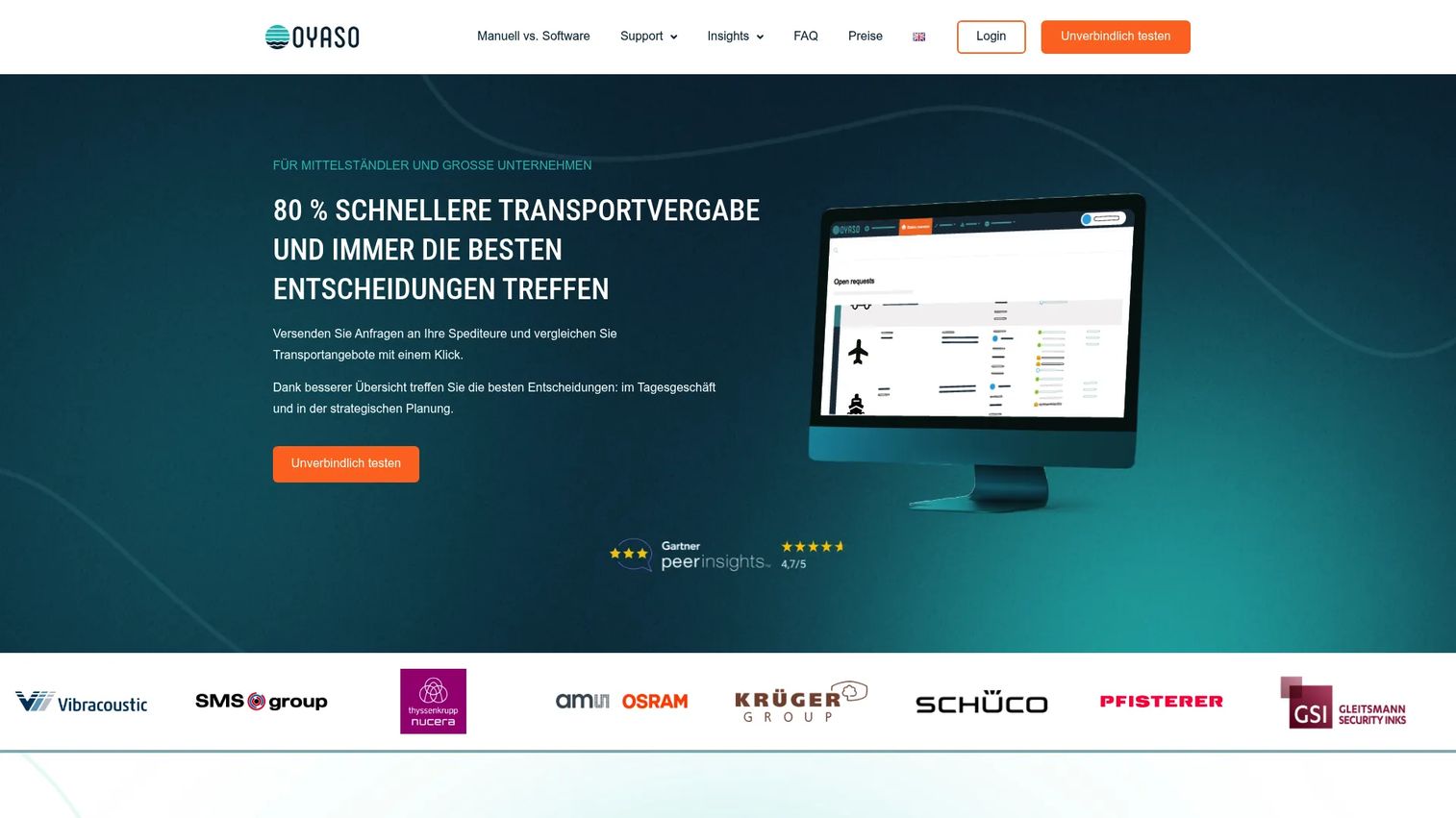
Oyaso is transport allocation and freight procurement software built for shippers to request, compare, and award transport quotes. Its angle is the shipper's side of the pricing workflow: rather than generating outbound customer quotes, Oyaso helps you collect and compare quotes from selected logistics providers, then award the business. That makes it a fit for teams managing transport spend rather than selling freight services.
The platform supports closed collaboration with a chosen set of logistics service providers, handles both spot and long-term rate management, and adds quote comparison, awarding, and reporting. For shippers who want control over how they buy transport and clear visibility into who won which lane, that focused workflow is the appeal.
Best for: Shippers managing transport quote requests and carrier comparison workflows.
Key strengths
- Closed collaboration with selected providers: Run procurement with a curated set of logistics partners rather than an open market.
- Spot and long-term rate management: Handle both short-term and contract pricing in one workflow.
- Quote comparison, awarding, and reporting: Compare offers side by side, award lanes, and report on outcomes.
Why choose Oyaso: Oyaso fits shippers who want a straightforward way to source and award transport without heavy setup. If your priority is comparing provider quotes and controlling allocation, its focused feature set does that job without the breadth of a full freight tech ecosystem you may not need.
Oyaso pricing: Oyaso offers a free trial with unlimited requests and users. Beyond the trial, it lists Professional and Enterprise plans, both priced upon request, with software pricing based on request volume. Contact the vendor through the pricing page to get a quote scoped to your transport activity.
Considerations before you choose
The right platform depends on which part of the pricing workflow hurts most. Run every shortlisted tool through this checklist before you commit.
Integration fit with your stack
Rate data is only useful when it flows. Confirm the platform connects to your TMS, ERP, and carrier systems, and check whether integration happens through native connectors or API connectivity you will need to build. Ask which specific systems are supported today, not on a roadmap. A rate repository disconnected from your operational systems recreates the silos you are trying to escape.
Rate freshness and validity controls
Volatile markets punish stale rates. Evaluate how each system ingests spot rates, contract rates, and daily rates, and whether it tracks rate validity and flags expiry automatically. Real-time updates from carriers or APIs separate a living repository from a fancier spreadsheet.
Workflow fit for your motion
A procurement-heavy shipper and a high-volume forwarder have different needs. Match the tool to your motion: sourcing and tendering, outbound customer quoting, or transport allocation. A platform built for the wrong side of the workflow will fight you no matter how good its features are.
Analytics and reporting depth
You cannot improve what you cannot measure. Look for reporting on quote turnaround time, quote-to-booking conversion, and rate accuracy. The analytics should tell you where quotes stall and where margin leaks, not just count how many quotes you sent.
Security and data governance
Rate data is commercially sensitive. Check access controls, audit trails, and data handling before you load contract pricing into any system. For enterprise buyers, confirm the vendor meets your security and compliance requirements up front.
Conclusion
Freight rate management software has moved from a nice-to-have to a margin protection tool as the market grows toward USD 2.8 billion by 2033. The dividing line is clear: a basic quoting tool produces a number, while a full freight rate management system governs the entire pricing workflow, from centralized rates to validity controls to conversion analytics.
Match the platform to your pain. Freightender is the pick when procurement and tendering drive your rate challenge. Freightos suits teams that want quoting, booking, and market intelligence in one ecosystem. Wisor fits forwarders chasing faster, AI-assisted quote turnaround. Oyaso works for shippers focused on comparing and awarding transport quotes.
Your next step: shortlist two platforms that match your motion, run each against your real rate data and your busiest quoting day, and measure quote turnaround time and rate accuracy before and after. The tool that moves those numbers is the one worth buying.
FAQs
Freight rate management software centralizes carrier pricing, automates quote workflows, and tracks rate validity in one system. It replaces scattered spreadsheets and email threads with a single repository that holds spot, contract, and daily rates. The goal is faster, more accurate quoting and clearer visibility into pricing performance.
It standardizes rate lookup so reps pull current pricing from one source instead of hunting through files. Automated quote generation then applies pricing rules and surcharges and formats a customer-ready quote in minutes. Fewer manual handoffs between the rate owner and the quote sender cut turnaround further.
Prioritize a centralized rate repository, freight quote automation, and rate validity controls that flag expiry. Carrier, TMS, and ERP integrations keep pricing data flowing across systems, and analytics on quote turnaround and conversion let you measure results. Multi-carrier support matters if you price across several providers or modes.
No, though they overlap. A transportation management system runs execution: planning shipments, booking, tracking, and settlement. Freight rate management software focuses on the pricing side: storing rates, automating quotes, and controlling validity. Many teams run both and connect them through TMS integrations so rates flow into execution.
A centralized rate repository stores both spot and contract rates side by side, tagged by carrier, lane, and validity window. Pricing rules determine which rate applies to a given request, and expiration controls retire rates once they lapse. That structure lets teams quote from the right rate without manual cross-checking.
At minimum, look for carrier system connections, ERP integrations, and TMS integrations so pricing data moves between quoting and execution. API connectivity matters when you need to feed rates from external sources or push quotes downstream. Reporting and analytics integrations help you tie pricing performance to broader operational data.
Track quote turnaround time, error rate, and quote-to-booking conversion before and after implementation. Faster quotes and fewer pricing errors protect margin and win more bookings, which is where the return shows up. Also watch margin leakage on individual lanes, since catching stale-rate quotes is a direct saving.
Freight forwarders, logistics operations teams, pricing teams, and transportation managers see the most value. Forwarders gain speed on high-volume quoting, shippers gain control over transport allocation and freight cost management, and pricing teams gain a single source of truth. Any team quoting off spreadsheets and email is a strong candidate.