You know exactly how many acres you planted. You have a rough idea of what the herd cost you this year. The rest lives in a spiral notebook in the truck, three spreadsheets that don't agree with each other, and a shoebox of receipts you'll deal with at tax time. Then a vet asks for a treatment date, a buyer asks for weaning weights, or a lender asks for a P&L, and you spend an afternoon reconstructing records that should have taken thirty seconds to pull.
That gap between what happens on the farm and what you can actually retrieve later is the problem farm management software solves. Instead of scattered notes and disconnected files, you get one system of record for tasks, livestock, crops, finances, compliance, and reporting.
The demand is real and growing. MarketsandMarkets valued the global farm management software market at USD 3.4 billion in 2024, projecting USD 5.8 billion by 2029 at an 11.0% CAGR. Fortune Business Insights puts the trajectory even higher, forecasting growth to USD 13.48 billion by 2034 at a 17.4% CAGR. Operators are moving off paper for a straightforward reason: recorded data you can search, filter, and report on beats data trapped in your head.
What's inside
This is a ranked shortlist of seven farm management software tools worth evaluating in 2026. It covers all-in-one platforms for mixed farms, livestock-heavy tools for cattle and sheep operations, an open-source option for teams that want full control, and accounting-first software for finance-heavy workflows.
We selected tools based on four criteria: scope of operational coverage (tasks, livestock, crops, finances), strength of recordkeeping and reporting, fit by farm type, and usability for people who work outdoors more than they work at a desk. Pricing and ratings reflect publicly available data at the time of writing.
TL;DR
- Best all-in-one for mixed farms and ranches: Farmbrite combines crops, livestock, accounting, and reporting in one platform.
- Best open-source and self-hosted option: farmOS gives you free software, full data ownership, and deep customization.
- Best free tier for small farms: FarmKeep offers a free plan and mobile-first recordkeeping for homesteads and small operations.
- Best for large-scale livestock and grazing: AgriWebb focuses on herd tracking, paddocks, and offline mobile access.
- Best for cattle and sheep compliance records: Herdwatch and CattleMax both specialize in detailed herd and breeding records.
- Best accounting-first option: QuickBooks handles bookkeeping, invoicing, and reporting when finances are the priority.
If you want broad help choosing operational software, our roundups on event management software and contract management follow the same evaluation model applied to other categories.
What is farm management software?
Farm management software is a digital system that centralizes planning, recordkeeping, task tracking, financial management, and reporting for farm and ranch operations in one place.
Instead of splitting records across notebooks, spreadsheets, and receipt piles, a farm management system stores everything as structured, searchable data. That lets you pull a treatment history, a field's yield record, or a profit-and-loss statement in seconds rather than reconstructing it from scratch.
Core capabilities across most farm management systems include:
- Recordkeeping: central logs for animals, fields, inputs, and activities.
- Accounting and bookkeeping: income, expenses, invoicing, and financial reporting.
- Task and schedule management: daily to-dos, recurring work, and reminders.
- Crop and livestock tracking: planting, harvest, breeding, health, and movement records.
- Reporting and analytics: yield, herd performance, profitability, and compliance reports.
- Maps, weather, and integrations: field mapping, weather data, and connections to other tools.
Not every tool covers all six areas. Some are broad all-in-one platforms; others go deep on livestock or accounting alone. The right fit depends on your farm type and which of these jobs is causing you the most pain right now.
When to use farm management software
Centralize records and reduce spreadsheet chaos
If your farm's history lives across a notebook, two laptops, and a filing cabinet, you don't have records, you have fragments. Farm software replaces that with one system of record where every treatment, planting, sale, and expense is logged once and retrievable forever. This matters most when you need to answer a question fast: what did that pasture yield last year, when was this animal last vaccinated, what did seed cost across three seasons. Clean, searchable data is the foundation everything else builds on.
Track finances, tasks, and operations in one place
Spreadsheets work until they don't. Once you're juggling recurring tasks, multiple enterprises, seasonal labor, and a tax return that needs categorized expenses, manual tracking becomes its own full-time job. Farm management software with integrated accounting ties day-to-day work directly to the books, so a recorded expense or a completed task feeds your reports automatically. That connection between operations and finances is where most spreadsheet setups fall apart, and where dedicated software earns its keep.
Support mixed, livestock, or compliance-heavy farms
Farm type changes the software decision more than any other factor. A mixed operation running crops and animals needs breadth. A cattle ranch tracking EPDs, pedigrees, and calving needs depth in herd records. A dairy or sheep farm facing regulatory reporting needs compliance-ready logs that hold up to an audit. Some tools are built wide, others built deep, and matching that shape to your operation is the whole game.
Comparison table
Here are the seven tools ranked by relevance to mixed and general farm operations, from broadest coverage to most specialized. Pricing reflects publicly listed rates; where a tool gates pricing or offers custom plans, that is noted.
| # | Product | Intent | Key use case | Pricing | G2 rating |
|---|---|---|---|---|---|
| 1 | Farmbrite | All-in-one mixed farms | Crops, livestock, accounting, reporting in one system | From $29/month | 4.7/5 |
| 2 | farmOS | Open-source control | Self-hosted records, assets, and logs | Free (self-hosted) | Not listed |
| 3 | FarmKeep | Small and mixed farms | Mobile-first livestock and operations records | Free plan; Premium $8/month | Not listed |
| 4 | AgriWebb | Large-scale livestock | Herd, paddock, and grazing management | Custom; add-ons from $100/year | 4.0/5 |
| 5 | Herdwatch | Livestock compliance | Cattle and sheep records, breeding, health | Free plan; Pro from $49/6 months | Not listed |
| 6 | CattleMax | Cattle-focused | Herd records, breeding, ranch management | From $12/month billed yearly | Not listed |
| 7 | QuickBooks | Accounting-first | Bookkeeping, invoicing, financial reporting | From $38/month | Not listed |
1. Farmbrite
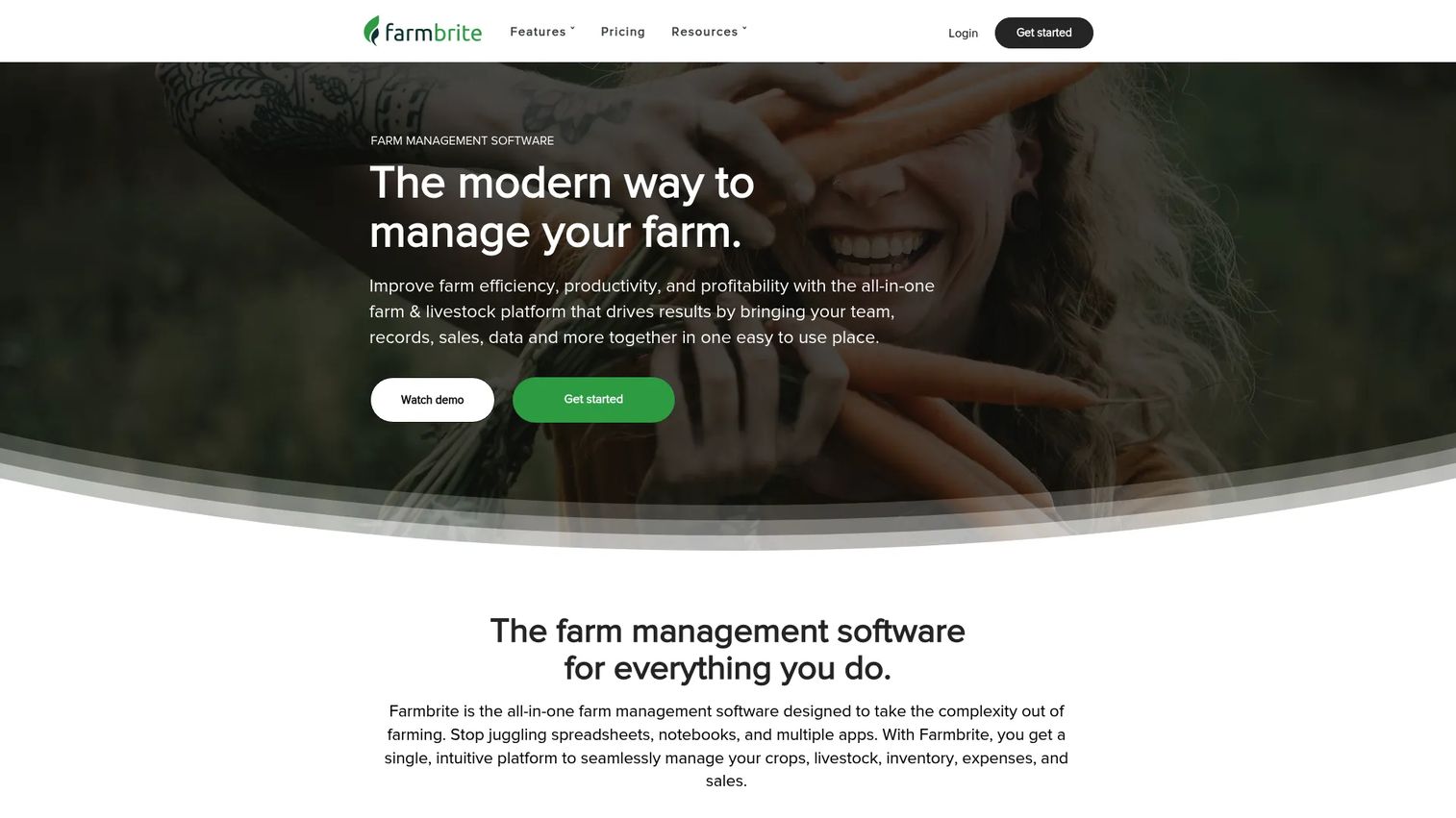
Farmbrite is an all-in-one farm and livestock management platform built for operations that run more than one thing at once. It pulls crops, animals, tasks, accounting, mapping, and reporting into a single system, which is exactly what mixed farms and ranches struggle to get from single-purpose tools. If your operation spans grazing, growing, and selling, Farmbrite is designed to hold all of it.
Best for: Farmers and ranchers who want one system for livestock, crops, accounting, and reporting instead of stitching tools together.
Key strengths
- Farm accounting and financial tracking: log income and expenses, invoice buyers, and generate financial reports without a separate bookkeeping tool.
- Livestock records and herd management: track health, breeding, weights, and herd movement across your whole operation.
- Crop planning and mapping: plan plantings, map fields, track inventory, and keep records that work offline in the field.
Why choose Farmbrite: The pitch is breadth. Most farm tools force you to pick a lane, livestock or crops, operations or accounting. Farmbrite refuses that tradeoff and covers the full operational picture, which is what a diversified farm actually needs. If you value one login over five, this is the strongest fit on the list.
Farmbrite pricing: Public pricing starts with the Essentials plan at $29/month, Performance at $79/month, and Premium at $109/month, with an accounting-only option listed at $119/year. Enterprise is custom. A free trial is available, though there is no permanent free tier. G2 rates Farmbrite at 4.7/5.
2. farmOS
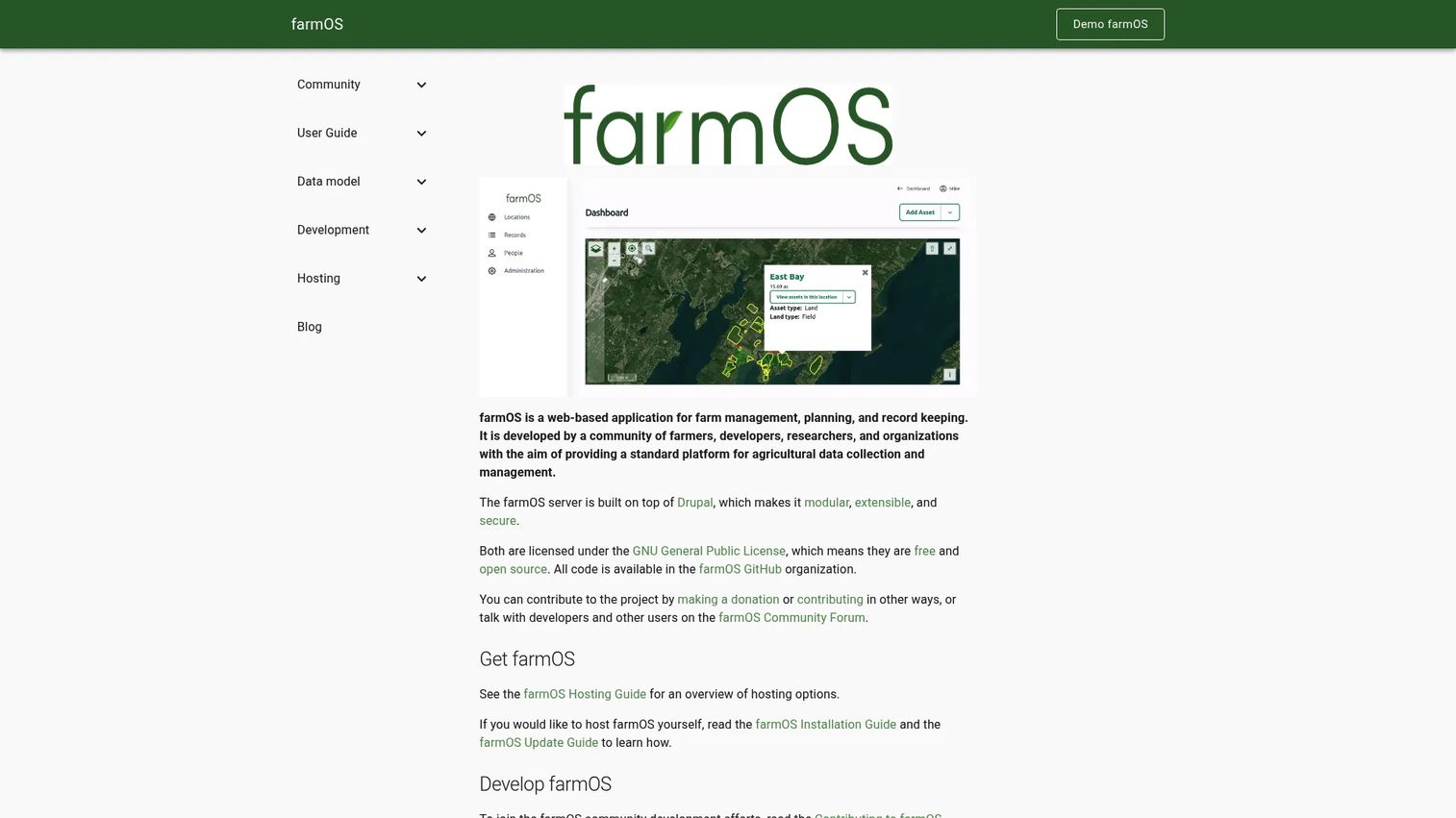
farmOS is a free, open-source, web-based platform for farm planning, recordkeeping, and management. Built on Drupal and backed by an active community, it takes an asset-and-log approach: you track land, plants, animals, equipment, and structures as assets, then record everything that happens to them as timestamped logs. For teams that want control over their data and their software, farmOS is a different kind of choice.
Best for: Farms and agricultural teams that want free, self-hosted software with full data ownership and room to customize.
Key strengths
- Asset tracking: manage land, plants, animals, equipment, and structures as first-class records.
- Log-based recordkeeping: capture quantities, locations, and movement history for every activity.
- Inventory and quick forms: track inventory and speed up routine data entry with configurable forms.
Why choose farmOS: This is the option for technically confident operators and organizations that refuse to lock their farm data inside a vendor's cloud. Because it is open-source and self-hostable, you own your data outright and can extend the platform to fit unusual workflows. Research groups, cooperatives, and larger operations with IT support tend to get the most out of it.
farmOS pricing: The software itself is free and self-hostable, which is the core appeal for data-ownership-minded teams. If you would rather not run your own server, farmOS points to third-party managed hosting through Farmier on a subscription basis. A verified G2 rating was not available at the time of writing.
3. FarmKeep
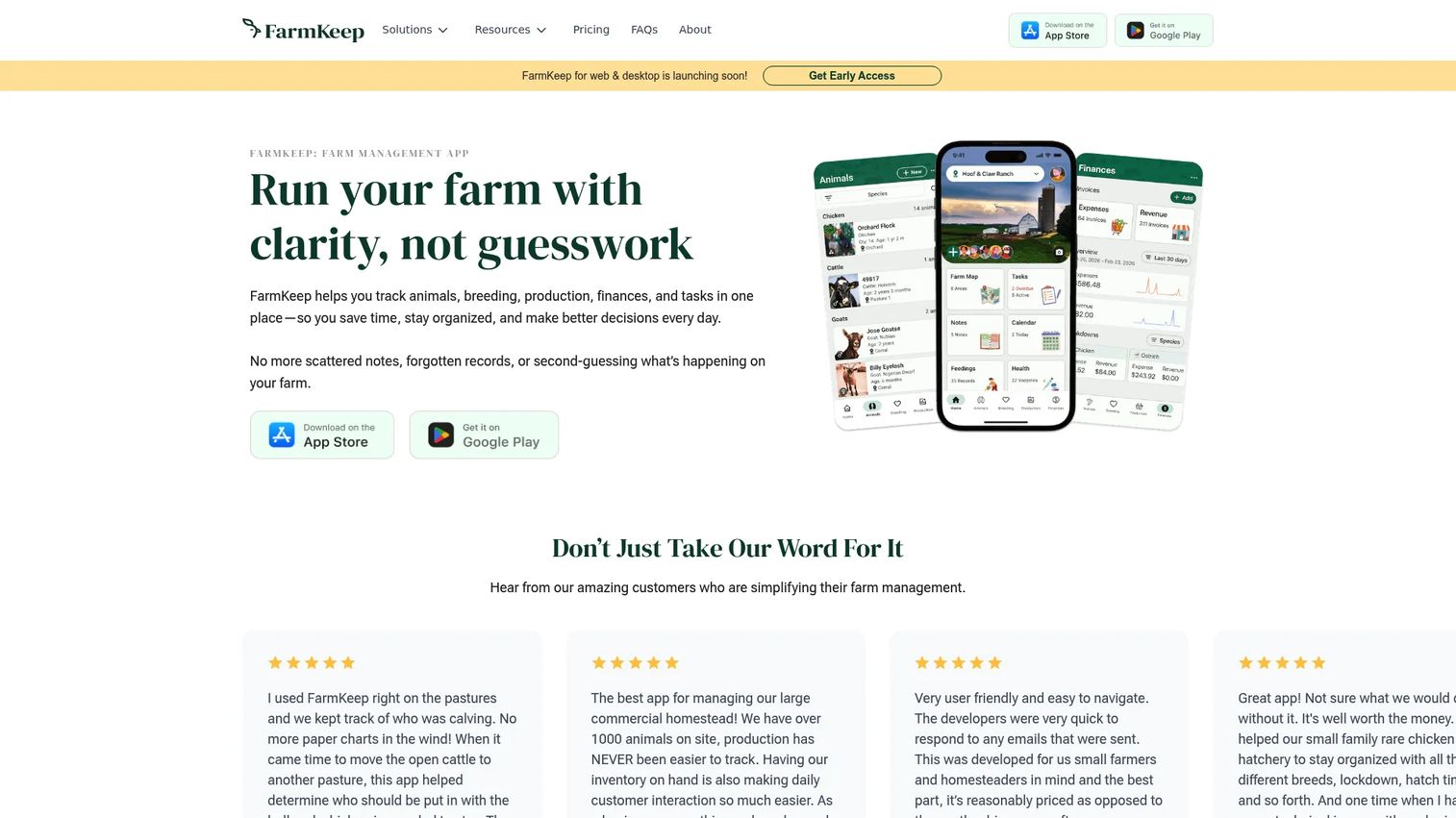
FarmKeep is a mobile-first farm management app built for tracking livestock, breeding, production, finances, and tasks. It is aimed squarely at smaller operations, homesteads, and mixed farms that want organized records without a steep learning curve. The interface leans toward practical daily use: log an animal, record a task, check a reminder, and get back to work.
Best for: Small farms, homesteads, and ranches that need all-in-one recordkeeping they can actually keep up with.
Key strengths
- Livestock record keeping: track health, weights, medications, pedigrees, and searchable animal profiles.
- Breeding management: manage gestation and incubation tracking, reminders, and pedigree charts.
- Accounting and production tracking: log finances, production, tasks, and land or area mapping in one app.
Why choose FarmKeep: For a small operation, the barrier to adopting software is rarely features, it's friction. FarmKeep lowers that barrier with a free plan and an interface simple enough to use one-handed at the barn. It covers the essentials, records, breeding, tasks, and basic finances, without asking a homesteader to think like an enterprise.
FarmKeep pricing: The Basic plan is free forever and includes a 14-day trial of Premium. Premium runs $8/month with annual billing at $95.99, or $9.99 billed monthly. A Commercial tier is available with custom pricing. That free-to-start structure makes it easy to test before committing.
4. AgriWebb
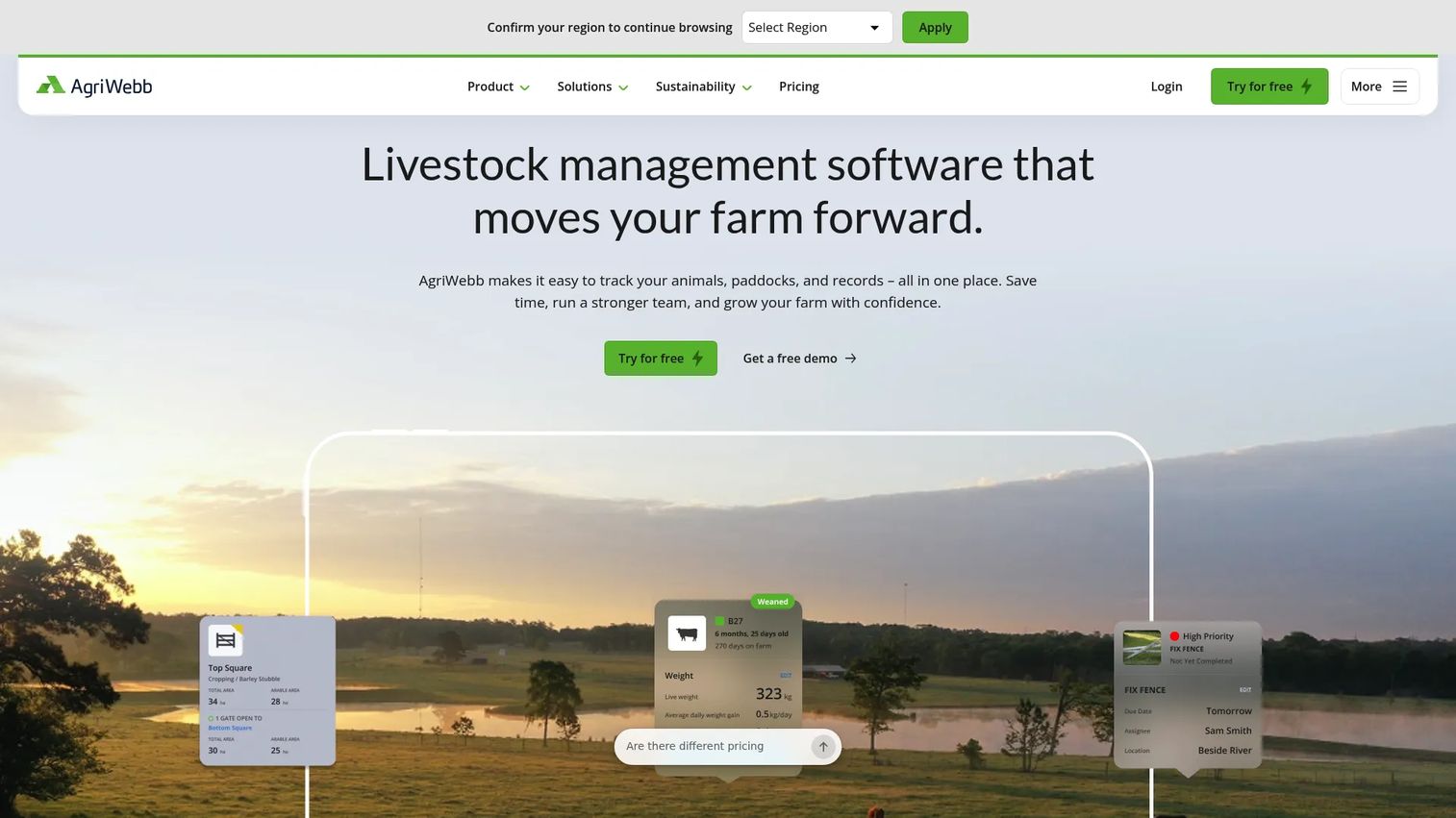
AgriWebb is livestock and ranch management software built for scale, with a focus on tracking animals, paddocks, records, teams, and grazing. It shines on larger operations where herd numbers, land, and labor all need coordinating. An interactive ranch map, offline mobile access, and multi-user support make it a fit for operations that manage cattle across wide, disconnected acreage.
Best for: Ranchers and livestock producers who need digital record keeping plus grazing and animal management across a large operation.
Key strengths
- Interactive ranch map: visualize paddocks, movements, and records on a live map of your operation.
- Livestock and herd management: track herds with offline mobile access for areas without signal.
- Team and task management: coordinate unlimited users across a working ranch crew.
Why choose AgriWebb: Large livestock operations have a coordination problem that small farms don't: multiple people, multiple paddocks, and no cell coverage where the work happens. AgriWebb answers that with offline mobile capture, mapping, and unlimited team access. It is purpose-built for grazing and herd workflows at scale rather than trying to be everything to everyone.
AgriWebb pricing: AgriWebb lists plan names including Essentials, Essentials+, and Performance, along with add-ons like a Movement planner at $100/year and a Grazing planner at $150/year. Base plan pricing is handled through a pricing calculator and sales contact, and a free trial is offered. G2 shows a 4.0/5 rating, though from a small review sample.
5. Herdwatch
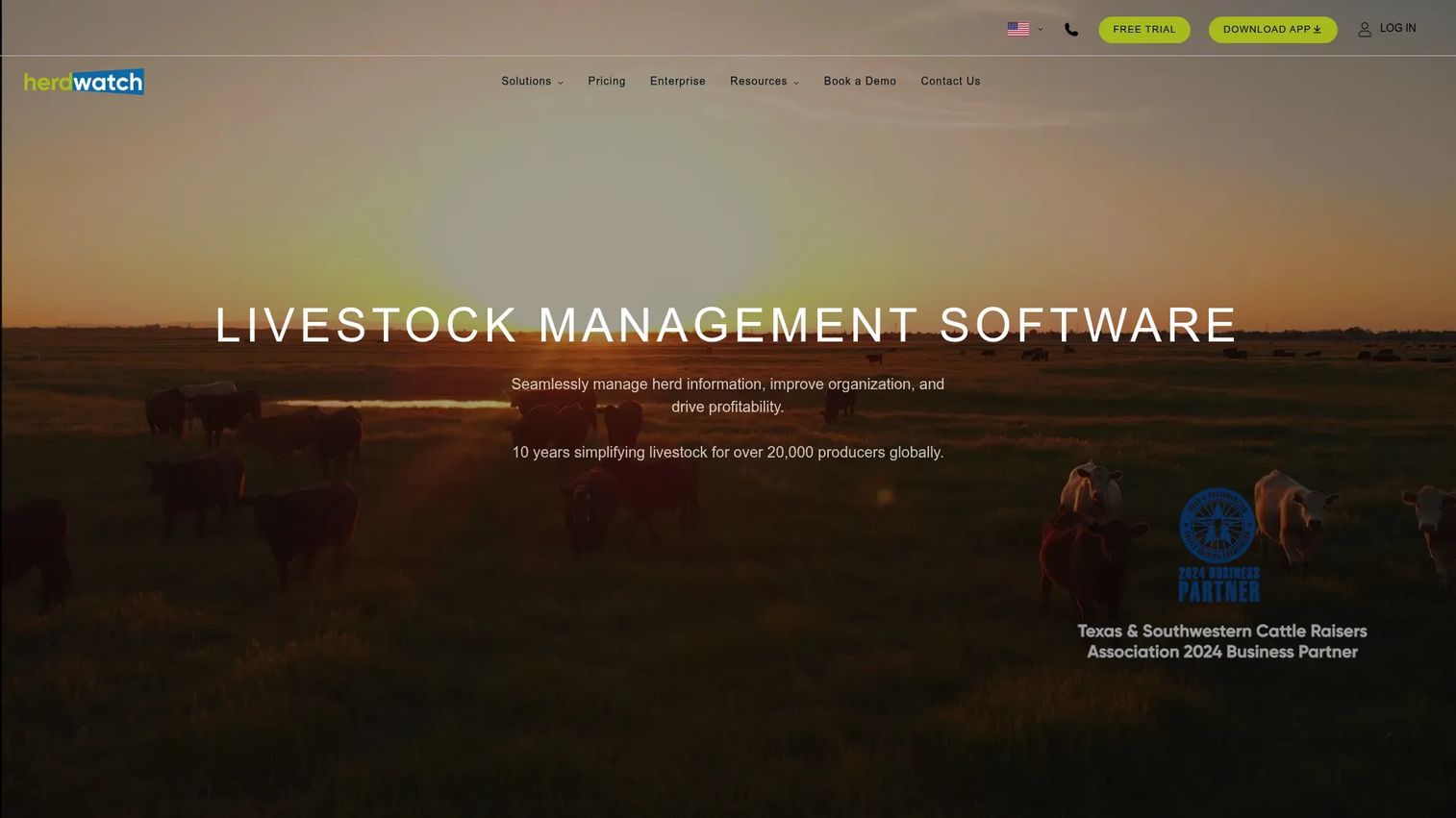
Herdwatch is livestock and pasture management software focused on compliant record keeping for cattle and sheep farmers. Its calling card is offline-first mobile recording that syncs when you're back in range, so records get logged where the work actually happens. For farms that live under compliance and traceability requirements, Herdwatch is built to keep those records audit-ready.
Best for: Livestock farms that need compliant, mobile record keeping alongside pasture and grazing tracking.
Key strengths
- Offline recording and sync: log records in the field without signal, then sync automatically later.
- Livestock tracking: manage breeding, health, and sales records across the herd.
- Pasture and grazing management: track grazing and pasture use alongside animal records.
Why choose Herdwatch: Compliance is where livestock recordkeeping gets serious, and Herdwatch is designed around it. Farmers who need to prove treatment histories, movements, and traceability reach for tools that make audit-ready records painless. If your operation is cattle or sheep and the paperwork burden is real, Herdwatch belongs on your shortlist over broader mixed-farm platforms.
Herdwatch pricing: Herdwatch publicly lists a Free plan at $0/year and a Pro offer at $49 for your first six months. Annual plan pricing is handled through personalized quotes rather than a fixed public rate. The free tier makes it low-risk to try before moving to a paid plan.
6. CattleMax
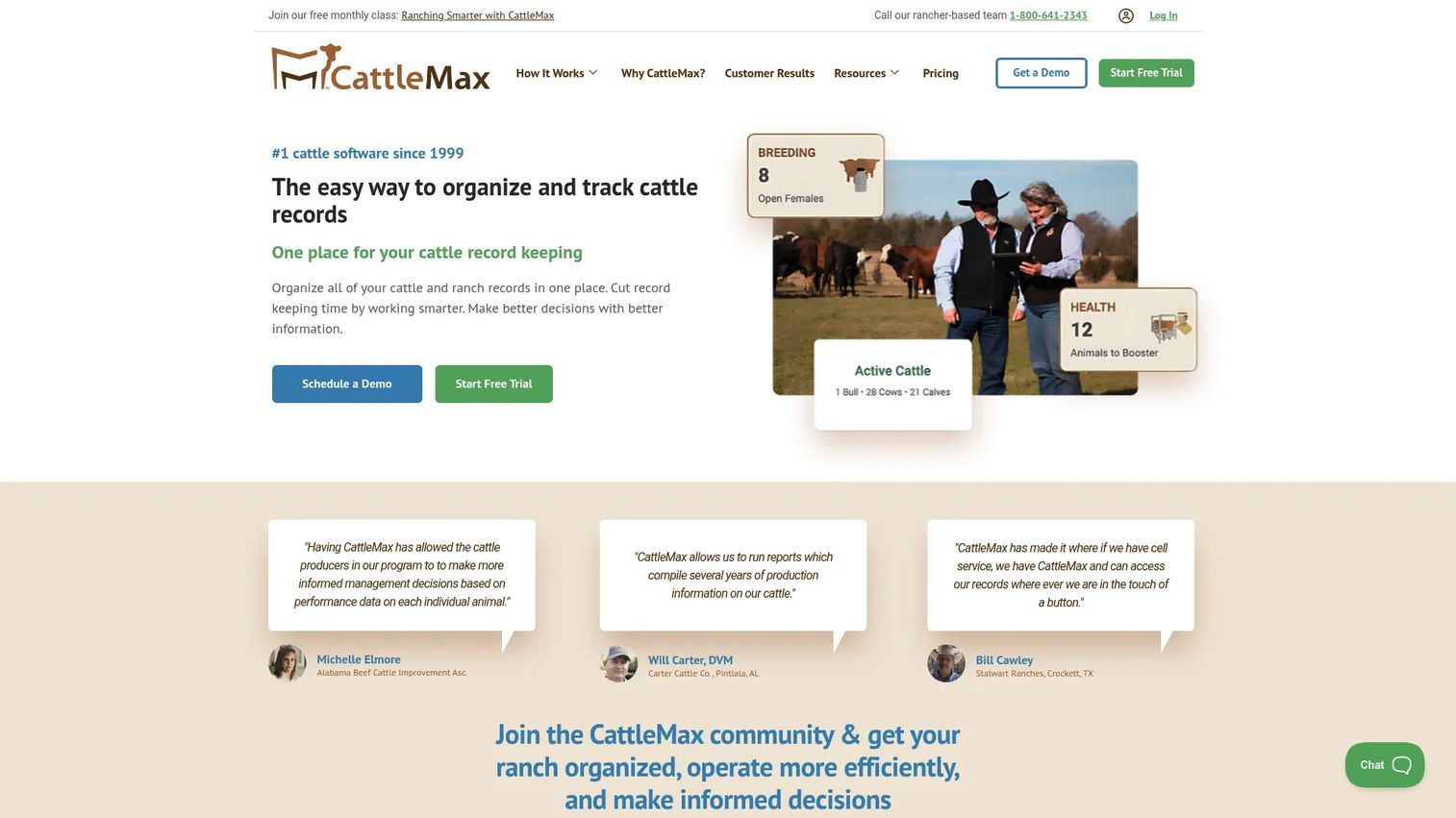
CattleMax is cloud-based cattle and ranch record-keeping software built for both commercial and registered cattle operations. It goes deep on the records cattle producers actually track: inventory, herd health, breeding, calving, weaning, and pasture management. For a registered operation, it also handles pedigrees, EPDs, and breed association interfaces that broader farm tools rarely touch.
Best for: Cattle producers who need detailed herd and ranch records, from commercial workflows to registered cattle programs.
Key strengths
- Complete cattle records: track inventory, health, breeding, calving, and weaning in one system.
- Registered cattle tools: manage pedigrees, EPDs, EBVs, embryo transfers, and breed association interfaces.
- Ranch operations: cover pasture maps, equipment maintenance, financial records, and tasks.
Why choose CattleMax: When cattle are the whole business, generalist farm software leaves gaps. CattleMax fills them with the specialized records registered and commercial producers depend on, including pedigree tracking and association reporting. It is more focused than an all-in-one platform, and for cattle-first operations that focus is the point.
CattleMax pricing: The Commercial plan starts at $12/month billed yearly, or $15/month billed monthly. The Registered plan runs $16/month billed yearly, or $20/month billed monthly, and adds pedigrees, EPDs, embryo tracking, and marketing records. A 21-day free trial is available, and all plans include unlimited users.
7. QuickBooks
QuickBooks is accounting and business management software for small and mid-sized businesses, and plenty of farms use it as their financial backbone. It is not farm operations software; it won't track breeding cycles or map paddocks. But when your priority is clean books, categorized expenses, invoicing, and reports your lender and accountant will accept, QuickBooks is the accounting-first option.
Best for: Farms that need serious bookkeeping and financial reporting more than full farm operations management.
Key strengths
- Invoicing and payments: send invoices, set payment reminders, and get paid faster.
- Expense tracking: capture receipts and categorize expenses for clean tax-ready books.
- Bank feeds and reporting: connect bank accounts and generate financial reports on demand.
Why choose QuickBooks: Some farms don't need a full operational platform, they need bookkeeping that holds up at tax time and in front of a lender. Many operators pair QuickBooks for finances with a dedicated tool for livestock or crop records. If accounting is the pain point and field records already work fine on paper, QuickBooks is the practical pick.
QuickBooks pricing: QuickBooks Online offers Simple Start at $38/month, Essentials at $75/month, Plus at $115/month, and Advanced at $275/month, with introductory discounts often available. A 30-day free trial is included. Pricing is standard business accounting, not farm-specific, so weigh it against dedicated farm accounting tools.
Considerations before you choose
Picking farm management software comes down to matching the tool's shape to your operation. Use this checklist before you commit.
Farm type and scope
Start with what you run. A mixed farm needs breadth across crops and livestock; a cattle ranch needs depth in herd records; an accounting-first operator needs clean books above all. Buying a livestock-heavy tool for a diversified farm, or vice versa, is the most common and most expensive mismatch.
Recordkeeping and reporting depth
The point of the software is retrieving data later, not just entering it. Check what reports the tool generates out of the box: yield, herd performance, profitability, compliance. If you can't pull the report a lender or auditor will ask for, the recordkeeping isn't finished.
Mobile and offline access
Farm work happens in fields and barns, not at a desk, and often out of cell range. If your team logs data on phones, confirm the mobile experience is genuinely usable and that offline capture syncs reliably later. This is non-negotiable for large or remote operations.
Accounting fit
Decide whether you need integrated accounting inside the farm platform or a dedicated accounting tool alongside it. Some operations run happily on an all-in-one; others prefer specialized bookkeeping. Know which camp you're in before you pay for overlap.
Conclusion
The best farm management software is the one that matches how you actually operate. For a diversified operation that wants crops, livestock, accounting, and reporting under one login, Farmbrite is the strongest all-in-one pick. If data ownership and customization matter more than convenience, farmOS gives you open-source control and self-hosting. Small farms and homesteads get an easy on-ramp with FarmKeep's free plan.
For cattle-heavy and livestock operations, Herdwatch and CattleMax go deeper on herd, breeding, and compliance records than any generalist tool, while AgriWebb scales that depth across large grazing operations. And when finances are the real priority, QuickBooks handles the books cleanly, often paired with a farm-specific tool for field records.
Your next step is simple: pick one tool based on your farm type, then run your real recordkeeping and reporting through it before you fully commit. Most offer free trials or free tiers. Test whether it makes pulling a treatment history, a yield record, or a P&L faster than what you do today. That single test tells you more than any feature list.
FAQs
For small farms and homesteads, FarmKeep is a strong starting point thanks to its free plan and mobile-first simplicity. Farmbrite also fits small mixed operations that want crops, livestock, and accounting together. The best choice depends on whether you need broad coverage or just simple, low-friction recordkeeping.
Yes. farmOS is fully free and open-source if you self-host, giving you complete data ownership. FarmKeep offers a free Basic plan, and Herdwatch has a free tier as well. These are good ways to test farm record keeping software before paying for advanced features.
Cattle and livestock farms commonly use specialized tools like CattleMax for detailed herd, breeding, and pedigree records, Herdwatch for compliant mobile recordkeeping, and AgriWebb for large-scale grazing and paddock management. Mixed operations that also run crops often choose Farmbrite for broader coverage.
Yes, that is the core reason most operators adopt it. Farm software turns scattered notes and spreadsheets into one searchable system of record, so you can retrieve a treatment date, yield history, or financial report in seconds. The payoff is time saved and records that hold up to lenders and audits.
It depends on your biggest pain point. If clean books, invoicing, and tax-ready reports are the priority, dedicated farm accounting software like QuickBooks may be enough. If you also need to track livestock, crops, tasks, and compliance, a full farm management system serves you better, and some operators pair both.
Prioritize searchable recordkeeping, reporting depth, and reliable mobile and offline access, since farm data gets entered in the field. Accounting integration and compliance-ready logs matter heavily for finance- and regulation-driven operations. Match the feature set to your farm type rather than chasing the longest feature list.
Farmbrite is the leading all-in-one option for mixed farms and ranches because it combines crops, livestock, accounting, mapping, and reporting in a single platform. FarmKeep is a lighter alternative for smaller diversified operations. The advantage of an all-in-one is avoiding the mismatch of tools that only cover one enterprise.
Choose open-source software like farmOS if you want full data ownership, self-hosting, deep customization, and have the technical comfort to run it. Choose commercial farming software like Farmbrite or Herdwatch if you prefer managed hosting, support, and a ready-to-use interface. The decision hinges on how much control versus convenience your team values.