


An access request sits in someone's inbox for four days. A renewal slips because nobody flagged the expiring contract. A quarterly access review turns into three weeks of spreadsheet archaeology.
Sound familiar?
Most teams treat entitlements as a byproduct of other systems. Access lives in the identity provider. Licensing lives in the billing tool. Renewals live in a CRM report someone runs manually. The result is scattered ownership, slow approvals, and audit prep that eats a full sprint every quarter.
Entitlement management software fixes that by making access, fulfillment, and compliance move through one policy layer instead of five disconnected ones. The category is growing fast. The entitlement management market for ISVs reached USD 2.1 billion in 2025 and is expected to hit USD 4.1 billion by 2034, according to MarketIntelo (2025). Over 62 to 64% of businesses have already adopted license management platforms to control software entitlements, per ReAnIn (2025).
The problem is that "entitlement management" means two different things depending on who's asking. This guide covers both.
What's inside
This guide is for product managers, software monetization teams, and identity governance buyers evaluating an entitlement management system in 2026.
We picked tools based on four criteria that matter across both camps:
- Access lifecycle automation: request, approval, provisioning, expiration
- Integration depth: ERP, CRM, billing, HR, and SaaS connections
- Analytics: renewal, churn, usage, and access risk reporting
- Deployment flexibility: SaaS, on-premises, embedded, and hybrid support
Both use cases are covered here: software monetization (who can use what you sell) and access governance (who can access what you run).
TL;DR
- Best for Microsoft-centric identity governance: Microsoft Entra ID Governance
- Best for software monetization and quote-to-cash orchestration: Revenera
- Best for pricing, packaging, and renewal analytics: Thales Sentinel
- Best for ERP and access governance in complex enterprise systems: Pathlock
- Best for enterprise IGA breadth: SailPoint
- Best for hybrid identity and access administration: One Identity
- Best for lighter-weight SaaS access workflows and operational visibility: Zluri
If you sell software, look at Revenera or Thales Sentinel first. If you govern internal access, start with Microsoft Entra ID Governance or SailPoint.
What is entitlement management software
Entitlement management software controls who gets access to what, when, and under which policy, then enforces those rules automatically across your systems.
The term splits into two related disciplines. Software entitlement management governs the rights customers hold to products you sell: licenses, seats, usage tiers, and subscription terms. Identity entitlement management governs the access your own people hold to internal systems: applications, data, and privileged roles.
Both solve the same underlying problem. Access drifts. Rights get granted and never revoked. Nobody has a clean record of who can do what.
Core capabilities of an entitlement management platform:
- Request and approval workflows: policy-driven access request workflows with defined approval chains
- Provisioning and deprovisioning: automatic grant and removal of access as roles change
- Policy enforcement and least privilege: role-based access control and access scoped to what's needed
- Access reviews and expiration: recurring certifications and time-bound assignments
- Audit trails and reporting: logs, approvals, and evidence for compliance
- Integrations: ERP, CRM, billing, HR, and SaaS system connections
The strongest entitlement management solutions treat these as one continuous lifecycle rather than separate tools bolted together.
When to use
Automate access requests and approvals
When a new hire needs access to eight systems on day one, manual provisioning creates a bottleneck. Policy-driven approval chains matter most when access decisions carry compliance weight, like segregation of duties in finance systems. Entitlement management routes each request to the right approver, provisions on approval, and expires access when the assignment ends.
Centralize entitlements across products and systems
Software vendors selling across SaaS, on-premises, and embedded products often track licenses in three different places. A single system of record matters because fragmented entitlement data breaks renewals, upsell logic, and compliance reporting. Centralizing entitlements gives sales, finance, and support one authoritative answer to "what is this customer entitled to?"
Reduce manual renewals and fulfillment work
Renewals slip when nobody sees the expiring contract until it's already lapsed. Usage, renewal, and fulfillment data feed revenue operations directly, surfacing churn risk before it becomes churn. Automated fulfillment removes the manual back-office work of provisioning entitlements after every quote closes.
Comparison table
Here's how the seven entitlement management software vendors stack up. Microsoft Entra ID Governance leads because it's the clearest definition match for identity governance buyers, followed by the monetization-first platforms.
| # | Product | Best for | Key differentiator | Pricing | G2 rating |
|---|---|---|---|---|---|
| 1 | Microsoft Entra ID Governance | Microsoft-first identity governance | Access packages and lifecycle workflows | From $7.00 user/month, paid yearly | 4.6/5 |
| 2 | Revenera | Software monetization teams | Quote-to-cash and licensing infrastructure | Custom pricing | 4.4/5 |
| 3 | Thales Sentinel | Software vendors managing licensing | Entitlement-driven pricing and packaging | Custom pricing, free trial available | 4.5/5 |
| 4 | Pathlock | ERP-centric enterprises | Access risk and compliant provisioning | Free tier; paid from $7,500/year | 4.5/5 |
| 5 | SailPoint | Large enterprise IGA | AI-powered access recommendations | Custom pricing | 4.5/5 |
| 6 | One Identity | Hybrid enterprise environments | IGA plus privileged access | Custom pricing | 3.5/5 |
| 7 | Zluri | SaaS access management | SaaS discovery and lifecycle automation | Custom pricing | 4.6/5 |
Best entitlement management software for 2026
1. Microsoft Entra ID Governance
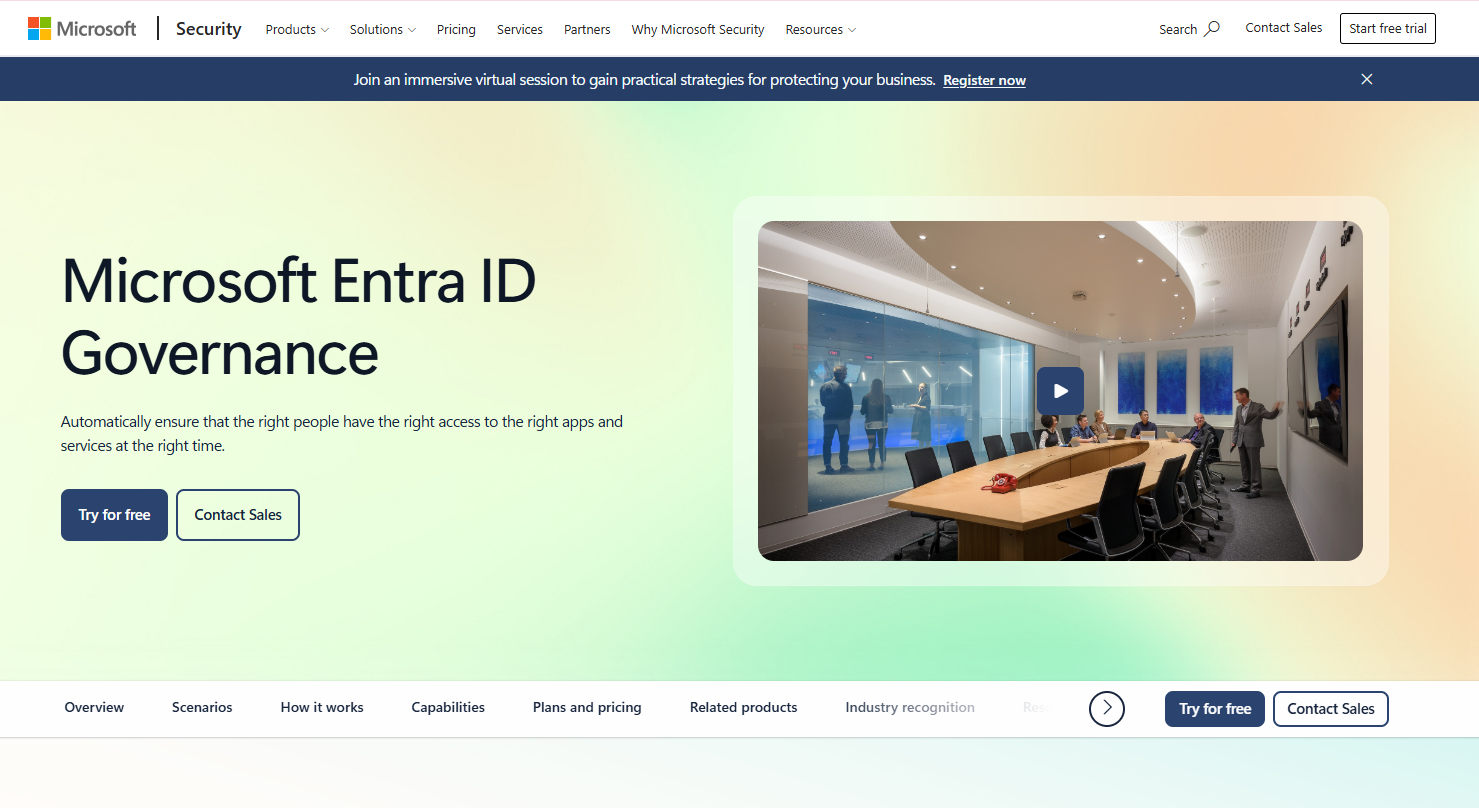
Microsoft Entra ID Governance is the identity governance layer inside the Microsoft Entra family. Its entitlement management feature bundles groups, applications, Teams, and SharePoint sites into access packages that users request through defined approval workflows. For any organization already standardized on Microsoft, this is the most direct path to governed access.
The product handles the full access lifecycle: request, approval, time-limited assignment, and recurring access reviews. It extends governance to external identities too, so partners and contractors get the same policy-driven access as employees, with automatic expiration built in.
Best for: Organizations needing automated identity governance, access reviews, and privileged access control in a Microsoft-first environment.
Key features
- Access packages for groups, apps, Teams, and SharePoint
- Automated access request workflows with approval chains
- Time-limited assignments and recurring access reviews
- AI-driven and standard access certifications
- Delegated governance for external identities
Why choose Microsoft Entra ID Governance: If your identity stack already runs on Entra ID, this is the lowest-friction way to add governed provisioning, reviews, and expiration without stitching in a third-party tool.
Microsoft Entra ID Governance pricing: Starts from $7.00 per user/month, paid yearly. Entitlement management is available for Microsoft Entra ID P1 and P2 customers, and the feature is also included in the broader Microsoft Entra Suite.
2. Revenera
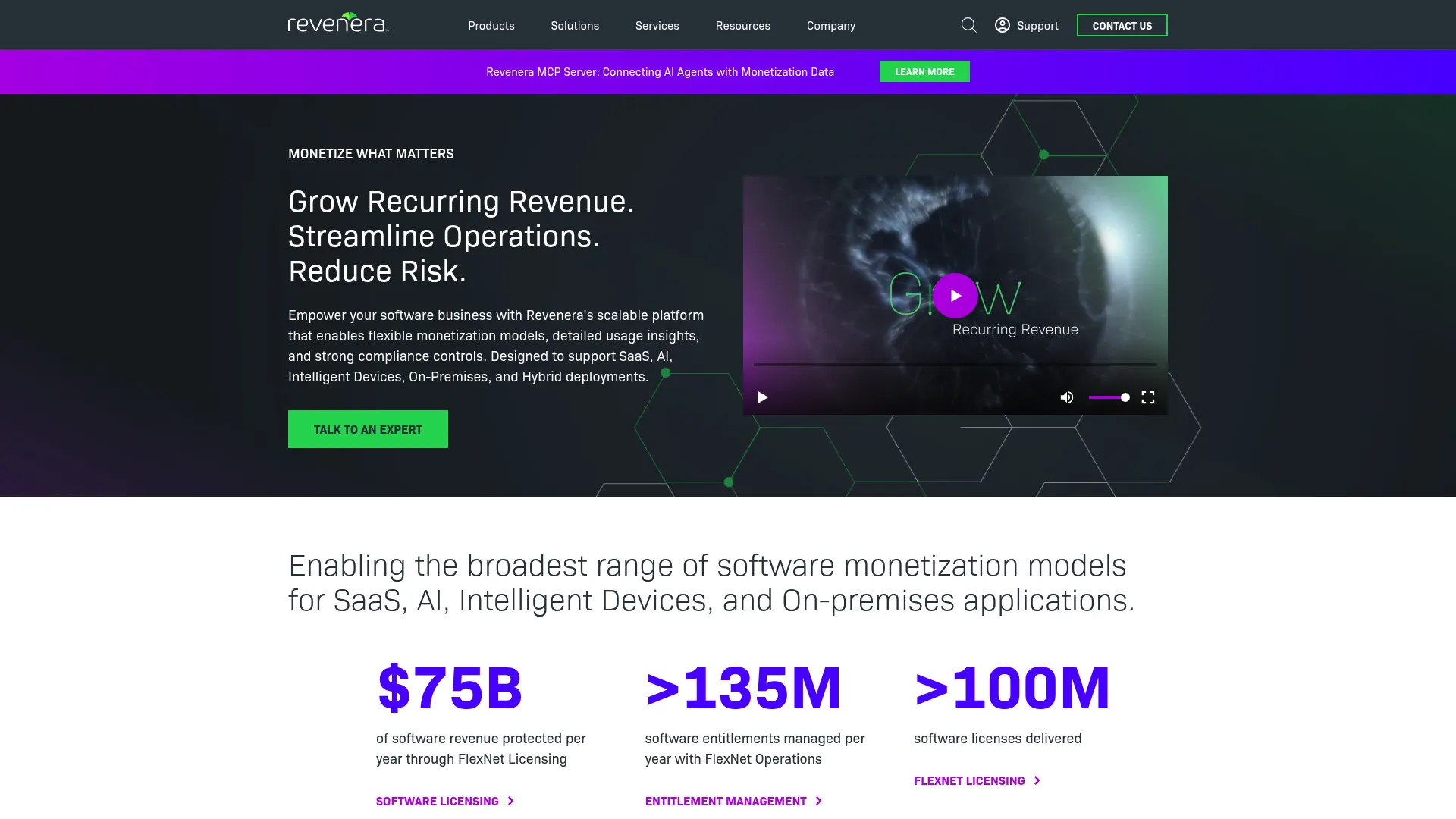
Revenera sits on the monetization side of entitlement management. It gives software vendors a centralized system of record for licensing and entitlements, connecting quote-to-cash, fulfillment, and renewals into one flow. The platform is built for companies shipping across SaaS, on-premises, and embedded products.
Its differentiator is flexibility in how you monetize. Revenera supports subscriptions, seats, usage-based, AI credits, perpetual, and hybrid models under a single entitlement engine. That matters when your pricing strategy changes faster than your billing system can keep up.
Best for: Software monetization teams managing entitlements across SaaS, on-premises, and embedded product lines.
Key features
- Flexible monetization: subscriptions, seats, usage, AI credits, perpetual, hybrid
- Centralized software licensing and entitlement management
- Quote-to-cash and fulfillment orchestration
- Software composition analysis and deployment tools
- Renewal and usage analytics
Why choose Revenera: When your monetization models are complex and spread across deployment types, Revenera consolidates licensing and entitlement logic so revenue operations stops reconciling three separate sources of truth.
Revenera pricing: Revenera does not publish public pricing. Plans are quote-based, arranged through a demo or sales conversation.
3. Thales Sentinel
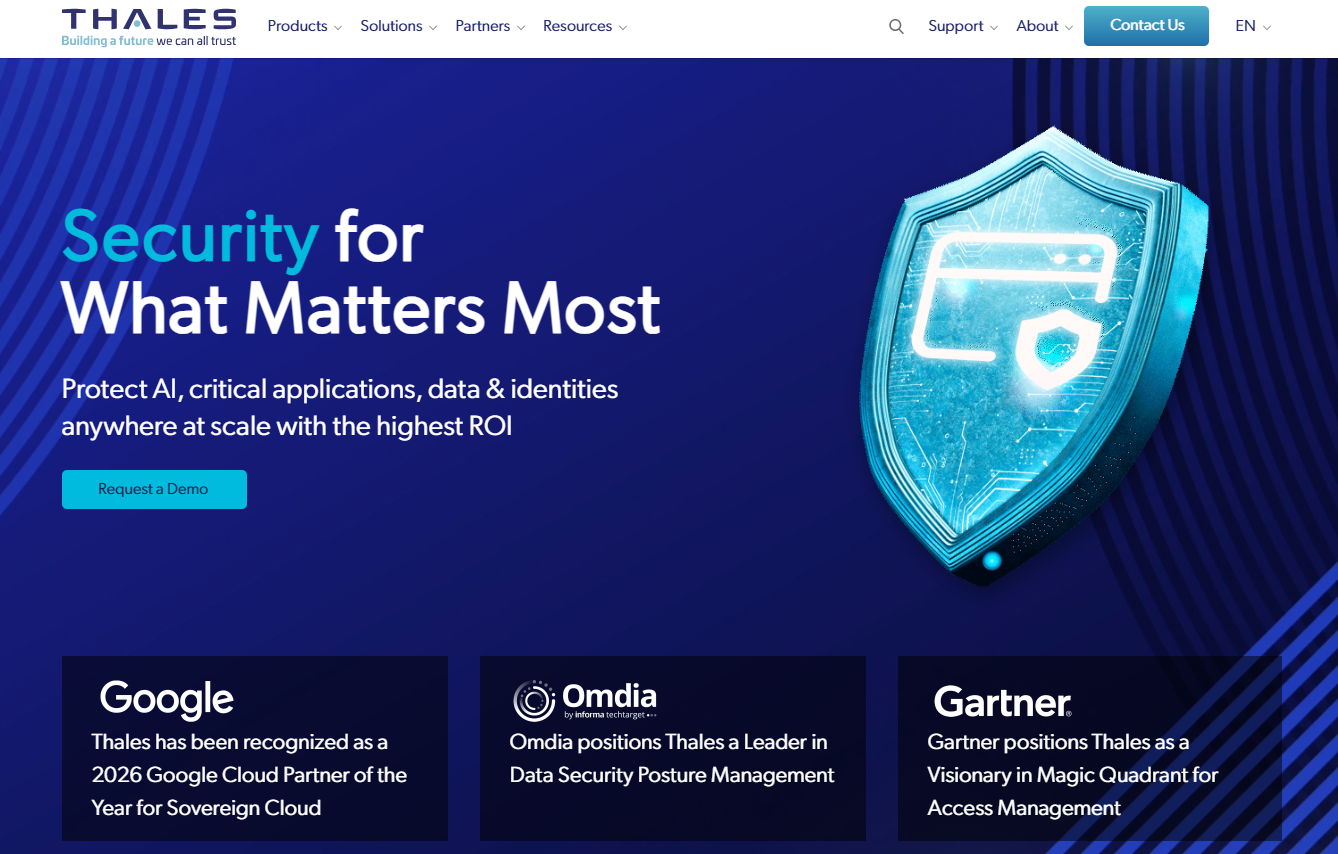
Thales Sentinel is a software monetization and entitlement platform focused on licensing, packaging, and license enforcement. It helps software vendors manage entitlement activities, automate back-office fulfillment, and roll out pricing and packaging changes at scale. Deployment coverage is broad: cloud, on-premises, desktop, embedded, IoT, hybrid, and SaaS.
Sentinel's strength is entitlement-driven commercial operations. Real-time usage insights feed upsell and cross-sell decisions, and its licensing controls give vendors tight enforcement over what customers can access under each plan.
Best for: Software vendors needing enterprise-grade licensing, entitlements, and monetization control across many deployment types.
Key features
- Enterprise licensing and entitlement management
- Software protection and license enforcement
- Dynamic pricing and packaging changes at scale
- Real-time usage insights for upsell and cross-sell
- Broad deployment support across cloud, on-prem, embedded, and IoT
Why choose Thales Sentinel: For vendors who ship the same product across many deployment models, Sentinel keeps licensing and entitlement enforcement consistent whether the software runs in the cloud or on an embedded device.
Thales Sentinel pricing: Thales does not display public pricing. Sentinel is offered through trials, demos, and sales conversations, with a free trial available for Sentinel EMS.
4. Pathlock
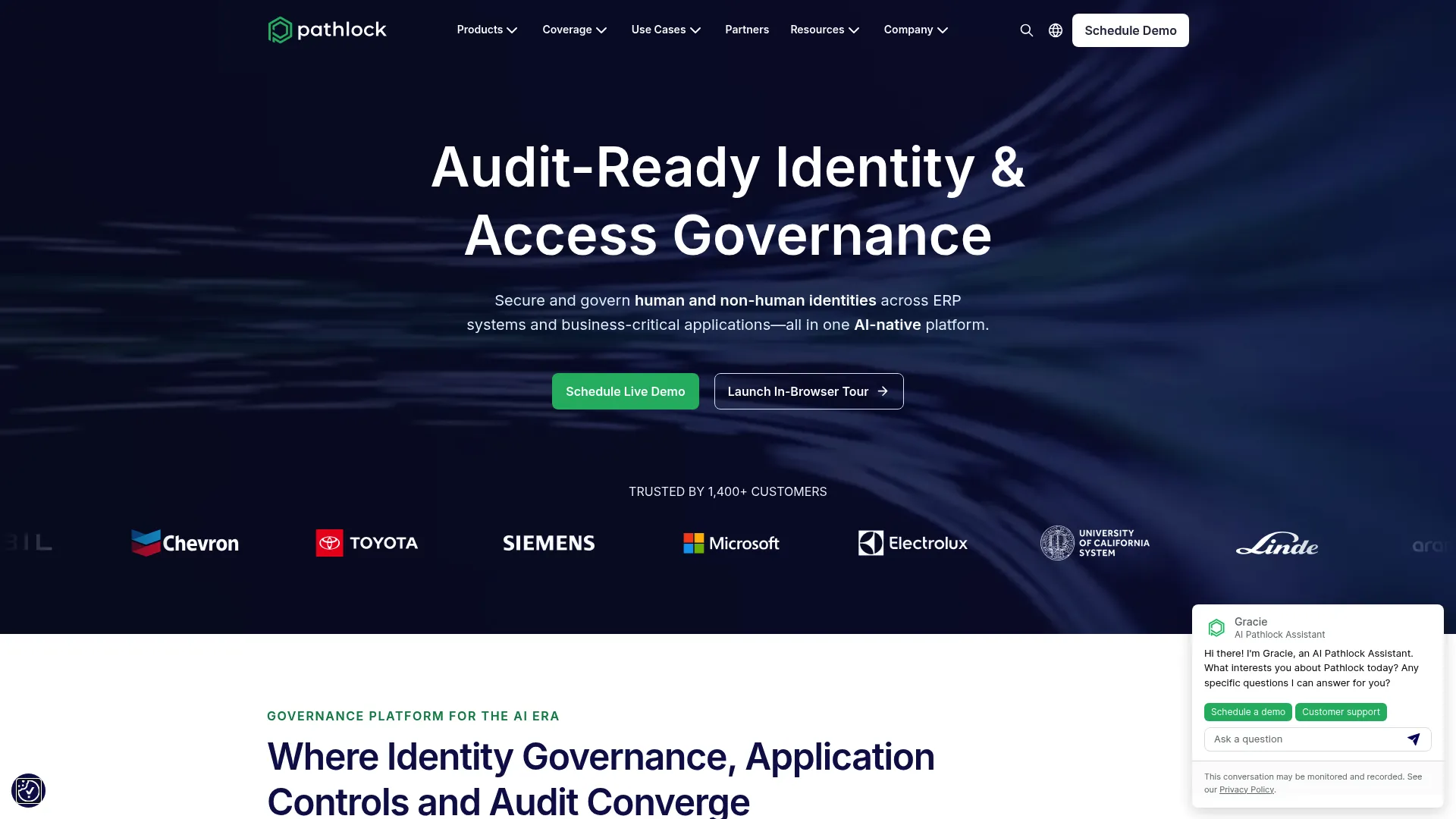
Pathlock is an AI-native identity governance and application controls platform built for enterprises running ERP systems like SAP and Oracle. It combines access governance with access risk analysis and compliant provisioning, all centered on business-critical applications where segregation of duties and audit readiness carry real financial weight.
Where general IGA tools stop at the application boundary, Pathlock goes deep into ERP-level control. It analyzes access risk in context, flags segregation-of-duties conflicts before they're granted, and provisions access in a way that keeps auditors satisfied.
Best for: Enterprises needing governance, compliance, and controls across ERP and business-critical applications.
Key features
- Identity and access governance for ERP environments
- Access risk analysis and segregation-of-duties detection
- Compliant provisioning with audit trails
- Role-based access control (RBAC) and attribute-based access control (ABAC)
- Continuous compliance monitoring
Why choose Pathlock: If your compliance exposure lives inside SAP or Oracle, Pathlock's ERP-native risk analysis catches segregation-of-duties conflicts that identity-provider-level tools simply can't see.
Pathlock pricing: Publicly listed editions for SAP cybersecurity controls include a Free tier, Essential from $7,500/year, Professional from $15,000/year, and Advanced from $30,000/year. Enterprise bundles are also available.
5. SailPoint
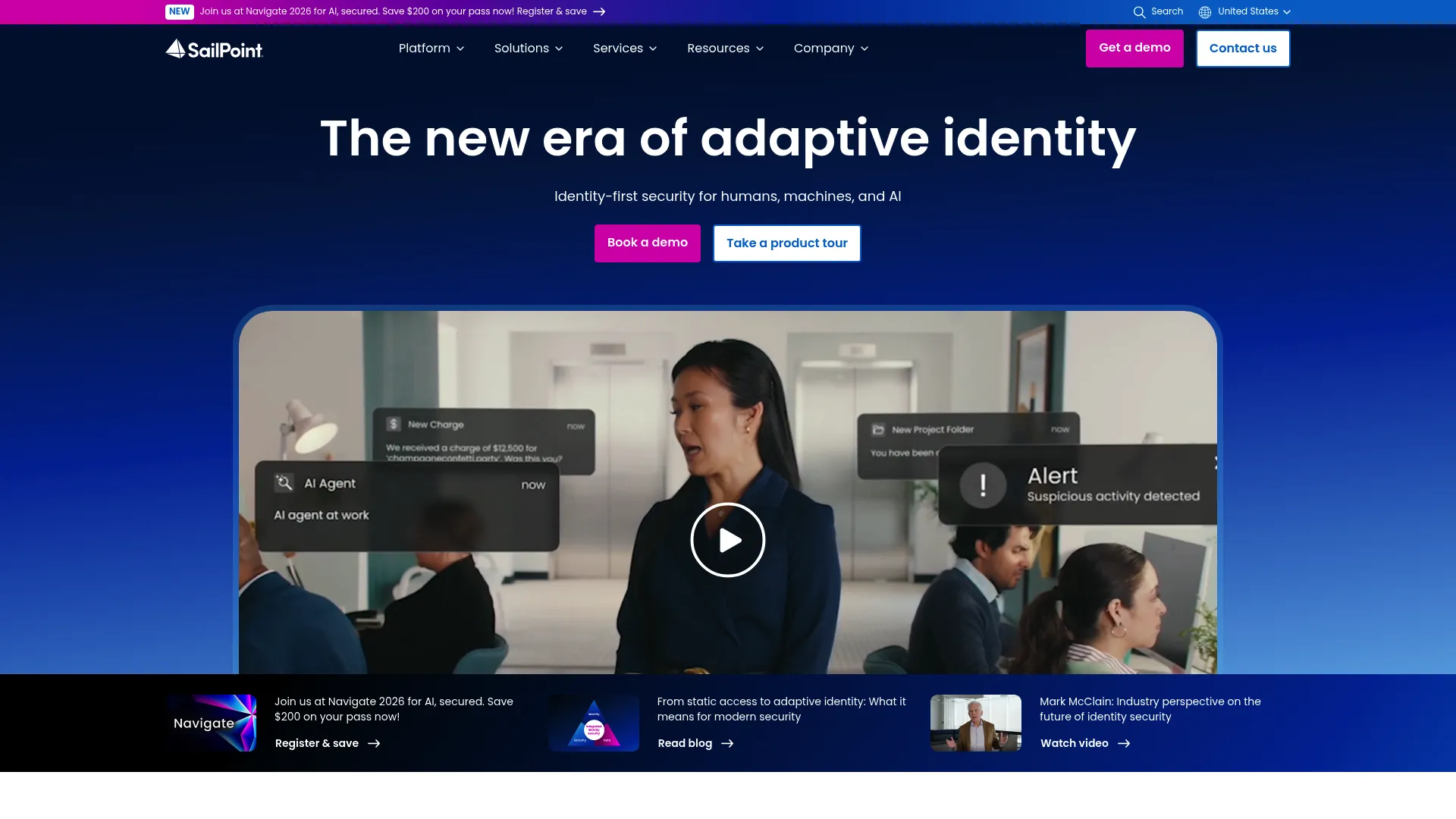
SailPoint is an enterprise identity security platform with deep identity governance and administration capabilities. Its Identity Security Cloud suites govern access across human, machine, and increasingly AI agent identities, with entitlement management sitting inside a broader IGA framework. This is the option for large organizations with wide-ranging governance needs.
The platform leans on AI to recommend access decisions and automate certifications, which matters when you're reviewing thousands of entitlements across hundreds of systems. Connectors and workflows extend governance across hybrid and cloud environments.
Best for: Large enterprises needing governed, automated identity security at scale.
Key features
- Identity Security Cloud suites for identity governance
- AI-powered access recommendations and automation
- Access certifications and lifecycle policies
- Connectors for hybrid and cloud environments
- Provisioning and reporting depth
Why choose SailPoint: When entitlement management is one piece of a much larger identity security mandate, SailPoint's breadth and AI-driven automation handle scale that narrower tools weren't built for.
SailPoint pricing: SailPoint offers tiered Identity Security Cloud suites (Standard, Business, Business Plus) with a flexible model, but pricing is contract-based and arranged through sales.
6. One Identity
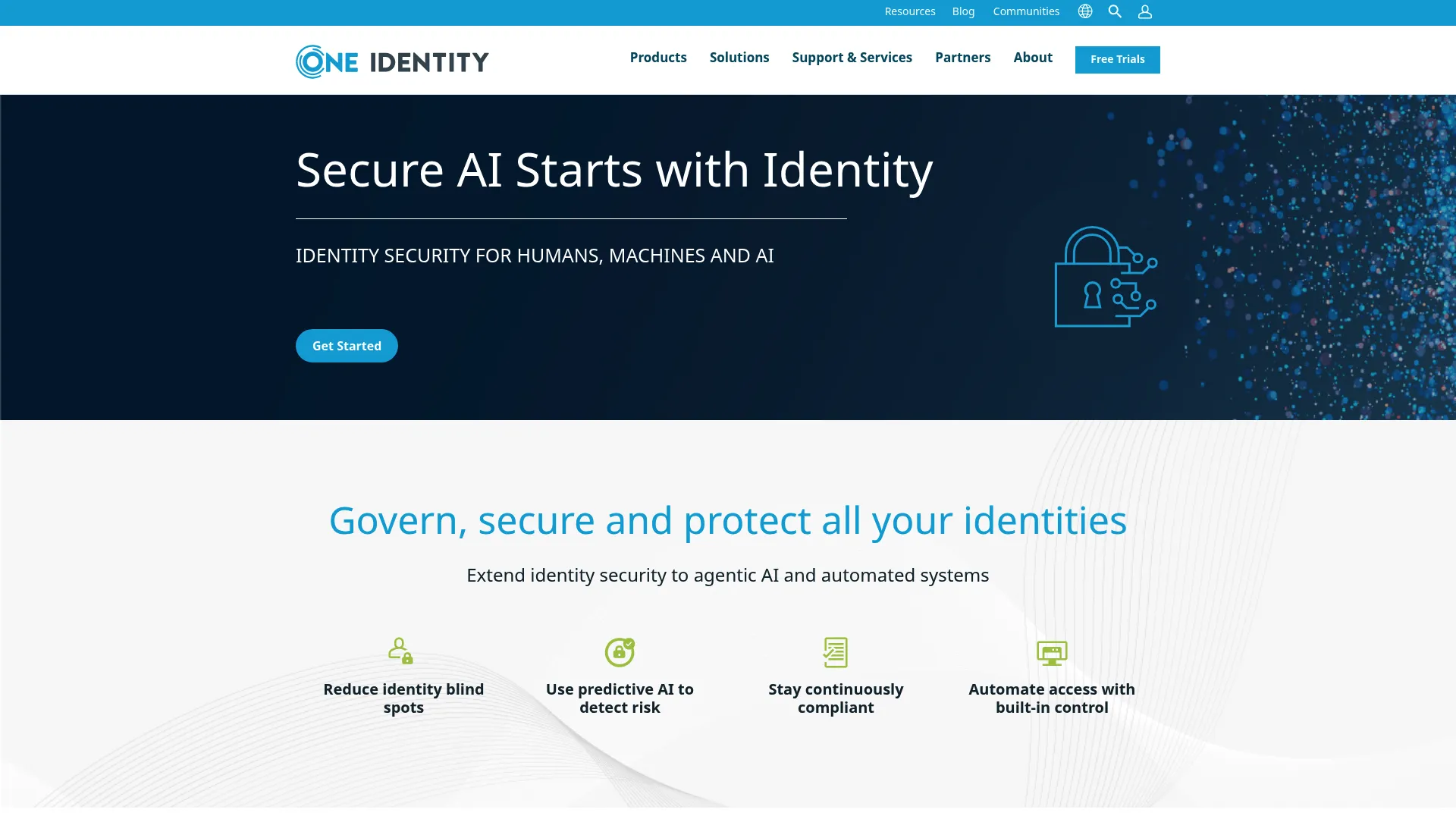
One Identity covers identity governance, privileged access management, and Active Directory management in a single enterprise security portfolio. It's built for hybrid environments where access has to be governed across on-premises directories, cloud apps, and privileged accounts at once. Delegated administration and workflow automation round out the access governance story.
The platform suits complex identity estates where you need both governance and privileged access controls without running two separate products. Cross-system access administration is where it earns its place.
Best for: Large enterprises needing identity governance and privileged access security across hybrid environments.
Key features
- Identity governance and administration
- Privileged access management
- Active Directory management
- Delegated administration and policy management
- Workflow automation across systems
Why choose One Identity: For organizations with sprawling hybrid directories and heavy privileged access requirements, One Identity combines IGA and PAM so you govern standard and privileged access from one place.
One Identity pricing: One Identity does not list public pricing. The site directs buyers to request a quote through sales.
7. Zluri
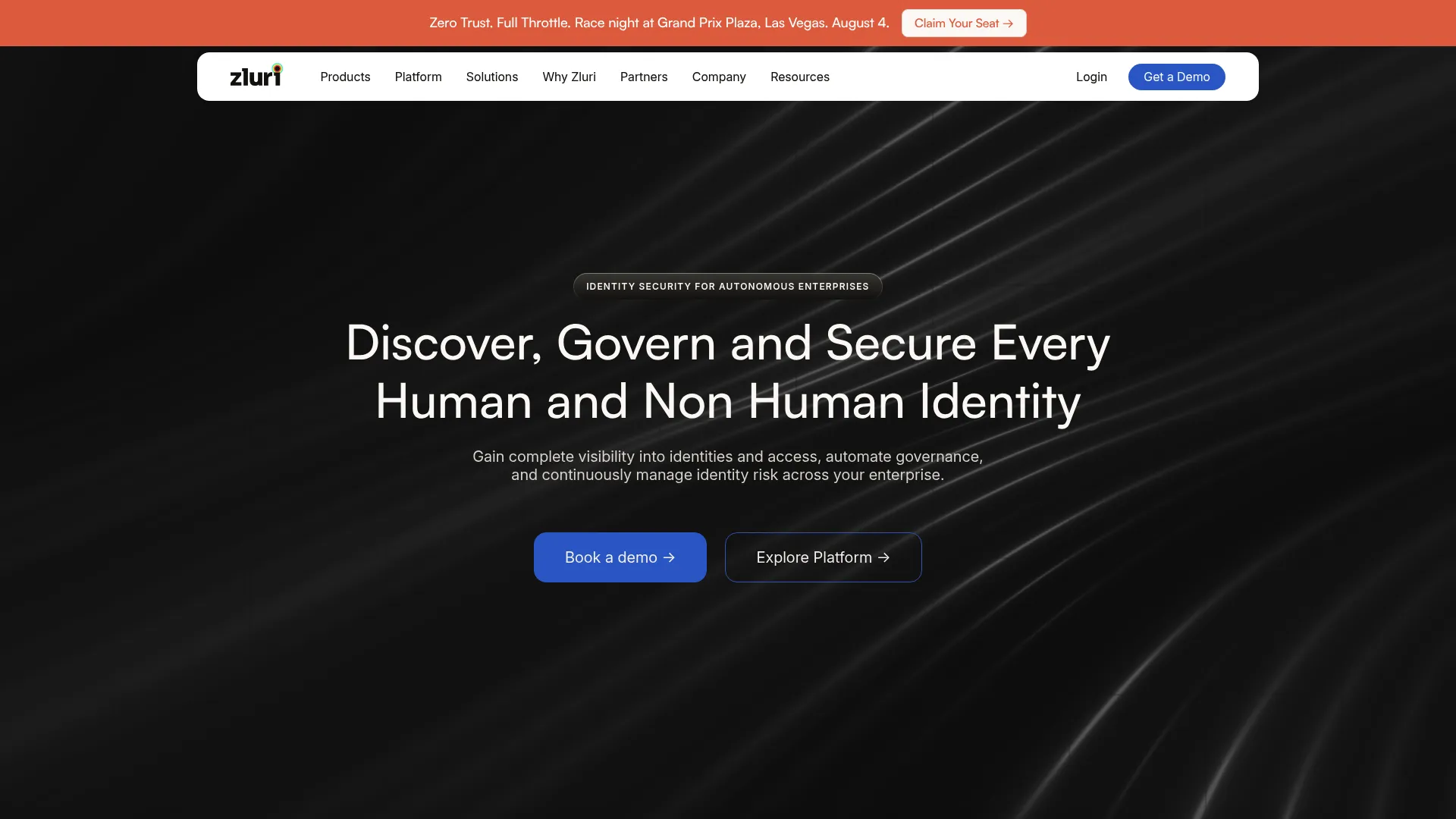
Zluri is a cloud-based identity governance and SaaS management platform focused on discovering, governing, and optimizing application access and spend. It's the leanest option on this list, built for IT and security teams that want operational visibility over their SaaS stack without the weight of a full enterprise IGA deployment.
Zluri automatically discovers the apps your organization actually uses, builds an inventory, and layers access requests, reviews, and lifecycle automation on top. It also ties access governance to spend, so you see which entitlements are costing money and going unused.
Best for: IT and security teams managing SaaS access, governance, and spend optimization.
Key features
- SaaS discovery and app inventory
- Access management and lifecycle automation
- Access requests and reviews
- Provisioning and deprovisioning across SaaS apps
- Spend optimization tied to access data
Why choose Zluri: When your entitlement problem is really a SaaS sprawl problem, Zluri gives you visibility and lifecycle automation over cloud apps without the implementation overhead of heavier governance suites.
Zluri pricing: Zluri does not publish public pricing. Plans are quote-based, arranged through a demo or sales conversation.
Considerations
Before you shortlist, work through these questions with your team.
What problem are you really solving
The single biggest fork in this category is software monetization versus identity governance. If you sell software and need to control what customers can use, look at Revenera or Thales Sentinel. If you govern internal access to systems and data, look at Microsoft Entra ID Governance, SailPoint, or One Identity. Some organizations need both, but almost nobody buys one tool that does both well.
How many systems must it connect
Map your integration surface first. ERP, CRM, billing, HR, SaaS apps, and partner ecosystems all pull entitlement data. A tool that governs cloud SaaS beautifully may be blind to your SAP environment, and vice versa. Count the systems that hold access or licensing data before you evaluate anything.
How strong do your audit and compliance needs need to be
If auditors show up quarterly, prioritize access reviews, immutable logs, approval records, and least-privilege enforcement. Regulated industries and ERP-heavy enterprises need the deepest audit trails. Lighter SaaS environments can start with less and grow into it.
Can the team maintain it
Every entitlement management system carries an ownership cost. Ask who runs the workflows, how often policies need updating, and whether an admin can adjust an approval chain without engineering. For a PM weighing opportunity cost, maintenance burden is a real line item, not an afterthought.
What analytics matter
Decide up front whether you need renewal and churn-risk reporting, usage analytics, or access-risk reporting. Monetization buyers care about renewals and expansion. Governance buyers care about access risk and certification coverage. The right platform reports on the metrics you'll actually act on.
Conclusion
The entitlement management software market splits cleanly into two camps, and the right pick depends on which side you're on.
For access governance, Microsoft Entra ID Governance is the natural starting point if you're Microsoft-first, with SailPoint and One Identity covering broader enterprise IGA and Pathlock owning the ERP-heavy compliance case. Zluri is the lean choice when SaaS access visibility is the real problem.
For software monetization, Revenera and Thales Sentinel lead. Both centralize licensing and entitlements across SaaS, on-premises, and embedded products, with Revenera leaning into quote-to-cash flexibility and Sentinel into deployment breadth and license enforcement.
Your practical next step: name the problem out loud. Are you controlling what customers can use, or what your own people can access? Write that down, list the systems that hold your entitlement data, then shortlist the two or three tools above that match. Book demos with those, and score them against the five considerations here.
FAQs
Identity governance is the broader discipline covering who has access, how it's requested, and how it's reviewed across an organization. Entitlement management is the more granular layer that defines and enforces specific rights and permissions. In most enterprise tools, entitlement management is a feature inside a wider identity governance framework.
No. Access management typically handles authentication and login, verifying that a user is who they claim to be. Entitlement management is a lifecycle and policy layer that decides what an authenticated user is allowed to do, for how long, and under which rules. The two work together but solve different problems.
Prioritize your systems of record for identity and licensing. That usually means HR systems for employee lifecycle, ERP for financial and operational access, CRM and billing for customer entitlements, and your SaaS apps for day-to-day access. The right tool connects to wherever entitlement data actually lives in your stack.
It gives you a single view of subscription rights, usage data, and expiration dates. Instead of discovering a lapsed contract after it expires, you see renewal timing and usage trends early. That visibility lets revenue teams flag churn risk and act before an account slips.
Focus on five things: workflow automation, analytics depth, integration coverage, auditability, and maintenance burden. A PM should weigh how much engineering time the tool consumes against the operational load it removes. Segmentation and clear impact measurement matter too, since you'll need to prove the investment.
Yes, the strongest monetization platforms are built for hybrid deployment. Tools like Revenera and Thales Sentinel manage entitlements across SaaS, on-premises, and embedded products from one system. If your product line spans multiple deployment types, hybrid support should be a hard requirement.
Ask one question: are you controlling access to software you sell, or access to systems you run? If it's what customers can use, you need a monetization platform like Revenera or Thales Sentinel. If it's what your employees, contractors, or partners can access internally, you need an IGA platform like Microsoft Entra ID Governance or SailPoint.