

You launched three creator campaigns this quarter. The briefs live in a shared doc, the outreach sits in someone's inbox, and the reporting is a spreadsheet nobody trusts. When leadership asks what those campaigns actually drove, you spend two days reconstructing the answer.
That reconstruction cost is the real problem. Creator programs don't break because the creators underperform. They break because the operations around them stay manual long after the volume outgrows a spreadsheet.
The market has caught up to that pain. According to Influencer Marketing Hub (2025), 76% of brands now use a dedicated creator management platform to organize creator relationships, up from 52% in 2023. Mordor Intelligence (2025) puts the creator economy software market at $6.41 billion in 2025, growing toward $16.89 billion by 2031 at a 17.53% CAGR.
So the question isn't whether to buy software. It's which platform covers your actual workflow, from discovery through payments through the reporting your CFO will believe, without adding another disconnected tab to a stack you're already trying to shrink.
What's inside
This guide is for growth and marketing teams evaluating a creator management platform to replace scattered creator ops. It focuses on full workflow coverage, not just discovery.
We chose these seven tools based on four criteria:
- Workflow coverage: discovery, outreach, campaign execution, payments, and reporting in one system
- Reporting and attribution: can it tie creator activity to revenue clearly enough for leadership
- Integrations: connections to ecommerce, CRM, analytics, and communication tools
- Pricing transparency: how public and predictable the cost structure is
Every tool here manages creator relationships end to end, not a single slice of the funnel.
TL;DR
- Best for enterprise creator programs: CreatorIQ, with governance, breadth, and analyst-recognized reporting
- Best for daily creator operations: GRIN, covering discovery through payments with AI-assisted management
- Best for recurring campaign workflows: Aspire, built around creator collaboration and briefs
- Best for performance-driven programs: Captiv8, with deep analytics and paid amplification
- Best for ecommerce-led programs: Upfluence, with sales tracking and modular pricing
- Best for benchmarking and measurement: Traackr, an AI-powered creator intelligence layer
- Best for creator discovery and vetting: HypeAuditor, with fraud detection and audience analysis
What is creator management software
Creator management software is a platform that centralizes the full lifecycle of a brand's creator and influencer relationships, from finding creators to paying them to measuring what they drove. It replaces the spreadsheets, email threads, and disconnected tools that most programs start with.
A creator CRM sits at the center of that lifecycle. It stores contact history, past collaborations, rates, and performance so your team always knows the context of a relationship before the next outreach.
The core jobs a creator management platform covers:
- Creator discovery and sourcing: search creators by audience, niche, engagement, and authenticity metrics
- Outreach and relationship tracking: manage conversations, pipelines, and history in one place
- Campaign execution and approvals: briefs, content review, and collaboration workflows
- Payments and contracts: handle agreements and creator payouts without leaving the platform
- Reporting, benchmarking, and ROI: tie creator activity to engagement, conversions, and revenue
- Integrations: connect to ecommerce, analytics, CRM, and marketing automation
The distinction worth knowing: an influencer marketing platform emphasizes campaign execution and discovery, while an influencer CRM software leans into relationship management and pipeline tracking. Most modern creator marketing platforms now do both, which is why the category has consolidated under "creator management."
For a growth marketer, the value is consolidation. One system that replaces four tools and gives you attribution you can defend beats a wider stack every time.
When to use creator management software
Not every team needs a full platform on day one. Three triggers usually make the case.
Replace spreadsheets and email threads
Manual creator ops work until they don't. Once you're running more than a handful of creators at once, the tracking sheet goes stale, outreach gets duplicated, and payment deadlines slip. A dedicated platform holds the whole pipeline so nothing depends on one person's inbox.
Centralize creator communication and history
Relationship context is the asset. When a creator you worked with last year is worth re-engaging, you want their rates, past performance, and conversation history in one view. A creator CRM keeps that context so every outreach starts warm instead of cold.
Prove creator ROI at scale
The moment creator spend becomes a board-level line item, "engagement looked good" stops being an acceptable answer. Reporting and attribution turn scattered activity into a defensible number, mapping creator content to conversions, sales, and pipeline your leadership actually trusts.
Comparison table
Here's how the seven platforms compare on fit, differentiator, pricing, and G2 rating. Ratings and pricing reflect verified values at the time of writing.
| # | Product | Best for | Key differentiator | Pricing | G2 rating |
|---|---|---|---|---|---|
| 1 | CreatorIQ | Enterprise creator programs | Governance, breadth, analytics depth | Request-only | 4.6/5 |
| 2 | GRIN | Daily creator operations | End-to-end ops with usage-based plans | Free, then $200/mo+ | 4.5/5 |
| 3 | Aspire | Recurring campaign workflows | Creator collaboration and briefs | Custom, services from $300/mo | Not listed |
| 4 | Captiv8 | Performance-driven programs | Analytics plus paid amplification | Request-a-quote | 4.7/5 |
| 5 | Upfluence | Ecommerce-led programs | Sales tracking, modular pricing | Custom-quoted | 4.6/5 |
| 6 | Traackr | Benchmarking and measurement | AI creator intelligence | Request-only | 4.3/5 |
| 7 | HypeAuditor | Creator discovery and vetting | Fraud detection, audience analysis | From $299/mo | 4.6/5 |
1. CreatorIQ
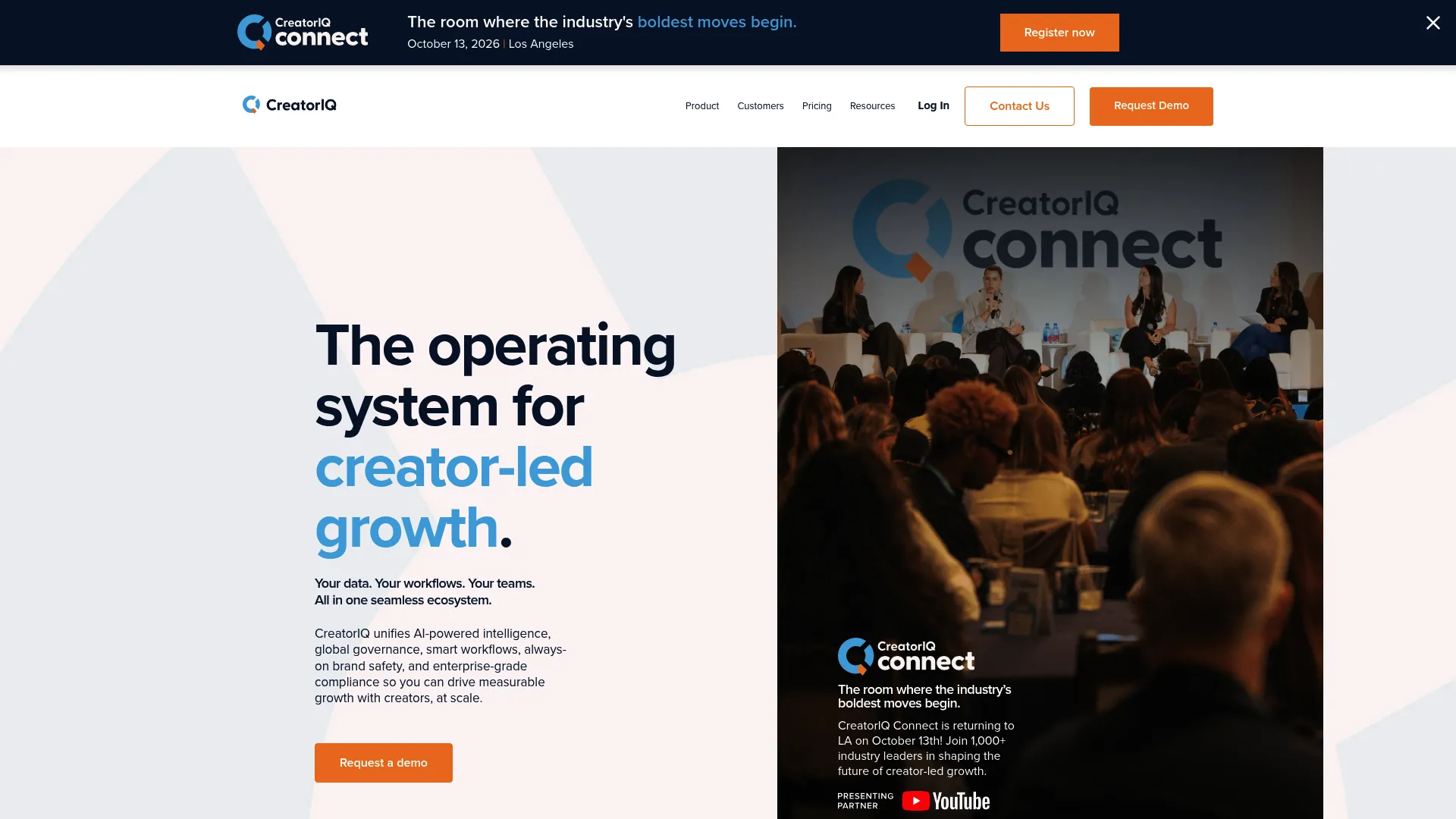
CreatorIQ is an enterprise creator marketing platform built for large brands and agencies running programs at scale. It covers discovery, campaign management, and measurement, with a strong emphasis on governance and reporting that holds up under scrutiny. If your creator program spans multiple regions, product lines, or business units, this is the tier of tool built for that complexity.
The platform positions itself around scale and safety, not just features. That matters when creator spend is significant and compliance, brand safety, and data cleanliness become non-negotiable.
Best for: Large brands and agencies running enterprise creator marketing programs across many stakeholders.
Key strengths
- Creator discovery and evaluation at scale
- Campaign management with governance controls
- Creator marketing analytics and ROI measurement
- Enterprise-grade reporting for leadership visibility
Why choose CreatorIQ: Pick it when your program is large enough that governance, breadth, and defensible reporting outweigh setup speed. It fits teams who need one system of record for creator marketing across a complex organization.
CreatorIQ pricing: Pricing is request-only. The site directs you to schedule a call with a platform specialist to discuss packages, so expect an enterprise-oriented, sales-led motion rather than public tiers.
2. GRIN
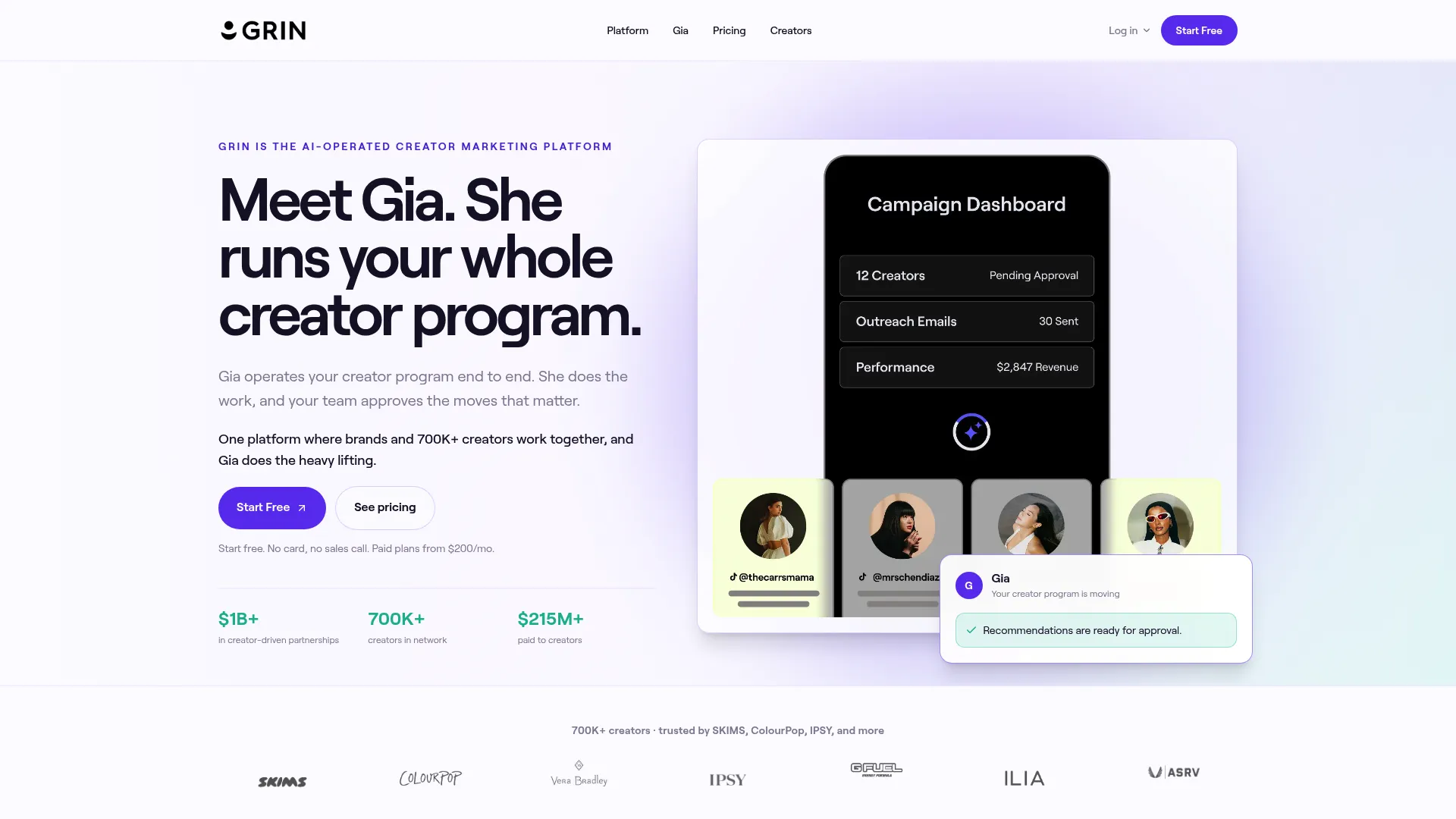
GRIN is a creator marketing platform that covers the full lifecycle, from finding creators to activating them to measuring results. It's built for brands that want daily operational help across the whole workflow rather than a single-function tool. Discovery, relationship management, campaign execution, and payments all live in one place.
What sets GRIN apart in 2026 is its usage-based, self-serve pricing and AI-assisted management, which makes it accessible to teams that want to start smaller and scale as their program grows.
Best for: Brands running creator or influencer programs that want self-serve, usage-based software with end-to-end coverage.
Key strengths
- Creator discovery and recruitment
- Relationship management and campaign execution
- Creator payments handled in-platform
- ROI reporting across the creator lifecycle
Why choose GRIN: Choose it when you want one platform that handles the daily grind of creator ops without forcing you into an enterprise contract on day one. The tiered plans let you match spend to program size.
GRIN pricing: GRIN offers a Free plan at $0/mo, then usage-based monthly tiers: Starter at $200/mo, Growth at $500/mo, Scale at $1,000/mo, and Complete at $1,500/mo. Paid plans include monthly credits, with capacity varying by tier.
3. Aspire
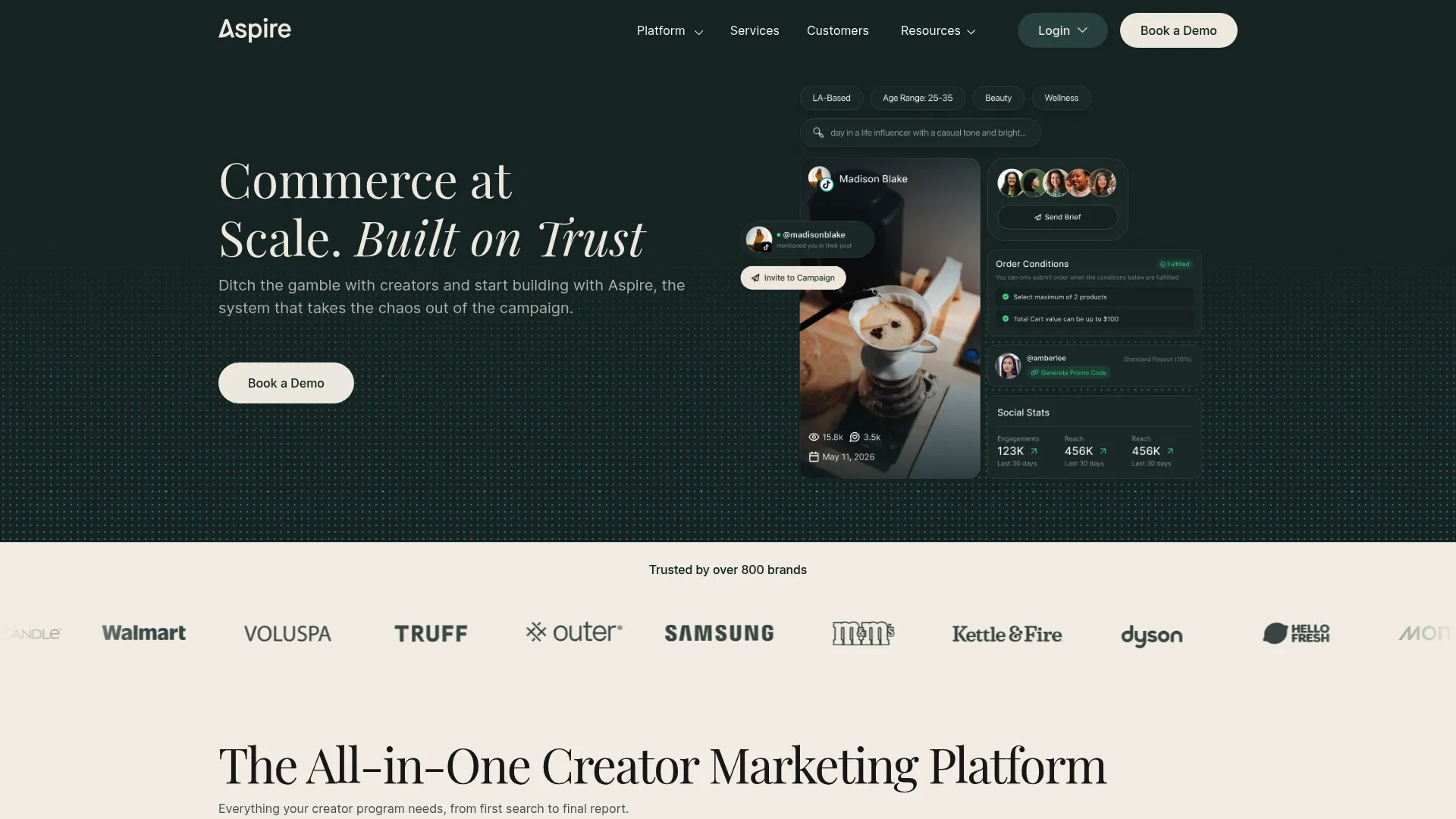
Aspire is an influencer marketing platform focused on finding creators, managing collaborations, and tracking ROI. It leans into campaign workflows and creator relationships, which makes it a fit for teams running recurring creator programs rather than one-off activations. Briefs, collaboration, and allowlisting sit at the core of the experience.
The platform combines a creator marketplace with relationship management, so discovery and ongoing collaboration happen in the same system.
Best for: Teams running recurring creator campaigns that need discovery, briefs, and collaboration in one workflow.
Key strengths
- Influencer discovery and creator marketplace
- Campaign briefs and relationship management workflows
- Affiliate and allowlisting support
- ROI measurement across campaigns
Why choose Aspire: Choose it when your program runs on repeatable campaign cycles and you want a creator marketplace paired with collaboration tools. It fits teams who value structured briefs and ongoing creator relationships.
Aspire pricing: Core platform pricing is not publicly listed and appears quote-based. Publicly visible pricing is limited to services and add-ons, such as an expert strategist package at $499 for five billable hours and a Curated Creators Plus add-on at $300/month.
4. Captiv8
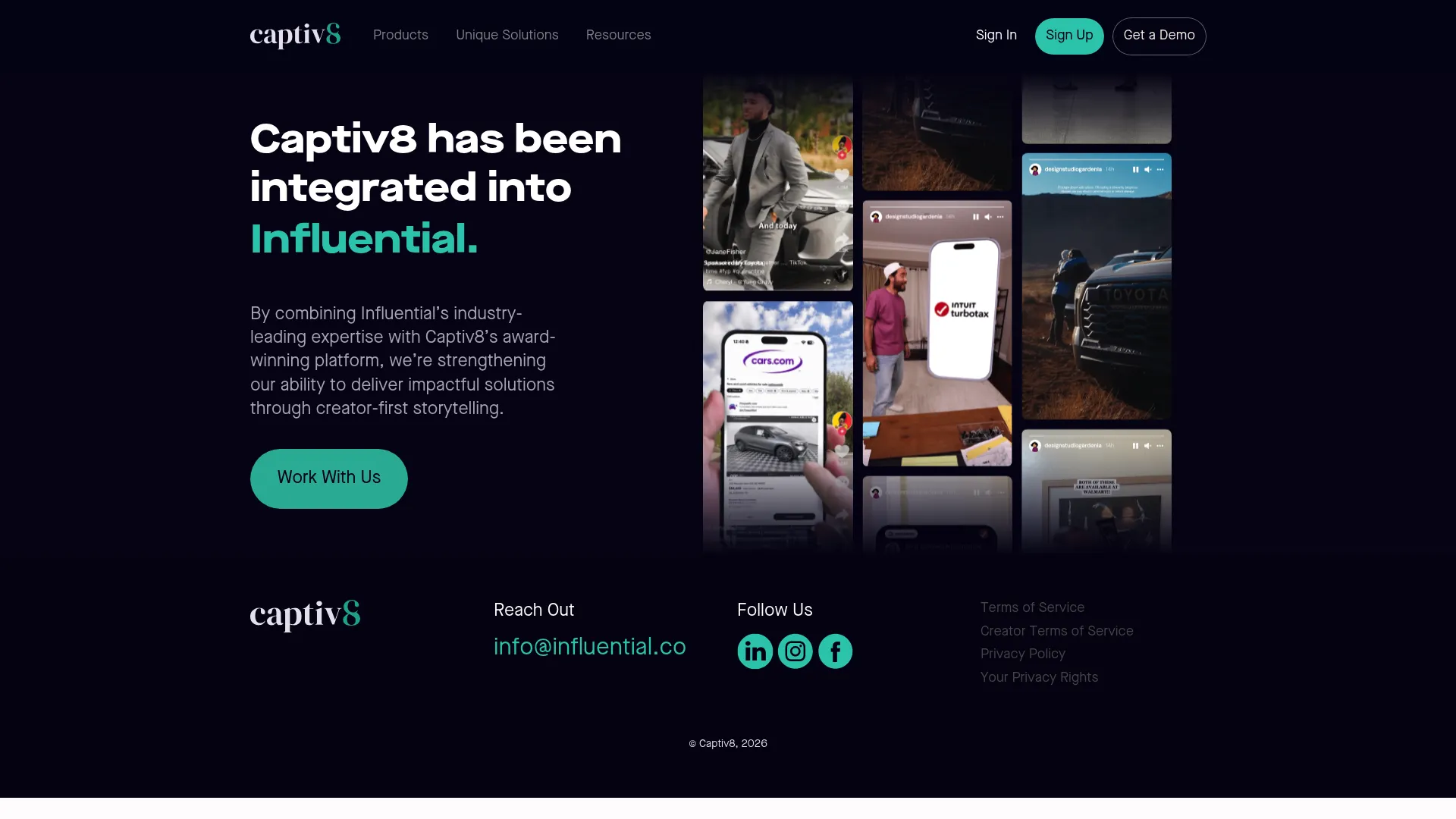
Captiv8 is an influencer marketing platform for discovering creators, managing campaigns, handling payments, amplifying content, and measuring results. It's built for enterprise brands and agencies that want reporting depth and operational control across performance-driven programs. Audience insights and paid media amplification set it apart from discovery-only tools.
The platform's strength is tying creator work to performance data, which matters when creator marketing is held to the same ROI bar as paid channels.
Best for: Enterprise brands and agencies running performance-driven influencer programs at scale.
Key strengths
- Creator discovery and audience insights
- Campaign workflow, management, and reporting
- Creator payments handled in-platform
- Paid media amplification of creator content
Why choose Captiv8: Choose it when reporting depth and paid amplification matter as much as discovery. It fits teams that treat creator marketing as a performance channel with real accountability.
Captiv8 pricing: Captiv8 does not display public pricing. The site uses a demo and request-a-quote motion, so pricing is discussed directly with their team based on program scope.
5. Upfluence
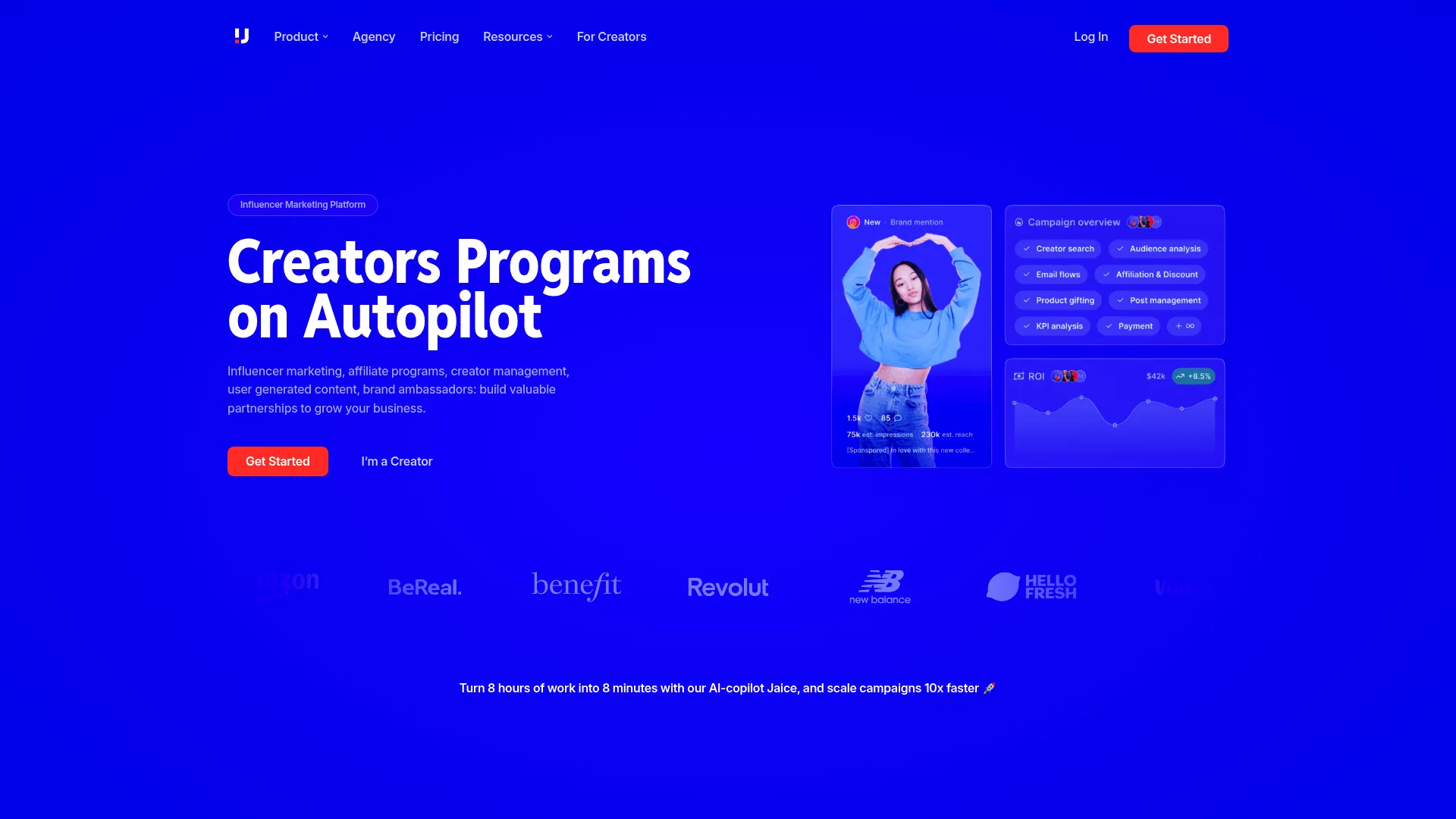
Upfluence is an influencer marketing platform for brands and agencies to find creators, manage campaigns, track ROI, and pay creators. Its ecommerce connections make it a strong fit for retail and DTC teams that need to tie creator activity directly to sales. Discovery, outreach automation, and sales tracking work together in one flow.
The modular structure lets you buy the pieces you need, which appeals to teams wary of paying for a bloated platform.
Best for: Ecommerce and agency teams running creator-led influencer and affiliate programs.
Key strengths
- Creator discovery and audience/performance filtering
- Campaign management and outreach automation
- Sales tracking and ROI analytics
- Creator payments handled in-platform
Why choose Upfluence: Choose it when your creator program is tied to ecommerce revenue and you want sales attribution built in. The modular pricing fits teams that want to scope the platform to their actual needs.
Upfluence pricing: Pricing is modular and custom-quoted. Plans are based on selected modules, team size, and program volume, and the company states it takes no percentage of sales. Tiers include Find Creators, Scale Programs, and Autopilot.
6. Traackr
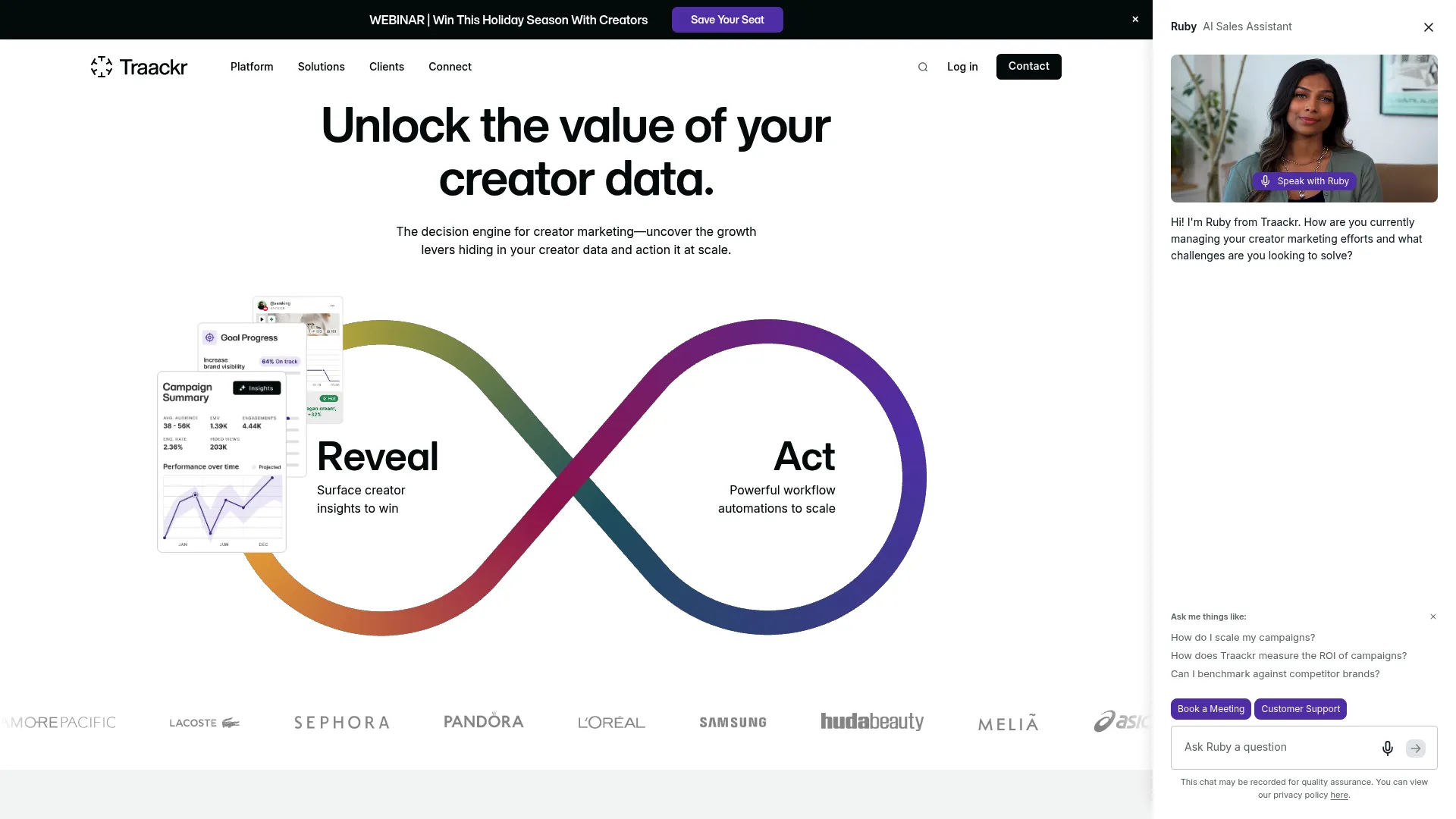
Traackr is an AI-powered creator intelligence platform for influencer marketing planning, activation, and measurement. Its strength is data: benchmarking, performance measurement, and program visibility that help teams compare results against competitors and industry standards. If measurement and benchmarking drive your decisions, this is a tool built around that priority.
Traackr treats creator marketing as a data discipline, which suits teams that want to plan and measure with rigor rather than react campaign by campaign.
Best for: Enterprise teams running data-driven creator marketing programs that prioritize measurement.
Key strengths
- Creator discovery and vetting
- Campaign activation workflows
- Performance measurement and benchmarking
- Program visibility across markets
Why choose Traackr: Choose it when benchmarking and defensible measurement matter more than a wide feature list. It fits teams that want to prove creator ROI with rigorous, comparable data.
Traackr pricing: Pricing is request-only. The pricing page directs you to schedule a call to discuss packages, so expect a sales-led, enterprise-oriented process.
7. HypeAuditor
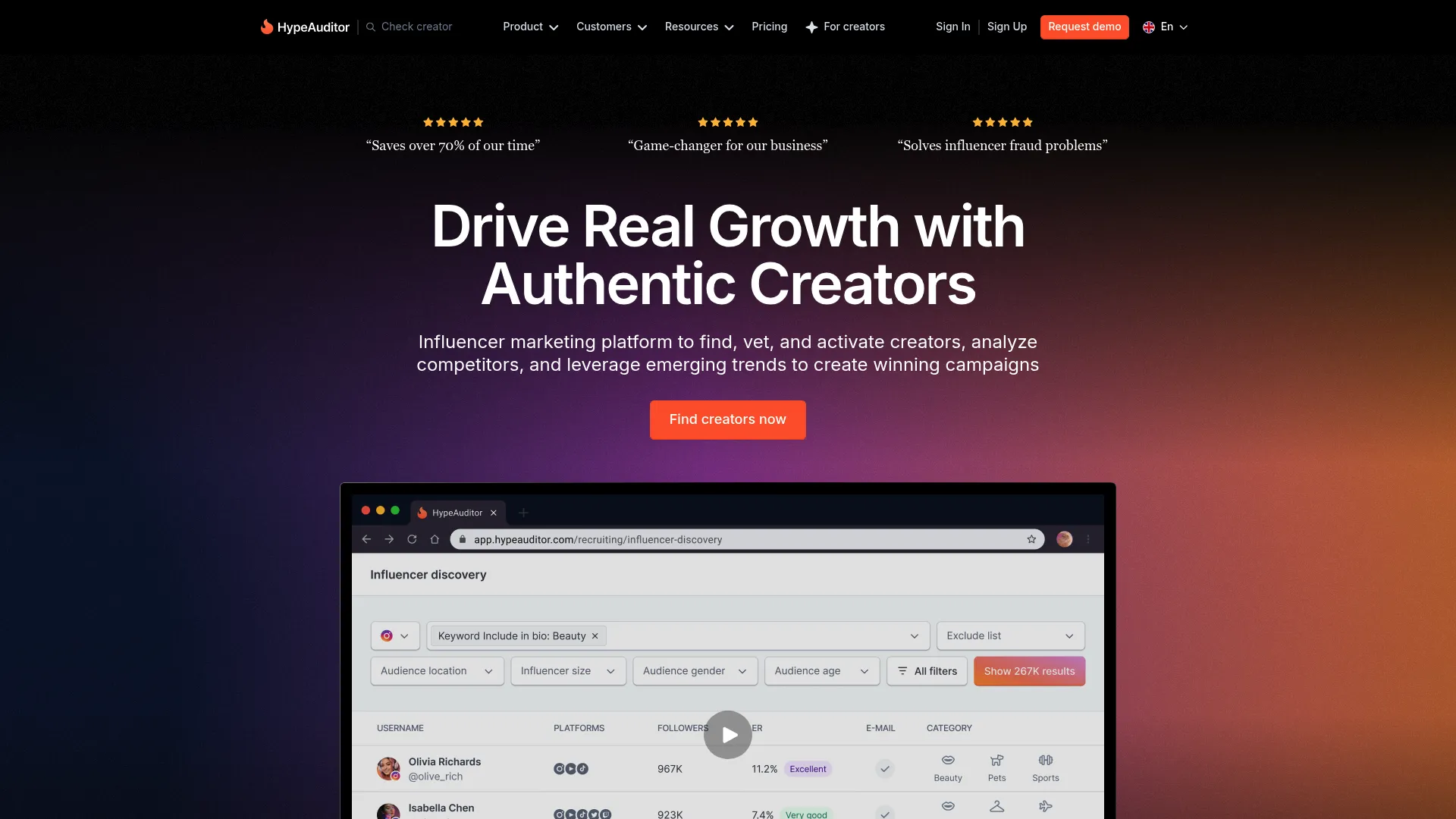
HypeAuditor is an AI-powered influencer marketing platform for discovering, analyzing, and managing creators. Its standout capability is creator vetting: fraud detection, audience analysis, and authenticity metrics that help you avoid paying for inflated followings. With a large creator database and dozens of filters, it's built for research and sourcing at scale.
The platform is strongest as a discovery and evaluation layer, giving teams the data to vet creators before committing budget.
Best for: Brands and agencies running influencer discovery, vetting, and campaign management at scale.
Key strengths
- Influencer discovery with 227.3M+ creators and 35+ filters
- Creator analytics with audience, performance, and fraud insights
- Campaign management and media plans
- Competitor analysis and API access
Why choose HypeAuditor: Choose it when creator vetting and audience quality are your priority before spend. It fits teams that need research and fraud detection to protect budget across sourcing.
HypeAuditor pricing: Public pricing shows Basic from $299/mo billed annually. Higher tiers (Starter, Pro, and Enterprise) are custom pricing. The platform also offers free media plans and demo versions of some features.
Considerations
Before you commit, run every shortlisted tool through this checklist. It's less about feature counts and more about fit for how your team actually works.
Workflow coverage
Map the tool against your real workflow, from discovery through payments through reporting. A platform that nails discovery but forces you back into spreadsheets for payments hasn't solved the consolidation problem. Decide which stages you need in one system now, and which you can add later.
Reporting and attribution
Ask whether the reporting is clear enough for leadership to trust. Can it tie creator activity to conversions, sales, or pipeline, not just engagement? If you can't defend the number in a board meeting, the tool hasn't earned its place in your stack.
Integrations
Check that it connects to what you already run: ecommerce, CRM, analytics, and communication tools. Broken data flow between your creator platform and your revenue systems recreates the attribution problem you bought the tool to fix. Verify the specific integrations you depend on.
Team size and governance
Match the platform to your stage. Enterprise tools bring governance and breadth that a scrappy team won't use and shouldn't pay for. Smaller teams often move faster on usage-based or modular pricing that scales with the program.
Pricing and contract structure
Know what you're signing. Is pricing public, usage-based, seat-based, or sales-led? Sales-led pricing isn't a red flag, but it changes your evaluation timeline and your negotiating position. Clarify contract length and what's included before you commit.
Conclusion
The right creator management platform depends on your stage and your workflow, not on which tool has the longest feature list.
If you're an enterprise team that needs governance and defensible reporting, CreatorIQ and Traackr are built for that scrutiny. If you want end-to-end operations without an enterprise contract, GRIN's usage-based plans let you start smaller and scale. Ecommerce-led teams should look hard at Upfluence for its sales attribution, while HypeAuditor is the strongest starting point if creator discovery and vetting come first.
Your next step: shortlist two tools that match your workflow coverage and pricing model, then run each through the considerations checklist against your actual creator pipeline. The tool that consolidates the most of your stack while giving you attribution you can defend is the one worth buying.
Start your journey with Guideflow today!
FAQs
Creator management software is a platform that centralizes the full lifecycle of a brand's creator and influencer relationships. It covers discovery, outreach, campaign execution, payments, and reporting in one system, replacing the spreadsheets and email threads that most programs start with.
At minimum, look for creator discovery, relationship and pipeline tracking, campaign and approval workflows, payments or contract handling, and ROI reporting. Integrations with your ecommerce, CRM, and analytics tools matter just as much, since broken data flow recreates the attribution problem you're trying to solve.
It connects creator activity to outcomes your leadership cares about, such as conversions, sales, and pipeline, rather than surface metrics like likes. Platforms with strong reporting and attribution turn scattered campaign data into a single defensible number, which is what makes creator spend survive board-level scrutiny.
An influencer marketing platform emphasizes campaign execution and creator discovery, while an influencer CRM focuses on relationship management, contact history, and pipeline tracking. In practice, most modern creator management tools combine both, which is why the category has consolidated under a single label.
Pricing varies widely. Some tools publish tiers, like GRIN starting free then moving to $200/mo and up, or HypeAuditor's Basic plan from $299/mo billed annually. Others, including CreatorIQ, Captiv8, Traackr, and Upfluence, use request-only or custom-quoted pricing tied to program scope and team size.
CreatorIQ and Traackr are built for enterprise scale, with governance, breadth, and analyst-recognized reporting. Captiv8 also fits enterprise programs where paid amplification and performance analytics matter. All three use sales-led pricing, so expect a longer evaluation and procurement cycle.
Yes. Most platforms hold outreach, conversation history, briefs, and content approvals in one place, so your team stops managing creators across scattered inboxes and shared docs. Centralizing communication also preserves relationship context, which makes re-engaging past creators faster and warmer.
HypeAuditor stands out for discovery and vetting, with a large creator database, dozens of filters, and fraud detection to protect budget from inflated followings. Upfluence and Aspire also offer strong discovery paired with campaign and relationship management if you want sourcing plus ongoing workflow in one tool.