You reordered too much of one SKU and ran out of another. Again. The forecast said one thing, the sell-through said another, and by the time a human noticed, working capital was already stuck in slow-moving stock while your best seller sat at zero.
Manual reordering breaks at scale. A buyer juggling spreadsheets across three warehouses and two sales channels cannot recalculate reorder points fast enough to keep up with demand shifts. The cost shows up in two directions at once: lost sales from stockouts and trapped cash from overstocking.
The market has noticed. The global inventory replenishment software market was valued at roughly USD 2.8 billion in 2024 and is projected to reach USD 8.5 billion by 2033, growing at a 14.2% CAGR through 2026 to 2033, according to industry analysis published on LinkedIn in 2024. Cloud-based solutions now account for around 65% of that market, and retail and eCommerce users generate over half of the revenue.
That growth reflects a real shift. Teams want systems that sense demand, calculate safety stock, and generate purchase orders automatically, so buyers spend time on exceptions instead of routine math. The question is no longer whether to automate replenishment. It is which tool fits your channel mix, your ERP, and the way your operation actually runs.
What's inside
This guide is for operations leaders, retail and eCommerce teams, supply chain managers, and the product or ops stakeholders asked to evaluate replenishment tooling. We selected the 11 tools below based on forecasting accuracy, automation depth, integration coverage across ERP, POS, and WMS systems, and multi-location control. Each entry covers what the tool does, who it fits, its standout strengths, and verified pricing where the vendor publishes it. We favored tools with real replenishment logic over generic inventory trackers.
TL;DR
- Best for enterprise supply chain planning: Slimstock, for retailers, wholesalers, and manufacturers optimizing inventory across complex networks.
- Best for AI-driven optimization: Peak, for teams that want SKU-level forecasting and dynamic safety stock.
- Best for NetSuite users: NetSuite, for companies already running its cloud ERP.
- Best for Shopify brands: Prediko and Fabrikator, for D2C and eCommerce replenishment planning.
- Best for multi-channel sellers: SKULabs, Inventory Planner, and Sumtracker, depending on scale.
- Best for manufacturers: Katana and Cin7 Core, for production-aware ordering.
What is inventory replenishment software?
Inventory replenishment software is a system that forecasts demand, calculates when and how much to reorder, and automates the purchasing process so businesses avoid both stockouts and overstocking. It turns raw sales data, lead times, and service level targets into purchase order recommendations, then routes those orders to suppliers or an ERP for approval.
It sits at the intersection of demand planning and purchasing. Unlike a basic stock counter, replenishment software applies logic: reorder points, safety stock, economic order quantities, and demand sensing that adjusts as sell-through changes.
Core capabilities most tools share:
- Demand forecasting: Statistical or AI models that predict future demand per SKU, location, and channel.
- Reorder points and safety stock: Automatic thresholds that trigger orders and buffer against variability in lead time and demand.
- Purchase order automation: Generated POs based on forecasts, current stock, and supplier constraints, ready for review or auto-send.
- Multi-location logic: Replenishment and stock transfer balancing across multiple stores or warehouses.
- Integrations: Connections to ERP, POS, WMS, and eCommerce platforms so data stays synced in one place.
- Reporting: Visibility into service levels, sell-through, holding cost, and forecast accuracy.
The goal is operational: free up working capital, protect availability, and cut the manual reorder work that eats buyer time.
When to use inventory replenishment software
Automate reordering across many SKUs
When your catalog grows past a few hundred active SKUs, spreadsheet-based reordering stops scaling. Replenishment software recalculates reorder points continuously and flags only the decisions that need a human. If buyers spend more time on math than on supplier negotiation, it is time to automate.
Coordinate multi-store and multi-warehouse stock
Multi-store replenishment and multi-warehouse replenishment introduce a harder problem: where should each unit sit. Software balances stock across locations, recommends transfers, and prevents one site from stocking out while another sits on excess. Manual coordination across locations is where most availability problems hide.
Free up working capital
Excess inventory ties up cash. Replenishment tools quantify holding cost against service level targets, so you can right-size safety stock instead of over-buffering every SKU. Teams under pressure to improve cash flow use this to release trapped working capital without risking availability on core items.
Comparison table
Here is a side-by-side view of the 11 tools, sorted by relevance to teams evaluating dedicated replenishment capability. Pricing and ratings reflect verified vendor and G2 data as of mid-2026. Where a vendor does not publish pricing, we note that it is quote-based rather than guessing a figure.
| # | Product | Intent | Key use case | Pricing | G2 rating |
|---|---|---|---|---|---|
| 1 | Slimstock | Enterprise planning | Supply chain planning and inventory optimization | Quote-based | 4.7/5 |
| 2 | Peak | AI optimization | AI inventory and pricing optimization | Contact sales | 4.6/5 |
| 3 | NetSuite | ERP-native | Replenishment inside a cloud ERP | Quote-based | 4.1/5 |
| 4 | Prediko | Shopify brands | AI forecasting and replenishment for Shopify | From $49/month | 4.8/5 |
| 5 | Fabrikator | Shopify brands | Replenishment, forecasting, and POs for Shopify | From $79/month | Not listed |
| 6 | SKULabs | Multi-channel | Inventory, order, and warehouse ops | From $299/month | 4.9/5 |
| 7 | Assisty | Shopify reporting | Forecasting and replenishment reporting | Not listed | Not listed |
| 8 | Inventory Planner | Retail/eCommerce | Demand forecasting and purchase planning | Quote-based | 4.5/5 |
| 9 | Sumtracker | Lean eCommerce | Multichannel sync and replenishment | From $59/month | Not listed |
| 10 | Cin7 Core | Product businesses | Inventory, order, and manufacturing control | From $349/month | 4.2/5 |
| 11 | Katana | Manufacturers | Production-aware inventory and ordering | From $179/month | Not listed |
1. Slimstock
Slimstock is an AI-enabled supply chain planning platform built around inventory optimization, demand planning, and commerce management. It targets retailers, wholesalers, and manufacturers that run complex networks and need to balance service levels against holding cost across many locations. Its Slim4 platform layers replenishment on top of forecasting so purchase recommendations reflect real demand signals, not static rules.
Best for: Retailers, wholesalers, and manufacturers that need supply chain planning and inventory optimization at scale.
Key strengths
- Inventory optimisation and replenishment: Calculates reorder points and safety stock per SKU and location, then generates order recommendations.
- Demand planning and forecasting: Statistical forecasting that feeds directly into replenishment decisions.
- Price management and optimisation: Pricing logic that sits alongside inventory planning for margin-aware decisions.
Why choose Slimstock: It complements an existing ERP rather than replacing it, which matters for operations teams that already run finance and order management elsewhere. The platform is built for network-wide balancing, so it fits distribution and multi-location retail where stock transfer decisions carry real cost. Teams that need governance and depth over a lightweight setup will find the fit strongest here.
Slimstock pricing: Slimstock does not publish pricing publicly. The company states that cost depends on supply chain complexity and required functionality, and provides a price indication after reviewing your requirements. Expect a quote-based, enterprise-oriented engagement rather than a self-serve monthly plan.
2. Peak
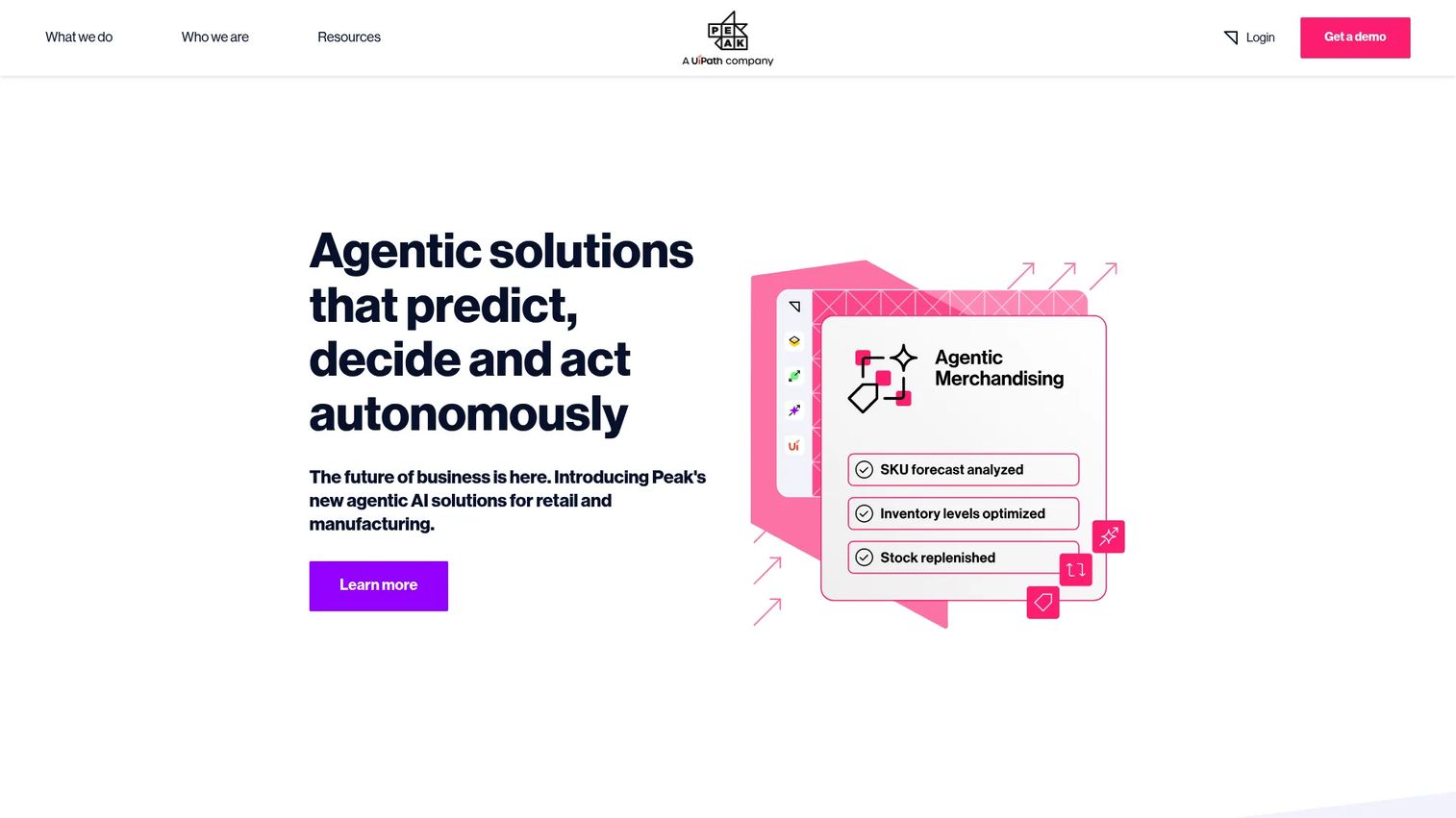
Peak is an enterprise AI platform for inventory and pricing optimization. It applies machine learning at the SKU level to forecast demand, set dynamic safety stock, and drive replenishment decisions that account for store capacity and demand variability. Its Inventory AI product is the relevant piece for replenishment, sitting alongside Pricing AI and an agentic assistant called Co:Driver.
Best for: Retailers and manufacturers that want AI-driven inventory and pricing optimization with guardrails.
Key strengths
- Inventory AI and Pricing AI: Purpose-built AI products for demand-based inventory and margin decisions.
- Configurable AI modules: Build, run, manage, and monitor models with operational guardrails.
- Agentic assistant: Co:Driver supports decision-making across planning workflows.
Why choose Peak: Its AI planning approach fits best when demand is volatile and static reorder points leave money on the table. For product managers evaluating operational tooling, Peak's emphasis on model monitoring and guardrails speaks to maintainability, which matters when the system runs continuously against a changing catalog. It suits teams that treat forecasting accuracy as a metric they own.
Peak pricing: Peak lists three platform editions, Essentials, Business, and Enterprise, all with contact-sales pricing. No public numeric price is shown. This is an enterprise engagement, so expect a scoped commercial conversation rather than a published monthly rate.
3. NetSuite
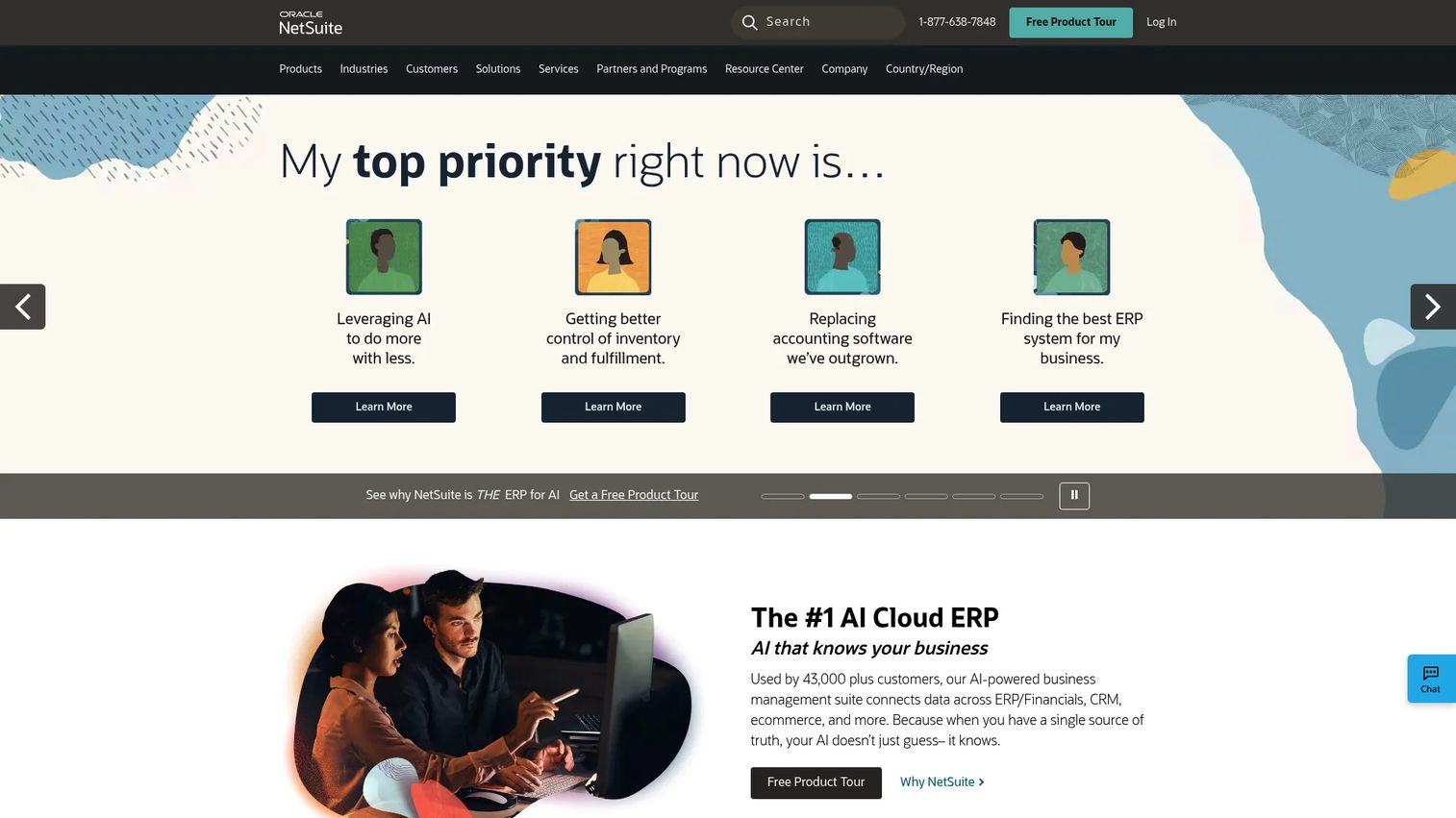
NetSuite is a cloud ERP suite that handles finance, CRM, eCommerce, and operations, with replenishment built into its inventory management module. Rather than a standalone replenishment tool, it applies reorder points, safety stock, and methods like reorder-point and time-phased replenishment inside a single system of record. For teams already inside NetSuite, that ERP-native visibility is the draw.
Best for: Mid-market and enterprise companies that want replenishment inside an integrated cloud ERP.
Key strengths
- Cloud ERP and financial management: Replenishment logic lives alongside finance and order data.
- CRM and eCommerce integration: Sales and demand signals flow into inventory planning natively.
- SuiteCloud customization: Extend replenishment rules and reporting to fit your operation.
Why choose NetSuite: The case is simplest when you already run NetSuite or plan to. Keeping replenishment inside the same platform as finance and order management removes integration overhead and gives one source of truth for stock and cash. Teams that need broad system breadth, not just a replenishment point solution, get the most value.
NetSuite pricing: NetSuite does not publish a public price table. Pricing is quote-based and depends on modules, users, and contract terms. Treat it as an enterprise ERP commitment rather than a monthly subscription you can self-serve.
4. Prediko
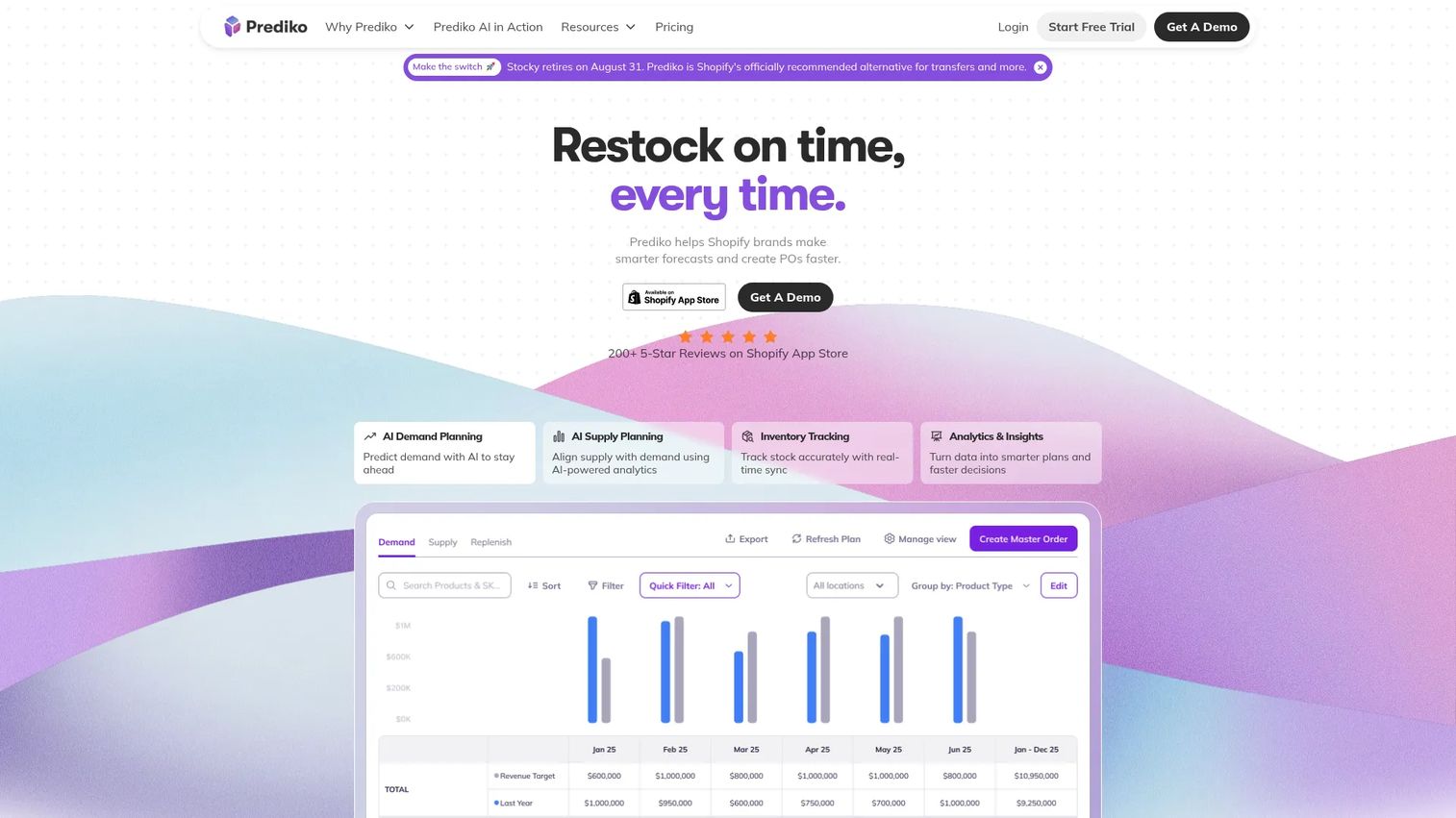
Prediko is AI inventory management and planning software built for Shopify brands. It handles demand forecasting, supply planning, and real-time inventory sync, then turns those forecasts into purchase order automation for eCommerce teams. It is purpose-built for D2C operators who live inside Shopify and need replenishment without an enterprise implementation.
Best for: Shopify brands that need AI-based inventory forecasting and replenishment planning.
Key strengths
- AI demand planning: Forecasts demand per SKU using sales history and trends.
- AI supply planning: Converts forecasts into replenishment and PO recommendations.
- Real-time inventory tracking: Live sync keeps stock data current across the store.
Why choose Prediko: It fits D2C and small commerce teams that want forecasting depth without an ERP-scale rollout. The Shopify-native setup means fast time-to-value, which matters for lean teams that cannot dedicate months to implementation. Its raw materials and BOM add-on also extends it toward brands that assemble or manufacture.
Prediko pricing: Prediko uses tiered pricing based on trailing-12-month GMV, starting at $49/month for brands under $100k GMV. A Raw Materials Forecasting and BOMs add-on is available from $20. A 14-day free trial is offered, and annual plans can be billed quarterly or annually.
5. Fabrikator
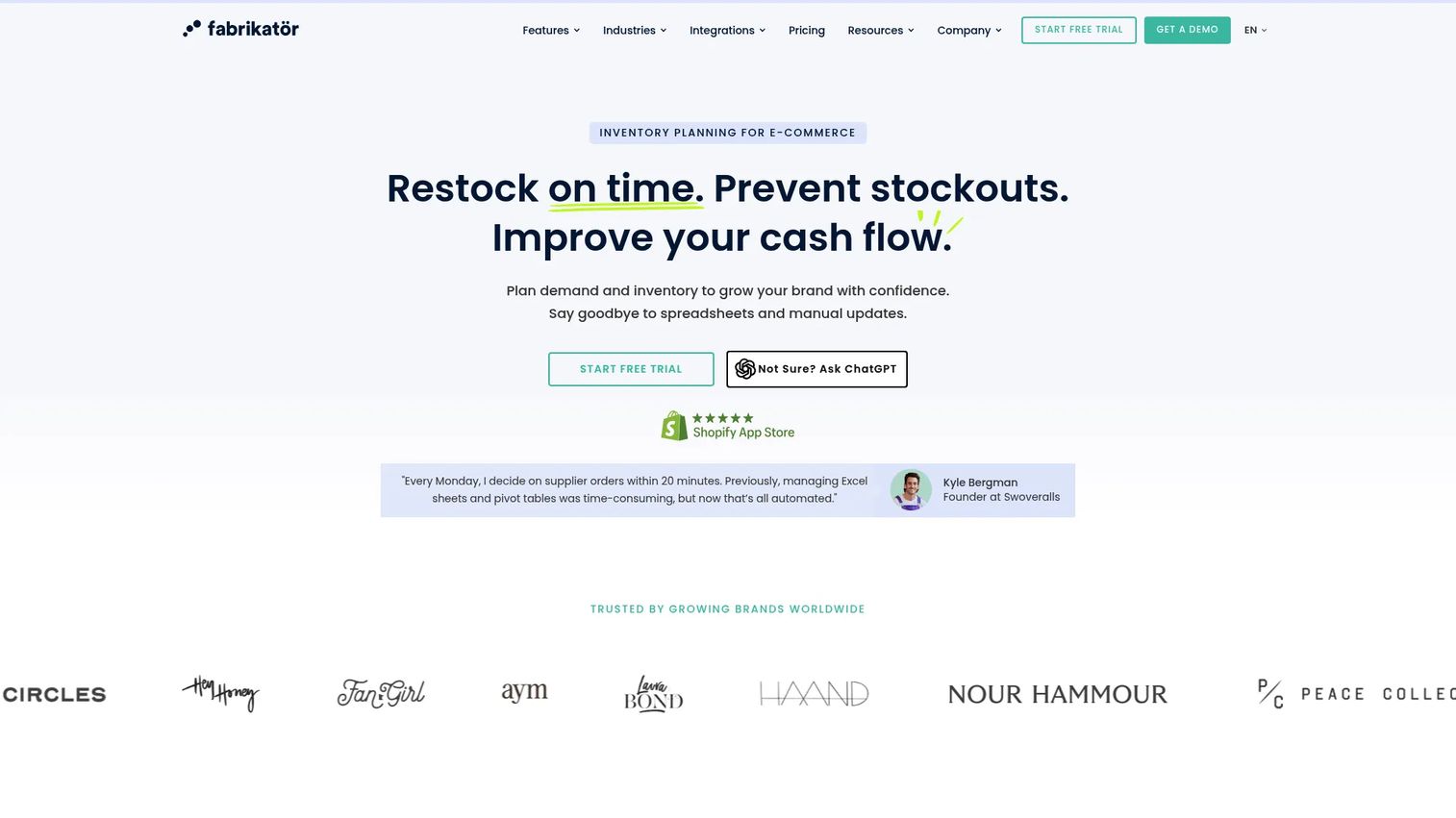
Fabrikator is inventory management software for Shopify brands, focused on replenishment, forecasting, purchase orders, and backorders. It gives fast-moving eCommerce brands accurate stock replenishment recommendations and streamlines the purchase order workflow, so buyers spend less time reconciling stock and more time placing the right orders.
Best for: Shopify merchants that need inventory planning and replenishment automation.
Key strengths
- Accurate stock replenishment: Reorder recommendations tuned to demand and lead time.
- Demand forecasting: Sales-based forecasting to plan purchasing ahead of stockouts.
- Purchase order creation and management: Build, track, and manage POs and backorders in one place.
Why choose Fabrikator: It suits growing Shopify brands that have outgrown manual reorder tracking but do not need a full ERP. The revenue-based pricing means cost scales with the business, and the workflow stays focused on the replenishment job rather than sprawling into unrelated modules. Backorder handling is a practical plus for brands that sell ahead of stock.
Fabrikator pricing: Fabrikator prices by store revenue, starting at $79/month billed at $950 yearly for the lowest tier. FAQ examples show higher tiers at $149/month and $350/month based on monthly sales. Annual subscriptions get a 20% discount, and there is a 14-day free trial plus a 30-day money-back guarantee.
6. SKULabs
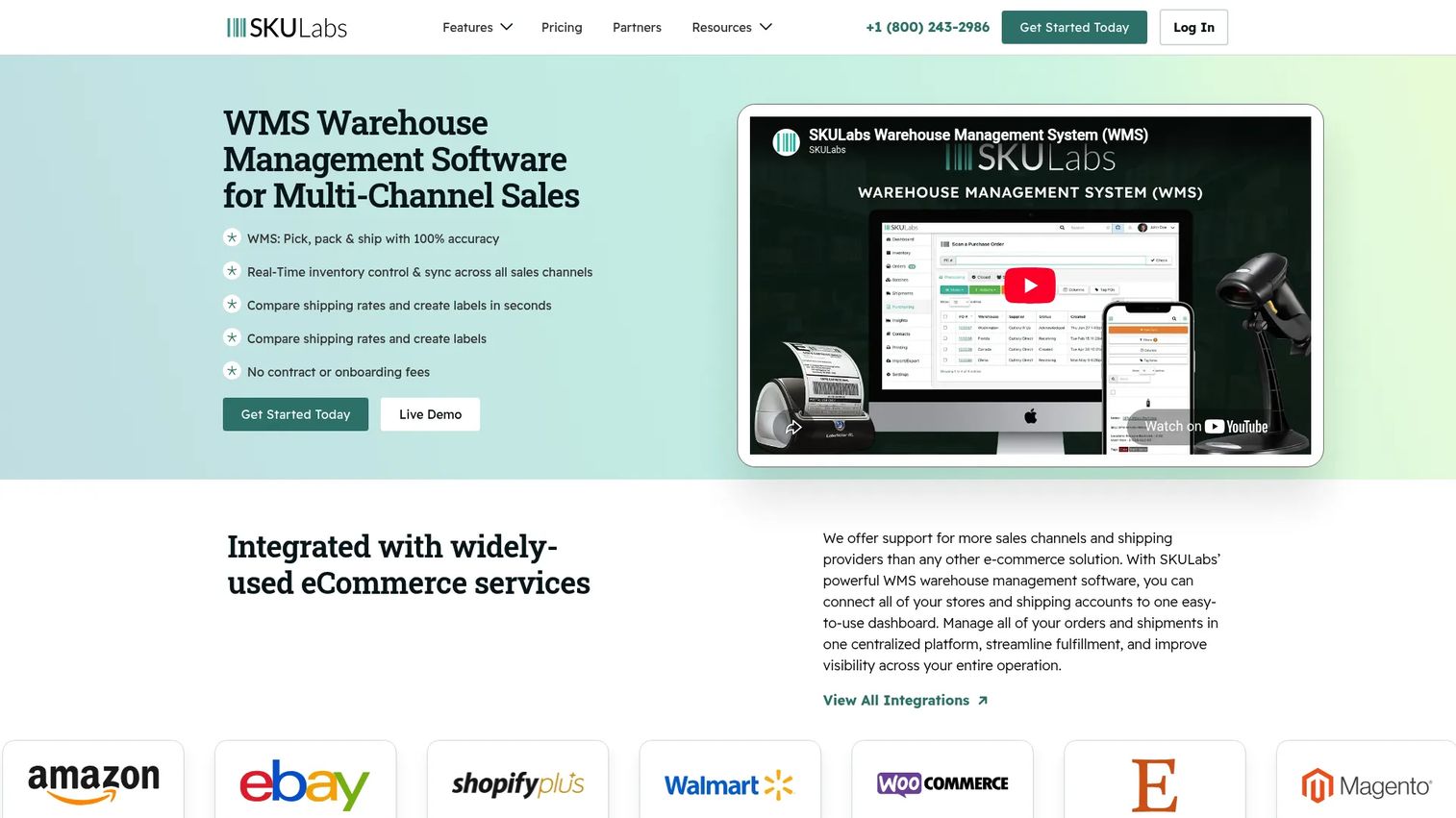
SKULabs is all-in-one inventory, order, shipping, and warehouse management software for eCommerce businesses. It centralizes multi-channel inventory, adds barcode scanning and warehouse workflows, and gives growing sellers operational control across the pick-pack-ship process alongside replenishment visibility.
Best for: eCommerce teams that need centralized inventory, order, shipping, and warehouse operations.
Key strengths
- Multi-channel integration: Syncs inventory across sales channels to prevent overselling.
- Barcode scanning: Warehouse-grade accuracy for picking and receiving.
- Inventory management: Centralized stock control with reorder visibility.
Why choose SKULabs: It is stronger than lighter SMB tools when warehouse operations, not just planning, are the bottleneck. Teams shipping high order volume across multiple channels get order accuracy and fulfillment control in the same system as inventory. It fits sellers whose growth has made manual warehouse coordination the constraint.
SKULabs pricing: SKULabs publishes clear tiers: Starter at $299/month, Basic at $499/month, Growth at $799/month, Pro at $999/month, Enterprise at $1,999/month, and an Ultimate quote-based plan. There are no contracts or onboarding fees, and a 30-day money-back guarantee applies.
7. Assisty

Assisty provides inventory forecasting, replenishment reporting, and decision support built for commerce teams that want simpler, business-friendly workflows. It focuses on turning sales and inventory data into clear reorder guidance without the overhead of an enterprise planning suite, which suits smaller teams that need answers more than they need configuration.
Best for: Smaller commerce teams that want straightforward inventory forecasting and replenishment reporting.
Key strengths
- Inventory forecasting: Demand projections built from sales history.
- Replenishment reporting: Clear reorder guidance surfaced from your data.
- Business-friendly workflows: Decision support designed for lean teams, not analysts.
Why choose Assisty: It fits teams that want replenishment insight without a heavy implementation or a dedicated planner. The reporting-first approach lowers the barrier to acting on data, which is useful when the operation is small and speed matters more than deep configuration. It works well as an entry point into structured replenishment.
Assisty pricing: Assisty does not publish standardized replenishment-software pricing on a dedicated pricing page in a form we could verify cleanly. Evaluate current plans directly on its site and confirm what each tier includes before committing.
8. Inventory Planner
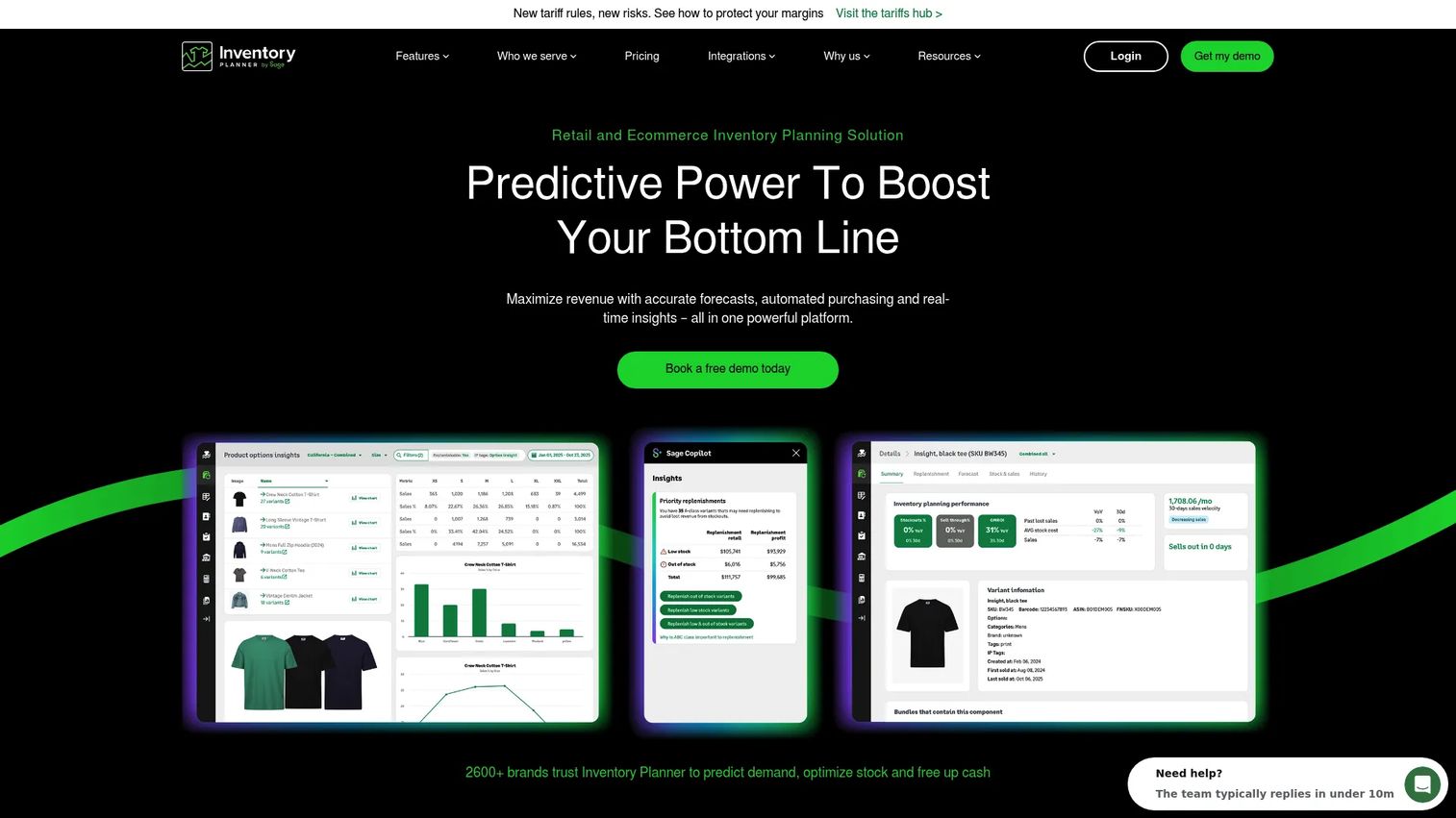
Inventory Planner is inventory planning software for forecasting demand, automating purchasing, and reporting on stock performance. Now part of Sage, it gives retailers and eCommerce brands multi-location planning, automated buying recommendations, and open-to-buy planning, which makes it a strong fit for operators managing stock across several locations.
Best for: Retailers and eCommerce brands that need demand forecasting and replenishment planning across multiple locations.
Key strengths
- Multi-location planning: Forecasts and replenishment logic across every location.
- Automated buying recommendations: Purchase suggestions based on demand and lead time.
- Open-to-buy planning: Budget-aware purchasing to protect working capital.
Why choose Inventory Planner: It suits retail and eCommerce operators who have outgrown single-location tools and need buying discipline across a network. Unlimited users are included at no extra cost, which lowers the barrier for larger buying teams. The open-to-buy feature ties purchasing directly to budget, a discipline that helps teams manage cash alongside availability.
Inventory Planner pricing: Pricing is quote-based and scales with inventory volume rather than seats. Unlimited users are included at no extra cost. Request a quote to get an upfront figure tied to your catalog size.
9. Sumtracker
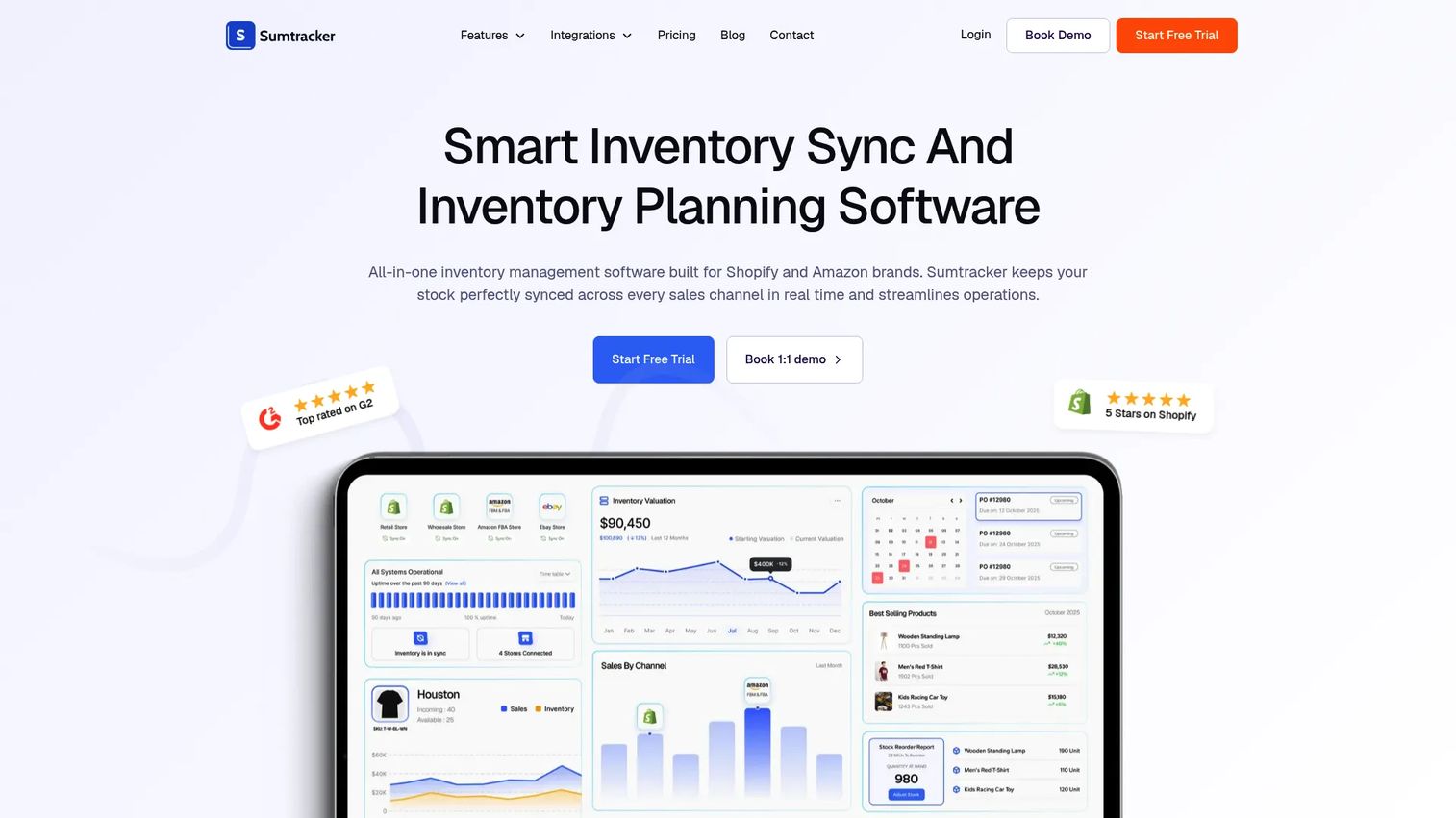
Sumtracker is multichannel inventory management software for eCommerce brands. It syncs inventory across sales channels, handles bundles and stocktakes, and supports purchase orders, forecasting, and reorder suggestions. It is a practical fit for lean teams that need reliable stock sync and replenishment workflows without enterprise complexity.
Best for: eCommerce merchants that need multichannel inventory sync and replenishment workflows.
Key strengths
- Inventory sync across channels: Keeps stock accurate everywhere you sell.
- Purchase orders and forecasting: Reorder suggestions and PO workflows in one place.
- Bundles and stocktake: Handles kitting, adjustments, and cycle counts.
Why choose Sumtracker: It fits lean teams that want accurate multichannel sync plus a real replenishment layer, not just stock counting. The Replenish plan adds the reorder logic that growing brands need as their catalog and channel count climb. It keeps the workflow simple while still covering the essentials of purchase planning.
Sumtracker pricing: Sumtracker publishes two plans: Manage at $59/month and Replenish at $99/month, both billed monthly, with pricing tied to annual sales order volume. A 14-day free trial is available. The Replenish tier is the one to evaluate if reorder logic is your priority.
10. Cin7 Core
Cin7 Core is cloud inventory and order management software for product businesses, with manufacturing and multi-channel selling support. It combines inventory management, BOM and manufacturing support, and multi-channel integrations, so teams that need system breadth alongside replenishment get order and production control in one place.
Best for: Product businesses that need inventory, order, and manufacturing control in one system.
Key strengths
- Inventory management: Centralized stock control with replenishment planning.
- Manufacturing and BOM support: Production-aware inventory for makers and assemblers.
- Multi-channel integrations: Connects to eCommerce, marketplace, and accounting systems.
Why choose Cin7 Core: It fits teams that need more than replenishment alone, spanning inventory, orders, and light manufacturing in a single platform. That breadth reduces tool sprawl for product businesses juggling sourcing, production, and multi-channel sales. It suits operators who would otherwise stitch together several point tools.
Cin7 Core pricing: Cin7 Core offers three priced tiers, Standard at $349/month, Pro at $599/month, and Advanced at $999/month, plus Cin7 Omni with custom pricing. Prices are shown in USD and exclude taxes. The tier you need scales with order volume and feature depth.
11. Katana
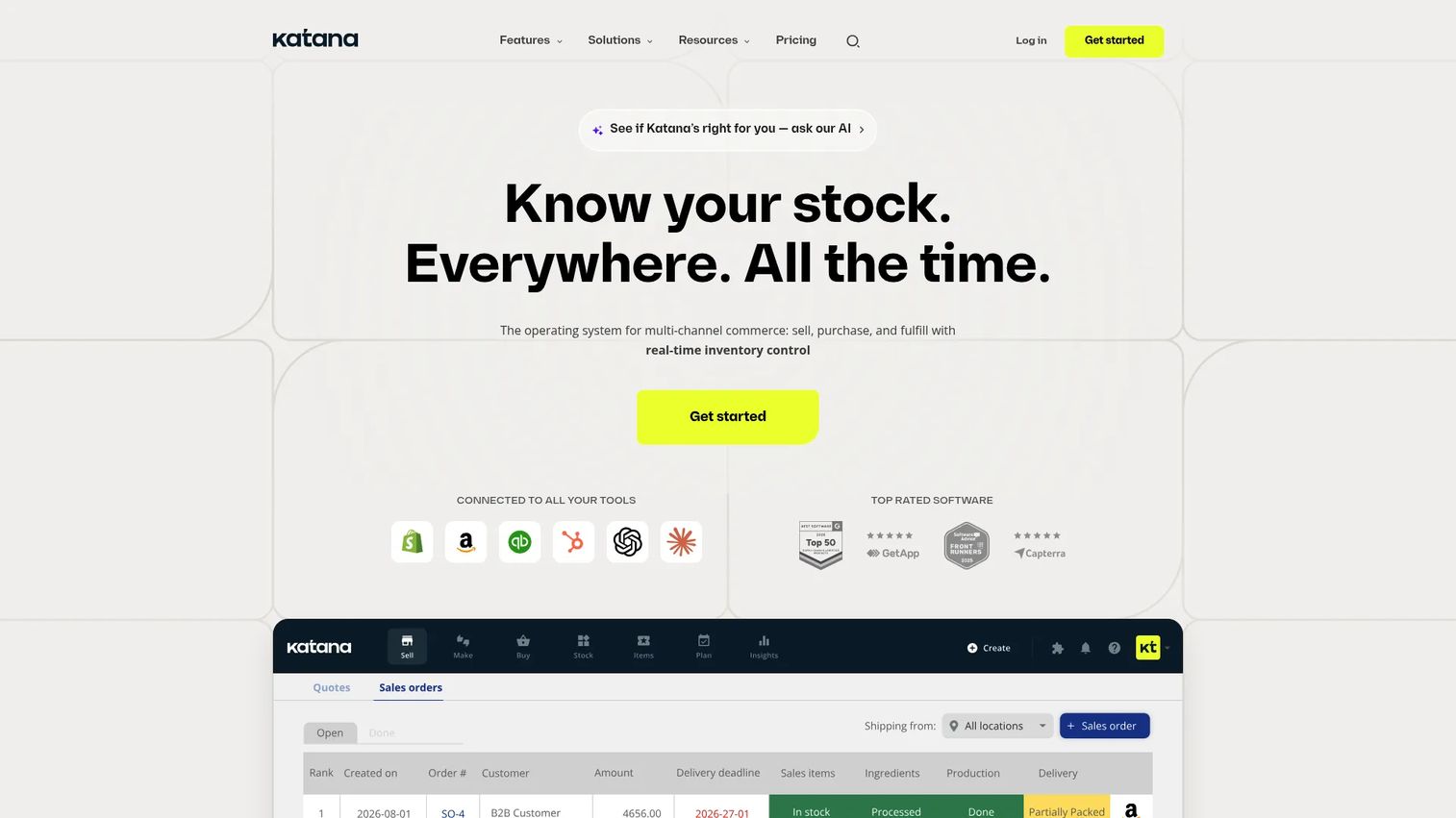
Katana is cloud inventory and manufacturing software for product businesses. It brings real-time inventory management, production planning, and order management together, so replenishment reflects both raw material needs and production schedules. For makers and light manufacturers, that production-aware ordering is the differentiator.
Best for: Manufacturers and product-based businesses that need inventory, production, and order workflows in one system.
Key strengths
- Real-time inventory management: Live stock tracking across materials and finished goods.
- Manufacturing and production planning: Ties replenishment to production schedules.
- Order management with integrations: Connects sales, purchasing, and accounting.
Why choose Katana: It fits product businesses with assembly or light manufacturing that need ordering logic aware of raw materials and work orders, not just finished-goods stock. That production context is where general eCommerce tools fall short. It suits makers scaling from spreadsheets into a real inventory and production system.
Katana pricing: Katana shows four annual plans: Starter at $179/month, Standard at $359/month, Professional at $799/month, and Professional Plus at $1,799/month, all billed annually. A free plan is referenced in Katana's support documentation. Evaluate the tier against your production complexity and integration needs.
Considerations before you buy
Before shortlisting, pressure-test each tool against the operational realities your team owns.
Forecasting accuracy and method fit
Ask how the tool forecasts and whether it supports demand sensing that adjusts as sell-through changes. A model that recalculates on fresh data beats a static reorder point on volatile SKUs. Confirm it handles seasonality, promotions, and new-product introductions, since these are where generic forecasts break.
Automation depth
Determine how much of the reorder cycle the tool automates. The best systems generate purchase orders, apply supplier constraints, and surface only exceptions for review. If a buyer still recreates orders by hand, the automation is thin. Look for an automatic inventory replenishment system that closes the loop from forecast to PO.
Integration coverage
Verify ERP integration, plus POS and WMS connections if you run stores or warehouses. Data that lives in silos undermines any replenishment logic. Check whether integrations are native or require middleware, and confirm sync frequency, because stale data produces bad orders.
Multi-location and working capital control
If you run multiple stores or warehouses, confirm the tool balances stock and recommends transfers, not just reorders. Ask how it models safety stock against service level targets so you can right-size buffers and release working capital instead of over-buying every SKU.
Total cost and scalability
Match the pricing model to your growth. Revenue-based pricing scales with the business, seat-based pricing scales with the team, and quote-based enterprise pricing fits complex networks. Confirm the tool scales across SMB, mid-market, and enterprise volumes without a costly migration later.
Conclusion
The right replenishment tool depends on your channel mix, your existing stack, and how much of the operation you need in one system. For enterprise supply chain planning across complex networks, Slimstock and Peak lead on optimization depth. For teams already committed to a cloud ERP, NetSuite keeps replenishment beside finance and orders.
Shopify and D2C brands get fast time-to-value from Prediko, Fabrikator, and Assisty, while multi-channel sellers scaling into warehouse operations should weigh SKULabs, Inventory Planner, and Sumtracker. Product businesses with manufacturing needs will find Cin7 Core and Katana built for production-aware ordering.
Whichever you evaluate, judge it on the outcomes that matter: forecast accuracy, automation depth, integration coverage, and multi-location control. Start a trial where one is offered, run it against your real demand data, and measure the drop in stockouts and trapped working capital before you commit.
FAQs
Inventory replenishment software forecasts demand, calculates reorder points and safety stock, and automates purchasing so businesses avoid stockouts and overstocking. It turns sales data, lead times, and service level targets into purchase order recommendations. The result is less manual reorder work and better cash flow.
It ingests sales history, current stock, and lead times, then applies forecasting models to predict demand per SKU and location. From that forecast it calculates when to reorder and how much, generating purchase orders for review or auto-send. Many tools also balance stock across locations and sync data back to your ERP.
Look for demand forecasting, configurable reorder points and safety stock, purchase order automation, and multi-location logic. Integrations with ERP, POS, and WMS systems keep data accurate, and reporting on service levels and sell-through helps you tune buffers. Demand sensing that adjusts to fresh data is a strong differentiator.
Not quite. Inventory management software tracks stock levels, orders, and movements. Replenishment software adds the forward-looking layer: forecasting demand and deciding when and how much to reorder. Many platforms combine both, but a dedicated replenishment tool focuses on the buying decision rather than just recording what you have.
Yes. Most replenishment tools integrate with ERP, WMS, POS, and eCommerce platforms so demand and stock data stay synced in one place. Some are ERP-native, like NetSuite, while others connect through native integrations or middleware. Confirm sync frequency and coverage, because stale data leads to bad reorder decisions.
Retailers, eCommerce brands, wholesalers, distributors, and manufacturers with growing SKU counts or multiple locations benefit most. Once manual reordering across channels and warehouses becomes error-prone, automation pays off quickly. Teams under pressure to cut stockouts or free up working capital see the clearest returns.
It forecasts demand and sets safety stock against service level targets, so you order enough to stay available without over-buffering. Automated reorder points trigger purchases before stock runs out, and multi-location logic moves inventory to where demand is. That balance cuts both lost sales and trapped capital.
Demand forecasting predicts how much you will sell per SKU, location, and period. Replenishment planning takes that forecast and decides when to reorder and how much, factoring in lead times, safety stock, and supplier constraints. Forecasting answers what will happen; replenishment planning answers what to do about it.