

Your website gets traffic. Visitors browse, maybe hover over the pricing page, then leave. The form sits there untouched because filling it out feels like a commitment they're not ready to make.
Conversational marketing software changes that dynamic by enabling real-time, two-way interactions through chat, messaging, and interactive experiences. Instead of forcing prospects into a "submit and wait" flow, these tools let them engage on their own terms, get answers immediately, and self-qualify before ever talking to sales. This guide covers 15 platforms across chatbots, live chat, conversational sales tools, and interactive demo software, with selection criteria to help you find the right fit.
What's inside
This guide covers what conversational marketing software actually does, the different types of tools available, and a comparison of 15 platforms worth evaluating. You'll find selection criteria, use case guidance, and emerging trends to help you pick the right fit for your team and stack.
TL;DR
Conversational marketing software enables real-time, two-way interactions between businesses and prospects through chat, messaging, or interactive experiences
Primary use case: engaging website visitors through personalized dialogue that qualifies leads and accelerates deals
Tool categories covered: AI chatbots, live chat, conversational sales platforms, SMS marketing, and interactive demo platforms
Selection focus: integration capability, AI features, and time-to-value matter more than feature count
Top pick for interactive experiences: Guideflow lets prospects explore your product on their own terms, functioning as an asynchronous conversation that qualifies intent
What is conversational marketing software
Conversational marketing software facilitates real-time, personalized dialogue between businesses and customers. Platforms in this category use AI-powered chatbots, live chat, and messaging apps to boost engagement, qualify leads, and shorten the sales cycle. Leading tools like Drift, Intercom, and Conversica enable automated, 24/7 engagement that traditional forms and static pages cannot match.
The core function is automating and personalizing prospect conversations at scale. Unlike basic live chat that relies solely on human agents, conversational marketing platforms include AI-driven qualification and routing. The business outcome is converting passive website visitors into engaged leads without forcing them through form fills or scheduling calls.
Real-time engagement: Prospects get answers immediately instead of waiting for callbacks
Automated qualification: AI routes high-intent visitors to sales faster than manual processes
Multi-channel reach: Conversations happen across websites, SMS, WhatsApp, and social platforms
Intent data capture: Every interaction generates signals that inform lead scoring and follow-up
Why growth teams invest in conversational marketing platforms
The traditional "fill out a form and wait" approach creates friction that kills conversion. When a prospect lands on your site with a question, making them wait 24-48 hours for a response often means losing them to a competitor - 78% of customers buy from the first responder.
Growth teams face specific pain points that conversational tools address directly. Form abandonment rates hover around 70% for most B2B sites. And without 24/7 coverage, you're missing leads that arrive outside business hours.
Reduced friction: Prospects self-serve answers instead of waiting for callbacks
Better lead qualification: AI scores and routes visitors based on behavior and intent
Always-on engagement: Capture leads at 2am without staffing a night shift
Shorter sales cycles: Buyers self-educate before the first call, arriving more informed and ready to decide
Types of conversational marketing tools
Understanding the landscape helps you match tools to your specific use case. Each category serves different moments in the buyer journey.
AI chatbots and virtual assistants
Automated conversation agents qualify, route, and nurture leads without human involvement. They handle high-volume, repetitive inquiries like pricing questions, feature comparisons, and meeting scheduling. The best ones use natural language processing to understand intent rather than relying on rigid keyword matching.
Live chat software
Real-time human-to-human messaging on websites works best for complex sales conversations requiring nuance. When a prospect has a technical question or wants to discuss custom requirements, live chat connects them with someone who can actually help. The tradeoff is staffing costs and availability limitations.
Conversational sales platforms
Tools in this category combine chat, AI, and CRM integration specifically for B2B pipeline acceleration. They focus on identifying high-value accounts, routing them to the right rep, and capturing conversation data that feeds into your sales process. Drift and Qualified are category leaders here.
SMS and chat marketing platforms
Outbound conversational campaigns via text and messaging apps reach prospects where they already spend time. Platforms in this category work well for appointment reminders, promotional campaigns, and re-engagement sequences.
Interactive product experience platforms
Rather than chatting about your product, tools in this category let prospects experience it directly through guided demos or sandbox environments. Showing the product is itself a form of conversation. Interactive demos function as asynchronous dialogue where prospects explore at their own pace, asking questions through their clicks and revealing intent through their behavior.
Best conversational marketing software compared
# | Product | Best for | Key differentiator | Pricing | G2 rating |
|---|---|---|---|---|---|
1 | Guideflow | Interactive product demos | No-code demo creation in minutes | Free tier available | 4.9/5 |
2 | Intercom | Unified customer communication | Fin AI Agent for instant support | From $39/seat/mo | 4.5/5 |
3 | Drift | B2B pipeline acceleration | AI-powered lead routing | Custom pricing | 4.4/5 |
4 | HubSpot Marketing Hub | All-in-one marketing | Native CRM integration | From $800/mo | 4.4/5 |
5 | Qualified | Salesforce-native sales | VIP visitor targeting | From $3,500/mo | 4.9/5 |
6 | Tidio | SMB quick setup | Lyro AI chatbot | Free + from $29/mo | 4.7/5 |
7 | Freshchat | Support and sales integration | Freshworks ecosystem | From $15/agent/mo | 4.4/5 |
8 | Conversica | Automated lead follow-up | Persistent AI outreach | Custom pricing | 4.5/5 |
9 | LivePerson | Enterprise omnichannel | Conversational AI at scale | Custom pricing | 4.2/5 |
10 | MoEngage | Mobile-first engagement | Cross-channel orchestration | Custom pricing | 4.5/5 |
11 | Birdeye | Multi-location businesses | Reputation + messaging | From $299/mo | 4.7/5 |
12 | Salesmsg | Two-way SMS | Simple text-based sales | From $25/mo | 4.6/5 |
13 | Smartsupp | Ecommerce with behavior insights | Visitor recording | Free + from $19/mo | 4.6/5 |
14 | ChatBot | Custom conversation flows | No-code bot builder | From $52/mo | 4.4/5 |
15 | Podium | Local service businesses | Text-based customer management | From $399/mo | 4.5/5 |
15 best conversational marketing software tools
The platforms below were selected based on G2 ratings, feature depth, and fit for growth marketing teams. Each serves a distinct use case within the conversational marketing landscape.
1. Guideflow
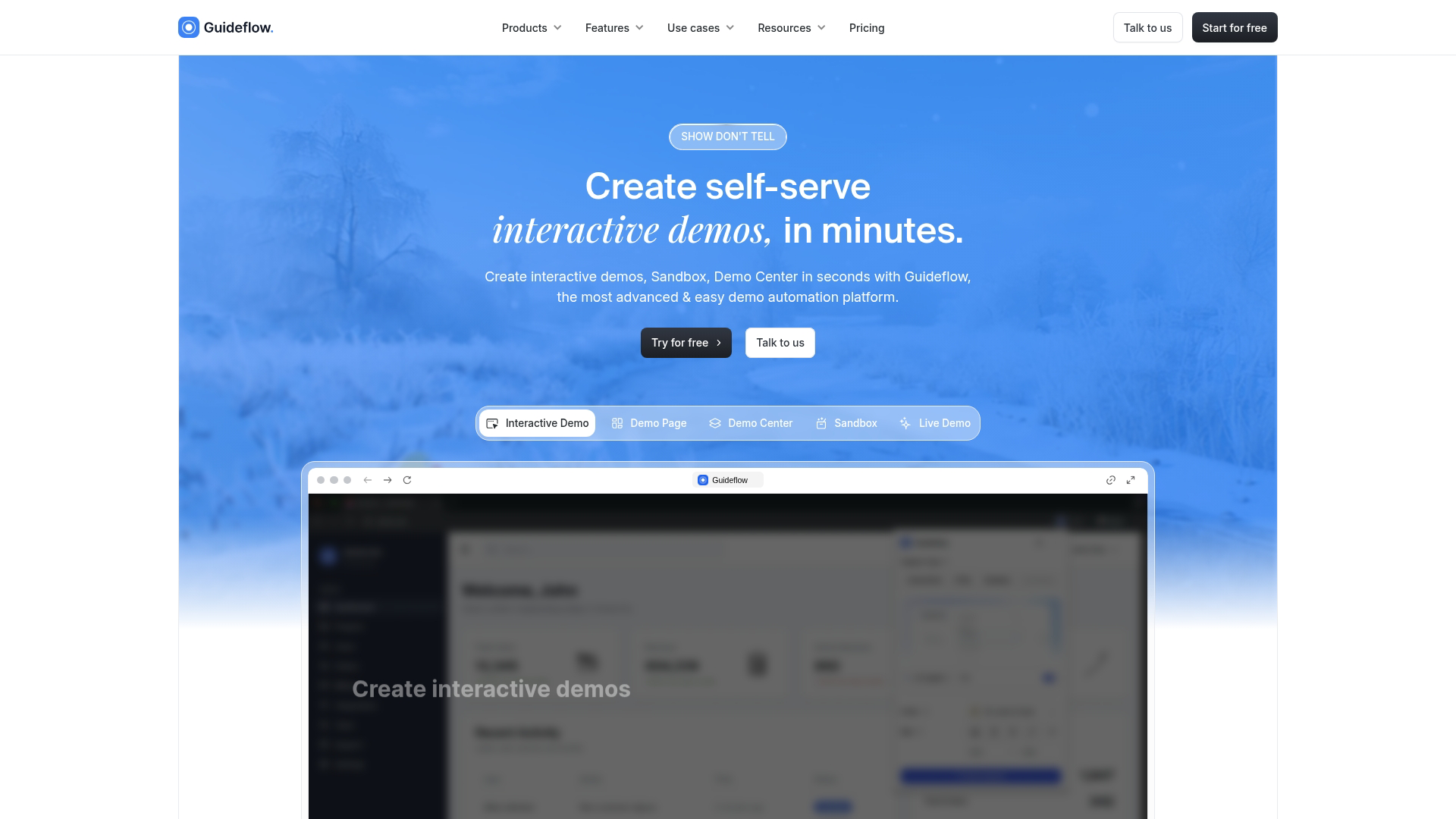
Guideflow is an interactive demo platform that turns your product into a self-serve experience prospects can explore without scheduling a call. Instead of describing features in a chat window, you capture your actual product flow and create clickable, step-by-step demos that embed anywhere.
This approach treats product exploration as conversation. Every click reveals intent. Every completed step signals interest. The data you collect tells you exactly what prospects care about before you ever speak with them.
Best for: Product marketing, growth, and pre-sales teams using PLG-style distribution who want a "try it now" experience without engineering lift.
Key strengths
No-code creation: Capture flows directly from your browser in a few clicks
Deep personalization: Tailor demos by lead, company, or persona using CRM variables
AI-powered polish: Auto-generate steps, translations, and voiceovers
Multi-channel sharing: Embed on websites, emails, social, and ads
Engagement analytics: Track completion rates, drop-off points, and lead behavior
Why choose Guideflow
Pick Guideflow when your conversational marketing strategy is less about chat sequences and more about removing friction between interest and comprehension. Interactive demos scale a core sales action: showing, not telling.
Guideflow pricing
Free: $0/month (5 guideflows, unlimited viewers, 7-day analytics)
Solo: $40/month (unlimited guideflows, advanced analytics, lead forms)
Growth: $499/month
Advanced: $1,499/month
Enterprise: From $2,999/month
Start your journey with Guideflow today!
2. Intercom
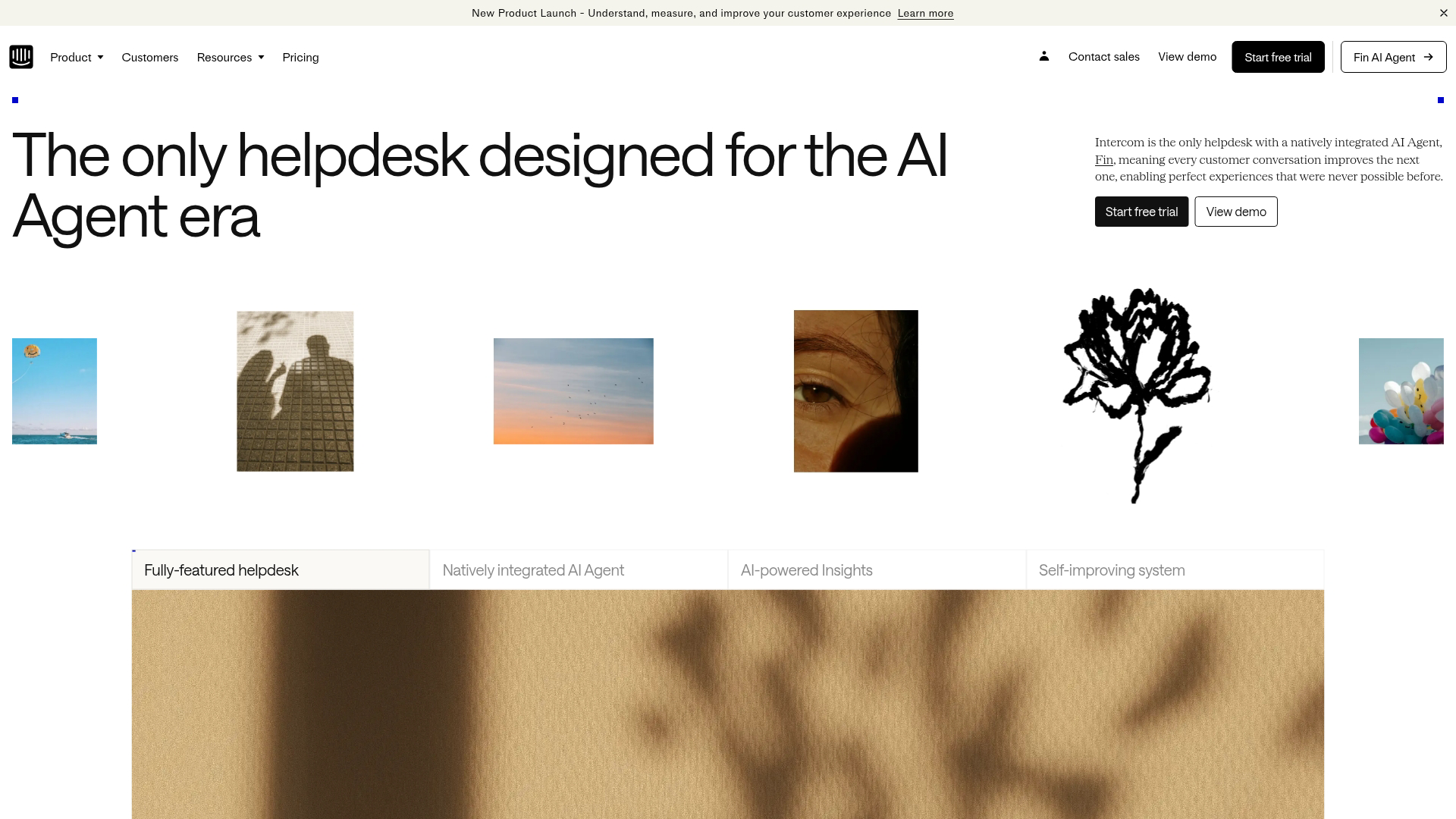
Intercom combines chat, bots, and help desk functionality into a unified customer communication platform. Their Fin AI Agent handles common questions instantly while routing complex issues to human agents with full conversation context.
Best for: SaaS companies wanting unified customer communication across sales, support, and marketing.
Key strengths
Fin AI Agent: Resolves common support questions automatically
Messenger widget: Customizable chat experience embedded on your site
Product tours: Guide users through features with in-app messages
Inbox management: Unified view of all customer conversations
Intercom pricing
Starts at $39/seat/month for the Essential plan. Pro and Premium tiers add advanced features at higher price points.
3. Drift

Drift (now part of Salesloft) pioneered the conversational marketing category for B2B revenue teams. The platform focuses on identifying and engaging high-value website visitors, then routing them to sales reps in real time.
Best for: Enterprise sales teams wanting AI-powered lead routing and account-based engagement.
Key strengths
Revenue acceleration: Connects marketing engagement directly to pipeline
AI chatbots: Qualify visitors and book meetings automatically
Account targeting: Prioritize engagement based on firmographic data
Salesforce integration: Deep CRM connectivity for enterprise workflows
Drift pricing
Custom pricing based on company size and requirements.
4. HubSpot Marketing Hub
HubSpot Marketing Hub includes conversational tools as part of its all-in-one marketing platform. You get chatbots, live chat, and conversational forms that feed directly into HubSpot CRM without additional integration work.
Best for: Teams already using HubSpot CRM who want native conversational capabilities.
Key strengths
Native CRM integration: Conversation data flows directly into contact records
Chatbot builder: Create qualification flows without coding
Live chat: Connect visitors with reps based on routing rules
Unified reporting: See conversation impact alongside other marketing metrics
HubSpot pricing
Marketing Hub Professional starts at $800/month. Conversational features are included but advanced capabilities require higher tiers.
5. Qualified
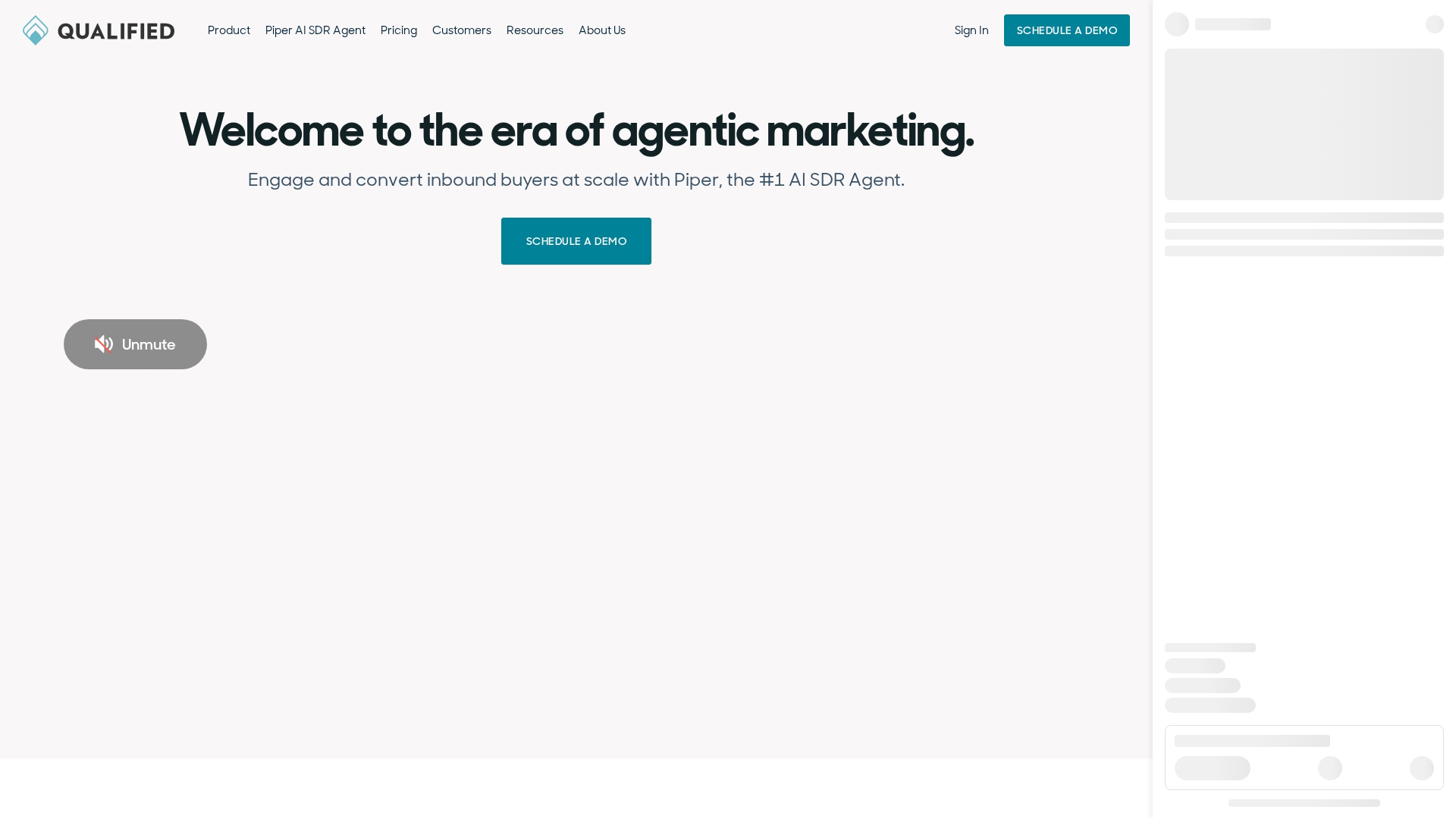
Qualified is a conversational sales platform built specifically for Salesforce users. The platform identifies VIP website visitors based on your Salesforce data and routes them to the right rep instantly.
Best for: Enterprise B2B with complex routing and heavy Salesforce investment.
Key strengths
Salesforce-native: Built on the Salesforce platform with deep integration
VIP identification: Recognize target accounts the moment they arrive
Instant routing: Connect high-value visitors with reps in real time
Pipeline visibility: Track conversation impact on revenue
Qualified pricing
Starts at $3,500/month. Enterprise pricing scales with usage and features.
6. Tidio
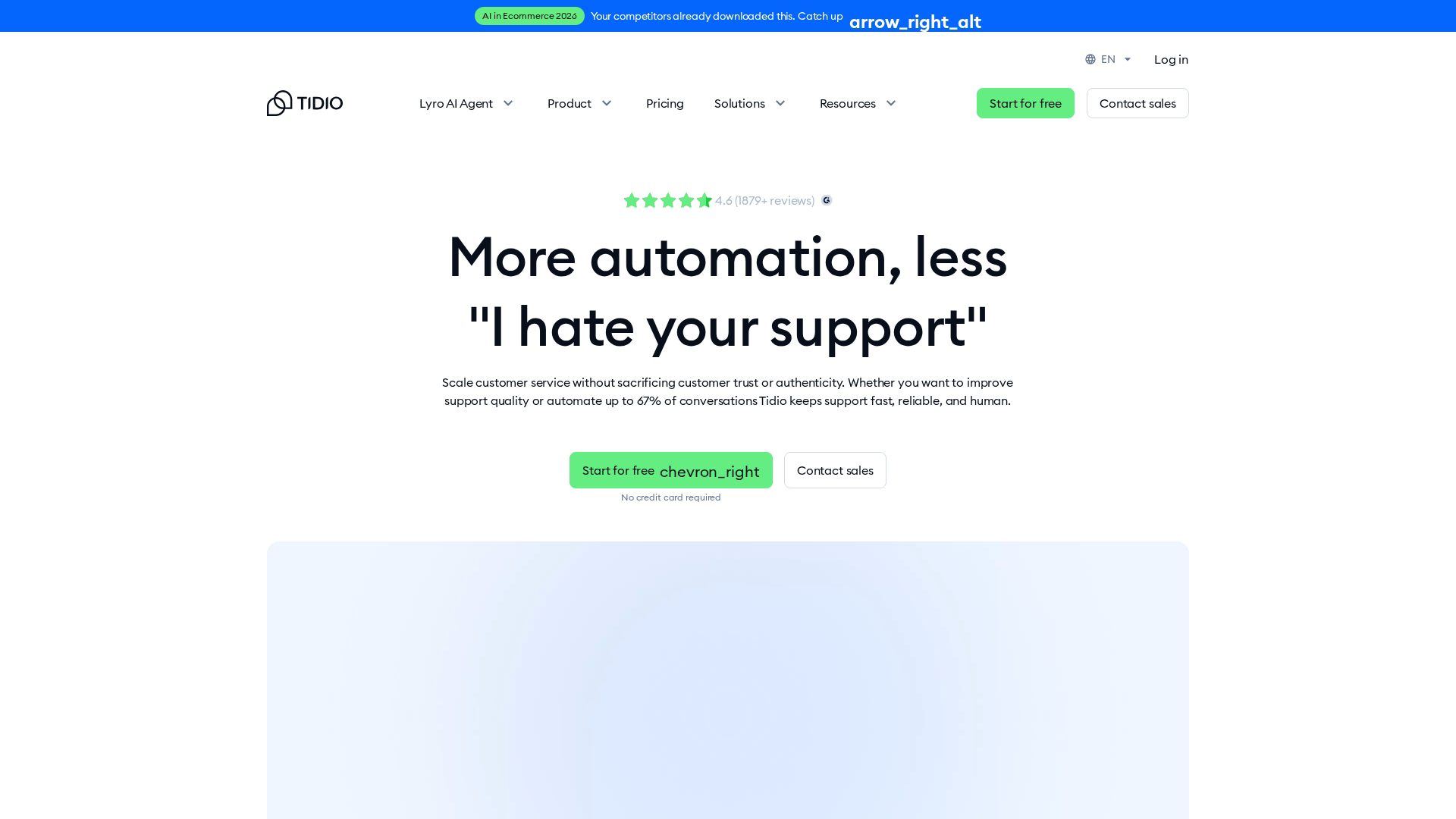
Tidio combines live chat and chatbot automation in a package designed for quick implementation. Their Lyro AI chatbot handles common questions while human agents manage complex conversations.
Best for: Small teams wanting fast setup and affordable conversational tools.
Key strengths
Quick implementation: Get live chat running in minutes
Lyro AI: Conversational AI that learns from your content
Visual bot builder: Create automation flows without coding
Ecommerce integrations: Native connections with Shopify and WooCommerce
Tidio pricing
Free plan available. Paid plans start at $29/month with Lyro AI add-on available separately.
7. Freshchat
Freshchat is part of the Freshworks suite, offering AI-powered messaging that integrates tightly with Freshdesk and Freshsales. The platform handles both support conversations and sales engagement.
Best for: Teams wanting tight support and sales integration within the Freshworks ecosystem.
Key strengths
Freddy AI: Automates responses and suggests next actions
Unified inbox: Manage conversations across channels in one place
Bot builder: Create custom conversation flows visually
Campaign messaging: Proactive outreach based on user behavior
Freshchat pricing
Starts at $15/agent/month for the Growth plan.
8. Conversica
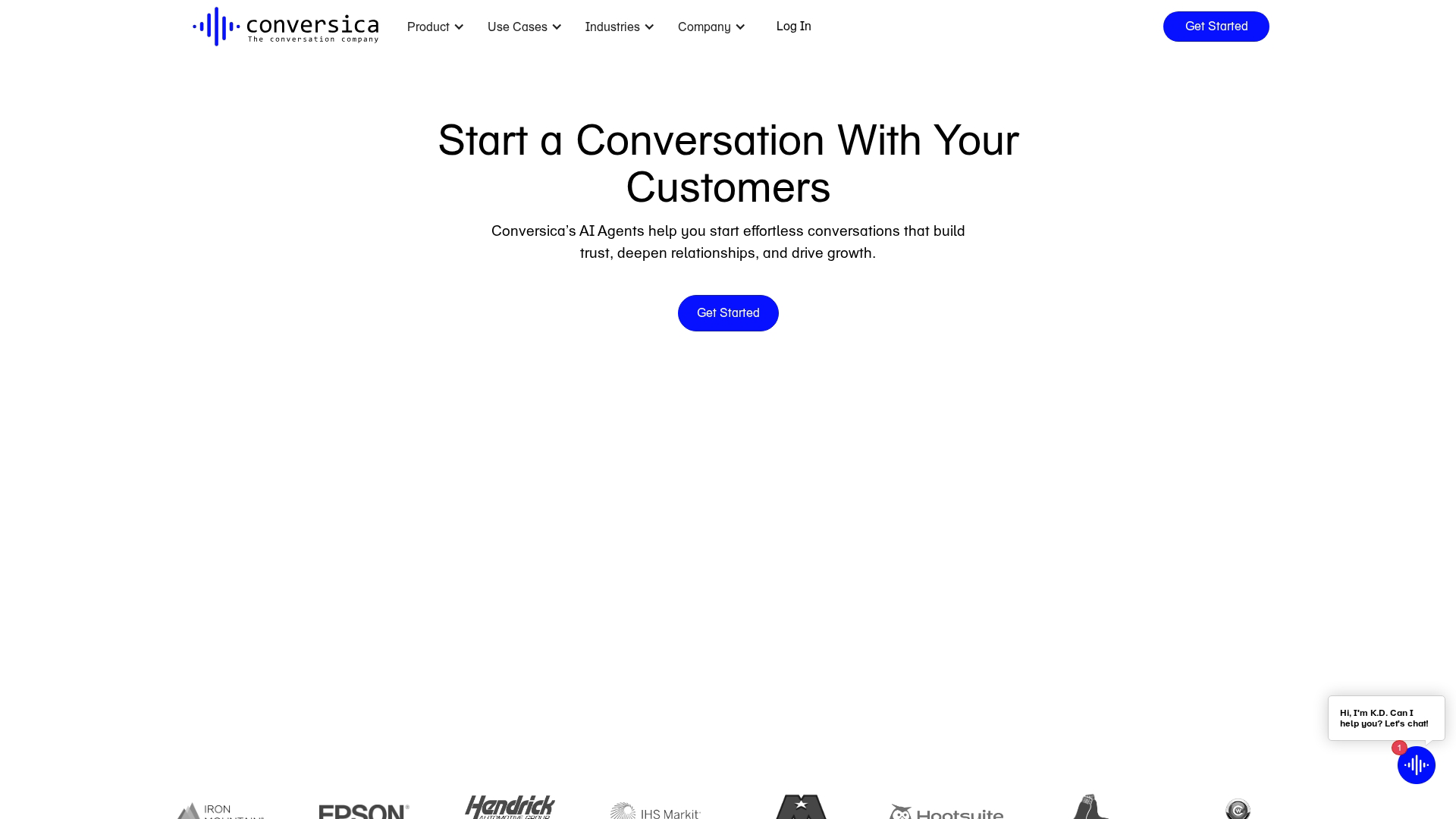
Conversica specializes in AI agents that act as virtual sales assistants, handling lead follow-up with persistent, personalized outreach. The platform excels at re-engaging leads that would otherwise go cold.
Best for: Teams with high lead volume wanting automated, persistent outreach.
Key strengths
Revenue Digital Assistants: AI agents that engage leads via email and SMS
Persistent follow-up: Continues outreach until leads respond or opt out
Natural conversations: AI that sounds human, not robotic
CRM integration: Syncs conversation data with Salesforce and HubSpot
Conversica pricing
Custom pricing based on volume and use case.
9. LivePerson
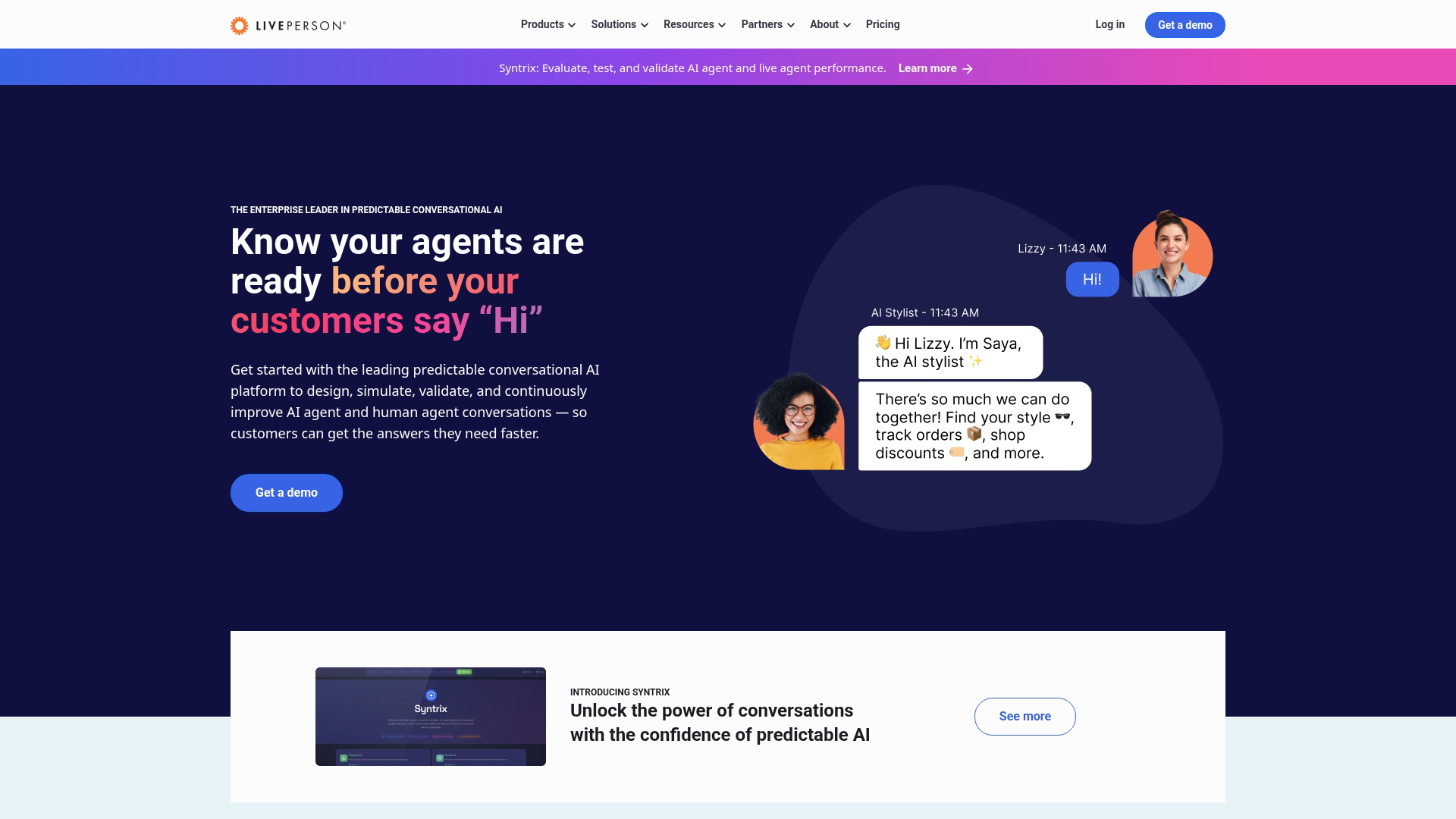
LivePerson is an enterprise conversational AI platform designed for large organizations with complex omnichannel messaging requirements. The platform powers conversations across web, mobile, social, and voice channels.
Best for: Large organizations with omnichannel messaging requirements and dedicated implementation resources.
Key strengths
Enterprise scale: Handles millions of conversations across channels
Conversational AI: Advanced natural language understanding
Voice integration: Connects chat and voice experiences
Industry solutions: Pre-built capabilities for retail, finance, and telecom
LivePerson pricing
Custom enterprise pricing.
10. MoEngage
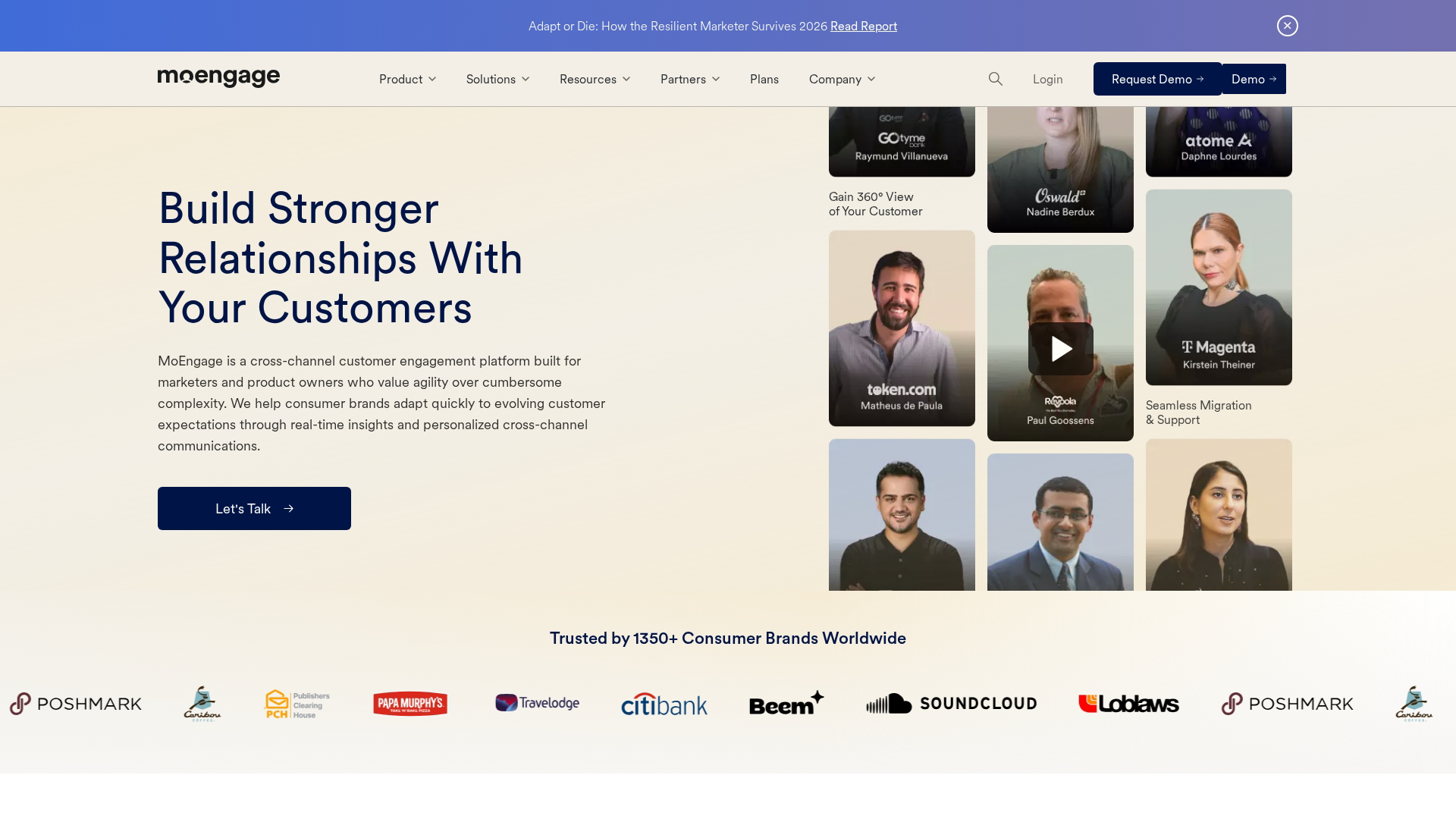
MoEngage is a customer engagement platform with strong conversational messaging capabilities, particularly for mobile-first companies. The platform orchestrates personalized communication across push, email, SMS, and in-app channels.
Best for: Mobile-first companies wanting cross-channel engagement orchestration.
Key strengths
Mobile expertise: Deep capabilities for app-based engagement
AI-powered personalization: Dynamic content based on user behavior
Journey orchestration: Visual builder for multi-channel campaigns
Push notifications: Advanced targeting and delivery optimization
MoEngage pricing
Custom pricing based on monthly active users and features.
11. Birdeye
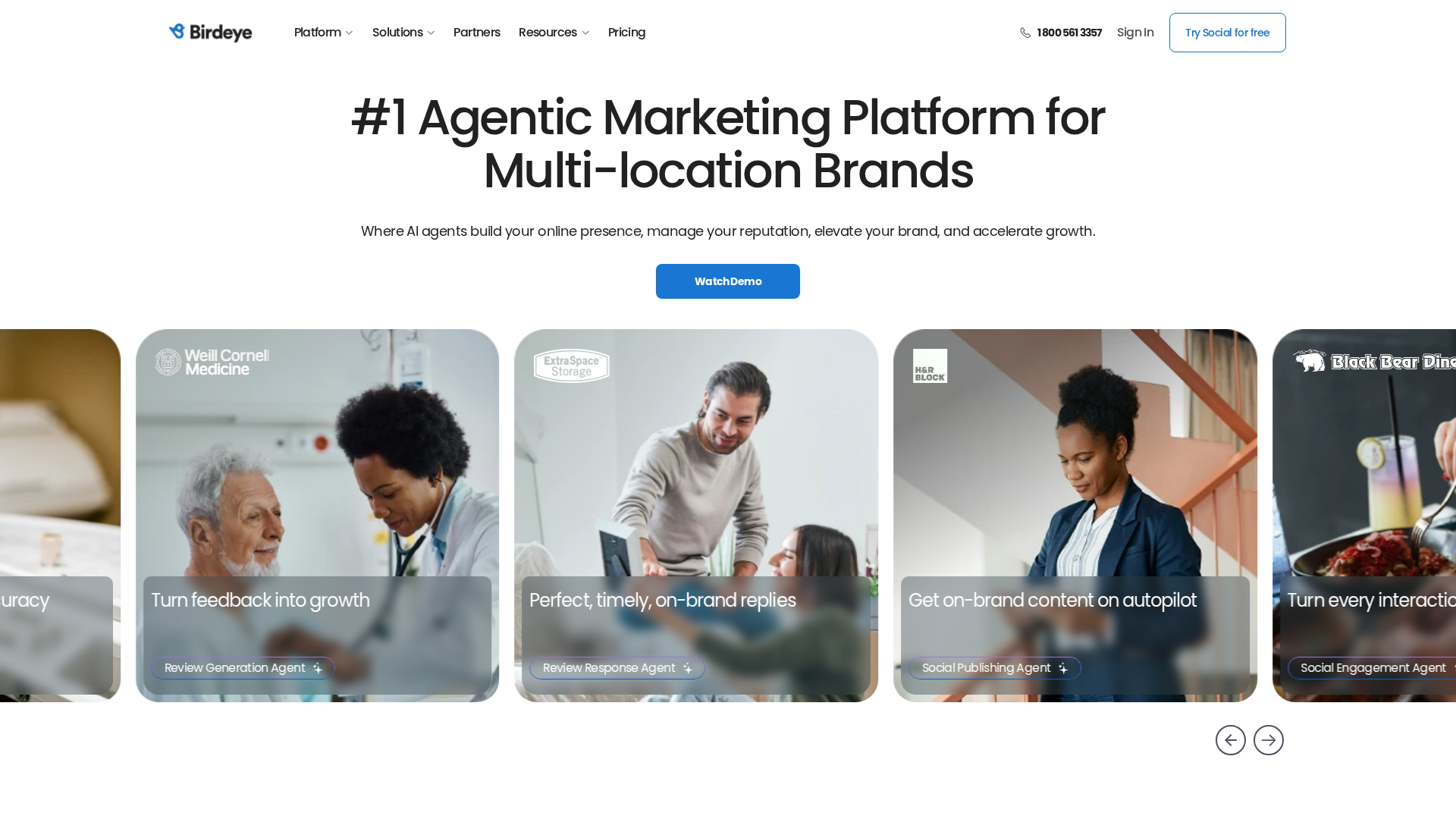
Birdeye combines reputation management with messaging capabilities, designed for multi-location businesses managing customer conversations alongside reviews.
Best for: Multi-location businesses managing reviews and customer conversations together.
Key strengths
Unified inbox: Manage messages from Google, Facebook, and SMS in one place
Review management: Monitor and respond to reviews across platforms
Webchat: Convert website visitors into text conversations
Multi-location support: Manage conversations across all locations
Birdeye pricing
Starts at $299/month.
12. Salesmsg
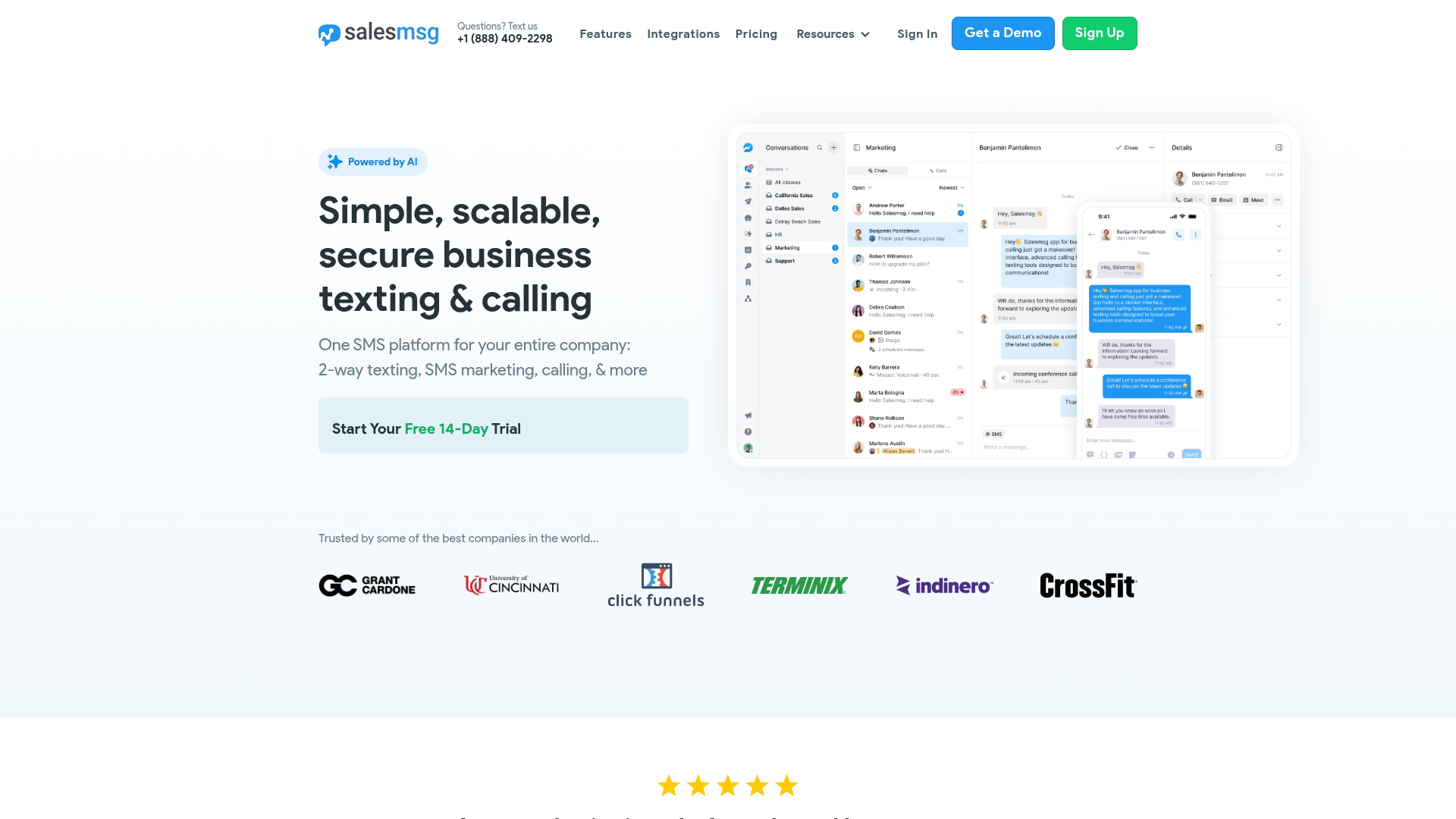
Salesmsg focuses specifically on two-way SMS for sales teams. The platform makes text-based selling simple without the complexity of full conversational marketing suites.
Best for: Teams prioritizing text-based conversational marketing with minimal complexity.
Key strengths
Two-way texting: Real conversations via SMS, not just broadcasts
Shared inboxes: Team visibility into all text conversations
CRM integration: Syncs with HubSpot, Salesforce, and others
Compliance: Built-in opt-out handling and consent management
Salesmsg pricing
Starts at $25/month for 500 messages.
13. Smartsupp
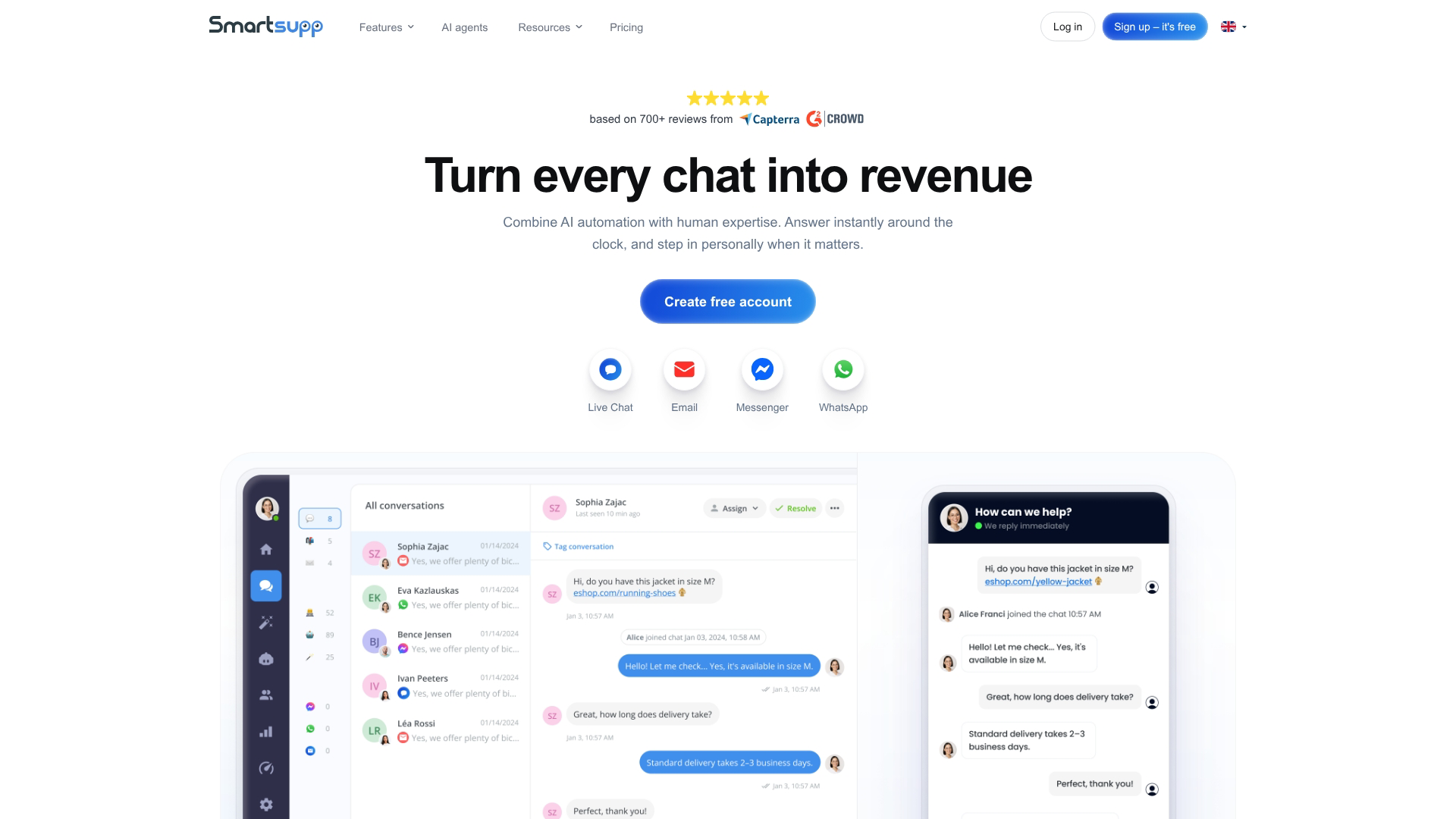
Smartsupp combines live chat and chatbots with visitor recording, giving ecommerce teams insight into both conversations and behavior.
Best for: Ecommerce teams wanting behavior insights alongside chat capabilities.
Key strengths
Visitor recording: See what users do before and after chat
Chatbot automation: Handle common questions automatically
Ecommerce integrations: Native Shopify and WooCommerce connections
Smartsupp pricing
Free plan available. Paid plans start at $19/month.
14. ChatBot
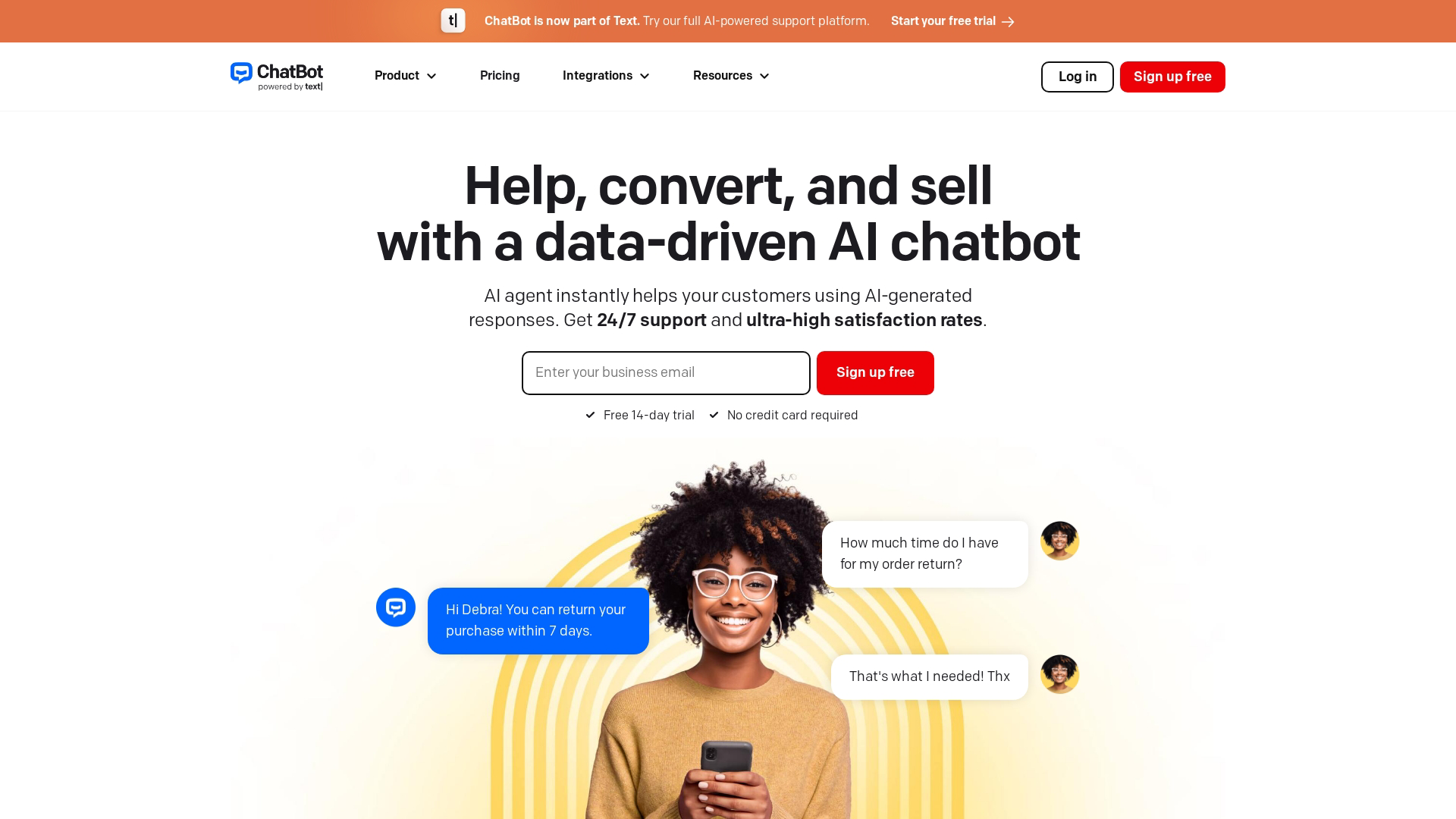
ChatBot is a no-code chatbot builder for teams wanting to create custom conversation flows without developers.
Best for: Teams wanting to build custom conversation flows without developer resources.
Key strengths
Visual builder: Drag-and-drop bot creation
Templates: Pre-built flows for common use cases
AI training: Improve responses based on conversation data
ChatBot pricing
Starts at $52/month for the Starter plan.
15. Podium
Podium is a messaging platform designed for local service businesses, combining text-based customer communication with payments and review management.
Best for: Local service businesses managing customer conversations via text.
Key strengths
Text-first approach: Conversations happen via SMS, not chat widgets
Payment collection: Accept payments directly in text conversations
Review generation: Request reviews after service completion
Podium pricing
Starts at $399/month.
Key features to evaluate in conversational marketing platforms
Knowing what to look for helps you compare tools effectively. The capabilities below separate adequate platforms from ones that actually improve your pipeline.
AI-powered routing and qualification
Look for platforms that score leads based on behavior and route them intelligently. How does the bot decide who gets sent to sales versus nurtured? The best tools use firmographic data, engagement signals, and conversation content to make routing decisions automatically.
CRM and marketing automation integration
Data flowing between your conversational tools and marketing automation software matters more than feature count. Conversation data that stays siloed in a chat tool provides limited value. Look for native integrations that sync contact records, conversation history, and engagement scores bidirectionally.
Real-time analytics and lead scoring
Evaluate what analytics each platform provides. Can you see which conversations convert? Which questions indicate buying intent? The best platforms surface signals that help you prioritize follow-up and improve conversation flows over time.
Multi-channel deployment options
Where can conversations happen? Website chat is table stakes. Look for platforms that extend to SMS, WhatsApp, social messaging, and email.
Personalization and dynamic content
Generic chatbot responses feel robotic. Look for platforms that personalize conversations based on visitor data, behavior, and context.
Bot-to-human handoff workflows
Automation handles volume, but humans close deals. Evaluate how each platform transitions conversations from bot to rep. What triggers handoff? How is context preserved?
How to choose the right conversational marketing platform
A structured evaluation process helps you avoid buying tools that don't fit your actual workflow.
1. Define your primary engagement goals
Are you trying to qualify leads, support customers, or accelerate deals? The answer shapes which tool category fits. Lead qualification points toward conversational sales platforms. Support volume points toward AI chatbots. Complex sales conversations point toward live chat with human agents.
2. Map your integration requirements
List your CRM, marketing automation platform, and analytics tools. Evaluate which conversational platforms integrate natively versus requiring custom work.
3. Assess automation and AI capabilities
Determine how much you want AI to handle versus human agents. High volume with repetitive questions favors more automation. Complex sales with nuanced requirements favors more human involvement.
4. Compare pricing against expected ROI
Evaluate pricing models carefully. Per seat, per conversation, and per contact pricing all scale differently. Consider total cost including implementation time, not just monthly fees.
5. Test time to first value
Run a trial with your actual use case. How quickly can you get a working conversation flow live? Tools requiring weeks of setup may not fit growth team timelines.
When conversational marketing software makes sense
Not every team benefits equally from conversational tools. The scenarios below indicate strong fit:
High website traffic, low conversion: With up to 99% of B2B visitors leaving without converting, conversations capture intent that forms miss
Long sales cycles with multiple stakeholders: Conversations nurture and educate buyers over time
Product requires explanation: Interactive demos or guided chat accelerate understanding
Support backlog creating churn risk: Automated answers reduce ticket volume
Sales team capacity constrained: AI qualification filters leads before handoff
Conversational marketing trends to watch
The category continues evolving. AI capabilities are improving rapidly, with chatbots becoming genuinely conversational rather than keyword-matching. Gartner predicts agentic AI will resolve 80% of common service issues without human intervention by 2029. Voice integration is expanding, connecting chat experiences with phone and video.
Interactive product experiences are emerging as a conversational channel. Rather than describing features, teams are letting prospects explore products directly through sandbox environments and guided demos. This "show, don't tell" approach generates richer intent data than chat alone.
Build your conversational marketing stack
The right conversational marketing tools depend on your goals, integration requirements, and team capacity. Start with one use case: lead qualification, product education, or support automation. Prove value there before expanding.
Start your journey with Guideflow today!
FAQs about conversational marketing software
What is the difference between conversational marketing and traditional chatbots?
Conversational marketing is a strategy focused on real-time, personalized buyer engagement across the full funnel. Chatbots are one technology that enables it. Chatbots handle specific tasks like answering FAQs or booking meetings. Conversational marketing encompasses the entire approach including live chat, AI, interactive experiences, and the strategy connecting them.
How does conversational marketing software integrate with CRM systems?
Most platforms offer native integrations with major CRMs like Salesforce and HubSpot, syncing conversation data, lead scores, and engagement history automatically. Look for tools that push data bidirectionally so sales sees full context without manual updates.
Can small businesses afford conversational marketing platforms?
Many conversational marketing tools offer free tiers or SMB pricing starting under $50/month. Tidio, Smartsupp, and ChatBot all provide affordable entry points. Start with a focused use case like website chat before expanding to more advanced AI features.
What is the typical implementation timeline for conversational marketing tools?
Basic chat widgets can go live in hours. Enterprise conversational AI platforms may require weeks for full CRM integration and workflow configuration. Prioritize tools that let you launch a minimum viable conversation flow quickly, then iterate based on what you learn.
How do interactive demos complement conversational marketing strategies?
Interactive demos let prospects experience your product on their own terms, functioning as an asynchronous conversation that qualifies intent and educates buyers. Combining chat with interactive demos creates a complete self-serve experience that reduces reliance on live calls while generating richer engagement data.
What are the best Conversica alternatives for B2B lead qualification?
Qualified, Drift, and Intercom offer AI-powered lead qualification with different strengths. Qualified excels with Salesforce integration and VIP visitor targeting. Drift focuses on conversational sales and pipeline acceleration. Intercom provides a unified platform approach combining sales and support. Evaluate based on your CRM, sales process complexity, and budget.