You closed the case. Then you spent three hours pulling notes out of four different tools, reformatting a report, and hunting for the exhibit you swore you saved somewhere. The work that wins clients is the investigation. The work that eats your margin is everything around it.
That gap is getting more expensive. The U.S. private investigator industry generated USD 8.5B in revenue in 2023, up 4.2% from 2022, according to Gitnux (2026). The broader private investigation services market sat at USD 21.1B in 2025 and is projected to reach USD 35.5B by 2036 at a 4.9% CAGR, per Fact.MR (2025). More cases, more clients, more records to pull. The agencies that scale are the ones that stop treating case work as a pile of one-off tasks and start running it as a repeatable system.
That is the real job of private investigator software. Not a database you log into. An operating layer that connects intake, research, evidence, and reporting so the same steps happen the same way on every case, whether you handle them yourself or hand them to a junior investigator. The right stack cuts manual admin, keeps evidence defensible, and gives you an audit trail that holds up when a report ends up in front of a court.
We picked these seven tools by weighing workflow fit, research and records depth, reporting and evidence handling, security and auditability, integrations, and real pricing. Some are built for investigators. Some come from legal case management and get borrowed by PI firms. All earn their place for a specific job.
What's inside
This guide covers case management and workflow orchestration, research and records search, reporting and evidence handling, security and compliance, and integrations across seven platforms private investigators actually use.
We chose each tool on four criteria: how well it fits an investigator's day-to-day workflow, its credibility with licensed private investigators, the depth of its research or reporting capabilities, and pricing you can plan around. Some tools are purpose-built PI software. Others are legal case management platforms that investigative and legal-support teams adopt. We flag which is which so you can match the tool to your motion, not to a marketing page.
TL;DR
- Best all-in-one PI operations platform: CROSStrax, for agencies that want case management, research integrations, and workflow in one system.
- Best for records search and skip tracing: Tracers, for public records search, skip tracing, and batch data research at volume.
- Best free plan for solo and small agencies: Case Jacket, with a free tier and simple, secure case management.
- Best for transcription and evidence documentation: Rev, for turning recorded interviews and audio into usable text and legal evidence workflows.
- Best for OSINT and web evidence capture: Hunchly, for automatically preserving online research with a defensible audit trail.
- Best for legal-adjacent matter management: Filevine, for PI teams working closely with law firms on document-heavy cases.
- Best legal practice management fit: Clio, for firms that need case management, billing, and client communication together.
What is private investigator software?
Private investigator software is a category of tools that help licensed investigators and agencies manage cases, run research and records searches, handle evidence, and produce court-ready reports from one connected workflow.
Strong platforms in this category share a set of core capabilities:
- Case lifecycle and collaboration: central management of cases, contacts, tasks, deadlines, and role-based permissions so a whole team works from one source of truth.
- Public records search and skip tracing: access to public and private records, identity verification, and OSINT so investigators find people, assets, and connections in one place.
- Evidence handling and reporting: document management, evidence tracking, transcription, e-sign, and report personalization that produces defensible deliverables.
- Security, compliance, and audit trail: access controls, encryption, audit logs, and standards like SOC 2 Type II that keep sensitive case data protected and admissible.
- Integrations and automation: connections to email, accounting, and automation tools through API, Zapier, Microsoft 365, QuickBooks, Gmail, and Outlook to remove repetitive manual work.
The category matters more every year as compliance pressure rises. Gitnux (2026) reports that 42% of EU private investigators cited GDPR compliance challenges in data handling in 2023. Software that logs who touched what, and when, is no longer a nice-to-have.
When to use private investigator software
Case management and collaboration
Use a central case management system the moment more than one person touches a case, or the moment a single investigator loses time reconstructing where things stand. When intake, contacts, tasks, notes, and permissions live in one place, handoffs stop leaking context. That is the difference between an agency that scales past its founder and one where every case still routes through one person's head. Case management and workflow orchestration is the backbone here.
Research and records lookup
Use dedicated research and records search tools when investigators need public records search, skip tracing, and OSINT without bouncing between five subscriptions. Batch processing and API access matter when volume climbs, because pulling records one query at a time does not scale. This is where a private investigator database earns its cost: fewer dead ends, faster location work, cleaner source trails.
Reporting and evidence handling
Use reporting and evidence tools when the job is documentation-heavy and deliverables have to survive scrutiny. Court-ready reports, transcription of recorded interviews, secure document management, and an audit trail on every piece of evidence protect both the client and the license. When a report can end up as an exhibit, sloppy evidence handling is a liability, not a shortcut.
Comparison table
Here is how the seven tools compare on intent, core strength, pricing, and rating. Pricing reflects the most recent publicly available figures at the time of writing. Always confirm current pricing with each vendor.
| # | Product | Intent | Key use case | Pricing | G2 rating |
|---|---|---|---|---|---|
| 1 | CROSStrax | All-in-one PI operations | Case management and workflow for agencies | From $35/user/month | 5.0/5 |
| 2 | Tracers | Records research | Skip tracing and public records search | From $175/month, single seat | Not listed |
| 3 | Case Jacket | Simple case management | Affordable, secure case handling | Free; paid from $40/month | Not rated |
| 4 | Rev | Transcription and evidence | Interview and audio transcription | Free; paid from $25.49/seat/month | Not listed |
| 5 | Hunchly | OSINT capture | Web evidence preservation | Free trial; from $169/year | Not listed |
| 6 | Filevine | Legal matter management | Document-heavy case collaboration | Custom | 4.7/5 |
| 7 | Clio | Legal practice management | Case management plus billing | From $49/user/month | 4.6/5 |
The 7 best private investigator software platforms
1. CROSStrax
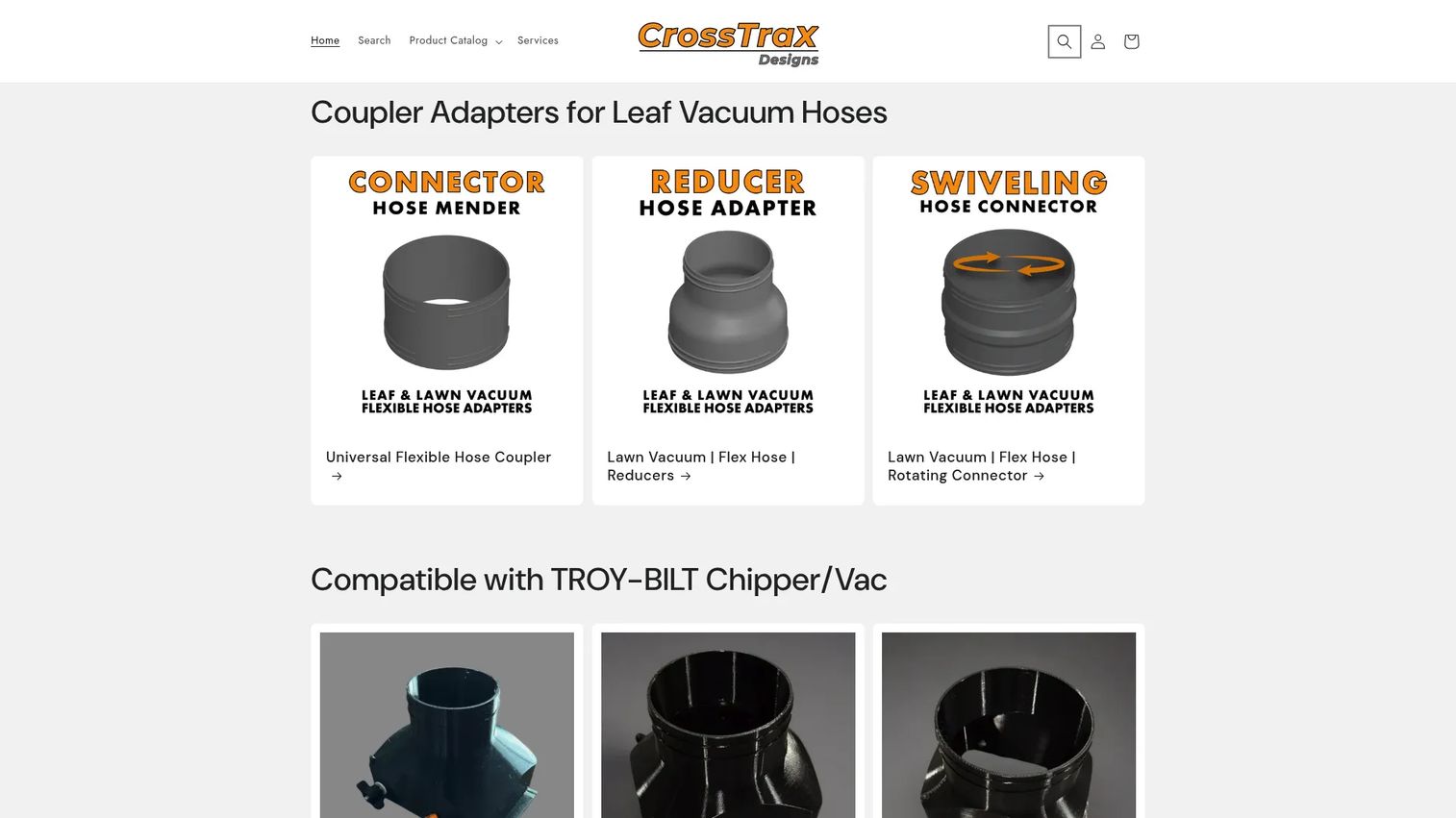
CROSStrax is cloud-based case management software built specifically for investigators and investigative agencies. It brings case management, case notes, and contact management into one system, so the daily grind of tracking who is working what, and where each case stands, happens in a single place instead of across a spreadsheet, an inbox, and a shared drive. For an agency owner trying to build a workflow that does not depend on their own memory, that consolidation is the whole point.
Best for: Investigative agencies that want case management, research integrations, and workflow orchestration in one platform.
Key strengths
- Case management: Track cases, statuses, and assignments so nothing slips between investigators.
- Case notes: Keep structured, timestamped notes tied to each case for a clean record.
- Contact management: Centralize subjects, clients, and sources so the whole team works from the same contact record.
Why choose CROSStrax: If you run an agency and want private investigator case management software that treats the whole operation as a repeatable system, CROSStrax is built for that job. It is investigator-first, not a legal tool bent to fit, which shows up in how case notes, contacts, and workflow are organized around how PI work actually flows.
CROSStrax pricing: Capterra lists a Basic plan at $35.00 per user, per month. That figure comes from a third-party listing rather than the brand's own pricing page, so confirm current terms directly with CROSStrax before you commit.
2. Tracers
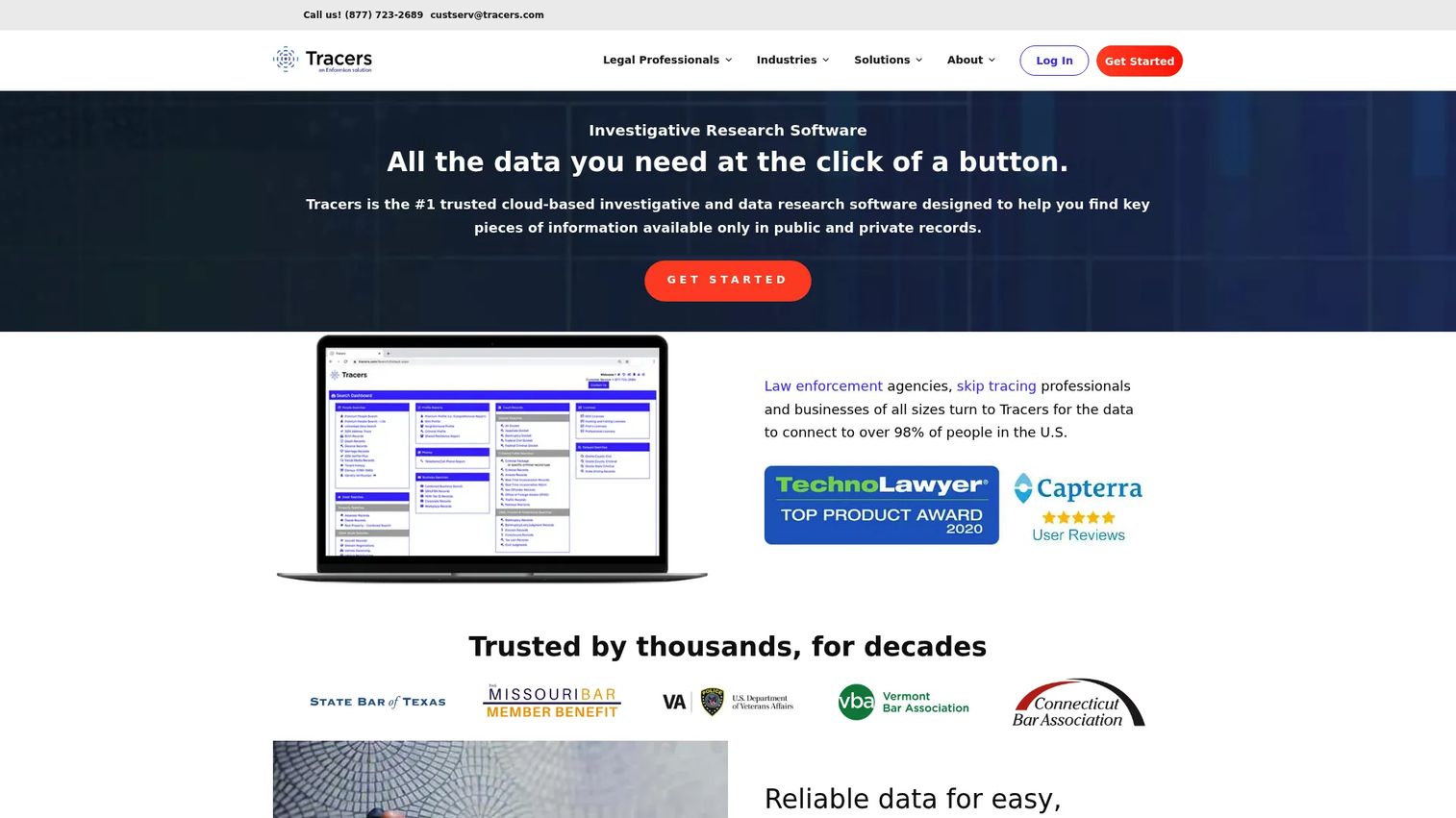
Tracers is cloud-based investigative and data research software for skip tracing, law enforcement, legal research, collections, and related public-records workflows. Where CROSStrax organizes your cases, Tracers feeds them. It is the research and records search engine investigators reach for when they need to locate people, verify identities, and pull public and private records without stitching together multiple data subscriptions.
Best for: Investigators, law firms, collections teams, and public-safety users who need deep public and private record research.
Key strengths
- Skip tracing and batch skip tracing: Locate individuals one at a time or in bulk when case volume climbs.
- Identity verification: Confirm identities against public and private records to cut down on dead ends.
- API and batch processing: Automate record pulls and integrate research into existing workflows through API access.
Why choose Tracers: When the bottleneck is research, not case tracking, Tracers earns its place. The batch processing and API options matter most for teams running high query volumes, because pulling records one at a time does not scale with a growing caseload.
Tracers pricing: A public first-party pricing sheet shows seat-based pricing that starts at $175.00 per month for a single seat and drops per seat as team size grows, down to $75.00 per seat at 100+ seats. Batch processing and API pricing vary by usage, so scope your expected volume before committing.
3. Case Jacket
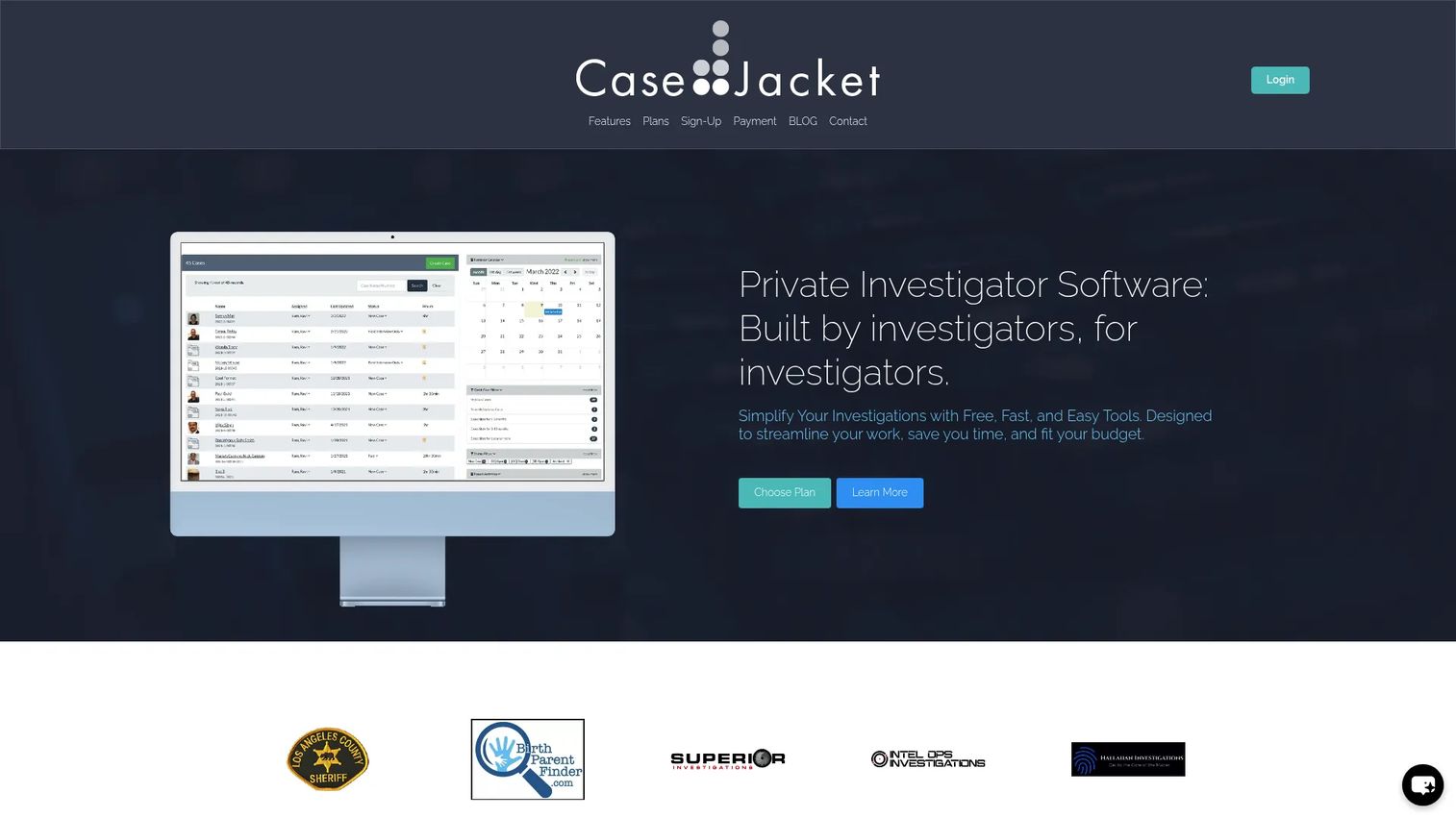
Case Jacket is case management software built for private investigators, with a genuine free plan that makes it easy for solo investigators and small agencies to start without a budget conversation. The free tier includes 2 users, 25 cases, and 10 GB of storage, which is enough to run a lean practice before you outgrow it. For a solo PI who has been living in spreadsheets, this is the low-friction way to move to real case management.
Best for: Private investigators and small agencies who want low-cost, straightforward secure case management.
Key strengths
- Free plan: Start at no cost with 2 users, 25 cases, and 10 GB of storage.
- Desktop and mobile friendly: Manage cases from the office or the field.
- Customizable case features: Adapt case fields, notes, documents, roster, and expense tracking to how you work.
Why choose Case Jacket: The free plan is the hook, but the real value is a PI-specific workflow at a price a small shop can absorb. Notes, comments, documents, roster, and expense tracking cover the essentials without the overhead of a heavier platform.
Case Jacket pricing: Plans are month-to-month with no long-term contracts. Basic is free, Standard is $40 per month, Professional is $100 per month, and Enterprise is $250 per month. That laddered pricing lets you scale storage and users as your caseload grows.
4. Rev
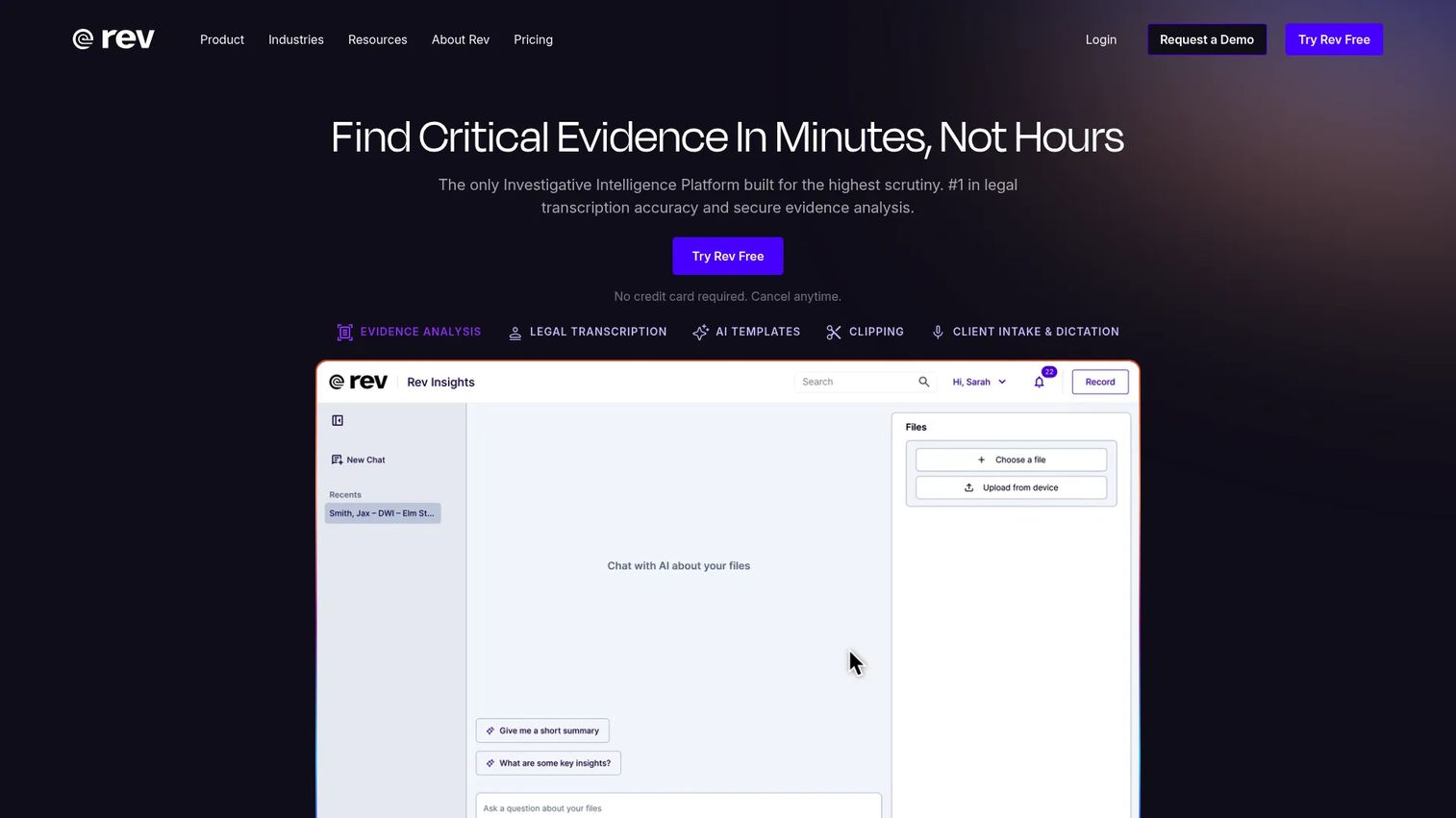
Rev is an AI and human transcription platform for legal, meeting, and media workflows. It is not case management, and it does not pretend to be. It solves a narrower, painful problem: turning recorded interviews, surveillance audio, and calls into accurate, searchable text you can drop into a report or use as legal evidence. When documentation is the deliverable, a transcript beats a set of scratch notes every time.
Best for: Investigative and legal-support teams that need transcription, captions, and legal evidence workflows.
Key strengths
- AI transcription and captions: Turn audio and video into text fast, at scale.
- Human transcription: Get higher-accuracy transcripts and subtitles when precision is non-negotiable.
- Multi-file legal evidence analysis: Analyze, clip, and take AI-assisted notes across multiple evidence files.
Why choose Rev: Transcription quality is the whole game for evidence work, and Rev offers both AI speed and human accuracy so you can pick per file. The legal evidence analysis and clipping features make it more than a transcription vendor for teams that live in recorded material.
Rev pricing: A free plan includes 45 AI transcription and caption minutes per month. Essentials runs $25.49 per seat/month and Pro runs $47.99 per seat/month, both billed yearly, with an Unlimited tier at custom pricing. Paid plans add more minutes, collaboration, and higher-volume features.
5. Hunchly
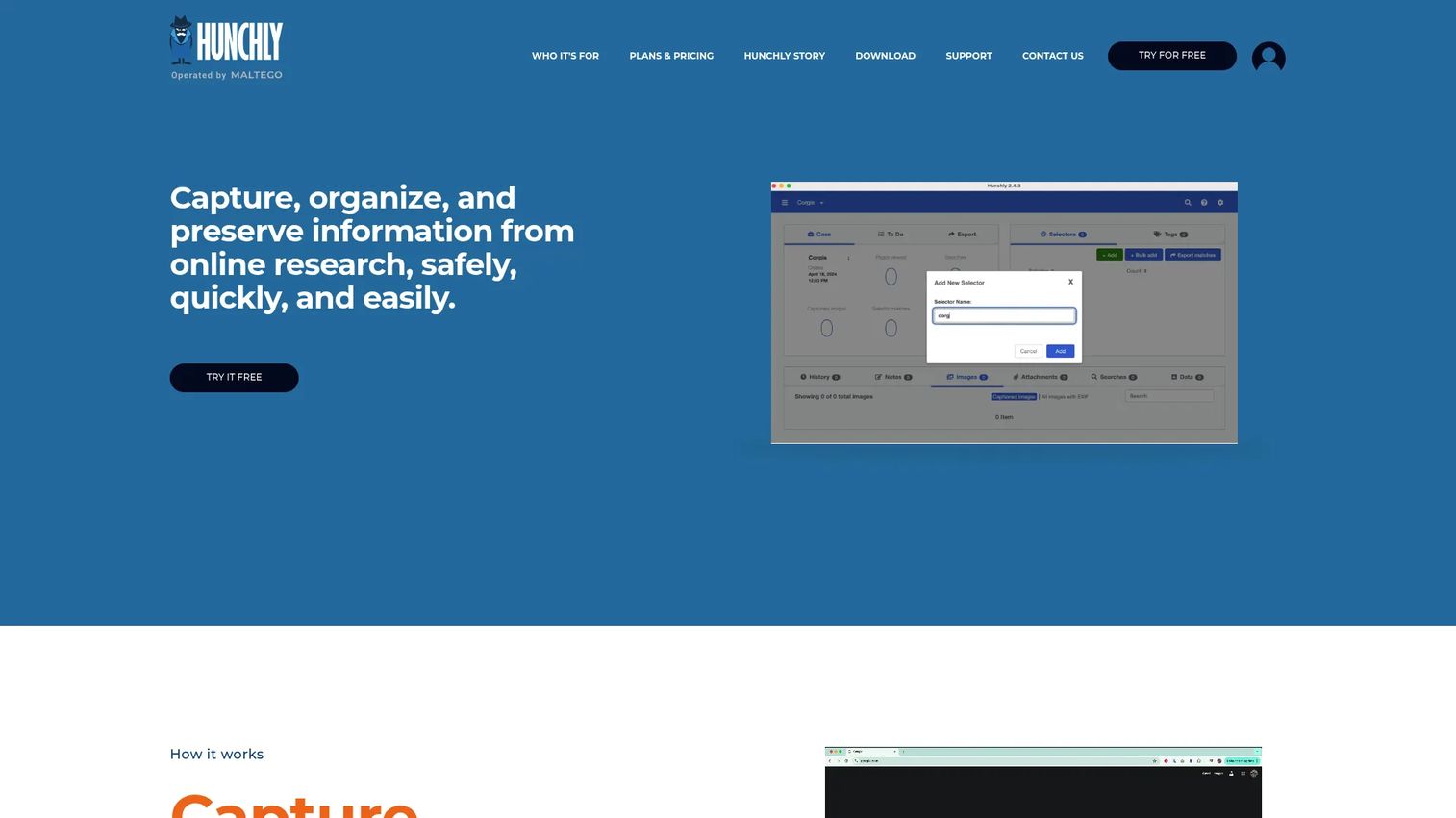
Hunchly is online investigation software that captures, preserves, organizes, and reports web research evidence. If you do OSINT, this is the tool that keeps your online research defensible. It runs quietly in the background of your browser, automatically collecting URLs, timestamps, and hashes of every page you visit, so you never have to remember to screenshot and never lose the chain of custody on a piece of web evidence.
Best for: Investigative professionals who need court-ready web evidence capture and reporting.
Key strengths
- Automatic evidence capture: Collect URLs, timestamps, and hashes of visited pages without manual effort.
- Full-page captures: Preserve sites, searches, and social media exactly as they appeared.
- Tagged, reportable evidence: Categorize and tag evidence with built-in reporting and an audit trail.
Why choose Hunchly: The automatic, hash-verified capture is what makes online evidence hold up later. For OSINT-heavy investigators, the audit trail and reporting turn hours of browsing into an organized, defensible record instead of a folder of loose screenshots.
Hunchly pricing: A free 30-day offer lets you try it before paying. The Classic annual plan is $169 USD per year (€149 EUR), with contact-sales options for multiple licenses and cloud conversion.
6. Filevine
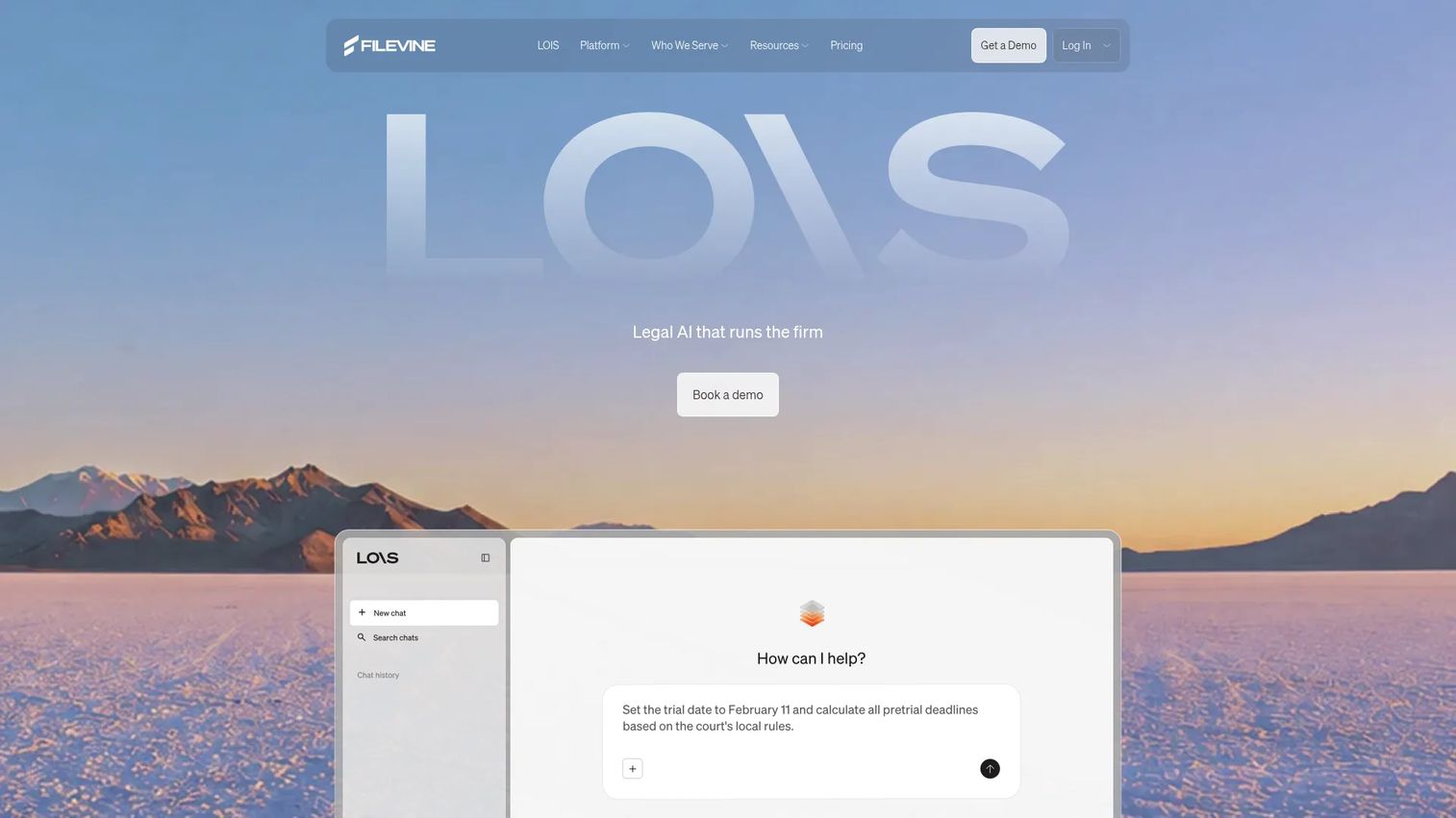
Filevine is legal operating intelligence software for law firms and legal teams, and PI teams that work closely with attorneys often borrow it for the same reasons the firms do. It handles matter and case management, collaboration, document management, and reporting in one platform, which fits investigators embedded in litigation support or running document-heavy cases alongside legal partners.
Best for: Law firms and PI teams that want an all-in-one case and matter management platform with strong document handling.
Key strengths
- Project Hub: Organize matters, tasks, and deadlines in a single collaborative workspace.
- Document management: Store, organize, and version case documents with control.
- AI legal assistant: Speed up drafting and document work with built-in AI.
Why choose Filevine: If your PI work is tightly coupled to legal matters, Filevine gives you and your legal partners one shared system for documents, tasks, and reporting. That shared workspace removes the handoff friction that comes from working investigation and litigation in separate tools.
Filevine pricing: Filevine builds packages custom to each team's needs and directs prospects to book a demo rather than publishing numeric prices. Scope your requirements before the call so the quote reflects your actual usage. Filevine holds a 4.7/5 rating on G2.
7. Clio
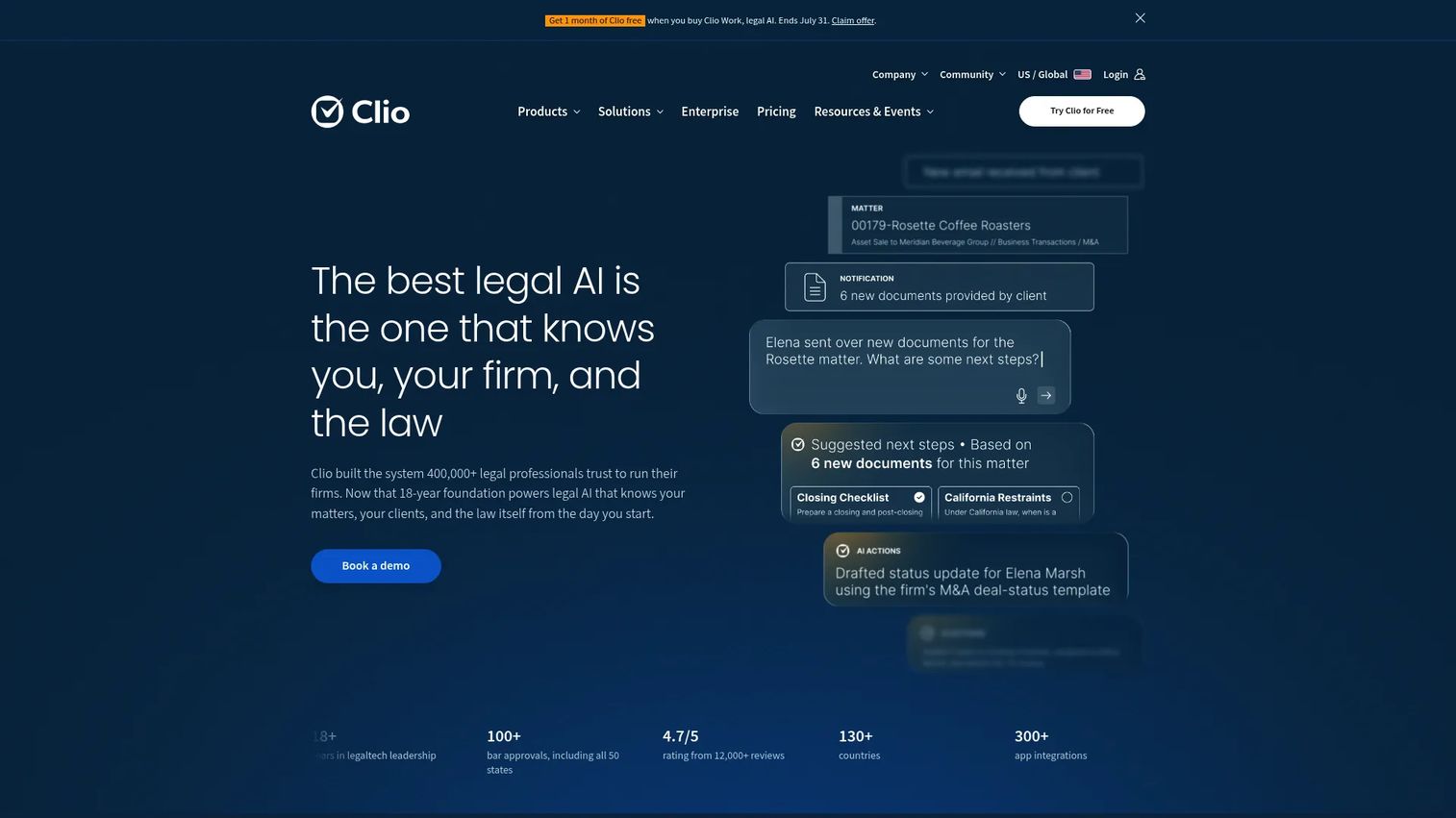
Clio is cloud-based legal practice management software for law firms, and it is a strong fit for PI firms with legal-adjacent workflows. It combines case management, document management, billing and invoicing, online payments, and client intake with CRM. For an investigator whose practice looks a lot like a small firm, that means running cases and getting paid in the same system instead of bolting accounting on separately.
Best for: PI firms and small legal-adjacent practices that need case management, billing, and client communication together.
Key strengths
- Case and document management: Keep cases and files organized in one connected platform.
- Billing and invoicing: Track time, invoice clients, and take online payments without a separate tool.
- Client intake and CRM: Capture and manage prospects and clients from first contact through the case.
Why choose Clio: When billable time savings and client communication matter as much as case tracking, Clio's practice management depth pays off. The built-in billing, payments, and intake close the gap between doing the work and getting paid for it.
Clio pricing: EasyStart starts at $49 per user, per month, with a 7-day free trial. Higher tiers are listed as Essentials, Advanced, and Expand, though not every exact price is published on the readable pricing page, so confirm the tier that fits your firm. Clio holds a 4.6/5 rating on G2.
Considerations before you buy
The right choice depends on your workflow, your team size, and how much of your work touches legal deliverables. Here is what to weigh.
Workflow fit
Match the tool to how your cases actually move. An investigator-first platform like CROSStrax or Case Jacket organizes around PI workflow, while legal platforms like Filevine and Clio organize around matters. Pick the one that fits your motion, not the one with the longest feature list.
Research and records depth
If locating people and pulling records is your bottleneck, prioritize research and records search capability, skip tracing, and batch processing. A dedicated tool like Tracers can pay for itself in hours saved on location work alone.
Reporting and evidence handling
Documentation-heavy work demands strong reporting and evidence handling, transcription, e-sign, and document management. If a report can become an exhibit, evidence quality and traceability are not optional.
Security and compliance
Sensitive case data needs real protection. Look for access controls, encryption, audit logs, and standards like SOC 2 Type II. With 42% of EU investigators reporting GDPR compliance challenges, auditability is a buying criterion, not a footnote.
Integrations and pricing
Check that the tool connects to your email, accounting, and automation stack through API, Zapier, Microsoft 365, QuickBooks, Gmail, or Outlook. Then weigh pricing against your caseload. A free trial or free tier lets you test workflow fit before you subscribe.
Conclusion
There is no single best private investigator software, only the best fit for the job in front of you. For all-in-one agency operations, CROSStrax runs case management and workflow as one system. For records research and skip tracing at volume, Tracers is the engine. Solo investigators and small shops should start with Case Jacket's free plan. Teams drowning in recorded material need Rev for transcription, and OSINT-heavy investigators need Hunchly for defensible web evidence. If your work is tied to legal matters, Filevine and Clio bring firm-grade case management, documents, and billing.
The next step is simple. Size your team, name your biggest bottleneck, and start a free trial with the tool that targets it. Most of these offer a free plan or trial, so you can test real workflow fit before you spend a dollar. Treat the evaluation like you would a case: gather evidence, then decide.
FAQs
Strong private investigator case management software should centralize cases, contacts, tasks, deadlines, and notes with role-based permissions so a whole team works from one record. Look for timestamped case notes, document handling, and an audit trail. The goal is workflow orchestration that makes every case run the same way, whether you handle it or hand it off.
Yes. Tools like Tracers focus on research and records search, offering skip tracing, batch skip tracing, identity verification, and public records search. For high volumes, look for API and batch processing so you can pull records without querying one at a time. A dedicated research tool usually beats trying to make a case management platform do double duty.
Case Jacket is a strong pick for solo investigators and small agencies because it offers a free plan with 2 users, 25 cases, and 10 GB of storage, then scales through affordable monthly tiers. Its PI-specific, desktop and mobile friendly workflow covers the essentials without the cost or complexity of an enterprise platform.
They are central when your work produces court-ready deliverables. Reporting and evidence handling, transcription, e-sign, and secure document management protect both the client and your license. If a report can become a legal exhibit, evidence quality and a clear audit trail matter as much as the investigation itself.
For most agencies, yes. Integrations with email, accounting, and automation tools through API, Zapier, Microsoft 365, QuickBooks, Gmail, and Outlook remove repetitive manual work and keep data consistent across systems. The more your stack connects, the less time you lose re-entering the same information in multiple places.
Prioritize access controls, encryption, audit logs, and recognized standards like SOC 2 Type II. Given that 42% of EU private investigators reported GDPR compliance challenges in data handling in 2023, per Gitnux (2026), knowing who accessed what and when is essential. Security and compliance protect sensitive case data and keep evidence defensible.
Yes, and many PI teams use them. Platforms like Filevine and Clio bring matter and case management, document handling, reporting, and billing built for law firms. They fit best when your investigative work is tightly coupled to legal matters or litigation support, where sharing one system with legal partners removes handoff friction.
Compare on structure, not just headline price. Some tools bill per user per month, like CROSStrax and Clio, while others use seat-based tiers that drop as your team grows, like Tracers. Factor in free plans, such as Case Jacket and Rev, and free trials, then weigh total cost against your caseload and how much manual work the tool removes.