Inventory looks manageable until a recall hits, a high-value product expires, or a distributor needs to trace one serialized unit across receiving, storage, fulfillment, and returns. Then the spreadsheet and generic ERP workarounds stop looking cheap.
Pharmaceutical distribution sits at the intersection of financial operations and strict regulatory accountability. The FDA's Drug Supply Chain Security Act (DSCSA) requires manufacturers, distributors, and dispensers to exchange transaction data, maintain traceability records, and respond to verification requests across the supply chain. According to a 2025 Pharma Manufacturing report on the LogiPharma AI survey, 64% of pharmaceutical supply-chain leaders were actively evaluating blockchain and chain-of-custody technologies to address exactly this kind of visibility gap.
The right pharmaceutical distribution software connects inventory, lot-level traceability, order fulfillment, and financial control. The wrong choice means stitching four systems together and still failing an audit. Which kind of platform do you actually need, and which vendor fits that operating model?
What's inside
This guide compares eight pharmaceutical distribution software tools for 2026, selected for category fit, regulated distribution functionality, operational breadth, and current vendor-market relevance.
- A comparison of eight tools covering pharmaceutical ERP software, traceability platforms, pharmacy inventory systems, and pharma wholesale software
- Guidance on choosing the right platform type for your operating model
- Capabilities to validate before signing: DSCSA, lot control, FEFO, recalls, EDI, and financial workflows
- Buying criteria for teams replacing disconnected inventory, warehouse, compliance, and accounting processes
TL;DR
- Best for pharmaceutical distribution ERP: Blue Link ERP for distributors needing inventory, accounting, order management, and traceability in one operating system
- Best for configurable cloud ERP: Acumatica for growth-stage distributors that need flexible workflows and broader business-system coverage
- Best for batch-driven operations: BatchMaster ERP for organizations combining distribution with manufacturing or formulation controls
- Best for DSCSA traceability: LSPedia for teams prioritizing serialization, EPCIS, and supply-chain transaction data
- Best for pharmacy inventory cost control: SureCost for pharmacy organizations focused on purchasing visibility and spend management
What is pharmaceutical distribution software?
Pharmaceutical distribution software is a category of business software that helps drug, medical supply, and healthcare-product distributors manage inventory, orders, warehouse operations, traceability records, compliance workflows, and financial processes.
The category covers several distinct platform types, and buyers who treat them as interchangeable often end up with a compliance gap, a finance gap, or both. Here is what each layer of the stack does:
- Inventory and location control: Track stock by SKU, lot, serial number, expiry date, warehouse, bin, or customer allocation
- Order processing and fulfillment: Manage purchasing, inbound receiving, sales orders, pick-pack-ship, returns, and invoicing
- Pharmaceutical traceability software: Maintain transaction records, serialization data, EPCIS outputs, recall information, and audit-ready histories
- Expiry and FEFO management: Prioritize stock by expiration status to reduce unnecessary write-offs
- Warehouse operations: Support barcode scanning, replenishment, cycle counts, multi-location inventory, and mobile workflows
- Financial management: Connect distribution activity to accounts receivable, payables, costing, and reporting
- Integration: Connect to EDI, pharmacy systems, 3PLs, customer portals, and reporting tools
Platform types in this category
| Software type | Primary job | Best fit | What to verify |
|---|---|---|---|
| Distribution ERP | Run inventory, orders, warehouse, and finance | Wholesalers and multi-location distributors | Accounting depth, WMS, EDI, reporting |
| Traceability platform | Manage serialization and supply-chain transaction data | DSCSA-heavy organizations | EPCIS support, verification workflows, partner integration |
| Pharmacy inventory platform | Improve purchasing and stock control | Pharmacies and health-system pharmacy teams | Wholesaler connections, purchasing workflows, cost analytics |
| Pharma wholesale suite | Support local or regional wholesale workflows | Pharma distributors with industry-specific commercial processes | Tax, billing, unit conversion, multi-location support |
When to use pharmaceutical distribution software
Replace fragmented inventory and order workflows
When your team coordinates receiving, sales orders, returns, replenishment, and billing through disconnected tools, the compounding cost shows up in fulfillment errors and month-end reconciliation gaps. A full distribution ERP is the right category when the organization needs one operating record across inventory and finance. Without that, every new product line or warehouse adds another manual bridge.
Prepare for lot-level traceability and recalls
Organizations handling serialized prescription drugs, controlled products, medical supplies, or temperature-sensitive inventory need visibility beyond aggregate stock counts. Before selecting a platform, validate how the vendor handles transaction records, audit trails, lot histories, recall workflows, and EPCIS data exchange. DSCSA software requirements affect system design at the data-model level, not just reporting.
Scale across warehouses, locations, and distribution channels
Multi-location distributors and growing pharma wholesalers face a specific inflection point: Adding a warehouse or channel before the data infrastructure is solid creates inventory blind spots that are expensive to close later. Validate integration and reporting capabilities before expansion creates information delays. Pharmaceutical supply chain management software that cannot aggregate across locations in real time becomes a bottleneck rather than an operating advantage.
Pharmaceutical distribution software comparison
These eight tools cover different layers of the stack. Choosing between them depends on whether you need a core pharmaceutical ERP, specialized pharmaceutical traceability software, pharmacy inventory control, or a pharma wholesale suite with industry-specific commercial workflows. The table below reflects verified pricing and G2 ratings as of October 2026.
| # | Product | Best for | Key use case | Pricing | G2 rating |
|---|---|---|---|---|---|
| 1 | Blue Link ERP | Pharmaceutical wholesalers and medical supply distributors | Inventory, order processing, accounting, lot and expiry controls | $12,000 to $60,000 year-one license | 3.0/5 |
| 2 | Acumatica | Growth-stage distributors needing configurable cloud ERP | Distribution ERP with connected financial and operational workflows | Starting under $1,495/month | 4.4/5 |
| 3 | BatchMaster ERP | Batch-driven pharmaceutical and life-sciences operations | Manufacturing, formulation, quality, and distribution control | Contact for pricing | 2.9/5 |
| 4 | LSPedia | DSCSA-focused supply-chain teams | Serialization, EPCIS, transaction data, and traceability | From $75/month (OneScan Pharmacy Pro) | Not listed on G2 |
| 5 | SureCost | Pharmacy organizations focused on inventory cost control | Purchasing, inventory visibility, and pharmacy spend management | From $29/month per pharmacy | 4.3/5 |
| 6 | Logic ERP | Pharma wholesale operations with commercial and inventory needs | Billing, batch tracking, expiry, sales, and warehouse workflows | From approx. ₹1,638/month (India pricing) | 4.8/5 |
| 7 | Easysol Pharma Distribution Software | Pharmaceutical distributors seeking industry-focused workflows | Distribution operations, stock management, and reporting | Contact for pricing | Not listed on G2 |
| 8 | BizNET | Organizations requiring diligence on pharmaceutical workflow fit | Verify product modules and pharmaceutical distribution capabilities | From $20/month | Not listed on G2 |
Best 8 pharmaceutical distribution software tools for 2026
1. Blue Link ERP
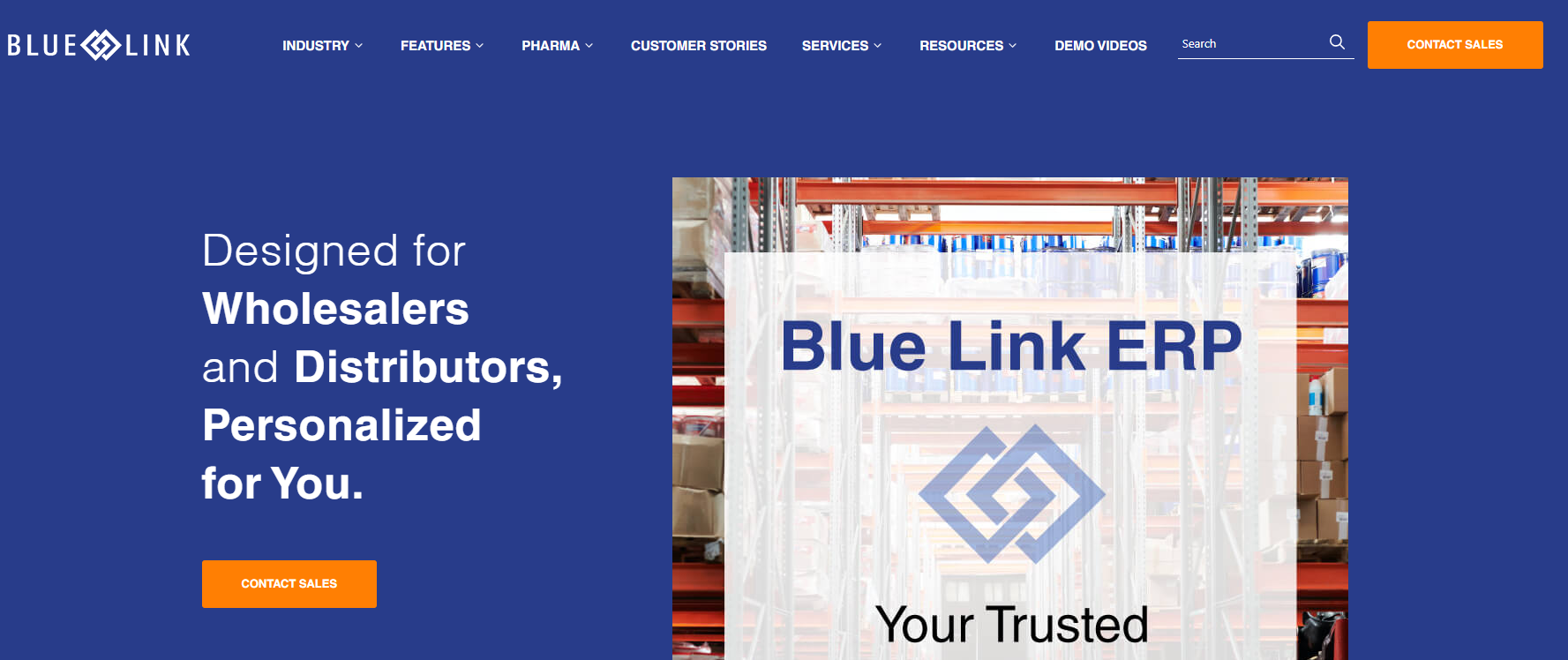
Blue Link ERP is an all-in-one cloud-based accounting and inventory management ERP designed for small and mid-sized wholesalers and distributors. The platform combines inventory control, order entry, purchasing, warehouse management, and financial operations into one operating record. It includes lot tracking, barcode scanning, expiry date management, and eCommerce integration, which makes it relevant for medical supply distribution software contexts where connected financial and operational data matter.
Best for: Pharmaceutical wholesalers and medical supply distributors that need inventory, accounting, order management, and pharmaceutical traceability software capability in one system.
Key features
- Lot and serial number tracking with expiry date controls
- Warehouse barcode scanning and receiving workflows
- Purchase order management and sales order entry
- Accounts receivable, payables, and financial reporting
- eCommerce and EDI integration options
Why choose Blue Link ERP: Choose this when your core problem is operational fragmentation. The platform is built for distributors who want inventory and financial data in the same system rather than bridged across separate tools. It is strongest when the buyer wants reporting that covers both operations and accounting without a custom integration layer.
Blue Link ERP pricing: Blue Link ERP positions itself as a middle-tier ERP. Year-one license fees run $12,000 to $60,000 depending on users, modules, locations, and implementation scope, per the official pricing guide. The total cost also reflects implementation services, which vary by configuration complexity.
G2 rating: 3.0/5
2. Acumatica
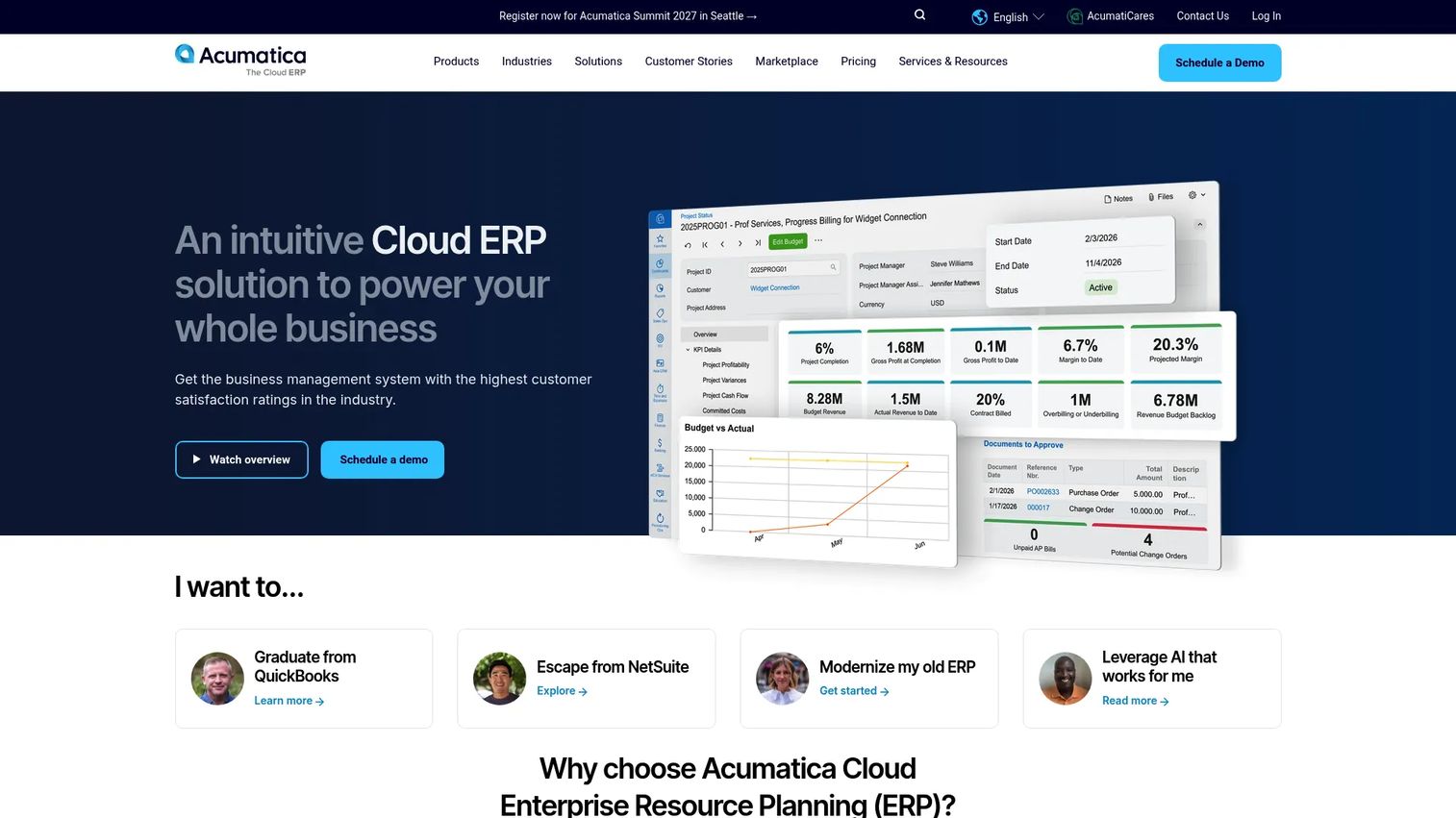
Acumatica is a cloud ERP and business management platform for small and mid-sized organizations, with industry-specific editions covering distribution, manufacturing, retail, and construction. Its distribution module handles inventory management, warehouse operations, order management workflows, and financial management. The platform offers low-code customization, configurable workflows, and iOS and Android mobile apps, making it a viable pharmaceutical distribution ERP option for teams that also need broad business-system coverage.
Best for: Growth-stage distributors that need a configurable cloud ERP with room to support multi-entity finance, custom workflows, and broader operational requirements beyond a vertical-only platform.
Key features
- Cloud-based distribution ERP with unlimited-user licensing
- Inventory and warehouse management with mobile access
- Order management and advanced financial reporting
- Low-code customization and configurable workflow automation
- Industry-specific capabilities for distribution and manufacturing
Why choose Acumatica: This belongs on the shortlist when flexibility matters as much as vertical depth. Buyers should validate pharmaceutical-specific traceability, DSCSA, and serialization requirements during evaluation, since those capabilities depend on configuration or third-party integration rather than native pharmaceutical workflows.
Acumatica pricing: Acumatica offers bundled APEX packages. APEX for Distribution starts under $1,495 per month; APEX for Manufacturing starts under $2,185 per month. Core Acumatica pricing is consumption-based and configured through reseller partners, so final costs reflect transaction volume and module scope.
G2 rating: 4.4/5
3. BatchMaster ERP

BatchMaster ERP is an ERP and business management platform built for formula-based process manufacturers. Its design centers on batch production, formulation, quality management, and lot traceability, which makes it relevant for pharmaceutical and life-sciences organizations where production complexity and distribution overlap. Industries served include food, chemicals, nutraceuticals, cosmetics, and pharmaceuticals.
Best for: Pharmaceutical and life-sciences businesses that combine batch-driven production or quality processes with distribution, such as contract manufacturers, repackagers, and compounders.
Key features
- Batch and lot traceability across production and distribution
- Formulation and recipe management with product development support
- Quality management and compliance workflow controls
- Inventory and expiry management
- Mobile warehousing and product costing
Why choose BatchMaster ERP: Use this as a category signal. If your workflow combines manufacturing, quality, and pharmaceutical wholesale distribution, a conventional wholesale ERP may leave too much process outside the system. BatchMaster's strength is organizations where the complexity begins before warehousing, not at the receiving dock.
BatchMaster ERP pricing: Pricing requires registration through the official pricing page and no standard figures are displayed. Contact BatchMaster directly for package details. Implementation scope and module selection drive the final quote.
G2 rating: 2.9/5
4. LSPedia
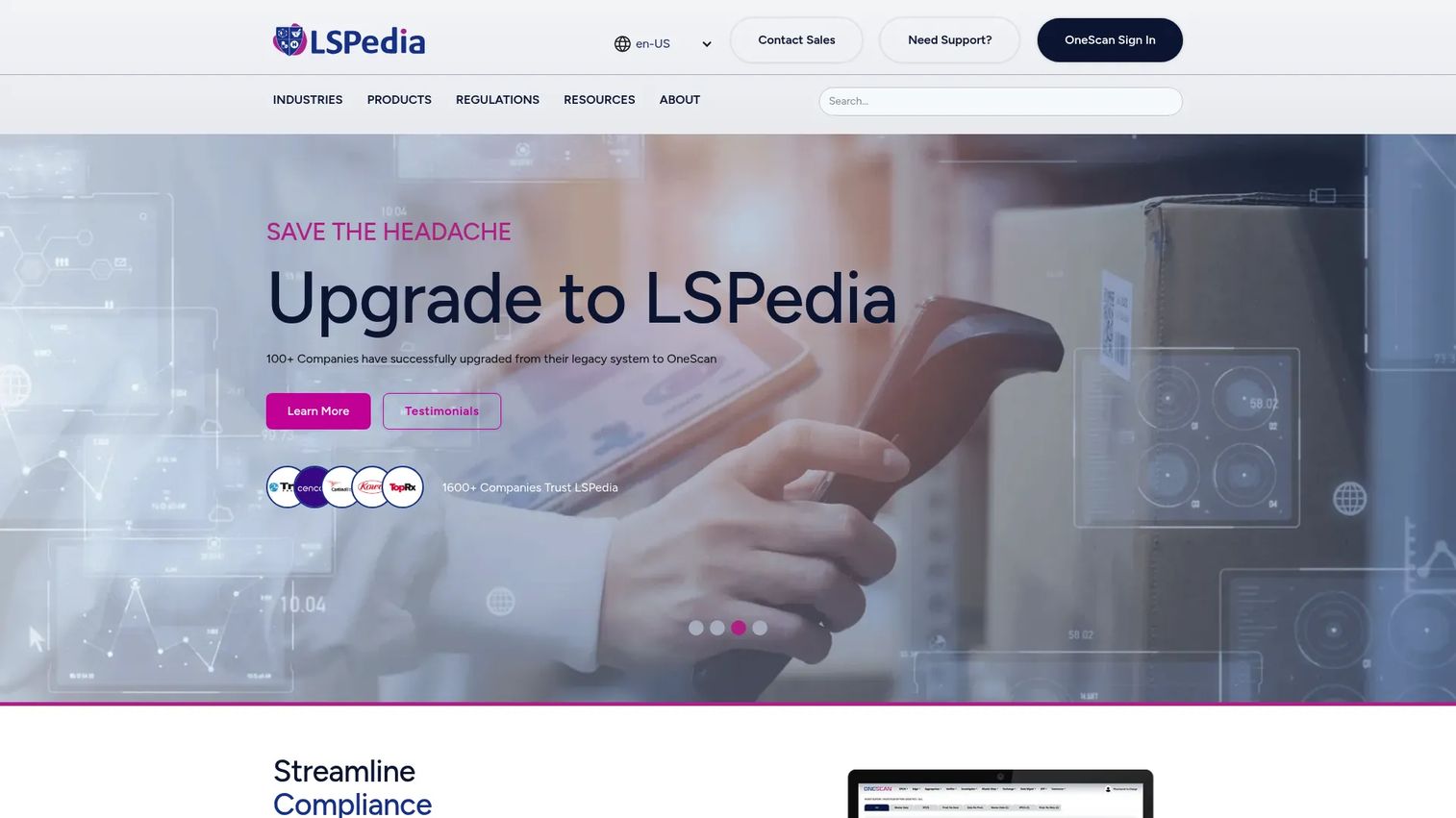
LSPedia provides cloud-based pharmaceutical serialization, DSCSA compliance, EPCIS, traceability, and pharmaceutical supply chain management software. Its OneScan platform covers end-to-end serialization, real-time traceability, EPCIS data exchange, Verification Router Service (VRS), and exception management for recalls, returns, and product lifecycle events. Customers include pharmaceutical manufacturers, distributors, pharmacies, healthcare systems, and government agencies.
Best for: Pharmaceutical supply-chain teams that need dedicated DSCSA software, serialization infrastructure, and EPCIS data exchange as their primary buying problem.
Key features
- End-to-end serialization and real-time pharmaceutical traceability software
- EPCIS data exchange and Verification Router Service support
- Exception management for recalls, returns, and expiries
- Partner connectivity and trading-partner data exchange
- Transaction record workflows supporting DSCSA requirements
Why choose LSPedia: It belongs on the list when traceability is the constraint holding up operations. A specialized platform can resolve serialization and transaction-data requirements faster than waiting for an ERP implementation to reach that module. Map the integration architecture back to ERP, warehouse, and finance systems once the traceability layer is stable.
LSPedia pricing: OneScan Pharmacy Pro is listed at $75 per month per location on the Smart-Fill partner page. Other OneScan hosting tiers (Standard Multi-Tenant, Enhanced-Tenant, Single-Tenant) use usage-based or investment-level pricing models; contact LSPedia for those figures.
5. SureCost
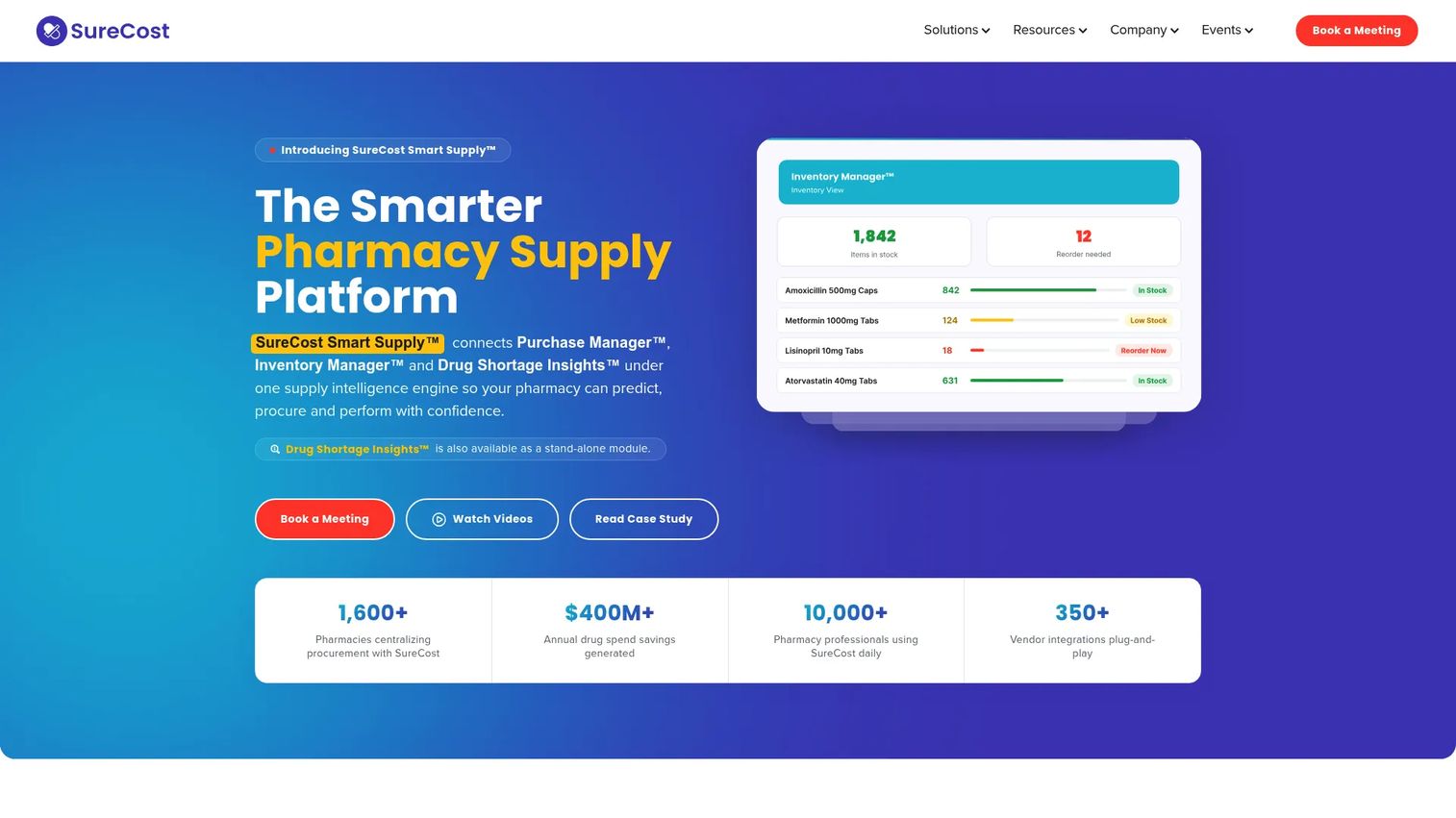
SureCost is a pharmacy supply platform covering purchasing, pharmaceutical inventory management software, drug-shortage intelligence, vendor integrations, and DSCSA compliance. It offers side-by-side vendor pricing, one-PO ordering, real-time inventory visibility, automated replenishment, multi-location transfers, and drug-shortage forecasting with vendor-agnostic alternatives. The platform is used by retail, long-term-care, specialty, and health-system pharmacies.
Best for: Retail, long-term-care, specialty, and health-system pharmacies that need centralized procurement, inventory visibility, and compliance workflows without replacing the full enterprise operating system.
Key features
- Side-by-side vendor pricing with one-purchase-order ordering
- Real-time inventory visibility and automated replenishment
- Drug-shortage forecasting with duration estimates and alternatives
- Supplier and wholesaler management across multiple locations
- DSCSA compliance workflow support
Why choose SureCost: Do not buy this expecting a wholesale pharmaceutical distribution ERP. The platform is purpose-built for pharmacy procurement and supply economics. Consider it when the core issue is purchasing efficiency, inventory visibility across pharmacy locations, and spend management, not distribution-center operations.
SureCost pricing: DSCSA Compliance Packages are priced at $29 per month per pharmacy for Receiving Pack or Transfers Pack, and $49 per month per pharmacy for the Bundle (verified October 2026). Pricing for the broader Smart Supply platform and core modules is not displayed; contact SureCost for those figures.
G2 rating: 4.3/5
6. Logic ERP
Logic ERP is an AI-enabled ERP platform supporting retail, distribution, manufacturing, accounting, inventory, supply chain, POS, and omnichannel operations. Its pharma wholesale software capabilities cover batch and expiry tracking, FIFO and FEFO inventory rules, billing and invoicing workflows, multi-location warehouse management, and sales and stock reporting. The platform includes cloud and desktop access with mobile order booking.
Best for: Pharmaceutical wholesalers that need commercial transaction control alongside stock management, particularly in markets served by the vendor's regional deployment footprint.
Key features
- Batch and expiry tracking with FIFO and FEFO inventory rules
- Billing, invoicing, and accounts receivable workflows
- Multi-store and multi-warehouse inventory management
- Supply-chain management and auto-replenishment
- Cloud and desktop access with mobile order booking
Why choose Logic ERP: This is a workflow-first option for pharma wholesale operations where commercial transaction complexity, batch controls, and expiry rules are the primary drivers. Validate whether the vendor's regulatory and tax assumptions align with your distribution geography before committing. The listed pricing applies to India, Bangladesh, Bhutan, and Sri Lanka; international buyers should confirm regional terms directly.
Logic ERP pricing: Logic Business plans start at approximately ₹1,638 per month (billed yearly) for the Basic tier, with Standard, Professional, and Professional Plus tiers at higher rates. Enterprise-Core pricing requires contacting the company. All prices shown are for India and neighboring markets, with taxes additional.
G2 rating: 4.8/5
7. Easysol Pharma Distribution Software
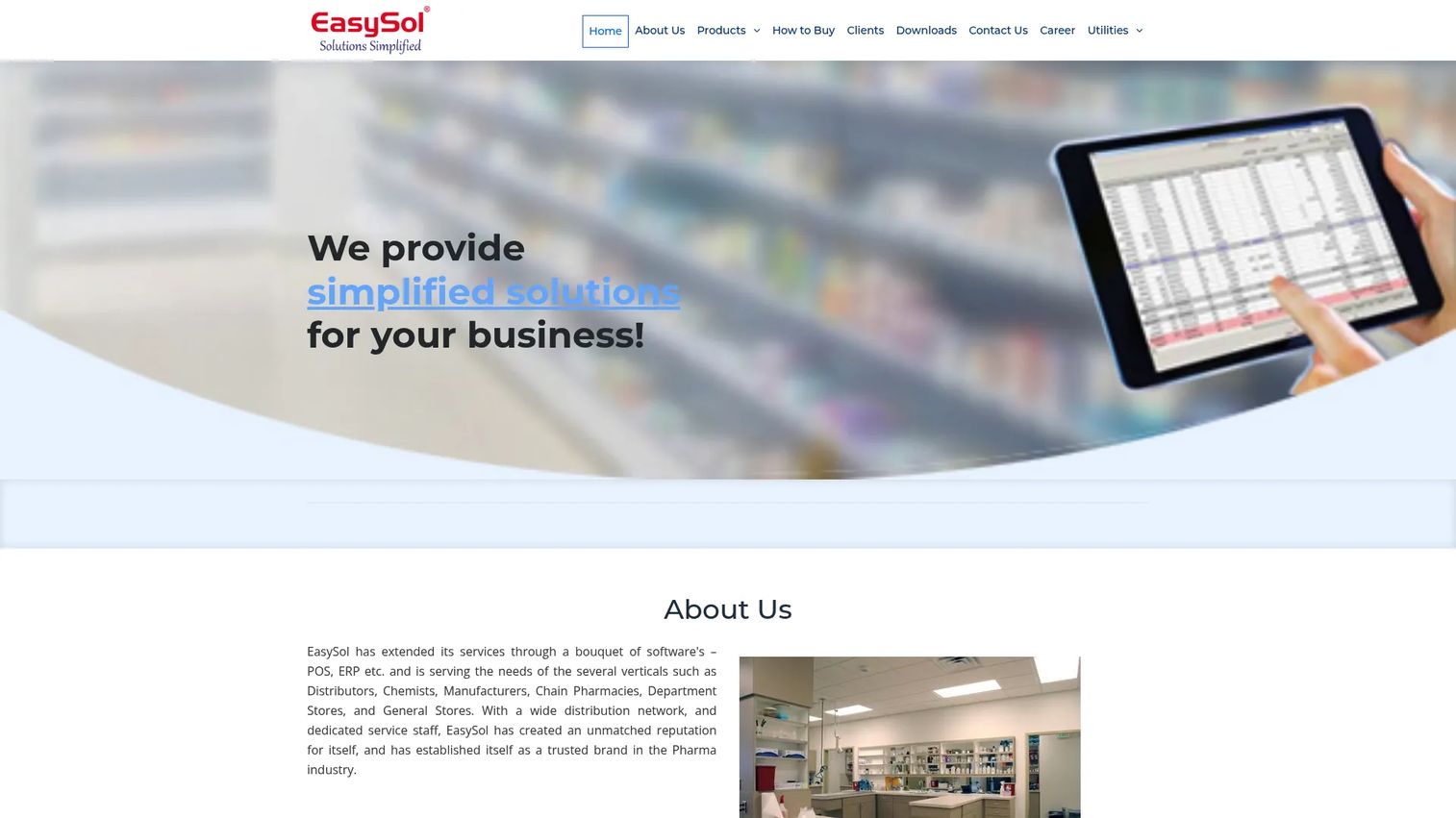
Easysol Pharma Distribution Software is a pharma distribution management system combining inventory management, accounting, sales, purchasing, reporting, and customer-specific pricing. The platform covers purchase import, invoicing, returns, and full sales-cycle support, alongside batch-wise, company-wise, and category-wise inventory control. It includes GST reports, expiry tracking, reorder alerts, and slow-moving inventory reporting.
Best for: Small to mid-sized pharmaceutical distributors that want a vertical-specific distribution platform without the implementation footprint of a large enterprise ERP.
Key features
- Batch-wise, company-wise, and category-wise inventory control
- Purchase import, invoicing, returns, and sales-cycle support
- Expiry, reorder, slow-moving, and non-moving inventory reporting
- Customer-specific pricing rules and financial accounting
- GST reports and integrated accounting workflows
Why choose Easysol Pharma Distribution Software: Put this on the shortlist when vertical specificity matters more than building a multi-industry ERP stack. The platform is designed around pharmaceutical distribution workflows rather than adapted from a general distribution system. Ask the vendor to demonstrate backward and forward lot tracing with a realistic recall scenario before committing.
Easysol pricing: Pricing is not displayed on the official site. Contact Easysol directly or request a demo through the buying page for a quote. Ask for line-item costs covering users, modules, data migration, and implementation.
8. BizNET
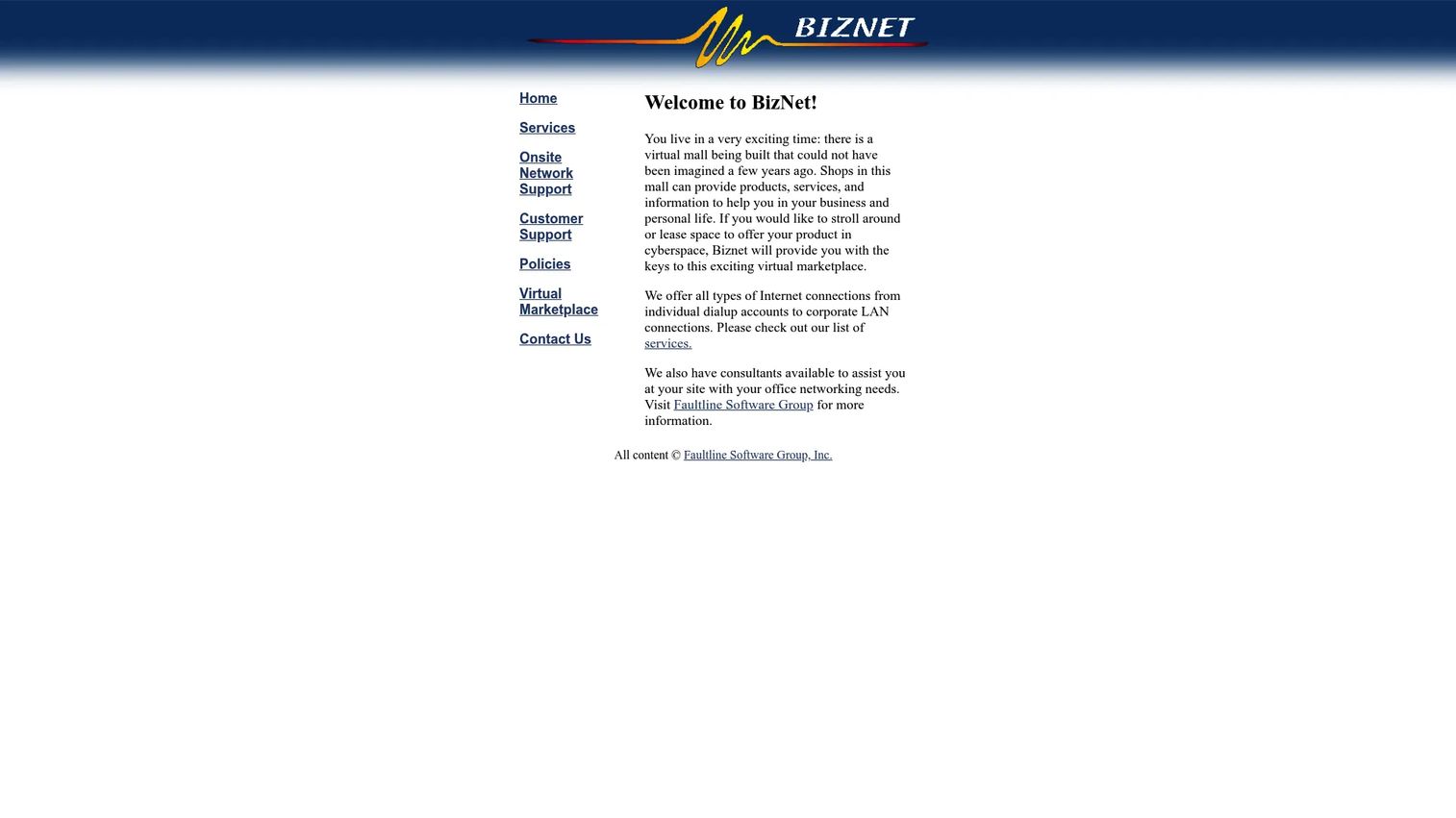
BizNET provides internet connectivity, email, web hosting, domain, and business networking services. The official site and verified G2 profile indicate a legacy-oriented internet service provider focused on dial-up access, email accounts, web hosting, and office network support rather than pharmaceutical distribution ERP or pharmaceutical inventory management software.
Best for: Organizations that want to verify whether any pharmaceutical distribution workflow capability exists within a BizNET offering before placing it on a formal shortlist.
Key features
- Internet access and email services
- Web hosting and domain management
- Office network support
- Virtual business marketplace
- Small business connectivity plans
Why choose BizNET: This is the diligence-heavy entry. Based on verified research, the BizNET product at biz.net does not present as a pharmaceutical distribution software platform. A separate G2 listing exists for a product called BizNet by Sarjen System, but it has zero reviews and no verified pharmaceutical distribution capabilities. Confirm exact product scope and workflow fit directly with the vendor before including this on any operational shortlist.
BizNET pricing: Plans run from $20 per month (Personal) to $75 per month (Small Business) for internet and hosting services, per the official pricing page verified October 2026. These prices reflect connectivity services, not distribution software licensing.
Considerations when choosing pharmaceutical distribution software
Match the software type to the operating problem
A distribution ERP, a traceability platform, and a pharmacy purchasing platform solve different problems. If finance and fulfillment are fragmented, start with ERP. If serialized transaction data is the immediate blocker, evaluate a dedicated DSCSA software platform alongside the ERP shortlist. If pharmacy purchasing is the constraint, a focused pharmacy inventory tool resolves it faster than an enterprise-wide implementation.
Validate lot, serial, and expiry workflows in a live scenario
Do not accept "lot tracking" as a checkbox capability. Ask vendors to demonstrate receiving, putaway, allocation, picking, returns, hold status, recall lookup, and expiry prioritization in a realistic workflow. The difference between a system that records lots and one that operationalizes them becomes visible only in a live scenario with your own data patterns.
Map DSCSA and data-exchange responsibilities
This is a buyer validation task, not a compliance guarantee from the vendor. Ask who owns EPCIS generation, partner connections, transaction data retention, exception handling, and verification workflows. Understand where audit exports come from and whether they require manual assembly. Your legal and compliance teams, not the software contract, own the regulatory outcome.
Price the implementation, not only the license
Ask for a full cost view covering implementation, data migration, integrations, training, warehouse devices, EDI setup, additional locations, and ongoing support. For a Series B company under board pressure to show payback, the implementation variable often exceeds the license cost in year one. Get this in writing before signing.
Test reporting across operations and finance
The right system should answer practical operational questions without manual exports: Which lots expire next? Which orders are delayed? What is the financial exposure of a pending recall? Which warehouses are creating margin pressure? If the vendor needs multiple sessions to produce a clear answer, the reporting architecture will slow down your operations team at the worst moments.
Conclusion
Pharmaceutical distribution software is not a single category. Blue Link ERP is the broad shortlist candidate for connected pharmaceutical distribution ERP where finance and inventory need to share one system. Acumatica fits teams building a scalable cloud ERP with flexibility beyond vertical-specific constraints. BatchMaster ERP fits batch-driven organizations where production and quality controls shape distribution requirements.
LSPedia belongs on the list when DSCSA traceability is the primary bottleneck. SureCost fits pharmacy procurement and inventory economics specifically. Logic ERP and Easysol require close validation against geography, implementation model, and workflow fit before committing. BizNET requires direct verification of pharmaceutical distribution capabilities before any evaluation investment.
Start by mapping the problem you are trying to remove. If finance, inventory, and fulfillment are fragmented, evaluate ERP first. If DSCSA traceability is the immediate blocker, evaluate a specialized traceability platform alongside the ERP shortlist. Then make every vendor demonstrate the workflow with your own lot, expiry, return, and recall scenarios before the implementation conversation begins.
For software vendors building products in this category who want to show buyers exactly how their platform works before booking a call, Guideflow lets you create self-serve, interactive product evaluations your buying committees can explore at their own pace.
Start your journey with Guideflow today!
FAQs
Pharmaceutical distribution software supports regulated drug, medical supply, and healthcare-product distribution operations. It covers inventory management, order processing, fulfillment, lot tracking, pharmaceutical traceability, compliance workflows, warehouse activity, and financial controls. Products in this category range from full pharmaceutical ERP software to specialized DSCSA platforms and pharmacy-focused inventory tools.
Lot and serial tracking, expiry management, recall workflows, warehouse controls, order processing, purchasing, financial integration, reporting, EDI, and trading-partner integrations are the core capabilities. DSCSA-related functionality, including EPCIS support and transaction data retention, should be validated against your specific operating model and trading-partner requirements before a platform is selected.
Pharmaceutical ERP software is typically broader. It combines distribution processes with finance, purchasing, inventory, reporting, and sometimes manufacturing or quality functions. Pharmaceutical distribution software may refer to the full ERP or a narrower platform focused on distribution and traceability workflows. The distinction matters when scoping an implementation.
U.S. pharmaceutical trading partners may need systems that manage transaction data, serialization records, traceability, verification workflows, and partner data exchange. Software capabilities help support those requirements, but they do not replace legal, quality, or compliance review. Validate with internal counsel and quality teams, not the vendor's marketing materials.
FEFO stands for first expired, first out. It prioritizes inventory with the nearest expiration date when operationally appropriate, reducing the risk of expiry-related write-offs and ensuring that older stock moves before newer stock. It is particularly relevant in pharmaceutical and food distribution where expiry management is an operational and regulatory priority.
Suitable systems can help identify affected lots, locate inventory, trace shipment history, place stock on hold, and document recall response activity. Ask vendors to demonstrate backward and forward tracing using a realistic recall scenario with your own lot structure. The speed and completeness of that demonstration is a direct proxy for how the system will perform under an actual recall.
EPCIS is a GS1 data standard used to exchange event and traceability information across supply chains. It matters when trading partners need structured serialization and movement data that can be ingested across different systems. Under DSCSA requirements, EPCIS is the format through which transaction data and serialization events are communicated between manufacturers, distributors, and dispensers.
Pricing varies significantly across platform types. Blue Link ERP runs $12,000 to $60,000 in year-one license fees. Acumatica's APEX for Distribution starts under $1,495 per month. SureCost's DSCSA compliance packages start at $29 per month per pharmacy. BatchMaster and Easysol require direct quotes. The total cost for any implementation also reflects data migration, integrations, training, and support, which often exceed the license in year one. Compare total first-year cost against ongoing operating cost, not the headline license price alone.
For further context on adjacent supply-chain software, see our guides to cold chain software and accounting software.