You can run one show from a spreadsheet. A full season breaks it.
The rehearsal schedule changes. Box office needs the updated seating chart. Development wants three years of donor history for a grant application. The production manager needs tomorrow's call sheet. Meanwhile, every department is working from a different version of the truth, and someone always finds out at the worst possible moment.
Theatre management software exists to close that gap. One system that covers scheduling, ticketing, patron data, production coordination, and reporting so your operations lead has something they can actually defend to the board. According to the National Endowment for the Arts (2026), 21.6% of U.S. adults attended a live theater, music, or dance performance in the previous month during spring and summer 2024. That audience is showing up. The operational question is whether your systems can keep up.
The category is fragmented, which is part of the problem. Ticketing platforms, donor CRMs, production planning tools, workforce apps, and cinema automation systems all get called "theater management software." This guide maps the landscape clearly so you can shortlist based on your actual bottleneck, not a feature checklist.
What's inside
This guide compares 17 theater management software platforms for 2026, covering live theater, performing arts organizations, and cinema operators. Both "theater" and "theatre" spellings appear because vendors and buyers use both.
Selection criteria:
- Fit for live theater, performing arts, or cinema operations
- Depth in ticketing, CRM, production scheduling, staffing, or cinema automation
- Pricing transparency and implementation expectations
- Reporting quality, integrations, and mobile access
TL;DR
- Best for production and opera management: ArtsVision, for organizations where the season calendar is the operating system
- Best ticketing-first pick for smaller venues: ThunderTix (from $1/ticket) or Arts People ($0.99/ticket) for community theaters replacing disconnected box office tools
- Best patron CRM and fundraising: Tessitura, Spektrix, PatronManager, or Neon One (from $99/month) depending on scale and Salesforce preference
- Best for staff and workforce operations: Connecteam, with a free plan and paid tiers from $29/month for the first 30 users
- Best cinema operations pick: GDC Theatre Management System TMS-2000 for multiplex screen automation
- Best enterprise venue operations: Momentus Technologies or AudienceView Unlimited for large facilities with complex multi-space calendars
What is theater management software?
Theater management software is a digital system that helps performing arts organizations, venues, and cinema operators manage scheduling, ticketing, staffing, patron data, production workflows, and reporting.
The category is not one product type. Platforms differ sharply by primary focus:
- Ticketing-first systems: Handle seat maps, online sales, season packages, and box office workflows
- Production-first systems: Cover rehearsal calendars, callsheets, artist contracts, crew scheduling, and touring
- CRM and fundraising-first systems: Manage donor history, giving campaigns, memberships, and patron engagement
- Workforce-first systems: Coordinate shifts, time tracking, mobile communication, and deskless staff operations
- Venue operations systems: Handle multi-space bookings, resource planning, event management, and financial reporting
- Cinema automation systems: Manage screens, playlists, DCPs, KDMs, POS integration, and remote monitoring
Core capabilities across the category include:
- Ticketing, seating, subscriptions, and box office workflows
- Patron CRM, donor history, fundraising, and email marketing
- Production planning, rehearsal schedules, callsheets, and touring logistics
- Staff scheduling, time tracking, and internal communication
- Reporting, financial tracking, and operational analytics
- Integrations with payment processors, accounting tools, marketing platforms, and calendar systems
- Mobile access for front-of-house, backstage, and field teams
Live theater versus cinema: These are different operational categories. Live theater tools handle people, schedules, donors, production assets, and audience relationships. Cinema systems handle screens, playlists, DCPs, KDMs, POS integration, and technical automation. A cinema operator buying a live theater CRM is solving the wrong problem entirely.
When to use theater management software
Coordinate a full season without spreadsheet drift
Once you have multiple productions, overlapping rehearsal windows, guest artists, and shared venue spaces, a shared calendar and spreadsheet breaks. Theatre scheduling software gives everyone access to the same production calendar, callsheets, and availability data in real time. This is where ArtsVision and Propared earn their place.
Replace disconnected ticketing and patron data
Patron records split across a ticketing tool, a donor database, and an email platform make retention reporting nearly impossible. One system connecting ticket purchases, giving history, membership renewals, and campaign engagement gives your development team what they need for grant reporting and your board needs for revenue visibility.
Manage staff and front-of-house operations
Theaters with part-time staff, seasonal ushers, volunteers, and concession crews need more than a group text chain. Staff scheduling, time tracking, checklists, and mobile communication tools matter most on show week, when coverage gaps cost real money. Connecteam and Hubworks address this workflow directly.
Separate cinema operations from live performance workflows
Cinema operators need show playlist management, screen monitoring, DCP ingestion, KDM validation, and POS integration. Those requirements share no overlap with rehearsal scheduling or donor management. Choosing a live theater platform for a multiplex operation, or vice versa, creates immediate workflow mismatches that implementation effort cannot fix.
Theater management software comparison
The table below is a starting point for shortlisting, not a final buying decision. Pricing and G2 ratings reflect verified data at the time of research. Request a demo or quote before committing, and confirm current pricing directly with each vendor.
| # | Product | Best for | Key differentiator | Pricing | G2 rating |
|---|---|---|---|---|---|
| 1 | ArtsVision | Opera and production-heavy performing arts teams | Artist contracts, ensemble rostering, season calendars, and touring logistics | Quote-based | N/A |
| 2 | Arts People | Community theaters and arts nonprofits | Ticketing, donations, CRM, and memberships in one arts-focused platform | $0.99/ticket + fees | 4.5/5 |
| 3 | ThunderTix | Ticketing-first theaters and live event venues | Reserved seating, season packages, ticket sales, and box office tools | From $1/ticket | 4.6/5 |
| 4 | Tessitura | Large performing arts organizations | Patron CRM, ticketing, fundraising, memberships, and analytics | Quote-based | 3.8/5 |
| 5 | Neon One | Nonprofit theaters focused on fundraising | Donor management, fundraising, events, and nonprofit CRM | From $99/month | 4.2/5 |
| 6 | Connecteam | Deskless theater staff and venue operations | Staff scheduling, time tracking, forms, training, and mobile communication | Free plan; from $29/month | N/A |
| 7 | Momentus Technologies | Enterprise venue and event operations | Venue bookings, event operations, resource planning, and reporting | Quote-based | 4.4/5 |
| 8 | Comscore | Cinema analytics and box office measurement | Film performance data, audience measurement, and entertainment reporting | Quote-based | 4.2/5 |
| 9 | Propared | Production management and performing arts scheduling | Production calendars, callsheets, contacts, and inventory | From $99/month | 4.5/5 |
| 10 | Shoflo | Live production run-of-show management | Rundowns, cue sheets, and live event coordination | From $1,099/year | 4.5/5 |
| 11 | Hubworks | Theater staff operations and scheduling | Workforce tools for shifts, tasks, and team communication | Quote-based | 4.6/5 |
| 12 | Spektrix | Ticketing and patron CRM for arts organizations | Ticketing, marketing, fundraising, reporting, and audience engagement | Quote-based | N/A |
| 13 | PatronManager | Salesforce-based patron CRM | Ticketing, fundraising, marketing, and CRM on Salesforce | Quote-based | 3.6/5 |
| 14 | AudienceView Professional | Growing venues and performing arts teams | Ticketing, fundraising, marketing, and reporting for live events | Quote-based | 4.3/5 |
| 15 | AudienceView Unlimited | Enterprise ticketing and event organizations | High-volume ticketing, audience data, integrations, and access control | Quote-based | N/A |
| 16 | ArtsMan Theater Manager | Box office and patron management | Ticketing, donations, passes, accounting, and patron database | Quote-based | 4.5/5 |
| 17 | GDC Theatre Management System TMS-2000 | Cinema and multiplex operators | Screen scheduling, playlist automation, DCP handling, and monitoring | Quote-based | N/A |
Best 17 theater management software for 2026
1. ArtsVision
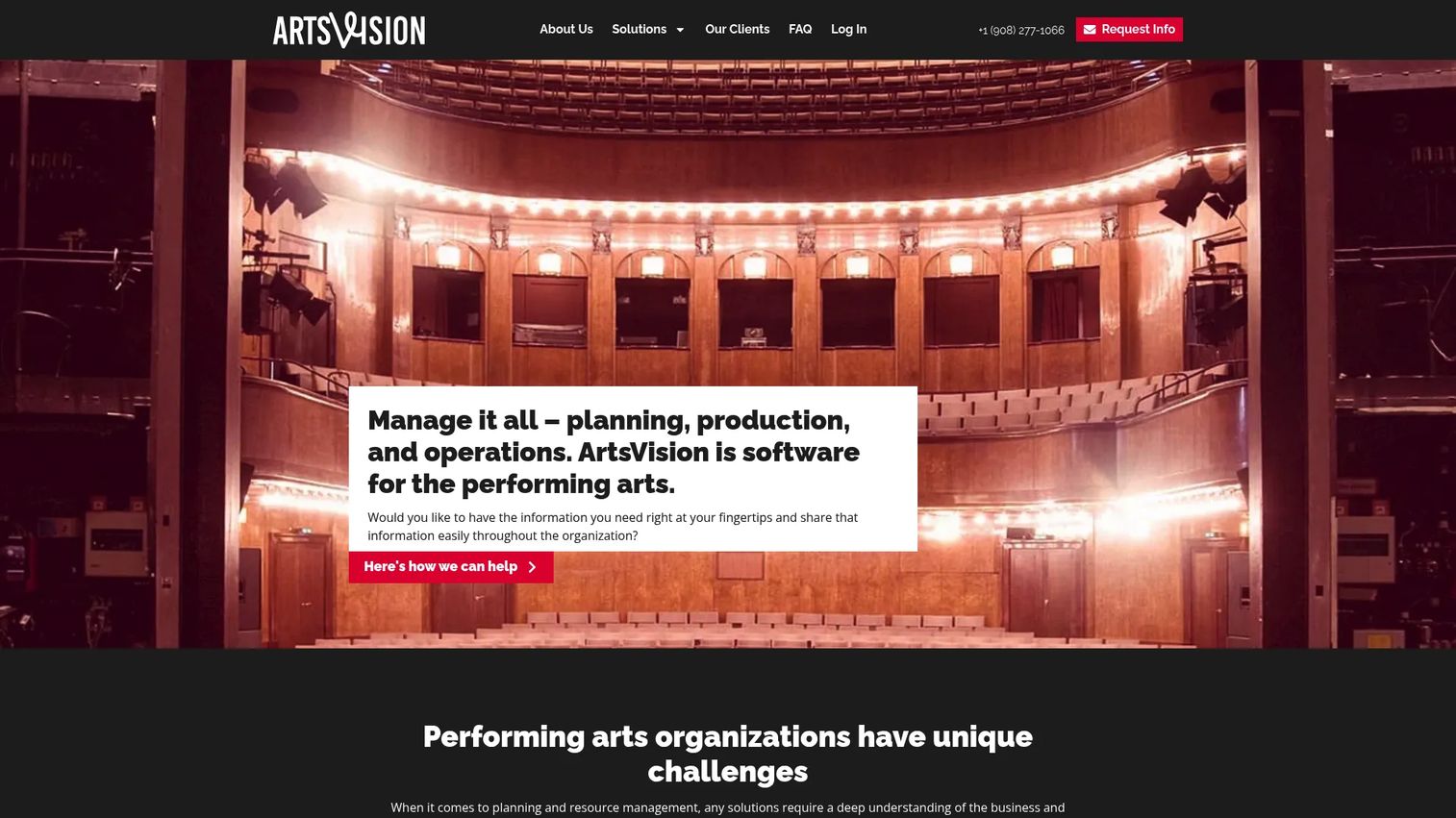
ArtsVision is cloud-based performing arts management software built for orchestras, operas, theaters, venues, schools, and festivals. It centralizes the operational calendar, personnel management, and production planning that arts management software often handles poorly: Artist contracts, ensemble rostering, touring itineraries, and season-level scenario planning in one system. The platform covers the full arc from audition to performance to payroll reporting.
Best for: Opera companies and production-heavy performing arts organizations that need to coordinate artists, ensembles, venues, and touring logistics.
Key features
- Season planning calendars with scenario planning
- Artist contracts and electronic signatures
- Casting, audition, and chorus rostering
- Personalized iCal feeds and shared calendar views
- Resource, labor, payroll, and rental management
Why choose ArtsVision: If the production calendar is your operating system and you need to manage dozens of artists, contracts, and touring details in one place, ArtsVision is built for that exact workflow. Generic project tools cannot replicate the depth of its performing arts operations model.
ArtsVision pricing: ArtsVision requires a sales conversation for pricing. Contact the vendor directly for a quote covering your organization's size, feature scope, and implementation needs.
2. Arts People
Arts People is ticketing and patron management software for performing arts organizations, now part of the Neon One platform. It covers online ticket sales, box office workflows, reserved seating, patron CRM, donations, memberships, subscriptions, and flex passes in one arts-focused system. For community theaters replacing disconnected ticketing and donor spreadsheets, Arts People handles the whole stack without requiring a separate donor database.
Best for: Community theaters and small-to-mid-sized performing arts nonprofits that need ticketing, patron records, fundraising, and memberships in one platform.
Key features
- Online and box office ticketing with custom seating maps
- Patron relationship management and communications
- Donations, memberships, and flex pass management
- Season subscription packages
- Reporting and Neon CRM integration
Why choose Arts People: Arts People fits organizations that want to stop switching between a ticketing tool and a donor spreadsheet. Its per-ticket model means you pay relative to activity rather than carrying a large fixed software cost during off-season.
Arts People pricing: Arts People charges $0.99 per ticket plus transaction fees. No monthly subscription applies.
G2 rating: 4.5/5
3. ThunderTix
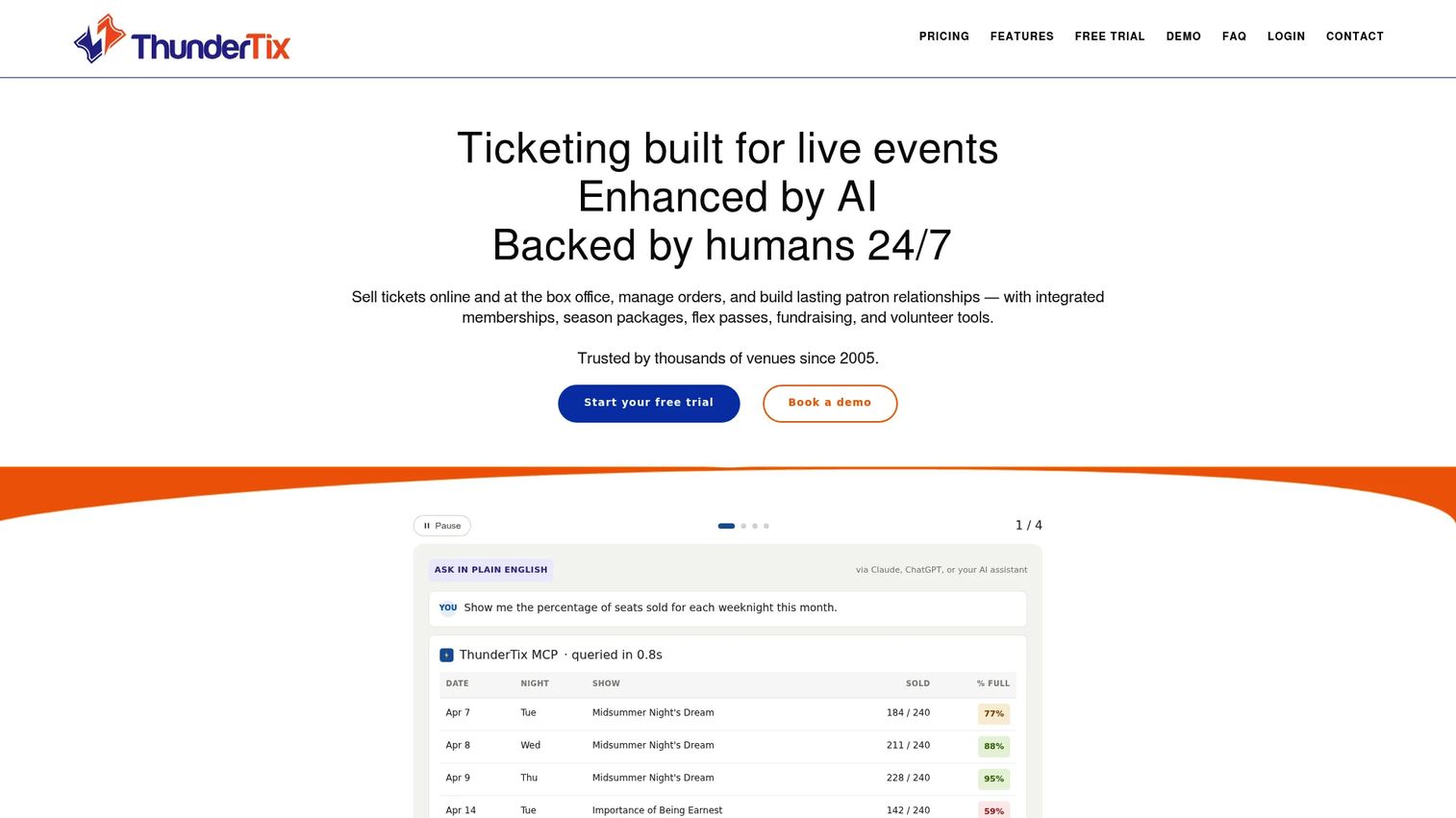
ThunderTix is a cloud-based box office software platform for theaters, schools, churches, live music venues, and museums. It covers reserved and general admission ticketing, interactive seating charts, barcode scanning, patron CRM with RFM scoring, fundraising, season packages, email marketing, volunteer management, and merchandise sales. The platform has added AI tools and MCP integration as of 2026.
Best for: Performing arts venues and live event organizations that need reserved seating, ticket sales, season packages, and box office tools as the primary workflow.
Key features
- Reserved seating maps with ADA seat linking
- Season passes, subscriptions, and flex passes
- Online ticket sales and box office management
- Barcode and QR code scanning
- Patron CRM with RFM scoring
Why choose ThunderTix: ThunderTix is the right pick when selling tickets and managing live event admissions is the core problem. Its per-ticket model with low monthly minimums makes it accessible for smaller venues without a large upfront commitment.
ThunderTix pricing: Plans start at $1 per ticket plus a $20/month minimum for General Admission, or $1.25/ticket plus $25/month for Reserved Seating (first 20 tickets included). A White Glove plan runs $1.95/ticket with a $195/month minimum. K-12 schools pay $0.65/ticket with no monthly fee. An additional 2% applies to donations, gift cards, merchandise, and memberships.
G2 rating: 4.6/5
4. Tessitura
Tessitura is a platform for performing arts and cultural organizations covering ticketing, fundraising, patron CRM, marketing, memberships, and analytics. It is widely used by large regional theaters, symphonies, opera companies, and museums that need deep patron data and integrated development workflows. Implementation is substantial and change management should be part of any evaluation.
Best for: Large performing arts organizations with mature development teams and complex patron, ticketing, and fundraising data requirements.
Key features
- Patron CRM database with full relationship history
- Ticketing and membership management
- Fundraising and development workflows
- Marketing segmentation and campaign tools
- Revenue and audience reporting
Why choose Tessitura: Tessitura fits institutions where patron data is the organization's most valuable operational asset. The breadth of the platform is its strength. For smaller organizations, that same breadth becomes implementation overhead.
Tessitura pricing: Tessitura pricing requires a sales conversation. The platform does not display figures on its website. Request a quote that separates subscription costs, transaction fees, and implementation services.
G2 rating: 3.8/5
5. Neon One
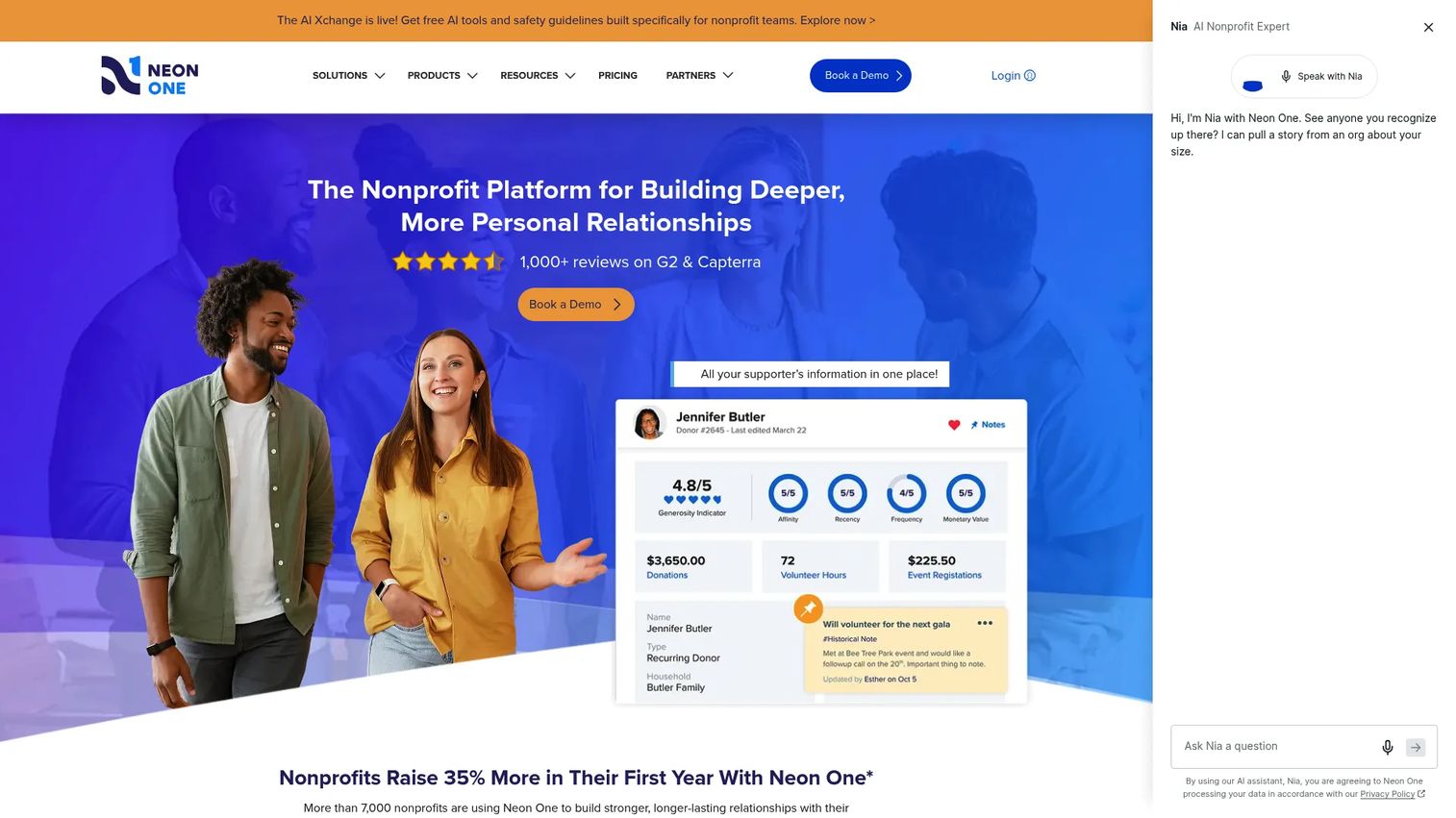
Neon One provides integrated nonprofit software covering donor management, fundraising, events, memberships, websites, email marketing, payments, and operations. For nonprofit theaters, it addresses the fundraising infrastructure that ticketing-only platforms leave out: Donor profiles, giving campaigns, peer-to-peer fundraising, recurring gifts, and automated workflows. Arts People (ticketing) is part of the Neon One product suite.
Best for: Nonprofit theaters that need donor management and fundraising infrastructure alongside event operations, particularly where donor relationships drive as much revenue as ticket sales.
Key features
- Donor and supporter management with unified profiles
- Fundraising campaigns, donation forms, and peer-to-peer giving
- Automated workflows, email marketing, and segmentation
- Event registration and membership management
- Nonprofit reporting dashboards
Why choose Neon One: Neon One earns its place when the development team's needs are as operationally important as box office. It is strongest as donor management software for theaters that run major gift campaigns, grant cycles, and membership programs as core revenue lines.
Neon One pricing: Neon CRM starts at $99/month for the Essentials tier, $209/month for Impact, and $409/month for Empower. Pricing is revenue-based. Additional products (Neon Websites, Neon Fundraise) have separate starting prices.
G2 rating: 4.2/5
6. Connecteam
Connecteam is an all-in-one employee management platform for deskless and mobile workforces. For theater operations, it covers staff scheduling, GPS-based time tracking, job assignments, forms, checklists, team chat, surveys, and training workflows. It is not ticketing or patron CRM software. Its value is on the operations side: Coordinating ushers, front-of-house staff, concessions crews, and part-time or volunteer teams without relying on group texts and paper sign-in sheets.
Best for: Theaters that need to coordinate front-of-house staff, backstage crew, concessions, ushers, and volunteers through a mobile-first workforce management tool.
Key features
- Staff scheduling and shift management
- GPS-based time clock and timesheets
- Mobile team communication and company updates
- Forms, checklists, and task assignments
- Training and onboarding workflows
Why choose Connecteam: Connecteam fits venues where shift coverage and staff communication are the operational bottleneck. The free plan works for very small teams. Paid plans cover 30 users at a flat rate before per-user charges apply, which keeps cost predictable for seasonal hiring peaks.
Connecteam pricing: The free Limited plan supports up to 10 users. Paid plans start at $29/month (Basic), $49/month (Advanced), or $99/month (Expert), billed annually for the first 30 users. Enterprise pricing is available by quote.
7. Momentus Technologies
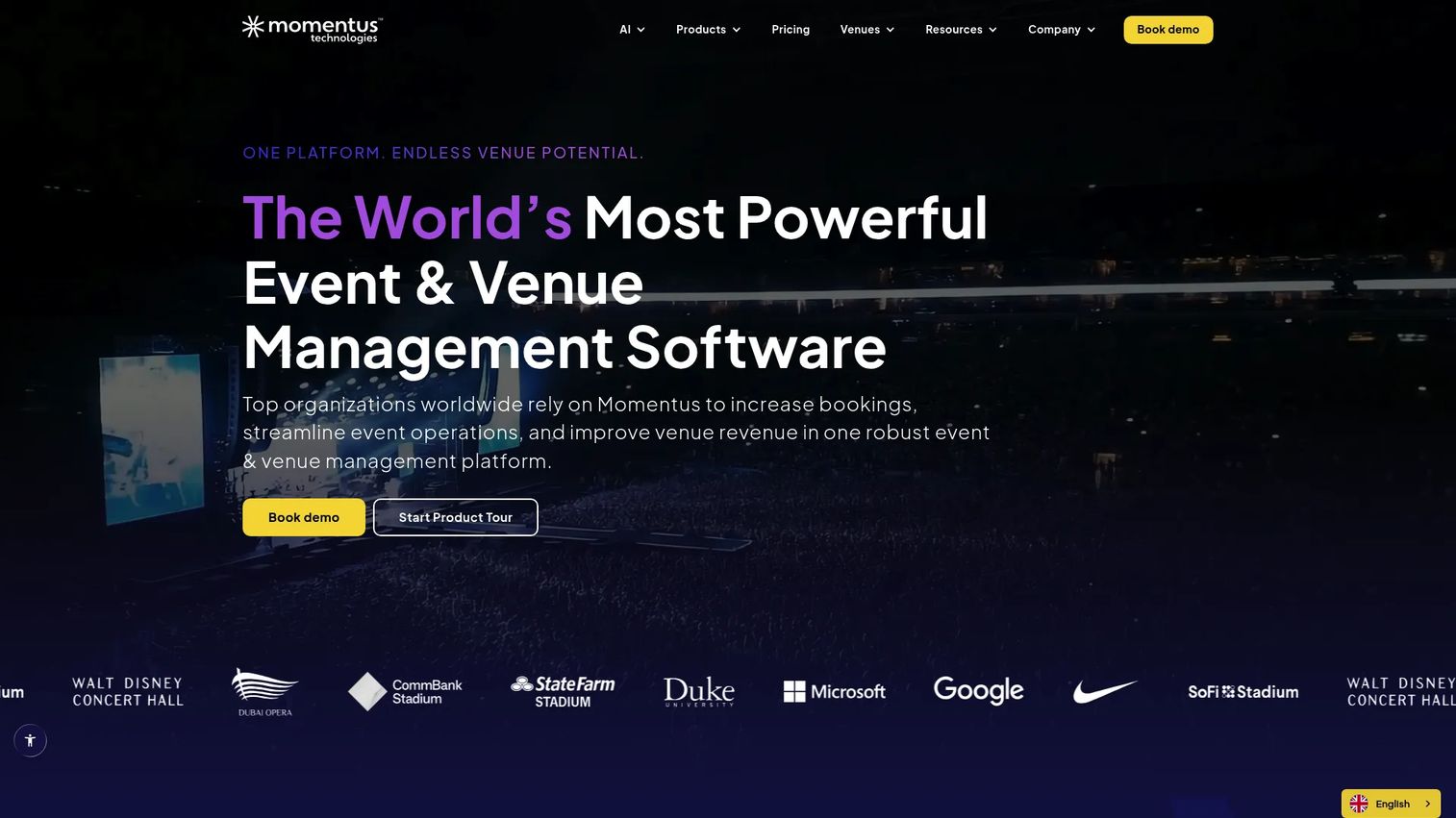
Momentus Technologies is venue and event management software for convention centers, corporate campuses, performing arts centers, stadiums, and conference centers. It handles CRM, lead management, proposals, contracts, event calendars, service orders, work-order management, invoicing, and audit-ready financial reporting. For performing arts centers managing multi-space rentals, external events, and internal productions alongside each other, Momentus provides the venue operations layer.
Best for: Large performing arts centers and venues managing complex bookings, multi-space operations, resource coordination, and financial reporting across multiple events and departments.
Key features
- Venue booking management and event calendar
- CRM, lead management, proposals, and contracts
- Event operations, service orders, and work management
- Accounting, invoicing, payments, and financial reporting
- Reporting dashboards and audit-ready exports
Why choose Momentus Technologies: Momentus earns its place in facility-led organizations where the venue itself is a revenue center, not just a home stage. Single-stage community theaters will find it more infrastructure than they need.
Momentus Technologies pricing: All plans are quote-based. Contact Momentus for pricing that reflects venue count, event volume, workflow scope, integrations, and onboarding requirements.
G2 rating: 4.4/5
8. Comscore
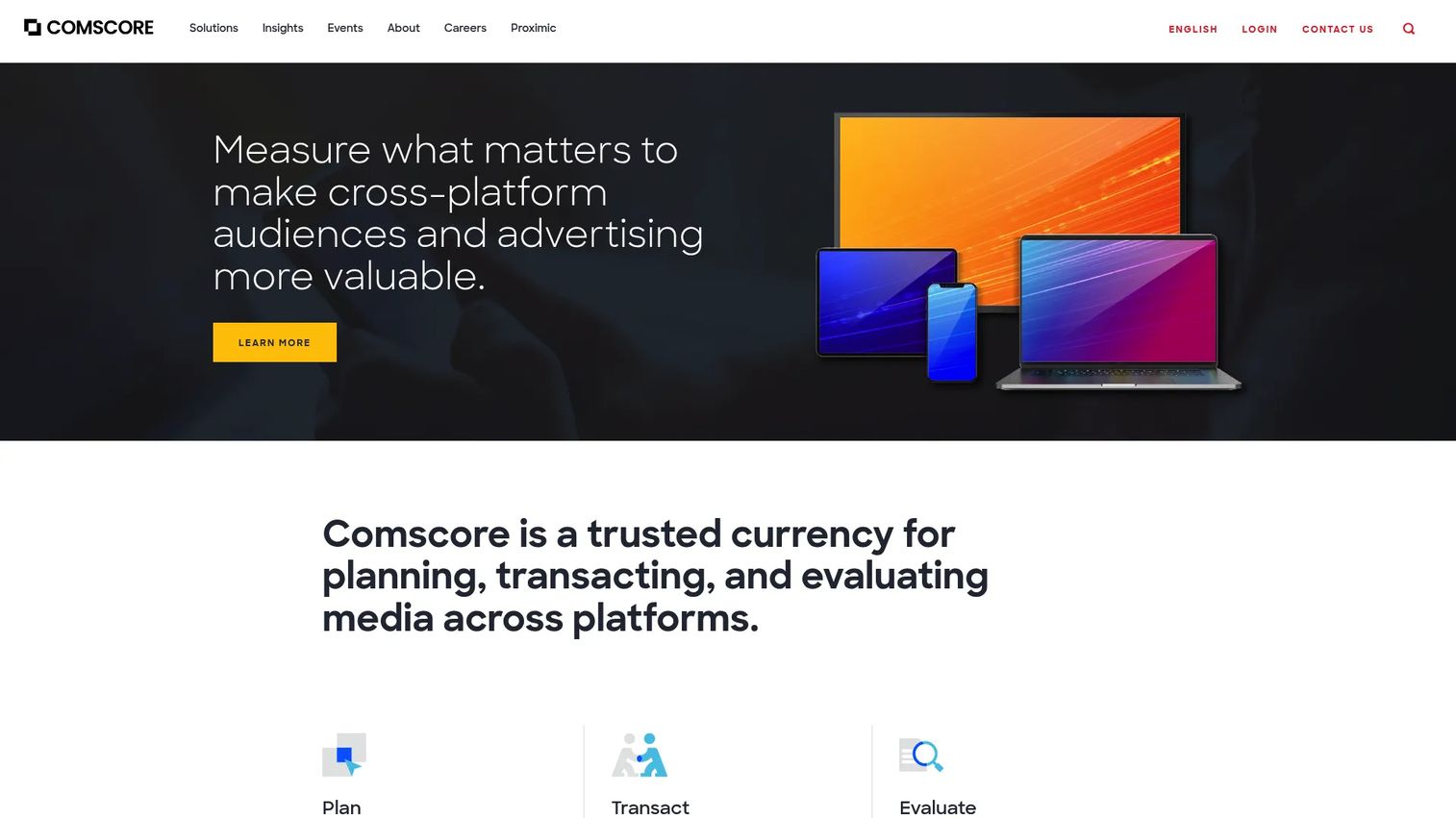
Comscore is a cross-platform media and audience measurement company. For cinema operators and entertainment teams, its film performance data, box office reporting, audience analytics, and market intelligence inform programming decisions, distribution strategies, and competitive benchmarking. It does not replace a cinema management system or a live theater CRM. It sits above those operational layers as a data and intelligence product.
Best for: Cinema operators, film distributors, and entertainment teams making programming and market decisions from box office performance data and audience analytics.
Key features
- Box office measurement and film performance reporting
- Cross-platform content and digital video measurement
- Audience segmentation and planning data
- Advertising effectiveness measurement
- Television and OTT audience insights
Why choose Comscore: Choose Comscore when your decisions depend on market-level film and audience data, not when you need to schedule screens or manage patron CRM. It is decision intelligence, not operational software.
Comscore pricing: Pricing requires a sales conversation. Contact Comscore for a quote based on the specific measurement products and data access your organization needs.
G2 rating: 4.2/5
9. Propared
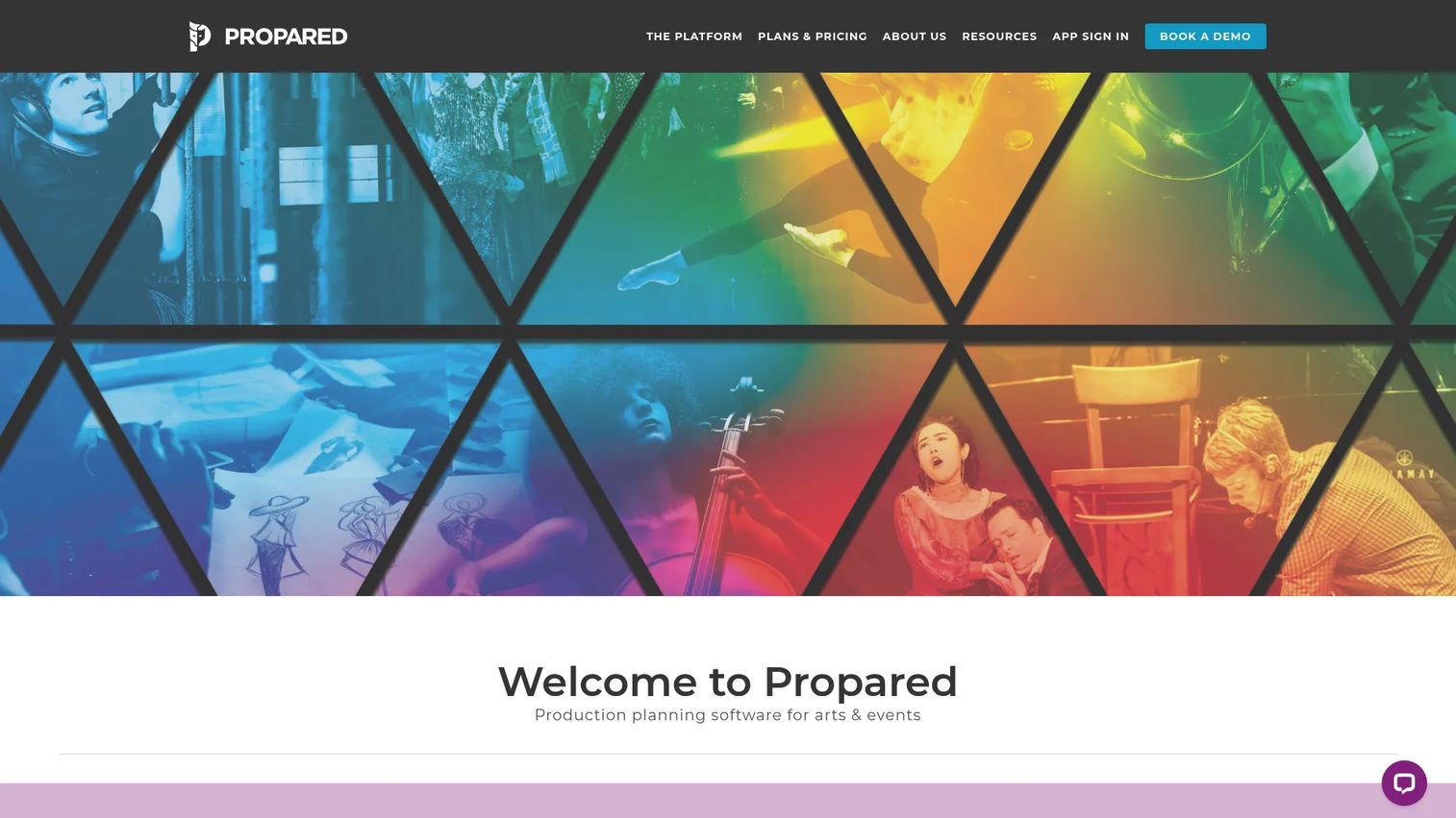
Propared is production planning software for arts, entertainment, venue, festival, and live event teams. It combines scheduling, inventory cataloging, and budgeting in one platform. Production managers use it for rehearsal calendars, performance schedules, load-in timelines, callsheets, resource allocation, pull lists, and budget summaries. The inventory module covers equipment, props, and assets with QR-code scanning and usage history. For teams tired of version-control problems in shared spreadsheets, Propared gives everyone access to the same current schedule.
Best for: Production teams in theater, dance, opera, and live events that need theatre scheduling software for rehearsals, events, callsheets, and production contacts.
Key features
- Production calendars with rehearsals, performances, and crew calls
- Callsheets and show reports
- Inventory catalog with photos, QR scanning, and usage history
- Budgeting with labor costing and resource allocation
- Team sharing and contact management
Why choose Propared: Propared is the right answer when the production schedule changes often and the whole team needs the latest version without chasing emails. Its 30-day free trial lets you validate the workflow before committing.
Propared pricing: Plans start at $99/month for Inventory Catalogue Only, $204/month for Project Management Only, or $299/month for Propared Complete. Annual billing includes a 15% discount. A 30-day free trial is available for all plans.
G2 rating: 4.5/5
10. Shoflo
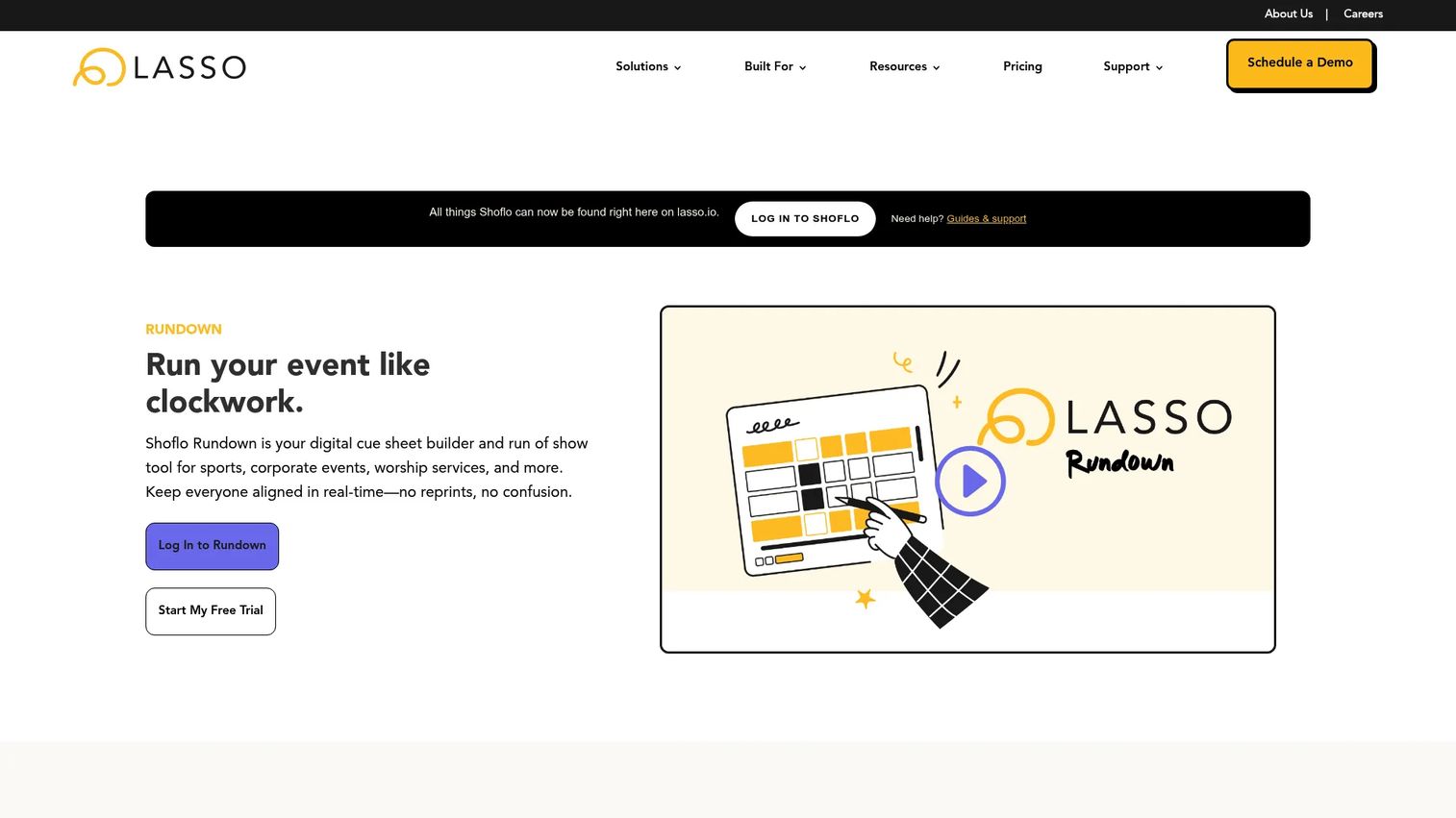
Shoflo (now part of LASSO) offers Rundown, a digital cue-sheet and run-of-show coordination tool for live events. Production teams use it to manage rundowns, timing, cues, presenter scripts, and show-caller tracking in real time across all devices. It is not a box office platform or patron CRM. It is the tool for what happens during the show, not before tickets sell.
Best for: Production teams at theaters, festivals, streamed events, and hybrid performances that need live rundown management and real-time show coordination.
Key features
- Real-time rundown collaboration and synchronization
- Automatic show-timing calculations
- Guest Pass sharing with customizable viewing permissions
- Show Caller Tracking and prompter views
- Reusable templates and Global Elements Manager
Why choose Shoflo: Shoflo fills a gap that neither scheduling software nor donor CRM touches: Coordinating the live execution of a show. For productions with complex cue sequences, timing-critical elements, or remote crew, it replaces paper rundown sheets and version-controlled documents.
Shoflo pricing: Rundown pricing starts at $1,099/year for a single user, $4,150/year for five users, or $7,299/year for 15 users. Prompter and Global Elements Manager add-ons are $1,250/year each.
G2 rating: 4.5/5
11. Hubworks
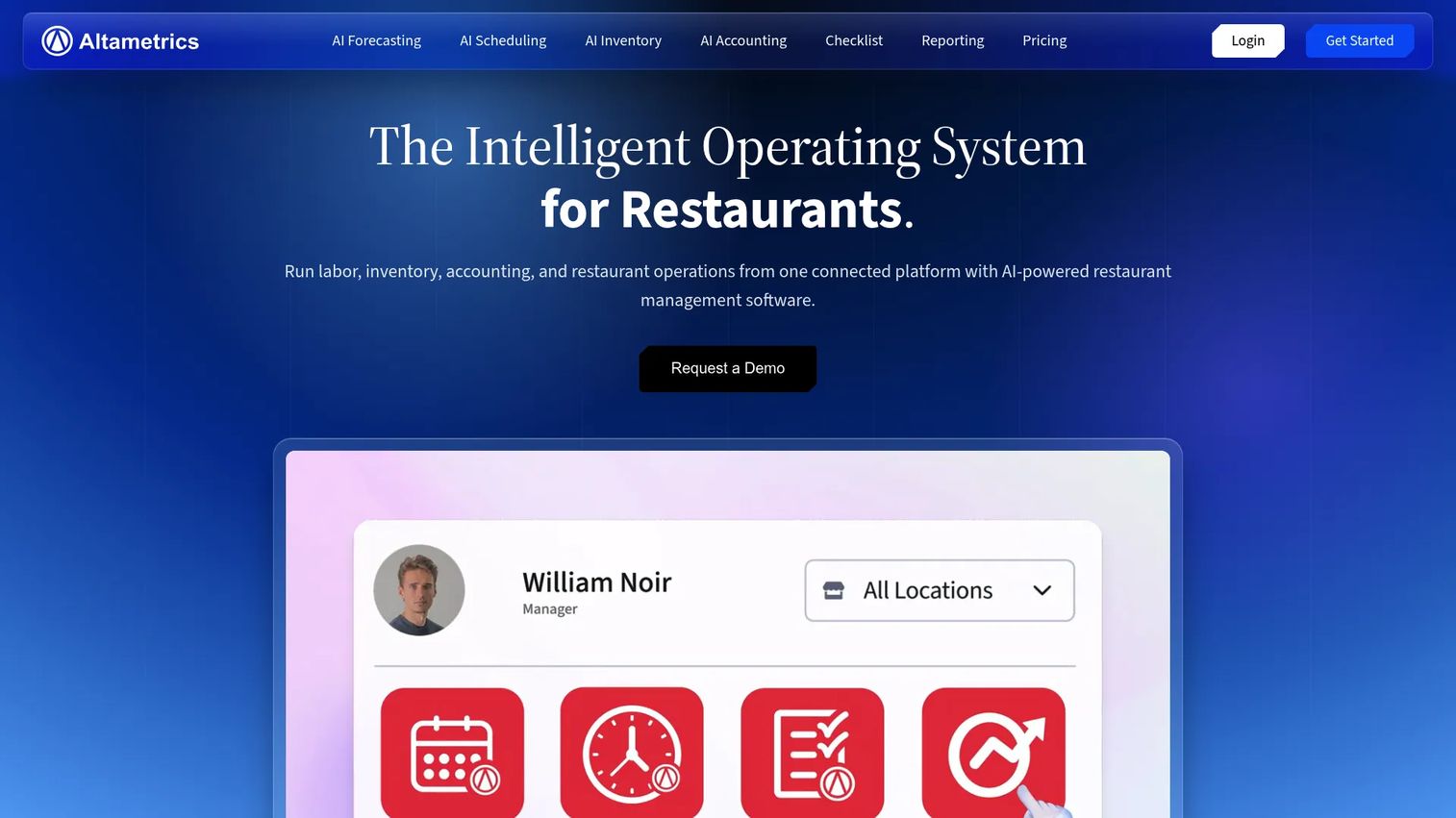
Hubworks is a suite of cloud-based business applications for restaurant, hospitality, retail, and food-service operations. For theater venues with concession operations or multi-location food and beverage management, its workforce scheduling, inventory forecasting, purchase order management, and business intelligence dashboards address operational consistency. It is not theater-specific software. Its relevance is narrowest for venues where food and beverage workforce operations overlap with theater staffing.
Best for: Theater operators with hospitality or concession operations that need workforce scheduling, inventory management, and operational analytics in one platform.
Key features
- Workforce scheduling and labor management
- Food management, inventory forecasting, and purchase orders
- Business intelligence dashboards and performance benchmarking
- Task management and operational checklists
- Team communication tools
Why choose Hubworks: Hubworks fits multi-location or process-heavy theater operations where workforce consistency and food and beverage operations need centralized reporting. For pure theater staffing without a hospitality component, Connecteam is a more direct fit.
Hubworks pricing: Hubworks operates on a monthly subscription model. Contact the vendor for current plan pricing, as specific tier figures are not publicly displayed on the vendor's site.
G2 rating: 4.6/5
12. Spektrix
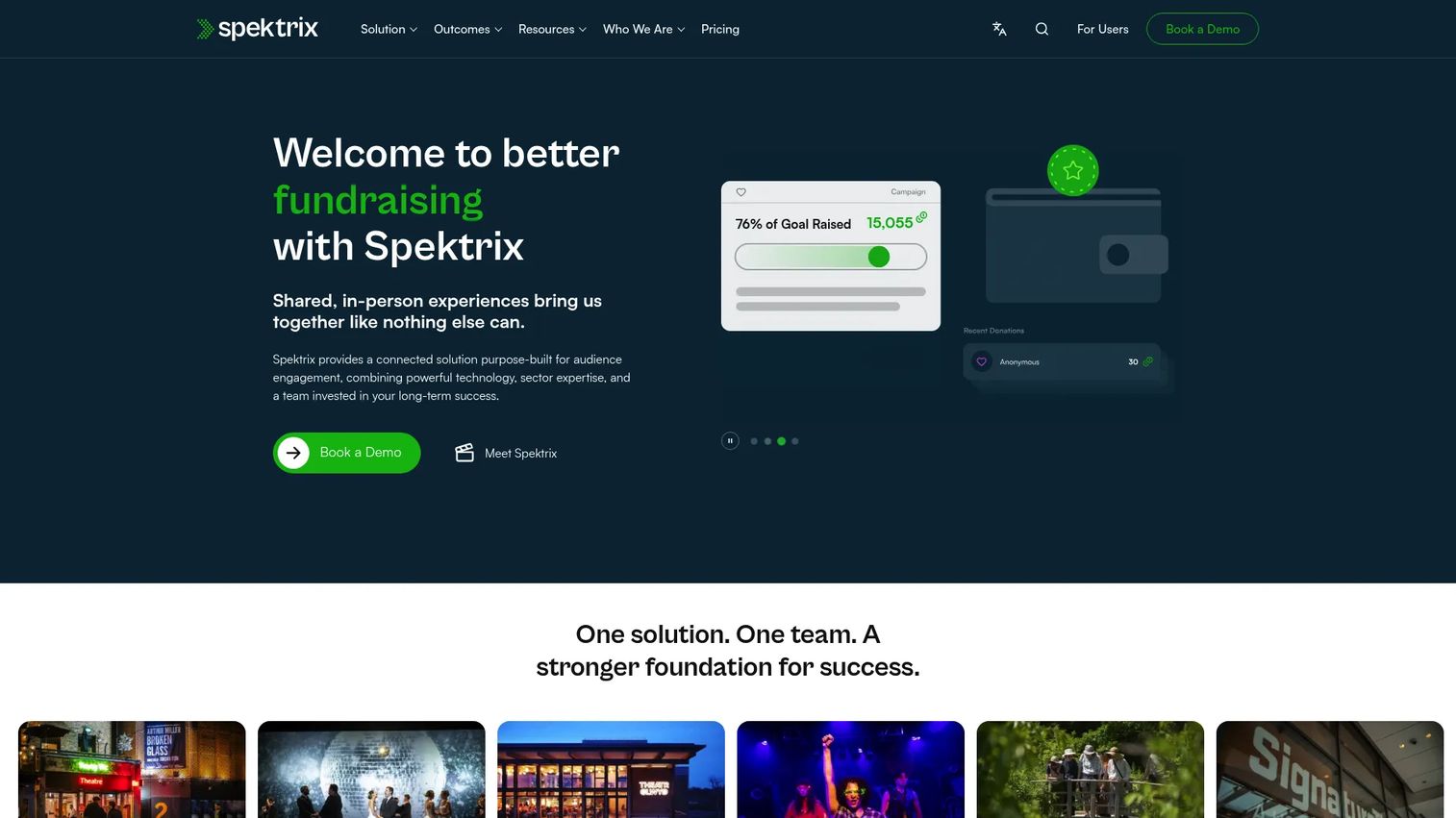
Spektrix is arts management software combining ticketing, patron CRM, marketing automation, fundraising, and audience insights for arts and cultural organizations. Box office teams use it for seating, ticket sales, subscriptions, and accessible seat selection. Development teams use the fundraising and donation tools. Marketing teams use campaign segmentation, digital advertising integration, and automated communications. All patron activity connects to a single CRM record.
Best for: Performing arts organizations that want ticketing, CRM, marketing, and fundraising connected in one arts-focused system, with a shared-success pricing model that scales with activity.
Key features
- Ticketing, box office, and seating plan management
- CRM and patron relationship insights
- Fundraising and donation tools
- Digital marketing and advertising automation
- Integrated payment processing
Why choose Spektrix: Spektrix is a strong pick for organizations that want to connect ticket transactions with long-term audience development strategy. Its shared-success pricing model means costs scale with organizational activity rather than a fixed seat-count or user-count license.
Spektrix pricing: Spektrix uses a shared-success pricing model with a single service charge that scales with your organization's activity. Pricing is not publicly stated. Request a quote directly from Spektrix that separates the service charge, card processing fees, and any partner or integration costs.
13. PatronManager
PatronManager is Salesforce-based arts CRM software covering ticketing, fundraising, marketing, and patron management for performing arts and cultural organizations. Because it runs natively on Salesforce, it inherits Salesforce's CRM, automation, reporting, and integration capabilities. Implementation requires Salesforce licensing and admin capacity alongside PatronManager configuration.
Best for: Arts organizations committed to Salesforce CRM that want ticketing and fundraising workflows integrated directly into the Salesforce platform.
Key features
- Salesforce-based CRM with patron history
- Ticketing and subscription management
- Fundraising and donor management
- Marketing campaigns and patron engagement
- Event inventory API
Why choose PatronManager: PatronManager makes sense when Salesforce is already in the stack or when the development team is making the case for Salesforce as a long-term CRM foundation. The Salesforce ecosystem offers reporting depth and integration breadth that arts-specific platforms cannot match. Plan for Salesforce licensing and internal admin time as part of total cost.
PatronManager pricing: PatronManager does not display pricing on its website. Contact the vendor for a quote that includes PatronManager licensing, Salesforce licensing, implementation services, and ongoing support.
G2 rating: 3.6/5
14. AudienceView Professional
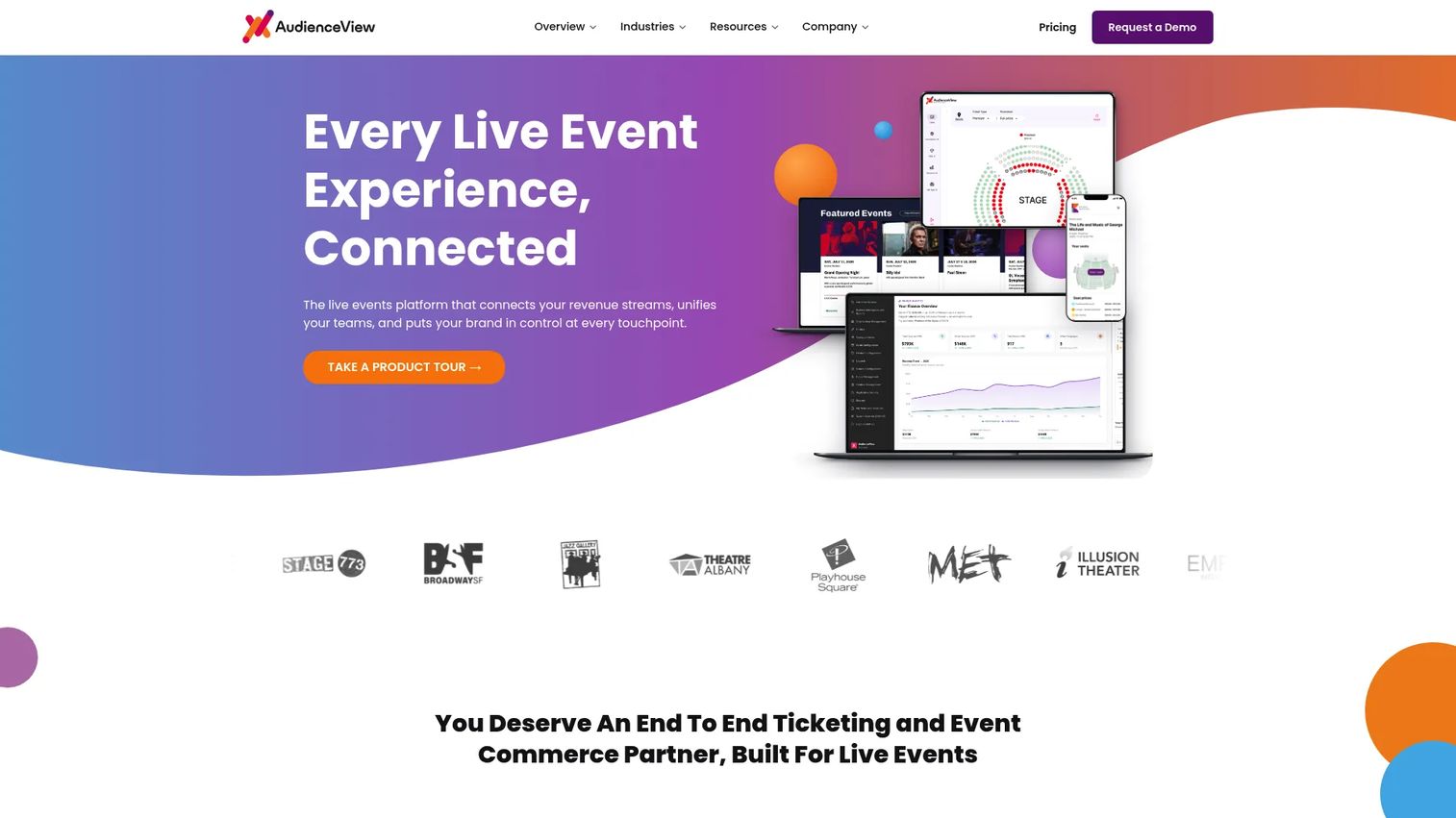
AudienceView Professional is an all-in-one platform for ticketing, fundraising, patron CRM, email marketing, and reporting for live event organizations. It covers online ticket sales, box office operations, reserved seating, donation workflows, audience segmentation, and event analytics. For growing venues and performing arts teams that need more than a basic ticketing tool but are not yet at enterprise scale, AudienceView Professional covers the operational surface without the complexity of a full enterprise deployment.
Best for: Growing venues and performing arts teams that need ticketing, fundraising, and audience development workflows without jumping to an enterprise-scale system.
Key features
- Online ticketing and box office management
- Donations, memberships, and donor management
- Integrated patron CRM and audience segmentation
- Email marketing and engagement tools
- Reporting and event analytics
Why choose AudienceView Professional: AudienceView Professional fits organizations that have outgrown a basic ticketing tool but want to defer the implementation complexity of enterprise systems. It provides audience development workflows alongside ticket sales, which matters when patron retention is a revenue goal.
AudienceView Professional pricing: AudienceView offers flexible subscription and per-ticket pricing. Contact AudienceView for a customized quote reflecting your venue size, event volume, and feature requirements.
G2 rating: 4.3/5
15. AudienceView Unlimited
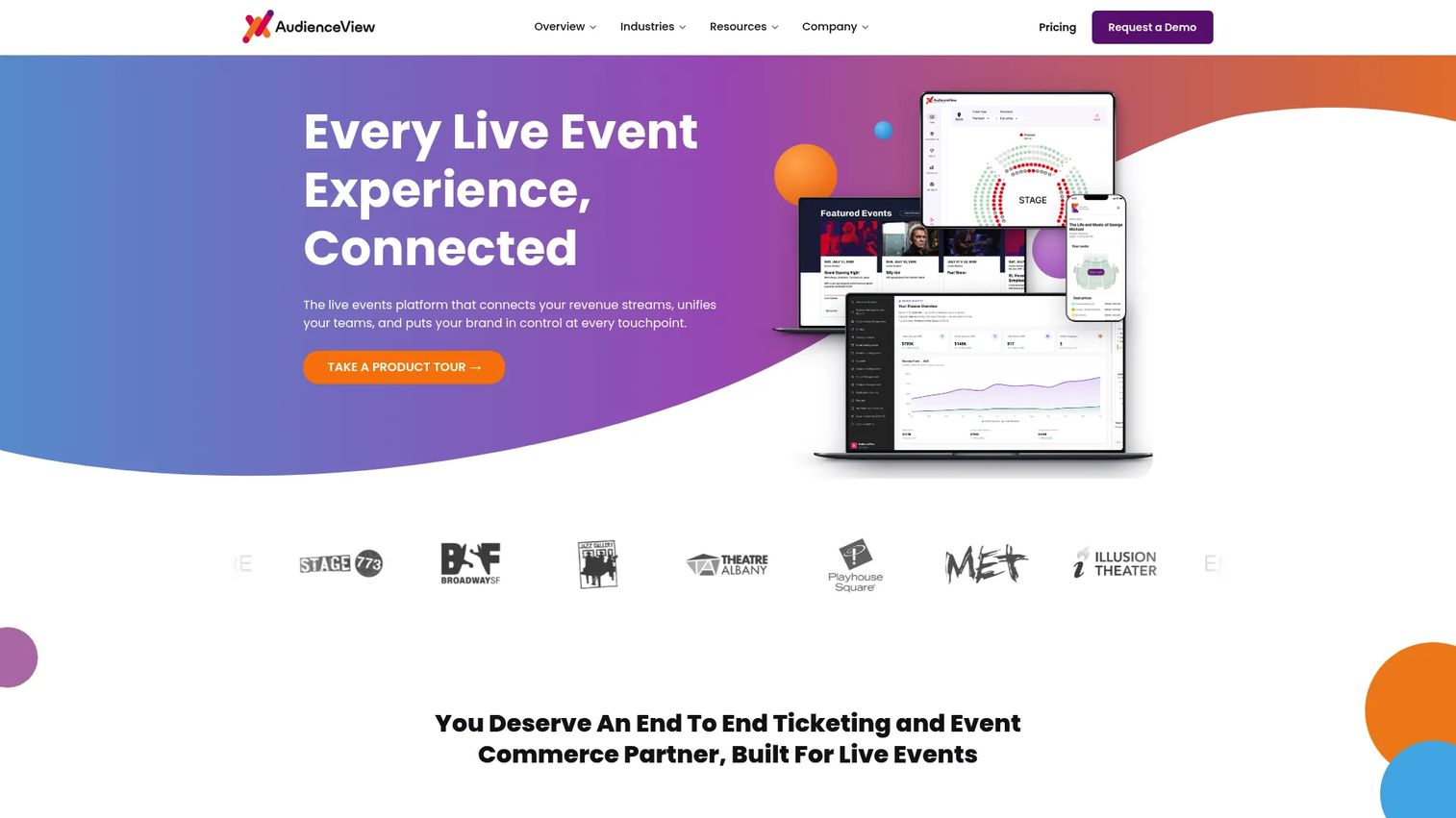
AudienceView Unlimited is the enterprise product for large and complex live event organizations. It adds configurable multi-venue ticketing, kiosk and POS applications, advanced access control, e-commerce capabilities, CRM, fundraising, and API access to AudienceView's core platform. For high-volume ticketing organizations with multi-venue operations, complex integration requirements, and enterprise governance needs, Unlimited is the appropriate tier.
Best for: Enterprise venues, ticketing organizations, and large event teams with high-volume sales, multi-venue operations, and complex access control requirements.
Key features
- Enterprise ticketing and e-commerce
- Real-time CRM and customer data management
- Fundraising, donations, and memberships
- Online, kiosk, POS, and access control applications
- Configurable reporting, marketing, and analytics
Why choose AudienceView Unlimited: AudienceView Unlimited makes sense when ticketing volume, multi-venue complexity, and governance requirements have outgrown mid-market platforms. Evaluate it when integration with access control systems, external e-commerce, and enterprise reporting are all required simultaneously.
AudienceView Unlimited pricing: AudienceView Unlimited offers both subscription and per-ticket pricing models. Contact AudienceView for a quote that covers your volume, venue count, and integration scope.
16. ArtsMan Theater Manager
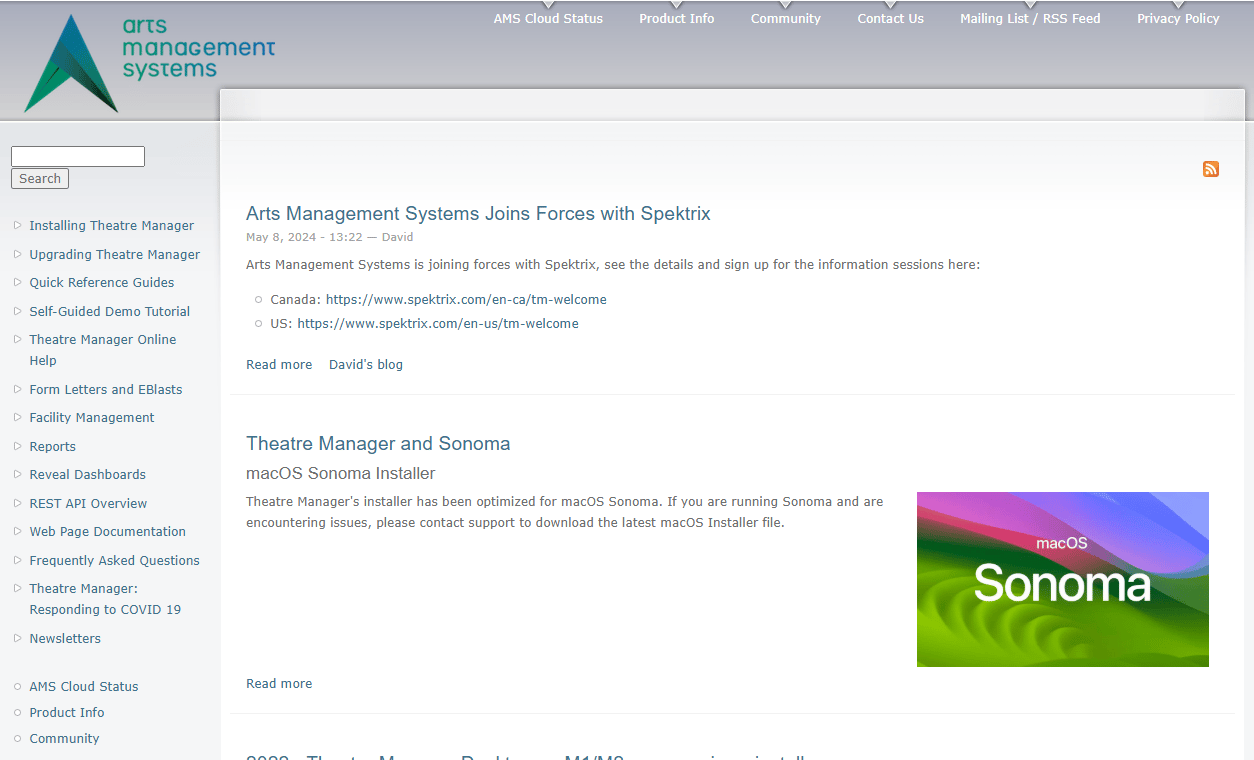
ArtsMan Theater Manager is venue management software for theaters, sports facilities, and arts organizations. It covers ticket sales, patron and demographic tracking, donations, memberships, volunteer management, mailing lists, marketing reports, and barcode tracking for tickets, passes, and subscriptions. For theaters that need box office administration, patron records, and donation tracking without migrating to a cloud-first platform, Theater Manager addresses those practical administrative workflows.
Best for: Theaters that want box office, patron management, donation tracking, and accounting-related workflows in theater-specific software.
Key features
- Ticket sales and box office management
- Patron and demographic tracking
- Donations, memberships, and volunteer management
- Mailing lists and marketing reports
- Barcode tracking for tickets, passes, and subscriptions
Why choose ArtsMan Theater Manager: ArtsMan fits teams that want theater-specific business administration, not a generic CRM repurposed for the arts. It is a practical fit for organizations that prioritize established workflow coverage over newer cloud-native features.
ArtsMan Theater Manager pricing: ArtsMan pricing requires a direct conversation with the vendor. The official website was not accessible at research time. Contact ArtsMan for current licensing, subscription, and support pricing.
G2 rating: 4.5/5
17. GDC Theatre Management System TMS-2000
GDC Theatre Management System TMS-2000 is a centralized cinema management system for multiplex operators. It handles show scheduling, POS integration, real-time screen monitoring, playlist automation, DCP and KDM detection and ingestion, quality assurance alerts, and remote cinema monitoring through the TmsAware app. This is cinema management software, not live theater software. Live performance teams should not evaluate it unless they operate cinema screens.
Best for: Cinema and multiplex operators managing screens, playlists, digital cinema content, automation, and remote monitoring.
Key features
- Show scheduling with POS integration and missing CPL or invalid KDM alerts
- Real-time centralized monitoring of projectors and audio devices
- Playlist management with Auto-SPL and TMS Template System
- Automatic DCP and KDM detection and ingestion
- Remote cinema monitoring via the TmsAware app
Why choose GDC Theatre Management System TMS-2000: GDC TMS-2000 is purpose-built for cinema operators whose primary workflow is screen management, not rehearsal scheduling or donor CRM. Its automation and monitoring capabilities address the technical operations that live theater platforms cannot touch.
GDC TMS-2000 pricing: Pricing requires a direct quote from GDC. Contact the vendor through the product page for pricing, training resources, documentation, and support terms.
Considerations when choosing theater management software
Start with the workflow that breaks most often
Before comparing platforms, identify the single operational bottleneck that causes the most damage. If ticketing is stable but the rehearsal calendar is chaotic, a ticketing-first platform will not fix the problem. If donor reporting is holding back a grant application, a production scheduling tool is the wrong answer. Match the software category to the actual failure point.
Separate live theater from cinema operations
Live theater and cinema share the word "theater," but they run on fundamentally different operational logic. Live teams need people management, patron relationships, production coordination, and scheduling. Cinema teams need screen automation, playlist management, DCP handling, POS integration, and technical monitoring. Buying a cinema system for a live theater organization, or vice versa, creates immediate workflow gaps that no amount of configuration can bridge.
Check implementation effort before signing
Theater management systems can touch ticketing, donor data, production calendars, accounting, marketing, and payroll. Before committing, ask vendors specifically about data migration scope, training requirements, integration configuration, and realistic go-live timelines. For organizations with active seasons, a poorly timed implementation creates more operational disruption than the problem it solves.
Verify reporting against the board packet
The right system should answer the questions your leadership already asks: Revenue by production, donor retention rate, subscription renewal percentage, attendance by channel, staff hours by department, and campaign performance. Run your current reporting requirements against each vendor's demo to confirm the outputs match before signing.
Evaluate support quality during show week
Support matters most when the lobby is full and something breaks on opening night. Ask vendors about response times for critical issues, availability during evenings and weekends, onboarding resources, training documentation, and references from organizations with a similar operating model and seasonal schedule.
Conclusion
The theater software landscape splits cleanly by operating model. ArtsVision and Propared address production and performing arts scheduling. ThunderTix, Arts People, AudienceView Professional, and ArtsMan Theater Manager cover ticketing and box office workflows. Tessitura, Spektrix, PatronManager, and Neon One address CRM, donor management, and audience relationships. Connecteam, Hubworks, and Momentus Technologies handle staff and venue operations. GDC TMS-2000 and Comscore serve cinema-specific operations.
The clearest buying mistake in this category is buying a ticketing platform when the real bottleneck is the rehearsal calendar, or buying production software when the board needs donor reporting. Shortlist three tools based on your primary operational pain, then ask each vendor to walk through the exact workflow that breaks today. Get clarity on data migration scope, integration requirements, and pricing structure before moving forward. The right system earns its place in the stack because it eliminates a brittle manual process, not because it has the most features.
FAQs
Community theaters generally need affordable ticketing, patron records, donation tracking, volunteer coordination, and basic reporting. Arts People ($0.99/ticket), ThunderTix (from $1/ticket), AudienceView Professional, and ArtsMan Theater Manager are all worth evaluating. The right choice depends on whether box office or donor management is the bigger operational gap.
Theater management software is the broader category, covering ticketing, patron CRM, fundraising, staffing, and production workflows. Theatre scheduling software refers specifically to the production and rehearsal coordination layer: Calendars, callsheets, spaces, personnel availability, and event timelines. ArtsVision and Propared are the clearest examples of scheduling and production-first tools within the larger category.
The decision comes down to the operational bottleneck. If the primary need is selling seats and managing admissions, a ticketing-first platform like ThunderTix or Arts People is sufficient. If the team also needs donor CRM, production scheduling, staffing coordination, and financial reporting from one system, a broader theater management system is worth the added implementation effort and cost.
Tessitura, Spektrix, Neon One, and PatronManager are the most commonly evaluated options. Tessitura and Spektrix are stronger for large organizations with dedicated development teams. Neon One (from $99/month) fits smaller nonprofits. PatronManager is worth evaluating for organizations already on Salesforce. Donor management should connect giving history, patron activity, campaigns, and grant-ready reporting in one system.
ArtsVision, Propared, and Shoflo address different layers of theater production software. ArtsVision handles season-level artist contracts, casting, ensemble rostering, and touring logistics. Propared manages production calendars, schedules, callsheets, inventory, and budgets. Shoflo covers the live execution layer: Rundowns, cue sheets, and real-time show coordination. Most production teams need Propared or ArtsVision for pre-show planning and Shoflo for the show itself.
No. Cinema management software handles screen scheduling, playlist automation, POS integration, DCP and KDM content handling, projector monitoring, and technical quality assurance. Live theater software handles rehearsal schedules, patron CRM, donor relationships, ticketing, artist contracts, and production coordination. GDC Theatre Management System TMS-2000 is a cinema-specific platform. Buying it for a live theater operation would address none of the operational workflows that matter.
Pricing models across the category vary significantly. Ticketing-first platforms charge per ticket ($0.99 to $1.95 per ticket depending on the plan). Nonprofit CRM platforms like Neon One start at $99/month. Production planning tools like Propared start at $99/month with annual billing discounts. Live production tools like Shoflo start at $1,099/year. Enterprise platforms including Tessitura, Momentus Technologies, AudienceView Unlimited, Spektrix, PatronManager, and GDC TMS-2000 all require sales quotes. When requesting quotes, ask vendors to separate subscription fees, transaction fees, implementation services, training, and integration costs.
Ask the vendor to walk through the exact workflow that is currently broken in your operation, not a general feature tour. Specific questions worth asking: How does data migrate from our current system? Which integrations are included versus billed separately? What does the go-live timeline look like for an organization our size? What support is available on evenings and weekends during show week? Can you connect us with a reference organization with a similar budget and operating model?