A single temperature excursion can wipe out an entire pharmaceutical shipment. A refrigeration unit fails on a Friday night, nobody sees the alert until Monday, and by then a truckload of vaccines or fresh produce is worthless. The cost is not just the product. It is the failed audit, the regulatory finding, the customer who never orders again.
That is the problem cold chain software exists to solve. The global cold chain monitoring market reached USD 8.31 billion in 2025 and is projected to hit USD 15.04 billion by 2030 at a 12.6% CAGR, according to MarketsandMarkets (2025). Growth like that reflects a simple reality: more temperature-sensitive goods are moving through more distributed logistics networks, under more regulatory scrutiny, than ever before.
If you are evaluating cold chain monitoring software right now, you are probably comparing the same handful of things: cloud dashboards, sensor and data logger support, temperature excursion alerts, and audit-ready reporting. The hard part is not finding a vendor. It is figuring out which platform actually fits your operation, whether you care most about compliance, real-time visibility, or route optimization.
This guide breaks down nine platforms so you can shortlist faster. If your broader stack also touches operational compliance, it is worth looking at audit management software and dedicated application performance monitoring tools alongside the temperature-specific options below. For teams that live in dashboards, pairing cold chain data with strong data visualization tools turns raw sensor logs into decisions.
What's inside
This guide covers cold chain monitoring, tracking, compliance, and predictive visibility platforms for teams shipping and storing temperature-sensitive goods. It is written for operators, compliance leads, and executives who need to reduce manual work, prove product integrity, and give leadership reliable reporting.
We selected platforms based on four criteria that matter most in real operations:
- Real-time temperature excursion alerts and monitoring
- Sensor and data logger support
- Audit-ready documentation and compliance reporting
- Cloud dashboards with cross-industry fit
The nine platforms span food, pharma, healthcare, and logistics use cases. Some lead on compliance, some on predictive analytics, and some on fast, browser-based deployment. We grouped them by the primary job they do best.
TL;DR
- Best for mobile-first operational compliance: SafetyCulture, for teams running inspections, checklists, and audits from the field.
- Best for centralized compliance control: Cold Path, for regulated storage and logistics that need automated calibration and audit-ready reports.
- Best for pharma and life sciences: elpro, for GxP-grade environmental monitoring and calibration services.
- Best for simulation and route optimization: SmartCAE, for digital twins, lane risk, and thermal packaging analysis.
- Best for end-to-end IoT monitoring: Xsense, for multi-stage software plus hardware coverage.
- Best for audit-ready records at scale: tempmate, for cloud visibility backed by a broad data logger portfolio.
- Best for browser-based deployment: Rebus Labs, for fast setup and secure cold chain visibility with no installs.
What is cold chain software?
Cold chain software is a system that monitors, records, and reports the temperature and condition of perishable or temperature-sensitive goods across storage and transport, so teams can prevent spoilage and prove compliance. It connects sensors, data loggers, cloud dashboards, alerts, and reporting into one workflow.
At its core, the category covers a few distinct jobs. Monitoring watches conditions in real time. Tracking follows the physical movement of goods. Compliance produces the timestamped records auditors demand. Predictive analytics flags risk before an excursion happens. Corrective action workflows tell someone what to do when something goes wrong.
Most platforms combine several of these features:
- Real-time visibility into temperature, humidity, and location
- Temperature excursion alerts via email, SMS, or app
- Sensor and data logger integrations across storage and transit
- Compliance reporting and audit trails with tamper-proof timestamps
- Predictive analytics that surface risk before product is lost
- Centralized dashboards for reporting across sites and shipments
Regulated industries lean on this software hardest. Food producers manage HACCP and USDA requirements. Pharma and healthcare teams answer to FDA and GxP standards. Logistics providers need proof of custody across every handoff. The common thread is that a paper log or a spreadsheet no longer survives an audit, and manual checks no longer scale across distributed cold chain temperature monitoring networks. Teams building out this kind of reporting muscle often evaluate broader marketing analytics software and agentic analytics software to unify operational and commercial data in one place.
When to use cold chain software
Monitor temperature-sensitive shipments in real time
Real-time visibility matters most during transit and cold storage, where conditions can drift in minutes. A reefer door left ajar, a compressor fault, a delayed dock transfer, each is a silent risk until a sensor reports it. Cold chain monitoring with live dashboards and instant temperature excursion alerts lets teams catch these events as they happen and route the exception to the right person. Exception handling is the whole point: you do not want to review a temperature log after the product is already ruined.
Reduce spoilage and product loss
Early detection changes the economics of the cold chain. When software flags an excursion in progress, teams can act, reroute a shipment, dispatch a repair, move product to a working unit, or make a documented disposition call. Predictive analytics push this further by spotting patterns that precede failures, so you intervene before spoilage occurs rather than after. For high-value pharma or fresh food loads, catching one excursion pays for the platform.
Pass audits and prove compliance
Auditors do not accept "we checked it." They want records: timestamped readings, calibration certificates, alert histories, and corrective actions, all in one place. Cold chain software centralizes this into audit-ready documentation that supports FDA, USDA, HACCP, and GxP workflows. Instead of scrambling to reconstruct a paper trail before an inspection, compliance leads pull a report on demand. That shift, from reactive scramble to always-ready, is why regulated operations adopt these tools first.
Comparison table
Here is how the nine platforms compare at a glance. Use it to narrow your shortlist, then read the full sections for the platforms that fit your operation. Pricing and ratings reflect what each vendor published at the time of writing.
| # | Product | Intent | Key use case | Pricing | G2 rating |
|---|---|---|---|---|---|
| 1 | SafetyCulture | Operational compliance | Mobile inspections, audits, and task workflows | Free; Premium from $24/license/mo (annual) | 4.6/5 |
| 2 | Cold Path | Compliance control | Regulated storage and logistics monitoring | From $39/month | Not listed |
| 3 | elpro | Pharma monitoring | GxP environmental monitoring and calibration | elproVIEWER Professional CHF 2,950 (one-time) | Not listed |
| 4 | SmartCAE | Simulation and optimization | Digital twins, lane risk, thermal packaging | Custom pricing | Not listed |
| 5 | Xsense | End-to-end IoT | Multi-stage cold chain monitoring | Contact sales | Not listed |
| 6 | tempmate | Audit-ready records | Cloud visibility with data logger portfolio | Free account available | Not listed |
| 7 | Antares Vision Group | Traceability | Inspection and lifecycle traceability | Contact sales | Not listed |
| 8 | Sensified | Last-mile visibility | App-free logger monitoring for shipments | Devices from $11 (one-time) | Not listed |
| 9 | Rebus Labs | Browser-based monitoring | Fast, secure cold chain visibility | Contact sales | Not listed |
Most vendors in this category gate pricing behind a sales conversation, which is common for hardware-plus-software offerings priced by deployment scale. Where a public figure exists, we have used it.
1. SafetyCulture
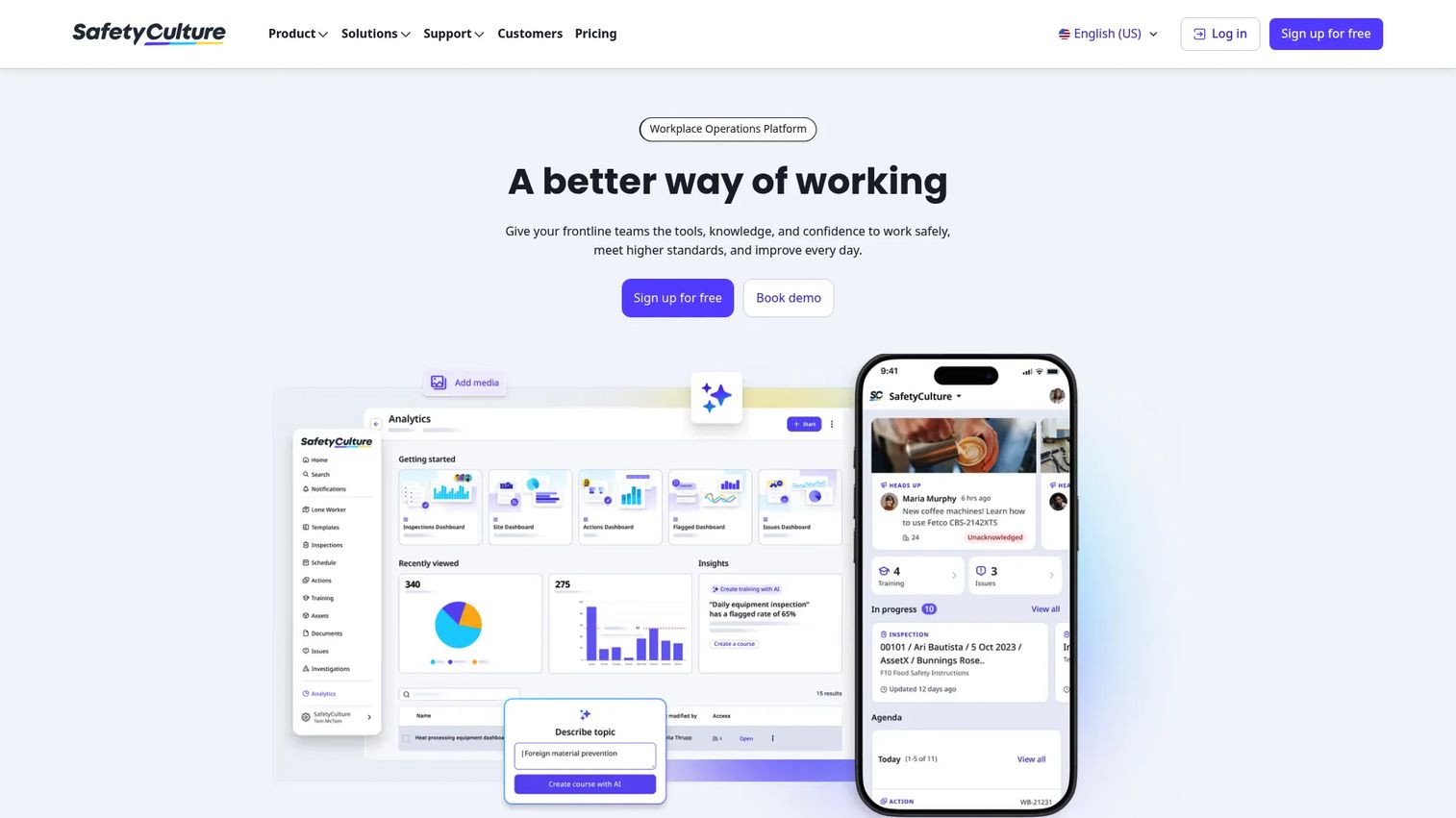
SafetyCulture is a workplace operations platform built around mobile inspections, audits, tasks, and training. For cold chain teams, its strength is turning field checks into structured, timestamped digital records that feed a central repository. If your temperature monitoring depends on people walking a floor, opening a unit, or logging a reading, SafetyCulture makes those actions auditable instead of leaving them in someone's notebook. It pairs sensor telematics with checklist-driven workflows, which fits operations where hardware coverage and human inspection both matter.
Best for: Teams needing mobile-first inspections, audits, and operational compliance workflows across distributed sites.
Key strengths
- Digital inspections and checklists: Standardize temperature checks and cold storage audits so every reading is captured the same way.
- Scheduled inspections and task actions: Automate recurring checks and route corrective tasks to the right person the moment an issue is flagged.
- Training and reporting workflows: Onboard staff on compliance procedures and pull audit-ready reports without stitching together spreadsheets.
Why choose SafetyCulture: It fits operations where compliance is a people-and-process problem, not just a sensor problem. Distributed teams across food service, warehousing, and logistics get one mobile-first system for inspections, corrective actions, and reporting, which reduces the manual overhead compliance leads spend chasing paper. If your cold chain tracking involves frontline staff more than fixed IoT infrastructure, this is a natural fit.
SafetyCulture pricing: A Free plan covers teams up to 10 people. Premium starts at $24 per license per month billed annually, or $29 per license per month billed monthly, and adds advanced templates, analytics, training, integrations, access management, SSO/SCIM, and telematics. Enterprise is custom-priced. SafetyCulture holds a 4.6 out of 5 rating on G2.
2. Cold Path
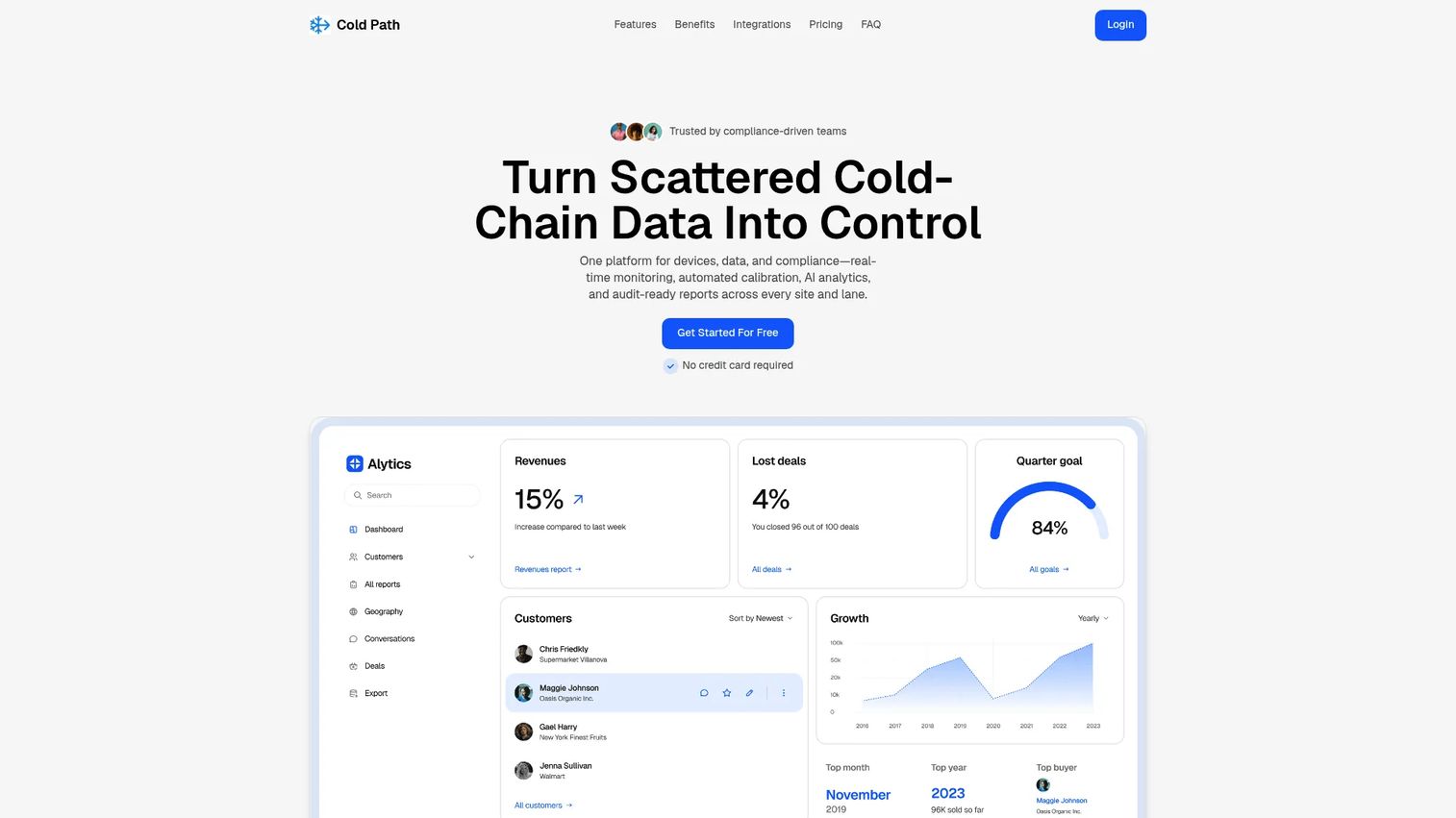
Cold Path positions itself as a centralized control layer for cold chain compliance, connecting devices, data, and analytics into audit-ready reporting. It handles real-time temperature and humidity monitoring, automated calibration and certificate management, and AI-driven risk insights in one platform. For regulated teams, the appeal is having device management, monitoring, and compliance documentation live in the same place instead of across three vendors. That consolidation is exactly what operators trying to reduce tool sprawl want to see.
Best for: Teams managing regulated cold chain storage and logistics that need compliance monitoring in a single system.
Key strengths
- Real-time temperature and humidity monitoring: Track conditions across storage and transit with live dashboards and temperature excursion alerts.
- Automated calibration and certificate management: Keep calibration records current automatically, so certificates are ready when auditors ask.
- AI-powered risk and trend insights: Surface patterns and risk signals through predictive analytics before they become excursions.
Why choose Cold Path: It is built for compliance-heavy operations that want automated calibration and reporting without a manual paperwork burden. The AI-driven trend analysis appeals to teams that want to move from reactive monitoring to predictive risk management. If your priority is proving compliance cleanly and reducing the hours spent maintaining certificates, Cold Path centralizes that work.
Cold Path pricing: Plans are published transparently. Starter is $39 per month, Growth is $99 per month, and Premium is $299 per month. The site advertises a free start with no credit card required, which lowers the barrier to a first evaluation.
3. elpro
elpro is a Swiss environmental monitoring provider focused on regulated industries, especially pharma, life sciences, and healthcare. It combines monitoring hardware, cloud-based GxP software, and real-time alerts with a deep data logger portfolio and calibration services. Where many platforms stop at software, elpro offers monitoring-as-a-service and compliance support, which matters when your quality team needs documented, validated processes rather than just a dashboard. Its credibility with regulated buyers is a big part of the pitch.
Best for: Pharma, life sciences, and healthcare teams needing compliant environmental monitoring backed by calibration services.
Key strengths
- Environmental monitoring hardware: A broad sensor and data logger portfolio built for regulated cold chain temperature monitoring.
- Cloud-based GxP monitoring software: Centralized cloud dashboard designed around GxP compliance and audit-ready documentation.
- Real-time alerts via email and SMS: Immediate temperature excursion alerts so quality teams respond before product integrity is compromised.
Why choose elpro: It fits organizations where validation and compliance are non-negotiable. The combination of hardware, GxP software, calibration, and predictive risk assessment appeals to pharma and healthcare teams that need a partner, not just a tool. If your audits are run against strict regulatory standards, elpro's monitoring-as-a-service model reduces the internal burden of staying compliant.
elpro pricing: elpro publishes a one-time price of CHF 2,950 for its elproVIEWER Professional software. Broader platform and hardware pricing is not publicly listed, and several products are quote-based depending on deployment. Contact elpro for a tailored quote.
4. SmartCAE
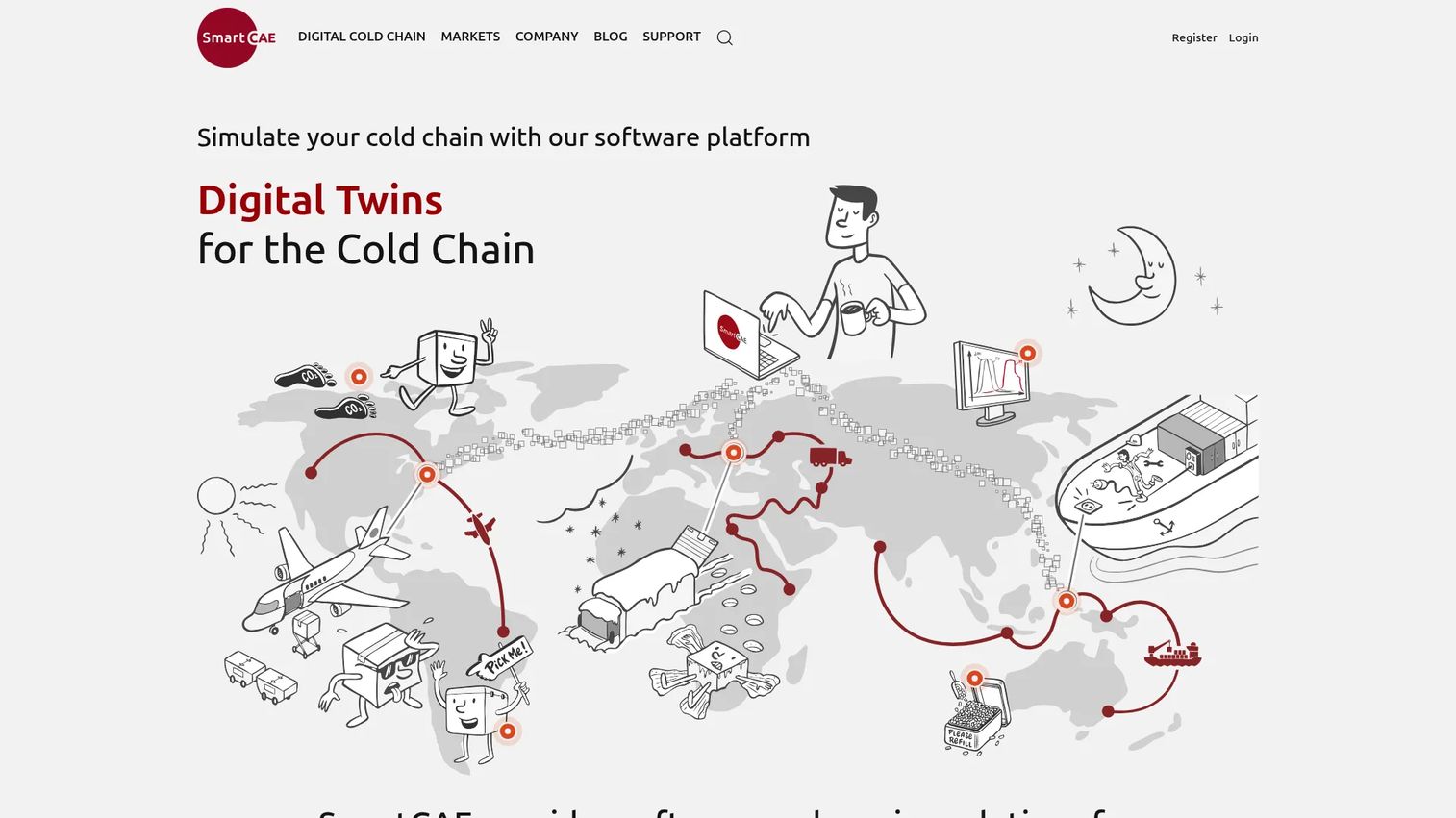
SmartCAE approaches the cold chain from a simulation and optimization angle. It focuses on digital twins, lane risk analysis, thermal packaging, lane profiles, data tools, and carbon footprint calculations. Rather than only monitoring live shipments, SmartCAE helps teams qualify routes, test packaging, and optimize before product ever ships. For operations that want to reduce risk at the design stage, that is a different and valuable job than real-time alerting alone.
Best for: Teams that want to simulate, qualify, and optimize cold chain routes and packaging before shipping.
Key strengths
- Digital twins and simulation: Model shipments and cold chain conditions virtually to test scenarios before committing physical product.
- Lane risk and lane profiles: Assess route-level temperature risk and build profiles that inform packaging and carrier decisions.
- Thermal packaging and carbon analysis: Evaluate packaging performance and factor sustainability into logistics visibility.
Why choose SmartCAE: It is the right pick when your biggest exposure is at the planning and qualification stage, not just live transit. Teams shipping high-value goods across variable lanes use simulation to reduce excursions before they happen and to justify packaging spend with data. If route optimization and thermal qualification are strategic priorities, SmartCAE covers ground that monitoring-first platforms do not.
SmartCAE pricing: SmartCAE does not publish public pricing. Its offering spans CAE software, engineering consulting, simulation services, and training, so pricing is scoped to the engagement. Contact SmartCAE directly for a quote based on your needs.
5. Xsense
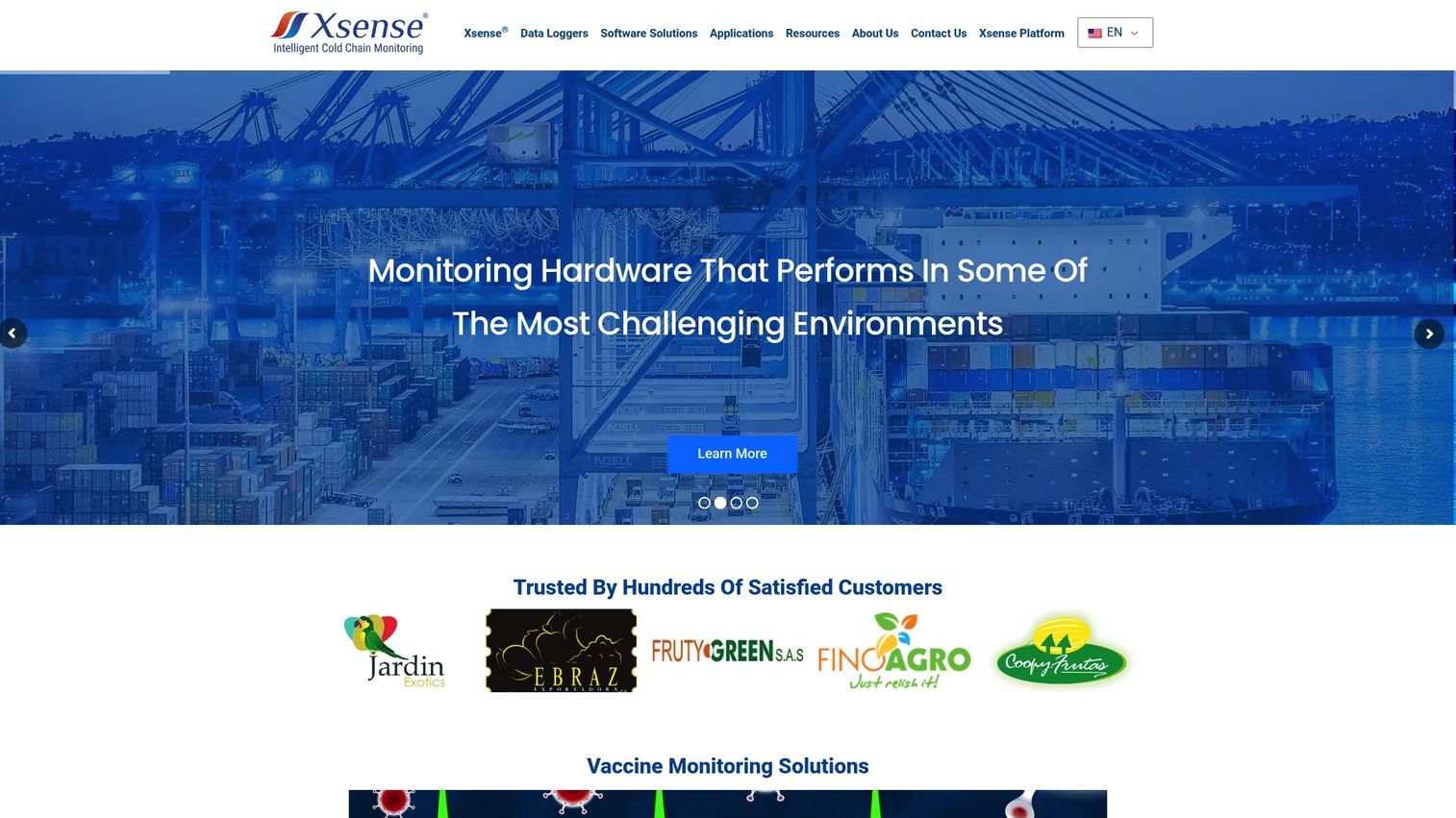
Xsense delivers end-to-end cold chain monitoring through a combined software and hardware ecosystem. It covers cloud monitoring, alerts, reports, and post hoc analysis, with web and mobile app access across multiple stages of the supply chain. The IoT cold chain angle is central here: sensors feed a cloud platform that processes data, triggers alerts, and supports analysis after the fact. For teams that want one vendor covering both the devices and the dashboard, Xsense keeps the stack unified.
Best for: Organizations needing end-to-end cold chain monitoring with tightly integrated hardware and software.
Key strengths
- Cold chain monitoring hardware: Purpose-built sensor data logger devices that feed a single cloud platform.
- Cloud-based data processing and alerts: Real-time visibility with temperature excursion alerts across every monitored stage.
- Web and mobile app access: Reach dashboards and reports from anywhere, so remote monitoring is not tied to a desk.
Why choose Xsense: It suits teams that prefer a single integrated ecosystem over piecing together separate sensors and software. Multi-stage monitoring plus post hoc analysis gives operations both live alerting and the historical record needed for compliance reporting. If you value having one accountable vendor for hardware and cloud, Xsense simplifies procurement and support.
Xsense pricing: Xsense does not publish pricing publicly. Its FAQ directs prospective buyers to contact sales for a quote, which is typical for deployments scoped by sensor count and monitoring scale. Reach out for pricing tailored to your operation.
6. tempmate
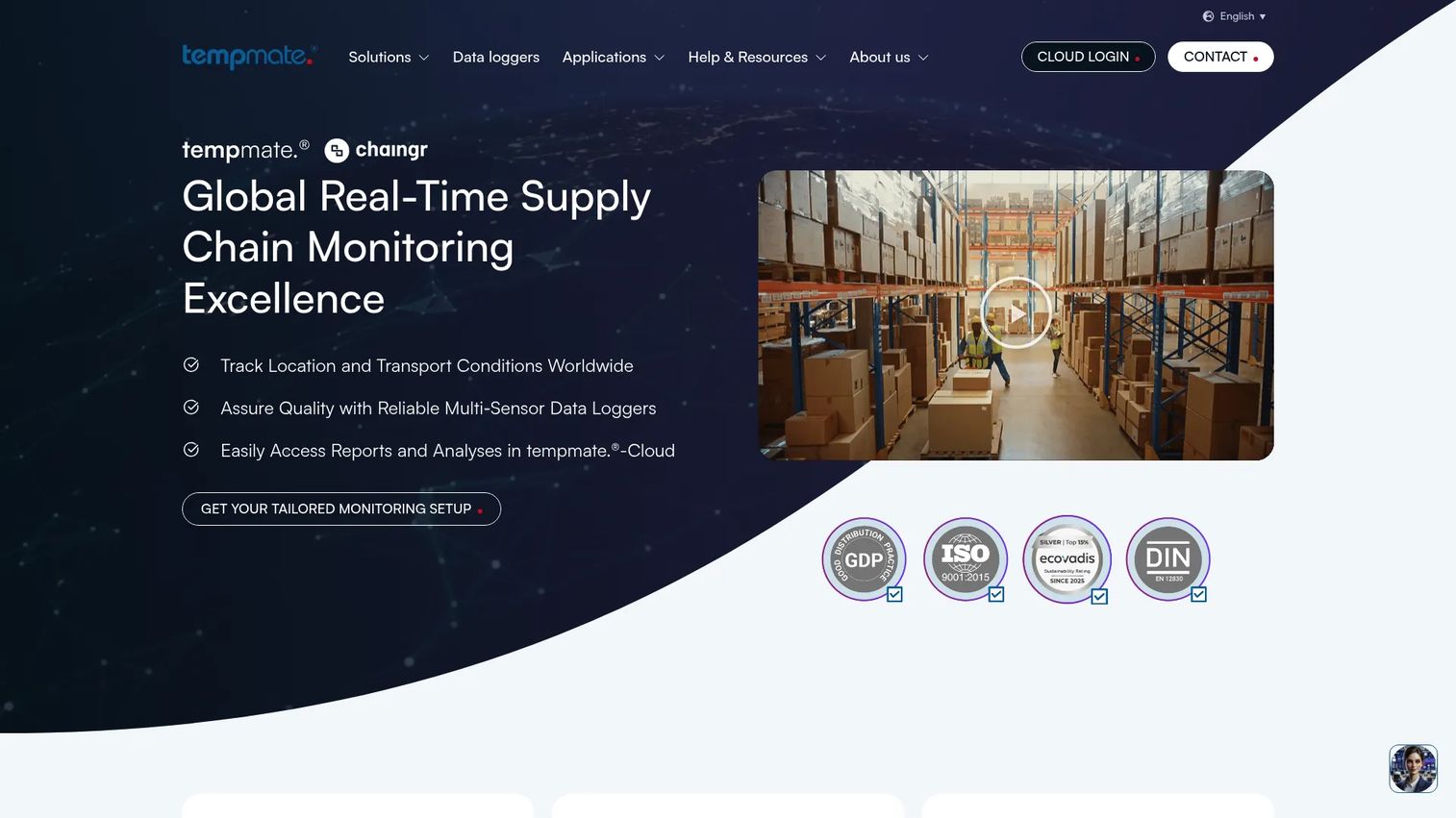
tempmate offers supply chain monitoring software paired with a broad data logger portfolio, tracking temperature, humidity, shock, tilt, and location. Its cloud platform delivers real-time visibility, verified records, and PDF or CSV reporting, with API integration for teams that want to connect cold chain data to other systems. The strength here is a solid audit trail: verified records and flexible reporting formats make it straightforward to hand auditors exactly what they need.
Best for: Companies needing cold chain and supply chain condition monitoring with cloud reporting and strong audit trails.
Key strengths
- Real-time monitoring via tempmate Cloud: Centralized cloud dashboard for live condition tracking across shipments and sites.
- Multi-condition tracking: Monitor temperature, humidity, shock, tilt, and location from a single data logger portfolio.
- PDF and CSV reporting with API: Export audit-ready documentation in the formats auditors expect and integrate data downstream.
Why choose tempmate: It is a strong option when verified records and reporting flexibility drive your decision. Teams that ship across multiple conditions, not just temperature, benefit from shock and tilt tracking in the same system. If your priority is clean cold chain traceability and easy audit exports, tempmate's record-keeping is a practical fit.
tempmate pricing: tempmate lists cloud plans named Essential, Elevate, Excellence, and Evolution, with additional tiers noted as available soon. Public prices are not shown, but the Essential plan includes a free account option, so teams can start monitoring before committing. Contact tempmate for paid plan pricing.
7. Antares Vision Group
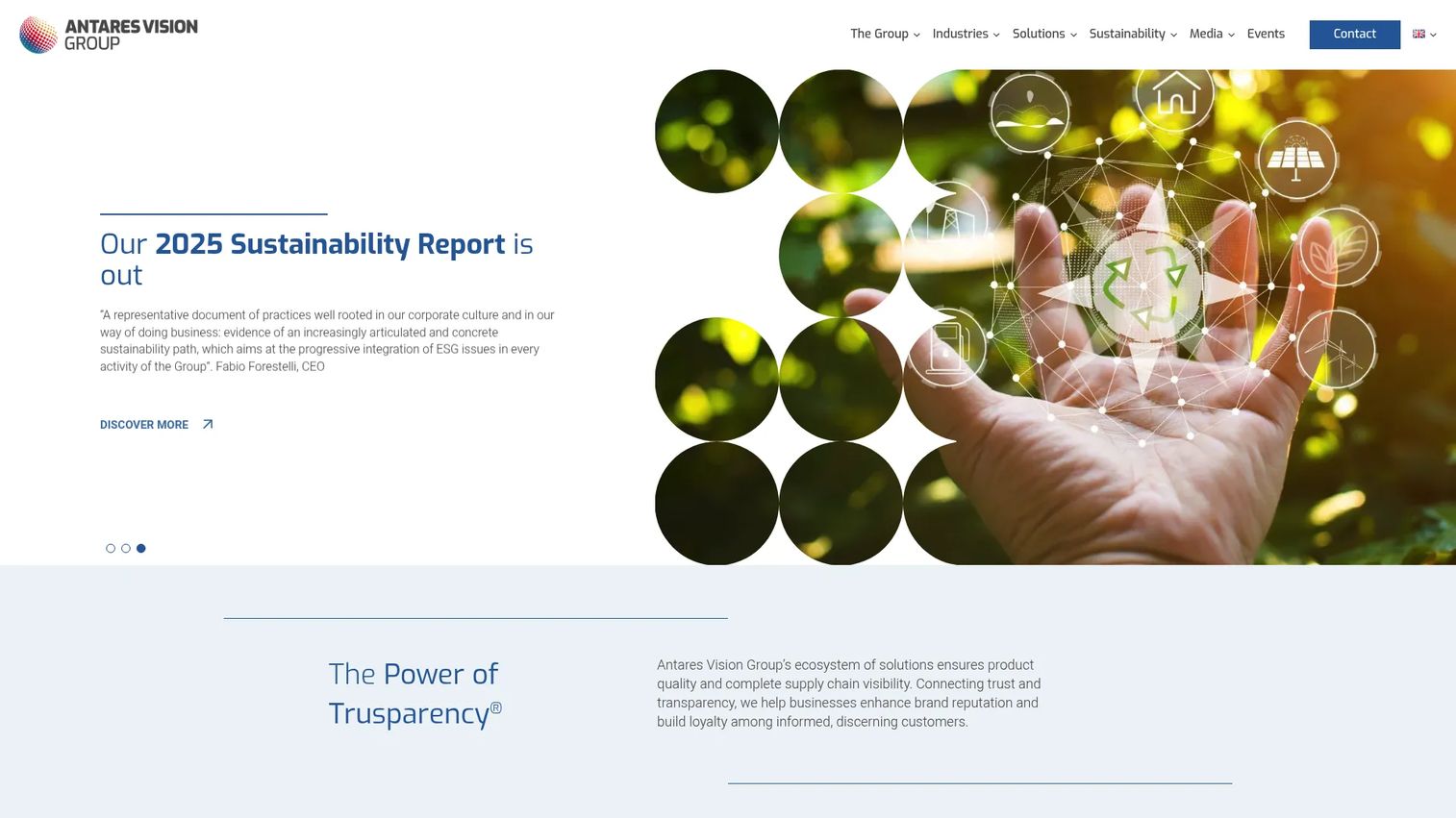
Antares Vision Group is an industrial technology company providing inspection, traceability, and smart data management for regulated supply chains. Its platform emphasizes cloud-based tracking, real-time product movement visibility, compliance, and lifecycle monitoring, layered with AI and blockchain for connected data. For life sciences and other regulated manufacturers, the value is end-to-end traceability from production line to distribution, not just point monitoring of temperature.
Best for: Life sciences, food, beverage, and other regulated manufacturers needing traceability plus inspection systems.
Key strengths
- Inspection systems and equipment: Line-level inspection that connects product quality to downstream traceability data.
- End-to-end traceability: Follow product movement across the full lifecycle, supporting cold chain traceability and compliance.
- Connected data management with AI and blockchain: Centralize and secure supply chain data for tamper-resistant records.
Why choose Antares Vision Group: It fits large regulated manufacturers that need traceability and inspection as one integrated capability. The lifecycle view appeals to teams whose compliance obligations extend beyond temperature to full chain-of-custody and product authenticity. If serialization, traceability, and inspection matter as much as temperature monitoring, Antares Vision Group operates at that scale.
Antares Vision Group pricing: No public pricing is displayed. Product pages direct visitors to contact sales, which reflects the enterprise, deployment-scoped nature of its offering. Reach out through its contact page for a scoped quote.
8. Sensified
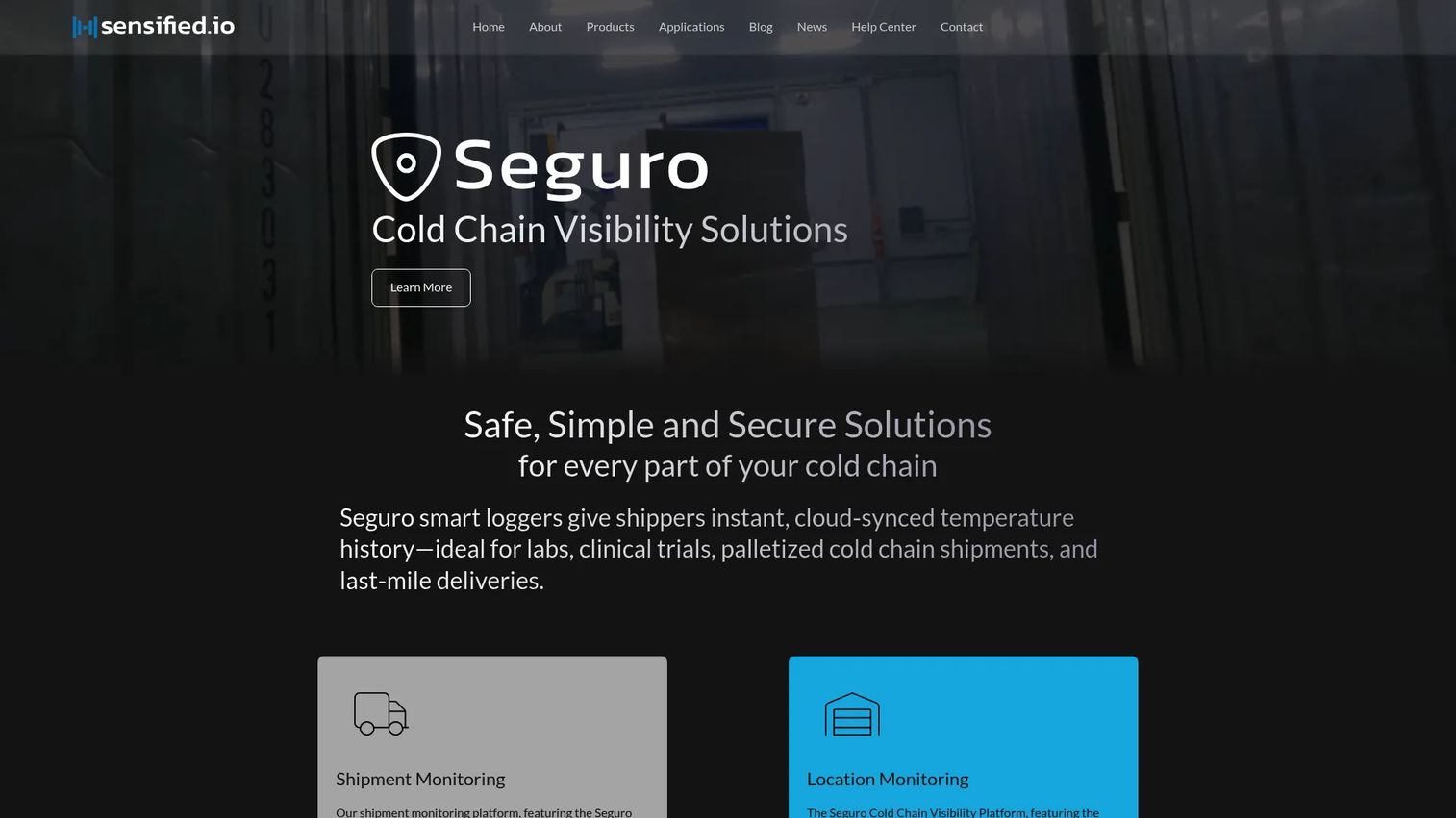
Sensified takes a deliberately simple approach: smart passive temperature loggers with app-free NFC access read directly from a smartphone. Cloud-synced temperature history, plus the ability to attach photos, barcodes, notes, and location tags to recordings, makes it easy to document a shipment's condition without installing anything. For last-mile and field workflows where speed and simplicity beat feature depth, this instant-visibility model removes friction.
Best for: Teams needing app-free cold chain temperature monitoring for shipments and last-mile locations.
Key strengths
- App-free NFC smartphone access: Tap a logger with any NFC phone to read temperature history, no app install required.
- Cloud-synced temperature history: Recordings sync to the cloud for a durable, shareable record.
- Rich recording metadata: Attach photos, barcodes, notes, and location tags for context-rich cold chain tracking.
Why choose Sensified: It is built for simplicity at the edge of the cold chain, where recipients and field staff need instant visibility without training or software installs. The one-time device pricing and lifetime cloud subscription model appeals to teams that want predictable costs. If your challenge is documenting last-mile handoffs quickly, Sensified removes the usual friction.
Sensified pricing: Sensified prices individual devices, starting at $11 for a Seguro 120 logger. A Seguro 150 is $24, with multi-packs discounted, such as a 10-pack at $144. All products include a lifetime subscription to Seguro cloud services, and the FAQ notes no recurring software fee is currently charged.
9. Rebus Labs
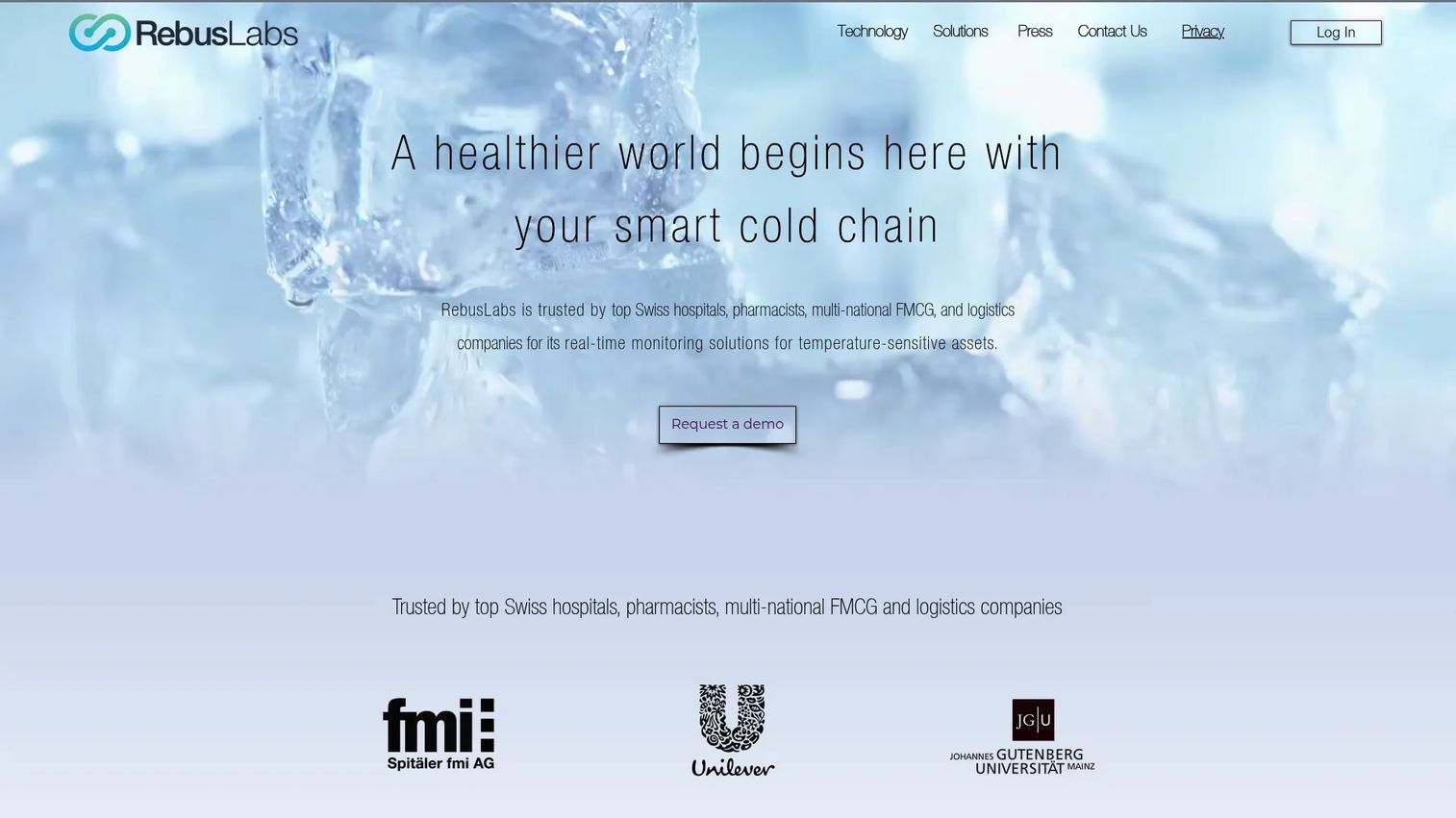
Rebus Labs is a Swiss cloud-based cold chain monitoring and business intelligence platform for temperature-sensitive assets. It emphasizes automated monitoring, browser-based access, fast setup, and secure visibility, so teams can get running without heavy installation. Real-time monitoring and alerts, cold chain traceability and reporting, and predictive analytics round out a platform aimed at pharma, healthcare, and logistics teams that want visibility and compliance without deployment overhead.
Best for: Pharma, healthcare, and logistics teams needing cold chain visibility and compliance with fast, browser-based deployment.
Key strengths
- Real-time monitoring and alerts: Live condition tracking with temperature excursion alerts across assets.
- Cold chain traceability and reporting: Audit-ready documentation and traceability built into the platform.
- Predictive analytics and compliance support: Surface risk early and keep records aligned to regulatory standards.
Why choose Rebus Labs: It suits teams that value speed to deployment and browser-based access over complex installs. The business intelligence layer helps operations move from raw sensor data to decisions, while compliance support keeps records audit-ready. If you want cold chain monitoring running quickly with minimal IT lift, Rebus Labs is designed around that experience.
Rebus Labs pricing: Rebus Labs does not publish public pricing. Its site focuses on product positioning and capabilities rather than plan tiers, so pricing is scoped to your deployment. Contact Rebus Labs directly for a quote.
Considerations before you buy
Before you commit, run every shortlisted platform through the same checklist. The right choice depends on your operation, not on feature counts.
Real-time alerting and exception handling
Confirm how fast alerts fire and who receives them. A platform that logs an excursion but does not escalate it to a human in minutes will not prevent loss. Ask how alerts route across email, SMS, and app, and whether corrective action workflows are built in.
Sensor and data logger compatibility
Check whether the platform works with your existing hardware or locks you into proprietary devices. If you already have a fleet of loggers, integration matters. If you are starting fresh, an integrated ecosystem may reduce complexity. Either path is valid, but the cost difference is real.
Audit-ready documentation and compliance fit
Match the platform to your regulatory standards, whether that is FDA, USDA, HACCP, GxP, or a combination. Confirm it produces tamper-proof timestamps, calibration records, and audit-ready documentation you can export on demand. This is where compliance-first platforms earn their keep.
Cross-industry and scale fit
A tool built for pharma may over-serve a food logistics team, and vice versa. Confirm the platform fits your industry's workflows and scales with your shipment volume. Teams comparing operational tooling more broadly often review contract analytics software and a customer data platform to keep supply chain, legal, and customer data connected as they grow.
Conclusion
The categories that matter most in cold chain software come down to four jobs: real-time monitoring, compliance and audit readiness, predictive analytics, and operational response. No single platform wins on all four for every team, which is why your shortlist should follow your priority.
If compliance and audit readiness drive your decision, look hardest at Cold Path, elpro, and Antares Vision Group. If real-time IoT monitoring is the priority, Xsense, tempmate, and Rebus Labs cover that ground well. If you want to reduce risk before product ships, SmartCAE's simulation approach is worth a close look. And if your compliance challenge is really a people-and-process problem across distributed sites, SafetyCulture fits.
The practical next step: shortlist two or three platforms based on whether you care most about compliance, real-time visibility, or optimization, then run a pilot on a real shipment lane. The platform that catches its first excursion, and hands you clean audit-ready documentation without a scramble, is the one that earns its place in your stack. To connect that operational data to the rest of your reporting, it is worth reviewing analytics platforms that drive ROI alongside your cold chain choice.
FAQs
Cold chain software is a system that monitors, records, and reports the temperature and condition of temperature-sensitive goods across storage and transport. It connects sensors, data loggers, cloud dashboards, alerts, and reporting so teams can prevent spoilage and prove compliance. The category spans monitoring, tracking, compliance, and predictive analytics.
The essentials are real-time temperature excursion alerts, sensor and data logger integration, audit-ready documentation, and a centralized cloud dashboard. Beyond those, predictive analytics and corrective action workflows separate reactive tools from proactive ones. Prioritize the features that map to your specific regulatory standards and shipment volume.
It produces timestamped temperature records, calibration certificates, alert histories, and corrective actions in one place, all exportable on demand. That audit-ready documentation supports FDA, USDA, HACCP, and GxP workflows. Instead of reconstructing a paper trail before an inspection, compliance leads pull a report instantly.
Food producers, pharmaceutical and healthcare companies, and logistics providers are the heaviest users. Each faces regulatory scrutiny and high product value, so temperature monitoring software directly protects revenue and compliance. Food and pharma compliance requirements, in particular, make these tools non-negotiable rather than optional.
IoT sensors and data loggers are what feed most cold chain platforms real-time data, so they are central to live monitoring. That said, some tools support manual and NFC-based readings for last-mile or field workflows where fixed sensors are impractical. The right mix depends on whether you need continuous monitoring or periodic verified checks.
Monitoring watches the condition of goods, temperature, humidity, and other variables, in real time. Cold chain tracking follows the physical location and movement of those goods across the supply chain. Most platforms combine both, but the emphasis differs: monitoring protects product integrity, while tracking supports logistics visibility and traceability.
Yes, platforms with predictive analytics can flag patterns that precede failures, such as a unit trending warm or a lane with a history of risk. This lets teams intervene before an excursion occurs rather than reacting after product is lost. Predictive capability varies by vendor, so confirm the depth of analytics during evaluation.
Start with your regulatory standards, then confirm the platform produces the audit-ready documentation those standards require. Test real-time alerting speed, sensor compatibility, and reporting exports on a real shipment lane before committing. Shortlist two or three tools by whether compliance, real-time visibility, or optimization matters most, then pilot the finalists.