Your team is bigger now. The monthly gym stipend you ran on a spreadsheet worked at 20 people. At 80, it has become a small HR project: Tracking reimbursements, fielding employee requests, and explaining to Finance why the spend keeps creeping up without any usage data to defend it.
Employee burnout is a real operating cost. According to Mordor Intelligence (2026), the global on-demand wellness software market is valued at $591.39 million and forecast to reach $891.76 million by 2031, growing at 8.56% annually. That growth reflects one thing: Employers are replacing fragmented stipends and disconnected point tools with platforms that give employees self-serve access and give leadership actual utilization data.
This guide cuts through the market-report noise. It is written for founders, People leads, and operators who need a practical shortlist, not a forecast deck. You will find 15 tools organized by use case, a side-by-side comparison table, verified pricing, and a buying framework you can hand to your Head of People on day one.
What's inside
This guide covers 15 on-demand wellness software platforms for 2026, evaluated for employer fit rather than consumer appeal. Tools were selected based on:
- Employee access model: App, web, credits, memberships, or provider sessions
- Wellness coverage breadth: Fitness, mental health, coaching, nutrition, and benefits
- HR and benefits integration: HRIS, payroll, SSO, and eligibility sync
- Pricing clarity: PEPM, employer contract, or verified starting figures
- Analytics and reporting: Enrollment, activation, and utilization data
The guide includes a comparison table, per-tool item sections, and a buyer's checklist. It does not cover consumer-only fitness apps, general EHR systems, or wearables without employer administration.
TL;DR
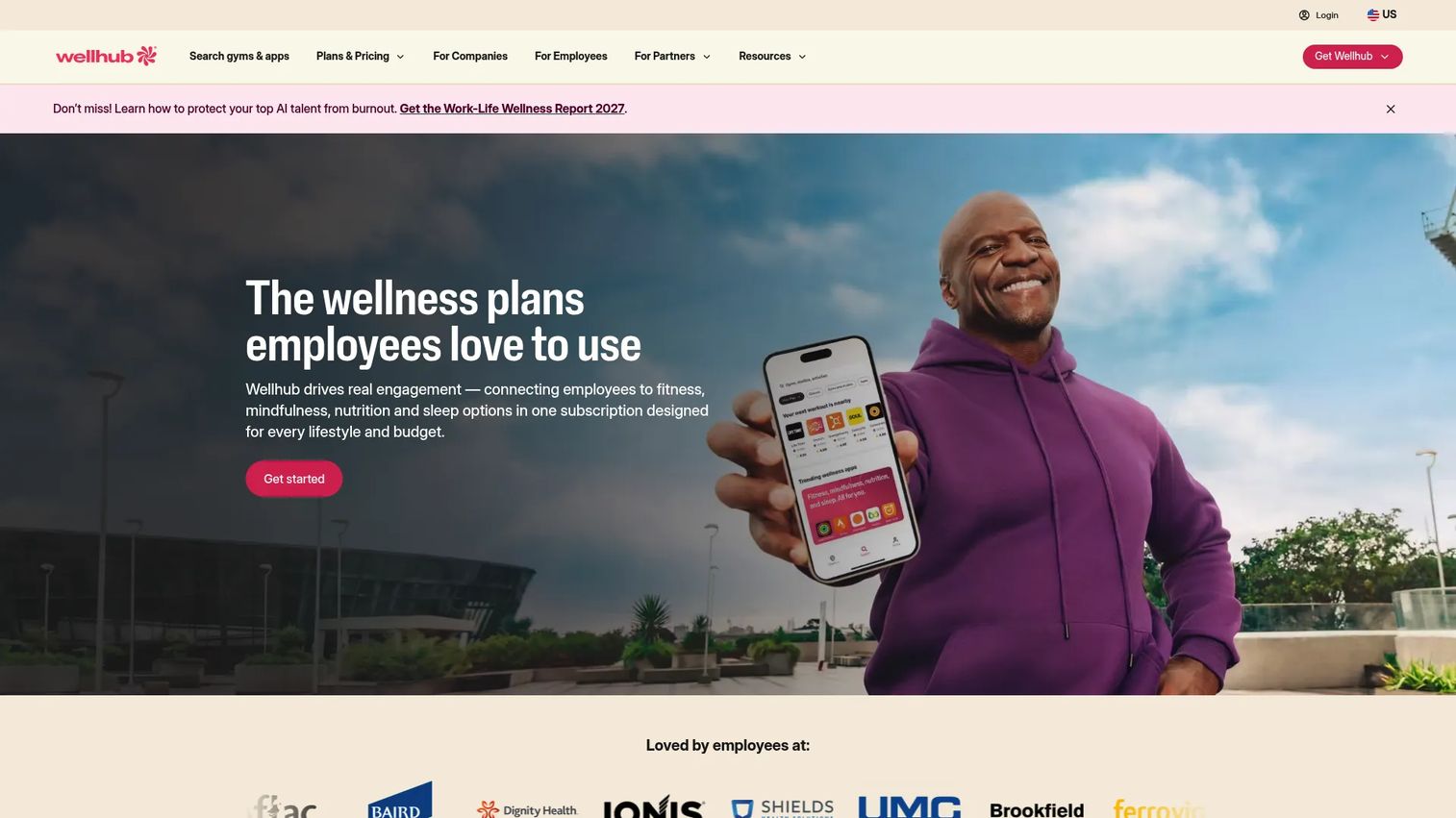
- Best overall wellness marketplace: Wellhub gives employees self-selected access to gyms, studios, and wellness apps from a free Digital tier up through Diamond plans
- Best for mobile fitness content: FitOn Health suits employers who want scalable digital fitness without location-dependent gym access
- Best for enterprise wellbeing programs: Personify Health covers health engagement, care navigation, benefits administration, and population analytics at large-org scale
- Best for challenge-based wellness: Wellable leads on customizable challenges, rewards, and participation campaigns, with the highest G2 rating in this list at 4.7/5
- Best for mental health support: Spring Health provides clinical care navigation, therapy, and measurement-based outcomes; Headspace for Organizations offers scalable mindfulness and coaching
- Best for fitness booking: ClassPass for Business starts at $24/month per active employee for studio and gym class access
What is on-demand wellness software?
On-demand wellness software is a digital platform that gives employees, members, or consumers immediate access to wellness services, including fitness, mindfulness, coaching, therapy, nutrition, provider booking, and wellbeing content, through web or mobile interfaces, without requiring a scheduled appointment or physical location.
Core categories
The category spans six distinct platform types:
- Corporate wellness platforms: Broad employer programs covering challenges, rewards, health assessments, coaching, and engagement campaigns
- Employee wellbeing apps: Mobile-first content libraries focused on mindfulness, sleep, stress, and mental health
- Mental health and coaching platforms: Clinical care navigation, therapy access, coaching, and EAP services
- Fitness and studio marketplaces: Gym networks, boutique studio access, and class credits
- Provider booking and class scheduling tools: Calendar-based booking for sessions, classes, and appointments
- Benefits and insurance-adjacent platforms: Health insurance administration, telehealth, and clinical support tied to employer benefits
Key capabilities
Look for these across any on-demand wellness platform:
- Mobile app access for iOS and Android
- Virtual sessions and on-demand content libraries
- Gym, studio, or class booking
- Mental health support (mindfulness, coaching, or clinical care)
- Challenges, rewards, and incentive programs
- HRIS, payroll, SSO, and eligibility integrations
- Utilization analytics and employer reporting dashboards
- Privacy controls, permissions, and data governance
What is not in scope
Consumer-only fitness apps with no employer model, wearables without software administration, general EHR systems, and telehealth platforms that do not deliver a wellness program component are outside this guide.
When to use on-demand wellness software
Replace a manual stipend that has outgrown the spreadsheet
Series B teams regularly hit the point where a monthly wellness stipend requires real administration: Tracking receipts, reconciling reimbursements, and answering employee questions about what qualifies. On-demand wellness software replaces the manual process with a managed network or content library employees access directly. The People team stops being the middleman for every gym reimbursement.
Replace fragmented point tools across fitness and mental health
If your company currently pays for a gym reimbursement, a separate meditation app license, a coaching stipend, and occasional therapy referrals, those costs add up without consolidating into a single adoption number. A wellness platform that covers fitness, mindfulness, coaching, and challenges in one contract gives Finance a defensible line item and gives employees fewer apps to remember.
Give leadership measurable adoption data
The question Finance will ask at budget review is not whether the benefit exists. It is whether anyone uses it. Utilization reporting, enrollment by cohort, and repeat engagement metrics are what turn a wellness benefit from a cost into a defensible investment. Choose a platform that surfaces these numbers without requiring a separate analytics project.
On-demand wellness software comparison
The table below covers all 15 tools, sorted by the order in which they appear in the item sections. Pricing and G2 ratings reflect figures from vendor pricing pages and G2 listings as of November 2026. Where a vendor requires a sales conversation for pricing, the table notes custom pricing along with the primary driver.
| # | Product | Best for | Key differentiator | Pricing | G2 rating |
|---|---|---|---|---|---|
| 1 | Wellhub | Broad wellness marketplace | Gym, studio, and app access in one benefit | From $0 (Digital tier) | 4.3/5 |
| 2 | FitOn Health | Digital fitness content | PEPM model at approx. $1 to $2/member/month | Approx. $1 to $2 PEPM | 4.1/5 |
| 3 | Personify Health | Enterprise health engagement | Wellbeing, navigation, and benefits in one platform | Custom pricing (PEPM/PPPM) | 4.3/5 |
| 4 | Wellable | Challenge-led engagement | Challenges, coaching, rewards, and content | From $100/month | 4.7/5 |
| 5 | Virgin Pulse | Enterprise wellbeing (now Personify Health) | Health engagement with navigation and care | Custom pricing | 4.3/5 |
| 6 | Limeade | Culture and engagement programs | Well-being tied to employee listening (now WebMD Health) | Custom pricing | N/A |
| 7 | Headspace for Organizations | Mindfulness and mental wellbeing | Clinically validated content plus coaching and EAP | From $45/employee/year | 4.6/5 |
| 8 | Calm Business | Mindfulness and sleep content | Full Calm library with admin portal and reporting | Approx. $70/year per individual | N/A |
| 9 | Spring Health | Clinical mental health support | Measurement-based care with therapy and navigation | Custom pricing | 3.3/5 |
| 10 | Gympass | Fitness marketplace (rebranded as Wellhub) | Legacy brand now operating under Wellhub | From $0 (Digital tier) | 4.3/5 |
| 11 | ClassPass for Business | Studio and gym class access | Credit-based model; from $24/month per active employee | From $24/month per active employee | 4.3/5 |
| 12 | Mindbody | Wellness business operations | Booking, payments, and marketing for wellness providers | From $79/month per location | 3.7/5 |
| 13 | ZAMA Health | Athlete and community mental wellness | CBT/ACT-informed modules plus peer community | Custom pricing | N/A |
| 14 | Volt Athletics | Structured strength and conditioning | Cortex AI personalizes weights, volume, and intensity | From $900/year | N/A |
| 15 | Plum | Health benefits and insurance | Benefits administration, claims, and telehealth | Custom pricing | 3.8/5 |
Best 15 on-demand wellness software platforms for 2026
1. Wellhub
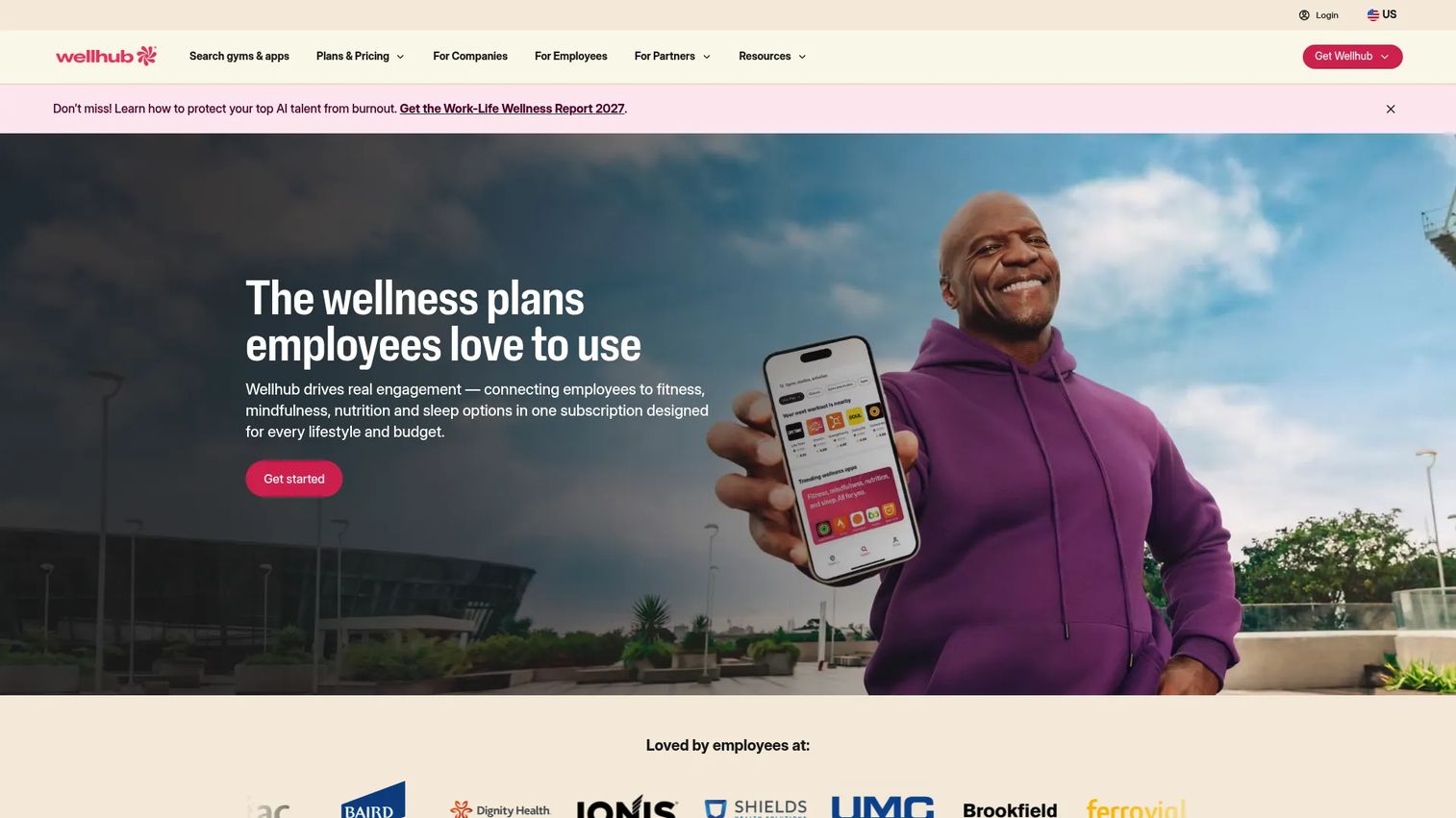
Wellhub is a corporate wellness marketplace that connects employees with gyms, studios, personal trainers, fitness classes, and digital wellness apps through a single employer benefit. Companies pay a corporate package fee and employees choose their own membership tier, from a free Digital plan up through premium Diamond access. The platform spans fitness, mindfulness, nutrition, sleep, and mental health in one contract.
Best for: Companies that want one benefit covering gym access, digital wellness apps, and HR reporting without managing multiple vendor relationships.
Key features
- Access to gyms, studios, personal trainers, and group classes
- Wellness apps covering mindfulness, nutrition, and sleep
- Employee membership tiers from Digital (free) to Diamond
- HR integrations, ROI analytics, and engagement campaigns
- Global network with international travel access
Why choose Wellhub: The marketplace model means employees self-select the access level that fits their lifestyle, which tends to drive higher adoption than a one-size gym reimbursement. For a Series B team, it replaces gym stipends and standalone app licenses in a single contract.
Wellhub pricing: Employee plans range from a free Digital tier to $344.99/month for Diamond access. Corporate packages start as low as $1 per employee per month on the Entry plan; Full and Premium packages require a quote.
G2 rating: 4.3/5
2. FitOn Health
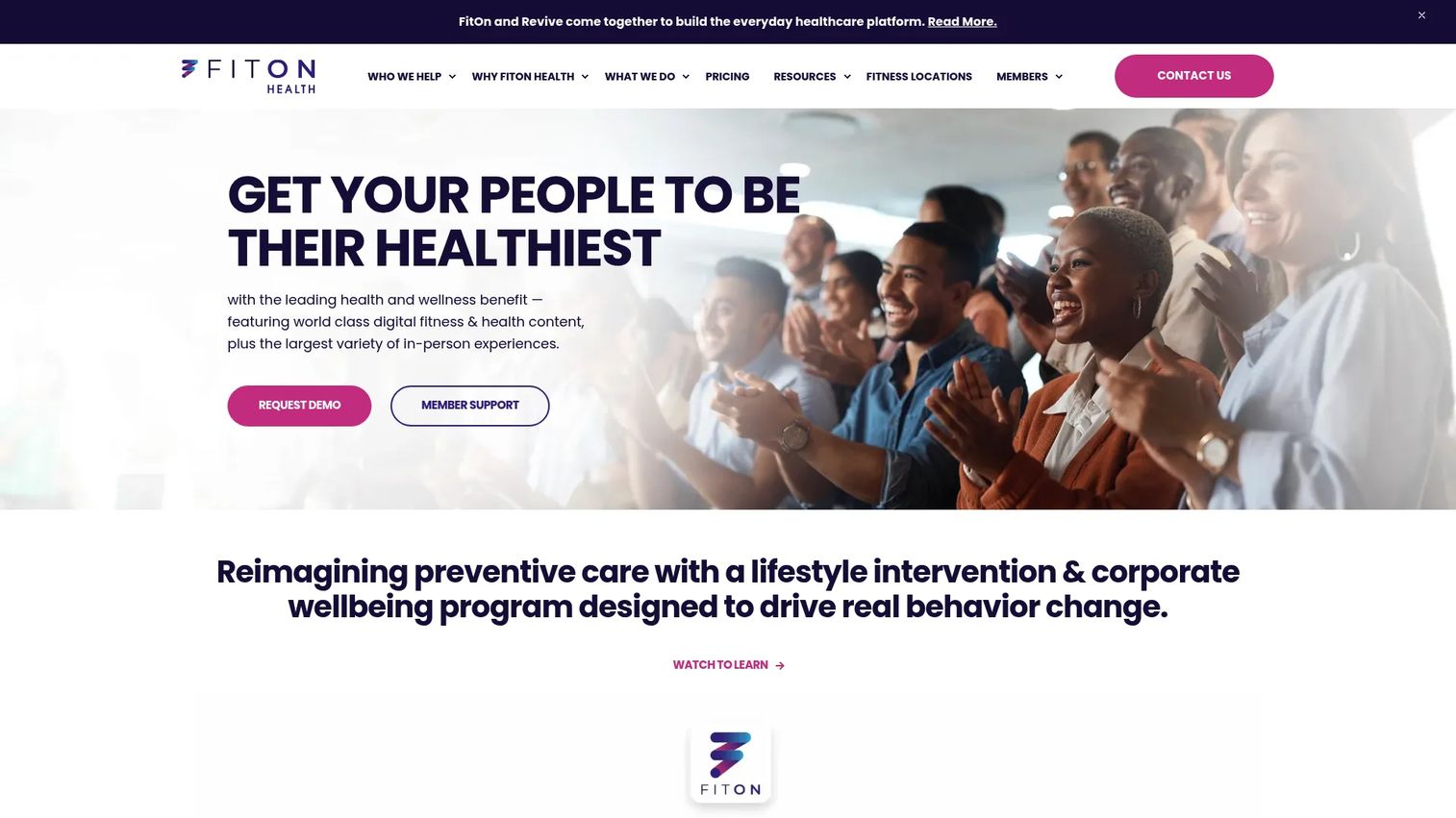
FitOn Health is a corporate wellness platform combining digital fitness, nutrition, mindfulness, condition management, and in-person gym access. The digital content library is the core product, covering on-demand workouts, guided meditations, and wellness programs accessible from any device. Employers can add a nationwide gym and boutique studio network on top of the digital foundation.
Best for: Employers and health plans that want an integrated digital and in-person wellness benefit priced by eligible members rather than active users.
Key features
- On-demand fitness classes, mindfulness, and nutrition content
- Nationwide gym and boutique studio network
- Social groups, challenges, and wellness campaigns
- Eligibility management, SSO, and program analytics
- Employer dashboards with utilization reporting
Why choose FitOn Health: The PEPM pricing model means you pay for coverage rather than per active session, which is predictable for headcount planning. For distributed teams, the digital-first design avoids the location dependency that makes pure gym networks less useful outside major cities.
FitOn Health pricing: Digital content runs approximately $1 to $2 per eligible member per month. In-person access is credit-based, with each credit providing $3.50 of gym or studio value. Full plans require a quote.
G2 rating: 4.1/5
3. Personify Health
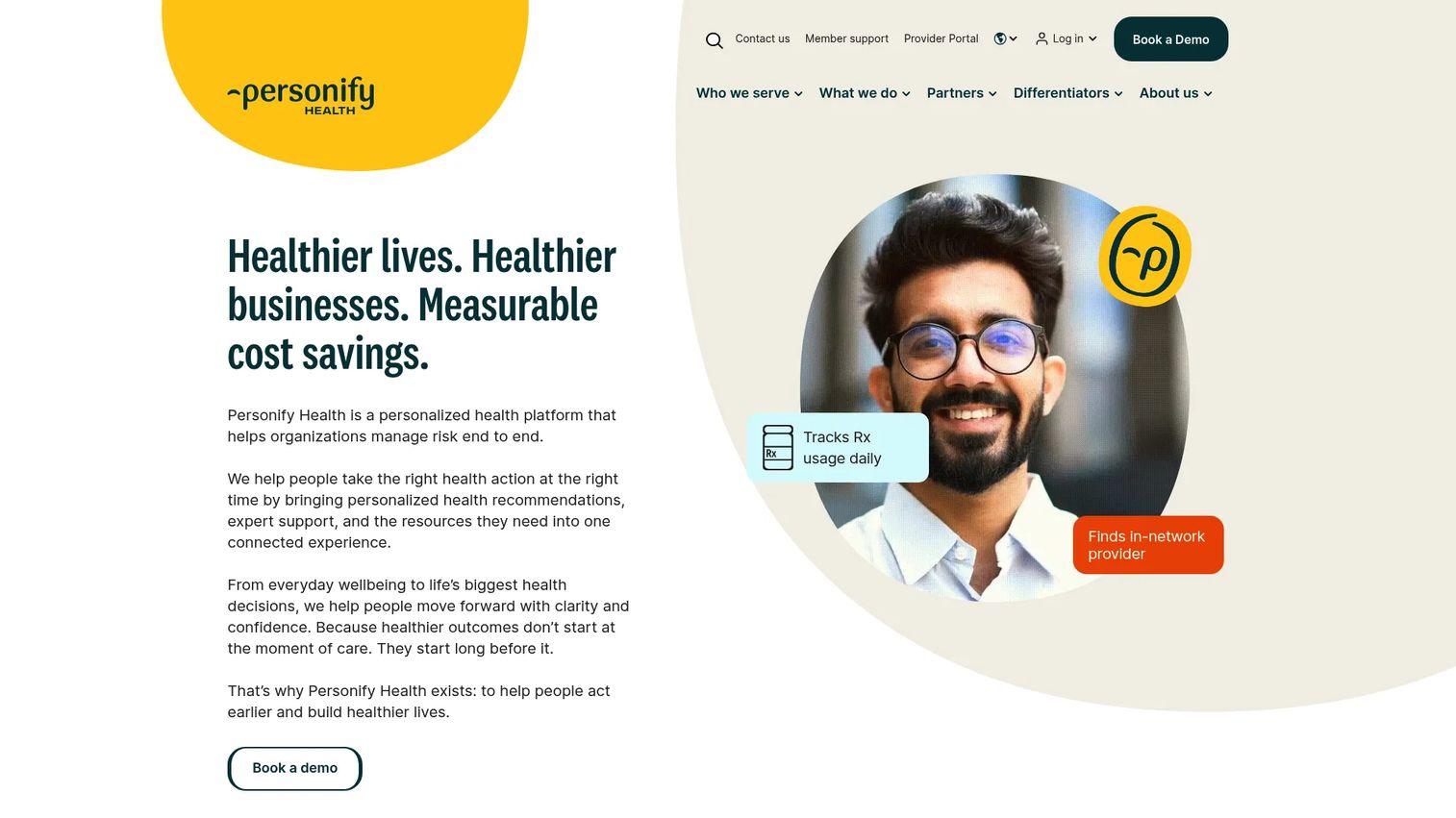
Personify Health is a personalized health platform that combines employee wellbeing programs, healthcare navigation, benefits administration, care and condition management, and population health analytics. It is built for large employers and health plans that need more than a fitness benefit, covering the full arc from health assessments and habit tracking through care navigation and cost management.
Best for: Large employers, health plans, and health systems that need an integrated platform spanning wellbeing, healthcare navigation, and benefits administration.
Key features
- Personalized wellbeing programs with health assessments, habit tracking, and challenges
- Healthcare navigation to help members understand benefits and find providers
- Care and condition management with AI-powered insights and human coaching
- Benefits administration and HRIS integrations
- Analytics dashboards covering engagement, health outcomes, and cost savings
Why choose Personify Health: This is the right choice when wellness is part of a broader population health or benefits strategy, not a standalone perk. For companies with 200-plus employees where healthcare costs are starting to appear in board discussions, the navigation and analytics layer makes the platform defensible beyond HR.
Personify Health pricing: Custom pricing only. The company structures fees as PEPM, PPPM (per plan per month), or PEPY (per employee per year), depending on population size and selected features. Contact sales for a quote.
G2 rating: 4.3/5
4. Wellable
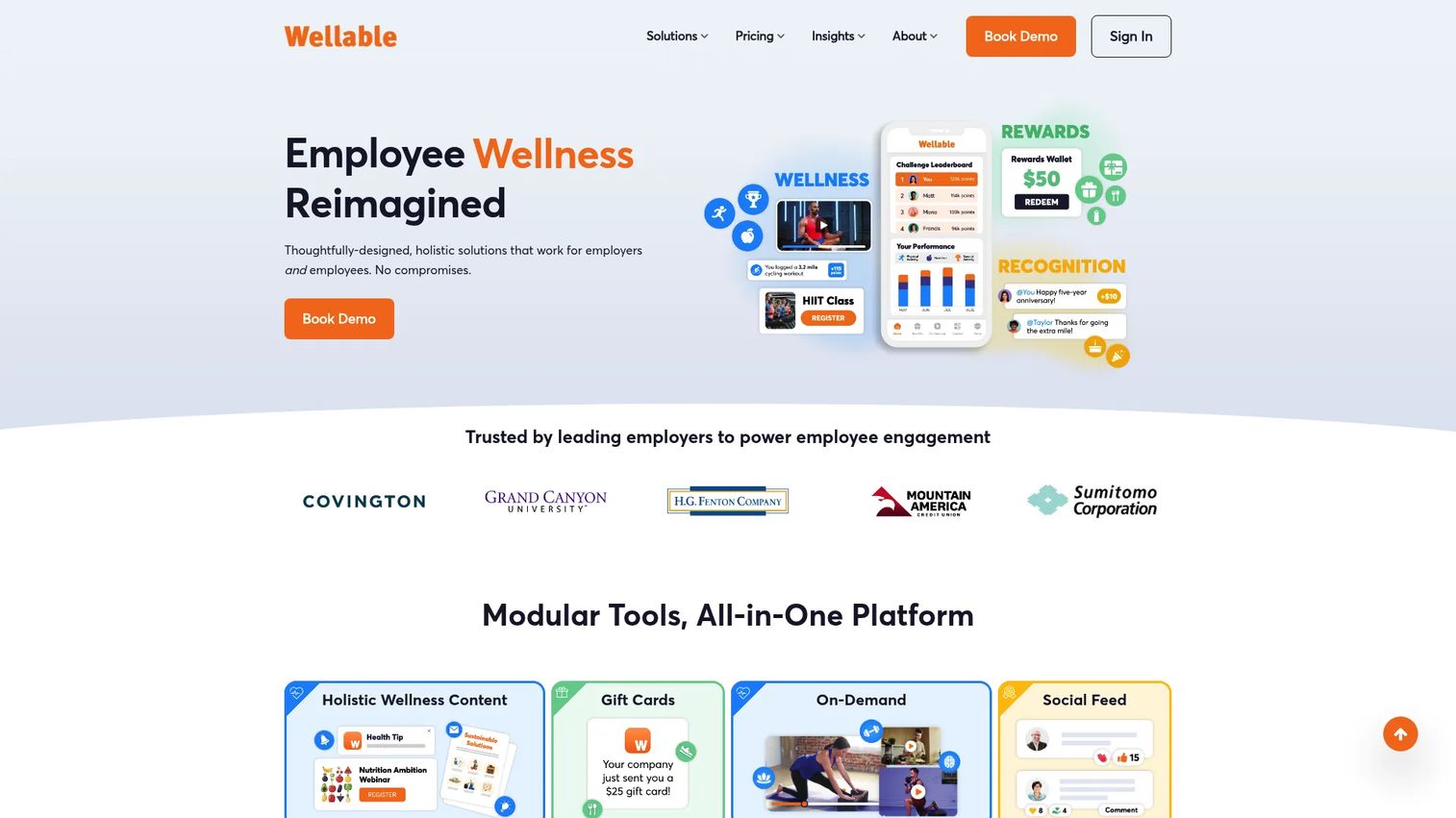
Wellable is an employee wellness and engagement platform built around customizable challenges, health content, coaching services, rewards, and participation tracking. It is the tool that excels at making employees actually show up: Challenges, recognition, and rewards create the participation loops that passive content libraries miss.
Best for: Organizations that want structured wellness engagement, not just content access, particularly HR teams running campaigns employees can rally around.
Key features
- Customizable wellness challenges and participation tracking
- Personal wellness assessment and health coaching services
- On-demand fitness, meditation, sleep, and nutrition classes
- Rewards and recognition administration
- App and wearable integrations with reporting dashboards
Why choose Wellable: The highest G2-rated platform in this list at 4.7/5. For a People team that wants a wellness program employees talk about rather than ignore, the challenge and rewards model gives you something to market internally without building it from scratch.
Wellable pricing: Essentials plan starts at $100/month ($4.00 per user per month) for up to 25 users. Pro starts at $150/month ($6.00 PUPM). Enterprise pricing requires a quote.
G2 rating: 4.7/5
5. Virgin Pulse
Virgin Pulse was an employer health and wellbeing platform known for health engagement programs, wellbeing assessments, incentives, and engagement campaigns. The platform has since become Personify Health. Buyers searching for Virgin Pulse today land on Personify Health's site, which describes its successor capabilities including wellbeing programs, digital navigation, care management, and health plan administration.
Best for: Enterprise buyers evaluating the successor to Virgin Pulse who need an integrated wellbeing, navigation, and health management platform.
Key features
- Employee wellbeing and health engagement programs
- Health assessments, habit tracking, and incentive campaigns
- Digital navigation and benefits advocacy
- Care and condition management
- Program analytics and population health reporting
Why choose Virgin Pulse: Buyers with existing Virgin Pulse contracts or a preference for the platform's heritage should evaluate Personify Health directly, as it represents the current product. The core enterprise wellbeing functionality carries forward under the new brand.
Virgin Pulse pricing: Custom pricing under the Personify Health structure. Contact sales for current packaging and PEPM rates.
G2 rating: 4.3/5 (listed under Personify Health on G2)
6. Limeade
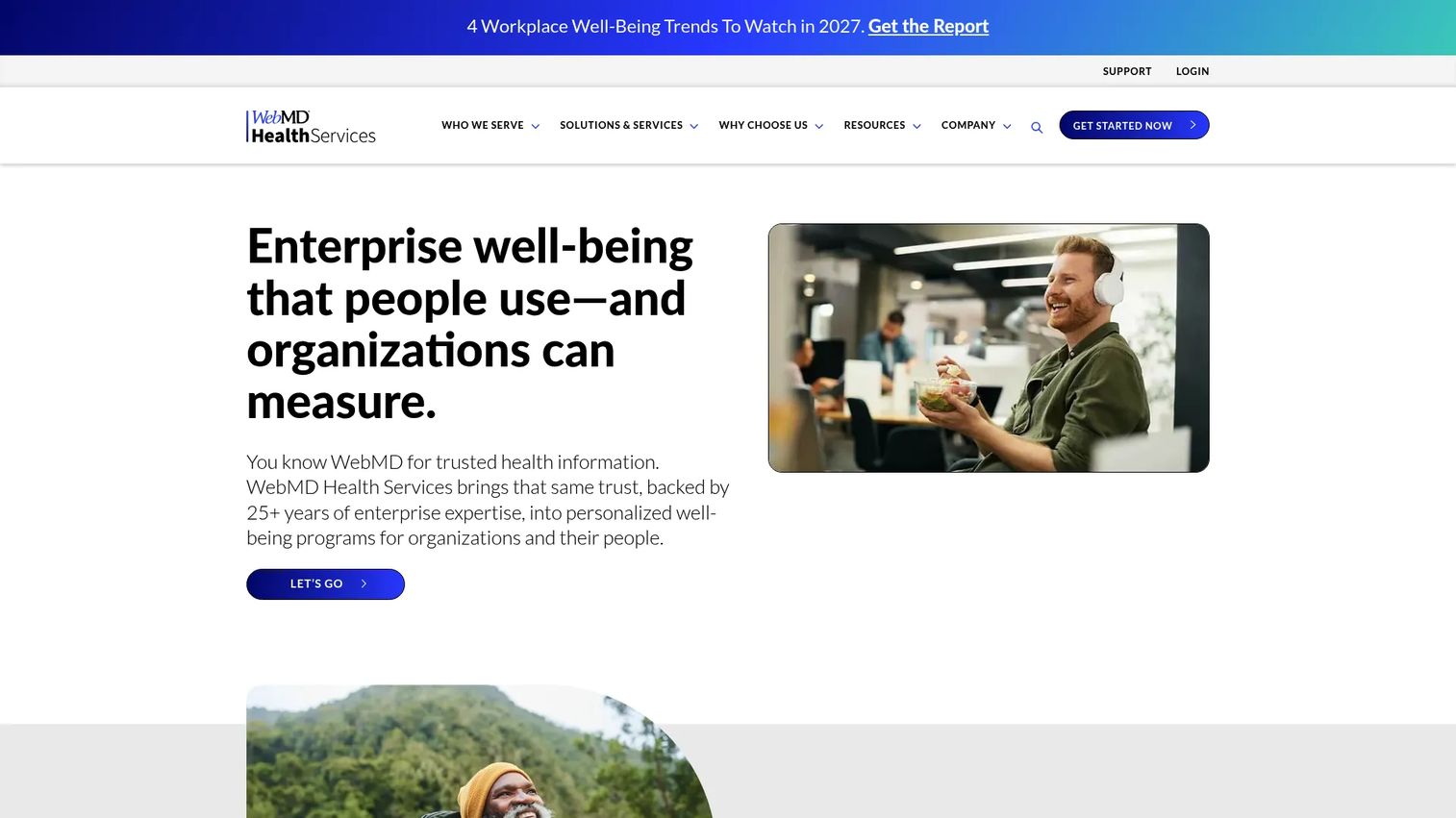
Limeade built its reputation on connecting employee wellbeing with engagement, culture, and listening. The platform covered wellbeing assessments, activity tracking, fitness device integrations, employee listening surveys, and culture campaigns. Limeade has been acquired by WebMD Health Services and its capabilities now operate under that umbrella.
Best for: Large employers evaluating WebMD Health Services' wellbeing offerings, particularly those where employee listening and culture are part of the same program as wellness.
Key features
- Wellbeing assessments and personalized activity recommendations
- Employee listening tools, surveys, and engagement activities
- Activity tracking and fitness device integrations
- Culture campaigns and manager insights
- Program analytics
Why choose Limeade: The strongest case for Limeade-era capabilities is when the wellness decision sits inside a broader employee experience initiative. For founders, the connection between wellbeing surveys and retention data is what makes this more than a fitness perk. Verify current product packaging with WebMD Health Services before committing.
Limeade pricing: Custom pricing through WebMD Health Services. Contact the sales team for current structure and terms.
7. Headspace for Organizations
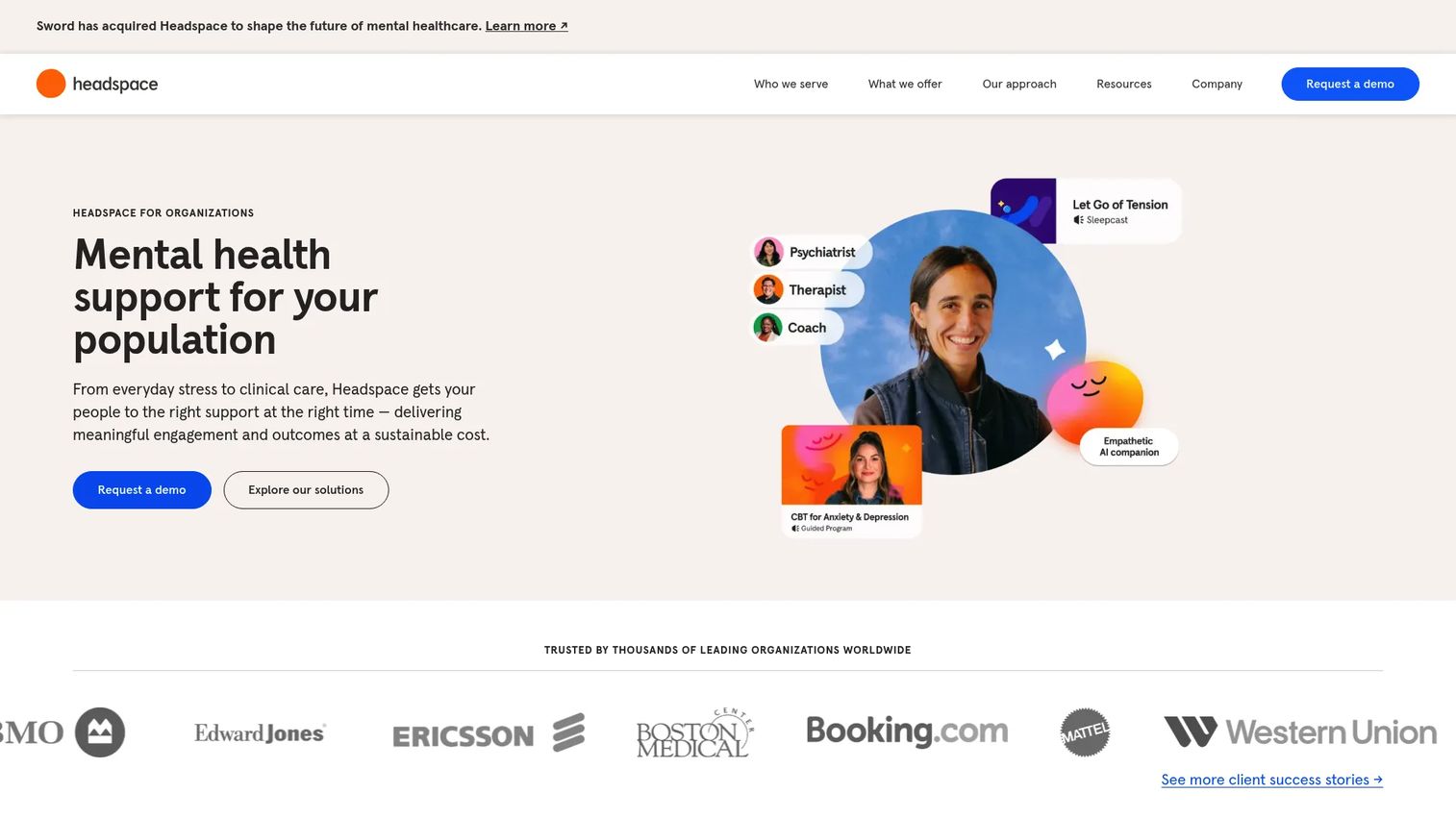
Headspace for Organizations is a mental health benefits platform that spans self-guided mindfulness, AI companion guidance, coaching, therapy, psychiatry, EAP services, and work-life support. It is one of the most recognized brands in employee mental wellbeing, which helps with employee adoption in a way that lesser-known platforms cannot match.
Best for: Organizations that want scalable, recognizable mental health support, from everyday stress and sleep content through clinical care access.
Key features
- Guided meditations, breathing exercises, and mindfulness courses
- Clinically validated mental health programs
- Ebb empathetic AI companion for daily mental wellness
- Coaching, therapy, psychiatry, and EAP services
- Admin reporting, engagement dashboards, and utilization data
Why choose Headspace for Organizations: Brand recognition drives employee adoption, and adoption is the metric that justifies the renewal conversation. The platform spans consumer-grade daily content and clinical care in the same subscription, reducing the need for a separate EAP vendor.
Headspace for Organizations pricing: Headspace Core for Small Businesses starts at $45 per employee per year for teams using a size-based sliding scale. Clinical services and EAP packages require a separate demo.
G2 rating: 4.6/5
8. Calm Business
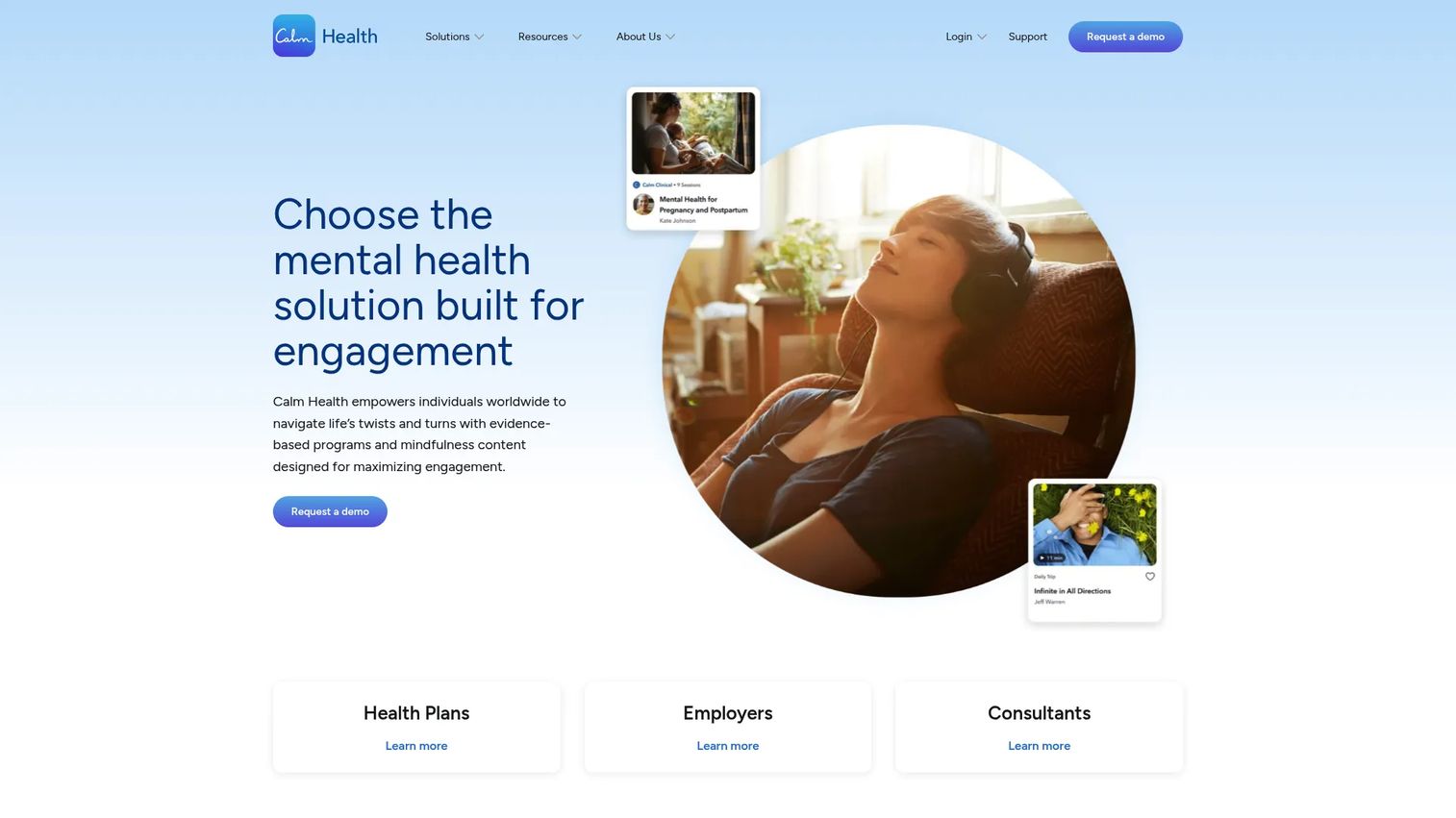
Calm Business gives organizations access to the full Calm content library, including guided meditations, Sleep Stories, music, soundscapes, and Calm Kids content, alongside an admin portal for managing team members and viewing usage analytics. For employers, the pitch is a recognizable, low-friction mental wellbeing benefit that employees already know.
Best for: Companies that want an accessible, familiar mindfulness benefit with low onboarding friction and clear admin reporting.
Key features
- Full Calm library: Meditations, Sleep Stories, music, and soundscapes
- Calm Kids content for dependent access
- Calm Partner Portal for team management and usage analytics
- Employee engagement resources, webinars, and events
- Dependent access on eligible plans
Why choose Calm Business: When the first job is employee adoption of simple mental wellbeing content, Calm's consumer familiarity removes the sales barrier. For founders managing a VP of People transition, it is easy to hand off: The product runs itself after setup.
Calm Business pricing: Organizations with 5 to 300 employees pay approximately $70 per individual per year (annual billing). Teams over 300 receive custom pricing. The displayed amount varies by seat count and eligible discounts.
9. Spring Health
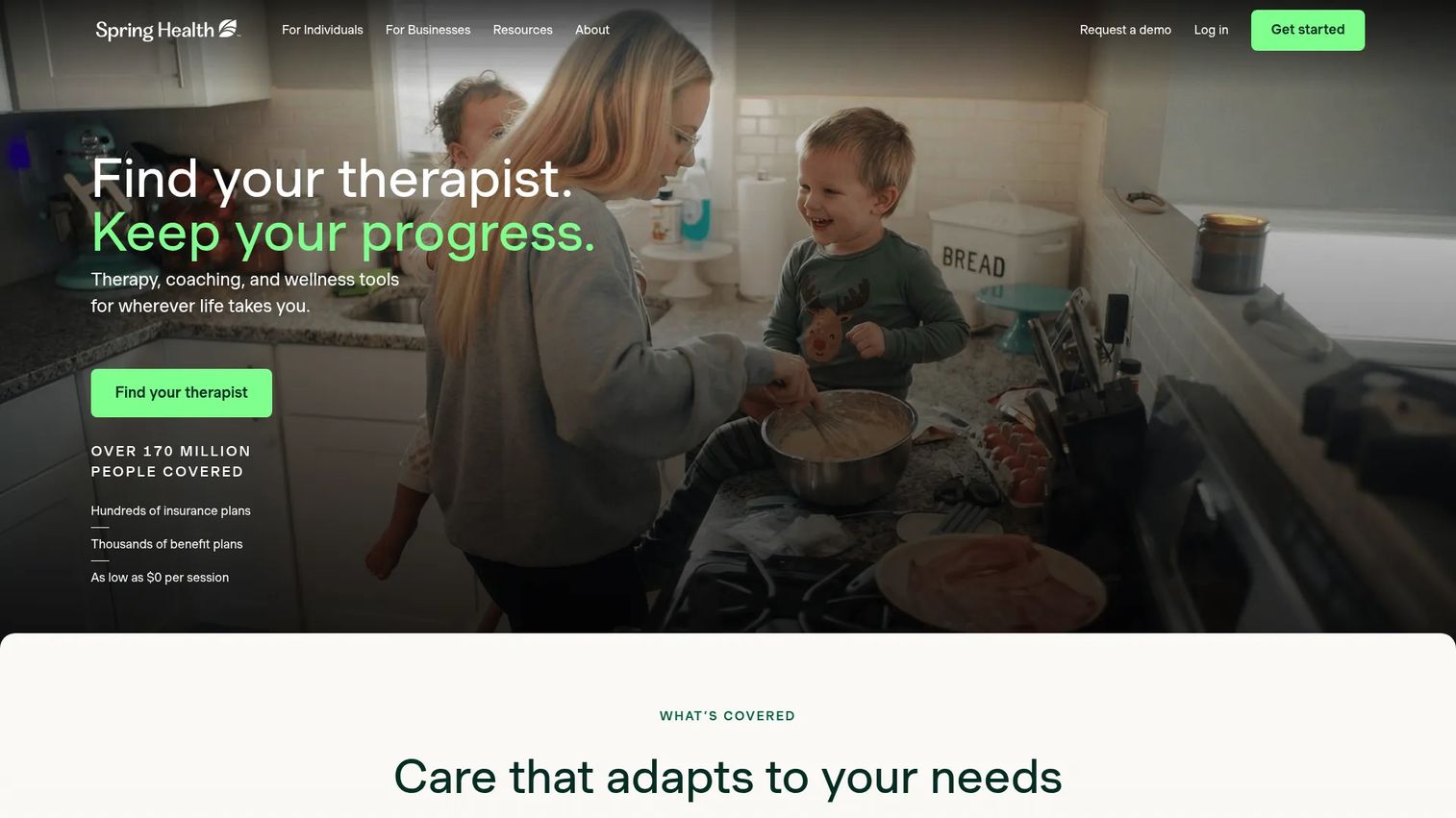
Spring Health is an AI-native mental health platform that delivers personalized support through self-guided tools, coaching, therapy, medication management, and specialty care. The care navigation component sets it apart: Rather than giving employees a list of providers, Spring Health matches individuals to the right level of care based on a personalized assessment.
Best for: Employers and health plans that need measurable clinical mental health access, not just mindfulness content.
Key features
- Personalized assessments and AI-informed care plans
- Therapy, medication management, and specialty care access
- Coaching and self-guided mental wellness tools
- Measurement-based care tracking and outcomes reporting
- Employer reporting on utilization and program impact
Why choose Spring Health: Choose this when the company has grown to the point where a mindfulness app is not enough. Spring Health positions itself as clinical infrastructure, which carries a different conversation with Finance and HR than a content library does.
Spring Health pricing: Custom pricing for employers and health plans. No tier prices are displayed. Contact sales for current PEPM or utilization-based rates.
G2 rating: 3.3/5
10. Gympass
Gympass rebranded as Wellhub in 2023. The Gympass URL and brand still generate significant search volume, so this entry exists to clarify the current offering. The platform described as Gympass now operates under the Wellhub name with the same employee gym, studio, and wellness app access model.
Best for: Buyers searching Gympass by name who want current pricing, branding, and product details before evaluating.
Key features
- Access to gyms, studios, and fitness classes
- Digital wellness apps covering mindfulness, nutrition, and sleep
- 1:1 wellness sessions and personal trainer access
- Family member access on eligible packages
- HR integrations, campaigns, and ROI analytics
Why choose Gympass: If your team searched Gympass and arrived here, the current product lives at Wellhub. Plans, pricing, and the global gym network are identical. See entry 1 for full detail.
Gympass pricing: Plans mirror Wellhub. Employee tiers run from Digital (free) to Diamond ($344.99/month). Corporate entry packages start as low as $1 PEPM.
G2 rating: 4.3/5 (listed under Wellhub on G2)
11. ClassPass for Business
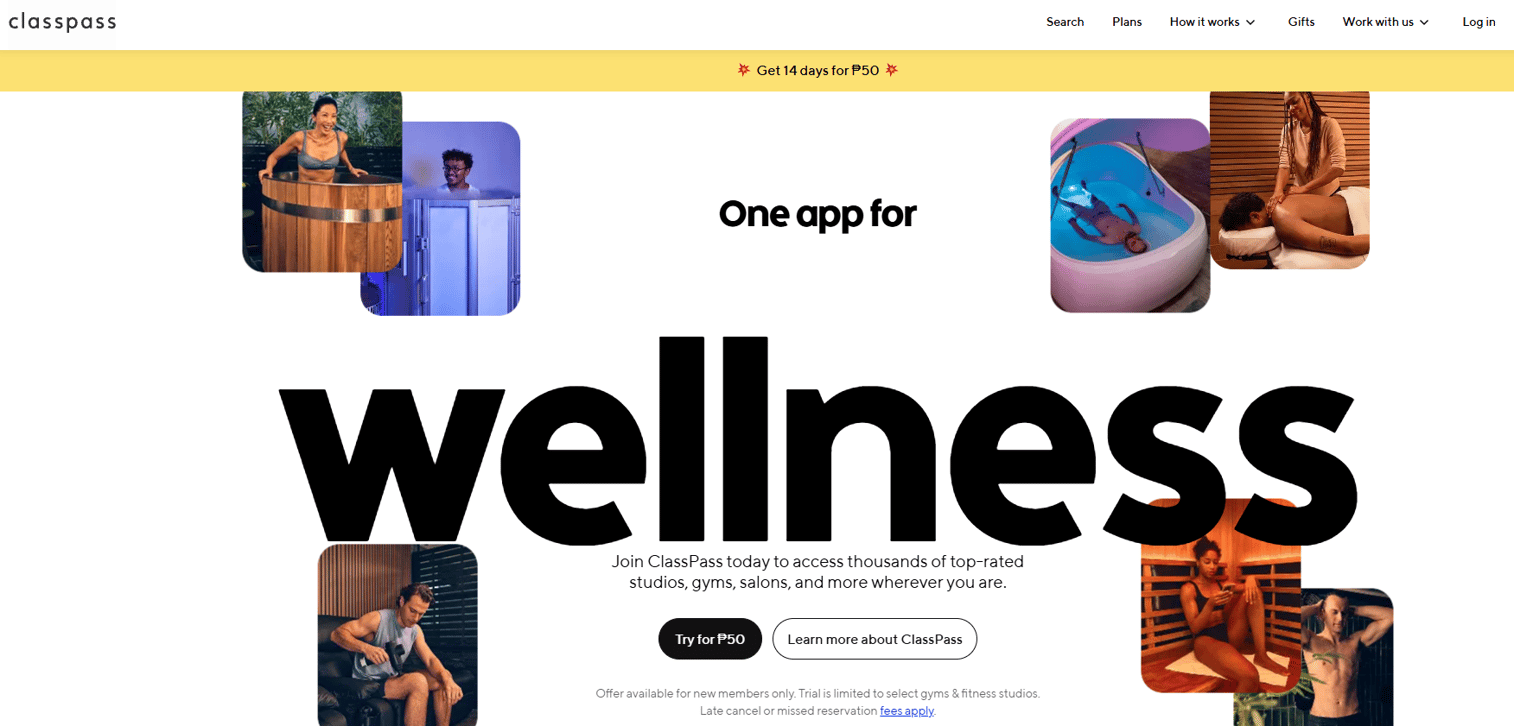
ClassPass for Business connects employees with fitness classes, spa treatments, beauty appointments, and on-demand digital workouts through a corporate wellness benefit built around ClassPass's global network. Employers subsidize employee access via custom packages; employees book classes, gym sessions, and wellness appointments through the ClassPass app.
Best for: Employers with employees in cities where boutique fitness access matters, particularly distributed teams who value flexibility over a single gym membership.
Key features
- Studio class access, gym bookings, and wellness appointments
- Employer subsidy model with real-time usage reporting
- Employer dashboard for administration and reporting
- Mobile booking with on-demand digital workout access
- Dedicated onboarding support
Why choose ClassPass for Business: The credit model works well for employees who want variety across gyms, studios, and wellness services rather than a single gym membership. For distributed teams across multiple cities, the network breadth is a practical advantage.
ClassPass for Business pricing: Company package (50-plus employees) starts at $24/month per active employee. Team package (fewer than 50 employees) starts at $49/month per active employee. Both require requesting a demo for final pricing.
G2 rating: 4.3/5
12. Mindbody
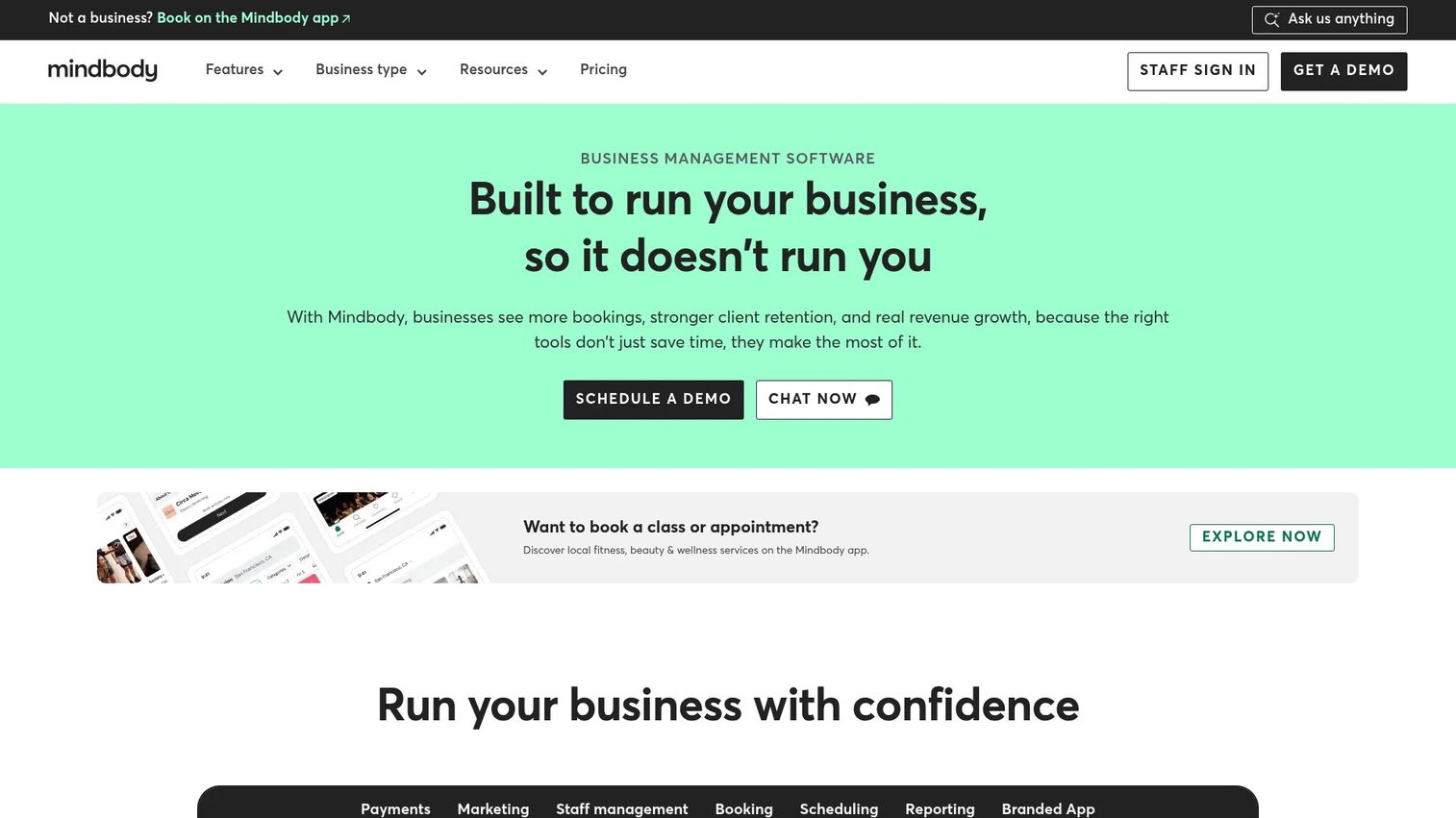
Mindbody is business management software for fitness, wellness, and beauty businesses. It handles online booking, payments, membership management, marketing automation, staff scheduling, and client discovery through the Mindbody marketplace. This entry is for wellness providers and studios, not for employers buying an employee wellness benefit.
Best for: Fitness studios, gyms, yoga providers, and wellness businesses that need integrated booking, payments, and marketing tools.
Key features
- Online booking and scheduling
- Integrated payments and membership management
- Marketing automation and lead management
- Staff management and performance reporting
- Marketplace discovery through the Mindbody app
Why choose Mindbody: Choose Mindbody when you are the wellness provider, not the employer. Studios, gyms, and wellness businesses use it to manage operations and reach clients. If you are an employer looking to offer employees access to bookable wellness services, Mindbody-powered studios appear on platforms like ClassPass rather than through a direct Mindbody employer contract.
Mindbody pricing: Starter plan starts at $79/month per location. Accelerate and Ultimate plans require contacting Mindbody for pricing.
G2 rating: 3.7/5
13. ZAMA Health
ZAMA Health is a mental health and wellness platform built around CBT/ACT-informed self-guided modules, an anonymous peer community, clinical support, automated accountability tools, local wellness resource connections, and staff training courses. It is designed for athletic populations, gym communities, and organizations where performance and mental wellbeing intersect.
Best for: Collegiate athletic programs, fitness communities, and organizations that need mental health support connected to performance and community accountability.
Key features
- CBT/ACT-informed self-guided mental health modules
- Anonymous peer community for shared accountability
- Clinical support access and care coordination
- Automated reminders and local wellness resource connections
- Staff training courses for coaches and managers
Why choose ZAMA Health: ZAMA's niche is performance-adjacent mental wellness with a community component, which makes it stronger than a generic mindfulness app for populations where stigma around mental health support is a real barrier. For employers outside athletic or fitness contexts, the breadth is narrower than other options in this list.
ZAMA Health pricing: Custom pricing. Contact ZAMA Health directly to request a demo and quote.
14. Volt Athletics
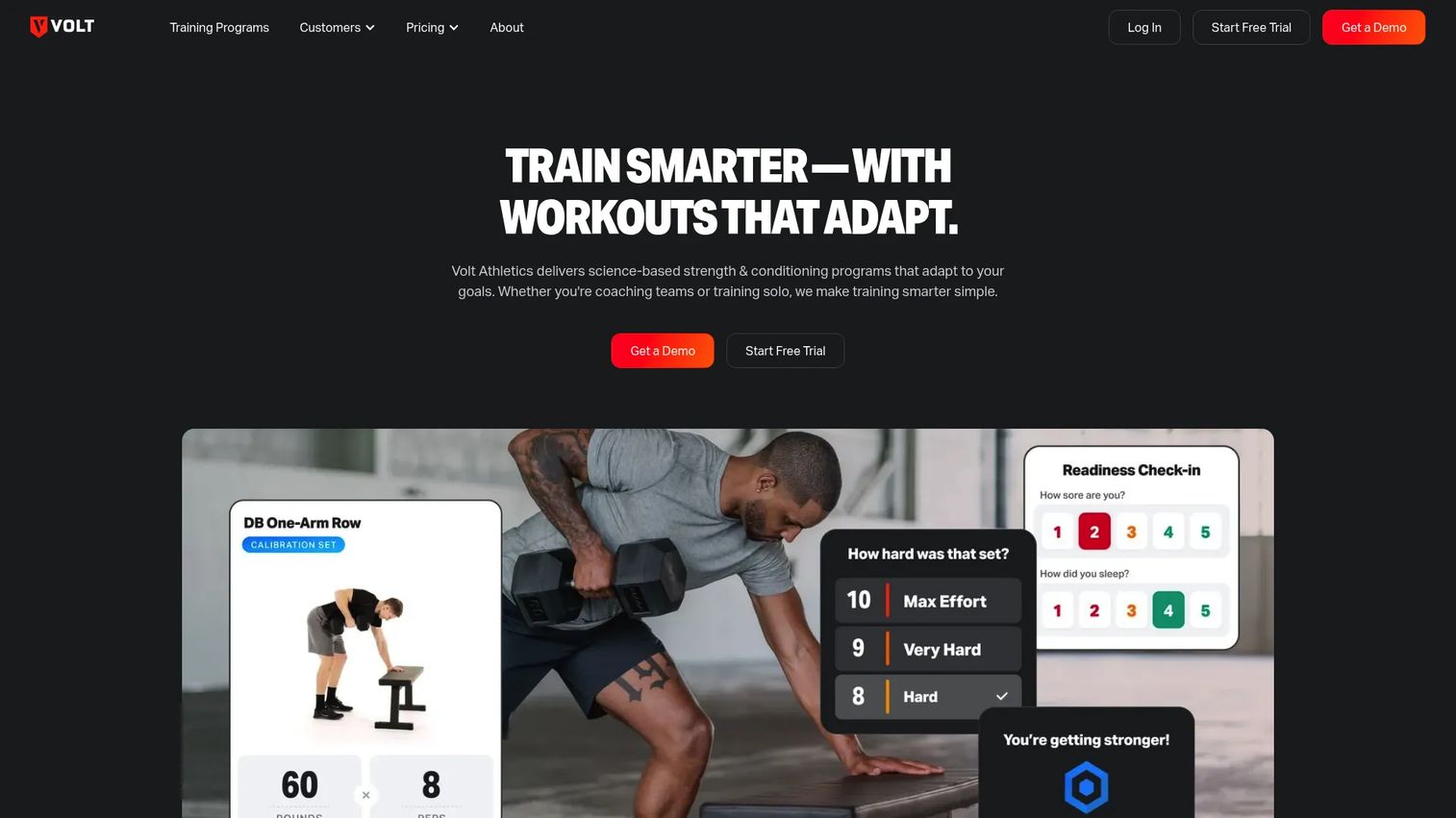
Volt Athletics is science-based strength and conditioning software built around Cortex AI, which personalizes weights, volume, and training intensity for each athlete. It covers sport-specific and general fitness programs, a custom program builder, tablet training mode, readiness tracking, and over 1,500 exercise videos.
Best for: Schools, colleges, athletic departments, tactical organizations, and fitness-focused companies that want structured strength and conditioning programs rather than general wellness content.
Key features
- Cortex AI personalizes weights, volume, and intensity per athlete
- 40-plus sport-specific and general fitness training programs
- Custom program builder with movement library and templates
- Readiness tracking and athlete progress reporting
- In-app messaging and raw data export
Why choose Volt Athletics: Choose Volt when structured athletic training is the primary need. This is not a broad wellness platform covering mental health, nutrition, or mindfulness. It is a focused strength and conditioning tool that fits athletic departments, tactical teams, and performance-oriented employee fitness programs.
Volt Athletics pricing: High School Small Team plan (up to 30 athletes) starts at $900/year. College Small Team starts at $1,200/year. High School Large Team (up to 100 athletes) is $1,400/year. College Large Team is $1,900/year. A 14-day free trial is available.
15. Plum
Plum is an employee health benefits and insurance platform that covers health insurance administration, digital onboarding, health wallets, insurance cards, claims tracking, hospital coordination, reimbursement support, 24/7 telehealth, and HRIS integrations. Plum operates primarily in the Indian market; U.S.-based readers should verify geographic availability before evaluating.
Best for: Companies (primarily in India) seeking an integrated platform for employee health insurance, benefits administration, and healthcare access.
Key features
- Employee health insurance and benefits administration
- Digital onboarding, health wallets, and insurance cards
- Claims tracking, hospital coordination, and reimbursement support
- 24/7 telehealth and multi-specialty virtual consultations
- HRIS integrations, benefits analytics, and reporting
Why choose Plum: Plum is the right choice when wellness is part of a broader employee health benefits and insurance strategy, particularly for teams in markets where it operates. The telehealth and claims administration components make it closer to a benefits infrastructure tool than a wellness engagement platform.
Plum pricing: Custom pricing. Plum directs businesses to request a quote or customize a plan on their site.
G2 rating: 3.8/5
Considerations when choosing on-demand wellness software
Match the platform to the job you need done
Fitness access, mental health support, healthcare navigation, engagement challenges, and provider booking require different tools. A platform can be excellent at challenges and weak on clinical mental health, or strong on gym network breadth and thin on analytics. Define the primary job before comparing features.
Check employee access before comparing features
The most common reason wellness benefits fail is not content quality. It is the access model. If employees cannot figure out how to book a class, download the app, or redeem a credit in under two minutes, adoption collapses. Ask for the employee onboarding flow before signing.
Verify HR and benefits integrations before the demo
For a Series B company, Workday or SAP SuccessFactors may not be in the stack yet. Payroll sync, SSO, eligibility file imports, and HRIS connections still matter. Ask which integrations are native, which require file uploads, and what the cadence for eligibility updates looks like.
Look at utilization reporting, not content breadth
A large content library does not prove impact. Ask for reporting on enrollment rate, activation within the first 30 days, repeat usage by cohort, and benefit utilization by department. The data you can bring to Finance at renewal determines whether the program survives the next budget cycle.
Pressure-test pricing against headcount growth
A wellness platform priced at 80 employees often looks different at 180. Ask for PEPM rates at multiple headcount bands, minimum contract commitments, family access costs, and usage-based fees. Build the 18-month cost model before signing.
Conclusion
The right on-demand wellness software depends on what your employees actually need and what your People team can administer without adding headcount.
Choose Wellhub or FitOn Health when gym access, digital fitness, and app variety are the primary asks. Choose Wellable when you want participation, challenges, and a program employees talk about. Choose Headspace for Organizations or Calm Business when stress, sleep, and mental wellbeing are the core use cases. Choose Spring Health when the company has grown to the point where a mindfulness app is not enough and clinical care navigation is the real need. Choose Personify Health when you are building enterprise-level health benefits infrastructure. Choose Mindbody only if you are a wellness provider, not an employer.
For the Series B founder: Pick the tool that your Head of People can launch in the first 30 days, that Finance can defend at renewal with utilization data, and that employees will actually use. Those three filters cut the list faster than any feature comparison.
For more on building the software stack that supports your team's performance, check out our guide to best employee engagement software alongside this one.
Start your journey with Guideflow today!
FAQs
On-demand wellness software is a digital platform that gives employees or consumers immediate access to wellness services, including fitness classes, mindfulness content, coaching, therapy, nutrition guidance, and provider booking, through web or mobile interfaces without requiring a scheduled appointment. Many employer-focused platforms also include HRIS integrations, utilization analytics, and benefits administration.
Corporate wellness software refers specifically to employer-purchased programs that deliver wellness benefits to employees, often including challenges, incentives, health assessments, and HR reporting. On-demand wellness software is a broader term that includes consumer wellness marketplaces, provider booking platforms, and digital health libraries. Many employer platforms now combine both models, offering on-demand access within a corporate wellness program structure.
Pricing varies significantly by model. PEPM (per employee per month) pricing typically runs from $1 to $10 per eligible employee depending on coverage depth. Flat subscription models like Wellable start around $100/month for small teams. Mindfulness-focused tools like Headspace start at $45 per employee per year. Enterprise platforms, clinical mental health tools, and benefits-adjacent platforms like Spring Health and Personify Health use custom pricing driven by employee count, feature set, and contract length.
For early-stage or Series B companies, the best starting points are tools with fast setup, low admin overhead, and transparent pricing. Wellable's Essentials plan at $100/month covers challenges, coaching, and content. Headspace for Organizations starts at $45 per employee per year with a small-business pricing tier. Calm Business handles teams from 5 to 300 employees on a self-serve annual subscription. Avoid heavy enterprise implementations unless clinical care, compliance, or advanced reporting is a day-one requirement.
Mental health platforms vary in depth. Mindfulness-first tools like Headspace for Organizations and Calm Business deliver content, guided meditations, and coaching. Spring Health adds personalized assessments, therapy matching, medication management, and measurement-based outcomes reporting, making it closer to clinical care infrastructure. ZAMA Health serves athletic and performance-focused populations with peer community and CBT-informed modules. The right choice depends on whether the need is daily stress management or access to clinical care.
The most common integrations required by mid-market and growing teams are HRIS sync (for eligibility management), payroll system connections, SSO for employee authentication, and benefits administration platform connections. Healthcare-adjacent tools may also integrate with insurance systems or telehealth providers. Analytics exports to BI tools or CRM platforms matter when the People team needs to include wellness data in broader employee health reporting.
Start with enrollment rate and activation within the first 30 days. From there, track repeat usage by cohort, challenge completion rates, and benefit utilization by department. Harder metrics like absenteeism reduction and healthcare cost trends require a longer baseline, typically 12 to 18 months. Avoid relying only on vendor-reported engagement averages; pull the data yourself from the admin dashboard and tie it to retention signals or team performance data you already track.
No. Telehealth refers specifically to remote clinical care delivered by licensed healthcare providers. On-demand wellness software may include a telehealth component, but it typically also covers fitness classes, mindfulness content, wellness challenges, nutrition programs, coaching, and provider booking. Tools like Spring Health and Plum have clinical care components that overlap with telehealth; most fitness and mindfulness platforms do not.