You sent 400 cold emails last week. You got 12 replies. Three said "unsubscribe." Two said "remove me." The rest were polite passes.
Most people blame the tool. Wrong stack, wrong sequencer, wrong deliverability network. So they migrate. Same volume, same script, same result.
The tool is rarely the bottleneck. Deliverability infrastructure, list quality, and what's actually inside the email matter more than which platform pushes the send button.
Most email outreach lists ignore that last part. They compare sending mechanics and never address what converts a reply into a booked meeting. This guide does both.
Below, you'll find 10 email outreach platforms ranked by use case: scale, personalization, all-in-one, and deliverability. After the ranking, a separate section covers the asset layer that makes any of them perform better: interactive demos embedded in the email itself. If you're an SDR or growth marketer trying to lift reply rates without burning down your sender reputation, this is the shortlist worth building from.
Tools evaluated in this comparison
Ten email outreach tools evaluated across scale, deliverability, and B2B SaaS fit: Instantly, Lemlist, Apollo, Smartlead, Saleshandy, Mailshake, GMass, Woodpecker, QuickMail, and HubSpot Sales Hub. Each was reviewed on deliverability infrastructure, reply-rate impact, integration depth, pricing transparency, and team fit.
After the ranking, a dedicated section covers the asset layer that boosts conversion regardless of which sender you use. The comparison draws on G2 sentiment, publicly reported pricing as of Q2 2026, and patterns observed across SDR teams running these tools.
TL;DR
- Bottleneck: Deliverability, targeting, and email content matter more than platform choice.
- Top picks: Instantly (scale), Lemlist (personalization), Apollo (all-in-one), Smartlead (agencies), Saleshandy (first-time).
- Testing: Run 14-day side-by-side tests before committing budget.
- Deliverability: Strong reputation management beats feature count.
- Asset layer: Interactive demos outperform static PDFs and signatures.
What are email outreach tools
Email outreach tools are software platforms that help sales and marketing teams send personalized, automated email sequences at scale to prospects who haven't opted in. They are built for cold sending. That distinction matters.
Email marketing platforms like Mailchimp, ActiveCampaign, and Brevo are designed for broadcasts to opted-in subscriber lists. The infrastructure is optimized for volume, list hygiene, and unsubscribe handling. For a deeper look at that category, see our guide to the best email marketing software tools.
Email outreach tools are the opposite: low-volume per inbox, high-personalization, and built to maintain sender reputation across cold sends to strangers.
Core capabilities of cold email software include:
- Sequencing: multi-step cadences that pause on reply
- Personalization: dynamic variables, spintax, and increasingly, asset-level personalization
- Deliverability tools: warmup, inbox rotation, bounce detection, SPF/DKIM/DMARC verification
- Analytics: opens (now unreliable), replies, meetings booked, pipeline influenced
- CRM sync: native integrations with Salesforce, HubSpot, Pipedrive
Cold email tools sit adjacent to sales engagement platforms (Outreach, Salesloft) which add dialers, social touches, and broader workflow orchestration. For teams comparing that broader category, check out the best sales engagement tools.
For most SDR teams running outbound at sub-enterprise scale, a dedicated cold email platform plus a CRM is enough. If you're still picking that CRM, we've reviewed the best CRM software as well.
One layer most articles skip: the asset inside the email. A cold email is only as good as what the prospect clicks. Static signatures, PDFs, and calendar links convert at one rate.
Interactive demos and personalized landing pages convert at another. We'll cover that in detail after the rankings.
What to look for in an email outreach tool
Deliverability infrastructure
Warmup, inbox rotation, SPF, DKIM, and DMARC authentication standards, bounce detection, sender reputation monitoring. This is the single most important criterion. A platform with weak deliverability infrastructure will land you in spam regardless of how good your copy is.
Personalization at scale
Spintax, dynamic variables, AI-generated openers, image and video personalization, interactive content embedding. Personalization is shifting from text-only to asset-based. The teams pulling ahead are personalizing the asset (the demo, the landing page) rather than just the first line of the email.
Sequencing and cold email automation
Conditional logic, multi-channel touches, automatic reply detection, pause-on-response, A/B testing across subject lines and copy variants. A good sequencer cuts the manual overhead of running 5 to 8 touch cadences across hundreds of accounts.
CRM and stack integration
Native Salesforce, HubSpot, and Pipedrive integrations. Zapier as fallback. Look for two-way sync, not just one-way push.
If engagement data doesn't flow back into the CRM at the contact level, your reps are working blind.
Analytics and reporting
Open, reply, meeting booked, pipeline influenced. Watch for tools that overemphasize opens. Apple Mail Privacy Protection (2021) has inflated open rates ever since.
This makes opens a poor primary metric. Reply rate and meeting booked rate are what matter.
Pricing transparency
Per-seat, per-inbox, or unlimited inboxes. Watch for upcharges on warmup, verification, or additional users. The category has shifted toward flat-rate, unlimited-inbox pricing for high-volume use cases, which changes the economics for agencies and growth teams.
Best email outreach tools comparison table
Pricing reflects monthly billing for the entry tier as of Q2 2026. Annual billing typically saves 15 to 20 percent.
# | Product | Intent | Key use case | Pricing | G2 rating |
|---|---|---|---|---|---|
1 | Instantly | Scale outbound at flat rate | High-volume agencies and growth teams | From $47/mo | 4.8/5 |
2 | Lemlist | Multichannel personalization | SDRs running creative campaigns | From $79/user/mo | 4.5/5 |
3 | Apollo | All-in-one prospecting plus outreach | Sales teams needing data and sequencing | From $59/user/mo | 4.7/5 |
4 | Smartlead | High-volume cold email | Agencies and lead-gen shops | From $39/mo | 4.7/5 |
5 | Saleshandy | Approachable cold outreach | Startups and solo founders | From $25/mo | 4.6/5 |
6 | Mailshake | Simple sales engagement | SMB sales teams | From $29/user/mo | 4.7/5 |
7 | GMass | Gmail-native mail merge | Solo operators inside Gmail | From $25/mo | 4.7/5 |
8 | Woodpecker | Reliable cold email for B2B | Mid-market sales teams | From $29/mo | 4.4/5 |
9 | QuickMail | Deliverability-focused outreach | Agencies and high-volume senders | From $49/mo | 4.6/5 |
10 | HubSpot Sales Hub | CRM-native outreach | Teams already on HubSpot | Free tier; from $20/user/mo | 4.4/5 |
The 10 best email outreach tools reviewed
1. Instantly
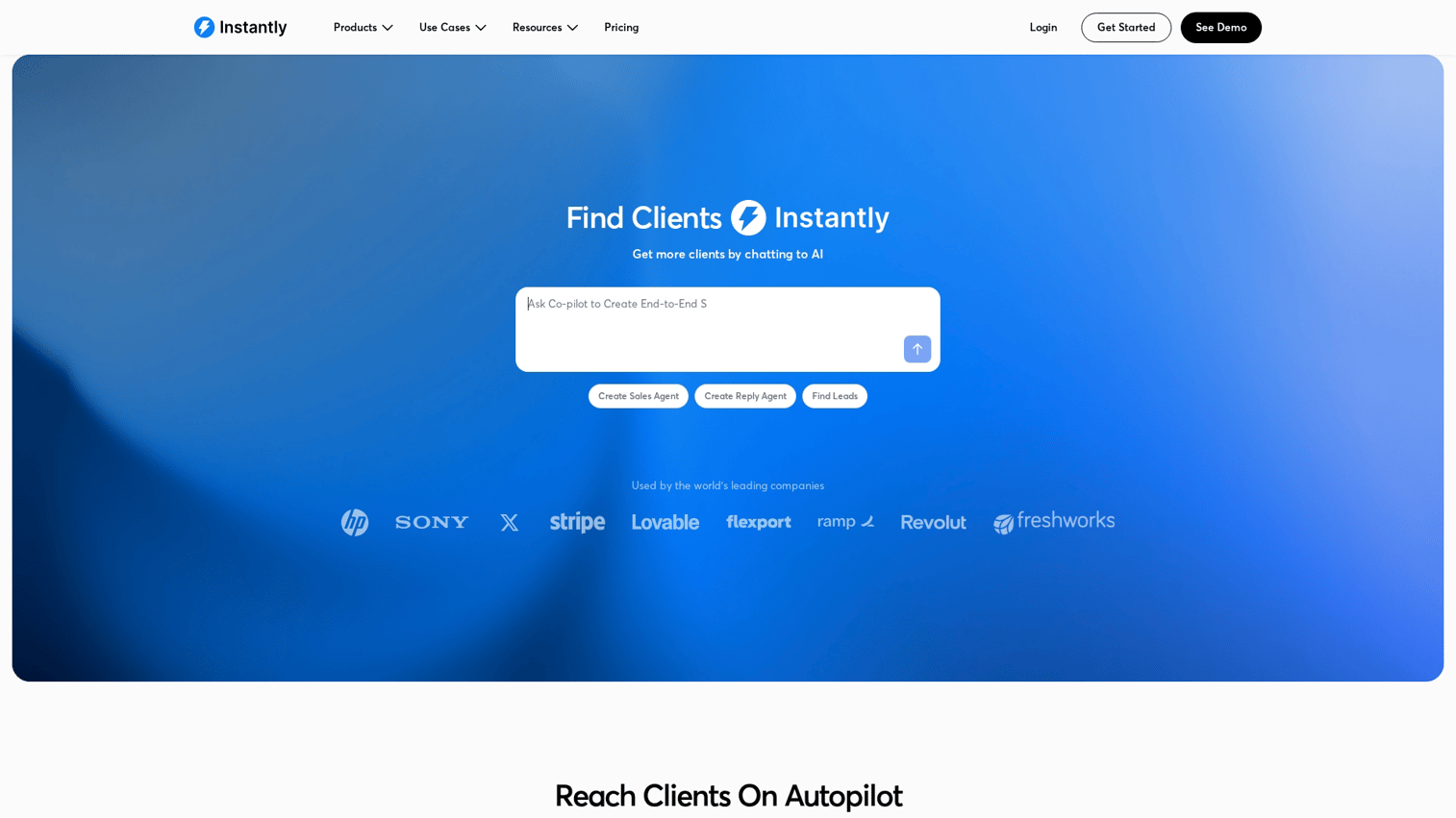
Instantly is the scale leader in cold email. Flat-rate pricing with unlimited email accounts changed the economics of high-volume outbound. Most platforms charge per inbox, which gets expensive when you need 20 or more sending addresses for proper rotation.
Instantly bundles unlimited inboxes into the base plan. Built-in warmup, the Deliverability Network for inbox rotation, and a lead finder make it the default for agencies pushing four-figure daily send volumes. Unibox handles reply management across all connected accounts in one inbox.
Best for: Growth teams and agencies running 1,000+ sends/day across multiple domains.
Key strengths
- Unlimited inboxes at flat rate (the single biggest pricing differentiator in the category)
- Deliverability Network for inbox rotation across accounts
- Built-in email warmup and list verification
- AI-powered sequence writing and copy variants
- Lead finder with a B2B contact database
Pricing: $47/mo for the Growth plan ($37/mo annual). Hypergrowth at $97/mo.
2. Lemlist
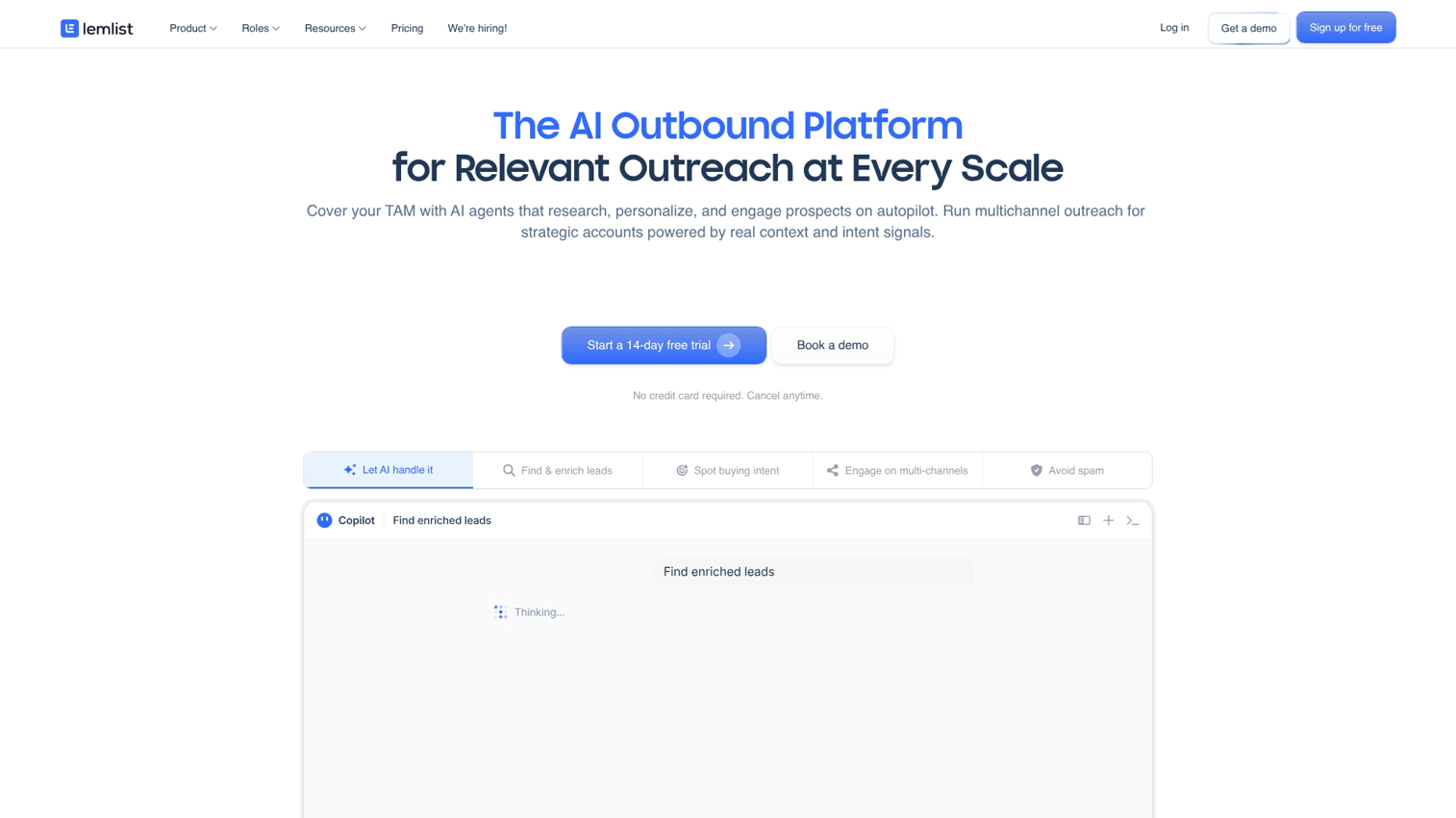
Lemlist is the multichannel personalization platform. Where Instantly competes on scale, Lemlist competes on creativity. Image personalization (custom screenshots with the prospect's logo overlaid), video personalization, and LinkedIn automation all live inside a single sequence.
The platform suits SDRs who care about reply rates over raw volume, with a strong template library and an active community sharing what's working. Lemwarm, the warmup tool, is included. The lemlist AI campaign generator drafts sequences from a brief.
Best for: SDRs and growth marketers running creative, multichannel campaigns.
Key strengths
- Image and video personalization at scale
- LinkedIn automation built into sequences
- AI campaign generator (lemlist AI)
- Warmup tool (lemwarm) included
- Strong template library and community resources
Pricing: $79/user/mo for Email Pro ($63/user/mo annual). Multichannel Expert at $109/user/mo ($87 annual).
3. Apollo
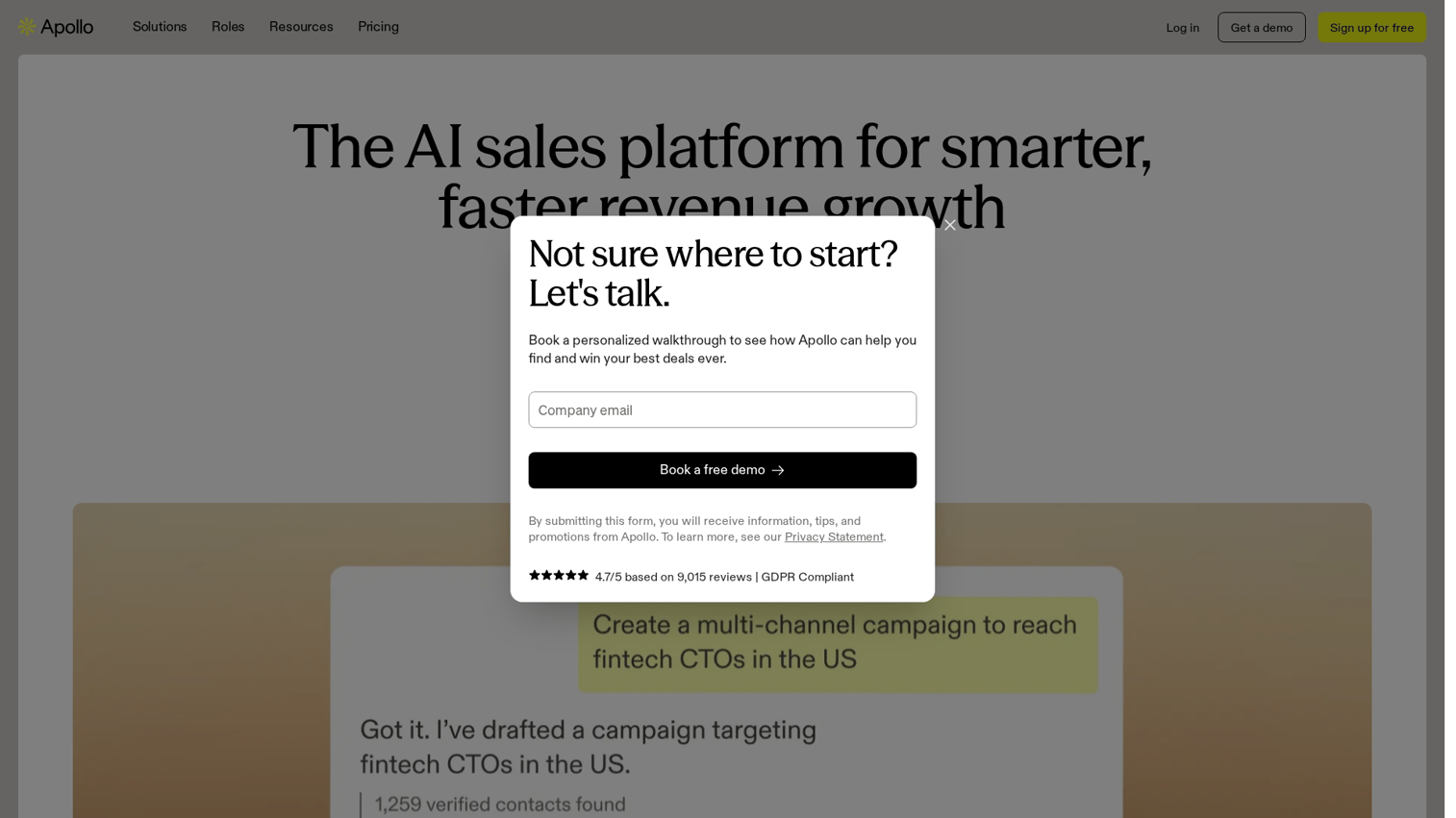
Apollo is the all-in-one prospecting and outreach platform. The 275M+ contact database is the core asset. Sequencing, dialer, and meeting scheduler sit on top.
Teams that don't want a separate prospecting tool plus a separate sender will find Apollo collapses the stack into one platform. The free plan has usable limits, driving bottom-up adoption inside startups and mid-market sales teams.
Native Salesforce and HubSpot sync removes the data integration tax. If you're evaluating AI-powered prospecting more broadly, our roundup of the best AI SDR tools covers adjacent options.
Best for: Sales teams that need data and sequencing in one platform.
Key strengths
- 275M+ B2B contact database
- Built-in sequencer with multichannel touches
- Free plan with usable limits for testing
- Native Salesforce and HubSpot sync
- AI assistant for personalized openers
Pricing: Free plan available. Basic at $59/user/mo ($49/user/mo annual). Professional at $99/user/mo ($79 annual).
4. Smartlead
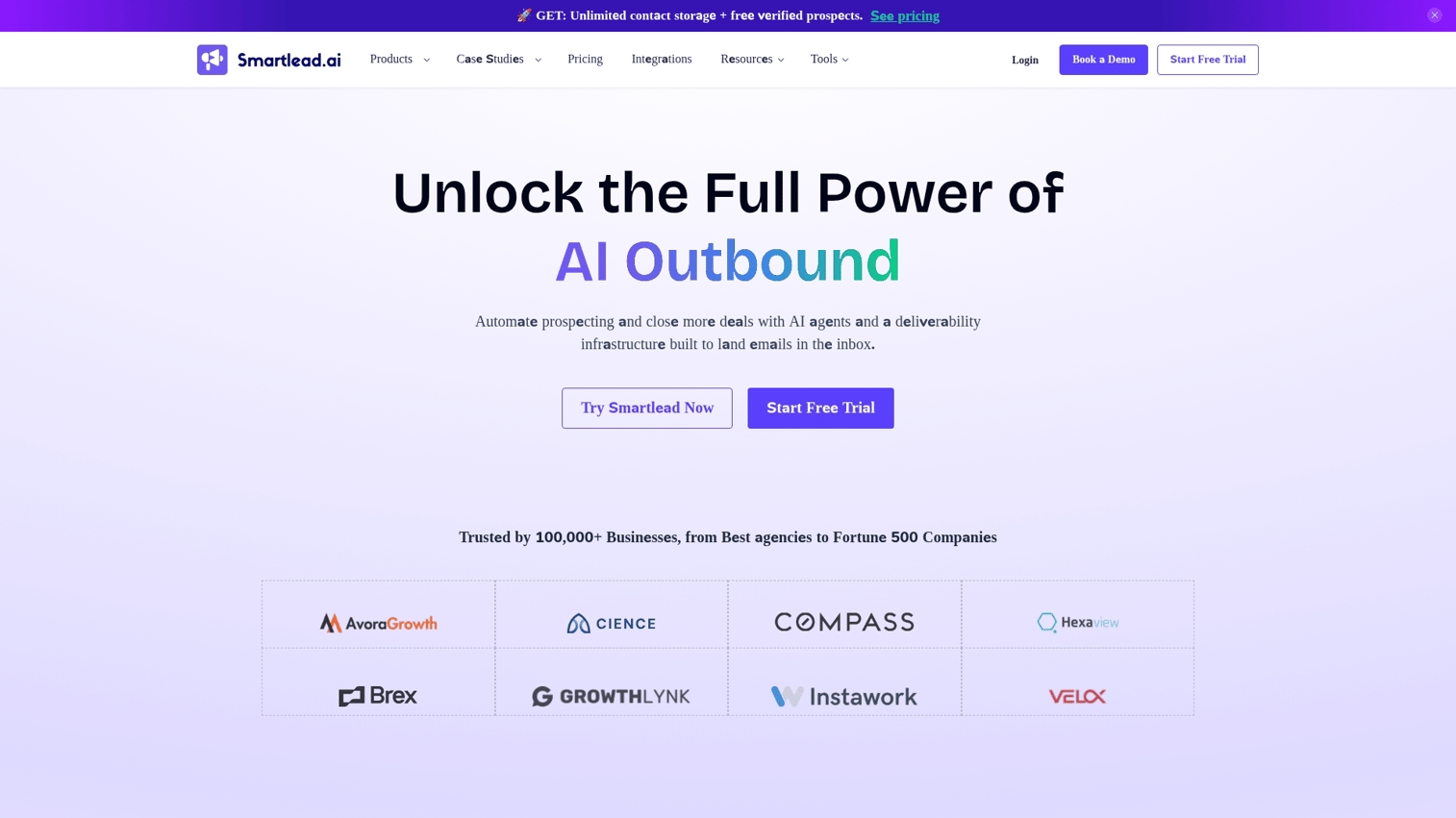
Smartlead is built for senders who push thousands of emails per day across hundreds of domains. Unlimited mailboxes, master inbox for centralized reply management, and a deliverability-first architecture make it the platform of choice for lead-gen agencies. Subsequences trigger based on reply sentiment (interested, not interested, out of office), automating routing work that usually falls on SDRs.
API access and webhooks support custom workflows into Slack and CRM systems.
Best for: Agencies and high-volume cold email operators running multi-client outbound.
Key strengths
- Unlimited mailboxes and warmup
- Master inbox for managing replies across domains
- Subsequences based on reply sentiment
- API access for custom workflows
- Webhooks for CRM and Slack alerts
Pricing: $39/mo for the Basic plan ($32.50/mo annual). Pro at $94/mo. Custom at $174/mo.
5. Saleshandy
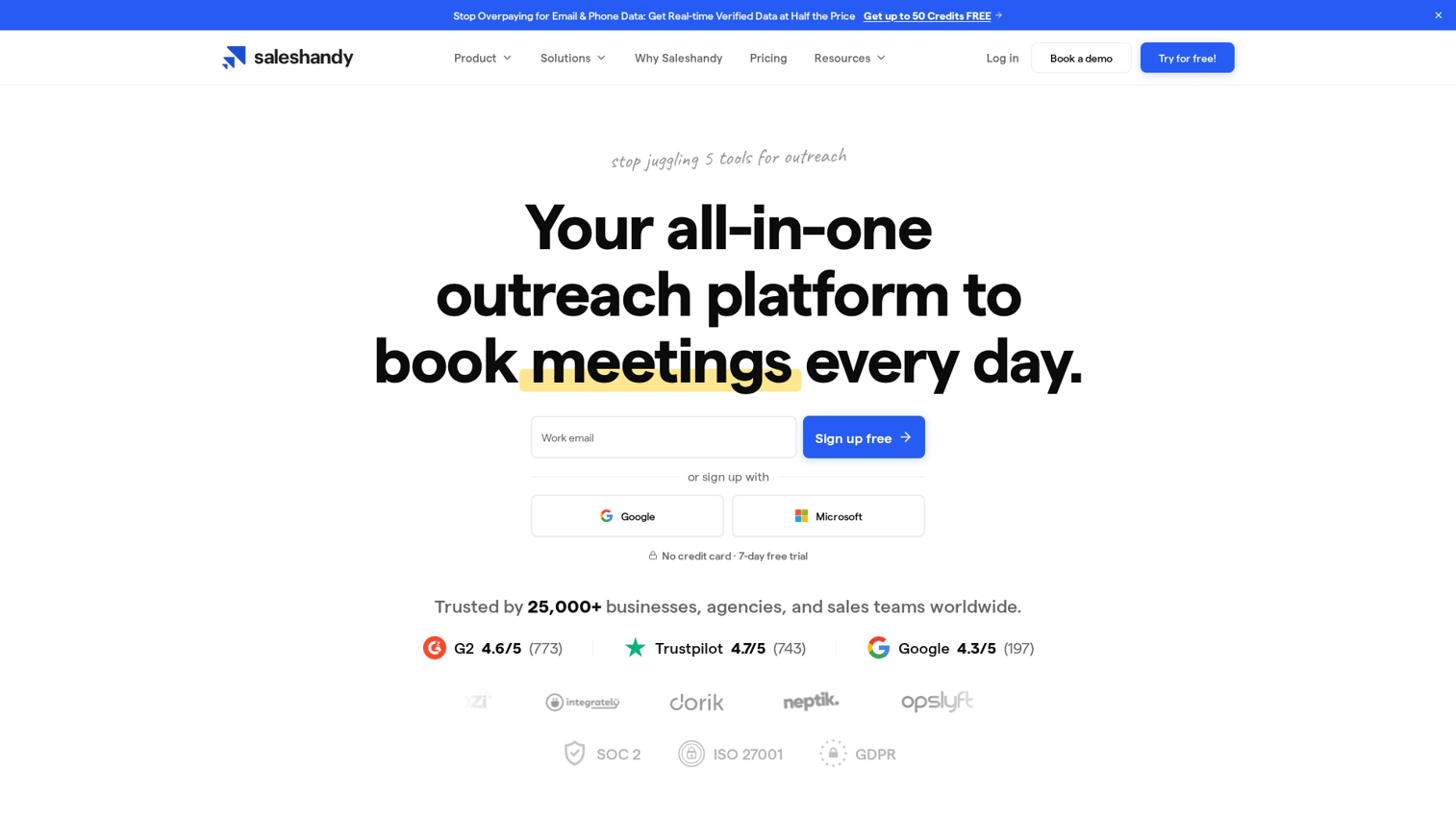
Saleshandy is the approachable cold email platform. It offers AI sequence writing, sender rotation, unified inbox, and warmup with a UX built for teams new to cold email tooling. The B2B lead database with 700M+ contacts removes the need for a separate prospecting subscription at lower send volumes.
It's a strong choice for solo founders and small sales teams setting up their first outbound motion.
Best for: Startups, solo founders, and small sales teams running their first outbound motion.
Key strengths
- AI Sequence Writer and AI Variants for copy testing
- B2B lead database with 700M+ contacts
- Built-in warmup and verification
- Unified inbox for reply management
- Strong support for non-technical users
Pricing: $25/mo for Outreach Starter (annual). Pro at $69/mo. Pricing scales with prospects and inboxes.
6. Mailshake
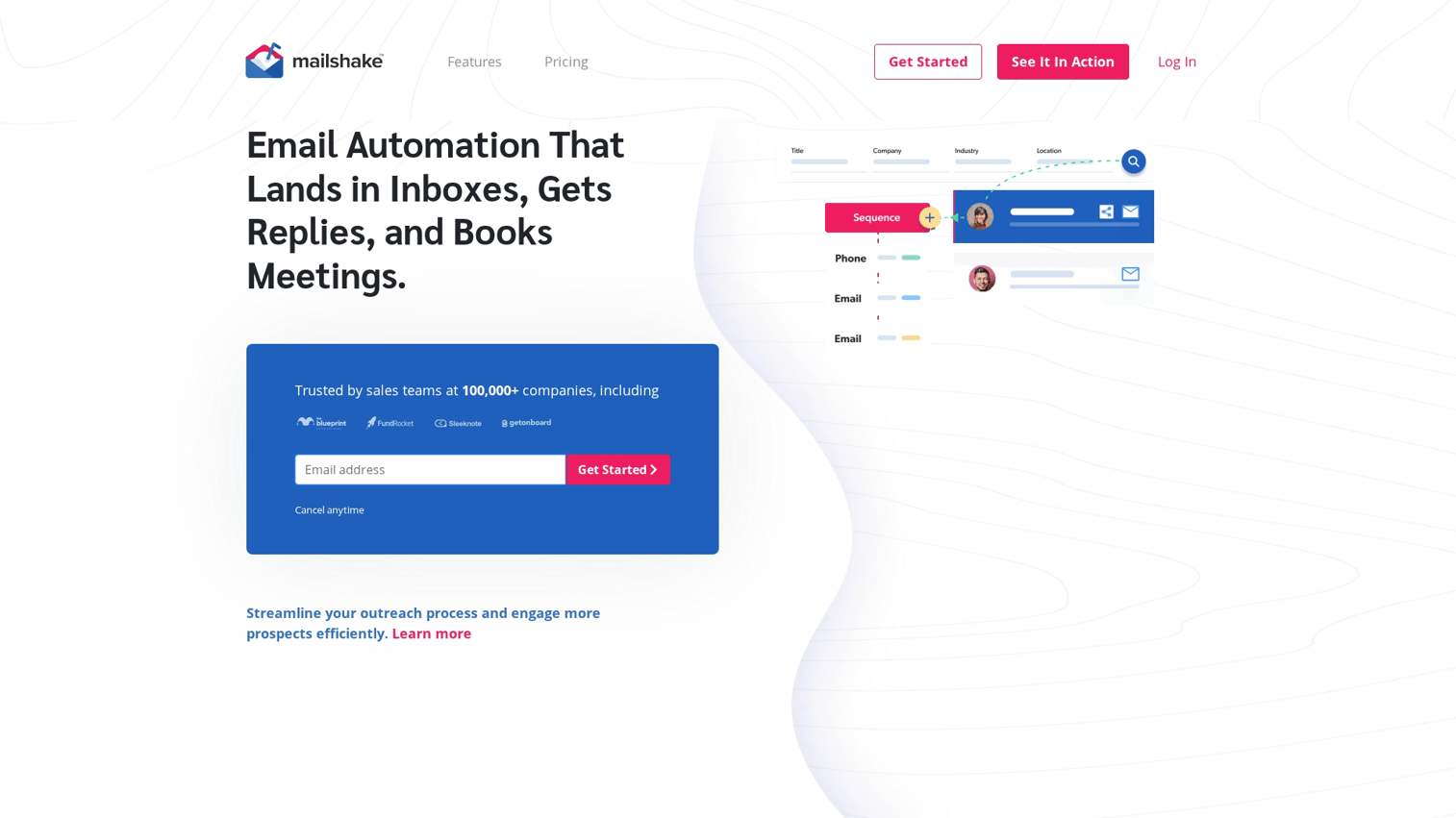
Mailshake is the clean, focused sales engagement option. It's less powerful than Apollo on data and less aggressive than Instantly on deliverability. But it's cleaner for teams wanting sequencing without configuration overhead.
SHAKEspeare AI drafts sequences from a brief.
Native LinkedIn and phone touches are available on higher plans for teams running multichannel. Native Pipedrive and Salesforce integrations make it easy to slot into existing SMB sales stacks.
Best for: SMB sales teams running straightforward outbound campaigns.
Key strengths
- Clean, easy-to-learn UX with low setup overhead
- SHAKEspeare AI for sequence generation
- Multichannel (email, LinkedIn, phone) on higher tiers
- Native Salesforce and Pipedrive integrations
- Lead Catcher for managing replies
Pricing: $29/user/mo for Starter ($25 annual). Email Outreach at $59/user/mo. Sales Engagement at $99/user/mo.
7. GMass
GMass is the Gmail-native mail merge tool. It lives entirely inside Gmail with no separate dashboard, no migration, and no learning curve. Contact lists pull from Google Sheets, sends go through your own Gmail or Workspace account.
Best for solo operators and small teams that need mail merge, automatic follow-ups, and basic deliverability tooling. The built-in Spam Solver tests inbox placement before you hit send.
Best for: Solo founders and small teams running outreach inside Gmail.
Key strengths
- Lives entirely inside Gmail (no separate dashboard)
- Google Sheets as the contact source
- Built-in spam tester (Spam Solver)
- Automatic follow-ups based on reply behavior
- Affordable for solo users
Pricing: Starts at $25/mo for the Standard plan. Higher tiers add team features.
8. Woodpecker
Woodpecker is the Polish-built cold email platform with a strong deliverability reputation. Built-in warmup, inbox rotation, and condition-based sequence logic give it a mature feel with fewer surprises in production.
Used heavily across European mid-market sales teams, partly because of GDPR-friendly infrastructure and EU-based data handling. Native integrations with Pipedrive, HubSpot, and Salesforce remove the CRM sync headache.
Best for: Mid-market B2B sales teams that prioritize reliability over feature count.
Key strengths
- Strong deliverability with built-in warmup
- Condition-based sequence logic
- A/B testing for subject lines and copy
- Native CRM integrations (Pipedrive, HubSpot, Salesforce)
- GDPR-compliant infrastructure (EU-friendly)
Pricing: Starts at $29/mo for the Cold Email plan.
9. QuickMail
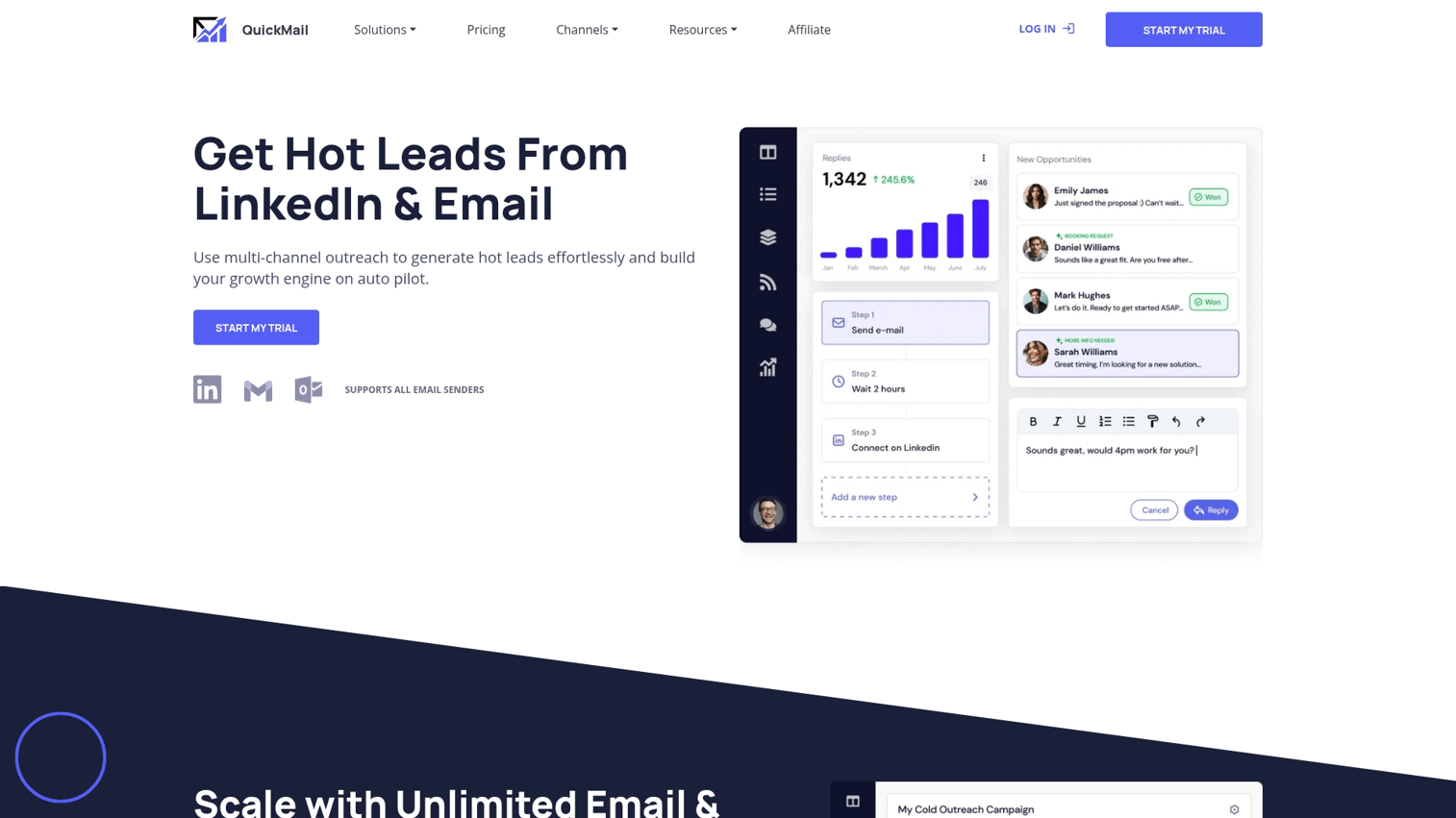
QuickMail is the deliverability-obsessed cold email platform. AutoWarmer, inbox rotation across unlimited sending accounts, and detailed deliverability monitoring make it a favorite among agencies managing sender reputation across hundreds of domains.
Conditional sequence logic supports complex multi-branch cadences. The platform leans into the operational side of cold email: detailed reporting, strong support, and an active community sharing deliverability tactics.
Best for: Agencies and operators where deliverability is the top priority.
Key strengths
- AutoWarmer with deliverability monitoring
- Inbox rotation across unlimited sending accounts
- Advanced conditional sequence logic
- Detailed analytics and reporting
- Strong support and community resources
Pricing: Starts at $49/mo for the Basic plan.
10. HubSpot Sales Hub
HubSpot Sales Hub is CRM-native outreach for teams already on HubSpot. Sequences, templates, snippets, and meeting scheduler all integrate directly with the CRM. It's less specialized for high-volume cold sending than Instantly or Smartlead.
But integration depth makes it ideal when HubSpot is your system of record.
Reporting ties directly to pipeline data, closing the loop between outreach activity and deal outcomes. The free tier is usable for small teams.
Best for: Teams already running HubSpot as their CRM.
Key strengths
- Native CRM integration (zero sync friction)
- Sequences with task and call automation
- Meeting scheduler and document tracking
- Free tier for small teams
- Strong reporting tied to pipeline data
Pricing: Free tier available. Sales Hub Starter from $20/user/mo ($15/user/mo annual). Professional from $100/user/mo.
The asset layer: what to send inside the email
Every email outreach tool above gets you a sequencer, a sender, and a warmup network. None of them help with the part that actually moves reply-to-meeting conversion: what the prospect clicks.
Most cold emails include a static signature, a PDF attachment, or a calendar link. These convert at one rate. Interactive demos, clickable product walkthroughs that prospects can experience in seconds, convert at another.
This is where Guideflow sits in the stack.
Why this matters more than the send tool
Cold email asks the prospect for two things: attention and commitment. Attention to read the email. Commitment to book a meeting if they're interested.
The commitment ask is the bigger lift. Most good-fit prospects avoid the cognitive cost of booking a 30-minute demo with a stranger. That friction is reflected in Gartner's 2026 sales survey, which found 67% of B2B buyers prefer a rep-free experience.
An interactive demo removes the commitment ask. The prospect clicks the link, experiences the product on their own terms, and either books a meeting or doesn't. Either outcome beats ambiguity.
The prospect who booked is qualified. The prospect who didn't was never going to convert. You can see live examples in the Guideflow demo showcase.
Guideflow: Interactive demos for email sequences
Guideflow replaces static assets in your existing sequences with interactive demos that embed natively in any email. SDR and growth teams add Guideflow links inside Instantly, Lemlist, Apollo, Smartlead, or Mailshake sequences through native integrations. The engagement model shifts: instead of asking the prospect to commit to a meeting, you let them experience the product on their own terms.
Best for: SDRs and growth teams looking to lift reply-to-meeting conversion on existing outbound sequences.
Key strengths
- Interactive demos built in 2 minutes 30 seconds (no engineering required)
- Embeds into any email outreach tool (Instantly, Lemlist, Apollo, Smartlead, Mailshake, and others)
- Per-account personalization with dynamic variables from CRM
- Engagement analytics tied back to specific prospects
- AI-powered demo generation, translations, and voiceovers
Pricing: Free tier available. Paid plans from $49/mo. See full pricing for details.
Start your journey with Guideflow today!
How to implement interactive demos in sequences
- Build one demo per ICP segment. Personalize per segment, not per prospect.
- Embed the link in your sequence. Replace your calendar link or PDF.
- Track engagement at prospect level. Use data to drive follow-up touches.
- Pair with personalization tokens. Use CRM variables for per-account customization.
Interactive demos work best paired with a strong sending platform. They're an additive layer, not a replacement. The teams getting the biggest lifts are running Instantly or Lemlist for the send and Guideflow for the asset inside the send.
How to choose the right email outreach tool
Picking from this list isn't about which tool has the most features. It's about matching the tool to your actual constraints. Here's a practical framework.
Define your send volume. Under 500 sends/day across the whole team? Most tools on this list will work.
Over 2,000/day? You need unlimited inboxes and serious rotation. That narrows the list to Instantly, Smartlead, and QuickMail.
Audit your existing stack. Already on HubSpot CRM? Sales Hub probably covers your outreach needs without adding another vendor.
Already paying for Apollo for data? Apollo sequencing is a logical extension and avoids stack sprawl. The cheapest outreach tool is often the one already paid for.
Prioritize deliverability infrastructure over feature count. A tool with 50 features and bad inbox placement will lose to one with 10 features and strong reputation management. Warmup, inbox rotation, and verification matter more than AI features in the demo video, a pattern reinforced by email deliverability best practices from M3AAWG.
Test the asset layer. What you send matters as much as the platform that sends it. Before you migrate platforms, change the asset inside your current sequences and measure the lift.
Run a 14-day side-by-side test. Free trials exist on most platforms. Send identical sequences from two tools to comparable lists.
Measure reply rate and meeting booked rate, not opens. Open rate as a primary metric is broken since Apple Mail Privacy Protection in 2021. Two weeks of data is enough to see which platform places better in the primary inbox.
Common mistakes when using email outreach tools
Sending volume before warmup
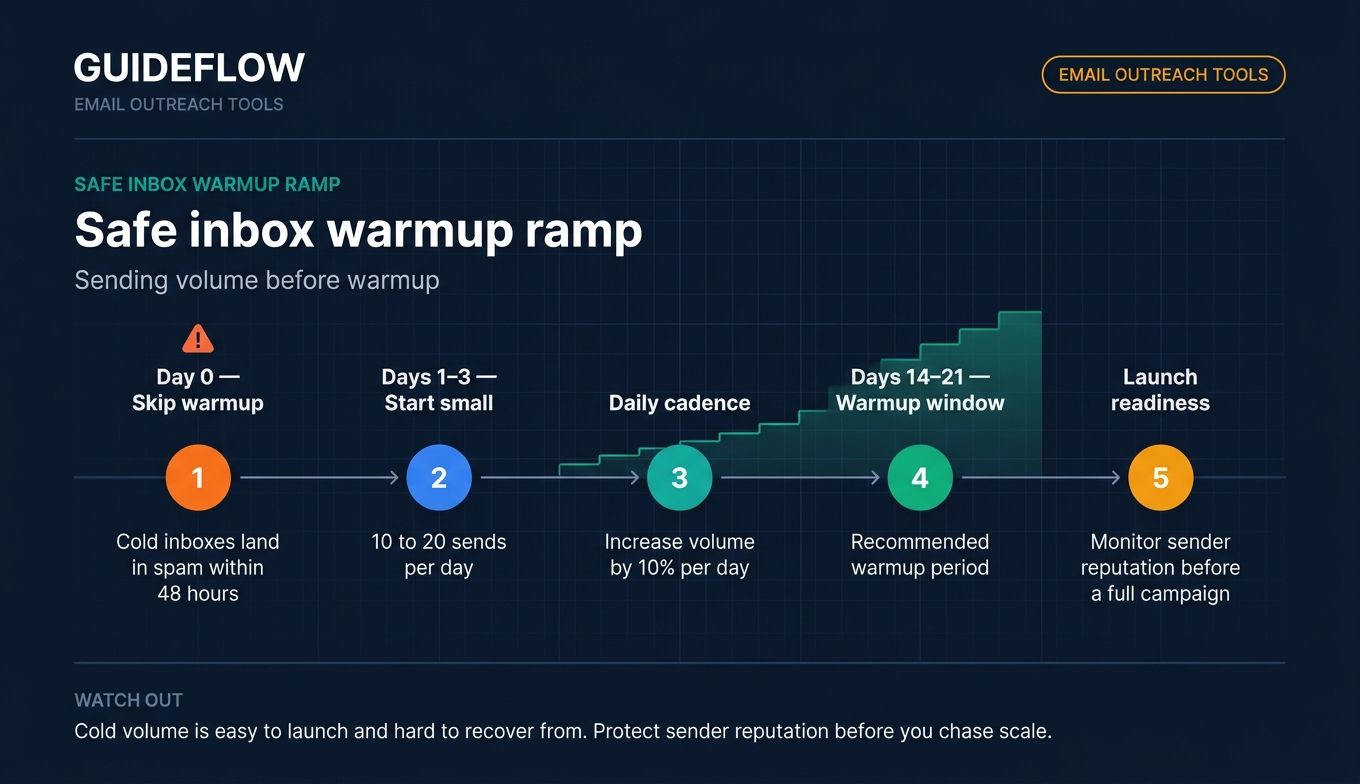
Cold inboxes burn fast. New domains and inboxes that send cold volume without warmup typically land in spam within 48 hours.
What to do instead: use warmup for 14 to 21 days. Ramp daily volume slowly (start at 10–20 sends, increase 10% daily). Monitor sender reputation before full campaigns.
Optimizing for opens instead of replies
Open rates have been unreliable since Apple Mail Privacy Protection started inflating them in 2021. Optimizing for opens means optimizing for noise.
What to do instead: track reply rate and meeting booked rate as your primary metrics. Use opens only as a directional indicator of subject line testing, not as the success measure. For deeper tracking options, see the best email tracking software tools.
Generic personalization tokens
"Hi {{first_name}}, I noticed your company {{company_name}} is doing interesting work..." reads as spam to every prospect who has seen the pattern. What to do instead: reference something specific the prospect or company did recently.
A hiring announcement. A product launch. A LinkedIn post. AI can help surface these signals at scale, but the reference itself has to be real.
Static attachments and signatures
PDF attachments often trigger spam filters and rarely get opened when they do land. Calendar links ask for too much commitment too early. What to do instead: replace static assets with interactive content that prospects can engage with in their browser without downloading anything.
Ignoring inbox rotation at scale
Sending 1,000 emails per day from a single inbox destroys deliverability. What to do instead: use 5 to 10 inboxes across multiple domains and rotate sends evenly. Tools like Instantly, Smartlead, and QuickMail are built specifically to support this rotation pattern.
Treating outreach as a one-and-done broadcast
Single-touch sequences convert at a fraction of multi-touch ones, according to research on multi-touch outbound sequences from Unify (2024). What to do instead: run 5 to 8 touch sequences across email and at least one secondary channel (LinkedIn or phone).
Spread touches over 3 to 4 weeks. Vary the angle on each touch rather than just "following up." Our list of the best outreach software covers multichannel platforms that handle this orchestration.
How interactive demos boost email outreach conversion
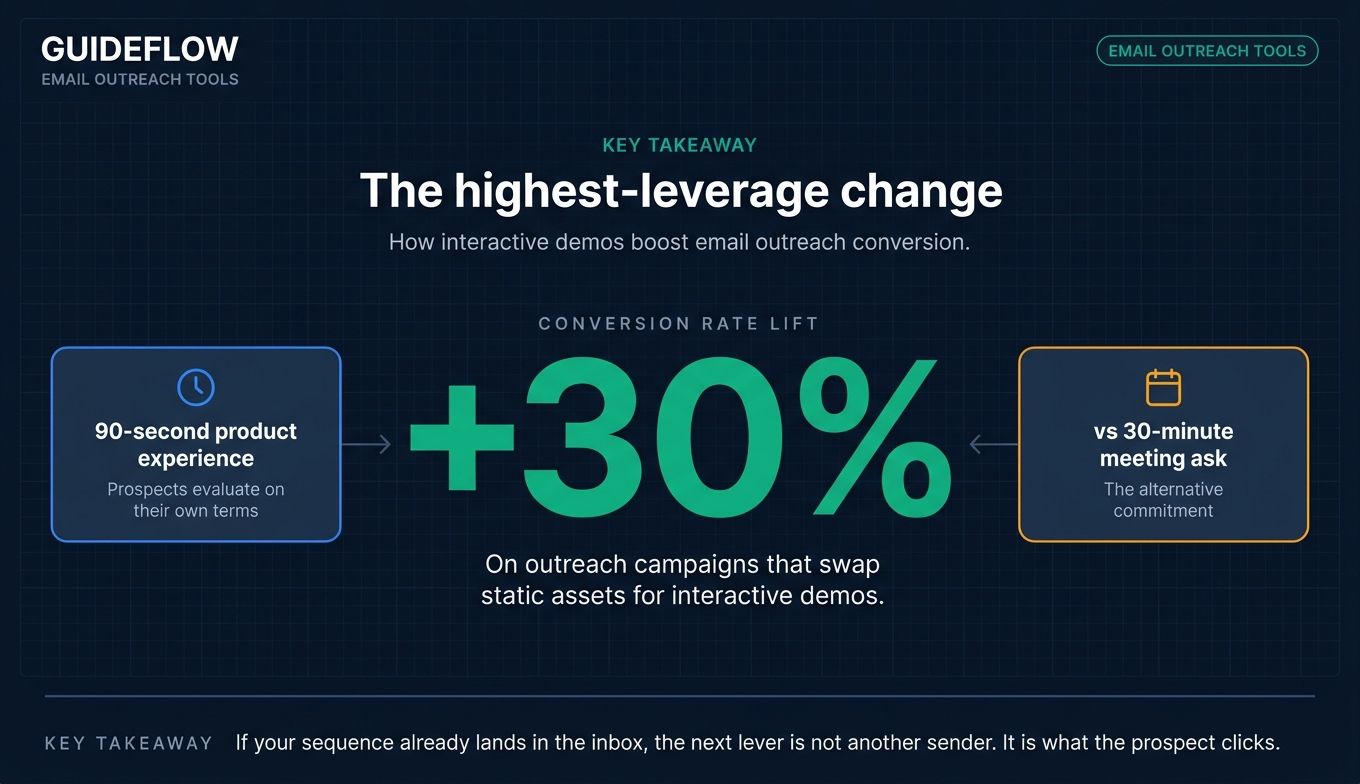
Every outreach article on the first page of Google compares sending mechanics. None address what's inside the email. That's the gap.
Response rates for cold emails with static PDFs hover in the low single digits. Teams using interactive demos in their sequences report meaningfully higher reply-to-meeting conversion, though the exact lift depends on segment, list quality, and copy.
The point is not the headline number. The point is that swapping the asset costs nothing relative to migrating platforms, and it moves the metric that actually matters: meetings booked.
Here's why it works. Cold email asks the prospect for two things: attention and commitment. Attention to read the email.
Commitment to book a meeting if they're interested. The commitment ask is the bigger lift. Per Gartner's 2026 sales survey, 67% of B2B buyers prefer a rep-free experience.
Most good-fit prospects actively avoid booking meetings with strangers.
An interactive demo removes the commitment ask. The prospect clicks the link and experiences the product in 90 seconds.
They either book a meeting (genuinely interested) or don't (not a fit). Either outcome beats ambiguity.
Conclusion
The bottleneck in cold outreach is rarely the send tool. It's deliverability infrastructure, list quality, and what's inside the email.
For most B2B SaaS outbound teams, the right stack is two parts. A sending platform matched to your volume and segment. Choose Instantly for scale, Lemlist for personalization, Apollo for all-in-one, Smartlead for agencies, Saleshandy for first-time teams, or HubSpot Sales Hub if already on HubSpot.
Plus an asset layer (Guideflow) that lifts reply-to-meeting conversion regardless of which sender you use.
Don't migrate platforms before you've changed the asset. Most teams optimizing the send platform are tuning the wrong variable.
Change what's inside the email first. Measure the lift. Then decide whether the platform itself is the bottleneck.
Start your journey with Guideflow today!
FAQs about email outreach tools
Email marketing platforms (Mailchimp, ActiveCampaign, Brevo) are built for sending to opted-in subscriber lists at high volume. Email outreach tools are built for cold sending to prospects who haven't opted in.
They prioritize one-to-one personalization, deliverability infrastructure for low-volume sender reputation, and sequencing logic that responds to recipient behavior. Using a marketing platform for cold outreach will damage your sender reputation fast.
Apollo has the strongest free plan among the tools listed, with usable limits for testing real outbound. HubSpot Sales Hub has a free tier tied to the broader HubSpot CRM, which works for teams already on the platform.
GMass offers limited free use inside Gmail for solo operators. For serious outbound at scale, paid plans starting around $30 to $50 per month are the realistic entry point. Free email prospecting tools work for testing but not for production volume.
Critical. New domains and inboxes that send cold volume without warmup typically land in spam within 48 hours.
Warmup gradually builds sender reputation by simulating organic engagement (opens, replies, conversations) over 14 to 21 days before you ramp to production volume. Most cold email tools on this list include warmup natively.
B2B cold email reply rates typically range 1–5% for generic outreach and 8–15% for well-targeted campaigns. See the Instantly benchmark report (2024) for details. Reply rates above 15% typically indicate strong ICP fit combined with relevant personalization and a low-friction CTA.
The single biggest lever for moving reply rate is what's inside the email. Interactive content consistently outperforms static.
Yes, but it requires care. Woodpecker is built with EU compliance in mind and is a strong default for European outbound.
Most other platforms support GDPR-compliant workflows if you handle legitimate interest documentation, unsubscribe handling, and data minimization correctly. Always consult your legal team before sending cold email to EU prospects per GDPR requirements for B2B cold email.
Most deliverability experts cap daily sends at 30 to 50 per inbox for cold outreach, in line with Google Workspace sending limits guidance. Higher volumes require inbox rotation across multiple domains and accounts.
Tools like Instantly, Smartlead, and QuickMail are built specifically to support this scale through unlimited inboxes and rotation logic. Trying to push 500 or more sends per day from a single inbox is the fastest way to torch your sender reputation.
AI is useful for ideation and first drafts but rarely good enough to send unedited. Use AI to generate variants for testing, then refine based on actual reply data from your audience.
The bigger personalization unlock is asset-level personalization (per-prospect interactive demos, dynamic landing pages) rather than text-level rewrites. AI-generated text without human refinement reads as AI-generated text, and prospects are getting better at spotting it, supported by guidance on AI-generated content detection.
Focus on reply rate, meeting booked rate, and pipeline influenced. Not opens or click-through rates. Sync your outreach platform to your CRM so engagement data flows into deal records at the contact level.
Pair with engagement analytics on the asset layer (interactive demos, embedded video) to understand which prospects actually evaluated the product versus just opened the email. The teams winning in 2026 are measuring conversion of replies into meetings, not just volume of replies.