Your email list is one of the few marketing channels you actually own. Social algorithms change, ad costs rise, but your subscriber list stays yours. This guide covers 15 email marketing platforms worth evaluating in 2026, from free tools for small lists to enterprise-grade solutions for complex automation, with honest breakdowns of pricing, features, and which use cases each platform handles best.
What's inside this guide
Top email marketing platforms for 2026 include MailerLite for ease of use, Omnisend for e-commerce, Brevo for multi-channel messaging, and Kit for creators. Most platforms offer free plans covering 500 to 1,000 contacts, with paid tiers starting around $9 to $16 per month.
This guide covers 15 email marketing platforms worth evaluating, from free tools for small lists to enterprise-grade solutions for complex automation. You'll find a comparison table, detailed breakdowns of each platform's strengths and pricing, and guidance on when free plans make sense versus when to upgrade. We selected platforms based on deliverability reputation, automation depth, ease of use, and how well they integrate with CRM and e-commerce systems.
TL;DR
- Best overall for ease of use: MailerLite offers powerful automation and landing pages with a generous free plan
- Best for e-commerce: Omnisend specializes in Shopify and WooCommerce with built-in SMS
- Best all-in-one with SMS: Brevo combines email, SMS, and WhatsApp with unlimited contacts
- Best for creators: Kit (formerly ConvertKit) focuses on newsletter monetization and digital products
- Best free plans: Sender and EmailOctopus provide premium features without payment
- Best for advanced automation: ActiveCampaign and GetResponse handle complex, multi-step workflows
Teams looking to boost email engagement often pair email platforms with interactive demos that let recipients experience products directly after clicking through.
What is email marketing software
Email marketing software is a platform that helps you create, send, and track email campaigns to subscribers. Unlike regular email clients like Gmail or Outlook, email marketing platforms handle bulk sending, list management, automation sequences, and performance analytics in one place.
Core capabilities include:
- Campaign creation: Drag-and-drop editors, templates, and personalization tokens
- List management: Subscriber imports, segmentation, and preference centers
- Automation: Triggered sequences based on subscriber behavior or time delays
- Analytics: Open rates, click rates, conversions, and revenue attribution
- Deliverability: Authentication, reputation management, and inbox placement optimization
Think of email marketing software as the infrastructure that makes it possible to communicate with thousands of subscribers while still feeling personal. Without it, you'd be manually sending emails one by one or hitting spam filters with bulk sends from a regular inbox.
What makes an email marketing platform effective
Automation and workflow capabilities
Automation is what separates email marketing from manual outreach. Pre-built workflows handle welcome series, abandoned cart reminders, and re-engagement campaigns without you touching anything after setup.
Look for visual workflow builders that let you map out sequences with triggers, delays, and conditional branches. The best platforms offer templates for common scenarios so you're not starting from scratch every time.
Deliverability and inbox placement
Features don't matter if your emails land in spam - roughly 1 in 6 marketing emails never reach the inbox. Deliverability depends on sender reputation, authentication protocols like SPF and DKIM, and how the platform manages its sending infrastructure.
Some platforms share IP addresses across customers, which means a bad actor can hurt your reputation. Others offer dedicated IPs for higher-volume senders. Ask about deliverability rates and what the platform does to protect them.
Integration with CRM and sales tools
Your email platform rarely works in isolation. It connects to your CRM, e-commerce platform, website builder, and analytics tools. Native integrations with Shopify, WordPress, Salesforce, and HubSpot save hours of manual data syncing.
Teams using marketing automation software often find that email is just one channel in a broader workflow. The right integrations make cross-channel campaigns possible without custom development.
Analytics and campaign reporting
You can't improve what you don't measure. Basic metrics include open rates, click rates, and unsubscribes. More advanced platforms track revenue per email, conversion paths, and subscriber lifetime value.
Real-time reporting helps you catch problems early. If a campaign tanks, you want to know within hours, not days.
Template design and personalization
Drag-and-drop builders have become table stakes. What separates platforms is template quality, mobile responsiveness, and how deep personalization goes.
Dynamic content blocks that change based on subscriber data, product recommendations based on purchase history, and conditional sections that show or hide based on segments all contribute to higher engagement - personalized emails account for 58% of all email revenue.
Best email marketing platforms at a glance
| # | Product | Best for | Key differentiation | Pricing | G2 rating |
|---|---|---|---|---|---|
| 1 | Brevo | All-in-one multi-channel | Unlimited contacts, SMS/WhatsApp included | Free, paid from $9/mo | 4.5/5 |
| 2 | MailerLite | Beginners and small businesses | Generous free plan with automation | Free, paid from $10/mo | 4.7/5 |
| 3 | Kit | Creators and newsletters | Newsletter monetization, advanced tagging | Free, paid from $15/mo | 4.4/5 |
| 4 | Sender | Budget-conscious marketers | Most feature-rich free plan | Free, paid from $8/mo | 4.4/5 |
| 5 | Omnisend | E-commerce and Shopify | Pre-built e-commerce workflows | Free, paid from $16/mo | 4.6/5 |
| 6 | GetResponse | Automation plus webinars | Built-in webinar hosting | Free, paid from $19/mo | 4.3/5 |
| 7 | Beehiiv | Newsletter publishers | Referral programs, paid subscriptions | Free, paid from $49/mo | 4.8/5 |
| 8 | EmailOctopus | Simple and affordable | Lowest-cost paid plans | Free, paid from $9/mo | 4.2/5 |
| 9 | ActiveCampaign | Advanced automation | Industry-leading workflow builder | From $29/mo | 4.5/5 |
| 10 | HubSpot | CRM ecosystem users | Full marketing, sales, service suite | Free CRM, Marketing Hub from $20/mo | 4.4/5 |
| 11 | AWeber | Users wanting phone support | Phone support on free plan | Free, paid from $15/mo | 4.2/5 |
| 12 | Mailchimp | Brand recognition seekers | Wide template library, creative tools | Free, paid from $13/mo | 4.3/5 |
| 13 | Mailjet | Teams needing collaboration | Real-time collaborative editing | Free, paid from $17/mo | 4.0/5 |
| 14 | Benchmark Email | Simplicity seekers | Clean, uncluttered interface | Free, paid from $13/mo | 4.3/5 |
| 15 | Zoho Campaigns | Zoho ecosystem users | Deep Zoho app integration | Free, paid from $4/mo | 4.3/5 |
1. Brevo
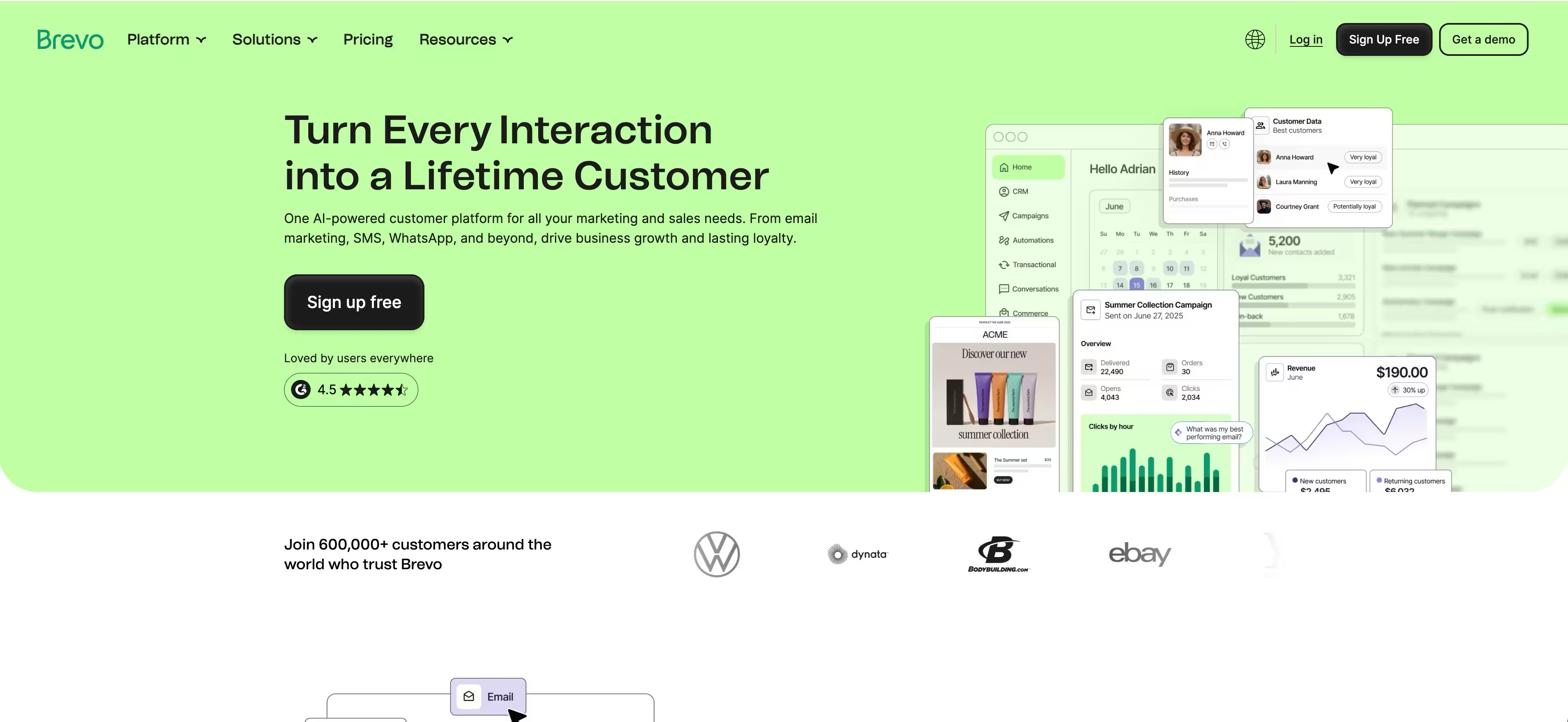
Brevo (formerly Sendinblue) stands out as an all-in-one marketing platform that combines email, SMS, and WhatsApp messaging with a built-in CRM. Unlike most competitors that charge per contact, Brevo prices based on email volume, which means you can store unlimited contacts without paying more.
Best for: Small to mid-size businesses wanting multi-channel marketing without juggling multiple subscriptions.
Key strengths
- Unlimited contacts on all plans: Store your entire list without worrying about tier jumps
- Multi-channel messaging: Email, SMS, and WhatsApp from one dashboard
- Transactional email capabilities: Send order confirmations and password resets alongside marketing campaigns
- Visual workflow builder: Create automation sequences with drag-and-drop simplicity
Why choose Brevo: If you're tired of paying per contact and want SMS built in rather than bolted on, Brevo's pricing model makes scaling more predictable. The CRM integration also means you're not syncing data between separate systems.
Pricing: Free plan includes 300 emails per day. Paid plans start at $9/month for 5,000 emails monthly.
2. MailerLite
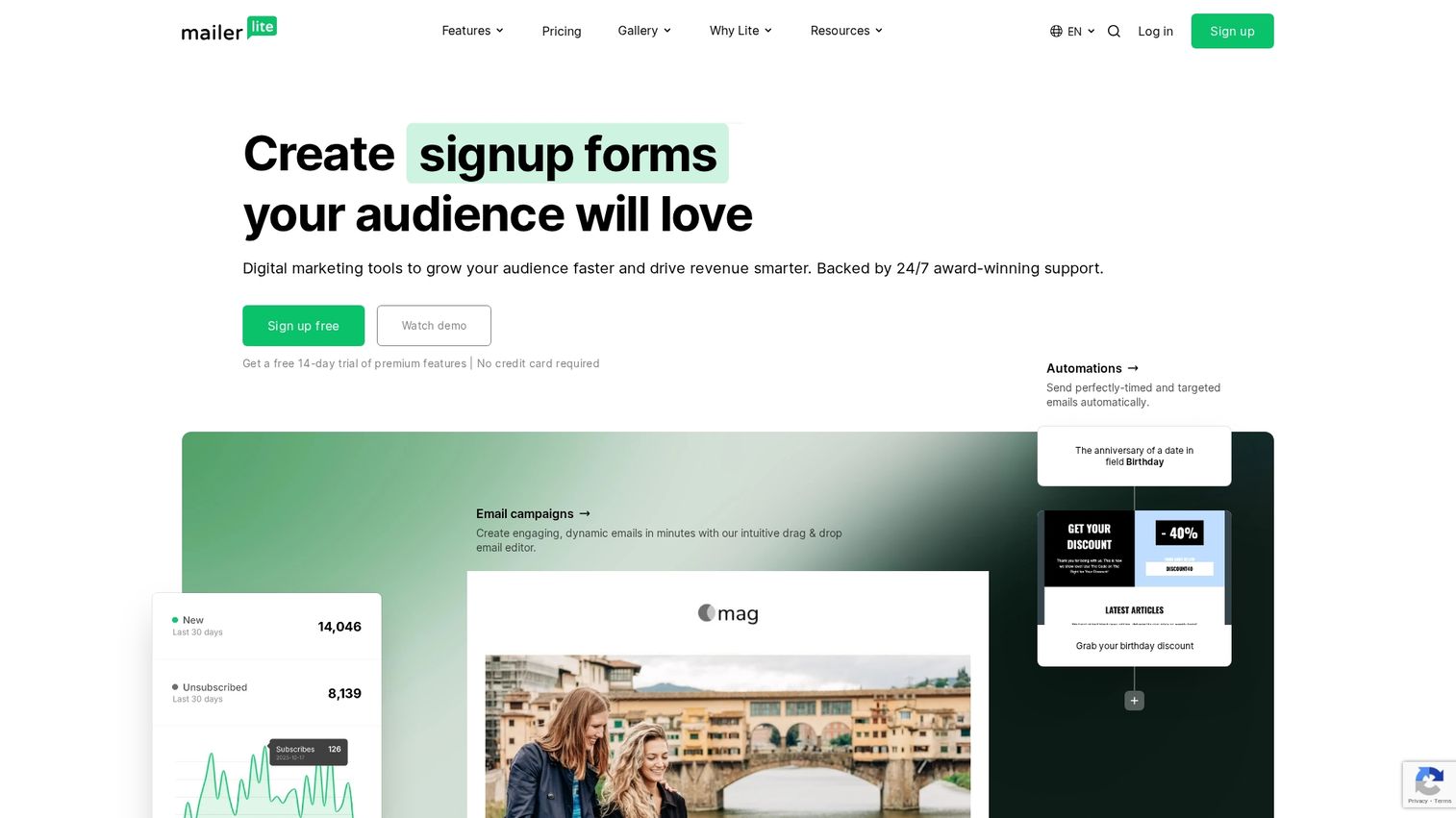
MailerLite consistently ranks as the easiest email marketing platform for beginners while still offering features that growing businesses want. The free plan includes automation, landing pages, and a website builder, which is unusual at this price point.
Best for: Beginners and small businesses who want powerful features without a steep learning curve.
Key strengths
- Intuitive drag-and-drop editor: Build emails without design experience
- Landing page and website builder included: No separate tool for lead capture
- Advanced automation on free plan: Welcome sequences and basic workflows without upgrading
- Clean, modern templates: Professional designs that work on mobile
Why choose MailerLite: The balance between simplicity and capability is hard to beat. You get automation and landing pages for free, and the interface doesn't overwhelm new users with options they don't yet want.
Pricing: Free up to 1,000 subscribers. Paid plans start at $10/month for 500 subscribers with advanced features.
3. Kit
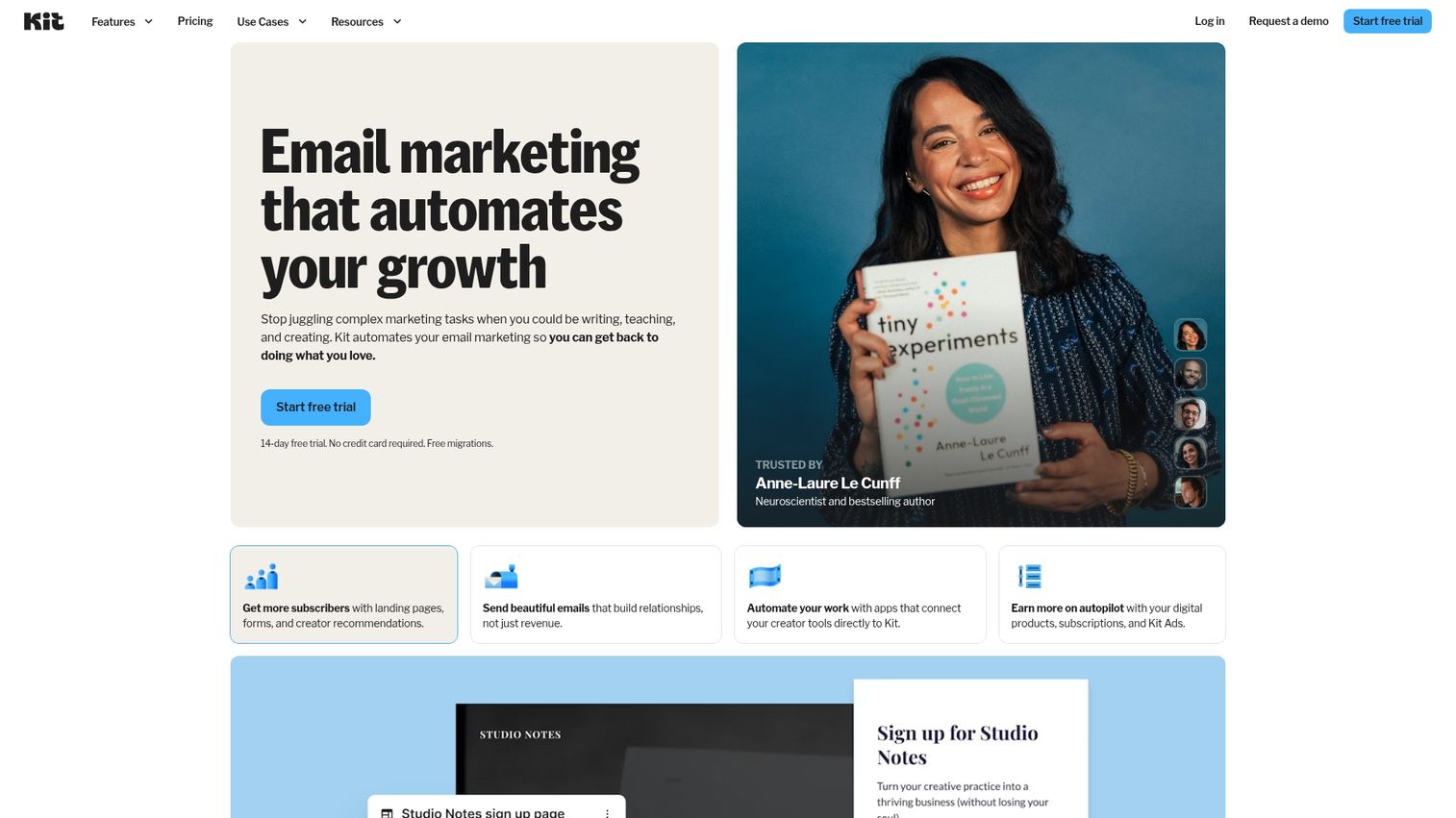
Kit (formerly ConvertKit) was built specifically for creators who want to monetize newsletters and sell digital products. The tagging and segmentation system is more sophisticated than most competitors, letting you track exactly how subscribers interact with your content.
Best for: Content creators, bloggers, and newsletter publishers building an audience.
Key strengths
- Creator-focused monetization: Sell digital products and paid subscriptions directly
- Advanced subscriber tagging: Track behavior and interests with granular detail
- High-volume free plan: Up to 10,000 subscribers on the free tier
- Visual automation builder: Map out subscriber journeys with conditional logic
Why choose Kit: If you're building a personal brand or newsletter business, Kit's features align with how creators actually work. The paid newsletter and digital product features mean you're not stitching together multiple tools.
Pricing: Free up to 10,000 subscribers with limited features. Paid plans start at $15/month for 300 subscribers with full automation.
4. Sender
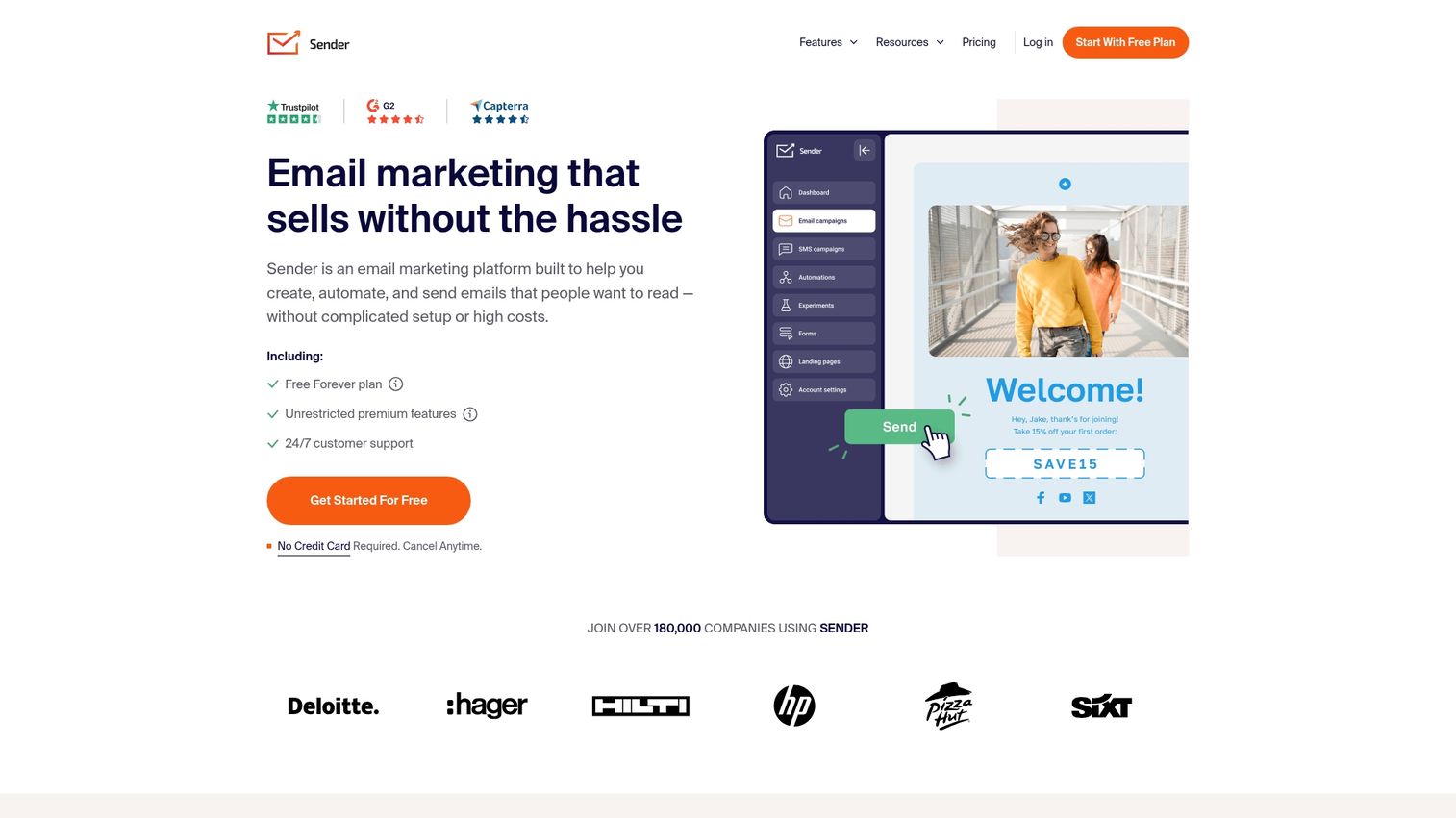
Sender offers one of the most generous free plans in the market, including features that competitors reserve for paid tiers. You get automation, segmentation, and even SMS capabilities without paying anything.
Best for: Budget-conscious marketers who want premium features without the premium price.
Key strengths
- Generous free limits: 15,000 emails per month to 2,500 subscribers
- Full automation included free: Welcome series, abandoned cart, and custom workflows
- SMS marketing add-on: Expand to multi-channel without switching platforms
- High deliverability rates: Strong sender reputation management
Why choose Sender: When budget is the primary constraint but you still want real automation capabilities, Sender delivers more value at the free tier than most competitors offer in their starter paid plans.
Pricing: Free up to 2,500 subscribers and 15,000 emails monthly. Paid plans start at $8/month.
5. Omnisend
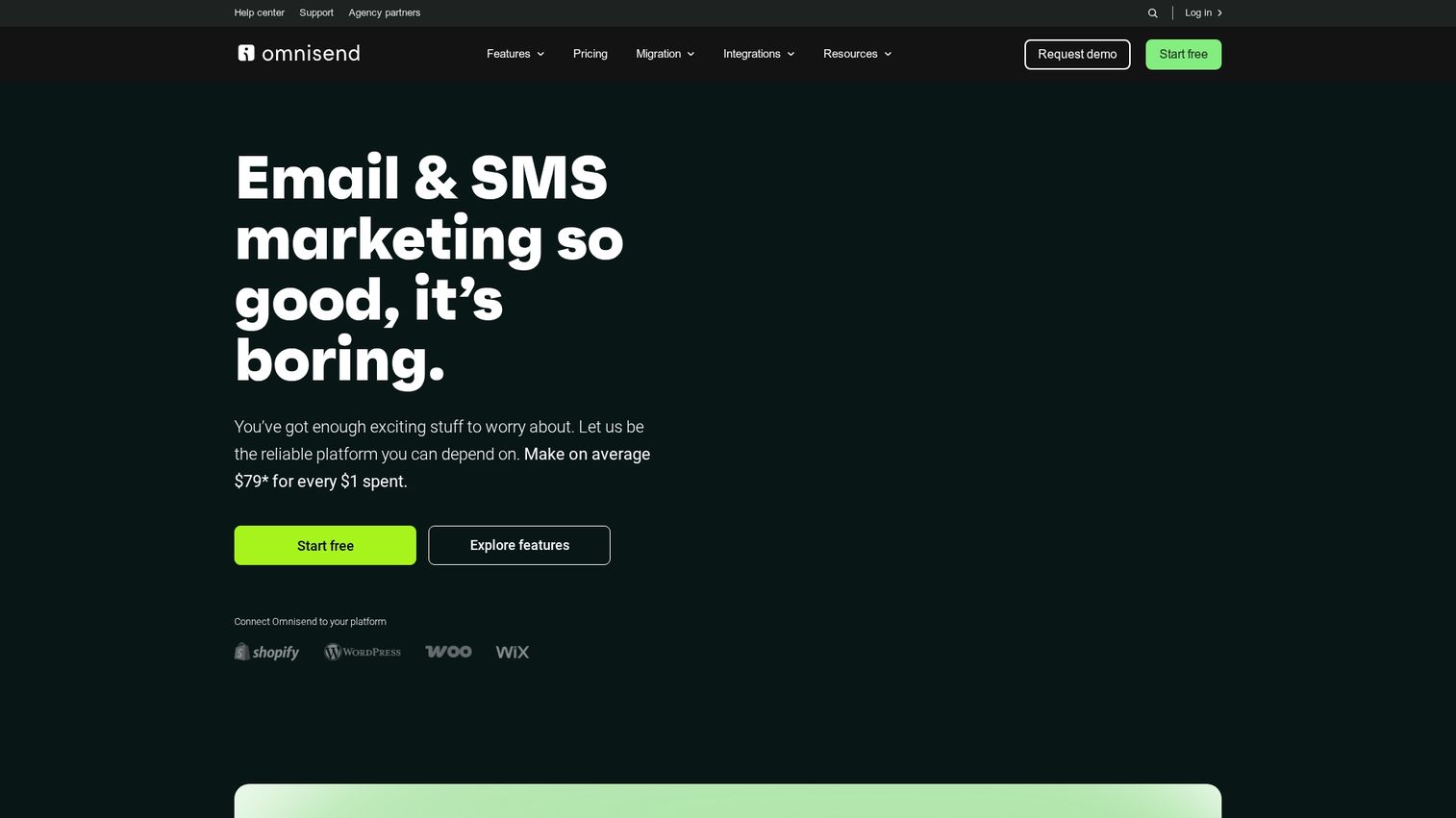
Omnisend was purpose-built for e-commerce, with native integrations for Shopify, WooCommerce, and BigCommerce that go deeper than generic email platforms. Pre-built workflows for cart abandonment, browse abandonment, and post-purchase follow-ups work out of the box.
Best for: E-commerce stores and Shopify merchants who want email and SMS in one platform.
Key strengths
- Deep e-commerce integrations: Product data syncs automatically for personalized recommendations
- Pre-built automation workflows: Cart abandonment, welcome series, and win-back campaigns ready to activate
- Combined email and SMS: Coordinate messaging across channels in single workflows
- Revenue attribution: See exactly which campaigns drive sales
Why choose Omnisend: Generic email platforms require custom setup to work well with e-commerce. Omnisend's templates and integrations assume you're selling products, which saves hours of configuration.
Pricing: Free plan includes 500 emails monthly. Paid plans start at $16/month and scale with list size.
6. GetResponse
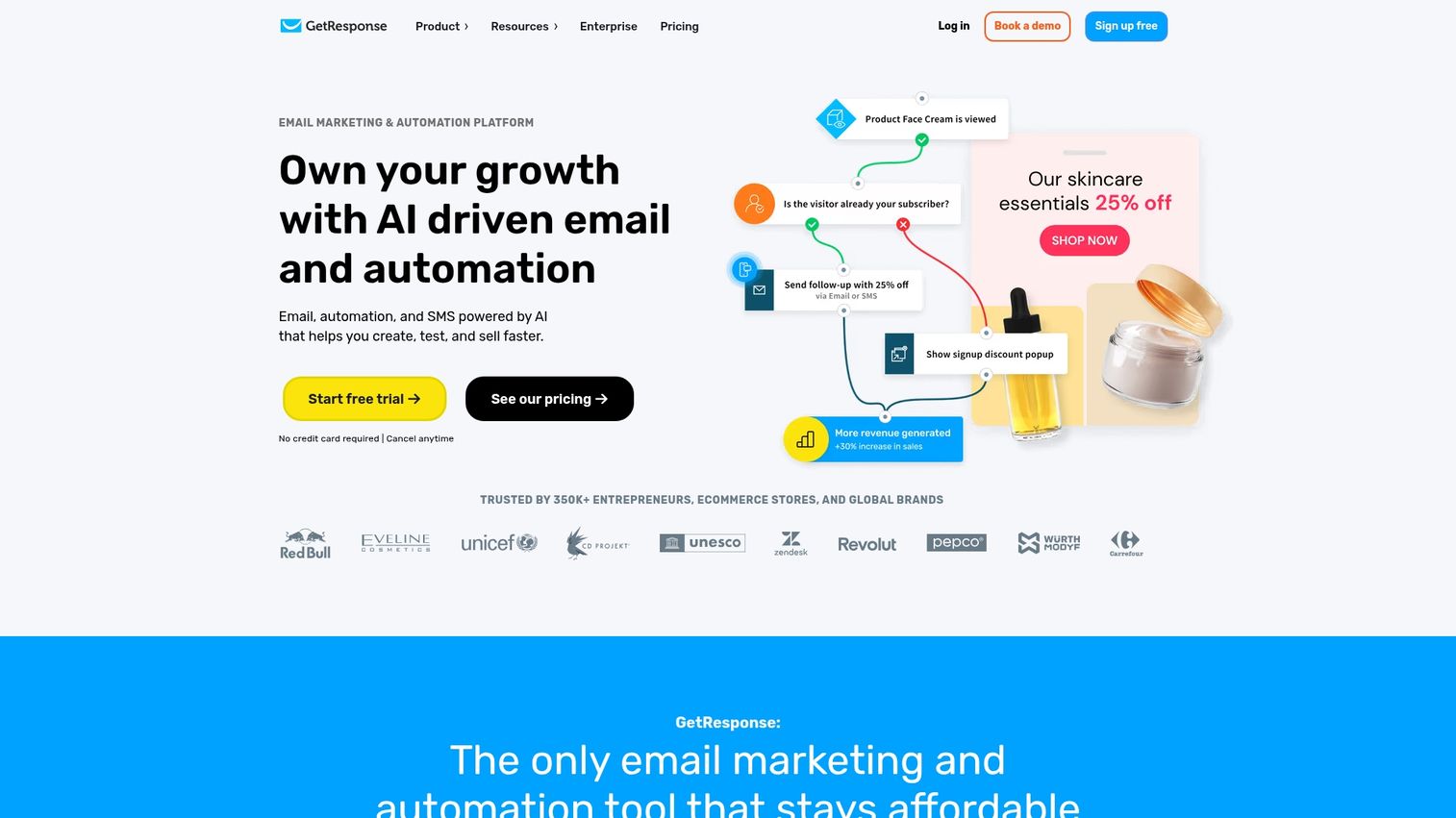
GetResponse goes beyond email with built-in webinar hosting and conversion funnels. If you're running a business that relies on webinars for lead generation or sales, having everything in one platform simplifies your stack.
Best for: Marketers who want automation combined with webinars and sales funnels.
Key strengths
- Built-in webinar hosting: No separate webinar tool required
- Conversion funnel builder: Create complete sales funnels with landing pages, emails, and payment
- Advanced marketing automation: Complex workflows with scoring and tagging
- AI-powered email creation: Generate subject lines and content suggestions
Why choose GetResponse: The webinar feature is genuinely useful if that's part of your marketing approach. Most competitors require a separate tool and integration, which adds cost and complexity.
Pricing: Free plan is limited to 500 contacts. Paid plans start at $19/month with full features.
7. Beehiiv
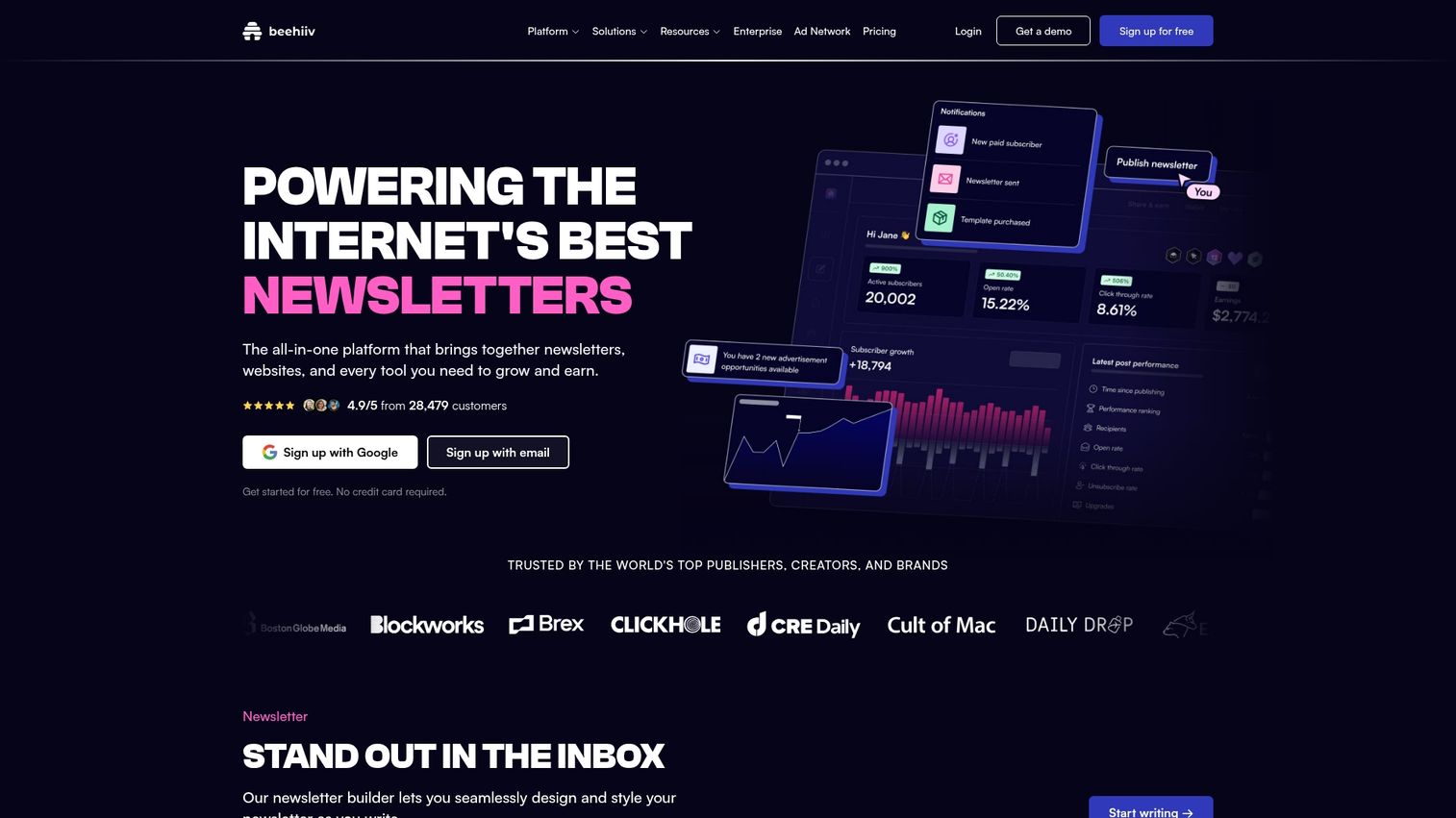
Beehiiv emerged as a newsletter-first platform competing directly with Substack but with more flexibility. The referral program and recommendation network help you grow your subscriber base organically.
Best for: Newsletter publishers and creators building paid subscription businesses.
Key strengths
- Newsletter-first design: Built around the publishing workflow, not retrofitted
- Built-in referral programs: Incentivize subscribers to share your newsletter
- Recommendation network: Get discovered by readers of similar newsletters
- Monetization tools: Paid subscriptions and sponsorship management
Why choose Beehiiv: If your primary goal is building a newsletter business rather than marketing for another product, Beehiiv's features align better than traditional email marketing platforms.
Pricing: Free tier available. Paid plans start at $49/month with advanced growth features.
8. EmailOctopus
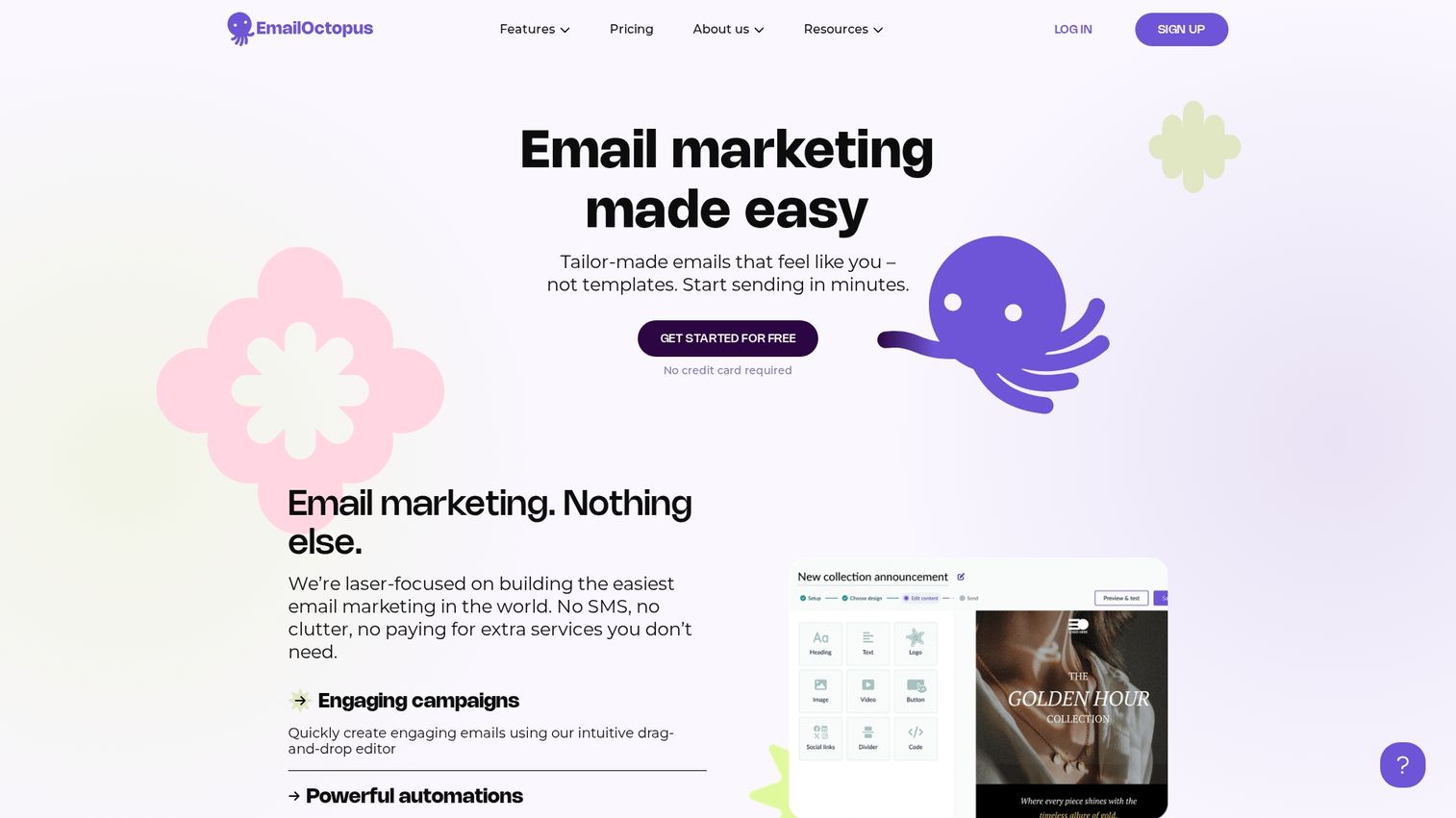
EmailOctopus focuses on simplicity and affordability. The interface is clean, the pricing is straightforward, and you won't find yourself lost in features you don't want.
Best for: Users who want simple, affordable email marketing without complexity.
Key strengths
- Clean, straightforward interface: No feature bloat or confusing navigation
- Generous free plan: 2,500 subscribers and 10,000 emails monthly
- Very affordable paid plans: Among the cheapest options as you scale
- Amazon SES integration: Use your own sending infrastructure for even lower costs
Why choose EmailOctopus: Sometimes you just want to send emails without learning a complex platform. EmailOctopus does the basics well and doesn't charge much for it.
Pricing: Free up to 2,500 subscribers. Paid plans start at $9/month.
9. ActiveCampaign
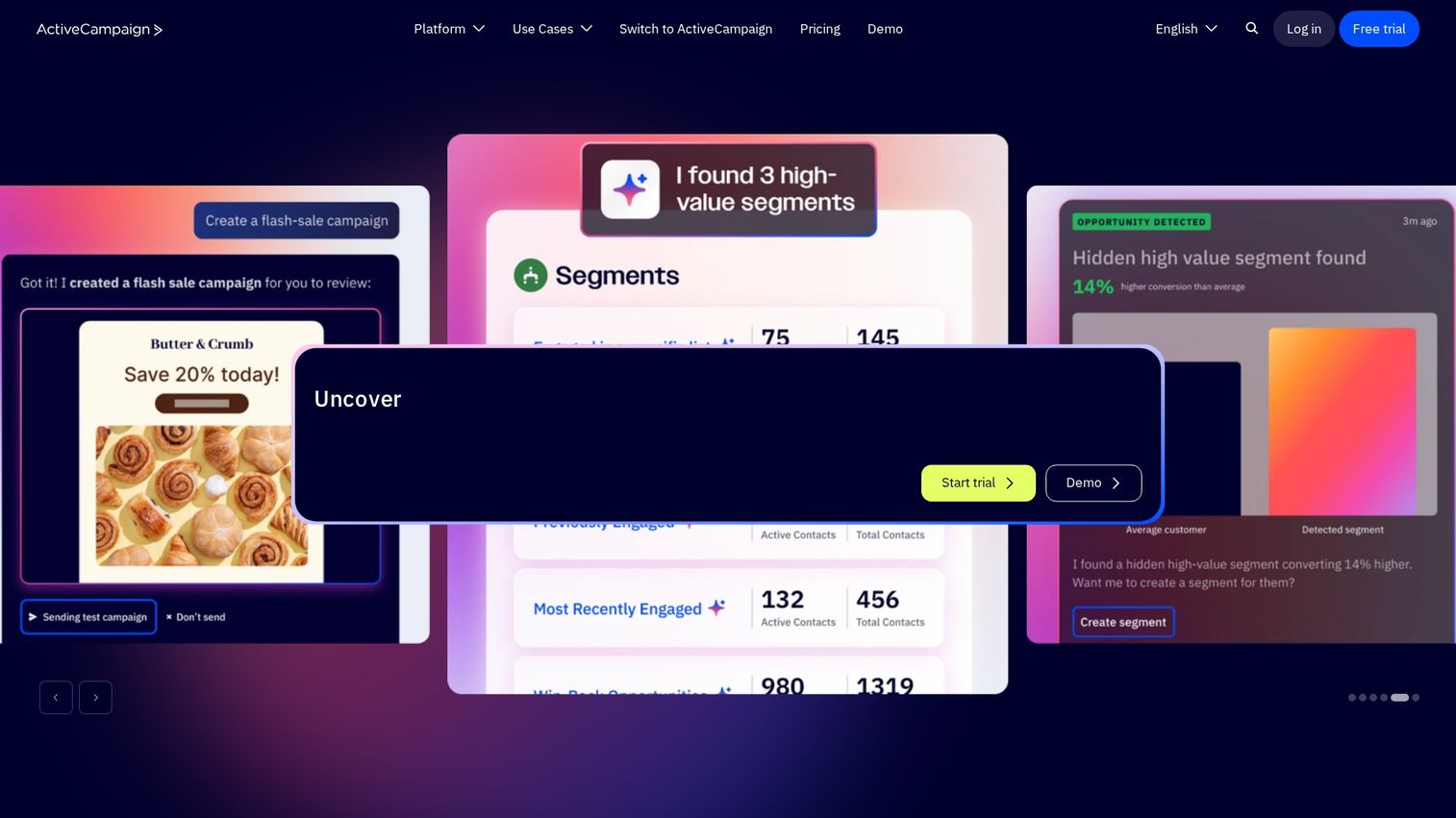
ActiveCampaign offers the most sophisticated automation builder in this list. If you're running complex, multi-step campaigns with conditional logic, scoring, and CRM integration, this is where the platform shines.
Best for: Established marketers who want advanced automation and sales integration.
Key strengths
- Industry-leading automation builder: Handle complex workflows that other platforms can't
- Built-in CRM with sales automation: Marketing and sales in one system
- Advanced segmentation and scoring: Prioritize leads based on behavior
- Machine learning predictions: Identify which contacts are most likely to convert
Teams using ActiveCampaign often pair it with demand generation tools to create comprehensive lead nurturing systems.
Why choose ActiveCampaign: When your automation requirements outgrow simpler platforms, ActiveCampaign handles workflows that would require workarounds elsewhere. The learning curve is steeper, but the capability ceiling is higher.
Pricing: No free plan. Starts at $29/month for the Lite tier.
10. HubSpot
HubSpot offers email marketing as part of a complete CRM ecosystem. If you're already using HubSpot for sales or service, adding email marketing keeps everything in one place.
Best for: Teams wanting email as part of a complete CRM and marketing ecosystem.
Key strengths
- CRM integration built in: Contact data flows automatically between marketing and sales
- Full marketing, sales, and service platform: One vendor for your entire customer lifecycle
- Robust contact management: Detailed profiles with complete interaction history
- Free CRM included: Start without payment and upgrade as your requirements grow
Why choose HubSpot: The value proposition is strongest when you're using multiple HubSpot products. Email alone might not justify the cost, but as part of a unified platform, the integration benefits add up.
Pricing: Free CRM with basic email. Marketing Hub starts at $20/month for Starter, $890/month for Professional.
11. AWeber
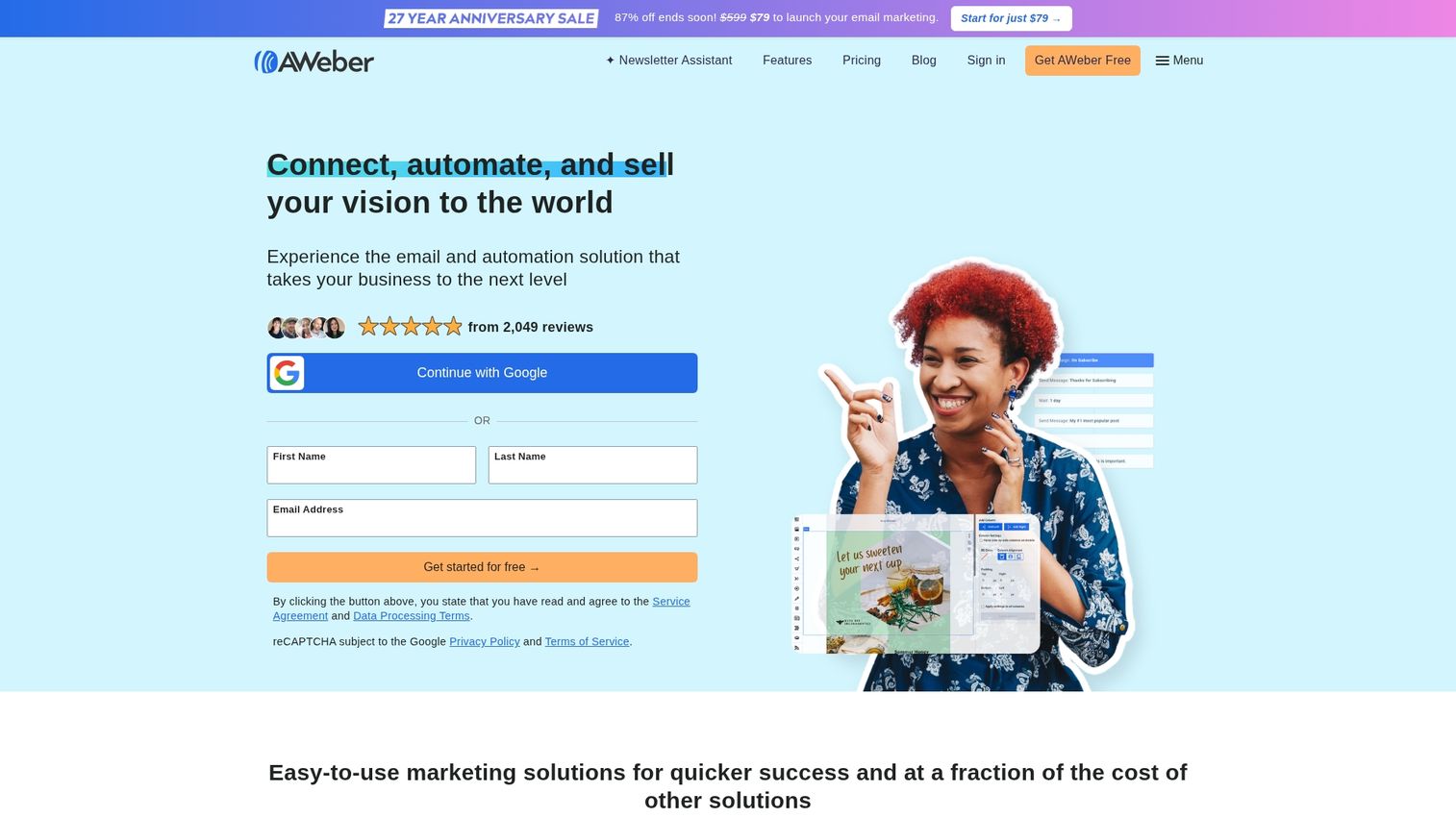
AWeber has been around since 1998 and maintains a reputation for reliability and customer support. Notably, phone support is available even on the free plan, which is rare in this category.
Best for: Users who value personal support and proven reliability.
Key strengths
- Phone support on free plan: Talk to a human when you want help
- Established platform: Decades of deliverability experience
- Simple automation and landing pages: Core features without overwhelming complexity
- Canva integration: Design emails with familiar tools
Why choose AWeber: If you anticipate wanting support and prefer to talk to someone rather than search help docs, AWeber's customer service focus is a genuine differentiator.
Pricing: Free up to 500 subscribers. Paid plans start at $15/month.
12. Mailchimp
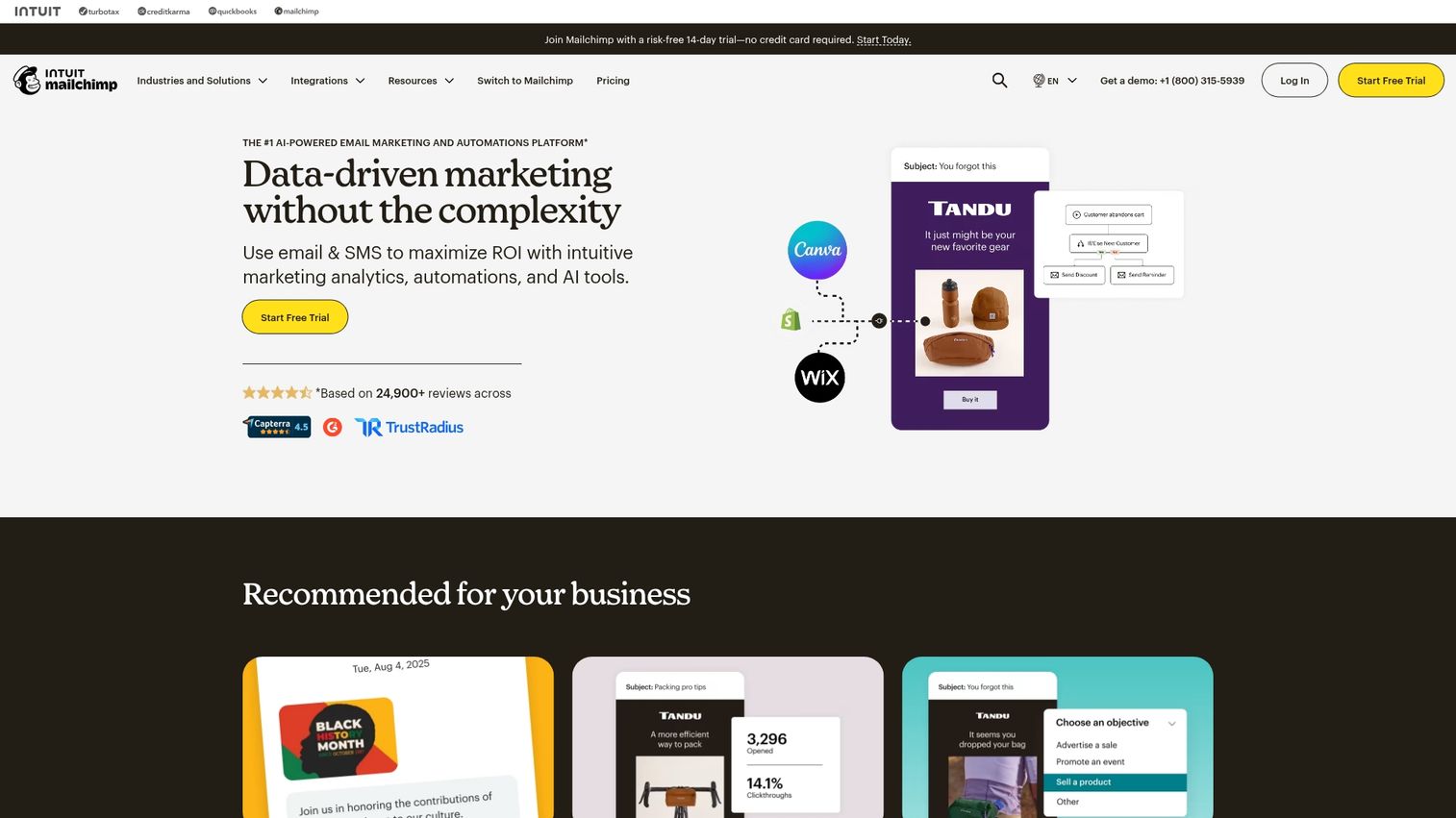
Mailchimp is the most recognized name in email marketing, which means extensive documentation, third-party integrations, and a large user community. The creative tools and template library are particularly strong.
Best for: Small businesses wanting brand recognition and extensive creative tools.
Key strengths
- Wide template and design library: Hundreds of starting points for campaigns
- Strong brand recognition: Integrations and resources everywhere
- Content studio: Manage creative assets alongside campaigns
- Extensive third-party ecosystem: Connects to almost everything
Why choose Mailchimp: The ecosystem benefits are real. When every tool integrates with Mailchimp and every tutorial uses it as an example, there's value in going with the default choice.
Pricing: Free up to 500 contacts. Paid plans start at $13/month.
13. Mailjet
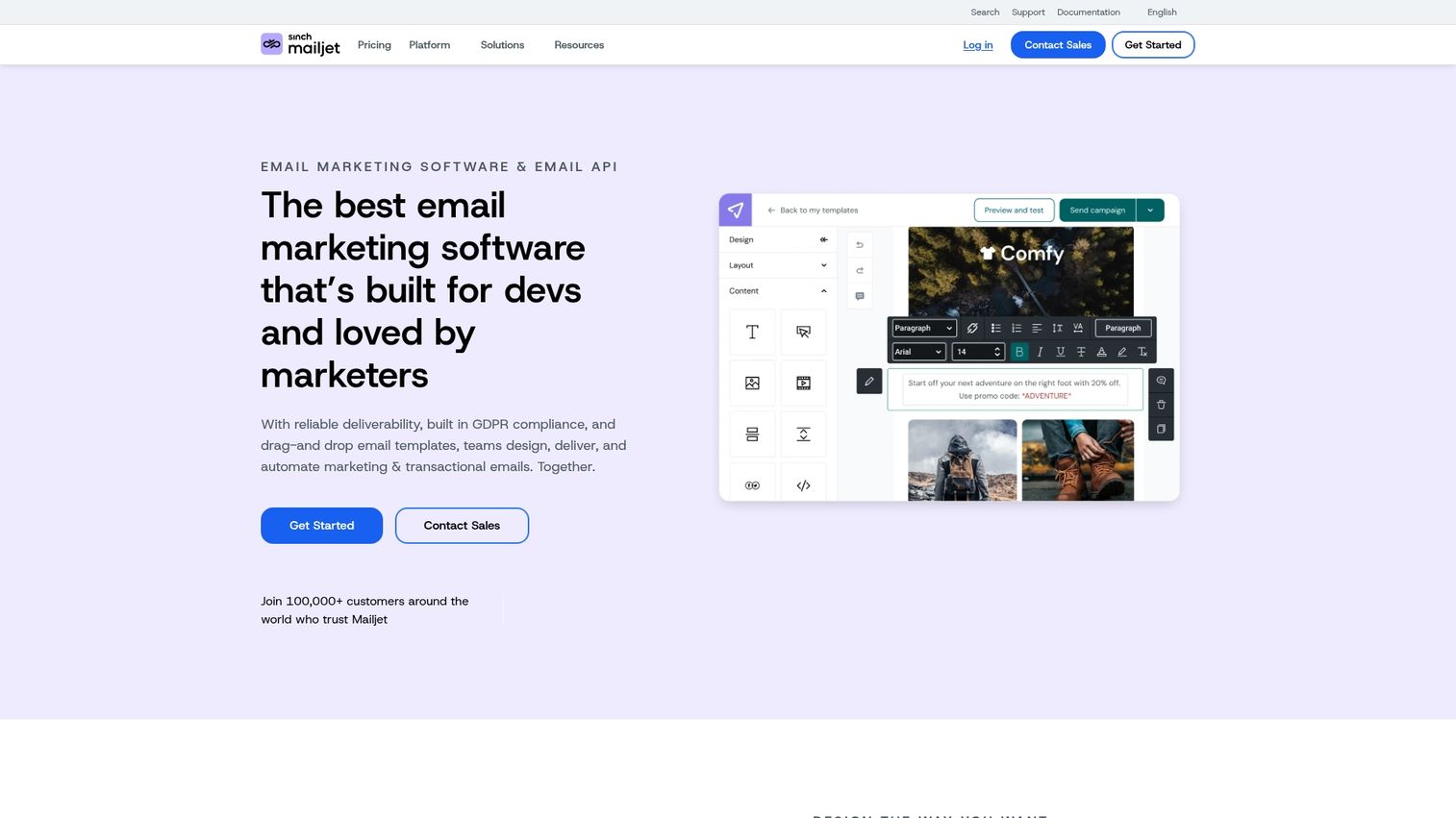
Mailjet differentiates with real-time collaborative editing, letting multiple team members work on the same email simultaneously. The transactional email API is also robust for developers.
Best for: Teams that want collaboration features and transactional email capabilities.
Key strengths
- Real-time collaborative editing: Multiple people can edit emails simultaneously
- Strong transactional email API: Reliable infrastructure for automated messages
- Team workflow features: Roles, permissions, and approval processes
- GDPR compliance tools: Built for European data requirements
Why choose Mailjet: If your email creation process involves multiple stakeholders reviewing and editing, the collaboration features save time compared to passing files back and forth.
Pricing: Free up to 6,000 emails monthly. Paid plans start at $17/month.
14. Benchmark Email
Benchmark Email keeps things simple with a clean interface that doesn't overwhelm new users. If you've been frustrated by complex platforms, Benchmark's straightforward approach might be refreshing.
Best for: Users who want clean, simple email marketing without the overwhelm.
Key strengths
- Intuitive, uncluttered interface: Find what you want without hunting
- Solid automation basics: Welcome series and drip campaigns without complexity
- Good template selection: Professional designs ready to customize
- Responsive customer support: Help when you want it
Why choose Benchmark: Sometimes the best tool is the one you'll actually use. Benchmark's simplicity means you're more likely to send campaigns consistently rather than getting stuck in setup.
Pricing: Free plan available. Paid plans start at $13/month.
15. Zoho Campaigns
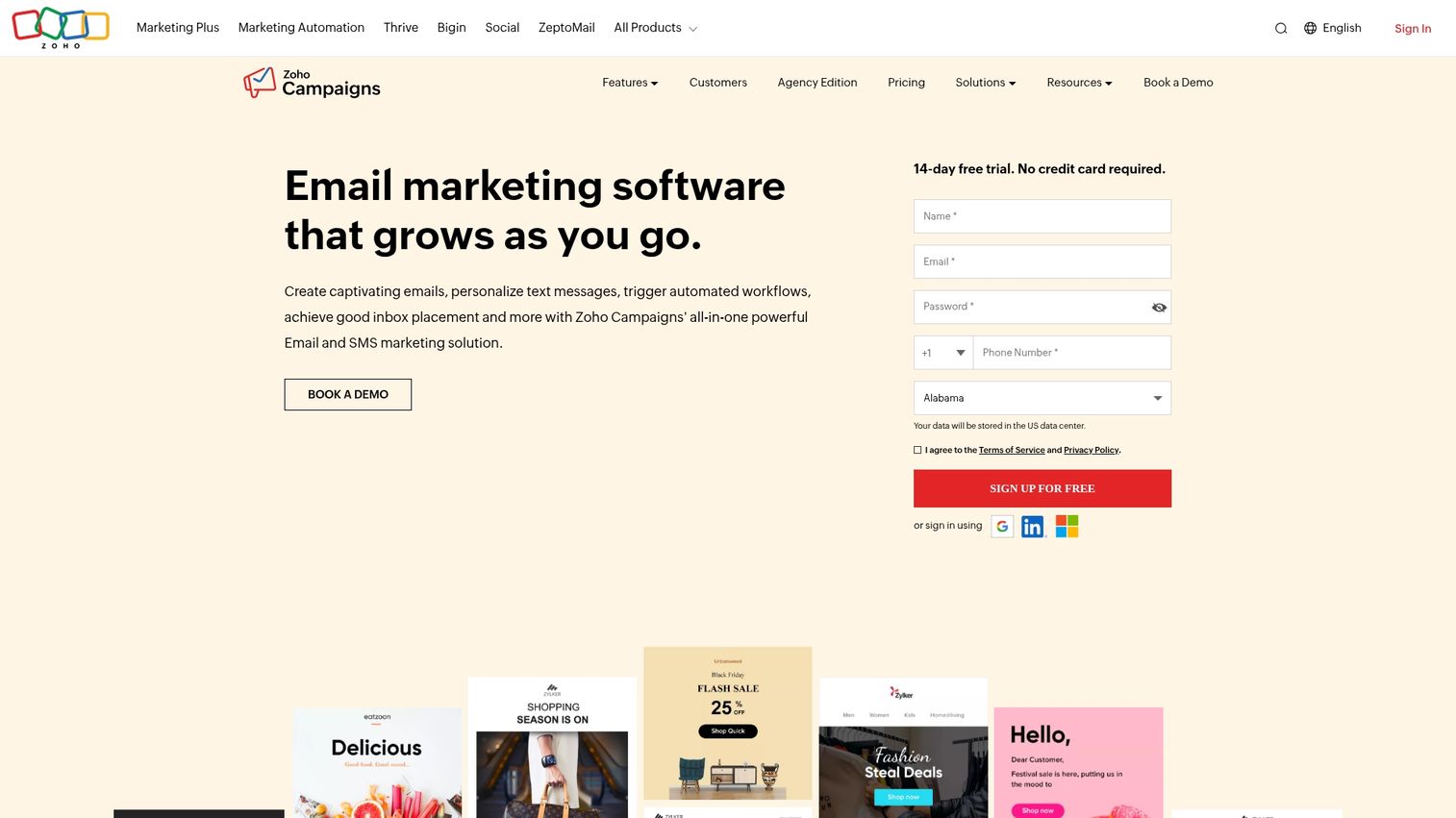
Zoho Campaigns makes the most sense if you're already using other Zoho products. The integration with Zoho CRM, Zoho Analytics, and the broader suite creates a unified experience.
Best for: Businesses already using the Zoho ecosystem.
Key strengths
- Deep Zoho CRM integration: Contacts and campaigns sync automatically
- Comprehensive feature set: Automation, segmentation, and analytics included
- Competitive pricing: Especially with Zoho bundle discounts
- Multi-channel options: SMS and social media posting available
Why choose Zoho Campaigns: The standalone product is capable but not exceptional. The value multiplies when combined with other Zoho tools you're already paying for.
Pricing: Free up to 2,000 subscribers. Paid plans start at $4/month.
When free email marketing services make sense
When free plans work
Free tiers are genuinely useful in several scenarios:
- Starting out: Your list is under 500 to 2,500 subscribers depending on the platform
- Testing platforms: You want to evaluate the interface before committing
- Simple requirements: Basic newsletters without complex automation
- Budget constraints: Bootstrapped businesses and solopreneurs watching every dollar
The key is understanding what you're giving up. Free plans typically limit subscriber counts, remove branding options, and restrict advanced features like A/B testing or detailed analytics.
When to upgrade to paid plans
Several triggers signal it's time to pay:
- List growth: You're hitting free tier subscriber limits
- Advanced automation: You want conditional logic and multi-step workflows
- Removing branding: You want emails without "Sent via [Platform]" footers
- Priority support: Faster response times matter for your business
- Advanced analytics: You want deeper reporting than basic open and click rates
The math usually works out. Email is the #1 ROI channel for B2C brands, and the cost of a paid plan is trivial compared to the value of better deliverability and automation.
How to choose an email marketing solution
Start with your use case. E-commerce businesses have different requirements than newsletter publishers or B2B companies. The "best" platform depends entirely on what you're trying to accomplish.
Consider the following factors:
- List size and growth trajectory: Choose a platform with pricing that scales reasonably
- Integration requirements: Make sure it connects to your CRM, e-commerce platform, or website builder
- Automation complexity: Match the platform's capabilities to your actual workflow
- Technical resources: Some platforms require developer help for advanced features
- Budget constraints: Factor in both current costs and where you'll be in 12 months
Test before committing. Most platforms offer free trials or free tiers. Send real campaigns, build real automations, and see how the interface feels in daily use.
Marketing teams increasingly pair email platforms with interactive content to boost engagement. Instead of just linking to a landing page, you can embed interactive demos that let recipients experience your product directly after clicking through from an email.
Build email campaigns that drive product engagement
Email marketing works best when it drives action beyond the inbox. The platforms in this guide handle the sending infrastructure, but what happens after someone clicks matters just as much.
Consider pairing your email campaigns with product marketing tools that create stronger conversion paths. Interactive content, personalized landing pages, and self-serve product experiences all increase the likelihood that email clicks turn into actual engagement.
The right email platform is the one that fits your workflow today while scaling with you tomorrow. Start with a free plan, test your assumptions, and upgrade when the limitations start costing you more than the subscription would.
Start your journey with Guideflow today!
FAQs about email marketing tools
MailerLite and Brevo consistently rank as top choices for small businesses. Both offer generous free plans, intuitive interfaces, and automation features that scale as you grow. MailerLite excels at simplicity while Brevo adds SMS and CRM capabilities.
Use free tiers from platforms like Sender (15,000 emails monthly), MailerLite (12,000 emails monthly), or EmailOctopus (10,000 emails monthly). Limits work for most small lists, though you'll hit caps as your subscriber count grows.
The 80/20 rule suggests roughly 80% of your email revenue comes from 20% of your subscribers. This emphasizes the importance of segmentation and focusing on your most engaged contacts rather than blasting your entire list with identical messages.
ActiveCampaign, Brevo, and MailerLite consistently score highest in independent deliverability tests. However, your results depend heavily on your own sending practices, list hygiene, and authentication setup. A platform with great infrastructure can still land in spam if you're sending to bad addresses.
Most platforms support CSV imports with subscriber data, tags, and engagement history. Export your list from your current tool, map the fields to your new platform's format, and import. Preserve segments and tags during migration to avoid losing targeting capabilities.
Email clients limit what runs inside the message itself, but you can link to interactive experiences. Embedding links to interactive demos or clickable product walkthroughs gives recipients a richer experience after they click through from your email.