Last updated: October 2026
Your roadmap says the feature is ready. Engineering says it shipped. QA flags open regressions. Support has logged three customer complaints. Nobody can point to one connected record that ties the original requirement to the current state of the release.
That coordination gap costs product teams more than a delayed launch. It costs release confidence, prioritization accuracy, and the ability to answer "why did we build this?" six months later.
Application lifecycle management software exists to close that gap. A good ALM platform connects requirements, planning, development work, testing evidence, release approvals, and post-release feedback in a traceable system of record. According to Fortune Business Insights (2026), the global ALM market was valued at $4.77 billion in 2025 and is projected to reach $12.08 billion by 2034, reflecting how many organizations are consolidating fragmented lifecycle tooling into a single operating model.
This guide evaluates seven ALM tools for 2026, with a Product Manager lens on traceability, release readiness, cross-team coordination, and maintainability.
What's inside
This guide is built for product managers, engineering leads, and QA owners evaluating ALM platforms. Tools were selected based on four criteria:
- Lifecycle coverage: Does the platform connect requirements through release, not just track tasks?
- Traceability depth: Can you link a customer need to a test case, a defect, and a release approval?
- Integration fit: Does it work with source control, CI/CD, and your existing reporting stack?
- Governance vs. overhead balance: Does it create operating discipline without becoming a second job to administer?
The list includes Agile delivery platforms, full ALM suites, requirements-first systems, and open-source options.
TL;DR
- Best for Microsoft-centered delivery teams: Azure DevOps combines boards, repos, pipelines, and test plans in one stack, with a free tier for the first five users
- Best for configurable Agile planning: Jira offers the most flexible backlog and workflow options, with a large marketplace for extending into ALM territory
- Best for regulated traceability: Polarion ALM connects requirements, testing, change management, and compliance controls end to end
- Best for complex engineering programs: Codebeamer handles risk management, product line configuration, and long delivery cycles with high lifecycle complexity
- Best for requirements-first teams: Jama Connect is the strongest pick when unclear requirements are the root cause of downstream rework
- Best for integrated lifecycle with testing: SpiraTeam covers requirements, test management, defect tracking, and releases in a single platform, starting at $176.29/month
- Best open-source option: Tuleap gives engineering-led teams self-managed ALM flexibility with Agile planning, Git, and test support
Choosing an ALM platform comes down to how much governance and traceability your release process actually requires. A messy backlog alone does not justify enterprise ALM.
What is ALM software?
ALM software manages the full application lifecycle, connecting requirements, planning, development, testing, release, operation, and maintenance in a traceable system of record.
Unlike a project management tool, which tracks tasks and timelines, an ALM platform maintains the decision chain. A requirement links to acceptance criteria, which link to test cases, which link to defect records, which link to a release approval. That chain gives a PM the instrumentation to answer release-readiness questions with evidence rather than status optimism.
What ALM software manages
Modern application lifecycle management software connects the following activities:
- Requirements authoring, review, and stakeholder approvals
- Roadmaps, backlogs, sprints, and release plans
- Source code, branches, builds, and deployment status
- Test cases, test runs, defects, and validation evidence
- Release approvals, change records, and version history
- Post-release feedback, support signals, and maintenance records
ALM software versus related categories
| Category | Primary focus | What it does not cover alone |
|---|---|---|
| ALM software | End-to-end lifecycle governance and traceability | May require setup and process discipline |
| SDLC | The process framework for building software | Is a methodology, not a software category |
| DevOps | Dev and ops collaboration with automation | Does not always provide full requirements-to-test traceability |
| Project management | Tasks, timelines, and coordination | Usually lacks deep lifecycle linkage |
| Test management | Test cases, runs, and defect evidence | May not connect planning through deployment |
The software development lifecycle describes how software is built. ALM governs the product across its entire life, including post-release maintenance and organizational governance. That distinction matters when you're deciding whether a team needs better process discipline or a platform that enforces it.
When to use ALM software
Connect requirements to release evidence
Use ALM when a product requirement must tie to acceptance criteria, test cases, defect records, and a release approval. This matters most when a launch affects multiple services, user roles, or workflows where a missed dependency carries real delivery risk. If your team cannot currently answer "which requirements are untested?" before a release, that gap is worth addressing.
Coordinate cross-functional release work
ALM platforms reduce the coordination cost when Product, Engineering, QA, Security, and Support need shared visibility into release status. If your team spends significant meeting time reconciling competing status updates from disconnected tools, lifecycle reporting inside a single platform changes how that time gets used.
Govern complex or regulated development
Some products require auditable change history, formal reviews, risk records, or verification evidence before a release can proceed. ALM platforms designed for these workflows, like Polarion ALM or Codebeamer, provide the approval controls and documentation structures those programs need. Do not buy a heavyweight ALM suite solely because a backlog is messy. Confirm first that traceability gaps and cross-team handoff failures are the root problem.
ALM software comparison
The table below covers both broad ALM platforms and adjacent delivery platforms that can support ALM workflows when paired with testing, source control, and documentation tools. Use it as a starting point, not a final verdict.
| # | Product | Best for | Key differentiator | Pricing | G2 rating |
|---|---|---|---|---|---|
| 1 | Azure DevOps | Microsoft-centered delivery teams | Boards, repos, pipelines, and test plans in one stack | Free for first 5 users; $6/user/month (Basic) | 4.4/5 |
| 2 | Jira | Configurable Agile planning | Flexible workflows and extensive marketplace | Free up to 10 users; paid plans via calculator | N/A (Capterra: 4.4/5) |
| 3 | Polarion ALM | Regulated traceability | End-to-end requirements, test, and compliance linkage | Contact sales | 4.2/5 |
| 4 | Codebeamer | Complex engineering programs | Risk, requirements, quality, and product line management | Contact sales | 4.3/5 |
| 5 | Jama Connect | Requirements-heavy product development | Structured reviews, live traceability, and change impact | Contact sales | 4.3/5 |
| 6 | SpiraTeam | Integrated lifecycle with test management | Requirements, tests, defects, and releases in one system | From $176.29/month (3 concurrent users) | 4.2/5 |
| 7 | Tuleap | Open-source ALM flexibility | Self-managed ALM with Agile planning, Git, and test support | Contact for quote | 4.3/5 |
Pricing and ratings verified October 2026 from vendor pricing pages and current G2 listings.
Best 7 ALM software tools for 2026
1. Azure DevOps: Best for Microsoft-centered delivery teams
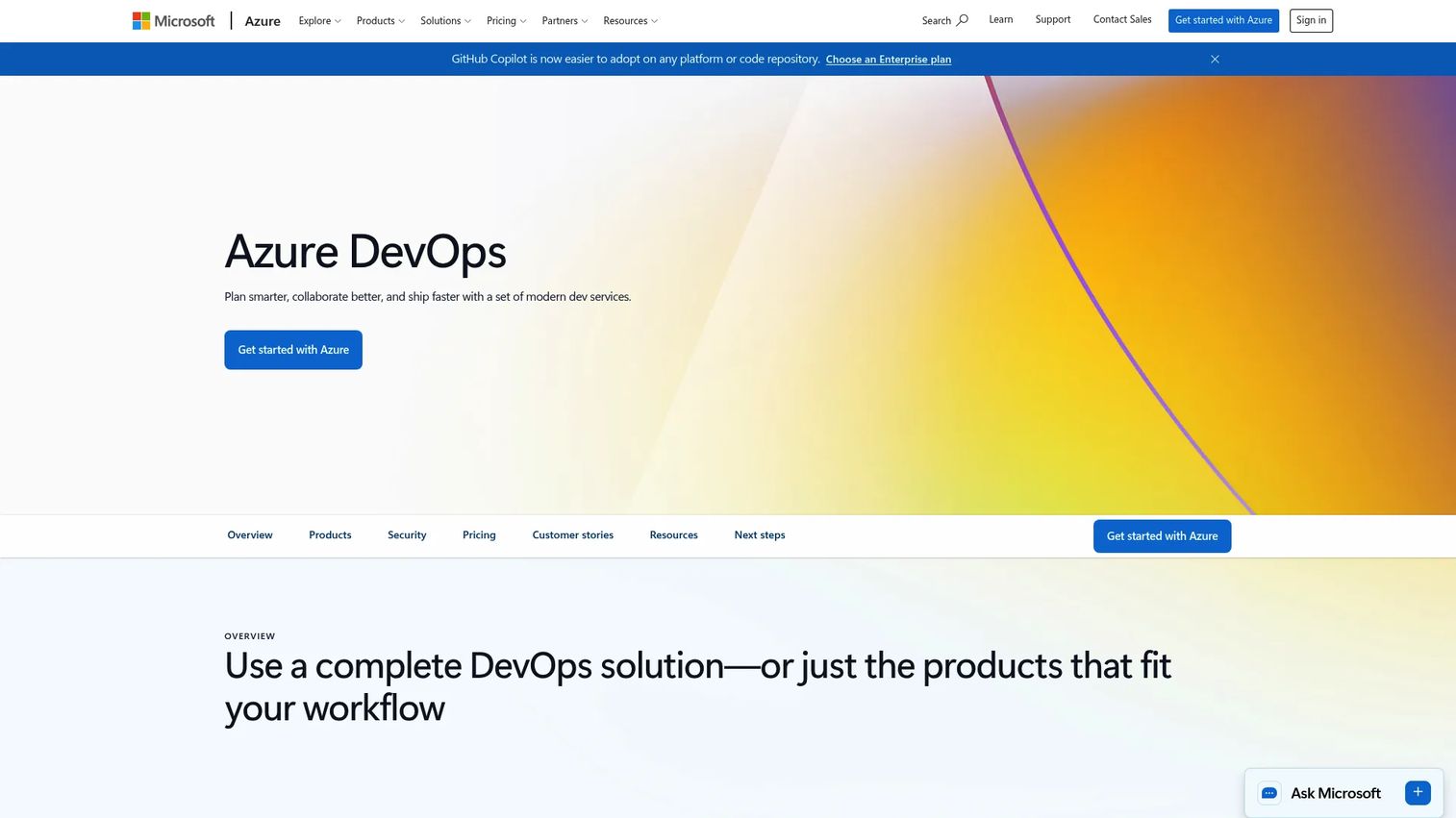
Azure DevOps is Microsoft's cloud-based platform for software delivery, combining Agile planning, Git repositories, CI/CD pipelines, package management, and test case management in one integrated service. For teams already building and deploying inside the Microsoft stack, it removes the need to bridge separate planning, code, and release tools. The platform supports both Agile and structured delivery models, making it usable across teams with different process maturity levels.
Best for: Product managers whose engineering teams build and deploy in Azure, use Visual Studio or GitHub for source control, or rely on Microsoft identity infrastructure.
Key features
- Azure Boards: Agile planning with backlogs, sprints, and custom work-item types
- Azure Repos: Unlimited private Git repositories with pull requests and branch policies
- Azure Pipelines: CI/CD automation across multiple platforms and environments
- Azure Test Plans: Manual and exploratory test case management with traceability
- Azure Artifacts: Package feed management for builds and dependencies
Why choose Azure DevOps: It's the strongest fit when the goal is a connected view of backlog health, code activity, pipeline status, and test results, without asking engineering to adopt a new toolchain. The ALM coverage is meaningful rather than deep, so teams with formal verification or compliance requirements typically need additional tooling.
Azure DevOps pricing: The first five Basic users are free, and additional users cost $6/user/month. Adding Azure Test Plans raises the cost to $52/user/month, with a 30-day free trial available for that tier. The free tier also includes one Microsoft-hosted parallel pipeline job with 1,800 minutes per month.
Azure DevOps holds a 4.4/5 rating on G2.
2. Jira: Best for configurable Agile planning
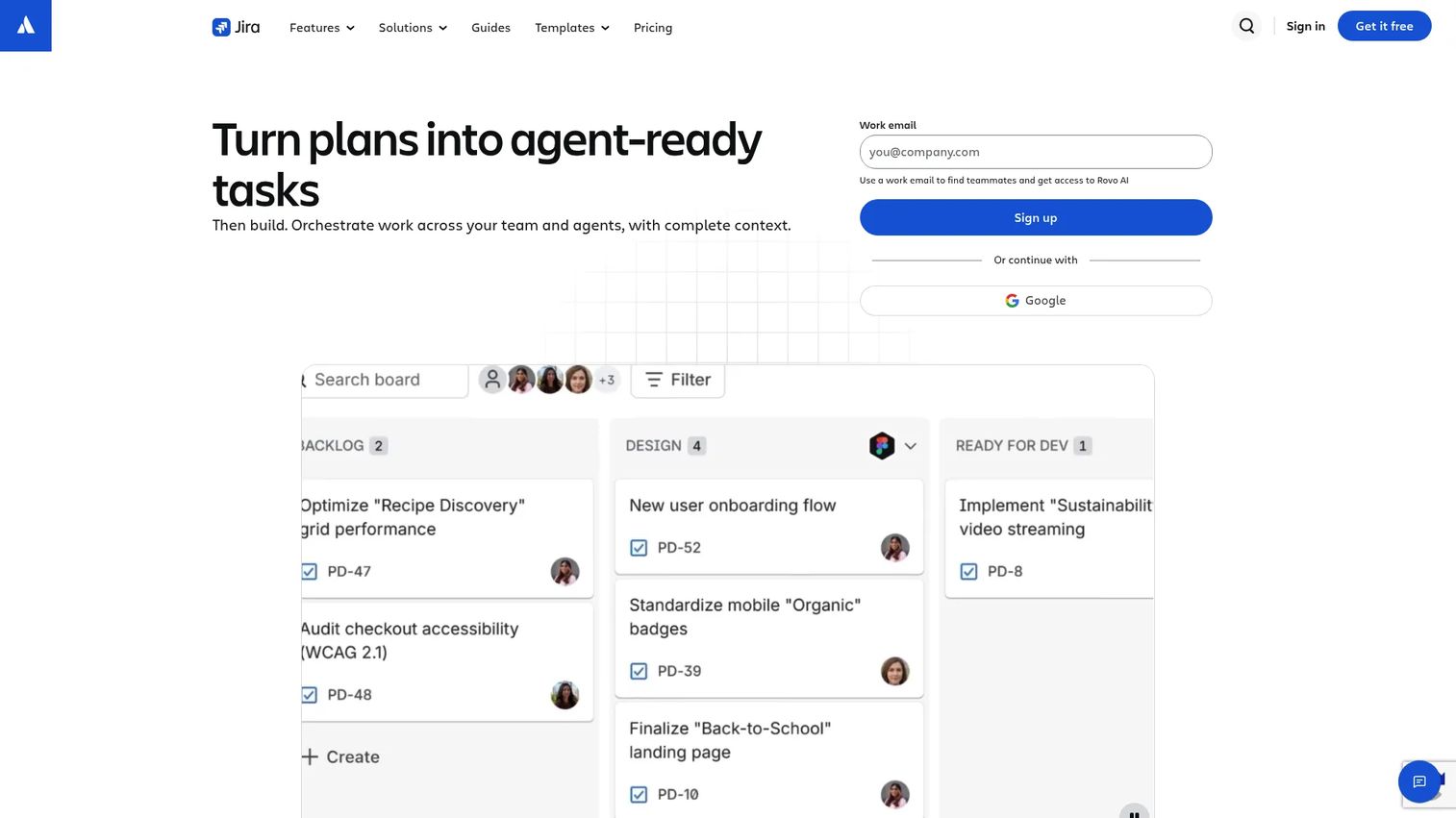
Jira is Atlassian's widely used work-management platform, built around configurable issue types, workflows, and boards. Many product teams use it as the coordination layer of a broader ALM stack, pairing it with dedicated test management, requirements, and documentation tools. On its own, Jira handles backlog visibility, sprint planning, dependency tracking, and reporting well. The ALM depth comes from the integrations and plugins teams layer on top.
Best for: Product managers who need flexible backlog management and configurable workflows across multiple teams, particularly where Agile delivery is the center of gravity.
Key features
- Scrum and Kanban boards with backlog, timeline, and calendar views
- Custom issue types, fields, and workflow statuses
- Automation rules for routine work transitions and notifications
- Dependency management and cross-project planning
- Marketplace integrations for test management, requirements, and CI/CD
Why choose Jira: Jira's strength is configurability and ecosystem breadth. A PM should verify, before rollout, whether the team needs native end-to-end traceability or is prepared to maintain an integrated toolchain. Poorly governed Jira instances drift quickly: Field conventions break, workflows diverge by team, and reporting becomes unreliable. Evaluating ownership, field standards, and integration maintenance upfront prevents that outcome.
Jira pricing: The Free plan supports up to 10 users with no time limit. Standard and Premium plans are priced through Atlassian's user-count calculator; exact per-user rates vary by seat volume. Enterprise pricing requires contacting Atlassian sales and is billed annually.
Jira carries a 4.4/5 rating on Capterra. A current G2 rating was not confirmed at the time of this review.
3. Polarion ALM: Best for regulated traceability
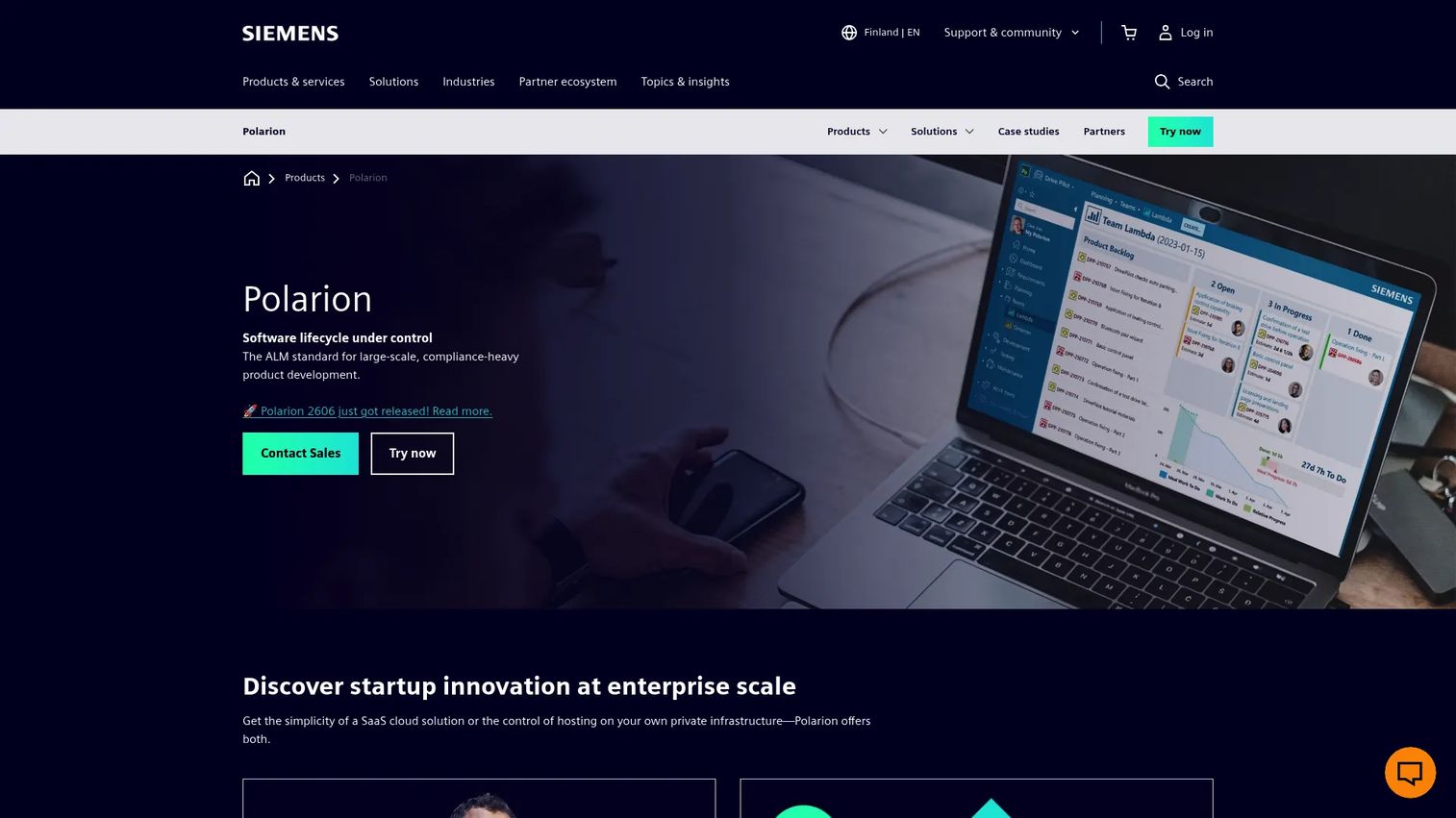
Polarion ALM is a browser-based lifecycle management platform designed for organizations that require connected requirements, testing, change management, and audit-ready traceability. It keeps requirements linked to test cases, test cases linked to defects, and defects linked to release approvals, so a PM can trace any decision from customer need to shipped outcome. The platform supports both cloud and self-hosted deployment and provides configurable reports for communicating release readiness to stakeholders.
Best for: Product leaders managing complex products in industries where a release requires demonstrable verification evidence, not simply a completed sprint.
Key features
- Requirements management with LiveDocs authoring and baselining
- End-to-end traceability links across requirements, tests, and changes
- Test case and test run management with quality evidence capture
- Review and approval workflows with configurable sign-off gates
- Risk management, configurable dashboards, and audit-ready reporting
Why choose Polarion ALM: Polarion is the right pick when a missed dependency, untested requirement, or weak approval trail carries real delivery risk. The traceability depth exceeds what Agile delivery platforms provide natively, which is why it's most common in engineering environments with formal quality or safety programs. Teams running straightforward SaaS backlogs will find it heavier than necessary.
Polarion ALM pricing: Polarion uses sales-led pricing with no standard rate displayed. Contact Polarion directly for a quote based on deployment type, user count, and module requirements.
Polarion ALM holds a 4.2/5 rating on G2.
4. Codebeamer: Best for complex engineering workflows
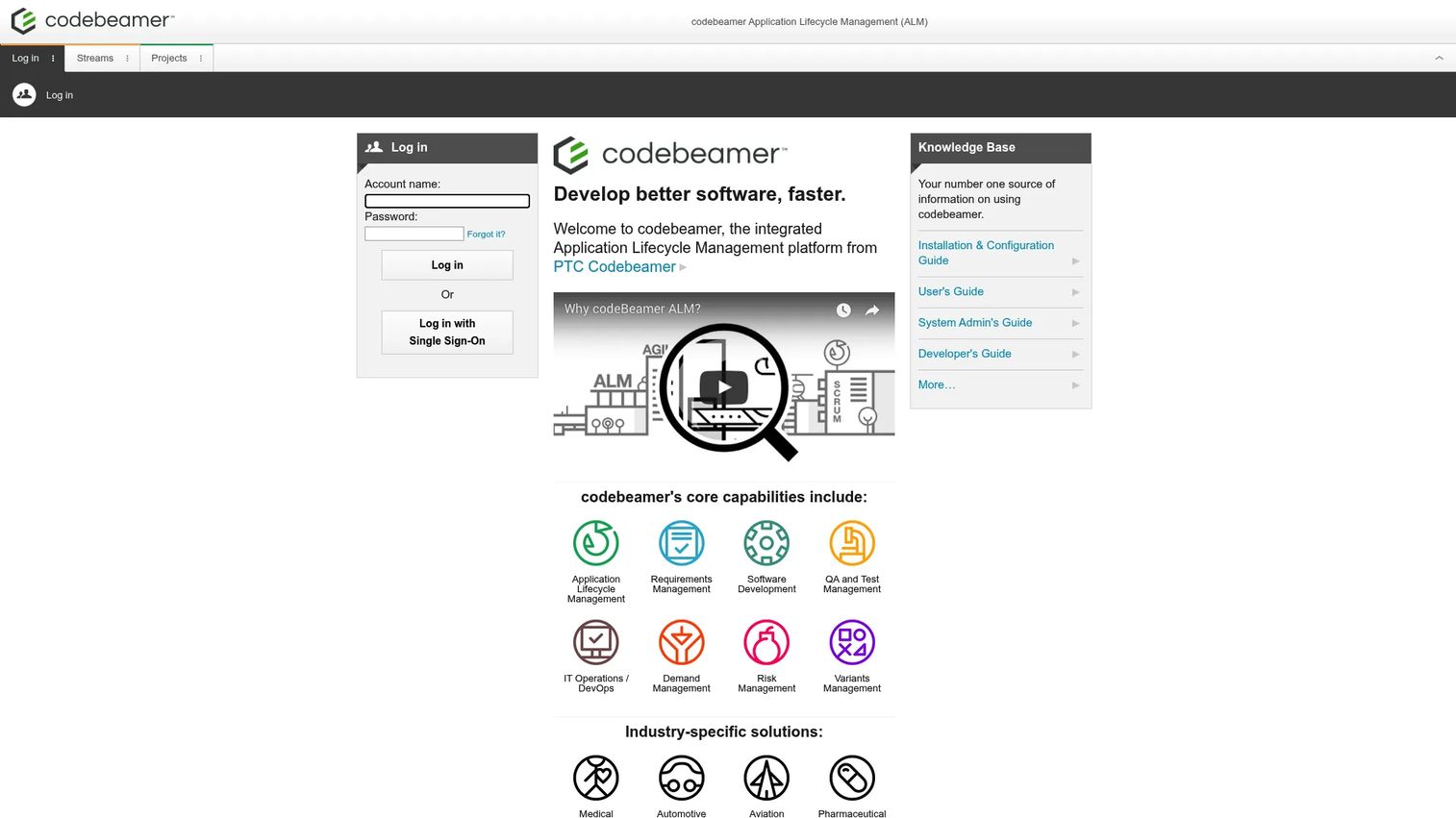
Codebeamer is an integrated ALM platform from PTC, built for organizations running complex product engineering programs. It handles requirements management, risk management, quality assurance, test management, and product line configuration, with highly configurable workflows that can reflect the governance model of a given program. It is particularly suited to organizations where software interacts with hardware, embedded systems, or safety-critical processes.
Best for: Product and engineering organizations coordinating software with hardware dependencies, product variants, or multi-team verification processes that span long delivery cycles.
Key features
- Application lifecycle management with end-to-end traceability
- Requirements and risk management with linked evidence
- Quality and test management across manual and automated workflows
- Variants management for product line engineering
- Open APIs and connector integrations for external tooling
Why choose Codebeamer: It fits when lifecycle complexity exceeds ordinary Agile work tracking. The platform's strength is in maintaining connected governance across long programs, multiple product variants, and cross-functional verification work. The trade-off is setup investment: Codebeamer requires configuration to match your process before it delivers its value. Teams without the internal capacity to own that configuration should validate the implementation plan before committing.
Codebeamer pricing: Codebeamer uses sales-led packaging. Contact PTC directly for pricing based on user count, deployment model, and module configuration.
Codebeamer holds a 4.3/5 rating on G2.
5. Jama Connect: Best for requirements-heavy product development
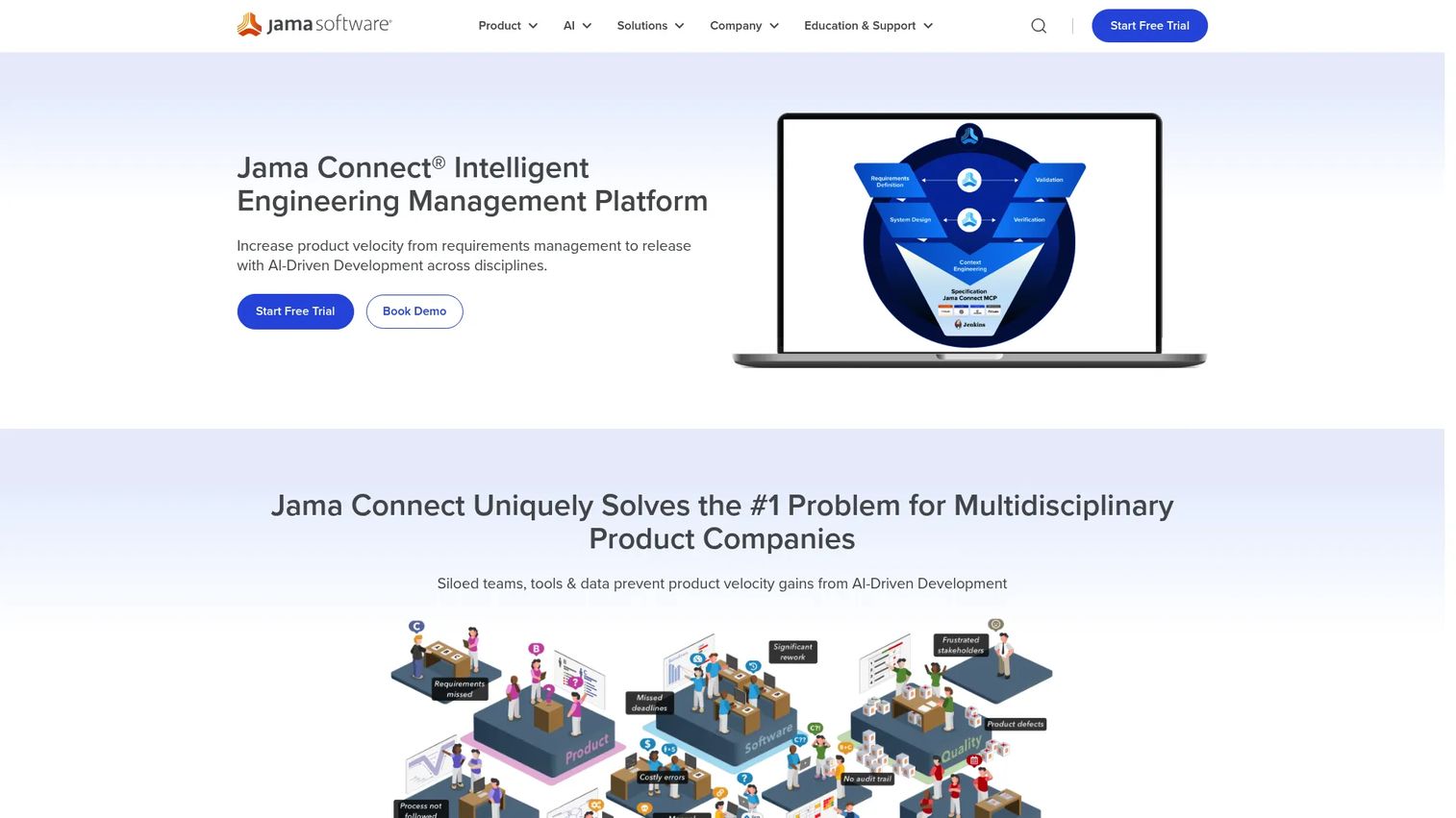
Jama Connect is an AI-powered requirements management platform with strong review, collaboration, and live traceability capabilities. It is most useful when unclear, changing, or poorly reviewed requirements are the primary source of downstream rework. Rather than treating requirements as a document artifact, Jama Connect keeps them as active, linked objects that connect to downstream validation and delivery tools throughout the lifecycle.
Best for: Product managers whose biggest lifecycle problem is requirements that are ambiguous, frequently revised, or poorly reviewed before work enters development.
Key features
- Structured requirements authoring with quality analysis
- Review and approval workflows with stakeholder collaboration
- Live traceability views connecting requirements to tests and risks
- Baselines and change impact analysis
- Risk and hazard analysis with linked requirements
Why choose Jama Connect: Its value is in getting the "what" right before engineering begins. A PM gains better input for prioritization, clearer acceptance criteria, and fewer late-stage interpretation disputes. The platform works best when teams commit to structured requirements practices, not when requirements are treated as optional artifacts. Jama Connect's four license types (Creator, Stakeholder, Reviewer, Test Runner) give organizations flexibility to extend access without licensing every participant as a full author.
Jama Connect pricing: All four license types are priced through sales; no standard rates are displayed. Contact Jama Software for a quote. Hosting, reviewer licenses, and file storage are included at no additional charge per the pricing page.
Jama Connect holds a 4.3/5 rating on G2.
6. SpiraTeam: Best for integrated lifecycle coverage with testing
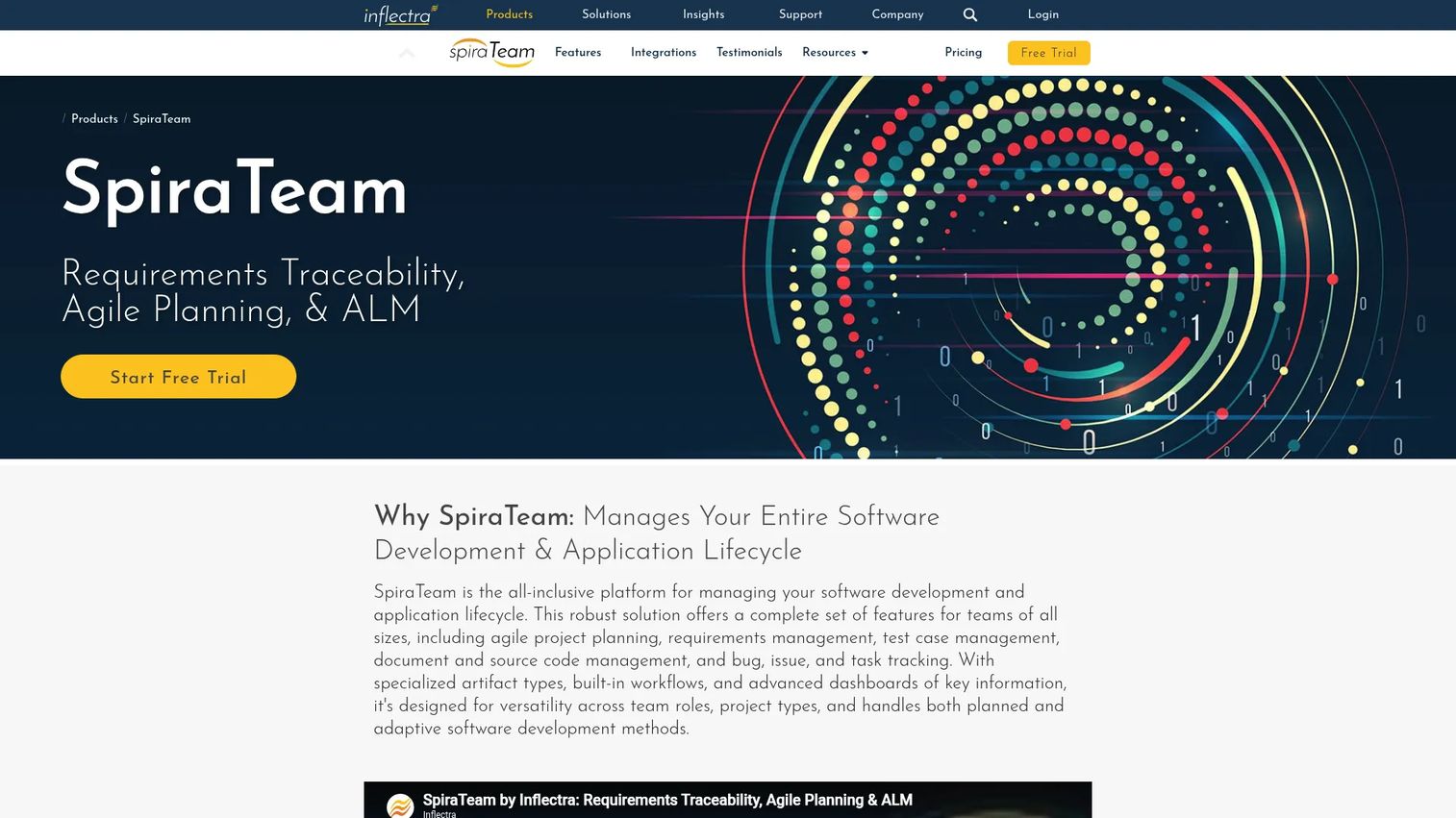
SpiraTeam is Inflectra's application lifecycle management platform, covering requirements management, Agile planning, test case management, defect tracking, release management, and document management in a single system. It is one of the few platforms at this price point where a PM can see requirement coverage status, open defects, sprint progress, and release health without switching between tools. Both cloud and on-premise deployment are available.
Best for: Mid-market product and QA teams that want connected requirements, testing, defect tracking, and release planning without assembling a collection of separate products.
Key features
- Requirements management with end-to-end traceability
- Agile release and sprint planning with board views
- Test case management with manual and automated test integration
- Bug and incident tracking linked to requirements and releases
- Risk management, dashboards, BDD support with Gherkin, and AI artifact generation
Why choose SpiraTeam: It is the practical choice for teams that need lifecycle linkage but do not require the deepest enterprise configuration. A PM can use connected test and defect data to make release calls based on evidence, not status reports. The concurrent-user pricing model means smaller teams with a predictable number of active users can get clear cost visibility upfront.
SpiraTeam pricing: Cloud hosting starts at $176.29/month for 3 concurrent users, or $1,903.93/year on the annual plan. The Download (on-premise) edition is a one-time purchase of $1,807.91 for 3 concurrent users, with annual renewal at the same rate. Pricing scales by concurrent user count, with unlimited named users and projects at every tier. No free tier is offered, but a free trial is available.
SpiraTeam holds a 4.2/5 rating on G2.
7. Tuleap: Best for open-source ALM flexibility
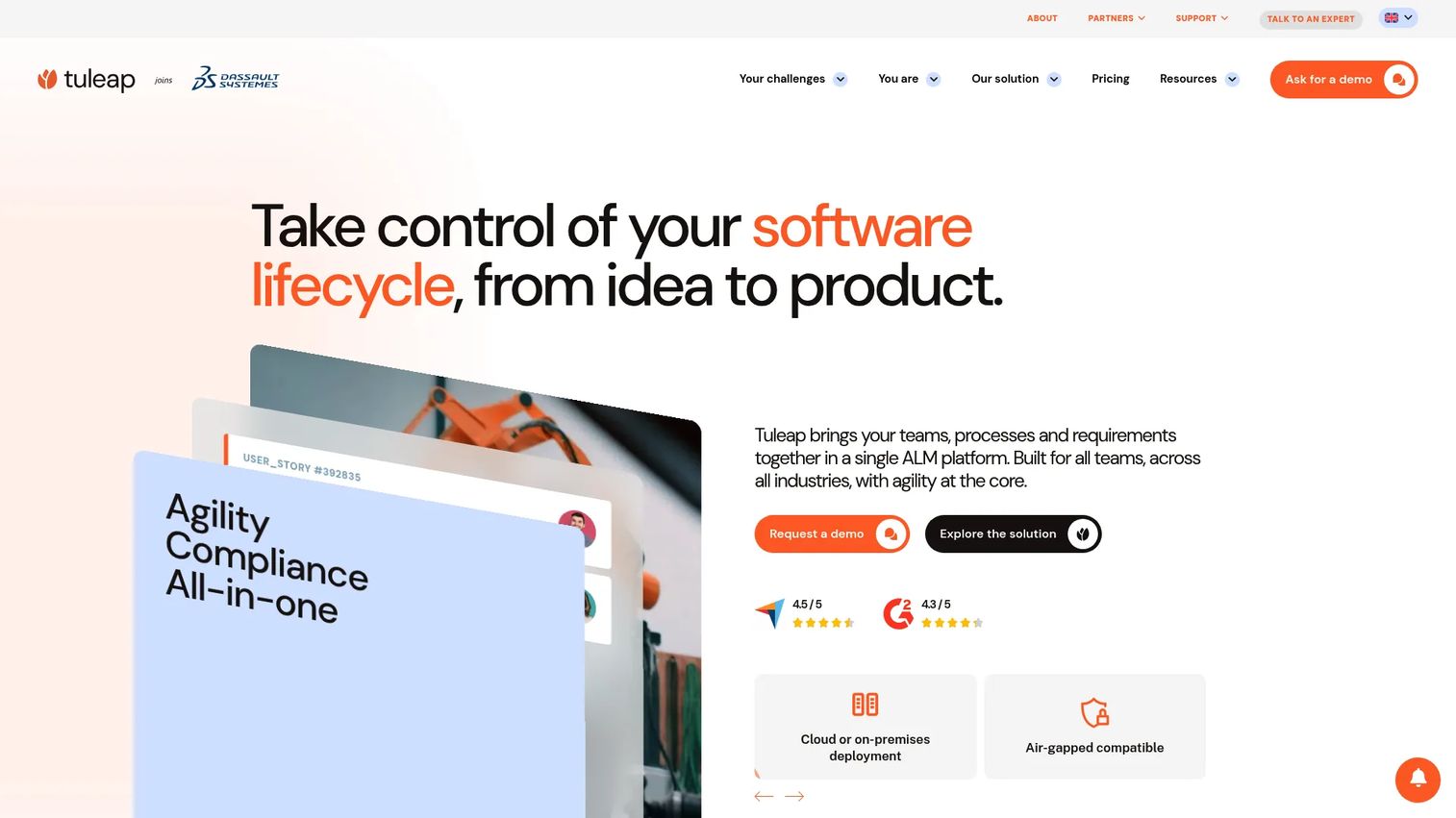
Tuleap is an open-source application lifecycle management platform supporting Agile planning, requirements management, test management, Git-based source control, trackers, and program management. It is designed for organizations that value deployment control, workflow configurability, and the ability to extend the platform to match their own processes. Both cloud and on-premises deployment are available.
Best for: Engineering-led teams that want an open-source ALM option with full control over hosting, configuration, and platform governance.
Key features
- Agile planning with Scrum, Kanban, backlogs, and sprint reporting
- Requirements management with traceability, baselines, and audit-ready documentation
- Test campaign management for manual and automated testing
- Customizable trackers with configurable fields, workflows, automation, and role-based permissions
- Git source control with pull requests, code review, and CI/CD integrations
Why choose Tuleap: It appeals most to teams with strong internal technical ownership. The platform is configurable to a degree that proprietary ALM tools rarely match, and the open-source foundation avoids vendor lock-in. The trade-off is operational: The PM should confirm who owns administration, upgrades, integration configuration, and user support before committing. Tuleap works well when the organization can support the maintenance work required to keep workflows reliable.
Tuleap pricing: Tuleap directs prospects to request a tailored quote based on user count, hosting preference, and support requirements. Cloud and on-premises options are both available.
Tuleap holds a 4.3/5 rating on G2.
Considerations when choosing ALM software
Traceability that matches your release risk
Before committing to a platform, map one active release from the original customer requirement through defect evidence and release approval. The gaps in that map reveal whether you need deep requirements traceability, better test linkage, or simply cleaner backlog ownership. Buying traceability for its own sake creates overhead without solving the actual gap.
Integration with the engineering system of record
Check how the platform connects with source control, CI/CD tools, test automation, documentation, and support systems. A PM who has to manually sync lifecycle status across disconnected tools has not solved the coordination problem; they've added a step to it. The best product management tools are ones that reduce that manual layer, not add to it.
Workflow governance without excessive administration
Evaluate who can change workflows, fields, states, and reporting logic once the platform is deployed. Flexible configuration helps when someone owns standards and prevents teams from inventing separate processes. Without that ownership, flexibility becomes the source of the fragmentation the platform was supposed to fix. Related: compliance management software evaluations apply many of the same governance criteria.
Reporting that answers release questions
Prioritize reporting that addresses practical release decisions: Which requirements have no test coverage? Which open defects block this release? What changed after the last approval? Generic dashboards do not answer those questions. Ask each vendor to demonstrate the specific report, not just the reporting interface.
Total cost beyond licenses
The license cost is often the smallest line item. Implementation, migration, configuration, training, custom integrations, and ongoing administration add to the total, sometimes significantly. Compare that total against the hours currently lost to coordination meetings and post-release rework before making a budget decision.
How to choose the right ALM software for your team
Choose Azure DevOps when the delivery stack already runs on Microsoft
Azure DevOps is the strongest fit when Microsoft identity, Azure infrastructure, and development tooling already anchor the workflow. The adoption cost is lower when engineering does not need to change familiar habits. If the team uses GitHub for source control, Azure DevOps still integrates cleanly. For application portfolio management software needs that go beyond delivery, consider whether additional tooling is required alongside it.
Choose Jira when Agile planning is the center of gravity
Jira suits teams whose immediate need is stronger planning discipline, configurable workflows, and connectivity to other tools through its marketplace. Teams that need formal requirements traceability should validate the integrations and governance model before rollout, and assign clear ownership of field conventions and reporting standards.
Choose Polarion ALM or Codebeamer when evidence and engineering control drive the decision
These platforms fit products where a release requires verification evidence, not simply a completed sprint. Polarion suits environments with connected requirements, testing, and change approval workflows. Codebeamer is stronger for complex product programs with variants, long delivery cycles, and cross-functional verification. Neither is a natural fit for a lightweight SaaS backlog process. For teams exploring application security testing software requirements alongside ALM, both platforms provide the governance structure to integrate security evidence into the release record.
Choose Jama Connect when requirements quality is the bottleneck
Jama Connect earns its place when unclear requirements, stakeholder reviews, or change impact analysis are the primary drivers of late-stage rework. It works best when teams commit to structured requirements practices. The asset lifecycle management software and best contract lifecycle management software categories share some of the same traceability and review workflow requirements, making Jama Connect's model familiar to teams with lifecycle governance experience.
Choose SpiraTeam or Tuleap when you need broad coverage with a distinct operating model
SpiraTeam is the practical choice for mid-market teams that want connected requirements, testing, defect tracking, and releases in one place without enterprise configuration overhead. Tuleap serves organizations with technical ownership and a preference for open-source deployment control. Confirm internal capacity to manage Tuleap's administration before choosing it. Both options also connect naturally to discussions about AI software testing tools for teams investing in automated quality coverage.
Conclusion
The right ALM platform depends on how much governance, traceability, and release risk your organization carries.
Azure DevOps is the practical choice for Microsoft-centered delivery teams that want planning, code, and release connected in one stack. Jira fits teams that need configurable Agile planning and ecosystem flexibility. Polarion ALM is the strongest option for regulated traceability, and Codebeamer handles complex engineering programs with long delivery cycles. Jama Connect addresses requirements-quality problems directly. SpiraTeam provides integrated lifecycle and test coverage for mid-market teams at a transparent price point. Tuleap gives engineering-led organizations open-source flexibility with full deployment control.
Before starting a trial, map one active release from the original requirement through customer feedback. The gaps in that map will tell you whether you need a lightweight coordination layer or a full ALM platform.
For launch enablement after a release is approved, teams can use an interactive demo to show customers what changed without scheduling a live walkthrough. A Demo Center can organize those assets by feature or release for ongoing self-serve access.
Start your journey with Guideflow today!
FAQs
ALM software manages the full application lifecycle, connecting requirements, planning, development, testing, release, operations, and maintenance in a single traceable system of record. Its value comes from maintaining the decision chain across those stages, so a PM can trace any release outcome back to the original customer need. Most ALM platforms also provide reporting and governance controls that project management tools do not.
The software development lifecycle (SDLC) is a process framework describing how software is built, from planning through deployment. ALM is the broader management discipline and supporting software that governs a product throughout its entire life, including post-release maintenance and organizational governance. SDLC is a methodology; ALM is the operational layer that enforces and records it.
DevOps focuses on collaboration and automation between development and operations, with emphasis on CI/CD pipelines and deployment frequency. ALM has a wider lifecycle scope that includes requirements authoring, traceability, formal testing evidence, release governance, and post-release maintenance. A team can practice DevOps within an ALM framework, and many modern ALM platforms include CI/CD integration points.
Jira can function as part of an ALM stack, particularly for Agile planning and issue tracking. It does not provide native end-to-end traceability from requirements through test evidence and release approvals without additional integrations or marketplace plugins. Teams that need regulated traceability or formal verification should validate the integrations required to close those gaps before treating Jira as a complete ALM platform.
Common triggers include repeated release coordination failures, unclear or frequently changing requirements, poor test coverage visibility before launch, audit or compliance requirements, recurring post-release defects traced to specification gaps, and teams operating across multiple disconnected tools with no shared lifecycle record. A simple backlog problem does not always justify enterprise ALM. The root cause must be traced to traceability gaps or cross-team handoff failures, not just process immaturity.
The most useful features for PMs are requirements traceability that links to acceptance criteria and test evidence, release reporting that answers "what is unresolved and why," dependency visibility across teams, defect linkage that connects open issues back to requirements, stakeholder review controls with approval history, and analytics that support prioritization decisions. Governance features like audit trails and role-based permissions matter more as the organization scales or operates under compliance requirements.
Yes. Modern ALM tools can support Agile sprint planning and integrate with DevOps automation through CI/CD pipelines and source control connections. The difference lies in how much lifecycle governance, traceability, and formal reporting the team needs around those practices. Agile-native platforms like Jira and Azure DevOps sit closer to the Agile end of the spectrum. Polarion and Codebeamer sit closer to the governance end.
Pricing ranges from free tiers on Agile delivery tools to enterprise contracts for regulated lifecycle platforms. Azure DevOps is free for the first five users and $6/user/month beyond that. SpiraTeam starts at $176.29/month for three concurrent users. Polarion ALM, Codebeamer, Jama Connect, and Tuleap use sales-led pricing. Total cost rises with advanced traceability modules, self-hosting, implementation services, custom integrations, and premium support. Licensing is often a smaller portion of total cost than implementation and ongoing administration.