You had a strong Q2. Then Q3 came in soft, and nobody could explain why. Was it pricing? Pipeline quality? Billing leakage? Collections timing? Churn you didn't see yet? Or recognized revenue that shifted a quarter?
That ambiguity is the real cost of outgrowing your current revenue stack. The global revenue management software market was valued at $25.7 billion in 2025 and is projected to reach $87.1 billion by 2035, according to Future Market Insights (2025). The growth reflects how many companies are hitting the same wall: Spreadsheets become the hidden system connecting sales, billing, finance, and the board deck, and nobody owns that system deliberately.
The right SaaS revenue management software gives you a reliable line from what sales sold, to what the customer owes, to what finance can recognize, forecast, and report. This guide breaks down eight tools across billing, quote to cash, revenue recognition, ERP, and planning to help you find the one that fixes your first broken handoff.
What's inside
This guide covers SaaS revenue management, not hotel dynamic pricing systems. The eight tools were chosen for coverage across recurring billing, usage pricing, quote-to-cash workflows, revenue recognition, finance operations, and forecasting.
- Who it's for: Founders, finance leaders, and RevOps operators at scaling SaaS companies
- Selection criteria: Commercial model fit, finance and reporting depth, integration reliability, and implementation burden
- Pricing and G2 ratings: Verified from each vendor's live pricing page and G2 listing at time of writing
- Scope note: Pricing details and ratings should be re-verified immediately before any purchase decision
TL;DR
- Best for subscription billing and recurring revenue operations: Chargebee
- Best for usage-based, hybrid, and custom billing models: Zenskar
- Best for Salesforce-centered quote-to-cash: Salesforce Revenue Cloud
- Best for finance and revenue recognition inside a broader ERP: NetSuite or Sage Intacct, depending on ERP depth needed
- Best for board-ready SaaS planning and scenario modeling: Campfire
What is revenue management software?
Revenue management software helps a company control how it prices, sells, bills, collects, recognizes, forecasts, and reports revenue. In a SaaS context, a revenue management system connects commercial data with financial data so that what sales promises matches what finance can report and audit.
This category is distinct from hotel revenue management systems, which focus on room inventory, occupancy, and dynamic rate-setting. If you searched this term from a hospitality context, the table below clarifies the split.
| Category | SaaS revenue management software | Hotel revenue management systems |
|---|---|---|
| Primary decision | Packaging, billing, recognition, forecasting | Room pricing and inventory allocation |
| Core data | Contracts, invoices, payments, usage, ARR | Occupancy, demand, rates, booking pace |
| Primary users | Finance, RevOps, sales operations, founders | Revenue managers, hotel operators |
| Typical integrations | CRM, ERP, accounting, payment, data warehouse | PMS, channel manager, booking engine |
At Series B, a SaaS business typically needs a combination of billing, quote-to-cash, revenue recognition, and planning capabilities. One platform may cover every stage. Other stacks connect specialist tools through integrations, with each tool owning a clear slice of the data.
Core capabilities to look for:
- Product and price management: Plans, add-ons, usage tiers, discounts, and pricing rules
- Quote-to-cash workflows: Quotes, approvals, contracts, orders, invoices, payments, and renewals
- Subscription and usage billing: Recurring invoices, metering, proration, dunning, and payment reconciliation
- Revenue recognition: Schedules and reporting for recurring, prepaid, milestone, or consumption revenue
- Forecasting and scenario planning: ARR, bookings, churn, expansion, and cash scenarios
- Reporting and audit trails: Finance close, board reporting, variance analysis, and operational visibility
- Integrations: CRM, payment processor, accounting system, data warehouse, and product usage events
When to use revenue management software
Standardize complex pricing before it slows deals
Sales closes custom terms, multiple products, and nonstandard discounts faster than finance can operationalize them. A quote-to-cash or billing platform centralizes price rules and removes the manual translation step that currently sits between sales and finance.
Close the books without rebuilding the same spreadsheet
Finance reconciles invoices, collections, recognized revenue, and deferred balances manually each month. Revenue recognition automation improves the close process and makes board figures easier to defend when an auditor or investor asks to see the workings.
Forecast revenue without using pipeline as a proxy
A founder who knows pipeline but cannot see the financial effect of churn, expansion, collections timing, and usage patterns is running blind. Planning and forecasting tools provide scenario models that make weekly operating decisions less dependent on spreadsheet archaeology.
You have outgrown your current stack when:
- Pricing exceptions require engineering or manual spreadsheet work
- Finance closes late because billing data needs cleanup before it can be recognized
- Board reporting varies depending on which system you pull from
- Sales and finance disagree about what was actually sold
- A new VP cannot understand the revenue system in a week without your help
Revenue management software comparison
Tools in this space fall into four categories. Some are billing-first. Some are ERP-first. Some are quote-to-cash-first. Some are planning-first. The right choice depends on where revenue breaks today, not on which platform has the longest feature list.
| # | Product | Best for | Key differentiator | Pricing | G2 rating |
|---|---|---|---|---|---|
| 1 | Chargebee | Subscription and hybrid billing | Monetization, billing, and RevOps in one platform | Starts at $0 + 0.80% | 4.4/5 |
| 2 | Zenskar | Complex usage and custom billing | Flexible billing logic for any pricing model | Custom pricing | 4.8/5 |
| 3 | Salesforce Revenue Cloud | Salesforce-centered quote-to-cash | Revenue lifecycle tied to CRM data | From $150/user/month | 4.2/5 |
| 4 | NetSuite | ERP with finance and revenue operations | Broad cloud ERP with reporting depth | Custom pricing | N/A |
| 5 | Sage Intacct | Cloud accounting and revenue recognition | Financial management and close workflows | Custom pricing | 4.3/5 |
| 6 | SAP S/4HANA Cloud | Enterprise finance and global operations | Enterprise ERP and revenue accounting | Custom pricing | 4.4/5 |
| 7 | Subskribe | Sales-led SaaS quote-to-cash | Subscription CPQ and revenue recognition | From $140,000/year | 4.7/5 |
| 8 | Campfire | SaaS planning and scenario modeling | AI-native finance and forecasting for SaaS | Custom pricing | 4.7/5 |
Pricing and G2 ratings verified October 2026 from each vendor's official pricing page and G2 listing.
Best 8 revenue management software tools for 2026
1. Chargebee
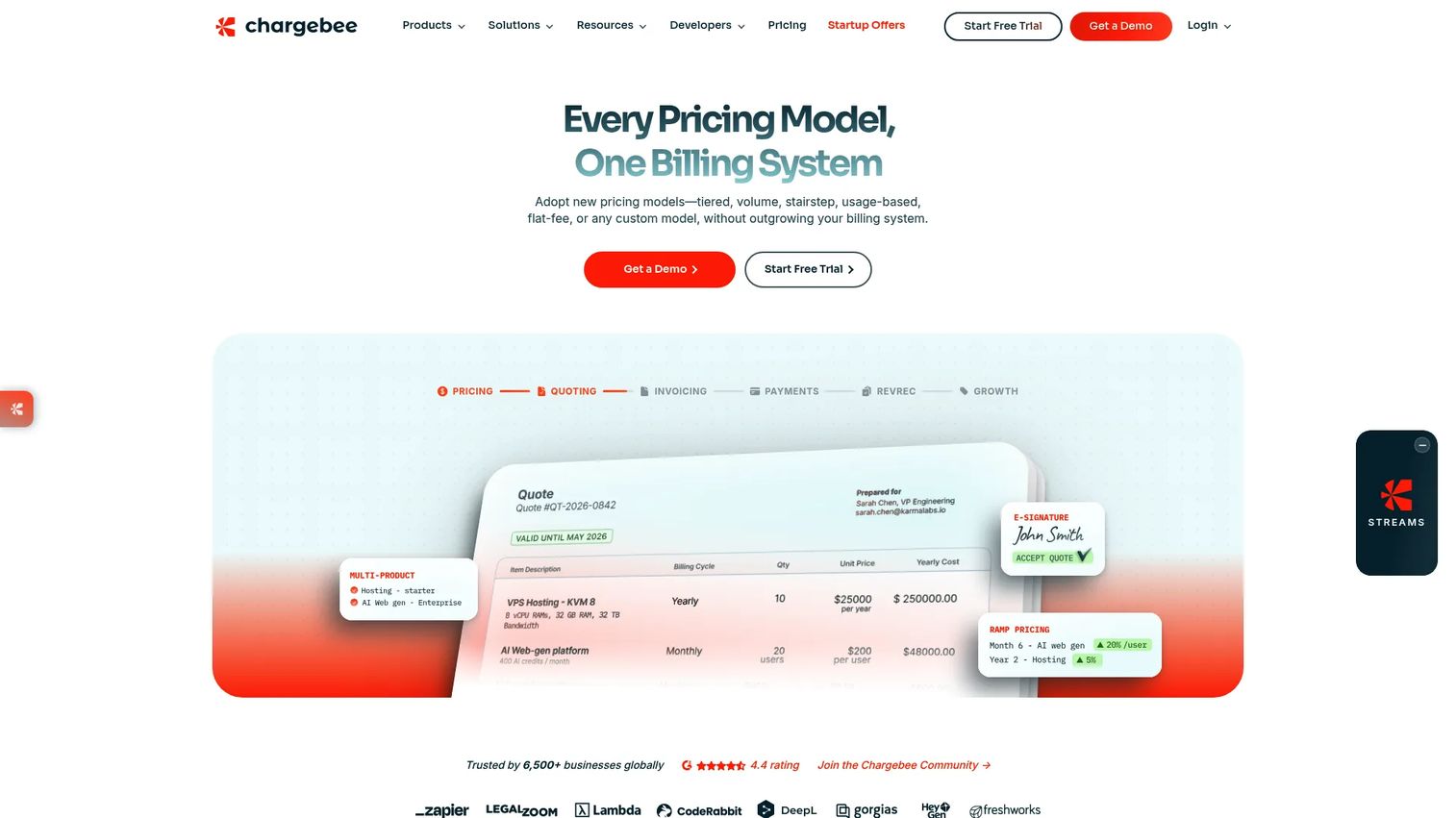
Chargebee is a payments, billing, and monetization platform for subscription and AI-based businesses. It covers the full recurring revenue lifecycle: Billing, invoicing, payment collection, revenue recognition under ASC 606 and IFRS 15, churn prevention, and monetization reporting. The platform supports flat, tiered, seat-based, usage-based, token, credit, outcome, and hybrid pricing models.
Best for: SaaS companies that need a scalable subscription billing system before billing complexity becomes a finance bottleneck.
Key features
- Subscription and recurring billing with flexible pricing models
- Usage-based and hybrid billing support
- Revenue recognition under ASC 606 and IFRS 15
- Dunning, revenue recovery, and retention experiments
- Global tax, e-invoicing, and CRM/accounting integrations
Why choose Chargebee: It fits companies that need a broad monetization layer between CRM, product usage, payments, and accounting, without adopting a full ERP. The strongest fit is recurring or hybrid revenue; it's less suited to complex enterprise quote-to-cash scenarios that require deep CPQ and contract amendment handling.
Chargebee pricing: The Flow plan starts at $0 + 0.80% of monthly invoicing volume. Enterprise and Performance plans use custom pricing booked through a demo. A free Growth Starter plan exists exclusively for Chargebee Billing customers. The CPQ Lite module is free for the first 50 quotes.
G2 rating: 4.4/5 (verified October 2026).
2. Zenskar
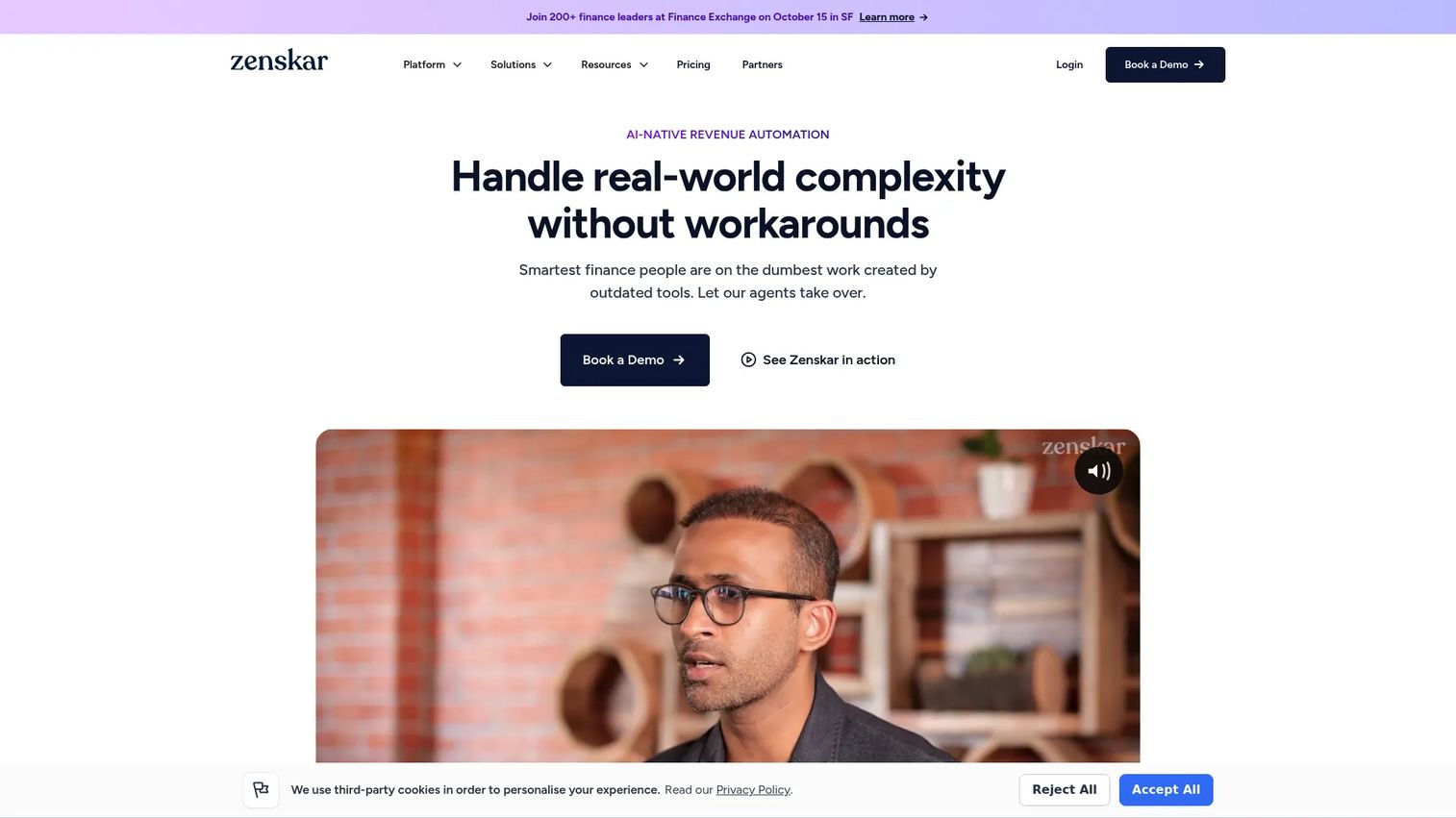
Zenskar is an AI-native order-to-cash and revenue automation platform built for businesses whose pricing models no longer fit standard seat-based billing. It handles flexible subscription, metered, hybrid, and custom-contract billing, connecting usage data from APIs, CSV uploads, and over 100 data sources. Revenue recognition, automated receivables, and multi-entity reporting are included in the core platform.
Best for: SaaS companies selling usage-based, consumption-based, or heavily customized commercial models that regularly generate billing exceptions.
Key features
- Usage metering via APIs, CSV, and 100+ data sources
- Prepaid and postpaid billing with custom invoicing workflows
- Revenue recognition supporting ASC 606 and IFRS 15
- Automated receivables management, dunning, and payment reconciliation
- Multi-entity, multi-currency, and SaaS metrics reporting
Why choose Zenskar: It belongs on the shortlist when pricing changes by customer, commitment, metric, or contract logic, and when sales frequently closes deals that finance cannot invoice without manual intervention. If your pricing is straightforward and seat-based, a lighter billing tool may be enough.
Zenskar pricing: All tiers use custom pricing. Zenskar offers Starter, Standard, and Enterprise plans, with differences in support, integration scope, implementation, and SLA coverage. Contact sales or request a demo for a quote specific to your billing volume and complexity.
G2 rating: 4.8/5 (verified October 2026).
3. Salesforce Revenue Cloud
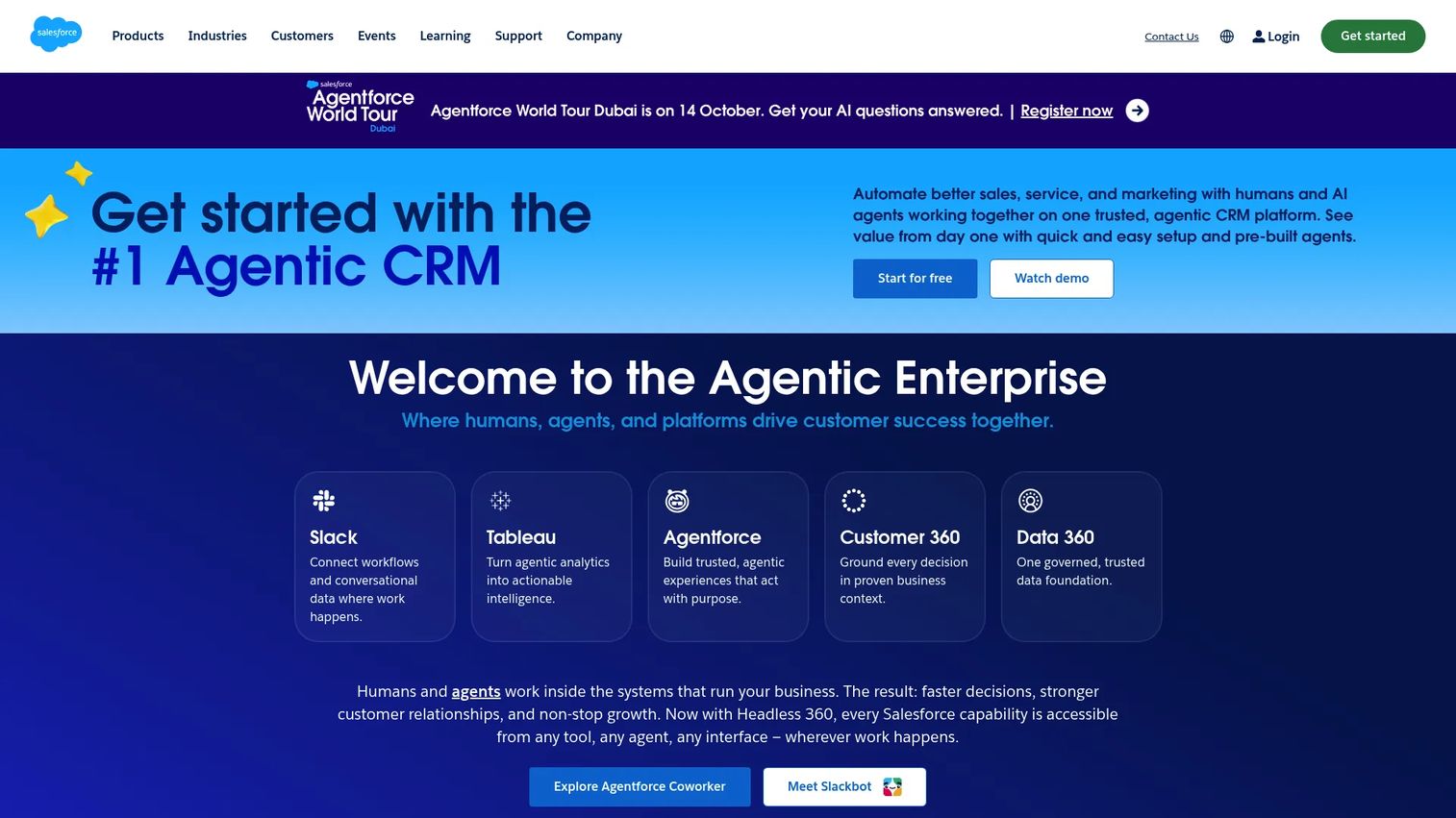
Salesforce Revenue Cloud is a Salesforce-native revenue lifecycle management platform covering product catalog management, pricing, CPQ, contracts, orders, invoicing, billing, and revenue analytics. It brings the full commercial workflow into the CRM, so sales, finance, and operations share a single data layer rather than reconciling across separate systems.
Best for: Salesforce-first companies with enterprise sales motions and complex quote-to-cash workflows that need revenue lifecycle data inside CRM.
Key features
- Product catalog and price management
- Configure, price, and quote (CPQ) workflows
- Contract and order management
- Consumption management and billing
- Revenue analytics and AI-assisted workflows
Why choose Salesforce Revenue Cloud: Its value rises when Salesforce already drives accounts, opportunities, approvals, and commercial operations. For founder-led teams that haven't yet standardized their CRM governance or sales process, the implementation overhead can exceed the immediate benefit. Think of this as the right choice once the CRM is the system of record, not a step toward making it one.
Salesforce Revenue Cloud pricing: Revenue Cloud Growth starts at $150 per user per month, billed annually. Revenue Cloud Advanced is $200 per user per month, billed annually. Advanced adds contracts and orders, consumption management, invoicing, AI workflows, and deeper analytics. An annual contract is required.
G2 rating: 4.2/5 (verified October 2026).
4. NetSuite
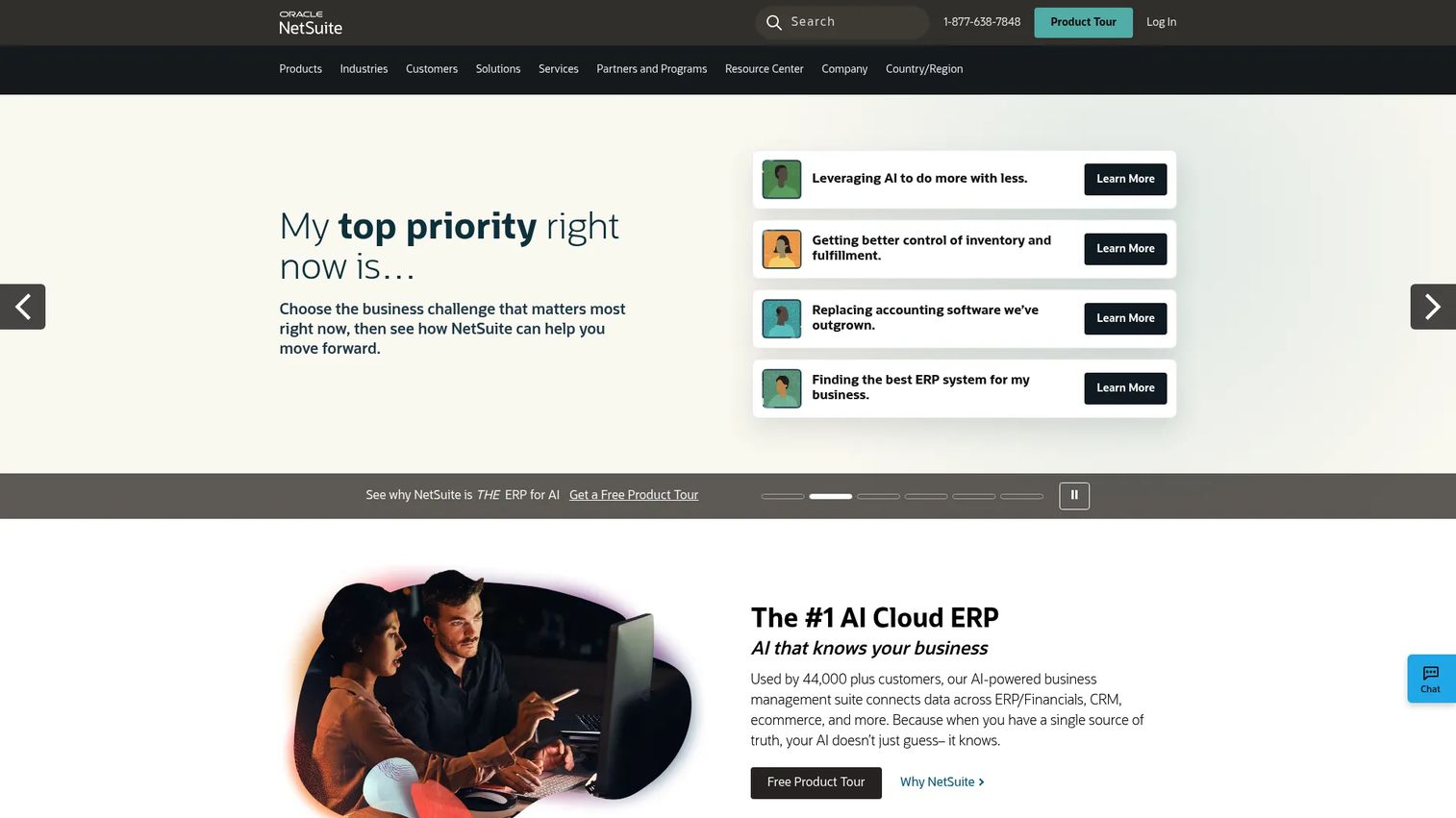
NetSuite is a cloud-based, AI-powered enterprise resource planning and business management suite. For SaaS companies, it serves as the financial backbone covering general ledger, revenue recognition, billing, inventory, order management, CRM, and analytics in one integrated system. It becomes relevant when the revenue management issue sits inside larger finance complexity.
Best for: Scaling SaaS companies replacing fragmented accounting and operational systems with a central ERP, particularly those managing multi-entity operations or international growth.
Key features
- General ledger and financial reporting
- Revenue recognition workflows
- Billing and invoicing controls
- Multi-entity financial management
- Workflow automation, customization, and integrations
Why choose NetSuite: Choose it when the company needs a durable financial backbone rather than just better subscription billing. The decision point is finance maturity: If your Controller is running close on spreadsheets and your board reporting varies by which system you pulled from, the problem is the accounting system, not the billing layer.
NetSuite pricing: Annual license pricing covers the core platform, optional modules, and user count. A one-time implementation fee also applies. Specific pricing requires a sales conversation, as it depends on module selection, entity count, and user seats.
5. Sage Intacct
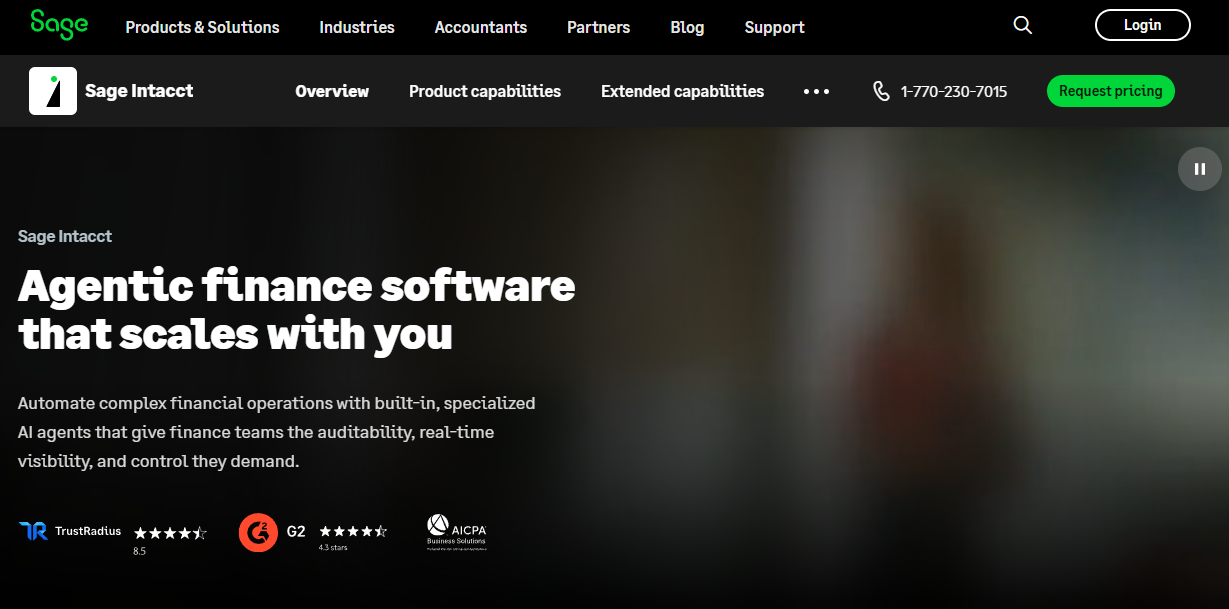
Sage Intacct is cloud financial management and accounting software built for growing and midsize organizations. It focuses on accounting controls, revenue recognition automation, multi-entity consolidation, and real-time reporting. For finance teams that need dependable close processes and board-ready reporting without adopting a full ERP, it covers the accounting layer well.
Best for: Finance-led SaaS companies upgrading accounting, multi-entity reporting, and revenue recognition without a full ERP implementation.
Key features
- Cloud general ledger with AI-powered anomaly detection
- Revenue recognition automation
- Multi-entity and multi-currency consolidation
- Budgeting and dimensional financial reporting
- Salesforce integration and API connectivity
Why choose Sage Intacct: It fits a company where the immediate bottleneck is finance operations and reporting reliability. If the first broken handoff is in close, consolidation, or revenue recognition, Sage Intacct addresses that directly. It's less suited to teams whose primary problem is complex sales quoting or product-led usage metering.
Sage Intacct pricing: Pricing is customized by industry, organization size, and module requirements. Sage directs prospects to request a quote. Contact sales to get a price based on entity count, user seats, and required modules.
G2 rating: 4.3/5 (verified October 2026).
6. SAP S/4HANA Cloud
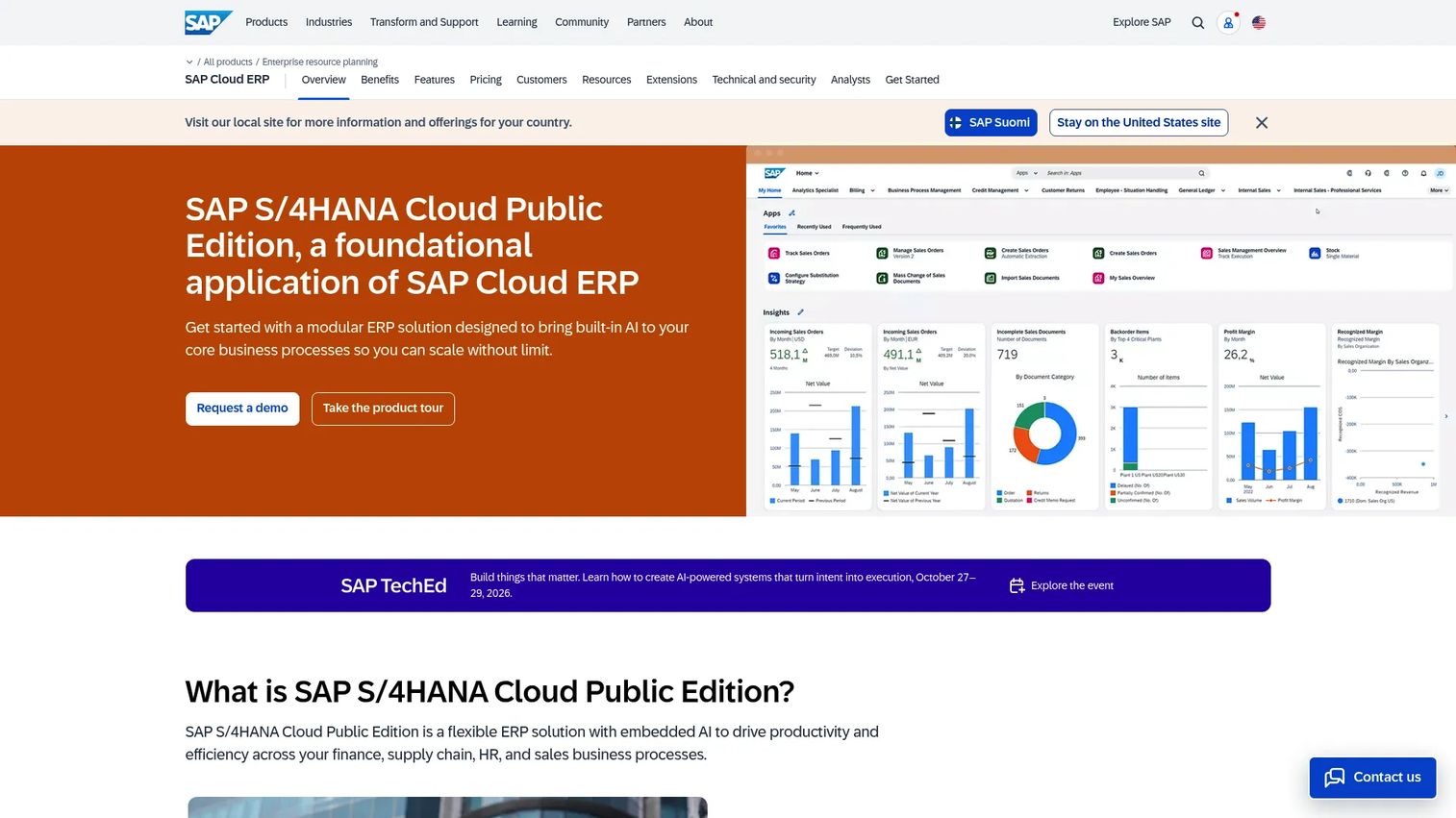
SAP S/4HANA Cloud is a modular cloud ERP with embedded AI covering finance, supply chain, manufacturing, HR, and sales. On the revenue side, it handles revenue accounting, billing, pricing, order management, and compliance across global operations. It is an enterprise decision, not a bilateral billing fix.
Best for: Larger or rapidly globalizing companies with complex multi-entity finance, demanding governance requirements, and process standardization needs across regions.
Key features
- AI-enabled finance management and financial close
- Revenue accounting and reporting
- Global process controls and compliance
- Multi-entity operations and consolidation
- Sales order management, billing, and pricing
Why choose SAP S/4HANA Cloud: It belongs on the shortlist when company complexity, global operations, and governance are the primary constraints. It's a poor first response to a narrow subscription billing problem. This is a maturity decision that requires executive ownership, a clear operating model, and a disciplined implementation plan.
SAP S/4HANA Cloud pricing: SAP uses a quote-based model. Pricing depends on module selection, user count, transaction scale, and deployment model. Request a quote through SAP's sales team.
G2 rating: 4.4/5 (verified October 2026).
7. Subskribe
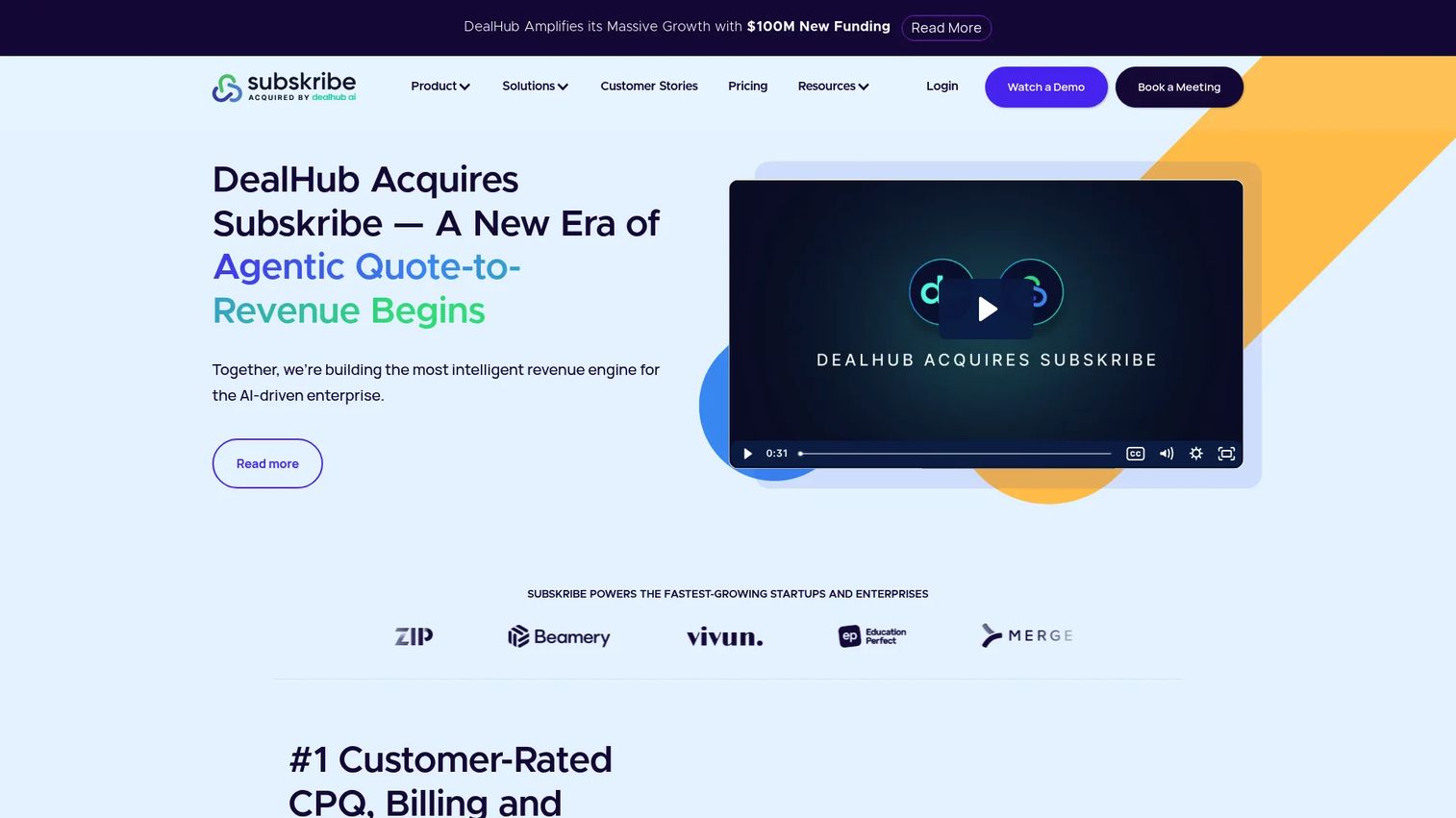
Subskribe is a unified quote-to-revenue platform for SaaS companies covering CPQ, subscription billing, contract management, and revenue recognition. It was built specifically for the sales-led SaaS motion where negotiated contracts, ramp deals, amendments, and renewals regularly create downstream billing and reporting problems.
Best for: B2B SaaS companies with custom contracts, multi-year commitments, frequent amendments, and sales-led renewal motions that break billing and recognition downstream.
Key features
- Complex quoting for ramps, amendments, upsells, renewals, and restructures
- Usage-based, recurring, and flexible pricing model support
- Approval workflows with parallel approvals and real-time tracking
- Revenue recognition under ASC 606 and IFRS 15
- Native integrations with Salesforce, HubSpot, ERP, and accounting systems
Why choose Subskribe: It's relevant when custom deal structures are common and the handoff from sales to billing creates recurring manual exceptions. For simple self-serve SaaS pricing, a lighter billing setup is probably sufficient. Subskribe creates a repeatable system for complex enterprise deals so revenue no longer depends on the founder interpreting contract details for every renewal.
Subskribe pricing: The Quote-to-Revenue product has an estimated starting price of $140,000 per year based on Subskribe's own pricing calculator. Subskribe CPQ and Subskribe Billing are contact-sales only. Final pricing depends on products purchased, term, and seat count. There is no free tier.
G2 rating: 4.7/5 (verified October 2026).
8. Campfire
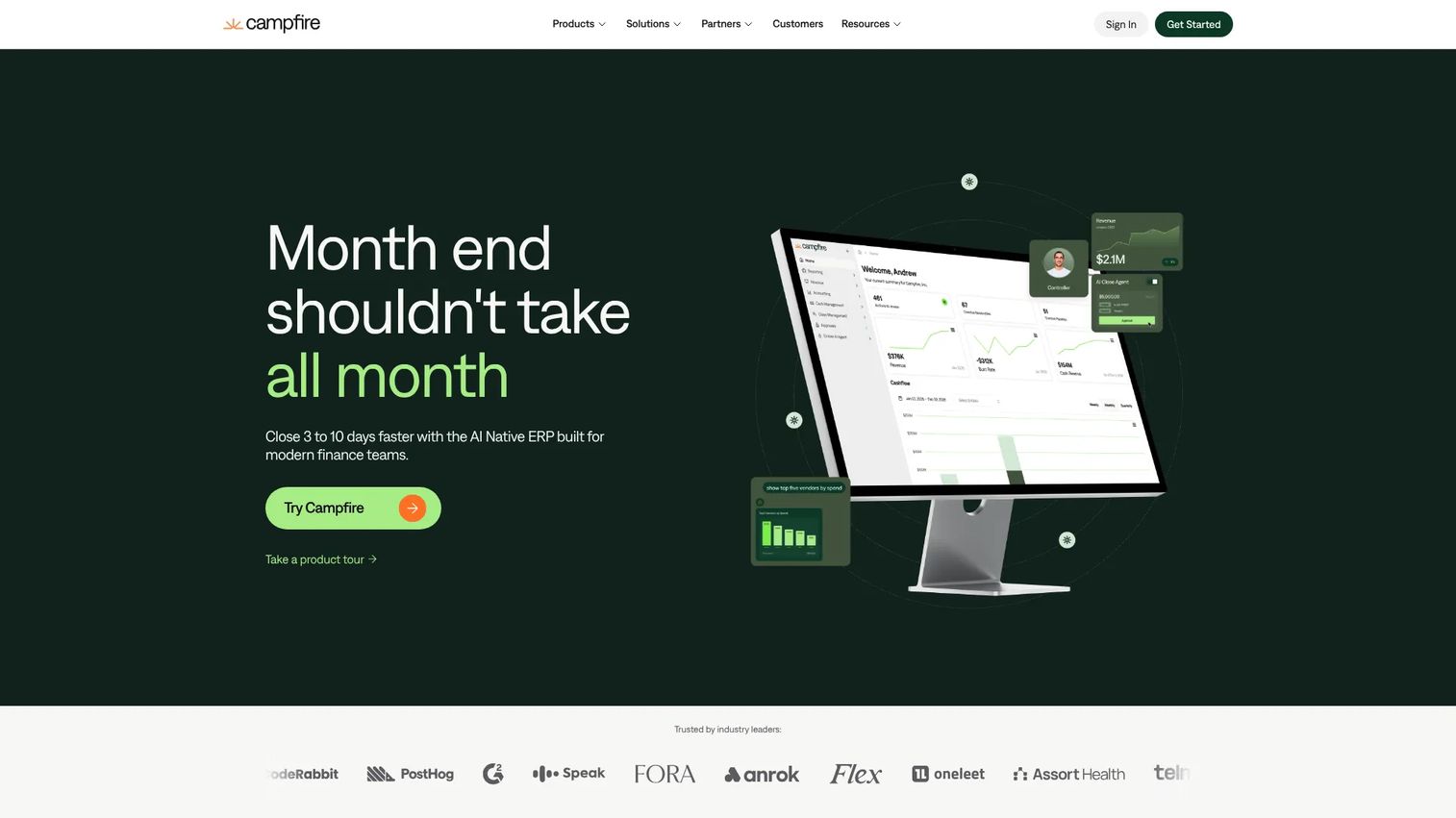
Campfire is an AI-native ERP and revenue automation platform for high-growth finance teams. It covers automated ASC 606 revenue recognition for subscription, usage-based, milestone, and hybrid arrangements, alongside multi-entity accounting, consolidation, and an AI assistant called Ember for financial questions, flux commentary, and custom reports.
Best for: Founder-led SaaS teams that need operating models, ARR forecasts, and scenario analysis to make decisions before committing to hiring, spend, or fundraising plans.
Key features
- Automated ASC 606 revenue recognition for complex arrangements
- Multi-entity, multi-currency accounting with consolidation
- Ember AI for financial questions, flux commentary, and report generation
- Automated bank reconciliation
- Actuals versus plan analysis and board reporting workflows
Why choose Campfire: It's strongest when the immediate question is "what happens if we change this?" rather than "how do we issue the invoice?" It complements a billing or accounting system rather than replacing one. For a founder preparing for a fundraise or navigating a burn-rate question from the board, having scenario models that hold up under scrutiny is the specific gap Campfire fills.
Campfire pricing: Custom pricing based on legal entity count, transaction volume, revenue model complexity, and integrations. Request a demo for a quote.
G2 rating: 4.7/5 (verified October 2026).
Considerations when choosing revenue management software
Match the platform to the revenue problem
Don't buy a large ERP because pricing is messy. Don't buy a forecasting tool when invoices and recognition schedules are wrong. Start by naming the first broken handoff. Whether the failure starts in quoting, billing, recognition, or reporting determines which category of tool earns its cost. See our guide to revenue operations software for a broader view of the stack.
Decide which system owns commercial truth
Define whether the CRM, billing platform, ERP, or finance planning tool owns products, pricing, contracts, and revenue status. Conflicting ownership creates reconciliation work that software alone cannot fix. This is an organizational decision that should precede any vendor evaluation.
Test your hardest real billing scenarios
Use three to five actual contracts from the last quarter. Include a discounted annual plan, a usage-based customer, a contract amendment, and a renewal. Ask every vendor to walk through how that contract moves from quote through invoice, payment, recognition, and reporting. A clean demo with sample data tells you nothing.
Verify integration depth, not just the partner logo page
Confirm how data moves between the CRM, payment processor, accounting system, and data warehouse. Ask which system creates the record, which field is authoritative, and what happens when a sync fails. A contract lifecycle management integration that breaks during renewals costs more than the software saves.
Price implementation alongside the subscription
Compare software cost with migration work, integration effort, internal ownership, and the finance team hours spent repairing exceptions. The cheaper tool can become expensive when every nonstandard deal creates manual work. First-year total cost, not annual license cost alone, is the right comparison.
Conclusion
Revenue management software works when it fixes a specific handoff, not when it replaces every system at once.
Chargebee handles the broadest recurring revenue use case for SaaS companies moving beyond a basic payment processor. Zenskar is the stronger shortlist candidate for usage-based and custom billing models where other platforms generate exceptions. Salesforce Revenue Cloud fits CRM-led organizations with mature sales operations and quoting complexity. NetSuite and Sage Intacct address deeper ERP and finance needs at different points of company maturity, with SAP S/4HANA Cloud appropriate for larger global organizations. Subskribe handles the sales-led subscription contracting motion where negotiated deals regularly break billing downstream. Campfire helps founders model financial outcomes before committing to a plan.
The practical next step is to pick two finalists based on the specific handoff that breaks today, then run the same real-world scenarios through each platform: A custom deal, a usage-based invoice, a mid-term amendment, and a board-level ARR report. The platform that handles all four without exceptions is the one worth buying.
For broader RevOps context, see our guides to cash flow forecasting software and cash flow management software.
Start your journey with Guideflow today!
FAQs
Revenue management software manages how a company prices, sells, bills, collects, recognizes, forecasts, and reports revenue. In a SaaS context, it connects commercial data with financial data. Hotel revenue management systems are a distinct category focused on demand forecasting, room rates, and inventory allocation.
Billing software creates invoices, collects payment, and manages subscription lifecycles. Revenue management software can include billing, but typically also covers pricing governance, quote-to-cash workflows, revenue recognition schedules, forecasting, and board-level reporting. Many SaaS companies start with a billing platform and add recognition and planning tools as complexity grows.
A basic setup works for simple monthly subscriptions with uniform pricing. Complexity rises with annual contracts, usage pricing, multiple products, international entities, discounts, amendments, or board-level reporting requirements. Most Series B SaaS companies have already crossed at least one of those thresholds.
Usage-based businesses should prioritize metering accuracy, flexible rating rules, invoice correctness, adjustments, revenue recognition support, and clean product event integrations. Zenskar and Chargebee are the two strongest options in this shortlist for usage-based and hybrid commercial models.
Evaluate first-win speed, clear system ownership, support for real edge-case contracts, integration reliability with existing CRM and accounting tools, implementation scope, and total first-year cost. The most important question is whether a new VP of Finance or RevOps hire can operate the system without the founder's involvement in week one.
Many platforms support revenue recognition workflows and schedules aligned with ASC 606 and IFRS 15. Chargebee, Zenskar, Salesforce Revenue Cloud (Advanced), Sage Intacct, Subskribe, and Campfire all include recognition capabilities. Validate the specific accounting treatment, audit requirements, and integration with your accounting system with your Controller or external advisors before selecting a platform.
Cost varies by billing volume, revenue scale, entity count, user seats, module selection, contract complexity, implementation work, and integration requirements. Entry points range from $0 plus a volume percentage (Chargebee's Flow plan) to over $140,000 per year (Subskribe). ERP and enterprise platforms require a custom quote. Compare first-year total cost, including implementation and migration, not subscription cost alone.
Buy billing or quote-to-cash software when commercial terms and invoicing are the broken handoff. Buy an ERP or finance platform when close, multi-entity accounting, controls, or board reporting are unreliable. Buy forecasting software when the operating plan, runway, or board model lacks reliability. Use more than one system when each has a clear, non-overlapping source-of-truth role. For more context on planning tools, see our guide to cash flow management software and the best revenue operations software in the broader stack.
Hotel revenue management systems optimize room pricing based on occupancy data, competitor rates, demand signals, and booking pace. SaaS revenue management software manages subscription contracts, usage billing, revenue recognition schedules, and ARR reporting. The two share a name but address entirely different operating problems. If you manage a SaaS product, you need the SaaS category, regardless of search results that surface hospitality tools.