

You filled the room. Registrations hit the goal. Badges printed, sessions ran, sponsors showed up. Then the post-event report landed on your desk, and the question your VP actually cares about had no clean answer: how many qualified conversations did we generate, and what pipeline did they influence?
That gap between attendance and outcomes is the real problem. Getting people to register is the easy part. Getting them to find the right people, book meetings, exchange contact details, and turn a hallway chat into a tracked opportunity is where most event programs leak value.
The market is responding. The global event management software market sat at roughly USD 9 to 9.9 billion in 2025 and is forecast to grow toward USD 16 to 17 billion by 2030, a compound annual growth rate of about 12.5 to 13.2 percent, according to Grand View Research and Fortune Business Insights. A focused look at the U.S. event networking and matchmaking segment projects a 6.9 percent CAGR through 2033, per a published trend analysis on LinkedIn. The growth is concentrated where networking, matchmaking, and AI features live, not in registration alone.
That is the shift worth understanding. Event networking software exists to close the distance between showing up and actually connecting. When it works, attendees arrive with meetings already booked, reps capture leads without manual data entry, and your reporting ties meeting volume to revenue. When it does not, you are back to spreadsheets and guesswork.
What's inside
This guide is for event marketers, demand gen leaders, field marketers, and marketing ops teams comparing platforms for the next event cycle. You already run events. You need to validate fit, pricing, integrations, and reporting before you commit budget.
We selected the 12 tools below based on four criteria that matter most for an event networking platform:
- Attendee matchmaking: how well the tool helps people discover and connect with the right contacts.
- Agenda building and meeting scheduling: whether attendees can plan sessions and book meetings without friction.
- Lead capture and ROI reporting: badge scanning, qualification, and pipeline attribution.
- Format support: coverage across in-person, virtual, and hybrid events.
Every tool here earns its place on at least one of those dimensions. We pulled pricing and ratings from first-party pages and G2 at the time of writing.
TL;DR
- Best for enterprise all-in-one event programs: Cvent. Registration, networking, badging, and ROI reporting in one stack.
- Best for AI matchmaking: Grip. Adaptive attendee recommendations built around networking outcomes.
- Best for practical agenda and attendee discovery: Marcom Event Connect. Private agendas, searchable attendee and exhibitor lists.
- Best for branded B2B event experiences: Bizzabo. Networking plus broad event marketing and analytics.
- Best for virtual-first networking: Airmeet. Lounges, breakout rooms, and interactive engagement.
- Best for demand gen reporting: Goldcast. Audience tracking and pipeline-friendly event data.
Background: what is event networking software?
Event networking software is a category of event technology that helps attendees discover relevant people, schedule meetings, and connect before, during, and after an event, while giving organizers the lead capture and reporting they need to prove value.
It overlaps with broader event management platforms but solves a narrower, sharper job. A full event platform handles registration, ticketing, agendas, and broadcasting. A networking solution for event teams focuses on the connection layer: who should meet whom, how they book time, and what that activity reveals about intent.
Most buyers expect the following core capabilities from an event networking tool:
- Attendee discovery: searchable directories so people find the right contacts by role, company, or interest.
- Matchmaking: rule-based or AI-driven recommendations that suggest relevant people to meet.
- Meeting scheduling: appointment scheduling and event meeting scheduling that syncs to calendars.
- Agenda building: an event agenda builder so attendees plan sessions alongside meetings.
- Messaging: in-app chat and messaging centers for direct outreach.
- AI recommendations: AI networking features that surface matches and answer attendee questions.
- Lead capture: badge scanning and lead capture for events, with qualification fields.
- ROI analytics: event analytics covering meetings, engagement, and pipeline attribution.
The reason this category exists is simple. Attendee engagement drives repeat attendance, and reported event-industry data shows app-based engagement correlating with materially higher return rates. The tools that win in 2026 treat networking as a revenue and relationship engine, not a feature you bolt on at the end.
When to use event networking software
Event networking software earns its keep across the full event lifecycle, not just on event day. Here is where it matters most.
Connect attendees before the event
The best conversations start before anyone walks in. With attendee discovery and matchmaking enabled early, registrants browse who else is attending, get AI-suggested matches, and pre-book meetings. People arrive with a plan instead of wandering the floor hoping to bump into the right person. For B2B events, this is where pipeline starts forming days before the doors open.
Facilitate networking during the event
Live events run hot and fast. Speed networking sessions, breakout rooms, group discussions, live chat, and appointment scheduling keep momentum high. Attendees move from session to meeting without manual coordination. Conference networking that would otherwise depend on luck becomes structured and trackable.
Capture leads and prove event ROI
This is the section your finance team cares about. Badge scanning and event lead capture pull contact details into your CRM without rekeying. Lead qualification fields let reps tag intent on the spot. Session engagement and meeting volume feed pipeline attribution, so you can finally answer what the event influenced. Strong event analytics turn a cost center into a measurable channel.
Support virtual and hybrid event networking
Networking needs differ by format. In-person events lean on badge scans and physical proximity. A virtual event platform needs lounges, video rooms, and chat to replace hallway moments. Hybrid events have to bridge both without creating two disconnected audiences. Format support is not a nice-to-have; it determines whether remote attendees get the same networking value as the people on-site.
Now to the shortlist. The table below gives you the fast comparison, and the sections after it go deep on each tool.
Comparison table
Use this table to scan intent, differentiation, pricing posture, and G2 ratings at a glance. Pricing reflects first-party pages at the time of writing; many vendors use quote-based pricing for full platforms. Ratings come from each tool's live G2 listing and can shift over time.
| # | Product | Intent | Key differentiation | Pricing | G2 rating |
|---|---|---|---|---|---|
| 1 | Cvent | Enterprise all-in-one | Registration, networking, badging, ROI in one stack | Quote-based | 4.3/5 |
| 2 | Grip | AI matchmaking | Adaptive AI attendee matching and recommendations | Quote-based | 4.6/5 |
| 3 | Marcom Event Connect | Attendee discovery | Private agenda plus searchable attendee and exhibitor lists | Quote-based | Not listed |
| 4 | Bizzabo | Branded B2B events | Networking plus full event marketing and analytics | From $17,999/yr | 4.3/5 |
| 5 | Whova | Conference engagement | Mobile-first community and networking | Quote-based, free attendee app | 4.8/5 |
| 6 | Airmeet | Virtual networking | Lounges and breakout rooms for interaction | From $167/mo | 4.6/5 |
| 7 | Hubilo | Branded webinars | Engagement-led virtual and hybrid experiences | From $800/mo | 4.6/5 |
| 8 | RingCentral Events | Virtual and hybrid | AI tools plus unlimited events | From $99/organizer/mo | 4.5/5 |
| 9 | Goldcast | Demand gen events | Audience tracking built for B2B pipeline | Custom | 4.7/5 |
| 10 | Accelevents | All-in-one mid-market | Networking across formats with sponsor tools | From $7,500/event | 4.7/5 |
| 11 | EventMobi | Mobile-first events | Event app networking and engagement | Per-event or per-year | 4.6/5 |
| 12 | vFairs | Immersive virtual | Booth-driven networking and exhibitor discovery | Custom | 4.7/5 |
1. Cvent
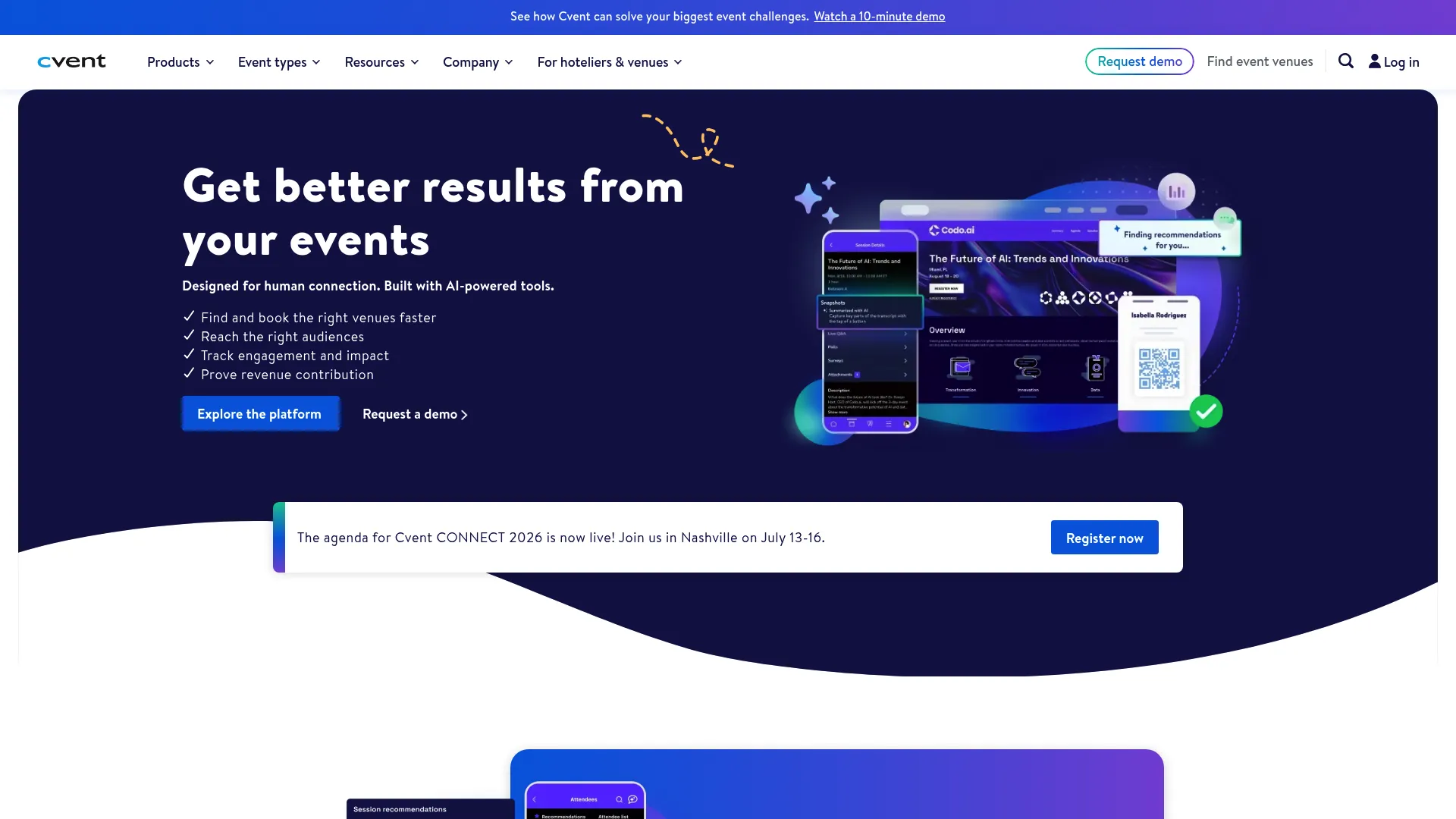
Cvent is the most established category leader for event networking, especially when networking connects to registration, lead capture, badge scanning, appointment scheduling, and ROI reporting. It is event marketing and management software built for in-person, virtual, and hybrid events at scale. For enterprise event teams, the appeal is consolidation: one platform from sign-up to post-event attribution.
Networking sits inside a much larger stack. Attendees discover each other, book appointments, and join AI-powered speed networking, while organizers run onsite check-in and badging and pull engagement into reporting. That breadth is the point. You are not stitching a networking app to a registration tool to a badging vendor.
Best for: Large or complex event programs that want registration, networking, logistics, and reporting in a single platform.
Key strengths
- Attendee networking across formats: Connect attendees whether the event is in-person, virtual, or hybrid.
- AI-powered matchmaking and speed networking: Surface relevant people and run structured networking sessions.
- Lead capture and attribution: Badge scanning, qualification, and reporting that ties activity to event ROI.
Why choose Cvent: Cvent fits enterprise event marketers who run high event volume and need networking as one part of a broader event stack, not a standalone tool. If your program spans dozens of events a year across formats, the operational depth and venue-sourcing capabilities matter as much as the networking layer. Smaller teams may find it more than they need, which is exactly why the rest of this list exists.
Cvent pricing: Cvent uses a request-a-quote model. The pricing page is public but does not display a numeric price, so the figure depends on your event volume, formats, and modules. Buyers should confirm which networking and lead capture features are included at their tier before signing.
2. Grip
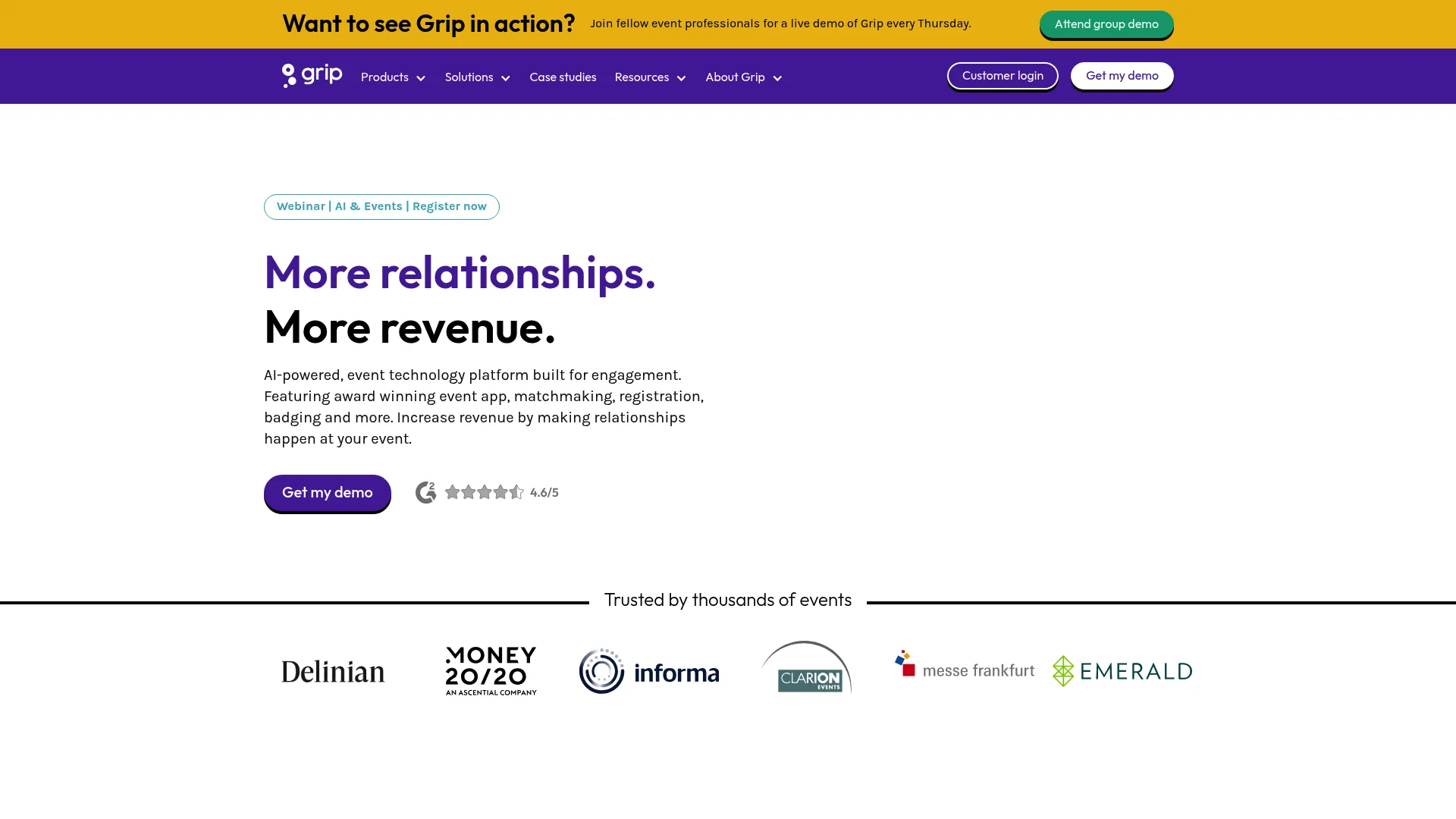
Grip is the strongest AI matchmaking-centered option on this list. It is an AI-powered event platform for engagement, matchmaking, registration, and onsite tools, and its center of gravity is networking outcomes rather than broad event production. If your business goal is meetings booked and relationships formed, Grip is built around that.
The platform leans into adaptive recommendations. Attendees get AI-driven matches that improve as the tool learns preferences, and a mobile event app handles badge scanning and lead retrieval onsite. An AI assistant helps answer attendee questions in real time, reducing the manual support load that usually falls on organizers.
Best for: B2B event teams that treat attendee matchmaking and meeting volume as the primary success metric.
Key strengths
- AI-driven attendee matching: Recommendations that adapt to attendee behavior and interests.
- Real-time networking guidance: Live suggestions and an AI assistant that responds to attendee queries.
- Registration and lead retrieval: Exhibitor and sponsor management plus badge scanning in one app.
Why choose Grip: Grip fits teams that prioritize networking results over broad event production features. When matchmaking is the central job, the depth of its recommendation engine is the differentiator. It pairs well with B2B events where exhibitor and sponsor ROI depends on connecting the right buyers with the right booths, not just filling sessions.
Grip pricing: Grip uses demo and sales-led pricing. No public numeric price was visible on its site at the time of writing, which is common for matchmaking platforms priced by event size and attendee count. Request a quote and confirm how AI matchmaking and lead retrieval are packaged for your event volume.
3. Marcom Event Connect
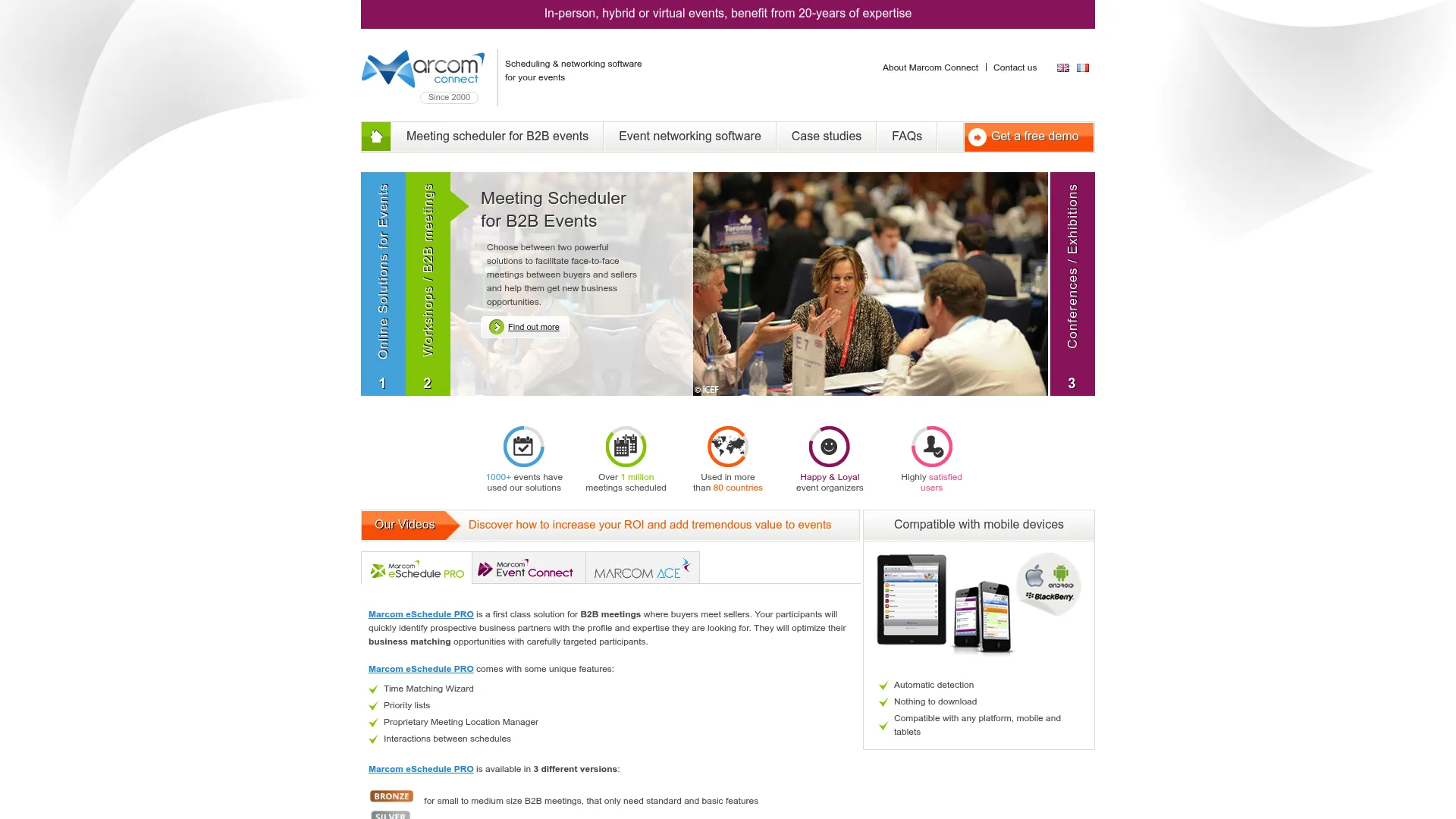
Marcom Event Connect is web-based social and mobile networking software built for medium-to-large conferences and exhibitions. It is a practical attendee discovery and scheduling tool rather than a full event production suite. If your attendees need to plan their schedule and find the right people or booths quickly, this is a focused fit.
The product centers on day-to-day usability. A private agenda lets attendees build their own schedule, a conference program organizes sessions, and searchable attendee and exhibitor lists make discovery fast. An integrated message center and appointment scheduling close the loop from finding someone to booking time with them.
Best for: Conference and expo organizers who need attendee networking, exhibitor discovery, and agenda-building without a heavy platform.
Key strengths
- Private agenda builder: Attendees plan sessions and meetings in one personal schedule.
- Searchable attendee and exhibitor lists: Fast attendee discovery and exhibitor discovery by name or category.
- Integrated message center and scheduling: Direct messaging and appointment scheduling in one place, with no-download mobile access.
Why choose Marcom Event Connect: Marcom fits corporate events and conferences where the core need is helping people plan and connect, not broadcasting or registration. The searchable exhibitor list is especially useful for expo formats where attendees want to map booths before they arrive. It is a clean networking platform when you do not need an enterprise stack around it.
Marcom Event Connect pricing: Pricing is not publicly displayed. The vendor uses a quote-based model and references a per-user fee plus a setup fee once your needs are scoped. Ask for a quote tied to your attendee count and confirm what the setup fee covers.
4. Bizzabo
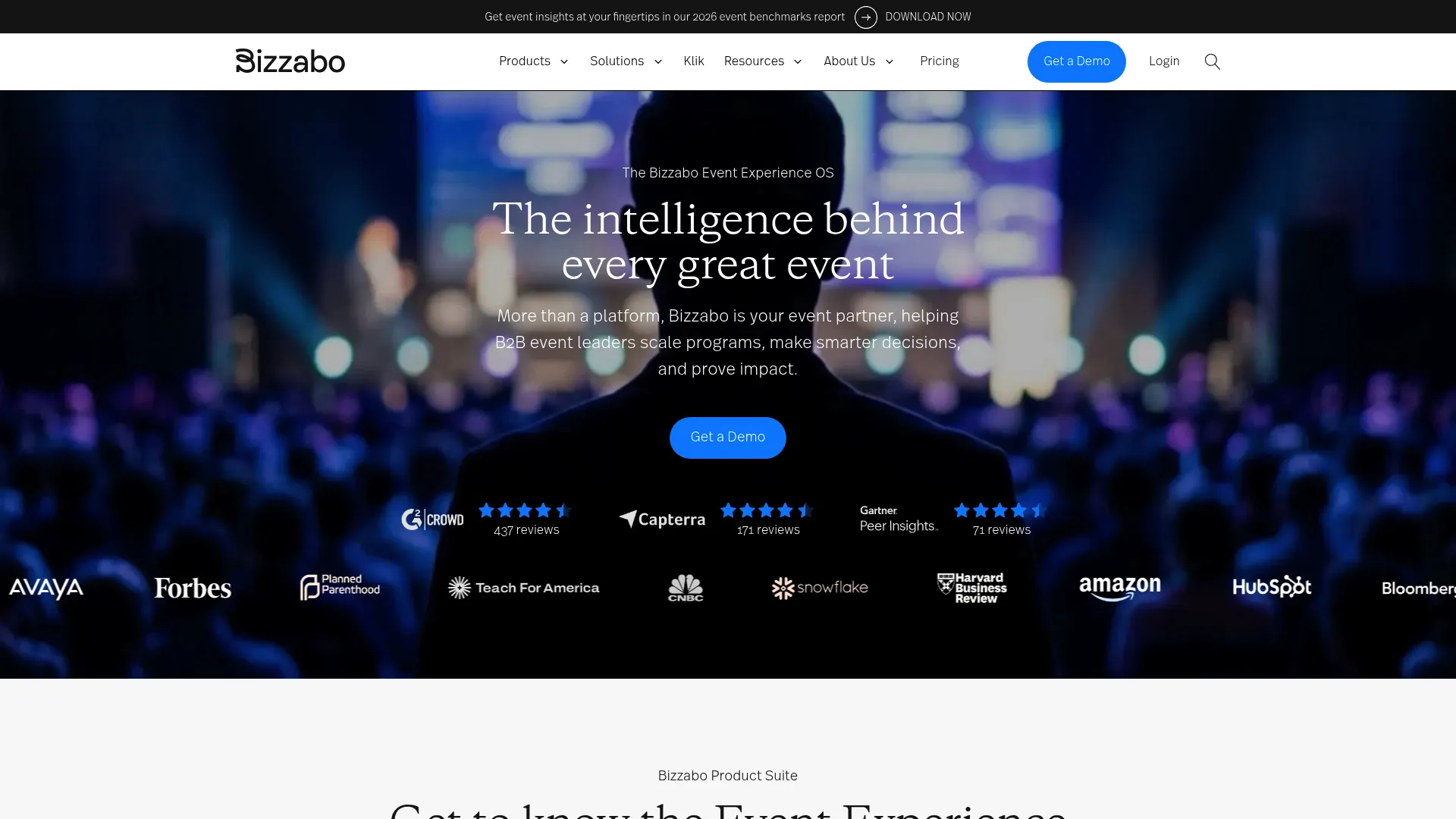
Bizzabo is an event management platform for in-person, virtual, hybrid, and webinar events, with networking sitting inside a broader event experience. It suits B2B teams running conferences and multi-format events at scale who want branded experiences alongside attendee engagement and analytics.
Networking here is part of a full workflow. Event management and registration handle the front end, audience engagement tools like chat, polls, and Q&A keep sessions interactive, and a mobile event app carries networking and meeting scheduling. The platform is built for teams that care about how the whole experience looks and reports, not just the connection layer.
Best for: B2B marketing teams running branded conferences and multi-format programs at scale.
Key strengths
- Event networking and engagement: Networking, chat, polls, and Q&A across formats.
- Mobile event app: Attendee networking and scheduling in a branded app.
- Analytics and reporting: Engagement data to support event ROI conversations.
Why choose Bizzabo: Bizzabo fits teams that want event networking as one thread in a larger, branded event experience rather than a standalone matchmaking tool. The enterprise workflow support and reporting depth make it a strong choice when your events are central to demand gen and need to look and measure like a flagship channel.
Bizzabo pricing: Bizzabo publishes a starting price for its Event Experience OS at $17,999 per year, billed annually with a three-user minimum. Its Klik SmartBadge hardware is quote-based, with single and multi-event options. Confirm which networking and lead capture features sit in your tier before committing.
5. Whova
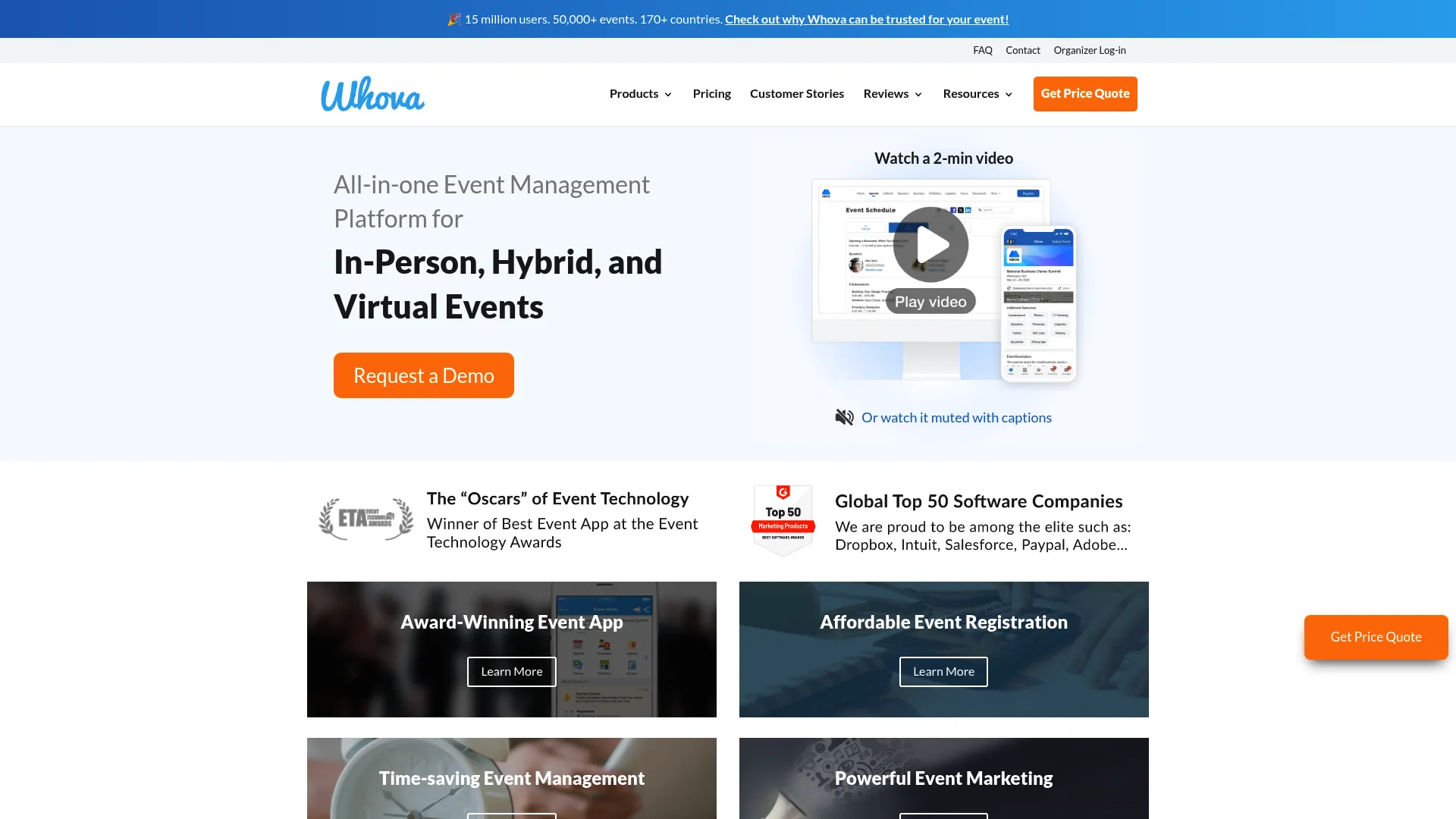
Whova is an all-in-one event management platform for in-person, hybrid, and virtual events, known for a strong mobile app and community-building features. It is a good fit for conferences and associations that want attendee engagement and networking in the same place. One organizer reported cutting labor by over 200 hours using Whova, a useful signal of its operational lift, though your mileage will vary by event.
The networking experience is mobile-first. The event app carries attendee networking, agenda and session discovery, and community engagement features that keep people active between sessions. Online registration and event marketing tools round out the platform so organizers manage more from one system.
Best for: Conference and association organizers who want community engagement and networking alongside core event management.
Key strengths
- Event app and attendee networking: Mobile-first networking and attendee discovery.
- Agenda and session discovery: Attendees find sessions and build schedules in-app.
- Community engagement: Features that keep attendees active and connected throughout the event.
Why choose Whova: Whova fits teams that value high attendee adoption and a lively community feel, which matters for recurring conferences and member events. Its high G2 rating reflects strong organizer satisfaction. If your networking goal is broad participation and engagement rather than deep B2B matchmaking, it is an easy recommendation.
Whova pricing: Whova does not display a public numeric price. Pricing is flexible by event size and add-ons, and organizers request a quote. The attendee app is free to use, which lowers adoption friction. Confirm which engagement and lead capture features your quote includes.
6. Airmeet
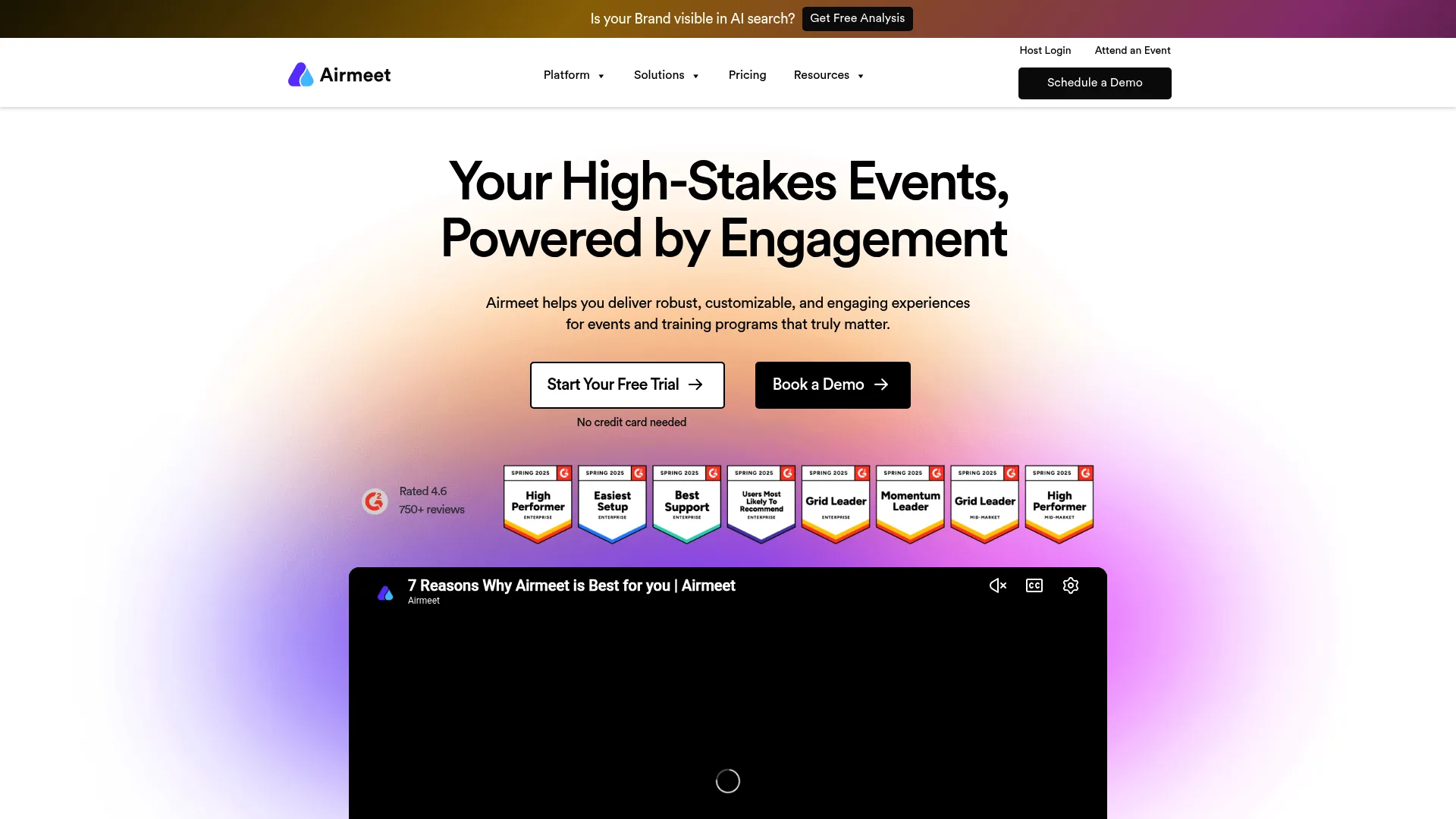
Airmeet is an event experience platform for webinars, virtual and hybrid events, and managed events, with networking as a core strength. It is built for teams running virtual-first or hybrid events where attendee interaction is the priority. When hallway moments have to happen on a screen, Airmeet's lounge and breakout model is designed to recreate them.
Interaction is the focus. Networking lounges and breakout rooms give attendees spaces to gather, while Q&A, polls, and booths keep sessions engaging. The platform supports live, simulive, and on-demand formats, so your online event platform can flex from a single webinar to a multi-track conference.
Best for: Teams running virtual or hybrid events that want interactive, lounge-style networking.
Key strengths
- Networking lounges and breakout rooms: Virtual spaces that recreate informal networking.
- Engagement tools: Q&A, polls, and booths to keep attendees active.
- Flexible formats: Live, simulive, and on-demand support across virtual and hybrid events.
Why choose Airmeet: Airmeet fits teams whose networking happens primarily online and who want interaction designed for that medium, not retrofitted from in-person tools. The lounge experience is its signature. If your audience is distributed and engagement is the metric, it is a strong virtual event software pick.
Airmeet pricing: Airmeet publishes clear pricing. Premium Webinars start at $167 per month billed yearly or $199 per month billed monthly. The Events plan is quote-based, Managed Events start from $4,999 per event, and the Agency Plan is contact-sales. Confirm which networking features are included in the Events tier you need.
7. Hubilo
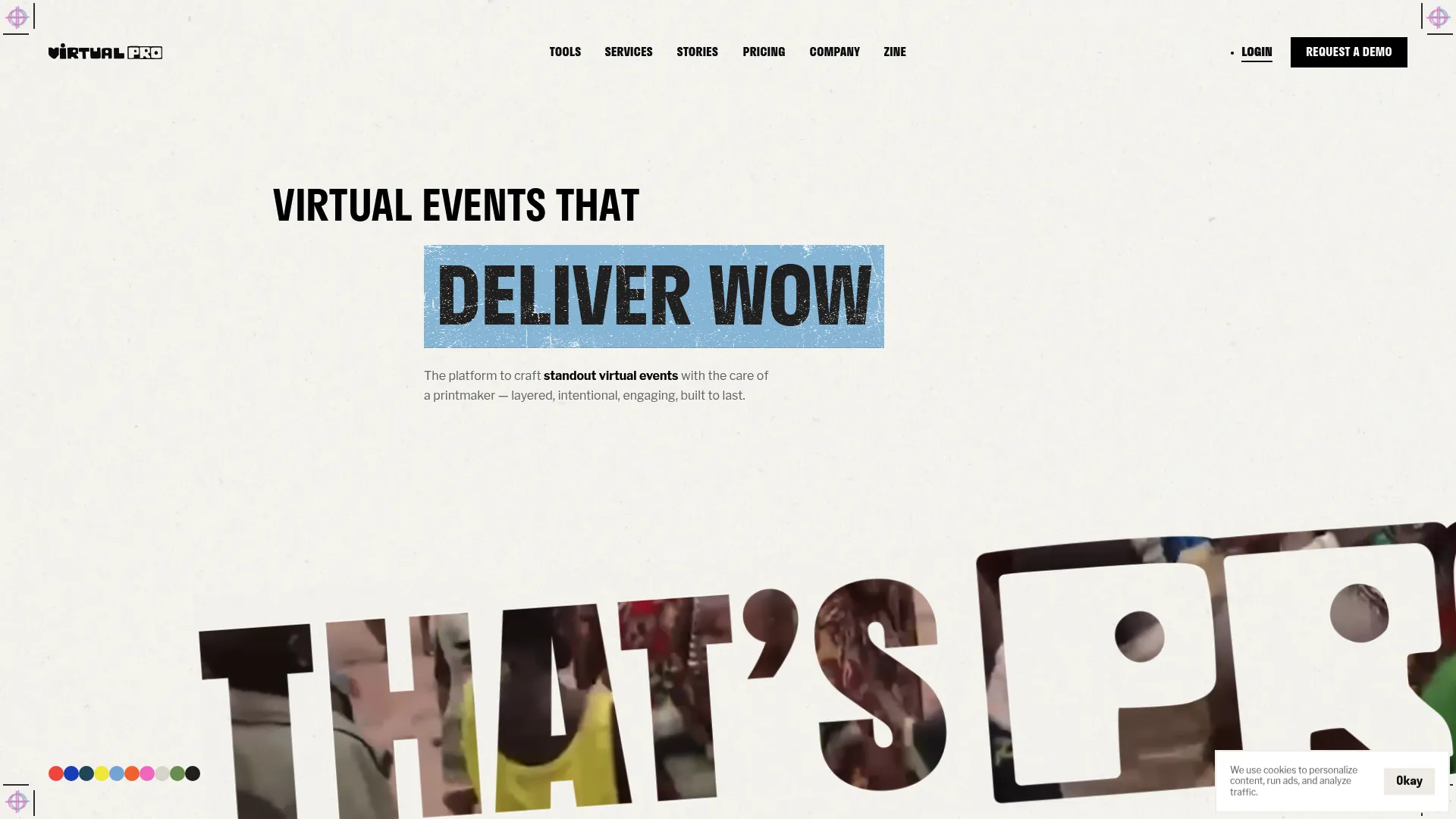
Hubilo is a webinar and virtual event platform for marketers and event teams, with engagement-oriented networking inside branded digital experiences. It suits marketing teams running branded webinars and virtual events who want interaction and analytics in one place. The branding controls make it a fit when the experience needs to look like your company, not a generic tool.
Engagement drives the product. Interactive tools like polls, chat, and reactions keep audiences active, while AI-led content repurposing and analytics extend the value of each event. For digital-first programs, the combination of branded experiences and attendee behavior data is the draw.
Best for: Marketing teams running branded webinars and virtual events that need engagement plus analytics.
Key strengths
- Branded webinar experiences: Custom-branded virtual events and webinars.
- Interactive engagement tools: Polls, chat, and reactions to drive attendee engagement.
- AI content and analytics: Content repurposing and analytics on attendee behavior.
Why choose Hubilo: Hubilo fits digital-first teams that prioritize branded, engaging virtual experiences over heavy in-person logistics. It claims customers can unlock savings of around $15,000 by consolidating tools, a value-prop worth pressure-testing against your own stack. If webinars and virtual events anchor your demand gen, the engagement depth makes sense.
Hubilo pricing: Hubilo publishes tiered pricing. Webinar Plus starts from $800 per month billed annually for one webinar per month, Webinar Multiply starts from $1,200 per month for two to three webinars per month, and Enterprise covers webinars, virtual, hybrid, and in-person events on a contact-sales basis. Confirm format coverage before choosing a tier.
8. RingCentral Events
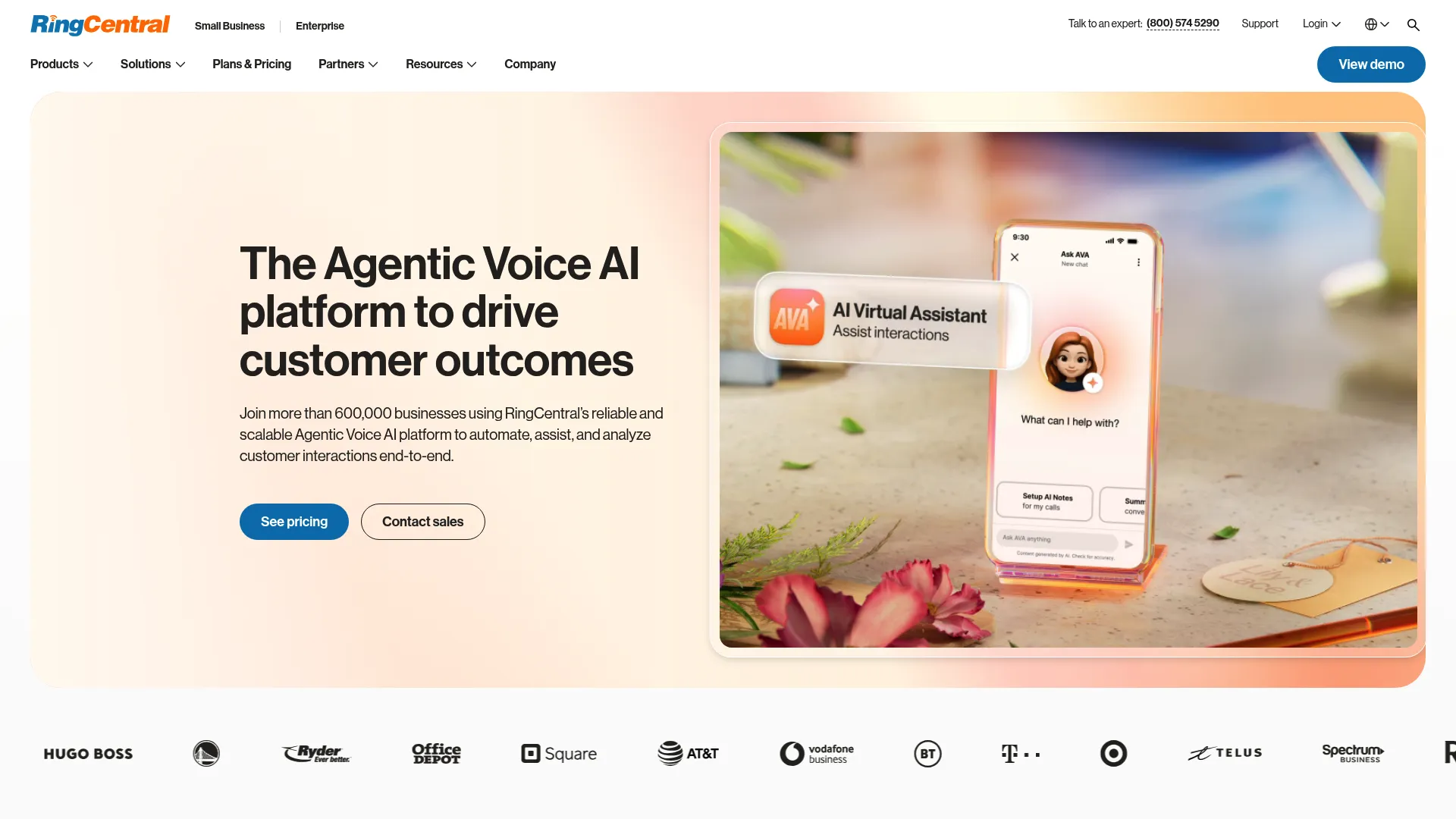
RingCentral Events is an AI-powered platform for virtual, hybrid, and onsite events and webinars, with live interaction and networking built in. It fits teams that rely on live sessions and need network-building features inside a flexible virtual environment. The unlimited-events posture makes it appealing for teams running a high cadence of online events.
The platform combines breadth and AI. Unlimited events and registrations remove volume caps, AI features like an AI Writer, Q&A categorization, and AI Clips speed up production, and a custom website builder plus 40-plus integrations connect events to your stack. Breakout sessions and live engagement carry the networking side.
Best for: Teams running frequent virtual and hybrid events that want live engagement and unlimited event volume.
Key strengths
- Unlimited events and registrations: No volume caps on events or sign-ups.
- AI production tools: AI Writer, Q&A categorization, and AI Clips to speed event creation.
- Breakout sessions and integrations: Live networking plus 40-plus integrations and branding controls.
Why choose RingCentral Events: RingCentral Events fits teams that run a high volume of live virtual and hybrid events and want predictable per-organizer pricing rather than per-event costs. The AI tooling reduces production overhead, which matters when your calendar is full. It is a practical online event platform for content-heavy programs.
RingCentral Events pricing: RingCentral Events publishes a starting price of $99 per organizer per month for its Events Pro plan, with monthly and annual-commitment options and a 30-day free trial. Full tier-by-tier pricing is not exposed publicly, so confirm which networking and analytics features sit in your plan.
9. Goldcast
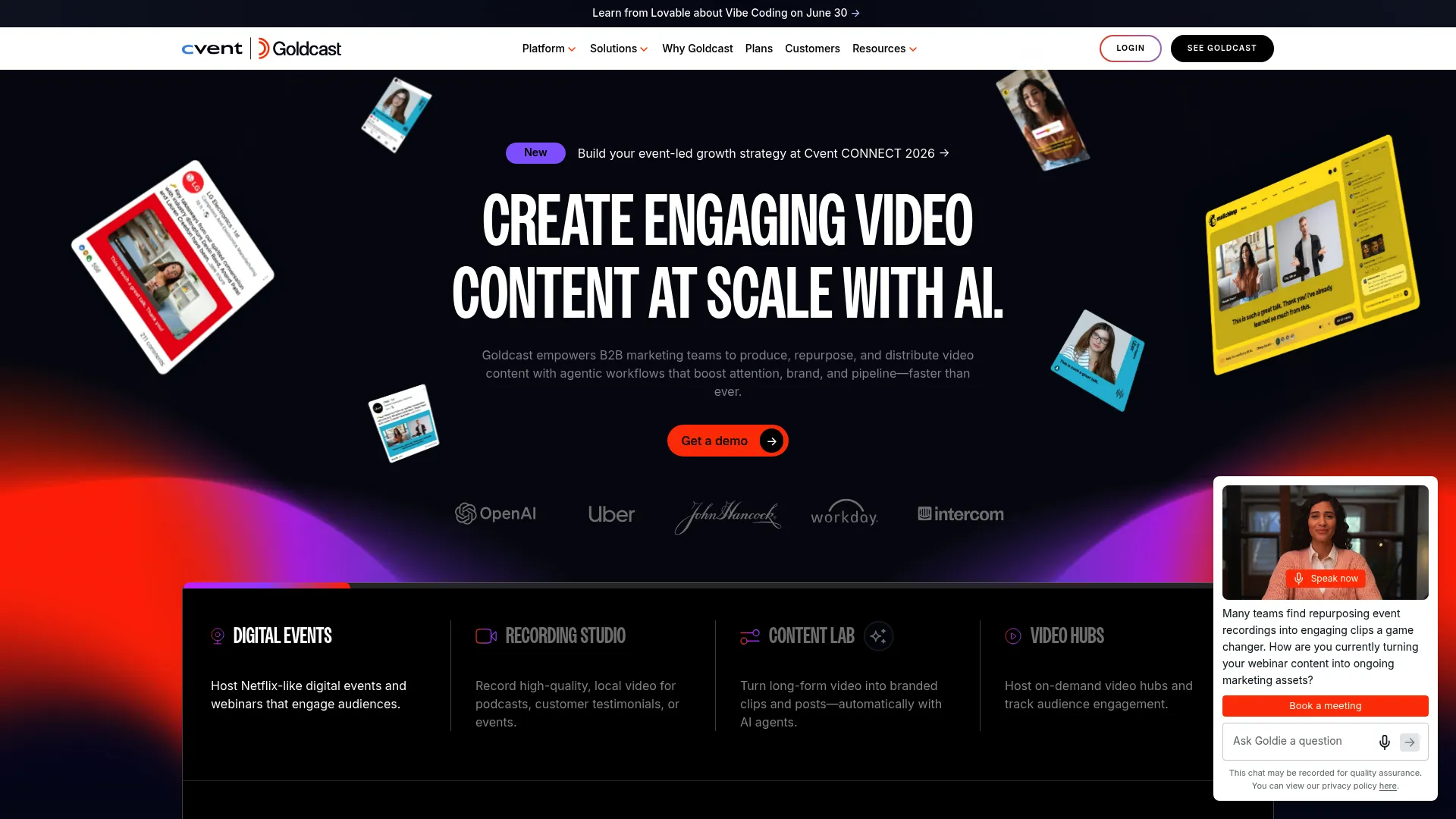
Goldcast is an AI-powered B2B video content platform for webinars, digital events, recording, and content repurposing, with networking and engagement aimed squarely at demand gen. It fits B2B marketing teams that care about event content, audience actions, and pipeline influence. One customer reports that their MQL-to-SQL conversion from events increased by 30 percent after implementing Goldcast, a useful proof point for the pipeline-minded.
The platform is built for marketers. Webinars and digital events anchor the experience, a Content Lab repurposes recordings into multiple assets, a Recording Studio captures local HD, and AI Search plus Goldcast Agents surface insights. Audience tracking ties engagement to your funnel, which is the whole reason demand gen teams adopt it.
Best for: B2B marketing teams that measure events by pipeline influence and content output.
Key strengths
- Demand gen engagement: Audience tracking built for B2B pipeline attribution.
- Content Lab and Recording Studio: Repurpose event content and capture HD recordings.
- AI Search and Agents: Surface insights and automate event workflows.
Why choose Goldcast: Goldcast fits marketing teams that treat events as a content and pipeline engine, not just a live moment. The repurposing and audience-tracking features extend each event's value well past the day it runs. If your reporting has to connect event engagement to revenue, this is a strong demand gen fit.
Goldcast pricing: Goldcast uses custom pricing based on company size, features, and usage volume, with Starter, Pro, Premium, and Enterprise plans. Its Content Lab offers a forever-free tier for new customers. Note that current plan tiers apply to contracts beginning on or after March 1, 2024, so confirm which tier and effective date apply to your contract.
10. Accelevents
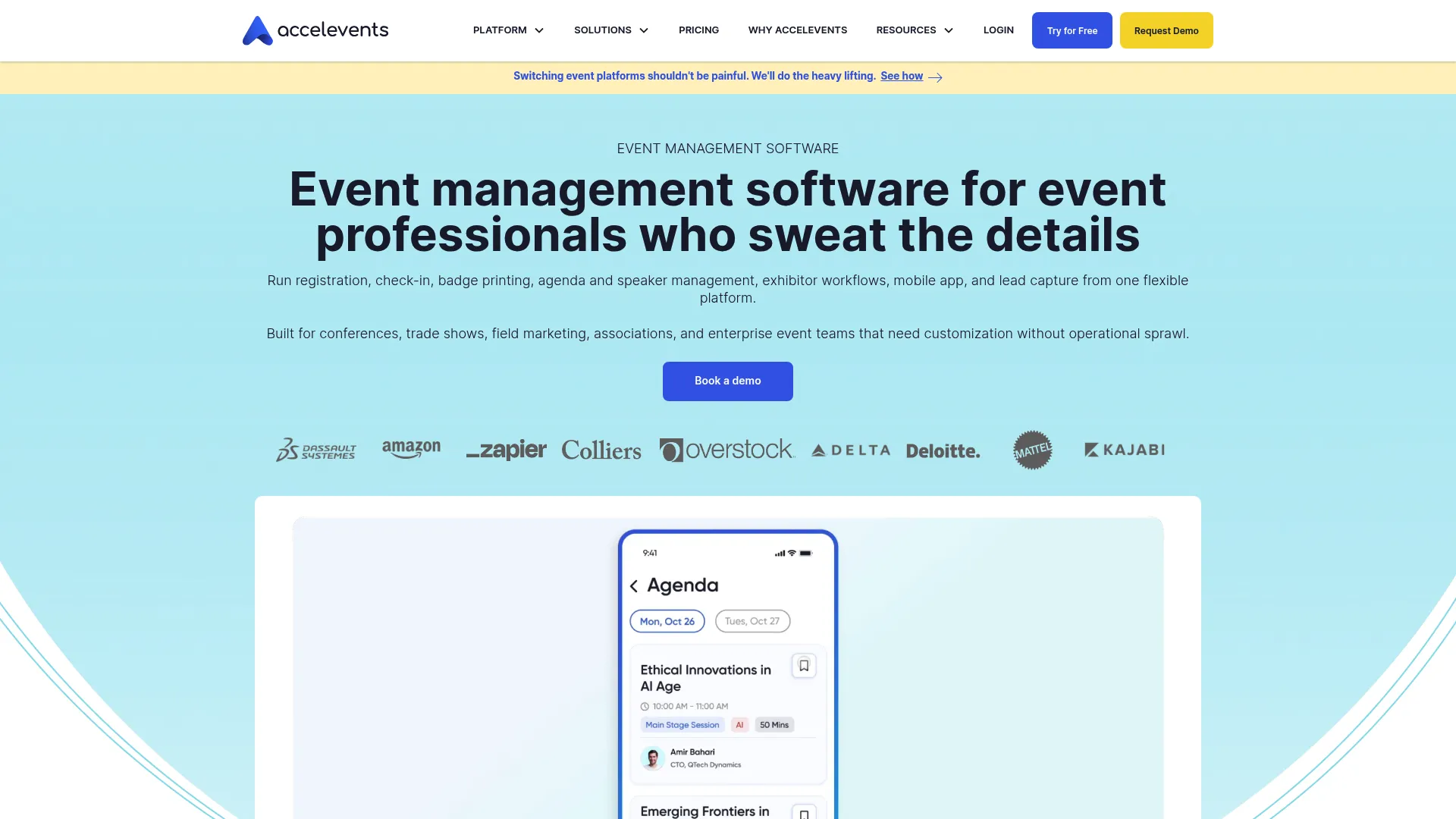
Accelevents is an event management platform for in-person, virtual, and hybrid events, with networking, engagement, and sponsor tools in one system. It fits organizations that want an all-in-one event platform with solid networking and exhibitor support without enterprise complexity. For mid-market teams, it balances breadth and accessibility.
The platform covers the full event flow. Ticketing and registration handle entry, event check-in and badge printing manage onsite logistics, and lead capture plus attendee engagement carry the networking and ROI side. Sponsor and exhibitor features give partners visibility and interaction, which matters for events where sponsorship revenue is part of the model.
Best for: Mid-market organizations wanting an all-in-one platform with networking and sponsor engagement across formats.
Key strengths
- Networking across formats: Attendee interaction in in-person, virtual, and hybrid events.
- Sponsor and exhibitor engagement: Visibility and interaction tools for partners.
- Registration and lead capture: Ticketing, check-in, badge printing, and lead capture in one stack.
Why choose Accelevents: Accelevents fits teams that want enterprise-style breadth at mid-market accessibility, with networking and sponsor tools included rather than gated. The all-in-one approach reduces tool sprawl. If you run multi-format events and value sponsor ROI alongside attendee networking, it is a strong contender.
Accelevents pricing: Accelevents publishes tiered pricing. The Professional plan starts from $7,500 for one event, Business starts from $13,500 for unlimited events, and Enterprise and White Label are custom. A free tier is referenced in its documentation. Confirm which networking and lead capture features sit in the Professional and Business tiers.
11. EventMobi
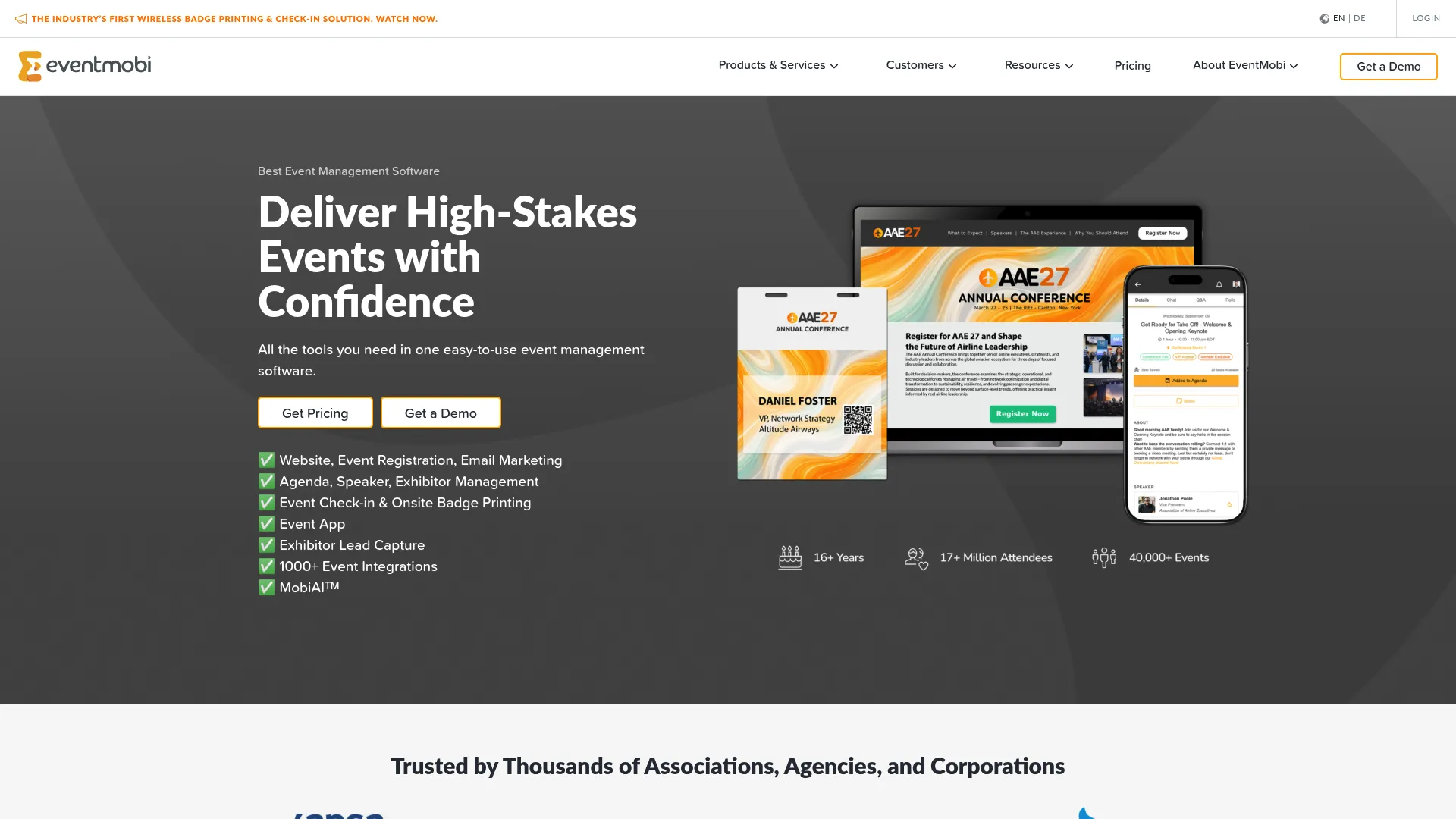
EventMobi is event management software for registration, check-in, attendee engagement, and event apps, with a strong mobile-first networking experience. It fits teams running in-person, hybrid, or virtual conferences and association events that need reliable mobile access. EventMobi reports having supported 40,000-plus events and 17 million attendees, a signal of scale and maturity.
The mobile app is central. Event registration and marketing handle the front end, event check-in and badge printing cover onsite needs, and the mobile event app carries networking, agenda, and engagement. For conferences where most attendees live in the app, the mobile experience does a lot of the networking work.
Best for: Conference, association, and hybrid event teams that need strong mobile networking and an all-in-one app.
Key strengths
- Mobile event app and networking: Attendee networking and engagement on mobile.
- Registration and check-in: Event registration, check-in, and badge printing in one platform.
- Agenda and session support: Session discovery and scheduling alongside networking.
Why choose EventMobi: EventMobi fits teams running conferences and association events where mobile access drives participation. Its scale and all-in-one app reduce the number of tools attendees juggle. If your audience expects a polished event app as the primary touchpoint, EventMobi delivers that without bolting on extra vendors.
EventMobi pricing: EventMobi offers two pricing models: per-event and per-year, with modules selected by event size and needs. Its publicly listed pricing page shows per-product and per-attendee starting points and references custom pricing for larger requirements. Confirm exact figures and module inclusion with EventMobi sales for your region and event volume.
12. vFairs
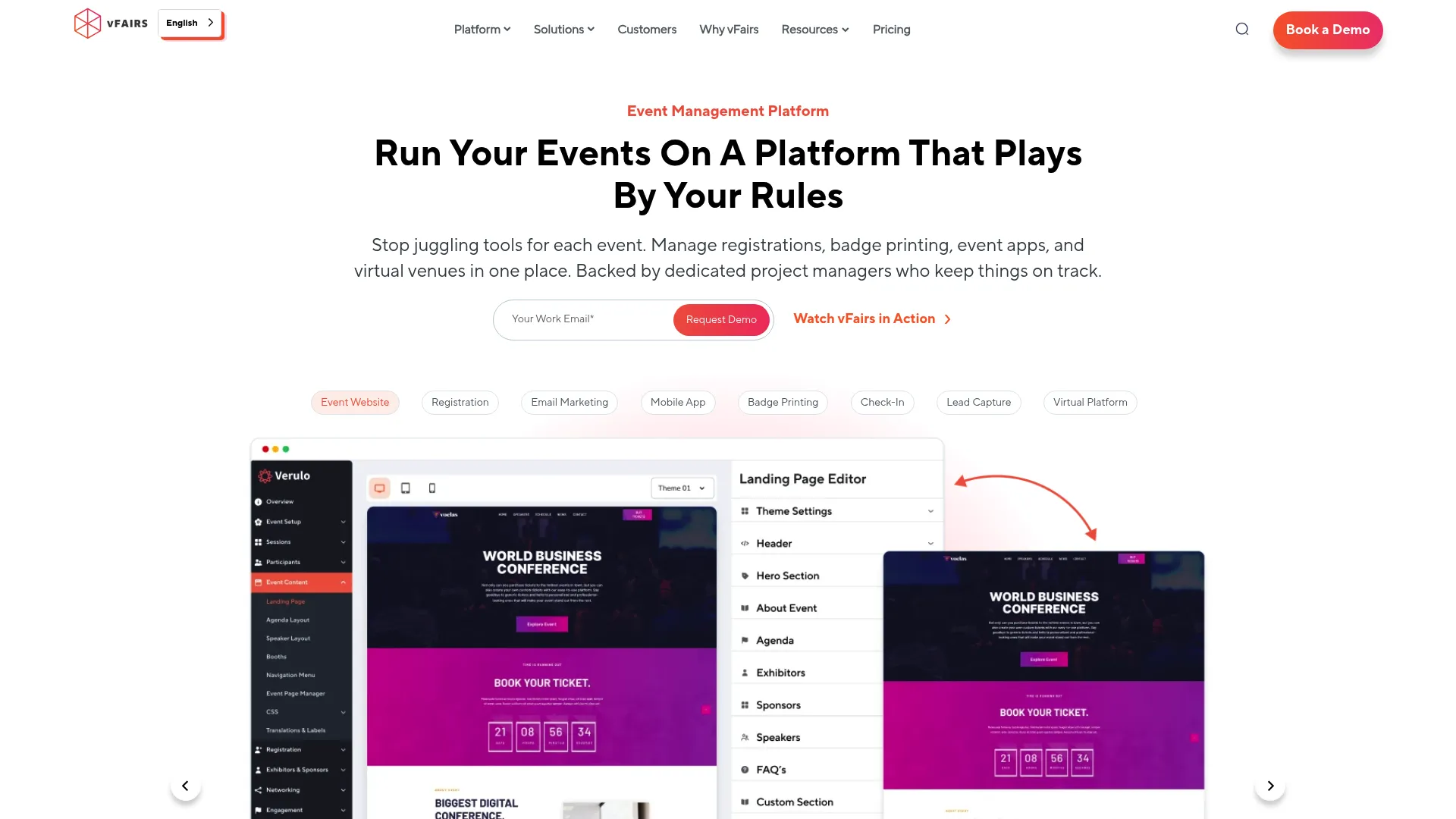
vFairs is an event management platform for in-person, virtual, and hybrid events, known for immersive virtual experiences with networking and exhibitor discovery built in. It fits teams prioritizing booth-driven virtual events where exhibitor interaction is central. Rated 4.7/5 on G2 with over 1,700 verified reviews at the time of writing, it has a strong satisfaction track record.
The platform leans into immersive design. Event registration and ticketing handle entry, onsite check-in and badge printing cover in-person logistics, and virtual events and webinars carry the digital experience. Booth and exhibitor interaction sit at the core, making attendee discovery and exhibitor discovery natural parts of the journey.
Best for: Teams running immersive virtual or hybrid events with strong exhibitor and booth networking.
Key strengths
- Virtual event networking: Immersive virtual experiences with built-in networking.
- Booth and exhibitor interaction: Exhibitor discovery and booth-based connections.
- Multi-format support: Registration, ticketing, check-in, and badge printing across formats.
Why choose vFairs: vFairs fits teams whose events center on exhibitors and booths, especially job fairs, trade shows, and virtual expos. The immersive design helps attendees navigate large exhibitor lists and connect with the right booths. If exhibitor ROI and booth engagement drive your event, it is a focused, well-reviewed choice.
vFairs pricing: vFairs does not display a public numeric price. Pricing is customized, and the vendor invites a free demo rather than listing tiers. There is no free plan. Request a quote tied to your event format, attendee count, and exhibitor volume, and confirm which networking features are included.
Considerations: how to choose event networking software
The right tool depends on your event formats, your reporting needs, and whether attendees will actually use the features. Run any shortlist through this checklist before you commit.
Event format support
Verify whether the platform handles in-person, virtual, hybrid, or all three. A virtual event platform that nails lounges may be thin on badge scanning, and an onsite-first tool may lack strong remote networking. Match the format coverage to where your events actually live, not where you wish they did.
Matchmaking quality
Check whether attendee recommendations are rule-based, AI-driven, or both. AI networking reduces manual effort and surfaces matches people would not find on their own. For high-stakes B2B events, the depth of the matchmaking engine often separates a good tool from a great one.
Lead capture and reporting
Confirm how the tool captures badge scans, meetings, and engagement data, and how that flows into your CRM. Lead capture for events is only useful if it qualifies and attributes. Ask to see how meeting volume and session engagement map to pipeline attribution in the reporting.
Agenda and scheduling depth
Make sure attendees can find sessions, discover people, and schedule meetings without friction. A strong event agenda builder and clean event meeting scheduling keep the whole experience coherent. If scheduling is clunky, adoption drops and so does your meeting count.
Integrations
Validate CRM, marketing automation, analytics, and event-stack integrations. The networking data is most valuable when it lands in the systems your demand gen team already uses. Check which CRMs and platforms are natively supported, not just promised. Reviewing the best CRM software options can help you confirm compatibility before you commit.
Ease of adoption
Consider whether attendees will use the networking features without training. The best matchmaking engine is worthless if no one opens the app. Look at mobile experience, no-download access, and how intuitive the attendee flow feels in a demo. An interactive demo of the platform helps your team gauge that flow before committing budget.
Conclusion
The right pick comes down to format and ROI priorities. For an enterprise all-in-one program where networking sits inside registration, badging, and reporting, Cvent is the default. When AI matchmaking is the central goal, Grip leads on attendee recommendations. For practical agenda building and attendee discovery without a heavy platform, Marcom Event Connect is the focused choice.
If you want networking inside a broader, branded event experience, look at Bizzabo, Whova, Airmeet, and Hubilo, each strong on engagement for different formats. For demand gen reporting and pipeline influence, Goldcast stands out. For mid-market all-in-one needs, Accelevents and EventMobi balance breadth and accessibility, and vFairs wins for immersive, exhibitor-driven virtual events.
Here is the move: shortlist two or three tools based on your dominant event format and your reporting requirements. Then run a demo focused on one question, how does this turn networking activity into tracked pipeline. The tool that answers that cleanly is the one worth your budget.
FAQs
Event networking software helps attendees discover relevant people, schedule meetings, and connect before, during, and after an event, while giving organizers lead capture and ROI reporting. It focuses on the connection layer of an event rather than registration or broadcasting alone. The goal is turning attendance into qualified conversations and measurable pipeline.
Look for attendee discovery, matchmaking, meeting scheduling, an agenda builder, messaging, AI recommendations, lead capture, and ROI analytics. Format support across in-person, virtual, and hybrid events matters too. Strong integrations with your CRM and marketing automation tools determine how usable the resulting data actually is.
AI matchmaking analyzes attendee profiles, stated interests, and behavior to recommend relevant people to meet. As attendees interact, the recommendations adapt and improve. This reduces the manual effort of scanning long attendee lists and helps people find high-value connections they would otherwise miss, which is why AI networking is a core differentiator heading into 2026.
Yes. A virtual event platform needs networking lounges, breakout rooms, video, and chat to replace the hallway moments that happen naturally in person. Tools built for virtual and hybrid formats recreate informal connection online, so remote attendees get networking value comparable to on-site participants.
Yes. Most platforms include badge scanning and lead capture for events, pulling contact details into your CRM without manual entry. Many add qualification fields so reps tag intent on the spot. Combined with meeting and engagement data, this feeds pipeline attribution and helps prove event ROI.
A virtual event platform handles the full online event experience, including streaming, sessions, and registration. Event networking software focuses specifically on connecting attendees through matchmaking, discovery, and scheduling. Many tools combine both, but the networking layer is what drives meetings and relationships rather than just broadcasting content.
Track meeting volume, lead capture counts, session engagement, and how those connect to pipeline and revenue. The strongest tools tie networking activity to CRM records so you can attribute influenced pipeline to the event. Measuring meetings booked and qualified leads generated turns events from a cost center into a measurable channel.
Prioritize matchmaking quality, lead capture and attribution, format support, and CRM integrations. Confirm that networking data flows into your existing demand gen stack and that reporting connects meetings to pipeline. Then validate ease of adoption, because the best features only count if attendees actually use them.