Dues live in one spreadsheet. Owner emails sit in three inboxes. The reserve balance is a number someone remembers from the last meeting. Then a homeowner asks for a payment history and a governing document at the same time, and the whole thing stalls.
That is how most self-managed boards and small management companies run community operations. It works until it doesn't. A treasurer leaves. A vendor invoice goes missing. An architectural request slips through the cracks and turns into a dispute.
Here is the shift worth paying attention to. According to HOAReviewer (2025), 64% of associations with 100 or more units now use dedicated HOA software, and 78% of new deployments are cloud-based. The manual approach is no longer the default. Boards that adopt a real system of record spend less time chasing records and more time on the decisions that matter.
This guide ranks eight HOA software platforms and shows which one fits your community size, governance model, and accounting needs.
What's inside
This guide is for HOA board members, self-managed community leaders, and property managers comparing community association management software before they request demos.
We selected and ranked tools on the criteria that actually decide fit:
- Accounting depth: dues collection, bank integration, reporting, and reserve tracking
- Communications: announcements, reminders, and resident messaging controls
- Portal usability: how easy the homeowner and board experience is
- Workflow automation: maintenance, architectural review, and violations routing
- Pricing clarity: published pricing versus quote-based models
- Support and onboarding: how much help you get migrating and training volunteers
TL;DR
- Best all-in-one for most communities: PayHOA covers accounting, payments, communications, and a website builder in one platform, with published per-unit pricing.
- Best for property managers and larger portfolios: AppFolio handles deep accounting, leasing-style workflows, and multi-property operations.
- Best for self-managed boards wanting AI help: Solume pairs community management with an assistant for governing document and compliance questions.
- Best budget option with fixed pricing: RunHOA charges a flat $399 per year for all features, which is easy for volunteer treasurers to justify.
- Best for resident engagement: Condo Control leans into communications, resident self-service, and accounting for condos and HOAs.
- Best for property managers running multiple associations: Buildium centralizes leasing, maintenance, accounting, and payments across a portfolio.
What is HOA management software
HOA management software is a platform that centralizes the operational and financial work of running a homeowners association, including dues collection, accounting, resident communication, document storage, and request workflows.
Instead of stitching together a spreadsheet, a bank login, an email list, and a shared drive, a board runs the whole community from one system of record. That matters most for self managed HOA software users, where volunteers rotate and institutional knowledge walks out the door with each board change.
Core capabilities you should expect:
- Accounting and dues collection: recurring billing, online payments, bank reconciliation, and financial reports
- Homeowner and board portals: self-service access to balances, documents, and account history
- Communications and announcements: email and text blasts, targeted messaging, and reminders
- Maintenance, requests, ARC, and violations: structured intake and routing for work orders, architectural review, and compliance
- Document storage and governance: a central home for bylaws, CC&Rs, meeting minutes, and records
- Reporting and automation: dashboards, audit trails, and rules that reduce manual follow-up
The line between HOA accounting software and full community association management software is mostly scope. Accounting-first tools focus on the ledger. Full platforms add the portal, communications, and workflow layers on top.
When to use HOA management software
Replace spreadsheets and email chains
A spreadsheet has no memory of who paid, when, or why. Every manual entry is a chance to miss a payment, misfile a document, or lose a request thread. When a board turns over, the new treasurer inherits a file they did not build and cannot fully trust.
HOA software fixes this by becoming the system of record. Payments, documents, and messages live in one place with a timestamped history. The record survives board changes, and no single volunteer holds the keys in their head.
Centralize dues, accounting, and reporting
Recurring billing across dozens or hundreds of units is not a spreadsheet job. Reconciling deposits, tracking delinquencies, and producing clean reports for an audit or an annual meeting all need one source of truth.
HOA accounting software handles the recurring invoices, syncs with the association bank account, and generates the reports a board needs to make budget decisions. That means fewer surprises at meeting time and a cleaner handoff when the reserve study comes due.
Route requests and compliance work automatically
Maintenance tickets, architectural review requests, and violation notices all follow a process. Done manually, that process lives in someone's inbox and stalls the moment they go on vacation.
A platform routes each request to the right person, logs the decision, and notifies the homeowner. Architectural review and violations get a paper trail, which protects the board when a decision is challenged.
Comparison table
| # | Product | Best for | Key differentiator | Pricing | G2 rating |
|---|---|---|---|---|---|
| 1 | PayHOA | Self-managed or mixed-size communities | All-in-one operations with published per-unit pricing | From $49/mo | 4.7/5 |
| 2 | AppFolio | Property managers and larger portfolios | Deep real estate accounting and operations | Quote-based | 4.6/5 |
| 3 | Solume | Self-managed boards wanting AI help | AI assistant for governing docs and compliance | Quote-based | Not rated |
| 4 | RunHOA | Budget-conscious self-managed boards | Fixed annual price for all features | $399/year | Not rated |
| 5 | Condo Control | Resident engagement and communications | Resident self-service plus accounting | Quote-based | 4.8/5 |
| 6 | Buildium | Property managers with multiple associations | Portfolio-wide leasing and accounting | From $62/mo | 4.4/5 |
| 7 | HOA Start | Smaller self-managed communities | Lean HOA-specific portal | From $39/mo | Not rated |
| 8 | Vinteum | Communication-focused associations | Public website plus resident app | From $0.79/unit | Not rated |
Best HOA management software for 2026
1. PayHOA
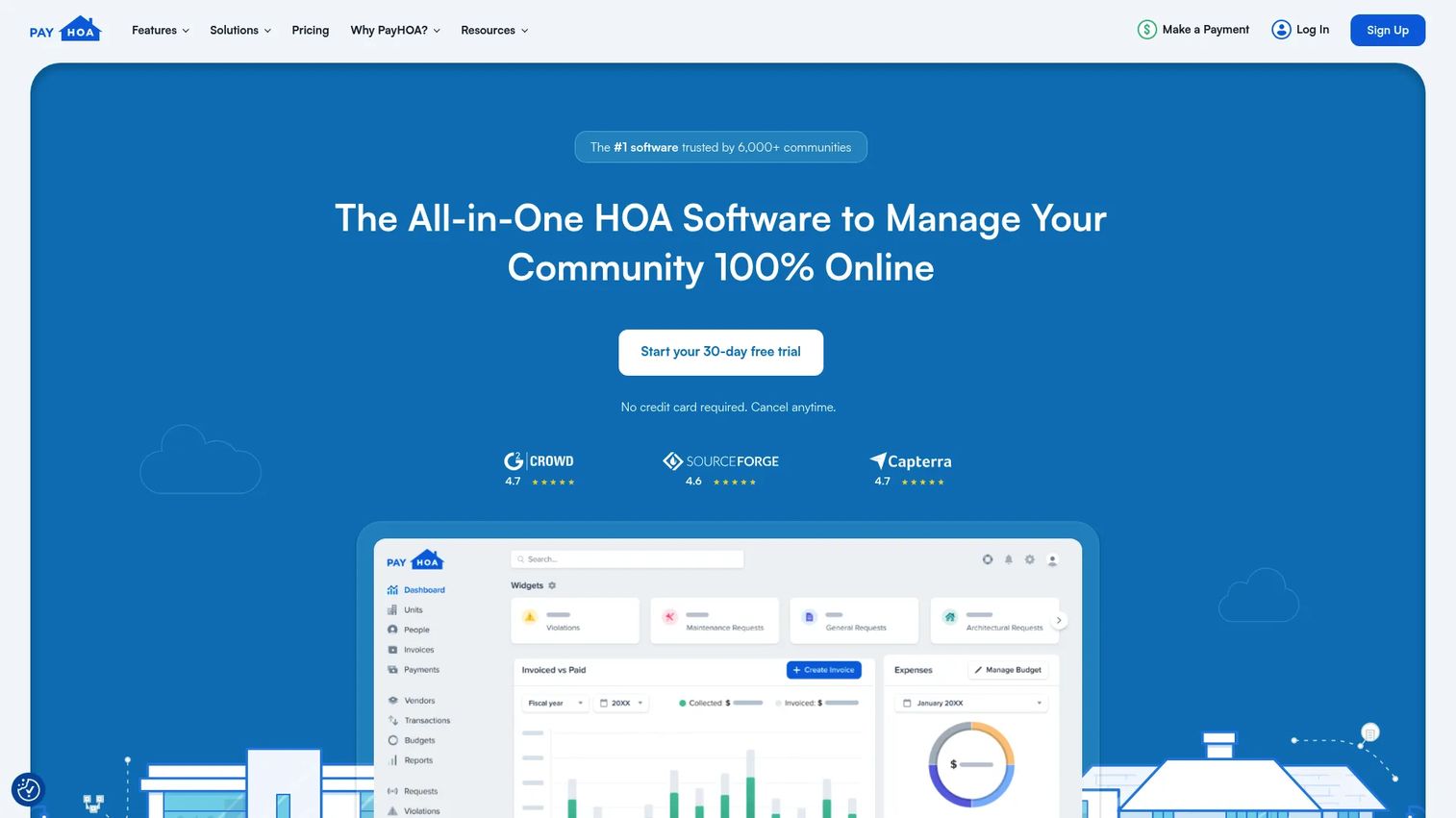
PayHOA is an all-in-one HOA management platform built for both self-managed associations and management companies. It combines invoicing, payments, accounting, communications, and a website builder in a single system, so a board is not juggling four separate tools. For communities that want one place to run dues, reporting, and resident messaging, it covers the operational core without forcing a heavy property-management setup.
The pricing model scales by unit count, which makes it predictable as a community grows. Smaller associations start on the low end and move up in defined tiers, so a 40-unit board and a 300-unit board both know what they will pay.
Best for: Self-managed or mixed-size communities that want all-in-one HOA operations without stitching tools together.
Key strengths
- Invoicing and online payments
- Accounting and financial reporting
- Communications, messaging, and website builder
Why choose PayHOA: If you want the fewest tools and the clearest path from dues to reporting to resident communication, PayHOA delivers that breadth with pricing you can read off a page.
PayHOA pricing: Plans start at $49 per month for 0 to 25 units, billed yearly, and scale by unit tier up to $249 per month for 401 to 500 units. Communities over 500 units pay $0.55 per unit per month with a $275 monthly minimum. A 30-day free trial is available.
PayHOA holds a 4.7 out of 5 rating on G2.
2. AppFolio

AppFolio is cloud-based software for property management and real estate investment management. It is heavier and more operations-focused than pure HOA-first tools, which makes it a strong fit for management companies and larger community portfolios that need deep accounting alongside maintenance and leasing-style workflows. Board visibility, work order management, and portfolio reporting are built for teams running many doors, not a single volunteer board.
For associations managed by a professional company, that depth is the point. The accounting engine, inspections, and investor portal handle complexity that smaller HOA tools do not attempt.
Best for: Property managers and larger community portfolios needing an all-in-one real estate operations platform.
Key strengths
- Property accounting and reports
- Marketing and leasing workflows
- Work order management and inspections
Why choose AppFolio: Choose AppFolio when the association is professionally managed and the operator needs one platform for accounting, maintenance, and portfolio oversight rather than a lean board tool.
AppFolio pricing: Property Manager plans (Core, Plus, and Max) are quote-based and not publicly listed. AppFolio Stack Premium is listed at $0.50 per connected unit per month, with a $100 monthly account minimum, and is included free with the Plus plan.
AppFolio holds a 4.6 out of 5 rating on G2.
3. Solume
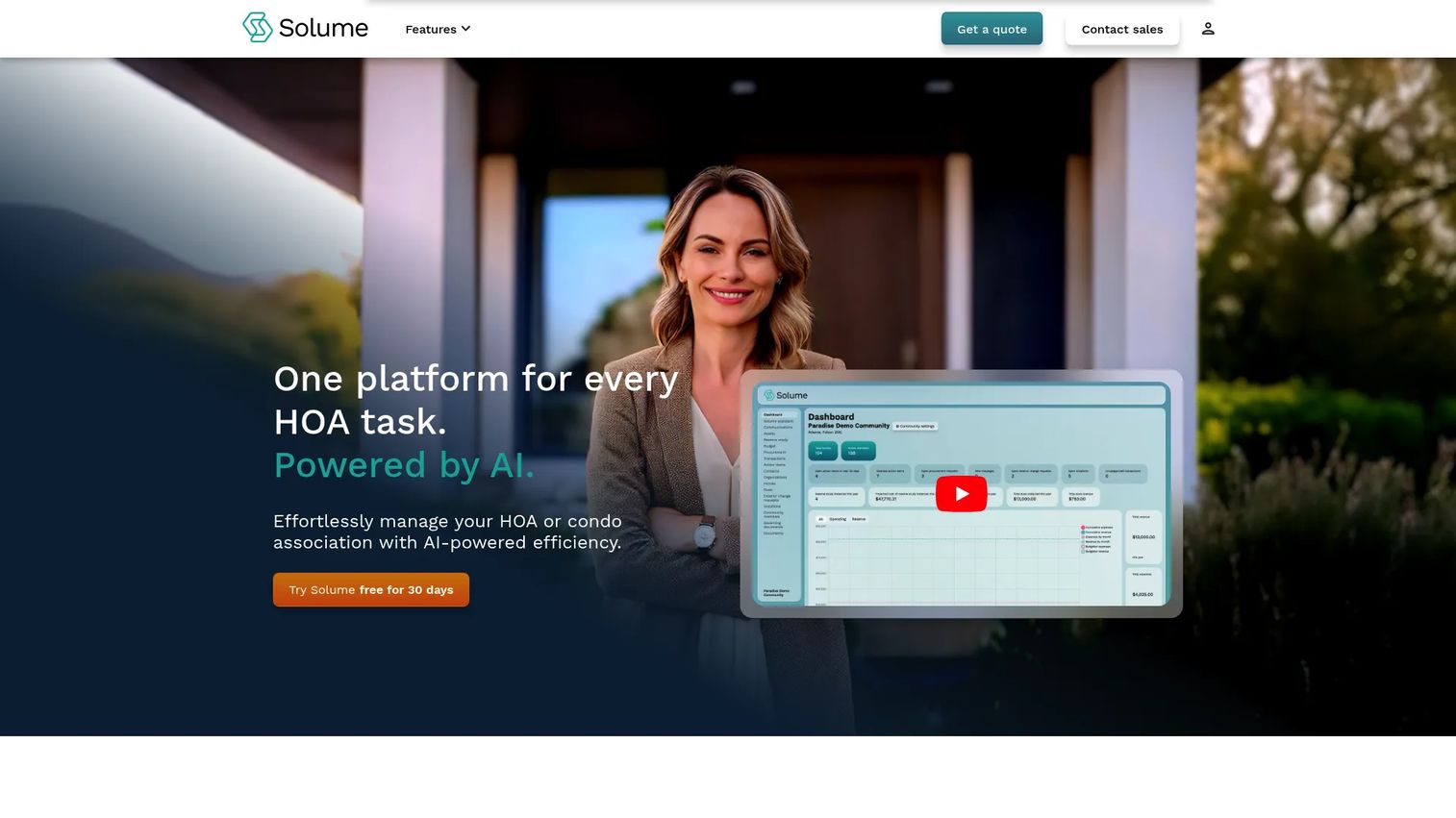
Solume is AI-powered HOA and condo community management software aimed at self-managed boards. Its standout feature is the Solume Assistant, which answers governing document and compliance questions, useful for volunteer boards that do not have a manager or attorney on call. Alongside the AI layer, it handles dues collection, communications, architectural review requests, and member and home records, plus reserve study and budget planning.
For a small volunteer board, the appeal is having a system that can answer "what do the bylaws say about this?" without a meeting or a legal bill. That reduces the research burden that usually falls on one overextended board member.
Best for: Self-managed HOAs and condo associations that want AI-assisted community management.
Key strengths
- Solume Assistant for governing document and compliance questions
- Reserve study and budget planning
- Dues collection, communications, and ARC requests
Why choose Solume: Pick Solume if your board spends too much time hunting through CC&Rs and wants an assistant that surfaces answers, paired with standard dues and records management.
Solume pricing: Solume doesn't list its pricing, you'll need to request a quote or demo. They do advertise a free 30-day trial for the Solume Assistant though.
A current G2 rating for Solume was not available at the time of writing.
4. RunHOA
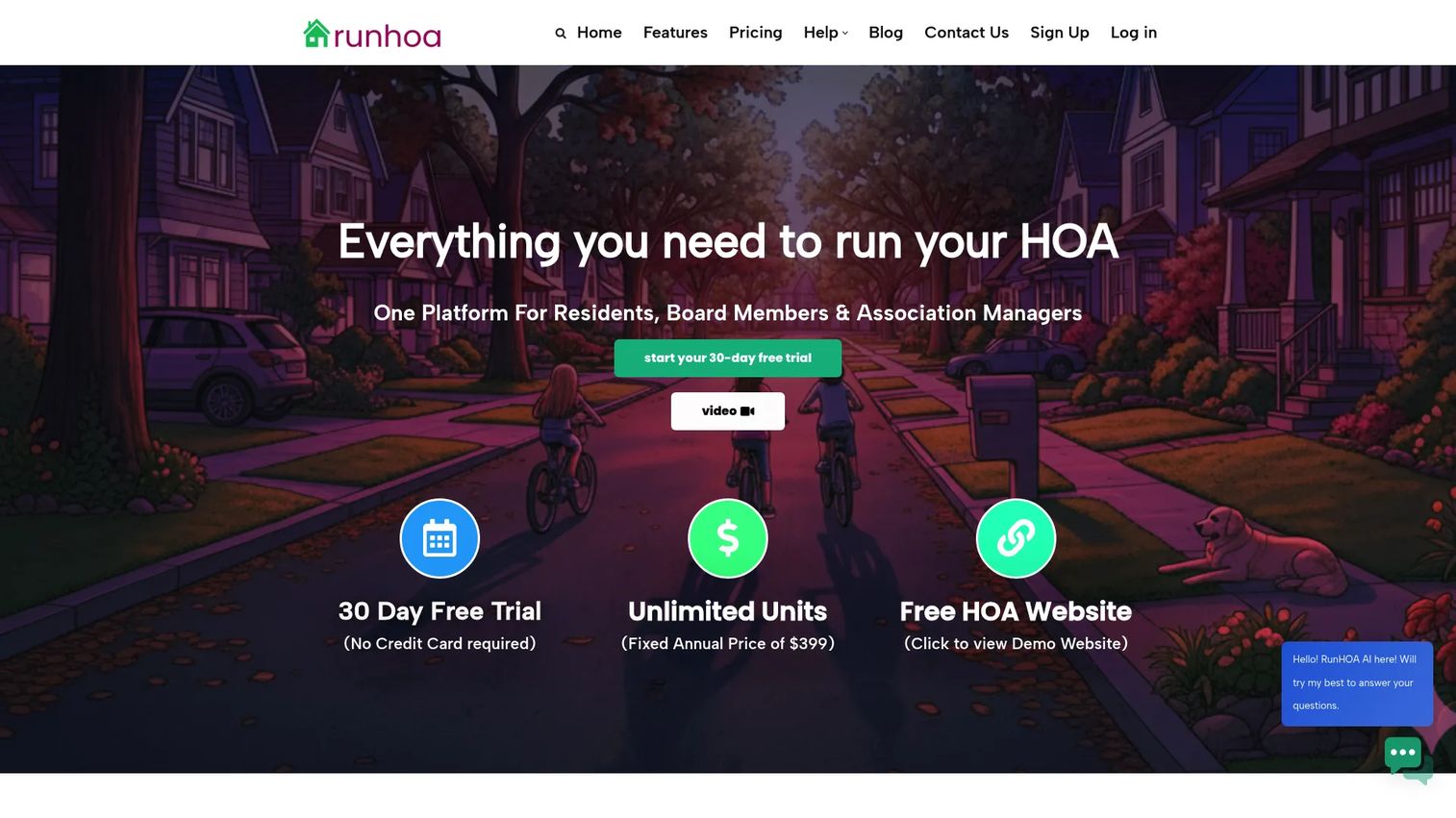
RunHOA is HOA management software built for residents, board members, and managers, with one defining feature for budget-conscious boards: a single fixed annual price for every feature. Instead of unit-based tiers or add-on charges, you get the directory, accounting, dues and payments, communications, documents, calendar, e-voting, and a website builder for one predictable number. That is streamlined rather than enterprise-heavy, and it fits volunteer boards that want simple math.
The fixed-price model removes the guesswork treasurers hate. There is no recalculating cost as the community grows, and the feature set is not gated behind higher tiers.
Best for: Budget-conscious self-managed HOAs that want all-in-one features on a predictable annual subscription.
Key strengths
- HOA directory and member portals
- Accounting, budgeting, and dues/payments
- Communications, documents, calendar, e-voting, and website builder
Why choose RunHOA: Choose RunHOA when predictable cost matters more than deep configurability, and you want every feature included without tier shopping.
RunHOA pricing: RunHOA charges a flat $399 per year for all features. A 30-day free trial is available with no credit card required.
5. Condo Control
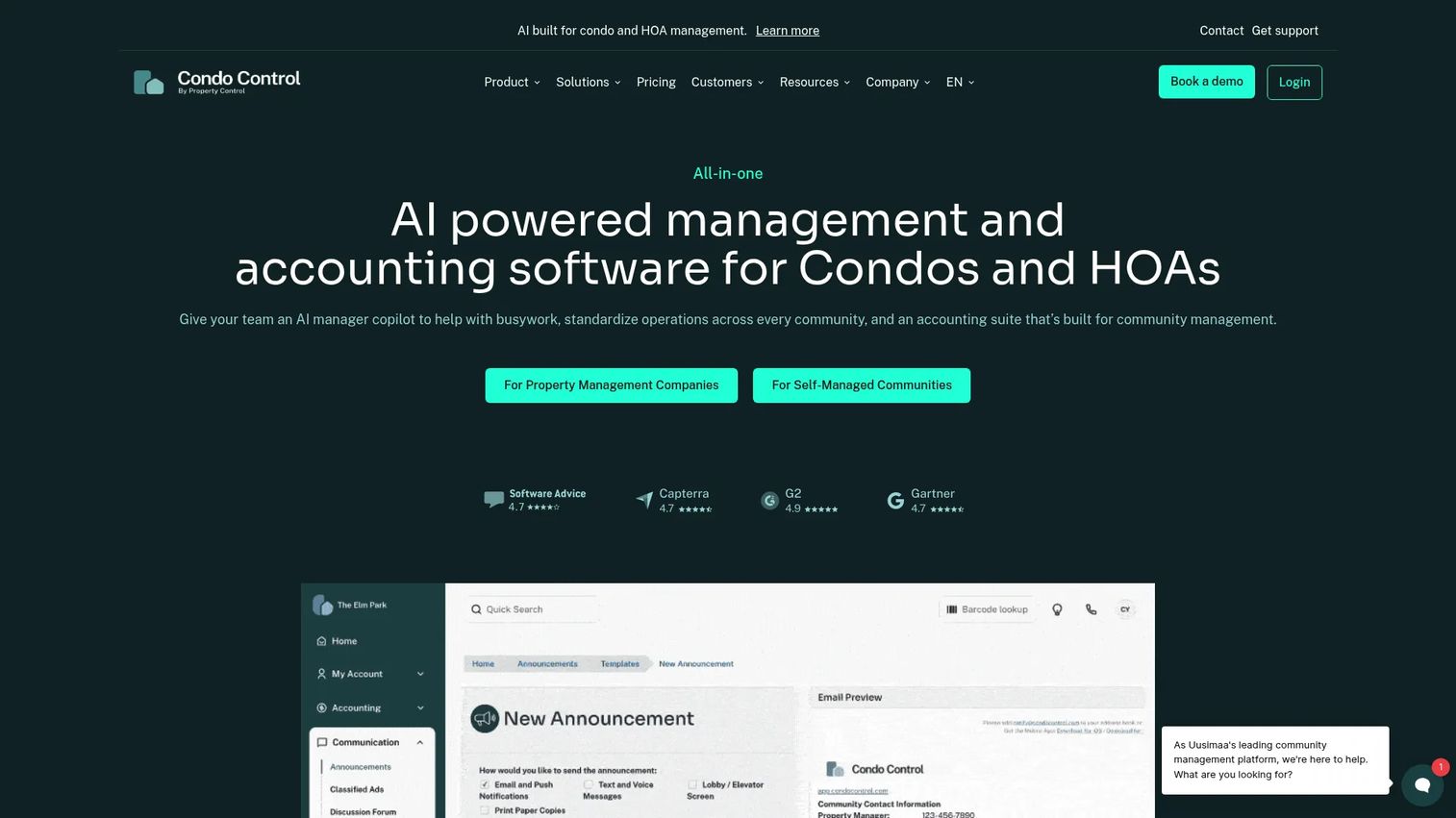
Condo Control is cloud-based condo and HOA management software with a strong emphasis on communications, resident self-service, and accounting. The resident portal and mobile app give homeowners a direct channel for requests, payments, and updates, which takes pressure off board members who would otherwise field everything by email. AI-powered management and accounting round out the platform for communities that want governance-oriented collaboration in one place.
For associations where resident engagement is the pain point, the portal-first approach is the draw. Maintenance, payments, and portfolio accounting sit alongside the communication tools rather than as afterthoughts.
Best for: HOAs, condos, and property managers that want an all-in-one resident operations and accounting platform.
Key strengths
- AI-powered management and accounting
- Resident portal and mobile app
- Maintenance, payments, and portfolio accounting
Why choose Condo Control: Choose Condo Control when resident communication and self-service are the priority, and you want a mobile app residents will actually open.
Condo Control pricing: Pricing is quote-based. The pricing page directs visitors to request a custom quote, and no public numeric price is listed.
Condo Control holds a 4.8 out of 5 rating on G2.
6. Buildium
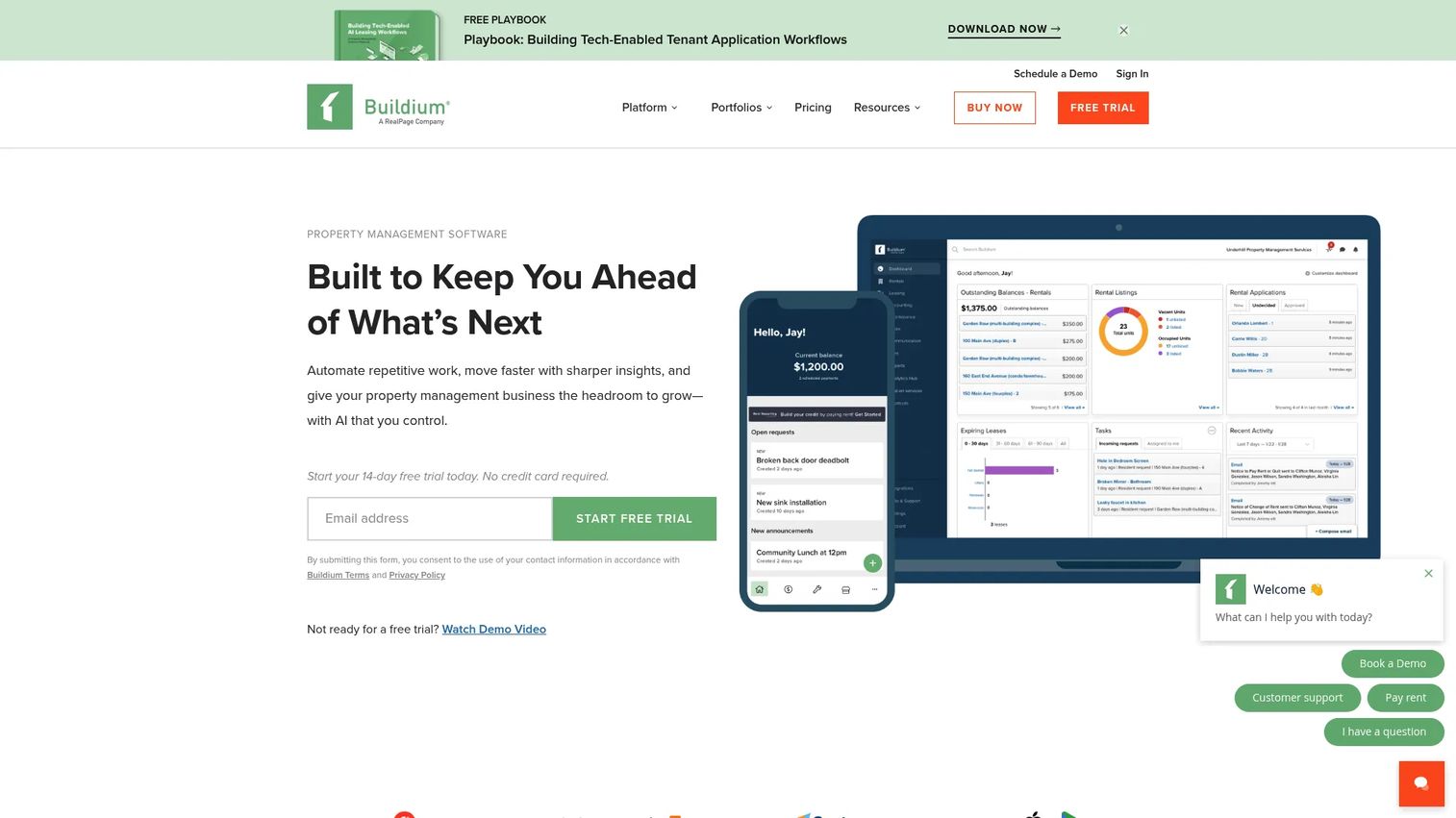
Buildium is all-in-one property management software for landlords and property managers, which makes it a fit for companies handling multiple associations alongside other property types. It centralizes leasing, maintenance, accounting, and online payments in one platform, so a manager running mixed properties does not need a separate HOA-only tool. That mixed-property fit is what distinguishes it from pure HOA-first platforms.
For a professional manager, the value is consolidation. Rent collection, work orders, and accounting run in the same place whether the door is a rental or an association unit.
Best for: Property managers who need a centralized platform for leasing, maintenance, accounting, and payments across a portfolio.
Key strengths
- Property management workflows
- Online rent collection and payments
- Leasing, maintenance, and accounting tools
Why choose Buildium: Choose Buildium when you manage a mixed portfolio and want one platform for both rentals and associations rather than an HOA-only tool.
Buildium pricing: Three plans are offered: Essential at $62 per month, Growth at $192 per month, and Premium at $400 per month. A 14-day free trial is available.
Buildium holds a 4.4 out of 5 rating on G2.
7. HOA Start
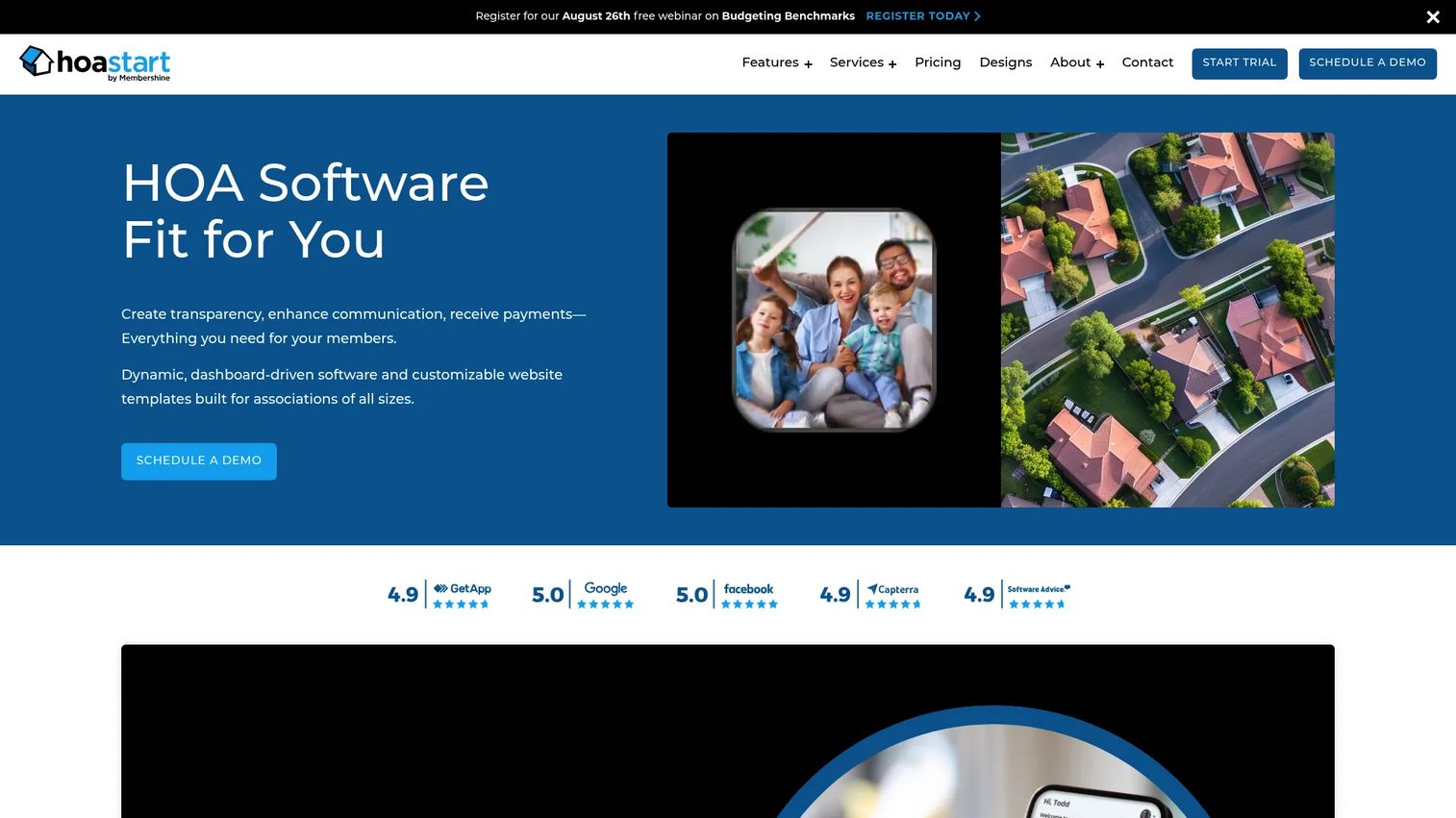
HOA Start is HOA management software for self-managed communities that want a lean, HOA-specific setup rather than a broad property-management suite. It covers the core community basics: a website builder, online payments, and communication tools. For a smaller association that does not need heavy accounting or portfolio features, that focused scope keeps things simple and affordable.
The tiered pricing gives smaller boards an entry point, with a higher white-glove tier for communities that want more hands-on help. It stays practical rather than trying to be everything.
Best for: Smaller self-managed HOAs that want an all-in-one community portal without excess complexity.
Key strengths
- Website builder
- Online payments
- Communication tools
Why choose HOA Start: Choose HOA Start when your community is small, your needs are the basics, and you want a low starting price with the option to add hands-on support.
HOA Start pricing: Plans start at $39 per month for Professional, $49 per month for Premium, and $149 per month for White-Glove, all billed annually. No contract or credit card is required for the free trial.
8. Vinteum
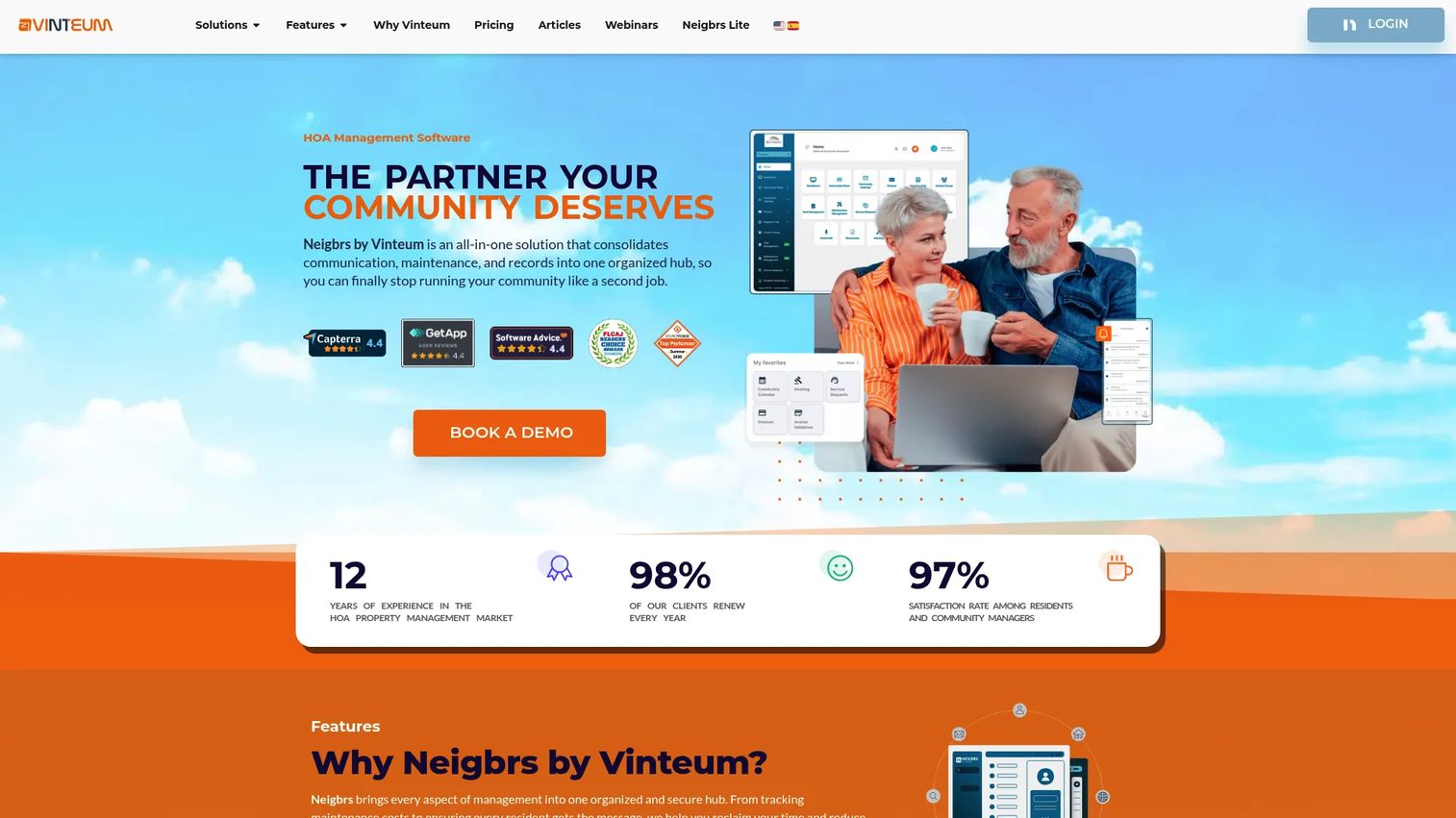
Vinteum is HOA and condo management software focused on community communication and operations. Its practical draw is the combination of a public-facing website, a resident portal, and a mobile app for iOS and Android, so associations that want homeowners engaged on their phones have a ready path. For boards and property managers whose main goal is keeping residents informed and connected, the communication-first tooling fits the job.
The per-unit pricing keeps entry costs low for smaller communities, with higher tiers adding features as needs grow. It positions as a straightforward operations option rather than a heavy accounting system.
Best for: HOA boards and property managers who need resident communication and community management tools.
Key strengths
- Public-facing website
- Resident portal
- Mobile app for iOS and Android
Why choose Vinteum: Choose Vinteum when resident communication and a mobile-friendly experience are the priority and you want per-unit pricing that scales with the community.
Vinteum pricing: Three public plans are offered: Basic at $0.79 per unit per month, Standard at $0.99 per unit per month, and Premium at $1.99 per unit per month. Property managers can request a separate quote.
Considerations
Before you commit to a platform, verify these five things against your community's real needs. A demo makes them easy to check.
Accounting and bank integration depth
Confirm the tool syncs with your association's bank, handles reconciliation, and produces the reports your audit and annual meeting require. Ask whether reserve tracking is built in or an add-on. Shallow accounting is the most common reason boards outgrow a tool within a year.
Homeowner portal usability
The portal is what most residents actually touch, so test it from a homeowner's point of view. Can they see a balance, pay dues, and find a document in a few clicks? A confusing portal drives owners back to emailing the board, which defeats the purpose.
Communications and reminder controls
Check how granular the messaging is. You want targeted announcements, automated dues reminders, and the ability to reach a single owner or the whole community. Reminder automation alone can cut delinquency follow-up dramatically.
Board and volunteer onboarding ease
Volunteer boards turn over, so setup and training should not require a specialist. Ask how long onboarding takes, whether data import is included, and what training the vendor provides. The easier the handoff, the more the system survives the next election.
Migration and support quality
Moving from spreadsheets or another platform is where deployments stall. Confirm the vendor imports your existing dues, balances, and documents, and ask what support you get during the switch. Response quality during migration is a fair preview of ongoing support.
Conclusion
The right HOA management software depends on how your community is run, not on a feature count. Match the tool to your model and the decision gets simple.
For most self-managed or mixed-size communities, PayHOA is the strongest all-in-one pick, with clear per-unit pricing and coverage across accounting, payments, and communications. Budget-conscious boards should look hard at RunHOA and its flat $399 annual price. Self-managed boards that want AI help navigating governing documents will find Solume worth a demo.
If a professional company manages your association or you run a mixed portfolio, AppFolio and Buildium bring the operational depth that pure HOA tools do not. And when resident engagement is the core problem, Condo Control and Vinteum lead with the portals and apps homeowners will actually use.
Shortlist two or three that fit your size and governance model, then request demos and test the accounting and portal with your own data before you commit.
Start your journey with Guideflow today!
FAQs
Accounting and dues collection come first, since they are the reason most boards adopt software at all. After that, prioritize a usable homeowner portal, communication controls, and request routing for maintenance, architectural review, and violations. Document storage and reporting round out the essentials for governance.
Yes, and often more so than for large ones. Small boards run on volunteer time and lose institutional knowledge every time the board turns over. A system of record keeps payments, documents, and decisions in one place, and fixed-price options like RunHOA or low starting tiers like HOA Start keep the cost easy to justify.
Most vendors import your existing owner list, balances, and documents as part of onboarding, so the heavy lifting is usually done for you. Ask specifically what data the vendor imports and whether they charge for it. The switch stalls most often when balances and dues history do not come across cleanly, so verify that before committing.
Look for recurring dues billing, online payments, bank reconciliation, and reports your auditor and annual meeting will accept. Reserve tracking and budget planning matter for communities with a reserve study coming due. Shallow accounting is the most common reason boards outgrow their first tool.
Yes. Both are core functions of homeowners association management software. According to HOAReviewer (2025), 72% of associations offer online payment portals and 68% use digital communication tools, so dues collection and resident messaging are standard rather than premium features. Most platforms combine recurring billing with email and text announcements in one place.
HOA software is built around association governance: dues, board portals, architectural review, violations, and community communication. Property management software like AppFolio and Buildium centers on rentals, leasing, and multi-property operations, though it can also serve associations. Professionally managed communities and mixed portfolios often choose property management platforms, while self-managed boards usually prefer HOA-first tools.