Your CFO is rebuilding the lease portfolio report in a spreadsheet. Again. A critical renewal date slipped by last quarter because it lived in someone's inbox. The equipment utilization data is in a different system from the accounting schedules, so the board presentation takes three people two days to assemble.
This is what happens when a lease is treated as a finance-only problem. A lease is simultaneously a financial obligation and an operational asset record. Manage only one side and you create blind spots on the other.
The global equipment leasing software market sat at $1.04 billion in 2025 and is projected to reach $2.58 billion by 2034, according to Research and Markets (2026). Yet 26% of surveyed businesses still manage lease obligations in spreadsheets, per LOIS (2025). The gap between what the tooling can do and what most teams actually use reflects a real selection problem: Buyers conflate corporate lease accounting with asset finance origination, pick the wrong category, and end up with a system nobody runs confidently.
Which type of asset leasing platform fits the operating model you are building?
What's inside
This guide covers 10 asset leasing software tools for 2026, selected to represent the full range of operating models: Corporate lease accounting, lease administration, asset finance origination and servicing, and equipment lifecycle management.
- Who this is for: Finance leaders, controllers, COOs, and founders overseeing a growing company with leased facilities, equipment, vehicles, or customer-facing leasing operations
- Selection criteria: Lifecycle coverage, accounting and compliance support, reporting depth, ERP and system integrations, and fit for a repeatable operating model
- Category discipline: Corporate lease accounting tools and asset finance origination platforms solve different problems. The guide identifies which is which
- Pricing and G2 ratings verified from vendor pages and live G2 listings before publication
TL;DR
- Best for enterprise lease accounting: Visual Lease for centralized lease administration, portfolio governance, and ASC 842 or IFRS 16 compliance
- Best for end-to-end asset finance operations: Odessa for companies that originate, service, and manage complex leasing portfolios
- Best for accounting teams needing compliance depth: FinQuery for lease accounting workflows tied to ASC 842, IFRS 16, and audit-ready reporting
- Best for real estate and equipment lease administration: MRI ProLease for organizations that need lease tracking, critical dates, and accounting support
- Best for Microsoft Dynamics 365 Business Central users: SOFT4Leasing for ERP-native equipment leasing operations
- Founder shortcut: Pick the platform category before comparing features. Corporate lease accounting and asset finance origination are different operating systems. Buying the wrong one is an expensive mistake
What is asset leasing software?
Asset leasing software is a system used to manage the financial, contractual, and operational lifecycle of leased assets, from contract creation or lease abstraction through payments, accounting, renewal, return, disposal, or resale.
Core functions
- Lease and contract record management
- Asset and equipment tracking
- Critical-date alerts and renewal workflows
- Lease accounting schedules and journal entries
- ASC 842, IFRS 16, and other applicable reporting support
- Lease modifications, renewals, extensions, and terminations
- Payment, billing, collections, and tax workflows for lessors
- Portfolio reporting, utilization, residual value, and executive dashboards
- ERP, general ledger, CRM, and business intelligence integrations
The four software types
Understanding which category you actually need is more important than comparing feature lists. Buying an origination platform to solve a lease accounting spreadsheet problem creates a system nobody uses.
| Software type | Primary buyer | Core job | Tools in this guide |
|---|---|---|---|
| Corporate lease accounting | Controller, CFO, lease accounting team | Obligations, accounting schedules, compliance, audit support | Visual Lease, FinQuery, MRI ProLease |
| Lease administration | Real estate, facilities, procurement, operations | Contracts, critical dates, documents, portfolio records | MRI ProLease, Nomos One, NetLease by Netgain |
| Asset finance and leasing operations | Lessor, lender, OEM, dealer, broker | Origination, credit, contracts, servicing, billing, collections | Odessa, Alfa Systems, Leasepath LOS |
| Equipment lifecycle leasing | Equipment owner, leasing division, operations leader | Lease data tied to equipment use, maintenance, renewal, disposal | SOFT4Leasing, NetLease by Netgain, MRI ProLease |
For further reading on managing asset lifecycle management software alongside lease data, that guide covers the overlap in more detail.
When to use asset leasing software
Replace spreadsheet-based lease tracking
The failure mode is predictable: One employee owns a workbook, renewals are tracked in a tab, and the data goes stale between board cycles. When lease count grows past a handful, manual handoffs create notice-date risk and reporting gaps that finance cannot defend in a due diligence conversation. A dedicated system centralizes ownership, automates alerts, and maintains an audit trail that survives staff changes.
Standardize lease accounting and close processes
Accounting teams using disconnected tools spend disproportionate time on monthly close. Automated schedules, journal entries, disclosures, and reassessment workflows compress that cycle and reduce error risk. The driver is entity count: One entity with ten leases is manageable manually; three entities across two countries with fifty leases is not. ERP and general ledger integration is the difference between a standalone tool and a system that actually closes books.
Run an asset finance or equipment leasing business
Corporate lease administration is not the same problem as running a leasing business. Lessors, dealers, and lenders need credit evaluation, quoting, approvals, contracts, billing, collections, and end-of-term operations. The tools that handle these workflows are purpose-built for businesses whose product is leasing, not for companies managing their own internal lease expense.
Asset leasing software comparison
Use this table as a first segmentation filter. The right row to look at depends on who owns the problem: Finance, operations, or a leasing business team. Pricing and G2 ratings verified in 2026 from vendor pricing pages and live G2 listings.
| # | Product | Best for | Key differentiator | Pricing | G2 rating |
|---|---|---|---|---|---|
| 1 | Visual Lease | Enterprise corporate lease portfolios | Lease accounting, administration, portfolio governance, AI-powered abstraction | Custom pricing | 4.4/5 |
| 2 | LeaseAccelerator | Enterprise lease accounting and asset lifecycle governance | Contract lifecycle and end-of-term decision support | Custom pricing | 4.1/5 |
| 3 | Odessa | Asset finance firms and large leasing operations | End-to-end origination, servicing, and asset finance workflows | Custom pricing | 4.2/5 |
| 4 | FinQuery | Accounting teams managing lease compliance | Lease accounting, audit support, ERP integration | Custom pricing | 4.6/5 |
| 5 | MRI ProLease | Real estate and equipment lease administration | Lease administration, accounting, critical-date tracking | Custom pricing | 4.1/5 |
| 6 | Nomos One | Contract-heavy property and lease portfolios | Lease administration and contract lifecycle workflows | Custom pricing | Not on G2 |
| 7 | SOFT4Leasing | Dynamics 365 Business Central users | ERP-native equipment leasing workflows | From €18,000 setup | Not on G2 |
| 8 | Alfa Systems | Large-scale auto, equipment, and asset finance programs | Configurable asset finance platform for complex portfolios | Custom pricing | 4.0/5 |
| 9 | Leasepath LOS | Equipment finance companies and brokers | Origination workflow, credit, documents, and servicing handoffs | Custom pricing | Not on G2 |
| 10 | NetLease by Netgain | Mid-market teams managing lease accounting in NetSuite | Lease accounting with NetSuite-native automation | Free tier available | 4.8/5 |
Best 10 asset leasing software tools for 2026
1. Visual Lease
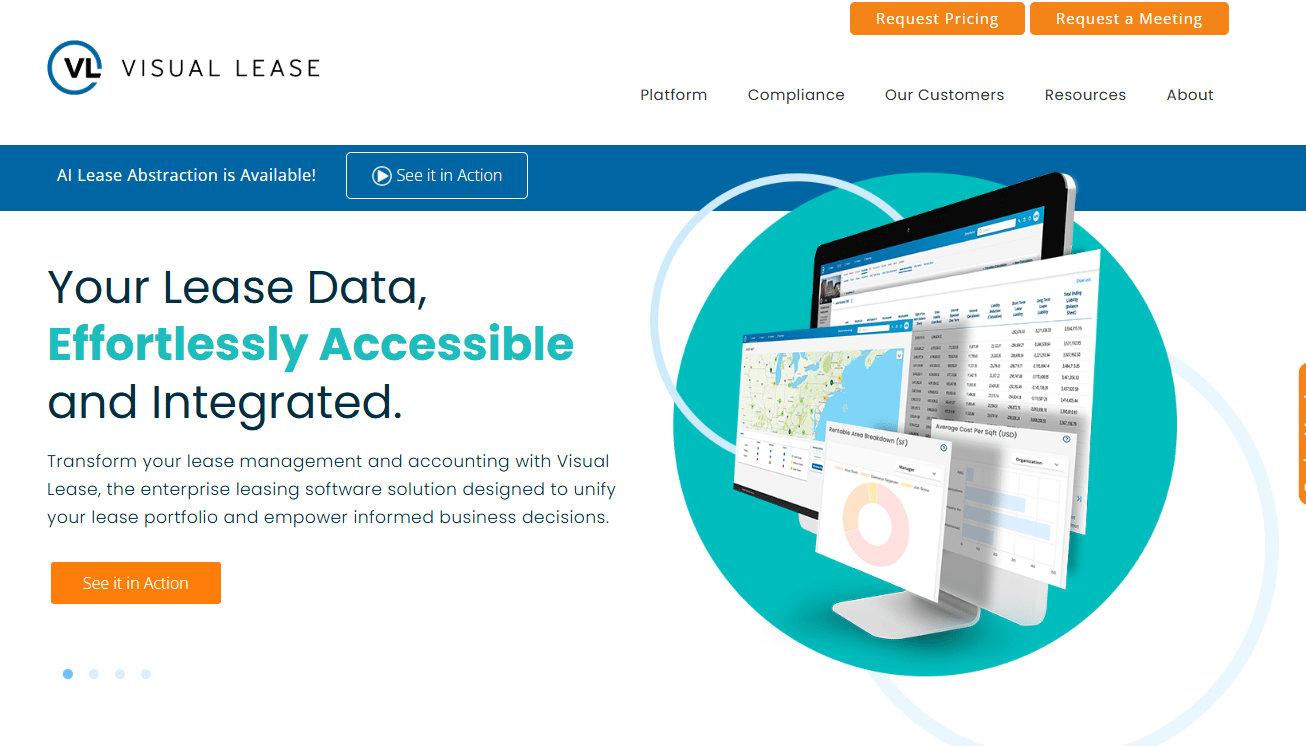
Visual Lease is an enterprise lease management and lease accounting platform covering real estate, equipment, SaaS, transportation, embedded, and other lease types. It centralizes lease data across finance, real estate, legal, and procurement, and supports accounting workflows for ASC 842, IFRS 16, GASB 87, and GASB 96. AI-powered lease abstraction speeds up contract data capture from large document volumes.
Best for: Large and enterprise organizations managing complex lease portfolios and ongoing lease accounting compliance.
Key features
- Lease accounting for ASC 842, IFRS 16, GASB 87, and GASB 96
- Automated journal entries, disclosures, and financial reporting
- AI-powered lease abstraction and data extraction
- Critical-date notifications and contract management
- Customizable reporting with audit trails and approval workflows
Why choose Visual Lease: Fit it when the central problem is consolidated visibility and consistent reporting across a complex, multi-entity portfolio. It serves organizations where lease data spans multiple functions and where the board expects a defensible, auditable view of obligations.
Visual Lease pricing: Visual Lease prices by personalized consultation; all prospects request a quote directly through the vendor. G2 reviewer context confirms the model is enterprise-tier and contract-based, with no self-serve or trial option listed.
Visual Lease holds a 4.4/5 rating on G2.
2. LeaseAccelerator
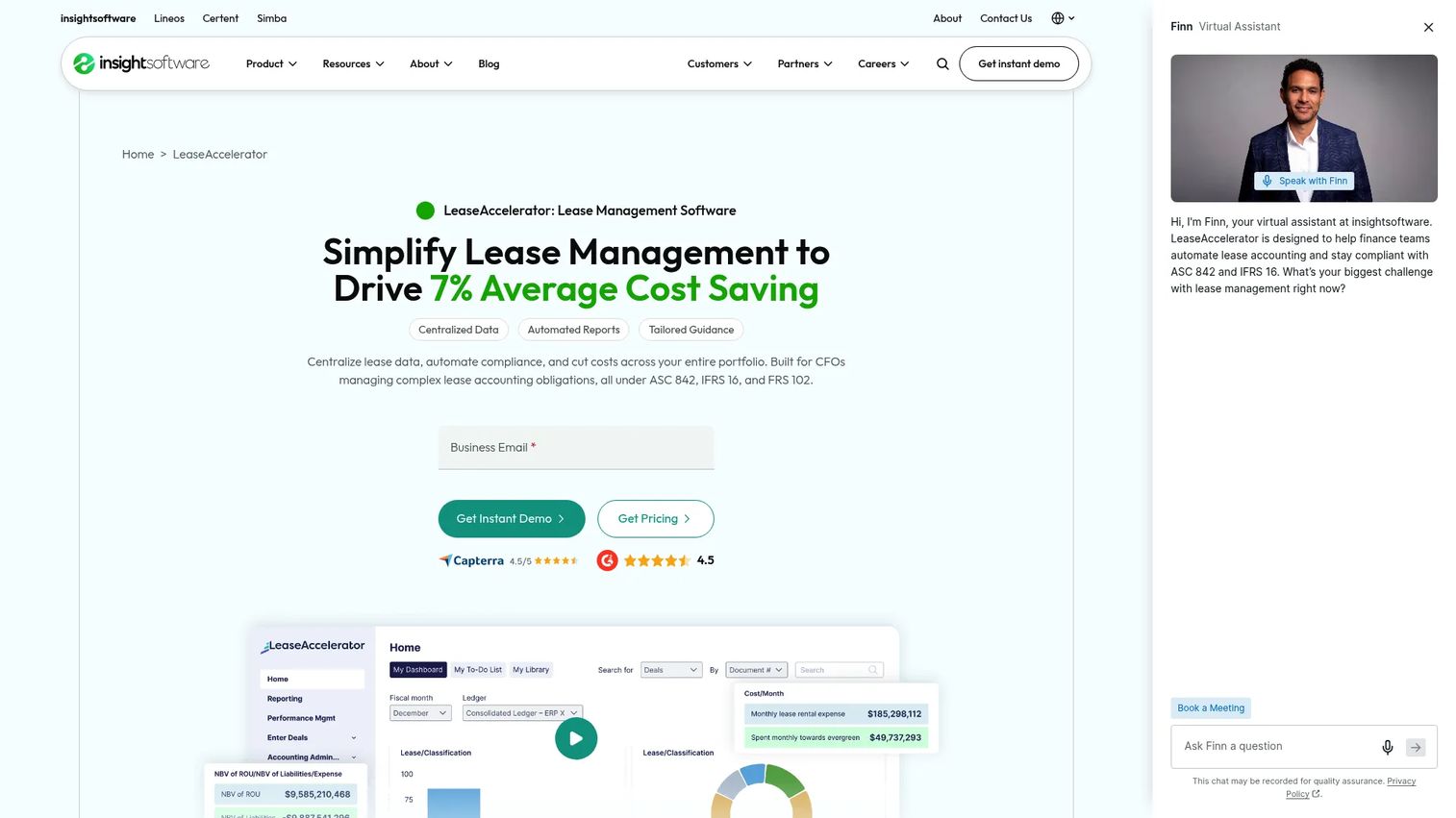
LeaseAccelerator is an enterprise-focused platform for lease accounting, lease administration, contract lifecycle workflows, and end-of-term decision support. It includes tools for lease versus buy analysis, equipment lease sourcing through its PureLease Marketplace, and an Asset Lifecycle Manager that connects lease contracts to physical asset records. The Real Estate Manager module handles property-specific lease and lease accounting workflows.
Best for: Large organizations managing high volumes of lease contracts, asset records, and end-of-term decisions across multiple entities.
Key features
- Lease accounting and compliance support across entities
- Contract lifecycle workflows and asset lifecycle tracking
- Lease vs. buy analytics
- PureLease Marketplace for equipment lease sourcing
- End-of-term decision support for equipment and real estate
Why choose LeaseAccelerator: It fits organizations where leases affect finance close, procurement planning, equipment strategy, and operating decisions simultaneously. Multi-entity and multi-country complexity is where it earns its place, rather than as a lightweight replacement for a spreadsheet.
LeaseAccelerator pricing: No pricing figures are displayed on the vendor's website. The commercial model is enterprise and contract-led; buyers engage through a sales conversation. G2 reviewer data does not surface a consistent price range for cross-reference.
LeaseAccelerator holds a 4.1/5 rating on G2.
3. Odessa
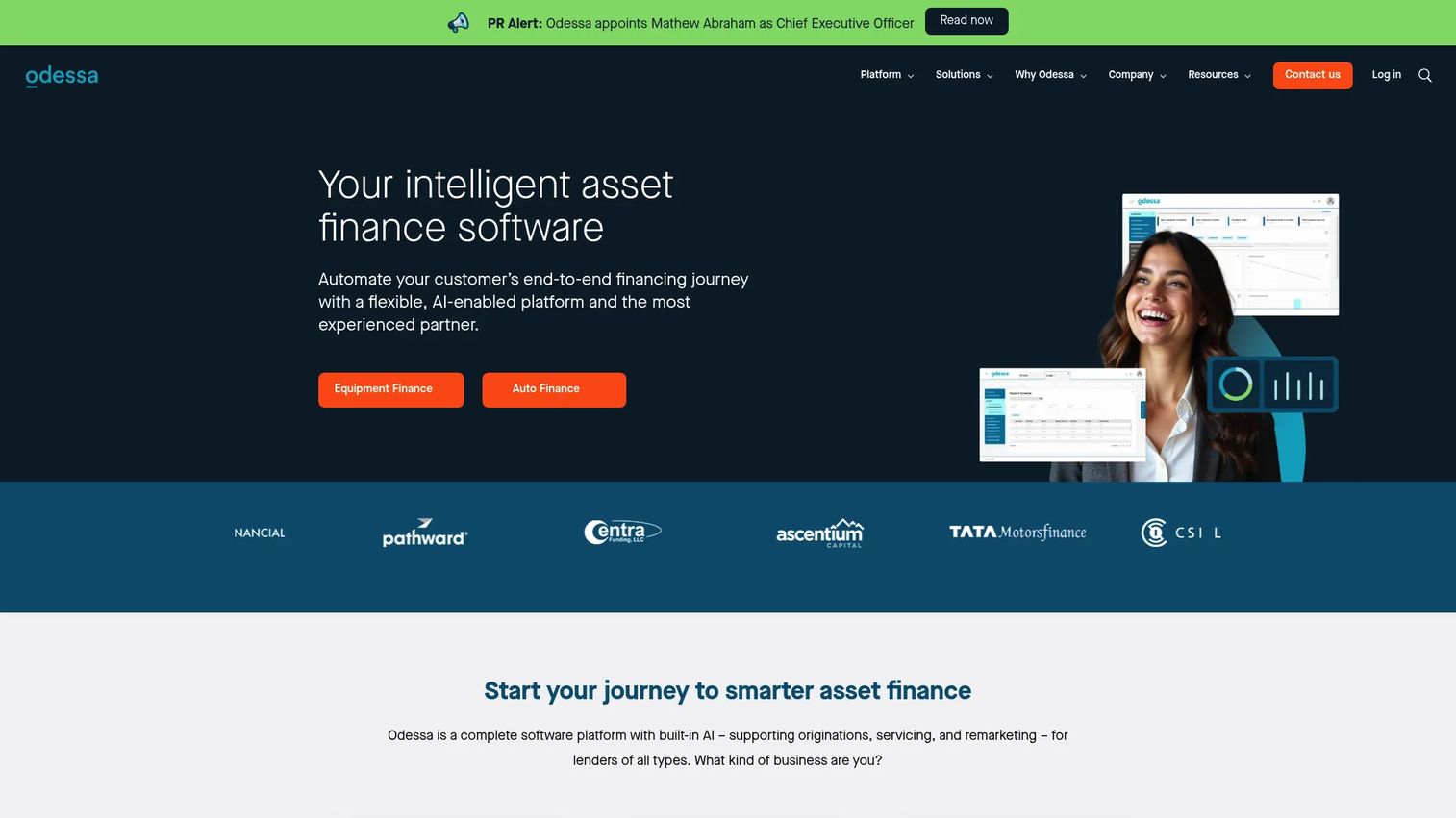
Odessa is an AI-enabled asset finance platform built for banks, captives, and independent financial institutions managing equipment or auto finance portfolios. It covers the complete lifecycle from origination through servicing, collections, asset remarketing, and customer self-service. The platform is cloud-based, API-driven, and designed for high-volume or structurally complex leasing operations.
Best for: Asset finance companies, equipment lessors, lenders, OEMs, and dealer networks with complex, high-volume leasing operations.
Key features
- Lease and loan originations with credit processing and approval controls
- Servicing from invoicing through collections
- Asset remarketing workflows
- Self-service customer and dealer portals
- API-driven integrations and cloud platform
Why choose Odessa: The category distinction is the reason to evaluate it. Odessa is not primarily a corporate lease accounting tool. It is built for businesses whose product is leasing or asset finance, where the revenue engine depends on origination throughput, servicing accuracy, and residual value management.
Odessa pricing: Odessa prices by personalized demo and commercial engagement rather than a fixed schedule. No tiers or figures are displayed on the vendor site, consistent with enterprise software in this segment. Contact the vendor directly for a quote.
Odessa holds a 4.2/5 rating on G2.
4. FinQuery
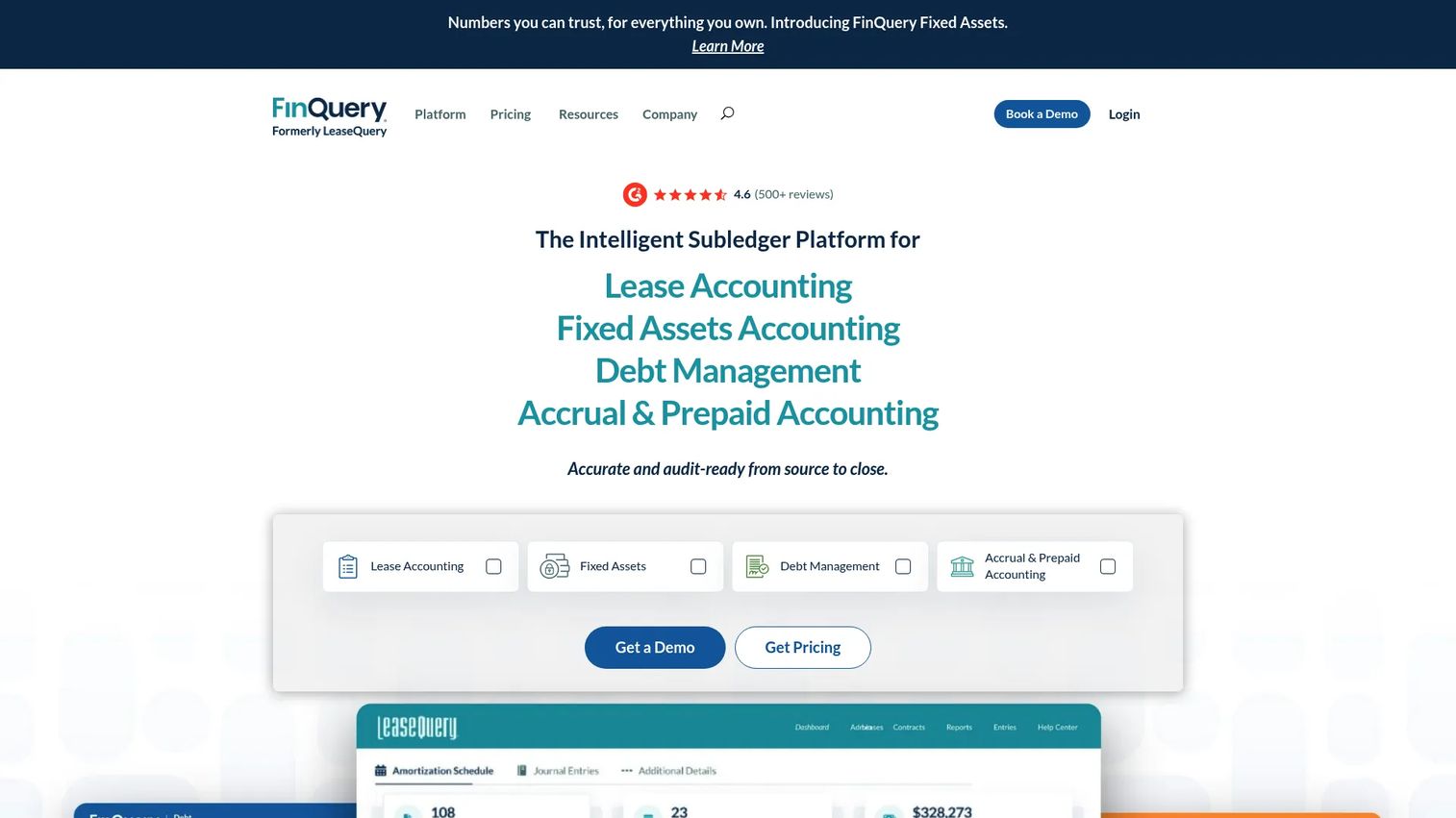
FinQuery is an intelligent subledger platform covering lease accounting, fixed assets, debt management, and accruals. For lease management specifically, it automates amortization schedules, journal entries, and disclosure reports, and connects to ERP and general ledger systems. It also handles fixed-asset multi-book depreciation and debt covenant monitoring, making it a broader accounting automation tool beyond lease accounting alone.
Best for: Controllers and finance teams that need to replace manual lease accounting schedules and reach a controlled, auditable close process.
Key features
- Lease accounting with amortization schedules, journal entries, and disclosures
- Fixed-asset multi-book depreciation and partial disposals
- Debt covenant monitoring and automated reconciliation
- ERP and general ledger integrations
- Audit trails and reporting controls
Why choose FinQuery: Finance owns this decision. The primary outcome is a faster, more defensible close process, supported by a platform that also handles adjacent accounting tasks without requiring a second tool. It is less suited to organizations that need leasing origination, collections, or dealer management.
FinQuery pricing: FinQuery directs prospects to request pricing directly; the vendor's pricing page shows no tiers or figures. The commercial model is contract-based. Reach out to the vendor for a quote specific to your lease count and entity structure.
FinQuery holds a 4.6/5 rating on G2.
5. MRI ProLease
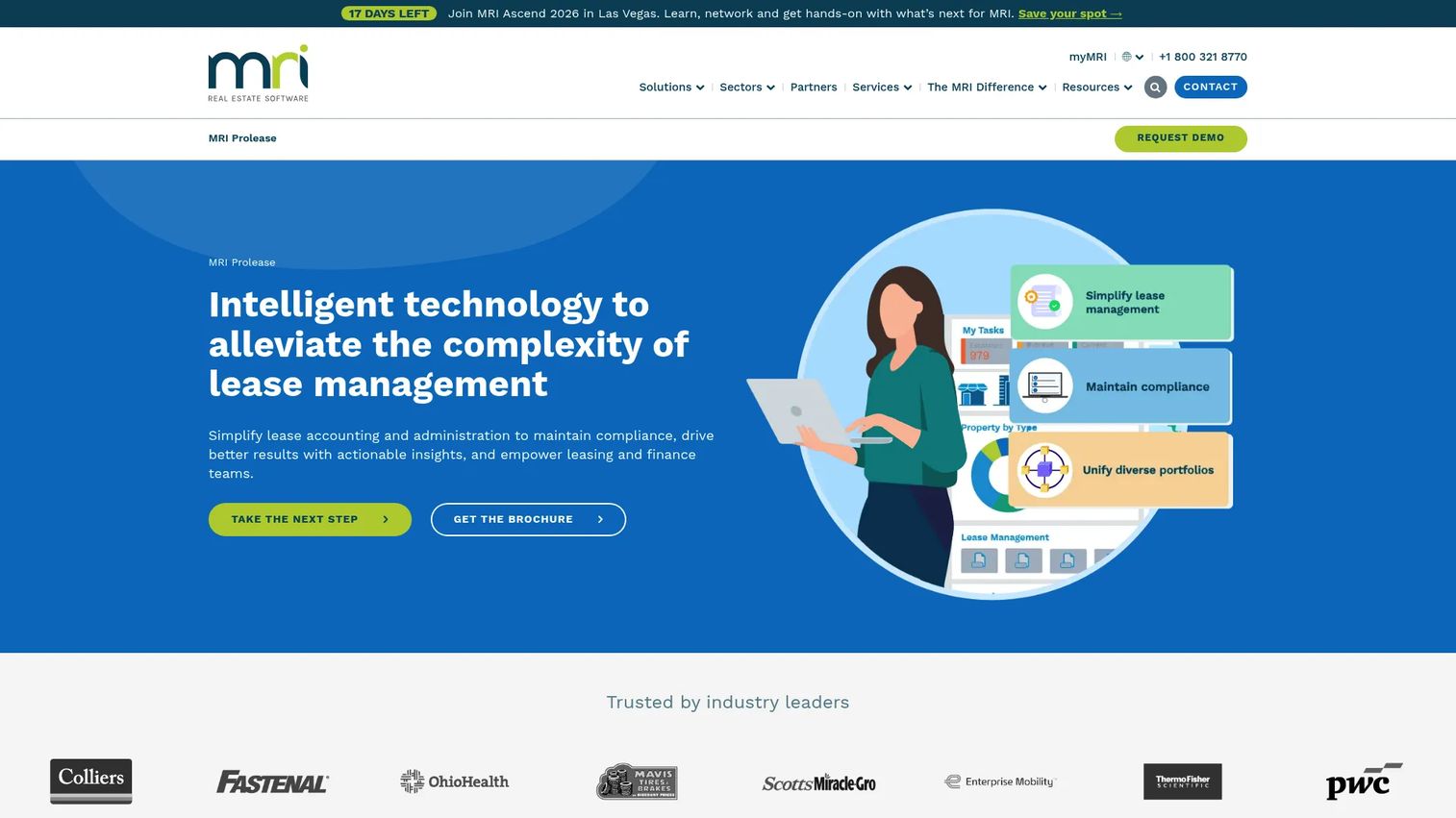
MRI ProLease is a cloud-based lease administration and lease accounting platform for real estate and equipment portfolios. It offers three editions: ProLease Enterprise, ProLease Central, and ProLease Direct. The platform covers critical-date management, lease modifications, renewals, and accounting compliance for ASC 842, GASB 87, IFRS 16, and FRS 102. AI-powered lease abstraction is available through MRI Contract Intelligence.
Best for: Mid-market organizations that manage both operational lease administration and accounting requirements across real estate and equipment.
Key features
- Real estate and equipment lease tracking
- Lease accounting compliance: ASC 842, GASB 87, IFRS 16, FRS 102
- Automated journal entries and disclosures
- Critical-date alerts and renewal workflows with transaction management
- AI lease abstraction through MRI Contract Intelligence
Why choose MRI ProLease: It fits teams that need more than accounting calculations. Day-to-day contract administration, portfolio organization, and operational visibility are part of the product, which makes it a practical choice when the problem spans finance and operations rather than sitting entirely inside the controller's office.
MRI ProLease pricing: Pricing requires contacting sales across all three editions. No public figures are displayed on the vendor's product page. Request a quote and specify your lease types, entity count, and required modules.
MRI ProLease holds a 4.1/5 rating on G2.
6. Nomos One
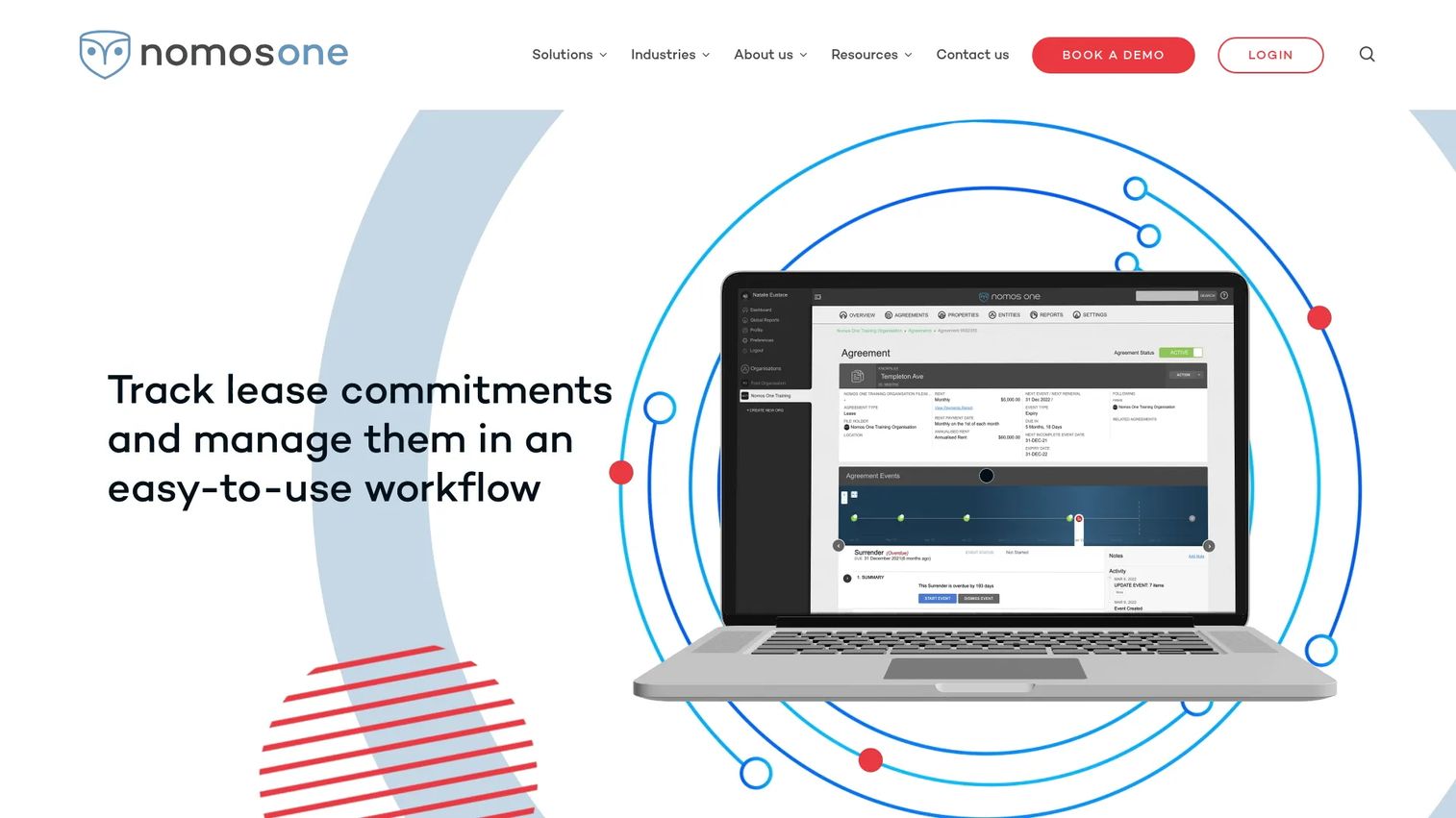
Nomos One is a lease management and IFRS 16 lease accounting platform focused on property, asset, and contract portfolios. It supports event reminders, custom fields and reports, approval workflows, multi-currency global portfolios, and IFRS 16 calculations with journal output. The platform is cloud-based with unlimited users and storage, which makes it a practical fit for distributed teams managing contract-heavy lease portfolios.
Best for: Property, facilities, and corporate operations teams managing contract-heavy lease portfolios where obligation tracking and IFRS 16 reporting are the primary requirements.
Key features
- Lease and contract administration with critical-date alerts
- IFRS 16 reporting, calculations, and journal output
- Approval workflows and custom event management
- Global portfolio and multi-currency support
- Unlimited users and cloud storage
Why choose Nomos One: It is worth evaluating when contract governance and obligation visibility sit at the center of the problem. Validate accounting depth, regional standards support beyond IFRS 16, integrations, and reporting outputs during your trial or demo before committing.
Nomos One pricing: No pricing figures or tier structures were found on the vendor's website. Contact Nomos One directly for subscription terms and contract details.
7. SOFT4Leasing
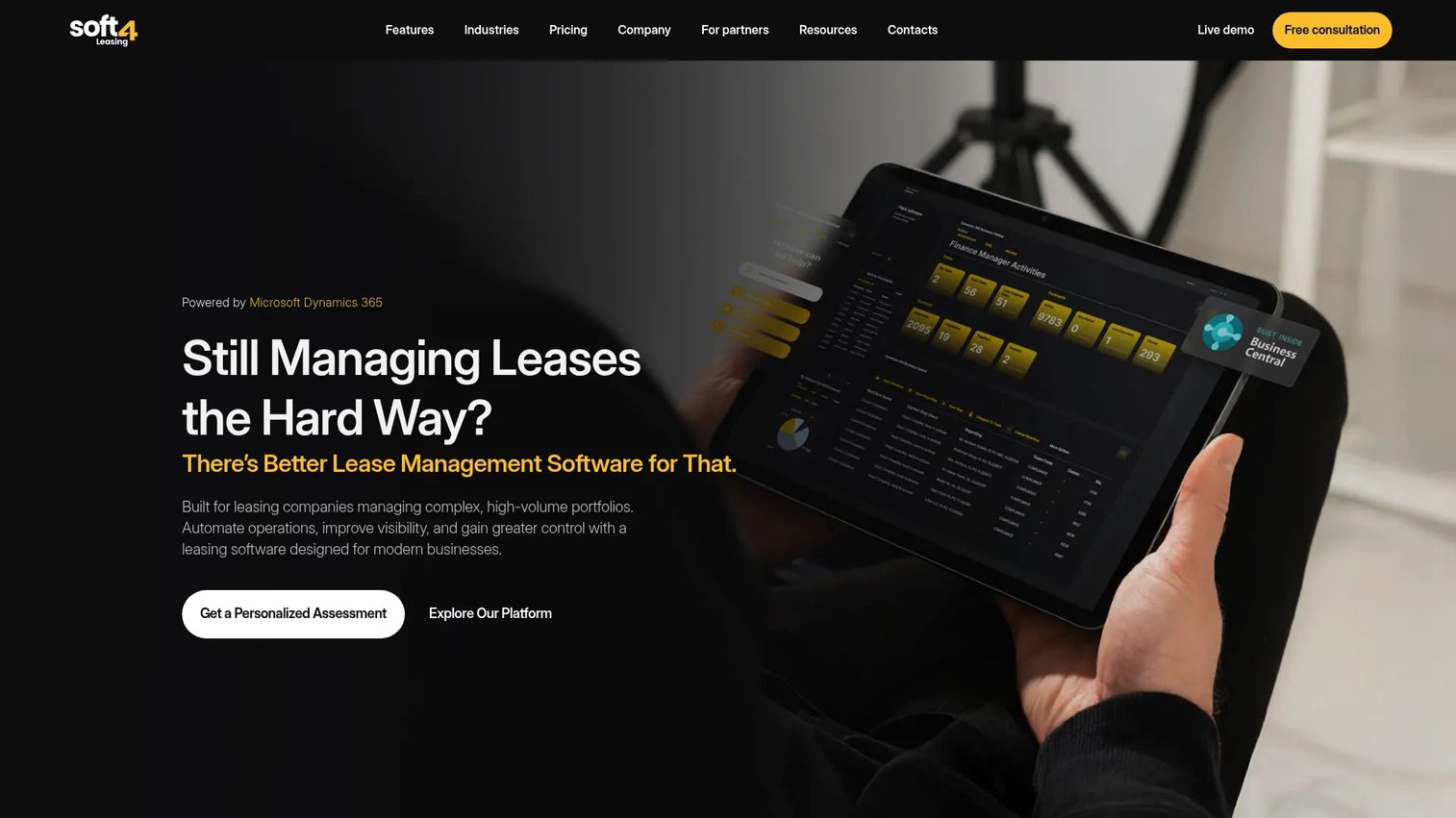
SOFT4Leasing is lease management software for leasing and finance companies, built on Microsoft Dynamics 365. It covers quote-to-contract workflows, invoicing, payment management, fleet and asset tracking software, lease accounting, credit decisioning, eSignatures, collections, and self-service portals. Its architecture makes it a strong fit for companies already standardized on the Microsoft ecosystem rather than an add-on to a non-Microsoft ERP.
Best for: Equipment leasing companies or corporate leasing divisions already running their operating model in Microsoft Dynamics 365 Business Central.
Key features
- Microsoft Dynamics 365 Business Central foundation
- Quote-to-contract leasing workflows
- Invoicing, payment management, and collections
- Equipment lifecycle and residual-value tracking
- Credit decisioning and automated approvals
Why choose SOFT4Leasing: Its ERP-native architecture is the primary evaluation reason. Teams committed to the Microsoft ecosystem avoid duplicate data handling and maintain a single operational record across leasing, finance, and reporting. Evaluate it when Business Central is already your ERP of record.
SOFT4Leasing pricing: SOFT4Leasing publishes project-based setup costs on its pricing page. The Starter package runs from €18,000 in high-level setup costs (from €28,800 for 160 hours of implementation). The Advanced package starts from €25,200 in setup (from €64,800 for 360 hours). The Premium package starts from €45,600 in setup (from €216,000 for 1,200 hours). Monthly support plans are also available; those figures require a direct quote.
8. Alfa Systems
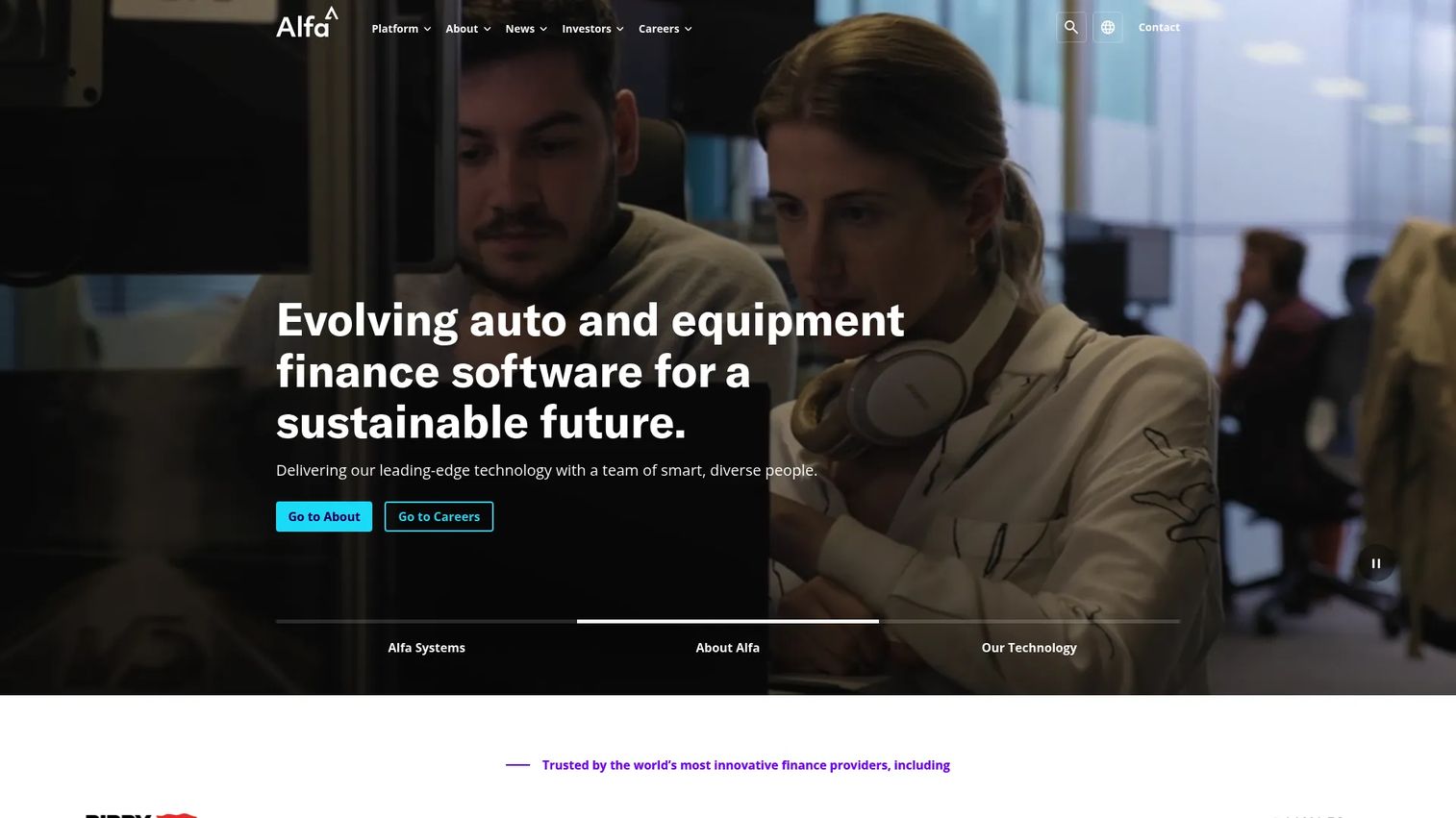
Alfa Systems is a cloud-native SaaS platform for auto, equipment, commercial, and wholesale finance operations. It manages originations, servicing, and collections through a configurable product model that supports complex financing structures across multiple countries and entities. AI-assisted automation, personalized screen design, and REST/SOAP API integrations are part of the core platform.
Best for: Large lenders, captives, and asset finance providers managing high-volume or structurally complex auto, equipment, or wholesale finance programs.
Key features
- Originations, servicing, and collections lifecycle management
- Process automation and configurable product support
- Cloud-native, single-tenant SaaS deployment
- REST and SOAP APIs with real-time data streaming
- Multi-country and multi-entity support
Why choose Alfa Systems: It is a specialist choice for organizations where the lease or finance product itself is structurally complex. Implementation programs for platforms at this level are substantial, so it belongs on a shortlist only when the portfolio size and product complexity justify an enterprise-grade asset finance system.
Alfa Systems pricing: Pricing is not displayed on the vendor's website. The commercial model is enterprise and requires direct engagement. Contact Alfa Systems for scope and pricing specific to your portfolio volume and product configuration.
Alfa Systems holds a 4.0/5 rating on G2.
9. Leasepath LOS
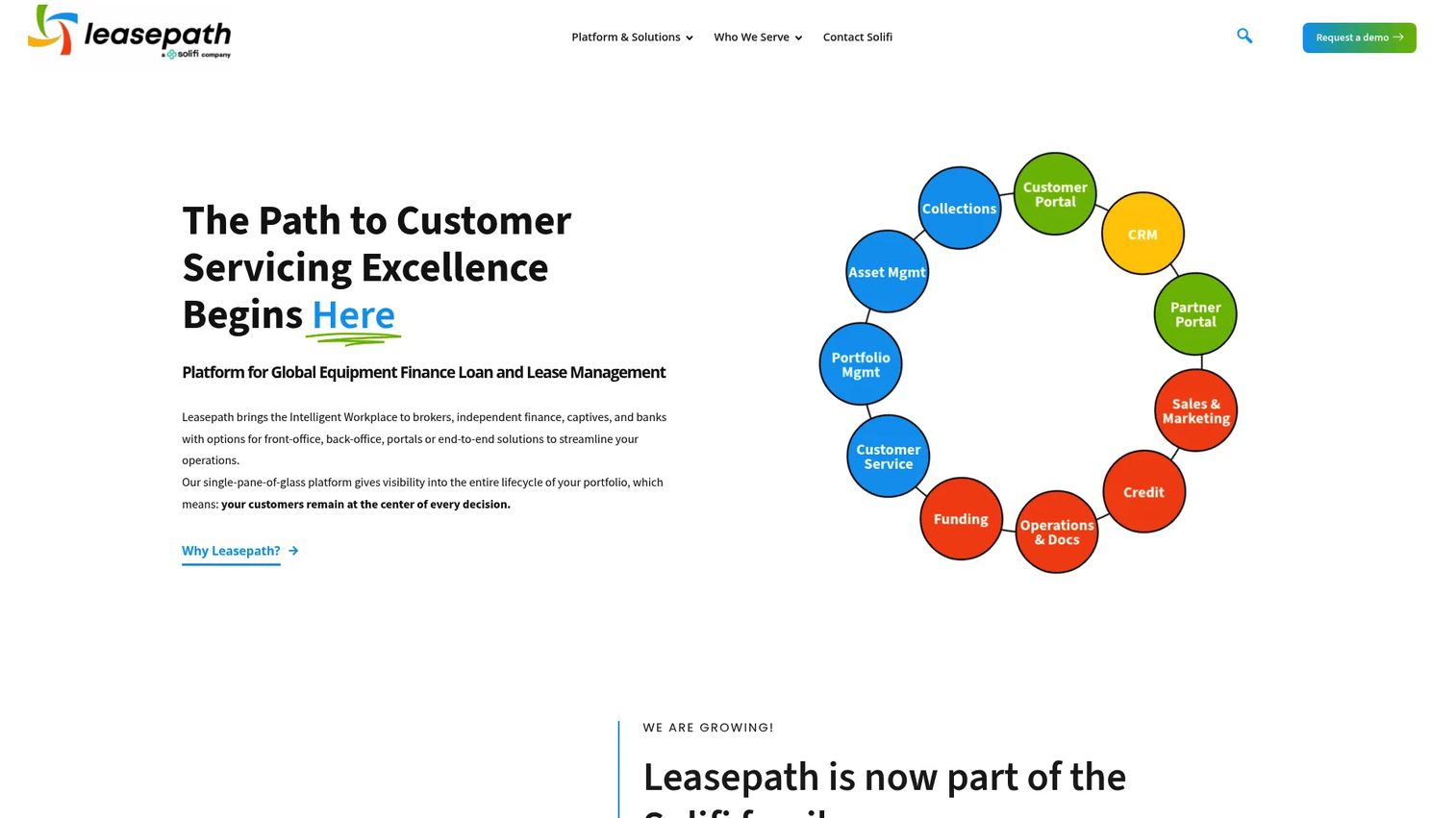
Leasepath LOS is a cloud-first loan and lease origination platform built for the equipment finance industry. It covers application intake, CRM, price structuring and quoting, credit review, document automation, and funding workflows. Microsoft Power Platform integration and credit bureau connections are part of the platform. Servicing capabilities exist alongside origination, which positions it as a broader equipment finance system rather than a point solution for deal intake alone.
Best for: Banks, independent finance companies, captive finance providers, and brokers managing equipment finance origination workflows and credit processing.
Key features
- CRM, applications, and pipeline management
- Price structuring, quoting, and amortization calculations
- Credit review, underwriting, and approval workflows
- Document automation and funding workflows
- Microsoft Power Platform and credit bureau integrations
Why choose Leasepath LOS: It fits organizations with an origination bottleneck: Delayed approvals and fragmented deal handoffs limit growth in an equipment finance motion. Assess it alongside your servicing, ERP, and document-generation stack to confirm the handoffs work end to end.
Leasepath LOS pricing: No pricing is displayed on the vendor's website. Contact Leasepath directly for commercial terms. G2 does not currently show enough reviews to report a price range through that channel.
10. NetLease by Netgain
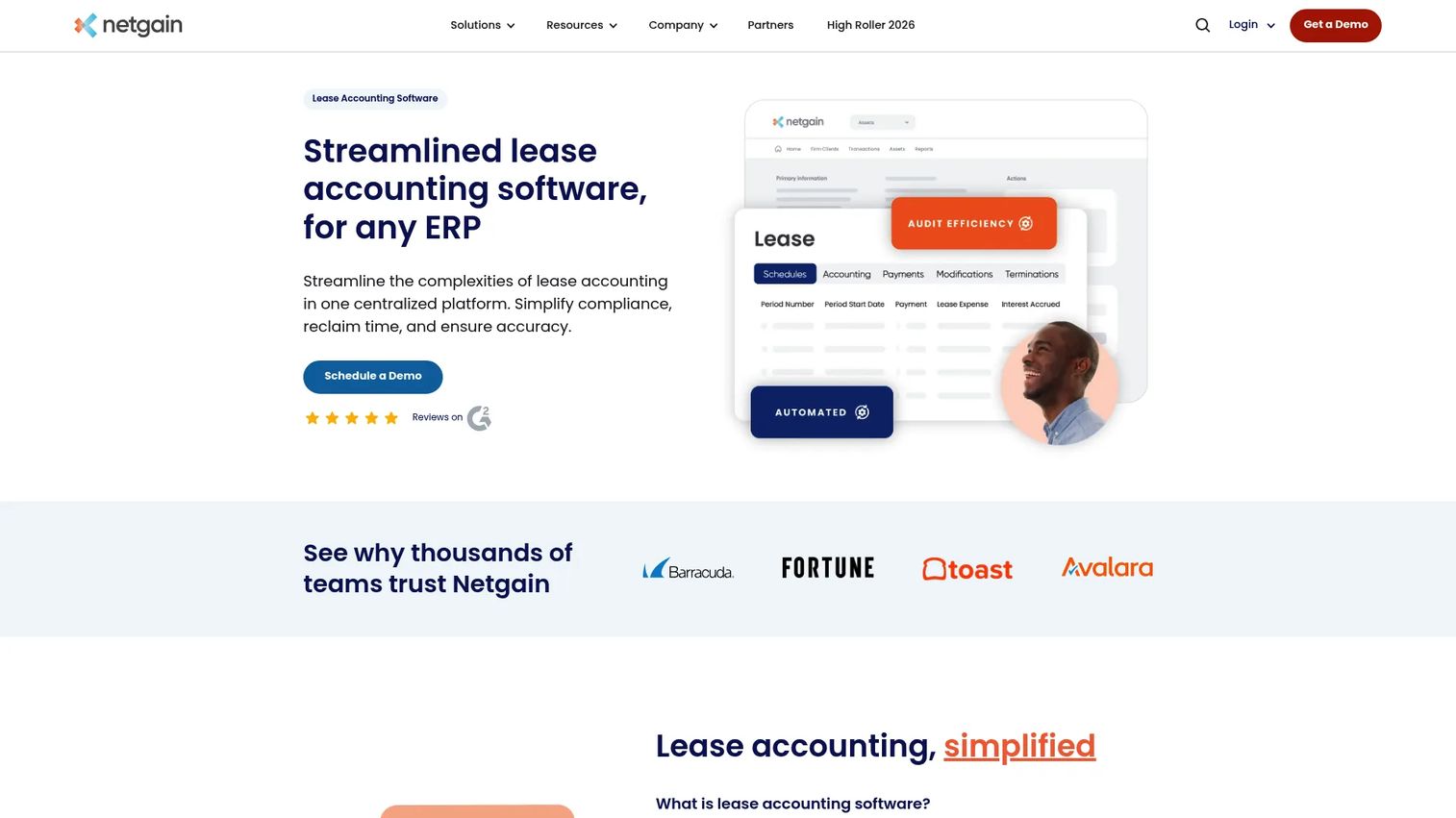
NetLease by Netgain is lease accounting software built directly into NetSuite. It automates lease calculations, amortization schedules, right-of-use asset tracking, modifications, reassessments, early terminations, and automated billing within the NetSuite environment. AI-powered lease abstraction and upload are available, along with multi-book accounting support and audit-ready disclosure statements generated inside NetSuite.
Best for: Accounting teams using NetSuite that need automated, compliant lease accounting and audit-ready reporting without leaving their ERP.
Key features
- Automated lease calculations, amortization schedules, and right-of-use asset tracking
- Lease modifications, reassessments, and early terminations
- Audit-ready reports and disclosure statements within NetSuite
- Automated billing and vendor bill creation
- AI-powered lease abstraction and upload
Why choose NetLease by Netgain: It belongs on a shortlist for teams whose accounting stack runs on NetSuite and who need a focused lease accounting and administration system. The NetSuite-native architecture means lease data stays in the same environment as the general ledger, which removes a common integration gap.
NetLease by Netgain pricing: An Essential tier is free for teams managing 1 to 10 leases. The Pro tier covers 250 or more leases; pricing varies by lease volume and compliance requirements, and Netgain's pricing page states the figure as $0/year for that tier with a request for more details. Enterprise pricing requires contacting Netgain directly.
NetLease by Netgain holds a 4.8/5 rating on G2.
Considerations when choosing asset leasing software
Choose the operating model before the feature list
Decide first whether the company manages internal leases or originates and services leasing products. A corporate lease accounting platform will not replace an origination system. An asset finance platform can be overbuilt for a corporate portfolio and difficult to maintain without specialist staff.
Map data ownership and migration work
Ask where lease data currently lives: Contracts, spreadsheets, ERP records, procurement systems, or shared drives. Require a migration plan with field mapping, source-of-truth rules, and validation checkpoints before selecting a vendor. The migration is usually the longest phase of implementation, and skipping this conversation creates expensive surprises.
Verify accounting, reporting, and audit requirements
The platform must support the reporting standards, entity structure, currencies, and lease types your finance team uses. Involve finance in validating reporting outputs before making a final selection. A tool that handles the accounting math incorrectly is worse than a spreadsheet.
Test integration depth, not logo compatibility
A vendor logo on an integrations page does not explain the data flow. Confirm whether the connection pushes journal entries, synchronizes master data, handles updates, and creates an audit trail. For compliance management software and ERP contexts, the integration depth determines whether the platform actually reduces close time or just adds another reconciliation step.
Price the implementation, not only the subscription
Ask for data migration, contract lifecycle management, training, integration, and professional-services costs before comparing vendors. The annual subscription is one line item. Implementation costs for enterprise lease platforms often exceed the first-year subscription, particularly when lease abstraction from large contract volumes is involved.
Conclusion
Asset leasing software splits cleanly into operating models, and the right shortlist depends on which problem your team actually owns.
Visual Lease suits enterprise finance teams that need centralized lease administration and portfolio governance. LeaseAccelerator fits large organizations managing asset lifecycle and end-of-term decisions alongside accounting. Odessa and Alfa Systems belong on the shortlist only when leasing is the revenue model, not the expense category. FinQuery is the accounting-first choice for controllers who need a fast path from spreadsheet dependency to an auditable close process. MRI ProLease spans finance and operations, covering both administration and accounting in one system.
For contract and obligation management, Nomos One is worth evaluating for IFRS 16-heavy portfolios. SOFT4Leasing is the ERP-native option for teams committed to Microsoft Dynamics 365 Business Central. Leasepath LOS addresses the origination bottleneck in equipment finance. NetLease by Netgain is the strongest option for NetSuite-based accounting teams, particularly at the entry level.
The next step is a structured shortlist process with your CFO, controller, or COO. Require each vendor to demonstrate one real workflow from your environment: A lease modification, journal-entry export, renewal alert, or credit approval. That test separates a polished demo from a system your team will actually run.
For a broader view of how asset tracking software and audit management software connect to lease portfolios, those guides cover the adjacent decisions in more depth.
Start your journey with Guideflow today!
FAQs
Asset leasing software manages the financial, contractual, and operational lifecycle of leased assets. It covers lease and contract records, accounting obligations, critical dates, payments, renewals, and portfolio reporting. Some tools support internal corporate leases while others support commercial leasing businesses managing origination, servicing, and collections.
Lease accounting software focuses on amortization schedules, journal entries, disclosures, and financial reporting. Asset leasing management software may include those functions but can also cover quoting, origination, credit, contracts, billing, servicing, asset tracking, residual values, and end-of-term operations. Buying the broader platform to solve an accounting-only problem adds cost and complexity without proportional benefit.
Several platforms in this guide offer workflow support for ASC 842 and IFRS 16 reporting, including Visual Lease, FinQuery, MRI ProLease, and NetLease by Netgain. Validate the exact entities, lease types, disclosure formats, and current product capabilities with your finance team and the vendor before purchase. Software capability is not accounting advice.
Equipment lessors typically need an end-to-end asset finance platform covering origination, underwriting, contracts, billing, servicing, equipment tracking, and end-of-term workflows. Odessa, Alfa Systems, SOFT4Leasing, and Leasepath LOS are the tools in this guide built for that operating model. Corporate lease accounting tools are a different category and handle a different problem.
Most tools in this guide offer ERP integration, but integration depth varies significantly. Confirm whether the connection pushes journal entries, synchronizes master data, handles modifications, and maintains an audit trail in both systems. A logo on an integrations page is not the same as a validated data flow. Ask vendors for a live demonstration of the ERP handoff using your chart of accounts.
Cost depends on portfolio complexity, number of leases or assets, entity count, integrations, required modules, and implementation scope. Most enterprise platforms in this guide are priced by quote. NetLease by Netgain offers a free tier for up to 10 leases, and SOFT4Leasing publishes project-based setup costs starting from €18,000. Compare total ownership cost, including migration and professional services, rather than subscription price alone.
Timelines vary with data quality, contract volume, lease abstraction needs, ERP integrations, and reporting requirements. A focused accounting tool for a single entity with clean data can go live in weeks. An enterprise implementation with large contract volumes, multiple entities, and complex ERP integrations typically runs several months. Establish a data-cleansing workstream before implementation begins; poor data quality is the most common cause of delays.
Most tools in this guide provide critical-date alerts, obligation tracking, modification workflows, and renewal support. The depth varies: Corporate lease administration platforms focus on notice periods and contract changes, while asset finance platforms like Odessa and LeaseAccelerator include end-of-term decision support, residual-value tracking, and equipment return or remarketing workflows. Confirm what end-of-term capabilities look like in the vendor's specific product before shortlisting.
Ask three questions in order. First: Does the company manage internal leases as an expense, or originate and service leases as a revenue line? Second: Who will own this system after implementation, and does that person have the bandwidth to run it? Third: What does the migration plan look like, and what is the total cost including implementation? The answers determine the category, the tier, and whether the project is worth starting now. For contract management software decisions that sit alongside lease administration, that guide walks through the adjacent evaluation criteria.