Building blockchain applications without owning every node, monitoring layer, and network configuration is exactly why blockchain as a service exists. The challenge for presales and solutions teams is that "BaaS" covers a wide range of products: Managed enterprise networks, developer API platforms, RPC node providers, permissioned ledger frameworks, and crypto-native infrastructure don't behave the same way and don't answer the same buyer questions.
The market reflects this growth. According to Mordor Intelligence (2026), the global blockchain as a service market sits at $2.06 billion in 2026 and is forecast to reach $4.58 billion by 2031. That growth means more vendor options, more positioning noise, and more pressure on presales teams to quickly shortlist credible platforms before a proof of concept.
This guide cuts through that noise. It covers 15 blockchain service providers across every major category, with verified pricing, G2 ratings, and evaluation guidance written for technical buyers who need answers before the next stakeholder call.
What's inside
This guide is for presales engineers, solutions consultants, and technical evaluators comparing blockchain as a service platforms in 2026. Tools were selected based on:
- Category fit: Does the platform genuinely serve managed blockchain infrastructure, RPC access, developer APIs, enterprise frameworks, or Web3 cloud services?
- Infrastructure maturity: Does it have a documented track record, SLA commitments, and verifiable uptime claims?
- Enterprise relevance: Can it handle security reviews, access controls, integration requirements, and procurement workflows?
- Review and pricing visibility: Is there a G2 rating and at least partial pricing transparency?
You'll also find a comparison table, a buyer's checklist, and FAQs covering the questions security and engineering teams typically raise before shortlisting.
Related resources: API development tools, API security tools, and banking as a service software.
TL;DR
- Best managed cloud option: Amazon Managed Blockchain for AWS-aligned teams, though note it stopped accepting new customers in October 2026
- Best for Web3 developer APIs: Alchemy for app teams that need production-grade APIs and developer dashboards across 100+ blockchains
- Best for low-latency RPC: QuickNode at $34/month (annual) and Chainstack from $49/month, both with free tiers
- Best for enterprise consortium networks: Kaleido, R3 Corda, or Hyperledger Fabric, depending on whether you need a managed service or a self-operated framework
- Best for crypto-native infrastructure: Coinbase Cloud or Blockstream when the evaluation centers on digital assets or Bitcoin-specific infrastructure
- Shortlist advice: Map the platform to the required network model first (public chain, permissioned network, or enterprise DLT), then compare pricing drivers, security controls, and proof-of-concept readiness
What is blockchain as a service?
Blockchain as a service is a cloud-based or managed model where a provider hosts, maintains, or supports blockchain infrastructure so organizations can build and run blockchain applications without operating the full network stack themselves.
The provider typically handles:
- Node hosting and network setup
- Infrastructure monitoring and uptime management
- API and RPC access
- Smart contract deployment support
- Key management or custody support, where relevant
- Governance tooling for enterprise or consortium networks
The buyer retains responsibility for:
- Application logic and data modeling
- Compliance requirements and regulatory obligations
- Wallet or identity architecture
- Smart contract security and audit
- Integration with internal systems
BaaS spans several distinct categories:
- Managed enterprise networks: Hosted permissioned blockchain environments with governance and access controls
- RPC node providers: API-accessible blockchain endpoints for reading and writing to public networks
- Web3 developer platforms: Full-featured API and tooling layers for building blockchain-enabled applications
- Blockchain APIs: Indexed data, wallet, NFT, and token APIs for app development
- Permissioned ledger frameworks: Open-source frameworks like Hyperledger Fabric, often self-hosted or supported by managed service partners
- Protocol-specific infrastructure: Bitcoin, Hedera, or Liquid Network specialists
Key capabilities to evaluate across any BaaS vendor:
- Managed node infrastructure and uptime SLAs
- API and SDK coverage
- Smart contract support and deployment tooling
- Multi-chain support and network coverage
- Security controls, access management, and audit logs
- Developer tooling and observability dashboards
- Enterprise governance and permissioning
- Pricing transparency and cost predictability
BaaS is not the blockchain itself. It is the infrastructure and operating layer that sits between raw protocol and the application your team or your buyer is building.
When to use blockchain as a service
Launch blockchain applications without running nodes
Teams reach for BaaS when they want to build applications against public or permissioned networks without managing every node, endpoint, or indexer. For presales teams supporting early technical validation, managed infrastructure lets buyers test API behavior against realistic workloads before committing to a custom production architecture. This shortens the time between "we're interested" and "here's what we observed."
Support enterprise proofs of concept
Enterprise blockchain POCs often require permissioning, network governance, audit trails, and integration with existing identity or ERP systems. BaaS platforms that provide managed consortium environments let teams validate business logic quickly. The alternative, building from a raw framework, adds weeks of infrastructure setup before any business logic can be tested.
Scale Web3 APIs and transaction workflows
Developer teams use RPC providers and blockchain APIs when public-chain traffic grows and a basic self-hosted node becomes unreliable or expensive to monitor. Common drivers include rate limit headroom, archival data access for historical queries, multi-chain coverage, and regional latency for end users in specific geographies.
Blockchain as a service platform comparison
The table below covers all 15 platforms by best-fit use case, key differentiator, pricing, and G2 rating. Pricing is drawn from each vendor's official pricing page as of November 2026. G2 ratings reflect current listings; "N/A" indicates no verified G2 listing was found at time of writing.
| # | Product | Best for | Key differentiator | Pricing | G2 rating |
|---|---|---|---|---|---|
| 1 | Amazon Managed Blockchain | AWS-native infrastructure | Managed public and private blockchain inside AWS | Usage-based | 4.3/5 |
| 2 | Alchemy | Web3 developer APIs | 100+ blockchain API access with free tier | Free; from $0.52/1M CUs | 4.4/5 |
| 3 | QuickNode | Low-latency RPC | Multi-chain RPC with add-on marketplace | From $34/mo (annual) | 4.5/5 |
| 4 | Chainstack | Multi-cloud blockchain nodes | Managed nodes across protocols and cloud providers | Free; from $49/mo | 4.8/5 |
| 5 | Infura | Ethereum and IPFS APIs | Established API access for Ethereum development | Free; from $50/mo | 4.3/5 |
| 6 | Coinbase Cloud | Crypto-native infrastructure | Developer and staking infrastructure via Coinbase | Custom pricing | 4.2/5 |
| 7 | Kaleido | Enterprise consortium networks | Managed enterprise blockchain with governance tooling | Free Starter; from $0.15/hr per node | 4.8/5 |
| 8 | Blockstream | Bitcoin infrastructure | Bitcoin and Liquid Network specialist | From $67 (hardware); enterprise by quote | 4.2/5 |
| 9 | R3 Corda | Regulated enterprise DLT | Permissioned distributed ledger for finance | Open-source free; Enterprise by quote | 4.3/5 |
| 10 | Hyperledger Fabric | Custom permissioned networks | Open-source enterprise blockchain framework | Free (OSS); hosting costs apply | 4.1/5 |
| 11 | BlockApps | Enterprise blockchain apps | Ethereum-based business network platform | Custom pricing | 4.0/5 |
| 12 | Moralis | Blockchain data APIs | Wallet, NFT, token, and chain data APIs | From $149/mo (annual) | 5.0/5 |
| 13 | Luganodes | Institutional RPC and staking | Non-custodial staking and enterprise RPC | Free; from $49/mo | N/A |
| 14 | The Hashgraph Group | Hedera enterprise adoption | Hedera-powered enterprise solutions and advisory | Custom pricing | N/A |
| 15 | Microsoft Azure Web3 | Azure-native Web3 development | Web3 development within Azure cloud ecosystem | Usage-based | 4.1/5 |
Best blockchain as a service platforms for 2026
Each section below focuses on that platform's strongest use case for presales and technical evaluators. Verify pricing and chain support with each vendor before finalizing a shortlist.
1. Amazon Managed Blockchain
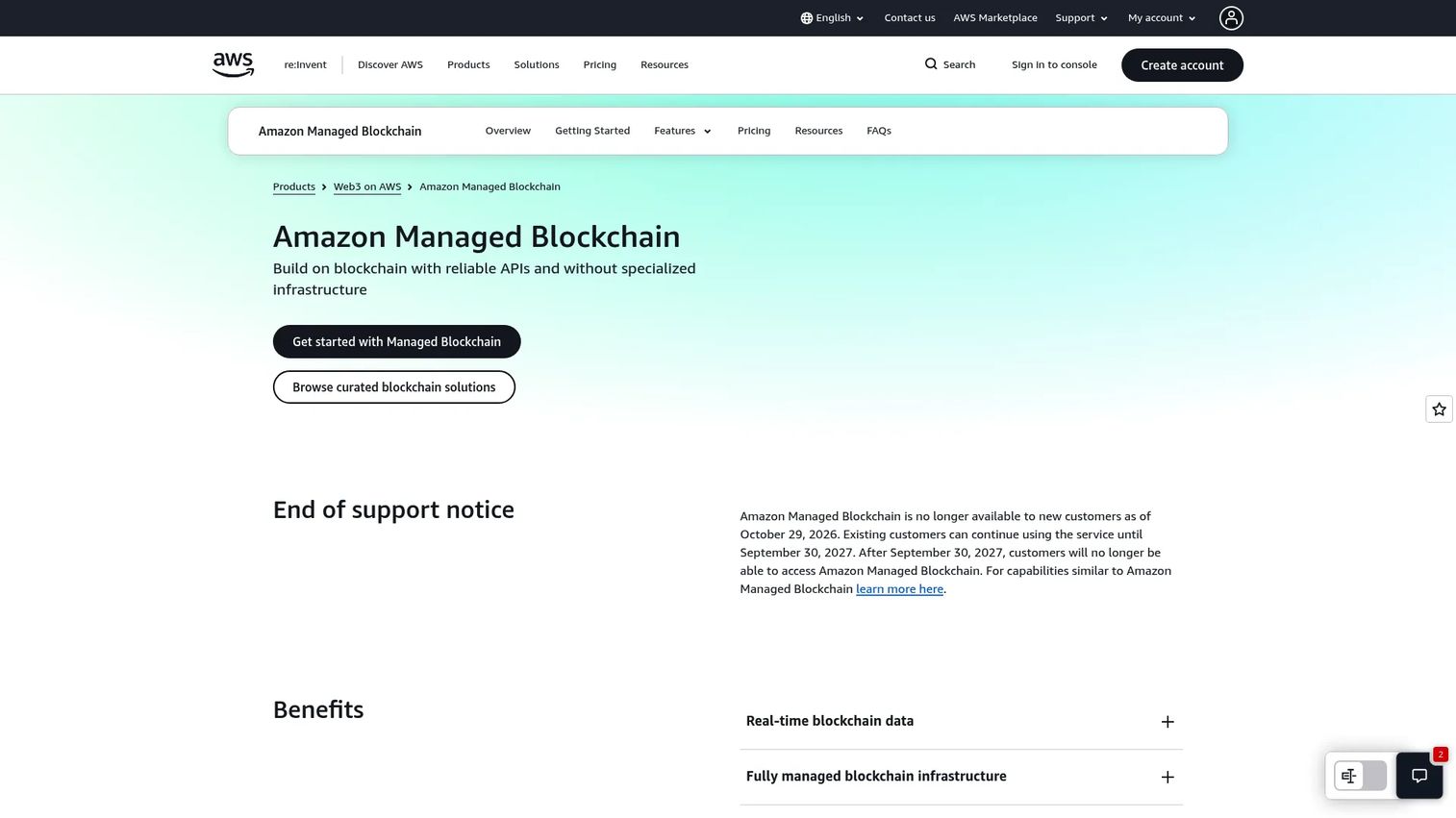
Amazon Managed Blockchain is AWS's managed service for building blockchain applications and accessing supported public or private network infrastructure. It covers both Hyperledger Fabric for private permissioned networks and managed access to public chains through AMB Access. Teams already operating inside AWS can attach blockchain workloads to existing IAM roles, CloudWatch dashboards, VPCs, and enterprise procurement agreements without standing up new vendor relationships.
Best for: AWS-heavy organizations that want blockchain infrastructure to fit their existing cloud operating model.
Key features
- Managed Hyperledger Fabric networks: Starter and Standard editions
- AMB Access for serverless public blockchain data and queries
- AMB Query for real-time and historical blockchain data retrieval
- CloudWatch integration for network and node monitoring
- AWS IAM and VPC for access control and private networking
Why choose Amazon Managed Blockchain: Governance, procurement fit, and cloud alignment are the primary arguments. If the buyer's security and infrastructure teams already approve all AWS services, adding a managed blockchain service follows existing workflows rather than introducing a new vendor review cycle.
Amazon Managed Blockchain pricing: Pricing is usage-based and varies by service, AWS Region, and consumption, covering peer node hours, storage, data written, requests, and data transfer. AWS posts example calculations on its pricing page but does not publish a universal monthly starting price. One critical note for presales teams: AWS announced in October 2026 that Amazon Managed Blockchain stopped accepting new customers. Existing-customer access continues through September 2027. Confirm current availability with AWS before shortlisting for any new account.
G2 rating: 4.3/5
2. Alchemy
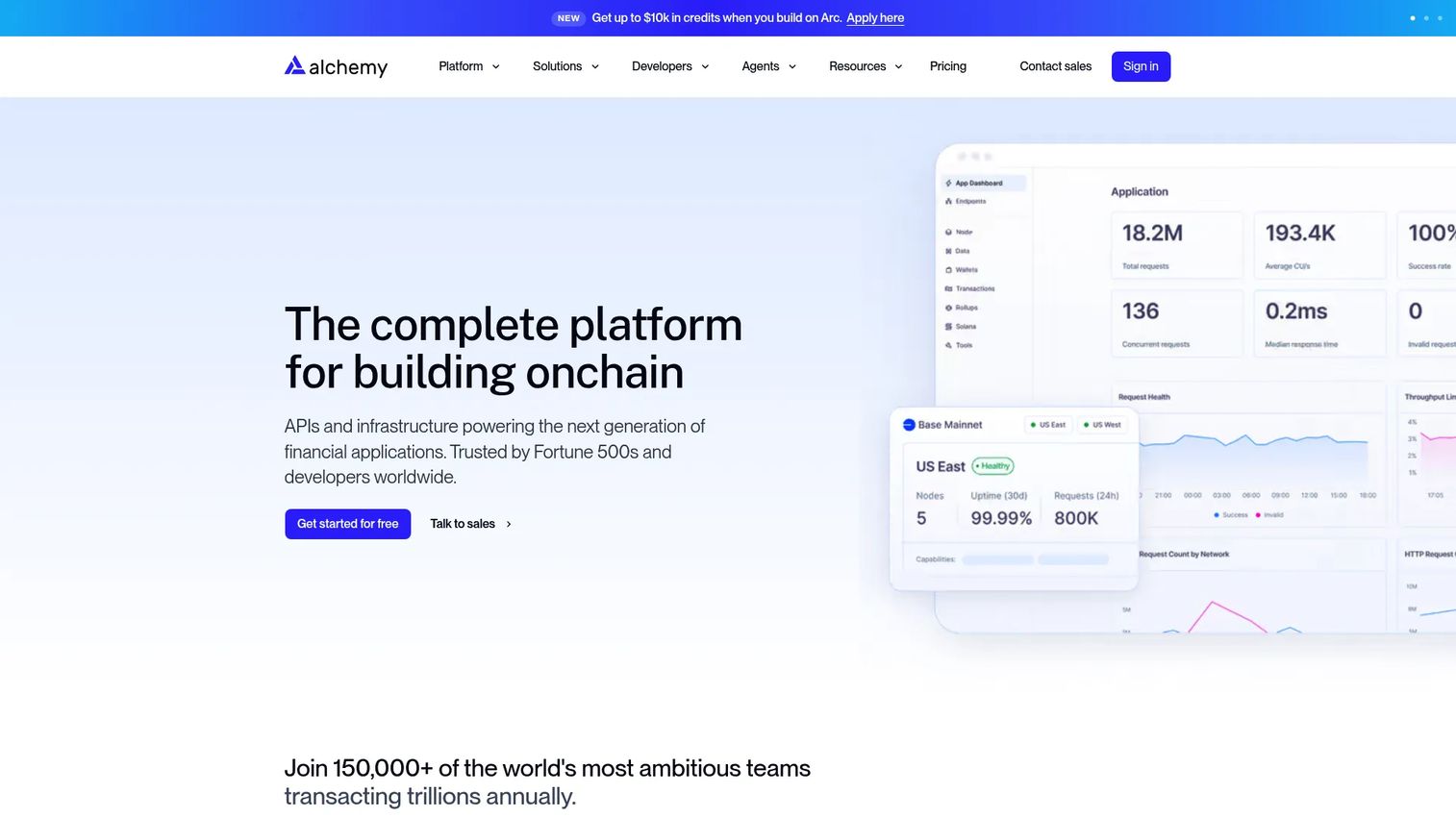
Alchemy is a blockchain infrastructure platform built for developers and engineering teams building, scaling, and operating onchain applications. It provides RPC node APIs, WebSockets, and indexed data APIs (covering tokens, prices, transfers, portfolios, NFTs, and webhooks) across more than 100 blockchains. The developer dashboard surfaces request analytics, error rates, and chain-specific performance data, giving teams observability without running their own monitoring stack.
Best for: Developer and product teams building public-chain applications that need production-grade API reliability and developer tooling.
Key features
- Node RPC APIs and WebSockets across 100+ blockchains
- Indexed data APIs: Token, Prices, Transfers, Portfolio, NFT, and Webhooks
- Gas sponsorship, rollups, and wallet infrastructure tooling
- Developer dashboard with request analytics and error monitoring
- Enterprise plan with custom SLAs and support
Why choose Alchemy: Alchemy's strength is API reliability at scale and developer experience. It fits teams whose primary risk during a POC is API consistency and speed of iteration rather than enterprise consortium governance.
Alchemy pricing: The Free plan includes 30 million compute units per month. Pay as You Go charges $0.52 per 1 million compute units beyond the free allowance. Enterprise pricing requires a sales conversation. The free tier makes it straightforward to begin a proof of concept without upfront commitment.
G2 rating: 4.4/5
3. QuickNode
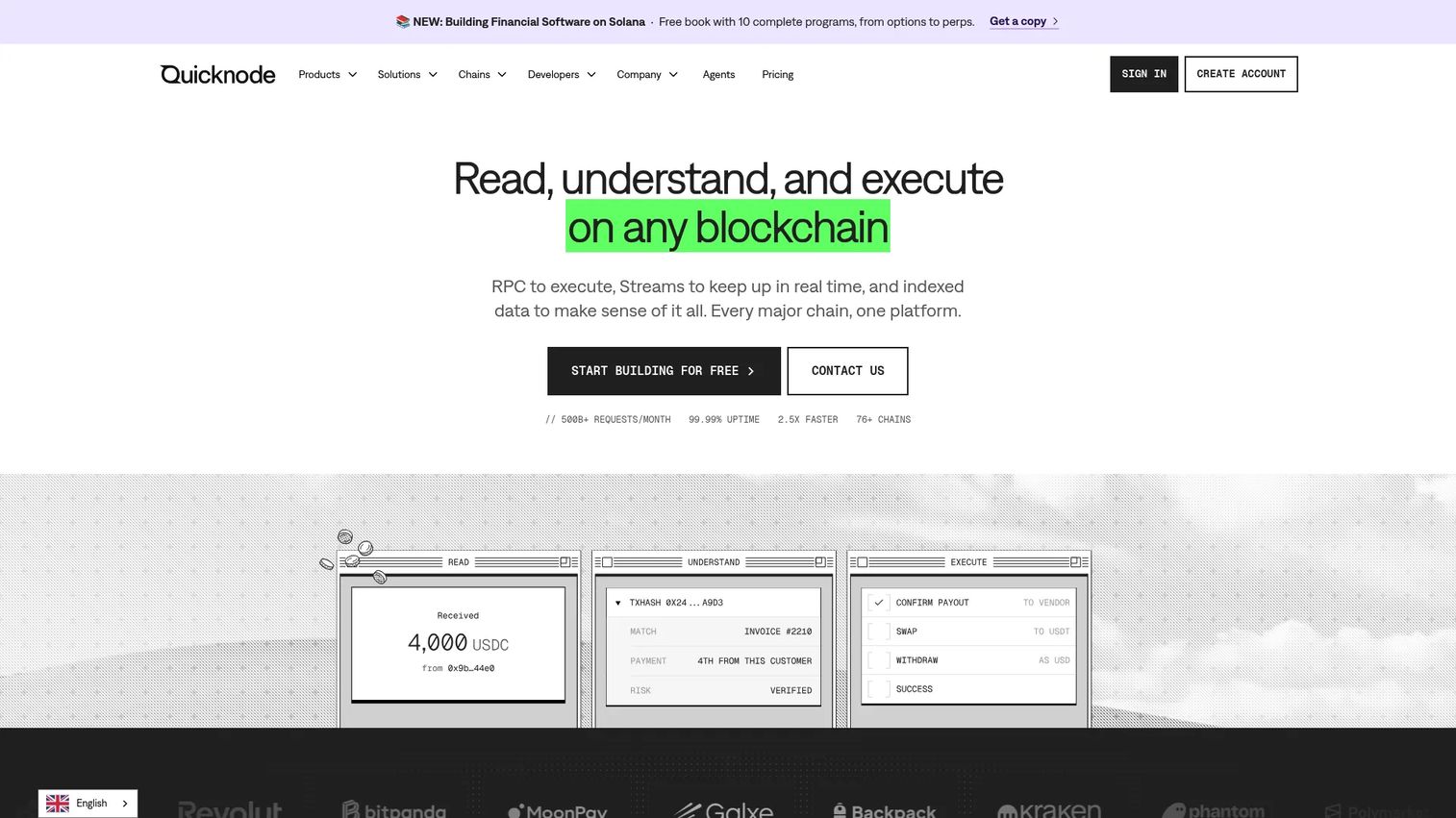
QuickNode is a blockchain development platform focused on managed RPC endpoints, real-time data streams, indexed blockchain data, and production trading infrastructure. It supports 76+ chains and 130+ networks, with regional endpoint options and an add-on marketplace for expanding functionality. Webhooks and Streams cover real-time event monitoring with historical backfills and reorganization handling, which matters for teams building applications with strict data integrity requirements.
Best for: Web3 engineering teams that need low-latency, multi-chain RPC access with data streaming and developer workflow tooling.
Key features
- Multi-chain RPC endpoints across 76+ chains and 130+ networks
- Real-time Streams and Webhooks with historical backfill
- Indexed blockchain data with SQL Explorer and wallet APIs
- Add-on marketplace for extended chain capabilities
- Analytics dashboard for request monitoring and rate tracking
Why choose QuickNode: QuickNode fits teams that need broad chain coverage and real-time data delivery. During presales evaluations, ask buyers to test regional latency and rate limit behavior against their expected transaction volumes, because performance varies by chain and endpoint configuration.
QuickNode pricing: The free trial includes 10 million API credits. Paid plans start at $34/month (Build, billed annually), rising to $212/month (Accelerate) and $424/month (Scale). Enterprise pricing is custom. Monthly billing is also available at higher rates.
G2 rating: 4.5/5
4. Chainstack
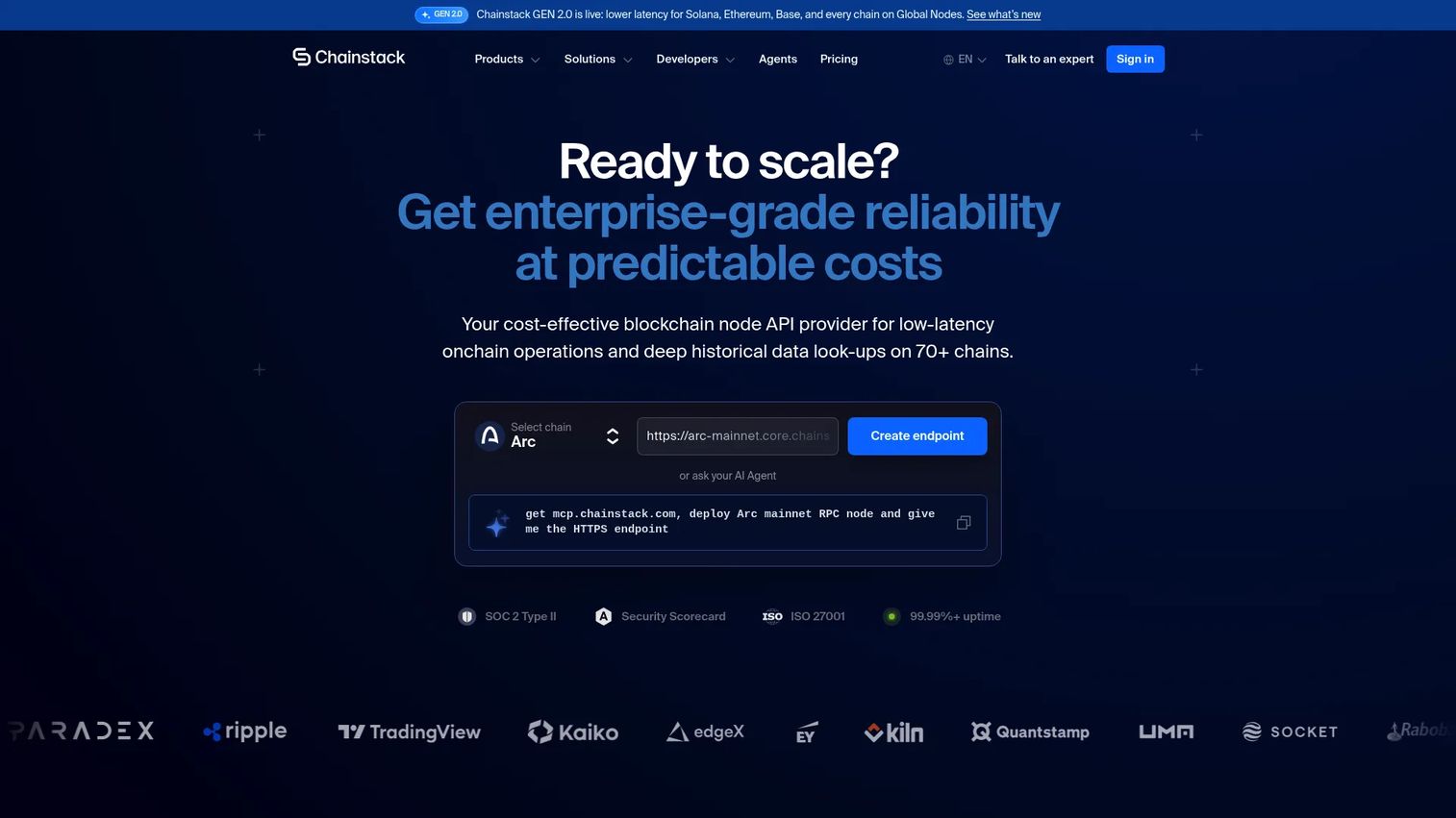
Chainstack provides managed and self-hosted Web3 infrastructure, including nodes, RPC access, WebSockets, archive data, and dedicated nodes. One of its distinguishing characteristics is multi-cloud deployment support, so teams aren't locked to a single cloud provider. Monitoring, alerts, scaling, and failover are included in managed deployments, reducing the operational overhead that typically falls on engineering during a blockchain integration project.
Best for: Teams building or scaling blockchain applications that need managed multi-chain infrastructure with deployment flexibility across cloud environments.
Key features
- Managed blockchain nodes with monitoring, alerts, and failover
- Multi-cloud deployment across cloud providers and protocols
- WebSockets and archive data access
- Dedicated nodes with single sign-on support
- Flat-fee unlimited RPS tiers starting at $149/month
Why choose Chainstack: Chainstack suits buyers who want more deployment control than a single-cloud provider offers, particularly when internal architecture standards require workloads distributed across cloud providers or when specific protocol support is a shortlist requirement.
Chainstack pricing: The Developer plan is free and includes 3 million requests per month. Growth costs $49/month (20M requests), Pro $199/month (80M requests), Business $499/month (200M requests), and Enterprise from $990/month (400M requests). Annual billing saves approximately 16%.
G2 rating: 4.8/5
5. Infura
Infura is one of the longer-running blockchain infrastructure providers, offering managed API access to 40+ blockchain networks, IPFS, and expansion APIs including a Gas API. It covers archive data querying, streaming access, and Debug/Trace API on applicable plans. For teams evaluating Ethereum-based blockchain application development, Infura has an established track record and broad network coverage.
Best for: Developer teams building Ethereum-based applications that need a familiar, well-documented API infrastructure provider.
Key features
- Managed APIs for 40+ supported blockchain networks
- IPFS API for decentralized file storage access
- Archive data querying across applicable networks
- Gas API for transaction fee estimation
- Streaming access and Debug/Trace API on higher plans
Why choose Infura: Infura is a strong choice when the buyer's engineering team already knows the platform or when Ethereum coverage and IPFS access are both required. Evaluate plan limits and credit quotas against expected daily query volumes during the proof of concept.
Infura pricing: The Core plan is free with 3 million daily credits. The Developer plan costs $50/month (15 million daily credits), Team costs $225/month (75 million daily credits), and Enterprise pricing is custom. All prices are monthly.
G2 rating: 4.3/5
6. Coinbase Cloud
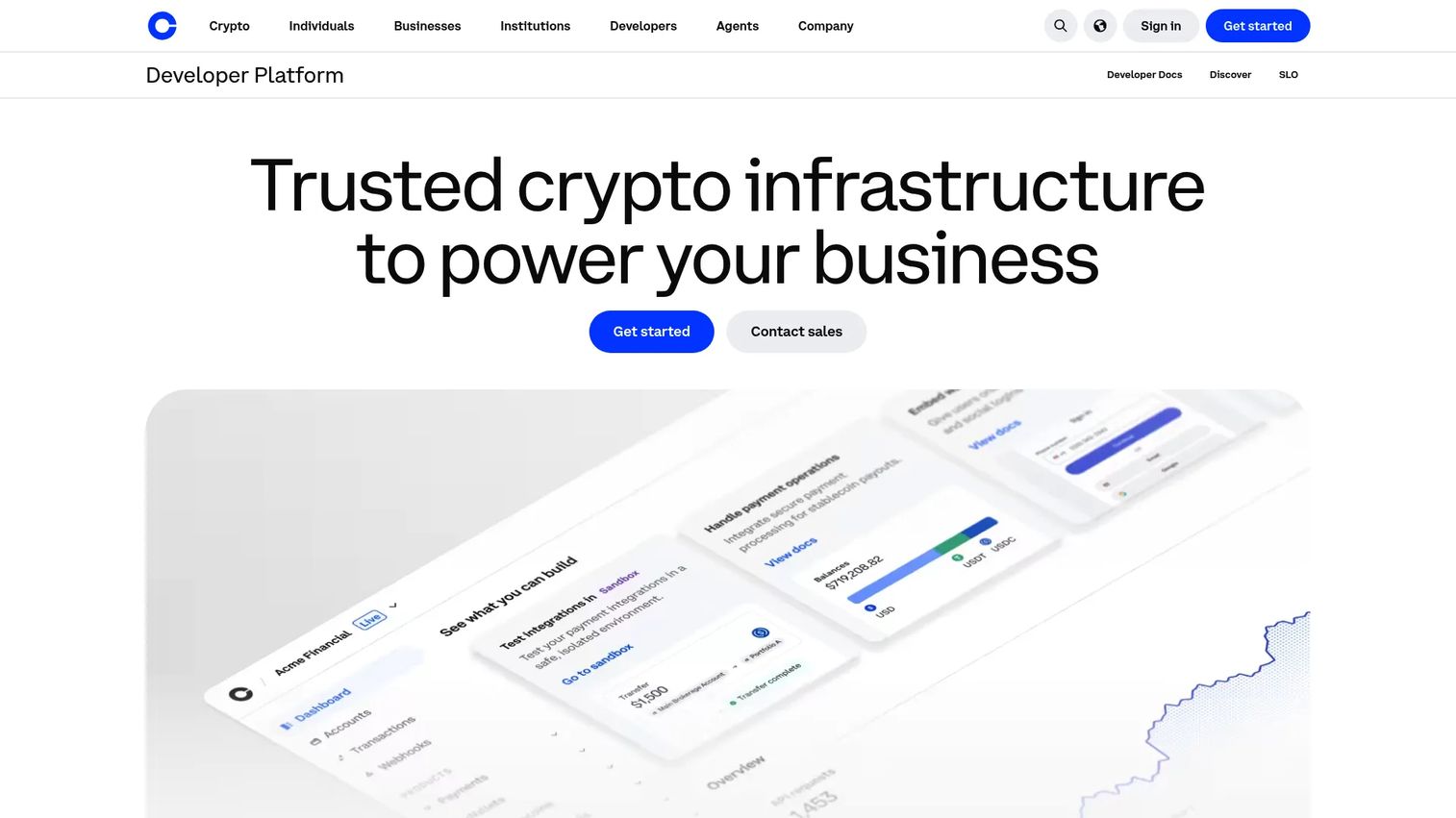
Coinbase Cloud (now presented as Coinbase Developer Platform) provides crypto infrastructure APIs and SDKs for businesses building payments, trading, wallets, stablecoins, and onchain applications. The platform covers stablecoin payments, crypto trading and custody, customizable business wallets, USDC and custom stablecoin infrastructure, and onchain APIs. The crypto-native positioning is its primary differentiator from cloud-agnostic RPC providers.
Best for: Businesses building crypto-enabled payment, trading, or wallet applications that benefit from deep integration with Coinbase's institutional infrastructure.
Key features
- Stablecoin payments and USDC infrastructure
- Crypto trading and institutional custody
- Customizable business wallets and wallet SDKs
- Onchain APIs and developer SDKs
- Coinbase-native institutional support and compliance tooling
Why choose Coinbase Cloud: Choose this platform when the buyer's use case centers on digital asset payments, stablecoin workflows, or crypto custody, and when alignment with a major regulated crypto exchange is commercially or operationally valuable. It serves a different job than a general-purpose RPC provider.
Coinbase Cloud pricing: Contact Coinbase for current plan structure, API access pricing, and institutional or staking service terms.
G2 rating: 4.2/5
7. Kaleido
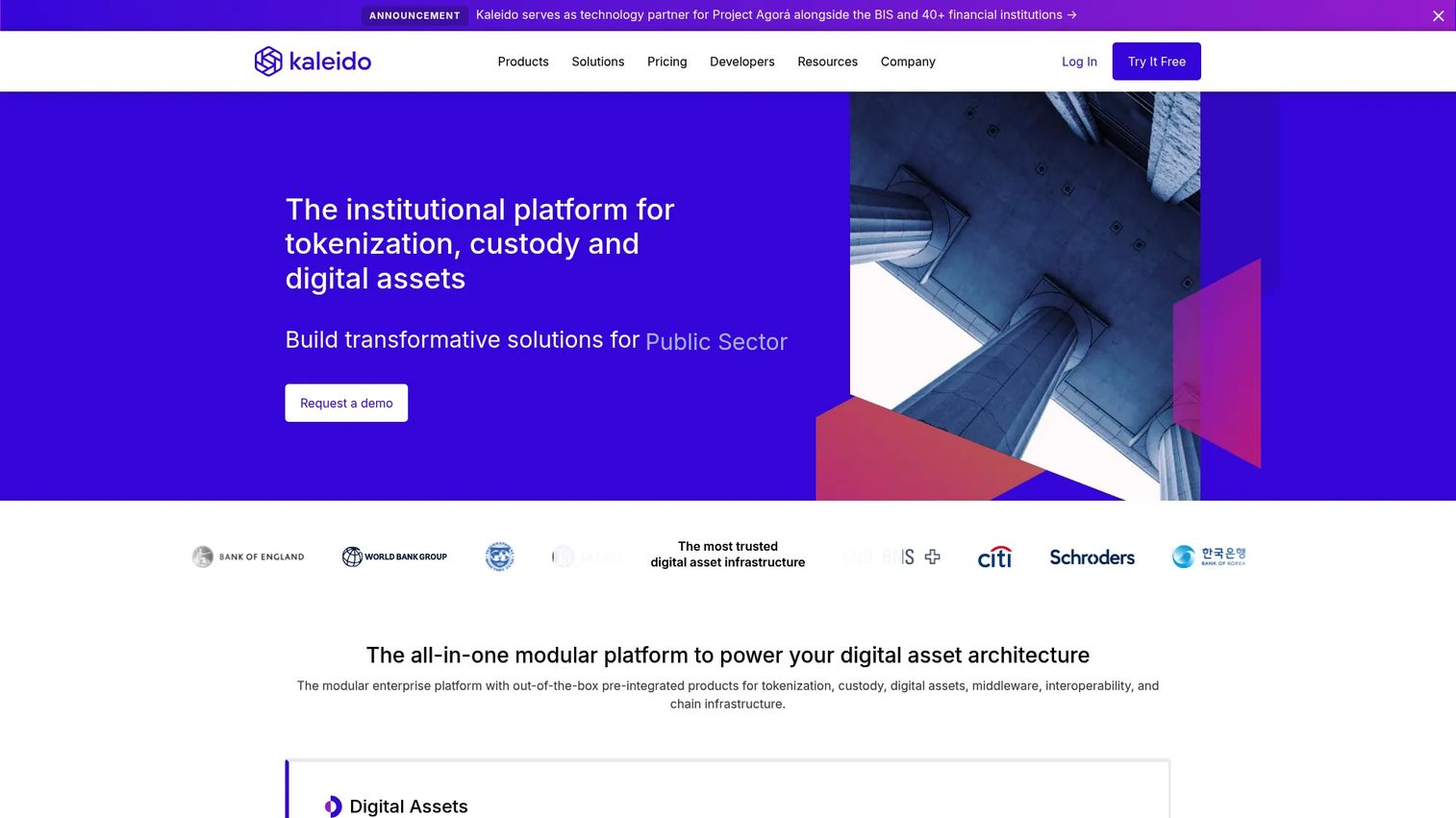
Kaleido is an enterprise blockchain platform covering tokenization, digital asset custody, Web3 middleware, interoperability, and both public and permissioned blockchain infrastructure. It includes a block explorer, token explorer, smart contract management, and cross-cloud multi-region network support. For enterprise presales teams, Kaleido is one of the few BaaS vendors that combines managed consortium network tooling with digital asset and custody capabilities in a single platform.
Best for: Enterprises building permissioned blockchain networks, digital asset workflows, or consortium projects that require governance, custody, and multi-party coordination.
Key features
- Digital asset custody and tokenization tooling
- Web3 middleware and interoperability layer
- Public and permissioned blockchain infrastructure
- Smart contract management and block/token explorers
- Cross-cloud, multi-region network support
Why choose Kaleido: Kaleido is well-suited for enterprise buyers who need managed permissioning, governance workflows, and digital asset capabilities without integrating multiple vendors. It fits regulated or consortium-style deployments better than developer-focused API platforms.
Kaleido pricing: The Starter plan is free. The Developer plan has no membership fee and charges from $0.15/hour per node plus additional usage fees. Business costs $49/month membership plus from $0.55/hour per node. Enterprise pricing requires contacting the sales team.
G2 rating: 4.8/5
8. Blockstream
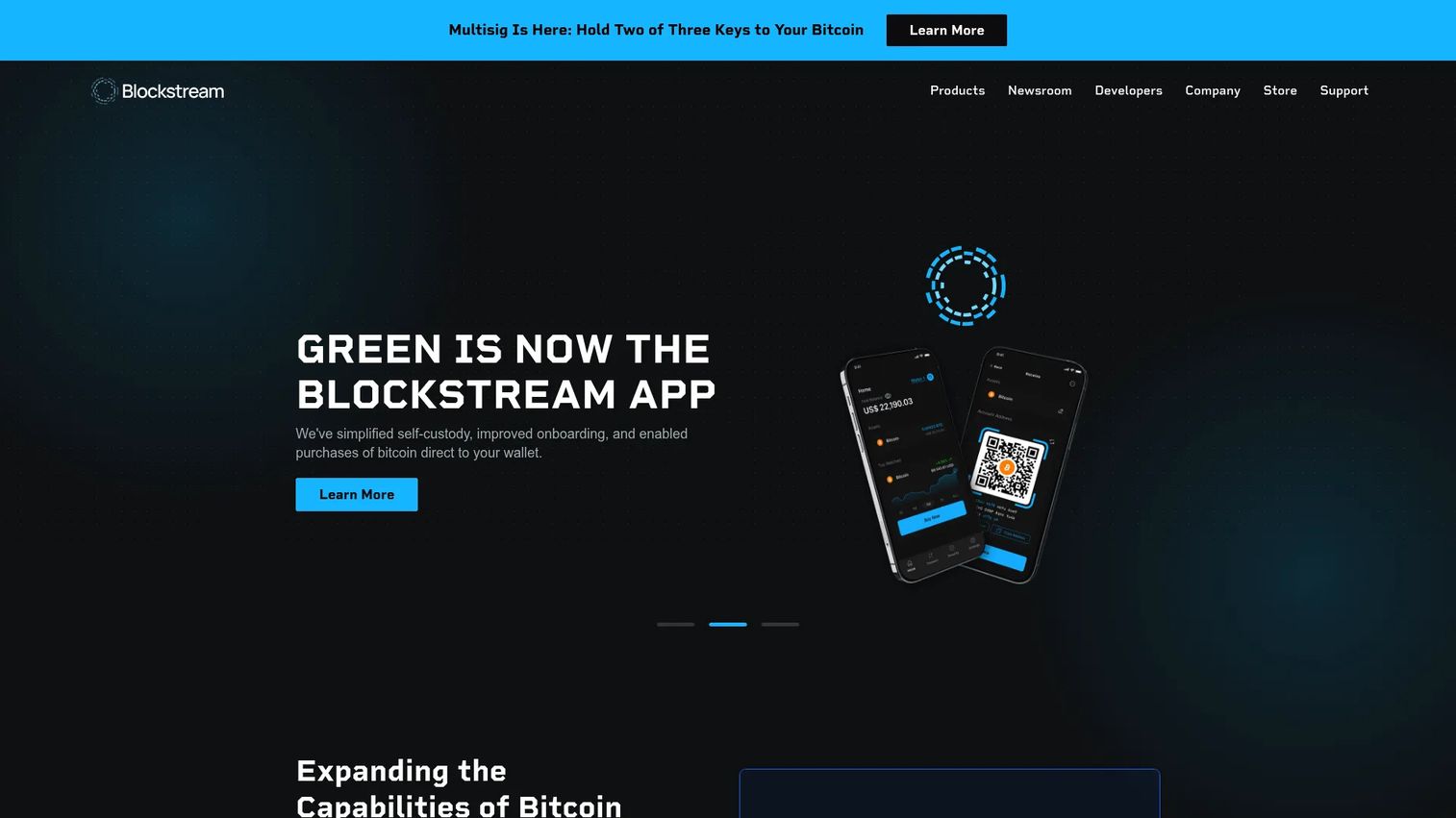
Blockstream is a Bitcoin infrastructure specialist with products covering hardware wallets, the Liquid Network, enterprise custody, asset issuance, and Bitcoin-related developer tools. The Jade hardware wallet lineup (Jade Classic, Jade Core, and Jade Plus) covers personal self-custody with QR signing and Bluetooth options. Enterprise services cover custody, treasury management, tokenization, role-based permissions, and SDK integration for organizations managing Bitcoin or Liquid-based assets.
Best for: Teams evaluating Bitcoin-focused infrastructure, Liquid Network capabilities, or institutional Bitcoin custody and asset issuance.
Key features
- Jade hardware wallet family for self-custody and multisignature
- Enterprise custody with segregated accounts and policy controls
- Liquid Network support for faster, confidential Bitcoin transactions
- Asset issuance tooling on Liquid
- SDK integration for enterprise Bitcoin and digital-asset workflows
Why choose Blockstream: Blockstream is a specialist, not a general-purpose multi-chain BaaS provider. It fits evaluations where Bitcoin infrastructure, Liquid Network capabilities, or Bitcoin-native custody are the primary requirements. For general Web3 API or enterprise permissioned network needs, other platforms on this list serve those jobs.
Blockstream pricing: The Jade Classic hardware wallet starts at $67 USD (one-time). Jade Core is $99 USD and Jade Plus is $149 to $169 USD. Enterprise custody, Liquid, and SDK services are quote-based. Contact Blockstream sales for enterprise service pricing.
G2 rating: 4.2/5
9. R3 Corda
R3 Corda is an open, permissioned distributed application platform for tokenizing assets and enabling private, multi-party business transactions. It is designed for regulated industries where transaction privacy, selective data sharing, and auditability are requirements rather than preferences. Corda processes transactions point-to-point between parties, so only the parties involved in a transaction see its details, which differentiates it from public ledger approaches.
Best for: Regulated financial institutions and enterprises building private, multi-party DLT workflows, digital asset settlement, or tokenization applications.
Key features
- Permissioned peer-to-peer transactions with selective data sharing
- Asset tokenization and digital currency modeling
- Smart contracts and CorDapps (Corda applications)
- Cloud-native scalability with configurable deployments
- REST API and RPC integration, with Java and Kotlin support
Why choose R3 Corda: Choose Corda when the buyer's primary requirements are transaction privacy, permissioned network governance, and regulated financial workflow support. It is not a public-chain RPC provider and should not be compared directly to Alchemy or Infura on developer API features.
R3 Corda pricing: Corda is free and open-source for community use. The commercial Corda Enterprise offering adds production-scale capabilities and dedicated support. Enterprise pricing requires a conversation with R3.
G2 rating: 4.3/5
10. Hyperledger Fabric
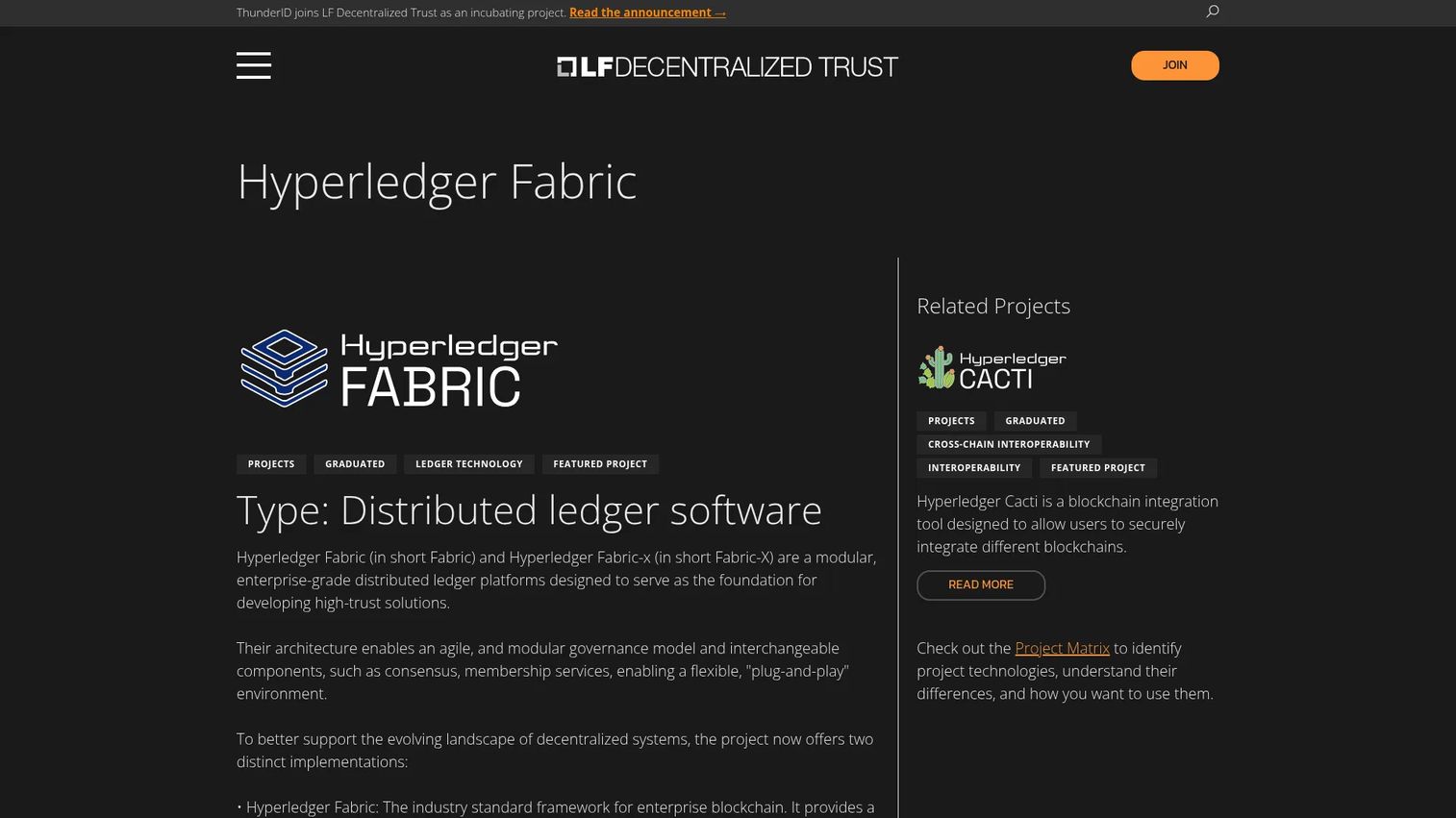
Hyperledger Fabric is an open-source, enterprise-grade permissioned distributed ledger platform maintained under the Linux Foundation's LF Decentralized Trust umbrella. Unlike managed BaaS vendors, Fabric is a framework rather than a hosted service, which means deployment, hosting, and ongoing operations require internal engineering capacity or a managed service partner. Chaincode (smart contracts) can be written in Java, Go, or Node.js, and the modular architecture supports pluggable consensus and membership services.
Best for: Enterprises and system integrators building custom permissioned blockchain networks with specific governance, channel, and policy requirements.
Key features
- Modular, configurable permissioned network architecture
- Channels for private data sharing between subsets of participants
- Chaincode support in Java, Go, and Node.js
- Pluggable consensus and membership services
- Open-source with active LF Decentralized Trust community
Why choose Hyperledger Fabric: Choose Fabric when the buyer needs deep customization, has internal blockchain engineering capacity, or is working with a system integrator who specializes in Fabric deployments. Supply chain traceability, trade finance, and healthcare data workflows are established use cases.
Hyperledger Fabric pricing: The software is free and open-source. Costs come from cloud infrastructure, implementation work, ongoing operations, and any managed service partner fees. Budget conversations should address deployment architecture, not license fees.
G2 rating: 4.1/5
11. BlockApps
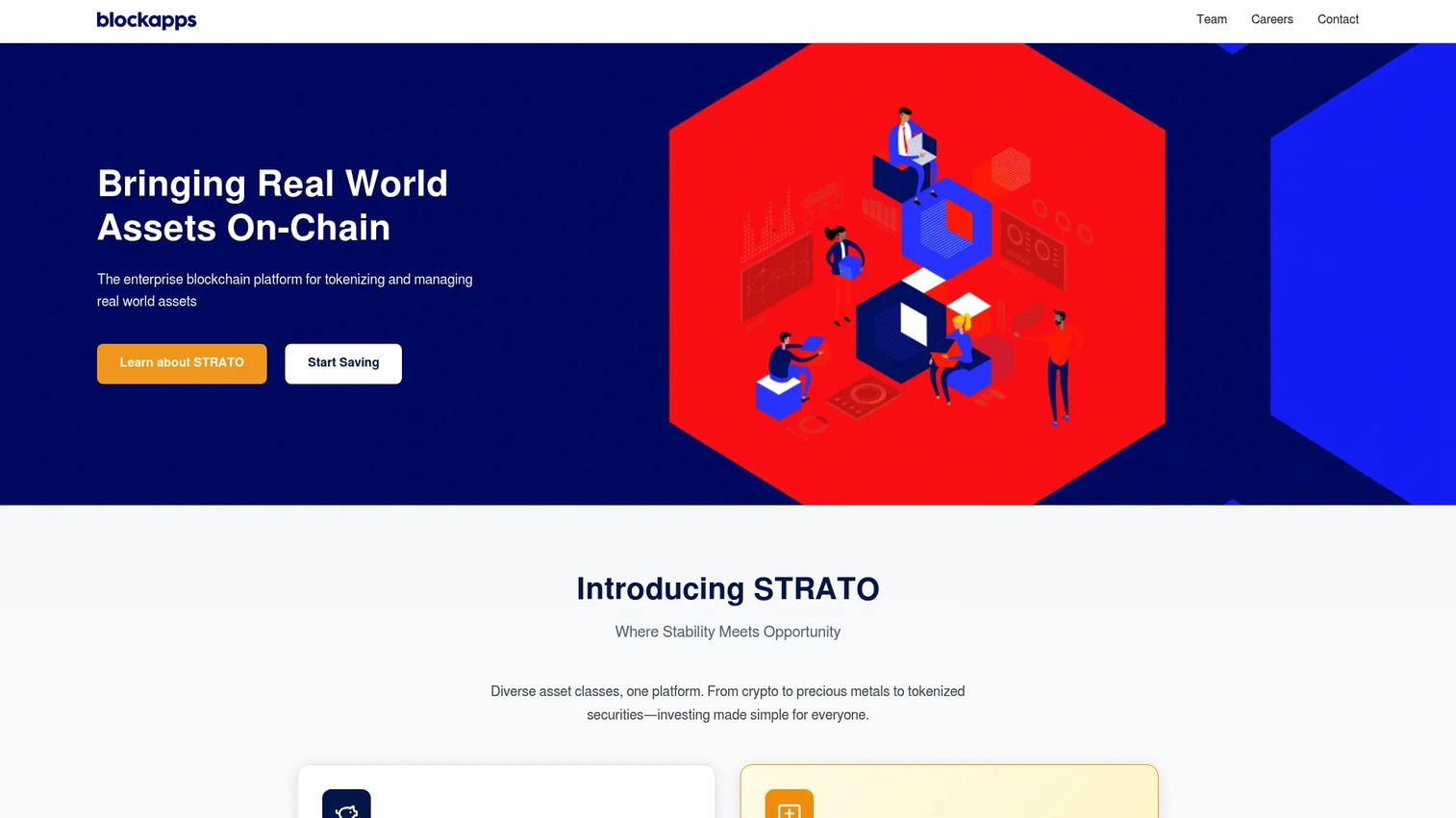
BlockApps is an enterprise blockchain platform for tokenizing and managing real-world assets on Ethereum-compatible networks. It provides verified on-chain identities, granular data privacy controls, private chains, and enterprise developer APIs. BlockApps targets business application teams building traceability, asset management, or multi-party commerce workflows, rather than developer teams looking for raw RPC infrastructure.
Best for: Businesses building blockchain-enabled traceability, real-world asset tokenization, or multi-party commerce applications on enterprise Ethereum infrastructure.
Key features
- Real-world asset tokenization and on-chain identity
- Granular data privacy and private chain support
- Enterprise developer APIs and application tooling
- Ethereum-compatible smart contract deployment
- Business network configuration and governance
Why choose BlockApps: BlockApps fits buyers who want Ethereum-compatible business network capabilities with enterprise application tooling already integrated, rather than starting from a raw framework. It's a shorter path from business requirements to a deployable POC for use cases like supply chain provenance or asset tracking.
BlockApps pricing: Contact BlockApps sales for current pricing. Deployment scope, use case complexity, and support requirements all drive the commercial terms.
G2 rating: 4.0/5
12. Moralis
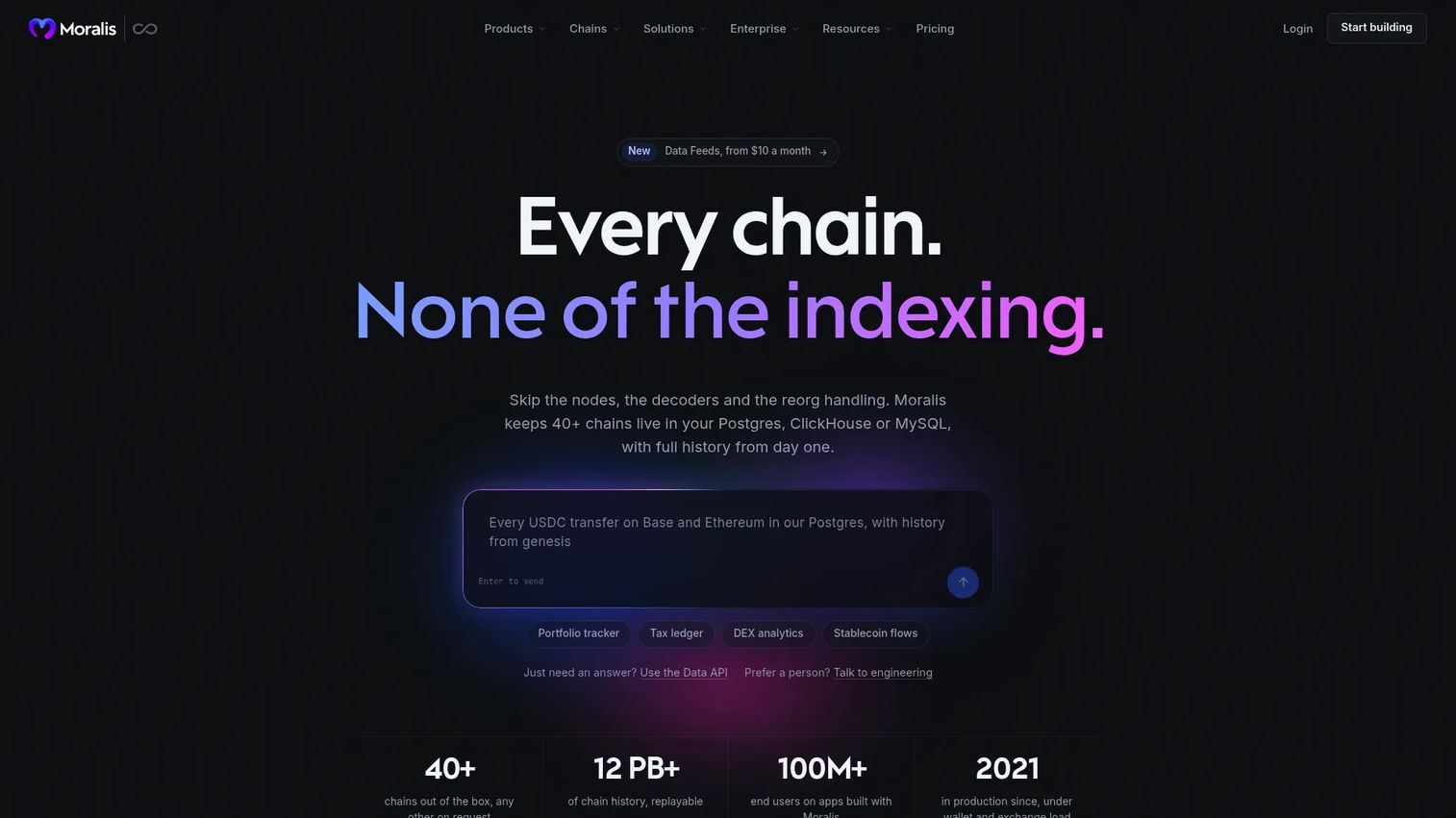
Moralis provides enterprise-grade Web3 APIs and onchain data infrastructure for fetching, monitoring, exporting, and indexing blockchain data across 40+ networks. Its API coverage spans wallets, tokens, NFTs, DeFi data, price feeds, and real-time event monitoring through Streams webhooks. Decoded blockchain data can be delivered directly to Postgres, ClickHouse, MySQL, or Kafka, which makes Moralis a strong fit for analytics products and data-intensive blockchain applications.
Best for: App teams building wallets, DeFi applications, exchanges, or analytics products that need multi-chain blockchain data without running their own indexers.
Key features
- Wallet, token, NFT, DeFi, and price APIs across 40+ networks
- Real-time Streams for blockchain event monitoring
- Decoded data delivery to Postgres, ClickHouse, MySQL, or Kafka
- RPC nodes and Web3 wallet authentication
- Enterprise-grade compute unit model with defined rate limits
Why choose Moralis: Moralis stands out for teams that need structured, decoded blockchain data rather than raw RPC access. If the buyer is building an analytics layer, portfolio tracker, or DeFi interface, Moralis reduces the indexing and data normalization work considerably.
Moralis pricing: Starter costs $149/month billed annually (2M compute units/month, 40 RPS). Pro is $249/month annually (100M compute units, 80 RPS). Business is $749/month annually (500M compute units, 200 RPS). Enterprise pricing is custom.
G2 rating: 5.0/5
13. Luganodes
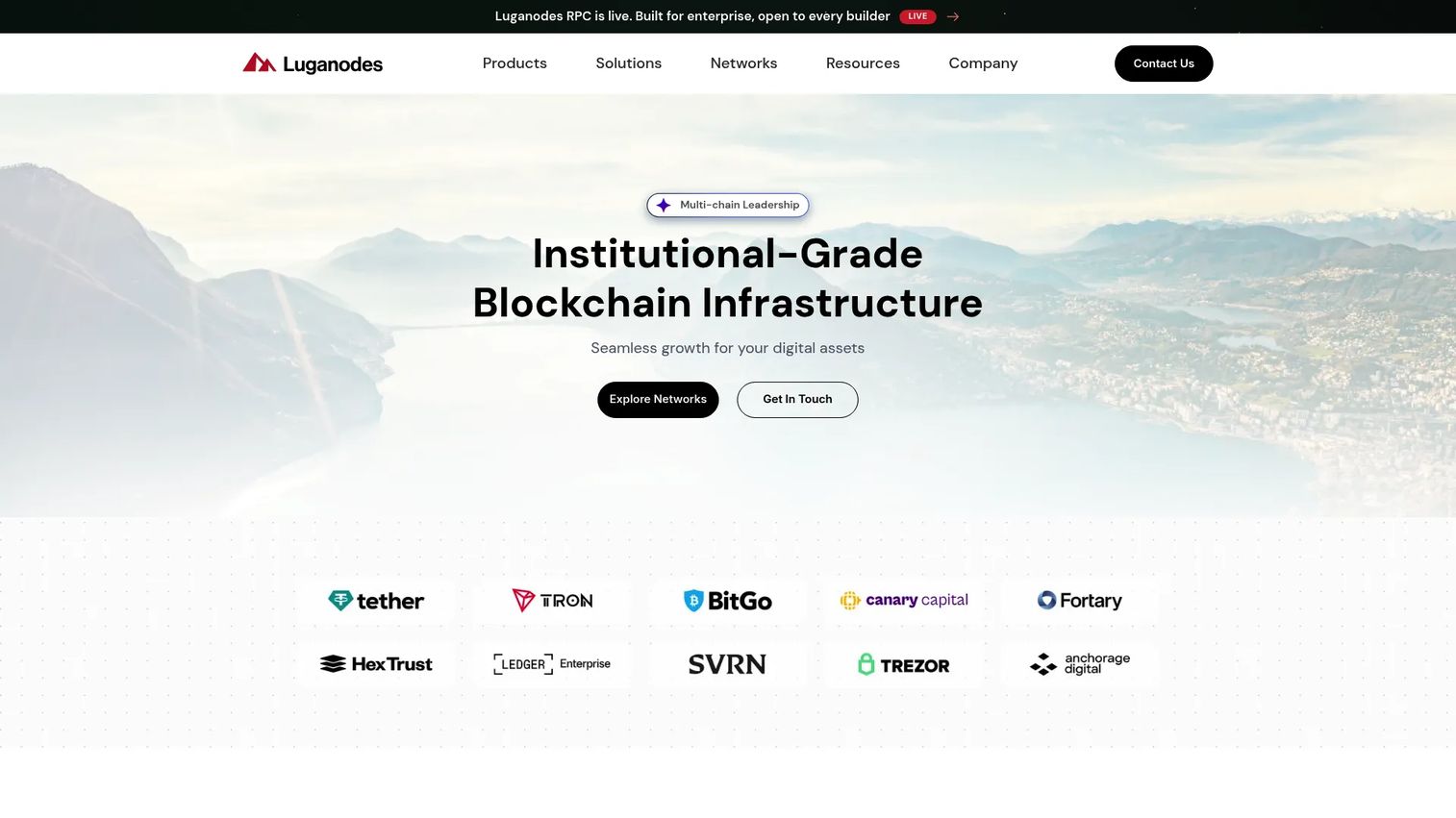
Luganodes is a Swiss-operated, non-custodial blockchain infrastructure provider offering institutional staking, managed validator nodes, staking APIs, and enterprise RPC services. It holds ISO 27001, SOC 2 Type II, and GDPR-aligned certifications, which matters when security teams run a review before approving a new infrastructure vendor. RPC coverage spans multiple proof-of-stake networks with analytics, access controls, and usage-based billing.
Best for: Institutions, enterprises, and developer teams needing institutional-grade staking infrastructure, managed validator nodes, or multi-chain RPC services with compliance documentation.
Key features
- Non-custodial staking across 40+ proof-of-stake networks
- Managed and white-label validator nodes
- Staking API for staking, unstaking, and claim workflows
- Enterprise RPC with analytics, access controls, and usage alerts
- ISO 27001, SOC 2 Type II, and GDPR-aligned compliance posture
Why choose Luganodes: Luganodes suits buyers where staking infrastructure or institutional validator operations are part of the requirement, and where the security team will ask for compliance certifications before sign-off. During evaluation, test latency and failover behavior against your expected RPC query patterns.
Luganodes pricing: The RPC Free plan starts at $0/month (25M compute units/month standard). Growth costs $49/month (300M CU, $0.35/1M CU overage). Pro costs $199/month (1.5B CU, $0.30/1M CU overage). Enterprise terms are custom.
14. The Hashgraph Group
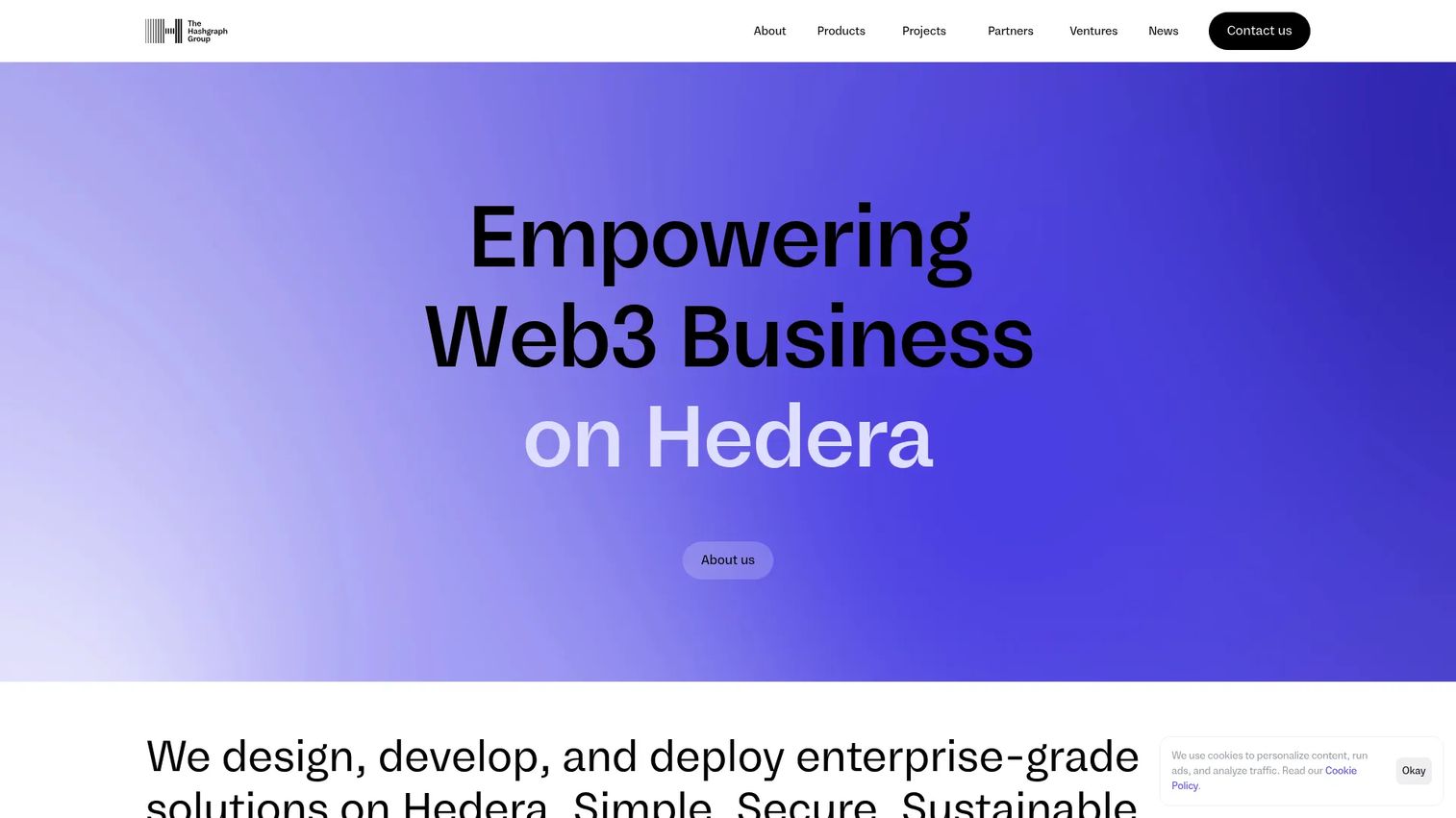
The Hashgraph Group is a Swiss-based Web3 technology company that designs, develops, and deploys enterprise-grade solutions built on Hedera. Its product portfolio covers digital credential issuance, supply chain traceability, carbon emissions measurement, digital asset wallet management, and autonomous AI-agent procurement and settlement workflows. Rather than a general-purpose RPC provider, it focuses specifically on Hedera ecosystem enablement and enterprise application delivery.
Best for: Enterprises evaluating Hedera-based applications for identity, traceability, sustainability reporting, digital assets, or AI-agent transaction workflows.
Key features
- Digital credential issuance, verification, and governance
- Real-time supply chain origin and carbon emissions tracking
- Enterprise carbon emissions measurement and automation
- Digital asset wallet management for enterprises
- Remote technical assistance for the Hedera network
Why choose The Hashgraph Group: Choose this provider when Hedera is already part of the architectural direction or when the buyer's use case aligns with one of Hedera's core strengths: Fast, low-cost, auditable transactions at enterprise scale. It is an ecosystem specialist, not a generic BaaS vendor.
The Hashgraph Group pricing: Pricing is project-based and varies by solution type, implementation scope, and ongoing support requirements. Contact the sales team for program-specific terms.
15. Microsoft Azure Web3
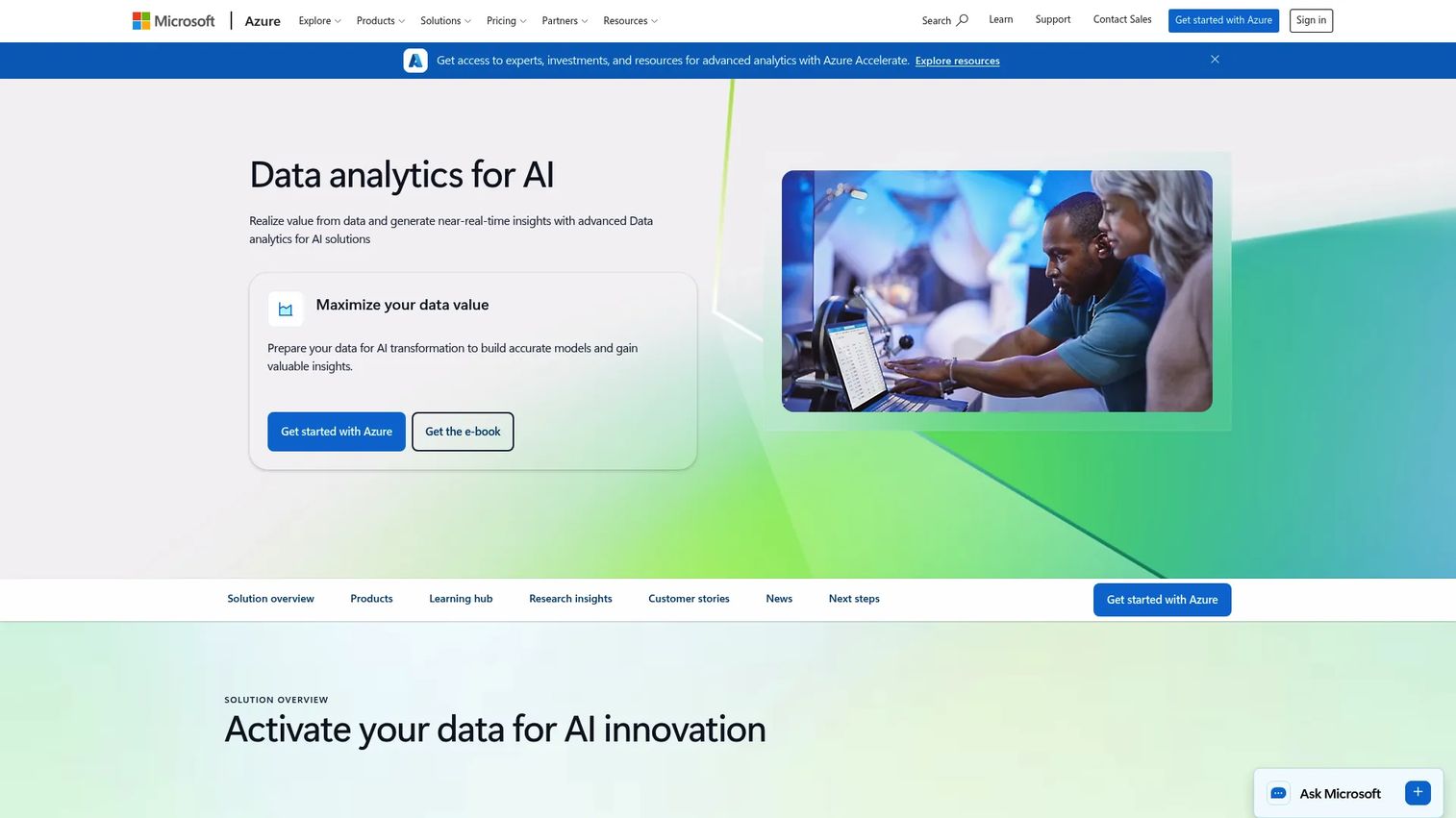
Microsoft Azure Web3 provides Azure products, developer tools, and security services for organizations building Web3 and blockchain-related applications. For Microsoft-centric organizations, it allows blockchain projects to fit inside existing Azure security, identity (including Entra ID), and developer workflows without introducing an entirely separate infrastructure relationship. Partner ecosystem support extends the available deployment and integration options.
Best for: Microsoft-centric organizations that need blockchain and Web3 development to fit inside Azure security, identity, procurement, and developer tooling.
Key features
- Azure products configured for Web3 solution development
- Integration with Azure developer and security tooling
- Azure partner ecosystem for deployment and implementation support
- Identity integrations including Entra ID
- Enterprise cloud governance aligned with Azure compliance frameworks
Why choose Microsoft Azure Web3: The main case is organizational alignment. If the buyer's infrastructure, identity, and procurement teams are already Azure-native, extending into Web3 development through Azure reduces the vendor evaluation overhead. Verify current service scope with Microsoft, as the Azure Web3 product surface has evolved and some previous managed blockchain services have been retired.
Microsoft Azure Web3 pricing: Azure services are usage-based. No Web3-specific starting price is published. Use the Azure pricing calculator with the specific services your architecture requires to estimate costs.
G2 rating: 4.1/5
Considerations when choosing blockchain as a service
Use these criteria to structure pre-shortlist conversations with buyers and internal stakeholders.
Start with the network model
The biggest decision in any BaaS evaluation is which type of network the buyer actually needs. Public-chain apps, permissioned enterprise networks, and consortium DLT workflows need fundamentally different infrastructure. Ask whether the requirement is Ethereum API access, Bitcoin infrastructure, Hedera support, a private permissioned network, or a regulated DLT workflow, and let that answer narrow the shortlist before comparing pricing or G2 ratings. See our application security testing software and asset tracking software guides for how adjacent infrastructure categories handle similar evaluation frameworks.
Validate security and access controls
Security teams will ask about IAM integration, API key management, key custody, data privacy controls, audit logging, private networking options, and SOC reports. Collect security documentation before a full evaluation. Do not claim compliance on behalf of a vendor without reviewing their published certifications and data processing agreements directly.
Test performance against realistic workloads
RPC speed, rate limit headroom, archival data access, failover behavior, and regional latency are performance dimensions that vary significantly across providers and chain types. Run a proof of concept with transaction and query patterns that reflect the buyer's actual production workload, not a synthetic benchmark. Performance that passes a low-volume test may degrade at production scale.
Compare total cost, not just entry tier
Costs accumulate across API calls, compute units, dedicated nodes, enterprise support tiers, staking fees, data transfer, storage, and implementation work. Comparing only the lowest published monthly price across providers will produce a misleading shortlist. Ask each vendor for a cost estimate against a realistic monthly workload before finalizing a comparison.
Check ecosystem and integration fit
Developer SDKs, CRM and identity integrations, monitoring tools, and internal system connections all affect adoption speed. Presales teams should document required integrations before vendor calls, so those conversations cover specific API compatibility and supported platforms rather than generic integration claims.
Conclusion
The 15 blockchain as a service providers in this guide cover five distinct infrastructure categories, and the right shortlist depends entirely on the buyer's network model, not on overall brand recognition.
For cloud-aligned teams, Amazon Managed Blockchain and Microsoft Azure Web3 fit inside existing cloud governance, though note Amazon Managed Blockchain's October 2026 closure to new accounts. For developer infrastructure and APIs, Alchemy, QuickNode, Chainstack, Infura, Moralis, and Luganodes offer free tiers and clear paid plan pricing. For enterprise and permissioned networks, Kaleido, R3 Corda, Hyperledger Fabric, and BlockApps each serve different deployment models and governance requirements. Coinbase Cloud and Blockstream serve crypto-native use cases. The Hashgraph Group is the go-to for Hedera-specific enterprise adoption.
The practical next step: Build a shortlist of three to five platforms by mapping each to the buyer's required network model. Then run a small proof of concept against realistic transaction volumes, security requirements, and integration points. Use the considerations section above to structure those POC evaluation criteria before you engage vendors.
For related infrastructure evaluation guides, see application performance monitoring tools, best presales software tools, and blockchain analysis tools.
FAQs
Blockchain as a service is a managed infrastructure model where a provider hosts or supports the blockchain network layer so organizations can build applications without operating nodes, endpoints, or network governance themselves. The provider handles infrastructure reliability and access, while the customer retains ownership of application logic, compliance obligations, and integration design.
A blockchain network is the protocol and ledger layer, for example Ethereum, Hyperledger Fabric, or Hedera. Blockchain as a service is the managed infrastructure, API, or tooling layer that sits on top of or around that protocol, making it accessible without requiring the buyer to run and maintain the underlying network components.
The answer depends on the required network model. For managed permissioned networks, Kaleido, R3 Corda, and Hyperledger Fabric (with an implementation partner) are the strongest options. For cloud-aligned enterprise deployments, Microsoft Azure Web3 and (historically) Amazon Managed Blockchain fit inside existing procurement and governance workflows. BlockApps covers enterprise Ethereum application development.
Alchemy, QuickNode, Chainstack, Infura, Moralis, and Luganodes are the primary options for developer infrastructure. Alchemy and Moralis lead on indexed data APIs and developer tooling. QuickNode and Chainstack offer the widest chain coverage. Infura is the established choice for Ethereum-specific development. Chain support, rate limits, and pricing per compute unit are the differentiating factors.
AWS provided managed blockchain services through Amazon Managed Blockchain, covering both public blockchain data access and private Hyperledger Fabric network management. However, AWS announced in October 2026 that Amazon Managed Blockchain is no longer accepting new customers, with existing-customer service ending in September 2027. Verify directly with AWS before including it in a new account's shortlist.
No. Enterprise use cases include supply chain traceability, identity credential issuance, asset tokenization, trade settlement, audit trail generation, carbon emissions tracking, and document verification. Cryptocurrency and Web3 application development represent one segment of the market. Enterprise DLT platforms like Kaleido, R3 Corda, and Hyperledger Fabric are built primarily for regulated business workflows, not token trading.
Pricing varies significantly by provider category. RPC providers like Chainstack and QuickNode charge from $34 to $49 per month for entry-level paid plans, with costs scaling by request volume or compute units. API platforms like Moralis start at $149/month billed annually. Enterprise platforms like Kaleido, R3 Corda, and BlockApps use usage-based or custom pricing that depends on network size, deployment model, and support level. Open-source frameworks like Hyperledger Fabric are free but carry hosting, implementation, and operational costs.
Key questions cover network model (which chains or network types are required), performance expectations (expected transaction volumes and query patterns), security requirements (API key management, private networking, SOC certifications, audit logs), integration needs (which CRMs, identity systems, and monitoring tools must connect), support SLAs (response time commitments and escalation paths), pricing drivers (whether costs scale by request, node hour, compute unit, or enterprise tier), and POC success criteria (what the buyer needs to see working before moving to a production decision).