Chemical risk does not wait for a quarterly audit. It surfaces when an employee needs a Safety Data Sheet and the binder is three revisions out of date, when a new material arrives at a facility before anyone has reviewed the hazard controls, or when a regulator asks for a Tier II report built from inventory records nobody fully trusts.
The real problem is rarely a missing document. It is fragmented records spread across shared drives, spreadsheets, and site-level binders that cannot answer a safety manager, an auditor, or a first responder quickly. The chemical management software market reached $1.73 billion in 2025 and is growing at a 9.2% CAGR, according to Dataintelo (2026), driven largely by organizations replacing those fragmented processes with governed, centralized systems.
For a founder or operator evaluating this category, the decision is about operating control. The question is whether the platform you choose will support a repeatable compliance process after you hand it to an EHS leader, or whether it will create a second layer of technical debt to manage alongside the spreadsheets it replaced.
What's inside
This guide covers seven platforms evaluated for chemical management depth, Safety Data Sheet workflows, inventory controls, regulatory reporting, and EHS platform fit. It also covers:
- The difference between dedicated chemical management and broader EHS suites
- Which platforms fit mid-market operations versus global enterprises
- What founders and operators should verify before a procurement process starts
- Selection criteria drawn from compliance management software evaluation patterns
Tools were selected based on verified feature coverage, market presence, and G2 ratings current as of October 2026.
TL;DR
- Best for broad chemical safety and EHS workflows: VelocityEHS combines SDS management, GHS labeling, mobile access, and wider EHS operations in one platform
- Best for global product stewardship and regulatory complexity: Sphera Chemical Management handles multi-jurisdictional chemical data, material approvals, and enterprise reporting depth
- Best for configurable enterprise EHSQ operations: Cority suits organizations with established enterprise programs that need chemical workflows to fit a broader governance model
- Best for chemical safety connected to workforce training: HSI pairs SDS management with an integrated learning platform and strong field accessibility
- Best for scalable EHS compliance and regulatory tracking: Enablon covers large-scale EHSQ governance across global operations; Dakota Software focuses more narrowly on regulatory obligation calendars and compliance task management
What is chemical management software?
Chemical management software is a system that centralizes chemical inventory, Safety Data Sheets, hazard information, labels, approvals, and regulatory reporting so organizations can control chemical risk across sites and products.
It is closely related to but distinct from general compliance management software because it focuses specifically on the physical and documentary chain for hazardous materials: What chemicals are present, where they are stored, what hazards they carry, which documents govern their handling, and which regulatory obligations they trigger.
What chemical management software manages
A well-implemented chemical management system typically covers:
- Chemicals, substances, mixtures, and containers, organized by site and location
- Quantities, owners, usage context, and storage conditions
- Current Safety Data Sheets with version control and supplier data
- Hazard classifications, exposure controls, and risk assessment records
- Regulatory thresholds, reporting obligations, and audit evidence
Core capabilities to evaluate
When comparing platforms, map each of the following to your immediate operating requirements:
- Safety Data Sheet storage, indexing, validation, and version control
- Chemical inventory management by site, room, container, or process unit
- Hazard classification, risk assessment, and exposure control documentation
- GHS, HazCom, and secondary container labeling workflows
- Regulatory reporting, including Tier II and jurisdiction-specific obligations
- Approval workflows for new chemical introduction before site entry
- Mobile and QR-enabled access to SDS and inventory records at the point of work
- Integrations with EHS, incident management, training, and procurement systems
What chemical management software does not replace
A chemicals management software platform organizes and governs records and workflows. It does not replace legal counsel or regulatory interpretation for unusual obligations, remove the need for physical site inspection and safety processes, or serve as a standalone emergency response plan, although it can materially improve how quickly personnel access relevant chemical information during an incident.
When to use chemical management software
Centralize SDS and chemical information across multiple sites
The trigger is usually lost visibility. When spreadsheets and shared drives can no longer tell you which SDS version is current, which facility holds a specific material, or who owns a container, the cost of manual reconciliation starts exceeding the cost of a governed system. A chemical management system creates a single source of truth for SDS revisions, locations, containers, and ownership across all facilities.
Prepare for reporting, inspections, and audits
When Tier II reports, HazCom audits, or product stewardship reviews require records assembled under pressure from multiple disconnected sources, a governed platform shortens that cycle substantially. Platforms that support regulatory reporting workflows help teams maintain the evidence trail year-round, not only during filing season. Buyers should confirm which specific frameworks a platform supports before assuming coverage applies to their jurisdictions and obligations.
Control new chemical approvals before they create risk
An approval workflow requires EHS review and documentation before a chemical enters a site or product formulation. This is particularly relevant when procurement and operations teams are adding materials faster than safety teams can review them. A chemical approval workflow closes the gap between purchasing intent and verified site authorization.
Chemical management software comparison
Each platform below covers at least core SDS and inventory management. Where platforms vary most significantly is in regulatory reporting depth, global coverage, integration scope, and whether chemical management is a standalone capability or part of a broader EHS suite. Use this table to narrow your shortlist before reading the full entries.
| # | Product | Best for | Key differentiator | Pricing | G2 rating |
|---|---|---|---|---|---|
| 1 | VelocityEHS | Broad chemical safety and EHS workflows | Chemical management within an integrated EHS platform | Quote-based | 4.4/5 |
| 2 | Sphera Chemical Management | Global product stewardship and enterprise chemical programs | Enterprise-grade chemical data, SDS, and approval workflows | Quote-based | 4.0/5 |
| 3 | Cority | Configurable enterprise EHSQ operations | Chemical management with 3E regulatory content integration | Quote-based | 4.0/5 |
| 4 | HSI | Chemical safety, training, and field accessibility | SDS management paired with integrated EHS learning platform | From $4,000/year | 4.7/5 |
| 5 | EcoOnline | EHS teams needing chemical safety and risk controls | Chemical safety within a broader EHS and ESG platform | Quote-based | 4.3/5 |
| 6 | Enablon | Global enterprises with broad EHSQ governance needs | Large-scale EHSQ, compliance, and sustainability platform | Quote-based | 4.1/5 |
| 7 | Dakota Software | Regulatory obligation tracking and compliance calendars | Decision-Tree-Logic for site-specific regulatory applicability | Quote-based | 4.3/5 |
Pricing and G2 ratings verified in October 2026 from vendor pricing pages and live G2 listings.
7 best chemical management software tools for 2026
1. VelocityEHS
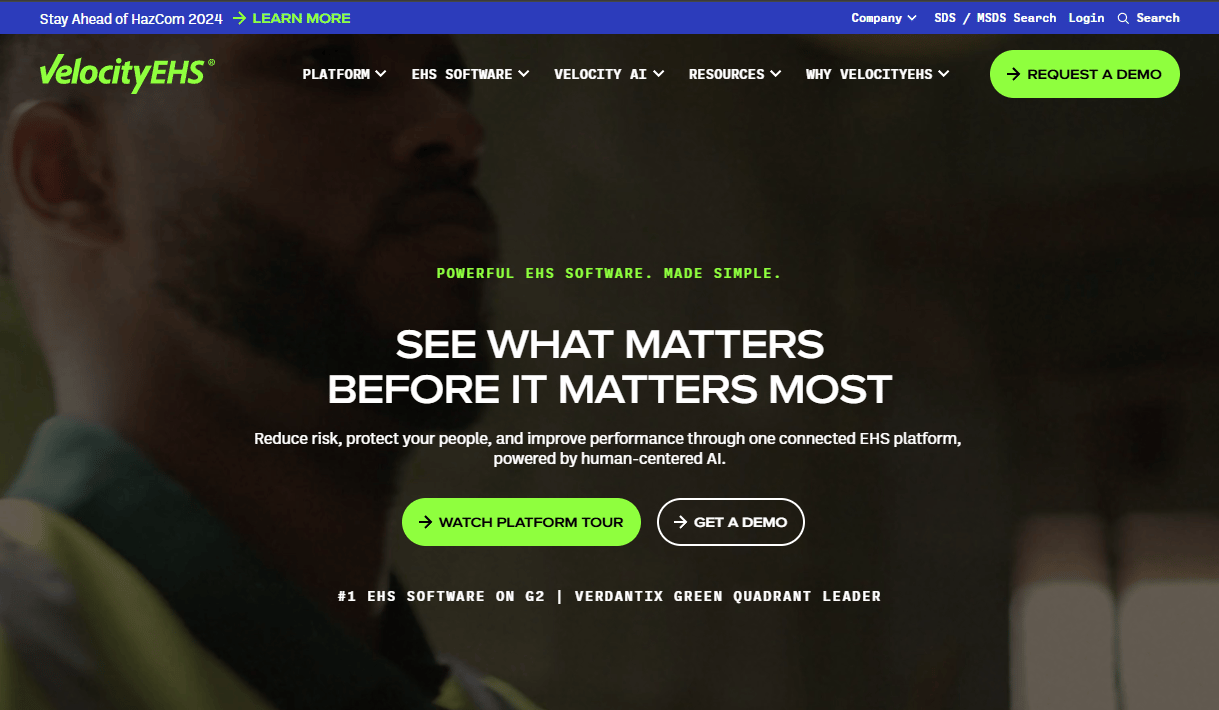
VelocityEHS is an EHS and sustainability management platform built for organizations that need chemical compliance workflows sitting alongside incident management, audits, ergonomics, and training. Its chemical management module covers SDS libraries, chemical inventory by site and location, GHS labeling, mobile access, and regulatory reporting support.
Best for: Mid-market and enterprise EHS teams that want chemical compliance inside a wider EHS platform, without managing a separate chemical database.
Key features
- SDS library with GHS labeling and version access
- Chemical inventory tracking by site, room, and container
- Mobile and QR-enabled SDS and inventory access
- Offline incident and chemical-data workflows for field teams
- AI-powered EHS insights and assistant capabilities
Why choose VelocityEHS: The case for VelocityEHS is consolidation. If your EHS team already needs incident management, audits, and training alongside chemical controls, running those workflows in one environment reduces the integration overhead and the risk of data living in multiple systems. For a founder handing this to an EHS hire on day one, the breadth reduces the number of procurement decisions that need to happen before the team can operate.
VelocityEHS pricing: VelocityEHS works on a quote-based model; pricing is handled through sales and the company states there are no per-user fees. Contact their team directly for a proposal based on your facilities, modules, and user scope.
VelocityEHS holds a 4.4/5 rating on G2, verified October 2026.
2. Sphera Chemical Management
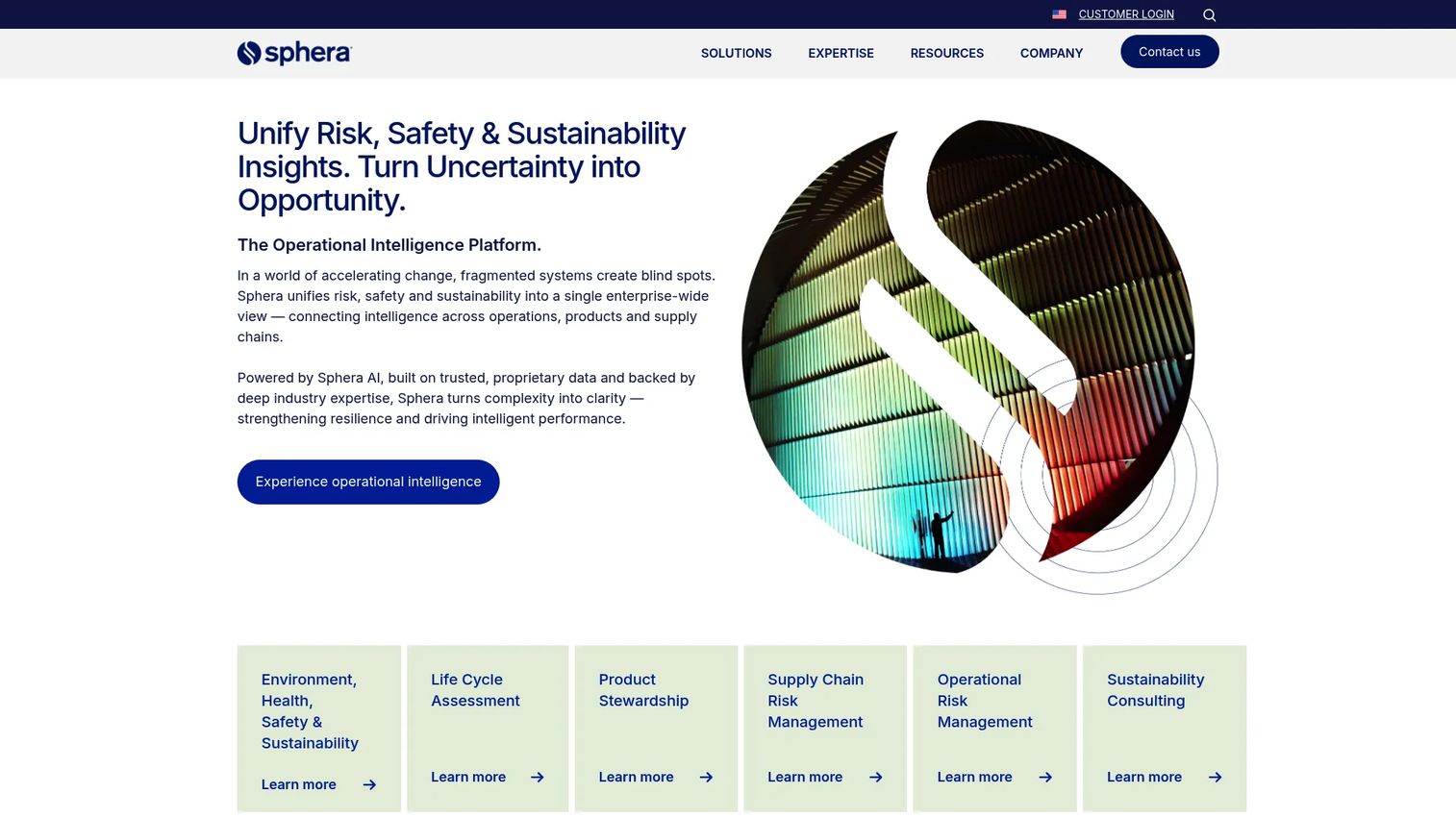
Sphera Chemical Management is built for large enterprises managing complex chemical data across jurisdictions, product lines, and business units. Its core strengths include centralized chemical inventory administration, Safety Data Sheet management with expert indexing, material approval workflows, chemical risk assessment, and regulatory compliance reporting.
Best for: Organizations managing chemical data across multiple jurisdictions, supplier networks, and enterprise operations where product stewardship is a formal program.
Key features
- Centralized chemical inventory and material data management
- Safety Data Sheet management with expert indexing and regular updates
- Material approval workflows and compliance reporting
- Chemical risk assessment and exposure control documentation
- Enterprise reporting for multi-jurisdictional regulatory obligations
Why choose Sphera Chemical Management: Sphera fits when regulatory operations are strategic infrastructure rather than an occasional compliance project. The platform is designed for dedicated ownership: A compliance team, a product stewardship function, or an EHS organization with formal governance processes. Founders evaluating Sphera should treat it as a longer enterprise commitment with the procurement and implementation structure to match.
Sphera Chemical Management pricing: Sphera uses a quote-based commercial model with no pricing displayed on the official site. Request a demo through their sales team to get a proposal specific to your chemical data volume, site count, and regulatory reporting scope.
Sphera holds a 4.0/5 rating on G2 across SpheraCloud reviews, verified October 2026.
3. Cority
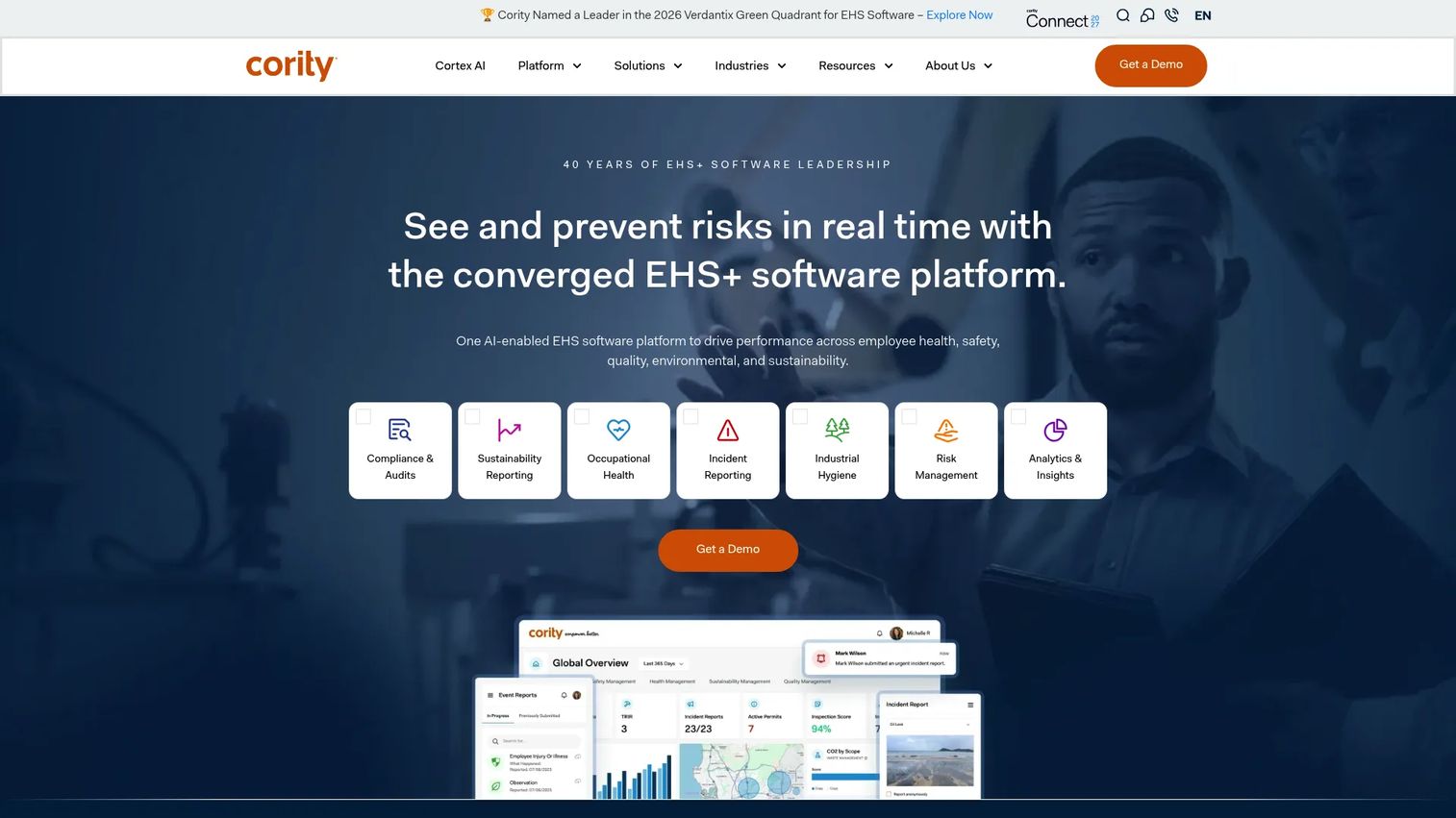
Cority is an enterprise EHS+ platform covering environmental, health, safety, quality, and sustainability management. Its chemical management capability integrates with 3E regulatory content, which provides chemical, regulatory, and compliance data to support inventory administration, SDS management, regulatory prescreening, and broader EHS workflows. The platform is modular and configurable, making it a strong fit for organizations with established enterprise programs.
Best for: Enterprise organizations that need chemical workflows to fit a structured EHSQ operating model, supported by a recognized regulatory content source.
Key features
- Chemical inventory administration with SDS management
- Regulatory prescreening supported by 3E content integration
- Configurable EHS workflows and enterprise reporting
- Embedded Cortex AI for insights across EHS data
- Document control and management of change workflows
Why choose Cority: The platform suits buyers who already operate with formal enterprise programs and need chemical management to connect cleanly to audits, incidents, occupational health, and sustainability reporting. Founders evaluating Cority should plan for formal implementation and expect the total ownership model to include both subscription and implementation costs, plus ongoing administrative ownership.
Cority pricing: Pricing is customized based on selected modules, user scope, integrations, and subscription model. Implementation is a separate one-time fee. Cority offers pre-configured Essentials packages, but numeric prices are not displayed. Get a proposal from their sales team.
Cority holds a 4.0/5 rating on G2 across 91 reviews, verified October 2026.
4. HSI
HSI is an all-in-one, cloud-based safety intelligence platform that combines EHS management with chemical management and an integrated learning and training system. For organizations where compliance depends as much on frontline adoption as on back-office records, HSI connects SDS management, HazCom workflows, chemical inventory, labeling, QR code access, and employee training in a single environment.
Best for: Safety leaders who need employees to access chemical and hazard information at the point of work, paired with the training tools to support frontline compliance.
Key features
- SDS management with updates and chemical inventory records
- HazCom signage and secondary container labeling
- QR code and mobile access for field SDS retrieval
- Integrated learning management with safety training content
- Configurable no-code workflows, forms, and reporting dashboards
Why choose HSI: The training integration is what separates HSI from pure chemical management platforms. If your compliance picture requires workers to not only access SDS records but to complete role-specific hazard training within the same system, HSI removes the need to manage a separate LMS. The platform is practical for organizations where frontline adoption drives the compliance outcome, not only administrator reporting.
HSI pricing: HSI lists safety training starting at $4,000 per year, based on 75 employees and 10 training courses under a three-year agreement. SDS Management is listed at $1,500 and the Pillar EHS module at $125. Full bundle pricing for combined EHS, LMS, and SDS configurations is not fully published; contact their team for a configured quote.
HSI holds a 4.7/5 rating on G2, verified October 2026. That rating makes it the highest-rated platform on this list.
5. EcoOnline
EcoOnline is a cloud-based EHS and sustainability platform that covers chemical safety alongside incident management, risk assessment, ESG reporting, training, and emergency management. Its chemical management capability sits within a broader workplace safety and operational resilience system, making it relevant for organizations that need chemical records to inform daily safety decisions rather than only annual filings.
Best for: Multi-site and regulated organizations that want chemical safety embedded in a connected EHS program covering risk, incidents, sustainability, and training.
Key features
- Chemical management and SDS management tools
- Incident reporting, risk assessments, and audit workflows
- ESG reporting and carbon accounting
- Emergency and crisis management capabilities
- Training and eLearning module integration
Why choose EcoOnline: EcoOnline works best when chemical safety is one of several connected EHS concerns, not a standalone problem. Organizations that need SDS access to feed directly into risk assessments, corrective actions, and reporting dashboards will find the connected structure more useful than a dedicated chemical database. For founders expanding across sites or geographies, the platform's multi-site architecture reduces the need to stand up separate systems as the business grows.
EcoOnline pricing: EcoOnline does not display pricing on its website. The commercial model is quote-based; contact their team with your site count, module requirements, and geographic scope to receive a proposal.
EcoOnline holds a 4.3/5 rating on G2, verified October 2026.
6. Enablon
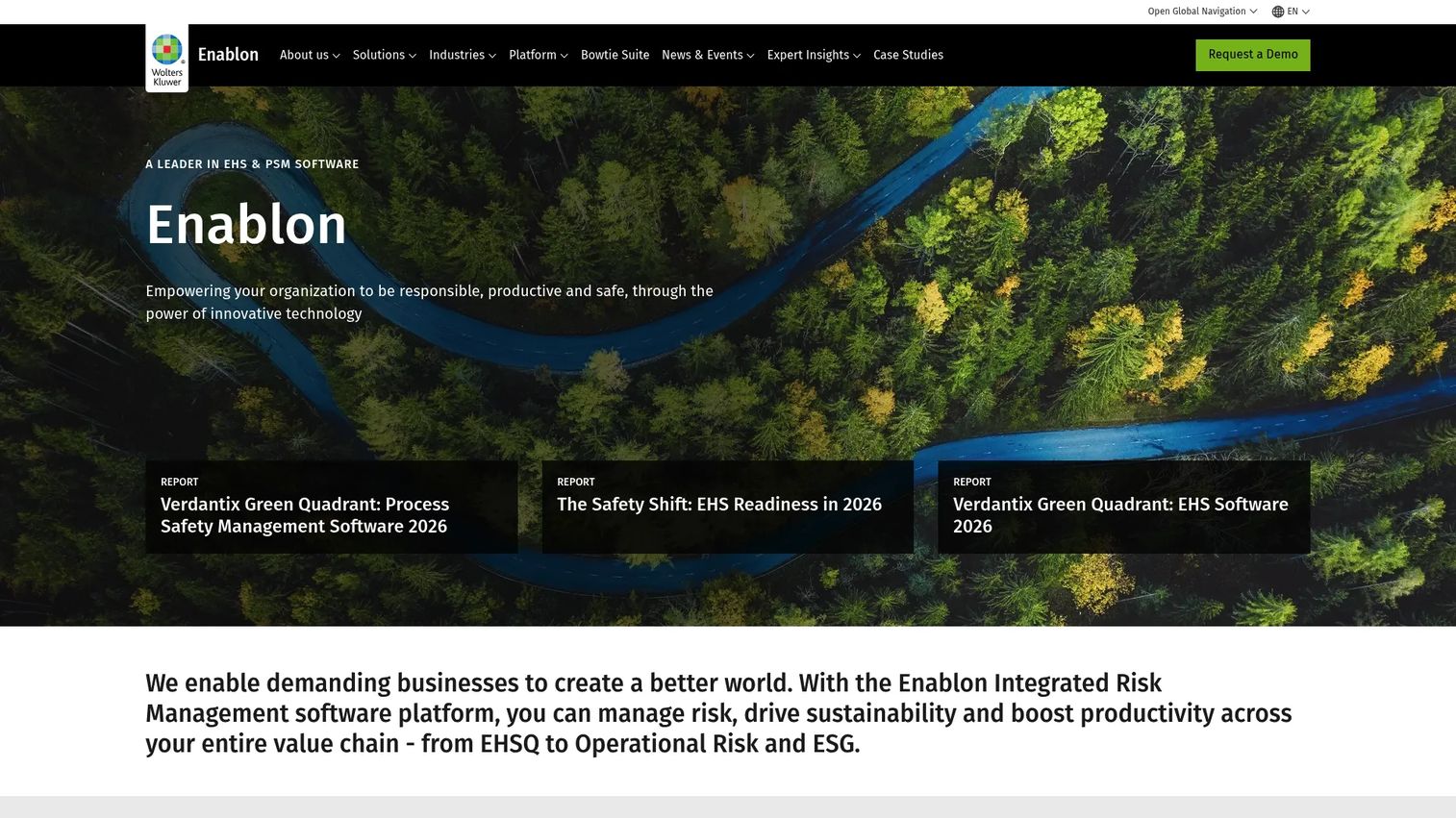
Enablon, a Wolters Kluwer business, is a global EHSQ platform for large, complex organizations that need chemical management integrated into a wider framework covering operational risk, process safety, sustainability, ESG, and quality. Its module set spans risk and compliance, engineering and operations, and EHSQ workflows, all accessible through configurable processes and cloud-native analytics.
Best for: Large, multinational organizations with mature EHSQ governance programs and dedicated teams to own implementation, configuration, and ongoing administration.
Key features
- Integrated EHSQ: Risk, compliance, sustainability, and quality workflows
- Configurable processes, reports, and governance controls
- Mobile apps for iOS and Android
- API-ready integrations with third-party systems, IoT devices, and wearables
- Cloud-native analytics across EHS, ESG, and operational risk data
Why choose Enablon: Enablon is most relevant when the decision is about process standardization across a global organization, not about solving a single chemical inventory problem. If your regulatory exposure spans multiple countries and your EHS program needs to connect chemical controls to process safety, sustainability reporting, and operational risk governance, Enablon offers the structural breadth to support that. Founders evaluating Enablon should expect a formal enterprise procurement and implementation process.
Enablon pricing: Enablon directs all pricing inquiries to a demo request or direct contact. Pricing is not displayed on the official site and varies by organization size, module selection, and implementation scope.
Enablon holds a 4.1/5 rating on G2 across 13 reviews, verified October 2026.
7. Dakota Software
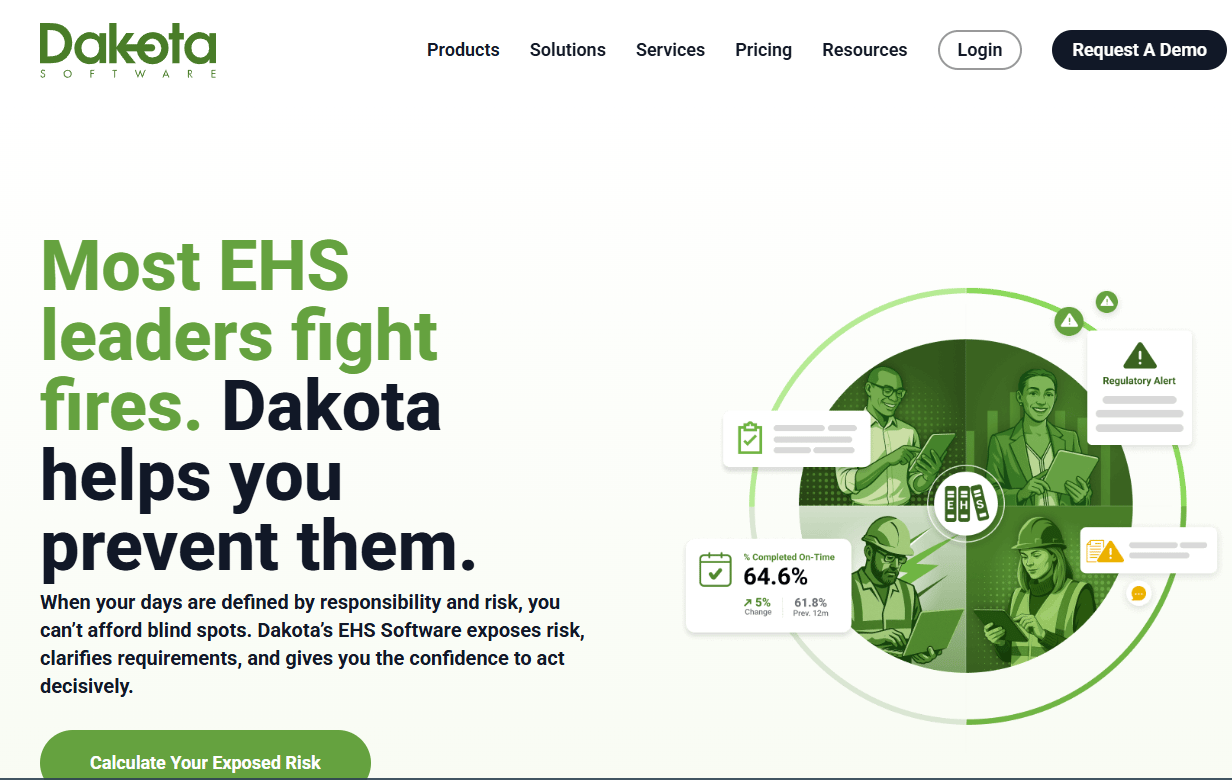
Dakota Software is an EHS compliance platform built around regulatory obligation management, compliance calendars, and site-specific applicability tracking. Its Decision-Tree-Logic framework identifies which regulations apply to each facility based on operational characteristics, then generates compliance tasks, calendars, and evidence records accordingly. For organizations where knowing what is due, who owns it, and whether it is complete is the immediate priority, Dakota provides that operational structure.
Best for: Organizations that need repeatable compliance task management across multiple facilities, with regulatory tracking and evidence documentation as core requirements.
Key features
- Site-specific regulatory applicability via Decision-Tree-Logic
- Compliance calendars with automated regulatory updates
- Incident, inspection, task, and corrective-action management
- Document management and permission controls
- Configurable EHS workflows and reporting dashboards
Why choose Dakota Software: Dakota's strength is regulatory obligation clarity. When a facility manager or compliance lead needs to know exactly which environmental or safety requirements apply to their site today, and whether those tasks are owned and evidenced, Dakota's applicability engine reduces the manual work of regulatory mapping. Buyers evaluating Dakota for chemical inventory and SDS management specifically should verify how those capabilities map to the modules included in their configuration.
Dakota Software pricing: Dakota configures pricing based on organization size, facilities, geographic footprint, module selection, and support requirements. Contracts are billed annually and typically carry a three-year term. A free trial may be available after an initial needs-assessment conversation with their team.
Dakota Software holds a 4.3/5 rating on G2, verified October 2026.
Considerations when choosing chemical management software
Separate SDS storage from inventory intelligence
A searchable Safety Data Sheet library tells you what hazard information exists. It does not automatically tell you which containers are physically present at each facility, in what quantities, and who is responsible for them. Before selecting a platform, confirm how it tracks containers, locations, quantities, and site ownership as separate and connected records.
Verify jurisdiction and regulatory reporting coverage
Map your required reporting obligations before evaluating feature checklists. Platforms vary significantly in which frameworks they support: GHS, HazCom, WHMIS, Tier II under EPCRA, REACH, and TSCA coverage differs by product and module. Confirm support for both your current U.S. federal and state obligations and any global frameworks your business operates under. This is particularly important for founders planning site expansion into new jurisdictions.
Assess data quality and update ownership
Software organizes and governs the process, but someone still needs to own supplier SDS updates, chemical classifications, inventory accuracy, and regulatory data currency. Ask vendors how SDS revisions are identified, surfaced, and confirmed before publishing. Identify which team will own that process after launch, and whether the platform's workflow tooling supports the handoff from the implementation project to steady-state operations. You can find related evaluation thinking in our approval workflow software guide.
Test field access and emergency readiness
Mobile access, QR code retrieval, offline capability, and search speed should all be evaluated with a real frontline scenario. Have someone attempt to locate an SDS for a specific chemical at a specific site during a timed test. The result tells you more than a feature checklist. For emergency response readiness, confirm how quickly an operator can retrieve hazard information under pressure, not only in a controlled demo environment.
Price the implementation, not only the subscription
All seven platforms on this list use quote-based commercial models. Beyond the subscription cost, model the implementation project: Data migration, SDS normalization, site permissions setup, barcode or QR code rollout, integrations with incident or procurement systems, and user training. For a founder assessing payback and ownership capacity, implementation cost and ongoing administrative burden are as important as the annual contract value. Our audit management software overview covers related evaluation criteria for compliance program infrastructure.
How to choose the right chemical management software for your team
Choose VelocityEHS when chemical safety must connect to broader EHS work
VelocityEHS suits teams that need SDS management, inventory tracking, labeling, and mobile access to operate alongside incident management, audits, and ergonomics. If your EHS roadmap requires a platform that can grow beyond chemical compliance without requiring a second procurement, VelocityEHS reduces that fragmentation from the start.
Choose Sphera Chemical Management when global chemical and product stewardship complexity drives the decision
Organizations with multi-jurisdictional regulatory exposure, material approval processes that span supplier networks, or product stewardship programs requiring enterprise-grade chemical data governance should evaluate Sphera. It is a stronger fit when regulatory operations are a strategic function with dedicated staff, not an occasional compliance project.
Choose Cority when configurable enterprise EHSQ workflows matter most
Cority is the right fit for buyers already operating with structured enterprise EHSQ programs who need chemical management to connect cleanly with audits, occupational health, sustainability, and quality. Budget for implementation planning and administrative ownership; the platform rewards organizations that can support formal governance. See also our business process management software guide for related enterprise evaluation thinking.
Choose HSI or EcoOnline when frontline adoption is central to the compliance outcome
Both platforms prioritize usability and connected EHS workflows over pure enterprise scale. HSI is the stronger choice when training integration matters: If workers need to complete HazCom training and access SDS records in the same system, the combined LMS and chemical management structure saves a separate tool purchase. EcoOnline is better suited for organizations that need chemical safety feeding directly into risk assessments, incidents, and ESG reporting across multiple sites.
Choose Enablon or Dakota Software when compliance governance is the larger platform decision
Enablon suits multinational organizations that need EHSQ governance to span operational risk, process safety, sustainability, and quality alongside chemical compliance. The buying decision is about enterprise architecture, not a single module. Dakota Software is more focused: It is the right choice when regulatory obligation tracking, compliance calendars, and task evidence across facilities is the immediate bottleneck, and when chemical inventory depth can be validated against the selected module configuration.
Ask these questions before any demo:
- Can the system identify what chemicals are in each facility today?
- How are SDS revisions verified and surfaced when a supplier updates a document?
- Which reports can we prepare from our existing data in the first 90 days?
- Who owns ongoing data accuracy after the implementation project closes?
- What does rollout require from IT, EHS, and site managers in terms of time and effort?
Conclusion
The right chemical management platform depends on where your operating bottleneck actually sits. VelocityEHS covers the broadest range of EHS and chemical safety workflows in one system. Sphera Chemical Management handles global product stewardship and regulatory complexity at enterprise scale. Cority suits organizations with established EHSQ programs and the governance structure to support a formal implementation. HSI connects chemical controls with workforce training for frontline-heavy organizations. EcoOnline embeds chemical safety into a broader operational risk and ESG platform. Enablon serves multinational teams that need EHSQ governance to span multiple functions. Dakota Software focuses on regulatory obligation management, compliance calendars, and task evidence across facilities.
Start with your operating model, not a feature checklist. If the business cannot currently identify what chemicals are present at each facility, who owns that data, and which SDS version is current, that is the first gap to close. The platform that solves that problem with the least implementation overhead is the right starting point.
Start your journey with Guideflow today!
FAQs about chemical management software
Chemical management software is a system that centralizes chemical inventories, Safety Data Sheets, hazard information, labels, approval workflows, and regulatory reporting records. The right scope depends on the organization's site count, product complexity, and applicable regulatory frameworks. Some platforms focus primarily on SDS management; others cover the full chain from chemical approval through inventory tracking and reporting.
Safety Data Sheet management controls the hazard documentation and ensures the current version of each sheet is accessible to the people and sites that need it. Chemical inventory management records what chemicals physically exist at each location, in what quantities, in which containers, and who is responsible for them. Both are necessary for a complete chemical management system; a platform that handles only one of the two leaves a significant operational gap.
Platforms may support workflows connected to GHS labeling, HazCom, WHMIS, Tier II reporting under EPCRA, TSCA, REACH, and other frameworks. Coverage varies by product, module, and jurisdiction, so buyers must map their specific obligations before evaluating feature coverage. No platform guarantees regulatory compliance; software supports the processes and records that compliance programs require.
Some platforms support the inventory data management, threshold tracking, and reporting workflows used to prepare Tier II reports under the Emergency Planning and Community Right-to-Know Act. Buyers should confirm which state-specific filing processes and data requirements the platform supports, since Tier II requirements vary by state. The software organizes the data; the regulatory filing is the organization's responsibility.
Many platforms support secondary container labeling and hazard communication workflows aligned with GHS requirements. Label formats, supported languages, and jurisdiction-specific requirements differ across platforms. Test the labeling workflow with your actual chemical inventory and facility requirements before committing to a platform, and confirm that label outputs meet your specific HazCom or chemical labeling software needs.
A governed platform maintains centralized SDS records with version control, chemical inventory with location and ownership data, approval histories, compliance task evidence, and inspection records. When an auditor or regulator requests information, the records are retrievable from a single system rather than reconstructed from spreadsheets and email threads. The audit readiness benefit compounds as site count grows and records that would otherwise fragment across locations stay centralized. See our audit management software overview for related evaluation criteria.
Implementation timelines depend on site count, existing data quality, SDS volume, historical records, required integrations, and workflow complexity. A single-site deployment with clean data can move faster than a multi-facility rollout requiring data migration from multiple legacy sources. Ask vendors for a migration plan, an ownership model for the implementation project, and reference contacts at organizations of similar size and complexity.
Start with a reliable chemical inventory, current SDS records for all materials on site, clear ownership for each location, and accessible hazard information for workers at the point of work. Add regulatory reporting automation, advanced chemical risk assessment workflows, and deeper EHS integrations as the operating model and compliance requirements become more defined. The platforms that support this progression without requiring a full re-implementation are the ones worth shortlisting. Our compliance management software guide covers related prioritization frameworks.