

Fuel is one of the largest controllable line items in any fleet, and it leaks in ways spreadsheets never catch. A card gets swiped at a station 40 miles off route. A fill-up logs 30 gallons into a 22-gallon tank. A driver buys premium when the vehicle takes regular. Each event is small. Multiplied across a hundred vehicles and thousands of transactions a month, the gaps become real money you never see.
The market reflects how much money is in motion. Fleet fuel card transaction volume reached roughly USD 45.8 billion in 2024 and is forecast to hit USD 92.5 billion by 2033 at an 8.2% CAGR, according to DataHorizzon Research (2024). More spend flowing through cards means more surface area for fraud, abuse, and reconciliation errors, and that is the exact problem this software category exists to close.
The trouble is not usually a lack of data. It is that card statements, receipts, driver logs, and telematics feeds live in different systems that never talk to each other. Fuel card management software is the layer that ties them together, so fuel expense tracking becomes something you audit automatically instead of chasing at month-end.
What's inside
This guide is for fleet managers, operations leaders, and finance and product teams who need to control fuel spend without manual reconciliation. We picked seven tools based on the criteria that actually change your numbers:
- Fuel card integration: how many card programs and providers the platform connects to
- Fuel transaction tracking: automatic imports, vehicle and driver assignment, and receipt capture
- Fraud and anomaly detection: duplicate fills, location mismatches, and abnormal spend flags
- Reporting and compliance: fuel reporting software depth, dashboards, and IFTA support
- Telematics fuel management: reconciliation against GPS, odometer, and vehicle data
Each tool below includes what it is best for, its strengths, verified pricing where public, and where it fits by fleet size and complexity.
TL;DR
- Best for all-in-one fleet visibility: Fleetio, which pairs fuel transaction tracking with maintenance and asset data
- Best for telematics-heavy operations: Geotab, for validating fuel against vehicle behavior and location
- Best for spend control at scale: Verizon Connect, combining card oversight with driver behavior reporting
- Best for broad fleet management workflows: Fleetster, where fuel card admin sits inside a wider operating system
- Best for operations teams wanting automated enforcement: Samsara, connecting fuel insight to routing and safety
- Best for fast-moving field teams: Motive, with driver-first usability across compliance and spend
- Best for budget-conscious teams: Coast, a modern fuel and fleet card with tight controls and simple admin
What is fuel card management software
Fuel card management software is a platform that centralizes fuel card transactions, driver and vehicle records, and telematics data into one workflow so fleets can track, audit, and control fuel spend automatically.
Instead of downloading a card statement and reconciling it by hand, the software imports every transaction, matches it to the right vehicle and driver, flags anything that looks wrong, and rolls the data into reports finance and operations both trust. Core capabilities usually include:
- Fuel card transaction imports: automatic feeds from major card programs
- Driver and vehicle assignment: every gallon tied to a person and an asset
- Exception and anomaly detection: flags for duplicate fills, off-route stations, and odd volumes
- Spend dashboards and cost reporting: fuel spend analytics by vehicle, driver, or period
- Mobile receipt capture: drivers photograph receipts in the field
- IFTA and tax reporting: mileage and fuel data assembled for fuel tax reporting
- Telematics reconciliation: card data checked against GPS and odometer readings
- Fraud and abuse controls: spend limits, product restrictions, and real-time alerts
The strongest platforms treat fuel not as an isolated expense but as a signal connected to routing, maintenance, and utilization. That is the difference between reporting on spend after the fact and controlling it as it happens.
When to use fuel card management software
Control fuel spend without manual reconciliation
If your month-end close involves someone exporting a card statement and matching lines to receipts by hand, you have already outgrown spreadsheets. The software imports transactions automatically, assigns each to a vehicle and driver, and surfaces the ones that need a human look. You audit exceptions, not every line. That single shift is what turns fuel expense tracking from a multi-day chore into a filtered queue.
Detect fraud, abuse, and suspicious fueling
Fuel fraud detection is where these tools pay for themselves fastest. Common patterns include duplicate fills within minutes at the same pump, transactions in a city the vehicle never visited, gallons that exceed tank capacity, and premium fuel on a regular-only engine. Anomaly rules catch these in near real time and send fuel anomaly alerts before the next statement arrives, so you can freeze a card or open a conversation the same day.
Tie fuel data to fleet operations and compliance
Fuel numbers mean more when they sit next to vehicle utilization, GPS, and mileage. Telematics fuel management lets you confirm that a logged fill matches where the truck actually was and how far it drove. That same data feeds IFTA reporting, where miles by jurisdiction and gallons purchased need to reconcile for fuel tax filings. Fleets running interstate or mixed-duty vehicles get the most from this connection.
Comparison table
Pricing and ratings below reflect what vendors and G2 publish, and both change often as packaging and review scores shift. Verify current figures on each vendor's site before you commit. Use this as a shortlist, not a contract.
| # | Product | Best for | Key use case | Pricing | G2 rating |
|---|---|---|---|---|---|
| 1 | Fleetio | All-in-one fleet visibility | Fuel tracking alongside maintenance and asset data | From $4 per vehicle/mo | 4.6/5 |
| 2 | Geotab | Telematics-heavy operations | Validating fuel against vehicle and location data | Via reseller | 4.5/5 |
| 3 | Verizon Connect | Spend control at scale | Card oversight with driver behavior reporting | Custom | 3.8/5 |
| 4 | Fleetster | Broad fleet management | Fuel card admin inside a wider operating system | From €4 per vehicle/mo | Not listed |
| 5 | Samsara | Operations and enforcement | Fuel insight tied to routing and safety | Custom | 4.5/5 |
| 6 | Motive | Fast-moving field teams | Driver activity, spend, and compliance in one place | Custom | 4.4/5 |
| 7 | Coast | Budget-conscious teams | Fuel and fleet card controls with simple admin | From $4 per active user/mo | 4.7/5 |
1. Fleetio

Fleetio is a fleet maintenance and management platform for vehicles, equipment, and tools, with fuel tracking built into the same system that runs your inspections, work orders, and asset records. That combination is what makes it the broadest workflow fit on this list. You are not bolting fuel onto a standalone tool; you are reading fuel spend next to maintenance history and total cost of ownership.
For product-minded buyers, Fleetio speaks the right language. It treats fuel as instrumentation: transactions import automatically, tie to a vehicle, and roll into fuel economy reporting you can segment. Anomaly detection surfaces the fills worth investigating, and drivers log entries and capture receipts from the mobile app in the field. When fuel data lives beside asset data, cross-team reconciliation between operations and finance gets materially simpler.
Best for: Teams that want fuel transaction tracking, anomaly detection, and fuel economy reporting inside a full maintenance and asset platform.
Key strengths
- Fuel tracking integrated with maintenance and asset management
- Anomaly detection and fuel economy reporting by vehicle
- Mobile receipt capture and fuel logging for drivers
- Asset TCO and replacement forecasting
- Automations, inspections, and configurable reporting
Why choose Fleetio: Choose it when you want more than card reconciliation and need fuel to sit inside the same system that tracks vehicle health and lifecycle cost. It fits fleets ready to run operations from one platform rather than stitching tools together.
Fleetio pricing: Plans start at $4 per vehicle per month on the Essential tier billed annually, or $5 billed monthly. Professional is $7 per vehicle per month and Premium is $10 per vehicle per month, both billed annually. A 14-day free trial is available, and pricing varies by fleet size, contract term, and payment term.
2. Geotab
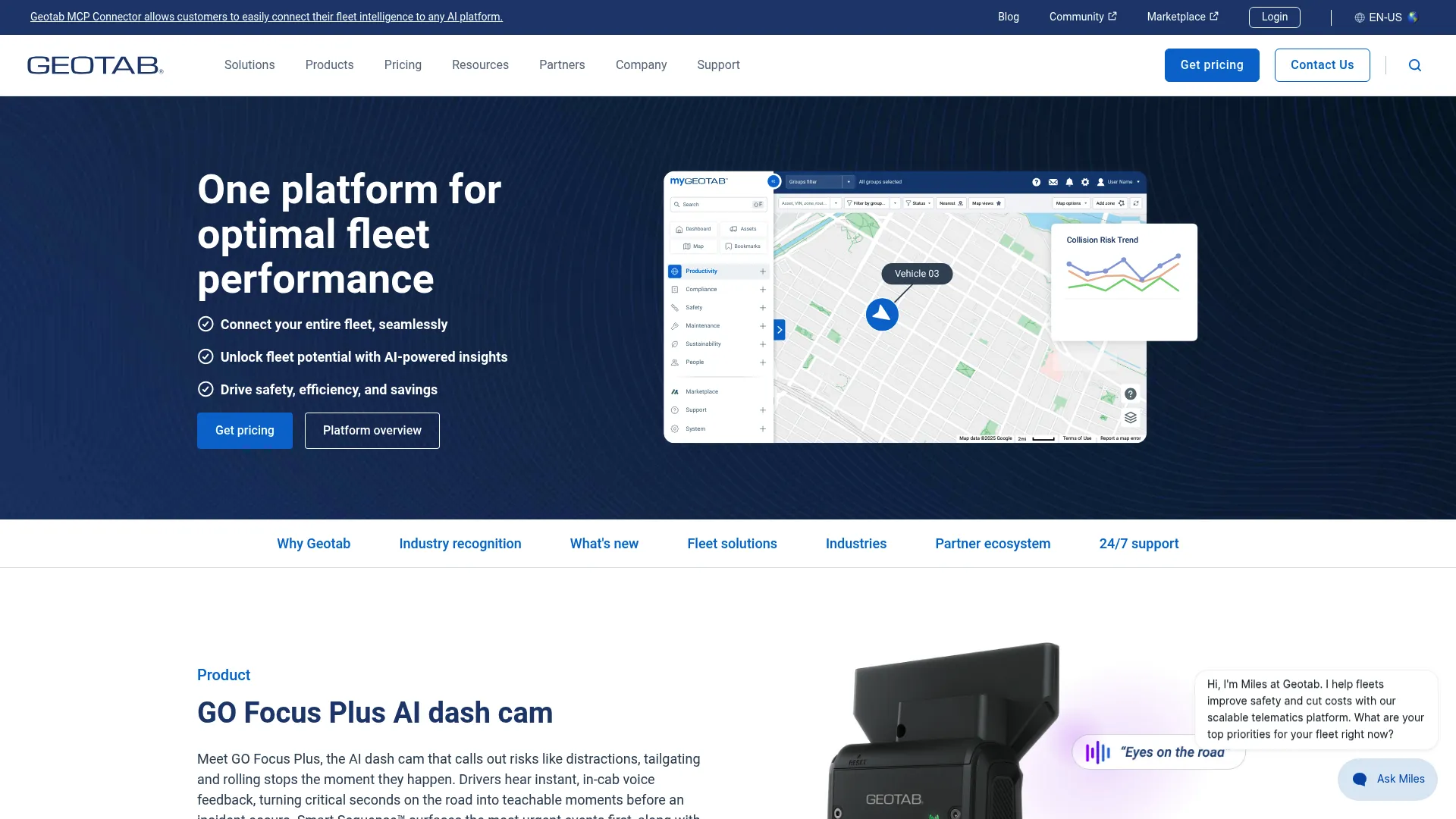
Geotab is a telematics-first fleet platform where fuel spend gets analyzed against the vehicle data it produces. If your priority is validating that fuel activity matches how and where vehicles actually operate, this is the tool built around that question. Fuel card data flows in alongside GPS, engine, and behavior signals, so a suspect transaction can be checked against the vehicle's real location and mileage in the same view.
That vehicle-level validation is Geotab's core advantage for telematics fuel management. Beyond fuel, MyGeotab dashboards deliver reporting, alerts, safety, compliance, and sustainability visibility, so efficiency and emissions sit next to spend. Fleets running fuel analysis against driver behavior and route data get depth here that card-only tools cannot match.
Best for: Mid-size to enterprise fleets that need fuel spend reconciled against telematics, safety, and compliance data in one platform.
Key strengths
- Real-time GPS tracking and fleet visibility
- MyGeotab dashboards with reporting and alerts
- Fuel validation against vehicle location and mileage
- Safety, compliance, and maintenance tools
- Sustainability and efficiency reporting
Why choose Geotab: Choose Geotab when fuel spend only makes sense next to vehicle behavior, and you want a platform that scales from mid-size to enterprise. It fits teams treating telematics as the backbone of operations, not an add-on.
Geotab pricing: Geotab sells through a reseller network and directs buyers to request current pricing rather than publishing public rates. Its software packages page lists GO Core Plan and GO Plan tiers without visible prices, so plan on a quote conversation to size cost to your fleet.
3. Verizon Connect

Verizon Connect pairs fuel card management with telematics-backed reporting inside a larger fleet system, which makes it a strong fit for fleets that want spend control and fraud detection at scale. The platform monitors fuel spend, flags suspicious activity, and connects that data to driver behavior, so a pattern of hard acceleration or idling shows up next to the fuel it burns.
For operations leaders overseeing a card program across many vehicles, the value is program oversight plus context. Budget monitoring and mobile notifications keep managers aware of anomalies as they happen, and near real-time GPS tracking gives every transaction a location to verify against. Compliance tooling for HOS, ELD, and DVIR rounds out the platform for regulated fleets.
Best for: Larger fleets that need fuel spend monitoring, fuel fraud detection, and telematics reporting managed centrally.
Key strengths
- GPS fleet tracking with near real-time location visibility
- Fuel spend monitoring tied to driver behavior
- Asset tracking for heavy equipment and trailers
- Compliance management for HOS, ELD, and DVIR
- AI dashcam video and mobile alerts
Why choose Verizon Connect: Choose it when you are running a fuel card program across a large, mixed fleet and want spend, fraud, and compliance oversight in one telematics system. Factor a procurement and quote cycle into your timeline.
Verizon Connect pricing: Verizon Connect routes buyers to an online plan selector and quote flow rather than listing public prices. Pricing is not published on the site, so request a quote sized to your vehicle count and feature needs.
4. Fleetster
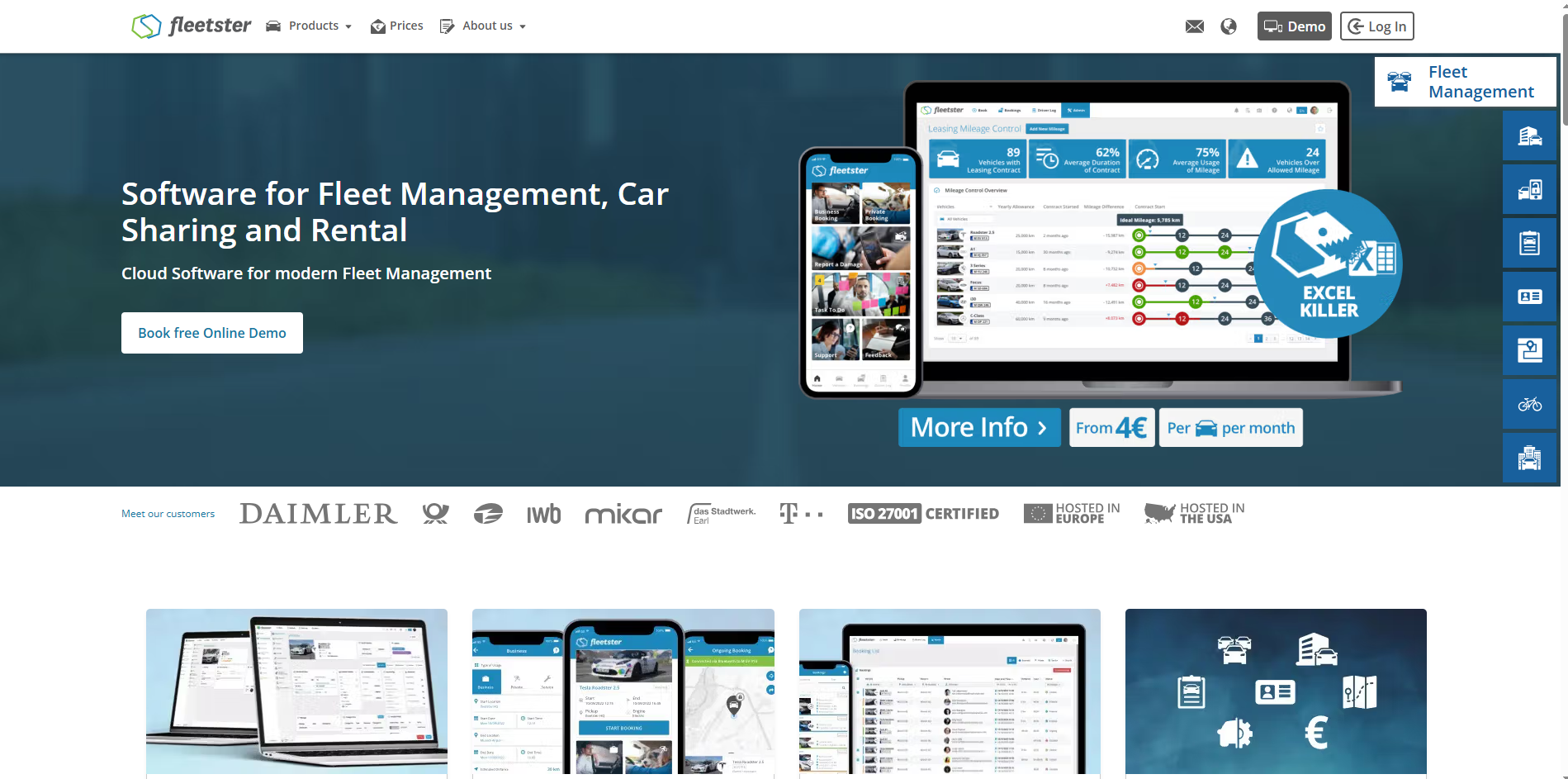
Fleetster is a cloud fleet and mobility platform where fuel card management is one piece of a broader operating system covering fleet records, pool vehicles, car sharing, logbooks, and driver workflows. That framing matters for larger fleets that want centralized administration rather than a point tool for cards alone.
The strength here is consolidation and paperwork reduction. Card assignment, provider compatibility, and fuel reporting sit alongside driver's license control and digital vehicle files, so admin and accounting run from one place. For teams managing shared or pooled vehicles, having fuel card integration inside the same system that handles bookings and logbooks removes a real coordination burden.
Best for: Companies that want fuel card administration folded into a wider fleet and mobility management platform.
Key strengths
- Fleet management with centralized admin
- Pool vehicle and car sharing management
- Fuel card assignment and provider compatibility
- Driver's license control
- Digital vehicle file and logbook workflows
Why choose Fleetster: Choose it when fuel cards are one workflow among many and you want reporting, bookings, and driver records in a single system. It suits larger or mobility-focused fleets prioritizing admin simplification.
Fleetster pricing: Fleetster offers a 30-day free trial. A Digital vehicle file add-on runs €1 per month per vehicle, the Pro package is €4 per vehicle per month, and Enterprise is €6 per vehicle per month. Hardware options are priced separately.
5. Samsara
Samsara is a connected operations platform where fuel insight feeds directly into routing, safety, and fleet telemetry. It performs best when a team already runs Samsara for tracking and dispatch, because fuel then becomes another operational signal rather than a separate report. Idling, harsh driving, and inefficient routing all surface next to their fuel cost, which turns spend data into decisions dispatchers and safety leads can act on.
The platform's real-time GPS tracking, geofences, and routing tools give fuel transactions the operational context most card tools lack. Equipment and asset tracking with maintenance workflows extend that visibility to trailers and gear. For operations teams that want alerts and enforcement tied to how vehicles are actually driven, Samsara connects the dots between fuel and behavior.
Best for: Operations teams already using Samsara's fleet suite who want fuel visibility connected to routing, safety, and telemetry.
Key strengths
- Real-time GPS fleet tracking and geofences
- Routing, dispatch, and commercial navigation
- Fuel visibility tied to driver behavior and idling
- Equipment and asset tracking with maintenance
- Operational alerts for enforcement
Why choose Samsara: Choose it when fuel is one input into a broader operations picture and you want routing, safety, and spend in the same platform. It fits teams committed to running end-to-end operations on one system.
Samsara pricing: Samsara does not publish public pricing. The site prompts visitors to select fleet size and request a quote or demo, so expect a sales conversation to size cost to your operation.
6. Motive

Motive is a fleet operations platform built around telematics, safety, compliance, maintenance, dispatch, and spend management, with a field-first usability that resonates with drivers and the managers who run them. For fleets that want strong visibility into driver activity and fuel usage without a heavy interface, Motive keeps the daily workflow simple while still tying fuel into the wider operations picture.
The pitch for spend-conscious operations is one system for more than fuel transactions. Motive connects GPS tracking, driver behavior monitoring, and vehicle diagnostics, so fuel usage reads against how vehicles are driven and maintained. Managers who need fuel-related compliance and card workflows alongside safety and dispatch get that consolidation without asking drivers to juggle multiple apps.
Best for: Commercial fleets that want driver activity, fuel usage, and operational control in a single, field-friendly platform.
Key strengths
- GPS fleet tracking across the fleet
- Driver behavior monitoring
- Vehicle diagnostics and maintenance
- Compliance, dispatch, and spend management
- Field-first mobile usability
Why choose Motive: Choose it when driver-facing simplicity matters and you want fuel folded into safety, compliance, and dispatch. It suits managers who need one system their field teams will actually use.
Motive pricing: Motive does not list public pricing; its pricing page routes to a contact form. Reach out for a quote based on your fleet size and the mix of telematics, safety, and spend features you need.
7. Coast
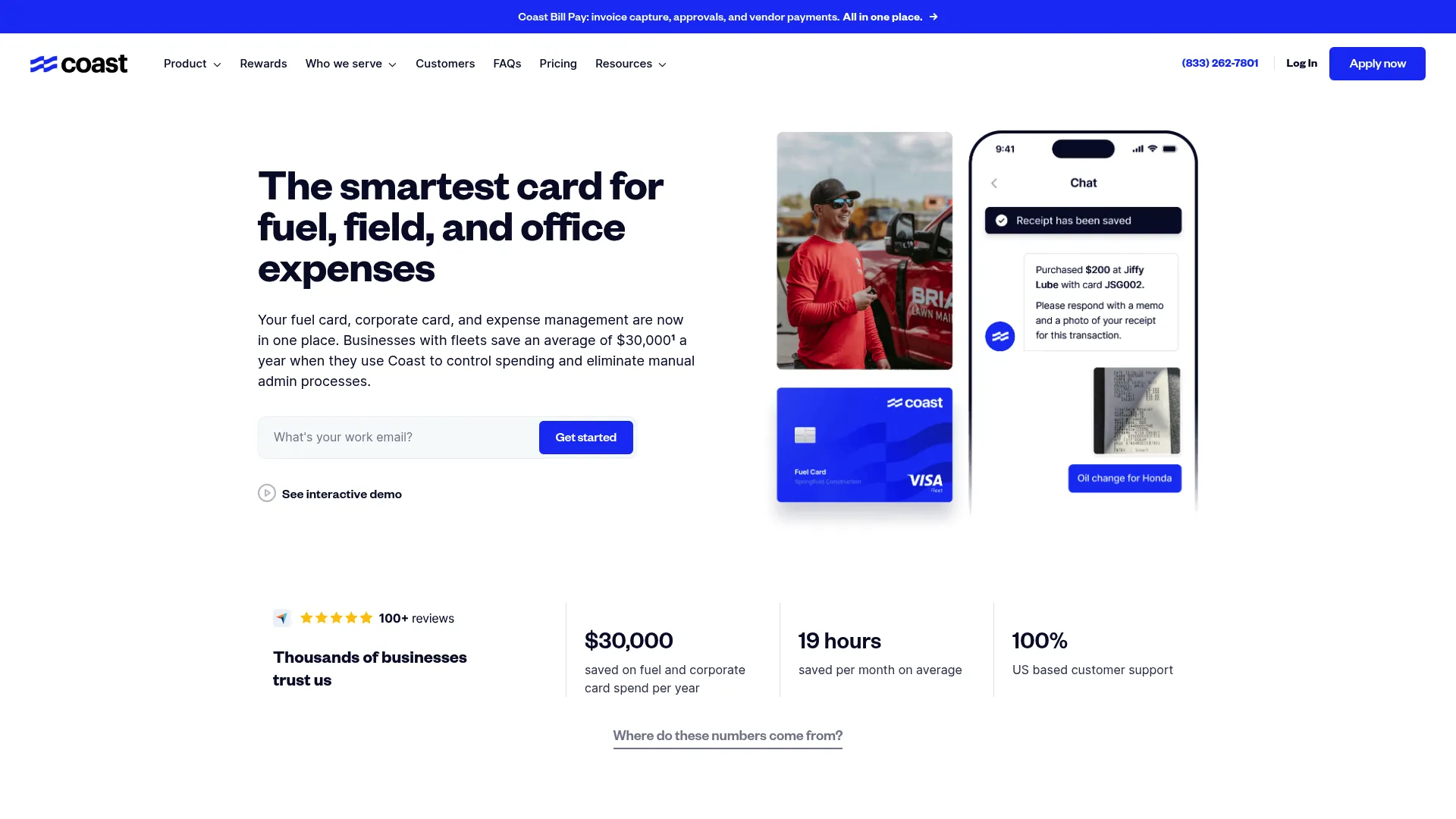
Coast is a modern fuel, fleet, and expense card platform built for teams that want tight spending controls and straightforward financial oversight. Where the telematics platforms lead with vehicle data, Coast leads with the card itself: controls by driver and vehicle, real-time spend visibility, and reporting that keeps admin light. That focus makes it a strong fit for fast-moving fleets and field-service businesses that need spend accountability without a heavy rollout.
The controls are the differentiator. You set limits by driver and vehicle, watch spend in real time, and catch anomalies before they compound. Accounting and telematics integrations connect fuel data to the systems finance already uses, which is what makes Coast a genuine fleet accounting simplification play rather than a standalone card. Rewards add a small offset, with 1% cashback on non-gas purchases and 3¢ to 9¢ per gallon at partner stations.
Best for: Fleets and field-service businesses that want card controls and expense management in one simple platform.
Key strengths
- Fuel and fleet card controls by driver and vehicle
- Real-time spend visibility and reporting
- Accounting and telematics integrations
- Cashback and per-gallon partner rewards
- Simple, per-user pricing model
Why choose Coast: Choose it when card controls and clean financial oversight matter more than deep telematics, and you want fast setup with predictable pricing. It fits budget-conscious teams and field operations.
Coast pricing: Coast is $4 per active user per month for cards and expense management. A separate Bill Pay platform runs $99 per month. Additional fees apply for certain payment types and international transactions, and there is no free tier.
What to evaluate before you buy
Card program and provider compatibility
Confirm the platform imports transactions from the card programs you already use, or that switching cards is worth it. Fuel card integration depth decides how much data flows automatically versus how much you re-enter by hand.
Fraud and anomaly coverage
Ask exactly which patterns the system flags and how fast. Real-time fuel anomaly alerts on duplicate fills, off-route stations, and over-capacity volumes are where you recover cost. Configurable rules matter more than a fixed list.
Telematics validation
If you run GPS or ELD hardware, check that fuel transactions reconcile against location and mileage. Telematics fuel management is what separates confirming a fill from merely recording it.
Reporting and IFTA support
For interstate fleets, verify the platform assembles miles by jurisdiction and gallons for IFTA reporting. For everyone, check that fuel spend analytics segment by vehicle, driver, and period the way finance needs.
Fleet size and complexity fit
Match the tool to your scale. Card-first platforms suit smaller or spend-focused fleets; telematics-first suites suit larger, mixed-duty, or compliance-heavy operations. Pay for the depth you will use.
Conclusion
The decision comes down to one question: do you need total operational visibility, or focused card control?
If fuel is one signal inside a bigger operations picture, choose the broadest platform that fits your stack. Fleetio wins when maintenance and asset data matter as much as fuel. Geotab, Samsara, and Motive win when telematics, routing, and safety drive your decisions. Fleetster fits larger fleets consolidating admin, and Verizon Connect suits large card programs needing centralized spend and compliance oversight.
If you mainly need card control, clean reporting, and fast reconciliation, a focused option gets you there sooner. Coast is the pick for budget-conscious teams that want controls and simple financial oversight without a telematics rollout.
Next step: shortlist two tools that match your fleet size and telematics footprint, then run each against a month of your real transactions. The one that catches the most exceptions with the least manual work is your answer.
FAQs
It centralizes fuel card transactions, driver and vehicle records, and often telematics data into one system. The software imports transactions automatically, assigns each to a vehicle and driver, flags anomalies, and produces spend and compliance reports, so you audit exceptions instead of reconciling every line by hand.
Often yes, but coverage varies by platform and card program. Some tools integrate with major fuel card networks directly, while card-first providers like Coast issue their own card. Confirm your specific card program is supported before committing, since integration depth determines how much data imports automatically.
It applies anomaly rules to every transaction and flags patterns that signal abuse. Common triggers include duplicate fills within minutes, transactions in locations the vehicle never visited, gallons exceeding tank capacity, and premium fuel on a regular-only engine. When paired with telematics, the system checks each fill against the vehicle's actual location and mileage.
Many platforms assemble the data IFTA filing needs, matching miles traveled by jurisdiction with gallons purchased. Tools with telematics fuel management, like Geotab, Samsara, and Motive, are especially strong here because they capture mileage by state automatically. Confirm IFTA reporting is included in your tier before you buy.
Yes, mobile receipt capture is a standard feature in most fleet-oriented tools. Drivers photograph a receipt in the field, and the system attaches it to the matching transaction and vehicle. This closes the gap between a card swipe and the paper proof finance needs for clean records and audits.
Fleet fuel management software is the broader category covering fuel consumption, efficiency, and optimization across a fleet. Fuel card management software focuses specifically on the card program: transaction imports, driver and vehicle assignment, spend controls, and fraud detection. Many platforms, like Fleetio and Verizon Connect, cover both.
Fleets running interstate routes, mixed-duty vehicles, or large driver rosters gain the most. Telematics fuel management validates that fills match where vehicles actually traveled and how far they drove, which strengthens fuel fraud detection and feeds IFTA reporting. Smaller, single-region fleets may find card-first tools sufficient.