Your front desk re-keys the same patient details three times before a visit even starts. A referral bounces back because the lab interface never connected properly. Quality reporting season arrives and someone spends a week pulling numbers by hand. If any of that sounds familiar, the problem usually is not your team. It is the system underneath them.
Choosing EHR software is an operational decision first and a software decision second. The right platform shapes how fast a provider charts, how cleanly data moves between systems, and how much admin work your staff absorbs every day. The wrong one quietly taxes every appointment.
The stakes are only rising. The global EHR market is projected at roughly USD 34 to 37.5 billion in 2026, according to Fortune Business Insights (2024) and Grand View Research (2025), and cloud-based products already represent about 83.7 percent of that market in 2025. Electronic health records have shifted from a compliance checkbox to the backbone of clinical workflow, interoperability, and revenue.
That shift matters because buyer expectations have changed. Practices no longer want a records vault. They want medical EHR software that reduces duplicate entry, exchanges data with labs and referrals, and produces the reports regulators actually ask for. If you are evaluating EHR systems the way you might evaluate other operational platforms like contract lifecycle management software or audit management software, the same discipline applies: match the tool to the workflow, not the brochure.
This guide gives you a shortlist you can act on, plus the criteria to defend your choice.
What's inside
This guide compares 10 EHR platforms for 2026, spanning large enterprise systems and practical options built for smaller practices. We selected them based on workflow fit, interoperability, patient communication, quality reporting, ease of use, and practice-size fit.
You will find a quick decision summary, a definition of what EHR software actually stores, guidance on when a new system pays off, a side-by-side comparison table, and detailed breakdowns of each platform. The goal is a clean path from "we need to switch" to "here are the two or three vendors we should demo." No brochure language, no feature dumps.
TL;DR
- Best for larger health systems: MEDITECH or Epic, depending on scale and existing infrastructure.
- Best for independent or smaller practices: AdvancedMD, Practice Fusion, or DrChrono.
- Best for enterprise interoperability and broad clinical workflows: Oracle Health.
- Best for balanced practice workflow and patient engagement: athenahealth.
- Best for specialty or growth-focused teams: eClinicalWorks, NextGen Healthcare, or Tebra.
Match the pick to the buyer type, not the longest feature list. A solo clinic and a multi-site hospital group have almost nothing in common when it comes to EHR fit.
What is EHR software?
EHR software is a digital platform that stores, manages, and shares a patient's health information across clinical and administrative workflows. It replaces paper charts and fragmented systems with a single electronic record that providers, staff, and connected systems can access.
A modern electronic health record holds far more than notes. Core data typically includes:
- Patient demographics and contact details
- Problem lists and diagnoses
- Medications and e-prescribing history
- Clinical notes and encounter documentation
- Vitals and measurements
- Immunizations
- Lab results
- Imaging and radiology reports
Beyond storage, buyers should expect a modern EHR to deliver a defined set of capabilities:
- Documentation and charting that keeps clinical notes fast and structured
- Scheduling and patient management across appointments, reminders, and check-in
- Interoperability and interfaces for labs, imaging, referrals, and data exchange
- Decision support and quality reporting for safer care and regulatory measures
- Patient communication tools including portals, messaging, and telehealth
One point of confusion worth clearing up: the difference between EHR and EMR. An electronic medical record (EMR) is essentially a digital version of a single practice's chart. Electronic health records software is built to travel. The defining feature of an EHR is exchange, sharing data across providers, labs, and care settings so the record follows the patient. In everyday buying language, most vendors now sell EHR systems, and "ehr emr software" gets used loosely, but interoperability is what separates the two.
When to use EHR software
Replace paper or fragmented records
If your practice still runs on paper charts or a patchwork of disconnected tools, accuracy and access suffer. Records live in silos, staff re-enter the same data, and finding a chart takes minutes it should not. A unified patient record software fixes chart accuracy, makes information available across the care team, and removes duplicate work that eats staff hours every day.
Improve clinical and admin workflow
A capable EHR automates the parts of the day that slow providers down. Charting templates, scheduling logic, task routing, and automated follow-up all reduce the manual load. That translates into provider time saved and fewer bottlenecks between the front desk, the clinical team, and billing. When clinical workflow is smooth, throughput rises without adding headcount.
Support interoperability and reporting
Integrated data exchange is where modern EHRs earn their keep. Clean interfaces to labs, imaging, and referral partners keep information flowing without faxes and re-keying. HL7 and FHIR-style integrations connect the systems around your practice, while built-in analytics make quality reporting and compliance far less painful. Poor data exchange, by contrast, creates hidden admin work that never shows up in a demo.
EHR software comparison table
The table below sorts the platforms by relevance to common buyer intent, from enterprise health systems down to lean independent practices, rather than alphabetically. Use it as a fast scan, then read the full sections for fit. Pricing and G2 ratings should always be verified against live vendor and review sources before you commit, since plans and scores change.
| # | Product | Intent | Key differentiation | Pricing | G2 rating |
|---|---|---|---|---|---|
| 1 | MEDITECH | Enterprise health systems | Web-based Expanse EHR with AI search and ambient listening | Quote-based | 3.1/5 |
| 2 | AdvancedMD | Independent and specialty practices | Unified EHR, practice management, and billing | From $130/provider/mo | 3.6/5 |
| 3 | Epic | Large healthcare organizations | Deep enterprise ecosystem and interoperability | Contact vendor | 4.2/5 |
| 4 | athenahealth | Ambulatory practices | Cloud athenaOne suite tied to collections | Aligned to collections | 3.6/5 |
| 5 | Oracle Health | Enterprise and population health | Clinical apps, APIs, and analytics at scale | From $15,000/year (API access) | Not listed |
| 6 | eClinicalWorks | Ambulatory practices and health centers | Integrated EHR plus practice management | From $449/provider/mo | 3.7/5 |
| 7 | NextGen Healthcare | Specialty ambulatory practices | Cloud EHR with patient experience tools | Contact vendor | 3.8/5 |
| 8 | Practice Fusion | Small independent practices | Lightweight cloud EHR with billing | $149/provider/mo | 3.8/5 |
| 9 | DrChrono | Mobile-first independent practices | Mobile EHR with integrated practice management | Contact vendor | Not listed |
| 10 | Tebra | Small and mid-sized practices | All-in-one EHR, billing, and patient engagement | Quote-based | 4.1/5 |
The 10 best EHR software platforms for 2026
1. MEDITECH
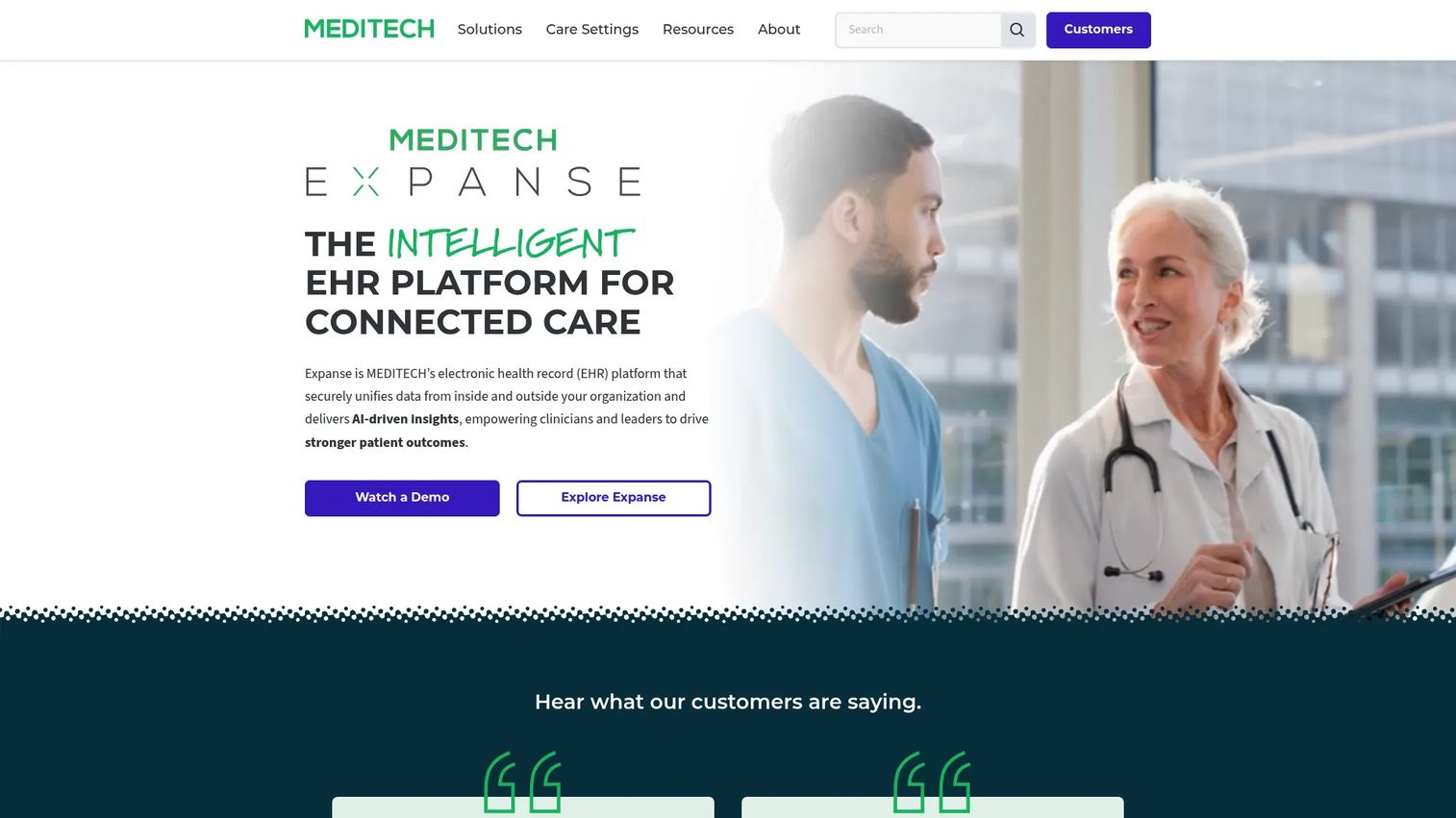
MEDITECH builds Expanse, an intelligent, web-based EHR designed for hospitals and multi-setting care organizations. It leans hard into connected care, with AI-powered search, summarization, and ambient listening that reduce time spent documenting. For enterprise buyers, the appeal is a single platform that unifies clinical, patient, and coordination data across a large system.
Best for: Healthcare organizations seeking an integrated, enterprise EHR platform across hospital and community settings.
Key strengths
- Web-based Expanse platform: Interoperable, browser-based access across care settings without heavy local dependency.
- AI-assisted documentation: Search, summarization, and ambient listening cut charting time for clinicians.
- Care coordination tools: Patient portal, virtual care, and coordination features that keep large teams aligned.
Why choose MEDITECH: Buyers pick MEDITECH when scale and integration matter more than simplicity. If you run a health system where clinical coordination across departments is the daily challenge, its data unification and clinician workflow depth are the draw. Reporting is built for enterprise oversight, not solo-practice speed.
MEDITECH pricing: MEDITECH does not publish public pricing. Cost is quote-based and depends on organization size, deployment, and modules. Expect an enterprise procurement process rather than a self-serve price. Verify current terms directly with MEDITECH before budgeting.
2. AdvancedMD
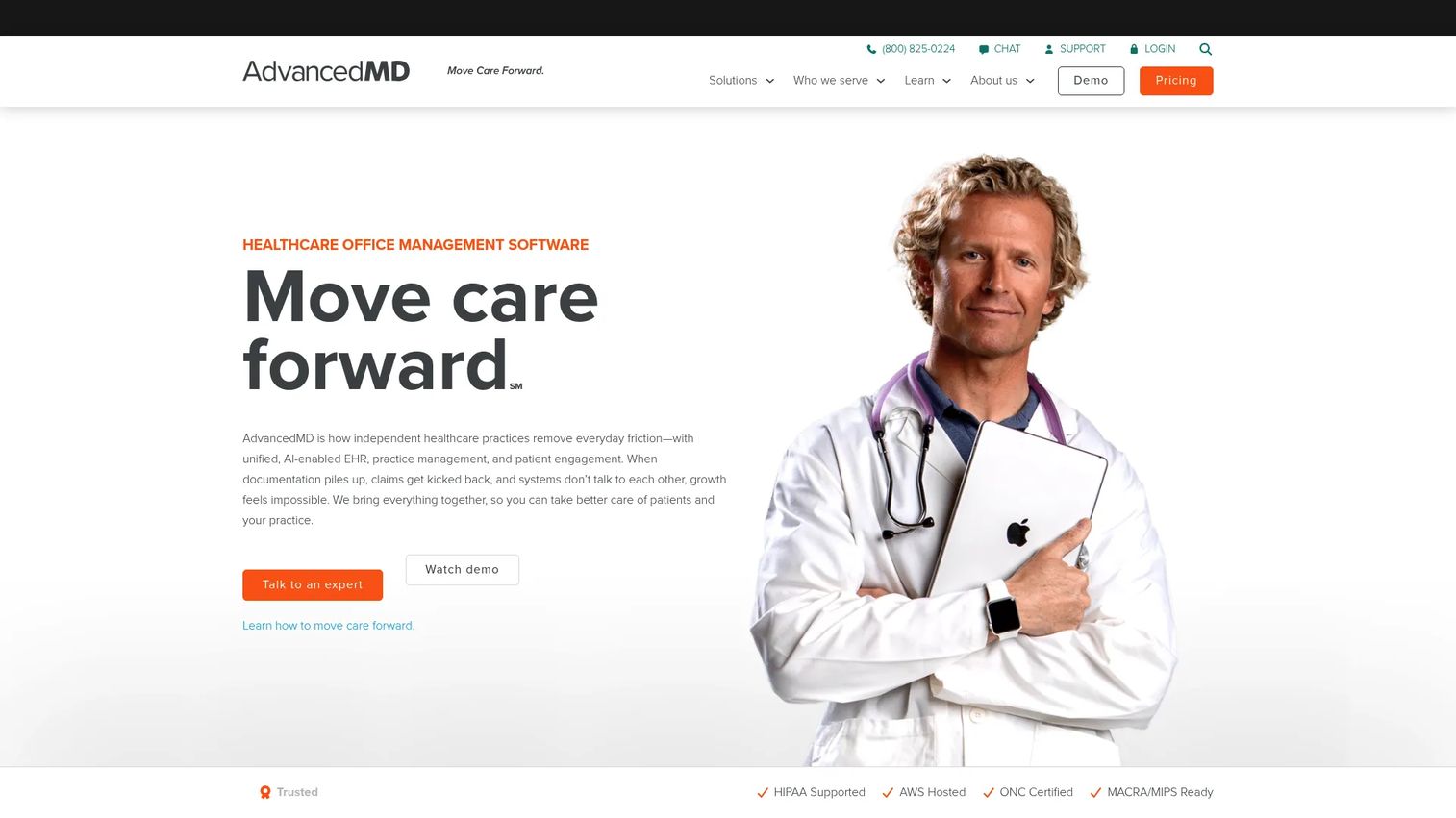
AdvancedMD is cloud-based healthcare software that combines EHR, practice management, patient engagement, and billing in one platform. It targets independent practices that want scheduling, task management, physician dashboards, telehealth, and practice management integration working together instead of stitched across vendors.
Best for: Independent medical practices needing an all-in-one clinical, administrative, and billing platform.
Key strengths
- Unified platform: EHR, practice management, and patient engagement in a single system.
- AI-enabled workflow: Clinical assistant and automation that reduce repetitive admin steps.
- Revenue cycle management: Integrated billing services and RCM support tied to collections.
Why choose AdvancedMD: The pitch is day-to-day usability and admin efficiency. For a specialty clinic juggling scheduling, documentation, and billing, having patient cards, dashboards, and telehealth in one place removes context switching. It fits practices that want operational depth without an enterprise footprint.
AdvancedMD pricing: Pricing is per provider per month and specialty-specific. Mental health bundles run $130 to $399 per provider per month, physical and addiction medicine sit at $399, MedSpa at $278, and medical specialties range from $429 to $1,070. RCM services run 4 to 8 percent of collections. A 30-day free trial applies to some mental health offerings. There is no permanent free tier.
3. Epic
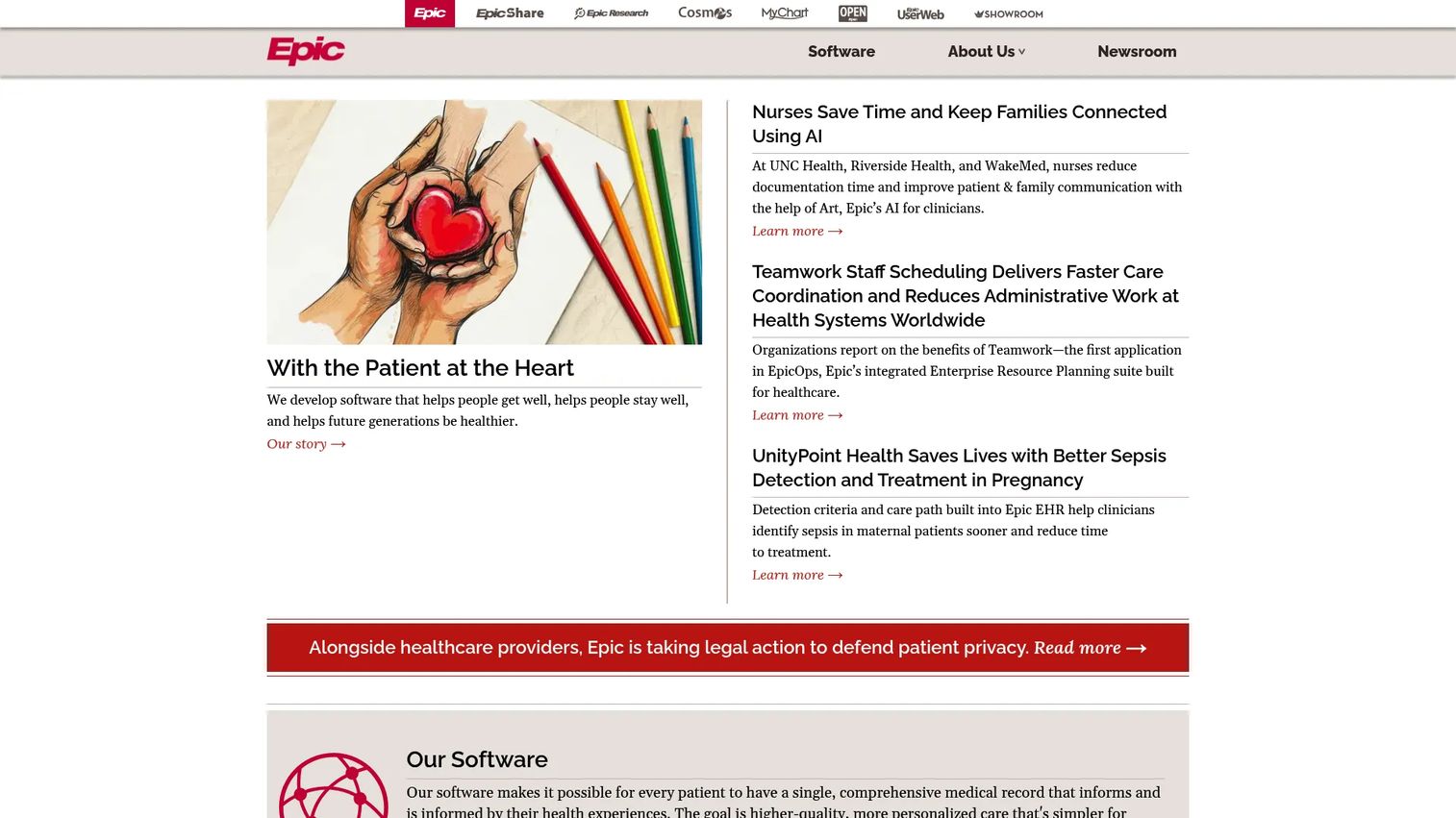
Epic is the name most people associate with large-scale EHR. Its reputation rests on deep enterprise coordination, broad ecosystem depth, and a patient record that spans the full care journey. For big organizations, MyChart, Care Everywhere, and FHIR-based APIs make it a serious interoperability engine.
Best for: Large healthcare organizations with the size and resources to support a heavyweight platform.
Key strengths
- Enterprise clinical workflows: EHR and clinical workflow management built for complex, high-volume settings.
- Interoperability depth: Care Everywhere and FHIR-based APIs for wide data exchange.
- Patient engagement: MyChart, scheduling, and billing features across the record breadth.
Why choose Epic: Epic fits organizations that can support a demanding platform and want ecosystem depth over lightweight simplicity. Its strength is coordinating care and data across a sprawling system, which is exactly why hospital networks standardize on it. It rewards scale and dedicated IT resources.
Epic pricing: Epic does not expose public pricing. Its site routes buyers through enterprise inquiry, so cost is negotiated per organization and varies widely with scope. Treat it as a major capital and staffing commitment, and confirm figures directly with Epic.
4. athenahealth
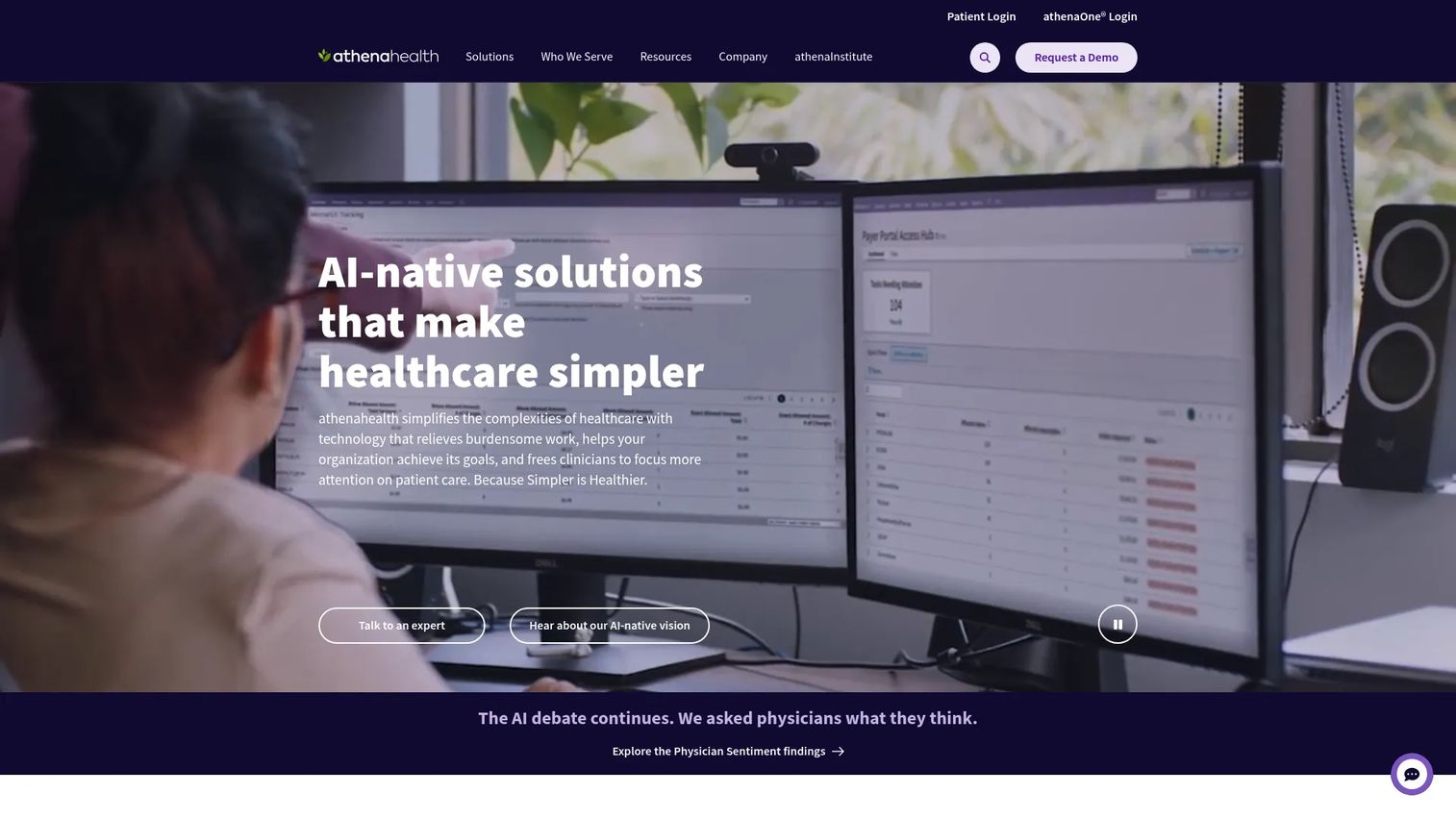
athenahealth delivers athenaOne, a cloud-based suite pairing EHR, revenue cycle management, and patient engagement. It appeals to ambulatory practices that want a modern operational layer without heavy local infrastructure to maintain.
Best for: Ambulatory medical practices needing an integrated clinical, financial, and patient engagement suite.
Key strengths
- Cloud EHR: Browser-based electronic health records with automatic updates.
- Revenue cycle management: Billing and collections tightly integrated with clinical workflow.
- Patient engagement: Communication and portal tools that support day-to-day operations.
Why choose athenahealth: The draw is a practical operational backbone that ties clinical work, billing, and patient communication together without on-premise servers. For practices that want to focus on care rather than IT, the cloud delivery and integrated financial layer keep the front and back office aligned.
athenahealth pricing: athenahealth aligns pricing to collections rather than a flat published rate, and invites practices to request a demo for a quote. No public starting price is shown. Because cost scales with revenue, confirm the percentage model and any minimums directly with the vendor.
5. Oracle Health
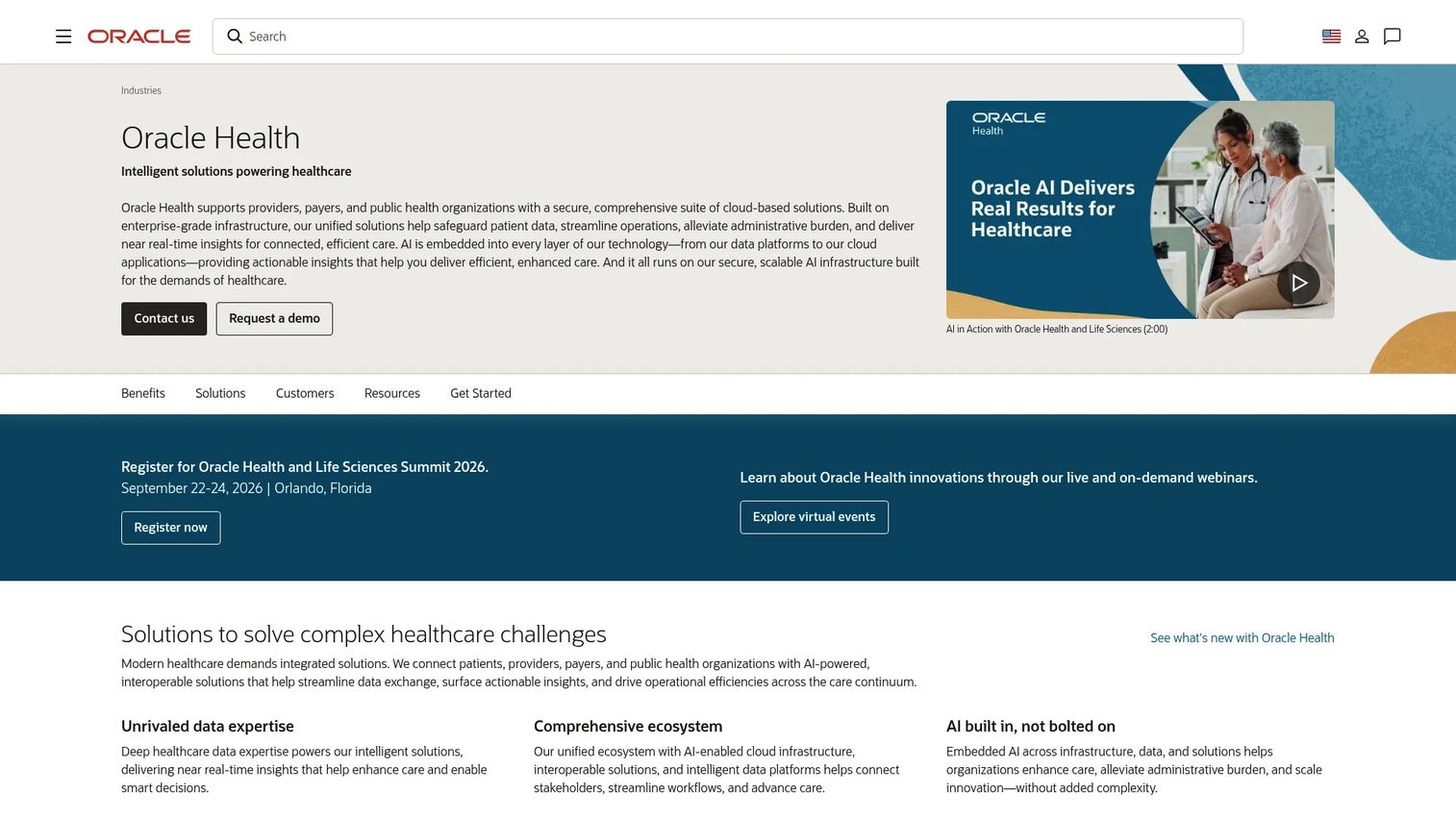
Oracle Health provides cloud-based healthcare software for providers, payers, public health, and life sciences. Its strength is enterprise EHR depth combined with interoperability and analytics that serve organizations with layered operational and governance needs.
Best for: Large healthcare organizations needing enterprise clinical, interoperability, and population health software.
Key strengths
- Clinical applications: EHR-related solutions built for complex, enterprise environments.
- Interoperability and APIs: Certified API access and data exchange across systems.
- Population health and analytics: Reporting and analytics for organization-wide oversight.
Why choose Oracle Health: It suits larger organizations where data exchange, clinical coordination, and enterprise governance are the priority. Implementation is a substantial undertaking that rewards mature IT and clear program ownership, so it fits systems ready to invest in the rollout, not practices wanting fast setup.
Oracle Health pricing: Oracle Health publishes annual fees for certified API access rather than full product pricing. Standalone environments run from $15,000 per year (Standard-S) up to $30,000 per year (Standard-XL), with shared environments like CommunityWorks at $3,000 per year and Continuum ASP at $1,500 per year. Its Ambulatory Suites include certified APIs at no additional fee. Overall platform cost is quote-based.
6. eClinicalWorks
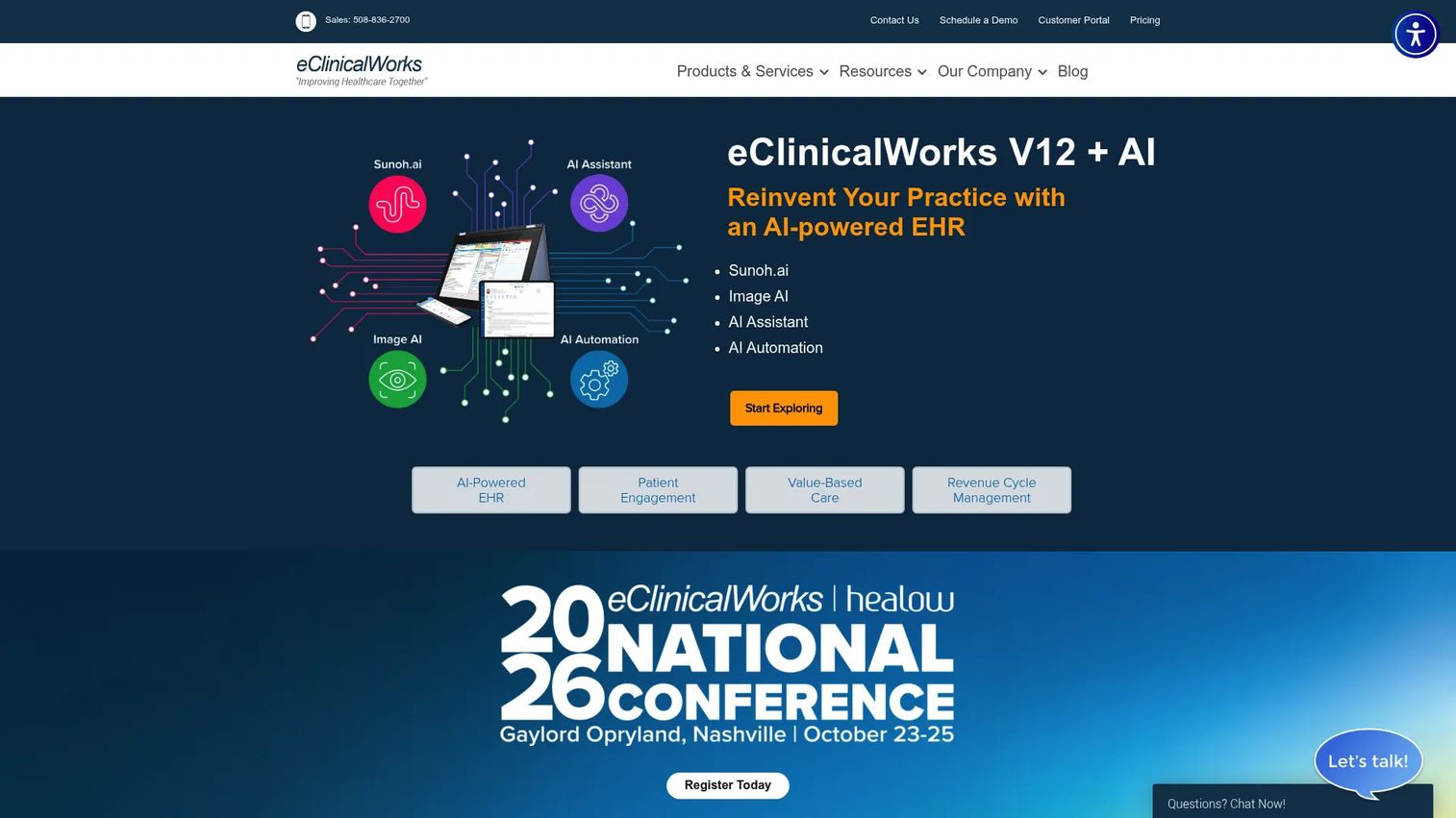
eClinicalWorks is a cloud-based EHR and healthcare IT platform used widely across ambulatory practices and health centers. It shows up on shortlists because it pairs broad clinical functionality with practice management integration, patient engagement, and reporting in one stack.
Best for: Ambulatory practices and health centers needing an integrated EHR plus practice management stack.
Key strengths
- Electronic health records: Full ambulatory charting and clinical documentation.
- Patient engagement: Portal and communication tools for continuity of care.
- Revenue cycle management: Optional RCM as a service to offload billing.
Why choose eClinicalWorks: Its versatility is the selling point. For independent and mid-sized practices that want workflow support and reporting without piecing together multiple vendors, the combined EHR and practice management footprint covers most operational needs in one place.
eClinicalWorks pricing: Public pricing lists EHR Only at $449 per provider per month and EHR with Practice Management at $599 per provider per month, both with no start-up costs. RCM as a Service runs 2.9 percent of practice collections. There is no separate free tier displayed.
7. NextGen Healthcare
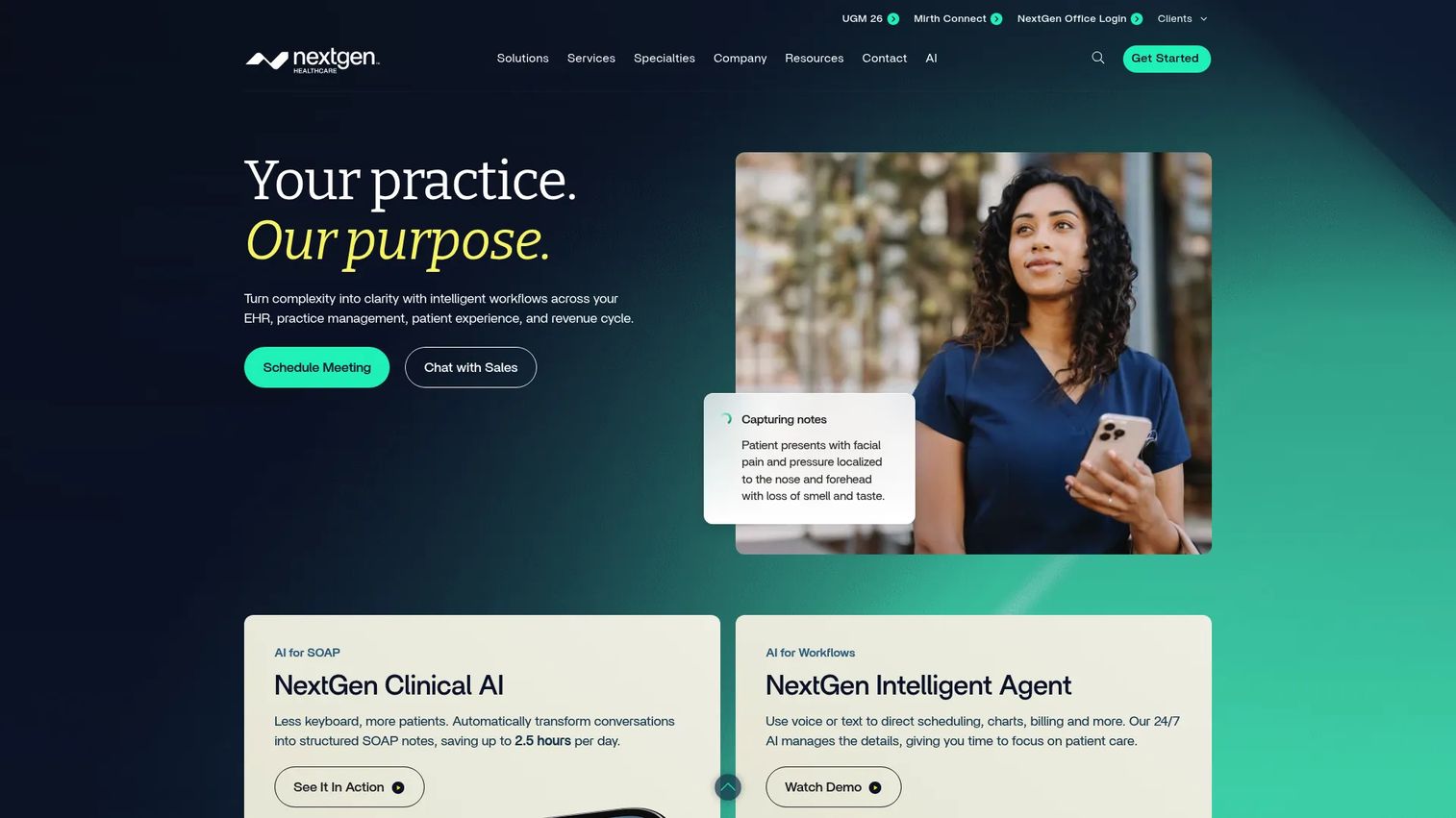
NextGen Healthcare offers cloud-based EHR, practice management, and patient engagement built for ambulatory practices. It fits teams that need more structure and specialty workflow depth than an entry-level system provides.
Best for: Ambulatory practices seeking an integrated EHR and patient experience platform.
Key strengths
- Ambulatory EHR: Cloud-based charting and practice management for specialty workflows.
- Patient experience tools: Self-scheduling and portal features that support patient communication.
- AI-powered automation: Documentation and workflow automation that reduce manual steps.
Why choose NextGen Healthcare: Choose it when specialty workflows and operational depth matter more than bare simplicity. Practices that have outgrown a lightweight tool but want cloud delivery and strong reporting tend to land here, especially where patient experience features factor into the decision.
NextGen Healthcare pricing: NextGen does not publish public pricing and routes buyers to a demo or sales conversation. Cost depends on practice size and selected modules. Request a tailored quote and confirm what is included before comparing against other systems.
8. Practice Fusion
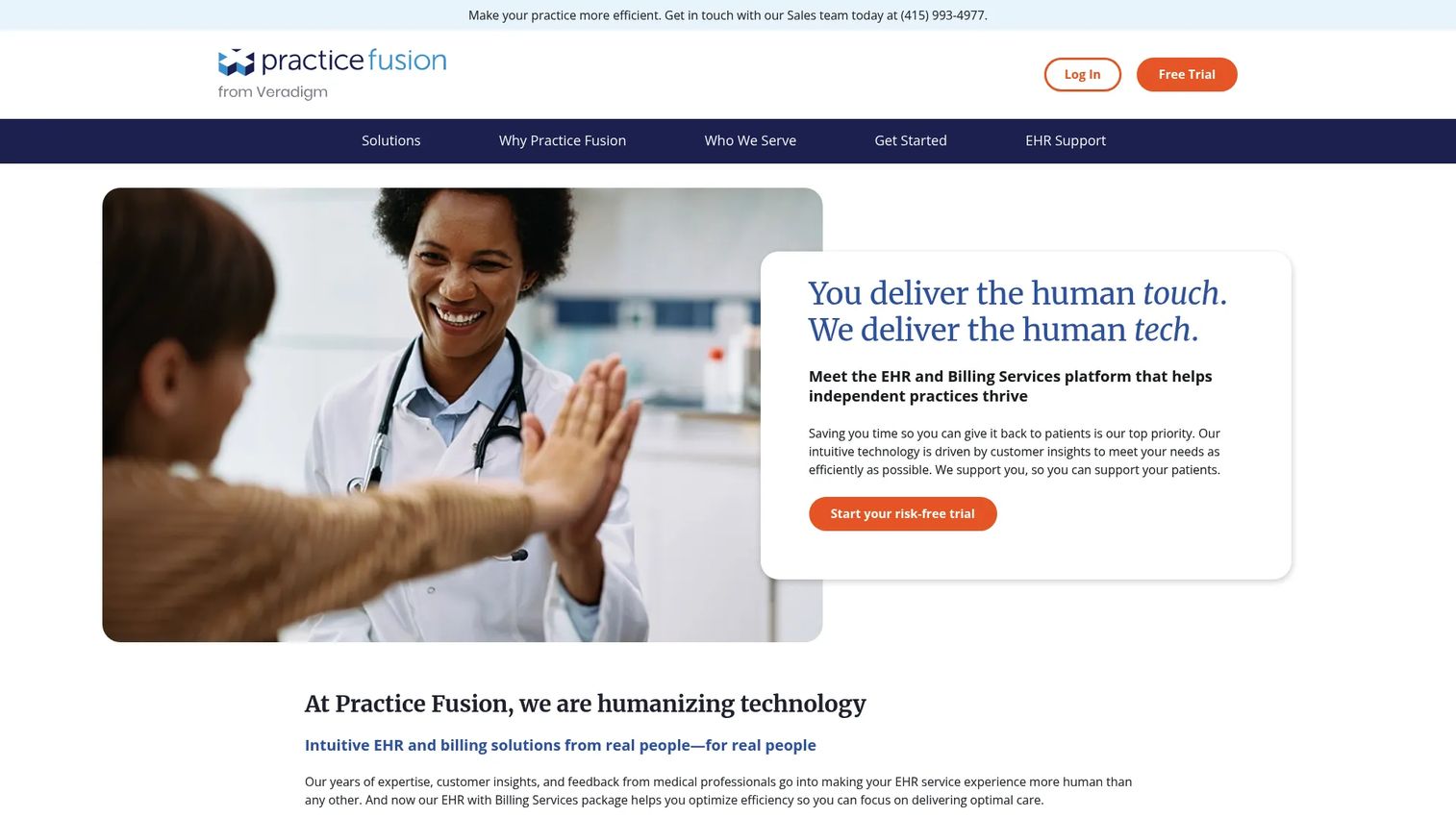
Practice Fusion is cloud-based EHR software built specifically for independent medical practices that want a lighter-weight experience. It focuses on charting, scheduling, e-prescribing, and day-to-day record management without enterprise complexity.
Best for: Independent U.S. medical practices needing an all-in-one EHR with billing support.
Key strengths
- Cloud EHR with auto-updates: Browser-based records that stay current without IT overhead.
- E-prescribing: Includes controlled substances, streamlining a common daily task.
- Integrated billing and labs: Billing services plus lab and imaging workflows in one place.
Why choose Practice Fusion: It works well for small teams that want fast adoption and a manageable footprint. If your practice needs solid charting and scheduling rather than deep enterprise workflows, its simplicity is a feature. Organizations needing multi-site coordination or heavy specialty logic should weigh a more robust platform instead.
Practice Fusion pricing: Practice Fusion lists a straightforward $149 per provider per month, billed with a required annual commitment. A 14-day risk-free trial is available. Billing services can be scheduled separately, though no additional public numeric pricing was found for them.
9. DrChrono
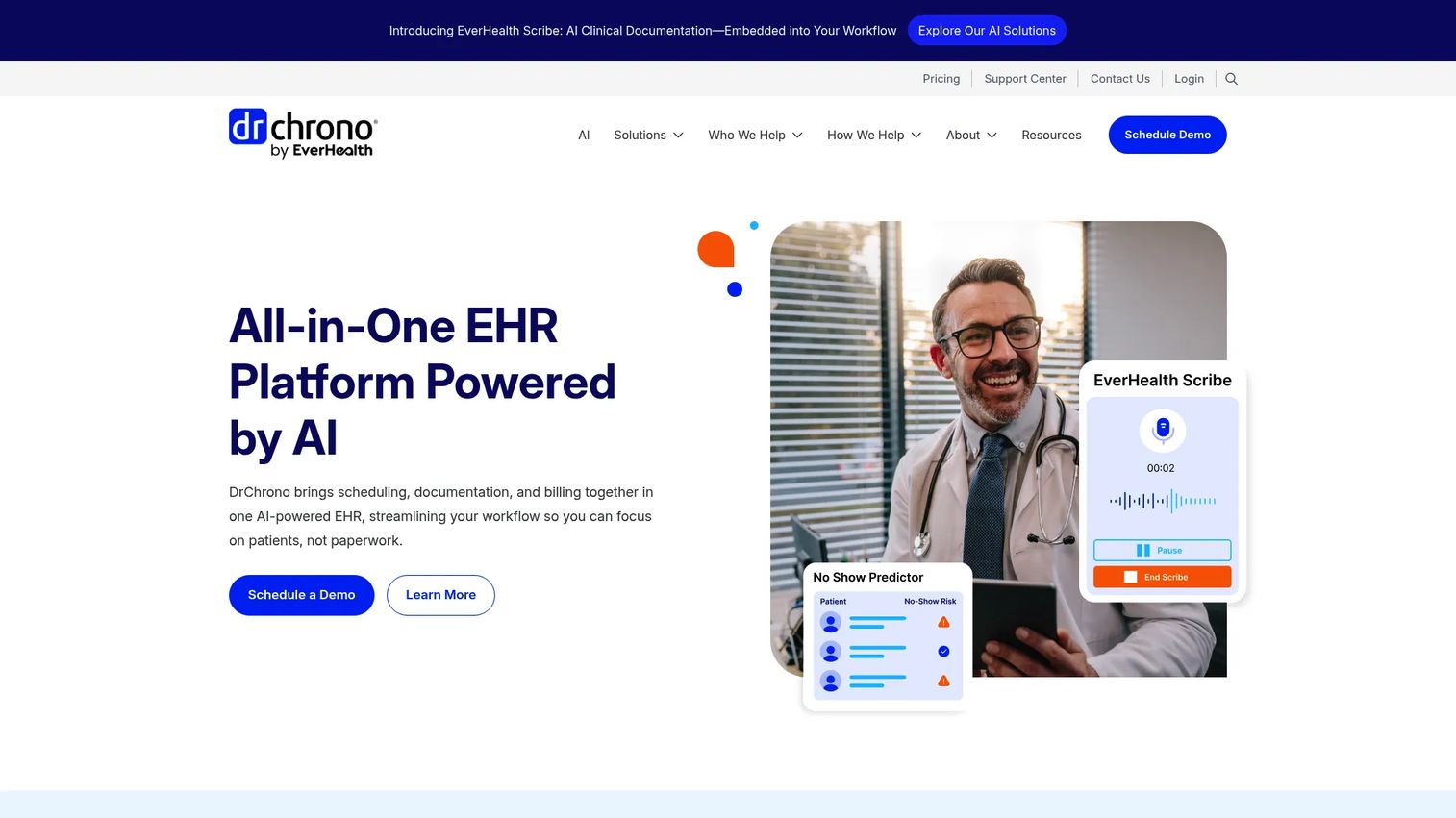
DrChrono is an AI-powered, cloud-based EHR and practice management platform with a mobile-first design. It appeals to independent and fast-moving practices that want to chart, schedule, and manage billing from a tablet or phone as easily as a desktop.
Best for: Independent medical practices needing a mobile EHR with integrated practice management.
Key strengths
- Mobile-first workflow: Scheduling, documentation, and billing designed for tablet and phone use.
- Practice management: Reminders, check-ins, insurance eligibility verification, and automation.
- Telehealth and patient portal: Secure messaging, payments, and digital intake in one flow.
Why choose DrChrono: For practices where providers move between rooms or locations, mobile ehr access changes the day. Charting at the point of care instead of returning to a workstation saves time and keeps documentation current. It suits smaller, agile teams that value provider usability.
DrChrono pricing: DrChrono does not display a public starting price. It states pricing depends on practice size and selected features, and directs buyers to sales for a customized quote. Confirm the modules included in any quote before comparing to flat-rate competitors.
10. Tebra
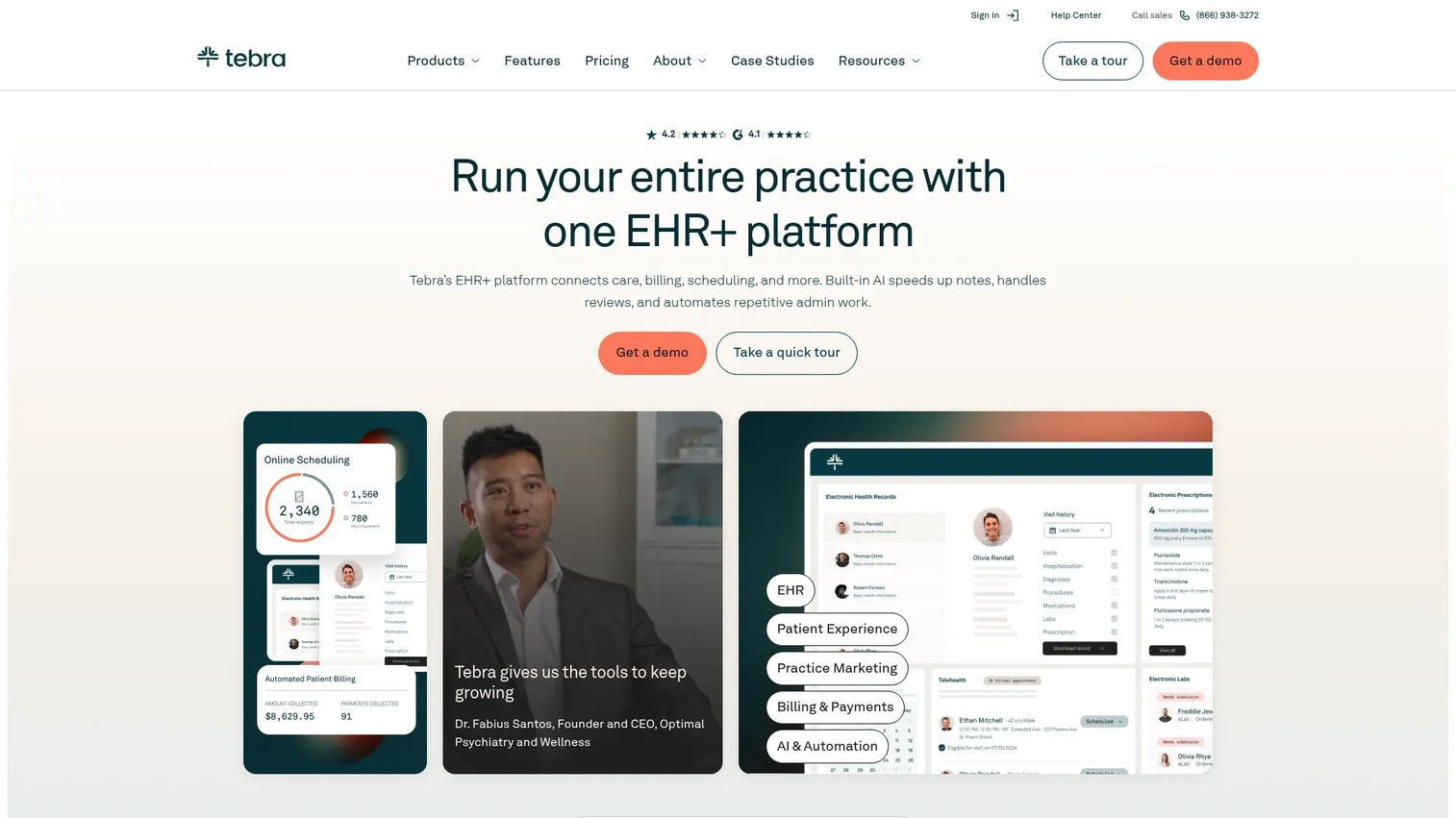
Tebra is an all-in-one healthcare platform for independent practices, combining EHR, billing and payments, and patient experience tools. It appeals to smaller and mid-sized practices that want charting, scheduling, and engagement in a single consolidated system.
Best for: Independent practices that want one system for EHR, billing, and patient engagement.
Key strengths
- EHR core: Charting, e-prescribing, labs, telehealth, patient intake, and portal.
- Billing and payments: Claims submission, eligibility checks, and patient statements.
- Patient experience and marketing: Online scheduling, reminders, and practice marketing tools.
Why choose Tebra: Tebra balances clinical, financial, and engagement tools for practices that want operational breadth without running several vendors. The mix of charting, scheduling, and patient communication in one platform makes it a practical operational hub for a growing independent practice.
Tebra pricing: Tebra uses subscription pricing that varies by number of providers, platform bundle, specialty workflows, claim volume, and implementation needs. It offers two bundles, Practice Essentials and Practice Automation, and directs buyers to request a personalized quote. No public numeric starting price is displayed.
Considerations before you buy
Practice size and complexity
A solo clinic and a multi-site group have different operational realities. Small practices need speed, simplicity, and low overhead. Larger organizations need coordination across departments, roles, and locations. Match the system to your actual complexity, not the complexity you imagine you might reach someday. Overbuying an enterprise platform can be as costly as outgrowing a lightweight one.
Specialty fit
General features rarely tell the whole story. Specialty workflows often demand specific templates, billing logic, and documentation support. A dermatology clinic, a behavioral health group, and a cardiology practice each chart differently. Test specialty fit directly during evaluation rather than trusting a generic feature list, and involve the clinicians who will use it daily.
Interoperability and integrations
Verify lab, imaging, referral, and billing integrations before signing. Interoperability is where hidden admin work lives. If data does not flow cleanly between systems, your staff will paper over the gaps with manual entry and faxes. Ask vendors to show real interfaces to the partners you actually use, not a list of theoretical connections.
Reporting and compliance
Quality reporting, regulatory support, and audit readiness separate a records tool from a real operational platform. Check how easy it is to pull the specific reports your practice needs, not just whether reporting exists. Compliance workflows should reduce burden, not add another manual process at deadline time.
Support and implementation
Implementation quality often decides success as much as the software itself. A strong product with a rough rollout still frustrates staff for months. Ask each vendor about onboarding, training resources, data migration, and support response times. Talk to reference customers of similar size and specialty before you commit.
Conclusion
The best EHR software is the one that matches your workflow, scale, specialty, and reporting needs, not the one with the longest feature list. For large health systems, MEDITECH and Epic lead on scale and coordination, with Oracle Health strong on enterprise interoperability and analytics. For balanced ambulatory operations, athenahealth pairs clinical and financial workflow well. Independent and smaller practices should look at AdvancedMD, Practice Fusion, DrChrono, and Tebra, while eClinicalWorks and NextGen Healthcare fit specialty and growth-focused teams.
Whatever your size, shortlist two or three vendors, then test real workflows with your front-desk, clinical, and billing users before deciding. The evaluation phase is where hidden friction surfaces. Bring the people who live in the system every day, walk through your busiest scenarios, and request demos from your shortlist so you compare like for like. The same buyer discipline you would apply to contract management software or event management software applies here: prove the fit before you sign, not after.
FAQs
EHR software is a digital platform that stores and manages patient health information electronically. It replaces paper charts with a shared record that providers, staff, and connected systems can access, and it is designed to exchange data across care settings so information follows the patient.
An EHR stores patient demographics, clinical notes, vitals, medications, lab results, immunizations, and imaging reports. It also holds problem lists, diagnoses, e-prescribing history, and scheduling and billing details, giving providers a complete view of a patient's care in one place.
An EMR is a digital chart used within a single practice. Electronic medical records software keeps records local, while electronic health records software is built to share data across providers, labs, and care settings. In short, exchange and broader record sharing are what set an EHR apart from an EMR.
Prioritize simplicity, transparent pricing, workflow fit, responsive support, and specialty needs. Smaller practices benefit from lighter-weight options that adopt quickly. Run a live workflow test with your actual front-desk, clinical, and billing tasks before committing, so you know the system fits your day.
Look for fast charting and documentation, scheduling, patient communication, quality reporting, interoperability, and strong support. These are the capabilities that shape daily clinical workflow. Prioritize the features your team touches most, and confirm each one works for your specialty rather than trusting a generic list.
It depends on your IT resources, security preferences, and maintenance expectations. Cloud EHR software reduces local infrastructure and delivers automatic updates, which suits practices without dedicated IT. On-premise can appeal to organizations wanting more direct control. Cloud-based products now dominate the market, but the right answer follows your operational needs.
Interoperability is central. Clean data exchange with labs, imaging, referrals, and other systems keeps information flowing without manual re-entry. Strong interoperability improves workflow efficiency and continuity of care, while poor data exchange creates hidden admin work that quietly taxes your staff every day.
Yes. EHR systems support quality reporting, audit readiness, and regulatory workflows by structuring clinical data and automating report generation. The practical test is how easily you can pull the specific reports you need. A good system reduces compliance burden rather than adding another manual step at deadline time.