Value-based care teams are drowning in dashboards. Claims sit in one system, EHR data in another, quality scores somewhere else entirely. By the time finance reconciles the view, the quarter is half over and the margin risk is already baked in.
The problem is structural: Most organizations adopted value-based contracts without building the data infrastructure to manage them. As a result, population health, cost, quality, and contract performance stay fragmented, forcing weekly spreadsheet rituals that break the moment covered lives or contract complexity grows.
The stakes are real. According to AHIP (2026), 44.9% of U.S. healthcare payments were tied to alternative payment models holding providers accountable for quality and cost. NCQA (2026) puts 14.3 million Medicare beneficiaries inside accountable care organizations, up 4.4% year over year. Organizations that cannot track performance in near-real time are flying risk blind.
This guide cuts through the category to give you a shortlist worth taking to your analytics or operations lead.
What's inside
This guide covers 12 value based care analytics software platforms for 2026. It is built for ACO leaders, health system strategy teams, payer-provider network operators, and founders or healthtech executives evaluating the category.
Tools were selected based on four criteria:
- Data integration depth: EHR, claims, labs, ADT, HIE, and operational feeds
- Contract and risk model support: MSSP, ACO REACH, capitation, shared savings, downside risk
- Population health and quality: risk stratification, care gaps, HEDIS, Stars, MIPS
- Workflow activation: how insights move into care management, coding review, and provider action
Pricing and G2 ratings were verified at the time of writing.
TL;DR
- Best for Epic-centered health systems: Epic Healthy Planet. Embedded inside the EHR clinicians already use, so adoption friction is low.
- Best for Oracle Health environments: Oracle Health HealtheAnalytics. Keeps analytics close to the clinical data backbone without adding another integration layer.
- Best for claims-driven market intelligence: Clarify Health. Longitudinal claims analytics across provider performance, patient journeys, and network strategy.
- Best for a full healthcare data operating model: Health Catalyst. Data infrastructure plus analytics applications for teams that need both.
- Best for actuarial and contract performance depth: Milliman MedInsight. Finance and actuarial teams trust it for cost, utilization, and benchmark analysis.
- Best for value-based contract operations end to end: Cedar Gate Technologies. Connects analytics to payment, care management, and contract execution.
What is value based care analytics software?
Value based care analytics software helps healthcare organizations combine clinical, claims, quality, cost, utilization, and operational data to manage performance under risk-based or outcomes-based payment models.
The category exists because standard EHR reporting and general BI tools were not built for the accountability demands of value-based contracts. These platforms normalize fragmented data sources into a single performance view and connect that view to the financial and clinical levers that move outcomes.
Core capabilities across the category include:
- Data integration from EHRs, claims, labs, ADT feeds, HIE, patient surveys, and operational systems
- Population health segmentation and risk stratification (HCC, clinical risk, cost risk, utilization)
- Quality measure tracking: HEDIS, Stars, MIPS, and contract-specific measures
- Cost and utilization analytics against benchmarks
- Value-based contract modeling, shared savings forecasting, and downside risk monitoring
- Provider and network performance management
- Care gap detection and workflow activation for care teams
- Health equity and social determinants of health (SDOH) analytics
- Executive dashboards and board-level performance reporting
Where the category boundary sits:
This is not simply a BI platform configured for healthcare. General business intelligence tools can produce dashboards but cannot normalize clinical classification data, support HCC risk adjustment, or model MSSP shared savings calculations out of the box. Value based care analytics platforms bring pre-built healthcare data models, measure logic, and contract frameworks that would take years to replicate in a generic analytics stack.
The category also differs from standalone care management software. Care management tools track workflows and interventions. Value-based care analytics platforms generate the insights that tell care teams which patients need those interventions, where cost risk is concentrated, and whether contract performance is on track.
The strongest platforms in this category close the loop: From data aggregation to risk insight to workflow action to financial accountability.
When to use value based care analytics software
Manage downside risk before it hits margin
Risk-bearing contracts require earlier warning signals than fee-for-service reporting cycles allow. By the time a monthly report surfaces a utilization spike, the cost has landed. Value-based care analytics platforms surface benchmark drift, avoidable admission patterns, and coding gaps in near-real time, so finance and clinical teams can intervene before the shared savings calculation turns negative.
Turn fragmented healthcare data into operating decisions
A weekly spreadsheet process breaks the moment your population or contract portfolio grows. Organizations managing multiple payer contracts, attribution lists, and quality programs across dozens of practice sites need a normalized, refreshed data layer that all teams pull from. Without it, every meeting starts with a data argument instead of a decision.
Activate care teams around the right patients
Analytics that sit in a dashboard and do not change clinical behavior do not create value. The measure of a good value-based care platform is whether it pushes prioritized cohorts, care gap lists, high-risk member alerts, and discharge follow-up queues into the workflows care managers and providers already use.
Value based care analytics software comparison
The table below is a shortlisting tool, not a final buying decision. Pricing for most platforms in this category is quote-based and reflects modules, covered lives, data sources, and implementation scope. Verify current figures directly with each vendor before budgeting.
| # | Product | Best for | Key differentiator | Pricing | G2 rating |
|---|---|---|---|---|---|
| 1 | Epic Healthy Planet | Epic-centered health systems | Embedded population health inside the Epic EHR | Quote-based | 4.3/5 |
| 2 | Oracle Health HealtheAnalytics | Oracle Health environments | Analytics tied to Oracle Health clinical data assets | Quote-based | 4.1/5 |
| 3 | Clarify Health | Claims-based market and network intelligence | Longitudinal claims analytics and benchmark reporting | Quote-based | 4.7/5 |
| 4 | Health Catalyst | Healthcare data operating models | Data platform plus analytics applications together | Quote-based | 5.0/5 |
| 5 | Milliman MedInsight | Actuarial and contract performance analytics | Actuarial-grade cost, utilization, and risk analysis | Quote-based | Not yet rated |
| 6 | Cedar Gate Technologies | Value-based contract operations | Analytics connected to payment and contract workflows | Quote-based | No reviews yet |
| 7 | Innovaccer | Unified healthcare data and workflow activation | AI-powered data activation across clinical and financial teams | Quote-based | 4.4/5 |
| 8 | Arcadia | Population health and ACO performance | Data aggregation and analytics for risk-bearing organizations | Quote-based | Not listed |
| 9 | ZeOmega Jiva | Care management plus analytics | Analytics connected to utilization and care management operations | Quote-based | 4.0/5 |
| 10 | Qlik Healthcare Analytics | Flexible BI for analytics-mature teams | Governed dashboards and self-service data exploration | From $300/mo | 4.4/5 |
| 11 | Dimensional Insight | Provider performance dashboards | Governed KPIs and enterprise healthcare reporting | Quote-based | 4.7/5 |
| 12 | 3M Health Information Systems | Coding, quality, and risk adjustment analytics | Clinical classification and performance analytics depth | Quote-based | 4.5/5 |
Best 12 value based care analytics software for 2026
1. Epic Healthy Planet
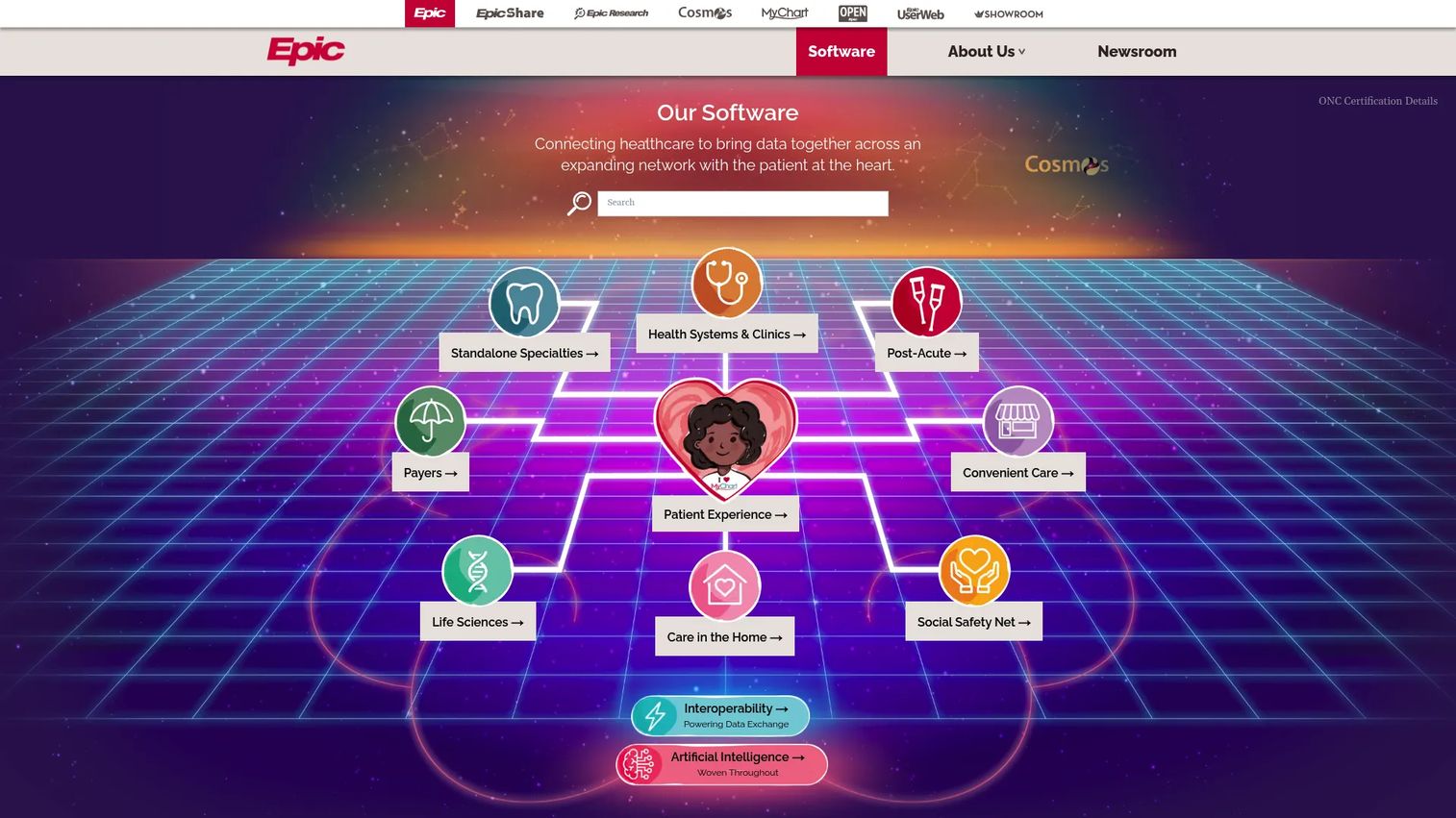
Epic Healthy Planet is the population health and value-based care module inside the Epic electronic health record. It aggregates clinical data, lab results, risk scores, and paid claims to give care teams a longitudinal view of their populations. Contract performance tracking, care gap identification, and care coordination workflows run inside the same system clinicians use to document patient visits.
Best for: Health systems already running Epic that want population health analytics without adding a separate platform.
Key features
- Population registries with dynamic cohort management
- Care gap tracking tied to quality measure requirements
- Risk stratification using clinical, claims, and lab data
- Embedded EHR workflows for care management teams
- Contract performance and cost-reduction opportunity reporting
Why choose Epic Healthy Planet: Choose it when workflow adoption matters more than platform flexibility. Clinicians and care managers work inside a system they already know, which removes the most common barrier to analytics adoption: Getting people to log in.
Epic Healthy Planet pricing: Pricing runs through Epic enterprise contracts and varies by module scope, implementation services, and organizational size. Contact Epic directly for a quote.
G2 rating: 4.3/5
2. Oracle Health HealtheAnalytics
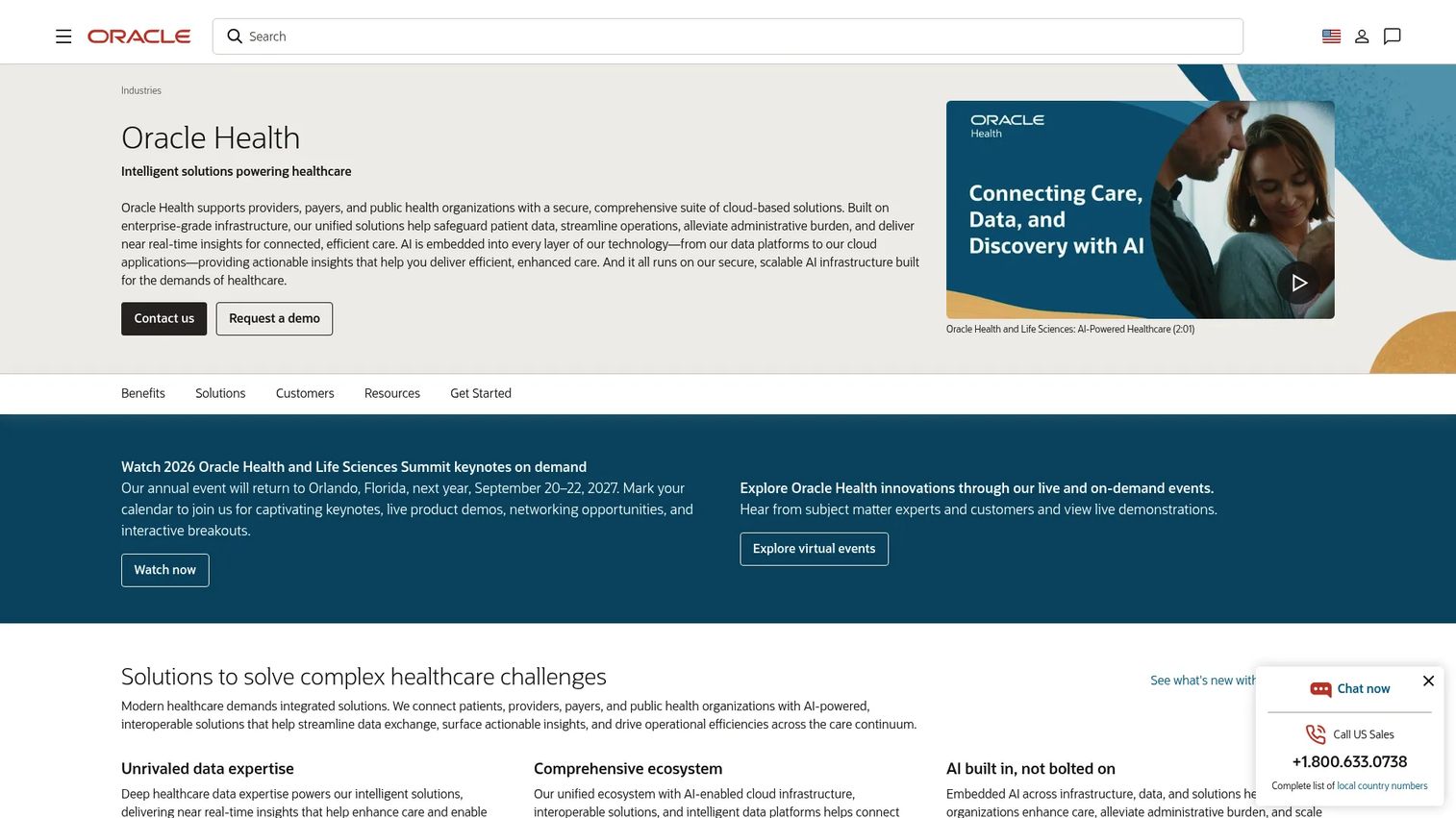
Oracle Health HealtheAnalytics delivers dashboards and reporting across clinical, financial, operational, care-continuum, and population health use cases. It supports automated calculation and reporting for Promoting Interoperability and MIPS measures, and aggregates data across Oracle Health environments into actionable analytics. The platform serves organizations that have standardized on Oracle Health infrastructure and want analytics close to the source.
Best for: Healthcare organizations with Oracle Health infrastructure that need enterprise analytics connected to their existing clinical data backbone.
Key features
- Population health analytics with cohort identification
- Clinical, financial, and operational dashboards
- MIPS and Promoting Interoperability measure automation
- Enterprise reporting across the care continuum
- Data aggregation and normalization from Oracle Health systems
Why choose Oracle Health HealtheAnalytics: Choose it when your organization has already committed to Oracle Health and wants to avoid a separate analytics integration layer. The value here is data continuity, not platform flexibility.
Oracle Health HealtheAnalytics pricing: Pricing is handled through Oracle Health enterprise agreements. Cost drivers include modules selected, enterprise scope, data connections, and implementation services.
G2 rating: 4.1/5
3. Clarify Health
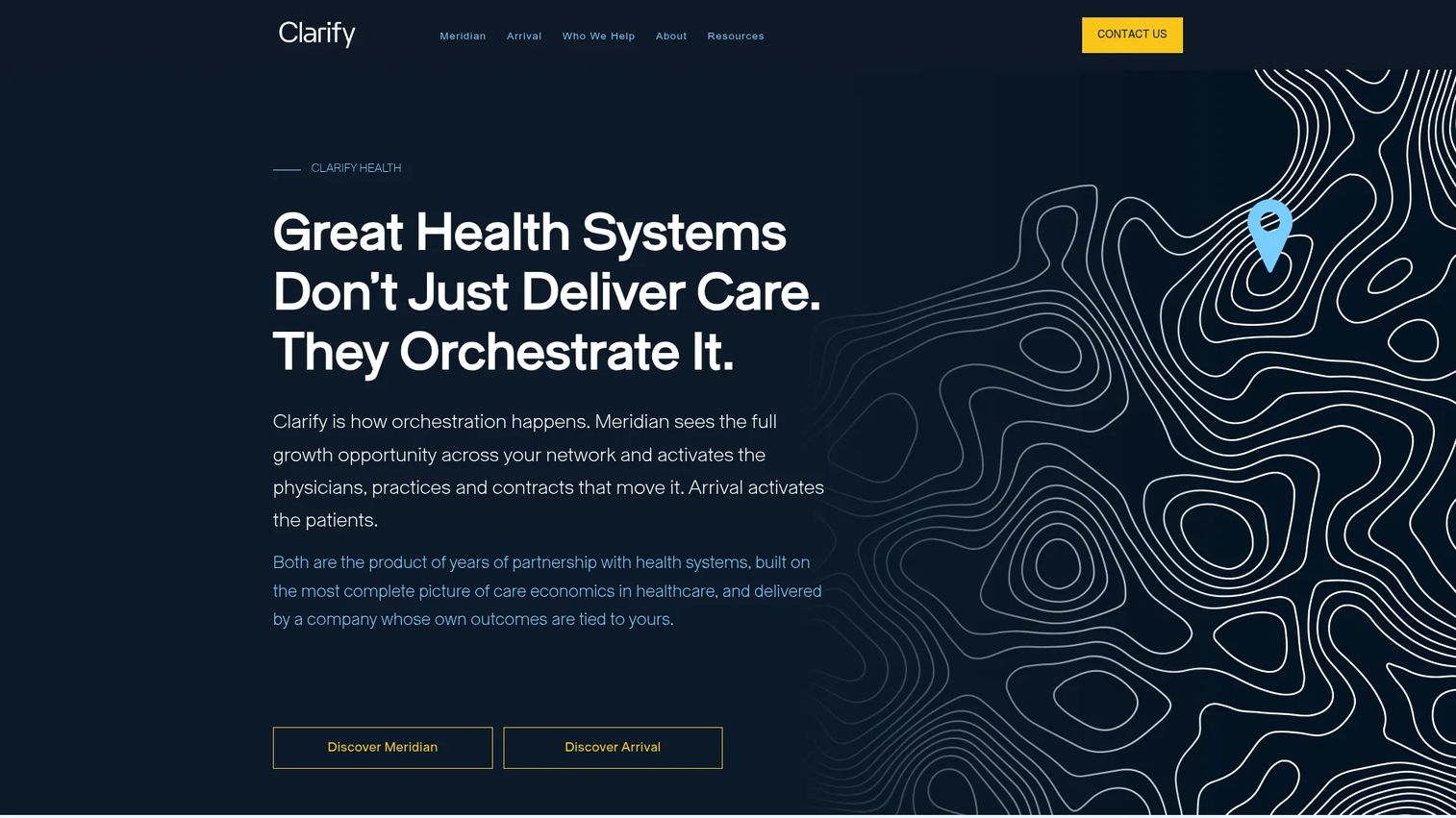
Clarify Health is a healthcare outcomes company that delivers growth intelligence, patient activation, and healthcare data analytics through its Clarify Atlas Platform. The platform draws on claims, prescription, negotiated-rate, and social determinants data to produce longitudinal views of provider performance, patient journeys, and network dynamics. It is used by health systems for growth strategy, referral optimization, and value-based care analytics.
Best for: Organizations that need deep claims intelligence for network performance analysis, growth strategy, and value-based contract decisions.
Key features
- Longitudinal claims analytics across patient journeys
- Provider performance benchmarking and network analysis
- Referral orchestration and patient outreach capabilities
- Social determinants and negotiated-rate data integration
- Growth opportunity analysis and market intelligence
Why choose Clarify Health: Choose it when claims-driven market visibility and provider performance benchmarking sit at the center of your strategy work. It is well suited for teams making bets on network design and patient attribution rather than primarily running day-to-day care management workflows.
Clarify Health pricing: Pricing is quote-based and reflects the data modules, analytics scope, and enterprise licensing. Contact Clarify Health directly for current pricing.
G2 rating: 4.7/5
4. Health Catalyst
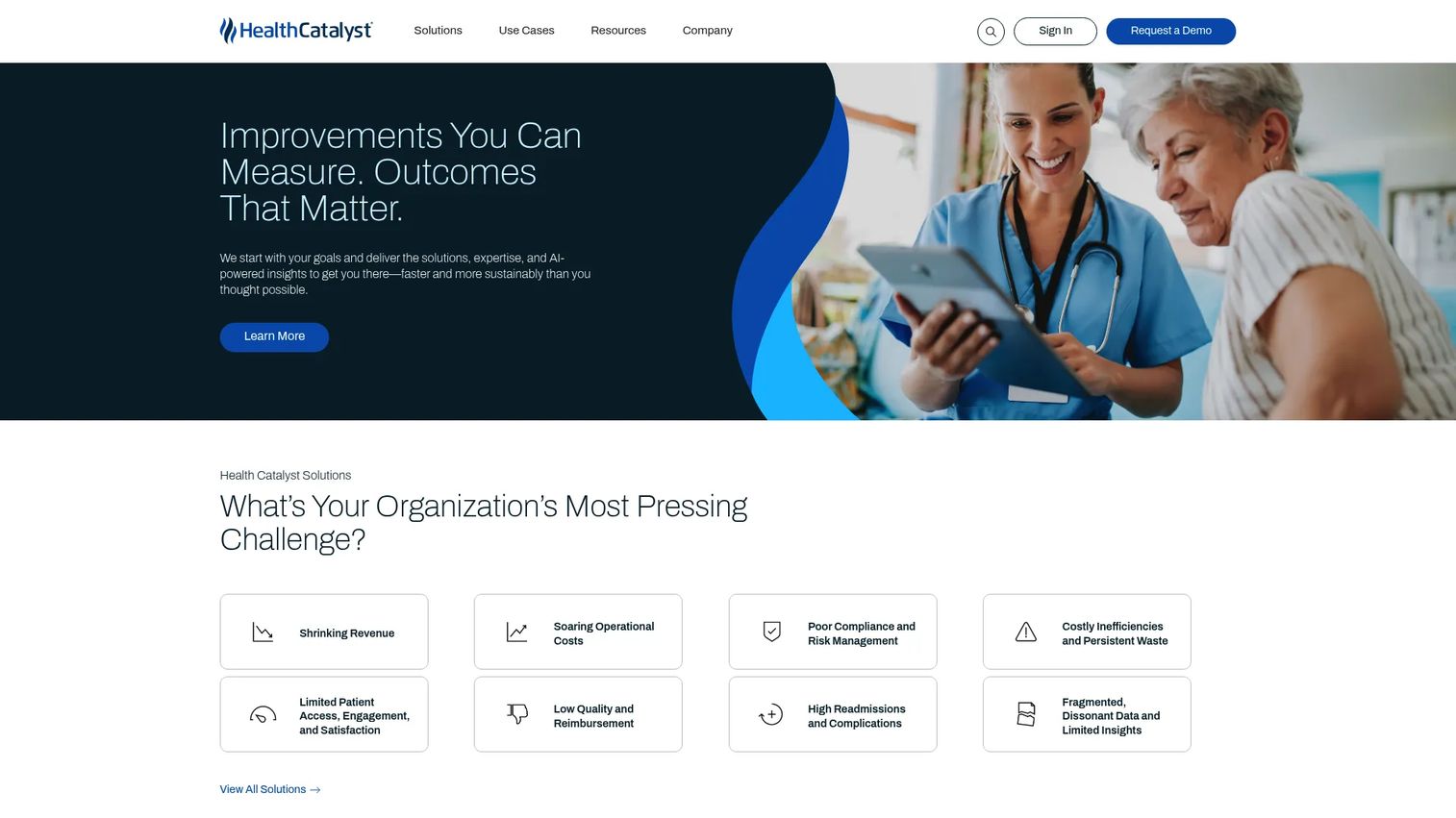
Health Catalyst provides a healthcare data platform combined with analytics applications for clinical, financial, operational, and population health improvement. The platform unifies clinical, financial, claims, and operational data into standardized healthcare data models. Self-service analytics, population cohort analysis, AI capabilities, and data quality management tools sit on top of the same underlying data infrastructure. For teams that need a broader healthcare data operating model, it offers both the foundation and the applications.
Best for: Health systems that need data infrastructure and analytic applications together, not a point analytics tool on top of an unsolved data problem.
Key features
- Unified clinical, financial, claims, and operational data models
- Self-service analytics with population cohort analysis and visualization
- Quality improvement analytics and performance reporting
- Data profiling, quality rules, and terminology management
- AI capabilities for population health and operational insights
Why choose Health Catalyst: Choose it when the organization needs to solve the data layer and the analytics layer together. Teams that want to standardize how healthcare data supports performance improvement across departments will find the combined platform more durable than point solutions layered on fragmented data. For predictive analytics use cases in healthcare, having a governed data foundation matters enormously.
Health Catalyst pricing: Pricing requires a demo or proposal request through Health Catalyst. The company does not display standard tiers; cost reflects platform scope, analytics applications selected, data integration complexity, and implementation services.
G2 rating: 5.0/5
5. Milliman MedInsight
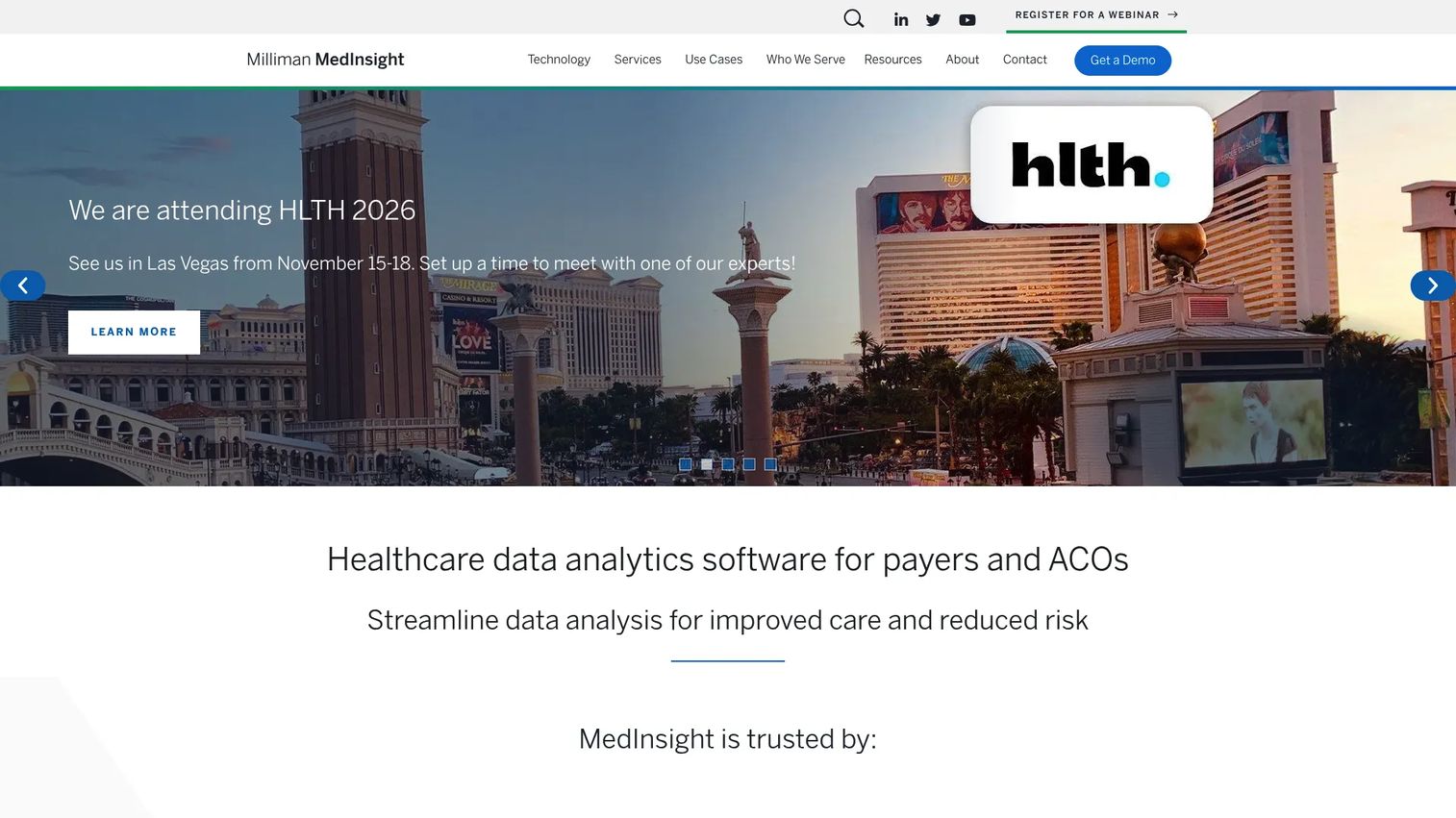
Milliman MedInsight is a healthcare analytics platform with actuarial heritage, serving payers, providers, ACOs, employers, and government agencies. It aggregates claims, clinical, laboratory, and third-party data for performance benchmarking, cost and utilization analysis, risk adjustment, population health, and contract performance reporting. The platform carries credibility specifically with finance and actuarial teams who need rigorous methodology behind every cost comparison.
Best for: Healthcare organizations where finance and actuarial rigor drive the buying decision, particularly those managing complex value-based contracts.
Key features
- Claims and clinical data aggregation with normalization
- Cost benchmarking and utilization analysis
- Risk adjustment and HCC analytics
- Value-based contract performance and shared savings reporting
- Population health and care gap analytics
Why choose Milliman MedInsight: Choose it when credibility of methodology matters as much as the output. Actuarial teams, CFOs, and finance committees trust Milliman's benchmarking approach, which makes contract negotiation conversations with payers more defensible.
Milliman MedInsight pricing: Pricing requires direct contact with the MedInsight team.
6. Cedar Gate Technologies
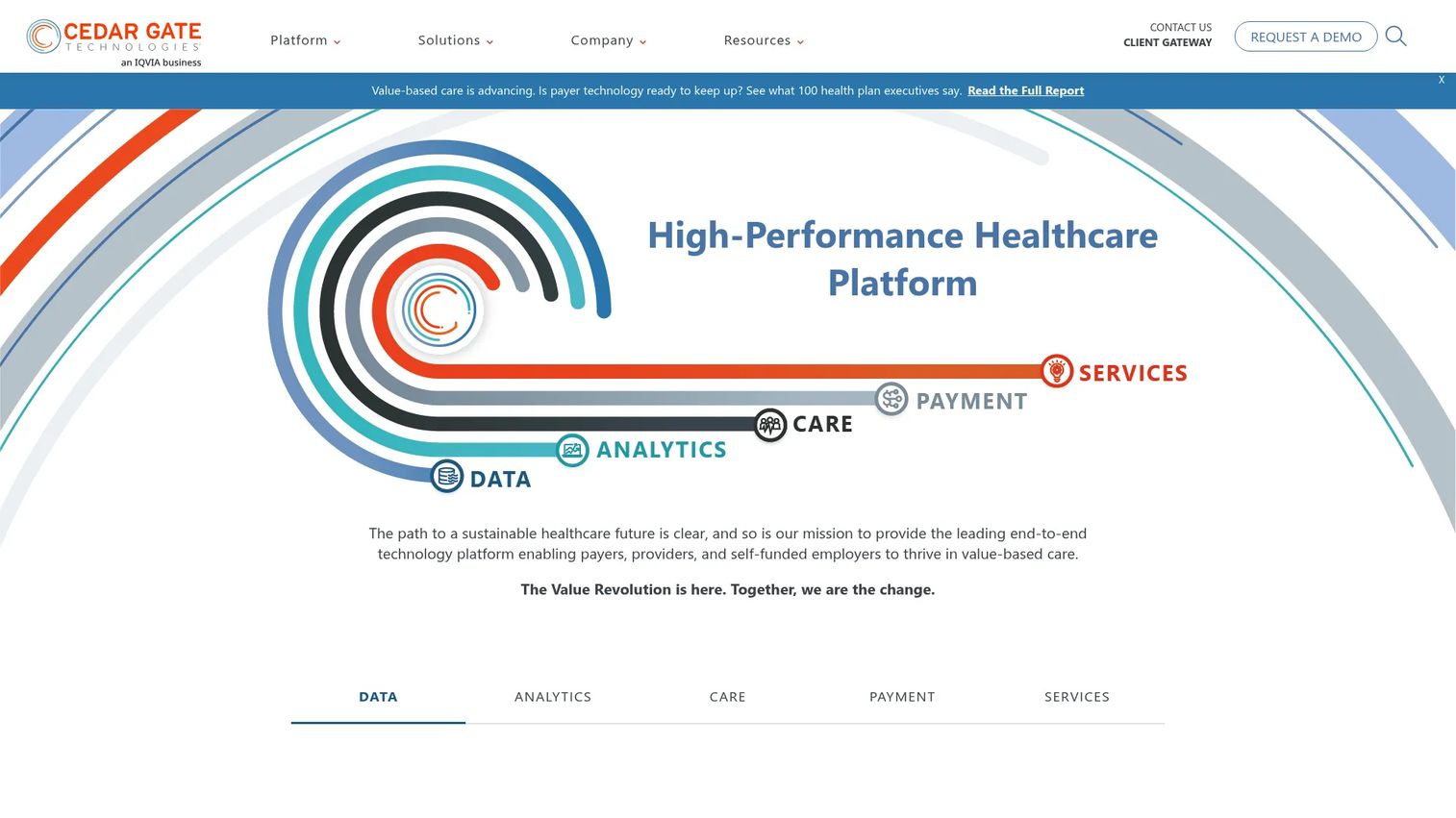
Cedar Gate Technologies provides an integrated healthcare technology platform connecting analytics, care management, payment operations, and clinical decision support for value-based care. The platform serves payers, providers, and self-funded employers managing alternative payment models. Its capabilities span enterprise data management, healthcare benefits and value-based care analytics, utilization management, bundles and capitation adjudication, and actuarial consulting.
Best for: Organizations that need analytics tied directly to value-based contract operations, payment model execution, and care management workflows.
Key features
- Contract modeling and risk performance analytics
- Cohort identification and care gap reporting
- Care management and clinical decision support
- Bundles and capitation adjudication
- Payment operations analytics and reporting
Why choose Cedar Gate Technologies: Choose it when analytics cannot sit in a reporting layer separate from operational execution. Teams managing multiple payment models simultaneously, from shared savings to capitation to bundled payments, benefit from a single platform that tracks contract performance and executes payment logic together.
Cedar Gate Technologies pricing: Cedar Gate prices through enterprise contracts. Drivers include modules selected, covered lives, data feeds, and services scope. Request a discovery call for current pricing.
7. Innovaccer
Innovaccer is a healthcare intelligence platform that unifies patient data and supports population health, care management, value-based care, revenue cycle, and provider performance workflows through AI-powered agents and analytics. The data activation layer integrates and harmonizes healthcare data from multiple sources, then surfaces insights in clinical and financial workflows rather than leaving them in a standalone reporting environment.
Best for: Healthcare organizations that need unified patient data and workflow activation across clinical and financial teams, not just a reporting layer.
Key features
- Healthcare-native AI agents and copilots for workflow support
- Unified patient records across clinical, claims, and operational data
- Population health analytics and care gap tracking
- Risk stratification and quality measure reporting
- Workflow activation for care management and revenue cycle teams
Why choose Innovaccer: Choose it when the gap between analytics and action is the core problem. Innovaccer is suited for organizations that have good data but struggle to translate population health insights into care team queues, provider interventions, and operating decisions in time to affect outcomes. This is a natural fit alongside broader big data analytics software strategies in healthcare.
Innovaccer pricing: Cost drivers include platform modules, data sources, covered populations, and implementation services.
G2 rating: 4.4/5
8. Arcadia
Arcadia provides healthcare data, analytics, AI, and interoperability for providers, payers, ACOs, life sciences organizations, and government entities. The platform unifies clinical, claims, social determinants, and operational data using standards-based interoperability and EHR-integrated insights. AI-powered workflows, agents, and decision support sit on top of the governed data layer to support care management, population analytics, and performance improvement.
Best for: ACOs, provider groups, and health systems managing population health performance across multiple fragmented clinical and claims data sources.
Key features
- Clinical, claims, and SDOH data unification
- Standards-based interoperability and EHR-integrated insights
- Population analytics with care gap and risk adjustment support
- AI-powered workflows and decision support agents
- Value-based care performance dashboards
Why choose Arcadia: Choose it when your organization coordinates care across a large, fragmented data environment and needs both interoperability infrastructure and analytics in the same platform. It fits risk-bearing organizations that want their data foundation to be durable across payer contract changes.
Arcadia pricing: Pricing is handled through direct engagement with the Arcadia team.
9. ZeOmega Jiva
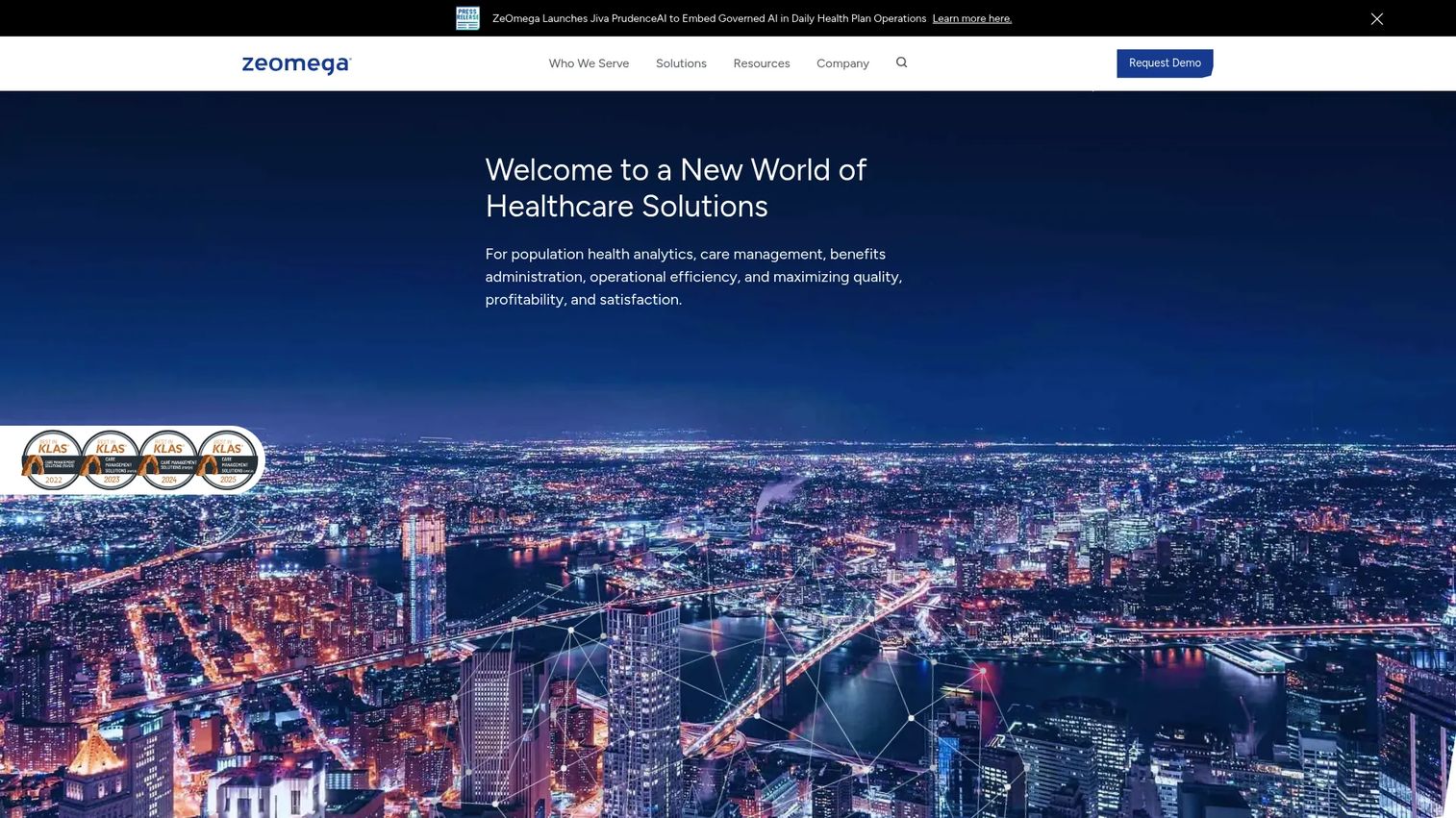
ZeOmega Jiva is an AI-powered healthcare enterprise management platform for care management, population health, utilization management, and analytics. The platform combines end-to-end care management workflows with analytics, clinical intelligence, configurable business rules, and member engagement tools. It serves health plans, health systems, ACOs, and other risk-bearing organizations that need insights to move directly into care team operations.
Best for: Organizations where operational care management is the primary lever for value-based performance improvement.
Key features
- End-to-end care management with analytics integration
- Utilization management and prior authorization support
- Clinical intelligence and configurable business rules
- Risk stratification and quality tracking
- Member engagement and mobile capabilities
Why choose ZeOmega Jiva: Choose it when the analytics problem is inseparable from the care management workflow problem. Jiva is built for teams where insights need to move into care queues, intervention assignments, and member outreach immediately rather than through a separate dashboard review process.
ZeOmega Jiva pricing: ZeOmega prices through enterprise contracts via their sales team.
G2 rating: 4.0/5
10. Qlik Healthcare Analytics
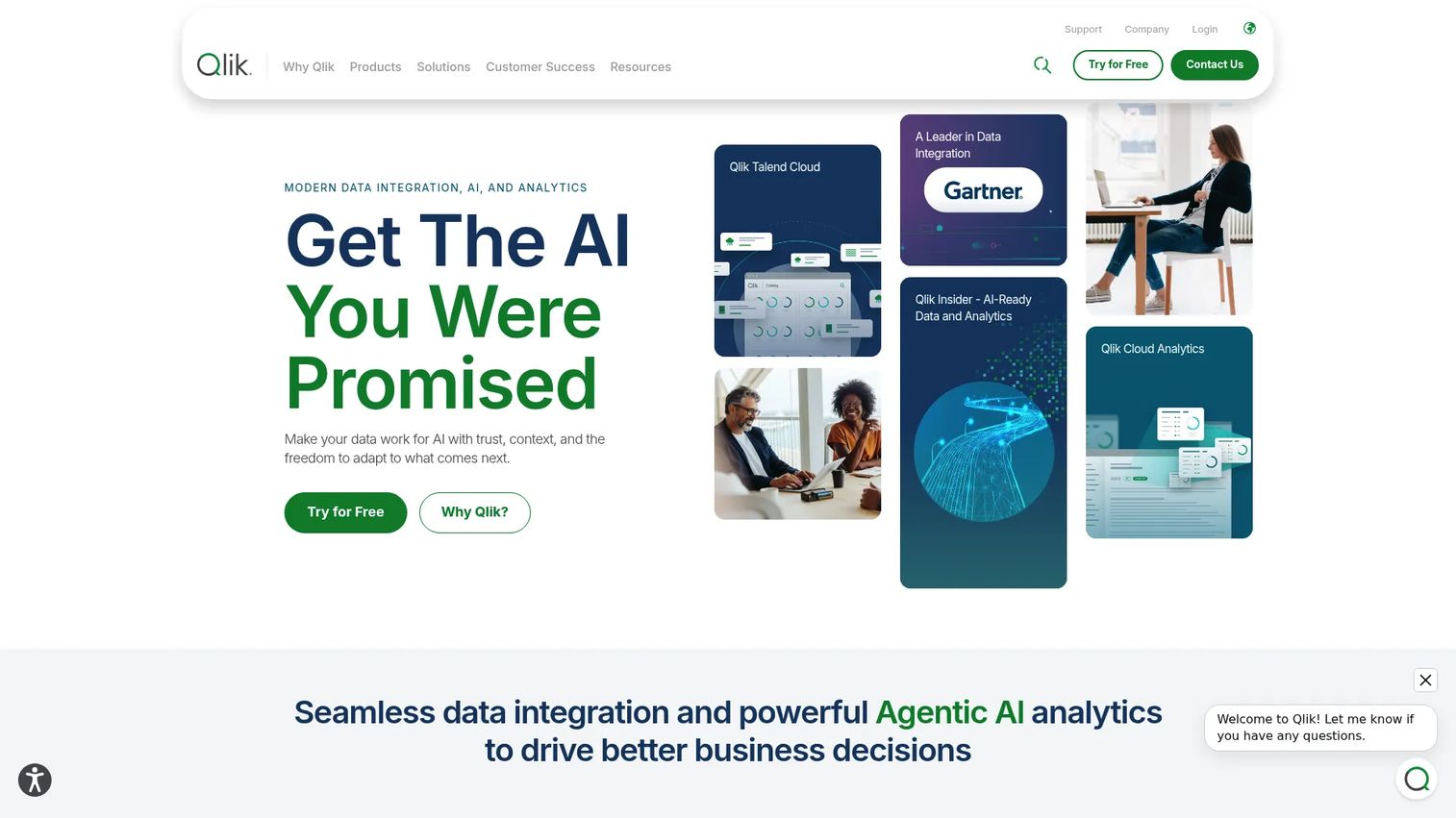
Qlik is a data analytics and business intelligence platform with healthcare use cases across interactive dashboards, AI-powered insights, predictive analytics, governed reporting, and operational monitoring. Healthcare analytics is delivered through Qlik Cloud Analytics rather than a dedicated standalone healthcare product. Teams use it to build governed dashboards across clinical, financial, and administrative datasets where flexibility and self-service matter more than out-of-the-box healthcare measure logic.
Best for: Healthcare analytics and BI teams with existing data infrastructure that need flexible, governed dashboards across multiple reporting domains.
Key features
- Interactive dashboards and self-service data exploration
- AI-powered natural language insights via Qlik Answers
- Predictive analytics with Qlik Predict
- Healthcare reporting and automated report delivery
- Data monitoring, alerting, and workflow automation
Why choose Qlik: Choose it when the team has analytics maturity and wants a configurable platform they can adapt across many reporting needs. It fits organizations that have already solved their data foundation and need a flexible layer on top. It is not the right starting point if you need pre-built healthcare measure logic or contract modeling out of the box. Qlik integrates well with broader customer data platform strategies in complex data environments.
Qlik Healthcare Analytics pricing: Qlik Cloud Analytics starts at $300/month for 10 users (Starter, billed annually). The Standard tier is $825/month for 25 GB data. Premium is $2,750/month for 50 GB data. Enterprise requires a quote.
G2 rating: 4.4/5
11. Dimensional Insight
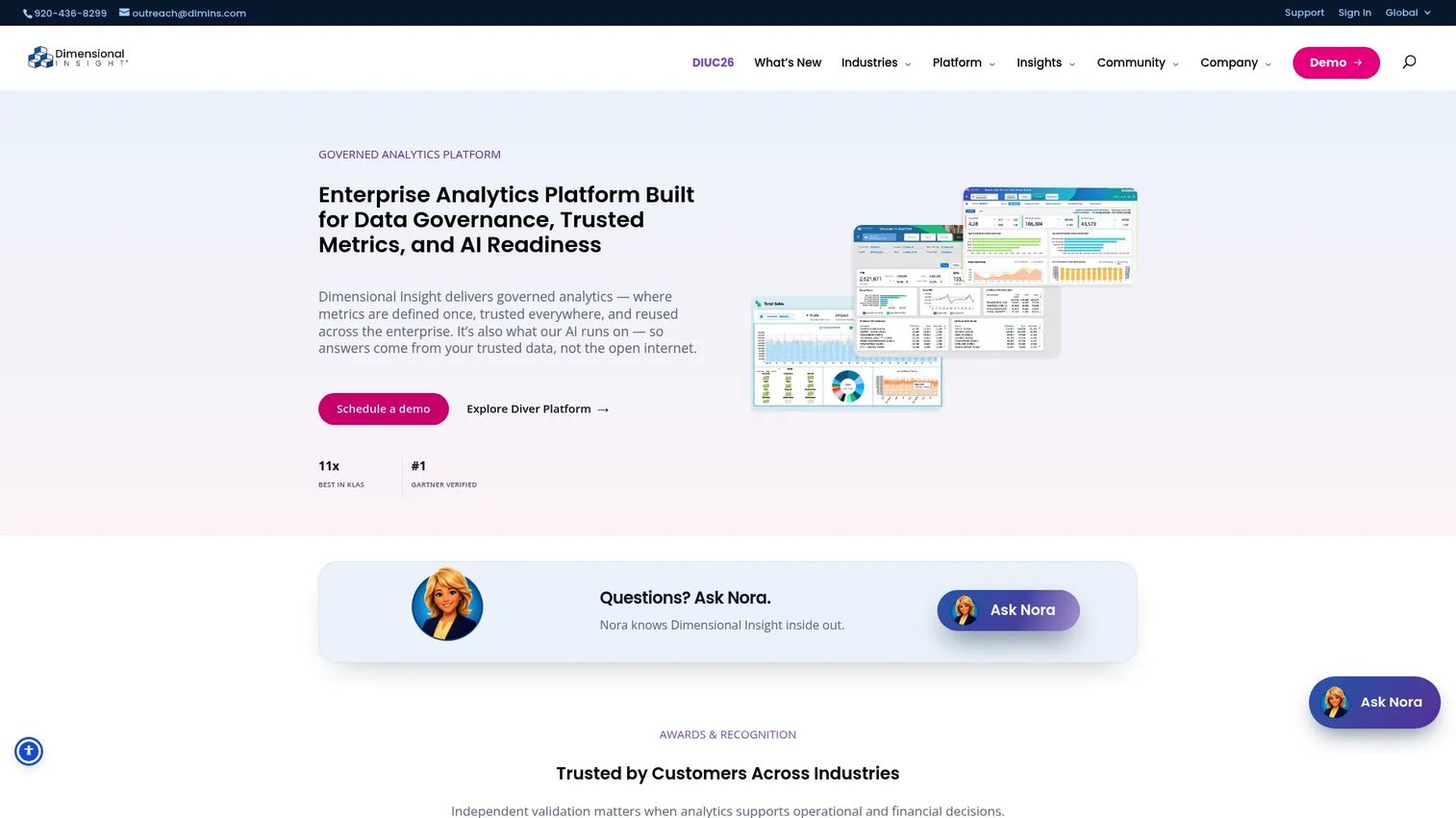
Dimensional Insight provides Diver Platform, a governed analytics platform that unifies data, business rules, KPIs, and analytics for complex regulated industries including healthcare. The platform supports governed KPIs, self-service analytics with drill-down exploration, dashboards, operational reporting, and embedded AI capabilities. Organizations use it for consistent performance reporting across departments, provider dashboards, quality scorecards, and executive visibility.
Best for: Healthcare organizations that need governed dashboards and consistent KPI reporting across departments without rebuilding reports from scratch each cycle.
Key features
- Governed KPIs and business rules built into the data model
- Self-service analytics with drill-down exploration
- Dashboards, reporting, visualization, and ad hoc analysis
- Embedded AI capabilities and data governance tools
- Flexible deployment: On-premise, private cloud, or SaaS
Why choose Dimensional Insight: Choose it when leadership needs consistent, trusted performance reporting that does not vary depending on who pulled the data. Diver Platform fits organizations that have faced data-argument meetings and want a single governed source for executive dashboards. Its deployment flexibility is an advantage for healthcare organizations with specific data residency requirements.
Dimensional Insight pricing: Pricing is quote-based and reflects deployment scope, user base, data sources, and implementation services. Contact Dimensional Insight for current pricing.
G2 rating: 4.7/5
12. 3M Health Information Systems
3M Health Information Systems provides healthcare information technology covering reimbursement, coding, clinical documentation improvement, compliance, analytics, and performance management. Its AI-driven clinical content and coding support, grouping and reimbursement methodologies, and enterprise analytics capabilities make it a core tool for organizations where coding accuracy, quality measurement, and risk adjustment sit at the center of value-based performance. The 360 Encompass Health Analytics Suite consolidates these capabilities for enterprise reporting.
Best for: Organizations where coding accuracy, quality measurement, and risk adjustment are the primary analytics priorities within a value-based care strategy.
Key features
- AI-driven coding support and clinical documentation improvement
- Grouping and reimbursement methodologies
- Risk adjustment analytics and HCC coding support
- Enterprise analytics dashboards and performance reporting
- Advanced code sequencing and compliance tools
Why choose 3M Health Information Systems: Choose it when the analytics problem is tightly linked to coding quality and risk adjustment accuracy. Teams trying to close HCC coding gaps, improve benchmark reliability, and strengthen quality measure performance will find more purpose-built depth here than in general analytics platforms.
3M Health Information Systems pricing: Pricing is sold through enterprise agreements and requires direct contact with 3M sales.
G2 rating: 4.5/5
Considerations when choosing value based care analytics software
Data integration depth
The key question is not whether a vendor can ingest your data sources; most can. The real question is whether the platform can normalize claims, EHR, lab, ADT, and HIE data into a consistent, trusted source of truth that all teams pull from. Ask vendors specifically how they handle claims lag, EHR data timeliness gaps, and attribution logic conflicts across payers.
Contract and risk model fit
Different platforms support different payment model types natively. Some are built primarily for MSSP and shared savings; others have deeper capitation and bundle adjudication logic. Before shortlisting, map your current and planned contract portfolio, including shared savings tiers, downside risk arrangements, and commercial value-based contracts, and verify which models each platform handles without custom development.
Workflow activation
A dashboard that changes nothing about how care teams operate does not create margin improvement. Ask each vendor to demonstrate specifically how insights move into care management queues, provider action lists, coding review workflows, and patient outreach campaigns. The gap between "we show you the population" and "we activate the right intervention at the right time" separates strong platforms from reporting tools.
Governance and trust
If the board does not trust the number, the dashboard becomes theater. Evaluate measure definitions, data lineage documentation, role-based access controls, and audit trails. Organizations that have experienced data credibility crises know that recovery costs more than the initial investment in governance.
Time to value and operating ownership
Ask vendors for a 30, 60, and 90 day milestone plan tied to your data environment. Implementation timelines in this category range from a few months to over a year, depending on data readiness, interface complexity, and workflow rollout scope. Lean teams need to understand what internal analytics capacity is required to maintain the platform after go-live, not just during implementation.
Conclusion
No single platform wins across every operating model in this category. The right choice starts with your data environment and contract portfolio, then moves to workflow activation requirements and implementation capacity.
Here is how the shortlist maps to common situations:
Epic Healthy Planet fits Epic-centered health systems where clinical adoption is the priority. Oracle Health HealtheAnalytics fits organizations already committed to Oracle Health infrastructure. Clarify Health fits teams making claims-driven network and growth strategy decisions. Health Catalyst fits organizations that need to solve the data infrastructure and analytics applications together.
Milliman MedInsight fits finance and actuarial teams that need credible cost and risk benchmarking. Cedar Gate Technologies fits operations teams managing multiple payment models simultaneously. Innovaccer and Arcadia both serve population health and ACO performance, with Arcadia leaning toward interoperability depth and Innovaccer toward AI-driven workflow activation.
ZeOmega Jiva fits teams where care management operations are the primary performance lever. Qlik fits analytics-mature teams that want flexible dashboards over pre-built healthcare logic. Dimensional Insight fits leadership teams that need governed, consistent reporting. 3M Health Information Systems fits organizations where coding quality and risk adjustment accuracy are the core analytics challenge.
Shortlist by data environment first, then contract model, then workflow activation requirements, then internal implementation capacity.
For healthtech founders evaluating this category from a positioning or competitive intelligence angle, it is worth exploring how analytics platforms drive ROI in complex enterprise sales motions.
FAQs
Value based care analytics software helps healthcare organizations combine clinical, claims, quality, cost, utilization, and operational data to manage performance under risk-based or outcomes-based payment models. The category differs from general BI tools because it includes pre-built healthcare data models, measure logic, risk adjustment methodologies, and contract performance frameworks. The goal is to give teams a usable performance view that connects financial risk to clinical and operational action.
The core data sources are EHRs, claims, lab results, ADT feeds, HIE data, and quality reporting systems. Patient-reported outcomes, SDOH data, and operational system feeds are increasingly important for population stratification. Claims and clinical data have different timeliness characteristics: Claims typically lag 30 to 90 days, while clinical data can be near-real-time but incomplete without claims context. Strong platforms handle both and make the lag transparent to users.
Population health analytics focuses on cohort identification, risk stratification, care gap detection, and proactive outreach. Value-based care analytics adds the financial and contractual accountability layer: Shared savings calculations, benchmark tracking, attribution management, downside risk monitoring, and contract performance reporting. The two overlap significantly, and many platforms serve both purposes, but population health analytics alone does not answer the question of whether the organization is making or losing money on its risk contracts.
ACOs should prioritize platforms that support MSSP workflows specifically, including attributed beneficiary management, quality measure tracking, benchmark comparison, and shared savings projection. Epic Healthy Planet fits Epic-centered ACOs. Arcadia and Innovaccer both have strong ACO performance capabilities with broad data aggregation. Cedar Gate Technologies covers contract modeling and payment operations for multi-model environments. Milliman MedInsight is a strong choice when actuarial credibility matters for MSSP financial projections. The right fit depends on the ACO's EHR environment, data maturity, and contract complexity.
The critical features are contract modeling with shared savings and downside risk projections, benchmark tracking against CMS or commercial benchmarks, attribution management across payer contracts, quality measure performance against contract thresholds, utilization analytics by cost category, risk adjustment accuracy for HCC coding, and performance dashboards that map to contract settlement timelines. Vendors who can demonstrate these capabilities with your specific contract types during a proof of concept are significantly more reliable than those who describe generic analytics flexibility.
Most platforms in this category are sold through enterprise contracts rather than self-serve pricing tiers. The cost is shaped by modules selected, covered lives managed, number of data source integrations, user count, implementation services, and ongoing support scope. First-year total cost of ownership often exceeds the platform subscription due to implementation and data integration work. Qlik is an exception, with published tiers starting at $300 per month for 10 users on the Starter plan. For every other platform on this list, budget discussions require a vendor quote.
Implementation timelines in this category range from a few months for narrowly scoped deployments to 12 to 18 months for enterprise rollouts involving multiple EHR interfaces, complex claims normalization, and multi-payer contract configuration. Data readiness is the most common accelerator or blocker. Organizations with clean, accessible data sources and clear measure definitions tend to reach first meaningful use in 60 to 90 days. Ask vendors for a phased milestone plan with specific deliverables at 30, 60, and 90 days before signing a contract.
Start with data: Which specific sources does the platform integrate, how does it handle claims lag, and who owns data quality governance after go-live? Move to contracts: Which payment models are supported natively, and what does custom configuration cost? Ask about workflow activation: Can the platform push prioritized care lists into the EHR or care management system your team uses today? Confirm security and compliance posture, particularly for organizations under HIPAA with specific data residency requirements. Finally, ask for reference customers managing a similar contract portfolio and population size, with specific outcome metrics they can share.