A tenant's card expired three weeks ago. Nobody caught it. Two units sit unpaid while your manager is on the phone answering the same question about gate hours for the fourth time today. Meanwhile a prospect who found your facility at 9 p.m. wanted to rent a unit online, hit a dead end, and booked with the operator down the road instead.
That is the daily cost of fragmented operations: missed payments, manual collections, phone tag, and a rental funnel that leaks after hours. The fix is not more staff. It is software that connects billing, access, online rentals, and reporting into one system that runs without someone babysitting it.
The category matters more every year. The self storage software market is projected to grow from USD 3.24 billion in 2026 to USD 8.56 billion by 2034, a 12.92% CAGR, according to Fortune Business Insights. Adoption is already mainstream: around 48% of facilities use software to automate daily operations and 57% have moved to the cloud, per Reanin. If you are still stitching spreadsheets to a payment processor, the market has moved past you.
This guide ranks the storage unit software worth your time in 2026, then gives you a buyer's framework so you pick for repeatability, not features.
What's inside
This is a buyer-first shortlist for self-storage operators comparing platforms across billing, access control, online rentals, reporting, and tenant communications. It covers single-facility owners who want less manual admin and multi-site operators who need standardized workflows across locations.
We selected each platform on four criteria that matter for predictable operations:
- Automation depth: how much billing, collections, and communication runs without manual touches
- Integrations: access control, payments, and website connections
- Ease of use: how fast a manager gets productive
- Fit: single-site simplicity versus multi-site scale
No pay-to-play placements. Where a vendor does not publish pricing, we say so plainly.
TL;DR
- Best for an integrated management and growth platform: Storable, which pairs facility management with marketing websites, insurance, and payments.
- Best for operators managing one or many facilities: SiteLink, with browser-based management, online rentals, and deep accounting tools.
- Best for website and lead capture: StoragePug, built around conversion-focused self storage website software and online leasing.
- Best for transparent all-in-one pricing: Tenant Inc., with public per-facility plans starting at $199/month.
- Best for multi-location automation: 6Storage, with tenant communication, payments, and eLease automation across sites.
- Best for centralized cloud management: Self Storage Manager, with an integrated CRM and customer portal for single and multi-facility operators.
What is storage unit software?
Storage unit software is a platform that runs the day-to-day operations of a self-storage facility, from billing and rentals to access control, reporting, and tenant communication, in one system. It is also called self storage management software, storage facility software, or self storage facility management software, and vendors use those terms interchangeably.
At its core, storage unit management software replaces the patchwork of spreadsheets, a standalone payment processor, a separate gate system, and manual follow-up calls that many operators still run. It centralizes the jobs that keep a facility full and paid.
Core capabilities of self storage management software:
- Billing and invoicing: recurring rent, prorations, and automated invoices
- Late fees and collections: scheduled fees, lien processing, and automated dunning
- Payments automation: card-on-file, autopay, and reconciliation
- Access control integration: gate and door systems tied to payment status
- Online rentals and website functionality: self-serve booking, e-signing, and move-in
- Reporting and inventory tracking: occupancy, revenue, and unit availability in real time
- Tenant communications: automated email and SMS for reminders and notices
- Tenant protection: insurance or protection plan enrollment at rental
The best self storage management software connects these so a single event, say a failed payment, triggers a fee, a reminder, and a gate lockout without anyone lifting a finger. That chain reaction is the whole point.
When to use storage unit software
Run a single facility with fewer manual tasks
If one location eats your week in rent reminders, gate calls, and chasing lapsed cards, storage rental software pays for itself fast. It replaces the spreadsheet-and-processor combo with autopay, automated late fees, and payment-linked access. A part-time manager can then run the site because the software handles the repetitive follow-up. You stop losing revenue to cards you forgot to update and units you forgot to lien.
Scale across multiple properties or locations
Multi-site operators live or die on consistency. When every location bills differently, reports differently, and handles collections differently, you cannot trust the numbers or move managers between sites. Storage facility management software standardizes billing rules, access workflows, and reporting across every property, then rolls it into one dashboard. You see portfolio occupancy and revenue without logging into five systems or waiting for five spreadsheets.
Capture rentals and payments online
About 62% of facilities have adopted online systems for booking, payment, and account management, per Reanin. Prospects search, compare, and rent at night and on weekends. If your funnel requires a phone call, you lose them. Online rentals turn website traffic into signed leases and captured payments without a staffed front desk, which lifts occupancy and cuts the phone volume your team fields.
Comparison table
Here is how the seven platforms stack up for storage unit software buyers. Pricing and ratings reflect what each vendor and G2 published at the time of writing; verify current figures before you sign.
| # | Product | Intent | Key use case | Pricing | G2 rating |
|---|---|---|---|---|---|
| 1 | Storable | Integrated management and growth platform | Facility management plus websites, insurance, payments | Demo / quote based | 3.9/5 |
| 2 | SiteLink | Established management depth | Single and multi-facility management, accounting | Not publicly listed | 4.4/5 |
| 3 | StoragePug | Website and lead capture | Conversion-focused sites and online leasing | Not publicly listed | Not listed |
| 4 | Tenant Inc. | All-in-one with public pricing | Cloud PMS, online rentals, automation | From $199/mo per facility | 4.3/5 |
| 5 | 6Storage | Multi-location automation | Tenant comms, payments, eLease across sites | Custom quote | 4.2/5 |
| 6 | Cubby | Core facility management | Payments and operational workflows | Not publicly listed | Not listed |
| 7 | Self Storage Manager | Centralized cloud management | CRM, customer portal, online rentals | Not publicly listed | Not listed |
1. Storable
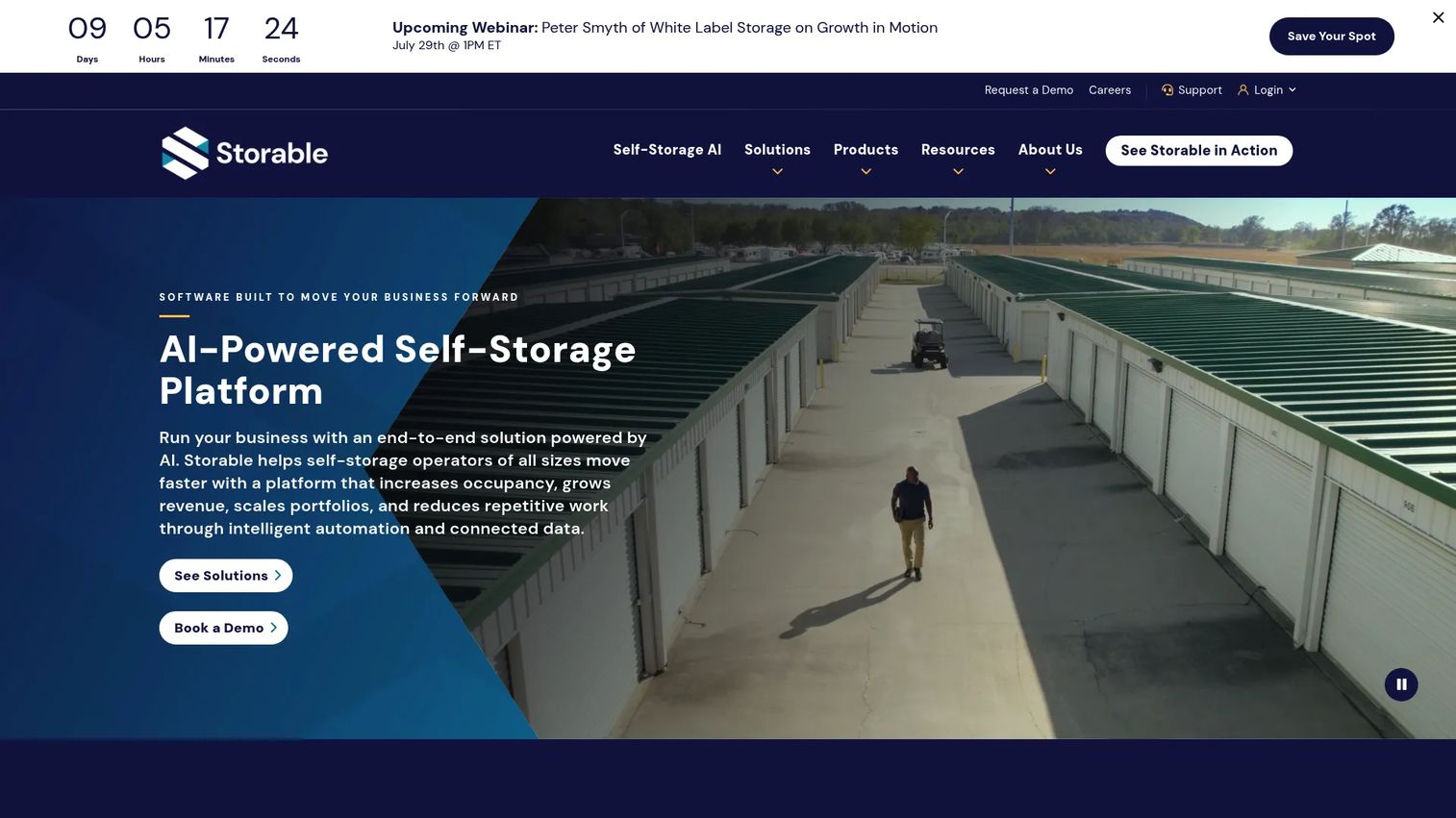
Storable is an AI-powered self-storage software and services platform built for operators who want management and growth under one roof. Beyond facility management, it bundles marketing websites, lead generation, insurance, payments, collections, and CRM. That breadth is the pitch: instead of wiring together a website tool, a payment processor, and a management system, you run the stack from one vendor. Storable also owns SiteLink and storEDGE, which is why you will see its products rated separately.
Best for: Self-storage operators who want an integrated management and growth platform rather than a stack of point tools.
Key strengths
- Full suite coverage: Management, websites, insurance, payments, and CRM in one platform, so fewer systems to reconcile.
- Marketing and lead generation: Built-in websites and lead tools that feed online rentals directly into the management layer.
- Payments and collections: Automated payment processing and collections that reduce manual dunning and revenue leakage.
Why choose Storable: If you run a growing portfolio and want the website, the payments, the insurance attach, and the reporting to share one source of truth, Storable's platform breadth is the draw. It suits larger operators and teams that would rather consolidate vendors than manage integrations across five contracts. Smaller single-site owners may find more platform than they need, but the growth tooling scales with you.
Storable pricing: Storable does not publish pricing on its site. The pages reviewed use demo and request-a-quote CTAs rather than posted prices, so plan to talk to sales for a facility-specific quote. Storable holds a 3.9/5 rating on G2 at the seller level; note that SiteLink and storEDGE carry their own separate product ratings.
2. SiteLink
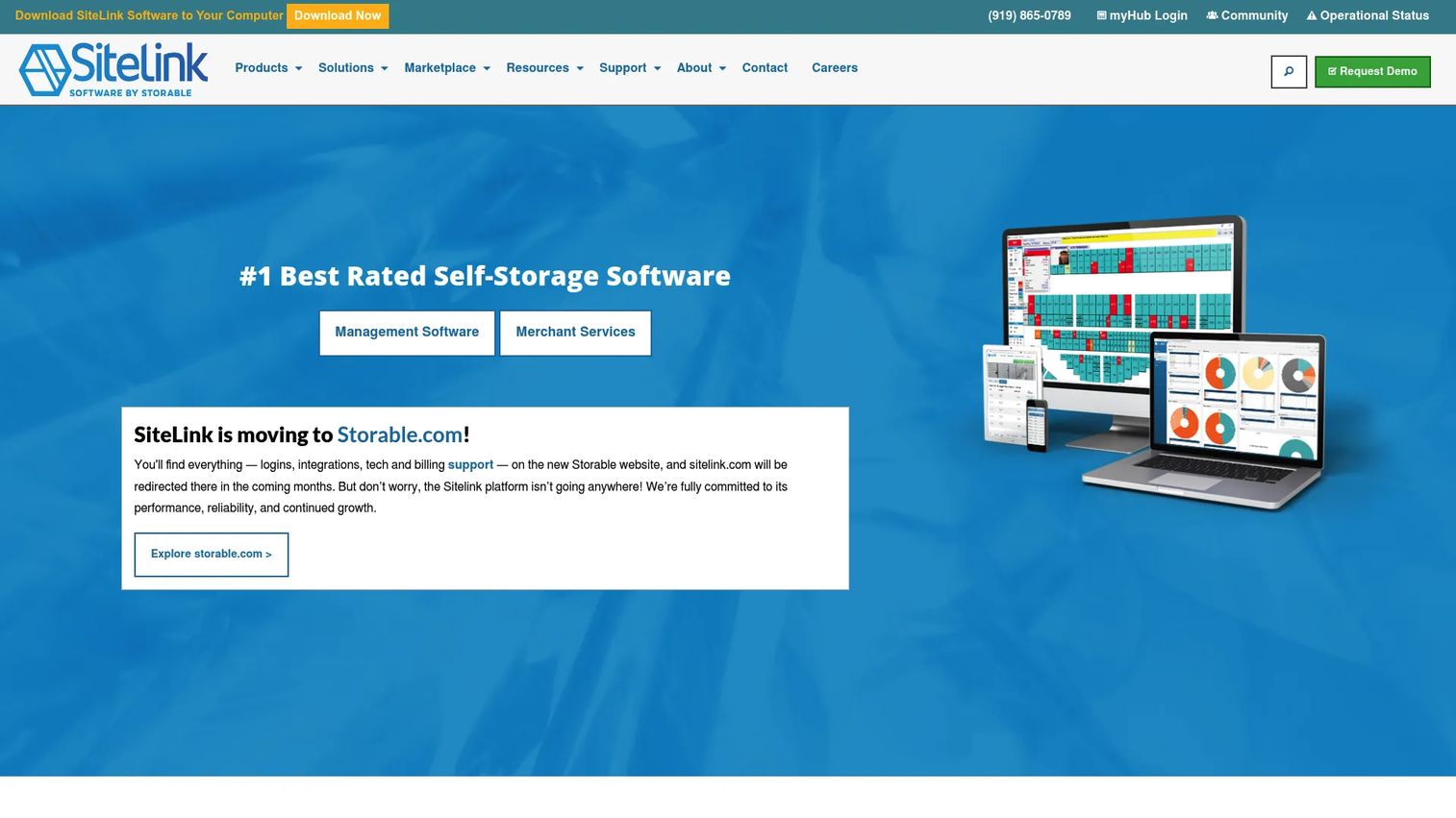
SiteLink, a Storable product, is one of the most established names in self storage management software, and it earns that reputation on operational depth. Its Web Edition and myHub browser-based management give operators online payments, reservations, and rentals alongside a genuinely deep accounting and reporting toolset. For operators who care about the books as much as the gate, SiteLink's financial rigor stands out.
Best for: Self-storage operators managing one facility or many who want proven management depth and strong accounting.
Key strengths
- Browser-based management: Web Edition and myHub run in the browser, so managers work from anywhere without installed software.
- Online payments and rentals: Reservations, online payments, and rentals that convert web traffic into signed tenants.
- Accounting and reporting: A deep financial toolset that gives owners real reporting, not just occupancy counts.
Why choose SiteLink: SiteLink fits operators who value a long track record and want reporting they can actually run a business on. Multi-site owners lean on its consistency across locations, and single-facility owners get the same depth without paying for scale they do not need. It carries a 4.4/5 rating on G2, the highest verified score in this roundup.
SiteLink pricing: SiteLink does not publish public pricing on its site, and no current public prices were verifiable during research. Because it sits under the Storable umbrella, expect a quote-based conversation tied to your facility count and feature needs. Request a demo to get numbers specific to your operation.
3. StoragePug
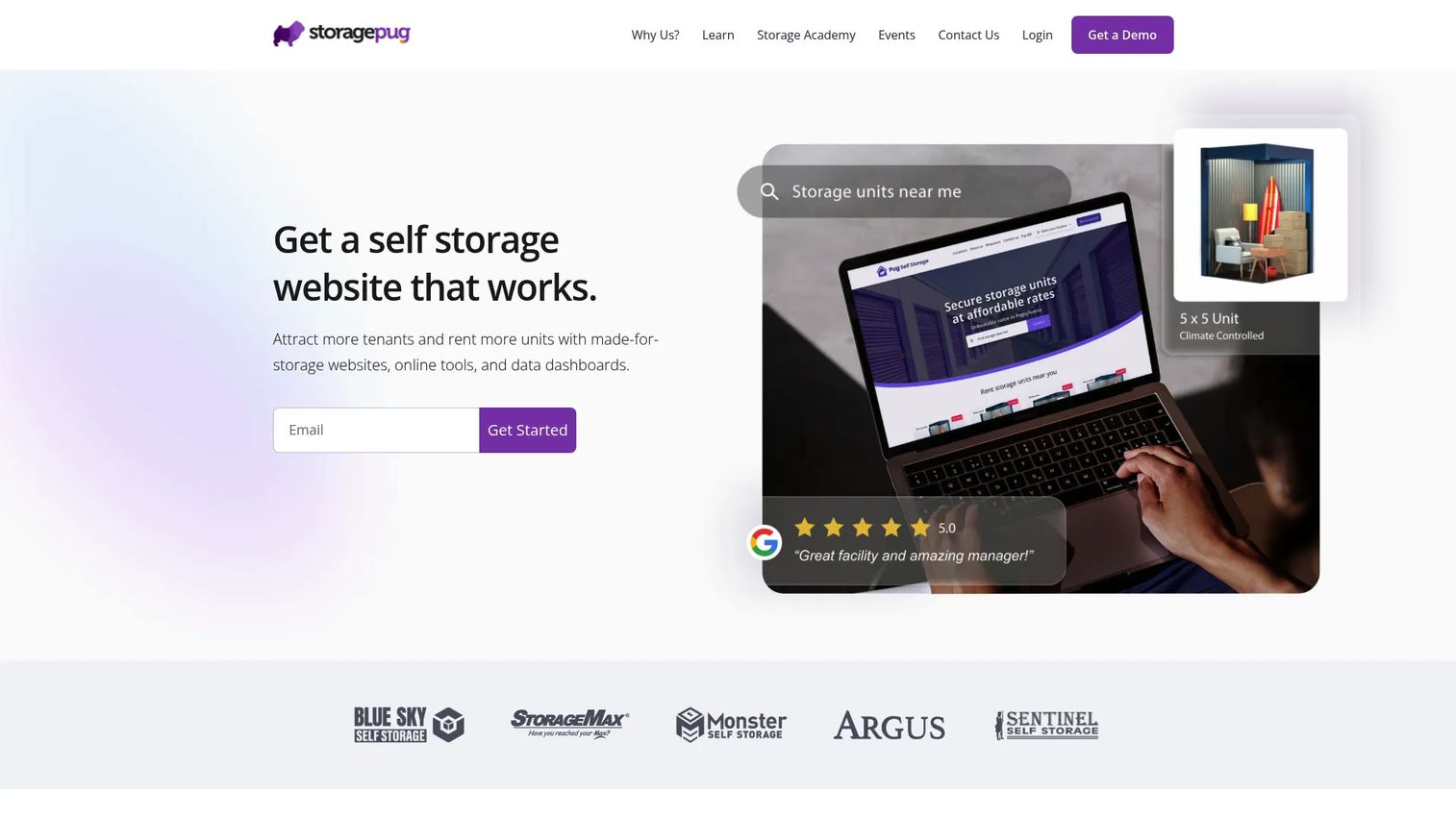
StoragePug approaches storage unit software from the marketing side. It builds self storage websites designed to convert, layers online rentals and lead management on top, and gives operators data dashboards and customer analytics to see what is actually driving move-ins. If your facility is full but your online funnel is weak, StoragePug is built for exactly that gap.
Best for: Self-storage operators who need a conversion-focused website plus leasing and lead tools, not just a back-office system.
Key strengths
- Websites built to convert: Self storage website software engineered for online rentals, not brochure sites.
- Online rentals and lead management: Capture, track, and convert leads from first click to signed lease.
- Data dashboards and analytics: Customer analytics that show which channels and pages produce rentals.
Why choose StoragePug: StoragePug appeals to operators who treat their website as a revenue channel and want lead capture and analytics wired in from the start. If your management system is fine but your web conversion is leaking, this is the specialist that closes that gap. Teams wanting a single system for both back-office and marketing may pair it with a dedicated management platform.
StoragePug pricing: StoragePug does not expose public pricing on its own site. Capterra, a third-party source, lists a starting figure around $100 per user per month, but treat that as directional rather than a first-party quote. No G2 rating was confirmed at the time of writing. Contact StoragePug for pricing matched to your site and lead volume.
4. Tenant Inc.
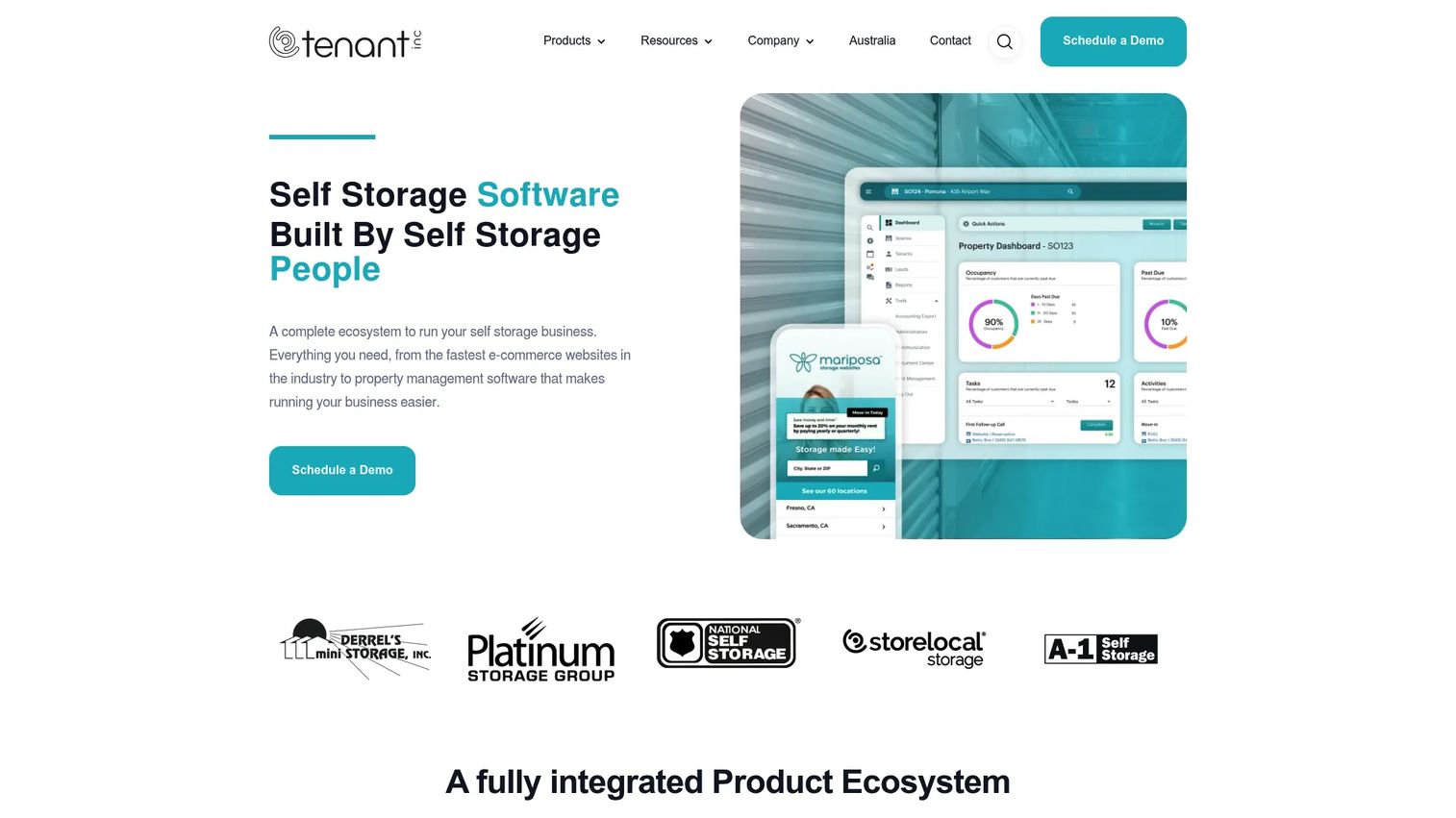
Tenant Inc. is a cloud-based self-storage platform that combines property management software, a rental website, automation, and an open platform with integrations and an API. What sets it apart in this list is transparency: it publishes per-facility pricing, so you can size the cost before a sales call. For operators tired of quote-only vendors, that alone earns a look.
Best for: Self-storage operators who want an all-in-one platform with clear, published pricing and modern workflows.
Key strengths
- Cloud-based platform: Property management, online rentals, and automation in one modern system.
- Rental website included: A tenant-facing site tied directly to the management layer for online rentals.
- Open platform and API: Integrations and an API so you connect access control, payments, and other tools your way.
Why choose Tenant Inc.: Tenant Inc. fits operators who value transparent pricing and an open architecture they can extend. The published tiers make budgeting predictable, and the API means you are not locked out of the integrations you need. It holds a 4.3/5 rating on G2.
Tenant Inc. pricing: Tenant Inc. publishes public per-facility pricing that varies with property size and processing fees. Core Tools starts at $199/month per facility, Integrator at $679/month, Automation at $799/month, and Portfolio at $999/month, with a Storelocal Storage add-on at $599/month. Billing is monthly per facility. Confirm your exact tier against your unit count on the solutions page.
5. 6Storage
6Storage is self-storage management software built around multi-location operations and automation. It handles multi-location management, automated tenant communication and payments, and customizable eLeases and notification templates. The automation focus is the story here: it takes the repetitive tenant-facing work off your team's plate across every site you run.
Best for: Self-storage operators who need an all-in-one, multi-location management platform with strong automation.
Key strengths
- Multi-location management: Run every site from one system with consistent workflows across locations.
- Automated communication and payments: Tenant reminders, notices, and payments that run without manual sends.
- Customizable eLeases and templates: Configurable e-signing and notification templates that match your process.
Why choose 6Storage: 6Storage suits operators scaling across sites who want automation and customization without a rigid, one-size template. The eLease and template flexibility lets you standardize while still matching how you actually work. It carries a 4.2/5 rating on G2.
6Storage pricing: 6Storage does not list fixed pricing. It provides custom quotes based on your unit count, workflow, and growth goals, which the vendor confirms on its pricing page. That means no public entry price, but it also means the quote maps to your actual operation rather than a rigid tier. Request a quote to get numbers for your portfolio.
6. Cubby
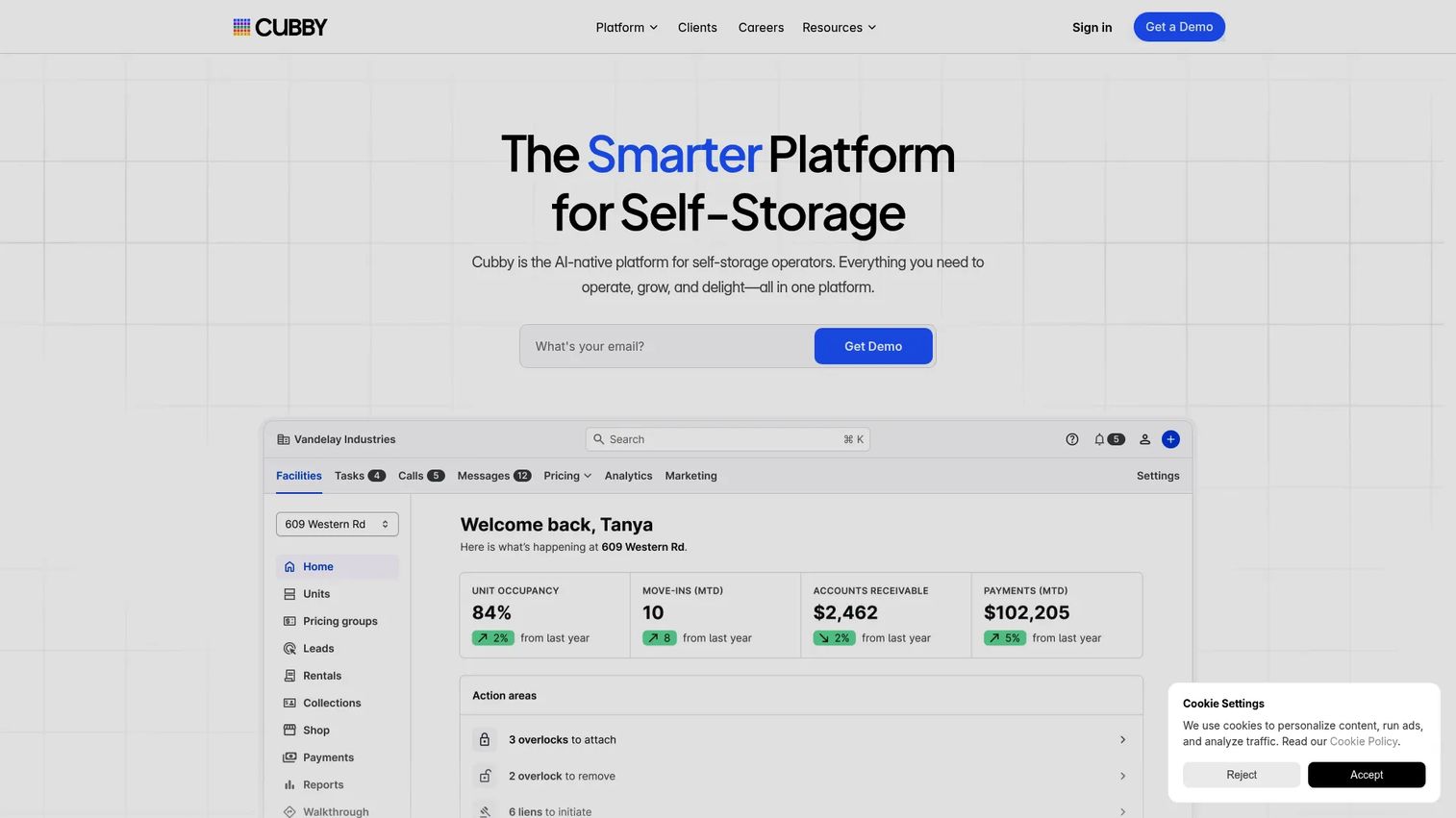
Cubby positions itself for operators who prioritize usability and core facility management: payments and the operational workflows that keep a site running day to day. It is worth including for buyers who want a straightforward management layer without a sprawling feature set, though you should verify its current capabilities directly with the vendor.
Best for: Operators who want a usable, core management tool focused on payments and day-to-day workflows.
Key strengths
- Payments handling: Core payment processing tied to tenant accounts.
- Operational workflows: Day-to-day facility management without unnecessary complexity.
- Usability focus: A management layer built to be quick for staff to learn.
Why choose Cubby: Cubby fits operators who value a clean, focused management experience over a broad platform. If your priority is getting staff productive fast on the core jobs, a usability-first tool is worth evaluating. Because public product and pricing detail was limited during research, confirm feature scope, integrations, and current pricing directly before you commit.
Cubby pricing: Cubby does not publish verifiable public pricing, and no G2 rating was confirmed at the time of writing. Contact the vendor directly for current pricing, and validate that its feature set matches your facility's needs before signing.
7. Self Storage Manager
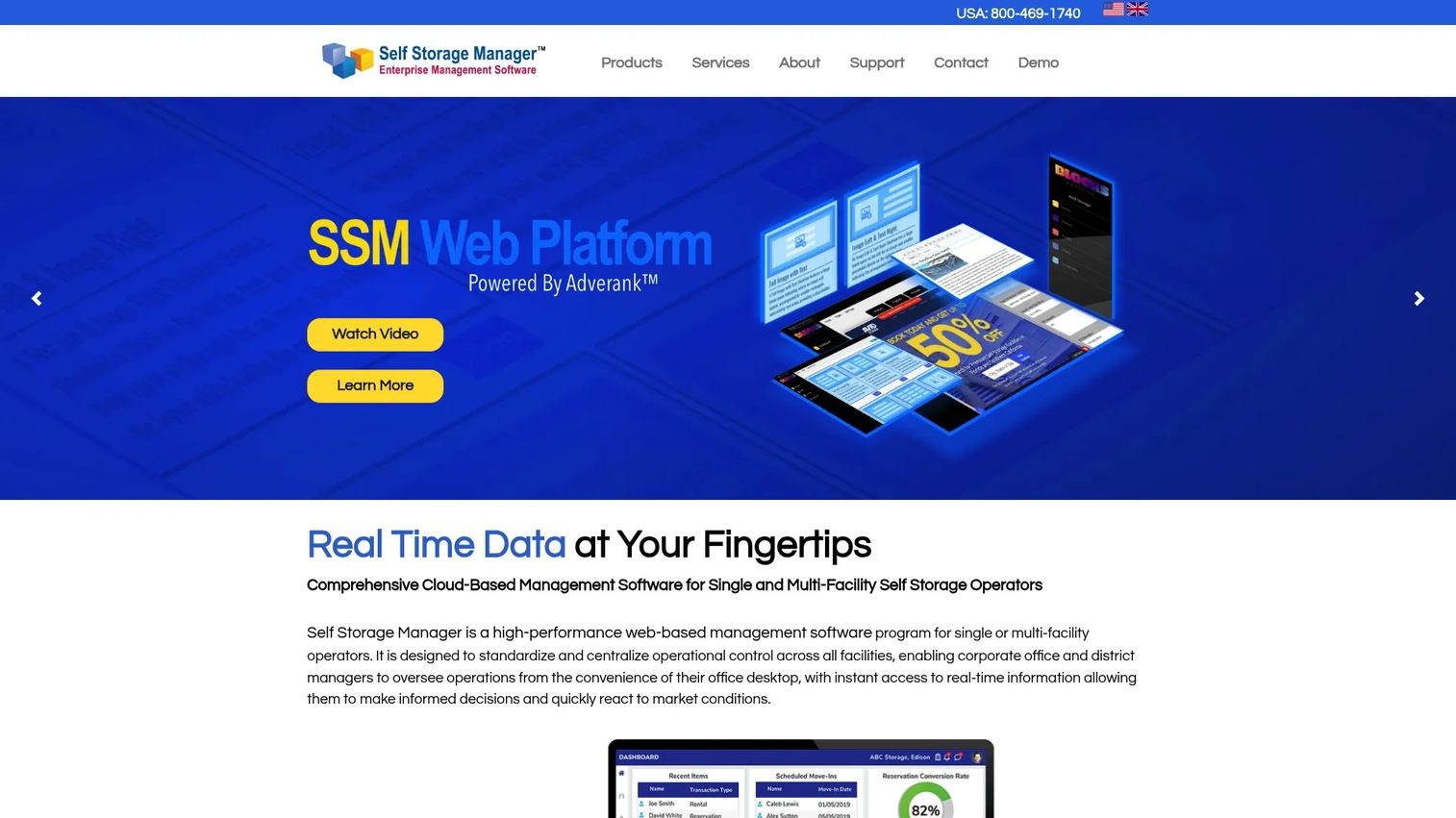
Self Storage Manager is cloud-based self-storage management software for single- and multi-facility operators. It pairs centralized management with a fully integrated CRM and customer portal, plus online rentals and reservations, e-signature, payment, and reporting tools. For operators who want the tenant relationship and the facility operations in one place, that CRM integration is the hook.
Best for: Self-storage operators who want centralized, cloud-based facility management with a built-in CRM and customer portal.
Key strengths
- Cloud-based management: Centralized control for single or multi-facility operators from one system.
- Integrated CRM and portal: A tenant-facing customer portal tied to a full CRM for relationship and account management.
- Rentals, e-signature, and reporting: Online rentals and reservations, e-signing, payments, and reporting in one tool.
Why choose Self Storage Manager: Self Storage Manager fits operators who see tenant relationships as central and want a CRM and customer portal built into their management system, not bolted on. The cloud model means managers work from anywhere across single or multiple sites. Verify current pricing and confirm the feature scope against your requirements before purchase.
Self Storage Manager pricing: Self Storage Manager does not publish public pricing; its pages direct visitors to contact or request a demo. No usable G2 star rating was available at the time of writing due to limited reviews. Reach out for a quote and confirm the CRM, portal, and reporting features meet your needs.
Considerations before you buy
The platform matters less than how well it removes manual work from your week. Use these criteria to pressure-test any shortlist.
Automation depth
Ask what happens automatically when a payment fails. A strong system triggers the late fee, sends the reminder, and locks the gate without a manager involved. Payments automation and automated late fees are where storage unit software earns its keep, so probe the specifics rather than accepting an "automated collections" checkbox.
Access control integration
Your gate and door hardware must talk to your billing status in real time. Confirm the software supports your specific access control brand and that lockouts trigger on non-payment. Access control integration is what ties tenant status to physical security and enables true remote management.
Online rentals and website fit
Some platforms bundle self storage website software and online rentals; others integrate with a separate site. Decide whether you want one vendor for both or a best-in-class website paired with a management system, then verify the handoff is clean so a web rental flows straight into billing.
Reporting and multi-site visibility
If you run more than one location, insist on portfolio-level reporting. You should see occupancy, revenue, and collections across every site in one view without exporting five spreadsheets. Reporting and analytics that standardize across locations are what let you trust the numbers and move staff between sites.
Pricing model and total cost
Public tiers make budgeting easy; quote-only vendors require a sales conversation. Either way, ask about processing fees, tenant protection revenue share, add-on costs, and whether pricing is per facility or per unit. The sticker price is rarely the full cost.
Conclusion
The right storage unit software is the one that runs the repetitive work for you, so your team spends time on tenants and growth instead of chasing expired cards.
If you want breadth, Storable and its SiteLink product cover management plus websites, payments, and insurance under one roof. If your funnel is the weak spot, StoragePug is the website and lead-capture specialist. If you want transparent pricing and an open platform, Tenant Inc. publishes per-facility tiers from $199/month. For multi-location automation, 6Storage leans hard into standardized workflows, and Self Storage Manager pairs cloud management with a built-in CRM.
Start by mapping your biggest source of manual work, whether that is collections, online rentals, or multi-site reporting, then shortlist the two platforms that attack it directly. Book demos, run the same three real scenarios through each, and choose the one that removes the most manual work from your week.
FAQs
Storage unit software runs the core operations of a self-storage facility in one system. It handles billing and invoicing, late fees and collections, payments automation, access control, online rentals, tenant communications, and reporting. The goal is to replace spreadsheets and disconnected tools so a single event, like a failed payment, can trigger a fee, a reminder, and a gate lockout automatically.
At minimum, look for recurring billing, automated late fees and collections, card-on-file payments and autopay, access control integration, online rentals with e-signing, tenant communications by email and SMS, and real-time reporting on occupancy and revenue. Many platforms also add tenant protection or insurance enrollment at the point of rental. The features matter less than how tightly they connect.
It depends on the platform. Some, like Storable and StoragePug, bundle self storage website software and online rentals directly. Others provide the management and online rental engine and integrate with a separate website. If online move-ins matter to you, confirm that a web rental flows straight into billing and access without manual re-entry.
Very. Access control integration connects a tenant's payment status to your gate and door hardware, so non-payment can trigger an automatic lockout and a cleared balance restores access. It is the link between billing and physical security, and it is what makes true remote management possible. Always confirm the software supports your specific gate hardware brand.
Standardization and visibility. You want consistent billing rules, collections workflows, and access control across every location, plus portfolio-level reporting and analytics in one dashboard. That consistency lets you trust the numbers, move managers between sites, and scale without adding operational drag. Ask specifically how the platform handles reporting across multiple facilities.
Separate public pricing from quote-only pricing. Tenant Inc. publishes per-facility tiers starting at $199/month, while Storable, SiteLink, 6Storage, and others use quote-based sales conversations. Beyond the sticker price, ask about payment processing fees, tenant protection revenue share, implementation costs, and whether billing is per facility or per unit. The full cost is usually higher than the headline number.
In practice, the terms are used interchangeably. Self storage software, self storage management software, storage facility management software, and storage unit management software all describe platforms that run rentals, billing, access, communications, and reporting for a storage facility. Some vendors emphasize one term over another in their marketing, but the underlying category is the same.