A dispatcher juggling a whiteboard, three phones, and a stack of will-call slips is not a scaling operation. It is a bottleneck with a heartbeat. When a cold snap hits and half your customers cross their reorder threshold in the same 48 hours, the spreadsheet that felt fine in October falls apart in January. Routes double back on themselves. Trucks run half-empty in one zone and skip a runout in another. Invoices go out late, and cash comes in later.
The fix is not more phone calls. It is software that turns delivery data into decisions: which tank gets filled today, which truck runs which route, and which customer gets an automatic top-off before they even notice the gauge dropping.
The market agrees. The global fuel delivery software market was estimated at USD 1.2 billion in 2024 and is projected to reach USD 2.5 billion by 2033, growing at a 9.2% CAGR from 2026 to 2033, according to Market Research Intellect (2024). Demand is being driven by operators who need tighter route density, fewer runouts, and cleaner billing, not just a digital version of the same manual process.
This guide ranks seven platforms built for that job. Some are purpose-built for heating oil and propane dealers. Others are broader delivery-management systems worth a look if your operation spans more than fuel. We looked at industry fit, workflow breadth across routing, forecasting, billing, and driver execution, ease of deployment, and the quality of buyer support behind each product.
What's inside
This is a practical shortlist for fuel dealers, energy suppliers, and delivery operators comparing platforms. Every entry covers the workflows that actually move the needle: routing and dispatch, degree-day forecasting, billing and invoicing, driver mobile apps, customer portals, tank monitoring, and online ordering.
We ranked tools by four criteria: how well they fit fuel delivery specifically, how much of the operational workflow they cover end to end, how quickly a team can deploy them, and the support and pricing transparency behind each vendor. Where pricing or ratings were not publicly verifiable, we say so rather than guess.
TL;DR
- Best overall for full fuel operations: Droplet Fuel, a cloud-based platform built around back-office, routing, online ordering, and tank monitoring for heating oil and propane dealers.
- Best for QuickBooks-heavy teams: Smart Service, which ties scheduling, dispatch, and service agreements directly into QuickBooks.
- Best lean fuel-specific option: Total Energy, focused on degree-day forecasting, accounts receivable, and burner service.
- Best for field execution and fleet visibility: Raven from ADD Systems, built around real-time routing and mobile delivery workflows.
- Best for broader delivery ops: Metrobi and DispatchTrack, if you need route optimization and last-mile tracking beyond fuel alone.
- Best for delivery monitoring: i-Meter, a GPS-based tracking system for tanker fleets.
What is fuel oil delivery software?
Fuel oil delivery software is a platform that automates how heating oil, propane, and diesel suppliers forecast demand, schedule deliveries, route trucks, bill customers, and coordinate drivers and customers in the field.
The strongest fuel delivery scheduling software pulls these workflows into one system so office staff, drivers, and customers all work from the same data. Core capabilities include:
- Routing and dispatch: Build efficient routes, balance loads across trucks, and manage the dispatch board without manual sequencing.
- Degree-day forecasting: Predict when each tank will hit its reorder point based on weather and historical usage.
- Automatic delivery triggers: Schedule top-offs before a customer runs out, reducing emergency runs.
- Billing and invoicing: Generate invoices tied to delivery data and shorten the gap between drop and payment.
- Payment processing: Take card and EFT payments, sometimes with surcharge or fee management.
- Driver mobile apps: Give drivers route visibility, delivery capture, signatures, and notes on a handheld device.
- Customer portal: Let customers order, check status, view history, and pay online without calling the office.
- Tank monitoring: Integrate telemetry so tank levels feed directly into forecasting and dispatch.
- Online ordering: Accept will-call and one-time orders through the web instead of the phone.
The best fuel dispatch software connects all of this so that a change in one place, a monitored tank hitting a threshold, flows automatically into the route plan, the driver's app, and the customer's account.
When fuel oil delivery software matters most
Not every operation needs the same depth. Here is where the right platform earns its keep fastest.
Reduce manual dispatching and routing mistakes
Spreadsheets and phone calls work until they don't. Once you are running multiple trucks across overlapping zones, manual sequencing leaves route density on the table. A dispatcher optimizing by hand cannot recalculate a full board when a driver calls in sick or a priority runout comes in. Fuel truck delivery software rebuilds routes automatically, groups nearby stops, and keeps trucks fuller for longer. That means fewer miles per gallon delivered and more deliveries per shift.
Prevent runouts and improve forecast accuracy
A runout costs you an emergency delivery, an unhappy customer, and sometimes a lost account. Degree-day forecasting solves the root problem. The software tracks heating degree days against each customer's historical burn rate, then predicts the day a tank will hit its reorder point. Pair that with tank monitoring and automatic delivery triggers, and top-offs get scheduled before anyone notices a low gauge. Fewer emergencies, tighter routes, and customers who stay because they never think about their oil.
Tighten billing, invoicing, and payment flow
Every day between a delivery and a paid invoice is working capital sitting in a truck. Fuel delivery and service software ties invoicing to delivery data, so the bill goes out the moment the drop is confirmed. Add card and EFT processing plus QuickBooks integration, and the whole payment lifecycle tightens. Less manual re-entry, fewer errors, and a shorter cash cycle.
Give drivers and customers a self-serve experience
Drivers with a mobile app see their route, capture delivery details, and log notes without calling in. Customers with a portal order, check status, and pay online instead of tying up your office phone. Both cut the coordination overhead that eats staff time during peak season. Fewer support calls, faster delivery coordination, and a delivery experience that feels modern.
Comparison table
Read this table top to bottom by relevance to fuel delivery specifically. The purpose-built fuel platforms sit above the broader delivery-management tools. Pricing for most vendors is quote-based, which is common in this category, so we note what is publicly verifiable and flag the rest.
| # | Product | Intent | Key differentiation | Pricing | G2 rating |
|---|---|---|---|---|---|
| 1 | Droplet Fuel | Cloud fuel delivery ops | Back-office, routing, online ordering, tank monitoring, FeeView card processing | Request dealer pricing | Not publicly listed |
| 2 | Smart Service | Field service + QuickBooks | Scheduling, dispatch, service agreements, deep QuickBooks integration | Request pricing | 4.3/5 |
| 3 | Total Energy | Lean fuel-specific ops | Degree-day forecasting, AR, burner service | Not publicly listed | Not publicly listed |
| 4 | Raven (ADD Systems) | Field execution | Real-time fleet visibility, route optimization, QR tank verification | Not publicly listed | Not publicly listed |
| 5 | Metrobi | Broader local delivery | Route optimization, proof of delivery, driver tracking, courier network | Free $0 software tier | 4.9/5 |
| 6 | DispatchTrack | Last-mile at scale | AI route optimization, real-time visibility, customer communication | Starter / Pro / Enterprise (quote) | 4.5/5 |
| 7 | i-Meter | Delivery monitoring | GPS tanker tracking, geo-fencing, e-ticket delivery records | Request a quote | Not publicly listed |
1. Droplet Fuel
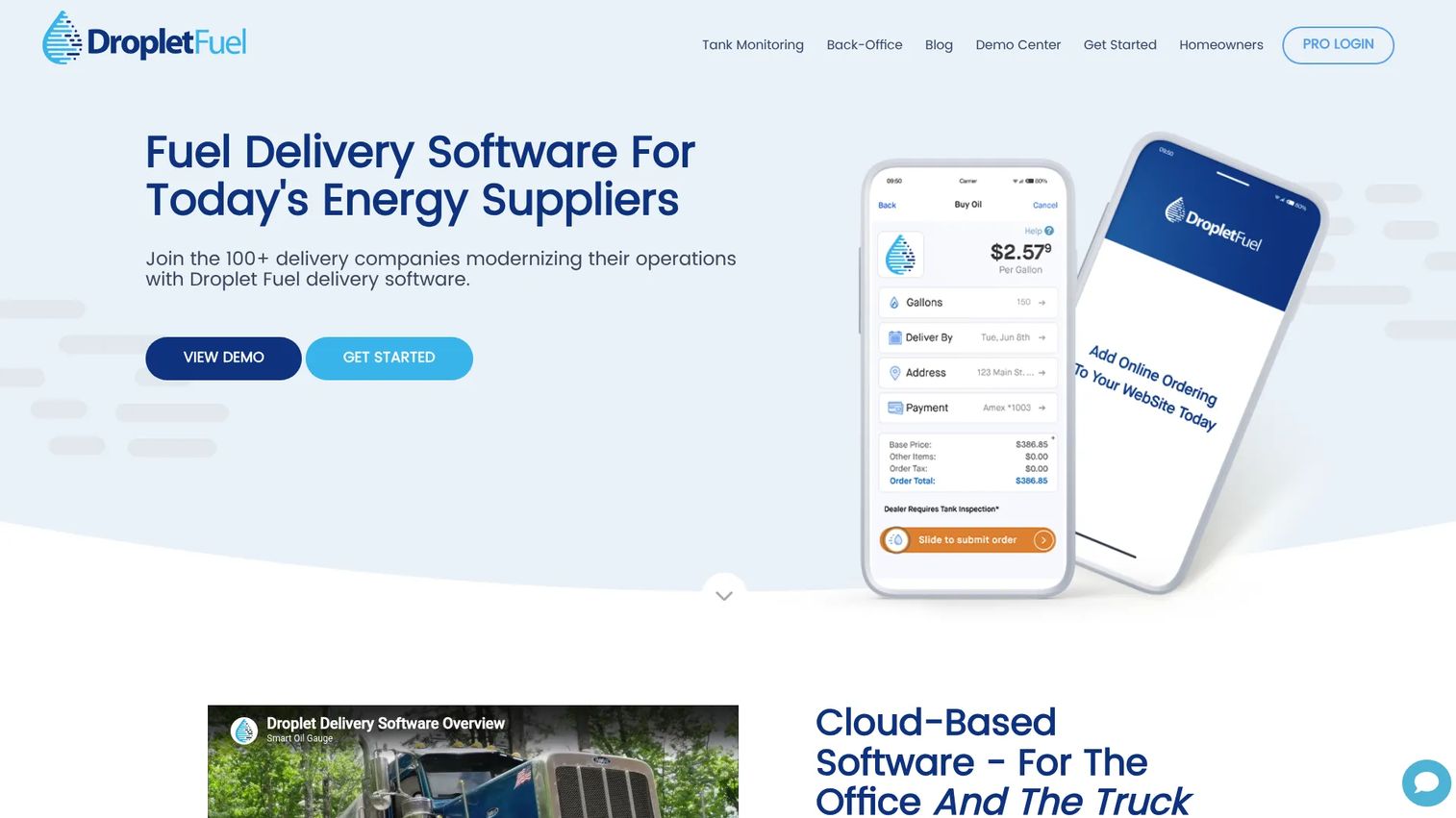
Droplet Fuel is cloud-based delivery software built specifically for heating oil and propane dealers. It pulls the office, the truck, and the customer into one system, covering back-office operations, routing with a driver display, online ordering, tank monitoring integration, and card processing through its FeeView feature. For a dealer tired of stitching together a routing tool, a billing tool, and a spreadsheet, this is the closest thing on the list to a single fuel-native stack.
The platform leans modern. Because it is cloud-based, dispatchers and drivers work from the same live data, and there is no on-premise server to babysit. That matters for a small-to-medium dealer that wants the workflow depth of a big system without the IT overhead.
Best for: Small to medium-sized fuel delivery providers that want back-office, routing, and online ordering in one fuel-specific platform.
Key strengths
- Back-office plus routing in one system: Office staff and drivers work from shared data, so a dispatch change reaches the truck without a phone call.
- Online ordering and tank monitoring: Customers can order online, and monitored tank levels feed into delivery planning.
- FeeView card processing: Handles card payments with fee visibility built into the payment flow.
Why choose Droplet Fuel: If your operation is fuel-first and you want software that speaks the language of degree days, will-calls, and top-offs rather than generic deliveries, Droplet Fuel fits. It is aimed squarely at dealers who want to modernize without becoming a technology company in the process. The cloud model also means faster onboarding than legacy on-premise systems.
Droplet Fuel pricing: Droplet Fuel does not publish pricing. The site shows a "Request Dealer Pricing" option alongside demo calls-to-action rather than public numbers, so you will need to contact them for a quote tied to your fleet size and volume.
2. Smart Service
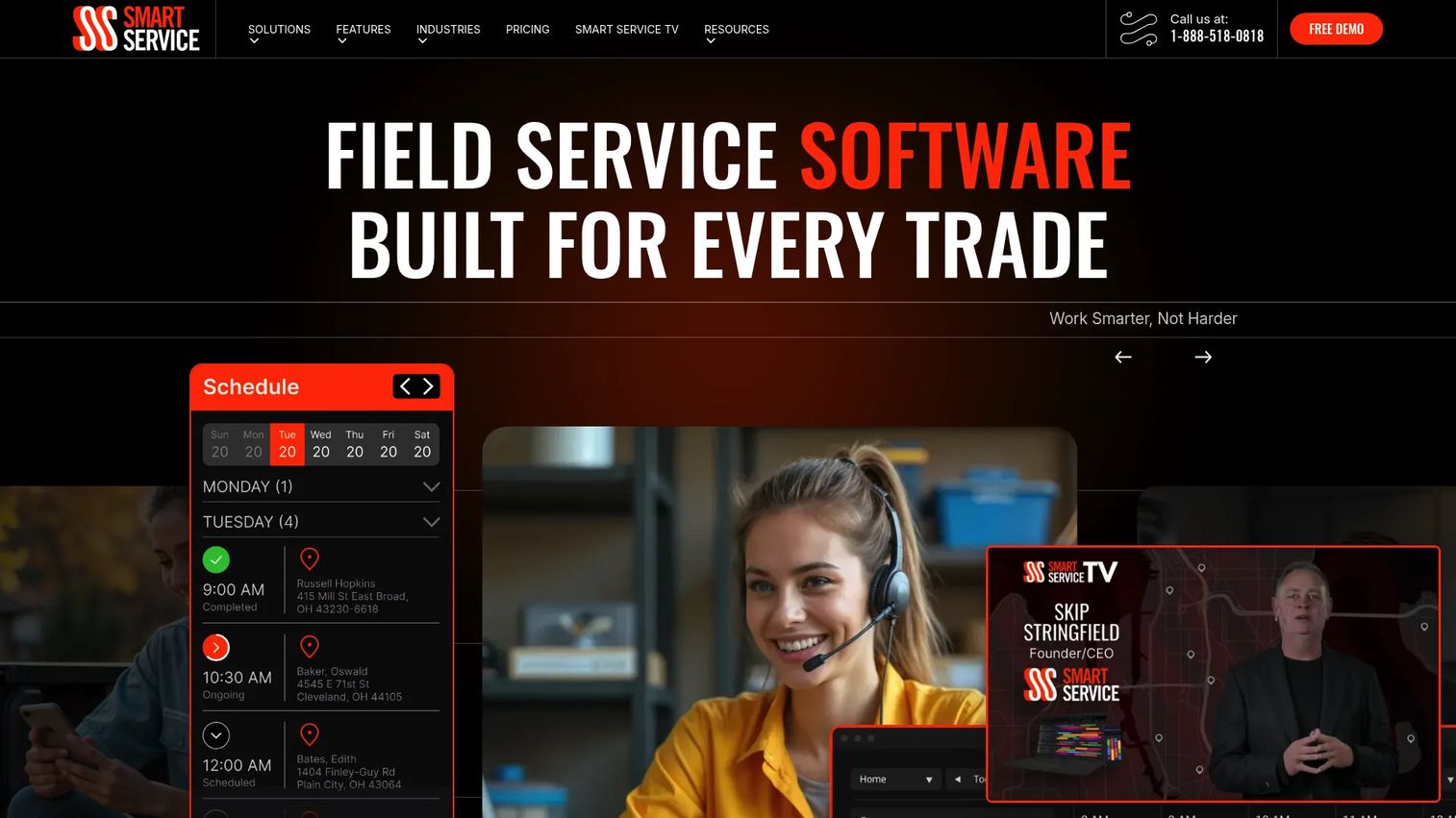
Smart Service is field service management software for the service trades, with scheduling, dispatching, customer management, and a defining feature for fuel teams: deep QuickBooks integration. If your accounting already lives in QuickBooks and you want your delivery and service operations to feed it directly, this is the natural fit. It handles route optimization, a dashboard and reporting layer, and service agreement management alongside the core dispatch board.
Fuel delivery rarely stops at delivery. Burner service, maintenance contracts, and one-off repairs are part of the business, and Smart Service treats service work and delivery work in the same system. That is useful for dealers who run both a delivery fleet and a service department.
Best for: Service businesses that need field scheduling and dispatch tied into QuickBooks-connected operations.
Key strengths
- Deep QuickBooks integration: Delivery and service data flows into your existing accounting without double entry.
- Route optimization and dispatch: Build and rebalance routes from a central dashboard.
- Service agreement software: Manage maintenance contracts and recurring service alongside deliveries.
Why choose Smart Service: For an operator already committed to QuickBooks, the accounting-native design removes a whole category of reconciliation work. The trade-off is that Smart Service is a broader field service platform rather than a fuel-only tool, so you configure it toward fuel rather than getting fuel workflows out of the box. Teams that value tight accounting integration over fuel-specific presets tend to prefer it.
Smart Service pricing: Smart Service offers a Standard Subscription and an Enterprise Subscription, both with an annual discount available, but does not publish numeric pricing. You request a quote for your team size. It holds a 4.3/5 rating on G2.
3. Total Energy
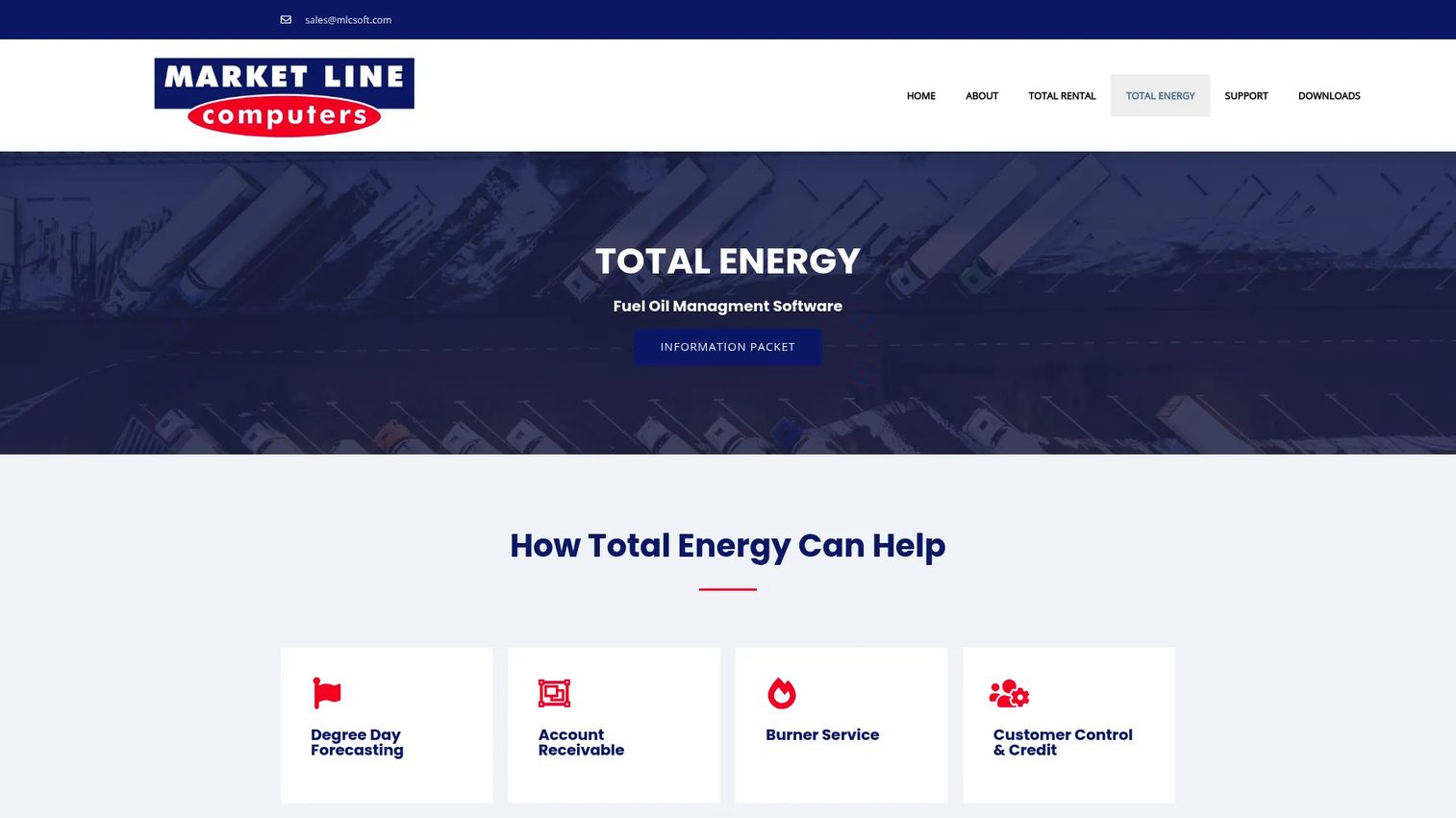
Total Energy, from Market Line Computers, is fuel oil management software built for home heating oil delivery businesses. It is the leaner, industry-specific option on this list. Rather than trying to cover every adjacent workflow, it focuses on the core of a heating oil operation: degree-day forecasting, accounts receivable, and burner service. For a dealer who wants dependable fuel ops coverage without a sprawling feature set, that focus is a feature, not a gap.
Degree-day forecasting sits at the center of the product, which tells you where its priorities are. This is a tool built by people who understand that predicting the reorder date is the single highest-leverage thing fuel oil software can do.
Best for: Fuel delivery companies that want core delivery, billing, and customer controls without extra complexity.
Key strengths
- Degree-day forecasting: Predicts reorder timing from weather and usage history, the foundation of runout prevention.
- Accounts receivable: Manages the billing and collection side of the fuel business.
- Burner service: Handles the service work that comes bundled with heating oil accounts.
Why choose Total Energy: If you want fuel oil software that does the essentials well and does not ask you to pay for modules you will never touch, Total Energy is worth a look. It suits established dealers who have a working process and want dependable software to run it, rather than a platform to reinvent their operation around.
Total Energy pricing: Total Energy does not display public pricing. The vendor directs prospective buyers to contact them directly, so you will need to reach out for a quote based on your operation.
4. Raven
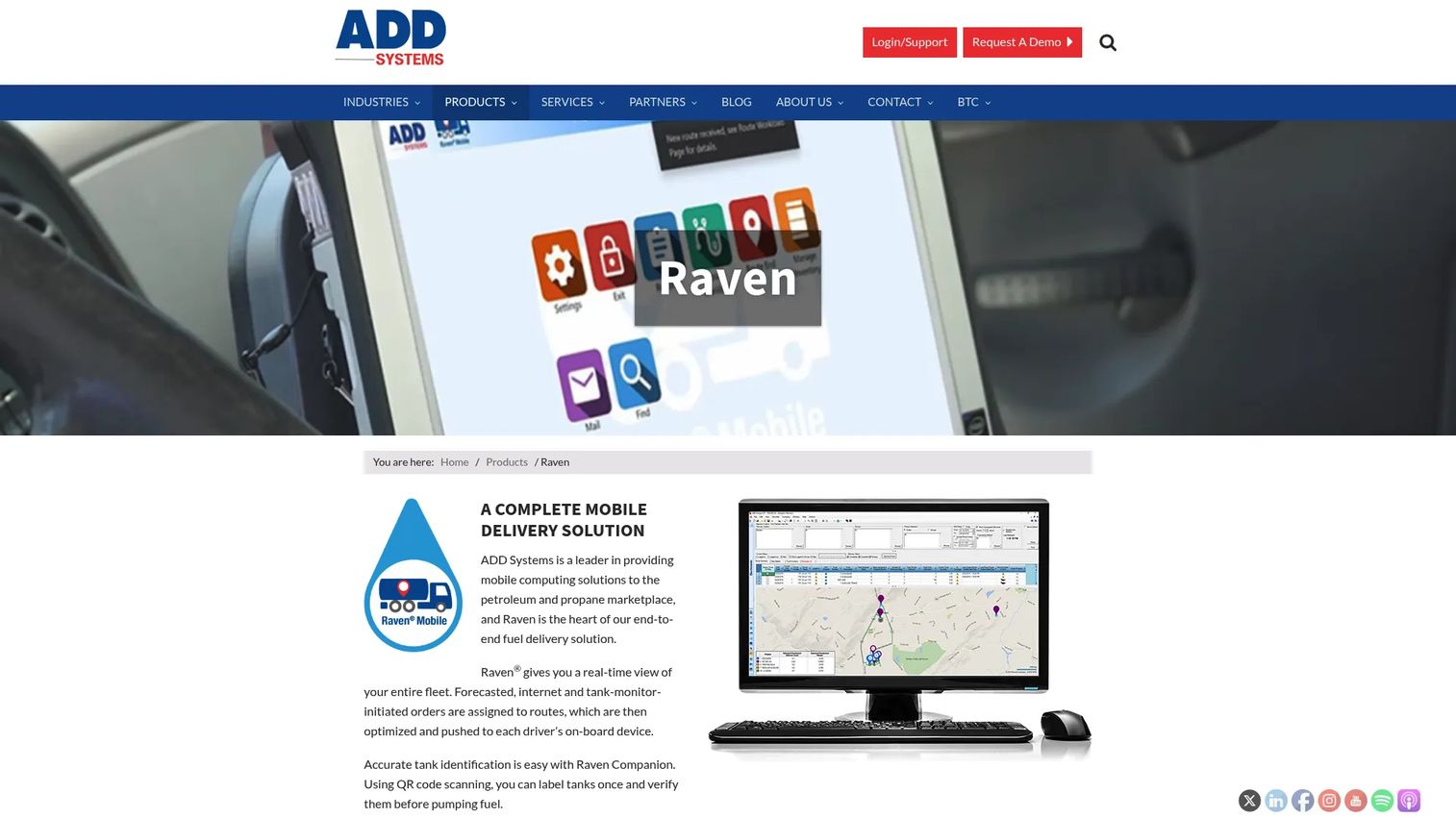
Raven, from ADD Systems, is a mobile fuel delivery solution for petroleum and propane distributors, built around field execution. Where some tools start in the office, Raven starts on the truck. It delivers real-time fleet visibility, route optimization, and a set of driver-facing tools designed to make each stop faster and more accurate. Its Raven Companion app adds QR code tank and equipment verification, so drivers confirm they are filling the right tank before a drop of fuel moves.
The product also supports fleet fueling and wet-hosing with delivery detail capture, which matters for distributors serving commercial and on-site fueling customers, not just residential tanks. That breadth of delivery type is where Raven stands out.
Best for: Fuel delivery operators that need strong mobile dispatch and delivery workflow automation in the field.
Key strengths
- Real-time fleet visibility and routing: Dispatchers see where trucks are and optimize routes on live data.
- QR tank verification: The Raven Companion app confirms the correct tank or equipment before delivery.
- Fleet fueling and wet-hosing support: Captures delivery detail for commercial and on-site fueling, not just residential.
Why choose Raven: If field execution is your weak point, drivers filling the wrong tank, missed delivery details, no live visibility into the fleet, Raven targets exactly that. It comes from ADD Systems, a long-standing name in energy distribution software, which appeals to distributors that want field tooling backed by a vendor deep in the industry. Operators handling mixed delivery types benefit most.
Raven pricing: ADD Systems does not publish pricing for Raven on its product pages. Reach out to the vendor for a quote scoped to your fleet and delivery mix.
5. Metrobi delivery management software
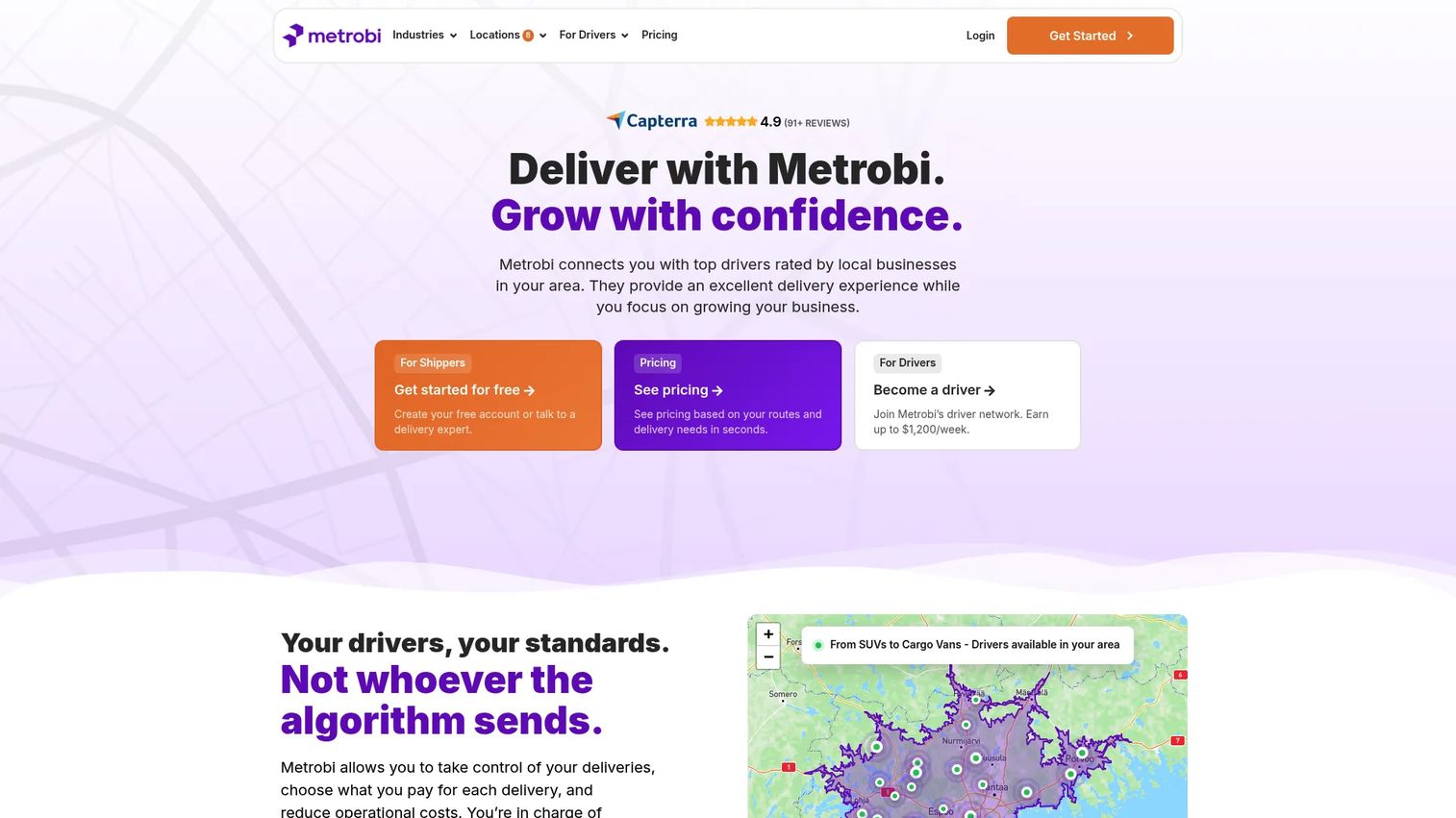
Metrobi is local delivery management software paired with a courier network, built for businesses that need routing, driver management, and proof of delivery. It is not fuel-specific, and that is the point: if your operation spans more than heating oil, or you want a broader delivery-ops layer, Metrobi handles route optimization, real-time driver tracking, and proof of delivery across delivery types. Consider it when your need is general delivery management rather than degree-day forecasting and tank monitoring.
The pricing model is unusually accessible for this category. Metrobi shows a free $0 software tier on its pricing page, with a paid Support Plan quoted separately, which lowers the barrier to trying it before committing.
Best for: Businesses that need local delivery routing, driver management, and proof of delivery beyond fuel alone.
Key strengths
- Route optimization: Builds efficient multi-stop routes across a delivery day.
- Proof of delivery: Captures confirmation at each drop for accountability and disputes.
- Real-time driver tracking: Gives dispatch live visibility into where every driver is.
Why choose Metrobi: Metrobi fits operators who want broad delivery-ops functionality and a low-cost entry point rather than a fuel-only specialist. It will not replace degree-day forecasting or tank monitoring, so a pure heating oil dealer will find the fuel-native tools above a closer match. But for a mixed delivery business, the free tier and courier network are compelling. It holds a strong 4.9/5 rating on G2.
Metrobi pricing: Metrobi publicly shows a free $0 Delivery Management Software tier and a paid Support Plan with custom pricing. A product comparison table also references a first-year-free driver plan, then $2.99 per driver per month. Confirm current terms with Metrobi for your setup.
6. DispatchTrack last mile delivery software
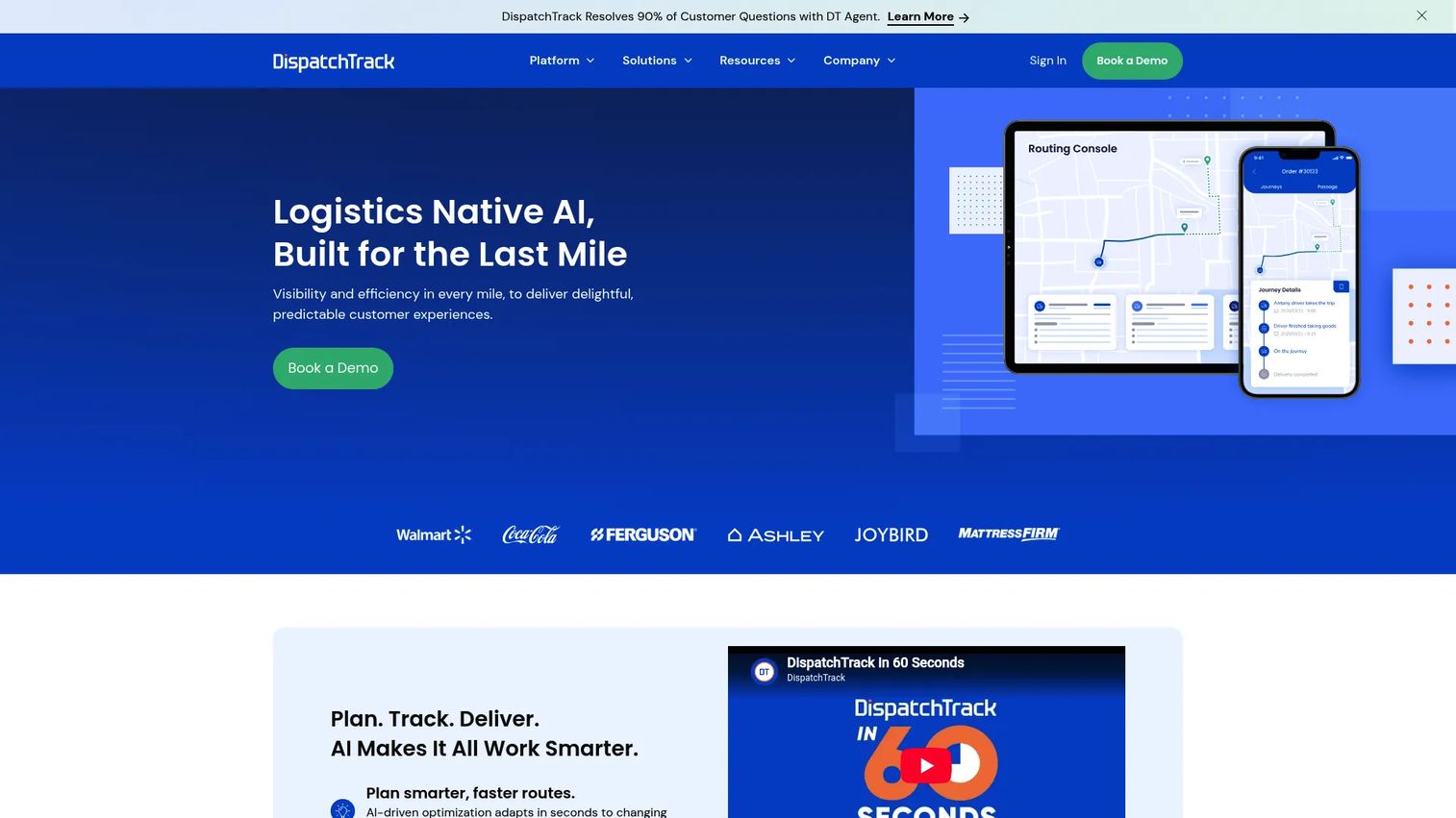
DispatchTrack is AI-powered last-mile delivery management software focused on routing, tracking, and customer communications. Like Metrobi, it is a broader delivery platform rather than a fuel-only tool, but it aims at heavier, more complex dispatch operations. Its AI-driven route optimization, real-time visibility and tracking, and live order and customer communication make it a fit for mid-market and enterprise delivery teams that move high volumes and need customers kept informed at every step.
For a fuel operation with serious last-mile complexity, or one that runs deliveries well beyond fuel, DispatchTrack brings enterprise-grade dispatch and analytics. The customer communication layer is a standout, with live updates that cut down on "where is my delivery" calls.
Best for: Mid-market and enterprise delivery operations that need last-mile routing, visibility, and proactive customer updates.
Key strengths
- AI-driven route optimization: Builds and adjusts routes at scale using live conditions.
- Real-time visibility and tracking: Gives dispatch and customers a live view of every delivery.
- Live customer communication: Sends proactive order and delivery updates to reduce inbound calls.
Why choose DispatchTrack: DispatchTrack suits larger operations where dispatch volume and customer communication are the pain points. It is less about degree-day forecasting and more about running a high-volume last-mile operation cleanly. A pure heating oil dealer will get more fuel-native depth from the specialists above, but a large or diversified delivery business will value the scale and analytics. It holds a 4.5/5 rating on G2.
DispatchTrack pricing: DispatchTrack publishes Starter, Professional, and Enterprise plans, all billed annually, but masks the actual figures on its pricing page. There is no free tier. Request a quote for pricing tied to your volume and minimum annual commitment.
7. i-Meter fuel delivery monitoring
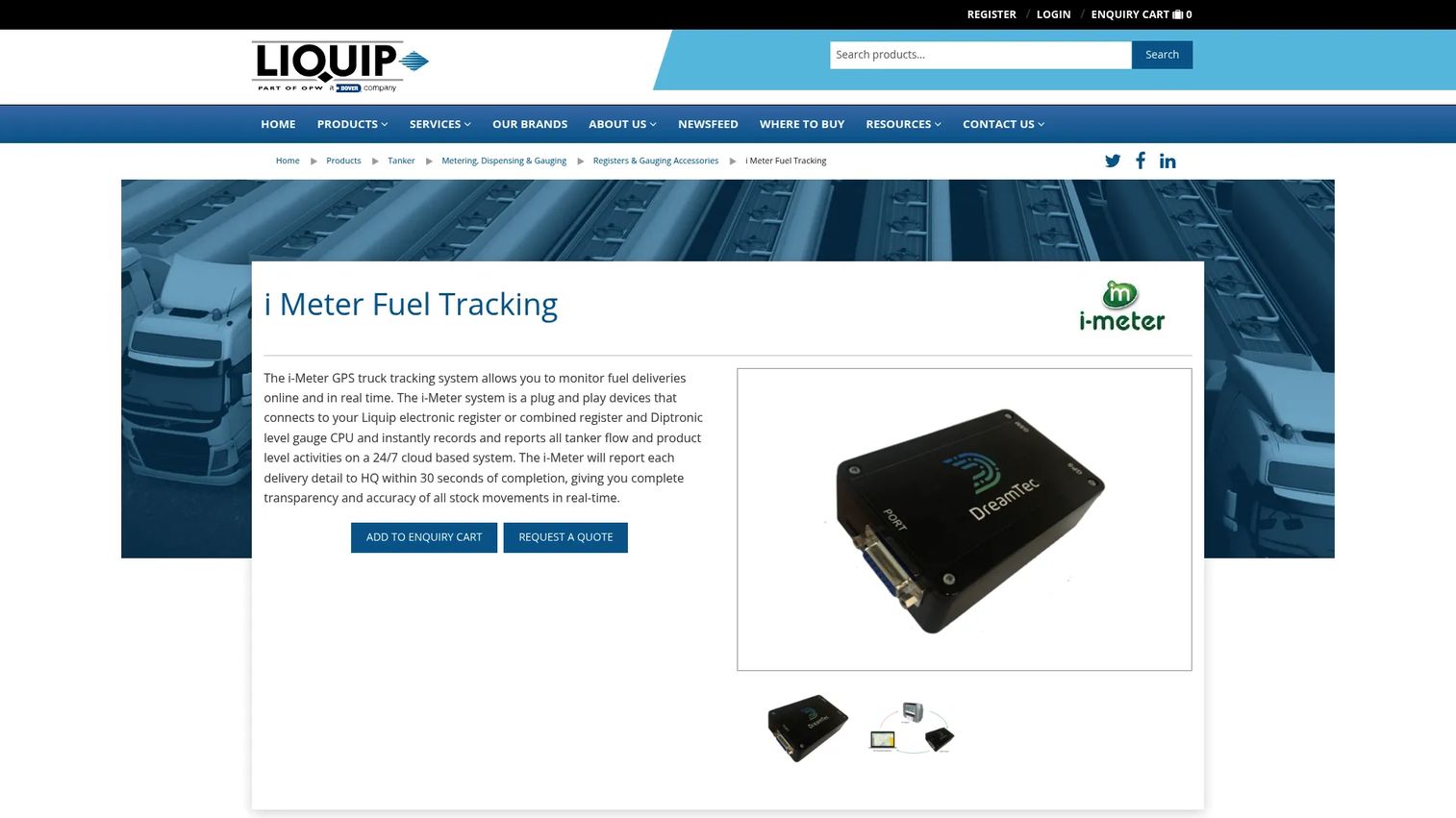
i-Meter, from Liquip, is a GPS-based fuel delivery tracking system for tanker fleets, with cloud dashboards and delivery reporting. It sits in a slightly different lane than the others: rather than a full office-to-customer platform, it focuses on delivery visibility and proof. For operators who already have their office workflow handled but want hard tracking data on what was delivered, where, and when, i-Meter fills that gap.
It captures real-time GPS tracking on a cloud dashboard, geo-fencing with route and delivery activity reporting, and e-ticket delivery records that log product, flow, time, and date for each drop. That level of delivery detail is valuable for reconciliation, disputes, and compliance.
Best for: Tank-fleet operators that need delivery visibility and proof-of-delivery tracking.
Key strengths
- Real-time GPS tracking: Live fleet location on a cloud dashboard.
- Geo-fencing and activity reporting: Route and delivery activity logged against defined zones.
- E-ticket delivery records: Captures product, flow, time, and date for each delivery.
Why choose i-Meter: If your gap is delivery monitoring and proof rather than scheduling or billing, i-Meter is a focused answer. It works well alongside a back-office system, adding a layer of verifiable delivery data. Operators comparing fuel monitoring and management tools should weigh it as a tracking specialist rather than an all-in-one platform.
i-Meter pricing: Liquip does not publish pricing for i-Meter. The product page directs visitors to contact Liquip for a quote scoped to your fleet.
Considerations
Picking the right platform is less about the longest feature list and more about matching the tool to how you actually run deliveries. Here is what to check before you commit.
Match the tool to your delivery model
Do you run automatic delivery, will-call, emergency, or a hybrid of all three? A dealer running mostly degree-day automatic deliveries needs strong forecasting and tank monitoring. An operation heavy on will-call and one-time orders needs solid online ordering and a dispatch board that handles ad-hoc stops. Map your delivery mix first, then match it to the software.
Check billing and accounting integration depth
If your books live in QuickBooks, integration depth is not a nice-to-have. Confirm exactly what syncs, whether it is one-way or two-way, and whether invoices, payments, and customer records all flow without manual re-entry. Shallow integrations create as much reconciliation work as they save.
Verify mobile and driver workflow fit
Look past the marketing screenshots. Can drivers capture signatures, add delivery notes, and see route changes in real time? Does the app work when a truck loses signal in a rural area? Offline behavior and delivery capture are where driver apps either save time or create it.
Evaluate customer self-service and communications
A customer portal that lets people order, check status, and pay online cuts inbound calls during peak season. Check what channels are supported, whether customers get proactive delivery updates by SMS or email, and which payment options are built in.
Look for operational signals, not just feature lists
The features that matter are the ones that move a number: route density, runout reduction, days-to-payment, and admin time saved. When you demo a tool, ask the vendor to show how it improves those specific outcomes, not just what buttons exist.
Conclusion
The right fuel oil delivery software depends on how deep and how specialized your operation is. For a fuel-first dealer wanting a modern, cloud-based stack, Droplet Fuel is the strongest all-in-one pick. Teams anchored in QuickBooks should look hard at Smart Service. Total Energy is the lean, dependable choice for core heating oil ops, and Raven leads on field execution and fleet visibility.
If your business runs deliveries beyond fuel, Metrobi and DispatchTrack bring broader delivery-management depth, with Metrobi offering an accessible free tier and DispatchTrack scaling to high-volume last-mile operations. And if your gap is delivery monitoring and proof rather than the full workflow, i-Meter is a focused tracking specialist.
The practical next step: shortlist two or three of these based on your delivery model, then demo them side by side with your own routes and customer data. The differences that matter, route density, forecast accuracy, and how fast a delivery turns into a paid invoice, only show up when you run your real operation through the software.
FAQs
It automates the core workflows of a fuel delivery business: forecasting when each customer will need a refill, scheduling and routing trucks, generating invoices, processing payments, and coordinating drivers and customers in the field. The goal is to replace manual dispatching and phone-based ordering with a single system that improves route density, prevents runouts, and shortens the gap between delivery and payment.
Prioritize degree-day forecasting, route optimization, and tank monitoring if runout prevention and route efficiency are your pain points. If billing accuracy and cash flow are the issue, focus on invoicing automation, payment processing, and accounting integration. Driver apps and customer portals matter most when your office staff is drowning in coordination calls during peak season.
Degree-day forecasting tracks heating degree days against each customer's historical fuel usage to predict when their tank will hit its reorder point. That lets you schedule an automatic top-off before the tank runs low, so you avoid emergency deliveries and the customer never notices a problem. It is the single highest-leverage feature for reducing runouts and tightening routes.
If your accounting already runs on QuickBooks, yes. A deep integration means delivery and payment data flows straight into your books without manual re-entry, which cuts reconciliation work and reduces errors. Confirm whether the sync is one-way or two-way and exactly which records transfer before you rely on it.
Many fuel-specific platforms include a customer portal that lets people order fuel, request will-call deliveries, check delivery status, view history, and pay online. This cuts inbound phone calls and gives customers a self-serve experience. Coverage varies, so verify what the portal actually supports and which payment options are built in.
Yes. By combining degree-day forecasting, tank monitoring, and automatic delivery triggers, the software schedules top-offs before a tank runs low rather than reacting after a customer calls in a runout. Fewer emergencies mean tighter routes, lower cost per delivery, and better customer retention.
Fuel oil delivery software is purpose-built for the heating oil, propane, and diesel business, with degree-day forecasting, tank monitoring, and fuel-specific billing baked in. Broader delivery management software focuses on route optimization, driver tracking, and proof of delivery across any delivery type, without the fuel-native forecasting. Choose fuel-specific tools for a pure fuel operation and broader platforms when you deliver more than fuel.
Smaller dealers running mostly heating oil or propane usually get more value from a fuel-specific platform, because degree-day forecasting and tank monitoring directly reduce runouts and wasted miles. A broader dispatch tool makes sense only if you deliver multiple product types or want a low-cost entry point to test delivery automation. Match the tool to your delivery model, not to the size of the feature list.