Your spreadsheet said the account was healthy. Then they churned.
That gap between what your data shows and what actually happens is the reason engagement scoring exists. You track opens, logins, event attendance, and renewals, but the raw activity never tells you who to call first. It just piles up until someone leaves.
Manual scoring breaks the same way every time. The weights live in one person's head. The score never updates when the rules change. Nobody trusts the number enough to act on it.
Software fixes the mechanics, not the judgment. The sales engagement software market sat at USD 2.4B in 2025 and is projected to reach USD 7.1B by 2035, an 11.6% CAGR, per Future Market Insights (2025). Buyers are spending because a good engagement score turns activity into a decision, and a decision is worth more than a dashboard.
What's inside
This guide is for anyone who needs to turn engagement activity into an actionable score: Membership and association teams, SaaS revenue teams, and people ops teams building an employee engagement scorecard.
We picked tools on four criteria:
- Scoring logic: Can you build weighted or predictive models, not just count events?
- Score history: Does the platform track score changes over time so trends are visible?
- Reporting and segmentation: Can you slice engagement by audience, tier, or time period?
- Actionability: Does the score reach a contact record or dashboard the team actually uses?
TL;DR
- Best for associations that need weighted models: Rhythm Software, with personalized scoring and five years of engagement history.
- Best all-in-one engagement management system: iMIS, which combines membership data, scoring, and reporting in one place.
- Best for CRM engagement scoring: Salesforce Marketing Cloud Engagement, with native Einstein predictive scores on email and mobile.
- Best for employee engagement scorecards: Workleap Officevibe, built on pulse surveys and continuous feedback.
- Best for higher-ed advancement: Ellucian, focused on alumni and donor engagement scoring.
- Best for stakeholder engagement: Tractivity, for consultation-heavy and regulated organizations.
What is engagement scoring software
Engagement scoring software is a weighted or predictive model that converts tracked actions into a single engagement score for a member, lead, customer, or employee. Instead of reading raw activity logs, your team reads one number that reflects how engaged each contact is, and how that engagement is trending.
The score can follow almost any relationship. Membership teams score member activity to drive renewals. SaaS revenue teams score leads, customers, or accounts to prioritize outreach. People ops teams score employee sentiment to spot risk before it becomes attrition.
Common inputs feed the model:
| Input | What it signals |
|---|---|
| Email opens and clicks | Passive attention and interest |
| Logins and product usage | Active adoption of the product |
| Event attendance | Investment in the relationship |
| Meetings booked | Sales or success momentum |
| Renewals and purchases | Committed, high-value behavior |
| Survey responses | Sentiment and satisfaction |
| Advocacy actions | Referrals, reviews, community posts |
Most platforms share a core feature set:
- Custom metrics: Choose which actions count toward the score.
- Weighted scoring: Assign point allocation so a renewal outweighs an email open.
- Predictive options: Some tools add a predictive model that flags likely high-value or at-risk contacts.
- Score history: Track how each score moves week over week or year over year.
- Dashboard visibility: Surface the engagement score on a contact record and in reporting.
- Segmentation: Group contacts by score tier, revenue bands, or trend direction.
The strongest tools do one thing well: They make the number visible where the work happens. A score buried in a report changes nothing. A score on the contact record changes who gets the next call.
Why teams use engagement scoring software
Guessing is expensive. When every account looks the same in the CRM, reps chase the loudest contact instead of the most engaged one. An engagement score fixes the ordering problem.
Prioritization is the first payoff. A ranked list of accounts by score tells your team where to spend the next hour. Segmentation is the second. You can group contacts by score band and run different plays for high, mid, and low engagement.
Retention is where the money is. A falling score is an early warning, weeks before a renewal call goes sideways. Outreach triggers close the loop: When a score crosses a threshold, the system can fire an alert or start a sequence.
Reporting and dashboards make all of it usable. Without visible score history, nobody sees the trend that predicts the churn. With it, a manager reads a weekly dashboard and reallocates effort before the quarter is decided, not after.
What to look for in engagement scoring software
Four criteria separate a real scoring engine from a glorified counter.
Custom metrics and weighting rules. You need to decide which actions count and how much each is worth. A tool that hardcodes the model to its own defaults will never match how your business defines engagement.
Predictive options. Rules-based scoring is transparent and fast to launch. A predictive model adds pattern detection, but it needs enough historical records to be trustworthy. Check whether you have the data before you pay for the feature.
Score history and dashboard visibility. A single-point score is nearly useless. Trend tracking over time is what surfaces risk and growth. Confirm the score lands on the contact record, not only in an export.
Segmentation and data readiness. The score is only as clean as the data feeding it. Before you buy, audit your CRM or database for consistent, complete activity data. A score built on gaps will mislead the team that trusts it.
One rule ties all four together: A score you cannot act on is a vanity metric. Prioritize tools where the output plugs into a workflow your team already runs.
When to use engagement scoring software
Measure activity across a member or customer lifecycle. When you have too many contacts to track by hand, a score compresses months of activity into one readable number. This fits membership renewals, customer health monitoring, and long lifecycle nurture.
Prioritize outreach based on score tiers or trend changes. When your team has more accounts than hours, the score decides the order of work. Use it to route high-score leads to sales and hold low-score contacts in nurture until they warm up.
Spot risk, growth, or re-engagement opportunities early. A dropping score flags a churn risk before the renewal date. A rising score flags an expansion opening. Trend changes, not absolute values, are usually the more actionable signal.
Comparison table
Seven tools, sorted by how closely they map to the engagement scoring keyword. Pricing and G2 ratings reflect verified vendor and G2 listings as of 2026. Where a vendor keeps pricing behind a sales conversation, the table says so plainly.
| # | Product | Best for | Key differentiator | Pricing | G2 rating |
|---|---|---|---|---|---|
| 1 | Rhythm Software | Associations scoring members | Personalized models with 5 years of history | Contact sales for a quote | 4.8 |
| 2 | iMIS | All-in-one engagement management | Scoring inside a full membership system | From $7,200/yr | 4.2 |
| 3 | NetForum A-Score | Built-in AMS member scoring | Configurable, automated real-time scoring | Included with implementation | 3.4 |
| 4 | Salesforce Marketing Cloud Engagement | CRM engagement scoring | Native Einstein predictive scores | From $2,000/org/mo | Not listed |
| 5 | Workleap Officevibe | Employee engagement scorecards | Pulse surveys and continuous feedback | From $5/user/mo | 4.3 |
| 6 | Ellucian | Higher-ed advancement scoring | Alumni and donor engagement models | Contact sales for a quote | 3.4 |
| 7 | Tractivity | Stakeholder engagement | Consultation and sentiment analysis | From £9,495/yr | 4.5 |
Best 7 tools for engagement scoring
1. Rhythm Software
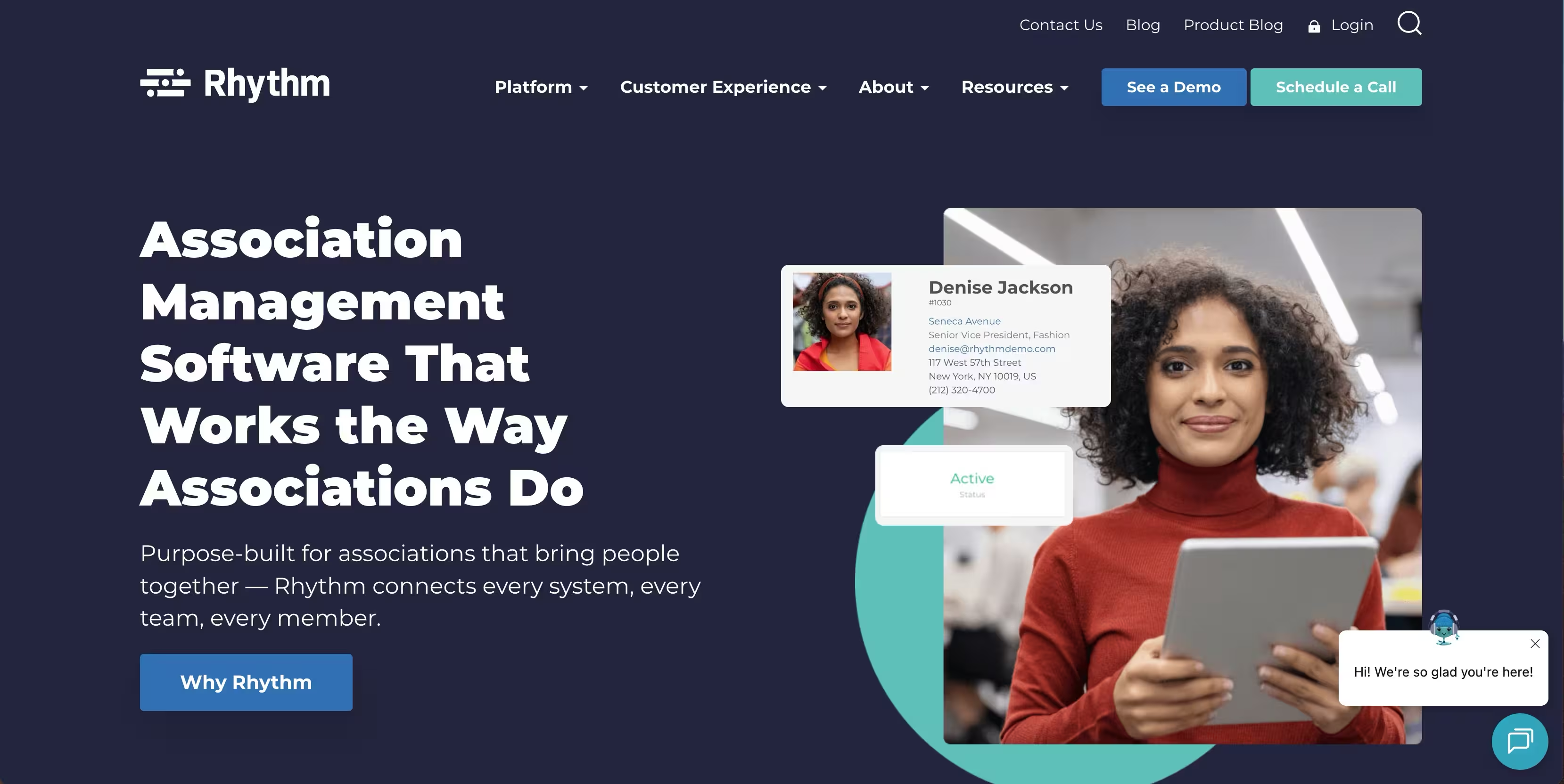
Rhythm Software is association management software with member engagement scoring built into the AMS. It lets associations design personalized scoring models, assign metrics and weights, and read both individual and aggregate engagement. The standout is depth of score history: Five years of trend data, so teams see how a member's engagement moves year over year.
Best for: Associations that want weighted member engagement scoring and long-run trend tracking inside their AMS.
Key features
- Personalized scoring models with metrics and weights
- Individual and aggregate engagement insights
- Five years of engagement history and trend tracking
- Score recalculation when scoring rules change
Why choose Rhythm Software: If you run an association and renewals hinge on knowing which members are drifting, the weighted models and multi-year history give you the earliest warning of the tools here.
Rhythm Software pricing: Rhythm keeps numeric pricing off its site and routes buyers to its team for a quote, so plan on a sales conversation to get a figure for your member count.
Rhythm Software holds a 4.8 out of 5 rating on G2, the highest on this list.
2. iMIS
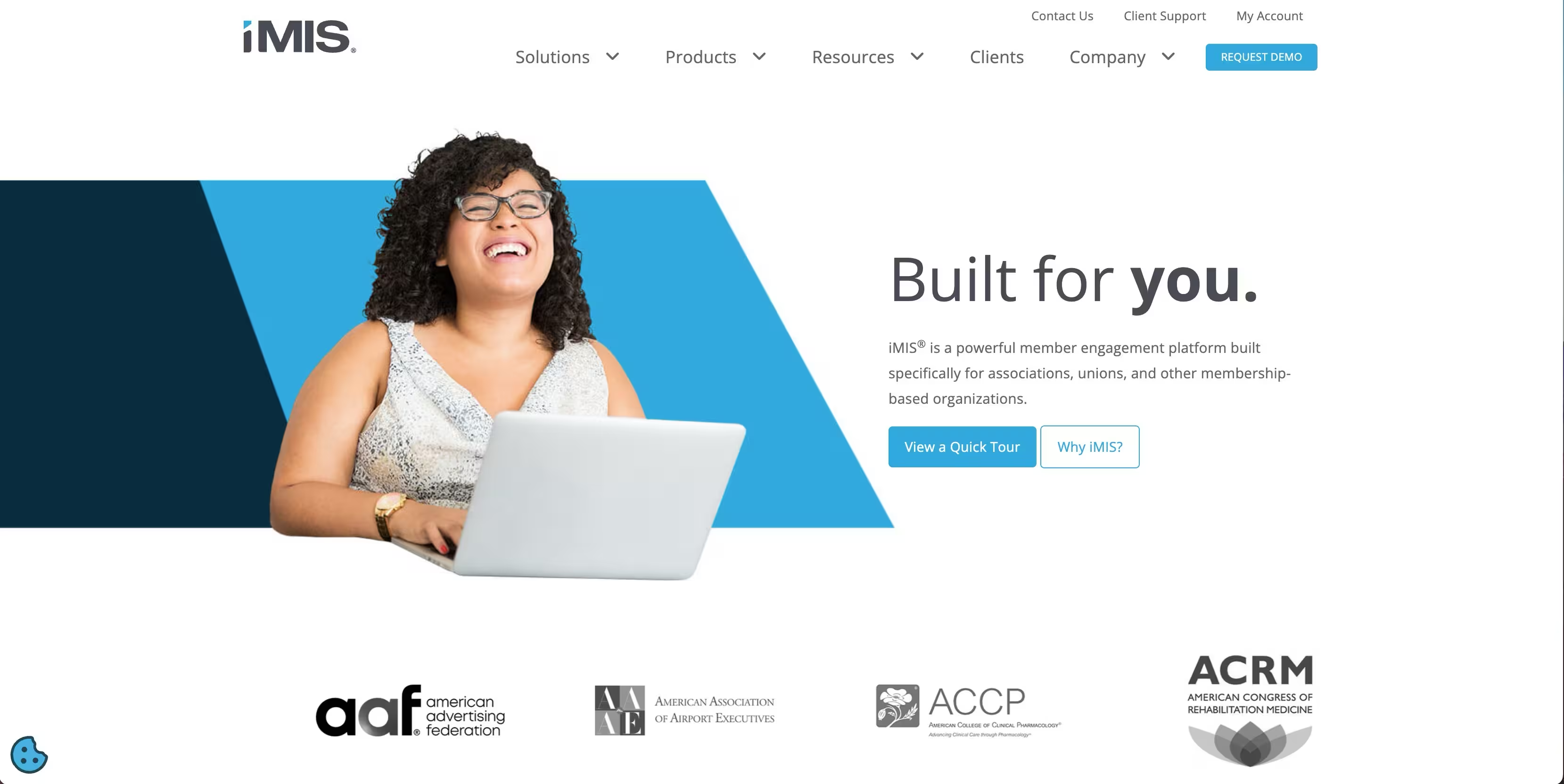
iMIS is an engagement management system for associations and nonprofits that folds scoring into a full membership platform. Rather than a standalone scoring engine, it combines constituent management, events, fundraising, and communications, then layers dashboards and reporting on top. Teams use it to monitor engagement and segment audiences from one system of record.
Best for: Associations and nonprofits that want scoring inside an all-in-one engagement management system, not a separate tool to integrate.
Key features
- Membership and constituent management
- Events, fundraising, and communications
- Website, CMS, and dashboards
- Reporting and segmentation across records
Why choose iMIS: Pick iMIS when you want one platform running membership operations and engagement visibility together, so the score lives beside the data that produced it.
iMIS pricing: The iMIS Professional package starts at $7,200 USD per year for a minimum of three users, with a one-time installation fee starting at $15,000. Enterprise pricing runs through their sales team.
Reviewers give iMIS a 4.2 out of 5 rating on G2.
3. NetForum A-Score
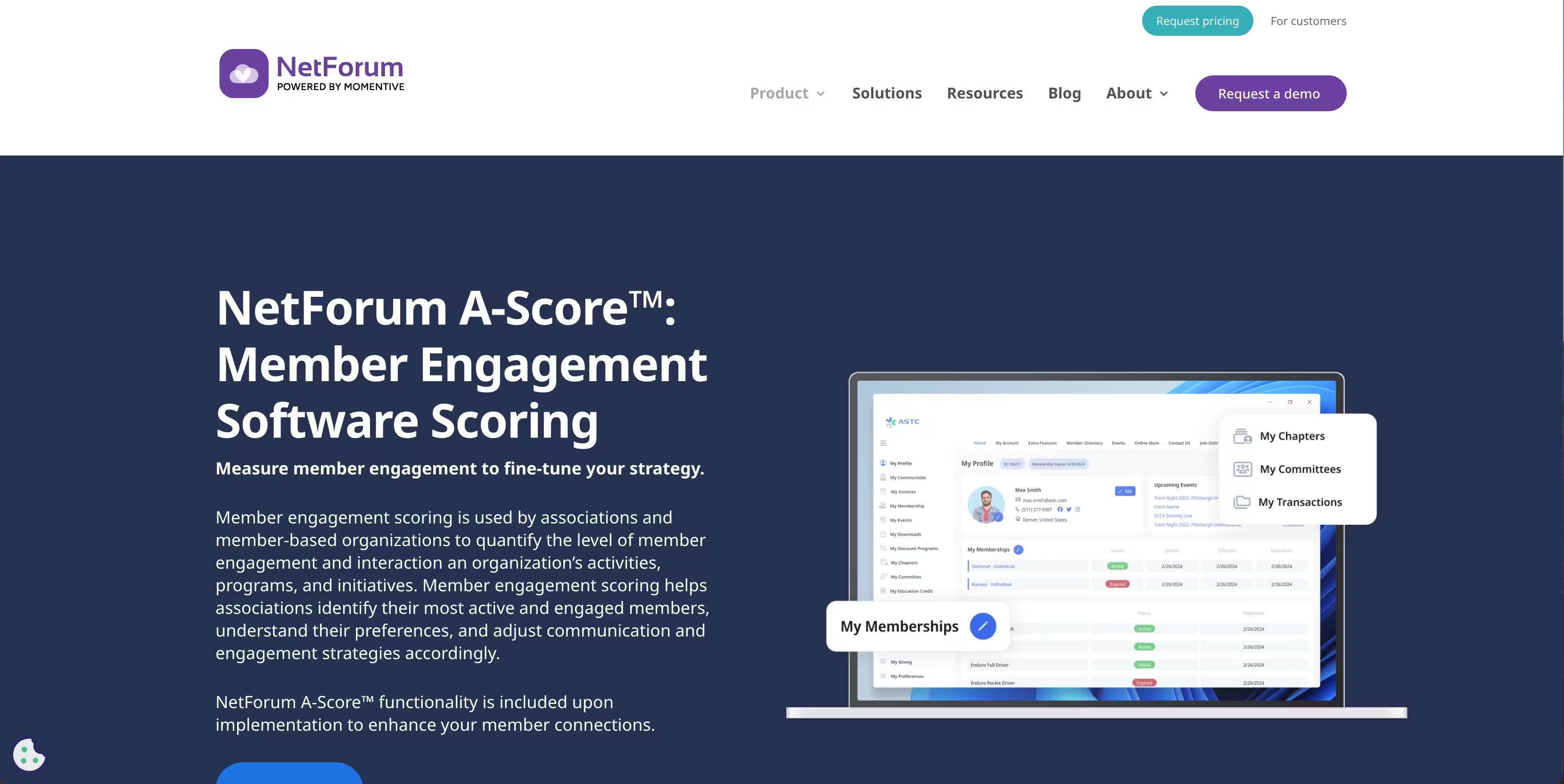
NetForum A-Score is the member engagement scoring feature built into NetForum association management software. It focuses on configurable engagement measurements, automated real-time scoring, and advanced reporting. Because it ships inside the AMS, associations already on NetForum can score member activity without adding a second platform.
Best for: Associations already running NetForum that want built-in member engagement scoring with automated recalculation.
Key features
- Configurable engagement measurements
- Automated real-time engagement scoring
- Advanced engagement reporting
- Native integration with NetForum AMS
Why choose NetForum A-Score: If NetForum is already your system of record, A-Score removes the integration problem entirely, since scoring runs on the data you already hold.
NetForum A-Score pricing: A-Score is stated to be included when you implement NetForum, and the site directs buyers to request a quote for the AMS itself rather than showing a figure.
The G2 rating shown here, 3.4 out of 5, is for NetForum AMS overall rather than a separate A-Score listing.
4. Salesforce Marketing Cloud Engagement
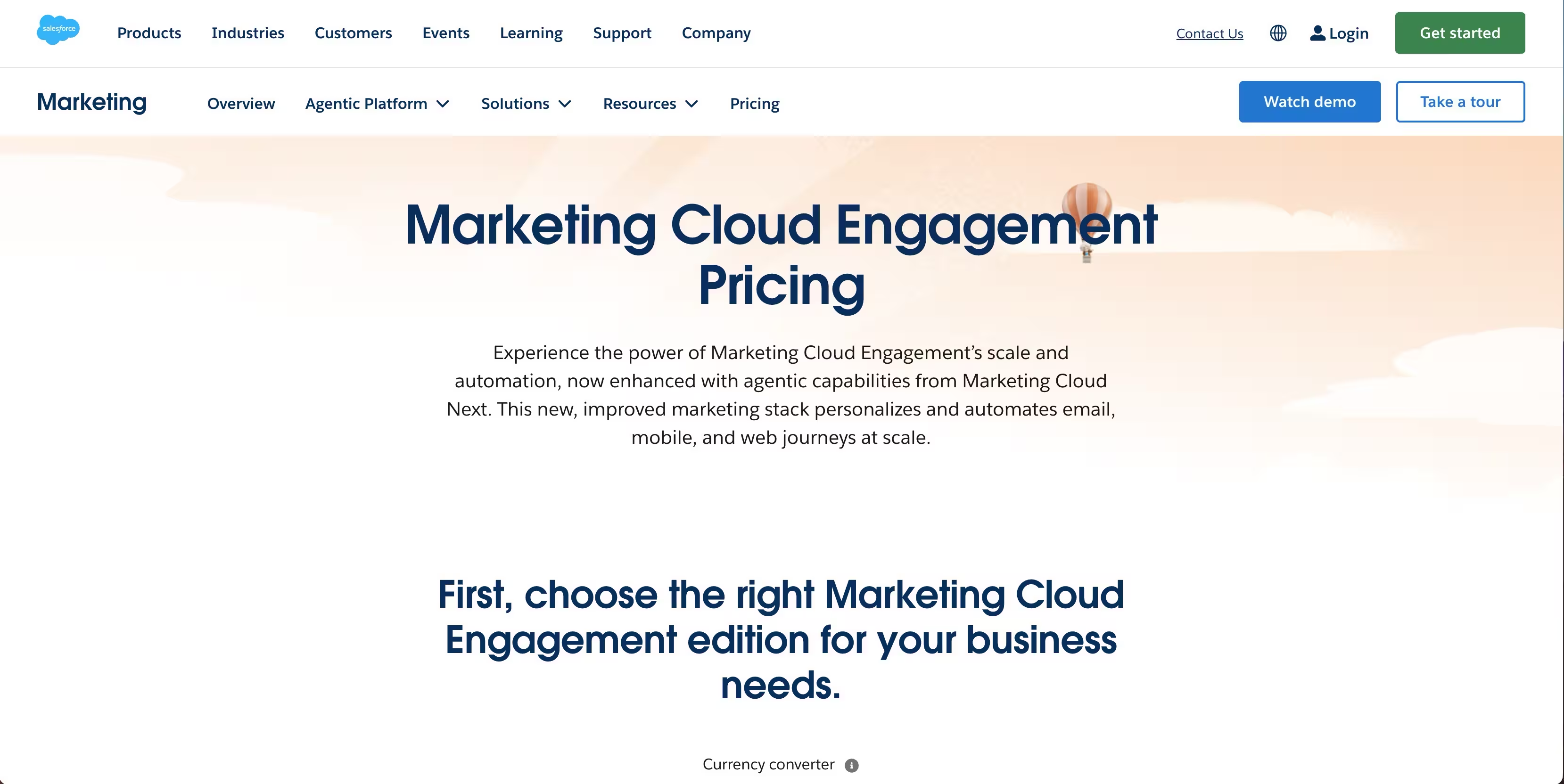
Salesforce Marketing Cloud Engagement is a marketing automation platform with Einstein engagement scoring built in for email and mobile messaging. It generates predictive scores at the audience level and the individual contact level, so revenue teams can prioritize outreach from inside the Salesforce environment they already run. This is the pick for CRM engagement scoring at enterprise scale.
Best for: Revenue and lifecycle teams that want enterprise marketing automation with native predictive engagement scoring inside Salesforce.
Key features
- Einstein engagement scoring
- Email and MobilePush engagement predictions
- Audience-level dashboards
- Individual contact-level scores
Why choose Salesforce Marketing Cloud Engagement: Choose it when your team lives in Salesforce and wants predictive scores where the contact records and campaigns already sit, not in a bolt-on tool.
Salesforce Marketing Cloud Engagement pricing: Pro+ starts at $2,000 USD per org per month, Corporate+ at $5,500, and Enterprise+ at $30,000, each billed annually with higher message and contact limits at each step.
A current G2 rating for this specific product was not listed at generation time.
5. Workleap Officevibe
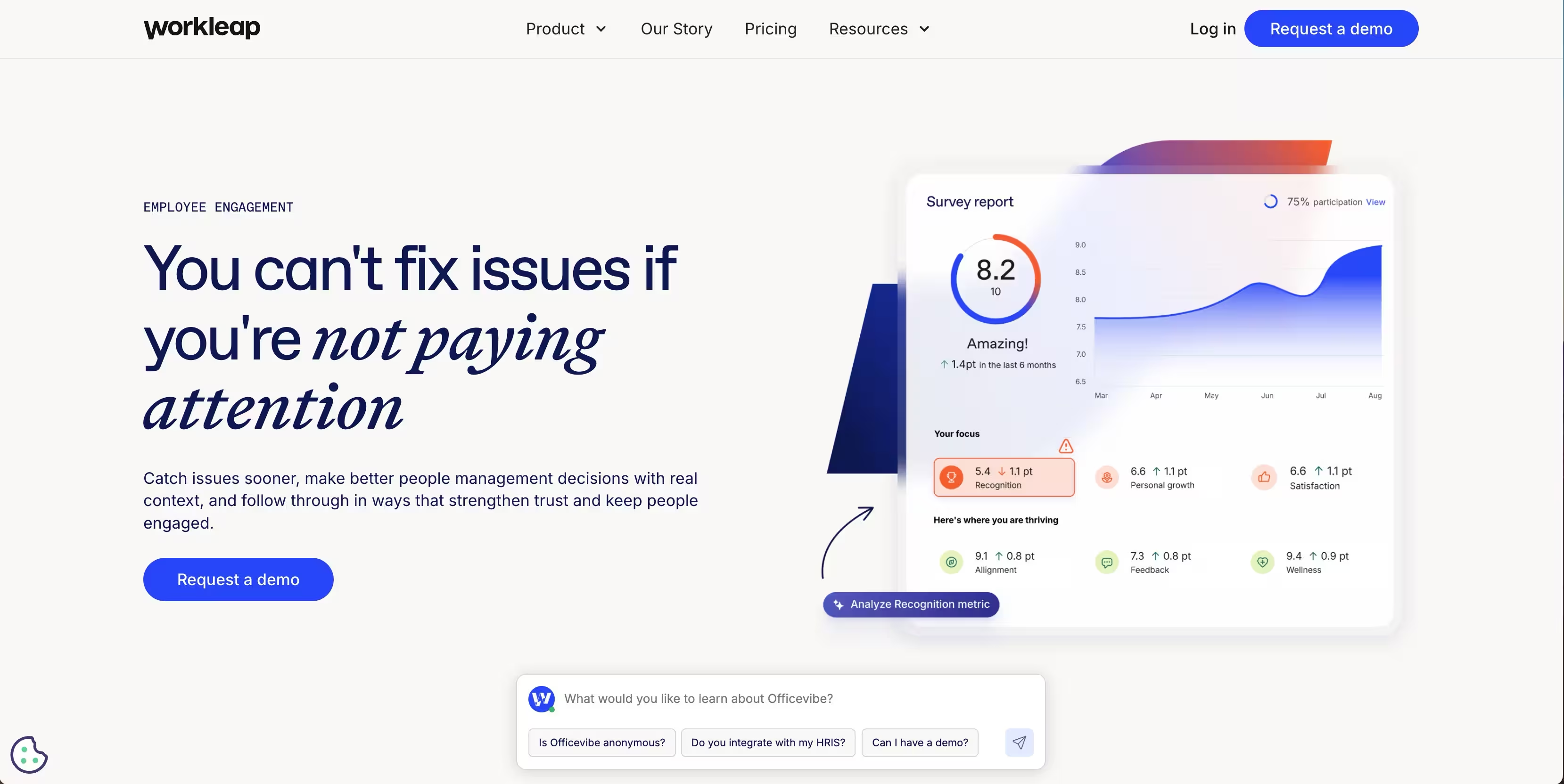
Workleap Officevibe is employee engagement software that builds its scorecard from pulse surveys, anonymous feedback, and recognition. Instead of behavioral activity like logins, it scores sentiment and satisfaction, then tracks how those move over time. Managers use the trends to act before disengagement turns into resignation.
Best for: HR teams and managers who need a survey-driven employee engagement scorecard with continuous listening.
Key features
- Pulse and custom surveys
- Anonymous employee feedback
- Good Vibes recognition cards
- Manager-level action prompts
Why choose Workleap Officevibe: Pick Officevibe when the thing you need to measure is how people feel, not what they click, and you want managers nudged toward action on the results.
Workleap Officevibe pricing: Officevibe starts at $5 per user per month.
Officevibe carries a 4.3 out of 5 rating on G2.
6. Ellucian
Ellucian is a higher-education software provider whose advancement products include engagement scoring for alumni and donors. Its guidance emphasizes predictive models, weighted engagement actions, and governance around score design. For institutions running fundraising and alumni relations, engagement scoring helps rank who to steward next.
Best for: Higher-ed advancement and fundraising teams that need alumni and donor engagement scoring with a governed model.
Key features
- Real-time engagement scoring
- Weighted engagement actions
- Automated email workflows
- Performance analytics
Why choose Ellucian: Choose Ellucian when you sit inside a higher-ed institution and need scoring wired into advancement and donor workflows rather than a generic CRM.
Ellucian pricing: Ellucian routes its advancement products to a sales conversation rather than posting a figure, so budget for a quote scoped to your institution.
Ellucian carries a 3.4 out of 5 seller rating on G2.
7. Tractivity
Tractivity is stakeholder relationship management software for consultations, engagement, and reporting. It maps stakeholders, runs surveys and events, then reports on engagement with AI sentiment analysis layered in. It fits organizations that measure engagement across communities and stakeholders rather than a single customer or member base.
Best for: UK and regulated organizations that need full-featured stakeholder engagement and consultation reporting.
Key features
- Stakeholder mapping
- Surveys, newsletters, and event management
- Reporting and dashboards
- AI sentiment analysis
Why choose Tractivity: Reach for Tractivity when your engagement problem is consultation and stakeholder relationships, especially in regulated contexts where an audit trail matters.
Tractivity pricing: Tractivity runs on a single annual subscription starting at £9,495 per year, scaling by user licences and projects, with no separate tiers or add-ons.
Tractivity holds a 4.5 out of 5 rating on G2.
Considerations
Before you commit, walk your shortlist through five checks.
Data readiness
Your score is only as good as the activity data behind it. Audit your CRM or database for gaps and inconsistencies first. A predictive model on thin data produces confident nonsense, so fix the inputs before buying the engine.
Weighting and scoring logic
Confirm you can set point allocation yourself. A renewal should outweigh an email open, and only you know the right ratios for your business. Reject tools that lock the weighting to their defaults.
Score history and visibility
A single score number tells you little. You want trend tracking that shows movement over time, and you want the score on the contact record, not stuck in an export. Trend changes drive most of the useful action.
Segmentation depth
Check that you can slice engagement by tier, revenue bands, audience, and time period. Segmentation is what turns a score into different plays for different groups instead of one blunt list.
Actionability
Ask the hard question: What happens after the score is created? The best tool fires alerts, routes contacts, or triggers outreach. If the score just sits in a dashboard, it changes nothing.
Conclusion
The right pick comes down to who you are scoring. For member engagement scoring, Rhythm Software leads on weighted models and score history, with iMIS and NetForum A-Score strong if you want scoring inside a full membership system. For CRM engagement scoring across leads and customers, Salesforce Marketing Cloud Engagement brings native predictive scores. For an employee engagement scorecard, Workleap Officevibe is the practical choice, while Ellucian fits higher-ed advancement and Tractivity fits stakeholder engagement.
Start with data readiness, not the tool. Confirm your activity data is complete and consistent, then decide between a rules-based model you can launch fast and a predictive model that needs history to earn trust. Choose weighted logic you control, insist on visible score history, and make sure the score reaches a place your team already works. A score nobody acts on is just a number.
Want to show a product experience instead of describing one? Start your journey with Guideflow today!
FAQs
Engagement scoring software is a tool that converts tracked actions into a single engagement score using weighted or predictive logic. The score can represent a member, lead, customer, or employee, depending on your business. It turns scattered activity into one number your team can prioritize and act on.
You assign point values to actions, then weight them by importance. A renewal or a booked meeting carries more points than an email open. The software sums the weighted actions into a score and updates it as new activity arrives, often adding a predictive layer on top of the rules.
Use inputs that reflect real investment in the relationship: Logins, product usage, event attendance, meetings, renewals, and survey responses. Include advocacy actions like referrals and reviews where you track them. The best inputs are the behaviors that historically preceded a renewal, an expansion, or a churn.
It depends on how fast your activity data moves. Fast-cycle sales or product usage benefits from daily or real-time recalculation. Membership and annual relationships are fine with weekly or monthly updates. Whatever the cadence, make sure scores recalculate automatically when your scoring rules change.
Rules-based scoring uses point allocation you define, so it is transparent and quick to launch. Predictive scoring uses a model to detect patterns and flag likely high-value or at-risk contacts. Predictive models need enough historical records to be reliable, so many teams start rules-based and add prediction later.
Yes. Employee engagement scorecards usually run on survey responses and sentiment rather than clicks and logins. Tools like Workleap Officevibe score pulse-survey and feedback data, then track how sentiment trends over time. The mechanics mirror customer scoring, but the inputs shift from behavior to satisfaction.
Group contacts into score tiers, then report on how each tier moves over time. Segmentation lets you run separate plays for high, mid, and low engagement, and layer in revenue bands or audience type. Score history in the reporting is what surfaces the trend that predicts renewal or churn.
The score has to reach a place your team already works, usually the contact record and a live dashboard. It should trigger something: An alert, a routing rule, or an outreach sequence when it crosses a threshold. A score that only lives in a monthly report changes no behavior and drives no outcome.