Code doesn't ship cleanly by accident. When a team pushes a change that breaks production, the postmortem almost always reveals the same thing: The review process either didn't catch it or never ran. According to the Codacy State of Software Quality Report (2024), 53% of developers say code reviews are a mandatory part of their workflow, and yet release surprises, defect escapes, and technical debt accumulation remain persistent problems across engineering organizations.
For product managers, the stakes are concrete. Review drag slows release cadence. Missed defects create unplanned sprint work and erode stakeholder confidence. Knowledge trapped in a few senior engineers creates bottlenecks that no roadmap adjustment can fix. Peer code review software is where these problems get systematically addressed, but the market spans hosted Git platforms, dedicated review tools, self-hosted systems, automated quality gates, and AI-assisted review assistants. Picking the wrong category, let alone the wrong product, is a real risk.
This guide cuts through the category confusion with verified pricing, current ratings, and a framework for matching each tool to your team's review workflow and engineering maturity.
What's inside
This guide compares 12 peer code review software tools chosen for 2026. It covers:
- Who it's for: Engineering leaders, product managers, and platform teams evaluating review tooling
- Selection criteria: Review collaboration depth, automation and quality signals, deployment flexibility, governance controls, and pricing transparency
- Tool types covered: Hosted Git platforms, dedicated review systems, self-hosted open-source tools, static analysis platforms, and AI-assisted review
- Data: Pricing verified against each vendor's official pricing page; G2 ratings verified at drafting time
TL;DR
- Best overall for hosted peer review: GitHub, for its pull request depth, branch protection, CODEOWNERS, and integration breadth
- Best for DevSecOps: GitLab, connecting merge requests to CI/CD, security scanning, and value stream analytics
- Best for Atlassian teams: Bitbucket, with native Jira linking and pull request governance
- Best for Microsoft stacks: Azure DevOps, combining Azure Repos, Boards, and Pipelines under one governance model
- Best for strict review discipline: Gerrit, built around patch sets and explicit submit rules
- Best for AI-assisted review: CodeRabbit, with contextual summaries and change-stack analysis on every pull request
- Best for code health visibility: CodeScene, surfacing hotspots and delivery risk alongside automated review
What is peer code review software?
Peer code review software helps engineering teams review source code changes collaboratively before or after they merge, using inline comments, approval workflows, ownership rules, automated checks, and review history.
The category covers three overlapping functions:
Human review workflows. Pull requests and merge requests are the primary interface. Reviewers leave inline comments on specific lines, open threads for discussion, request changes, and approve or block merges. Ownership rules (like CODEOWNERS files) route changes to the right people automatically.
Automated quality signals. Static analysis, test coverage, security scanning, and AI suggestions run alongside human review. These catch repeatable issues before reviewers spend time on them, freeing human judgment for architecture, intent, and maintainability.
Governance and audit controls. Branch protection rules, required reviewers, SSO, audit logs, and permission models ensure that review policy actually runs, not just on paper.
Key features to evaluate across this category:
- Inline review comments and threaded discussions
- Approval and merge controls with configurable rules
- Pull request or merge request workflows
- CI/CD and test status integration
- Static analysis and security scanning
- Reviewer assignment and CODEOWNERS support
- Review metrics and audit history
- Multi-repository and monorepo support
Peer code review software is distinct from pure code editors and from standalone static analysis tools. A static analysis tool catches patterns automatically. Peer review software organizes human judgment around those patterns, tracks decisions, and enforces policy. Most mature teams run both.
When to use peer code review software
Review product changes before they reach users
Every release that ships without structured review is a bet against the codebase. Peer review software gives PMs and engineering leads a shared audit trail showing which changes were reviewed, by whom, and what was discussed. That visibility supports release confidence and reduces the postmortem frequency caused by defects that could have been caught earlier.
Spread engineering knowledge across the team
Review threads are a learning surface that scales better than pairing sessions or status meetings. Junior engineers see context directly in the code. Senior engineers stop being single points of failure because their judgment becomes visible and searchable. For product teams, this means fewer sprint blockers caused by knowledge concentration.
Add governance without blocking every release
Growing teams need approval rules, required checks, and audit logs, especially in regulated environments or when multiple contributors touch critical paths. The best peer code review platforms let you set policy that matches the risk level of each change, enforcing review where it matters without creating process overhead for routine work.
Peer code review software comparison
The 12 tools below span different categories. Some are full Git hosting platforms where code review is one part of a broader suite. Others are dedicated review systems, self-hosted alternatives, or quality and analysis layers that sit alongside a primary review platform. Use the table to narrow your shortlist by deployment model and primary use case before reading the full entries.
| # | Product | Best for | Key differentiator | Pricing | G2 rating |
|---|---|---|---|---|---|
| 1 | GitHub | Hosted Git review at scale | Pull requests plus deep ecosystem integrations | Free; Team $4/user/mo | 4.7/5 |
| 2 | GitLab | DevSecOps workflows | End-to-end lifecycle with built-in security scanning | Free; Premium $29/user/mo | 4.5/5 |
| 3 | Bitbucket | Atlassian teams | Pull requests tied to Jira workflows | Free; Standard from $15/mo | N/A |
| 4 | Azure DevOps | Microsoft engineering stacks | Repos, Boards, and Pipelines under one governance model | Free (5 users); Basic $6/user/mo | N/A |
| 5 | Gerrit | Strict review-first workflows | Patch set iteration with explicit submit rules | Free (open source) | 4.3/5 |
| 6 | Review Board | Multi-VCS review outside Git-only stacks | Dedicated review across Git, SVN, Perforce, and more | Free; hosted from $6/user/mo | 4.3/5 |
| 7 | Gitea | Lightweight self-hosting | Fast Git hosting with pull requests and Actions | Free; Enterprise $9.5/user/mo | 4.7/5 |
| 8 | RhodeCode | Enterprise self-hosted SCM | Multi-VCS governance with fine-grained permissions | Free (CE); Enterprise $75/user/yr | 4.1/5 |
| 9 | SonarQube | Automated quality gates | Static analysis with pull request decoration before merge | Free tier; Cloud from $34/mo | 4.6/5 |
| 10 | CodeRabbit | AI-assisted pull request review | AI summaries, change-stack context, and security scans | Free (public repos); from $24/dev/mo | 4.4/5 |
| 11 | CodeScene | Technical debt and code health | Behavioral analysis with hotspot and delivery risk insights | Free (OSS); from €18/active author/mo | 4.6/5 |
| 12 | Code Climate | Engineering intelligence | Org, delivery, and AI-tool context for engineering leaders | Custom pricing | N/A |
Best 12 peer code review tools for 2026
The entries below go deeper on each tool's fit, key capabilities, and pricing. Each is linked to its official site on first mention.
1. GitHub
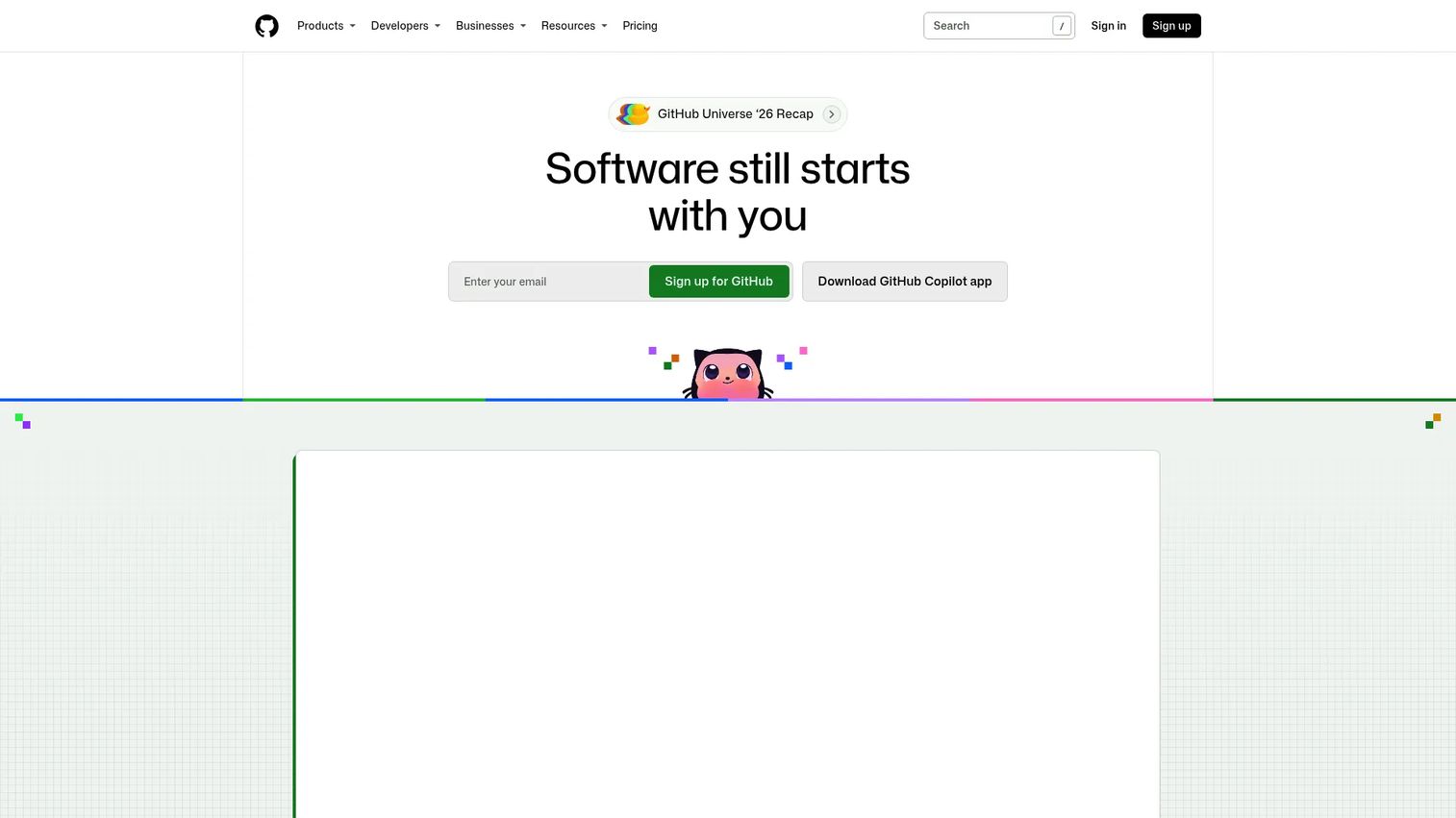
GitHub is the most widely adopted hosted Git platform for software development. Its pull request interface covers inline comments, threaded review discussions, required reviewers, branch protection rules, and CODEOWNERS files for automatic reviewer routing. GitHub Actions integrates CI/CD status checks directly into the pull request, so review and build validation happen in the same interface. For PMs, GitHub issues and Projects connect roadmap items to the code changes that implement them, giving cross-functional visibility without requiring a separate tool.
Best for: Software teams that want a broadly adopted hosted review platform with deep integrations across CI/CD, security scanning, and developer tooling.
Key features
- Pull requests with inline comments and threaded discussions
- Branch protection rules and required status checks
- CODEOWNERS for automatic reviewer assignment
- GitHub Actions integration for CI/CD validation
- Dependabot, code scanning, and secret scanning
Why choose GitHub: The ecosystem depth is the differentiator. If your team relies on a broad set of developer tools, GitHub's marketplace and Actions ecosystem will cover most integration requirements without custom work. Teams that need fine-grained enterprise governance or advanced security features will likely need the Team or Enterprise plan.
GitHub pricing: Free plan available for unlimited public and private repositories. Team plan is $4 per user per month. Enterprise plan is $21 per user per month, adding advanced governance, compliance controls, and enterprise security.
G2 rating: 4.7/5
2. GitLab
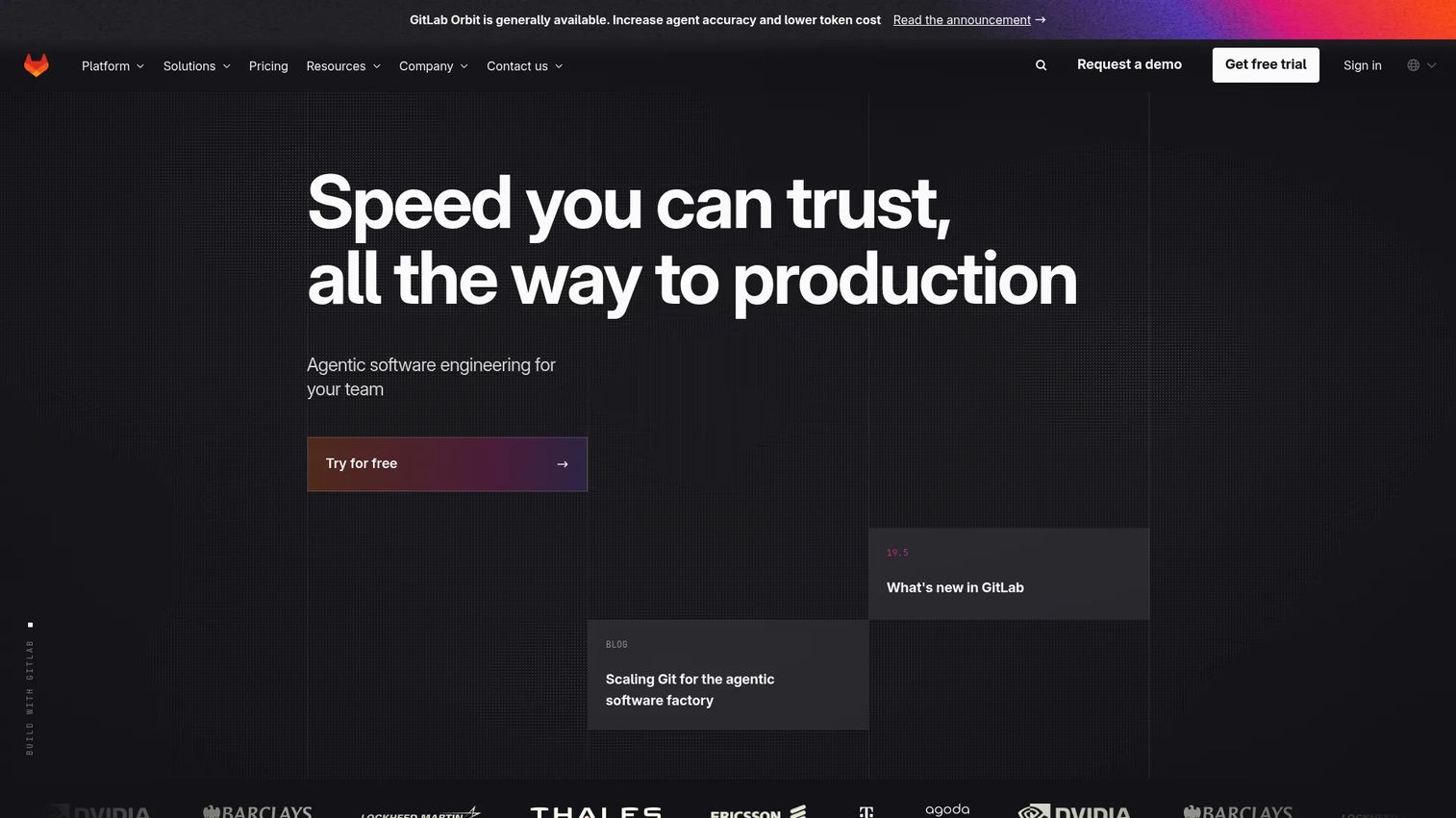
GitLab positions itself as a complete DevSecOps platform, with merge request reviews embedded inside a broader lifecycle that includes CI/CD, security scanning, issue tracking, and value stream analytics. Merge request approvals support code owner rules, required approval counts, and merge trains. Security scanning runs automatically as part of the pipeline, surfacing vulnerabilities at review time rather than after deployment. For product teams, GitLab's value stream analytics map the time between planning and delivery, making it easier to identify where the review process itself creates bottlenecks.
Best for: Development, security, and operations teams that want code review, CI/CD, and security analysis inside a single platform without tool handoffs.
Key features
- Merge request reviews with code owner approvals
- Built-in CI/CD with pipeline-integrated security scanning
- Value stream analytics for delivery visibility
- Protected branches and approval rules
- Software supply chain security controls
Why choose GitLab: Choose GitLab when the goal is fewer handoffs between planning, review, testing, and deployment. The free tier includes source code management, CI/CD with 400 compute minutes per month, and basic SAST. Teams that only need lightweight review may find the platform broader than their immediate needs; the full value shows when multiple lifecycle functions are actively in use.
GitLab pricing: Free plan available. Premium is $29 per user per month, billed annually, adding advanced CI/CD and team project management. Ultimate has custom pricing with application security testing and compliance governance.
G2 rating: 4.5/5
3. Bitbucket
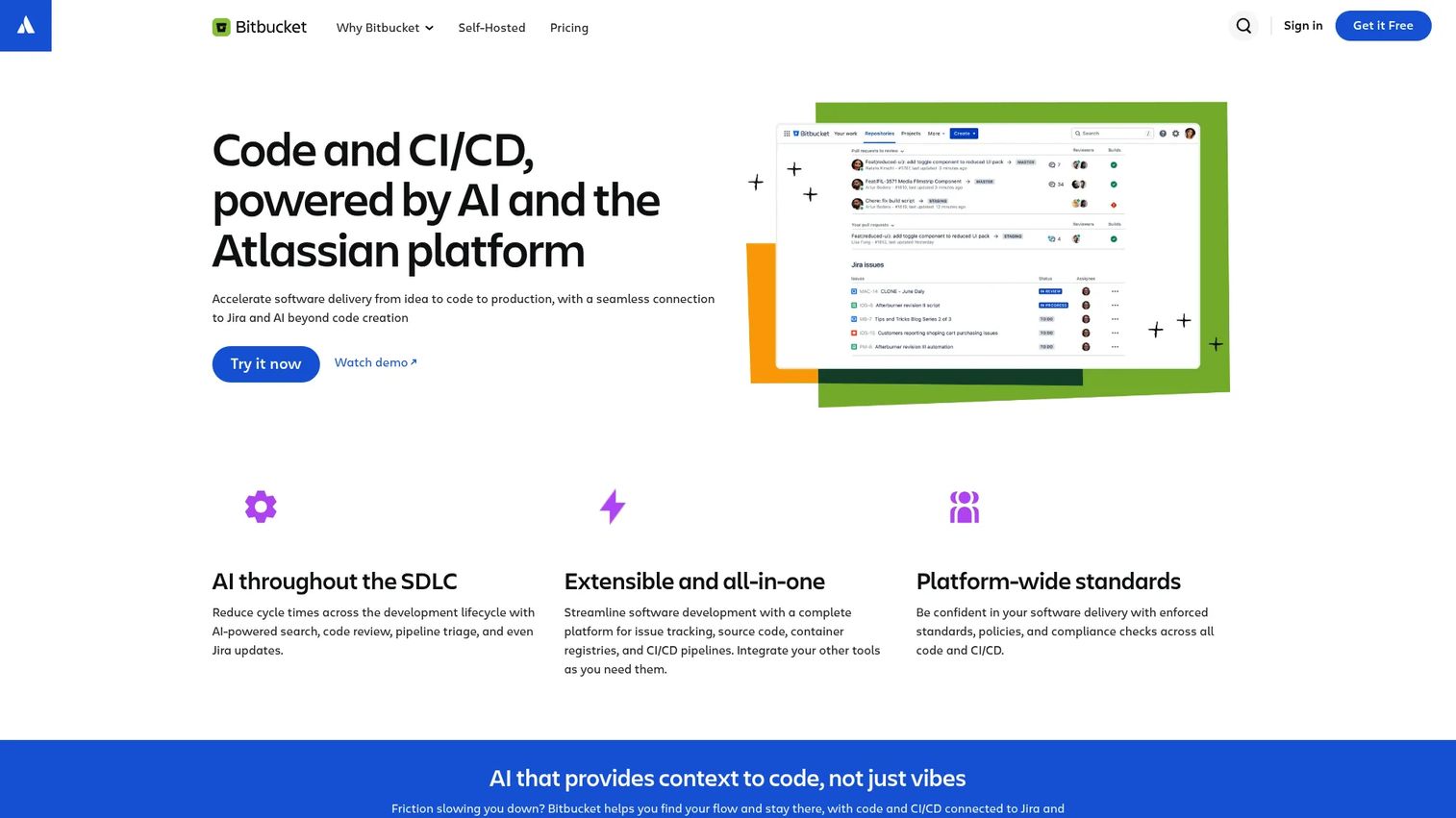
Bitbucket is Atlassian's Git code collaboration platform, built around pull requests tightly connected to Jira Software. When a developer creates a pull request, it can link directly to the Jira issue it addresses. PMs managing backlogs in Jira can trace work from ticket to merge without context switching. Branch permissions and merge checks enforce review policy, and Bitbucket Pipelines handles CI/CD within the same platform. For teams already running their engineering workflow through Jira and Confluence, Bitbucket's native Atlassian integration reduces the coordination overhead that separate-platform setups introduce.
Best for: Atlassian-heavy teams that want pull request governance connected to Jira planning and delivery traceability.
Key features
- Pull requests with inline comments and reviewer assignment
- Native Jira issue linking on pull requests and branches
- Branch permissions and configurable merge checks
- Bitbucket Pipelines for integrated CI/CD
- Deployment permissions for environment governance
Why choose Bitbucket: The case for Bitbucket centers on Jira integration. If your team runs planning in Jira and wants a straight line from backlog item to merged code, Bitbucket provides that traceability with minimal configuration. Teams outside the Atlassian stack may get more value from a neutral Git platform.
Bitbucket pricing: Free plan for up to 5 users. Standard plan starts at $15 per month for teams of 1 to 100. Premium plan starts at $30 per month for the same team size range.
4. Azure DevOps
Azure DevOps is Microsoft's integrated development services suite covering Azure Repos, Boards, Pipelines, Test Plans, and Artifacts. Peer code review runs through pull requests in Azure Repos, with branch policies that enforce required reviewers, build validation, and work item linking. Teams using Microsoft identity and cloud infrastructure benefit from tight integration with Azure Active Directory for permissions and SSO. For engineering organizations already committed to the Microsoft stack, Azure DevOps reduces the number of external tools needed to cover review, build, and tracking in a single governed environment.
Best for: Engineering teams already invested in Microsoft development, cloud infrastructure, and enterprise identity management.
Key features
- Azure Repos pull requests with inline comments
- Branch policies with required reviewers and build validation
- Work item linking between pull requests and Azure Boards
- Enterprise permissions via Azure Active Directory
- Azure Pipelines integration for CI/CD status checks
Why choose Azure DevOps: The value is consolidation for Microsoft-centric organizations. Code review, work tracking, and build pipelines share the same identity and permission model, which simplifies governance for regulated or security-conscious teams. Teams outside the Microsoft environment typically face a steeper onboarding curve without a proportional return.
Azure DevOps pricing: First 5 Basic users are free. Basic plan is $6 per user per month. Basic plus Test Plans is $52 per user per month. Azure Pipelines and Artifacts include separate free allowances.
5. Gerrit
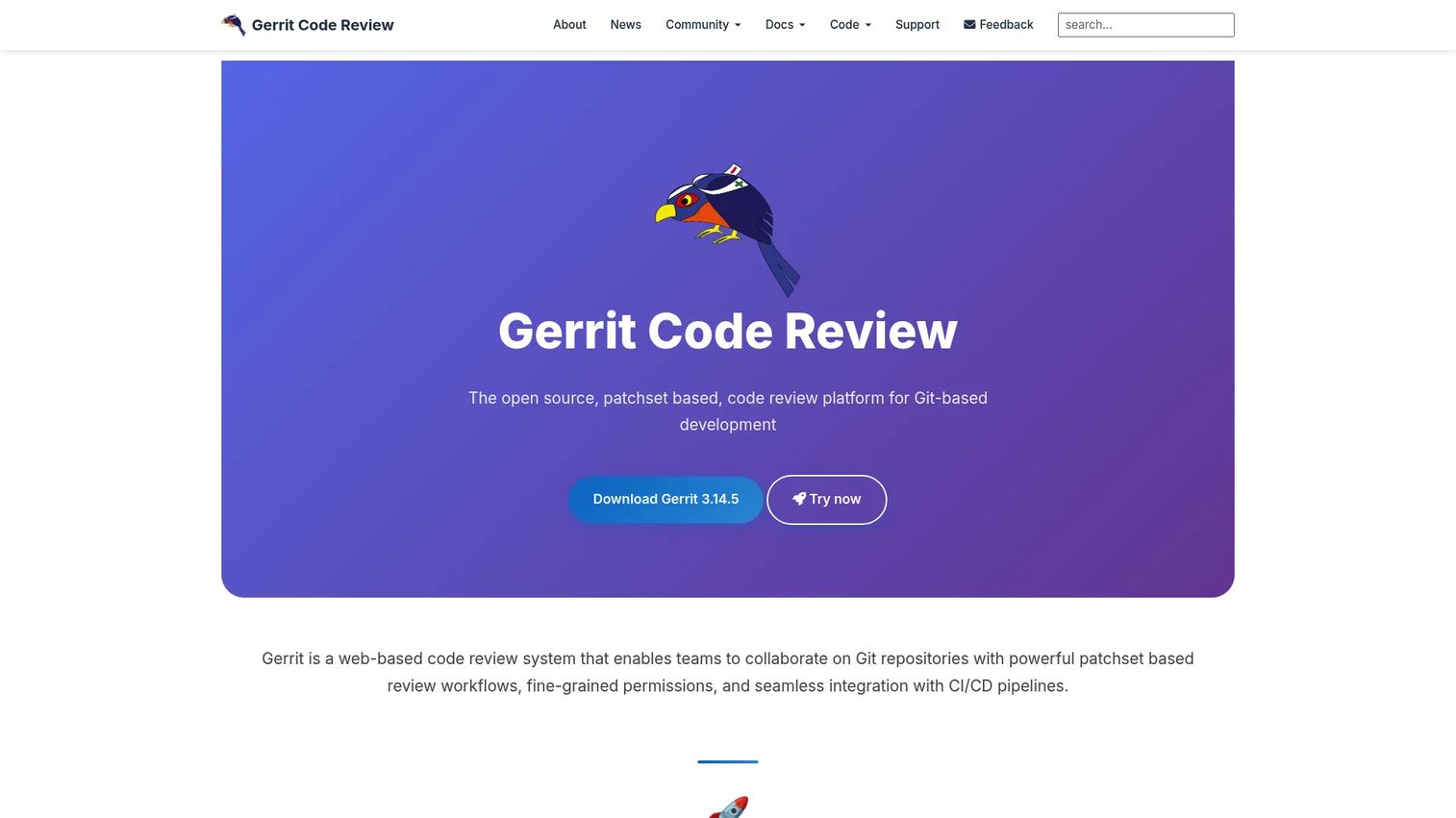
Gerrit is an open-source, web-based code review platform built around a patch set model rather than the branch-based pull request flow most teams use. Changes move through rounds of review as patch sets, and each requires explicit reviewer votes before the submit rules allow a merge. This design makes Gerrit the tool of choice for high-rigor engineering cultures and large open-source projects where review discipline is non-negotiable. Google's internal code review infrastructure runs on a similar model, and Gerrit powers review for major open-source communities including Android and Chromium.
Best for: Development teams that need a strict, review-first gate before changes enter the main codebase, particularly in self-hosted or regulated environments.
Key features
- Patch set-based review with iterative revision tracking
- Reviewer voting labels for fine-grained approval control
- Configurable submit rules for merge eligibility
- Fine-grained repository permissions
- CI/CD integration via webhooks and plugins
Why choose Gerrit: Gerrit is the right choice when review quality and explicit approval history matter more than a consumer-grade user experience. The patch set workflow can feel unfamiliar to teams accustomed to pull requests, and the setup requires more infrastructure investment than a hosted platform. For teams where those tradeoffs are acceptable, Gerrit's review discipline is difficult to replicate elsewhere.
Gerrit pricing: Gerrit is fully open source with no licensing fees. Infrastructure and hosting costs depend on your deployment environment.
G2 rating: 4.3/5
6. Review Board
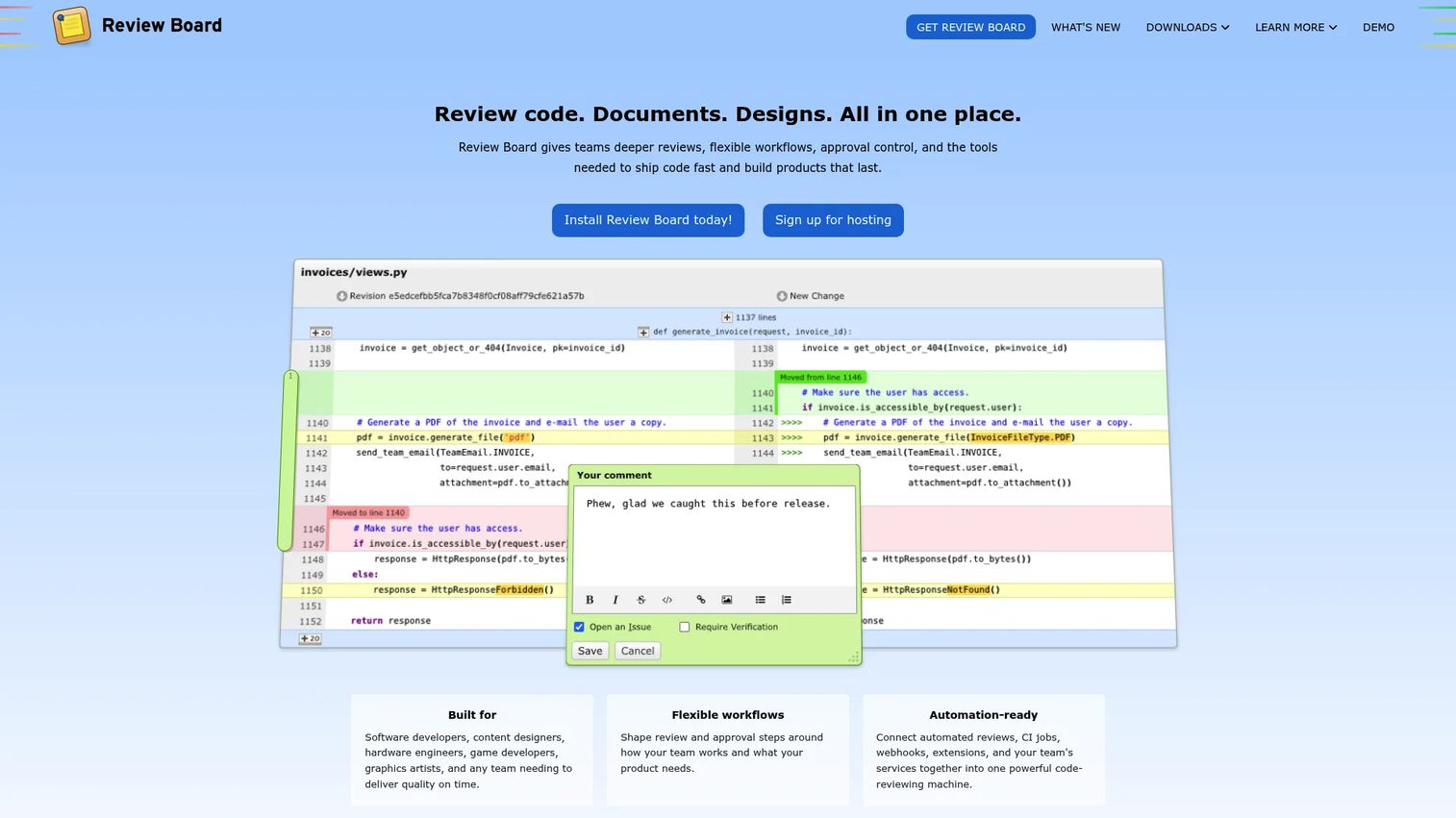
Review Board is a dedicated code and document review platform that operates independently of any specific Git hosting provider. It supports review across Git, GitHub, GitLab, Bitbucket, Perforce, Mercurial, Subversion, and Azure DevOps, making it one of the few tools that can run structured code review across a mixed version control environment. Review requests replace pull requests as the primary unit of work, and the diff viewer includes inline comments, interdiffs between revisions, and image comparison modes. Teams with legacy systems or specialized source control requirements can adopt structured peer review without migrating repositories.
Best for: Teams that need structured code review across multiple version control systems, or organizations that want dedicated review tooling separate from their Git hosting setup.
Key features
- Review requests with inline diff comments and interdiffs
- Multi-VCS support: Git, SVN, Perforce, Mercurial, and more
- Review history with revision tracking
- Document and image review alongside code
- Extension framework for integrations
Why choose Review Board: Review Board solves a specific problem: Running consistent peer review when your repositories don't all live on the same Git platform. If your engineering environment is homogeneous and GitHub or GitLab already handles review well, the added layer is unnecessary. Where it earns its place is in mixed-VCS shops or teams with Perforce or Subversion workflows that need proper review structure.
Review Board pricing: Community edition is free and open source. Hosted RBCommons Basic plan starts at $6 per user per month. Business plan is $12 per user per month. Self-hosted Plus plan starts at $12 per user per month (annual) or $15 per user per month (monthly). Enterprise self-hosted starts at $15 per user per month (annual) or $18 per user per month (monthly).
G2 rating: 4.3/5
7. Gitea
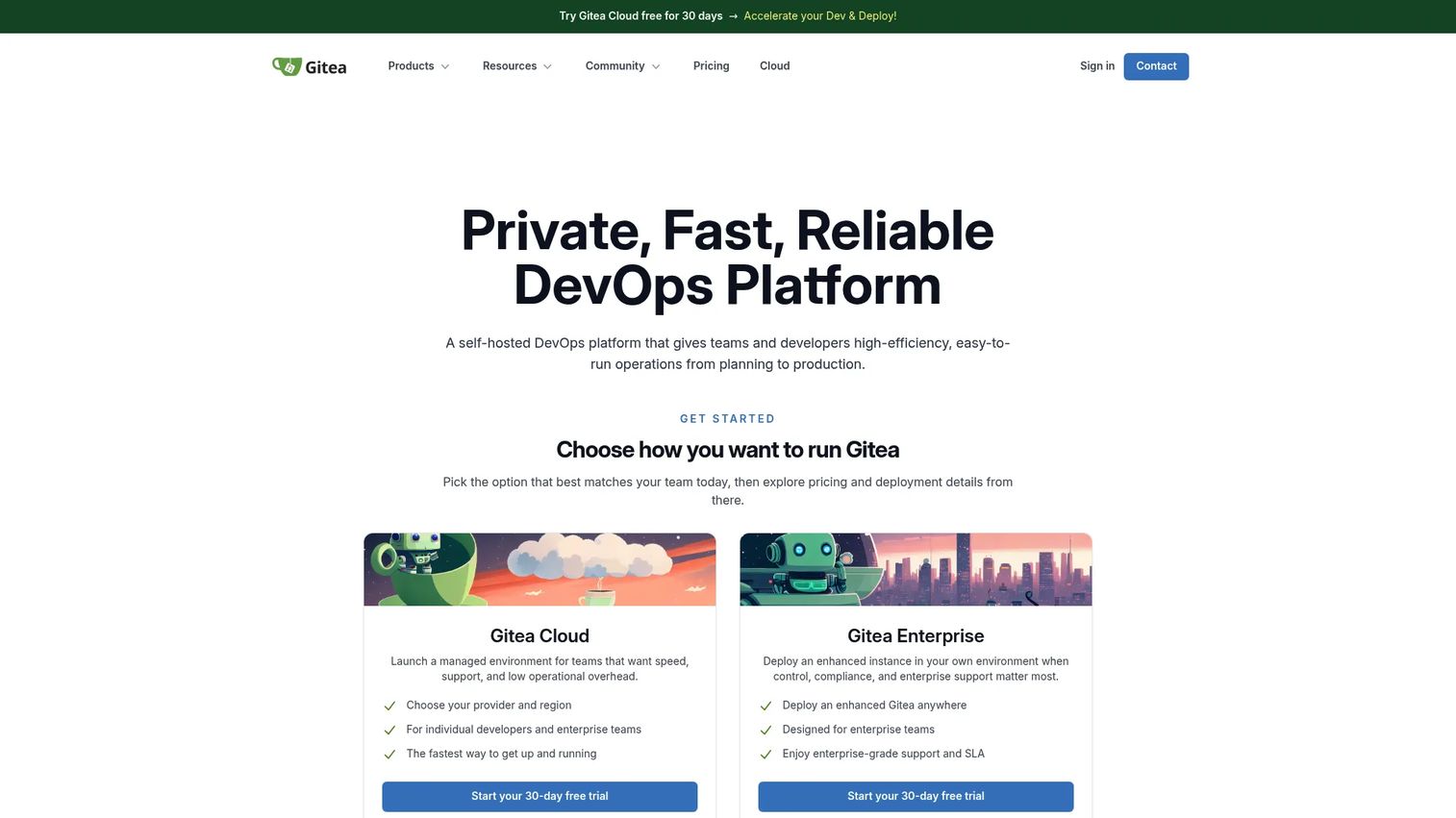
Gitea is a lightweight, open-source, self-hosted Git platform that covers code hosting, pull request review, issue tracking, package registries, and CI/CD through Gitea Actions. It runs on a single binary with low resource requirements, making it practical for teams that need self-hosted Git collaboration without the overhead of running a large platform. The pull request interface includes inline comments, reviewer assignment, and merge controls. Gitea Actions is compatible with GitHub Actions workflows, reducing migration friction for teams moving from hosted to self-hosted. For AI code generation tools workflows that produce high PR volume, Gitea's low footprint keeps infrastructure costs manageable.
Best for: Small to mid-sized teams that want self-hosted Git hosting and peer review with a minimal infrastructure footprint.
Key features
- Pull requests with inline comments and merge controls
- Repository-level permissions and access control
- Issue and project management
- Gitea Actions CI/CD compatible with GitHub Actions workflows
- Package registry for dependency management
Why choose Gitea: Gitea is the right starting point when infrastructure simplicity is a constraint and self-hosting is a requirement. Enterprise governance features, analytics depth, and audit log capabilities may require evaluation against the Enterprise plan or complementary tools as team scale increases.
Gitea pricing: Open Source edition is free. Enterprise plan is $9.50 per user per month with a one-year commitment, or $19 per user per month month-to-month, adding SSO, audit logs, and SLA-backed support.
G2 rating: 4.7/5
8. RhodeCode
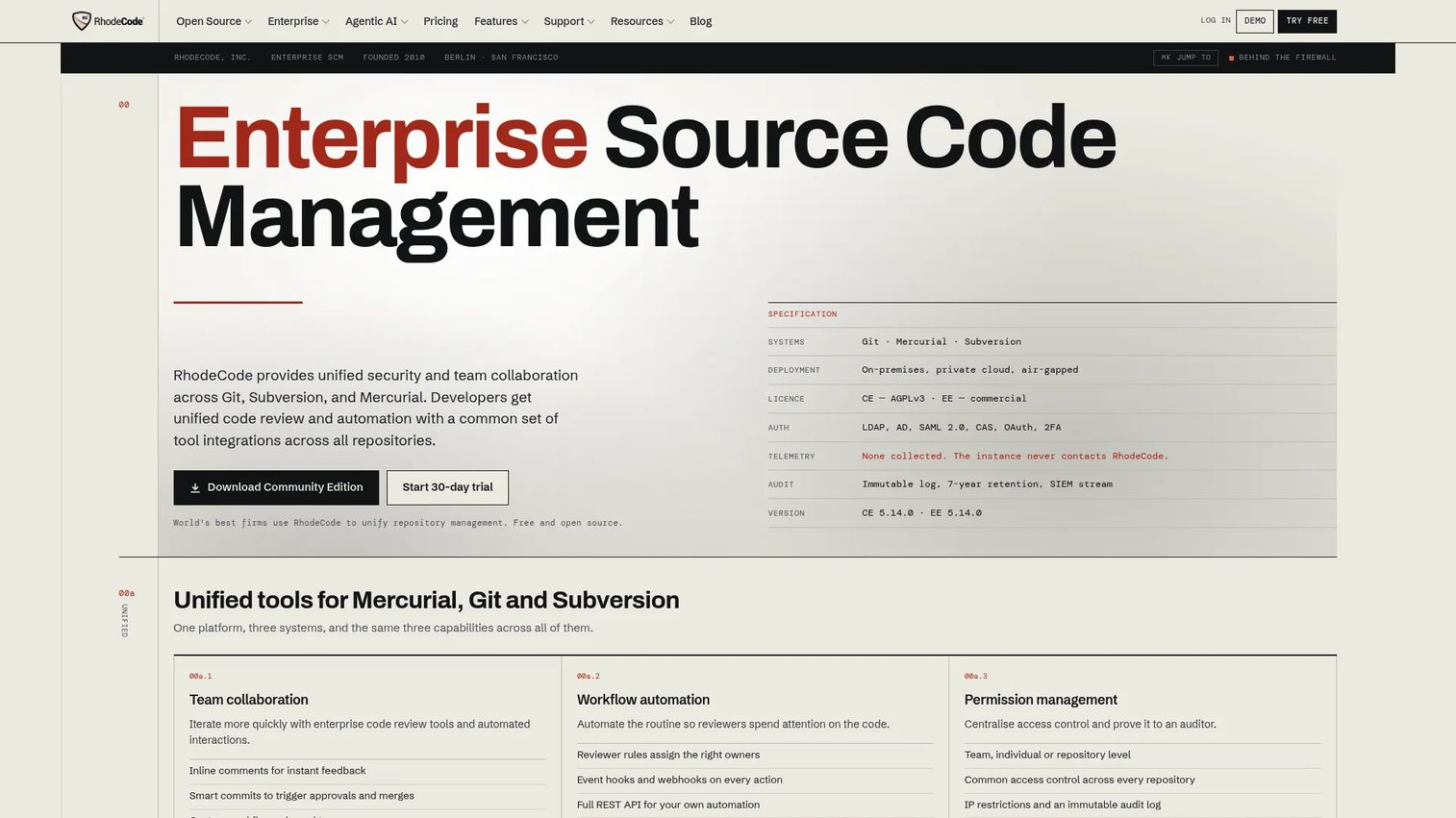
RhodeCode is an enterprise-focused source code management platform for organizations that need self-hosted review governance across Git, Mercurial, and Subversion repositories. It combines pull requests, inline code review, fine-grained permissions, audit logs, and full-text code search under one deployment that can run on-premise, in a private cloud, or in air-gapped environments. Access control goes down to the branch and file level, and audit logs track every action against repositories. For regulated industries or organizations with strict data residency requirements, RhodeCode provides the governance controls that hosted platforms often gate behind enterprise contracts. Teams evaluating access review software for engineering contexts will find RhodeCode's permission model particularly relevant.
Best for: Organizations that need self-hosted, enterprise-grade source code management with multi-VCS support and verifiable access control.
Key features
- Unified pull requests and inline code review across Git, Mercurial, and SVN
- Fine-grained permissions with branch- and file-level control
- Audit logs for every repository action
- Full-text code search and source indexing
- On-premise and air-gapped deployment options
Why choose RhodeCode: RhodeCode earns its place in environments where data control and deployment flexibility are non-negotiable. Smaller SaaS teams without strict hosting requirements will typically find a hosted platform faster to operate. The Community Edition is free for self-hosting; the Enterprise tier adds SLA support, enterprise authentication, and high availability.
RhodeCode pricing: Community Edition is free. Enterprise Edition is $75 per user per year (minimum 10 seats). Enterprise Cloud plans start at $80 per month for 10 seats (Starter), $180 per month for 10 seats (Team), and $600 per month for 10 seats (Enterprise).
G2 rating: 4.1/5
9. SonarQube
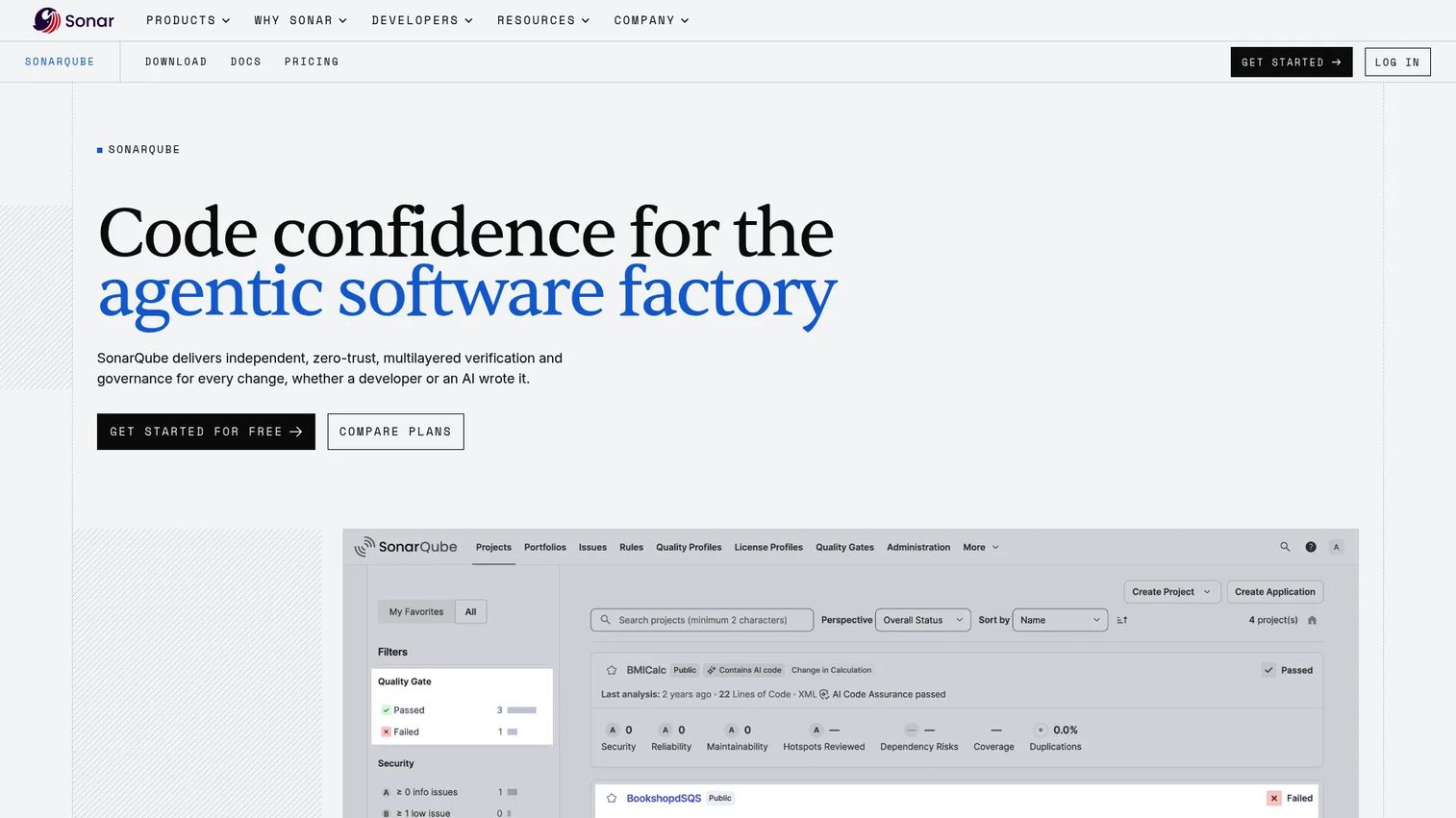
SonarQube is a code quality and static analysis platform that complements human peer review rather than replacing it. It analyzes code across 45+ languages for bugs, vulnerabilities, code smells, duplication, and coverage, then surfaces those findings directly inside pull requests as decoration. Quality gates block merges when defined thresholds aren't met, enforcing code standards before a human reviewer even opens the diff. For product managers, SonarQube provides a consistent quality signal across the codebase that doesn't depend on individual reviewer judgment or attention, which matters when release cadence accelerates or when the same issues keep reappearing in postmortems.
Best for: Development teams that want automated code quality and security analysis running inside pull request workflows to reduce reviewer load on routine issues.
Key features
- Static code analysis across 45+ languages
- Quality gates with configurable pass/fail thresholds
- Pull request decoration with inline issue comments
- Security rules: SAST, taint analysis, and secrets detection
- Code coverage, duplication, and complexity tracking
Why choose SonarQube: SonarQube handles the repeatable part of code review automatically, freeing human reviewers for design intent, maintainability, and context-dependent judgment. Teams still need a peer review platform for discussion and approvals. The free tier covers private projects up to 50,000 lines of code on SonarQube Cloud, making it accessible for smaller teams before the paid tier becomes necessary.
SonarQube pricing: Free tier available on SonarQube Cloud for projects up to 50,000 lines of code. Cloud Team plan starts at $34 per month. Server editions (Developer, Enterprise, Data Center) are priced by annual lines of code; contact sales for those figures.
G2 rating: 4.6/5
10. CodeRabbit
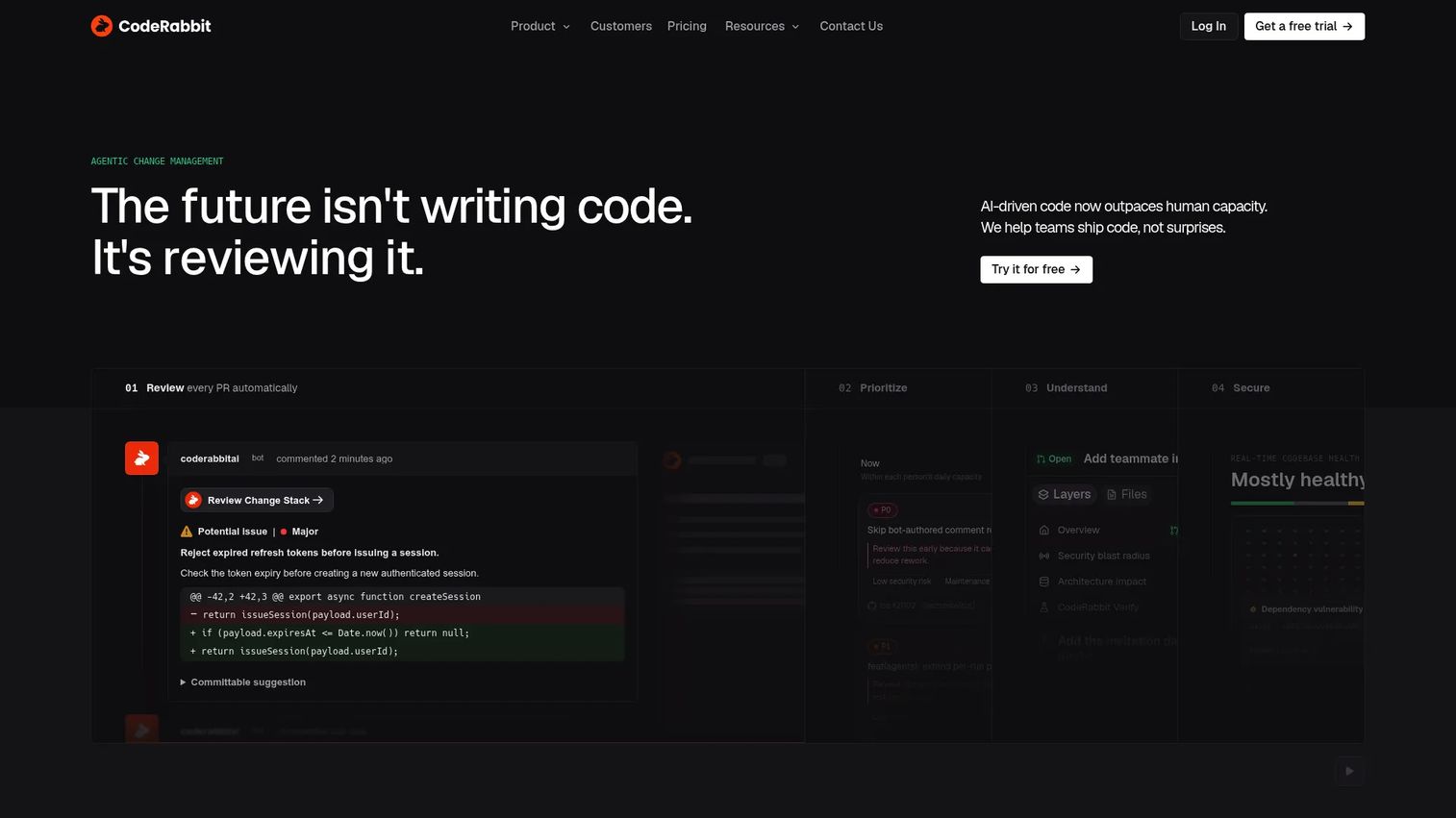
CodeRabbit is an AI-powered code review assistant that generates contextual summaries, suggested improvements, and security findings directly on pull requests. Its Change Stack feature produces semantic diffs, blast-radius context, and architectural diagrams that help reviewers understand the scope of a change before reading the code line by line. Continuous security monitoring scans pull requests at submission and runs scheduled deep scans. CodeRabbit integrates with GitHub, GitLab, Bitbucket, and Azure DevOps, sitting alongside the existing review interface rather than replacing it. For teams dealing with high PR volume or AI-generated code, it functions as a first-pass reviewer that flags issues before human review begins. This kind of agentic AI platform approach to review is shifting how engineering teams think about review capacity.
Best for: Engineering teams that want AI to reduce reviewer load, improve pull request context, and add security scanning across high-volume or AI-assisted codebases.
Key features
- AI-generated PR summaries and inline review comments
- Change Stack with semantic diffs and architectural diagrams
- Continuous security monitoring and scheduled deep scans
- Pre-merge checks and post-merge actions
- Agent loops with continuous learning from team feedback
Why choose CodeRabbit: CodeRabbit works best as a review assistant, not a replacement for accountable human review. Teams using it see the most value when reviewers use AI output as a starting point rather than a final verdict. AI output still requires human oversight and tuning to avoid introducing false confidence into the review process.
CodeRabbit pricing: Free for public repositories with a 14-day trial on paid features. Essentials plan is $24 per developer per month (billed annually). Team plan is $48 per developer per month. Advanced plan is $72 per developer per month. Enterprise has custom pricing.
G2 rating: 4.4/5
11. CodeScene

CodeScene is a code analysis and software delivery platform that uses behavioral analysis alongside static code metrics to identify where technical debt is concentrated, which parts of the codebase carry delivery risk, and how code health trends over time. Its Hotspot analysis maps complexity against change frequency to surface the files that most need attention during review. Automated pull request reviews run CodeHealth scoring on incoming changes and can enforce quality gates. For product managers, CodeScene provides the evidence layer for technical debt conversations that otherwise rely on engineering intuition or anecdote. It connects code health trends to delivery performance metrics in a way that makes the tradeoff between feature work and debt reduction visible. Teams looking at business process management software for engineering workflow will find CodeScene addresses the measurement gap that most process tools leave open.
Best for: Engineering teams and product leaders who want review decisions informed by code health, hotspot prioritization, and maintainability trends.
Key features
- CodeHealth scoring with historical trend tracking
- Hotspot analysis mapping complexity to change frequency
- Automated pull request review with quality gates
- Knowledge distribution and offboarding risk insights
- Delivery performance and code coverage analysis
Why choose CodeScene: CodeScene's differentiation is behavioral: It analyzes how code changes over time, not just its current state. That temporal layer helps teams prioritize review attention on the files that actually drive defects and slowdowns, rather than on abstract complexity scores. It complements rather than replaces the peer review interface; teams still need GitHub, GitLab, or a similar platform for discussions and approvals.
CodeScene pricing: Free for open-source projects. Standard plan starts at €18 per active author per month (billed annually). Pro plan is €27 per active author per month. Enterprise has custom pricing.
G2 rating: 4.6/5
12. Code Climate
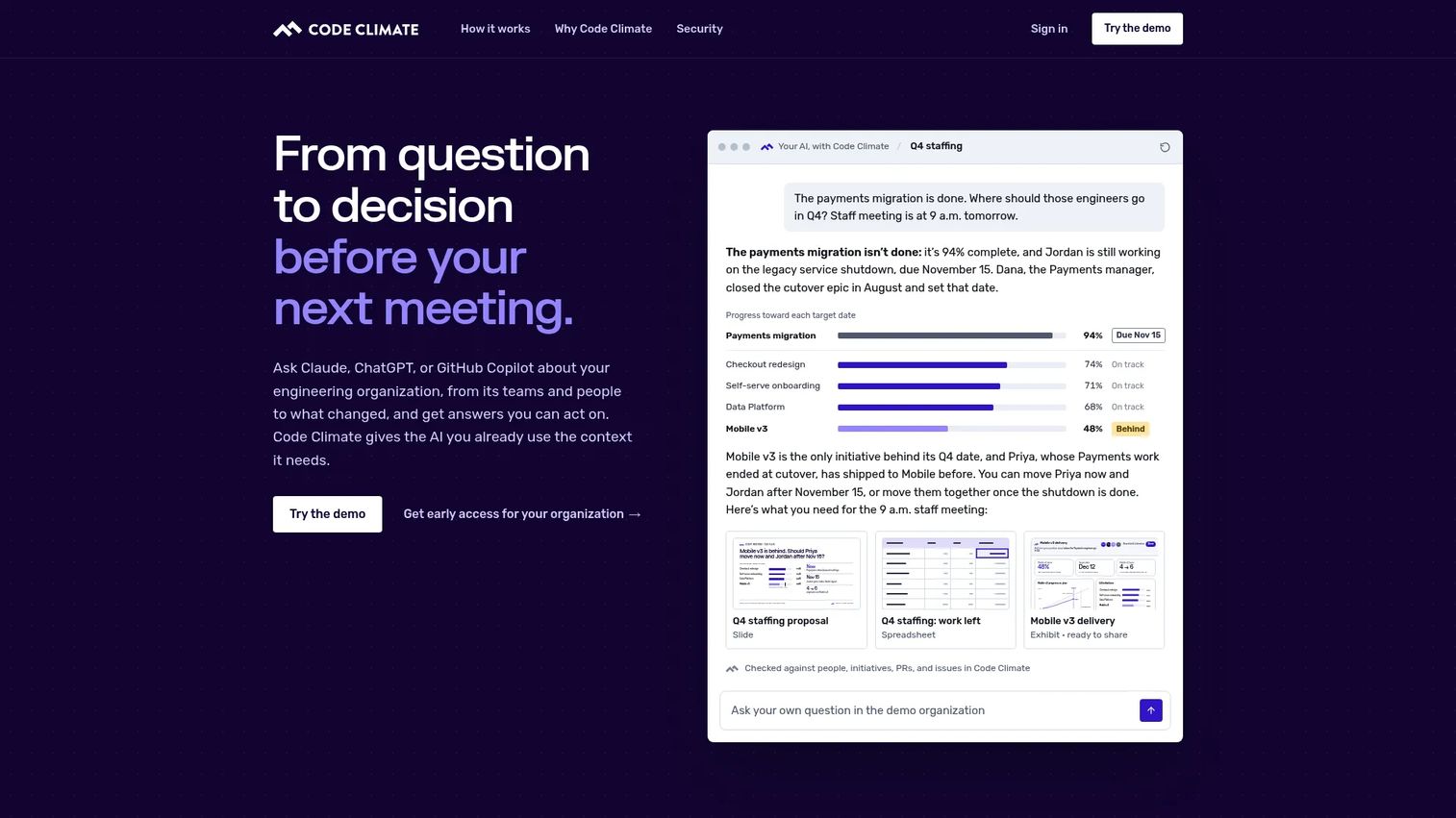
Code Climate has repositioned as an engineering intelligence platform for leaders who need visibility into team delivery, organizational structure, and AI tool usage, rather than a maintainability grader in the original sense. It connects GitHub, Bitbucket, Jira, Linear, HR systems, and AI coding tools to provide answers about engineering throughput, initiative progress, and team-level patterns. Output surfaces through integrations with Claude, ChatGPT, GitHub Copilot, Slack, and APIs, designed for engineering directors and VPs who need delivery context without building custom dashboards. Access controls include role-based permissions, SSO, and SOC 2 Type II. Note that the legacy Code Climate Quality product is being replaced by Qlty Cloud; teams evaluating Code Climate for traditional maintainability grading should verify current product scope directly with the vendor.
Best for: Engineering leaders who need AI-assisted visibility across team delivery, organizational context, and AI-tool adoption rather than a traditional per-repository quality score.
Key features
- Connects GitHub, Jira, Linear, HR systems, and AI tools
- Organizational identity resolution and team context
- Delivery progress, PR data, and AI-tool usage analytics
- MCP integrations with Claude, ChatGPT, Slack, and APIs
- Role-based access, SSO, and SOC 2 Type II
Why choose Code Climate: Code Climate fits engineering leaders who need portfolio-level delivery intelligence rather than per-PR quality signals. For teams primarily looking for maintainability tracking or traditional code quality metrics, evaluate Qlty Cloud or verify the current product roadmap. Pricing is handled through early access; contact the vendor for details.
Code Climate pricing: Contact Code Climate for pricing.
Considerations when choosing peer code review software
Match the tool to your review workflow
Pull requests, merge requests, patch sets, and pre-commit review are distinct workflows with different team adoption curves. A tool that enforces an unfamiliar model often gets bypassed rather than adopted. Identify how your team currently reviews code, then evaluate whether a new tool extends that model or requires a full workflow change.
Check integrations before pricing
Weak integration between your review platform, CI/CD, issue tracker, and security scanner creates visibility gaps that cost more than the license fee. For product managers, the highest-value integrations are the ones that surface review status directly in work tracking tools, so you can see whether a planned change is blocked or approved without asking engineering.
Separate human review from automated checks
Static analysis and AI review handle repeatable, pattern-based issues well. Architecture judgment, product intent, and final accountability still require a human reviewer. The best setups route routine issues to automation and preserve human review cycles for decisions that require context. Teams that conflate the two tend to either overload reviewers or over-trust automated output.
Review governance and audit needs
Required reviewers, branch protection, SSO, audit logs, and permission models are not just enterprise features. They become necessary when teams scale, when compliance requirements emerge, or when multiple contributors touch critical paths simultaneously. Evaluate these capabilities before you need them; retrofitting governance into an already-running review process is harder than building it in from the start.
Measure review health without gaming the metric
Review cycle time, time to first review, and change failure rate are more useful signals than raw comment count. High comment volume can indicate either thorough review or unclear code, and teams that optimize for comment frequency often degrade the quality of individual comments. Set baseline measurements before making tool changes, so you can evaluate whether review health actually improved.
Conclusion
The right peer code review software depends on where your team sits today and where review quality is breaking down.
For most hosted teams, GitHub covers pull request review, branch governance, and CI/CD integration with the broadest ecosystem available. GitLab is the stronger pick when security scanning and delivery analytics need to sit inside the same platform as code review. Bitbucket earns its place when Jira is the team's operating system and traceability from ticket to merge matters.
For Microsoft-centric organizations, Azure DevOps consolidates review, tracking, and pipelines under one governance model. For teams with strict review discipline requirements or self-hosting constraints, Gerrit, Review Board, Gitea, and RhodeCode each address different points on the control-versus-simplicity spectrum.
SonarQube and CodeRabbit are quality layers that make human review more effective by handling repeatable issues automatically. CodeScene adds the temporal dimension, showing where code health is degrading and which changes carry the most delivery risk. Code Climate serves engineering leaders who need portfolio-level delivery intelligence.
Start by shortlisting two or three tools based on deployment model (hosted or self-hosted), primary review workflow (pull requests, merge requests, or patch sets), and your governance requirements. Most vendors offer free tiers or trials, so the fastest path to a decision is running a real sprint's worth of review through each candidate.
Start your journey with Guideflow today!
FAQs
Peer code review software helps engineering teams review source code changes collaboratively using inline comments, approval workflows, ownership rules, and review history. It may also include automated checks such as static analysis, security scanning, or AI suggestions that run alongside human review. The core function is organizing human judgment around code changes before or after they merge.
Peer review software organizes human discussion, approval, and accountability around code changes. Static analysis tools automatically detect quality, security, and maintainability issues by scanning code against defined rules. Most engineering teams use both: Static analysis catches repeatable pattern issues, while human review handles architecture, intent, and context-dependent decisions.
Small teams should evaluate GitHub, GitLab, Bitbucket, and Gitea depending on their hosting preference and existing stack. GitHub and GitLab both offer free plans with capable pull request review. Gitea is the strongest option for teams that need self-hosting with a low infrastructure footprint. Bitbucket makes sense when the team already runs on Jira.
Enterprise teams typically need SSO, audit logs, approval enforcement, and compliance controls. GitHub Enterprise, GitLab Premium or Ultimate, Azure DevOps, RhodeCode Enterprise, and SonarQube Enterprise all address these requirements, though each at a different point on the hosted-versus-self-hosted spectrum. The right choice depends on whether data residency, Microsoft identity integration, or DevSecOps coverage is the primary driver.
No. AI tools like CodeRabbit can summarize changes, flag patterns, suggest improvements, and surface security findings, which reduces reviewer preparation time significantly. Human reviewers still own architecture judgment, product intent, and final accountability for what merges. Teams that treat AI output as a first-pass filter rather than a verdict get the most value from it.
The highest-impact features vary by team size and maturity, but inline comments, required approvals, CI/CD integration, and audit history cover most review workflow requirements. Teams with security or compliance obligations will also need CODEOWNERS support, branch protection, and SSO. Analytics features (review cycle time, coverage, defect detection) become important once the team wants to improve review process quality systematically.
PMs should evaluate review tooling through the lens of release predictability and team adoption, not just feature lists. The key questions are: Does the tool surface review status in the work tracking system the PM already uses? Does it reduce or increase the feedback loop between code change and release decision? Will engineering actually adopt it, or will it add overhead? Partner with engineering to shortlist candidates, but own the outcome framing.
Review cycle time and time to first review are the most actionable starting points. Change failure rate and defect escape rate connect review quality to release outcomes. Reopened pull requests and recurring issue categories signal whether review is catching the right things. Avoid optimizing for raw comment volume; it measures activity, not quality, and teams that chase comment counts tend to produce less useful feedback over time.