Freight teams lose hours to the same problems every week. A quote lives in one inbox. A booking gets re-keyed into a spreadsheet. A shipment status gets chased across three carrier portals and a phone call. Then billing pulls numbers from a fourth place, and the customer emails asking where their container is.
None of that is a strategy problem. It is a systems problem. When rate data, shipment records, tracking, documents, and invoices sit in disconnected tools, freight operators pay a tax in re-entry, errors, and status-chasing that never shows up on a single line item.
The category grew for a reason. The global freight management software market was valued at USD 14.3 billion in 2025 and is forecast to reach USD 34.8 billion by 2034 at a 10.4% CAGR, according to Dataintelo (2024). Transportation and freight operations already account for roughly 31% of global logistics software revenue as of 2025, per Precedence Research. Freight buyers are spending, and they are spending on software that removes manual handoffs.
The catch: buying the wrong platform costs more than buying nothing. A system that is too broad forces you to configure modules you will never use. A system that is too rigid makes your team work around it. Both create hidden cost in training, adoption, and ongoing maintenance. If you evaluate software the way you would evaluate an audit management rollout or a contract lifecycle management deployment, the same rule applies: fit to your operating model beats feature count every time. The same discipline you would use choosing event management software carries straight into freight.
What's inside
This article is for freight brokers, 3PLs, forwarders, and asset-based carriers comparing freight management software in 2026. We selected platforms based on mode coverage across truckload, LTL, ocean, air, and parcel, plus rate and quote management, shipment tracking and visibility, accounting and invoicing, EDI and document handling, customer portals, and realistic implementation fit for the operating model. You get a ranked shortlist, a comparison table you can scan in under a minute, and category-buying guidance so you can match a platform to how your team actually runs freight rather than to a spec sheet.
TL;DR
- Best overall for complex freight operations: CargoWise, for global forwarders running multimodal, customs-heavy workflows on one system.
- Best for modular logistics workflows: Descartes, when you want specialized transportation, EDI, and customs modules rather than one monolithic suite.
- Best for forwarders and visibility-heavy teams: Magaya, for an operationally unified forwarding platform with portals and accounting.
- Best for brokers wanting practical setup: GoFreight, for ocean and air forwarding with strong portals and less configuration overhead.
- Best for SMB and simpler workflows: Freightview, for shippers who need multi-mode rate shopping and tracking without heavy TMS complexity.
- Best for broad transportation visibility: FreightPOP, for shippers orchestrating parcel, LTL, FTL, ocean, rail, and air in one place.
- Best for broker workflow automation: FreightPath, for brokerages standardizing track-and-trace and document workflows.
What is freight management software?
Freight management software is a platform that plans, quotes, books, tracks, documents, bills, and reports on freight shipments across one or more transport modes. It is the operating layer between your carriers, your customers, and your accounting, replacing the spreadsheets and email threads most freight teams start with.
The category overlaps with, and is often used interchangeably with, TMS software and broader logistics software. A freight management system centralizes the workflow so a shipment entered once flows through quoting, dispatch, tracking, and invoicing without re-keying.
Core capabilities most freight management solutions share:
- Shipment planning and mode management: create and manage loads across truckload, LTL, ocean, air, and parcel.
- Rate shopping and quote creation: compare carrier rates and build quotes fast, the heart of freight rate management software.
- Shipment visibility and milestone updates: track status and push milestones without chasing carriers, the core of shipment tracking software.
- Invoicing and shipment-level accounting: tie costs and charges to each shipment, including freight accounting and invoice auditing.
- Document workflows and EDI: handle BOLs, customs paperwork, and EDI freight messaging with carriers and partners.
- Customer portals and integrations: give customers self-serve visibility and connect to your ERP, accounting, and data stack.
Freight forwarding management system tools add customs, consolidation, and international documentation on top of that base. Broker-focused freight software leans harder into quoting speed, carrier selection, and margin tracking. The right freight shipping software depends less on the longest feature list and more on which of these capabilities match your daily volume and mode mix.
When to use freight management software
Manage freight across multiple modes
Teams that move truckload one day, LTL the next, and ocean or air on top of that need one system instead of a tool per mode. This is the common reality for forwarders and mixed-mode operators, where a single shipment often touches drayage, ocean, and final-mile delivery. The right platform reduces duplicate entry across modes, so a booking captured once carries its data through every leg. That single source of truth is what turns a pile of mode-specific tools into a freight management system.
Reduce manual work in quoting and dispatch
Rate shopping by hand does not scale. Software that compares carrier rates, applies your negotiated pricing, and spins up a shipment record in a few clicks cuts the per-transaction cost that brokers and operations teams pay on every load. This matters most as volume climbs. At 20 shipments a week the manual work is annoying. At 500 it is a hiring decision. Automation in quoting and dispatch is where freight pricing software earns its keep, freeing your team to work exceptions instead of data entry.
Improve tracking, billing, and customer updates
Status-chasing is a silent drain on customer service, operations, and finance alike. When tracking, milestone updates, invoicing, and a customer portal live in one system, the "where is my shipment" email answers itself. Customers self-serve, invoices reconcile against actual charges, and finance stops waiting on operations for shipment data. Visibility is a business requirement now, not a nice-to-have, and cargo visibility software is often the first thing a customer asks about before they sign.
Comparison table
Use this table to narrow the shortlist fast, then read the sections that match your operating model. Pricing and ratings reflect verified sources current as of July 2026; where a vendor does not publish numeric pricing, the flow is quote-based.
| # | Product | Intent | Key use case | Pricing | G2 rating |
|---|---|---|---|---|---|
| 1 | CargoWise | Enterprise global forwarding | Multimodal forwarding, customs, and job costing on one platform | Value Pack, community pricing per transaction | 4.3/5 |
| 2 | Descartes | Modular logistics network | Transportation, EDI, and customs as specialized modules | From €200/mo (e-Customs base) | Not listed |
| 3 | Magaya | Unified forwarding operations | Forwarding, warehouse, accounting, and portals in one platform | Quote-based | 4.4/5 |
| 4 | GoFreight | Broker and forwarder practicality | Ocean and air forwarding with portals and accounting | Quote-based | 4.8/5 |
| 5 | Freightview | SMB multi-mode simplicity | Rate shopping and tracking for TL, LTL, and parcel | From $149/mo | 4.7/5 |
| 6 | FreightPOP | Broad transportation orchestration | Multi-mode shipping across parcel, LTL, FTL, ocean, rail, air | Quote-based | 4.8/5 |
The 7 best freight management software platforms
1. CargoWise

CargoWise is global logistics execution software built for freight forwarding, customs, warehousing, and transport operations on a single platform. It is the deep end of the category: an operating system for logistics providers who move freight internationally at scale and need customs, compliance, and job costing to live in the same place as the shipment. For large forwarders running complex multimodal workflows, that consolidation is the entire point.
Best for: Large logistics providers needing one system for complex international forwarding and customs workflows.
Key strengths
- End-to-end logistics execution: forwarding, customs, warehouse, and transport run on one platform, cutting cross-system re-entry.
- Customs and compliance management: built-in customs workflows keep international shipments moving without bolt-on tools.
- Rates, quotes, and job costing: freight forwarding rates, quotes, and shipment-level costing tie margin to every job.
Why choose CargoWise: The case for CargoWise is depth and breadth in one system. If your operation spans customs brokerage, ocean and air forwarding, warehousing, and transport across regions, few platforms match its coverage. That depth suits enterprise operators who would otherwise stitch together several tools, and who have the volume to justify a full logistics execution platform rather than a lighter freight management system.
CargoWise pricing: CargoWise uses a Value Pack model with published community pricing charged per eligible logistics transaction. The vendor does not display flat numeric prices on its public pages, so expect a usage-based structure tied to transaction volume rather than a per-seat subscription. CargoWise holds a 4.3/5 rating on G2. Model your expected transaction volume before committing, since a per-transaction model scales with your freight rather than your headcount.
2. Descartes
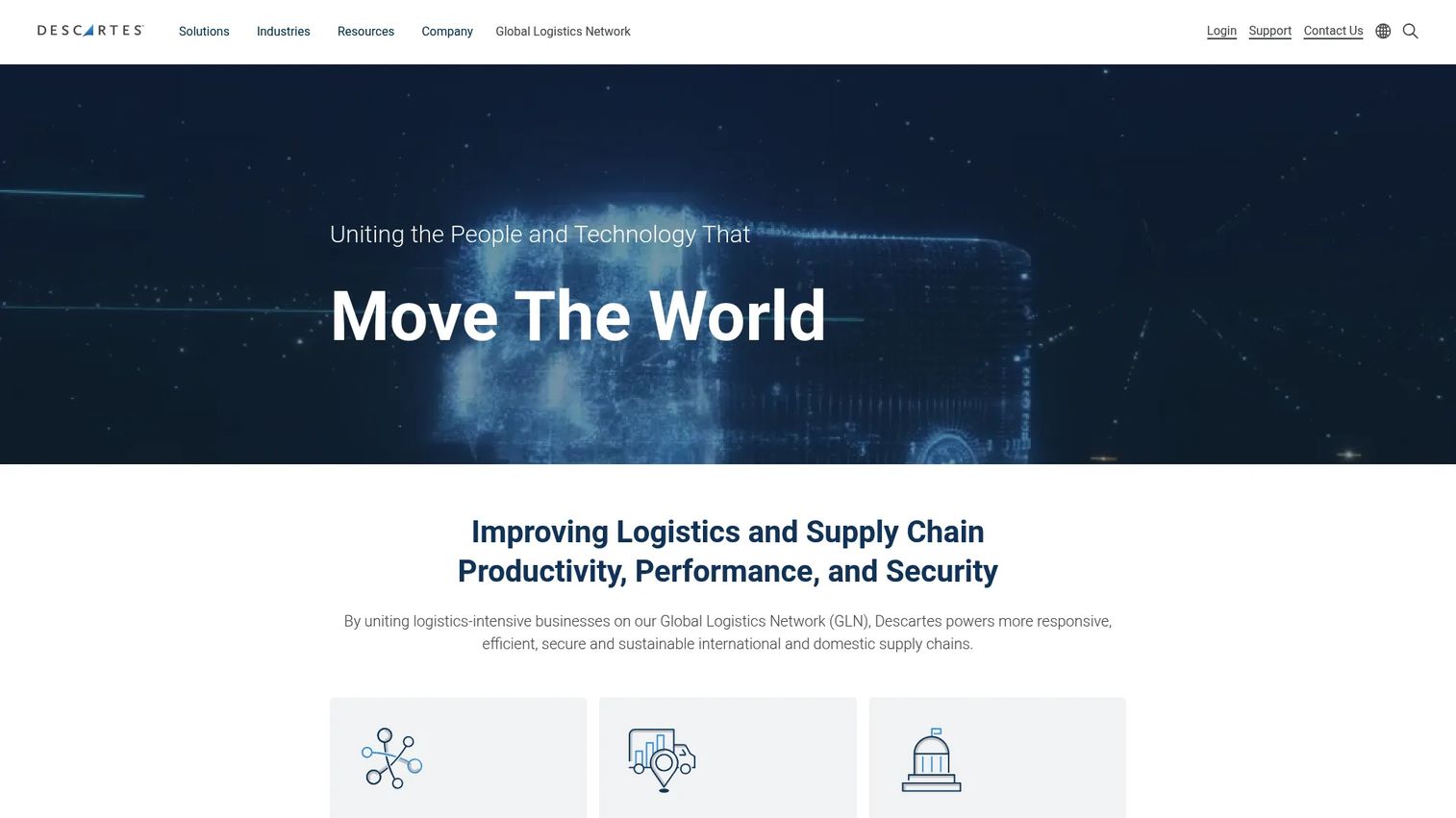
Descartes is a logistics and supply chain software platform covering transportation, customs, trade, and ecommerce operations. Its differentiator is the modular approach: rather than one monolithic suite, Descartes offers specialized modules you assemble around your workflow, backed by one of the larger B2B connectivity and EDI networks in the industry. That makes it a strong fit for teams that want to add capability where they need it instead of adopting everything at once.
Best for: Enterprises needing global logistics, customs, and transportation software they can assemble module by module.
Key strengths
- B2B connectivity and EDI messaging: a large logistics network handles carrier and partner EDI freight messaging at scale.
- Transportation and fleet management: route planning, transportation management, and fleet performance in dedicated modules.
- Customs and regulatory compliance: customs and trade compliance modules for cross-border and international freight.
Why choose Descartes: Descartes fits teams that think in modules, not suites. If you need best-in-class EDI connectivity or a specific customs capability without replacing your entire stack, the modular model lets you add exactly that. It suits networked operations where document workflows and partner connectivity matter as much as internal shipment management.
Descartes pricing: Descartes does not publish one universal price; pricing is module-based. Its e-Customs product starts from €200 per month for the base platform, with an €800 plus VAT setup fee, additional users at €66 per user per month, and modules ranging from €170 to €1,050 per month. Other Descartes products are quoted separately. Budget by the specific modules your workflow needs rather than a single subscription line.
3. Magaya
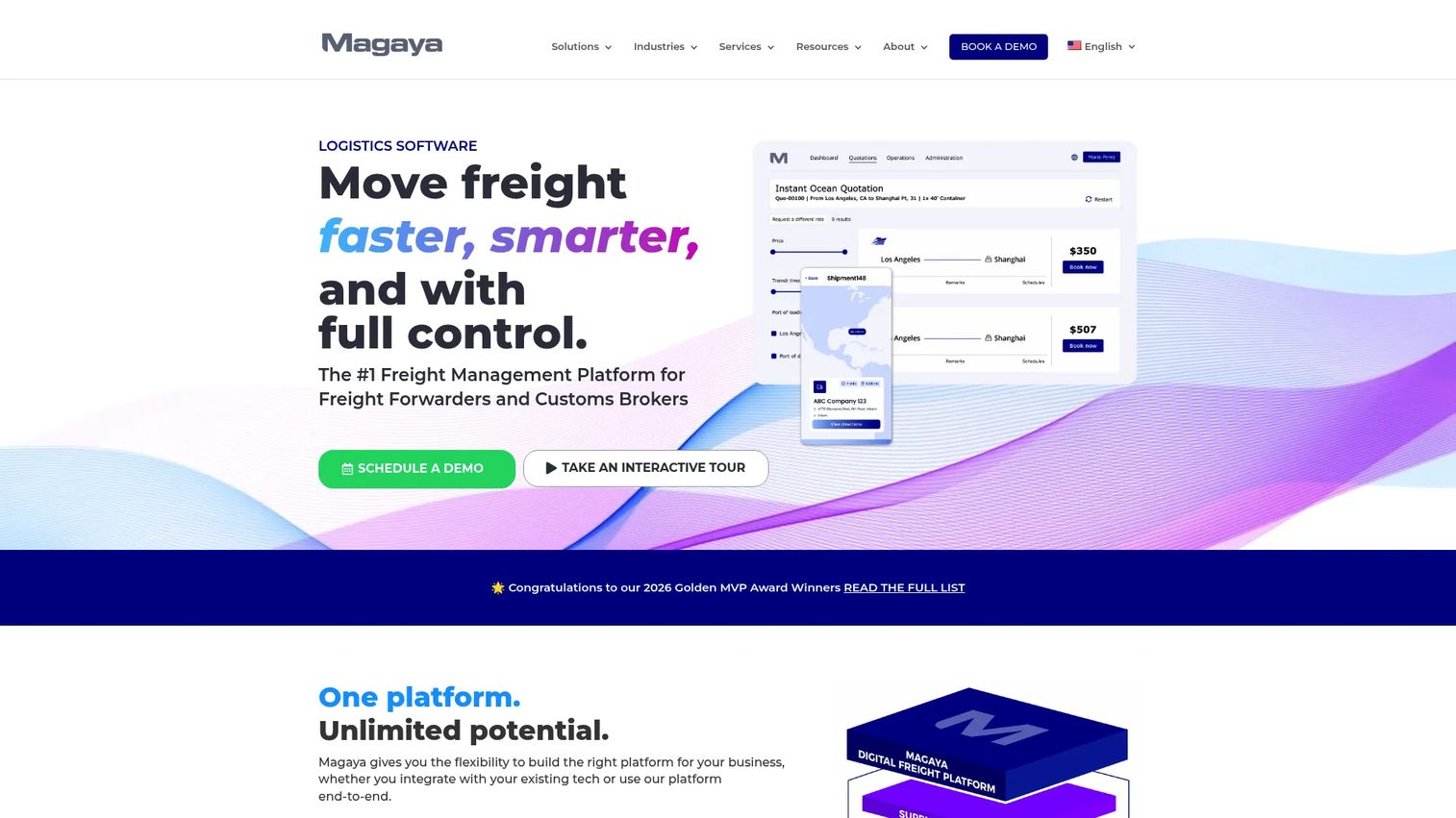
Magaya is logistics and supply chain automation software built for freight forwarders and customs brokers who want operations, accounting, and visibility in one place. It sits between the enterprise depth of CargoWise and the lighter tools further down this list, offering an operationally unified platform where forwarding, warehouse-adjacent workflows, rate management, and digital portals connect. For forwarders tired of running accounting in one system and shipments in another, that unity is the draw.
Best for: Freight forwarders and customs brokers needing an integrated logistics platform with portals and accounting.
Key strengths
- Forwarding and warehouse management: shipment operations and warehouse-adjacent workflows connect in a single platform.
- Customs compliance and ABI workflows: ACE-certified ABI workflows keep customs filing inside the same system.
- Rate management, quoting, and portals: rate management, quoting, and branded digital freight portals give customers self-serve visibility.
Why choose Magaya: Magaya is for forwarders who want operational unity without stepping up to full enterprise complexity. Shipment visibility, document handling, workflow control, and accounting live together, which reduces the reconciliation work that fragmented stacks create. It fits mid-sized forwarders and brokers who value a customer portal and integrated accounting as much as core shipment management.
Magaya pricing: Magaya does not publish public pricing and routes buyers to a sales conversation for a quote. Magaya Supply Chain holds a 4.4/5 rating on G2. Because pricing is quote-based, scope your module needs (forwarding, warehouse, customs, portals) before the call so the quote maps to your actual workflow.
4. GoFreight

GoFreight is cloud-based freight forwarding software covering shipment operations, tracking, customer portals, quoting, billing, and accounting. Its appeal is practicality: forwarders and NVOCCs get ocean and air shipment tracking in one dashboard without the configuration overhead of heavier platforms. If you want a modern, usable freight management system that gets a team productive quickly, GoFreight aims squarely at that.
Best for: Freight forwarders and NVOCCs needing an all-in-one operations and visibility platform with less setup overhead.
Key strengths
- Ocean and air tracking in one dashboard: shipment status across ocean and air lives in a single view.
- Branded customer portal: customers self-serve shipment visibility and documents through a branded portal.
- LCL consolidation and status alerts: LCL consolidation plus automated status alerts cut manual status-chasing.
Why choose GoFreight: GoFreight fits forwarding teams that want no-reentry operations, accounting integration, and a clean customer portal without a long implementation. The emphasis on usability and a branded portal makes it a strong pick for teams whose customers expect self-serve visibility. It is the practical middle ground for forwarders who find enterprise suites heavier than their operation requires.
GoFreight pricing: GoFreight uses a quote-based model; its pricing page runs a custom quote flow rather than showing public numbers. GoFreight carries a 4.8/5 rating on G2, among the highest on this list. Ask for pricing scoped to your shipment volume and the modules you need, since the quote reflects your operation rather than a fixed tier.
5. Freightview
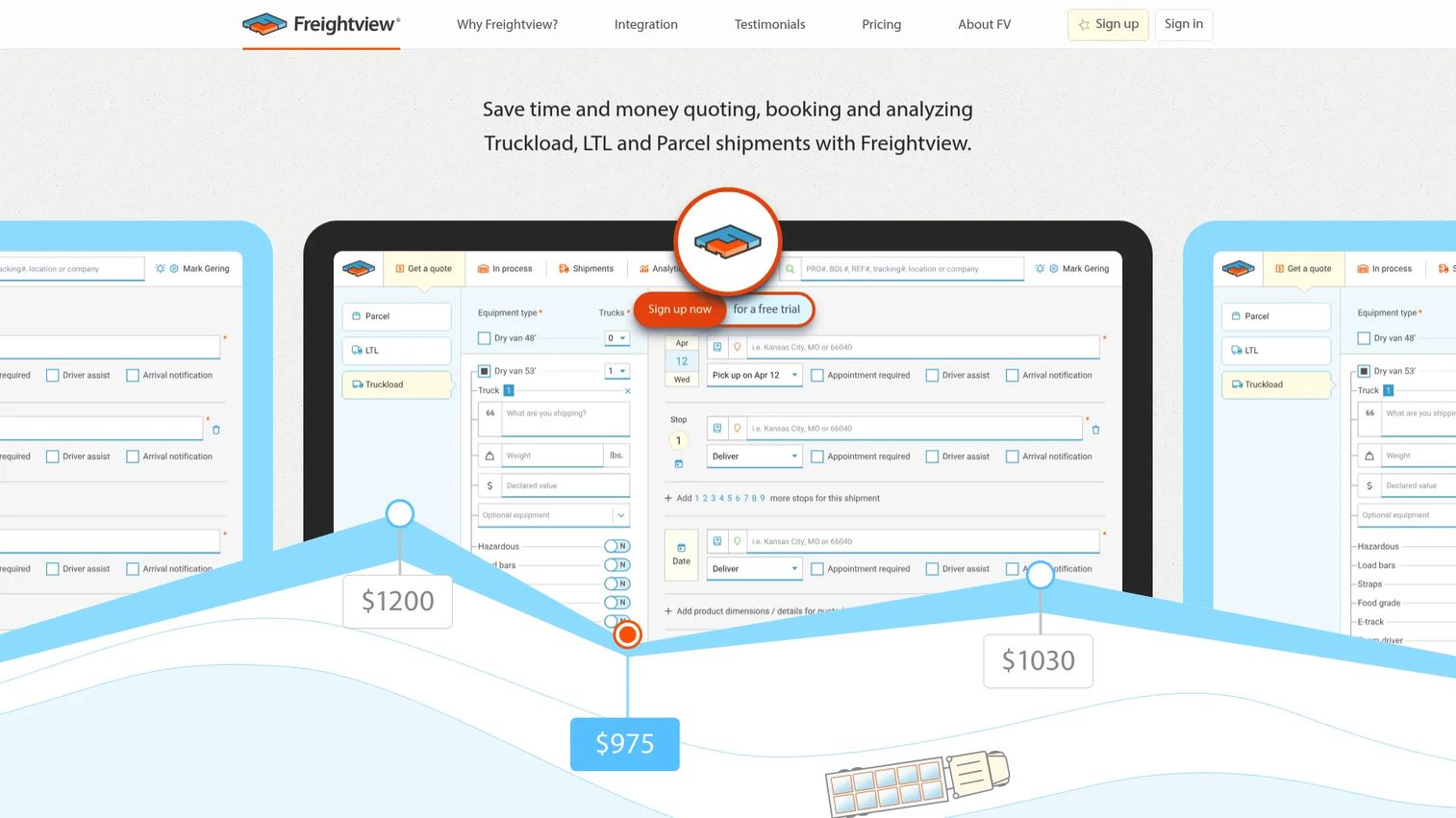
Freightview is cloud-based transportation management software that lets shippers quote, book, track, message, audit, and analyze freight from one dashboard. It is the accessible entry point in this roundup: a lightweight TMS built for shippers who need multi-mode rate shopping and tracking without the weight of an enterprise platform. For SMB and mid-market teams, that simplicity is a feature, not a compromise.
Best for: Shippers wanting a lightweight TMS for multi-mode freight management and carrier rate comparison.
Key strengths
- One-dashboard workflow: quote, book, track, message, audit, and analyze shipments from a single screen.
- Multi-mode support: truckload, LTL, and parcel workflows run side by side.
- AI invoice matching and analytics: AI invoice matching, a document center, analytics, and a vendor portal handle billing accuracy and reporting.
Why choose Freightview: Freightview suits shippers who want fast setup and rate transparency over deep configurability. Carrier rate comparison, tracking, invoice auditing, and a vendor portal cover the core needs of a growing shipping operation. It is the natural pick when a spreadsheet has outgrown its usefulness but a full enterprise TMS would be overkill.
Freightview pricing: Freightview uses volume-based pricing. The public entry plan starts at $149 per month for 0 to 50 shipments per month, with higher-volume tiers (51 to 500, 501 to 1,000, and 1,001 or more shipments per month) requiring a quote. A 14-day free trial is available. Freightview holds a 4.7/5 rating on G2. The published entry price makes it one of the easiest platforms here to budget and pilot.
6. FreightPOP
FreightPOP is an AI supply chain software platform for mid-market and enterprise shippers, unifying order management, warehouse management, and transportation management. Its strength is breadth of mode coverage: parcel, LTL, FTL, ocean, rail, and international air in one system, with more than 1,500 integrations. For shippers orchestrating transportation across many modes and carriers, FreightPOP is built to be the single control point.
Best for: Shippers needing a configurable multi-mode transportation and supply chain platform.
Key strengths
- Multi-mode shipping: parcel, LTL, FTL, ocean, rail, and international air run through one platform.
- Rate shopping and invoice auditing: rate shopping, tracking, invoice auditing, and dispatch automation cut manual transportation work.
- Deep integrations: order management, warehouse management, and 1,500-plus connections tie transportation into the wider stack.
Why choose FreightPOP: FreightPOP fits shippers who need broad transportation orchestration and configurability rather than a fixed workflow. Carrier selection, shipment tracking, and workflow automation across every major mode make it a strong control layer for complex shipping operations. The integration depth suits teams that need transportation to connect cleanly with existing OMS and WMS systems.
FreightPOP pricing: FreightPOP uses custom pricing across four plans (Parcel Only, Starter, Professional, and Enterprise), with quotes provided after a demo or assessment rather than published numbers. FreightPOP carries a 4.8/5 rating on G2. Because pricing follows an assessment, come prepared with your mode mix and shipment volume so the quote reflects your real orchestration needs.
How to choose freight management software
Match mode coverage to your operating model
Start with the modes you actually run. A domestic LTL and truckload shipper has different needs than an ocean-and-air forwarder or a multi-mode 3PL. Buying broad ocean and customs depth you never use is as costly as buying a tool that cannot handle your primary lane. List your modes by volume, then filter the shortlist to platforms that cover them natively.
Weigh rate management and quoting speed
For brokers and high-volume operations, quoting speed is a direct cost lever. Evaluate how the freight rate management software applies your negotiated rates, compares carriers, and turns a quote into a shipment record. The fewer clicks and re-entries between rate and booking, the more loads each person can move.
Check accounting, EDI, and portal fit
Confirm how the platform handles shipment-level accounting, invoice auditing, EDI freight messaging, and customer portals. These are the integration points where fragmented stacks leak time. A system that keeps billing tied to shipments and gives customers self-serve visibility removes recurring manual work that a feature checklist alone will not reveal.
Budget for total cost, not just the license
Pricing models on this list range from published entry tiers to per-transaction and quote-based structures. Look past the sticker price to implementation, training, and ongoing maintenance. A platform your team works around because it is too rigid, or one you never fully configure because it is too broad, costs more than its subscription. Model total cost of ownership against your shipment volume before you sign.
Conclusion
The best freight management software is the one that fits how your team actually moves freight, not the one with the longest feature list. For global forwarders running complex multimodal and customs workflows, CargoWise offers the deepest single-platform coverage. Teams that prefer to assemble specialized modules and lean on a large EDI network will find Descartes fits that model. Forwarders wanting operational unity with portals and accounting have a strong option in Magaya, while GoFreight delivers similar forwarding depth with a lighter setup and a polished customer portal.
On the shipper side, Freightview gives SMB and mid-market teams multi-mode rate shopping and tracking with a published entry price, FreightPOP orchestrates broad transportation across every major mode, and FreightPath helps brokerages standardize repetitive workflows and track-and-trace.
Your next step is simple: list your modes by volume, then your must-have integrations (accounting, EDI, portal), and shortlist the two or three platforms that cover both. Run a trial or scoped demo before committing, and model total cost of ownership against your shipment volume rather than the license alone. Fit beats feature count every time.
FAQs
Freight management software is used to plan, quote, book, track, document, and bill freight shipments from one system. It replaces spreadsheets and scattered email threads by centralizing carrier rates, shipment records, tracking, and invoicing so a shipment entered once flows through the whole workflow. Teams use it to cut manual re-entry, improve visibility, and give customers self-serve status updates.
At minimum, look for shipment planning and mode management, rate shopping and quote creation, shipment tracking with milestone updates, shipment-level accounting and invoicing, document handling with EDI, and customer portals. Integrations with your ERP, accounting, and data stack matter too. The right mix depends on your modes and volume, so weigh which capabilities you use daily against a long feature list you will not.
For brokers, the biggest levers are quoting speed and margin visibility. Freight software that compares carrier rates, applies negotiated pricing, and turns a quote into a shipment record in a few clicks lets each person move more loads. Broker-focused TMS software also tracks margin per load, automates track-and-trace, and standardizes document workflows so routine loads run themselves and exceptions get attention.
Often, yes, if you choose a tool sized to your volume. Lightweight platforms with published entry pricing, such as Freightview at $149 per month for up to 50 shipments, let small shippers get multi-mode rate shopping and tracking without enterprise cost or complexity. The value shows up as fewer hours spent on manual quoting, status-chasing, and invoice reconciliation.
The terms overlap heavily and are often used interchangeably. TMS software (transportation management system) traditionally emphasizes planning, execution, and optimization of transportation. Freight management software is a broader label that also covers forwarding, customs, freight-specific accounting, and customer portals. In practice, most modern platforms blend both, so focus on which capabilities a tool covers rather than the label it uses.
Many platforms do, at least at the shipment level. Tools like Magaya and GoFreight tie billing and accounting to shipments, and Freightview includes AI invoice matching and auditing. Others integrate with your existing accounting system instead of replacing it. Confirm whether a platform handles freight accounting natively or expects you to connect an external system, since that shapes both cost and workflow.
Several on this list do. Freightview supports truckload, LTL, and parcel from one dashboard, FreightPOP adds ocean, rail, and international air on top of LTL and FTL, and FreightPath supports FTL and LTL with document automation and track-and-trace. If truckload and LTL are your primary modes, prioritize how the platform handles rate shopping and carrier selection for those lanes specifically.
Freight management software pricing comes in several models: published entry tiers (Freightview starts at $149 per month), per-transaction community pricing (CargoWise), module-based pricing (Descartes e-Customs from €200 per month), and quote-based pricing (GoFreight, FreightPOP). Compare against your shipment volume, not headcount, and factor in setup fees, training, and maintenance. Model total cost of ownership before signing, since the lowest license price is rarely the lowest total cost.