

A personalization engine is software that uses AI and real-time data to deliver individualized content, product recommendations, and experiences across digital channels. It analyzes user behavior, demographics, and context to tailor what each visitor sees, whether on your website, in an email, or inside an app.
Most marketing teams already know personalization matters - McKinsey found that 71% of consumers expect personalized interactions. The harder question is which type of personalization engine fits your stack, your team's technical capacity, and the touchpoints that actually move revenue. This guide breaks down how personalization engines work, the main types you'll encounter, and eight platforms worth evaluating in 2026.
What's inside
This guide covers what personalization engines are, how they work, and the different types of personalization marketers use today. You'll find a breakdown of the top 7 platforms for 2026, along with a framework for choosing the right one for your team. The platforms were selected based on G2 ratings, integration depth, and overall fit for modern marketing teams.
TL;DR
- Personalization engine defined: Software that uses AI and data to deliver individualized content and experiences in real time.
- Core function: Real-time data analysis that tailors experiences to increase engagement and conversions.
- Primary use cases: Websites, ecommerce stores, email marketing, content recommendations, and interactive product demos.
- Top platforms covered: Braze, Dynamic Yield, Insider, Optimizely, Monetate, Adobe Experience Cloud, and Salesforce Marketing Cloud.
- Key selection factor: Integration with your existing marketing technology stack.
What is a personalization engine
A personalization engine is software that uses AI, machine learning, and data analytics to deliver individualized content and experiences to users in real time. Instead of showing everyone the same homepage or email, the engine analyzes who the user is and what they're trying to accomplish, then serves content tailored to that specific context.
The goal here is straightforward: move beyond one-size-fits-all marketing. By building detailed user profiles from various data sources and enabling omnichannel delivery, personalization engines create consistent experiences across every touchpoint.
Real-time personalization means the engine makes decisions and serves unique content at the exact moment a user interacts with your website, app, or email. This happens by analyzing a constant stream of data about the user.
Personalization engines typically analyze three types of data:
- Behavioral data: Clicks, page views, navigation patterns, and time spent on page.
- Transactional data: Purchase history, cart activity, and lifetime value.
- Contextual data: Location, device, time of visit, and traffic source.
How personalization engines work
Data collection and unification
The first step is gathering data from every touchpoint where a user interacts with your brand. This includes your website, mobile app, email platform, and CRM.
The personalization engine integrates with your existing martech stack to pull first-party data together. From there, it creates a unified customer profile, which is a single, comprehensive view of each user built from fragmented data sources.
Audience segmentation and targeting
Once data is unified, the engine groups users into segments based on shared attributes or behaviors. Rule-based segmentation lets marketers set specific criteria like "users who viewed the pricing page but didn't sign up."
More advanced platforms use AI-driven segmentation to identify patterns and create dynamic segments that automatically update as user behavior changes. This keeps targeting relevant without constant manual adjustment.
Content delivery and optimization
This is where the engine makes a real-time decision about what content to show each user. When someone visits a page, the engine instantly matches their profile to a segment and serves the most relevant content variant.
The process improves continuously through A/B testing and automated optimization. The engine learns which experiences drive the best results and prioritizes them over time.
Types of personalization for digital marketing
Attribute and profile personalization
This approach uses known user data like name, company, industry, or job title. A B2B website might show different homepage messaging to visitors from enterprise companies versus visitors from SMBs.
Behavioral personalization
Here, personalization is based on actions a user has taken. A media site recommending related articles based on recent reading history is a common example.
Location and language personalization
Content adapts based on geography, timezone, or preferred language. An ecommerce site can display local pricing and currency or show region-specific offers to visitors from different countries.
Dynamic content personalization
This technique swaps out specific page elements like images, CTAs, or copy blocks in real time based on the user's segment. Dynamic content blocks allow for granular personalization without creating separate pages.
Timing and delivery personalization
This focuses on optimizing when messages reach users. Examples include send-time optimization for email campaigns or triggered messages based on specific user activity.
Key benefits of using a personalization engine
Personalization engines deliver tangible outcomes that connect relevant experiences to business goals. McKinsey research found that companies excelling at personalization generate 40% more revenue than average players.
- Higher conversion rates: Relevant experiences at the right time reduce friction in the buyer journey and guide users toward conversion.
- Improved customer engagement: Personalized content keeps users on-site longer and encourages deeper interaction with your brand.
- Better marketing efficiency: Automated decisioning and content delivery reduce the manual work required to manage dozens of separate campaigns.
- Increased customer loyalty: Consistently relevant experiences build trust over time, turning one-time buyers into loyal advocates.
- Actionable buyer intent signals: Engagement data from personalized experiences feeds back into your systems, providing valuable signals for lead scoring and sales follow-up.
Top use cases for personalization engines
Website personalization
A website personalization engine tailors landing pages, CTAs, and navigation based on a visitor's segment or traffic source. You might show different hero content and social proof to a returning visitor compared to a first-time visitor from a paid ad campaign.
Ecommerce product recommendations
An ecommerce personalization engine displays relevant products based on browsing and purchase history to increase average order value. This includes "customers also bought" sections, personalized homepage suggestions, and last-minute additions on the cart page.
Content personalization for marketing
A content personalization engine serves relevant blog posts, case studies, or gated resources based on a user's interests or funnel stage. This supports your content strategy by ensuring your audience discovers the most valuable content for their situation.
Email and marketing automation
Personalization extends to email subject lines, body content, and product blocks based on recipient data and behavior. This also includes creating triggered email sequences in your marketing automation tools that react to user actions like abandoning a cart or viewing a specific product.
Personalization engine vs recommendation engine
Readers often confuse personalization engines and recommendation engines, but they serve different functions. A recommendation engine is a subset of a personalization engine.
While distinct, the two are closely related. A recommendation engine is often a key component within a broader personalization platform, responsible for generating the "you might also like" carousels. A full personalization engine, however, can change the entire page layout, messaging, and user journey.
Top 7 personalization engine platforms for marketing teams
This list was compiled for marketing teams looking for a platform for personalization, with platforms evaluated on integration depth, ease of use, and G2 ratings.
1. Braze
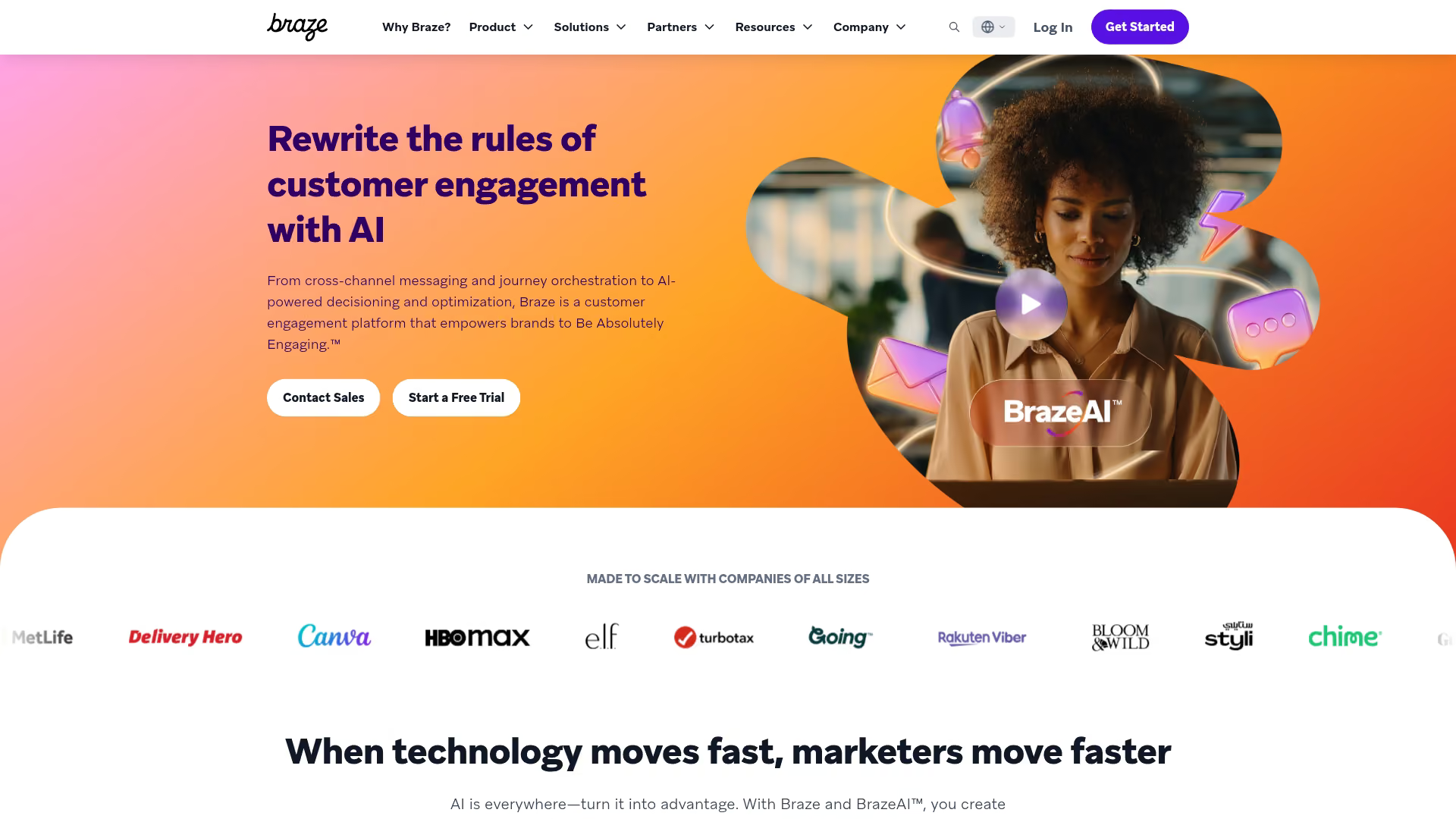
Braze is a cross-channel customer engagement platform designed for building relationships between consumers and brands. It excels at real-time messaging and journey orchestration, particularly for mobile-first companies.
Best for: Mobile-first B2C companies and marketing teams focused on lifecycle marketing, push notifications, and in-app messaging.
Key strengths
- Powerful mobile SDKs for iOS and Android
- Visual journey builder for orchestrating complex campaigns
- Real-time data processing for immediate message triggering
- A/B testing for all channels
Why choose: Braze is a leader in mobile engagement and allows teams to create cohesive experiences across app, web, email, and SMS from a single platform.
Pricing: Based on data consumption and usage, typically mid-market to enterprise tier.
2. Dynamic Yield
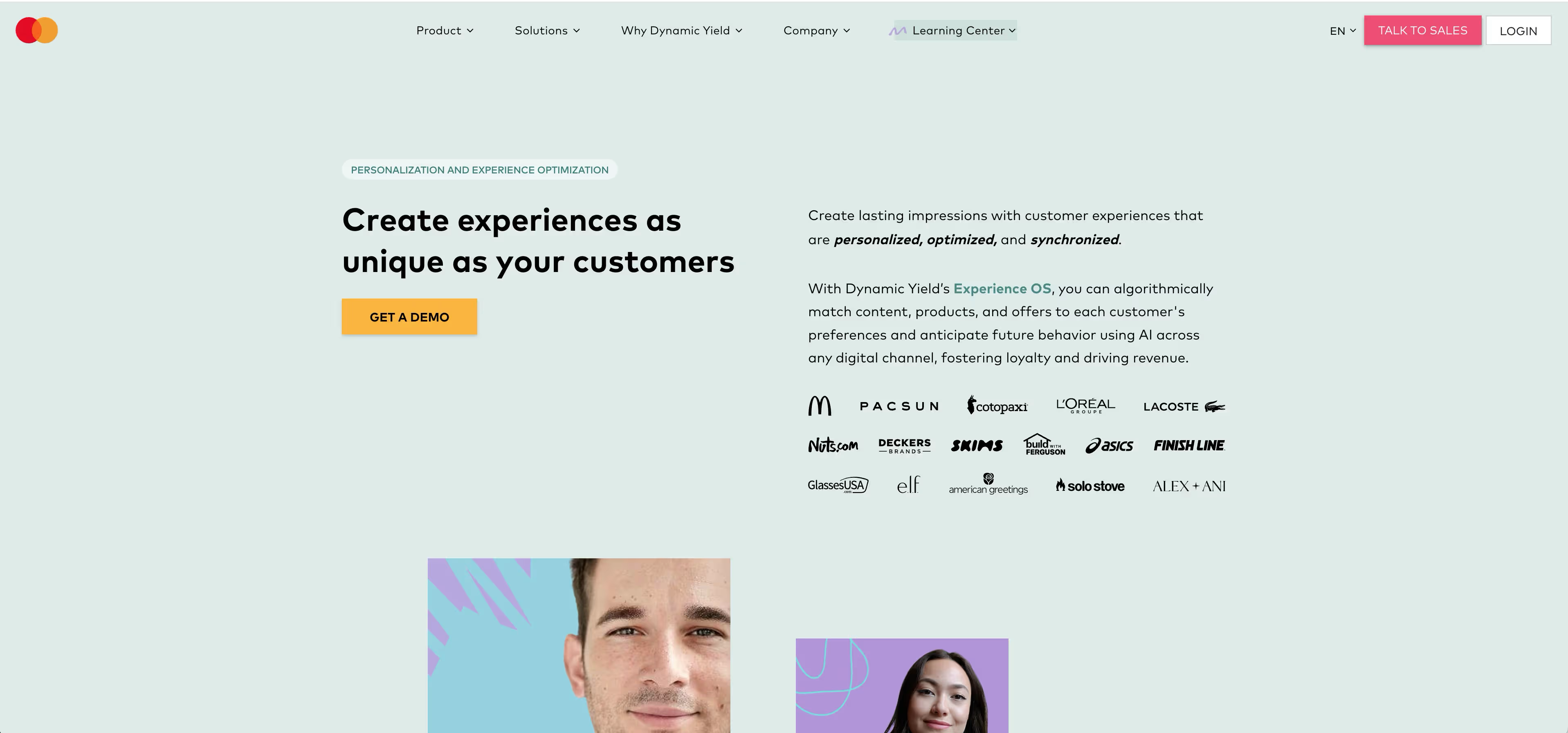
Now owned by Mastercard, Dynamic Yield is a comprehensive personalization platform with a strong focus on website and ecommerce optimization. It helps brands deliver individualized experiences across their digital properties.
Best for: Mid-market to enterprise ecommerce and retail brands that want robust A/B testing, recommendations, and omnichannel personalization.
Key strengths
- Advanced A/B/n testing and multi-armed bandit optimization
- AI-driven product recommendation algorithms
- Omnichannel support for web, mobile app, and email
- Experience OS for unifying customer data
Why choose: Dynamic Yield combines powerful testing capabilities with deep personalization, making it ideal for data-driven teams looking to optimize every touchpoint.
Pricing: Enterprise-grade solution with pricing tailored to traffic volume and feature requirements.
3. Insider
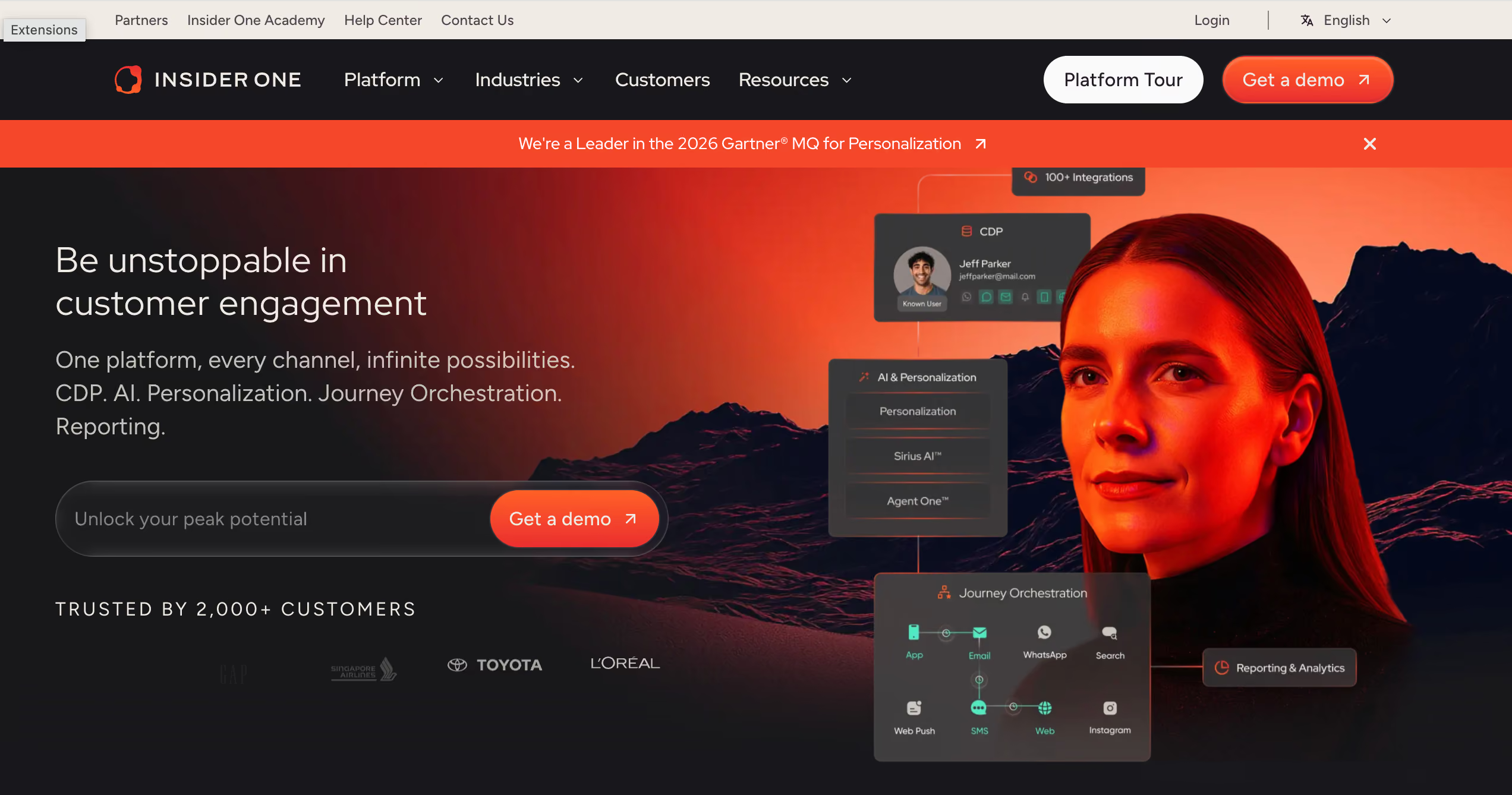
Insider is an AI-powered growth management platform that helps enterprises predict user behavior and deliver cross-channel personalized experiences. It's known for its predictive segmentation capabilities.
Best for: Enterprise B2C brands in retail, travel, and media that want AI-powered predictive segments and broad channel support.
Key strengths
- Cross-channel journey orchestration (web, app, email, SMS, ads)
- AI-powered recommendations and predictive audiences
- Large library of pre-built templates for quick campaign launches
- Integrates with major advertising platforms for retargeting
Why choose: Insider's strength lies in its predictive AI, which helps marketers proactively target users who are likely to convert or churn.
Pricing: Enterprise platform with custom pricing based on traffic, channels, and active users.
4. Optimizely
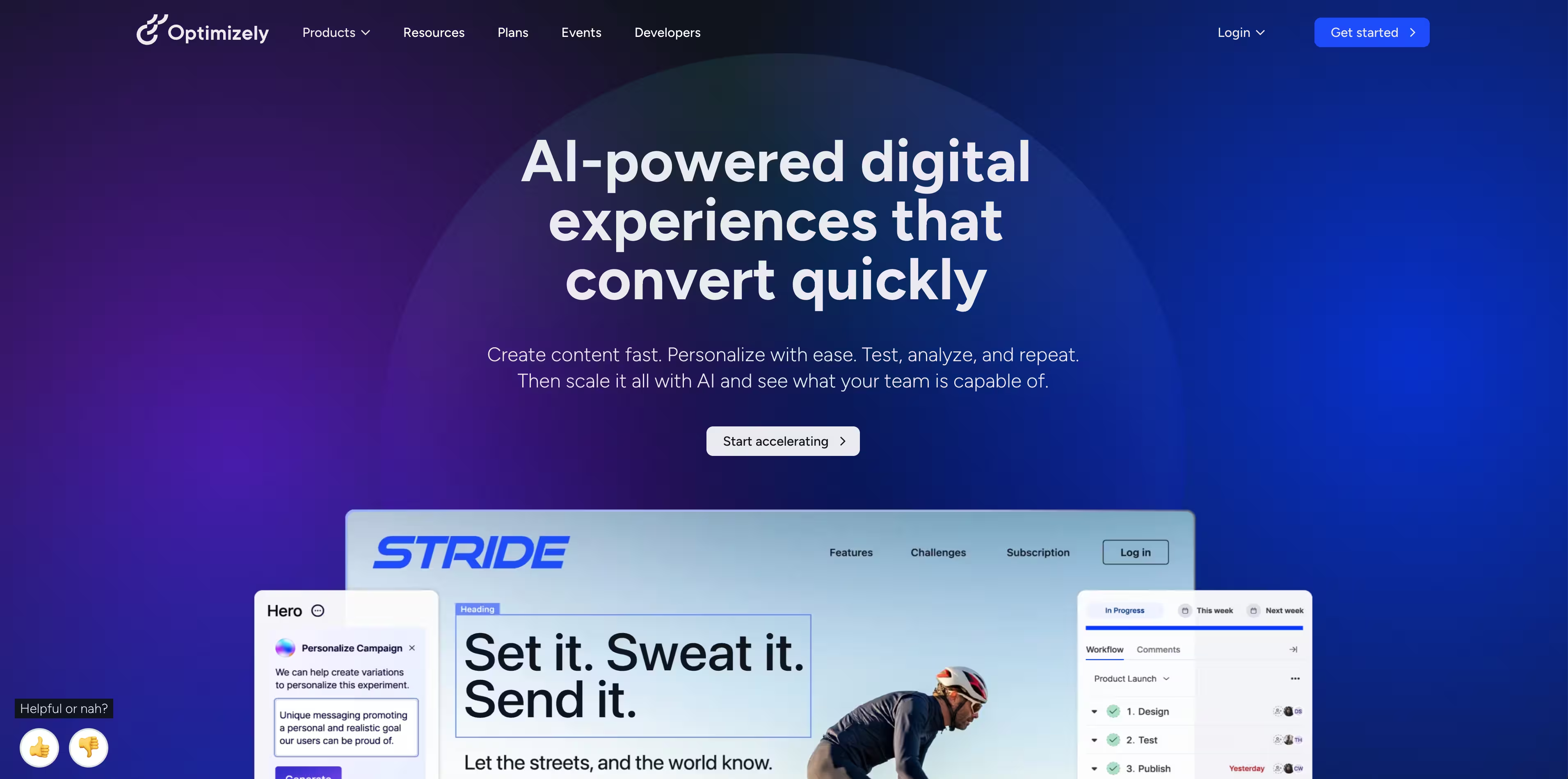
Optimizely is an experimentation-first platform that has expanded to include robust content personalization and feature flagging capabilities. It's a favorite among teams with a strong culture of testing and iteration.
Best for: Product and marketing teams that prioritize A/B testing and experimentation as the foundation of their personalization strategy.
Key strengths
- Best-in-class A/B testing and experimentation engine
- Feature flagging and management for product teams
- Content personalization for websites and apps
- Strong developer tools and APIs for custom implementations
Why choose: Optimizely is the go-to choice for teams that want to validate every personalization decision with rigorous testing and data.
Pricing: Different packages for web experimentation and feature flagging, geared toward mid-market and enterprise customers.
5. Monetate
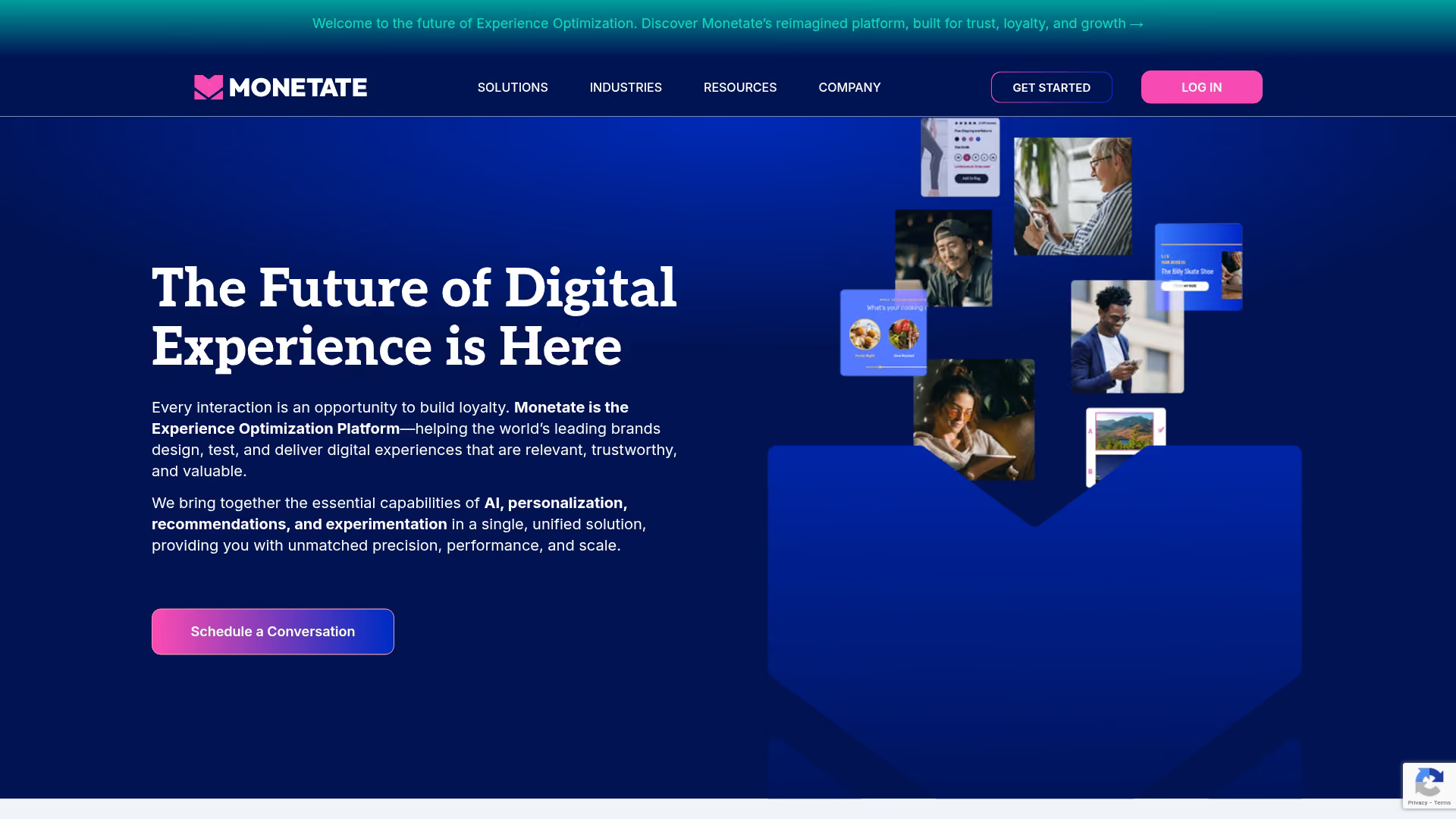
Monetate is a personalization platform focused on the retail and ecommerce industries. It helps B2C brands with high traffic volumes make real-time decisions to influence customer behavior.
Best for: High-volume B2C ecommerce brands and retailers looking for a powerful real-time decisioning engine.
Key strengths
- Real-time decisioning engine for immediate personalization
- Audience discovery tools to identify valuable segments
- Full suite of testing and optimization features
- Strong focus on ecommerce use cases like product recommendations
Why choose: Monetate is built for the speed and scale of modern retail, enabling brands to react instantly to customer actions.
Pricing: Based on traffic and usage, positioned as an enterprise-level solution.
6. Adobe Experience Cloud
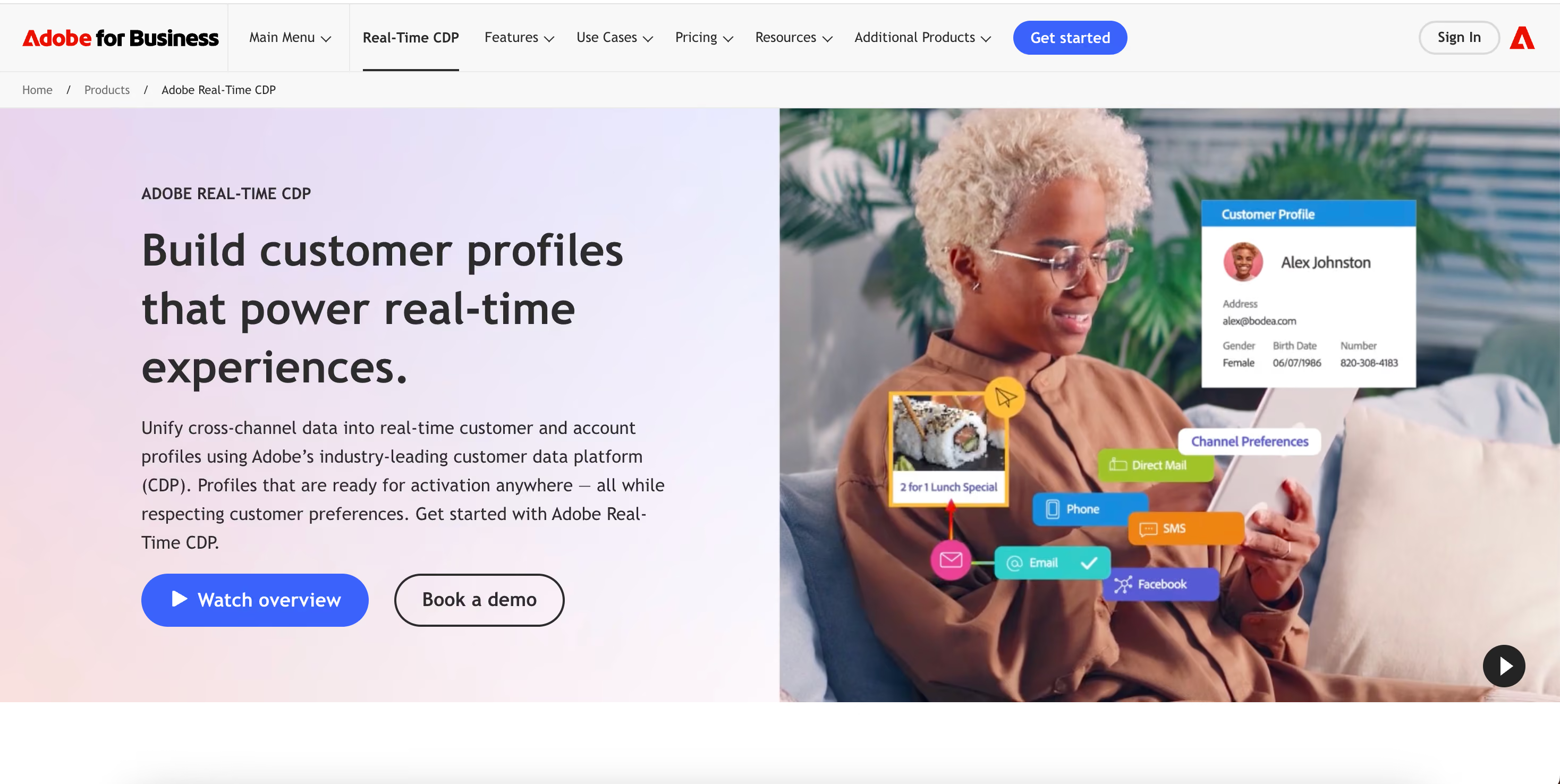
Adobe Experience Cloud is an enterprise-grade suite of products that includes Adobe Target for personalization and testing. It's a powerful choice for large organizations already invested in the Adobe ecosystem.
Best for: Large enterprises that use other Adobe products and want a deeply integrated personalization solution.
Key strengths
- Native integration with Adobe Analytics and Experience Manager
- AI-powered personalization and automated targeting
- Advanced journey orchestration capabilities
- Comprehensive tools for managing content and assets
Why choose: For companies already running on Adobe, Adobe Target offers unparalleled integration and data sharing within that ecosystem.
Pricing: Premium enterprise offering with pricing based on a wide range of factors.
7. Salesforce Marketing Cloud Personalization
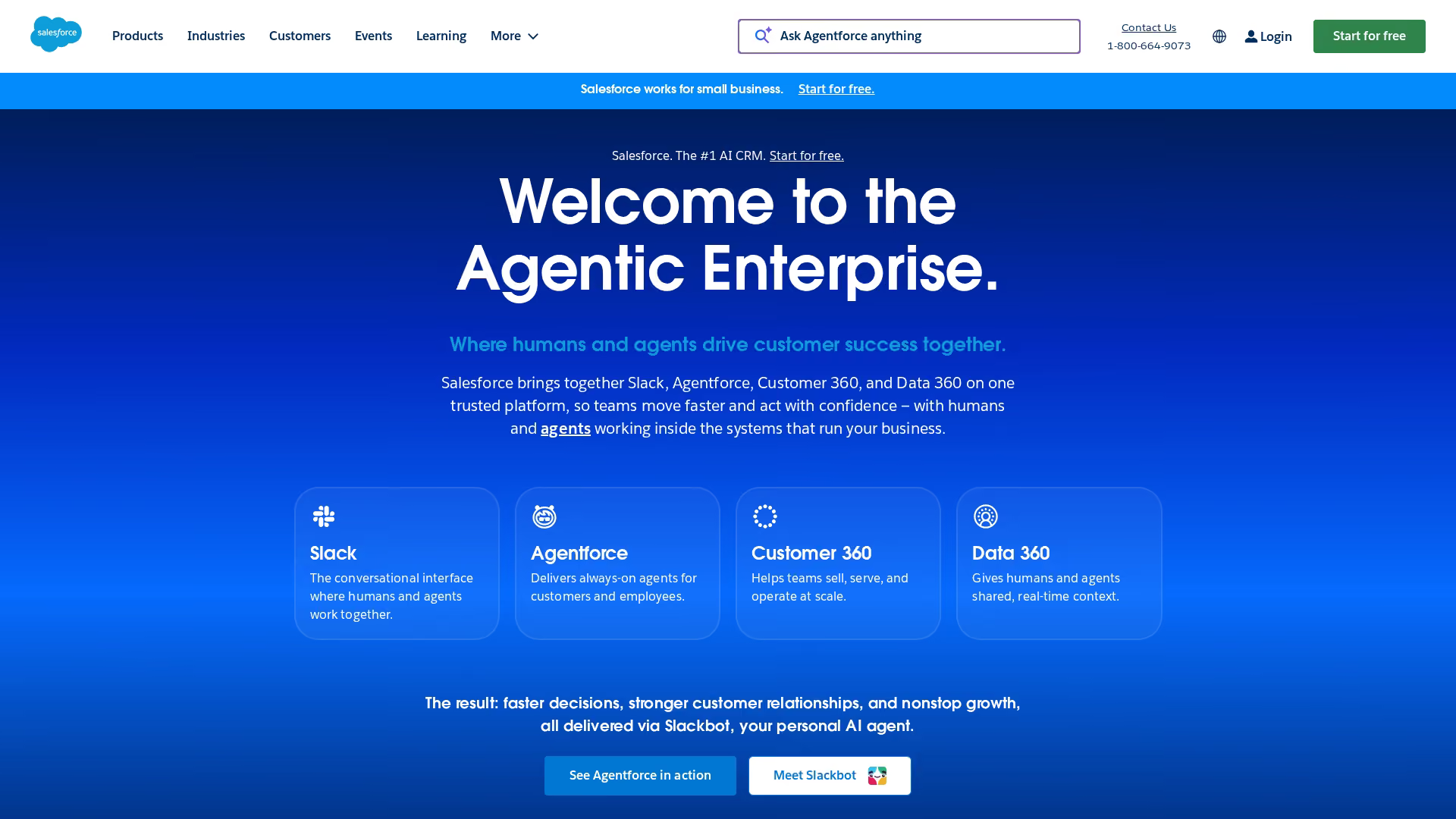
Formerly known as Interaction Studio, Salesforce Marketing Cloud Personalization is the native personalization solution for the Salesforce ecosystem. It allows teams to use their CRM data to power real-time web and email personalization.
Best for: Organizations heavily invested in the Salesforce ecosystem that want to leverage their CRM data for real-time personalization.
Key strengths
- Seamless data synchronization with Salesforce CRM and Marketing Cloud
- Integration with Journey Builder for omnichannel campaigns
- Real-time web personalization and product recommendations
- AI-driven insights with Einstein
Why choose: If your customer data lives in Salesforce, this platform offers the most direct path to activating that data for personalization across channels.
Pricing: Typically an add-on to a Salesforce Marketing Cloud license, geared toward enterprise customers.
Personalization engine comparison table
How to choose the right personalization engine
Choosing the right personalization engine solution can feel overwhelming, especially with the risk of tool sprawl and integration headaches. Start by connecting your choice to your specific goals and existing technology.
Define your personalization goals
Before evaluating any tool, get clear on your use cases. Which touchpoints need personalization the most? What outcomes are you trying to measure? Are you focused on acquisition, activation, or retention? Your goals will determine whether you want an all-in-one personalization platform or a more specialized tool.
Evaluate integration requirements
A personalization engine is only as good as the data it can access. Check for compatibility with your existing stack, especially your CRM, CDP, analytics tools, and email platform.
Ask: Does it connect to our primary data sources? How does data flow back for attribution and analysis? Poor integrations create data silos and manual work, defeating the purpose of automation.
Assess implementation complexity
Consider the time-to-value and the internal resources required. Does implementation require engineering support? How long until you can run your first personalization campaign?
Some platforms offer a no-code setup that marketers can manage independently, while others require significant developer resources for setup and maintenance.
Calculate total cost of ownership
Look beyond the monthly subscription price. Factor in implementation costs, ongoing maintenance, employee training time, and the impact on other tools in your stack.
It's also important to consider consolidation value. Does this new tool replace something you already pay for, potentially lowering your overall Martech spend?
What to consider before implementation
Before you sign a contract, run through this practical checklist to ensure you're prepared for a successful rollout:
- Data readiness: Is your user tracking clean and consistent? Do you have a reliable method for user identification across devices and sessions?
- Team alignment: Who will own the personalization strategy? Is it a marketing function, a product function, or a cross-functional team?
- Content requirements: Do you have enough content variants (headlines, images, offers) to personalize effectively? Creating content at scale is often the biggest bottleneck.
- Measurement plan: How will you attribute lift to personalization versus other marketing activities? Define your control groups and success metrics upfront.
- Privacy compliance: Does your data collection and personalization approach align with GDPR, CCPA, and your company's data privacy policies?
Start personalizing your buyer journey today
Personalization engines are a core component of a modern marketing strategy, helping teams reduce manual work while increasing relevance across every channel.
The right platform ultimately depends on your stack, team, and strategic goals. For teams focused on making their product demos more relevant and effective, a specialized tool is the best starting point.
Start your journey with Guideflow today!