Most mentoring programs die in a spreadsheet. Someone in People Ops builds a tab for mentors, a tab for mentees, a manual matching grid, and a calendar of nudges they personally have to send. Six weeks in, the nudges stop. Three months in, nobody can say whether the program moved retention, engagement, or anything a board would care about.
That gap matters more than it used to. Structured mentoring programs deliver 50% higher employee retention, and 67% of businesses report increased productivity after launching them, according to SHRM data summarized by Qooper (2024). The same research found mentored employees see an average 25% salary increase, and 89% of mentees say mentoring improves their sense of belonging at work. For a Series B founder trying to hold net revenue retention above 110% while keeping people, that is a development lever you can actually measure.
The category is also maturing fast. The global mentoring software market is projected to reach USD 64.33 billion by 2035, growing at a 13.22% CAGR from 2025 to 2035, per Market Research Future (2025). Cloud deployment now accounts for 62% of implementations worldwide, according to Business Research Insights (2025), which means most of these tools run without IT lifting a finger.
This guide is about picking a mentoring platform that launches, matches, tracks, and proves itself, rather than one more dashboard nobody opens. If you also care about adjacent people and growth systems, our roundups of the best employee advocacy software tools and the best customer data platform options pair well with how you'd evaluate this one.
What's inside
This guide is for HR, People Ops, and L&D leaders, plus founders who want employee development to scale without routing through one program admin. It covers eight mentoring software programs spanning enterprise administration, AI matching, engagement, and lightweight coordination.
We chose tools on four criteria: program lifecycle depth (launch, match, run, measure), automation that removes manual admin, reporting and analytics strong enough to prove ROI, and integrations plus security that fit a real stack. We verified pricing and G2 ratings where public, and wrote around anything that was not confirmed. Ratings and prices shift, so check each vendor at evaluation time.
TL;DR
- Best overall: MentorcliQ. Deep enterprise mentoring, AI-assisted admin, and ERG support make it the strongest all-around employee mentoring software.
- Best for fast, structured launches: Together Platform. Templates, automated matching, and learning content get a program live quickly.
- Best for measurement and ROI: Qooper. AI matching plus an ROI dashboard and People Insights tie mentoring to retention signals.
- Best for AI matching at scale: Mentorink. AI-powered mentor matching software with automated scheduling for global programs.
- Best for program governance: Chronus. Mature lifecycle management, guided mentoring, and ROI reporting for large organizations.
- Best for simpler programs: MentorLoop. Lightweight, unlimited-match mentoring coordination for smaller teams.
What is mentoring software?
Mentoring software is a platform that lets organizations launch, match, manage, and measure employee mentoring programs from one place, replacing spreadsheets and manual admin with automated workflows. It connects mentors and mentees, structures their relationships, and reports on outcomes like retention, engagement, and development.
The core capabilities of any mentoring program software cluster into a few areas:
- Mentor-mentee matching: Pair participants by skills, goals, geography, department, or seniority, using admin-led, self-match, or AI-suggested workflows.
- Program management: Configure cohorts, set milestones, and run multiple programs at once without rebuilding from scratch.
- Progress tracking: Capture sessions, goals, and feedback so relationships do not stall silently.
- Reporting and ROI measurement: Surface participation, satisfaction, and retention signals leadership can act on.
- Templates and communications: Launch faster with prebuilt program structures, agendas, surveys, and automated reminders.
- Integrations: Connect to HRIS, LMS/LXP, calendar, and meeting tools so mentoring lives inside existing workflows.
A strong mentorship software platform supports more than one format. Common ones include:
- 1:1 mentoring
- Peer mentoring
- Group mentoring
- Mentoring circles
- Reverse mentoring
- Virtual mentoring
- Alumni mentoring
When to use mentoring software
Launch a new mentoring program without spreadsheet chaos
The moment you have more than a couple dozen participants, manual matching and reminders become the bottleneck. A mentoring platform automates pairing, scheduling, and nudges so the program runs without a person babysitting it. That frees the program owner to design outcomes instead of chasing follow-ups.
Improve retention, engagement, and onboarding
Mentoring software connects relationships to measurable outcomes. New hires ramp faster when paired with an experienced guide, and engaged employees stay longer. The platform captures the signals (participation, satisfaction, progress) that let you tie onboarding and leadership development to retention curves instead of guessing.
Standardize leadership development across teams
As headcount grows, ad hoc mentoring produces uneven results. Repeatable workflows, consistent agendas, and shared content mean every cohort gets the same quality of development. That consistency is what makes leadership pipelines defensible when a board asks how you are building the next layer of managers.
Measure program health and prove ROI
Reporting and analytics stop being optional once you are spending real budget. When you need to show participation, engagement, and retention impact in a single view, spreadsheets fall apart. Strong reporting turns mentoring from a feel-good initiative into a line item you can defend.
Comparison table
Here is how the eight platforms compare at a glance. Pricing and G2 ratings should be verified at publishing time, since vendors update both frequently.
| # | Product | Intent | Key differentiation | Pricing | G2 rating |
|---|---|---|---|---|---|
| 1 | MentorcliQ | Enterprise mentoring + ERGs | Mentoring plus employee community management | CliQ Start from $9,900/yr (per 100 employees) | 4.7/5 |
| 2 | Together Platform | Fast structured launches | Templates, goal-based matching, learning content | Custom (request pricing) | 4.8/5 |
| 3 | Qooper | Measurement and ROI | AI matching plus ROI dashboard and People Insights | Custom (request pricing) | 4.6/5 |
| 4 | Mentorink | AI matching at scale | AI-powered matching with automated scheduling | Core from €299/mo (per 50 users) | 4.6/5 |
| 5 | Chronus | Program governance | Guided mentoring and ROI reporting | Contact for pricing | - |
| 6 | MentorCloud | Multi-program management | AI matching across many programs and countries | Basic from under $4/person/yr | - |
| 7 | Mentoring Complete | Structured formal programs | AI-based matching with high match success | From $7,500 (third-party listed) | 4.4/5 |
| 8 | MentorLoop | Simpler, smaller programs | Unlimited matches, manual and smart matching | Pro from $299/mo | 4.4/5 |
Best mentoring software for 2026
1. MentorcliQ
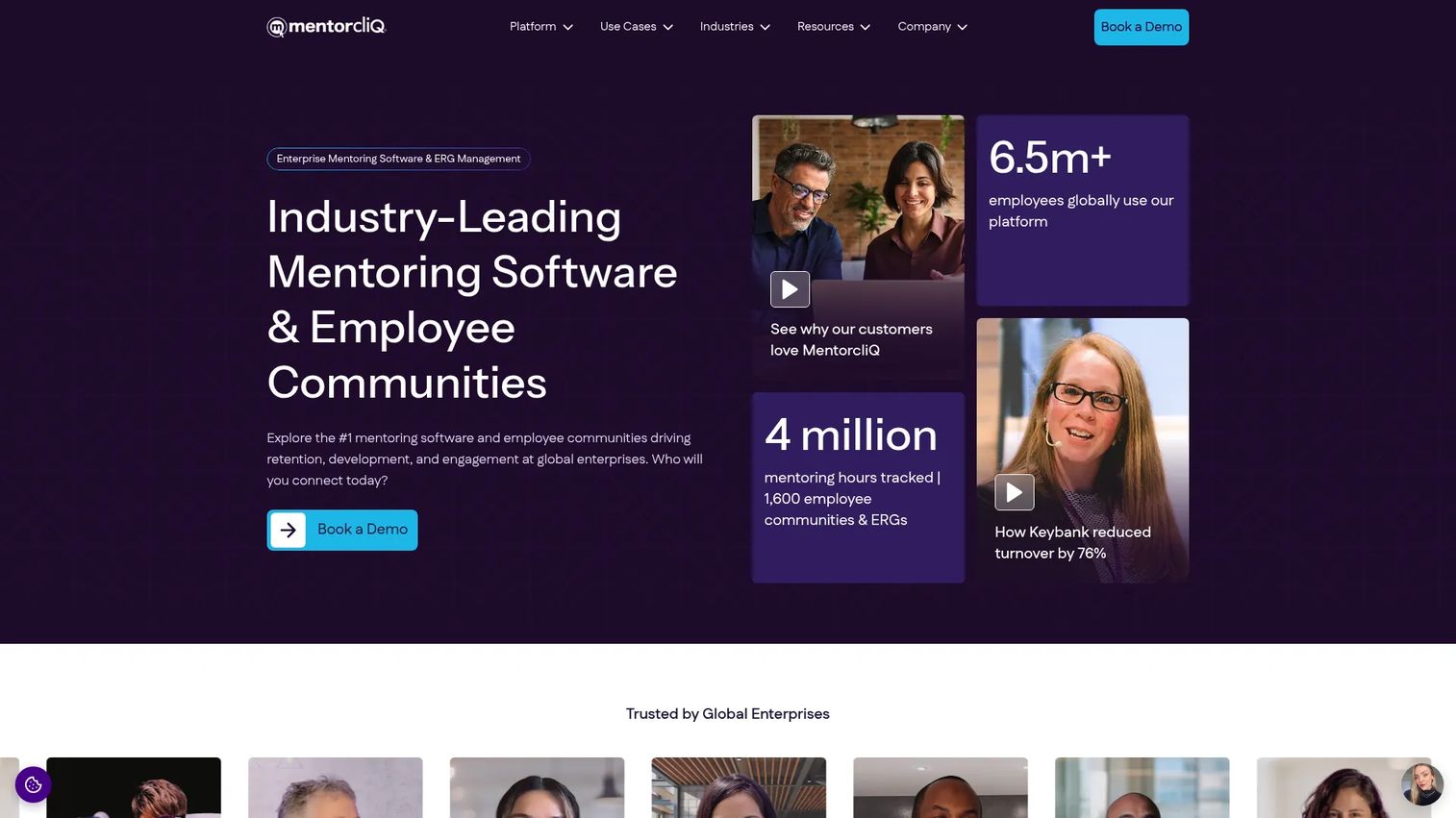
MentorcliQ is enterprise mentoring and employee community software built for organizations launching or scaling formal programs and ERGs. It pairs mentor-mentee matching with program tracking and reporting, plus dedicated tooling for employee resource groups. For large companies that treat mentoring as a retention strategy, it is the most complete employee mentoring software on this list.
Best for: Large organizations launching or scaling formal mentoring and ERG programs.
Key strengths
- Mentor-mentee matching: Pairs participants based on goals and profiles to start relationships on the right footing.
- Program tracking and reporting: Surfaces participation and progress so admins can act before relationships stall.
- ERG and employee community management: Runs mentoring and employee resource groups from one platform.
Why choose MentorcliQ: If your mentoring strategy spans multiple program types, development goals, and employee communities at once, MentorcliQ is built for that scale. It suits People and DEI teams that need one system to administer mentoring and ERGs together, rather than stitching two tools together.
MentorcliQ pricing: The CliQ Start tier is publicly listed at $9,900 per year for up to 100 employees, sourced third-party via G2. CliQ Plus and CliQ Complete require a conversation with the vendor for pricing. There is no free tier. Confirm current figures directly with MentorcliQ, since the public price is not first-party.
2. Together Platform
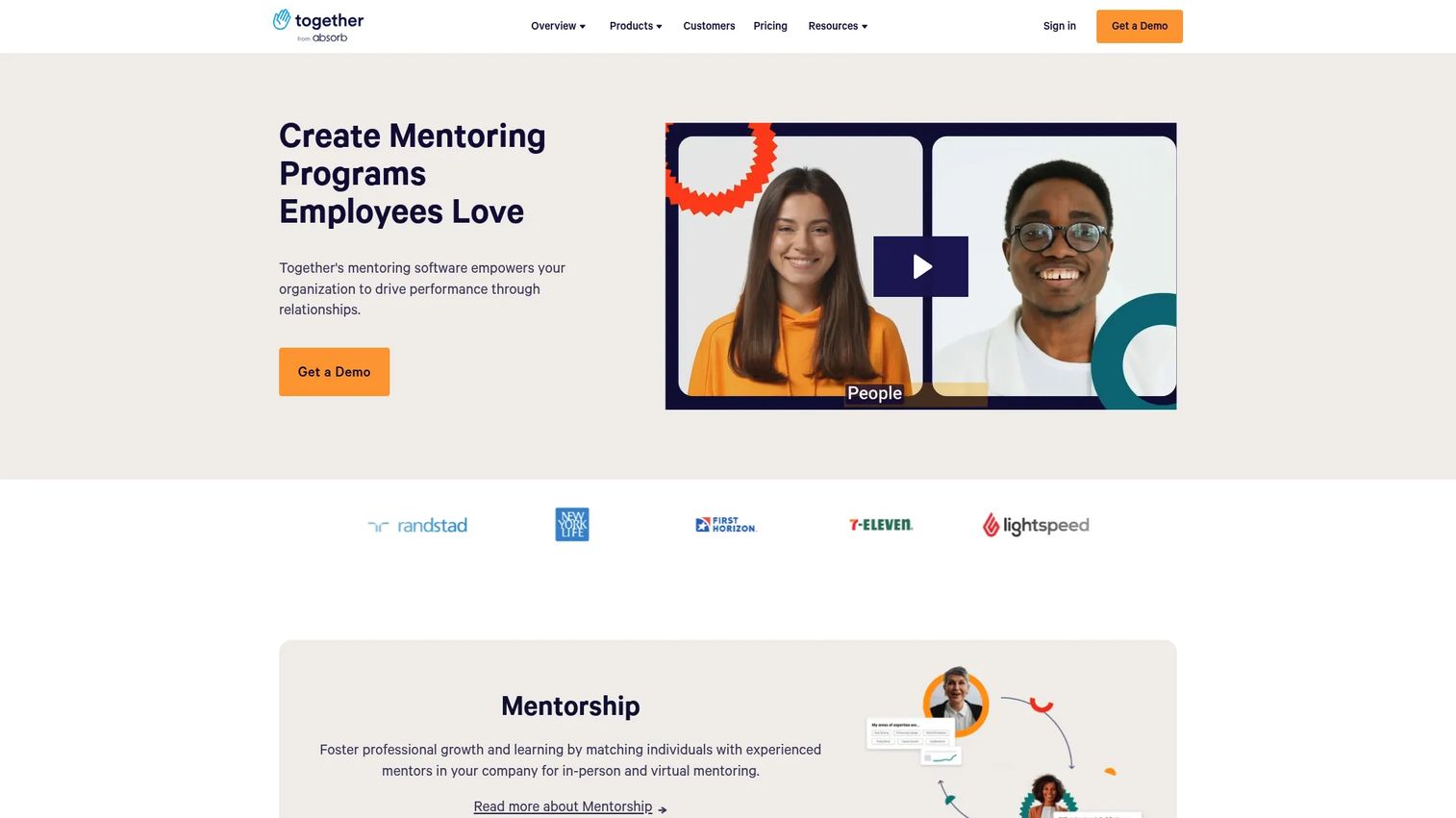
Together Platform is enterprise mentorship and employee development software focused on matching, scheduling, and tracking. It leans on automated mentor matching software, program templates, and built-in learning content to get a structured program live quickly. Teams that want broad program support without a long build cycle tend to land here.
Best for: Large organizations running structured mentorship or employee development programs.
Key strengths
- Automated mentor-mentee matching: Pairs people on shared skills, goals, geographies, and departments.
- Program templates and learning content: Prebuilt structures and resources speed up launch and keep cohorts consistent.
- Reporting, feedback, and goal tracking: Ties relationships to measurable goals and surfaces progress.
Why choose Together Platform: Together runs multiple mentorship programs at once and supports virtual mentoring through video conferencing and calendar integrations. It fits teams that value templates and fast, repeatable setup across onboarding and leadership development programs.
Together Platform pricing: The pricing page shows plan names (Starter, Professional, Enterprise) and feature comparisons, but no public figures, directing visitors to request pricing or book a demo. Plan to scope your program size before that call so you get an accurate quote.
3. Qooper
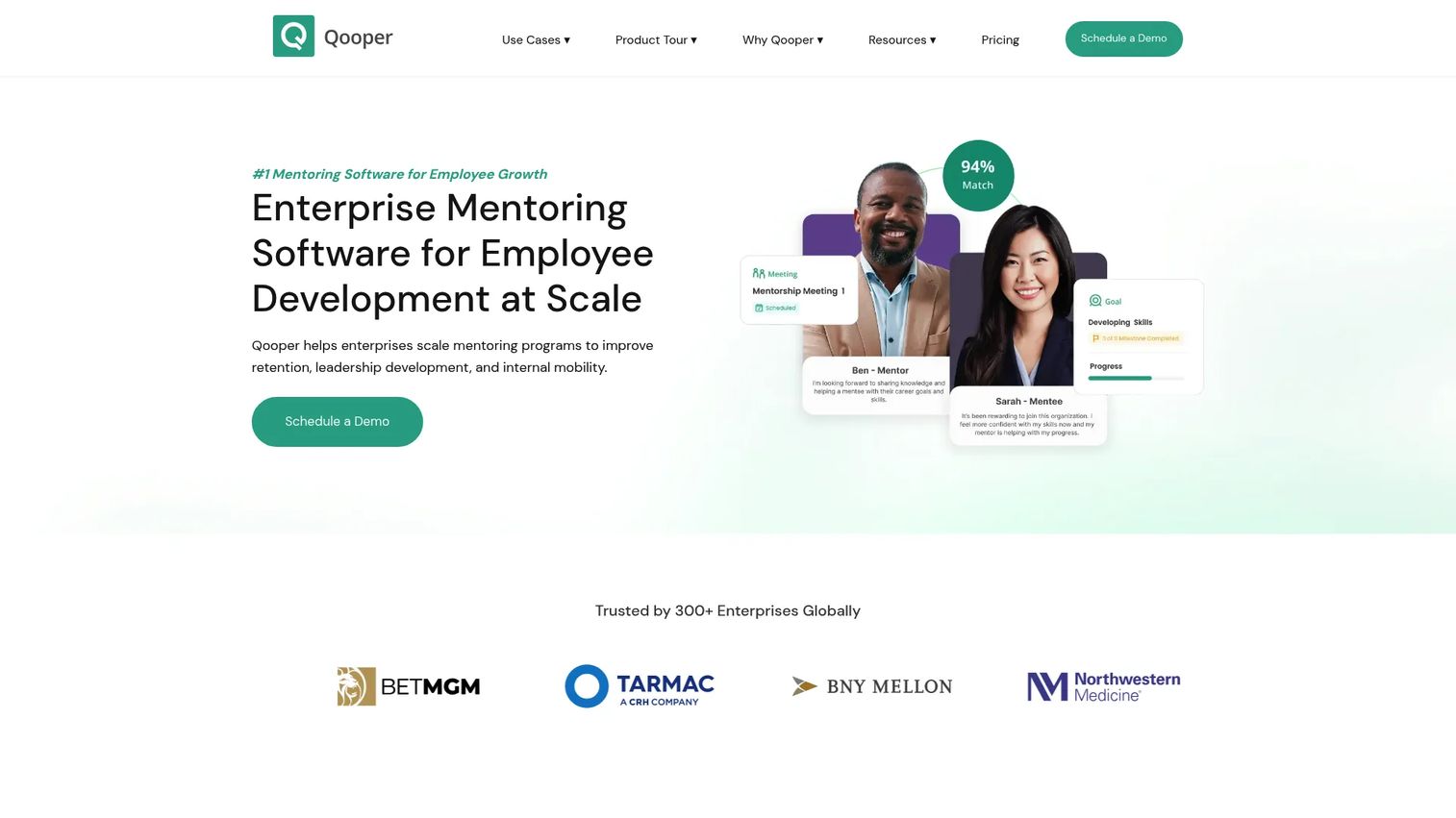
Qooper is enterprise mentoring and learning software built to scale employee development programs. It combines AI-powered mentor matching with automated program management, reminders, and agendas, then layers reporting and ROI tracking on top. If proving program value is the priority, Qooper is built around that question.
Best for: Enterprises running structured mentoring, onboarding, leadership, or ERG programs.
Key strengths
- AI-powered mentor matching: Surfaces suggested matches admins can review before launch.
- Automated program management: Handles reminders and agendas so relationships keep momentum.
- Reporting and ROI tracking: An ROI dashboard and People Insights surface retention risks, skill gaps, and leadership potential.
Why choose Qooper: Qooper is the measurement-forward pick. Its People Insights and ROI dashboard connect mentoring activity to retention and engagement signals, which is exactly what a founder needs to justify the spend. It suits teams scaling mentoring to improve retention, leadership development, and internal mobility.
Qooper pricing: Pricing is request-based, scoped to program size, participant volume, and organizational requirements. The pricing page does not list public figures, so expect a tailored quote after a scoping conversation.
4. Mentorink
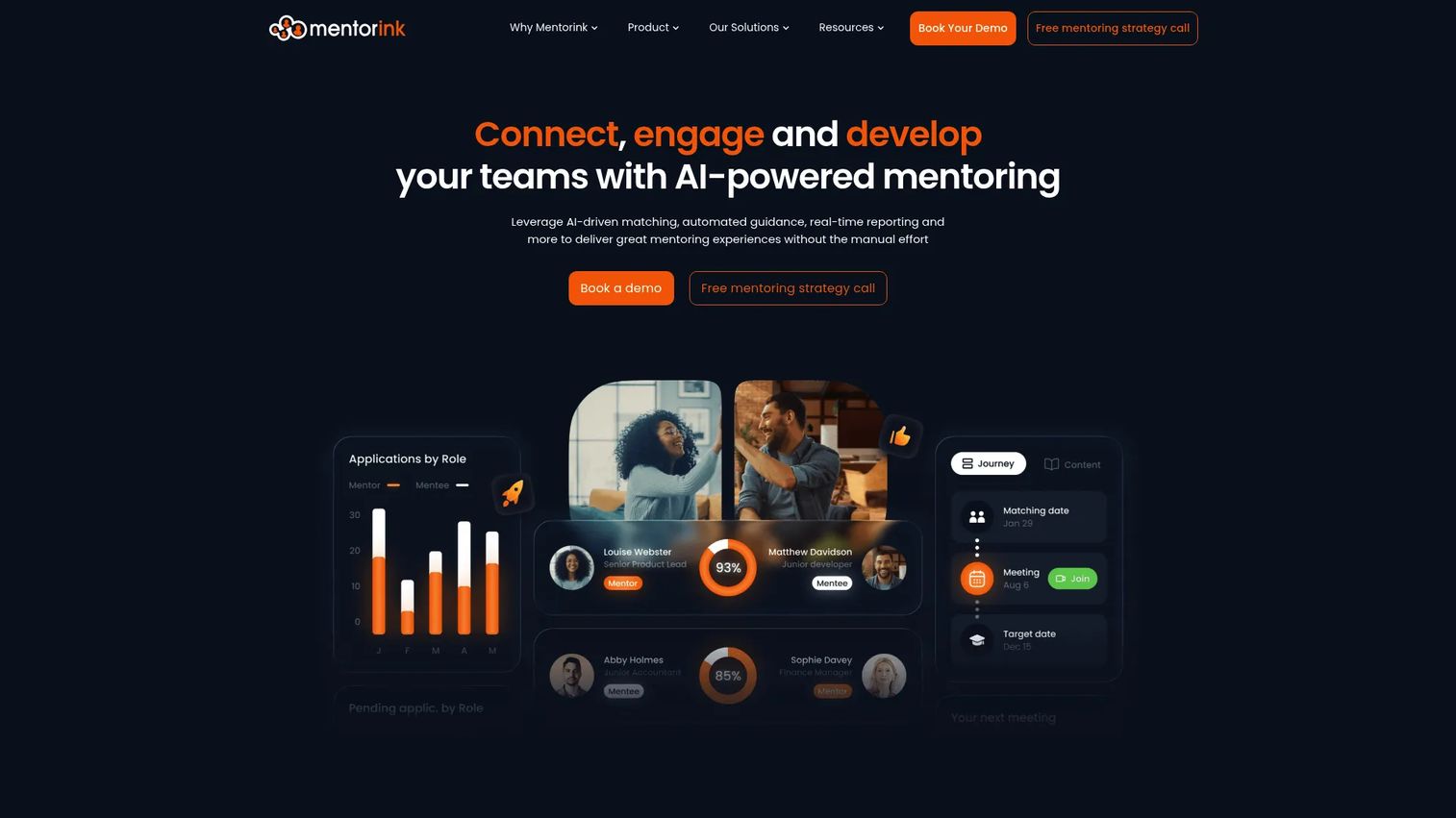
Mentorink is AI-powered mentoring software for organizations running and scaling structured programs. It centers on AI mentor-mentee matching, automated scheduling and reminders, and built-in communication, feedback, and progress tracking. For programs that need matching to run at scale without manual grids, it is a strong fit.
Best for: Companies running structured mentoring programs at scale.
Key strengths
- AI-powered mentor-mentee matching: Automates pairing so larger cohorts launch without manual matrices.
- Automated scheduling and reminders: Keeps sessions on the calendar and relationships active.
- Built-in communication and progress tracking: Centralizes feedback and progress in one place.
Why choose Mentorink: Mentorink suits teams that want matching automation to carry the operational load across geographies and cohorts. Its built-in communication and tracking keep the full relationship inside the platform rather than scattered across email.
Mentorink pricing: G2 lists a Core tier from €299 per month for up to 50 active users and an Enterprise tier at €6,900 for 50 active users per year, with a free trial available. The brand pricing page was not directly accessible, so confirm current tiers with Mentorink before committing.
5. Chronus
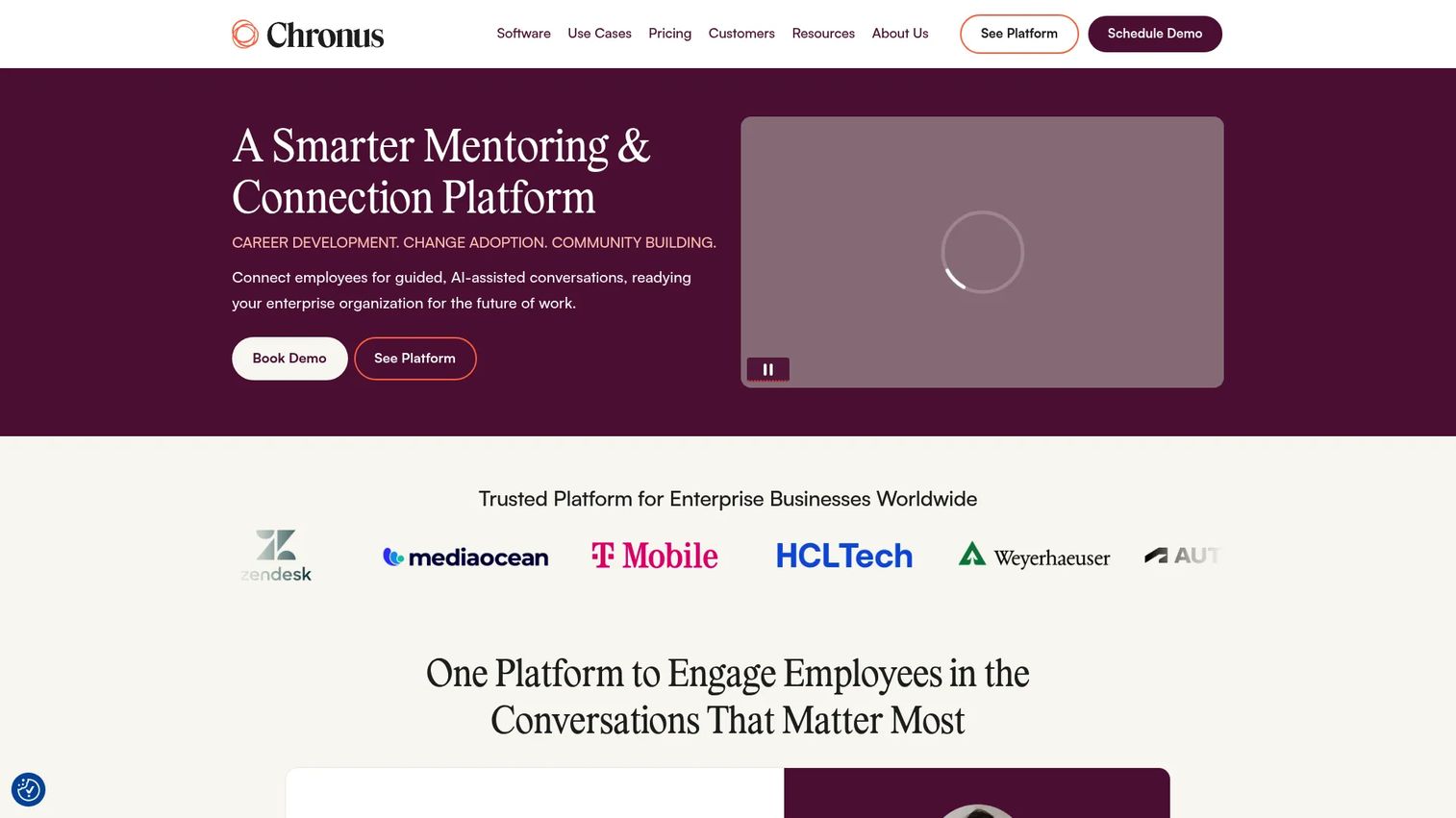
Chronus is an enterprise mentoring and employee connection platform spanning career development, change adoption, and community building. It combines AI-powered matching, guided mentoring with structured discussions, and ROI reporting with program analytics. For organizations that need mature program governance, Chronus is built for that level of oversight.
Best for: Large organizations running mentoring, employee development, or connection and community programs.
Key strengths
- AI-powered matching: Pairs participants while reducing manual admin.
- Guided mentoring: Structured discussions keep relationships productive and consistent.
- ROI reporting and program analytics: Gives admins the data to manage program health and prove value.
Why choose Chronus: Chronus fits companies that need lifecycle governance across many programs, from career development to community building. Its guided mentoring and analytics make it a strong choice when consistency and reporting maturity matter as much as matching.
Chronus pricing: The pricing page does not display a public dollar amount, listing three plans (Ignite Performance, Unleash Performance, Peak Performance) with license and program limits behind a "Contact Us for Pricing" model. Reach out with your program scope to get a quote.
6. MentorCloud
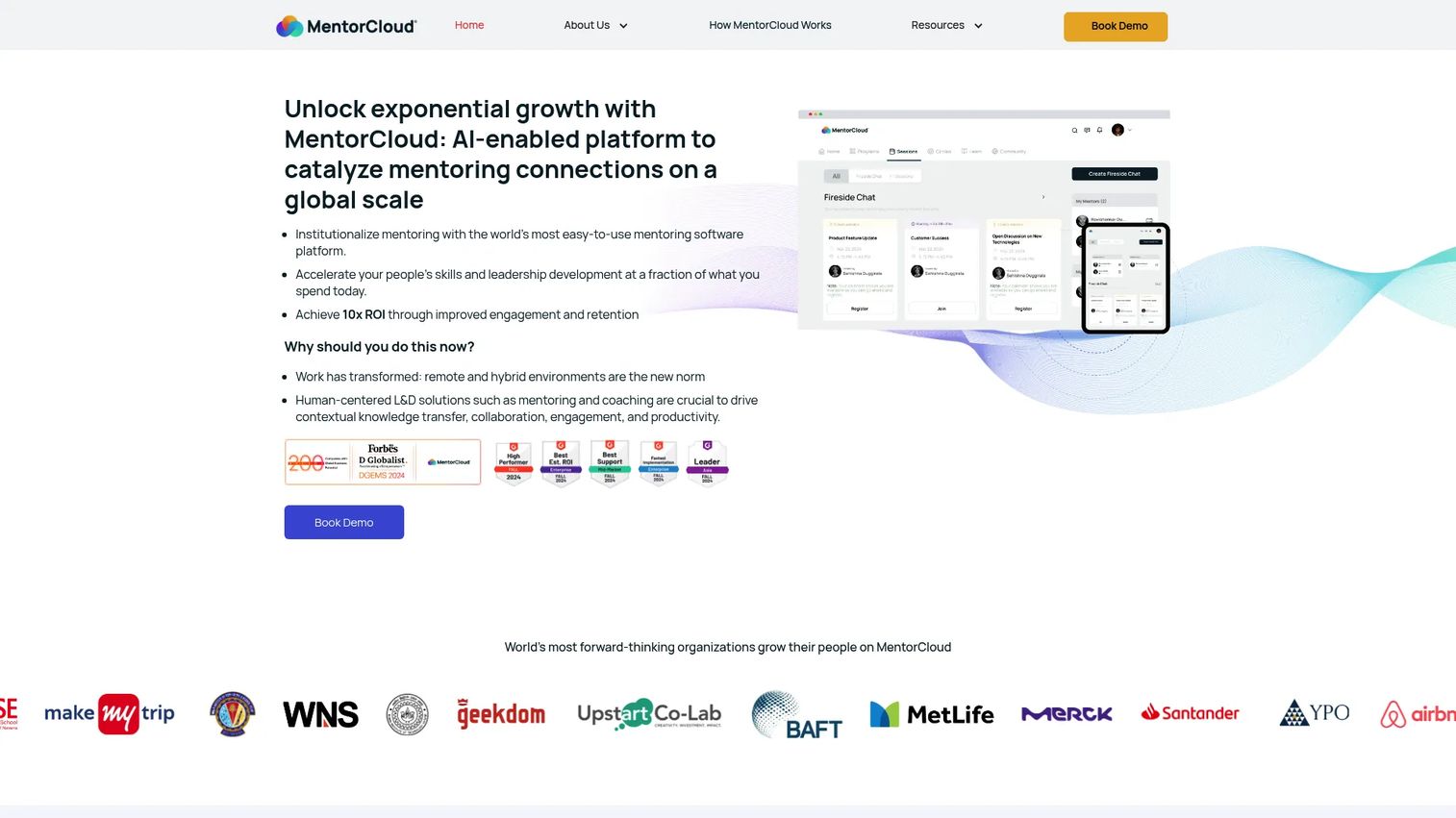
MentorCloud is an AI-enabled mentoring platform for designing, launching, and managing programs. It supports AI mentor-mentee matching, multiple program management, and learning journey reporting. With mentors and mentees active across 150 countries, it is built for broad, distributed program support.
Best for: Enterprises running structured mentoring programs at scale.
Key strengths
- AI mentor-mentee matching: Uses many parameters to suggest personalized pairs.
- Multiple program management: Runs several programs from one admin layer.
- Learning journey reporting: Tracks progress across mentoring relationships.
Why choose MentorCloud: MentorCloud suits global organizations that want to administer many programs from one place. Its broad program support and reporting fit teams running mentoring across regions and use cases simultaneously.
MentorCloud pricing: MentorCloud publishes three plans: Basic and Premium, both shown at under $4 per person billed annually, and Enterprise (Contact Sales) for organizations with 2,500+ employees. There is no free tier. The exact per-person figure was truncated on the rendered page, so confirm it directly.
7. Mentoring Complete
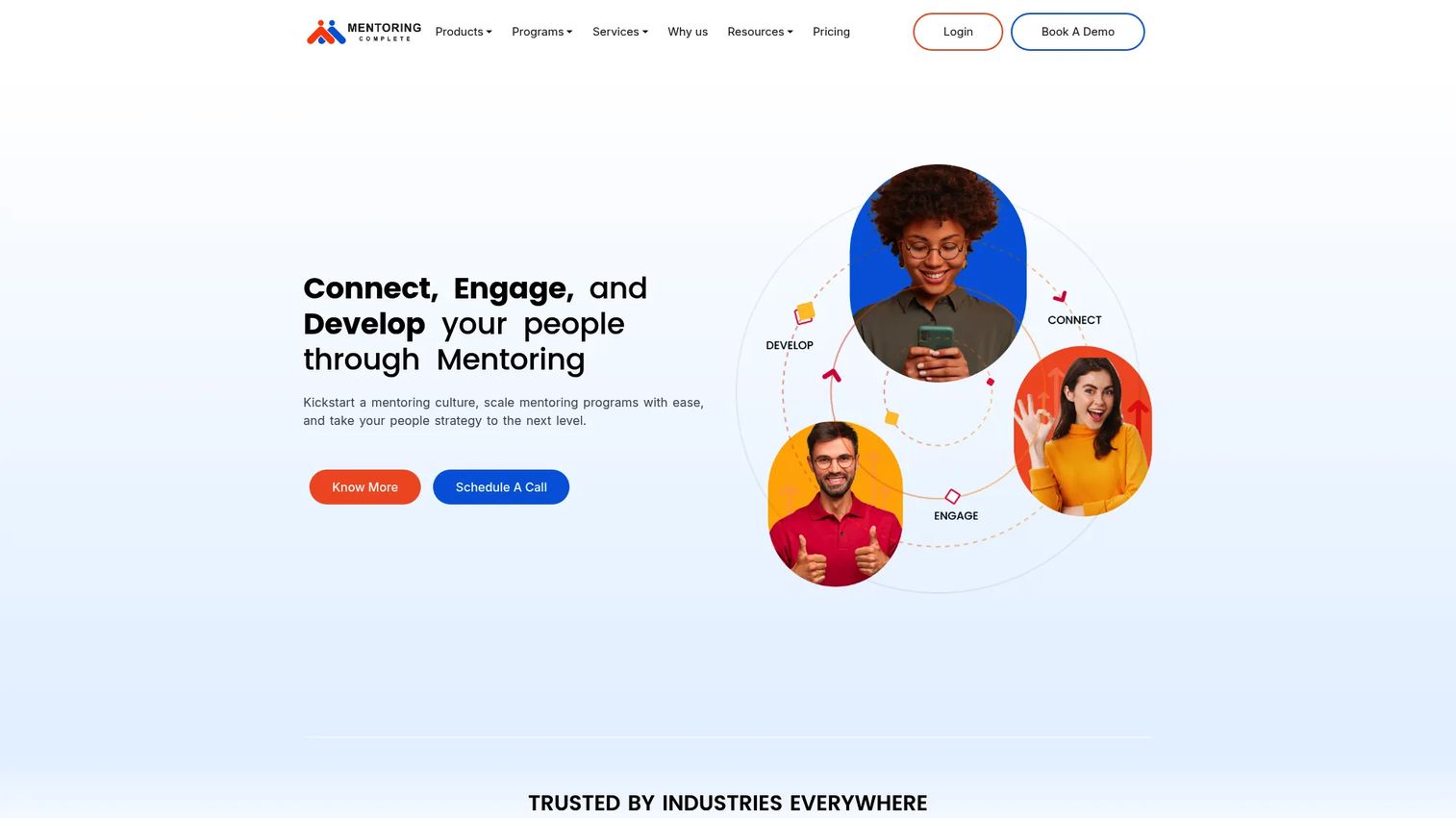
Mentoring Complete is mentoring program management software for organizations running structured adult mentoring programs. It offers AI-based matching, mentor and coach matching, and full program management. For HR, L&D, and diversity teams managing formal programs, it is a focused option.
Best for: HR, L&D, and diversity teams managing formal mentoring programs.
Key strengths
- AI-based matching: Pairs participants with a focus on match precision.
- Mentor and coach matching: Supports both mentoring and coaching relationships.
- Mentoring program management: Administers structured programs end to end.
Why choose Mentoring Complete: Mentoring Complete fits teams that want a focused tool for formal, structured programs and high matching precision. It serves single organizations or divisions as well as complex multi-level, multinational programs, with support for multiple mentoring formats.
Mentoring Complete pricing: A third-party listing on Capterra shows pricing from $7,500 (per feature, per month), and there is no free tier. The brand's own pricing page was not publicly accessible, so treat this figure cautiously and confirm directly with Mentoring Complete.
8. MentorLoop
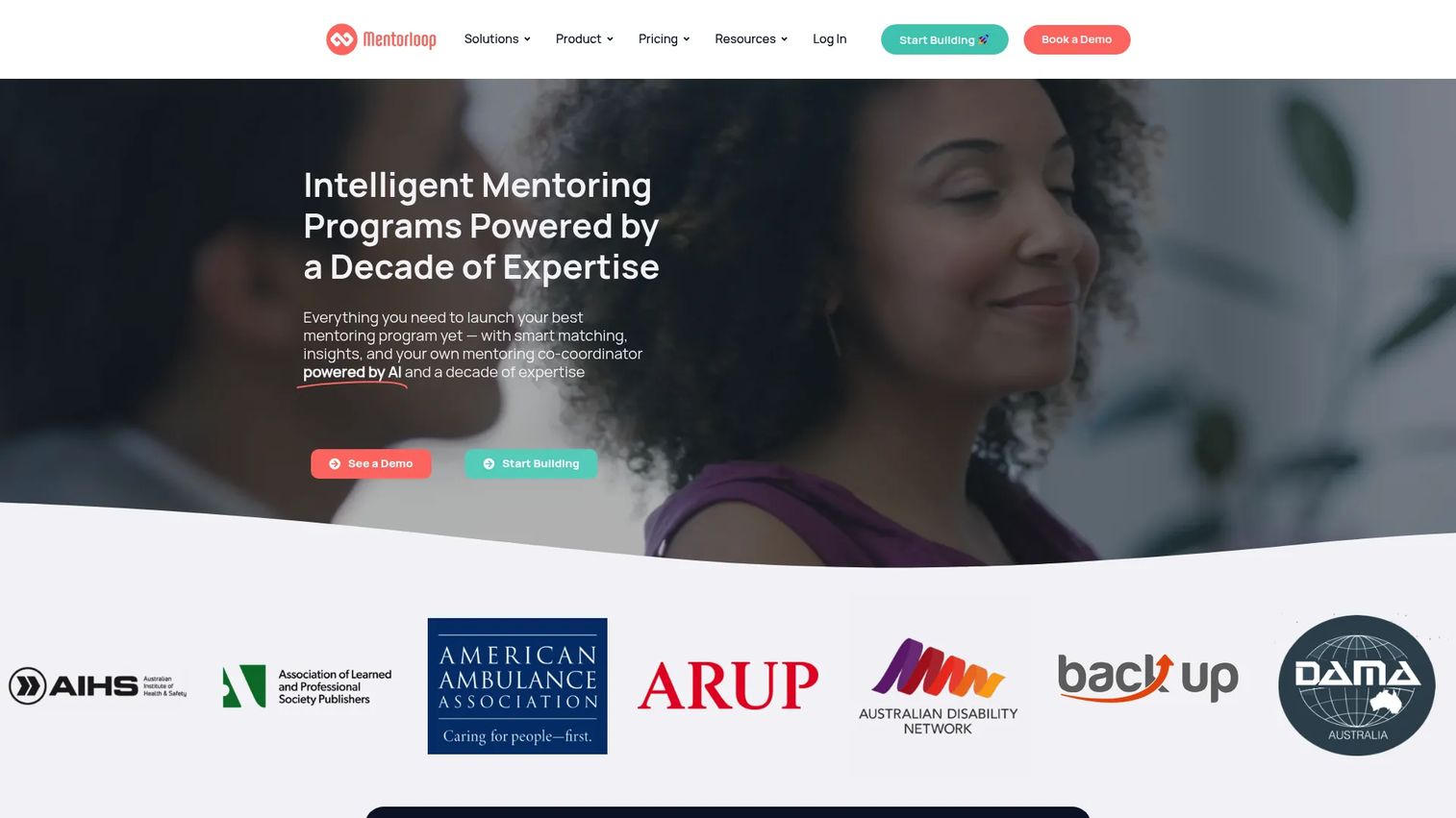
MentorLoop is a cloud-based mentoring platform for building and managing programs without heavy overhead. It offers unlimited matches, both manual and smart matching, plus video and chat, calendar integration, a dashboard, and reporting. For smaller teams and simpler programs, it is a practical, approachable option.
Best for: Organizations that want a structured mentoring program with matching, tracking, and admin support.
Key strengths
- Unlimited matches: Does not cap the number of mentoring relationships in a program.
- Manual and smart matching: Offers both admin-led and automated pairing.
- Video, chat, calendar, and reporting: Keeps communication and tracking inside the platform.
Why choose MentorLoop: MentorLoop is the lightweight, approachable pick for simpler programs or smaller teams. It avoids billing by the number of loops within a program, so growing participation does not trigger surprise costs.
MentorLoop pricing: The Pro plan starts from $299 per month, with Enterprise available on a custom contact basis. The site also references a free build-your-program option and a Community Support Program for charities and nonprofits, though public prices for those are not specified.
Considerations
Before you commit, run any shortlisted mentoring platform through this checklist.
Matching depth
Look at how each tool matches. Admin-led matching gives you control, self-match puts choice in participants' hands, and AI-suggested matching scales without manual grids. The best mentor matching software lets you blend these and review pairings before launch.
Analytics and ROI
Reporting has to be useful enough to justify the program to leadership. Check whether you can see participation, engagement, satisfaction, and retention signals in one view. ROI measurement is the difference between defending a budget line and losing it.
Integrations
Confirm HRIS, LMS/LXP, calendar, meeting, and collaboration tool fit. Mentoring that lives inside the tools people already use gets adopted; mentoring that lives in a separate tab gets forgotten. HRIS integrations also keep participant data current without manual uploads.
Program templates and launch assets
Templates, agendas, surveys, and program launch templates determine how fast you go live. A vendor that hands you a structure beats one that asks you to build from a blank page. First-week speed is a real evaluation criterion, not a nice-to-have.
Security and enterprise readiness
Confirm SSO, compliance, and data handling before procurement gets involved. Employee data is sensitive, and a tool that fails security review stalls in weeks. Ask about deployment, since cloud now accounts for the majority of implementations.
Support for multiple mentoring formats
Verify the platform supports 1:1, peer, group, circles, reverse, and virtual mentoring. Your program mix will change as the company grows, and a tool locked to one format forces a migration later. Breadth here protects you from re-buying.
Conclusion
The right mentoring software depends on the job in front of you. For broad enterprise mentoring and ERGs in one system, MentorcliQ is the strongest all-around pick. For fast, template-driven launches, Together Platform gets a structured program live quickly. When proving ROI is the priority, Qooper's dashboard and People Insights tie mentoring to retention. Mentorink leads on AI matching at scale, Chronus on program governance, and MentorLoop on simpler programs for smaller teams.
Whatever you pick, judge it on three things: how well it matches, how clearly it measures, and how fast it launches. Those are what turn mentoring from a spreadsheet exercise into a retention and leadership engine you can defend in a board meeting. Shortlist two or three, scope your program size, and ask each vendor to show participation and ROI reporting on a program that looks like yours before you sign.
FAQs
Mentoring software is used to launch, match, manage, and measure employee mentoring programs in one place. It replaces manual spreadsheets with automated matching, scheduling, reminders, and reporting. Organizations use it to support onboarding, retention, leadership development, and internal mobility at scale.
The features that matter most are mentor-mentee matching, program management, progress tracking, and reporting with ROI measurement. Strong templates and communications help you launch faster, and integrations keep mentoring inside existing workflows. For larger organizations, security and enterprise readiness move up the list quickly.
Mentor matching software pairs participants using profiles, goals, skills, departments, geography, and seniority. Workflows range from admin-led matching to participant self-match to AI-suggested pairings you review before launch. The better online mentoring software lets you blend these methods and adjust matches as the program runs.
Yes. Most mentoring platforms capture participation, session activity, satisfaction surveys, and goal progress, then surface those as engagement and retention signals. Tools like Qooper add ROI dashboards and people insights that connect mentoring to retention risk and skill gaps. That reporting is what lets you tie a program to business outcomes.
At minimum, look for HRIS, LMS or LXP, calendar, and meeting tool integrations. HRIS integrations keep participant data current, calendar and meeting tools support virtual mentoring, and LMS/LXP connections link mentoring to broader learning. Collaboration tool integrations help reminders and updates reach people where they already work.
Yes. Pairing new hires with experienced mentors shortens ramp time and improves early retention. For leadership development, repeatable workflows and consistent agendas standardize how the next layer of managers is built. Reporting then lets you show the pipeline you are creating rather than assert it.
Prioritize tools that launch fast, automate matching and reminders, and report on retention and engagement without a dedicated admin. Confirm it integrates with your HRIS and calendar, passes security review, and supports the mentoring formats you will run. Scope your program size, then have two or three vendors show ROI reporting on a comparable program before deciding.
A capable mentoring platform should support 1:1, peer, group, circles, reverse, and virtual mentoring, with alumni mentoring as a bonus. Format flexibility matters because your program mix changes as headcount grows. Choosing a tool that covers multiple formats now avoids a painful migration later.